How Henderson Homeowners Can Prevent Slab Leaks in Desert Soil
Key Takeaways
- Henderson homes face elevated slab leak risk due to caliche soil, clay pockets, and the seasonal cycle of extreme heat followed by monsoon rain that stresses embedded pipes.
- Water pressure above 80 PSI is a leading cause of pipe joint failure under slabs - homeowners can test pressure with a $15 gauge and install a pressure regulating valve to stay below 70 PSI.
- Hard water from Lake Mead running at 275 to 300 PPM speeds up copper pipe corrosion inside the slab - a properly calibrated water softener extends pipe life measurably.
- Early warning signs include warm floor tiles when AC is running, water or NV Energy bills that spike $80 to $200 or more with no change in habits, and the sound of running water when no faucet is on.
- Professional slab leak detection using acoustic and thermal imaging equipment locates leaks precisely without opening the floor, saving homeowners thousands in unnecessary concrete demolition.
- Most Nevada homeowner insurance policies cover water damage from a slab leak but not the plumbing repair itself - documenting damage with photos before repairs begin protects the claim.
- Pipe rerouting is often the better long-term choice over spot repair for pre-2000 Green Valley homes with aging copper, because it removes the compromised pipe from service rather than fixing one point in a broadly corroded system.
- Slab leak repairs that involve pipe rerouting or slab penetration require permits from the City of Henderson Building and Safety Department - skipping permits creates problems when selling the home or filing insurance claims.
In This Article
It started with a warm spot on the tile floor near the hallway bathroom. A Henderson homeowner in Green Valley noticed it one Tuesday morning - the kind of warmth that does not belong on a floor when the air conditioning has been running all night. Then the water bill arrived. It had jumped nearly $200 from the previous month, with no explanation. No new appliances, no extra guests, no change in routine. That combination - warm floor plus a surprise bill - is exactly how most slab leaks announce themselves, and it is a call the team at Active Plumbing in Henderson receives multiple times every week.
Henderson is not like most cities when it comes to the ground beneath its homes. The desert soil here - a mix of caliche, clay pockets, and sandy substrate - behaves in ways that put constant stress on the pipes buried under concrete slabs. Add in the hard water coming through the Southern Nevada Water Authority system from Lake Mead, municipal pressure that runs higher than many homeowners realize, and summer temperatures that regularly hit 110 degrees, and the conditions for a slab leak are almost always present. Neighborhoods from the older Green Valley master plan near Stephanie Street to newer developments like Inspirada and Cadence all face variations of the same risk.
Practical Prevention Steps Henderson Homeowners Can Take Right Now
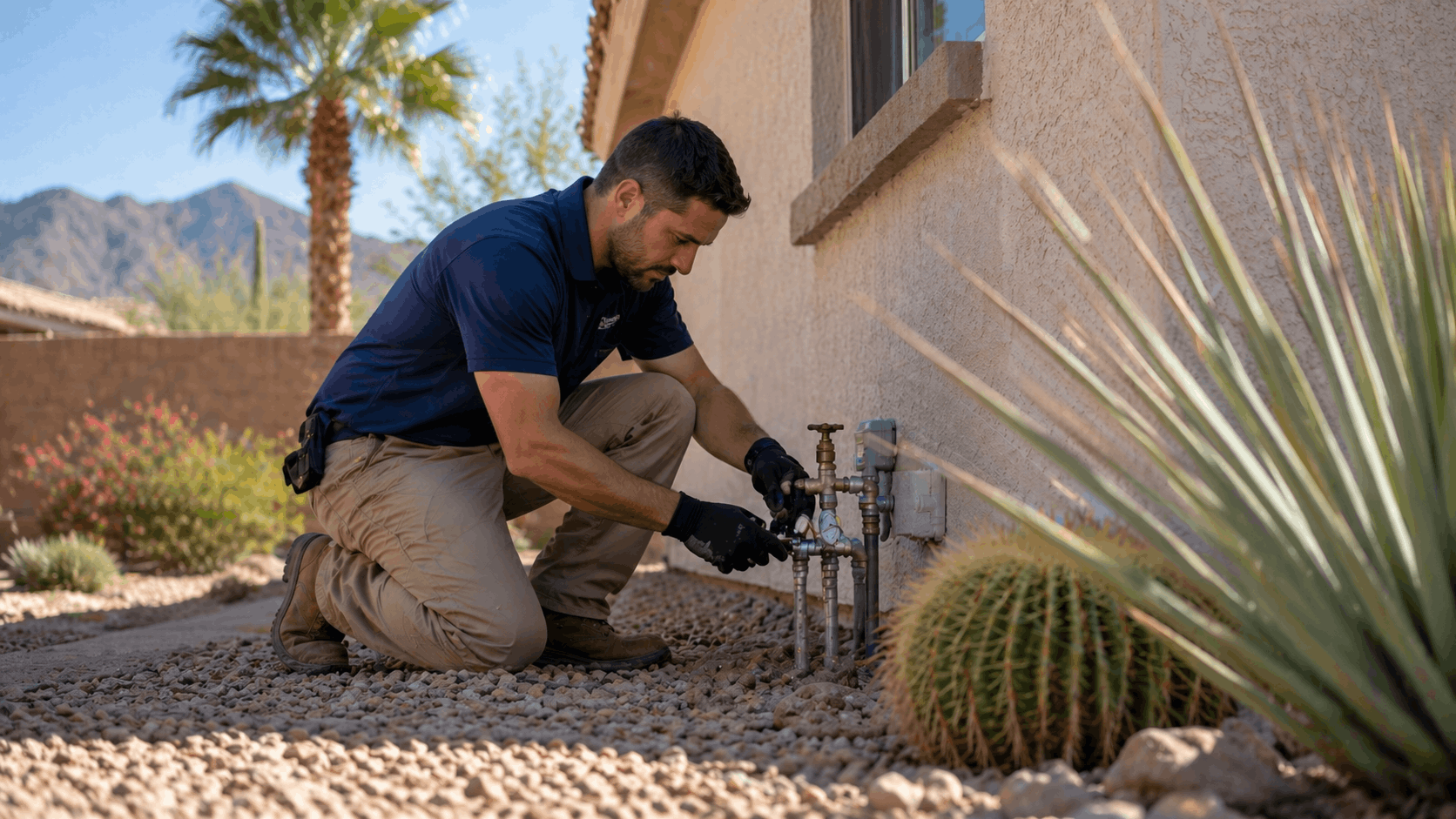
Slab leak prevention in Henderson is not about expensive upgrades or complicated maintenance schedules. Most of the steps that actually reduce risk are things a homeowner can do in an afternoon - or confirm with a single call to a licensed plumber. The desert climate creates specific conditions that respond well to a few targeted habits.
Three areas matter most for preventing pipe damage in the desert: water pressure management, irrigation placement, and water treatment. Each one addresses a different stressor on the pipes under the slab. Homeowner plumbing tips that work in wetter climates often miss these desert-specific concerns entirely, which is why generic advice rarely holds up in Henderson.
The good news is that none of these steps require tearing up a floor or hiring a contractor for a weekend-long project. They are the kinds of adjustments that extend the life of slab plumbing by years - sometimes decades.
Install a Pressure Regulating Valve and Test It Annually
Water pressure in Henderson homes should sit between 50 and 70 PSI at the meter. Anything above 80 PSI puts continuous mechanical stress on every pipe connection under the slab, and the Southern Nevada Water Authority system can deliver water at higher pressures than many residents expect - especially on streets closer to main distribution lines near Horizon Ridge Parkway.
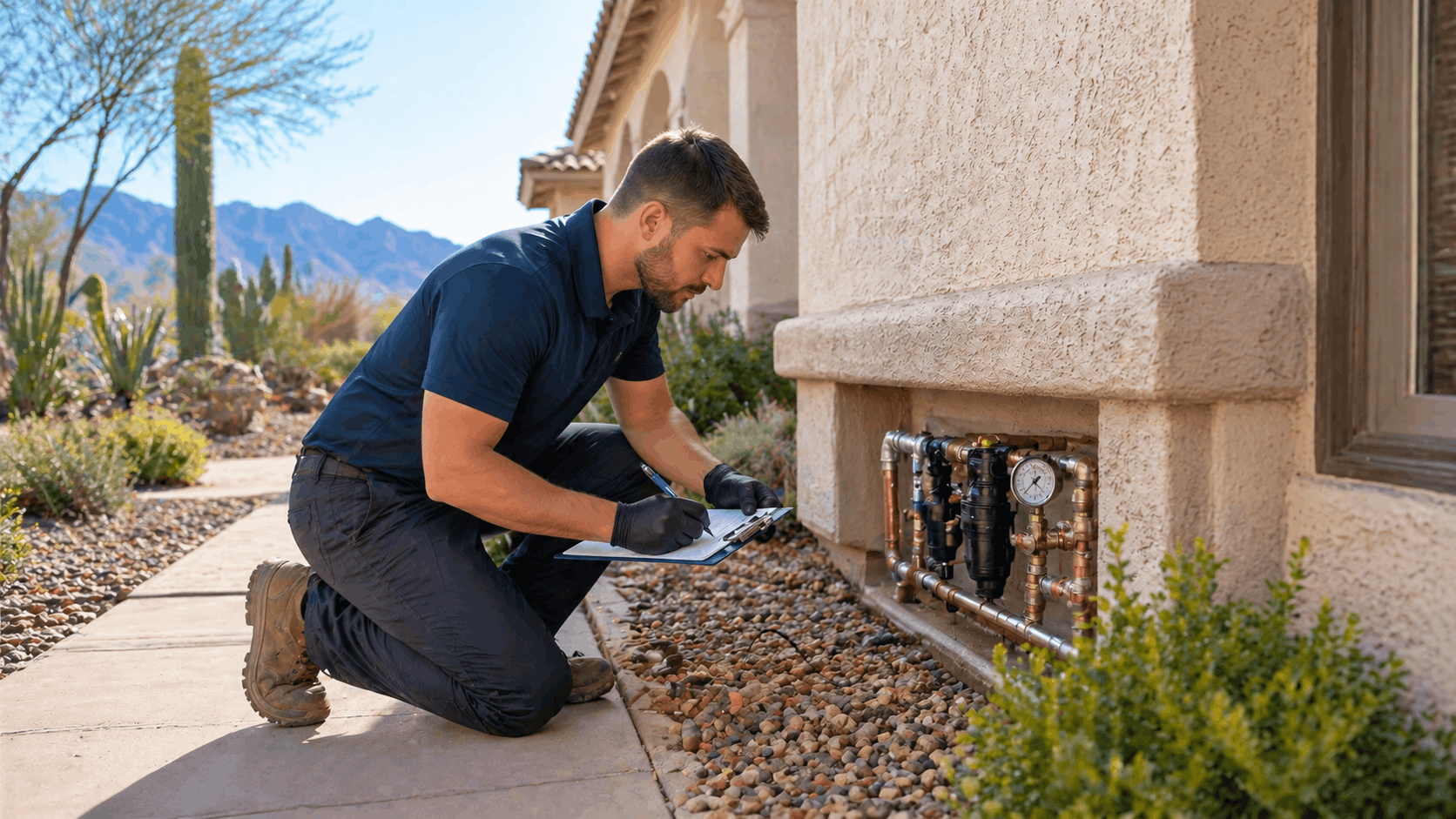
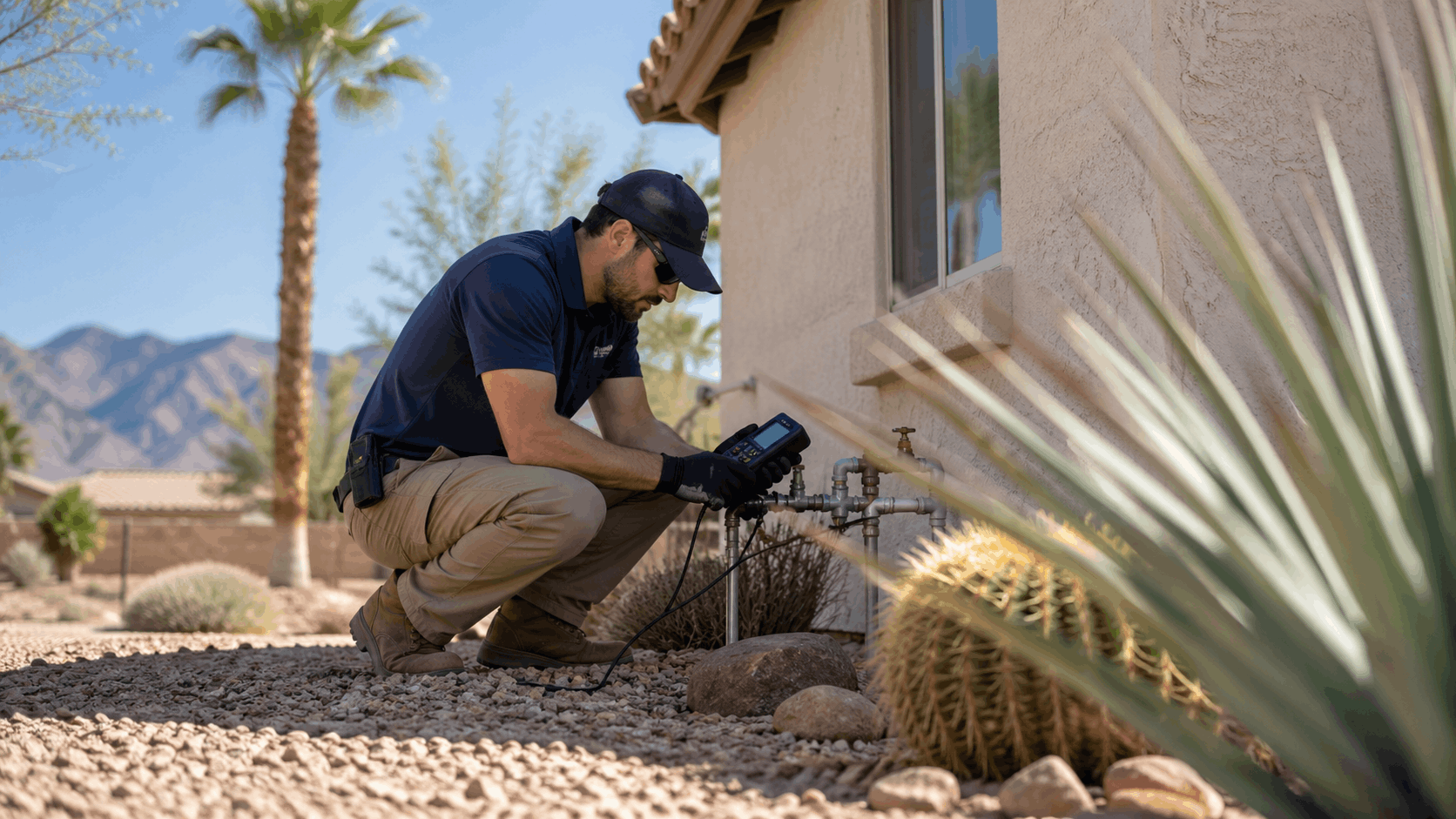
Testing home water pressure is straightforward. A simple pressure gauge costs about $10 to $15 at any hardware store and threads directly onto an outdoor hose bib. Homeowners can take a reading in under two minutes. If the number reads above 80 PSI consistently, a pressure regulating valve (PRV) installed at the main line is the correct fix.
A PRV that is already installed should be tested annually because the internal diaphragm wears out over time - especially in the heat. If pressure has crept back up even with a PRV in place, it likely needs adjustment or replacement. A plumber can recalibrate or swap the valve in a short visit, and that single service call can prevent the kind of pipe stress that leads to slab leaks in Henderson homes over time.
Manage Your Landscaping and Irrigation Near the Foundation
Drip irrigation systems are standard in Henderson HOA communities, and for good reason - they conserve water in a desert climate. But when those drip lines are positioned too close to the home's foundation, they create a slow, steady moisture source that saturates the soil directly under the slab. In neighborhoods like Inspirada and MacDonald Ranch, where HOA landscaping requirements often mean dense planting along exterior walls, this is a recurring problem.
The rule of thumb is to keep irrigation heads and emitters at least three feet from the foundation perimeter. That distance gives water time to dissipate before it reaches the soil directly beneath the slab. Drip lines should also be inspected seasonally - a cracked emitter or a loosened fitting near a garden bed can run undetected for weeks and cause significant soil saturation without ever showing up on a water bill immediately.
Landscaping foundation damage in Henderson tends to develop quietly. Soil that stays wet longer than normal softens, shifts, and settles unevenly - and that movement transfers directly to embedded pipes. Checking irrigation lines twice a year, once before summer and once after monsoon season, is one of the most practical prevention habits a Henderson homeowner can build.
Use a Water Softener Correctly to Protect Copper Pipes
Henderson water sourced from Lake Mead through the Southern Nevada Water Authority typically runs between 275 and 300 parts per million of hardness. That is classified as very hard water, and it causes scale to build up inside copper pipes over time. The buildup narrows the pipe interior, creates pressure points, and speeds up the kind of pitting corrosion that leads to pinhole leaks in slab-embedded copper.
A properly maintained water softener installation extends the life of copper plumbing noticeably - but the setting matters. Softeners that are calibrated too aggressively strip minerals from the water to the point where the water becomes corrosive in a different way. Water with very low mineral content can actually leach copper from pipe walls, which speeds up pitting from the inside out.
The target for treated water is typically 50 to 100 PPM - soft enough to prevent scale, but not so stripped that it turns corrosive. Softener resin beds should be checked and salt levels maintained consistently. If a system has not been serviced in more than two years, having it tested is worth the time. The water quality testing process can confirm whether the current treatment level is appropriate for the pipes in a specific home.
Get Your Quote
Tell us what's going on and we'll get back to you. We're open 24/7.
Why Henderson's Desert Soil Makes Slab Leaks More Likely
The ground under a Henderson home is not stable in the way most people picture. It is a layered mix of materials that respond very differently to heat, moisture, and pressure. That behavior directly affects the pipes embedded in the concrete slab above it.
Desert soil slab leaks in Henderson are not random events. They follow patterns tied to specific soil conditions and seasonal cycles that repeat every year. Henderson foundation movement is a real, measurable phenomenon - and the pipes under older homes near the Eastern Avenue corridor and newer builds near Lake Mead Parkway feel it in different ways.
The combination of caliche layers, clay pockets, and sandy desert soil creates an environment where pipes that were installed perfectly can still develop problems over time through no fault of the installation. Knowing why this happens helps homeowners make smarter decisions about when to inspect and when to act.
How Caliche and Clay Soil Shifts Under Henderson Homes
Caliche is a hardened layer of calcium carbonate that forms naturally in desert soils across the Henderson and Boulder City Road corridors. It looks like whitish, chalky rock when excavated. The problem with caliche is that it resists water absorption almost completely, which means rainwater and irrigation runoff pool above it rather than draining away.
When water collects above a caliche layer and cannot drain, the soil on top becomes saturated and unstable. That unstable soil shifts and settles unevenly. Foundation settling that follows this pattern bends and twists the copper or PEX pipes embedded in the slab - not dramatically, but enough over years to crack joints and create pinhole failures.
Clay pockets mixed into the sandy desert substrate around Henderson add another variable. Clay expands significantly when wet and contracts when dry. Pipes running through or alongside clay-heavy soil experience repeated micro-stress every time the moisture content of the soil changes. Over a decade or two, that repetition accumulates into real pipe stress. According to the United States Geological Survey, expansive soils are among the leading causes of structural damage to foundations in the American Southwest.
Summer Heat and Flash Flood Cycles That Crack Pipes
Henderson summers push air temperatures past 110 degrees regularly from June through August. That heat dries out the soil around and under the slab to an extreme degree, causing it to shrink and pull away from foundation edges. Pipes that were sitting in firm, compacted soil suddenly have small voids forming around them - and a pipe without soil support can flex and fatigue at connection points.
Then the monsoons arrive. A single monsoon event can drop an inch of rain in under an hour on neighborhoods near Racetrack Road and the Anthem area. That water hits bone-dry caliche-layered soil, pools, and causes rapid expansion in the clay pockets below. The soil swells, the slab shifts slightly, and the same pipe joints that were already fatigued from months of dry-shrinkage now get pushed in the opposite direction.
This seasonal cycle - dry shrinkage followed by rapid expansion - repeats every year. It is the primary reason that even well-installed pipe systems in Henderson develop problems that would not occur in more climatically stable regions. The National Weather Service Las Vegas office documents this heat and precipitation pattern annually, and its effects on local infrastructure are consistent.
How Water Pressure From the Colorado River System Adds Stress
Henderson's water supply runs through the Southern Nevada Water Authority system, which draws from Lake Mead and the Colorado River. The infrastructure that delivers water across a city built in the desert operates at pressures necessary to move water across significant elevation changes and distances. At the street level, that can mean household pressure arriving higher than the ideal range for residential plumbing.
High municipal water pressure combined with shifting desert soil creates a double strain on slab-embedded pipes. The pressure pushes outward on pipe walls and joints constantly, while the soil movement bends and torques the pipe from outside. Together, these two forces speed up the timeline on any pipe weakness - whether that weakness comes from corrosion, material age, or installation variation.
Homes on streets that sit at lower elevations relative to nearby distribution infrastructure sometimes see higher baseline pressures. A pressure reading taken at the hose bib on a Monday morning can differ noticeably from a reading on a Sunday evening when neighborhood demand is low and pressure rises. This variability is one reason testing pressure at multiple times is worthwhile before concluding a PRV is not needed.
Need Help in Las Vegas?
Active Plumbing serves Las Vegas and all of Las Vegas Valley.
Warning Signs Henderson Homeowners Should Watch For
A common phrase the Active Plumbing team hears when a Henderson homeowner calls about a suspected slab leak is: "My water bill just tripled and I have no idea why." The second common is: "The floor feels warm near the bathroom, even when the AC is on." Both of these are real symptoms worth taking seriously.
Detecting a slab leak early - before water has been migrating under the foundation for weeks - makes every part of the repair process simpler and less expensive. The signs are not always dramatic. In fact, the early indicators are often subtle enough that homeowners dismiss them for a month or two before calling. That delay costs money.
Henderson plumbing symptoms follow predictable patterns depending on whether the leak is on a hot water line or a cold water line. Hot water line leaks show up in water bills and on the floor surface. Cold water line leaks are quieter and often announce themselves through structural changes in the home before any wet spot appears.
Unexplained Spikes in Your NV Energy or Water Bill
A slab leak on a hot water line does two things at once: it releases water into the soil under the slab, and it forces the water heater to run almost continuously to replace the lost hot water. That means Henderson homeowners with a hot water slab leak often see their water bill and their NV Energy bill rise at the same time - even if they have not changed any habits.
A jump of $80 to $200 on the water bill without explanation is a commonly reported first sign. Some homeowners report increases even higher when the leak has been running for several weeks before detection. The water heater running more than usual is another tell - if the unit cycles on noticeably more often than it used to, especially at night, that pattern deserves attention.
The water heater repair and inspection process often reveals whether the unit is working harder than it should, which can confirm a leak suspicion before a full detection visit is scheduled.
Warm Floors, Wet Spots, and Mysterious Sounds
A warm tile floor in a room that should be cool is one of the clearest physical signs of a hot water slab leak. The heat from the escaping water conducts through the concrete and shows up at the surface, sometimes covering a surprisingly large area even when the actual leak point is small. Homeowners often describe it as feeling like underfloor heating that was never installed.
Wet carpet near baseboards, soft spots under hardwood, and damp patches on concrete floors in utility rooms or garages are all late-stage signs that water has been migrating for some time. The sound of running water inside walls or underfoot when no faucet is on is another indicator that sends people straight to the phone. That sound, like a faint hiss or trickle, typically means the leak is active and moving through soil toward the path of least resistance.
None of these symptoms should be waited out. Each day a slab leak runs undetected adds to the remediation scope - more wet soil, more potential for mold, and more stress on surrounding pipe sections that may already be compromised.
Foundation Cracks and Door Frame Shifts in Older Henderson Homes
Homes built before 2000 in the original Green Valley master plan community - along corridors like Stephanie Street, Pecos Road, and Eastern Avenue - sometimes show structural symptoms of a long-running slab leak before any wet spot appears. These are the signs that get misattributed to normal settling for months before someone connects the dots.
Doors that suddenly do not close correctly, especially interior doors that fit fine the previous year, are a common early structural sign. Hairline cracks along drywall joints, particularly those that run diagonally from door and window corners, indicate that the foundation is moving unevenly. Separation between baseboards and the floor, or between the ceiling and the wall at corners, follows the same pattern.
These structural signs tend to appear in Green Valley plumbing situations where a cold water line has been leaking slowly for an extended period - long enough to saturate and destabilize the soil under one section of the foundation. By the time the door stops closing, the leak has usually been active for weeks or months.
How Professional Slab Leak Detection Works in Henderson
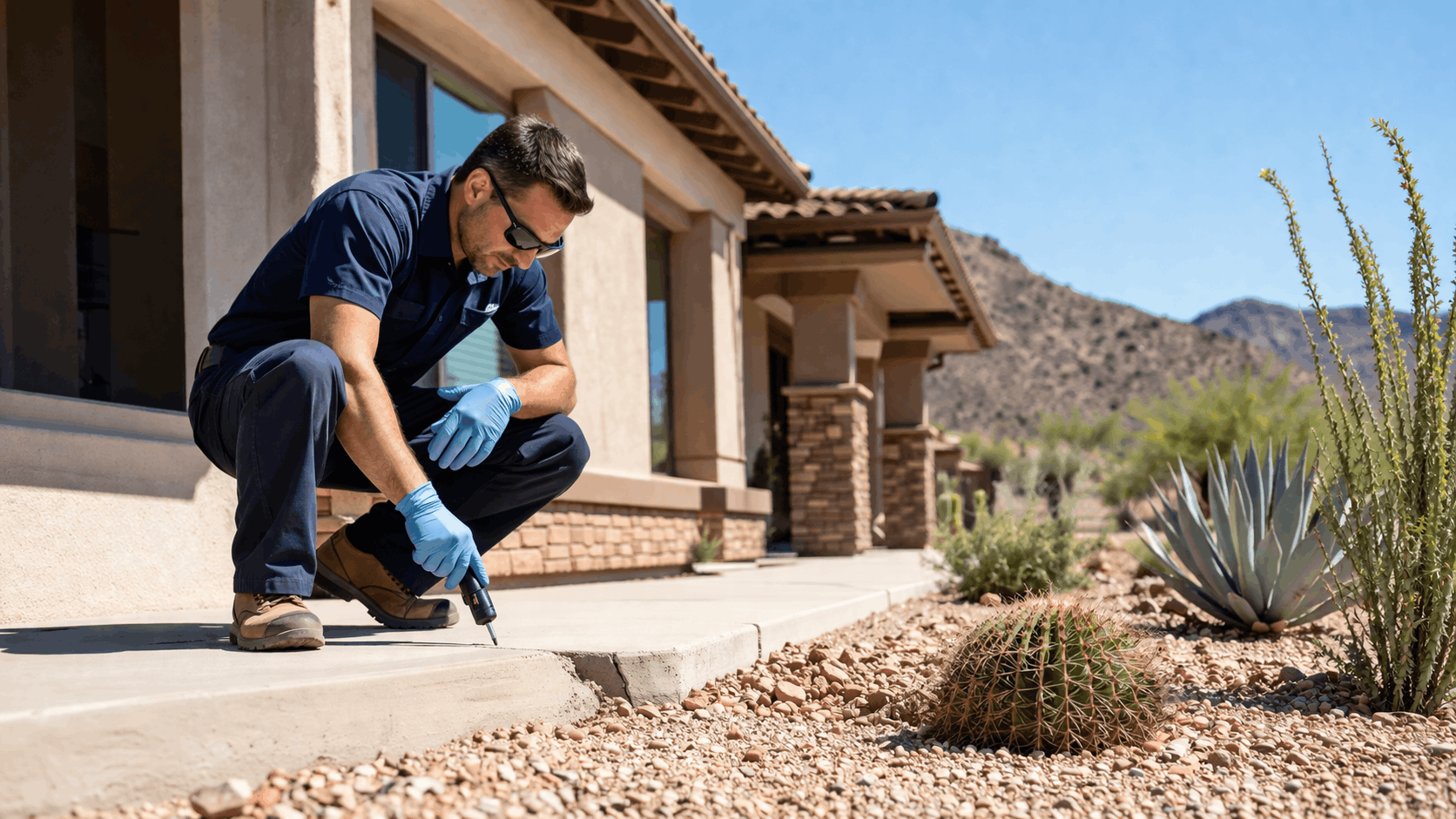
When a homeowner in Henderson calls Active Plumbing about a suspected slab leak, the first priority is locating the leak precisely before any floor is touched. Non-invasive plumbing detection in Henderson has advanced to the point where the exact location of a pipe leak under a slab can be identified within inches - without opening the concrete at all.
This matters enormously for homeowners who imagine that a slab leak diagnosis means jackhammers tearing up their living room floor. In most cases, the detection phase is clean, quiet, and completed in a matter of hours. The tools used today are accurate enough that concrete cutting - when it is necessary - is targeted to a very specific area rather than a broad search zone.
Electronic leak detection technology has changed what slab leak service calls look like. Homeowners who call expecting a destructive process are often surprised by how methodical and contained the inspection actually is.
Electronic and Acoustic Leak Detection Tools
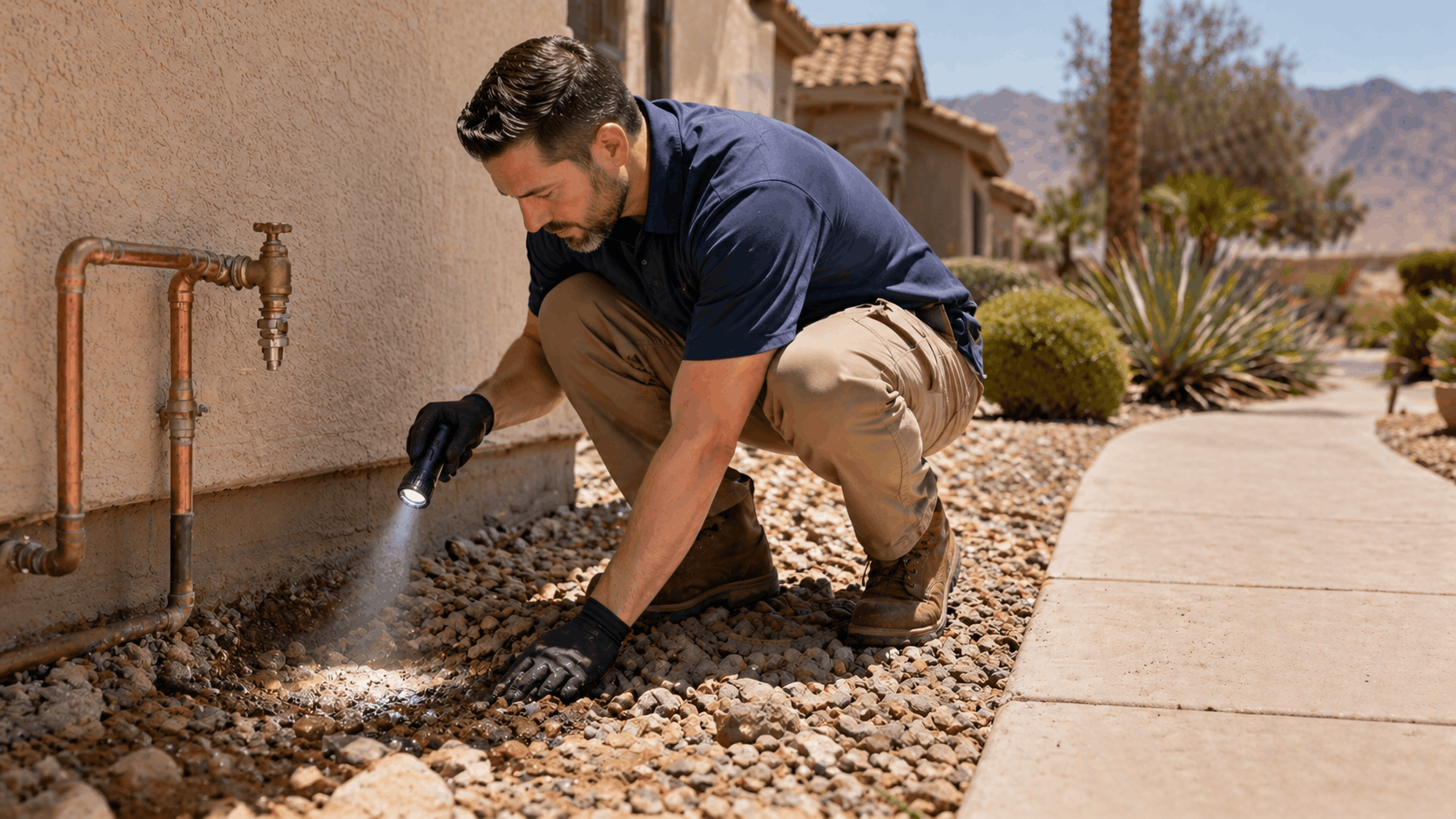
Acoustic leak detection uses sensitive listening devices that amplify the sound of escaping water as it moves through soil under the slab. The technician moves the sensor along the floor surface, listening for the frequency pattern that indicates an active leak. The signal changes as the probe approaches the source, narrowing the location progressively.
Electronic amplification equipment can detect the specific sound profile of a pressurized pipe leak even through several inches of concrete and compacted soil. In homes with thicker slabs - common in some of the larger estate homes in the Anthem Hills area - this equipment picks up what the human ear cannot detect without it.
The practical result for Henderson homeowners is that electronic leak detection can save thousands of dollars in unnecessary concrete removal. Instead of cutting a wide section of floor to search for a leak, the technician cuts only where the equipment confirms the pipe failure is located.
Thermal Imaging for Hot Water Line Leaks
Infrared cameras detect temperature differences on the slab surface. When a hot water line leaks under the concrete, the escaping water warms the soil and the slab above it - and that thermal signature shows up clearly on an infrared scan as a distinct warm zone on the floor surface. The shape and intensity of the warm area helps the technician estimate the size and depth of the leak.
Thermal imaging is particularly effective in Henderson because hot water slab leaks are so common here. Cold desert nights in the Anthem Hills and Black Mountain area push demand on water heaters significantly, and water heaters that run harder move more hot water through slab-embedded lines - increasing pressure cycle frequency on those specific pipes.
The combination of acoustic and thermal tools used together produces the most accurate detection results. Acoustic equipment locates the sound source, and thermal imaging confirms the heat pattern at the same location. When both methods point to the same spot on the floor, the technician has high confidence in the repair target before any concrete work begins.
What Happens After the Leak Is Found
Once the leak location is confirmed, homeowners have three primary repair paths to consider. Each has a different cost range, timeline, and long-term outcome. The right choice depends on the pipe material, the age of the home, and the condition of the surrounding plumbing.
A spot repair involves opening the concrete directly above the leak, fixing the failed section, and repatching the floor. This is the fastest option and typically runs $500 to $2,000 for the repair itself. It works well when the pipe is otherwise in good condition and the failure is clearly isolated to one point.
Pipe rerouting runs new pipe through the walls or ceiling, bypassing the slab-embedded line entirely. This costs more - typically $2,000 to $8,000 depending on the home size and pipe routing distance - but it removes the aging pipe from service rather than leaving it in place to fail again. Whole house repipe may be the right call for older homes with widespread copper corrosion. Epoxy pipe lining is a third option for some situations - a resin is applied inside the existing pipe to seal cracks and pinholes without excavation, though it is not appropriate for every pipe type or layout.
Need Help in Las Vegas?
Active Plumbing serves Las Vegas and all of Las Vegas Valley.
Common Pipe Materials Found Under Henderson Slabs and Their Risk Levels
Not all slab pipes age the same way. The material under a Henderson home depends almost entirely on when the home was built, and each material has a different set of vulnerabilities given the local water chemistry and soil conditions.
Knowing what is under a specific home - and how that material behaves in the Henderson desert environment - helps homeowners understand their actual risk level rather than worrying about every possible scenario. Active Plumbing works with copper pipe, PEX, and CPVC regularly across Henderson neighborhoods, and the failure patterns are consistent enough to predict with reasonable accuracy.
Henderson home plumbing materials vary significantly by construction era. A home built in 1988 near Eastern Avenue has a very different pipe situation than one built in 2018 near Lake Mead Parkway, even if they look similar from the street.
Copper Pipes in Pre-2000 Henderson Homes
The original master-planned communities of Green Valley - developed heavily through the 1980s and 1990s along Eastern Avenue and Russell Road - used copper pipe almost exclusively for slab plumbing. Copper was the industry standard at the time and performs well in many environments. Henderson's combination of hard water and shifting soil, however, gives copper in this area a shorter practical lifespan than in more forgiving climates.
Pre-2000 home slab leaks in Green Valley and surrounding neighborhoods are among a common calls Active Plumbing handles. Copper pipe corrosion in these homes follows a predictable path: hard water deposits scale on the interior walls, pressure points develop at scale buildup locations, and pinholes form - often on hot water lines first because heat speeds up the corrosion process.
Homes in this age range that have not had a plumbing inspection in the last five years should consider scheduling one. A sewer camera inspection and a pressure evaluation together provide a solid baseline picture of a copper system's current condition.
PEX and CPVC in Newer Subdivisions Like Inspirada and Cadence
Newer Henderson developments built after 2005 - including Inspirada along the 215 Beltway and Cadence near Lake Mead Parkway - commonly used PEX or CPVC pipe for slab plumbing. Both materials handle soil movement and temperature cycling better than copper. PEX in particular has flexibility that allows it to absorb some of the micro-stress that cracks rigid copper joints.
PEX pipe slab leaks in newer homes are less common but do occur. A key long-term failure mode for PEX in hot water lines is oxidation from chlorinated water. The Southern Nevada Water Authority adds chlorine to disinfect municipal water, and PEX carries a chlorine-resistance rating because chlorinated hot water can slowly oxidize some formulations over years. Pinholes can develop from the inside out.
CPVC has its own vulnerability in the desert environment: it becomes brittle when exposed to prolonged temperature extremes. Pipes in slab sections closest to the exterior of the home, where soil temperature swings are most pronounced, show this brittleness more than those deeper under the structure. Inspirada plumbing issues related to CPVC tend to appear in homes approaching the 15-to-18-year mark.
How Henderson's Building Codes and HOA Rules Affect Slab Leak Repairs
One of the surprises Henderson homeowners encounter when dealing with a slab leak is that the repair process involves more than just calling a plumber. City permits, HOA approval, and insurance documentation all intersect in ways that can slow down or complicate a repair if not handled correctly from the start.
The City of Henderson plumbing code requirements are not optional, and HOA slab leak repair rules in gated communities add another layer that contractors unfamiliar with those communities regularly run into. Getting these pieces right before work begins protects the homeowner legally and financially - especially when selling the home later or filing an insurance claim.
Active Plumbing operates within Henderson's regulatory framework regularly and is familiar with the specific requirements across different communities and neighborhoods. Homeowners do not need to figure out the permitting process alone.
When You Need a Permit From the City of Henderson
Pipe rerouting, slab penetration, and any work that alters the home's plumbing system layout typically requires a permit from the City of Henderson Building and Safety Department, located on Water Street. The permit process exists to protect homeowners - it triggers an inspection that confirms the repair was done correctly and to code.
Skipping permits creates problems that show up later. When a homeowner goes to sell the property, title searches and buyer inspections often surface unpermitted plumbing work. Lenders and buyers regularly require that unpermitted repairs be disclosed, re-permitted retroactively, or redone. An insurance claim filed after an unpermitted repair can also be complicated by the insurer if they determine work was done outside of code.
The permit process for a slab leak repair is not typically long or complicated when handled by a licensed contractor. Active Plumbing pulls the required permits as part of the repair process so homeowners have proper documentation from the first day of work.
HOA Communities and Exterior Access Rules
Gated communities like Seven Hills, Anthem Country Club, and MacDonald Ranch have specific rules about contractor access, approved repair methods, and how the property must look after a repair is completed. Some require HOA approval before any exterior work begins. Others have strict timelines for landscaping restoration after ground disturbance.
Seven Hills HOA plumbing situations, for example, sometimes require written notice to the HOA board before a contractor can begin excavation near a shared wall or common area boundary. Anthem Country Club repair work near fairway-adjacent properties has additional restrictions related to turf restoration and equipment staging.
MacDonald Ranch contractor access protocols include specific gate clearance procedures and approved working hours. A contractor showing up without following those protocols may be turned away at the gate, delaying an urgent repair unnecessarily. Active Plumbing handles the coordination with these communities as a routine part of the job.
Homeowner Insurance and Slab Leak Coverage in Nevada
Most standard Nevada homeowner insurance policies cover the water damage caused by a slab leak - flooring replacement, drywall repair, and mold remediation - but not the cost of the plumbing repair itself. That distinction matters because the two costs often look similar in size, and homeowners sometimes assume everything is covered when it is not.
Documenting the damage before repairs begin is critical. Homeowners should photograph the wet areas, the affected flooring, any visible mold growth, and the exposed pipe after the slab is opened. Calling the insurer before any repair work starts - even if that means living with the situation for a day - gives the insurer the opportunity to send an adjuster and prevents disputes about the scope of the damage.
Water damage coverage in Henderson follows the same general pattern as Nevada statewide: sudden and accidental leaks are more likely to be covered than leaks that can be shown to have developed slowly over time. This is another reason why acting on early warning signs promptly works in the homeowner's favor from an insurance perspective as well as a repair cost perspective.
Need Help in Las Vegas?
Active Plumbing serves Las Vegas and all of Las Vegas Valley.
How Active Plumbing Serves Henderson and the Surrounding Communities
Active Plumbing is based in the Las Vegas area and works across Henderson neighborhoods on a daily basis - not occasionally, but as a consistent part of the regular service schedule. The team knows the difference between a 1988 build on Pecos Road and a 2015 build in Inspirada because those homes have genuinely different plumbing systems, different soil conditions underneath them, and different failure patterns.
Local plumber Henderson NV service means knowing which streets sit above the worst caliche layers, which HOA communities require written contractor access approval, and which neighborhoods are most likely to show monsoon-related pipe stress in the fall. That kind of street-level knowledge shapes how Active Plumbing approaches every slab leak call in Henderson differently from a generic service company working off a checklist.
Homeowners looking for a plumber who has actually driven every major road in Henderson and worked inside hundreds of homes across the city will find that difference in how the calls are handled from the first phone contact forward.
Areas We Cover From Green Valley to Boulder City Road
Active Plumbing's service area in Henderson runs from the older Green Valley neighborhoods near Pecos Road and Eastern Avenue, south through the Horizon Ridge corridor, and into the Anthem area and Black Mountain communities. The team also covers newer construction along Lake Mead Parkway, including Cadence and the Galleria corridor, and works regularly in Inspirada along the 215 Beltway.
The Boulder City Road corridor, including homes near the Henderson Executive Airport area and the older residential streets between Warm Springs Road and Lake Mead Drive, is part of the regular service footprint as well. These neighborhoods tend to have older infrastructure and benefit from routine inspection more than most.
Active Plumbing also serves surrounding communities including Las Vegas and surrounding areas when Henderson homeowners have family or rental properties nearby. The same team, the same tools, and the same approach applies across the entire service area.
What to Expect When You Call About a Suspected Slab Leak
When a Henderson homeowner calls Active Plumbing about a suspected slab leak, the first conversation covers the specific symptoms - what they are experiencing, how long it has been happening, and where in the home the signs are appearing. That information shapes which detection tools the technician brings to the call and how the visit is structured.
Most detection visits in Henderson take between one and three hours depending on the home's size and plumbing layout. The technician explains findings as they go, not after the fact. Before any repair work is discussed, the homeowner sees exactly where the leak is located and what the pipe condition looks like in that area. No repair is started without the homeowner understanding the options and agreeing to a plan.
For homeowners who suspect an active leak and need a same-day response, 24/7 emergency plumbing service is available. Henderson calls get the same 30 to 60 minute response, and the team works in Henderson regularly and is often already nearby.
Final Thoughts
Slab leaks in Henderson are not a rare event - they are a predictable consequence of the local soil, water chemistry, and climate that affects thousands of homes across the city every year. The homeowners who manage them best are the ones who understand what causes them, watch for the early signs, and act quickly when something seems off.
Pressure management, smart irrigation habits, and proper water treatment together reduce risk substantially. When a leak does occur, non-invasive detection and professional repair handled by a licensed contractor with genuine local experience makes the process manageable - and protects the value of the home through proper permitting and documentation.
If a warm floor, a spiking water bill, or an unexplained sound in the walls is already raising questions, do not wait to find out. Contact Active Plumbing to schedule a detection visit, or book an appointment online and let the team confirm what is happening under the slab before it becomes a larger problem.
Frequently Asked Questions
- How much does slab leak repair cost in Henderson, NV?
- Detection typically runs $150 to $400 depending on the equipment used and the size of the home. Spot repairs - opening the slab directly above the failure and fixing that section - generally cost $500 to $2,000. Full pipe rerouting, which bypasses the slab-embedded pipe by running new lines through walls or ceilings, ranges from $2,000 to $8,000 based on the home's layout, pipe material, and whether permits are required. Larger Anthem estate homes or multi-story properties may reach the higher end of that range.
- Can desert soil really cause a slab leak in a newer Henderson home?
- Yes. Even homes built in the last decade in Inspirada or Cadence can develop slab leaks due to monsoon-season soil expansion and the pressure levels delivered through the Southern Nevada Water Authority system. PEX and CPVC handle soil movement better than copper, but they are not immune. Chlorine-related oxidation in some PEX formulations and temperature-related brittleness in CPVC create failure risks that show up in newer construction - typically between the 10 and 20-year mark in Henderson's climate.
- How long does it take to detect a slab leak?
- A professional detection visit using acoustic listening equipment and thermal imaging typically takes one to three hours. The timeline depends on the home's square footage, the complexity of the plumbing layout, and whether the leak is on a hot or cold water line. Larger homes in the Anthem Hills area with more extensive slab plumbing networks may take closer to three hours. The technician will give a realistic time estimate based on the home's specific layout at the start of the visit.
- Will my homeowner insurance cover a slab leak in Nevada?
- Most standard Nevada homeowner policies cover the damage caused by a slab leak - flooring replacement, drywall repair, and mold remediation - but not the plumbing repair itself. The split is important to understand before repair work begins. Homeowners should photograph all visible damage and contact their insurer before any concrete is opened. Policies that classify the leak as a gradual leak rather than sudden and accidental may limit coverage, so acting quickly and documenting the discovery date helps support the claim.
- What is the best way to check if I have a slab leak right now?
- Turn off all water inside the home - every faucet, appliance, and irrigation valve. Locate the water meter near the street, remove the cover, and watch the dial or the digital display for 15 minutes. If the meter moves, water is leaving the system somewhere. This test works well for active leaks but may miss very slow leaks. If the meter does not move but symptoms persist - warm floor, unexplained bill increase, or running water sounds - a professional acoustic detection visit is the appropriate next step.
- How often should Henderson homeowners have their slab plumbing inspected?
- Homes built before 2000 with copper slab pipes should have a professional plumbing inspection every three to five years. Newer construction with PEX or CPVC can typically go five to seven years between inspections in normal conditions. Homes near Henderson washes, low-lying areas that experience monsoon flooding, or properties with dense HOA irrigation near the foundation should be inspected more frequently - every two to three years - because the soil conditions around those foundations are more active.
- Does hard water from Lake Mead really damage pipes more quickly in Henderson?
- Henderson's water supply from Lake Mead through the Southern Nevada Water Authority carries mineral hardness levels typically between 275 and 300 parts per million - classified as very hard. That mineral content causes scale to accumulate inside copper pipes over time, narrowing the flow path and creating localized pressure points where the pipe wall is thinner. Those pressure points are where pinholes develop. A whole house water filtration system or a properly calibrated softener measurably slows this process.
- Is pipe rerouting better than a spot repair for Henderson homes?
- It depends on the pipe's overall condition. A spot repair fixes the single failure point but leaves aging pipe in place throughout the slab. If the copper in a pre-2000 Green Valley home is corroded across multiple sections - which is common - another pinhole is likely to develop within months of a spot fix. Pipe rerouting removes the problematic section from service entirely by running new pipe through walls or ceilings. It costs more upfront but is typically the better long-term choice for older homes where the slab pipe is broadly compromised rather than failing at one isolated location.
- Can I prevent a slab leak by adjusting my water pressure?
- Yes, and it is one of the most cost-effective preventive steps available. Keeping home water pressure at or below 70 PSI measurably reduces mechanical stress on pipe joints and connections throughout the slab. A pressure regulating valve installed at the main line - typically a $200 to $500 investment including labor - controls incoming pressure regardless of what the municipal system delivers. For Henderson homes where street pressure runs high, a PRV can extend the life of slab plumbing by years. Testing pressure annually with a simple gauge confirms the PRV is still functioning correctly.
- How do I find a licensed plumber for slab leak work in Henderson?
- Verify that any contractor holds a current Nevada State Contractors Board license before agreeing to any work. The Nevada State Contractors Board maintains a public license lookup tool where homeowners can confirm licensure, insurance status, and any disciplinary history. The contractor should also carry general liability insurance and workers compensation coverage. Active Plumbing is fully licensed and insured, serves Henderson across all neighborhoods, and handles the complete process from initial slab leak detection and repair through permitted completion.
Licensed plumbing professionals serving Las Vegas and Las Vegas Valley.
Licensed in Nevada · License #0047021
Last updated on
Why trust Active Plumbing?
Founded in 1991, Active Plumbing is a licensed and insured plumber serving Las Vegas and Las Vegas Valley. All content is reviewed by our licensed technicians.

Need Help in Las Vegas?
Active Plumbing serves Las Vegas and all of Las Vegas Valley.
Related Articles

5 Top Reasons Slab Leaks Happen In Las Vegas Homes
Discover the 5 main reasons slab leaks occur in Las Vegas homes, from desert soil movement to hard water damage, plus prevention tips and repair options from local experts.

Best Leak Detection Method in Las Vegas (Slab, Yard, Wall, and Ceiling Leaks)
Discover the most effective leak detection methods for Las Vegas homes including slab, yard, wall, and ceiling leaks. Professional techniques that save money and prevent damage.
Slab Leak in Las Vegas: How to Spot the Signs and Protect Your Floors
Slab leaks in Las Vegas are common - caliche soil and desert heat cause pipe movement and pinholes. Learn the signs, how to protect your floors, and when to call for slab leak detection and repair.