Best Drain Cleaning Method for Las Vegas Hard Water Buildup
Key Takeaways
- Las Vegas tap water tests between 278 and 320 parts per million of hardness - nearly three times the national average - making mineral scale buildup in drain pipes a near-universal problem for Southern Nevada homeowners.
- Hydro jetting is the most thorough professional method for established hard water scale, using 1,500 to 4,000 PSI water pressure to physically blast calcium deposits off pipe walls in one to two hours.
- Store-bought drain cleaners like Drano dissolve hair and grease but do very little against calcium carbonate scale, and repeated use on older Las Vegas pipes speeds up corrosion in galvanized and PVC systems.
- A pipe camera inspection before any cleaning method is applied prevents costly mistakes - including sending high-pressure water into cracked or structurally compromised lines common in pre-1990 North Las Vegas and downtown homes.
- Older homes near Carey Avenue in North Las Vegas, Water Street in Henderson, and the Rainbow Boulevard corridor in Spring Valley see the most severe hard water drain problems due to decades of mineral accumulation in original pipes.
- A whole-home water softener does not remove existing scale but prevents future buildup significantly, extending professional drain cleaning intervals from every one to two years to every three to four years in most Las Vegas homes.
- Monthly heated white vinegar flushes and drain screens in every shower and tub are the most effective DIY habits for slowing scale accumulation between professional service visits.
- Multiple simultaneous slow drains, a sulfur smell, or sewage backup are signs that the situation has moved past routine maintenance and requires immediate professional attention regardless of when the last cleaning occurred.
In This Article
Picture a Summerlin homeowner standing at her bathroom sink on a Tuesday morning, watching the water drain just a little slower than it did the week before. She bought a bottle of drain cleaner at the grocery store, poured it in, and the sink seemed fine for a few days. Then the slowdown came back, worse than before. What she did not realize is that the chalky white crust coating the inside of her pipes was not responding to that chemical at all - it was mineral scale, and it plays by entirely different rules than a hair clog.
Las Vegas hard water is genuinely different from what most American cities deal with. The water flowing through Southern Nevada homes comes from Lake Mead and travels through the Southern Nevada Water Authority distribution system carrying some of the highest mineral loads in the country - regularly testing between 278 and 320 parts per million of hardness. That is nearly three times the national average. Those minerals do not just pass through pipes harmlessly. They coat them, layer by layer, until a drain that once handled a full shower becomes a slow, frustrating trickle.
What are The Most Effective Drain Cleaning Methods for Hard Water Scale?
Not all drain cleaning methods are built for mineral deposits. Most tools and products on the market were designed to break up hair, grease, and soap scum - organic materials that respond to chemical attack or physical disruption. Calcium carbonate scale is a different animal. It bonds to pipe walls chemically and builds up layer by layer over years. Getting rid of it requires either mechanical force, chemical dissolution specific to calcium compounds, or a combination of both.
The good news is that professional drain cleaning hard water solutions have come a long way. Three methods stand out as genuinely effective for Las Vegas conditions: hydro jetting, mechanical snaking, and professional descaling treatments. Each has its place, and choosing the wrong one for the situation means spending money without solving the problem.
Hydro Jetting: High-Pressure Water That Blasts Scale Off Pipe Walls
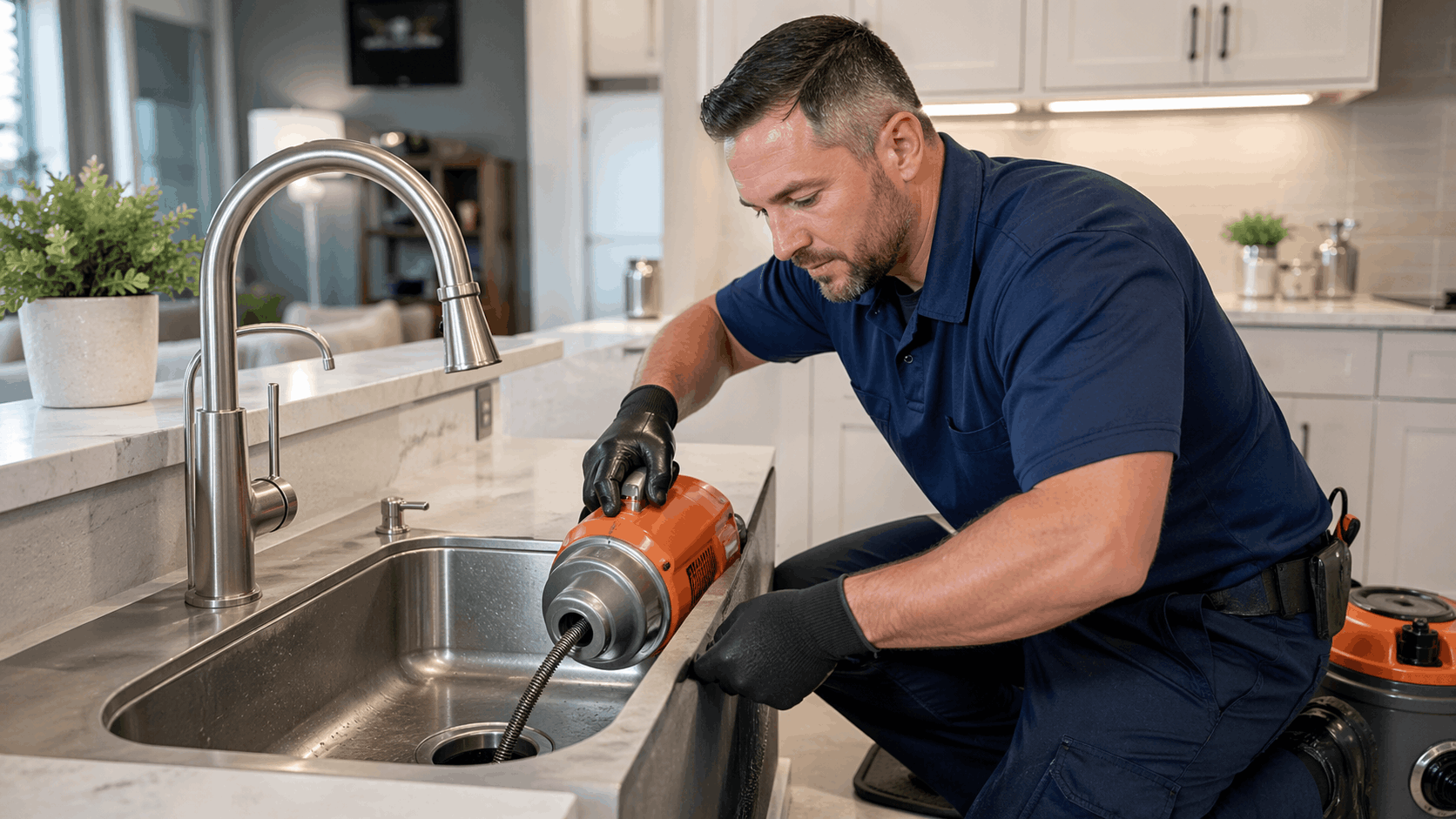
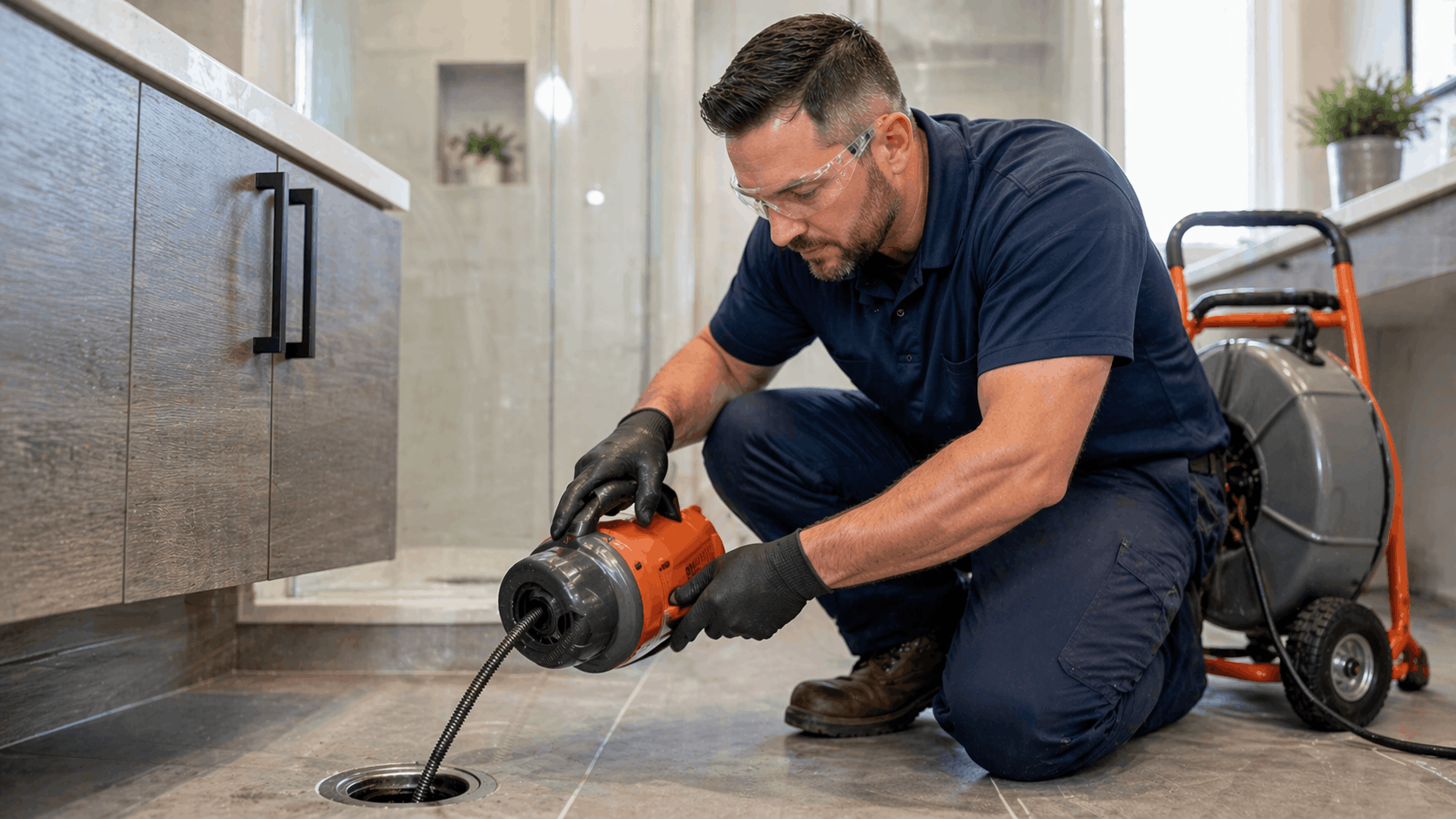
Hydro jetting drain cleaning uses water delivered at pressures between 1,500 and 4,000 PSI through a specialized nozzle that rotates inside the pipe. That water hits the pipe walls from multiple angles simultaneously, physically cutting through mineral deposits and flushing the debris downstream. For severe Las Vegas hard water buildup, this is the most thorough option available.
From a homeowner's perspective, a hydro jetting service typically takes one to two hours for a standard residential drain line. A technician accesses the cleanout, threads the jetting hose into the pipe, and works the nozzle through the line while the high pressure water does the work. The homeowner usually notices the difference immediately - water flows the way it did when the pipes were new.
High pressure drain cleaning through hydro jetting works best when scale has built up to a significant thickness and when the pipes are in reasonable structural condition. That is why a camera inspection almost always comes first. Sending 4,000 PSI into a pipe that is already cracked can make things worse, not better.
Mechanical Drain Snaking for Partial Blockages
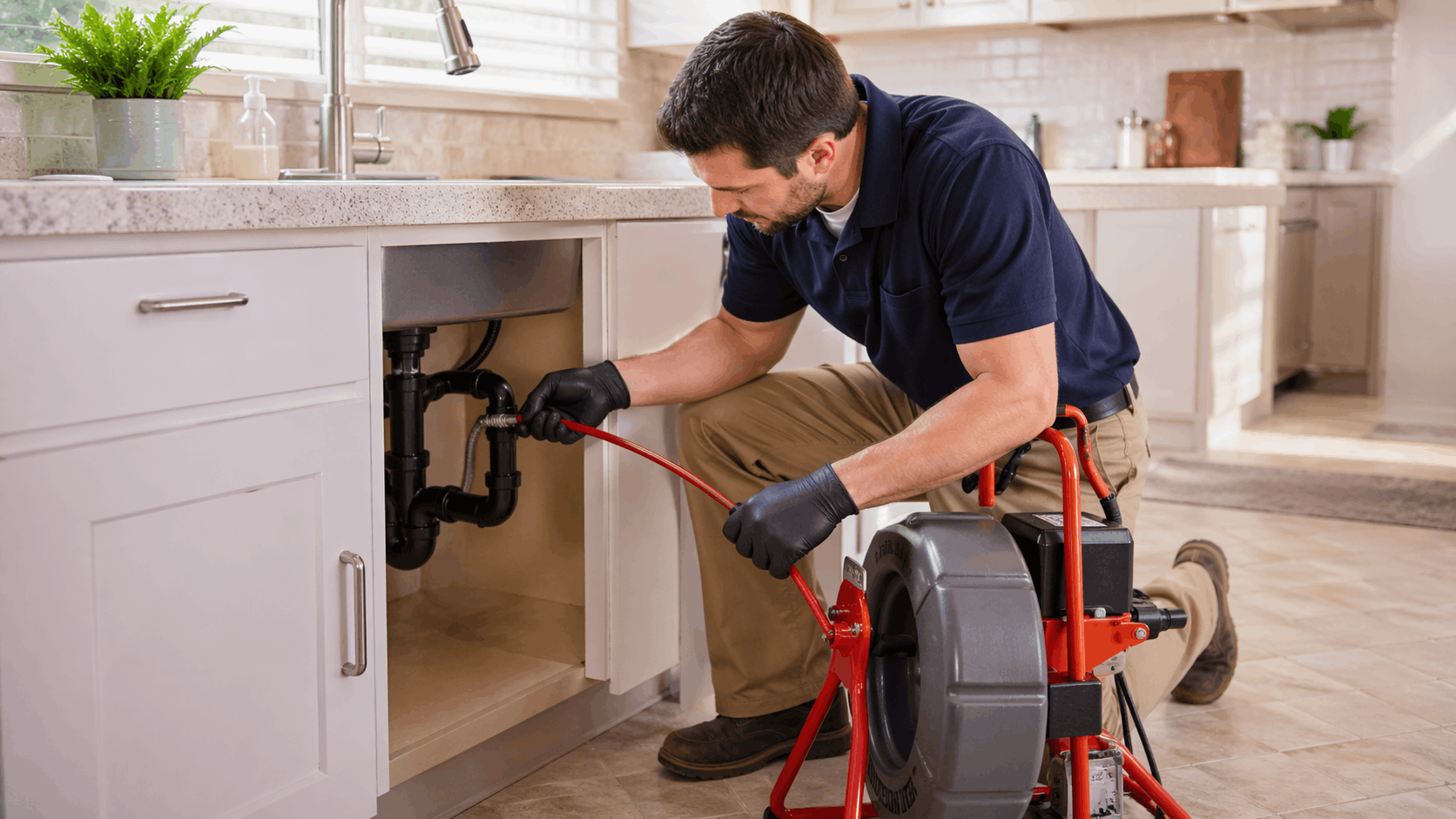
A drain snake or auger makes sense as a first step when a partial blockage involves both mineral scale and organic material - hair, soap scum, or food debris that has gotten trapped in the narrowed pipe. The snake can physically break through the combined clog and restore some flow even when it cannot address the underlying scale.
The honest limitation of mechanical drain clearing is that it punches a hole through a clog without removing the scale from the pipe walls. Imagine pushing a pencil through a narrow tube - the hole is there, but the tube is still narrow. Within weeks or months, the drain slows again. For a pure mineral buildup problem, snaking is a short-term measure, not a solution.
A drain snake Las Vegas homeowners can buy at a hardware store is adequate for pulling a hair clog near the drain opening. But for buildup further down the line or in the main drain stack, calling Active Plumbing is the practical choice. Forcing the wrong tool too deep into scale-coated pipes can crack older pipe walls or push debris into a spot that is harder to reach.
Professional Descaling Treatments and Acid-Based Solutions
Acid descaling pipes is a controlled process that licensed plumbers perform using professional-grade citric acid or diluted hydrochloric acid solutions. These chemicals react directly with calcium carbonate - the main component of hard water scale - and dissolve it without the indiscriminate corrosion risk that consumer products carry. Citric acid drain treatment is gentler and works well on light to moderate scale. Hydrochloric acid solutions are reserved for severe buildup in pipes that can handle the exposure.
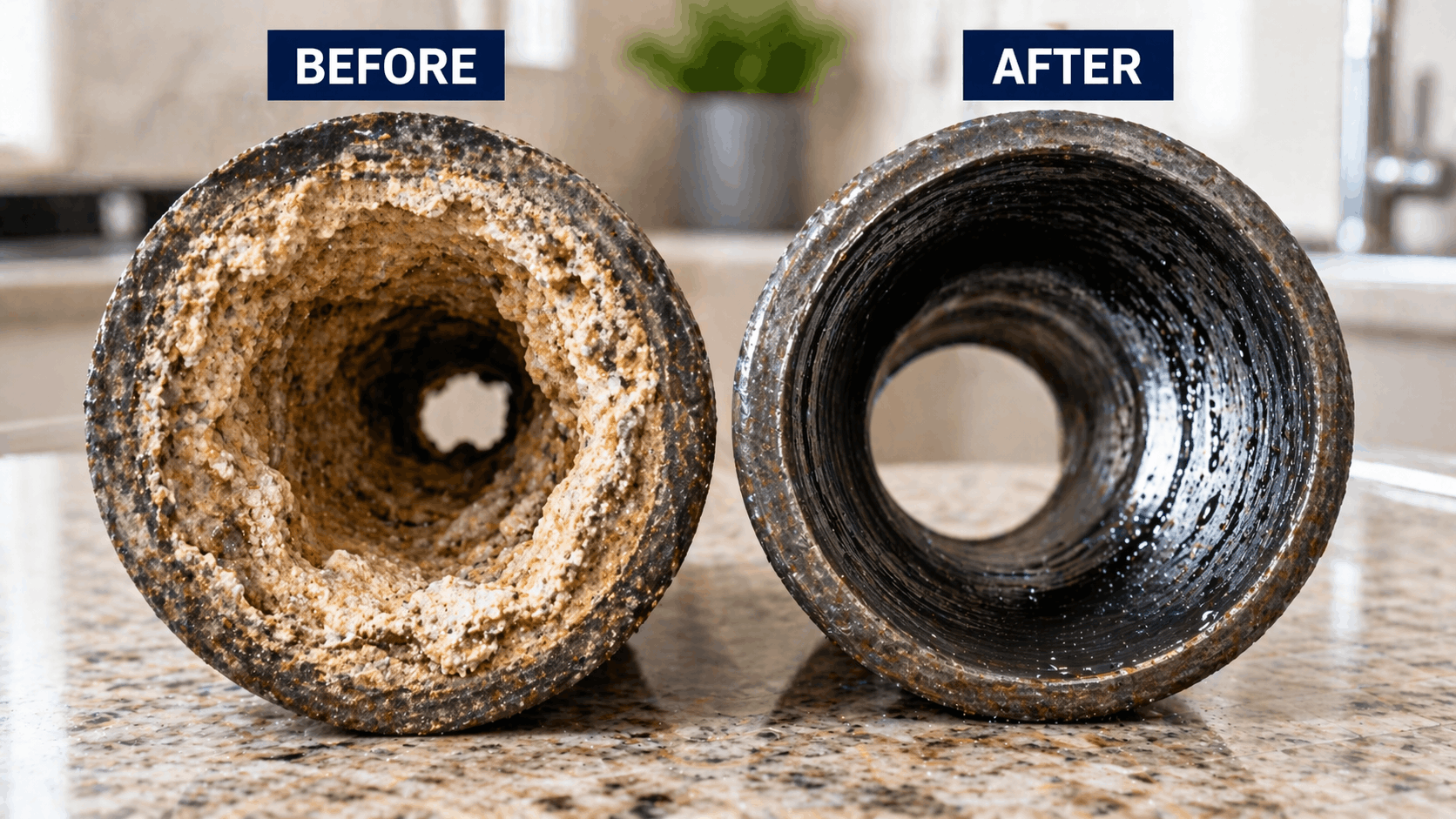
Professional descaling Las Vegas plumbers perform this service carefully, controlling concentration and contact time to protect pipe walls. The solution sits in the line for a defined period, dissolves the scale, and then gets flushed thoroughly. After treatment, the pipe walls are noticeably smoother and flow rates improve significantly.
Consumer acid cleaners sold in hardware stores are far more diluted and far less specific in what they attack. They also carry a real risk of damaging PVC seals and speeding up corrosion in older galvanized lines when used repeatedly. Professional-grade treatment, applied correctly and infrequently, is both safer for pipes and more effective against scale.
Get Your Quote
Tell us what's going on and we'll get back to you. We're open 24/7.
Why Las Vegas Hard Water Hits Drains So Hard
Southern Nevada's water supply comes from Lake Mead, fed by the Colorado River as it drains snowmelt from the Rocky Mountains. By the time that water travels through hundreds of miles of rock and sediment, it carries a significant dissolved mineral load. The Southern Nevada Water Authority treats this water to meet federal safety standards, but treating for safety is not the same as removing hardness minerals. Calcium and magnesium stay in the water supply, and they stay in your pipes.
Most cities that get water from surface reservoirs deal with some mineral content. But Las Vegas sits in a desert basin where the Colorado River has been picking up minerals for its entire journey through the Colorado Plateau. The result is a municipal water supply that consistently ranks among the hardest in the United States.
What Makes Las Vegas Water So Mineral-Heavy
Hard water measurement uses grains per gallon or parts per million to describe how much dissolved calcium and magnesium a water supply contains. According to the Southern Nevada Water Authority's annual water quality reports, Las Vegas tap water typically reads between 278 and 320 parts per million - well above the 180 PPM threshold that classifies water as "very hard." For reference, most cities on the East Coast fall between 50 and 150 PPM.
Calcium carbonate buildup is the specific compound that forms when dissolved calcium in hard water contacts pipe surfaces, particularly when water temperature changes. Hot showers and dishwasher cycles are especially effective at triggering this process. The calcium essentially precipitates out of the water and sticks to whatever surface it touches.
Inside a drain pipe, that means every gallon of water that passes through leaves a microscopic trace of mineral behind. Over months and years, those traces add up to a visible, restrictive layer of scale.
How Mineral Scale Forms Inside Drain Pipes Over Time
Scale formation starts slowly. In the first year or two in a newer home, deposits are thin - almost undetectable. By year five, a pipe that started with a full one-and-a-half-inch interior diameter may have an effective opening closer to one inch. By year ten in an untreated Las Vegas home, that narrowing can be severe enough to cause consistent slow drains and standing water.
Limescale pipe buildup happens more quickly in hot water lines and drain pipes that carry warm water from showers, sinks, and dishwashers. Slow drains Las Vegas homeowners notice after a decade of living in a house are often the result of this gradual narrowing, not a sudden clog. The problem built up over years before it became noticeable.
There is a real difference between newer master-planned communities like Inspirada in Henderson versus older homes near downtown Las Vegas. A home in Inspirada built in 2018 may have another decade before mineral buildup becomes a significant drain issue. A home near Fremont Street built in 1975 with original pipes has had nearly fifty years of Las Vegas water flowing through it - and those pipes likely show it.
Neighborhoods That See the Worst Hard Water Drain Problems
The Active Plumbing team gets drain calls from across the Las Vegas Valley, but certain areas come up repeatedly. Older homes in North Las Vegas near Carey Avenue show some of the most severe scale accumulation we see - galvanized pipes installed in the 1960s and 1970s that have decades of mineral deposits coating every interior surface.
Properties in the older sections of Henderson around Water Street are another frequent call area. Those homes were built largely in the 1950s and 1960s and many still have original plumbing. Henderson hard water drain issues there often involve pipes that are already partially corroded alongside the scale buildup, which changes the cleaning approach entirely.
Spring Valley drain problems are common in homes built in the 1980s and early 1990s along the Rainbow Boulevard corridor. Those homes are old enough to have meaningful accumulation but not always old enough for homeowners to realize the pipes need professional attention. Many of those residents have been quietly fighting slow drains for years without connecting the cause to mineral buildup.
Need Help in Las Vegas?
Active Plumbing serves Las Vegas and all of Las Vegas Valley.
Signs Your Drains Have a Hard Water Buildup Problem
A hard water clog presents differently than a hair clog or a grease blockage. Knowing the difference helps a homeowner describe the problem accurately when calling a plumber - and it helps avoid wasting money on treatments that will not work. Drain buildup Las Vegas homeowners deal with tends to follow predictable patterns that make it identifiable before a camera ever goes into the pipe.
The symptoms break into three main categories: drainage behavior over time, visible deposits around fixtures, and sounds or standing water that signal a partial blockage. Any one of these warrants attention. Multiple symptoms together usually mean it is time to call for a professional assessment.
Slow Draining That Gets Worse No Matter What You Try
The pattern is almost always the same. A drain slows gradually over weeks or months - not all at once. A homeowner buys a bottle of drain cleaner, pours it in, and the drain improves for a few days. Then the gradual drain slowdown returns, often worse than before. This cycle repeats until the drain is barely functional.
This cycle happens because chemical drain cleaners dissolve a thin layer of organic material that has gotten trapped in the scale, but they do not touch the calcium deposits underneath. The pipe opens up slightly, then catches new debris again quickly because the scale-roughened walls provide even more surface area for material to stick to.
A recurring slow drain that does not respond permanently to store-bought treatments is one of the clearest signs that mineral scale is the underlying issue. Organic clogs - hair, grease, food debris - usually respond more completely to physical clearing or chemical treatment and stay clear for longer.
White or Chalky Residue Around Drain Openings
Calcium deposits drain outward, too. The same minerals coating the inside of pipes leave visible white or chalky residue around drain covers, faucet bases, and showerheads. This white residue around drain openings is not just cosmetic - it is a direct signal of what is happening inside the pipe where it cannot be seen.
Homeowners in the Desert Shores and Anthem areas frequently report this white crust as the first thing they notice, often before they realize the drain is running slow. The white buildup on a showerhead or faucet spout is the same calcium carbonate that lines the interior of the drain. If it is visible on fixtures, it is definitely present inside the pipes.
Limescale visible signs like this make the diagnosis straightforward. There is no need to guess whether the problem is mineral-related when the evidence is sitting right there on the hardware. These visible deposits are worth taking seriously rather than just wiping away.
Gurgling Sounds and Standing Water After Showering
Gurgling drain sounds happen when water has to push past a partial obstruction and air gets pulled through the drain system in response. That gurgling after a shower or sink use is a sign that the pipe diameter has narrowed enough to restrict normal flow. Standing water in a shower pan that did not used to pool is the same problem made visible.
The difference between a scale-related partial blockage and a full organic clog is this: scale-related blockages develop slowly and affect water flow consistently at any rate, while a full hair or grease clog often develops more quickly and can completely stop flow. With scale, water still moves - just slowly and with those gurgling protests.
A simple test: fill the sink halfway, then release it. If the water drains but takes more than fifteen seconds to clear, measure that against how the same sink performed a year ago. If the slowdown is gradual and progressive, mineral buildup is likely. If the drain went from fine to stopped over a matter of days, an organic clog or foreign object is more probable.
Store-Bought Drain Cleaners and Why They Often Fail Here
The drain cleaner aisle at any Las Vegas grocery store offers a dozen products promising to clear clogs fast. Most of them work reasonably well for what they are designed to do. The problem is that chemical drain cleaners Las Vegas homeowners reach for are formulated for organic material, not mineral deposits. Using them on a hard water scale problem is like using a butter knife to strip a screw - the tool is not wrong, it is just wrong for this job.
Beyond the ineffectiveness, repeated use of these products in older Las Vegas homes carries a genuine pipe damage risk that most homeowners are not warned about on the label.
What Chemical Drain Cleaners Are Actually Built to Do
Common drain cleaners use a sodium hydroxide drain cleaner formula - lye - that works by generating heat and breaking apart proteins. Hair, grease, and food particles are protein-based or fat-based organic materials, and sodium hydroxide is very effective against them. Some heavy-duty formulas use a sulfuric acid drain cleaner approach, which also targets organic material through acid hydrolysis.
Calcium carbonate - the compound in hard water scale - is a mineral salt, not an organic compound. It does not respond meaningfully to sodium hydroxide, and while sulfuric acid will react with calcium carbonate to some degree, the diluted concentrations in consumer products and the short contact time in a drain are rarely sufficient to dissolve established scale.
The distinction between organic vs mineral clogs matters because the wrong treatment wastes time and money while creating a false sense that the problem has been addressed. Homeowners pour product after product into a scale-coated drain, see brief improvement from clearing surface debris, and then watch the slowdown return.
The Pipe Damage Risk With Repeated Chemical Use
Older galvanized pipes, common in Las Vegas homes built before 1990, are already prone to interior corrosion. Galvanized pipe damage speeds up when strong alkaline or acid chemicals contact the pipe walls repeatedly. Active Plumbing regularly gets called to homes near Rancho Drive and in the older North Las Vegas housing stock where repeated chemical drain cleaner use has visibly thinned pipe walls.
PVC pipe chemical damage is also a concern, though different in nature. High-concentration drain cleaners generate heat during the chemical reaction - sodium hydroxide formulas in particular. That heat can soften PVC at drain connections and joints, causing seals to degrade. This is not a hypothetical risk in older Las Vegas homes where PVC was used in repairs or remodels alongside original galvanized or cast iron.
The pattern we see is straightforward: a homeowner spends years buying drain cleaner every few months, the drain never truly clears, and eventually we find pipes that need repair or full replacement because the repeated chemical exposure compounded the damage that mineral scale started. Whole-house repipe becomes necessary years earlier than it should have.
How Active Plumbing Diagnoses and Treats Hard Water Drain Problems
When Active Plumbing responds to a hard water drain call in the Las Vegas Valley, the process follows a specific sequence that starts with information gathering before any equipment goes into the pipe. Skipping steps here is how repeat service calls happen - treating symptoms without understanding the actual condition of the plumbing rarely produces lasting results.
The approach is the same whether the call comes from a house in Summerlin, an older rental property in downtown Las Vegas, or a newer build in Henderson. The tools may vary, but the diagnostic-first philosophy does not.
Video Camera Inspection: Seeing the Scale Before Treating It
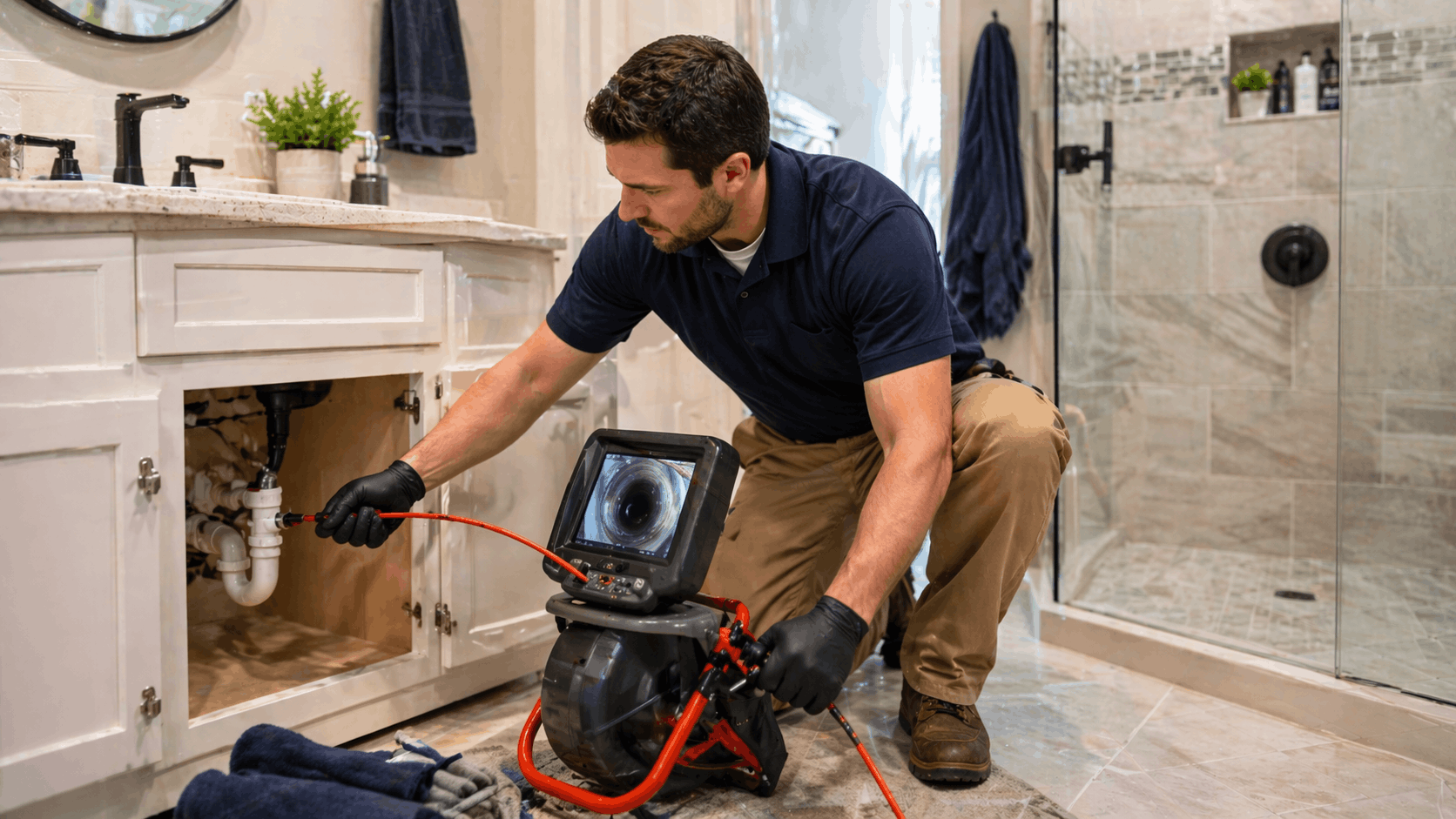
A pipe camera inspection sends a small camera through the drain line and transmits a real-time video feed that shows exactly where scale has accumulated, how thick it is, and whether any cracks, root intrusion, or corrosion are present. This step changes everything about how the job gets approached.
Without drain video inspection, a technician is guessing. Hydro jetting a pipe that has a stress fracture in it can cause a full break. Snaking a pipe that has significant root intrusion without recognizing the roots first just makes the problem harder to address later. The camera eliminates those guesses before they become expensive mistakes.
Sewer camera Las Vegas homeowners sometimes view as an upsell. It is actually the step that protects them from paying for a cleaning that either fails or causes additional damage. If a plumber is willing to treat a drain without looking at it first, that is worth asking about.
Choosing the Right Method Based on Pipe Age and Buildup Severity
What the camera reveals drives the method selection. Light scale on relatively young PVC pipes in a newer build in Skye Canyon or Cadence in Henderson responds well to a professional citric acid descaling treatment. Moderate scale on reasonably sound pipes in a 1990s Spring Valley home is a good candidate for hydro jetting. Severe scale combined with corrosion in a 1960s North Las Vegas home may call for a gentler mechanical approach to avoid stressing compromised pipe walls.
Pipe condition assessment also determines pressure settings when hydro jetting is the chosen method. A technician does not run 4,000 PSI through a line showing signs of joint deterioration. The camera data and the pipe age together inform exactly what pressure and method are appropriate.
Las Vegas plumbing diagnosis done this way produces cleaning results that hold. Homeowners stop calling back every three months because the underlying condition was understood before the work started.
What Active Plumbing Recommends After the Drain Is Cleared
After a hard water drain cleaning, the conversation shifts to what happens next. A freshly cleaned drain in a Las Vegas home without any water treatment will begin accumulating scale again almost immediately - the water supply has not changed. Water softener installation is the most effective follow-up for slowing that reformation significantly.
Drain maintenance Las Vegas homeowners can realistically manage includes monthly hot vinegar flushes to keep surface deposits from building up, and making sure drain screens are in place to prevent hair and debris from combining with scale residue. These habits do not replace professional cleaning but they do extend the time between service calls.
For specific timeframes: most Las Vegas homes without water softeners benefit from professional drain cleaning every one to two years. Homes with a properly maintained water softener often go three to four years between cleanings. Older galvanized pipe systems in pre-1990 homes should stay on an annual schedule regardless of softener use because the pipe walls themselves are a factor in buildup rate.
Need Help in Las Vegas?
Active Plumbing serves Las Vegas and all of Las Vegas Valley.
DIY Approaches That Can Help Between Professional Cleanings
There is a real and useful category of home drain maintenance that Las Vegas homeowners can do between professional service visits. These are not alternatives to professional cleaning when scale is established - they are ways to slow the buildup process and extend the life of a professionally cleaned drain. Done consistently, they make a noticeable difference.
The approaches worth doing are simple and inexpensive. The ones homeowners often try - heavy chemical use, aggressive plunging on mineral-coated pipes - can cause more harm than good and are worth avoiding.
White Vinegar Flushes and How to Do Them Correctly
A vinegar drain flush uses the mild acetic acid in white vinegar to dissolve light surface calcium deposits before they bond firmly to pipe walls. Heat the vinegar to just below boiling - about 190 degrees Fahrenheit - then pour approximately two cups slowly down the drain. Let it sit for thirty minutes, then flush with hot tap water for two to three minutes.
DIY drain descaling with vinegar works on deposits that have formed within the last few weeks or months. It does not penetrate established scale that has been building for years. Think of it as routine maintenance that keeps the drain from accumulating surface deposits between professional cleanings, not a solution for a drain that is already significantly restricted.
Frequency matters here. A monthly vinegar flush on bathroom sinks and shower drains is a reasonable routine for Las Vegas homes. Twice monthly in homes with heavy water usage or no water softener. The acetic acid limescale reaction is mild enough that it poses no risk to healthy PVC or copper pipes at this concentration and frequency.
Drain Screens and Water Softener Salt: Prevention Over Treatment
A drain screen filter is a two-dollar piece of hardware that prevents hair and soap scum from combining with scale residue inside the pipe. That combination creates blockages far more quickly than scale alone. Installing screens in every shower and bathtub drain is the simplest and most cost-effective thing a Las Vegas homeowner can do for drain health.
A properly maintained water softener is the larger investment with the larger payoff. Hard water prevention through softening reduces the mineral content of the water before it ever reaches the pipes. Salt levels in a brine tank need to be checked monthly and maintained properly - a softener running low on salt reverts to delivering hard water and the benefit disappears.
Realistic expectations for a Las Vegas home with a water softener, screens, and monthly vinegar flushes: professional drain cleaning intervals can extend from every one to two years without treatment to every three to four years with consistent prevention habits. That is real money saved over a decade of homeownership.
Water Softeners as a Long-Term Solution for Las Vegas Pipes
Of all the things a Las Vegas homeowner can do to protect their plumbing from hard water, installing a whole-home water softener is the one with the broadest impact. It addresses the source of the problem rather than the symptoms. Every fixture, appliance, and drain line in the house benefits from softened water - not just the ones currently showing scale buildup.
Active Plumbing installs water softeners throughout the Las Vegas Valley, and a common feedback from homeowners is that they wish they had done it sooner. The improvement in drain performance, appliance longevity, and water heater efficiency is tangible within weeks of installation. Learn more about the water treatment services Active Plumbing offers to find the right fit for your home.
How a Water Softener Reduces Scale Before It Reaches Your Drains
The ion exchange water softener process works by passing hard water through a resin tank filled with sodium-charged beads. Calcium and magnesium ions - the minerals that cause scale - swap places with sodium ions on the resin. The water that exits the tank has the same volume but carries sodium instead of calcium, and sodium does not form scale inside pipes or on fixtures.
Calcium removal from water this way directly reduces the rate of drain pipe narrowing. A home on the Las Vegas water supply that was accumulating meaningful scale every two to three years may go a decade between significant drain cleanings after softener installation. The water flowing through the pipes simply does not deposit minerals at the same rate.
Softener drain protection extends to water heaters, dishwashers, and washing machines as well. Tankless water heater descaling is a recurring service need in Las Vegas - but homes with water softeners need it far less often, which represents another meaningful cost savings over time.
Cost, Installation, and What Las Vegas Homeowners Should Expect
Water softener cost in Las Vegas runs from approximately $800 on the low end for a basic single-tank unit in a smaller home, up to $2,500 or more for a high-capacity dual-tank system suited to a larger household. The range depends on home size, daily water usage, and the type of system chosen. Most Las Vegas single-family homes fall in the $1,200 to $1,800 range for a quality installation.
The installation process typically takes three to four hours. A plumber connects the softener to the main water supply line, installs a bypass valve, runs a drain line for the regeneration cycle, and confirms the unit is programmed correctly for the home's water usage. Active Plumbing installs softeners throughout Henderson, Summerlin, and the northwest valley - areas where the hard water problem is consistent and the long-term savings from softening are well documented.
Ongoing costs include softener salt, which runs roughly $10 to $25 per month depending on household size and salt type. Most homeowners notice a difference in how their water feels, how quickly soap lathers, and how long it takes for white deposits to reappear on fixtures within the first two to four weeks after installation.
Need Help in Las Vegas?
Active Plumbing serves Las Vegas and all of Las Vegas Valley.
How Often Should Las Vegas Homeowners Schedule Drain Cleaning
The honest answer to drain cleaning frequency Las Vegas homeowners need varies by home age, pipe material, household size, and whether softened water is running through the system. Vague advice like "clean your drains annually" does not account for the real differences between a 1968 galvanized-pipe home in North Las Vegas and a 2020 PVC-piped townhome in Providence.
The goal of a preventive drain maintenance schedule is to catch buildup before it causes a service emergency - not to clean drains that do not need it yet. The right schedule saves money compared to either cleaning too often or waiting until a blockage forces an emergency call.
Frequency Guidelines Based on Home Age and Pipe Type
Older galvanized pipes in pre-1990 North Las Vegas homes should be on an annual professional cleaning schedule. Those pipes have decades of buildup potential, the interior walls are already roughened by corrosion which speeds up scale adhesion, and the pipe walls themselves are thinner and more vulnerable. Annual hydro jetting or descaling keeps flow rates acceptable and gives the plumber a chance to spot developing problems before they become pipe failures.
Newer PVC-piped homes in master-planned communities like Providence in the northwest valley or Inspirada in Henderson can realistically go two to three years between professional drain cleanings if a water softener is in use and home maintenance habits are consistent. Without a softener, every one to two years is more appropriate given Las Vegas water hardness levels.
A drain cleaning schedule for galvanized vs PVC pipes is not just about the pipe material - it is about the full picture of the home's water history. A PVC-piped home where the previous owners used heavy chemical drain cleaners for years may have compromised joint seals that need checking more often. This is another reason the camera inspection step matters.
Warning Signs It Is Time to Call Before the Schedule Says So
Drain emergency signs that warrant a call to Active Plumbing outside of any scheduled maintenance interval include multiple slow drains occurring at the same time. When more than one fixture in a home slows simultaneously, the problem is likely in the main drain stack or sewer line rather than an individual fixture drain - and that situation can escalate to a full backup quickly.
A sulfur smell from drains, water backing up in a shower when a toilet is flushed, or water appearing in unexpected places - like a floor drain backing up when the washing machine runs - signals that the situation has moved beyond routine scale buildup. These are signs of a more significant blockage or possible sewer line issue that needs prompt attention.
When these symptoms appear, do not wait for a scheduled appointment. Active Plumbing offers 24/7 emergency plumbing service for situations that cannot wait. A sewer backup or complete drain failure in a Las Vegas home during a summer weekend is not a situation to address on Monday morning.
Final Thoughts
Las Vegas hard water is genuinely one of the most aggressive residential plumbing challenges in the country. The minerals flowing through Southern Nevada pipes do not care whether a home is brand new in Cadence or decades old near Carey Avenue - they accumulate on every surface they touch, every day.
The best drain cleaning method for Las Vegas hard water buildup is the one matched to the actual condition of the pipes - determined by camera inspection rather than guesswork. Hydro jetting handles severe established scale. Professional descaling treatments address moderate buildup with chemical precision. Snaking handles mixed clogs as a first step. Water softeners prevent the problem from rebuilding as fast after cleaning. All of these approaches, applied in the right sequence and at the right intervals, keep Las Vegas drains functional for decades.
If a drain in your home has been getting slower, if white crust is visible around fixtures, or if store-bought products have stopped making any real difference, contact Active Plumbing to schedule a camera inspection and drain assessment. The team serves all of Clark County and brings direct experience with the specific plumbing conditions in every part of the Las Vegas Valley.
Frequently Asked Questions
- What is the fastest way to remove hard water buildup from a drain?
- Hydro jetting is the fastest method for established mineral scale - a trained technician can clear a heavily scaled residential drain line in one to two hours. Light surface buildup that has not yet bonded firmly to pipe walls may respond to a heated vinegar flush, though this approach works only on very recent, thin deposits. The speed of any cleaning method depends directly on how much buildup is present and the age and condition of the pipes involved.
- Can I use Drano or Liquid-Plumr to break down hard water scale?
- These products dissolve organic matter like hair, grease, and soap scum very effectively, but they do very little against calcium carbonate scale. The chemistry simply does not match the problem. Beyond ineffectiveness, repeated use of sodium hydroxide-based drain cleaners on older Las Vegas plumbing - particularly galvanized pipes common in homes built before 1990 - speeds up interior corrosion and weakens pipe joints over time. Using them occasionally for organic clogs is reasonable; using them repeatedly as a scale treatment causes more problems than it solves.
- How much does professional drain cleaning cost in Las Vegas?
- Basic mechanical snaking runs between $100 and $250 for a standard residential drain line. Hydro jetting typically falls between $300 and $600 depending on line length and accessibility. A sewer camera inspection adds $150 to $300 to the job. Active Plumbing provides a written price before any work begins, so homeowners know what the service will cost before a technician starts.
- Is Las Vegas water really that much harder than other cities?
- Las Vegas water regularly tests between 278 and 320 parts per million of hardness, placing it among the hardest municipal water supplies in the United States. The national average is roughly 100 to 150 parts per million, and water above 180 parts per million is classified as "very hard" by the U.S. Geological Survey . Las Vegas sits well above that threshold. Cities like Seattle, Portland, and Atlanta deal with soft to moderately hard water. The comparison is stark and explains why pipe scale is such a consistent issue in Southern Nevada homes.
- Will a water softener fix my slow drain problem right away?
- A water softener prevents future mineral buildup but does not remove scale that is already inside the pipes. Existing scale requires professional cleaning first - hydro jetting or descaling depending on severity. After that cleaning, a properly installed and maintained water softener prevents the calcium and magnesium in Las Vegas tap water from depositing at the same rate, extending the time before significant buildup returns. The softener is a prevention tool; the professional cleaning is the treatment.
- How do I know if my drain problem is from hard water or something else?
- Mineral scale clogs develop gradually over weeks or months, often affect multiple fixtures, and show visible white residue around drain openings and on faucet hardware. Hair clogs tend to appear more suddenly, affect one fixture at a time, and respond at least briefly to plunging or snaking. Tree root intrusion usually presents as gurgling sounds from multiple drains simultaneously, a persistent sewage smell, and sometimes visible surface clues like unusually green patches in the yard above the sewer line. Multiple slow drains with white fixture deposits almost always point to scale.
- Can hard water buildup damage my pipes permanently?
- Severe untreated scale narrows the pipe interior to the point where water pressure increases to maintain flow, which stresses pipe joints and fittings over time. In older galvanized pipes in North Las Vegas and downtown neighborhoods, this added stress combines with existing corrosion to speed up failure. Catching scale buildup early - through regular professional cleaning and camera inspection - makes a significant difference in how long original pipes last before replacement becomes necessary. A pipe that is caught and cleaned at moderate scale is very different from one allowed to build to near-complete blockage.
- How long does hydro jetting take and how long does it last?
- A typical residential hydro jetting job takes one to two hours for a standard drain line, assuming good cleanout access. More complex jobs involving longer runs or severely restricted lines may take longer. Results in a Las Vegas home typically last one to three years depending on household size, water usage, and whether a water softener is in use. Homes with softened water and consistent maintenance habits regularly see three or more years of good drain performance after a hydro jetting service.
- Does Active Plumbing serve all parts of the Las Vegas Valley?
- Active Plumbing serves Las Vegas , Henderson , North Las Vegas , Summerlin, Spring Valley , Boulder City, and surrounding communities throughout Clark County. The team is familiar with the specific plumbing conditions in each area - from the aging galvanized systems near Carey Avenue in North Las Vegas to the newer PVC construction in master-planned communities like Skye Canyon and Cadence. Service areas and current scheduling information are available through the locations page .
- Are there any Las Vegas building codes that affect how drain cleaning is done?
- Clark County and the City of Las Vegas follow the Uniform Plumbing Code, and licensed plumbers like Active Plumbing stay current on local amendments and permit requirements. Some HOA communities in Summerlin and Anthem have additional requirements for exterior plumbing work and equipment placement - water softener installations near exterior walls sometimes fall under these guidelines. A licensed plumber navigating these requirements protects the homeowner from permit or HOA compliance issues down the road.
Licensed plumbing professionals serving Las Vegas and Las Vegas Valley.
Licensed in Nevada · License #0047021
Last updated on
Why trust Active Plumbing?
Founded in 1991, Active Plumbing is a licensed and insured plumber serving Las Vegas and Las Vegas Valley. All content is reviewed by our licensed technicians.

Need Help in Las Vegas?
Active Plumbing serves Las Vegas and all of Las Vegas Valley.
Related Articles
Best Water Heater Option for Las Vegas Homes: Tank vs Tankless
Compare tank vs tankless water heaters for Las Vegas homes. Costs, hard water effects, lifespan, permits, and which option fits your neighborhood best.
How to Prevent Water Heater Failure in Las Vegas (Hard Water Maintenance Plan)
Learn how Las Vegas hard water wears out water heaters sooner and follow our maintenance plan to extend your unit's lifespan years.
Tankless Water Heater Maintenance in Las Vegas: Why Hard Water Makes It Critical
Las Vegas hard water from Lake Mead builds scale fast inside tankless heaters. Learn the warning signs, real maintenance steps, and how often valley homes need service.