Providence Las Vegas Plumber: Pressure Issues in Hillside Construction
Key Takeaways
- Homes higher on the Providence slopes lose pressure to elevation, roughly 0.43 psi per foot of climb.
- Lower streets often run high pressure and need a regulator to protect fixtures from water hammer and early wear.
- Common warning signs include weak upstairs showers, banging pipes, fast-failing fixtures, and pressure that swings during peak hours.
- The four main causes are gravity, undersized or aging pipes, a faulty pressure regulator, and hard water scale buildup.
- A proper diagnosis measures static and working pressure, inspects the PRV and main shutoff, and checks for hidden leaks.
- Fixes include PRV replacement, a booster pump for hilltop homes, upsizing or repiping lines, and a water softener.
- Yearly pressure checks, timely regulator service every 7 to 12 years, and water heater flushing keep pressure steady.
- A local plumber who knows Providence, Skye Canyon, and Centennial Hills sizes equipment correctly for each hillside home.
In This Article
A homeowner off Grand Canyon Drive called us last spring with a story we hear often. Her morning shower barely trickled, the upstairs bathroom felt worse than the downstairs, and at night the pipes banged loud enough to wake the kids. She lives on one of the higher streets in Providence, tucked into the northwest hills above the 215 Beltway, and she assumed something was broken. It was not broken. It was elevation, terrain, and a tired pressure regulator all working against her.
Providence sits on sloped ground north of the valley floor, and that geography changes how water behaves at every tap. Homes higher on the hill fight gravity for pressure, while some homes see pressure spike high enough to wear out fixtures years early. Both problems trace back to the same root: hillside construction reacts differently to the water supply than a flat lot down in the valley.
Why Providence Homes Face Unique Water Pressure Challenges?
Providence is a master-planned community built into rising terrain, not flat desert. That slope is the reason two neighbors can have very different water pressure while sharing the same water main. When you live on a hill, the position of your home relative to the city water source matters more than most people realize.
The higher a home sits, the harder water has to climb to reach it. Homes lower on the slope often enjoy strong, steady flow, while homes near the top can feel starved during peak hours. Below is a quick look at how elevation shapes pressure across a community like Providence Las Vegas.
| Home Position | Typical Pressure Behavior | Common Complaint |
|---|---|---|
| Lower slope (valley side) | Higher static pressure, sometimes above 80 psi | Water hammer, fixture wear |
| Mid slope | Balanced 50 to 70 psi range | Few issues if regulator is healthy |
| Upper slope (hilltop streets) | Lower pressure, drops during peak use | Weak showers, slow tubs |
Once a homeowner understands where their house sits on the hill, the pressure symptoms start to make sense. From there, the fix becomes a matter of matching the right equipment to the elevation.
How Elevation North of the 215 Beltway Affects Pressure
Homes near the higher slopes off Grand Canyon Drive and Elkhorn Road sit at a very different elevation than the city water source down in the valley. Water travels uphill to reach these streets, and every foot of climb costs pressure along the way. That is the main reason a hilltop home can feel weak even when the water main pressure is perfectly fine.
The rule of thumb our team uses is simple. Water loses roughly 0.43 psi for every foot it rises. A home sitting 60 feet higher than a neighbor down the slope can start with nearly 26 psi less at the meter before any indoor plumbing gets involved.
This water pressure loss is not a defect. It is physics working against the terrain that makes Providence such a scenic place to live. Homes along the upper streets near Elkhorn often feel this drop most in the mornings.
The good news is that this kind of elevation-driven loss is predictable. Once we measure the pressure at the meter and inside the home, we can size a solution that accounts for the exact climb up the hill.
The Role of the Las Vegas Valley Water District
The Las Vegas Valley Water District sets the base supply pressure that reaches each neighborhood through the water main. That base pressure is designed to serve a wide range of elevations, but it cannot be perfect for every street at once.
Upper-elevation neighborhoods sometimes receive less usable pressure than lower ones because the same supply has to fight more vertical rise to reach them. The district builds pressure zones and pumping stations to help balance this, but the higher slopes of Providence still tend to sit at the weaker end of their zone.
Lower streets can have the opposite issue. They may receive supply pressure high enough that a home actually needs a regulator to protect the plumbing inside.
Knowing your pressure zone helps explain why your experience differs from a friend across the community. It also guides whether the answer is boosting pressure or reducing it.
Newer Construction vs Established Streets in Providence
Newer phases of Providence near Skye Canyon and the northern edges tend to use modern PEX piping and current fixtures. These homes usually start with clean, full-diameter supply lines that carry water efficiently. When they have pressure trouble, it is more often the regulator or the elevation than the pipes themselves.
Older sections of Providence may have copper or early-generation materials that have carried hard water for years. New construction plumbing behaves differently than lines that have collected a decade of mineral scale.
Pipe materials matter because scale narrows the inside of the pipe over time. A three-quarter-inch line choked with buildup can flow like a half-inch line, which drops pressure and flow at the tap.
When we service homes across Providence, we always factor in the age of the plumbing. A fix that works for a brand-new home may not solve the same symptom in an established one.
Get Your Quote
Tell us what's going on and we'll get back to you. We're open 24/7.
Common Signs of Pressure Problems in Hillside Homes
Most homeowners do not measure psi. They notice that something feels off - the shower is weak, the pipes are loud, or a faucet failed way too soon. These everyday clues are usually the first sign of a pressure problem worth checking.
Here are the symptoms Providence homeowners describe to us most often:
- Weak showers that get worse on the second floor
- Slow-filling tubs and long waits for the washing machine
- Banging pipes when a faucet or appliance shuts off
- Faucets and valves that wear out or drip after only a few years
- Pressure that changes from morning to night
Learning to read these signs helps a homeowner decide whether to test the pressure themselves or call for an inspection.
Weak Showers and Slow-Filling Tubs
Low pressure shows up first in the shower, and it is almost always worse upstairs. On the second floor of a two-story hillside home, water has already climbed the hill and then climbed another 8 to 10 feet inside the house. That extra vertical rise steals pressure right where you feel it most.
A tub that used to fill in a few minutes may now take twice as long. Running two fixtures at once often makes both feel weak, which is a classic low pressure clue.
Homeowners on the upper streets frequently tell us the downstairs shower is fine but the master bath upstairs disappoints. That split between floors points straight at elevation and vertical rise rather than a single broken part.
If a low-flow showerhead was installed to save water, that can stack on top of the pressure loss and make a marginal situation feel much worse.
Banging Pipes and Water Hammer
That loud knock when the dishwasher shuts off has a name: water hammer. It happens when fast-moving water slams to a stop against a closed valve, sending a shock wave back through the pipes. High or fluctuating pressure makes the banging louder and more frequent.
Homes on the lower slopes of Providence often see pressure spikes because they sit closer to the strong end of their supply zone. Without a working regulator, those spikes hammer the plumbing every time water stops suddenly.
Beyond the noise, water hammer stresses joints and fittings over time. Repeated shock can loosen connections and lead to leaks inside walls, which is a far more costly problem than a noisy pipe.
A pressure test and an inspection of the regulator usually reveal the cause quickly. In many cases a fresh regulator and an arrestor solve the banging for good.
Fixtures That Wear Out Too Fast
When faucets drip, toilet valves fail, or a water heater dies young, high pressure is a common culprit. Fixtures are built to handle a normal range, and running above 80 psi grinds them down more quickly than they should. This is a frequent issue in elevated homes where pressure runs on the strong side.
Valve failure and constant fixture repair are expensive over the years. A homeowner who replaces the same cartridge every eighteen months is often fighting high pressure damage rather than a bad fixture.
Water heaters take the hardest hit. Excess pressure strains the tank and the temperature and pressure relief valve, shortening the life of an appliance that should last a decade or more.
If fixtures across the whole home wear out early, the problem is usually system-wide pressure, not bad luck. Our pipe and fixture services team checks pressure first before replacing anything.
Pressure That Changes Throughout the Day
Many Providence homeowners notice their water feels strong at midday but weak in the morning and evening. That swing comes from peak usage across the neighborhood. When everyone showers before work or waters landscaping after sunset, demand on the shared supply rises and pressure drops.
Homes higher on the hill feel these daily pressure changes most. They already sit at the weaker end of the supply, so peak demand pushes them lower still.
Pressure fluctuation also stresses regulators and fixtures because parts flex with each up and down cycle. Over time that motion wears seals and springs inside the regulator.
Tracking when the pressure dips helps us diagnose the cause. A predictable morning and evening drop points to peak usage plus elevation, while random swings often point to a failing valve.
Need Help in Las Vegas?
Active Plumbing serves Las Vegas and all of Las Vegas Valley.
What Causes Pressure Issues in Hillside Construction
Hillside plumbing faces forces that flat-lot homes never deal with. Understanding the pressure causes helps a homeowner know whether they need more pressure, less pressure, or better pipes. The reasons usually fall into four buckets.
The table below breaks down the common causes and what they mean for your home.
| Cause | What Happens | Typical Fix |
|---|---|---|
| Gravity and vertical rise | Pressure drops about 0.43 psi per foot of climb | Booster pump |
| Undersized or aging pipes | Narrow lines restrict flow | Repipe or upsize |
| Faulty regulator | Pressure runs too high or too low | PRV replacement |
| Hard water scale | Mineral buildup narrows pipes | Water softener |
Most homes we service have one main cause plus a secondary factor. Sorting them out is the job of a proper diagnosis.
Gravity and Vertical Rise Through the Home
Gravity is the quiet force behind most hillside pressure loss. Every foot water rises inside the home costs roughly 0.43 psi. A two-story house adds about 8 to 10 feet of vertical rise, which alone can shave 4 psi off the upstairs supply.
Now stack that indoor rise on top of the climb up the hill to reach the house in the first place. A home on an upper Providence street can lose 20 to 30 psi to elevation before a single fixture opens.
This is why the same water main can deliver a strong downstairs shower and a weak upstairs one in the same home. The psi loss is purely a matter of height.
Because gravity is constant and predictable, a booster pump is often the cleanest answer. It restores the pressure that the vertical rise takes away.
Undersized or Aging Supply Lines
Pipe diameter controls how much water can move at once. During rapid development, some homes were plumbed with supply lines on the smaller side to save cost, and those narrow pipes restrict flow when multiple fixtures run.
Aging lines make the problem worse. Corroded or scaled interiors shrink the usable diameter, so a pipe that measures three-quarters of an inch may flow like a much smaller one.
Flow restriction feels like low pressure even when the incoming pressure is fine. Two showers running at once will both weaken because the pipe simply cannot carry enough water.
When we find undersized or corroded supply lines, upsizing or repiping restores strong, even flow. It is a bigger job than a valve swap, but it fixes the root cause for decades.
Faulty or Missing Pressure Regulators
The pressure reducing valve, or PRV, is the part that keeps incoming pressure in a safe range. When it works, it holds the home near a healthy 60 psi. When it fails, it can lock pressure too high or choke it too low.
Regulator failure is one of the more common causes we find in Providence homes. A worn PRV can cause water hammer, fixture damage, and weak flow all at once, which confuses homeowners chasing a single symptom.
Some homes on lower streets have no regulator at all and simply take whatever the supply delivers. If that supply runs high, the plumbing pays the price over time.
Testing and inspecting the PRV is one of the first things our team does. Replacing a bad regulator often solves several complaints in a single visit.
Hard Water Buildup in Las Vegas Pipes
The valley has some of the hardest water in the country, and that hard water leaves mineral scale everywhere it flows. Inside pipes, that scale builds up year after year and slowly narrows the passage water travels through.
As the opening shrinks, pressure and flow drop at the tap. This buildup is gradual, so many homeowners never notice until the shower has clearly weakened over several years.
Scale also collects in water heaters, fixtures, and valves, dragging down performance throughout the home. It is a slow leak of pressure that hard water causes over time.
A water softener installation slows this buildup dramatically. Softer water protects the pipes and helps hold pressure steady for the long run.
How a Professional Diagnoses Pressure Problems
A real plumbing diagnosis is more than guessing. It follows a process that measures pressure, checks the hardware, and hunts for hidden losses. Here is what our team does on a pressure inspection visit.
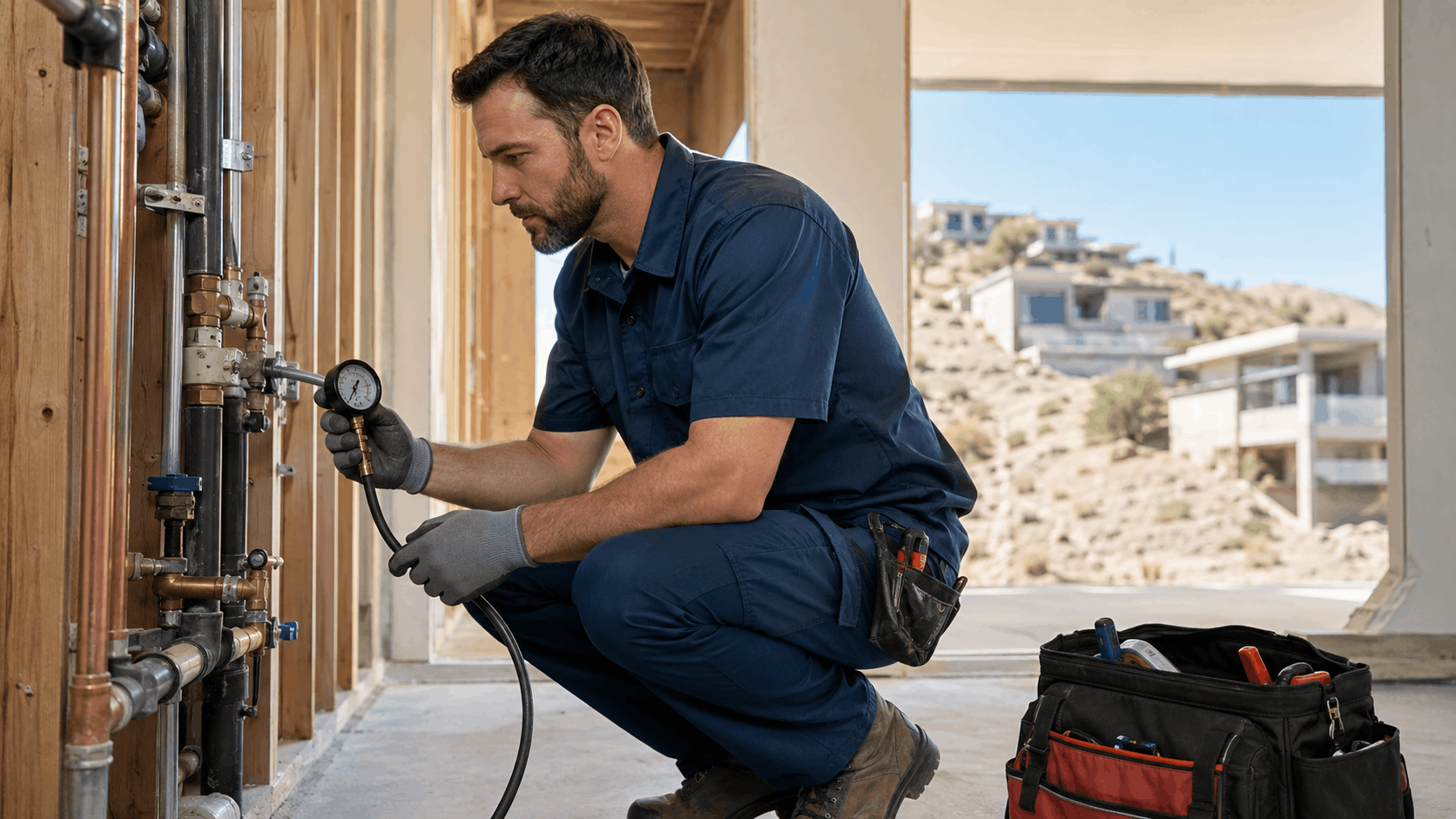
- Measure static and working pressure with a gauge
- Inspect the pressure regulator and main shutoff
- Look for hidden leaks and blockages that drain pressure
- Compare readings at different fixtures and floors
Each step narrows down the cause so the repair matches the real problem, not a symptom.
Measuring Static and Working Pressure
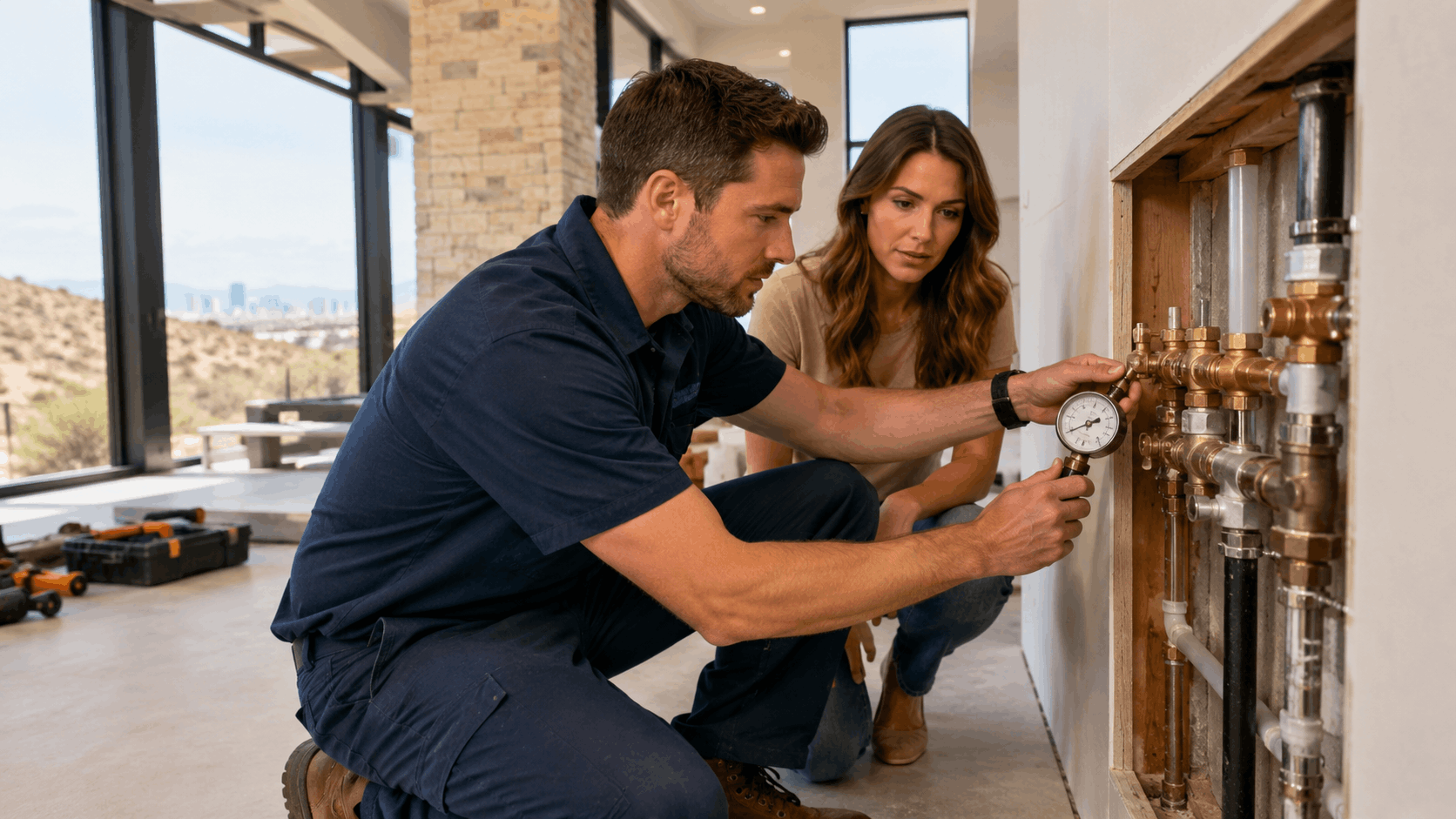
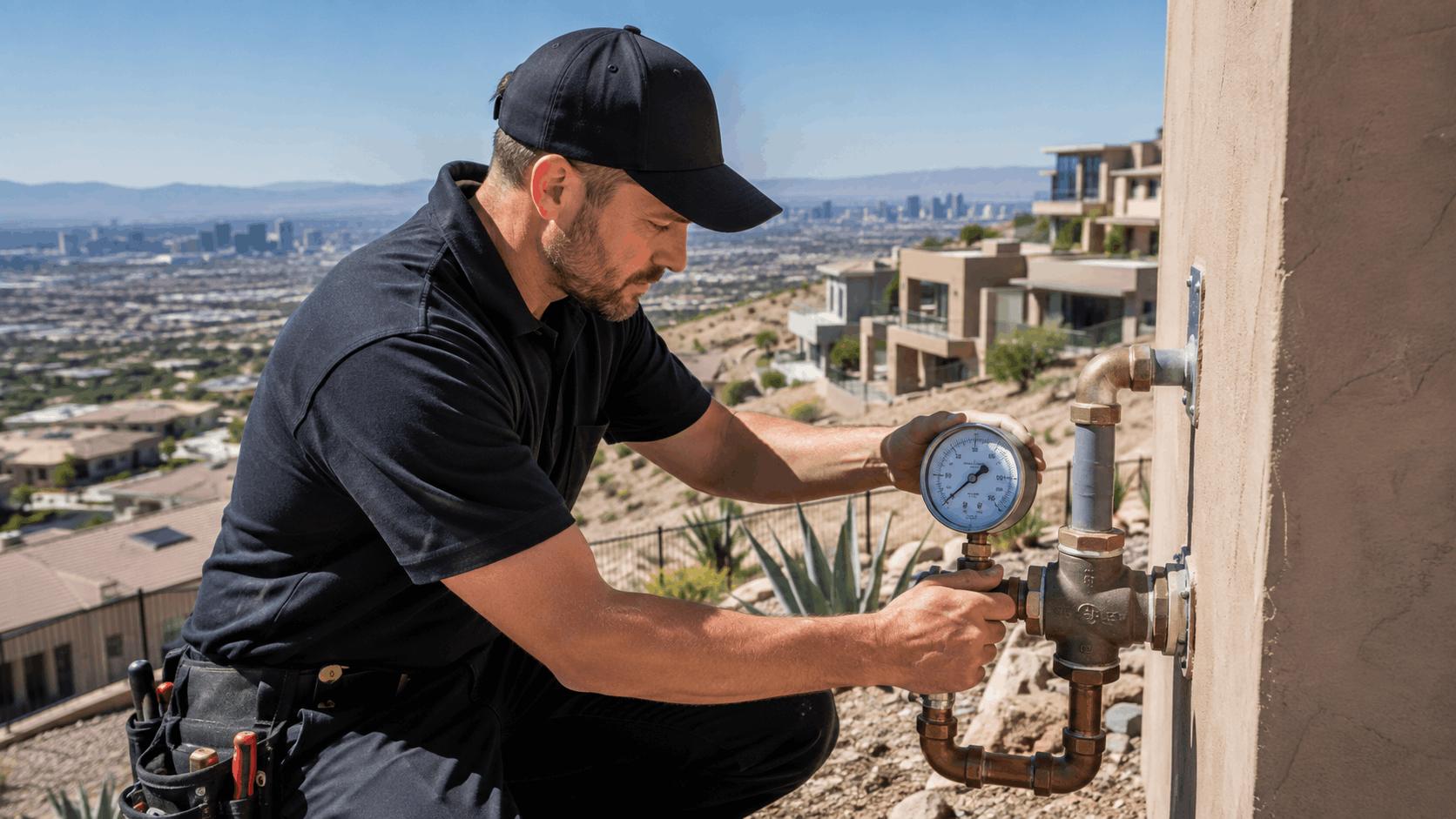
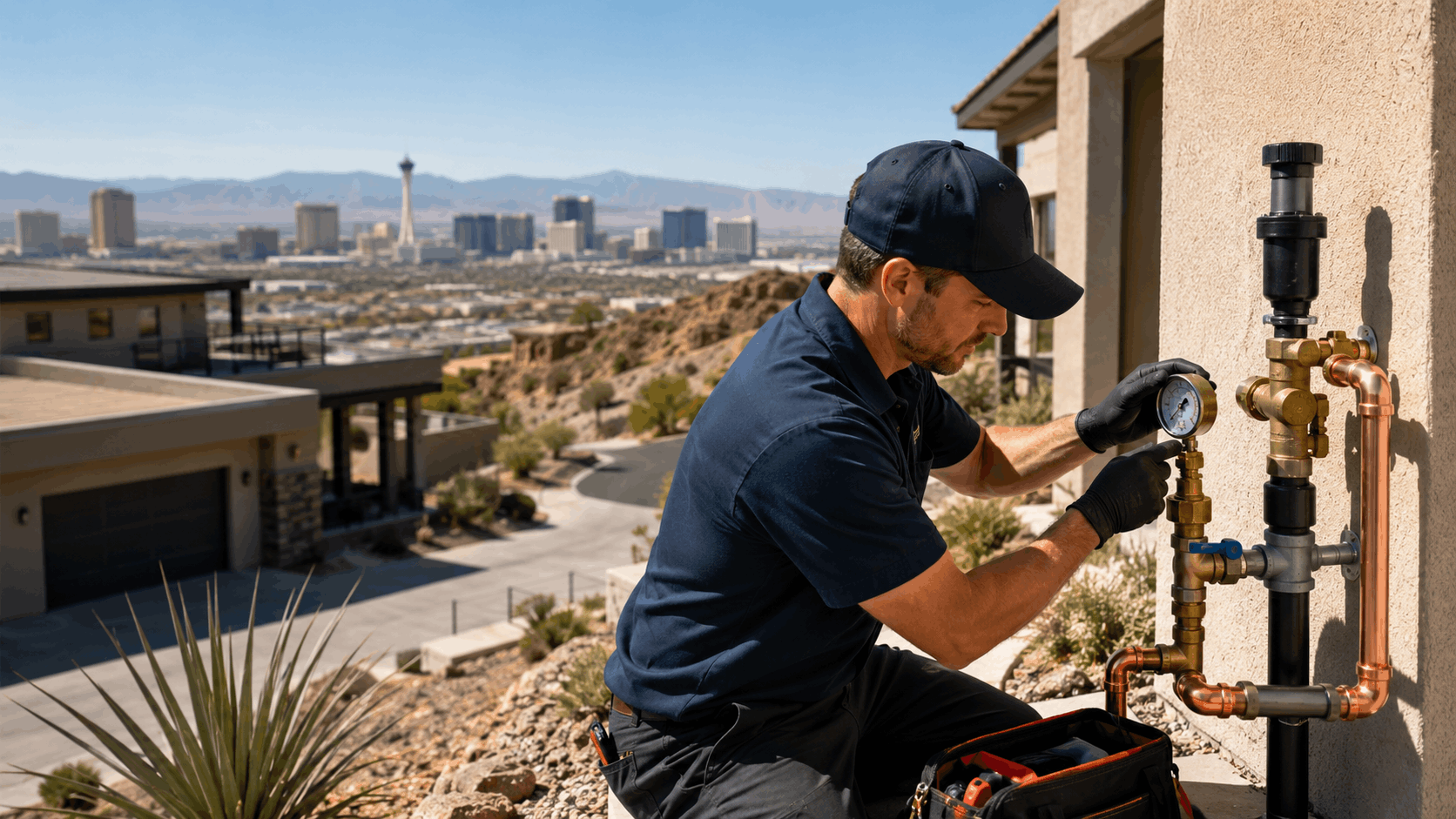
The first step is a pressure gauge threaded onto an outdoor spigot, usually near the hose bib. With no water running, the gauge reads static pressure. A healthy home reads somewhere in the 50 to 70 psi range.
Next we open fixtures to read working pressure, which shows how much pressure holds while water moves. A big drop between static and working numbers points to flow restriction inside the pipes.
Readings above 80 psi flag a high-pressure problem that needs a regulator. Readings well below 50 psi on an upper Providence street usually point to elevation loss.
These psi readings turn a vague complaint into a clear picture. The numbers guide every decision that follows.
Checking the Pressure Regulator and Main Shutoff
Once we have numbers, we inspect the PRV directly. A PRV inspection checks whether the valve holds a steady set point or drifts, which reveals a regulator on its way out.
We also check the main shutoff for a valve check. A partially closed or failing main valve can restrict flow to the whole home and mimic a pressure problem.
Sometimes a previous repair left the main only partly open. That simple oversight can starve an entire house of pressure.
Testing these two components together tells us whether the fix is a fresh regulator, a new main valve, or something deeper in the lines.
Locating Hidden Leaks and Blockages
A hidden leak quietly bleeds pressure before water ever reaches your fixtures. On hillside supply lines, a small underground leak can drain enough to weaken the whole home without any obvious wet spot.
Blockages do the same thing from the inside. A clog or heavy scale in a supply line restricts flow and drops pressure downstream.
Our technicians use electronic leak detection to pinpoint losses without tearing open walls. It finds the trouble spot fast and keeps repairs targeted.
Catching a hidden leak early protects both pressure and the home itself. Left alone, a slow leak can cause water damage and mold long before anyone notices the pressure drop.
Need Help in Las Vegas?
Active Plumbing serves Las Vegas and all of Las Vegas Valley.
Solutions Active Plumbing Uses for Providence Pressure Issues
Once the diagnosis is clear, the right pressure solutions fall into place. Our team matches the fix to the cause instead of applying a one-size approach. Here are the repairs we use most across Providence.
- Install or replace a pressure reducing valve
- Add a booster pump for upper-elevation homes
- Upsize supply lines or repipe restricted sections
- Install a water softener to fight scale buildup
Each of these solves a specific problem, and some homes need a combination.
Installing or Replacing a Pressure Reducing Valve
When a home reads above 80 psi, a new PRV is usually the answer. A fresh pressure regulator holds the home at a safe set point, typically around 60 psi, and protects every fixture in the house.
PRV replacement stops water hammer, extends fixture life, and steadies the flow. For homes on the lower Providence slopes that never had a regulator, the install is the single best upgrade they can make.
The job is quick compared to bigger repairs. Most PRV installs take a couple of hours and deliver an immediate improvement.
We set the new valve to the correct pressure for the home and test it before we leave. That final check confirms the whole house sits in the healthy range.
Adding a Booster Pump for Upper Elevations
For homes on the higher slopes off Grand Canyon Drive, a booster pump is often the cleanest low pressure fix. The pump adds the pressure that elevation and vertical rise take away, restoring strong flow to upstairs bathrooms.
A booster pump is sized to the specific home. We look at the incoming pressure, the elevation of the house, and the number of fixtures before choosing a unit.
Once installed, the difference is dramatic. Showers that trickled now run strong, and running two fixtures at once no longer weakens both.
For hilltop homes, no valve or pipe upgrade can add pressure the supply simply does not deliver. A pump is the tool that overcomes the climb.
Upsizing Supply Lines and Repiping
When narrow or corroded pipes are the culprit, upsizing the supply line or repiping restores strong, even flow. A larger diameter line carries more water, so multiple fixtures can run without weakening.
Repiping also replaces old material that has collected scale and corrosion. Fresh pipe means full flow rate and no more restriction from years of buildup.
This is the biggest of the pressure repairs, but it fixes the root cause for decades. Homes with early-generation plumbing often see the largest improvement from a repipe.
We plan the route carefully to limit wall openings and keep the work clean. The result is a plumbing system that flows like new throughout the home.
Water Softeners to Fight Mineral Buildup
Because the valley's hard water is the slow enemy of pressure, a water softener protects your investment over the long run. Softer water leaves far less scale, which keeps pipes and fixtures clear for years.
Scale prevention matters most after a repipe or a pump install. There is no reason to put in fresh pipe and let hard water start choking it again.
A softener also protects the water heater, faucets, and valves from the same buildup. It is a whole-home benefit, not just a pressure fix.
Our water treatment team sizes the softener to the home's water use and hardness level. Salt-free options are available for homeowners who prefer conditioning without added sodium.
Preventing Future Pressure Problems in Your Providence Home
Good pressure care is mostly about habits. A little regular maintenance keeps pressure steady and catches trouble before it turns into a repair. Prevention costs far less than an emergency call.
These simple steps protect a hillside home year after year.
Annual Pressure Checks and Gauge Readings
An annual check is the easiest prevention habit there is. A homeowner can buy an inexpensive pressure gauge, screw it onto an outdoor spigot, and read the number in seconds.
A reading between 50 and 70 psi is healthy. Anything above 80 or below 40 is a warning sign worth acting on.
Checking once a year, ideally at the same season, shows whether pressure is drifting over time. A slow climb often means a regulator starting to fail.
If the gauge reading looks off, that is the moment to call for an inspection. Catching it early keeps a small fix from becoming a big one.
Servicing Your Regulator Before It Fails
A PRV does not last forever. Most regulators last around 7 to 12 years before they wear out, and hard water can shorten that lifespan.
Proactive replacement near the end of that window saves money. A planned regulator service is cheaper than the fixture damage and water hammer a failed PRV can cause.
If a home is more than a decade old and has its original regulator, it is due for a look. Waiting for it to fail usually means dealing with several symptoms at once.
We can test the existing valve and tell a homeowner whether it has life left or should be replaced. That honest read prevents both premature swaps and surprise failures.
Flushing the Water Heater and Lines
Flushing the water heater removes the sediment that hard water leaves behind. That buildup restricts flow and forces the heater to work harder, which drops both efficiency and pressure at hot taps.
An annual flush is a smart habit given the local water. It clears the sediment before it hardens into a layer that is tough to remove.
Flushing the supply lines helps too, especially in older homes. Clearing loose scale keeps water moving freely through the system.
Our water heater services team can handle the flush and check the tank at the same time. It is a quick visit that pays off in steadier pressure and longer heater life.
Knowing Your HOA and Building Department Rules
Providence is a master-planned community, and the Providence HOA has rules about exterior changes and equipment. Adding a booster pump or softener may involve placement guidelines, so it helps to know the rules before work begins.
Larger plumbing upgrades often require a permit from the Clark County Building Department. Repiping and certain installs fall under permit rules for good reason.
Our team handles the permit process and follows local code so the work passes inspection. We also make sure equipment placement respects HOA standards.
Knowing these rules up front prevents delays and fines. It keeps the project smooth from start to finish.

Need Help in Las Vegas?
Active Plumbing serves Las Vegas and all of Las Vegas Valley.
Why Local Experience Matters for Hillside Plumbing
An out-of-area company treats a Providence hilltop home like any other house. A local plumber who knows the northwest valley reads the terrain, the supply zones, and the water quality before ever touching a wrench. That hillside expertise leads to fixes that actually last.
Familiarity With Northwest Valley Water Conditions
Our team works across Providence, Skye Canyon, and Centennial Hills every week. We know how supply pressure and water quality shift from one neighborhood to the next.
That local knowledge means we can often predict the cause before the gauge confirms it. A weak upstairs shower on an upper street tells us to check elevation and consider a pump.
Water conditions in the northwest valley favor hard water and scale, so we plan for it in every job. We know which streets tend to run high and which run low.
This day-to-day experience shortens the diagnosis and improves the fix. We are not learning the area on your dime.
Fast Response Across Providence and Nearby Streets
Being close to the routes off the 215 Beltway and Grand Canyon Drive means quicker service calls. When a pipe bursts or pressure drops overnight, minutes matter.
Our service area covers Providence and the surrounding northwest neighborhoods, so we reach these streets quickly. For urgent problems, our emergency plumbing team responds fast.
A quick response limits damage and gets the water working again sooner. That speed only comes from being genuinely local.
We would rather be the crew a few minutes away than a company driving across the whole valley. Proximity is part of good service.
Solutions Matched to Elevated Construction
Custom solutions matter on a hill. We size pumps, valves, and pipes for the specific slope and layout of each home rather than applying a generic template.
A booster pump for a hilltop home needs the right capacity for its elevation. A regulator for a lower home needs the right set point for its supply.
Proper sizing is the difference between a fix that lasts and one that fails in a year. Hillside construction rewards careful math.
We take the time to measure, calculate, and match the equipment to the home. That is how we deliver steady pressure that holds.
Final Thoughts
Water pressure trouble in Providence usually comes down to three things: elevation, hardware, and hard water. Homes higher on the hill fight gravity for pressure, while lower homes often need a regulator to tame it. A proper diagnosis sorts out which cause is at play.
The fixes are proven - a fresh PRV, a booster pump, a repipe, or a water softener - and matched to the home. With yearly checks and a little maintenance, that pressure stays steady for years.
If your showers are weak, your pipes bang, or your fixtures keep failing, our team at Active Plumbing can help. Contact us for a pressure inspection and a straight answer about what your Providence home needs.
Frequently Asked Questions
- What is normal water pressure for a home in Providence?
- A healthy home reads between 50 and 70 psi. That range gives strong showers without stressing fixtures. Anything above 80 psi is too high and can wear out faucets, valves, and water heaters early. Readings below 40 psi usually mean weak flow, common on the upper Providence slopes. A simple gauge on an outdoor spigot tells you where your home stands in seconds.
- Why is my water pressure lower on the second floor?
- Gravity is the reason. Water loses about 0.43 psi for every foot it rises, and a second floor adds 8 to 10 feet of vertical climb inside the home. On a hillside house, that indoor rise stacks on top of the climb up the hill. The result is a noticeably weaker upstairs shower even when the downstairs feels fine. A booster pump often solves it.
- How much does a pressure reducing valve replacement cost?
- PRV replacement usually runs a few hundred dollars, depending on the valve type, its location, and how the plumbing is arranged. Homes with easy access to the main line cost less than those where the valve is hard to reach. The repair is quick and pays for itself by protecting fixtures and stopping water hammer. We give a firm price after inspecting the setup.
- Do I need a booster pump for my hillside home?
- A booster pump makes sense when your incoming pressure reads low and elevation is the cause. If a home on an upper Providence street reads below 50 psi at the meter, no valve or pipe change will add pressure the supply lacks. A pump adds the missing pressure and restores strong flow upstairs. We size the unit to your home's elevation and fixture count.
- Can high water pressure damage my plumbing?
- Yes. Pressure above 80 psi wears out fixtures, faucets, and valves more quickly than normal and stresses the water heater. It also causes water hammer, the loud banging that can loosen joints and lead to hidden leaks. Over time high pressure shortens the life of nearly everything in the plumbing system. A pressure reducing valve holds the home in a safe range and prevents this damage.
- How does Las Vegas hard water affect pressure?
- The valley's hard water leaves mineral scale inside pipes, fixtures, and water heaters. That scale builds up year after year and slowly narrows the passage water flows through. As the opening shrinks, pressure and flow drop at the tap. The change is gradual, so many homeowners only notice after their shower has clearly weakened. A water softener slows the buildup and protects pressure over time.
- How often should I test my home's water pressure?
- Once a year is a good habit. Test at the same season each time so you can spot a slow drift. A reading that climbs over time can mean a regulator starting to fail, while a drop may point to scale or a hidden leak. Test sooner if you notice weak showers, banging pipes, or fixtures failing early. A cheap gauge makes the check easy.
- Do I need a permit to upgrade plumbing in Providence?
- Larger upgrades like repiping and certain installs usually require a permit from the Clark County Building Department. Smaller repairs often do not. Because Providence is a master-planned community, the HOA may also have rules about equipment placement for pumps and softeners. Our team handles the permit process and follows local code so the work passes inspection and meets community standards.
- How long does a pressure repair take?
- It depends on the fix. A PRV replacement usually takes a couple of hours. A booster pump install often finishes in a day. Repiping is the longest job and can take one to a few days depending on the size of the home. We give a clear timeframe after the inspection so you know what to expect before we start.
- Who should I call for pressure issues in Providence?
- Call Active Plumbing. As a local plumber working across Providence and the northwest valley, our team knows the elevation, supply zones, and water conditions that shape pressure on these hillside streets. We diagnose the real cause and match the fix to your specific home. Reach out through our contact page to schedule a pressure inspection.
Licensed plumbing professionals serving Las Vegas and Las Vegas Valley.
Licensed in Nevada · License #0047021
Last updated on
Why trust Active Plumbing?
Founded in 1991, Active Plumbing is a licensed and insured plumber serving Las Vegas and Las Vegas Valley. All content is reviewed by our licensed technicians.

Need Help in Las Vegas?
Active Plumbing serves Las Vegas and all of Las Vegas Valley.
Related Articles
Anthem Henderson Plumber: Why Hillside Homes Have Unique Pressure Issues
Anthem hillside homes face unique water pressure issues from elevation, terrain, and the Henderson water system. Learn the causes, tests, and proven fixes.
Henderson vs Las Vegas Water Pressure: Why Some Neighborhoods Have PRV Issues
Henderson vs Las Vegas water pressure varies by terrain, utility systems, and neighborhood age. Learn why PRV issues hit some areas harder and when to act.
Mountain's Edge Plumber: New Construction Warranty Plumbing Issues
New Mountain's Edge homes can still have plumbing problems. Learn common defects, how builder warranties work, and when to call a local Las Vegas plumber.