Anthem Henderson Plumber: Why Hillside Homes Have Unique Pressure Issues
Key Takeaways
- Every foot of elevation gain drops water pressure by about 0.43 PSI, so upper Anthem hillside homes lose pressure fastest.
- Homes near Anthem Hills Park and the top of Anthem Parkway often read 20 PSI lower than nearby lower lots.
- Healthy home pressure sits between 40 and 60 PSI, easily tested with a cheap gauge at an outdoor hose bib.
- Lower Anthem lots can get excess pressure that wears out fixtures, fixed by a pressure reducing valve.
- Upper hillside homes with weak flow often need a properly sized booster pump to restore steady pressure.
- Henderson's hard water and heavy summer irrigation demand both worsen hillside pressure problems over time.
- Active Plumbing handles on-site diagnosis, valve and pump installs, HOA approval, and Henderson permits across the Las Vegas valley.
In This Article
Plenty of Anthem residents tell us the same story. They move into a beautiful home up the hill near Anthem Hills Park, turn on the upstairs shower, and the water just trickles out. Or worse, the pressure feels strong one minute and weak the next, with no clear reason why.
If that sounds familiar, you are not imagining things. Homes climbing the McCullough Range face water pressure challenges that flatter neighborhoods like Green Valley rarely deal with. Elevation, terrain, and the way the Henderson water system feeds the hill all play a part.
Our team has worked on hundreds of homes across Anthem, from Sun City Anthem to Anthem Country Club. In this guide, we will explain why hillside homes have these unique pressure issues, how to test your own pressure, and what real solutions actually fix the problem for good.

How Elevation Changes Water Pressure in Anthem Homes?
Water pressure and elevation are tied together by simple physics. The higher your home sits, the harder the water system has to work to push water up to your fixtures. Anthem's hillside location off the McCullough Range puts many homes well above the valley floor.
That climb is exactly why a home near the top of Anthem Parkway feels different from one on a lower street. Flatter communities down in the valley do not fight gravity the same way. Here is a quick look at how elevation affects pressure across the area.
| Location Type | Approx. Elevation Gain | Typical Pressure Effect |
|---|---|---|
| Lower Anthem lots | Baseline | Strong, sometimes excess pressure |
| Mid-hillside homes | +50 to 100 ft | Moderate pressure drop |
| Upper Anthem hillside | +150 ft or more | Noticeable low pressure |
| Green Valley (flat) | Minimal | Stable, even pressure |
The Physics of Pressure on a Slope
Every foot of elevation gain drops your water pressure by roughly 0.43 PSI. That number sounds small, but it adds up fast on a steep hillside. A home sitting 100 feet higher than the main line loses about 43 PSI before the water even reaches the front door.
This happens because of gravity and what plumbers call head pressure. The water has to be pushed uphill against its own weight, and that weight fights every inch of the climb. The taller the column of water, the more force the system needs to keep flow steady.
Homes higher up Anthem Parkway feel this loss most. By the time water travels from the street, up the hill, and then up to a second-floor bathroom, much of the original pressure is gone. That is why the same plumbing setup performs differently depending on where it sits on the slope.
Understanding head pressure helps explain why two neighbors can have very different experiences. One home near the bottom enjoys strong flow while another up top struggles. The pipes may be identical, but the elevation tells a different story.
Why Homes Near Anthem Hills Park Differ From Lower Lots
Lot elevation creates real pressure variance even within the same community. Homes near Anthem Hills Park often sit much higher than streets closer to the community entrance. That difference shows up at every faucet and showerhead.
We have measured pressure readings that vary by 20 PSI or more between upper and lower lots just a few blocks apart. A family at the bottom of the slope might never think about pressure, while a family up near Anthem Hills wonders why their shower feels weak. Both homes draw from the same general supply.
The grade of the land is the main reason. As streets wind up the hillside, each home gains elevation and loses a bit of pressure compared to the one below it. This is normal for hillside communities, but it surprises people who moved from flatter parts of the Las Vegas valley.
Knowing where your home sits on the slope helps set realistic expectations. If you are on an upper lot, some pressure loss is built into your location. The good news is that there are proven fixes for homes that lose too much.
How the Henderson Water System Feeds the Hill
The City of Henderson Department of Utility Services manages water delivery across the area using pressure zones. These zones divide the city into sections based on elevation so each area gets the right amount of pressure. Higher neighborhoods like Anthem fall into their own zones.
To serve homes up the hill, Henderson utilities use pump stations that boost water to higher elevations. These stations push water up to elevated tanks and reservoirs that then feed the surrounding homes. Without them, upper Anthem would barely get any flow at all.
You can learn more about how the city manages its water supply through the City of Henderson Utility Services. Their pressure zone design is what makes hillside living possible in the first place.
Even with this system, individual homes still feel the effects of their exact spot on the hill. The city delivers water to the neighborhood, but the last stretch up to your fixtures depends on your home's plumbing and elevation. That is where a local plumber can make a real difference.
Get Your Quote
Tell us what's going on and we'll get back to you. We're open 24/7.
Common Pressure Problems Anthem Homeowners Notice
When Anthem homeowners call us, they describe their problems in plain language. They do not talk about PSI or head pressure. They talk about weak showers, noisy pipes, and water that seems to have a mind of its own.
We hear the same complaints over and over from hillside homes. Here are a common pressure problems residents report:
- Weak flow at upstairs showers and faucets
- Pressure that swings up and down throughout the day
- Banging or knocking pipes when faucets shut off
- Leaks and worn fixtures from too much pressure
- Slow-filling tubs and washing machines
Weak Flow at Upstairs Showers and Faucets
A common call we get is about weak flow at upstairs showers. Second-floor fixtures lose pressure first because they sit even higher than the rest of the home. Add hillside elevation on top of that, and the upper bathrooms suffer the most.
Think of it as a double climb. Water already fought its way up the hill, and now it has to climb another 10 feet inside the house. By the time it reaches the master shower, the fixture pressure has dropped well below what feels comfortable.
This signals that your home is near the edge of its pressure budget. The lower floors might feel fine while the upstairs feels weak. That gap tells us the supply pressure is being stretched thin by elevation.
Our pipe and fixture services often start by checking these upper fixtures first. If the weak flow is limited to upstairs, the fix is usually different than if the whole house is weak. Pinpointing where the pressure fades helps us choose the right solution.
Pressure That Swings Throughout the Day
Many residents notice their pressure rises and falls at different times. Strong in the late evening, weak on summer mornings. This daily swing comes from peak demand in the neighborhood.
When everyone on the hill runs irrigation, showers, and appliances at the same time, the shared supply gets stretched. Summer mornings are the worst because that is when sprinkler systems all kick on at once. The system simply has more demand than it can handle at full pressure.
Pressure fluctuation like this is frustrating because it feels random. One morning the shower is fine, the next it is a trickle. The pattern usually lines up with the busiest water-use hours in the community.
Once you know peak demand is the cause, the swings make more sense. The system recovers during off hours when fewer homes are pulling water. For homes that need steady pressure no matter the time, equipment upgrades can smooth out these daily swings.
Banging Pipes and Water Hammer
That loud bang when you shut off a faucet is called water hammer. It happens when fast-moving water suddenly stops and slams against a closed valve. High or unstable pressure makes it much worse.
Hillside homes often deal with pressure spikes that trigger this banging. When the pressure swings high, the force behind the water increases, and the shock of stopping it shakes the pipes. You might hear it most when the washing machine or dishwasher cycles.
Over time, water hammer can loosen pipe connections and stress joints. What starts as an annoying noise can turn into a leak down the road. It is worth addressing before it causes real damage.
The good news is that water hammer is one of the easier problems to fix. Devices called arrestors absorb the shock and quiet the banging pipes. We install these often in Anthem homes dealing with pressure spikes.
Leaks and Worn Fixtures From Excess Pressure
Not every Anthem home suffers from low pressure. Homes lower on the slope sometimes get too much pressure instead. The same system that struggles to serve the top of the hill can over-deliver at the bottom.
High pressure wears out valves, hoses, and appliance connections more quickly than normal. We see worn fixtures, failed supply lines, and dripping faucets in lower lots that get hit with strong pressure. Toilet fill valves and faucet cartridges often fail early under this strain.
Excess pressure also raises the risk of sudden leaks. A washing machine hose or a water heater connection can burst when pushed past its limit. That can mean serious water damage if no one is home to catch it.
If your home sits lower on the hill and you replace fixtures often, high pressure may be the culprit. A simple test can confirm it. Pairing a pressure check with our whole home leak detection system gives extra protection against surprise leaks.

Need Help in Las Vegas?
Active Plumbing serves Las Vegas and all of Las Vegas Valley.
Why Anthem's Terrain Makes These Issues Worse
Anthem's terrain is not like most of the Las Vegas valley. The community climbs steep grades and spreads across hillsides that change elevation block by block. That landscape shapes how water reaches every home.
Several factors combine to make hillside plumbing harder here. Below is a breakdown of the main reasons Anthem homes face tougher pressure conditions.
| Terrain Factor | Effect on Water Pressure |
|---|---|
| Steep road grades | Greater elevation gain, more pressure loss |
| Shared main lines | Demand from neighbors affects your flow |
| Summer irrigation demand | System strain during peak heat |
| Hard water minerals | Buildup narrows pipes over time |
Steep Grades Along Anthem Parkway and Hampton Road
Anyone who drives Anthem Parkway knows how steep the climb gets. The road gains serious elevation as it winds up toward the higher neighborhoods. Hampton Road follows a similar steep grade in parts of the community.
Homes along these roads sit at very different heights even when they are close together. A house at the top of the grade may be 100 feet higher than one near the bottom. That elevation gain directly cuts into water pressure for the upper homes.
The steeper the road, the bigger the pressure gap between top and bottom. Water delivery to homes high on Anthem Parkway requires more help from the system. When demand peaks, those upper homes feel the shortage first.
We map out where a home sits along these grades before recommending any fix. A home near the crest of Hampton Road needs a different approach than one at its base. Knowing the local roads helps us solve the problem right the first time.
Master-Planned Layout and Shared Main Lines
Anthem is a master-planned community, which means homes were built to a coordinated design. Areas like Sun City Anthem and Anthem Country Club share supply lines that feed many homes at once. That shared setup affects pressure balance across the neighborhood.
When many homes pull from the same shared mains, heavy use by your neighbors lowers your pressure. A street full of homes running irrigation at dawn can drop everyone's flow at the same time. The design works well overall, but peak demand exposes its limits.
Master-planned layouts also mean the pipe sizing was set during construction. As communities age and demand grows, the original lines sometimes struggle to keep up. Sun City Anthem homes in particular benefit from individual pressure solutions.
This shared structure is why a fix at one home does not always solve a neighborhood-wide swing. The supply side belongs to the city, but each home can manage its own pressure with the right equipment. We focus on what we can control at your property.
Desert Climate and Heavy Summer Demand
The Las Vegas valley heat drives huge summer demand for water. Desert climate means lawns, gardens, and pools all need constant watering to survive. When the whole community irrigates at once, the system feels the strain.
Summer mornings bring the worst pressure drops because irrigation timers all fire around the same hour. Add showers and indoor use on top of that, and demand spikes hard. Hillside homes already short on pressure feel the squeeze most during these months.
The desert climate also pushes homeowners to water more heavily than people in cooler regions. More irrigation means more competing demand on shared lines. That is a big reason pressure issues feel sharpest from June through September.
Planning around this seasonal demand makes a real difference. Watering at off-peak hours and managing your own equipment can ease the strain. We help Anthem homeowners prepare for these predictable summer spikes every year.
Mineral Buildup in Hard Water Lines
Southern Nevada has some of the hardest water in the country. All those minerals settle inside your pipes over the years. That mineral buildup slowly narrows the lines and chokes off flow.
On a hillside home already fighting elevation, clogged lines make weak pressure even weaker. The hard water leaves scale on the inside of pipes, faucet aerators, and showerheads. Each layer of buildup steals a little more flow.
You might notice white crusty deposits around your fixtures. That same scale is building inside the plumbing you cannot see. Over time it reduces both flow and pressure throughout the home.
Treating hard water protects your pipes and your pressure. A water softener installation reduces the minerals that cause scale. For homes that already have buildup, clearing the lines restores lost flow.
How to Test and Measure Your Home's Water Pressure
Before you call anyone, you can test your own water pressure at home. It takes one cheap tool and about five minutes. Knowing your numbers helps you and your plumber make better decisions.
A simple gauge tells you whether your pressure is too low, too high, or just right. Here is how to check it and what the readings mean for an Anthem home.
Using a Pressure Gauge at the Hose Bib
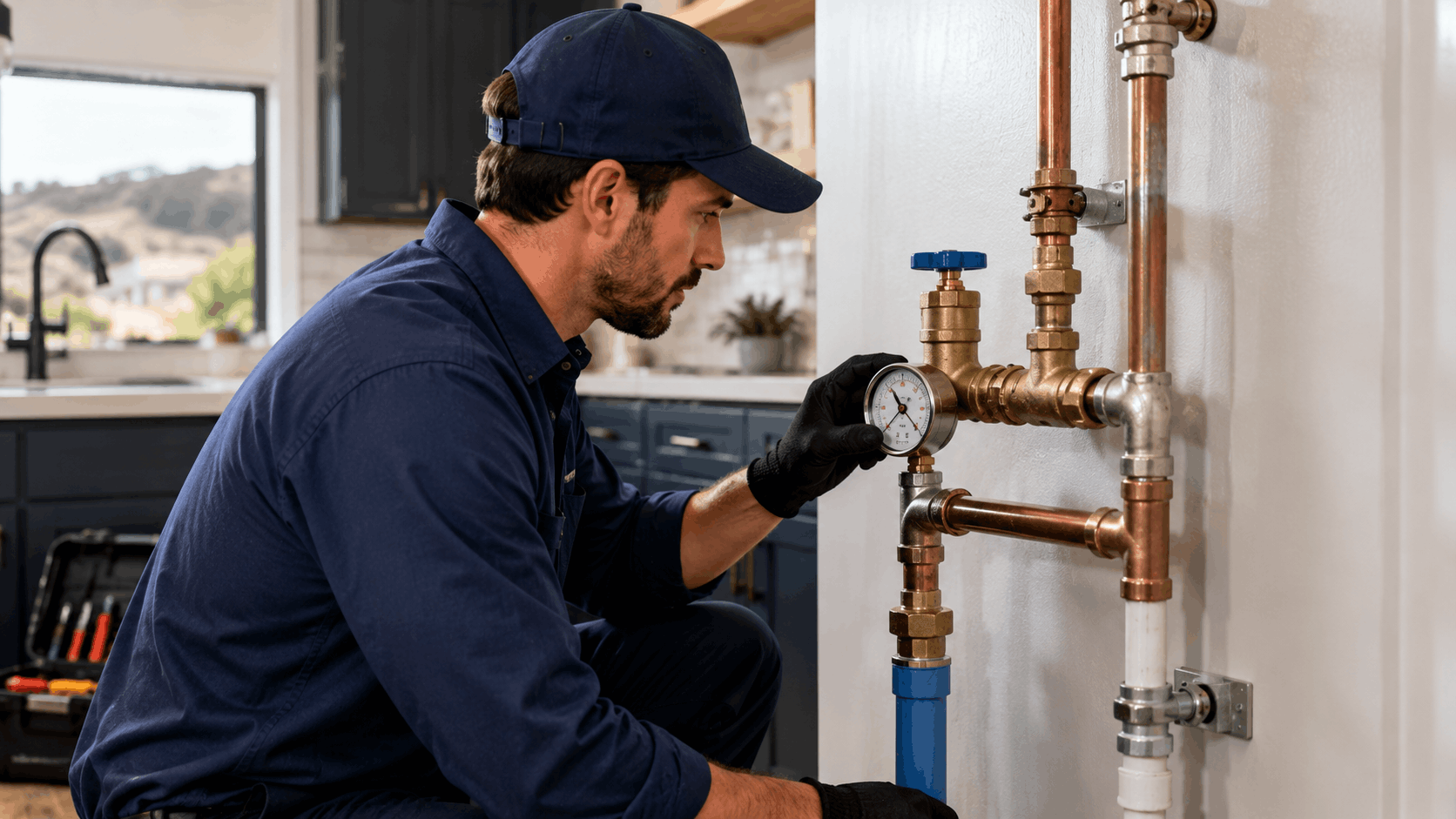
The easiest way to test water pressure is with a pressure gauge at an outdoor faucet, also called a hose bib. These gauges cost around 10 to 15 dollars at any hardware store. They screw right onto the spigot like a garden hose.
Pick a hose bib closest to where the water line enters your home for the most accurate reading. Make sure no other water is running inside the house. Screw the gauge on hand-tight, then turn the faucet on all the way.
The needle will jump to your current PSI reading within a second or two. Write down that number and try the test at different times of day. A morning reading and an evening reading can reveal how much your pressure swings.
This DIY test gives you a real starting point. If the number looks off, you will know to dig deeper or call for help. It is a smart first step for any homeowner curious about their pressure.
What PSI Range Is Healthy for Anthem Homes
A healthy home water pressure sits between 40 and 60 PSI. That range gives strong flow without stressing your pipes and fixtures. Most homes feel comfortable right in the middle around 50 PSI.
Hillside homes sometimes need a little adjustment to land in that range. Upper Anthem lots may read on the low end and benefit from a boost. Lower lots may read on the high end and need pressure brought down.
If your reading falls below 40 PSI, your fixtures will feel weak, especially upstairs. If it climbs above 60 PSI, you risk extra wear on valves and appliances. The 40 to 60 PSI range is the sweet spot worth aiming for.
The EPA WaterSense program offers helpful guidance on home water efficiency and pressure. Knowing your target range helps you decide whether your pressure needs work. From there, the right fix becomes much clearer.
Signs You Should Stop Testing and Call a Plumber
Some readings mean it is time to stop the DIY work and call a plumber. Any reading above 80 PSI is a high PSI warning that needs attention right away. That much pressure can damage your plumbing fast.
Rapid pressure drops are another red flag. If your gauge reads 55 PSI one minute and 30 the next with nothing running, something is wrong. That kind of swing points to a deeper pressure problem in the system.
You should also call if your pressure is far below 40 PSI across the whole home. Weak flow everywhere usually means more than just elevation. A professional can find whether the issue is the regulator, the lines, or the supply.
When in doubt, our team can run a full diagnosis at your home. We measure pressure at multiple points and check your equipment. Reaching out through our contact page gets you on the schedule quickly.
Need Help in Las Vegas?
Active Plumbing serves Las Vegas and all of Las Vegas Valley.
Solutions for Hillside Pressure Problems
Once we know your numbers and your spot on the hill, the fixes become straightforward. Different problems call for different equipment. The goal is steady, comfortable pressure no matter where your home sits.
Here are the main pressure solutions we install for Anthem hillside homes. Each one targets a specific cause of weak, high, or unstable pressure.
Pressure Reducing Valves for Lower Lots
Homes lower on the slope often get too much pressure from the system. A pressure reducing valve, or PRV, brings that high pressure down to a safe level. It acts like a gatekeeper for the water entering your home.
The PRV installs on your main line and is set to a target pressure, usually around 50 PSI. From there it holds your home's pressure steady even when the supply pressure spikes. That protects every fixture and appliance from excess force.
A working PRV is the best high pressure fix for lower Anthem lots. It stops the early wear, leaks, and water hammer that come from too much pressure. Many homes already have one, but it can wear out and need replacement.
We check whether your home has a PRV and whether it still works. If it is failing or set wrong, replacing it solves a lot of problems at once. It is one of the most reliable upgrades for homes dealing with high pressure.
Booster Pumps for Upper Hillside Homes
Homes high on the hill face the opposite problem. They lose so much pressure to elevation that nothing fully fixes it from the supply side. A booster pump adds the pressure back at your home.
A booster pump installs on your main line and mechanically raises pressure to a comfortable level. It is the right low pressure fix for upper hillside homes that read well below 40 PSI. The pump kicks on as needed to keep flow strong.
This solution shines for homes near the top of Anthem Parkway and similar high lots. When the city supply just cannot push enough pressure up the grade, a booster makes up the difference. Suddenly the upstairs shower feels like it should.
Booster pumps need proper sizing to match your home's demand. Too small and they fall short, too big and they waste energy. Our team sizes and installs the right pump for your exact elevation and household needs.
Water Hammer Arrestors and Expansion Tanks
For banging pipes, a water hammer arrestor is the direct fix. This small device absorbs the shock when water suddenly stops. It cushions the blow so the pipes stay quiet.
Arrestors install near the fixtures that cause the most noise, like washing machines and dishwashers. They give the moving water somewhere to push when a valve slams shut. That stops the loud bang and protects your joints.
An expansion tank handles a related issue with pressure spikes. As water heats up it expands, and that extra pressure has to go somewhere. The tank gives it room, preventing spikes that stress your plumbing and water heater.
Together these devices keep your system quiet and stable. They are small parts that solve annoying and damaging problems. We often pair them with our water heater services for full protection.
Pipe Cleaning and Fixture Upgrades
When hard water buildup is choking your flow, cleaning the lines restores it. Clearing mineral scale opens the pipes back up to their full width. That brings back the pressure that buildup stole over the years.
Hydro jetting and professional cleaning blast away the deposits inside your lines. Our hydro jetting and rooter service handles stubborn buildup that DIY methods miss. The difference in flow can be dramatic.
Upgrading old fixtures also helps restore strong flow. Modern faucets and showerheads are designed to deliver good pressure even with lower supply. Clogged aerators on old fixtures often drag pressure down on their own.
Sometimes the simplest fix is replacing a scaled-up showerhead or aerator. Other times the whole line needs cleaning. We figure out which approach gets your flow back without unneeded work.
What Active Plumbing Does for Anthem Hillside Homes
Active Plumbing has worked across Henderson and the wider Las Vegas valley for years. Our team knows the Anthem hillside because we are on those streets every week. That local experience shapes how we solve pressure problems.
As your Henderson plumber, we tailor each fix to the home in front of us. Here is what our Anthem services include and how we approach each job.
| Service | What It Solves |
|---|---|
| On-site pressure diagnosis | Finds the real cause of weak or high pressure |
| Valve and pump installation | Corrects pressure for your elevation |
| HOA and permit handling | Keeps work compliant and approved |
| Whole-valley service | Local knowledge across nearby communities |
On-Site Pressure Diagnosis Across the Neighborhood
Every pressure diagnosis starts at your home, not from a guess. We measure PSI at multiple points and account for your exact spot on the hill. A home near the top of the grade gets a different read than one at the bottom.
Our on-site testing checks the incoming pressure, the upstairs fixtures, and any existing valves. We look at how the readings change through the system. That tells us whether the issue is supply, equipment, or buildup.
Because we work all over Anthem, we know what is normal for each part of the community. A reading that looks low for a lower lot might be expected for an upper one. That context helps us give honest, accurate advice.
Being a local plumber means we recognize neighborhood patterns. We have seen the same issues on the same streets. That experience speeds up the diagnosis and points us straight to the fix.
Valve Installation and System Adjustments
Once we know the cause, we handle the valve installation and system adjustment. That might mean a new pressure reducing valve, a booster pump, or hammer arrestors. We install the right equipment for your home's needs.
We also adjust existing components that are set wrong. A PRV cranked too high or too low causes problems on its own. Dialing it into the proper range often solves issues without new parts.
Each pressure repair gets tested after install to confirm it works. We verify the new readings fall in the healthy 40 to 60 PSI range. You should feel the difference at the faucet right away.
Our goal is a balanced system, not just a quick patch. We make sure the whole home benefits from the adjustment. Steady pressure at every fixture is what we aim for.
Working With Anthem HOA and Henderson Permit Rules
Anthem communities have HOA rules that affect outdoor and visible plumbing work. We know how to handle those guidelines so your project stays approved. That keeps you out of trouble with the association.
Some plumbing work also requires City of Henderson permits. We pull the right permits and follow code so the work is compliant. That protects you if you ever sell the home or file an insurance claim.
Handling HOA approval and permits ourselves saves you the hassle. You do not have to chase paperwork or learn the rules. We have done it many times across Sun City Anthem and Anthem Country Club.
Compliant work also means it is done right. Permits exist to confirm the job meets safety standards. We see them as part of doing the job correctly, not an obstacle.
Serving Anthem, Green Valley, and the Greater Las Vegas Valley
Our service area covers Anthem, Henderson as a whole, Green Valley, and the greater Las Vegas valley. We know the difference between hillside Anthem homes and flatter Green Valley lots. That comparison helps us solve each one correctly.
Because we work across so many neighborhoods, we see how terrain changes plumbing needs. A fix for an upper Anthem home looks different than one for a flat lot. We bring that range of experience to every call.
We also serve nearby communities like Whitney Ranch and beyond. Wherever your home sits, we know the local water conditions. Hard water and summer demand affect the whole valley.
Local knowledge is what sets a neighborhood plumber apart. We have driven these streets and worked these homes for years. That experience shows up in quicker, smarter repairs.
Need Help in Las Vegas?
Active Plumbing serves Las Vegas and all of Las Vegas Valley.
Preventing Future Pressure Problems
Fixing pressure once is good, but keeping it stable is better. A little maintenance goes a long way in a hillside home. These steps help prevent pressure issues from creeping back.
Smart home upkeep protects your plumbing year-round. Here is what we recommend for Anthem homeowners who want to stay ahead of problems.
Annual Pressure Checks and Valve Inspections
An annual pressure check catches problems before they grow. Once a year, test your pressure and look for any changes from the year before. A rising or falling number is an early warning sign.
During a valve check, we inspect your PRV and any boosters or arrestors. These parts wear out over time and can fail quietly. Catching a worn valve early prevents bigger issues later.
A yearly maintenance schedule keeps everything working as intended. It is far cheaper than emergency repairs after a part fails. Most checks take less than an hour.
We can fold a pressure check into routine plumbing visits. That way you stay ahead of trouble without thinking about it. Consistent inspections keep your hillside home running smooth.
Managing Hard Water and Mineral Scale
Hard water never stops working against your plumbing here. Managing it is the best way to prevent scale from clogging your lines. A water softener is the most effective tool for the job.
A softener removes the minerals before they reach your pipes. That keeps your lines clear and your pressure strong over the years. It also protects your water heater and appliances.
For homes that prefer no salt, conditioning systems offer an alternative. Our salt-free water conditioning reduces scale without softening salt. Both approaches help prevent buildup.
Treating hard water early saves you from flow loss down the road. Once scale builds up, it takes cleaning to remove. Stopping it at the source is the smarter play.
Preparing for Summer Demand Spikes
Summer is the toughest season for Anthem water pressure. Demand spikes hit hard when everyone irrigates during the morning heat. A little summer prep keeps your home comfortable.
Shifting your irrigation to off-peak hours eases the strain on shared lines. Watering before dawn or late at night avoids the busiest demand window. Your pressure holds better when fewer neighbors are pulling water.
Before summer hits, have your pressure and equipment checked. A booster pump or PRV that worked in spring should be confirmed for peak season. Catching a weak point early avoids a hot-weather headache.
Seasonal plumbing care makes the difference between a steady summer and a frustrating one. We help Anthem homeowners get ready every year. A quick spring tune-up pays off through the hottest months.
Final Thoughts
Hillside living in Anthem comes with views, fresh air, and a few unique plumbing challenges. Water pressure is at the top of that list. Elevation, terrain, shared lines, and hard water all shape how your home performs.
The good news is that every one of these problems has a proven fix. Whether you need a PRV for a lower lot or a booster pump for an upper one, the right equipment restores steady pressure. A simple test is the first step toward knowing what your home needs.
If you are tired of weak showers, banging pipes, or pressure that swings all day, our team is ready to help. Reach out to Active Plumbing for an on-site diagnosis and let us get your Anthem home flowing right. Give us a call or visit our contact page to schedule a consultation.
Frequently Asked Questions
- Why does my Anthem home have low water pressure upstairs?
- Upstairs fixtures lose pressure because they sit higher than the rest of the home, and hillside elevation adds to that climb. Water already fought its way up the slope before climbing another 10 feet to your second floor. Every foot of height drops pressure by about 0.43 PSI. A booster pump or fixture upgrade often restores strong upstairs flow.
- What is normal water pressure for a hillside home?
- A healthy range is 40 to 60 PSI for any home, including hillside lots. Most homes feel comfortable around 50 PSI. Upper Anthem homes may read on the low end due to elevation and benefit from a boost. Lower lots may read high and need a pressure reducing valve. Testing your own pressure tells you where you stand.
- How much does a pressure regulator cost in Henderson?
- A pressure reducing valve usually runs about 75 to 200 dollars for the part itself. Installed by a licensed plumber, the total often falls between 250 and 450 dollars depending on access and your home's setup. Older homes with corroded lines may cost more. We give a clear quote after checking your main line and current pressure.
- Do I need a booster pump for my Anthem home?
- A booster pump makes sense when your home sits high on the hill and reads well below 40 PSI even after other fixes. Homes near the top of Anthem Parkway often qualify. If the city supply cannot push enough pressure up the grade, a properly sized pump adds it back. We confirm with on-site testing before recommending one.
- Why does my water pressure change during the day?
- Daily swings come from peak demand in your neighborhood. When many homes run irrigation and showers at once, the shared supply gets stretched and pressure drops. Summer mornings are the worst because sprinkler timers all fire together. Pressure recovers during off hours. Equipment upgrades can smooth out these swings if they bother you.
- Can high water pressure damage my plumbing?
- Yes. Pressure above 80 PSI strains pipes, valves, hoses, and appliances. It wears out fixtures more quickly and raises the risk of sudden leaks or burst connections. Homes lower on the Anthem slope sometimes get this excess pressure. A pressure reducing valve brings it down to a safe level and protects your whole system.
- What causes banging pipes in my Anthem house?
- That banging is water hammer. It happens when fast-moving water suddenly stops and slams against a closed valve, often when an appliance shuts off. High or unstable pressure makes it worse. Over time it can loosen joints and cause leaks. Water hammer arrestors absorb the shock and quiet the pipes, which is a quick and reliable fix.
- Does hard water in Henderson affect my pressure?
- Yes. Southern Nevada has very hard water, and the minerals build up inside pipes and fixtures over the years. That scale narrows the lines and chokes off flow, which makes weak hillside pressure even weaker. A water softener prevents new buildup, and professional pipe cleaning clears existing scale to restore lost flow.
- Do I need a permit for pressure repairs in Henderson?
- Some plumbing work requires a City of Henderson permit, and Anthem communities have HOA rules for visible or outdoor work. Simple fixture swaps usually do not need one, but valve and pump installations often do. We handle the permits and HOA approval ourselves so your work stays compliant and code-correct from start to finish.
- How quickly can a plumber fix my pressure problem?
- Most pressure diagnoses take under an hour on site. Common repairs like a pressure reducing valve or hammer arrestor often finish the same day. Booster pump installs or pipe cleaning may take longer depending on the home. After testing, we give a clear timeline so you know exactly what to expect before any work begins.
Licensed plumbing professionals serving Las Vegas and Las Vegas Valley.
Licensed in Nevada · License #0047021
Last updated on
Why trust Active Plumbing?
Founded in 1991, Active Plumbing is a licensed and insured plumber serving Las Vegas and Las Vegas Valley. All content is reviewed by our licensed technicians.

Need Help in Las Vegas?
Active Plumbing serves Las Vegas and all of Las Vegas Valley.
Related Articles

5 Top Reasons Slab Leaks Happen In Las Vegas Homes
Discover the 5 main reasons slab leaks occur in Las Vegas homes, from desert soil movement to hard water damage, plus prevention tips and repair options from local experts.
Henderson vs Las Vegas Water Pressure: Why Some Neighborhoods Have PRV Issues
Henderson vs Las Vegas water pressure varies by terrain, utility systems, and neighborhood age. Learn why PRV issues hit some areas harder and when to act.
Why Las Vegas Homes Built Before 1990 Need a Full Plumbing Inspection
Las Vegas homes built before 1990 face unique plumbing challenges from aging materials, desert conditions, and outdated construction practices that can lead to catastrophic failures.