How-To Guides
Whole-House Repipe in Las Vegas: Copper vs PEX for Desert Climate
Key Takeaways
- Las Vegas water hardness runs 16-18 GPG - among the highest in the country - and is the leading driver of premature pipe failure in valley homes.
- Copper repiping costs $4,500-$8,000 for a typical Las Vegas home while PEX runs $3,000-$6,000, with PEX generally outperforming copper against hard water conditions.
- Attic temperatures in Las Vegas can exceed 150 degrees Fahrenheit, making proper insulation of PEX pipe runs a required step rather than an optional one.
- Most single-story Las Vegas homes take one to two days to repipe, with water restored every evening during multi-day projects so families are not displaced.
- A permit is required for any whole-house repipe in Las Vegas, Henderson, or North Las Vegas - homeowners should never allow a contractor to skip this step.
- Homes in Paradise, Winchester, East Las Vegas, and areas near Decatur Boulevard built before 1990 are likely still running on galvanized or polybutylene pipe that warrants immediate evaluation.
- Adding a whole-house water softener after a repipe is the single most effective way to protect new pipes from Las Vegas mineral content and extend the system's service life.
- A documented repipe with a closed permit and final inspection sign-off strengthens a home's resale position and removes a major concern for buyers and home inspectors.
In This Article
A Summerlin homeowner was renovating her master bathroom last spring when her contractor pulled back the drywall and stopped cold. The galvanized pipes behind the wall looked like something out of a rust museum - orange, flaking, and partially blocked with decades of mineral scale from Las Vegas Valley Water District supply. One section had a hairline crack that had been slowly weeping into the wall cavity for who knows how long. She called Active Plumbing that afternoon, and what started as a tile upgrade turned into a conversation about a full whole-house repipe in Las Vegas.
Her story is not unusual. Across the valley - from older Henderson tracts to the 1980s subdivisions near Decatur Boulevard - Las Vegas homes face a pipe-aging problem that runs faster and harder than almost anywhere else in the country. The combination of some of the hardest municipal water in the United States, summer attic temperatures that push past 150 degrees Fahrenheit, and a large stock of homes built before 1990 creates conditions that wear pipes out ahead of schedule.
What is the Difference Between Copper vs PEX?
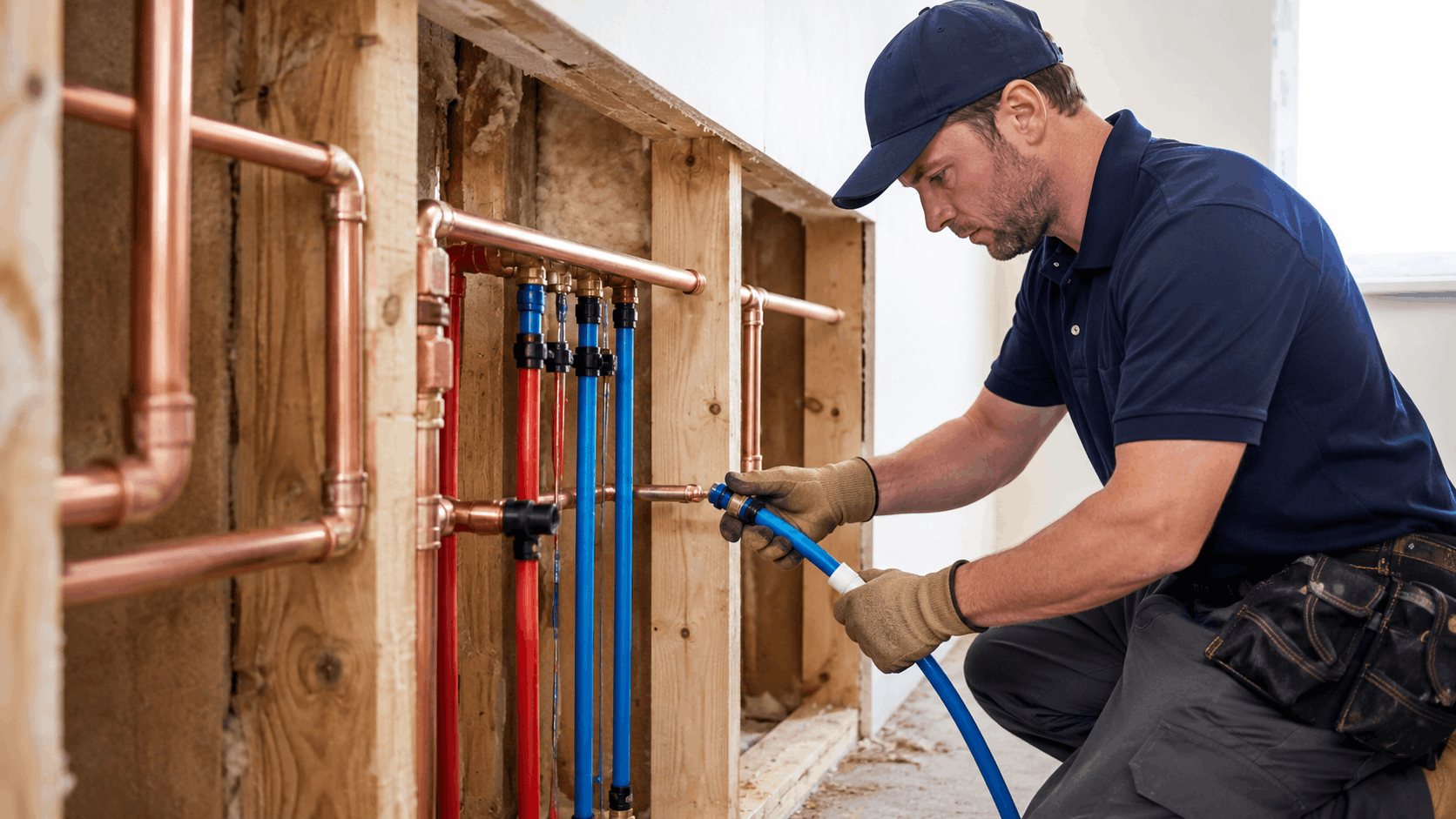
Before going deep on either material, here is a clear look at how copper and PEX compare across the factors that matter most to Las Vegas homeowners making a repipe decision.
| Factor | Copper | PEX |
|---|---|---|
| Material Type | Rigid metal pipe | Flexible cross-linked polyethylene tubing |
| Hard Water Performance | Prone to pitting corrosion and pinhole leaks from mineral content | Does not corrode; smooth bore resists scale buildup |
| Heat Tolerance | Handles high temps well; no degradation from heat alone | Rated to 200°F for water temp; requires insulation in hot attics |
| Freeze Resistance | Can crack if water freezes inside | Expands and contracts; more forgiving in rare freeze events |
| Expected Lifespan in Las Vegas | 25-35 years due to hard water (50+ years in softer water cities) | 25-year manufacturer warranty; holds up well with proper install |
| Installation Flexibility | Rigid; requires more fittings and cuts for routing | Flexible; bends around corners with fewer fittings and wall cuts |
| Typical Repipe Cost (Las Vegas) | $4,500 - $8,000+ for average home | $3,000 - $6,000 for average home |
| Resale Perception | Often viewed as premium by buyers and inspectors | Widely accepted; modern standard in new construction |
| UV Sensitivity | Not affected by UV exposure | Degrades with direct UV exposure; must be protected |
| Best Suited For | Custom builds, hot water lines near tankless heaters, homeowner preference | Most existing Las Vegas homes, hard water areas, tract housing |
Get Your Quote
Tell us what's going on and we'll get back to you fast.
Why Las Vegas Homes Need Repiping Sooner Than Most Cities
Most cities have one or two factors working against their pipes. Las Vegas has three hitting at the same time. Hard water, extreme heat, and aging housing stock in areas like Whitney Ranch and older North Las Vegas subdivisions combine to push pipe failure well ahead of what national averages would predict.
A plumber working in Chicago or Portland deals with corrosion issues occasionally. A plumber working the whole-house repipe Las Vegas market deals with pipe failure Las Vegas homeowners describe as coming out of nowhere - but the warning signs were building for years. Hard water damage pipes quietly from the inside while heat stresses the exterior, and by the time a leak shows up in the drywall, the rest of the system is often not far behind.
Hard Water From the Colorado River Does Real Damage
Las Vegas gets its water from Lake Mead, and that water travels through mineral-rich geology before it ever reaches a home. The Las Vegas Valley Water District delivers water that regularly measures between 16 and 18 grains per gallon (GPG) of hardness - the threshold for "very hard" water starts at just 10.5 GPG. For context, the national average is around 10 GPG.
Those minerals - primarily calcium carbonate and magnesium - do not just float through pipes harmlessly. They deposit on interior pipe walls, building up a layer of scale that narrows the flow path over time. On copper, that same mineral-laden water triggers hard water pipe corrosion through a process called pitting, where small but deep cavities form in the pipe wall and eventually punch through. Mineral buildup pipes also force water heaters and fixtures to work harder, which raises energy costs long before anyone notices the pressure drop.
Adding a whole-house water softener can slow this process considerably, but in homes that have never had one, 20 to 30 years of untreated Las Vegas water often means the pipe interiors are already compromised.
Temperature Extremes Hit Pipes Hard in the Desert
Las Vegas heat pipe damage is not just about summer air temperature hitting 115 degrees outside. The real problem is what happens inside unventilated attic spaces. In a typical Las Vegas home with standard attic insulation and no active ventilation, attic pipe temperature readings can exceed 150 to 160 degrees Fahrenheit on a July afternoon.
Older Henderson and Boulder City homes built in the 1970s and 1980s often have attic spaces that were never designed with pipe protection in mind. Copper runs through these spaces get hot, cool down at night, expand and contract daily, and the joints and fittings take the brunt of that stress. Desert climate plumbing that goes uninsulated in these conditions can develop micro-fractures at solder joints well before the pipe walls themselves fail.
Winter adds its own wrinkle. Las Vegas does see sub-freezing overnight temperatures in January and February, which means pipes in exterior walls and uninsulated attic runs near North Las Vegas and the northwest valley have dealt with thermal swings of 100 degrees or more within a single 24-hour period at some points in recent years.
Older Neighborhoods With Galvanized and Polybutylene Pipe
The older tracts near Rancho Drive, the 1970s and 1980s homes off Decatur Boulevard, and large portions of East Las Vegas still have galvanized steel pipe or polybutylene running inside their walls. Galvanized pipe replacement becomes urgent when these pipes rust from the inside out - residents usually first notice it as brown morning water, reduced flow at every fixture, and a metallic smell they cannot pin down.
Polybutylene pipe Las Vegas homeowners often discover by accident - during a bathroom remodel or under-sink repair. The gray flexible piping with copper or plastic crimp rings was installed heavily through the late 1970s into the early 1990s before its failure rate became widely known. Old pipes Las Vegas neighborhoods built before 1995 should be evaluated by a licensed plumber if no one has checked them recently.
Common warning signs residents report include slow pressure loss over several months, water staining on walls or ceilings with no visible source, and repeated fixture failures that trace back to the supply lines rather than the fixtures themselves.
What a Whole-House Repipe Actually Involves
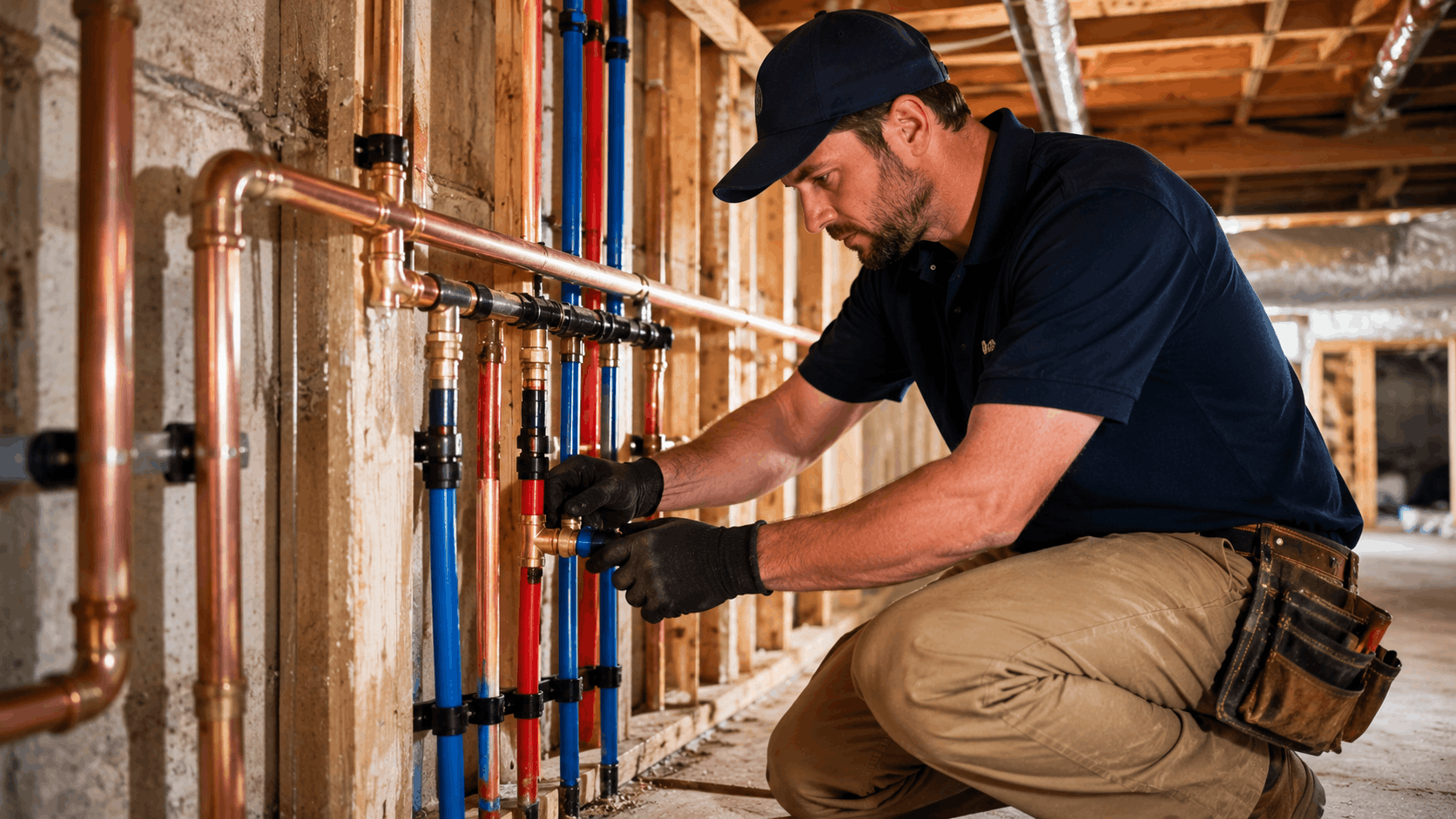
The whole-house repipe process sounds more disruptive than it actually is when a crew knows what they are doing. The work involves replacing every supply line in the home - the pipes that carry water from the main shutoff to every fixture, toilet, appliance, and hose bib. Drain lines are separate and are not part of a standard repipe unless specifically scoped.
A repipe timeline moves faster than most homeowners expect. The crew maps out the home's pipe layout on day one, identifies the routing through walls and attic spaces, and sets up for minimal disruption to living areas. Walls do get opened, but the number of access points is far smaller than tearing open every wall in the house. Clark County plumbing permit requirements are part of the job from the start - no licensed contractor should begin a repipe without one.
The Day-by-Day Timeline Most Homeowners Ask About
A single-story home in Summerlin or the Southwest Las Vegas area with two bathrooms typically takes one to two days for a full repipe. The crew shuts water off in the morning, runs new lines through the attic or along interior walls, and restores water to the home by early evening so the family can use bathrooms overnight.
Larger two-story homes near Green Valley with three or more bathrooms and longer pipe runs generally take two to three days. How long does repipe take depends on pipe access difficulty, wall construction, and whether the attic or crawl space is easily navigable. Water shutoff repipe windows are planned each morning, and the goal is always to have pressure restored before dinner.
At the end of the project, the crew does a pressure test on the full new system before any walls are closed. That test shows any fitting that needs attention before the inspector arrives.
Permits, Inspections, and HOA Considerations
Active Plumbing pulls permits through the appropriate jurisdiction for every repipe job - whether that falls under the City of Las Vegas Development Services, Clark County Building Department, the City of Henderson, or the City of North Las Vegas. Each has slightly different processing timelines and inspection scheduling processes, and local experience with all of them makes a real difference in how fast the final sign-off happens.
HOA communities in Anthem, Seven Hills, and Summerlin may have requirements beyond the building department. Some require written notice before work begins, and some have specific standards for drywall repair materials or paint matching before a homeowner can close the work out visually. A Las Vegas plumbing permit alone does not satisfy HOA requirements - homeowners should check their CC&Rs or contact the HOA management company before scheduling.
The Southern Nevada Water Authority service area covers most of the valley, and any work that affects the main service line or meter connection requires coordination with their requirements as well.
What Happens to Your Walls and Ceilings
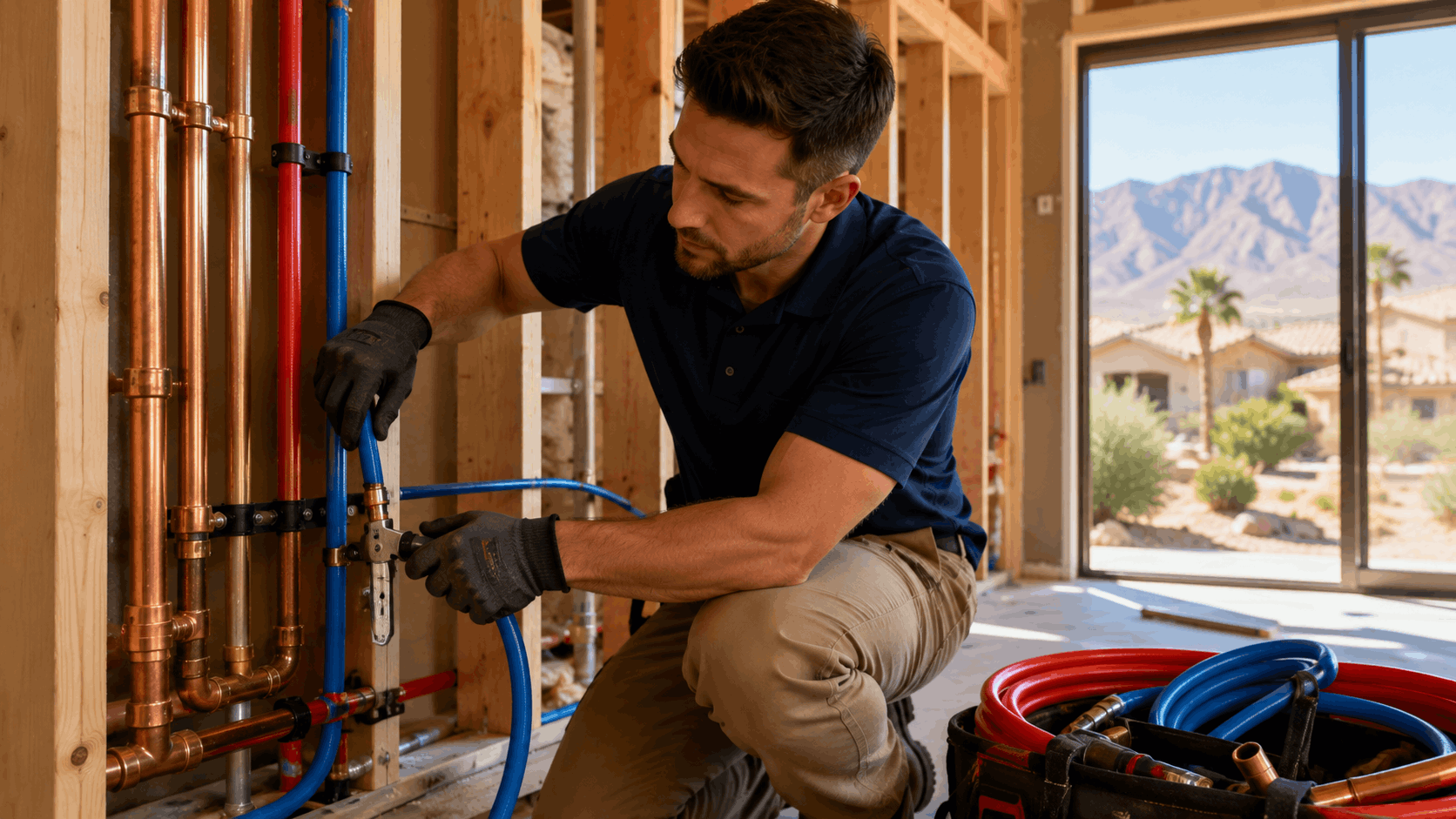
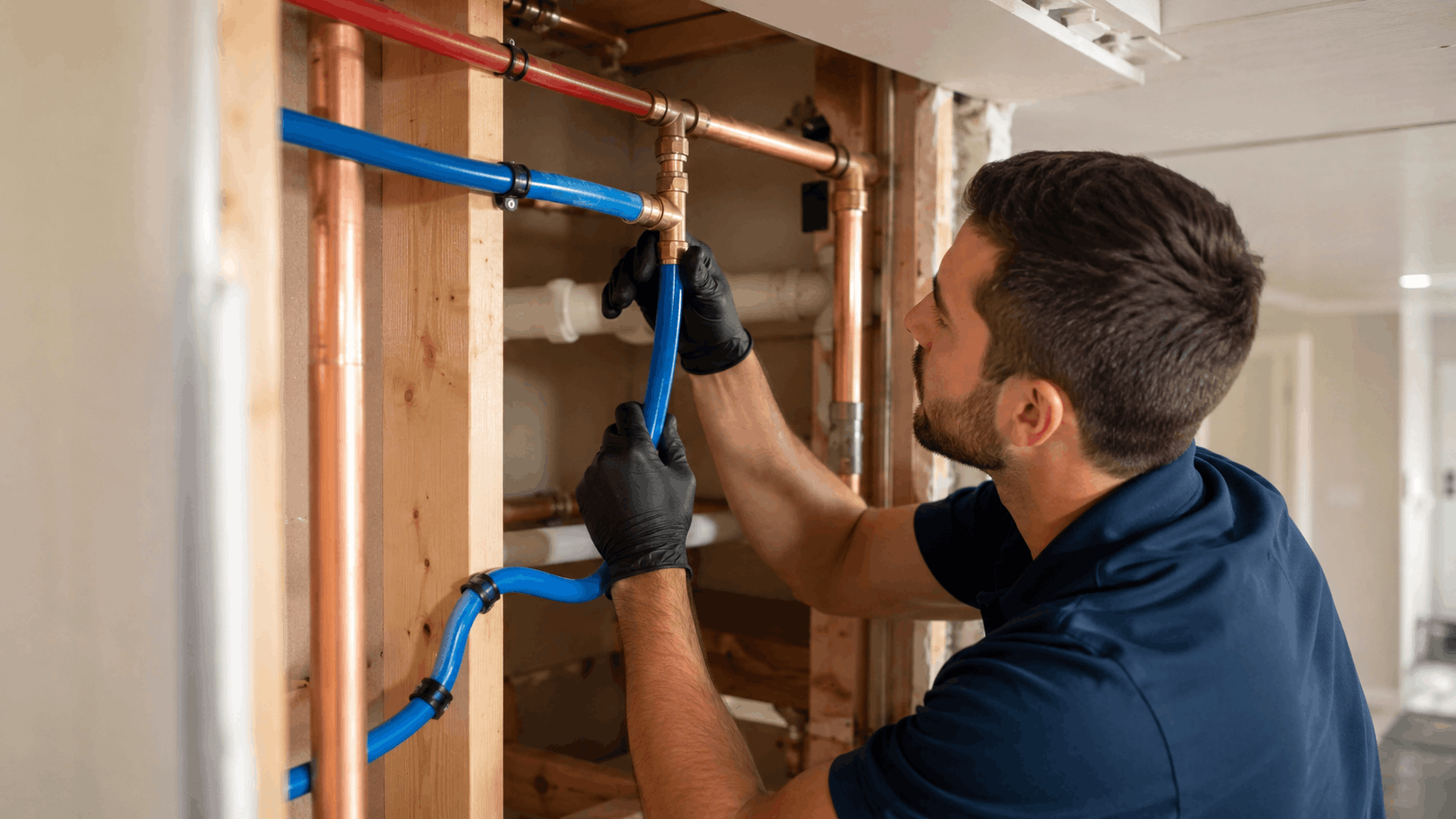
Repipe drywall repair is the part homeowners worry about most, and it helps to know exactly what to expect. The crew cuts small access points - typically 12 to 18 inches square - at each fixture location and at key routing points along the pipe runs. PEX flexible routing allows the pipe to be fished through walls in long runs with fewer cuts because it bends without fittings.
Copper pipe access holes are more frequent because rigid pipe needs a straight path and a fitting at every direction change. A PEX repipe in a typical two-story Southwest Las Vegas home might need 30 percent fewer wall openings than an equivalent copper repipe.
Active Plumbing patches all access holes as part of the repipe scope. Texture matching and paint are typically handled by the homeowner or a separate drywall contractor unless otherwise agreed in the project scope upfront. It is worth having that conversation before signing any contract.
Need Help in Las Vegas?
Active Plumbing serves Las Vegas and all of Las Vegas Valley.
Copper Pipe in Las Vegas: The Honest Pros and Cons
Copper has a long and legitimate track record in residential plumbing, and dismissing it entirely would miss some real advantages. But copper repipe Las Vegas decisions need to account for conditions that are genuinely different here than in most of the country. Copper pipe hard water interaction is the biggest factor that separates Las Vegas installs from what copper performs like in a lower-mineral water city.
The copper vs PEX desert conversation is not one-sided. There are homes and situations where copper is still the right call, and there are others where recommending copper without addressing the water chemistry issue would be doing the homeowner a disservice.
Where Copper Still Makes Sense in the Valley
Copper pipe longevity is real when the installation is done right and the water chemistry is managed. Dielectric fittings at key transition points prevent the galvanic corrosion that happens when copper meets dissimilar metals, and in homes with a functioning water softener keeping hardness below 7 GPG, copper can still be expected to perform for decades.
Copper plumbing resale value is a factor some Las Vegas buyers actively look for, particularly in the custom home market in areas like The Ridges in Summerlin or newer Inspirada builds in Henderson. Some buyers and home inspectors treat copper as a quality signal, which can translate to fewer questions and concerns during escrow. Copper hot water line performance near tankless water heaters is also strong - copper handles the high-temp, high-pressure conditions at the heater connection point without concerns about sustained heat exposure.
How Hard Water Shortens Copper Pipe Life Here
Copper pipe pinhole leaks are the most common call Active Plumbing receives from homeowners in Spring Valley and along the Charleston corridor. These are homes with copper installed in the early to mid-1990s - pipe that should theoretically have another 20 years of life based on national averages but is already showing failure from copper corrosion Las Vegas water conditions accelerate.
Pitting corrosion happens when chlorine and mineral content in the water attack specific spots on the copper interior. The damage is not uniform - it creates small, deep pits that eventually punch through the pipe wall. By the time a homeowner sees one pinhole leak, there are almost always others forming nearby that have not broken through yet.
A water softener copper pipe combination can extend the life of an existing system and protect new copper from the start. Active Plumbing regularly recommends water softener installation alongside any copper repipe in the valley for exactly this reason. A good softener that keeps GPG below 7 makes a measurable difference in long-term copper performance.
Cost Range for Copper Repipe in a Typical Las Vegas Home
Copper repipe cost Las Vegas homeowners should budget for runs between $4,500 and $8,000 for a single-story home in the 1,500 to 2,000 square foot range in the northwest valley. Whole house copper pipe cost climbs for larger homes - a two-story home near Aliante or Lone Mountain with three bathrooms and longer vertical runs can push $9,000 to $12,000 depending on access conditions.
What drives the repipe price estimate up or down includes number of bathrooms and fixtures, whether the attic is easily accessible or requires extra rigging, the age of existing pipe (which affects what needs to be cut versus left in place), and whether drywall patching is included in the contractor's scope. Permit fees through Clark County or the City of Las Vegas add a few hundred dollars and should be factored into any quote.
Material cost for copper runs higher than PEX, and so does labor time because of the more complex routing and more frequent fittings. That cost difference is real and consistent across the Las Vegas market.
PEX Pipe in Las Vegas: What Makes It a Strong Contender
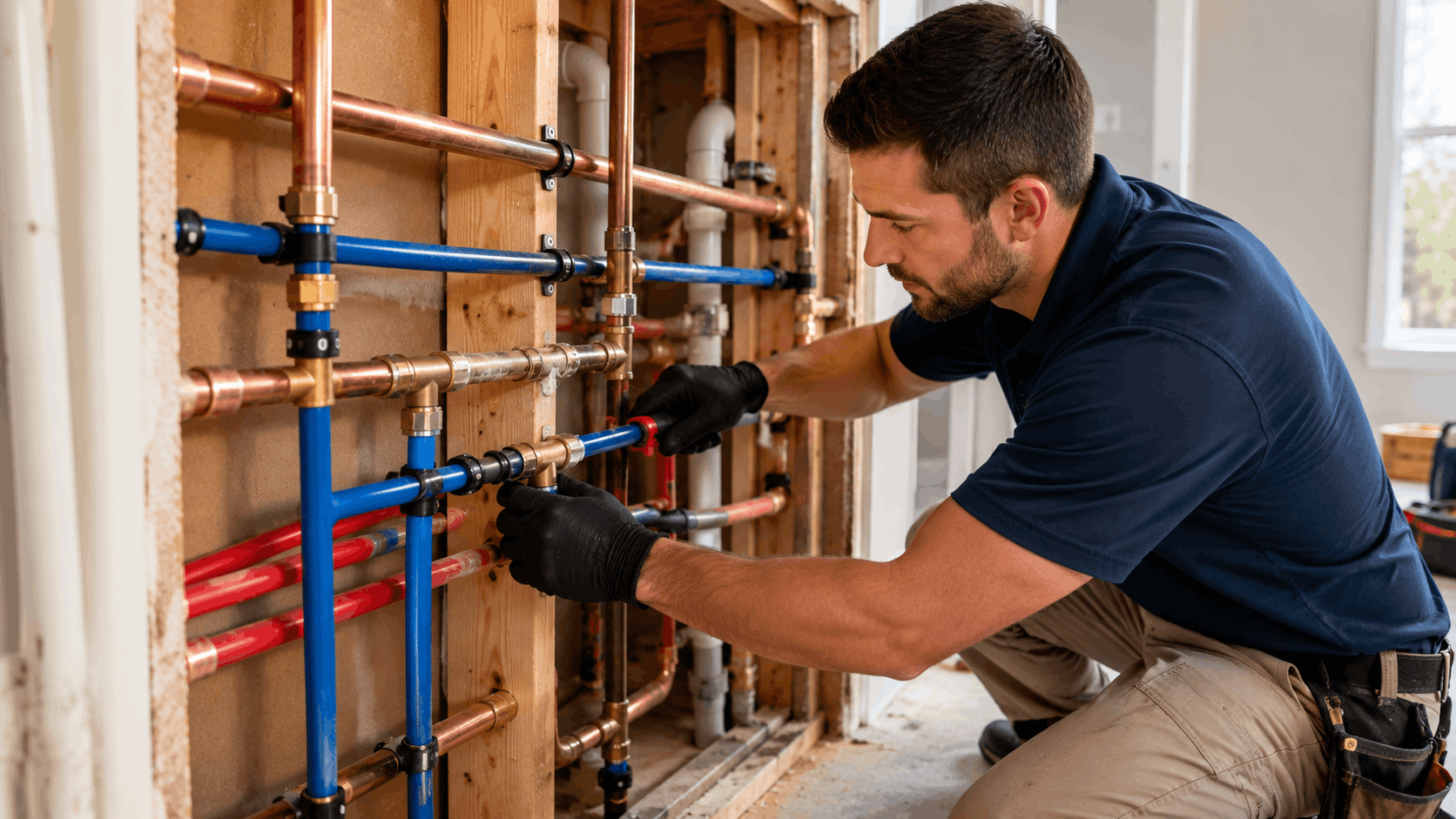
PEX repipe Las Vegas projects have grown significantly in recent years, and not just because of cost. PEX pipe desert climate performance, particularly against hard water, has made it the go-to choice for most residential repipe work in the valley. Plumbers who have worked the area for years have seen firsthand how PEX holds up compared to what copper does in the same conditions over a 15- to 20-year span.
PEX vs copper Las Vegas comparisons have to account for Las Vegas-specific conditions. In a city with softer water and milder temperatures, copper might still come out ahead on every metric. In Las Vegas, PEX addresses the two biggest failure drivers - mineral corrosion and thermal stress at fittings - in ways copper simply cannot match without serious water treatment investment.
Why PEX Handles Vegas Hard Water Better Than Copper
PEX hard water resistance comes from the material itself. Cross-linked polyethylene does not react chemically with calcium, magnesium, chlorine, or the other minerals present in Las Vegas Valley supply water. There is no pitting, no corrosion, and no oxidation process for the mineral content to trigger.
The smooth interior bore of PEX also resists PEX scale buildup more effectively than aged copper. Calcium deposits that would narrow the inside of a copper pipe tend not to adhere as readily to the PEX interior surface. Over time, that means less flow restriction, more consistent pressure, and fewer fixture complaints. PEX pipe lifespan in hard water areas like Las Vegas is one of the material's genuine strengths, not just a marketing claim - it is backed by real-world performance in high-mineral water systems across the Southwest.
Heat Concerns With PEX in Las Vegas Attics
PEX heat rating tops out around 200 degrees Fahrenheit for the water temperature the pipe carries. That sounds like a wide margin above the hottest tap water a home produces, but PEX attic installation Las Vegas presents a different challenge - it is the ambient air temperature in the attic that matters, not just the water flowing through the pipe at any given moment.
A poorly ventilated attic in a Las Vegas home during a July heat wave can hold air temperatures above 150 degrees for hours at a stretch. PEX left uninsulated in direct contact with hot roof decking in those conditions can soften and deform over time, particularly at fittings. Active Plumbing addresses this directly - every attic PEX run on a repipe job is fully insulated with foam pipe insulation, and lines are routed away from the hottest spots near the roof deck whenever possible. PEX insulation hot climate installation is a non-negotiable step in the process, not an optional add-on.
Proper attic ventilation also makes a significant difference. Homeowners with poor ridge vent or soffit vent situations may want to address those as part of or shortly after a repipe to protect the new piping system long term.
Cost Range for PEX Repipe and Why It Is Usually Lower
PEX repipe cost Las Vegas homeowners typically see runs from $3,000 to $6,000 for a comparable single-story two-bathroom home - noticeably lower than the copper equivalent. PEX installation cost savings come from two places: material cost and labor time. PEX tubing itself costs less per linear foot than copper, and the flexible runs mean fewer fittings, fewer soldering steps, and faster routing through tight Southwest Las Vegas tract homes with complex wall configurations.
The PEX vs copper price difference on a typical Las Vegas repipe often falls between $1,000 and $2,500 depending on home size and layout. That is real money, and it becomes even more meaningful when homeowners factor in that PEX is expected to outperform copper in local water conditions without additional water treatment. For a homeowner already budgeting a repipe, those savings can go toward a water softener or other improvements that extend the whole system's life.
Head-to-Head Comparison: Copper vs PEX for the Las Vegas Desert
Putting both materials side by side in plain terms helps homeowners see the real copper vs PEX comparison rather than just absorbing general plumbing advice that was written for cities with very different water conditions. Best pipe Las Vegas home decisions are not the same as best pipe Denver or Portland decisions - the desert changes the math.
This repipe material comparison desert context covers the factors that actually affect long-term satisfaction and cost for Las Vegas homeowners, not just the specs that look good on paper.
Lifespan and Durability in Extreme Heat
Copper pipe lifespan in a city with soft water and mild temperatures can easily reach 50 or even 70 years. In Las Vegas, pipe durability Las Vegas heat and mineral content realities bring that expectation down to 25 to 35 years for properly installed copper in a home without a water softener. Homes with softened water and good installation have shown better numbers, but 35 years is a realistic ceiling for most valley installs.
PEX pipe lifespan comes with a 25-year manufacturer warranty from major brands like Uponor and Viega, and real-world performance in high-mineral water environments suggests it holds up well beyond that when installed correctly. PEX does not degrade from mineral contact, so the main lifespan factor becomes UV exposure (not an issue inside walls) and sustained heat at fittings (addressed with proper insulation). The comparison is closer than many homeowners expect.
Water Pressure, Flow Rate, and Scale Resistance
Water pressure repipe benefits are most dramatic in homes where pipe scale flow rate reduction has been building for years. A 3/4-inch copper pipe narrowed to an effective half-inch by calcium scale delivers noticeably weaker water pressure - this is the shower pressure complaint Active Plumbing hears regularly from customers in older Sunrise Manor and Centennial Hills homes. Las Vegas shower pressure problem calls often trace directly to this kind of internal scale buildup rather than pressure regulator failure.
PEX maintains its interior diameter much better over time because scale does not adhere and build up the same way. That means consistent flow from day one through year 20 in most Las Vegas installations. Both materials start at the same pressure - the difference shows up a decade or more into service when the copper interior has been working against hard valley water the whole time.
Which Material Active Plumbing Recommends for Most Las Vegas Homes
The honest answer, based on years of repipe work throughout the valley: PEX is the practical choice for most existing Las Vegas homes. The best repipe material Las Vegas context has to account for water hardness that sits in the 16 to 18 GPG range, attic temperatures that regularly exceed what an uninsulated pipe should experience, and a housing stock where most homeowners are not running whole-house water softeners.
That PEX recommendation Las Vegas framing does not mean copper is wrong in every situation. A homeowner who has a quality water softener already installed, prefers copper for resale reasons, or is building a custom home where the installation can be designed specifically around the material's needs may find copper is still the right call. Active Plumbing repipe advice is always based on the specific home, not a blanket policy - the crew looks at water chemistry, attic conditions, home age, and owner priorities before making a recommendation.
Need Help in Las Vegas?
Active Plumbing serves Las Vegas and all of Las Vegas Valley.
What Las Vegas House Repiping Actually Covers From Start to Finish
Las Vegas house repiping replaces all pressurized supply lines inside a home, from the main shutoff valve through every branch line feeding bathrooms, the kitchen, laundry, and exterior hose bibs. Drain and waste lines are a separate system and are not included unless a contractor specifically scopes them into the project.
What sets a Las Vegas repipe apart from a typical plumbing repair is the scope. A single pinhole leak gets patched. A repipe addresses the entire network at once, which eliminates the cycle of repeated spot repairs that adds up quickly in homes where the underlying pipe material is uniformly aged or corroded. For valley homeowners, the practical benefit is that one permitted project resolves the risk across the whole house rather than addressing failures one wall at a time over several years.
The process begins with a pipe layout assessment before any walls open. A licensed crew identifies routing paths through walls, ceilings, and attic runs, then pulls the required permit before work starts. Active Plumbing handles the full sequence including the final inspection closeout across Las Vegas, Henderson, and North Las Vegas.
Signs Your Las Vegas Home Needs a Full Repipe Now
Knowing the signs you need a repipe is the difference between catching the problem before a wall full of water damage and dealing with it after. Failing pipes Las Vegas homeowners describe almost always follow a pattern - small signs that get dismissed or spot-repaired until the system reaches a tipping point where when to repipe a house becomes an obvious answer rather than a question.
Active Plumbing hears the same descriptions from callers across the valley every week. The warning signs are consistent enough that experienced plumbers can often predict what the pipes look like inside before ever cutting a wall.
Recurring Leaks in Different Spots Around the House
One pinhole leak in aging copper is almost never the only one. If a homeowner in the North Las Vegas area has had two or more recurring pipe leaks in different locations within 12 to 24 months, the whole system is almost certainly at the same stage of wear. Pitting corrosion from hard water does not attack just one spot - it attacks wherever the conditions are right, and in aging copper, those conditions exist throughout the system.
Multiple pipe leaks home scenarios make spot repair an increasingly poor financial choice. Each patch costs several hundred to over a thousand dollars depending on access, and the next leak is usually not far behind. At some point - and most plumbers put that point at the third or fourth separate leak - a full repipe is less expensive than the ongoing repairs over the next few years.
Discolored Water, Low Pressure, and Metallic Taste
Brown water from tap in the morning - that orange or rust-colored flush when first turning on a faucet - is a sign the interior of the pipes is corroding. Galvanized pipe produces the worst of this, but copper in advanced corrosion stages can also contribute. The discoloration usually clears after running the tap for a minute, which leads homeowners to delay action longer than they should.
Metallic taste water pipes is a separate but related complaint. Low water pressure old pipes that have scaled significantly also produce the shower pressure and flow issues described earlier. When two or more of these symptoms appear together - brown morning water, metallic taste in hot water, and noticeably weaker pressure at multiple fixtures - the system has moved past the point where adding a filter or softener alone will solve it. These are signs of systemic pipe failure that point toward a full repipe evaluation.
Homes Built Before 1990 in the Las Vegas Valley
Older Las Vegas homes repipe needs are not hypothetical - they are a matter of timeline. Homes in Paradise, Winchester, and the streets east of Maryland Parkway built in the 1960s through 1980s have original plumbing systems that have been working against hard valley water for 40 or more years. Galvanized pipe 1980s Las Vegas homes are often past the end of a reasonable service life.
Pre-1990 home plumbing in these neighborhoods deserves at minimum a professional inspection if the homeowner has never had one. A licensed plumber can run a pressure test, check the visible sections near the water heater and under sinks, and give a realistic assessment of how much life remains in the system. Catching the problem before a major leak happens in a finished wall or ceiling is always less expensive than reacting to one.
Choosing the Right Plumber for a Vegas Valley Repipe
The Las Vegas market has a wide range of plumbing contractors, and not all of them have experience with the specific demands of a full repipe in desert conditions. Repipe plumber Las Vegas selection matters more than most homeowners realize - a poorly executed repipe with improper attic insulation or unlicensed work can create problems that are expensive to correct later.
Licensed plumber Las Vegas requirements exist for good reason. Verifying credentials before signing anything protects the homeowner from substandard work and from liability if something goes wrong. When hiring a repipe contractor Vegas homeowners should treat the evaluation process seriously.
Nevada State Contractor License and Local Permits
Any contractor performing a repipe in Clark County must hold a current license from the Nevada State Contractors Board. Homeowners can verify any contractor's license status directly on the NSCB website before the first conversation goes further. The licensed repipe contractor must also pull permits through the correct local jurisdiction - City of Las Vegas, Clark County, Henderson, or North Las Vegas depending on the address.
Clark County plumbing permit requirements include a licensed plumber pulling the permit before work begins, not after. Any contractor who suggests starting without a permit - even as a way to lower costs - is putting the homeowner at risk for fines, required demolition and reinspection, and potential issues at resale when an unpermitted repipe shows up in a title search or home inspection.
Questions to Ask Before Signing Any Repipe Contract
Active Plumbing recommends every homeowner ask these questions of any repipe contractor before signing:
- Who handles drywall patching - is it included in this quote or a separate contract?
- Is the permit fee included in the price, or is it billed separately?
- What warranty covers both labor and materials, and for how long?
- How many wall and ceiling access holes are expected in my specific home?
- Will water be restored to the home every evening during a multi-day project?
- What is the crew size, and how many days do you estimate for my home?
- Do you carry general liability insurance and workers' compensation?
A repipe quote Las Vegas that does not address all of these points is an incomplete quote. The repipe contract checklist above protects the homeowner from surprises mid-project when the scope suddenly changes or costs get added on. Getting answers in writing before signing is not excessive - it is standard practice.
Why Active Plumbing Works Across the Whole Valley
Active Plumbing's repipe service area Las Vegas covers the full valley - Las Vegas proper, Henderson, North Las Vegas, Summerlin, Paradise, Spring Valley, and surrounding communities. That local coverage matters because each jurisdiction processes permits slightly differently, and familiarity with Clark County Building Department and City of Henderson inspectors' scheduling processes speeds up both the permit approval and the final inspection visit.
Working the Henderson North Las Vegas plumber market alongside every other part of the valley means Active Plumbing has seen the range of home construction types, attic configurations, and pipe routing challenges that vary by neighborhood and decade of construction. That experience translates into fewer surprises during a repipe and more accurate estimates upfront.

What to Expect After Your Las Vegas Home Is Repiped
After repipe Las Vegas homeowners typically notice changes faster than they expected. The repipe results expectations conversation is worth having before the project starts so the homeowner knows what is normal immediately after work completes and what requires a follow-up call. New pipes home maintenance in the desert also has some specific considerations that protect the investment long term.
Immediate Changes Homeowners Notice Right Away
The first morning after a repipe, most customers report clearer water at every tap - no more orange or rust-colored morning flush. Shower pressure is noticeably stronger, particularly in homes where scale had been slowly narrowing the old copper lines for years. Water also heats faster from both tank and tankless units because the new pipe interior has zero restriction from mineral scale.
Repipe water quality improvement is one of the most immediate and satisfying results customers across the valley describe. Better water pressure after repipe is the second most common comment. These are realistic repipe results for most Las Vegas homes - not guaranteed outcomes for every situation, but consistent enough that customers are rarely surprised by how much better things feel within the first week.
The Final Inspection and Getting Your Permit Closed
The repipe final inspection Las Vegas process runs through the appropriate jurisdiction - Las Vegas Development Services for City of Las Vegas addresses, or the Clark County Building Department for unincorporated areas. Active Plumbing schedules the inspection appointment and preps the work for the inspector's review before calling in the visit.
Permit close out repipe matters enormously for resale. A closed permit with an inspector sign-off becomes part of the property record and removes a major concern for buyers and their lenders. Any home inspector who spots a repipe during a pre-sale inspection will look for permit documentation. Having that paperwork in order protects the homeowner's listing price and prevents renegotiation over undocumented work.
Protecting New Pipes in the Desert Long Term
The single best thing a Las Vegas homeowner can do after a repipe is add a whole-house water softener if one is not already installed. Las Vegas pipe protection against the valley's 16 to 18 GPG hardness starts with reducing the mineral load the new pipes see every day. Even PEX benefits from lower hardness levels, and copper absolutely does.
Checking the pressure regulator valve (PRV) at the main line is also worth doing within the first year after a repipe. PRV pressure regulator Las Vegas situations are common - Vegas water delivery pressure often runs between 80 and 100 PSI coming off the main, and the PRV is supposed to reduce that to a safe 50 to 60 PSI at the home. A failing PRV puts constant high-pressure stress on all new fittings and connections. Pipe maintenance desert climate also includes knowing what the new pipe warranty covers and keeping the paperwork from the repipe contractor accessible for future homeowners or insurance purposes.
Need Help in Las Vegas?
Active Plumbing serves Las Vegas and all of Las Vegas Valley.
Final Thoughts
A whole-house repipe in Las Vegas is one of the more significant home improvement decisions a homeowner in the valley makes - not because of the disruption, which is manageable, but because the right material choice and the right contractor matter more here than in most cities. Hard water from the Colorado River, extreme summer attic heat, and an aging housing stock in neighborhoods across the valley all push pipe systems toward failure ahead of national averages.
PEX performs better against Las Vegas conditions for most homes, copper still makes sense in specific situations, and the gap in cost between the two materials is real but not the only factor worth considering. Whatever material a homeowner chooses, the most important step is working with a licensed contractor who pulls permits, insulates attic runs properly, and backs their work with a warranty.
If a home has pipes that are showing warning signs - recurring leaks, brown morning water, or weak pressure that has been getting worse - the time to get an evaluation is before the next leak happens in a wall, not after. Contact Active Plumbing to schedule an assessment and get a clear picture of what the home's pipe system actually looks like and what the most practical next step is.
Frequently Asked Questions
How much does a whole-house repipe cost in Las Vegas?
PEX repiping typically runs $3,000 to $6,000 for an average-sized Las Vegas home, while copper comes in at $4,500 to $8,000 or more. Repipe cost Las Vegas varies based on home size, number of bathrooms, how accessible the pipe runs are in the attic or walls, and whether drywall patching is included in the contractor's quote. Permit fees add a few hundred dollars and should always be included in any complete whole house repipe price estimate.
Is PEX or copper better for Las Vegas hard water?
PEX vs copper hard water Las Vegas comparisons consistently favor PEX for this specific condition. Las Vegas Valley water ranks among the hardest in the country at 16 to 18 GPG, and PEX does not corrode, pit, or react chemically with mineral content the way copper does. That said, a properly installed best pipe hard water solution using copper with a quality whole-house water softener can still perform well - the softener does the work of protecting copper that untreated valley water would otherwise shorten.
How long does a whole-house repipe take in Las Vegas?
A typical two-bathroom single-story home takes one to two days for a full repipe timeline Las Vegas project. A two-story home with three or more bathrooms runs two to three days. Active Plumbing restores water to the home each evening during multi-day projects so families are not without running water overnight. How long whole house repipe takes also depends on attic access, wall construction type, and whether the existing pipe layout is straightforward or has complex routing through finished areas.
Do I need a permit for a repipe in Las Vegas?
Yes - a Las Vegas repipe permit required for any whole-house repipe, whether the address falls under the City of Las Vegas, Clark County, Henderson, or North Las Vegas jurisdiction. A licensed contractor should pull the Clark County plumbing permit repipe or city equivalent before work begins, not afterward. Any contractor who suggests skipping the permit to reduce cost is creating a serious problem for the homeowner - unpermitted work can result in fines, required re-inspection after demolition, and complications at resale.
Will a repipe fix my low water pressure problem?
Low water pressure fix repipe results are real when the pressure loss traces back to scale buildup inside aging pipes - which is the most common cause in Las Vegas homes over 15 to 20 years old. New pipes restore full interior diameter and immediately improve flow. However, if the pressure regulator valve on the main service line is also failing - a common issue in Vegas homes - the PRV should be checked and replaced at the same time. Repipe pressure improvement from the pipes alone will not compensate for a bad pressure regulator valve Las Vegas situation.
Does PEX pipe hold up in Las Vegas attic heat?
PEX attic heat Las Vegas is a legitimate concern that requires proper installation to address. PEX temperature rating for water temperature tops out around 200 degrees Fahrenheit, but attic air temperatures during a Las Vegas summer can exceed 150 degrees in poorly ventilated spaces. Active Plumbing insulates all PEX attic runs with foam pipe insulation and routes lines away from direct contact with hot roof decking. With that approach, PEX insulation attic performance holds up well in the desert climate without the degradation concerns that come from leaving pipe bare in extreme ambient heat.
How do I know if my Las Vegas home has polybutylene pipe?
Polybutylene pipe identification starts with what the pipe looks like - gray flexible tubing, usually with copper or plastic crimp fittings at connections. It was installed in Las Vegas homes built between roughly 1978 and 1995, making gray pipe Las Vegas home discoveries common in Spring Valley and older Henderson tracts. Check the visible pipe near the main water shutoff valve and under kitchen and bathroom sinks. Polybutylene Las Vegas homes should be evaluated by a licensed plumber promptly - this material has a documented failure history and is no longer code-compliant for new installation.
Can Active Plumbing repipe a home while we are still living in it?
Yes - most Las Vegas homeowners stay in the home during a repipe without significant disruption to daily life. Active Plumbing plans the work to restore water each evening so the family has full use of bathrooms and kitchen overnight. Work areas are sectioned off during the day, and the crew communicates the schedule clearly so homeowners with remote work, kids at school, or other scheduling needs can plan accordingly. Repipe occupied home Las Vegas projects are the standard, not the exception - live in home during repipe situations are handled routinely.
Does a whole-house repipe add value to a Las Vegas home?
A documented repipe with a closed permit and final inspection sign-off is a concrete selling point in the Las Vegas market, particularly for buyers evaluating older homes in Summerlin or Henderson. Repipe home value Las Vegas benefit comes from removing a major concern that home inspectors routinely flag in pre-sale inspections. Repipe resale value is most pronounced when the paperwork is complete and accessible - buyers and their lenders treat a properly documented home inspection pipe replacement as a strong positive rather than a deferred maintenance item.
What is the difference between a partial repipe and a full repipe?
A partial repipe Las Vegas project replaces only the lines showing active failure - often just the hot water distribution lines or a single problem run through one area of the home. A full repipe replaces all supply lines throughout the entire home. Repipe supply lines only makes financial sense when the rest of the system is in genuinely good condition. Active Plumbing evaluates each home individually to help the homeowner decide whether partial vs full repipe is the right call based on the age, material, and actual condition of the existing pipe system - not a blanket recommendation either way.
Ready to find out what your Las Vegas home's pipes actually look like? Active Plumbing serves the full valley - from Summerlin to Henderson, North Las Vegas to Spring Valley. Schedule a repipe evaluation and get an honest assessment and a written quote from a licensed Nevada contractor who has worked in your neighborhood.
For general reference on water hardness and treatment standards, the U.S. Environmental Protection Agency's drinking water resources provide background on mineral content and water quality guidelines. The American Water Works Association also publishes technical guidance on water hardness, pipe material performance, and treatment options that inform best practices for plumbing in high-mineral water regions like the Las Vegas Valley.
Frequently Asked Questions
- How much does a whole-house repipe cost in Las Vegas?
- PEX repiping typically runs $3,000 to $6,000 for an average-sized Las Vegas home, while copper comes in at $4,500 to $8,000 or more. Repipe cost Las Vegas varies based on home size, number of bathrooms, how accessible the pipe runs are in the attic or walls, and whether drywall patching is included in the contractor's quote. Permit fees add a few hundred dollars and should always be included in any complete whole house repipe price estimate.
- Is PEX or copper better for Las Vegas hard water?
- PEX vs copper hard water Las Vegas comparisons consistently favor PEX for this specific condition. Las Vegas Valley water ranks among the hardest in the country at 16 to 18 GPG, and PEX does not corrode, pit, or react chemically with mineral content the way copper does. That said, a properly installed best pipe hard water solution using copper with a quality whole-house water softener can still perform well - the softener does the work of protecting copper that untreated valley water would otherwise shorten.
- How long does a whole-house repipe take in Las Vegas?
- A typical two-bathroom single-story home takes one to two days for a full repipe timeline Las Vegas project. A two-story home with three or more bathrooms runs two to three days. Active Plumbing restores water to the home each evening during multi-day projects so families are not without running water overnight. How long whole house repipe takes also depends on attic access, wall construction type, and whether the existing pipe layout is straightforward or has complex routing through finished areas.
- Do I need a permit for a repipe in Las Vegas?
- Yes - a Las Vegas repipe permit required for any whole-house repipe, whether the address falls under the City of Las Vegas, Clark County, Henderson, or North Las Vegas jurisdiction. A licensed contractor should pull the Clark County plumbing permit repipe or city equivalent before work begins, not afterward. Any contractor who suggests skipping the permit to reduce cost is creating a serious problem for the homeowner - unpermitted work can result in fines, required re-inspection after demolition, and complications at resale.
- Will a repipe fix my low water pressure problem?
- Low water pressure fix repipe results are real when the pressure loss traces back to scale buildup inside aging pipes - which is the most common cause in Las Vegas homes over 15 to 20 years old. New pipes restore full interior diameter and immediately improve flow. However, if the pressure regulator valve on the main service line is also failing - a common issue in Vegas homes - the PRV should be checked and replaced at the same time. Repipe pressure improvement from the pipes alone will not compensate for a bad pressure regulator valve Las Vegas situation.
- Does PEX pipe hold up in Las Vegas attic heat?
- PEX attic heat Las Vegas is a legitimate concern that requires proper installation to address. PEX temperature rating for water temperature tops out around 200 degrees Fahrenheit, but attic air temperatures during a Las Vegas summer can exceed 150 degrees in poorly ventilated spaces. Active Plumbing insulates all PEX attic runs with foam pipe insulation and routes lines away from direct contact with hot roof decking. With that approach, PEX insulation attic performance holds up well in the desert climate without the degradation concerns that come from leaving pipe bare in extreme ambient heat.
- How do I know if my Las Vegas home has polybutylene pipe?
- Polybutylene pipe identification starts with what the pipe looks like - gray flexible tubing, usually with copper or plastic crimp fittings at connections. It was installed in Las Vegas homes built between roughly 1978 and 1995, making gray pipe Las Vegas home discoveries common in Spring Valley and older Henderson tracts. Check the visible pipe near the main water shutoff valve and under kitchen and bathroom sinks. Polybutylene Las Vegas homes should be evaluated by a licensed plumber promptly - this material has a documented failure history and is no longer code-compliant for new
- Can Active Plumbing repipe a home while we are still living in it?
- Yes - most Las Vegas homeowners stay in the home during a repipe without significant disruption to daily life. Active Plumbing plans the work to restore water each evening so the family has full use of bathrooms and kitchen overnight. Work areas are sectioned off during the day, and the crew communicates the schedule clearly so homeowners with remote work, kids at school, or other scheduling needs can plan accordingly. Repipe occupied home Las Vegas projects are the standard, not the exception - live in home during repipe situations are handled routinely.
- Does a whole-house repipe add value to a Las Vegas home?
- A documented repipe with a closed permit and final inspection sign-off is a concrete selling point in the Las Vegas market, particularly for buyers evaluating older homes in Summerlin or Henderson. Repipe home value Las Vegas benefit comes from removing a major concern that home inspectors routinely flag in pre-sale inspections. Repipe resale value is most pronounced when the paperwork is complete and accessible - buyers and their lenders treat a properly documented home inspection pipe replacement as a strong positive rather than a deferred maintenance item.
- What is the difference between a partial repipe and a full repipe?
- A partial repipe Las Vegas project replaces only the lines showing active failure - often just the hot water distribution lines or a single problem run through one area of the home. A full repipe replaces all supply lines throughout the entire home. Repipe supply lines only makes financial sense when the rest of the system is in genuinely good condition. Active Plumbing evaluates each home individually to help the homeowner decide whether partial vs full repipe is the right call based on the age, material, and actual condition of the existing pipe system - not a blanket recommendation either
A
Licensed plumbing professionals serving Las Vegas and Las Vegas Valley.
Licensed in Nevada · License #0047021
Last updated on
Why trust Active Plumbing?
Founded in 1991, Active Plumbing is a licensed and insured plumber serving Las Vegas and Las Vegas Valley. All content is reviewed by our licensed technicians.

Need Help in Las Vegas?
Active Plumbing serves Las Vegas and all of Las Vegas Valley.
Related Articles

How-To Guides
Best Drain Cleaning Method for Las Vegas Hard Water Buildup
Las Vegas hard water ranks among the harshest in the US. Learn which drain cleaning methods actually work on mineral scale - and when to call a professional.
Safety & Prevention
Lead and Copper in Las Vegas Tap Water: Should You Test Your Home?
Las Vegas homes built before 1990 may have lead solder or corroded copper pipes affecting tap water quality. Learn how to test, interpret results, and fix the problem.
Maintenance
Tankless Water Heater Maintenance in Las Vegas: Why Hard Water Makes It Critical
Las Vegas hard water from Lake Mead builds scale fast inside tankless heaters. Learn the warning signs, real maintenance steps, and how often valley homes need service.