Lead and Copper in Las Vegas Tap Water: Should You Test Your Home?
Key Takeaways
- Lead and copper contamination in Las Vegas tap water almost always originates inside a home's own plumbing - not at the utility's source.
- Homes built before 1986 are at highest risk due to lead solder in pipe joints, but fixtures in homes built before 2014 can still contain trace lead.
- Older neighborhoods like Naked City, the Arts District, and parts of North Las Vegas have a high concentration of pre-1970s plumbing that warrants testing.
- A first-draw water sample collected after water sits overnight gives the most accurate picture of lead exposure at the point of use.
- The EPA's 15 ppb action level triggers utility response, but no level of lead is safe for children under six - any detectable lead in a home with young kids deserves attention.
- Las Vegas hard water and extreme temperature swings speed up copper pipe corrosion and joint stress, making local plumbing conditions more aggressive than in many other cities.
- Remediation options range from single fixture replacement to full whole-home repipes using PEX, with NSF 53 certified filters serving as a short-term bridge solution.
- Families with children, pregnant women, or renters in older Clark County properties should prioritize water testing and document any requests made to landlords in writing.
In This Article
Picture a Spring Valley homeowner filling a glass of water and noticing a faint metallic taste. Or a Summerlin couple who just learned their 1978 ranch-style home likely has lead solder in the plumbing - a detail the home inspector glossed over. These are not rare situations. Across the Las Vegas Valley, thousands of homes built during the city's postwar and mid-century growth spurts still carry aging pipes, corroded solder joints, and fixtures that can quietly release lead and copper into the water supply every single day.
The good news is that the Las Vegas Valley Water District and the Southern Nevada Water Authority treat the water before it ever reaches a neighborhood. The challenge is what happens after that treated water enters a home's own plumbing. That stretch of pipe - from the meter to the kitchen tap - is entirely the homeowner's responsibility, and it is where most lead and copper contamination actually occurs.
Where Lead and Copper Actually Come From in Las Vegas Water?
Most Las Vegas homeowners assume that if the water utility passes its tests, the water coming out of the tap is equally clean. That assumption has a serious gap in it. The Las Vegas Valley Water District and SNWA do an effective job treating source water - but their responsibility stops at the water meter outside a home. Everything past that point belongs to the homeowner.
Lead contamination source issues and copper pipe corrosion problems almost always originate inside the home itself. The pipes, solder joints, fixtures, and valves that water travels through before reaching a glass are the real variables. A home's plumbing is essentially its own private distribution system - and in older homes, that system can be a source of serious contamination.
Getting tested is the only way to know for certain what is in the water at the point of use. Active Plumbing offers water quality testing in Las Vegas that goes beyond what a utility report can tell a homeowner.
How Lead Gets Into Tap Water After Treatment
Lead does not typically enter water at the source. It leaches in as water sits in pipes, especially overnight when there is no flow. Lead solder was the standard way to join copper pipes in American homes for decades - and it was not banned until 1986. Any home built before that year should be treated as a strong candidate for lead leaching.
Older brass fittings and valves also contain lead. Even small amounts of contact time between water and these materials can raise the concentration in a first-draw glass meaningfully. Pre-1986 homes in areas like Naked City near Rancho Drive or the older blocks of East Las Vegas face the highest exposure through this pathway.
Lead leaching is not visible and has no smell. The only way to detect it is through testing. Parents who have young children at home - particularly in zip codes with a high concentration of older housing stock - should treat this as a priority, not a someday task.
Why Copper Pipes Corrode in the Las Vegas Climate
Las Vegas has some of the hardest water in the United States. Water drawn from Lake Mead carries high concentrations of calcium and magnesium, and those minerals interact with copper pipes in ways that speed up wear over time. Copper pipe corrosion is a common complaint in homes from Henderson's older blocks to the neighborhoods south of Flamingo Road.
Hard water in Las Vegas does two contradictory things. It can coat pipe interiors with mineral scale, which sometimes acts as a mild buffer. But it can also cause pitting corrosion - microscopic pockets that weaken pipe walls and eventually cause pinhole leaks. Homes in Summerlin and areas near Green Valley that were built in the 1980s and 1990s are now old enough that those copper systems are showing wear.
When copper levels rise in tap water, it is usually a signal that pipes are actively corroding from the inside. That is not just a water quality problem - it is a structural plumbing problem that will eventually become a leak. Catching it through testing before the pipe fails is a much cheaper fix than dealing with water damage after the fact.
The Role of Your Home's Service Line
The service line is the pipe that runs from the utility's water main at the street to the water meter and then into the house. In some older parts of Las Vegas - particularly properties along Charleston Boulevard and sections of North Las Vegas built during the 1950s through 1970s - those lines may be original. Original service lines from that era sometimes contain lead or galvanized steel that can contribute to contamination.
The division of responsibility matters here. The water district owns and maintains the main line in the street. But the lead service line from the meter to the house is the homeowner's responsibility to replace. Many homeowners do not know this.
If a home sits in one of those older North Las Vegas corridors or near the older residential blocks off Maryland Parkway, a service line replacement conversation is worth having with a licensed plumber who can assess what material the existing line is made of.
Get Your Quote
Tell us what's going on and we'll get back to you. We're open 24/7.
Which Las Vegas Homes Are at the Highest Risk
Not every home in the valley carries the same level of risk. Age, location, and construction type all affect how likely it is that a home's plumbing is contributing to elevated lead or copper at the tap. The table below gives a quick overview - but the sections that follow add important detail for each category of at-risk homes in Las Vegas.
| Home Age / Era | Typical Construction | Primary Risk | Risk Level |
|---|---|---|---|
| Pre-1960 | Galvanized steel, early copper | Galvanized corrosion, possible lead service line | High |
| 1960-1985 | Copper with lead solder | Lead solder leaching at joints | High |
| 1986-2010 | Copper, brass fixtures | Trace lead in faucets and valves | Moderate |
| 2011-Present | PEX, modern fixtures | Low - depends on fixture compliance | Low to Moderate |
The older Las Vegas neighborhoods and the construction era of a home give a solid starting point. But home age plumbing risk is not the only factor - maintenance history, water treatment upgrades, and whether fixtures have ever been replaced all matter too.
Older Homes in Downtown Las Vegas, Naked City, and the Arts District
The Historic Westside, Naked City near Rancho Drive, and the Arts District off Main Street contain some of the oldest residential plumbing in the valley. Many of these homes were built in the 1940s through 1960s, long before lead solder was a known problem and before modern building codes addressed plumbing material standards. Downtown Las Vegas plumbing in these blocks frequently involves multiple generations of pipe repair - some of which used whatever material was available at the time.
Arts District homes that have been renovated for residential use sometimes have a mix of old galvanized steel and newer copper - connected with whatever transition fittings were on hand. That patchwork creates multiple points of potential corrosion. Galvanized pipe replacement is one of the more common jobs Active Plumbing handles in these neighborhoods.
Galvanized steel does not leach lead directly, but it corrodes from the inside and traps sediment - including lead particles that may have entered from solder joints upstream. Water that looks clear can still carry those particles.
Tract Homes Built in the 1970s and 1980s Across the Valley
Sunrise Manor, Paradise, and Whitney Ranch saw explosive growth during the valley's first major population surge. The copper pipes in those homes are now 40 to 50 years old. They were joined with lead solder as a matter of standard practice - because there was no rule against it until 1986. 1970s Las Vegas homes in these areas are the backbone of the local housing stock, and a large percentage of them have never had a plumbing inspection that focused on water quality.
Paradise, Nevada tap water reaching older homes in that area passes through pipes that have seen nearly five decades of hard water, temperature swings, and daily use. The copper at those joints is not what it was in 1978. Corrosion at solder points is not always visible from the outside of a pipe - it develops from within.
If a home in this era has never had a water quality test, scheduling one now is not an overreaction. It is practical maintenance, the same as checking the roof or the water heater.
Newer Construction Is Not Always Safe Either
Homes built after 1986 avoided lead solder in their pipe joints - but that did not eliminate lead from plumbing materials entirely. Faucets, valves, and supply connectors were still manufactured with brass alloys containing meaningful lead content until a tighter standard took effect in 2014. A home built in 1999 with its original kitchen faucet may still have a fixture that leaches trace lead. Lead in faucets is a real issue in this category of home.
The relevant standard is NSF 61, which governs materials that contact drinking water, and NSF 372, which specifically defines lead-free compliance for fixtures. Homes built before 2011 may have fixtures that met the standard at the time but would not meet today's tighter definition of lead-free. Post-1986 plumbing risk is lower than in older homes, but it is not zero.
The safest approach for any home with original fixtures - regardless of build year - is to test the water and consider replacing fixtures that predate 2014 standards.
Need Help in Las Vegas?
Active Plumbing serves Las Vegas and all of Las Vegas Valley.
What the EPA's Lead and Copper Rule Actually Means for You
The EPA Lead and Copper Rule has been federal law since 1991, but most homeowners have never read it. The rule sets requirements for water utilities - not for individual homeowners directly. But knowing what it says helps a Las Vegas homeowner understand what SNWA is responsible for and what falls squarely in their own court.
SNWA compliance with federal rules is a separate question from whether a specific home's tap water is safe. These two things can both be true at the same time: the utility can be fully compliant, and a particular home's water can still have elevated lead. That distinction matters a great deal when deciding whether to test.
The 15 ppb Action Level and What It Triggers
The 15 ppb lead action level is the threshold that forces water utilities to act. When more than 10 percent of sampled homes exceed 15 parts per billion of lead, the utility must implement or upgrade corrosion control treatment, notify the public, and begin replacing lead service lines. It is a system-level trigger - not a safety certification for individual taps.
SNWA water testing uses samples collected from a representative set of homes across the service area. Those samples determine the utility's compliance status. But a home that was not in the sample set - which is almost every home in the valley on any given testing cycle - has no individual data attached to it.
Homeowners should not confuse "the utility passed its test" with "my water is fine." Those are different statements, and only the second one matters for a family's daily exposure.
Why Utility Compliance Does Not Mean Your Tap Water Is Clean
The national example that made this point most painfully clear is Flint, Michigan. The Flint water crisis did not happen because the utility was reckless with source water - it happened because a change in treatment chemistry caused lead to leach from pipes inside homes at levels that harmed children. The utility was technically operating within certain parameters while the tap water lead testing home results told a completely different story.
Las Vegas is not Flint. But the mechanism is the same. Utility vs. home water quality is a real distinction, and the distance between those two things is exactly the length of a home's internal plumbing. A first draw sample - water collected after sitting overnight in the pipes - will reveal what a utility report never can: what is actually coming out of a specific tap in a specific home.
SNWA does its job well. That does not remove the responsibility homeowners have to understand their own plumbing.
The 2024 Lead and Copper Rule Revisions
The EPA 2024 Lead Copper Rule update introduced two major changes. First, it set a new maximum contaminant level goal - the zero lead MCLG - acknowledging that no level of lead in drinking water is safe. Second, it requires water utilities to identify and complete lead service line replacement across their entire service areas within 10 years.
For Las Vegas homeowners, this means utilities will be reaching out about service line materials in the coming years. The process will involve identifying which properties have lead service lines - something many utility records do not clearly document for older homes. The EPA's updated Lead and Copper Rule guidance provides the full regulatory framework for homeowners who want to read the details.
Homeowners in older Las Vegas neighborhoods should proactively ask SNWA whether their address is flagged for service line review. They should not wait for a letter to arrive before taking action.
How to Test Your Las Vegas Home's Tap Water for Lead and Copper
Testing water for lead and copper is not complicated, but the process matters. A sample collected incorrectly can give a false low reading - which is actually worse than no result at all because it creates a false sense of security. Water testing in Las Vegas starts with choosing the right method and the right lab.
A certified water testing lab in Nevada gives results that carry weight - for personal decisions, for real estate transactions, and for determining the scope of any plumbing remediation. Lab certification also matters if results ever need to be shared with a landlord, a buyer, or a public health official. The difference between a certified result and a home screening kit is significant in those contexts.
First Draw Testing vs. Flushed Sample Testing
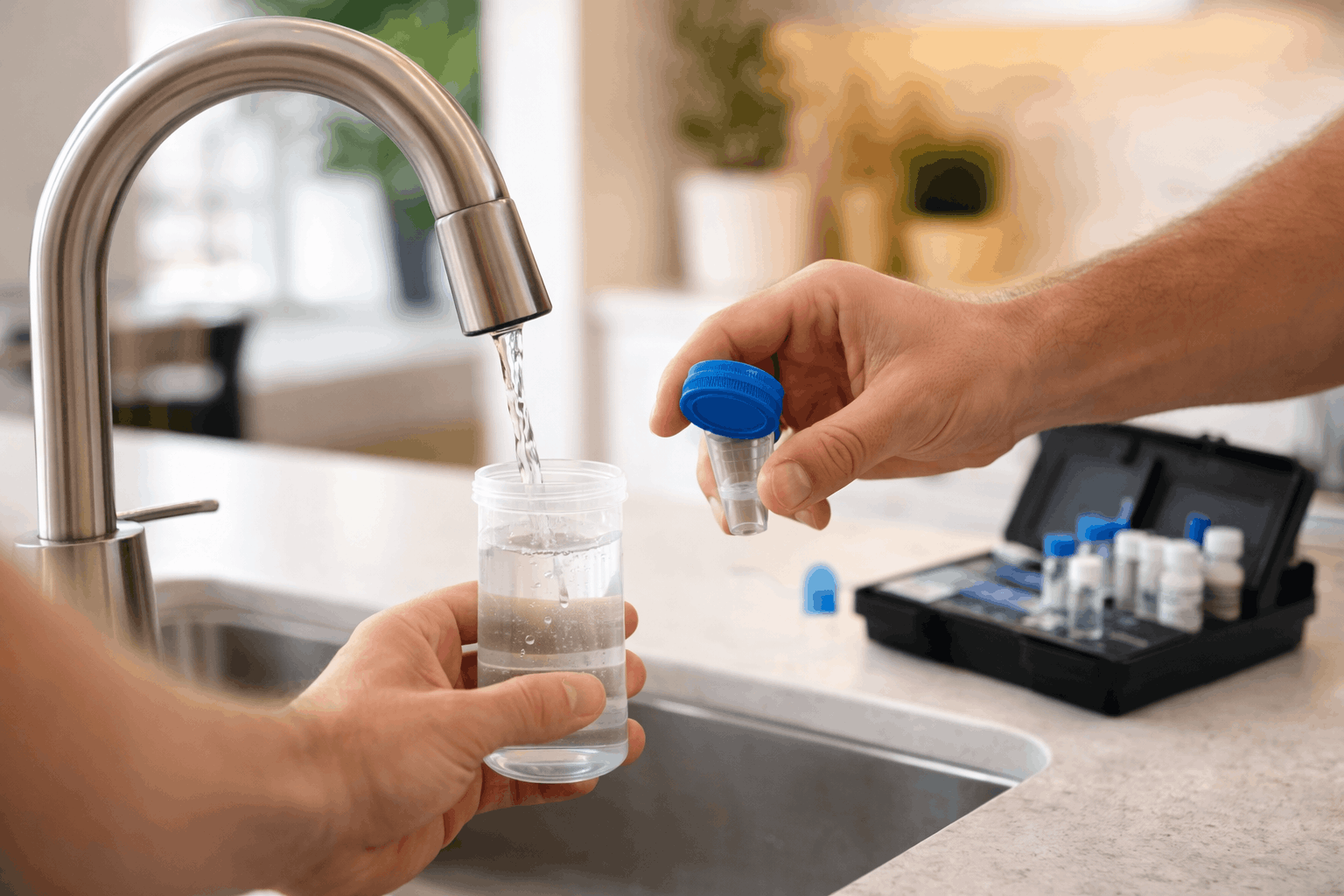
A first draw sample for lead is collected from the tap after water has been sitting in the pipes for at least six hours - typically first thing in the morning before anyone runs water. This method captures the highest potential lead concentration because the water has had time to absorb whatever the pipes, solder, and fixtures will release. The EPA sampling protocol for residential screening recommends this approach because it reflects worst-case exposure.
A flushed sample, collected after running the water for several minutes, tests water that has passed through the home's pipes without extended contact time. This tends to produce lower lead readings - which is why it is less useful for identifying a problem. The water sample collection method a homeowner chooses will significantly affect the results they see.
For families with young children, the first-draw approach is the right call. It represents what a child drinks first thing in the morning - the highest-risk scenario.
Finding a State-Certified Lab in Nevada
The Nevada Division of Environmental Protection (NDEP) maintains a list of labs certified to analyze drinking water samples. Using an NDEP-approved lab is the difference between a screening result and a defensible analytical result. For homeowners in Spring Valley, Summerlin, or anywhere else in the valley, that distinction matters most if results come back elevated and action needs to follow.
A certified water testing lab will provide a chain-of-custody form, proper sample containers, and written instructions for collection. The results will include quantified readings in parts per billion for lead and milligrams per liter for copper - not just pass/fail indicators. The NDEP's certified laboratory list is publicly available and is the best starting point for finding an approved testing option in Nevada.
Some county health programs have offered free test kits during specific outreach periods. Checking with the Southern Nevada Health District for current availability is worth a quick call.
What a Professional Plumbing Inspection Adds to Lab Results
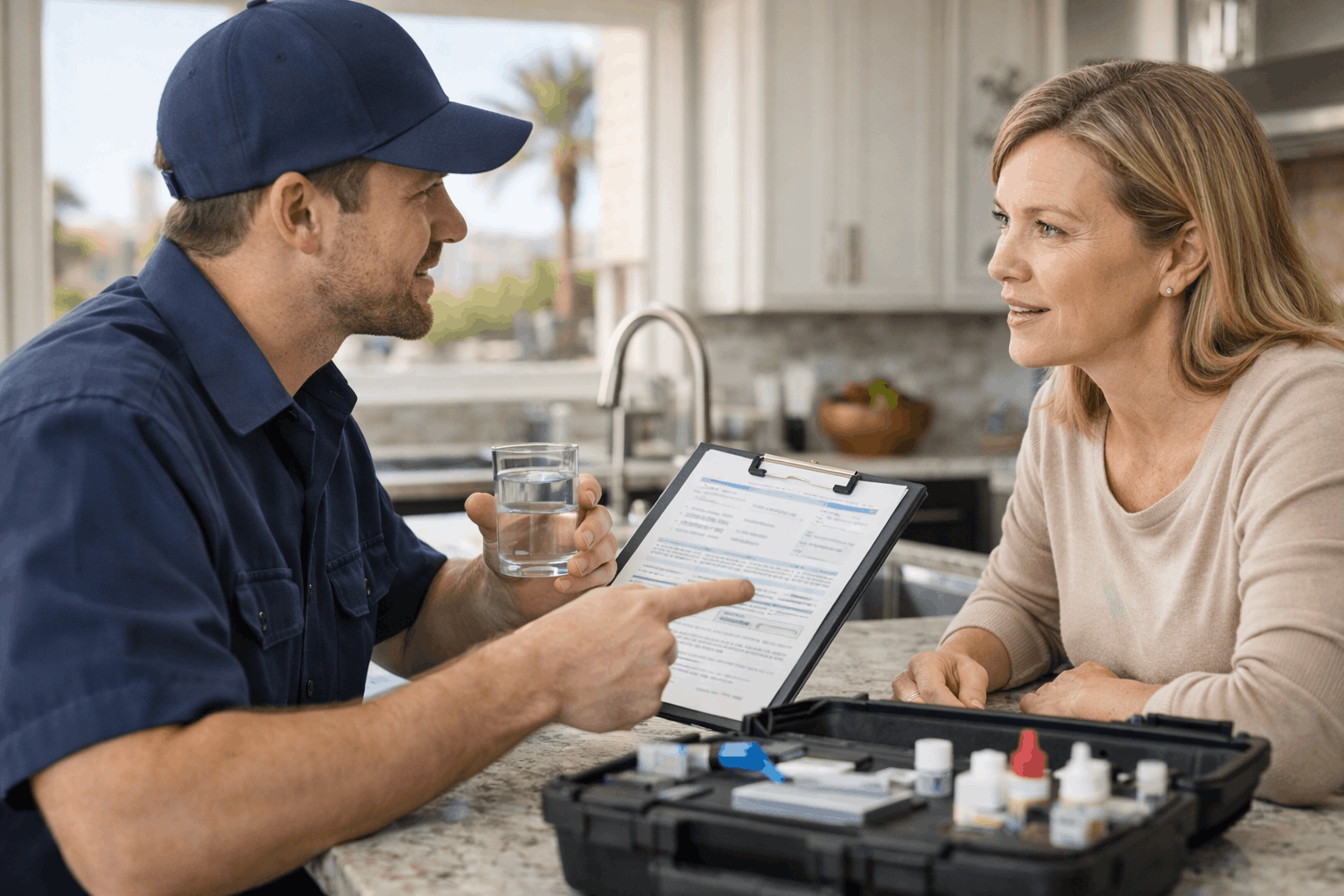
A lab result tells a homeowner what is in the water. A licensed plumber can tell them why it is there. Those are two different types of information, and both matter when deciding what to fix. Active Plumbing's technicians across Las Vegas combine visual pipe inspection with test result analysis to identify whether the source is a specific faucet, a solder joint behind a wall, or a deteriorating section of supply line.
A plumbing inspection in Las Vegas from Active Plumbing includes looking at exposed pipe runs, checking fixture age and brand for known lead-content issues, and assessing the overall condition of the home's water-bearing systems. That context makes remediation more targeted - and more cost-effective. Without it, a homeowner might replace the wrong thing. For a full assessment, our team provides professional water quality testing services that include both sampling support and a plumbing review.
Lead source identification through a professional inspection saves time and money compared to replacing everything at once on a guess.
Reading Your Water Test Results: What the Numbers Mean
A lab report arrives with numbers, units, and reference values that most homeowners have never seen before. Lead ppb results and copper mg/L drinking water readings are not hard to interpret - but knowing what action each threshold calls for is what actually matters. This section breaks down the numbers so a Las Vegas homeowner can decide what to do next without needing a chemistry background.
The key in water test result interpretation is not just comparing to regulatory limits - it is understanding what each level means for the specific people drinking that water. A retired couple and a household with a two-year-old face very different risk profiles at the same lead concentration.
Lead Levels: When to Act and When to Monitor
Here is a straightforward breakdown of lead ppb thresholds and the appropriate response at each level:
- Below 5 ppb: Generally low concern for most adults. Continue monitoring periodically, especially in older homes.
- 5 to 14 ppb: Warrants attention. Check fixtures first, consider filter installation, and schedule a plumbing inspection.
- 15 ppb and above: Act immediately. This meets the EPA action level and calls for fixture or pipe replacement, not just filtering.
That said, the EPA and CDC both state that no level of lead is technically safe for children. Lead exposure in children can affect brain development at concentrations well below the 15 ppb action level. For households with kids under six, any detectable lead is worth addressing - not just monitoring. Lead safe drinking water in a home with young children means working toward zero, not just staying below the regulatory line.
Copper Levels and What They Signal About Your Pipes
The EPA action level for copper is 1.3 mg/L. When tap water exceeds that concentration, it almost always points to active corrosion inside the home's copper pipes. The water is dissolving metal as it moves through the system - which has two consequences: the water quality issue itself, and the physical deterioration of the pipes that will eventually cause leaks.
Copper pipe corrosion detection through water testing is one of the earliest warning signs available to a homeowner. Older homes near Flamingo Road and Decatur Boulevard - areas that saw heavy copper pipe installation in the 1970s and 1980s - frequently show early signs of corrosion in their water chemistry before any visible leak appears. The copper 1.3 mg/L action level is not just a health threshold; it is a plumbing health indicator.
Pinhole leaks in Las Vegas homes are one of the more common and expensive repair calls Active Plumbing receives. Catching elevated copper in a water test is the chance to address the root cause before a wall or ceiling absorbs the cost of a failed pipe.
When to Share Results With a Doctor or Local Health Department
Any elevated lead result in a home where children under six or pregnant women are present should go directly to a physician. The doctor can order a blood lead test to determine whether the child has already absorbed harmful amounts. This is not a precaution to delay - blood lead testing in Las Vegas is straightforward and the results inform both medical decisions and the urgency of the remediation timeline.
The Southern Nevada Health District is the local resource for guidance on lead exposure, available testing programs, and referrals to community health resources. They can also advise on Nevada-specific programs that may assist with remediation costs in cases of confirmed elevated exposure. Lead exposure health risk information from them is current, local, and free to access.
Sharing test results with the Health District also contributes to local data on water quality trends - which helps target public health resources more effectively across the valley.
Need Help in Las Vegas?
Active Plumbing serves Las Vegas and all of Las Vegas Valley.
What Active Plumbing Can Do to Fix Lead and Copper Problems in Las Vegas Homes
Once a test comes back with elevated lead or copper, the question becomes what to fix and in what order. Active Plumbing handles plumbing remediation across Las Vegas - from quick fixture swaps in a single afternoon to full whole-home repipes in older properties near Rancho Drive or the Whitney area. The right fix depends on what the test and the inspection reveal together.
Generic advice about plumbing remediation does not account for the specific conditions in Las Vegas homes - the hard water, the construction eras, the climate stress on joints. Our team has worked on homes from Green Valley to Centennial Hills, and we approach each remediation based on what the actual pipes in that specific house look like.
Replacing Lead-Containing Fixtures and Supply Lines
When lead levels are mildly elevated - in the 5 to 14 ppb range - and the likely source is a faucet or supply connector rather than a pipe, lead-free faucet replacement is often the fastest and most cost-effective fix. Active Plumbing carries NSF 372 fixtures that meet the current lead-free standard, and a typical kitchen and bathroom fixture replacement can be completed in a single visit.
Older brass valve replacement at supply shut-offs and ice maker lines is also worth addressing in the same visit. These valves - especially in homes built before 2000 - can contribute trace lead to water even when the pipes themselves are in reasonable condition. Replacing them is a small cost relative to the exposure they may be contributing over months and years of daily use. Active Plumbing's fixture installation and repair services cover all of this in one appointment.
New fixtures also improve flow and efficiency - a practical bonus that comes with doing the right thing for water quality.
Partial and Full Repiping for Older Las Vegas Homes
When the problem is aged copper with corroded joints or galvanized steel lines - common in homes near Rancho Drive and throughout the Whitney area - fixture swaps alone will not solve it. PEX repiping in Las Vegas is one of the Frequently requested services Active Plumbing performs in homes built before 1990. PEX is flexible, resistant to scale buildup, and performs well under the Las Vegas climate's thermal demands.
Galvanized pipe replacement projects typically involve removing the old steel lines, flushing the system, and running new PEX or copper throughout the affected areas. A partial repipe targeting a single bathroom or the kitchen supply lines takes one to two days. A whole home repipe in an average Las Vegas house runs two to four days depending on the layout and how accessible the pipe runs are. Our team works to keep water shutdowns as short as possible.
For homeowners in older parts of the valley considering a repipe, our full whole house repipe service includes a full assessment before work begins so there are no surprises mid-project.
Water Filtration as a Short-Term Bridge Solution
Not every household can schedule a repipe immediately. For families dealing with mild lead elevation while waiting for a larger fix, a point-of-use filter rated to NSF 53 for lead removal is a responsible bridge. These under-sink units are certified to reduce lead at the tap and give families a reliable option at the faucet they use most for drinking and cooking.
Active Plumbing installs under-sink water filters in Las Vegas and advises homeowners on proper maintenance schedules - because a filter that is not changed on time can lose its effectiveness and create a false sense of protection. We also install whole house water filtration systems for homeowners who want broader coverage across every tap. Point-of-use filtration is the right short-term tool - but it should never be a substitute for fixing the underlying pipe problem.
For families who also want to address Las Vegas's hard water alongside lead and copper concerns, our water softener installation service can address both issues at once.
Protecting Kids and Vulnerable Family Members in Las Vegas Homes
Children and pregnant women are not just more sensitive to lead - they absorb it at significantly higher rates than healthy adults. A lead level that causes minimal concern for a 45-year-old can be genuinely harmful to a toddler drinking that same water every morning. Lead exposure in children in Las Vegas is a preventable problem, but only when families know what to look for and how to act on it.
The goal here is not to alarm families - it is to give them the specific, actionable information that lead safe home families across the valley have used to protect the people they care about most.
Why Children Near Schools in Older Las Vegas Zones Face More Risk
Neighborhoods surrounding older school campuses in East Las Vegas and within the North Las Vegas Unified district boundaries tend to have a high concentration of 1960s and 1970s housing. The schools themselves may have been renovated, but the homes around them often have not had plumbing work done since original construction. North Las Vegas neighborhoods along Civic Center Drive and the older residential blocks near Carey Avenue fall into this category.
Child lead absorption is a biological fact: children under six absorb roughly four to five times more lead per unit of exposure than adults do. Combined with the fact that young children drink more water relative to their body weight, a home's water lead level that an adult might tolerate without noticeable effect can cause measurable neurological impact in a child over time.
Families in these areas do not need to panic - but they do need to test. That single step gives them the information to decide whether action is needed or whether the home's plumbing is in acceptable condition.
Simple Daily Habits That Reduce Lead Exposure While You Wait for Repairs
While waiting for testing results or scheduling repairs, there are practical habits that genuinely reduce lead exposure at home. Our team shares these with every parent who calls with concerns about their water:
- Flush cold water for 30 to 60 seconds before using it for drinking or cooking, especially in the morning or after water has sat overnight.
- Always use cold water for infant formula. Hot water draws more lead from pipes and should never be used for mixing baby formula.
- Never boil water to remove lead. Boiling concentrates lead - it does the opposite of what most people assume. Cold water lead reduction comes from flushing, not heating.
- Use a certified NSF 53 filter at the tap used most for drinking until repairs are complete.
These steps are not a substitute for fixing the plumbing - but they meaningfully lower daily exposure while the longer-term solution is being arranged.
Rental Properties and Landlord Responsibilities in Clark County
Clark County landlord lead disclosure requirements exist under both federal and Nevada state law. Landlords must disclose known lead-based paint hazards in homes built before 1978, and Nevada rental lead law holds property owners responsible for maintaining habitable conditions - which includes safe water quality. A landlord who receives notice of a lead concern and fails to address it faces legal liability beyond just the cost of repairs.
Renters who suspect a lead problem in their home have tenant rights around water quality and can request testing in writing. That written request creates a paper trail that protects the tenant if the landlord is slow to respond. Renters can also contact the Southern Nevada Health District to file a concern. The property owner - not the tenant - bears the cost of remediation.
For landlords who want to get ahead of this issue and assess their rental properties proactively, Active Plumbing can provide inspections and testing across multiple properties throughout the Las Vegas Valley.
Need Help in Las Vegas?
Active Plumbing serves Las Vegas and all of Las Vegas Valley.
How Las Vegas's Hard Water Makes Lead and Copper Risks Worse
Lead and copper contamination in Las Vegas homes does not behave exactly the way it does in other cities. The local water chemistry, the climate, and the specific construction history of the valley's housing stock create conditions that amplify risks in ways that general national guidance does not always capture. Las Vegas hard water plumbing challenges are a real factor in why pipes in this market age the way they do.
The water chemistry in Nevada - particularly the mineral load in water drawn from Lake Mead - interacts with both older and newer pipe materials in ways that speed up the problems described throughout this article. Scale buildup in pipes is a daily reality in Las Vegas homes, and its effects are more complex than most homeowners realize.
High Mineral Content and What It Does to Pipes Over Time
Las Vegas tap water originates primarily from Lake Mead and arrives at homes already carrying high concentrations of calcium and magnesium. Over years, those minerals deposit inside pipes as scale. The relationship between scale and corrosion is not straightforward - in some cases, calcium buildup in pipes creates a thin mineral coating that partially insulates lead solder from the water flowing past it. That sounds like a benefit, but the coating is uneven and unreliable as a protection mechanism.
On the other side, scale vs. corrosion in Las Vegas plays out in a damaging way at pipe joints. Where scale accumulates unevenly, it creates pressure differentials and micro-turbulence that speed up pitting at joint connections. This is why copper pipes in 1980s Las Vegas homes near areas like Sahara Avenue and the older tracts of the southeast valley show pinhole corrosion that does not match their age on paper alone.
The mineral load in Las Vegas water is one of the strongest arguments for whole-house water softening alongside any lead or copper remediation work.
Temperature Swings Between Summer and Winter in the Las Vegas Valley
Las Vegas regularly exceeds 110°F in summer. January nights in higher-elevation neighborhoods like Summerlin near Red Rock Canyon can drop to near-freezing. That temperature range stresses every part of a home's plumbing system - but it stresses solder joints and pipe connections most of all. Las Vegas temperature pipe stress is a year-round phenomenon, not just a winter freeze concern like in northern climates.
Thermal expansion in pipes causes materials to expand and contract cyclically. In a pipe that has been doing this for 40 years, the cumulative effect on soldered joints shows up as micro-cracking and loosening at connection points. Those small gaps are exactly where water-to-metal contact time is highest - and where lead leaching speeds up. Summerlin plumbing winter calls in January often involve joints that expanded and contracted one too many times during the prior summer.
This thermal cycling effect is something Active Plumbing's team has observed repeatedly across the valley's different elevation zones and microclimates.
Why Local Plumbing Experience Matters for Las Vegas Homes Specifically
A plumber who has spent years working on homes from Green Valley to Centennial Hills builds up a kind of institutional knowledge that a national service dispatching a technician from a call center cannot replicate. We have seen how differently pipes behave across Las Vegas zip codes - how a home in the 89128 zip code near Summerlin Parkway ages differently than one in 89101 near the Arts District, even if both were built in the same year. Las Vegas local plumber experience is not a marketing claim - it is what allows us to make accurate diagnoses quickly.
Local knowledge also means knowing which neighborhoods have the most complaints about specific water quality issues and which construction contractors from the 1970s tended to use which pipe configurations. That pattern recognition speeds up inspection and makes recommendations more accurate. For homeowners in Spring Valley, Anthem, or anywhere else in the metro, working with a team that knows the neighborhood is a practical advantage.
Generic advice gets people started. Local expertise gets the problem solved correctly the first time.
Final Thoughts
Lead and copper in Las Vegas tap water are not hypothetical concerns - they are documented risks that affect thousands of homes across the valley right now, in neighborhoods from the Historic Westside to Sunrise Manor to newer developments near Centennial Hills. The utility's compliance record does not answer the question of what is coming out of any specific home's tap.
The path forward is straightforward: test the water, get a plumbing inspection, and act on what the results show. Active Plumbing's team has helped Las Vegas families address exactly these problems - from simple fixture replacements to full whole-home repipes. We know the valley's plumbing stock, its water chemistry, and the specific challenges that come with aging pipes in a desert climate.
If a home is older than 1990, has never been tested, or has anyone under six drinking the tap water, scheduling a water quality test and inspection is the right next step. Book an appointment with Active Plumbing today and get a clear picture of what is actually in the water at home.
Frequently Asked Questions
- Is Las Vegas tap water safe to drink right now?
- SNWA generally meets federal drinking water standards, and SNWA water quality reports are publicly available and updated regularly. However, Las Vegas tap water safety at the point of use depends entirely on the condition of a specific home's plumbing. Any home built before 1990 - or one showing visible pipe corrosion or discolored water - should be tested before assuming the water is clean at the tap. The utility's compliance status does not answer that question for individual homes. To determine if Las Vegas water is safe at your specific tap, testing is the only reliable method.
- How much does a home water test for lead and copper cost in Las Vegas?
- A DIY mail-in test kit sent to a certified lab typically runs $20 to $100 depending on how many parameters are included. A professional water quality inspection with sampling support from a licensed plumber ranges from $100 to $300. The water test cost in Las Vegas varies by lab and scope. Some local health programs have offered free testing kits during outreach campaigns, so checking with the Southern Nevada Health District is worth a call before paying full price for a home water testing kit in Nevada . Certified lab results cost more than basic screening kits but carry more weight when making remediation decisions.
- My home was built in 1995. Do I still need to worry about lead?
- Yes, there is still a real possibility. Lead solder was banned in 1986, so the pipe joints in a 1995 home should be lead-free. But fixtures - faucets, valves, and supply connectors - were allowed to contain up to 8 percent lead by weight until 2014. A 1995 home with original fixtures could have meaningful lead in fixtures post-1986 at every tap. The 1995 home lead risk is lower than in pre-1986 construction, but it is not zero. If the original fixtures have never been replaced, a water test focused on first-draw samples from each faucet is a reasonable precaution. Knowing the fixture lead content is the only way to rule it out.
- Will a standard water filter remove lead from my tap water?
- Not all filters remove lead - and this is a critical distinction. Only filters certified to NSF Standard 53 for lead reduction are effective at the concentrations that matter. Refrigerator filters and basic pitcher filters for lead often do not meet that standard, even if they are marketed as water purifiers. Activated carbon filters without NSF 53 certification will not reliably reduce lead. Point-of-use under-sink filters with NSF 53 certification are the most reliable option available without replacing pipes. A certified water filter for lead removal is an important short-term bridge - but it does not fix the underlying pipe problem causing the contamination.
- How do I know if my pipes have lead solder?
- The classic method is a scratch test on an exposed solder joint. Lead solder appears dull gray and scratches to a bright silver color. Newer lead-free solder stays dull gray when scratched - it does not brighten. However, not every homeowner has accessible pipe joints to inspect. A licensed plumber can identify lead solder during a pipe inspection more reliably by assessing joint color, texture, and the home's build year. Any home built before 1986 should be treated as a likely candidate for pre-1986 plumbing inspection and testing, regardless of how the solder looks visually from a distance.
- What is the difference between lead in water and lead paint in a home?
- These are two separate hazards with different exposure pathways and different regulatory frameworks. Lead paint in Las Vegas homes built before 1978 is regulated under HUD and EPA renovation rules - it primarily poses a risk through dust and chips ingested or inhaled, not through water. Lead in water falls under the Safe Drinking Water Act and the EPA's Lead and Copper Rule. Both lead hazard types matter for families with young children, but they require different testing methods, different remediation approaches, and involve different contractors. Fixing one does not address the other - a home needs to be assessed for both independently.
- Can I test my water myself or do I need a professional?
- A DIY water test kit sent to a certified lab is accurate for screening purposes and is a perfectly reasonable first step. The key is using a kit that sends samples to an NDEP-certified lab rather than relying on color-change strips, which are not reliable for lead detection at low concentrations. The limitation of a lab result alone is that it tells you what is in the water - not where it is coming from inside the home. Professional water testing from a licensed plumber adds the diagnostic layer that a lab report cannot. Home lead test accuracy depends on proper sample collection, which a professional can guide or perform directly.
- How long does repiping a Las Vegas home take?
- A partial repipe - focused on a kitchen or a single bathroom - typically takes one to two days. A full whole-home repipe in an average Las Vegas house runs two to four days depending on the home's layout, ceiling access, and how many fixtures are involved. Slab homes with embedded pipes require more planning than homes with accessible crawlspaces or open ceilings. Active Plumbing's team coordinates the repiping timeline in Las Vegas to minimize the hours a household is without running water. Most families can remain in the home during a whole home repipe . A partial repipe can often be completed with only a half-day water shutoff.
- Does homeowner's insurance cover lead pipe replacement in Nevada?
- Standard homeowners insurance for pipe replacement in Nevada generally does not cover pipe removal and replacement due to normal wear, corrosion, or aging materials. It may cover the resulting water damage if a corroded pipe fails and causes a leak - but the pipe itself is typically excluded. Some utilities, including NV Energy, offer optional service line protection plans that may help cover service line replacement costs. NV Energy service line coverage and similar programs are worth reviewing before a major pipe project. Homeowners should check their specific policy language and ask their insurer directly about lead-related exclusions before assuming any coverage applies.
- Who do I call first - a plumber or the water district - if I suspect a lead problem?
- Start with a licensed plumber. The vast majority of lead contamination in Las Vegas homes originates inside the home's own plumbing - not in the utility's supply line. A plumber can assess pipe condition, collect samples, and identify the likely source quickly. LVVWD lead complaints are appropriate when there is specific reason to believe the service line from the street is involved - for example, in older North Las Vegas properties where original service line materials are unknown. Active Plumbing can help determine which scenario applies during an initial assessment. Knowing who to call for lead water in Las Vegas first saves time and avoids waiting on utility processes when the fix is inside the home.
Licensed plumbing professionals serving Las Vegas and Las Vegas Valley.
Licensed in Nevada · License #0047021
Last updated on
Why trust Active Plumbing?
Founded in 1991, Active Plumbing is a licensed and insured plumber serving Las Vegas and Las Vegas Valley. All content is reviewed by our licensed technicians.

Need Help in Las Vegas?
Active Plumbing serves Las Vegas and all of Las Vegas Valley.
Related Articles
How to Prevent Water Heater Failure in Las Vegas (Hard Water Maintenance Plan)
Learn how Las Vegas hard water wears out water heaters sooner and follow our maintenance plan to extend your unit's lifespan years.
Tankless Water Heater Maintenance in Las Vegas: Why Hard Water Makes It Critical
Las Vegas hard water from Lake Mead builds scale fast inside tankless heaters. Learn the warning signs, real maintenance steps, and how often valley homes need service.
Why Las Vegas Homes Built Before 1990 Need a Full Plumbing Inspection
Las Vegas homes built before 1990 face unique plumbing challenges from aging materials, desert conditions, and outdated construction practices that can lead to catastrophic failures.