Expansion Tank Cost and Code in Clark County: Why Closed Systems Here Fail T&P Valves Without One
Key Takeaways
- Nearly every home in the Las Vegas Valley is a closed system because of water district meters, PRVs, and backflow devices.
- A dripping T&P valve after a water heater install is usually caused by a missing expansion tank, not a bad valve.
- Clark County adopts the Uniform Plumbing Code, which requires thermal expansion control on all closed systems.
- Installed expansion tank cost runs about $250 to $500, plus a $50 to $150 permit fee depending on jurisdiction.
- Bundling the tank with a water heater replacement is cheaper than a separate service call later.
- Correct tank sizing and matching the air charge to your household water pressure are what make the fix last.
- A missing expansion tank often gets flagged during a home sale inspection and can delay closing.
- High static pressure needs a PRV, while thermal expansion needs a tank - the two solve different problems.
In This Article
A homeowner near Summerlin called our team last spring with a familiar story. She had a brand-new water heater installed a few weeks earlier, and now the little pipe near the floor kept dripping. Some mornings she found a small puddle on the garage slab, right under the discharge pipe. The installer told her the temperature and pressure relief valve was probably just faulty, so she had it swapped. Two weeks later, the dripping came back.
What she was dealing with is one of the more common problems we see across the Las Vegas Valley. Her home has a closed plumbing system, and nobody added an expansion tank when the new water heater went in. Without that tank, heated water has nowhere to go, so the pressure climbs until the T&P valve opens to protect the tank. Replacing the valve never fixes it because the valve was never the real problem.
What an Expansion Tank Does in a Closed Plumbing System
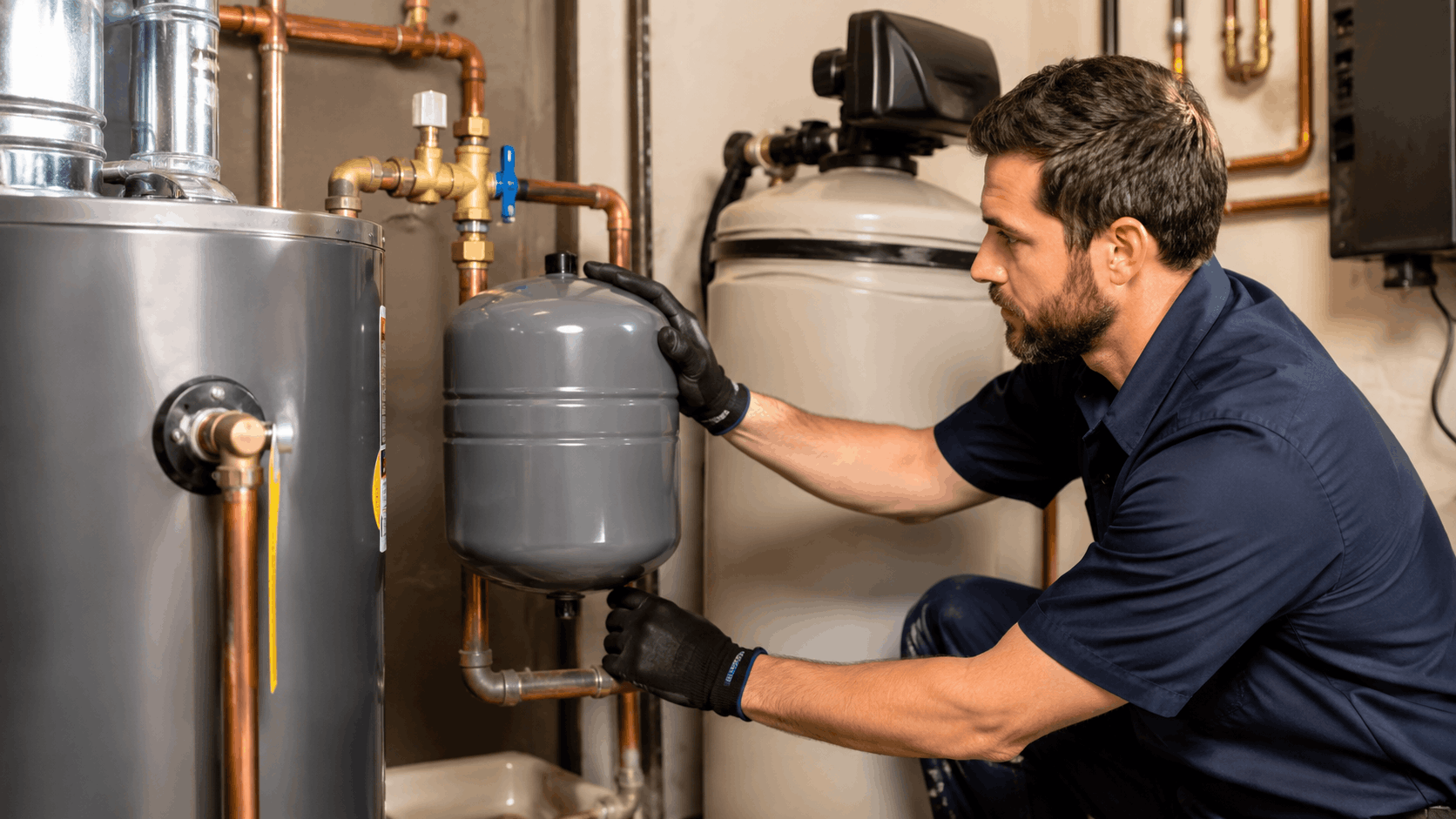
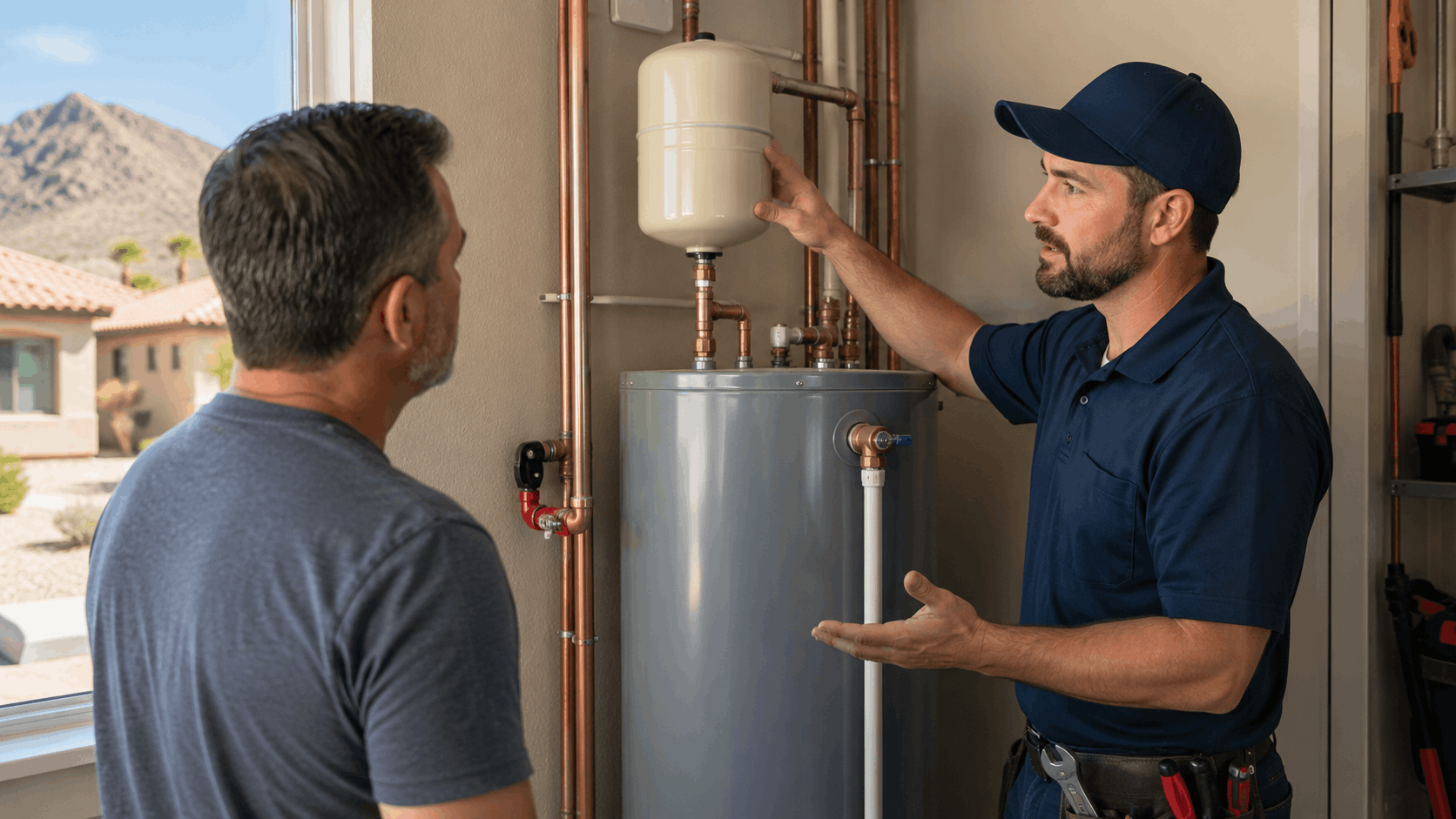
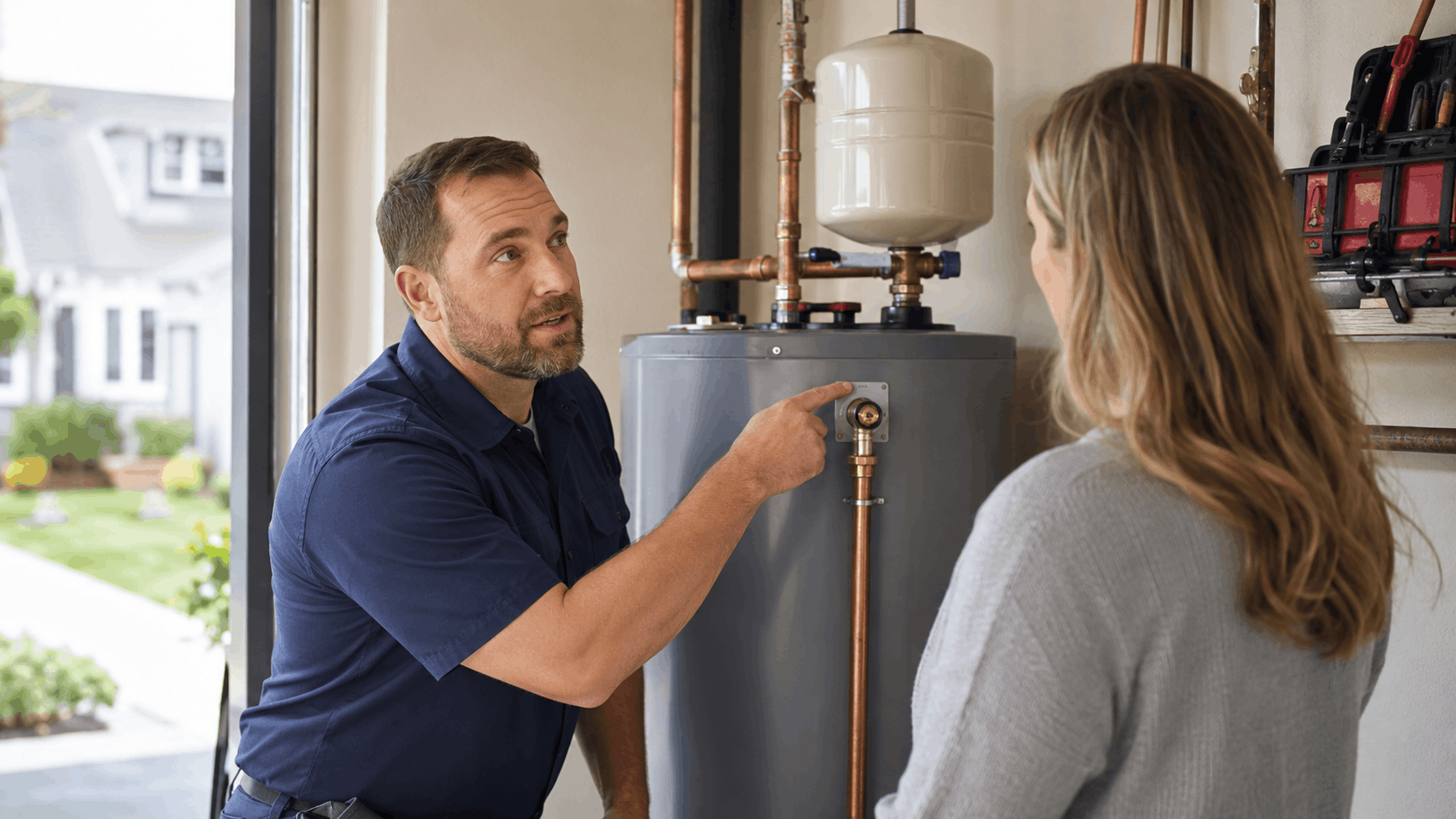
An expansion tank is a small steel container, usually the size of a basketball or a little larger, that mounts near your water heater. Inside it sits a rubber bladder with a cushion of pressurized air on one side. When water heats up and expands, that extra volume pushes into the tank and the air cushion absorbs it.
In a closed plumbing system, water cannot flow backward toward the street. That sounds harmless, but it turns your pipes into a sealed box. When thermal expansion kicks in, the pressure has nowhere to escape, and that is where trouble starts.
| Component | What It Does | Why It Matters |
|---|---|---|
| Steel outer shell | Holds pressure safely | Rated for household water lines |
| Rubber bladder | Separates air from water | Absorbs expanding water |
| Air charge (PSI) | Provides the cushion | Must match house pressure |
| Cold water connection | Ties into the supply line | Catches expansion before it spikes |
How Water Heats and Expands Inside Your Tank
Water is stubborn. It does not compress, but it does expand when it gets hot. A standard 50-gallon water heater can push out an extra half gallon or more of volume every time it fires up to heat the tank.
In an open system, that extra half gallon simply pushes back toward the city main and no one notices. The street side of your plumbing acts like a giant relief zone. Pressure barely moves because the water has room to spread out.
In a closed system, that half gallon has no exit. The moment the burner or element heats the water, the volume grows and the pressure inside your pipes climbs fast. We have measured pressure jumps from a normal 60 PSI up past 150 PSI quickly on Summerlin homes with no expansion tank.
That pressure hits every fitting, every faucet, and the water heater itself. The tank and its safety valve end up taking the brunt of it because the relief valve is the weakest point by design.
What Makes a System 'Closed' vs 'Open'
A system is open when water can move freely in both directions between your house and the city main. Older setups worked this way for decades. Expansion pressure just backed out to the street.
A closed system happens when a one-way device blocks that backward flow. The three usual culprits are a check valve, a pressure reducing valve, and a backflow preventer. Any one of them seals your home off from the street side.
A check valve only lets water flow in. A pressure reducing valve, or PRV, knocks down high street pressure to a safer level and also blocks backflow. A backflow preventer keeps your household water from contaminating the public supply.
Once any of these is on your line, you have a closed plumbing system. That is the setup that needs an expansion tank to stay safe and code-compliant.
The Job the Expansion Tank Actually Performs
The air bladder inside the tank is the hero here. When water expands and pressure starts to rise, the extra volume flows into the tank and compresses that air cushion instead of stressing your pipes.
Think of it like a shock absorber for your water lines. The air gives the expanding water somewhere soft to land. When you open a faucet and the pressure drops back to normal, the air pushes that water right back into the system.
This constant give-and-take provides pressure relief every single heating cycle. Your T&P valve stays closed, your fittings stay tight, and your water heater lives a longer life. A properly charged tank does this quietly for years without any attention.
Without it, your relief valve becomes the only pressure escape in the whole home. That is a job it was never built to do day after day.
Get Your Quote
Tell us what's going on and we'll get back to you. We're open 24/7.
Why Las Vegas Homes Almost Always Have Closed Systems
Here is the part that surprises most homeowners. Nearly every home across the valley runs a closed system, whether it was built in 1955 or 2023. The water infrastructure here all but ensures it.
The Las Vegas Valley Water District supplies most of the metro area, and modern meter setups plus backflow protection create closed conditions by default. Add in PRVs on newer builds and retrofits on older homes, and the closed system becomes the standard, not the exception.
If you live anywhere from Enterprise to Sunrise Manor, odds are strong your home falls into this category. That is why our water heater team checks for it on every install.
The Role of the Las Vegas Valley Water District Meters
The Las Vegas Valley Water District has upgraded meters and connection standards across the valley over the years. Many of these installations include a check valve or backflow device right at the meter or service line.
The purpose is protection for the public supply. The district does not want water from any home flowing backward into the shared system, especially in a desert where every gallon counts. That one-way protection is good policy, but it seals your home off.
The second that water meter blocks backflow, your plumbing becomes a closed loop. Homeowners rarely see it happen because it is buried at the curb or behind a wall. They only find out when their relief valve starts dripping after a hot water upgrade.
We see this pattern in every zip code we cover. The meter setup is consistent enough that we treat almost every valley home as closed until we prove otherwise with a pressure test.
Pressure Reducing Valves in Newer Developments
Newer master-planned communities like Summerlin, Mountain's Edge, and Inspirada were built with pressure reducing valves as standard equipment. Street pressure in these hillside areas can run high, so a PRV brings it down to a safe household range.
The catch is that a PRV blocks backflow at the same time. Once it is installed, thermal expansion pressure cannot escape back to the street. The system is fully closed the moment the builder set the PRV.
We have worked on plenty of homes in the Summerlin villages and around Mountain's Edge where the water heater was replaced without anyone adding a tank. In every one, the dripping relief valve traced straight back to the closed system created by that PRV.
If your home was built in the last twenty-five years in one of these communities, assume you have a PRV and a closed system. An expansion tank is not optional in that setup.
Older Homes Near Downtown and the Historic Districts
You might think older homes near Downtown Las Vegas escaped this because they were built as open systems. Many started that way decades ago. The problem is what happens during upgrades.
When an older home in the Huntridge area or the Scotch 80s gets a meter replacement, a new PRV, or a backflow device added, it converts to a closed system on the spot. A simple retrofit that improves the home can quietly change the whole pressure picture.
We often find homes near Downtown where a water heater was swapped years ago, then a meter upgrade turned the system closed later. Now the existing setup has no tank, and the relief valve starts acting up seemingly out of nowhere.
The lesson is that age does not protect you. A home built in 1950 near Huntridge can be just as closed as a 2020 build in Enterprise once the modern hardware goes in.
Need Help in Las Vegas?
Active Plumbing serves Las Vegas and all of Las Vegas Valley.
Why Closed Systems Fail T&P Valves Without an Expansion Tank
This is the question that brings most people to this article. The temperature pressure relief valve keeps dripping, and nobody has explained why. The short answer is that the closed system has no expansion tank, so the valve is forced to do the job the tank should be doing.
The T&P valve is a safety device, not a pressure regulator. It is built to open in an emergency, not to bleed off pressure several times a day. When it becomes the only escape route, it wears out and starts leaking.
| Symptom | Likely Cause | Real Fix |
|---|---|---|
| Dripping discharge pipe | Thermal expansion, no tank | Add expansion tank |
| Water on garage floor | Valve opening repeatedly | Add tank, check valve |
| Banging pipes | Pressure spikes | Tank plus pressure check |
| Valve leaks after new one | Underlying pressure issue | Address the closed system |
How Pressure Spikes Force the T&P Valve to Open
Every time your water heater fires up, the water inside expands. In a closed system with no tank, that expansion creates a pressure spike with nowhere to go. The pressure climbs until it hits the valve's trip point, usually 150 PSI.
At that point, the relief valve pops open and lets water out through the discharge pipe to protect the tank from bursting. It is doing exactly what it was designed to do. The valve is saving your water heater from dangerous pressure.
The trouble is that this happens on nearly every heating cycle, sometimes many times a day. A safety valve built for rare emergencies is now cycling constantly. That level of use grinds it down quickly.
Once the water cools and pressure drops, the valve closes again, leaving that little puddle behind. Homeowners see the drip and blame the valve, when the real issue is the missing tank.
The Slow Damage of Constant Cycling
Every time the T&P valve opens and closes, the sealing surface takes a small hit. Over weeks and months, that repeated valve wear leaves the seat unable to close fully. Now it drips even at normal pressure.
Las Vegas water is hard, loaded with calcium and other minerals. Each time water passes through the valve, it leaves mineral buildup on the seat and spring. That crust holds the valve slightly open and speeds up the failure.
Between the wear and the mineral deposits, a valve that should last for years starts leaking in months. If hard water is a recurring headache in your home, our water treatment options can slow this kind of damage across your whole system.
Eventually the drip becomes a steady stream, and the leaks show up on the floor and around fittings. What began as a small pressure issue turns into ongoing water damage in the garage or utility closet.
Signs Homeowners Notice First
The first thing most people notice is water on the garage floor. It shows up under the water heater near a pipe that runs toward the drain. That is the discharge pipe from the relief valve doing its job.
Some homeowners describe a hissing or dripping sound coming from the water heater area. Others hear banging pipes when a faucet shuts off, which is water hammer caused by pressure with no cushion to absorb it.
You might also see a small puddle only in the mornings or evenings, right after the heater has cycled. The timing lines up with heating cycles, which is a strong clue the problem is thermal expansion and not a random water heater leak.
If you spot any of these signs, it is worth acting before the valve fails completely. A steady leak can flood a garage or damage flooring in a hurry.
Why Replacing the Valve Alone Never Fixes It
This is the mistake we see over and over. A homeowner or a rushed installer swaps the T&P valve and calls it done. For a week or two the dripping stops, and everyone thinks the problem is solved.
Then the recurring failure returns. The new valve faces the exact same pressure spikes as the old one because nothing changed in the system. It was never the valve's fault to begin with.
A T&P valve replacement without an expansion tank is like changing a smoke detector battery while the stove is still on fire. You treated the alarm, not the cause. The pressure keeps building every cycle.
The only real fix on a closed system is adding a properly sized expansion tank. Once the tank absorbs the expansion, the valve stops cycling and the dripping ends for good.
Clark County Plumbing Code Rules on Expansion Tanks
Beyond the mechanics, there is a legal side to this. Clark County plumbing code requires thermal expansion control on closed systems. That is not a suggestion or a best practice, it is written into the adopted code.
The rules get enforced through permits and inspections, and the Clark County Building Department checks for compliance on water heater work. Skipping the tank can mean a failed inspection or a flagged defect down the road.
What the Uniform Plumbing Code Requires
Clark County adopts the Uniform Plumbing Code as the basis for local plumbing rules. The UPC requires an approved device for thermal expansion control whenever a system is closed to the street.
In plain terms, if your home has a check valve, PRV, or backflow preventer, the code says you need a way to handle expanding water. An expansion tank is the standard method used across the valley.
The code exists because uncontrolled thermal expansion is a real safety hazard. Extreme pressure can rupture a tank or blow apart fittings. The requirement protects both your property and your family.
Local amendments can adjust details, but the core requirement for thermal expansion control on closed systems stays consistent. Our team keeps up with the current adopted version so every install passes.
When a Permit and Inspection Are Needed
In most cases, replacing a water heater triggers a plumbing permit in unincorporated Clark County and in the City of Las Vegas. The permit covers the heater and any related work, including the expansion tank.
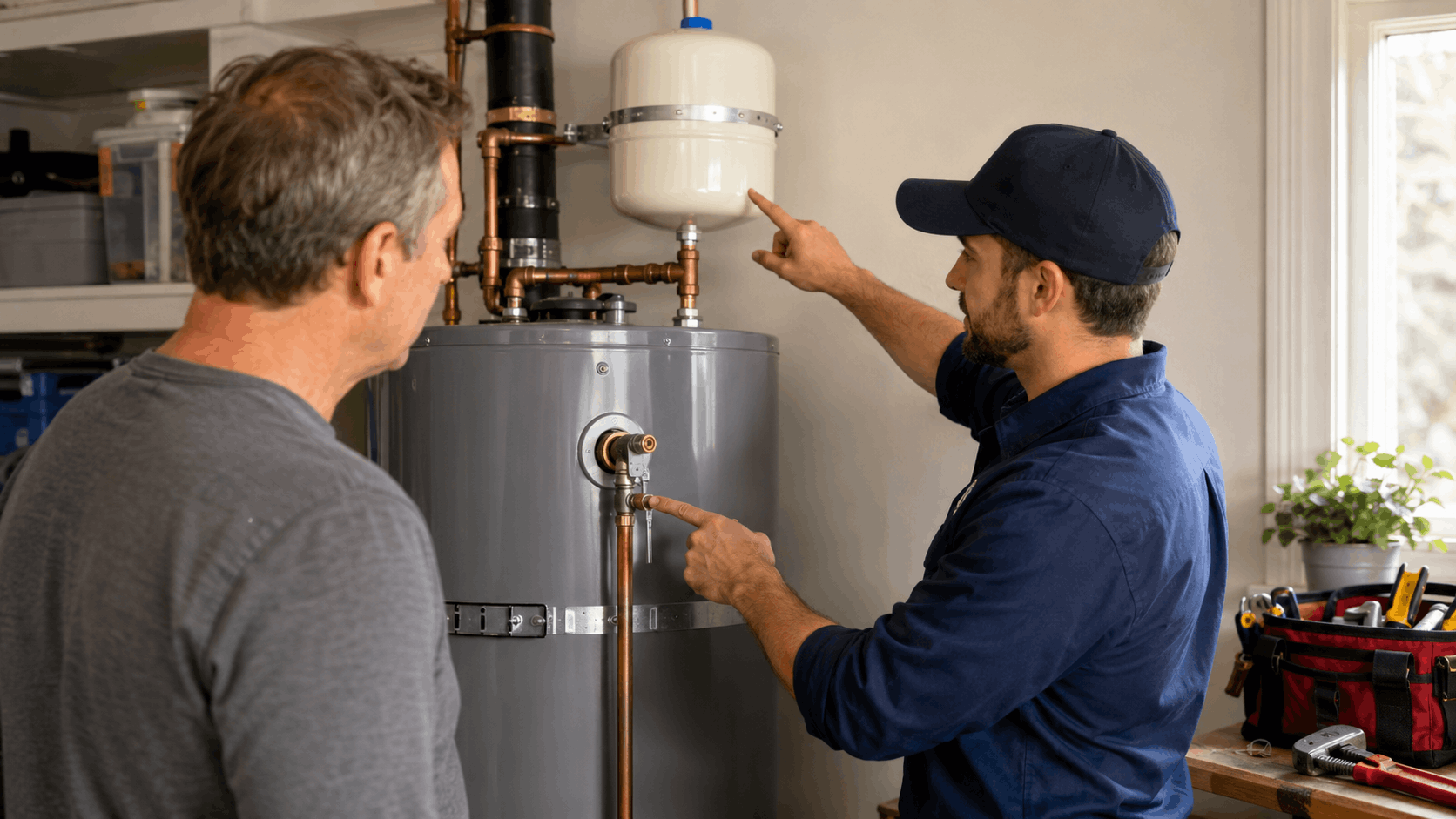
An inspection follows the work to confirm everything meets code. The inspector verifies the tank is present, sized correctly, and installed properly. Without that sign-off, the job is not officially complete.
Homeowners sometimes skip permits to save time, but that creates problems later. Unpermitted water heater work can surface during a home sale or an insurance claim and cost far more to correct than the original permit fee.
Our team pulls the correct permit for your jurisdiction so the paperwork matches the work. It keeps you protected and keeps the file clean for the future.
How Inspectors Check for Compliance
An inspector looking at a water heater install checks a short list for code compliance. First, they confirm an expansion tank is present on a closed system. A missing tank is an automatic correction.
Next comes tank sizing. The tank has to match the water heater capacity and the incoming pressure. An undersized tank cannot absorb enough expansion, so inspectors do look at this.
They also check mounting and location. The tank should sit on the cold water line with proper support so its weight does not stress the pipe. A tank hanging unsupported from a fitting is a common flag.
Finally, the inspector confirms the discharge pipe on the T&P valve is routed correctly. All of it together tells them the install was done to code, not rushed.
What Happens If You Sell a Home Without One
A missing expansion tank rarely stays hidden. During a real estate sale, a home inspection almost always checks the water heater setup. Inspectors know closed systems need a tank and note the absence as a defect.
Once it is in the inspection report, buyers can ask for it to be fixed before closing. That can stall a sale or force a last-minute repair under time pressure. It becomes a bargaining chip that works against the seller.
In some cases it shows up as a code violation, which carries more weight than a simple recommendation. Lenders and buyers take documented violations seriously.
Handling it before you list is far easier. A tank added on your schedule costs a fraction of the stress of scrambling during escrow.
Need Help in Las Vegas?
Active Plumbing serves Las Vegas and all of Las Vegas Valley.
Expansion Tank Cost in Clark County
Now for the number everyone wants. Expansion tank cost in the Las Vegas area is reasonable, especially compared to the water damage and valve failures it prevents. The installation price depends on a few clear factors.
Below is a realistic breakdown of Las Vegas plumbing cost for this job. Prices shift with brand, size, and the condition of your existing setup, but this gives you a solid starting range.
| Item | Typical Range | Notes |
|---|---|---|
| Small tank (2 gal) | $40 - $80 | Fits most 40-50 gal heaters |
| Larger tank (4-5 gal) | $90 - $180 | For bigger or higher-pressure homes |
| Labor (standalone) | $150 - $350 | 1-2 hours typical |
| Installed total | $250 - $500 | Parts plus labor, no permit |
| Permit fee | $50 - $150 | Varies by jurisdiction |
Cost of the Tank Itself
The tank alone is the cheapest part of this job. A common 2-gallon residential expansion tank runs roughly $40 to $80 at supply houses. That size covers most 40 to 50-gallon water heaters in the valley.
Larger homes with high pressure or bigger heaters may need a 4 or 5-gallon tank. Those run in the $90 to $180 range depending on brand. Well-known names like Watts and Amtrol cost a bit more but hold up better over time.
Tank size matters more than brand shopping. A cheap tank in the wrong size will fail early or fail inspection. We match the tank price and size to your actual system rather than grabbing the smallest one on the shelf.
Spending a little more on the right tank now saves a repeat visit later. The part cost is minor compared to the labor of doing the job twice.
Labor and Installation Charges
Installation labor is where most of the cost lives. A straightforward install on an accessible cold water line usually takes one to two hours. Plumber cost for that runs about $150 to $350 in the Las Vegas market.
A tricky install costs more. If the water heater sits in a tight closet, an attic, or a spot with poor pipe access, the job takes longer. Cutting into older galvanized pipe also adds time.
The tank needs a proper tee fitting on the cold line and solid support. Doing it right means the plumber is not just strapping it on and leaving. That extra care is what keeps it from stressing your pipes.
Most homeowners land somewhere in the middle for a clean, code-compliant install. Our quotes spell out labor clearly so there are no surprises.
Factors That Change the Final Price
Several things move the final number. Pipe access is the biggest one. An easy garage install costs less than a heater buried in a cramped interior closet.
Permit fees add $50 to $150 depending on whether you are in the county or the City of Las Vegas. If your water pressure is too high, you may also need a PRV adjustment or install, which adds to the bill but solves a bigger problem.
Combining the tank with a water heater replacement changes the math in your favor. The plumber is already working on the same lines, so adding the tank costs far less than a separate trip.
Older homes near Downtown sometimes need fitting upgrades where the pipe ties in. That is normal and worth doing while the system is open.
Why Bundling With a Water Heater Install Saves Money
The smartest time to add an expansion tank is during a water heater install. The plumber has already drained the system, cut into the lines, and set up the workspace. Adding the tank at that point is quick.
Doing it as bundled service saves you a second service call fee and a second round of labor setup. We often add the tank during a heater swap for the cost of the part plus a small labor bump.
Compare that to calling later after your valve starts dripping. Now you are paying a full visit just for the tank. The cost savings from bundling are real and easy to capture.
If you are already planning a heater upgrade or a tankless conversion, ask about the tank at the same time. It is the right moment to get it done for less.
Sizing and Installing an Expansion Tank Correctly
A tank only works if it is sized and charged for your specific home. A tank that is too small, or one with the wrong air pressure, cannot absorb the expansion properly. Getting the details right is what makes the difference.
Expansion tank sizing depends on your water heater and your water pressure. Both matter, and both are easy to get wrong without the right tools and experience.
Matching Tank Size to Water Heater Capacity
Tank sizing starts with the water heater capacity. A 40 or 50-gallon heater expands a certain amount each cycle, and the tank has to hold that extra volume. Most standard residential heaters pair with a 2-gallon tank.
Larger heaters, like an 80-gallon unit or a commercial setup, need a bigger tank. The more water being heated, the more expansion the tank must absorb. Undersizing here is a common shortcut that leads to a dripping valve anyway.
Incoming pressure also factors in. Higher household pressure means the tank fills more quickly during expansion, which can call for more capacity. We calculate both the gallons and the pressure before choosing a size.
The goal is a tank that never runs out of room during a full heating cycle. That is what keeps the T&P valve closed and the system quiet.
Checking and Setting the Air Pressure
Every expansion tank comes with a factory air charge, usually around 40 PSI. That number rarely matches your home. The air charge inside the tank must equal your household water pressure to work correctly.
If your home runs at 65 PSI, the tank needs to be charged to 65 PSI before it goes on the line. We check this with a gauge and add or release air until it matches. Skipping this step is a top reason tanks fail early.
When the air charge is wrong, the bladder cannot flex properly. Too low and the tank waterlogs fast. Too high and it never accepts the expanding water. Either way the valve keeps dripping.
Matching the PSI to your actual water pressure is a small step that makes the whole system work. It takes a few minutes and a proper gauge, and it is worth doing right.
Where the Tank Should Be Mounted
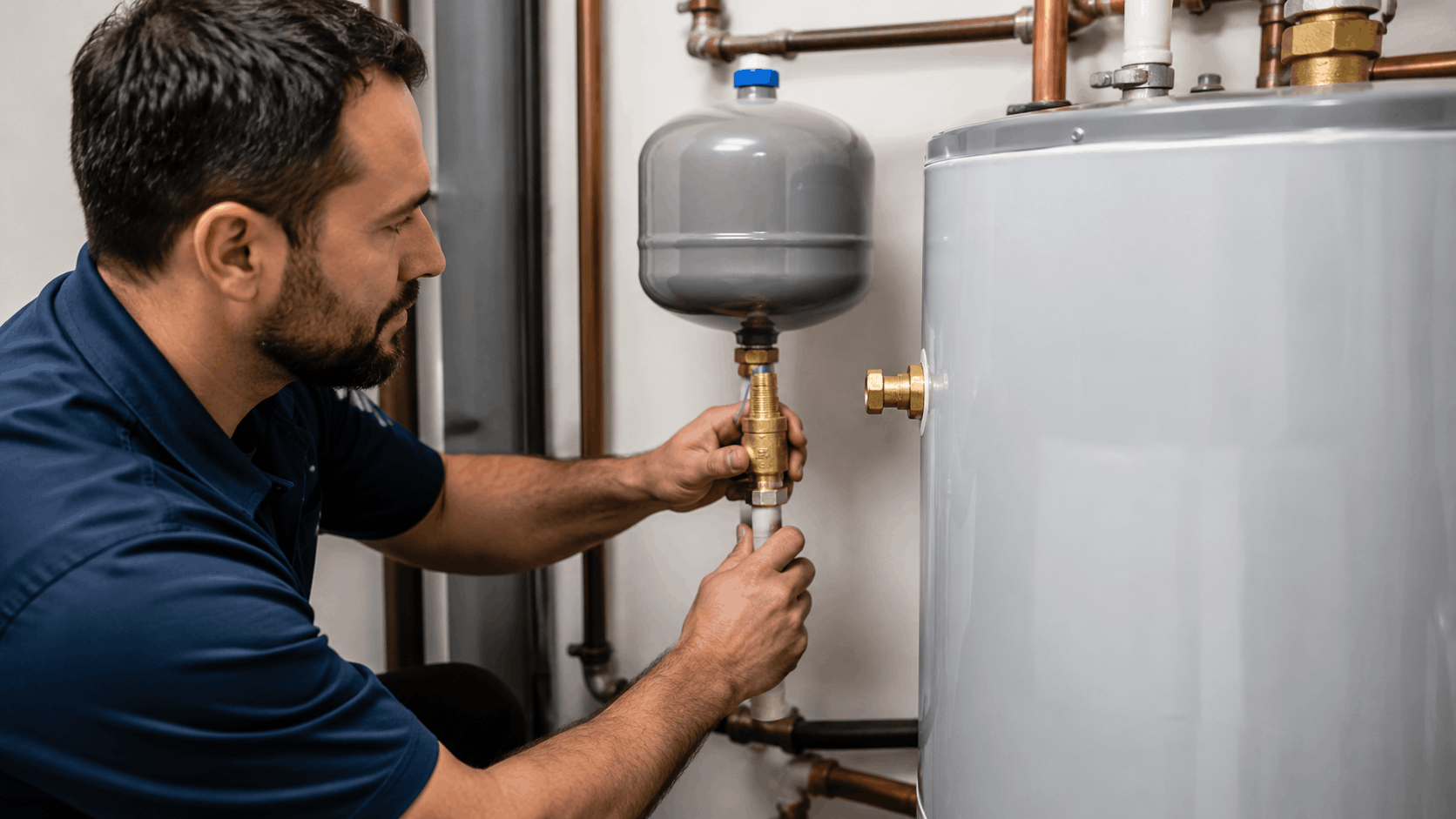
The tank belongs on the cold water line, between the shutoff and the water heater inlet. That placement lets it catch expansion before the pressure spreads through the house. Mounting it on the wrong line reduces how well it works.
Support matters just as much as location. A full tank of water is heavy, and hanging that weight off a threaded fitting stresses the pipe over time. We use a support bracket or strapping so the tank's weight does not pull on the connection.
Vertical mounting with the connection at the bottom is common, but some tanks allow other positions. We follow the manufacturer spec and local code for placement. Inspectors check this, so it has to be right.
Proper tank mounting keeps the install clean and prevents future fitting leaks. It is a detail that separates a lasting install from a callback.
High Water Pressure Problems in the Valley
Some Las Vegas neighborhoods sit at the base of hills or near main lines where street pressure runs high. Areas up in the Summerlin foothills and parts of Henderson can see pressure well above the safe 80 PSI limit.
High water pressure does two things. It stresses your whole plumbing system, and it changes how the expansion tank behaves. A tank alone does not fix static pressure that is simply too high.
When we test and find pressure over 80 PSI, we recommend a PRV to bring it down. The PRV protects your fixtures and creates the closed system that then needs the tank. The two work together.
Getting both right is how we keep valley homes safe. If your neighbors deal with banging pipes or blown fixtures, high pressure is often the shared cause.
Need Help in Las Vegas?
Active Plumbing serves Las Vegas and all of Las Vegas Valley.
How Active Plumbing Handles Expansion Tanks in Las Vegas
When a homeowner calls us about a dripping relief valve, we do not just swap parts and hope. Our team at Active Plumbing diagnoses the whole system so the fix actually holds. As a local Las Vegas plumber, we know the valley's water setup inside and out.
Expansion tank installation is routine work for us, but we treat every home as its own puzzle. The right tank, the right air charge, and the right permit make the difference between a lasting fix and a repeat call.
Our Diagnostic Visit and Pressure Test
We start with a diagnostic visit and a pressure test. A gauge on an outside spigot tells us your static water pressure in seconds. That single number guides the whole recommendation.
We also check for a check valve, PRV, or backflow device to confirm the system is closed. Then we look at the water heater, the T&P valve, and the discharge pipe for signs of cycling and wear.
Only after we understand the system do we recommend a tank size and any pressure work. If your pressure is high, we flag it. If you already have a failing tank, we tell you.
This upfront testing prevents the guessing that leads to repeat failures. It is the same approach we bring to leak detection and other diagnostic work.
Pulling Permits and Passing Inspection
We handle the Clark County permit so you do not have to deal with the building department yourself. We know which jurisdiction covers your address and what each one requires.
Our installs are done to code from the start, so inspection is straightforward. Proper tank size, correct air charge, solid support, and a compliant discharge pipe all check out. We schedule and meet the inspector when needed.
Keeping the permit clean protects you at resale and with insurance. An inspected, permitted install is documented proof the work was done right.
Homeowners appreciate not having to learn the permit process. We carry that load as part of the job.
Neighborhoods We Serve Across the Valley
Our team covers the whole valley. That includes Henderson, Spring Valley, Centennial Hills, and Enterprise. We know the water setups in each area and the pressure quirks that come with them.
We also work throughout Summerlin, Sunrise Manor, Paradise, and North Las Vegas. From master-planned communities to older homes near Downtown, we have seen the closed-system pattern in all of them.
Knowing the neighborhoods helps us move fast. We already expect a PRV in a newer Enterprise build and a retrofit situation near Huntridge before we arrive.
That local knowledge shortens the diagnostic and gets your fix done sooner. Wherever you are in the valley, we likely work your street already.
Same-Day Help for Leaking Water Heaters
When water is already on the floor, timing matters. We offer same-day service for leaking water heaters and dripping relief valves whenever our schedule allows.
A steady valve drip can turn into a bigger water heater leak fast, and a flooded garage is no fun. Our emergency plumbing team can get out quickly to stop the water and diagnose the cause.
If it turns out you need a full heater replacement, we can often add the expansion tank in the same visit. That saves you a second trip and gets everything to code at once.
Do not wait on a dripping valve hoping it stops. The sooner we test the pressure, the sooner the leak ends for good.
Final Thoughts
A dripping T&P valve after a new water heater is almost never a bad valve. In the Las Vegas Valley, it is a closed system with no expansion tank to absorb thermal expansion. The pressure has nowhere to go, so the safety valve keeps opening.
Clark County code requires thermal expansion control on closed systems, and the tank is affordable, usually a few hundred dollars installed. Adding it during a water heater swap saves even more. Getting the sizing and air charge right is what makes it last.
If your relief valve keeps dripping or you are planning a water heater upgrade, our team can test your pressure, install the right tank, and handle the permit. Call Active Plumbing today or reach out through our contact page to schedule a visit and stop the leak for good.
Frequently Asked Questions
- Does Clark County require an expansion tank on a water heater?
- Yes, on a closed system. Clark County adopts the Uniform Plumbing Code, which requires thermal expansion control whenever a check valve, PRV, or backflow preventer seals the home from the street. Since most valley homes are closed systems because of water district meters and PRVs, an expansion tank is required on nearly every water heater install and gets checked during inspection.
- How much does an expansion tank cost installed in Las Vegas?
- Expect roughly $250 to $500 installed for a standard job, which covers the tank and labor. The tank itself runs $40 to $180 depending on size and brand. A permit adds $50 to $150 depending on your jurisdiction. Bundling the tank with a water heater replacement lowers the total since the plumber is already working on the same lines.
- Why does my T&P valve keep dripping?
- A common cause is a closed system with no expansion tank. When your water heater fires up, water expands and pressure spikes with nowhere to go, so the relief valve opens to protect the tank. It drips every heating cycle. A failed or waterlogged existing tank causes the same thing. Adding or replacing the tank fixes the dripping.
- Can I install an expansion tank myself?
- You can, but the risks are real. Wrong sizing means it will not absorb enough expansion, and the wrong air charge makes it fail early. Both leave your valve dripping. Water heater work also usually requires a permit and inspection in Clark County, and unpermitted work causes problems at resale. A licensed plumber gets the size, charge, and paperwork right the first time.
- How do I know if my home has a closed system?
- Look for a check valve, pressure reducing valve, or backflow preventer on your main water line, often near the meter or where the line enters the home. A PRV looks like a bell-shaped brass fitting with an adjustment screw. Almost every home in the Las Vegas Valley is closed because of water district meters. A quick pressure test confirms it for certain.
- How long does an expansion tank last?
- A quality tank typically lasts five to ten years, sometimes longer with good water. The rubber bladder wears out over time and the tank can waterlog or lose its air charge. Signs of failure include a dripping T&P valve returning, a tank that feels heavy and full of water, or no air when you check the valve. Replacement is affordable when it fails.
- Will a home inspector flag a missing expansion tank?
- Yes, most home inspectors flag it. They know closed systems require thermal expansion control, so a missing tank shows up as a defect in the report. Buyers often ask for it to be corrected before closing, which can delay a sale. In some cases it is noted as a code violation. Adding one before you list avoids the last-minute scramble.
- Does an expansion tank fix high water pressure?
- No, those are two separate issues. An expansion tank handles thermal expansion, the pressure spike created when water heats up. High static pressure coming from the street needs a pressure reducing valve to bring it down to a safe level. If your pressure runs over 80 PSI, you need a PRV in addition to the tank. We test for both during a visit.
- Do tankless water heaters need an expansion tank?
- Sometimes. A tankless unit heats water on demand and holds little water, so it produces less thermal expansion than a storage tank. But if the system is closed and there is a storage buffer, a recirculation loop, or local code requires it, a tank may still be needed. We check the specific setup during a tankless install to confirm what your system requires.
- How long does installation take?
- A standard standalone expansion tank install usually takes one to two hours. That covers draining the line, adding the tee fitting, setting the air charge to match your pressure, and mounting the tank with proper support. Tricky access in tight closets or attics can add time. When bundled with a water heater replacement, the tank adds only a short amount to the overall visit.
Licensed plumbing professionals serving Las Vegas and Las Vegas Valley.
Licensed in Nevada · License #0047021
Last updated on
Why trust Active Plumbing?
Founded in 1991, Active Plumbing is a licensed and insured plumber serving Las Vegas and Las Vegas Valley. All content is reviewed by our licensed technicians.

Need Help in Las Vegas?
Active Plumbing serves Las Vegas and all of Las Vegas Valley.
Related Articles
Commercial Water Heater Installation Cost for Las Vegas Restaurants and Salons: Sizing, Code, and Recovery Rates
Real commercial water heater installation costs for Las Vegas restaurants and salons, plus sizing math, recovery rates, and Clark County code you need before you buy.
Why Las Vegas Closed Plumbing Systems Need Expansion Tanks: Thermal Expansion Physics
Learn why closed plumbing systems in Las Vegas need expansion tanks. Thermal expansion physics, warning signs, code rules, and local install help explained.
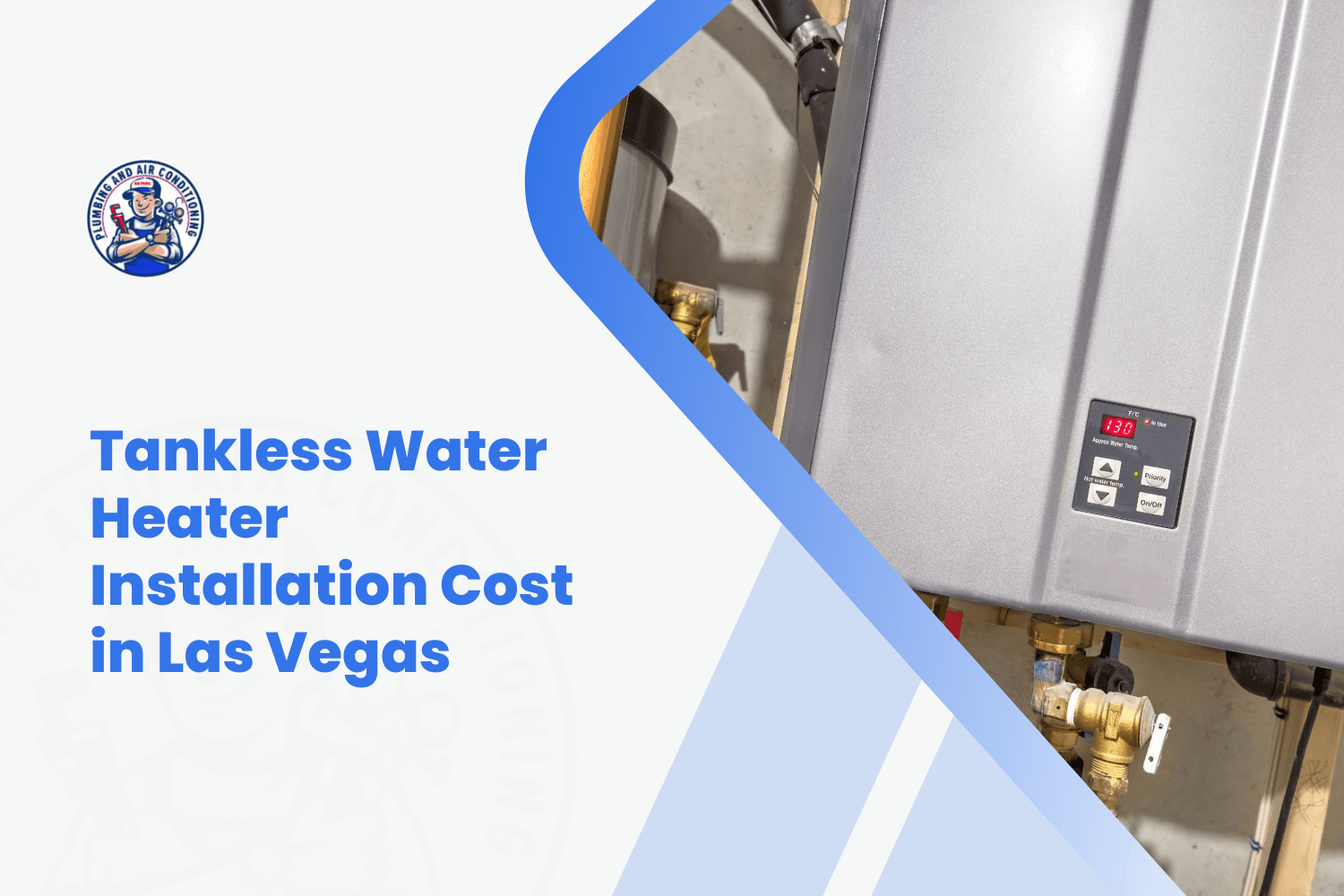
Tankless Water Heater Installation Cost in Las Vegas: Gas Line Upsizing, Venting, and Permit Line Items
A clear breakdown of tankless water heater installation cost in Las Vegas, including gas line upsizing, venting, permits, and hard water factors for valley homes.