Hot Water Recirculation Pump Cost in Las Vegas: Instant Hot Water in Big Summerlin Floor Plans
Key Takeaways
- Large two-story Summerlin homes wait one to three minutes for hot water because the master bath sits far from the garage water heater.
- A recirculation pump keeps hot water moving through the pipes so it arrives at the tap in seconds instead of minutes.
- Installed costs in Las Vegas range from about $450 for a basic crossover valve retrofit to $3,500 or more for a dedicated return line in a big home.
- Existing homes without a return line use a crossover valve retrofit, which is clean, quick, and usually finishes in half a day.
- Timers, temperature sensors, and on-demand buttons keep energy use low while delivering fast hot water.
- Las Vegas hard water causes scale buildup, so pairing the pump with water treatment and yearly maintenance protects the system.
- Recirculation pumps save thousands of gallons a year in large homes and can pay for themselves through lower LVVWD bills.
- Active Plumbing offers flat-rate quotes, licensed and insured crews, and local experience across Summerlin, Henderson, and Centennial Hills.
In This Article
You turn on the shower in the upstairs master bath of your big Summerlin home, then you wait. And wait. Thirty seconds pass, then a full minute, and the water is still cold. In a two-story home near The Ridges or The Vistas, that wait can stretch past two minutes while gallons of clean water pour straight down the drain.
That daily delay is one of the more common complaints we hear from homeowners in large western valley floor plans. The good news is that a hot water recirculation pump solves it. This guide walks through how these pumps work, what they really cost in Las Vegas, the difference between new-build and retrofit installs, and how to pick the right system for your square footage.
Our team has installed recirculation systems in homes across Summerlin West, Stonebridge, and the older Sun City communities. We will share what we have learned on the ground, including real price ranges, install timelines, and how our hard water changes the math. By the end, you will know exactly what to expect before you call for a quote.
Why Big Summerlin Homes Wait So Long for Hot Water?
The bigger the house, the longer the wait. That simple truth explains most of the hot water delay we see in the western valley. Summerlin floor plans keep getting larger, and the water heater usually sits in the garage while the master suite sits at the far end of the second floor.
That distance is the whole story. Hot water has to push all the cold water out of a long pipe run before it reaches the tap. On a 3,500 square foot home, that can mean a lot of waiting and a lot of wasted water. Our Las Vegas plumbing crews measure these runs every week, and the numbers surprise homeowners.
| Home Size | Typical Distance to Far Bath | Average Wait Time | Water Wasted Per Use |
|---|---|---|---|
| 1,800 sq ft (single story) | 25-40 ft | 20-45 seconds | 0.5-1 gallon |
| 2,800 sq ft (two story) | 50-75 ft | 60-90 seconds | 1.5-2.5 gallons |
| 4,000+ sq ft (large two story) | 90-130 ft | 2-3 minutes | 3-5 gallons |
Long Pipe Runs in Two-Story Layouts
Homes near The Ridges and The Vistas often place the master bathroom as far from the garage water heater as the floor plan allows. The suite sits upstairs, tucked into a back corner for privacy, while the water heater lives in the garage on the opposite side. That layout looks great on paper but creates long pipe runs that cold water fills between uses.
Every foot of pipe holds water. When that water sits overnight, it cools to room temperature. So the first morning shower has to flush all of it out before hot water arrives, and in a big home that is a lot of pipe to clear.
We have measured runs longer than 120 feet in some custom homes off Village Center Circle. At that length, even a strong water heater cannot beat the physics. The heat has to travel the full distance, and the cold water in front of it goes down the drain first.
This is why single-story homes rarely need help but large two-story layouts almost always do. The vertical climb plus the horizontal run adds up fast. A recirculation pump shortens that wait no matter how the pipes are routed.
Water Waste and Higher LVVWD Bills
Every second you wait for hot water is water running straight down the drain. In a large home, one morning shower can waste three to five gallons before the temperature is right. Multiply that across every sink, shower, and tub in the house, and the numbers climb quickly.
That waste shows up on your Las Vegas Valley Water District bill. LVVWD uses a tiered rate structure, so the more water a household burns, the higher the price per gallon. Big homes with long waits often push into those upper tiers without the family using any extra water on purpose.
Southern Nevada also lives under real drought restrictions. The Southern Nevada Water Authority has spent years pushing conservation because the Colorado River supply keeps shrinking. Water lost while waiting for a hot shower runs against that whole effort.
A recirculation pump keeps that water in the pipes instead of the drain. For a family of four in a large floor plan, cutting that daily waste adds up to thousands of gallons a year. That is money back and water saved at the same time.
How Hard Water Makes the Problem Worse
Las Vegas water hardness is some of the worst in the country. The water arrives loaded with calcium and magnesium that leave scale behind wherever they flow. Over the years, that scale coats the inside of your pipes like plaque in an artery.
As scale builds up, the inside diameter of the pipe shrinks. A pipe that started at three-quarters of an inch can narrow noticeably after a decade of hard water. Narrower pipes mean slower flow, which means hot water takes even longer to reach the far bathroom.
Scale buildup also hurts the water heater itself and any pump you install. That is why many homeowners pair a recirculation pump with a water softener installation to protect the whole system. Softer water keeps pipes clear and pumps running longer.
We see the results of hard water every day across the valley. Homes with no treatment tend to develop slower hot water delivery as they age. Addressing the scale is part of any smart plan to speed up hot water for good.
Common Complaints in Newer Summerlin Communities
Newer parts of Summerlin West and Stonebridge are full of large homes that push hot water demand to the limit. These floor plans often have two or three full bathrooms upstairs, a laundry room, and a kitchen all drawing from one water heater. That spread creates long waits at the fixtures farthest from the tank.
We get regular calls from homeowners in these areas describing the same problem. The kids run the upstairs shower for two minutes before it warms up, or the kitchen tap takes forever while dishes pile up. These hot water complaints are almost always a distance issue, not a broken heater.
Homeowners in Summerlin West tell us they assumed a new home meant instant hot water. Builders rarely include a recirculation loop unless a buyer asks, so even brand new houses have the wait.
The larger the community grows, the more of these calls we take. A recirculation pump is the fix that turns a long morning wait into a few seconds. It works whether the home is five years old or twenty.
Get Your Quote
Tell us what's going on and we'll get back to you. We're open 24/7.
How a Hot Water Recirculation Pump Works
The idea behind a recirculation pump is simple once you see it. Instead of letting hot water sit and cool in the pipes, the pump keeps it moving so it stays warm and ready. When you open the tap, hot water is already close by.
There are a few ways to build that system, and the right one depends on your home. Below we break down the loop concept, the two main setups, the controls that save energy, and how pumps pair with different water heaters.
The Simple Loop Idea
Think of your hot water plumbing as a one-way street. Water leaves the heater, travels to the faucet, and stops there until you turn the tap. Between uses, that water in the line cools down while it waits.
A recirculation pump turns that dead-end street into a loop. It gently pulls the cooling water back toward the heater and sends warm water forward in its place. The hot water keeps circulating so it never has far to travel when you need it.
Because warm water is always near the faucet, the wait shrinks from minutes to seconds. That is the whole promise of instant hot water. The pump does the moving so you do not have to wait for gravity and distance.
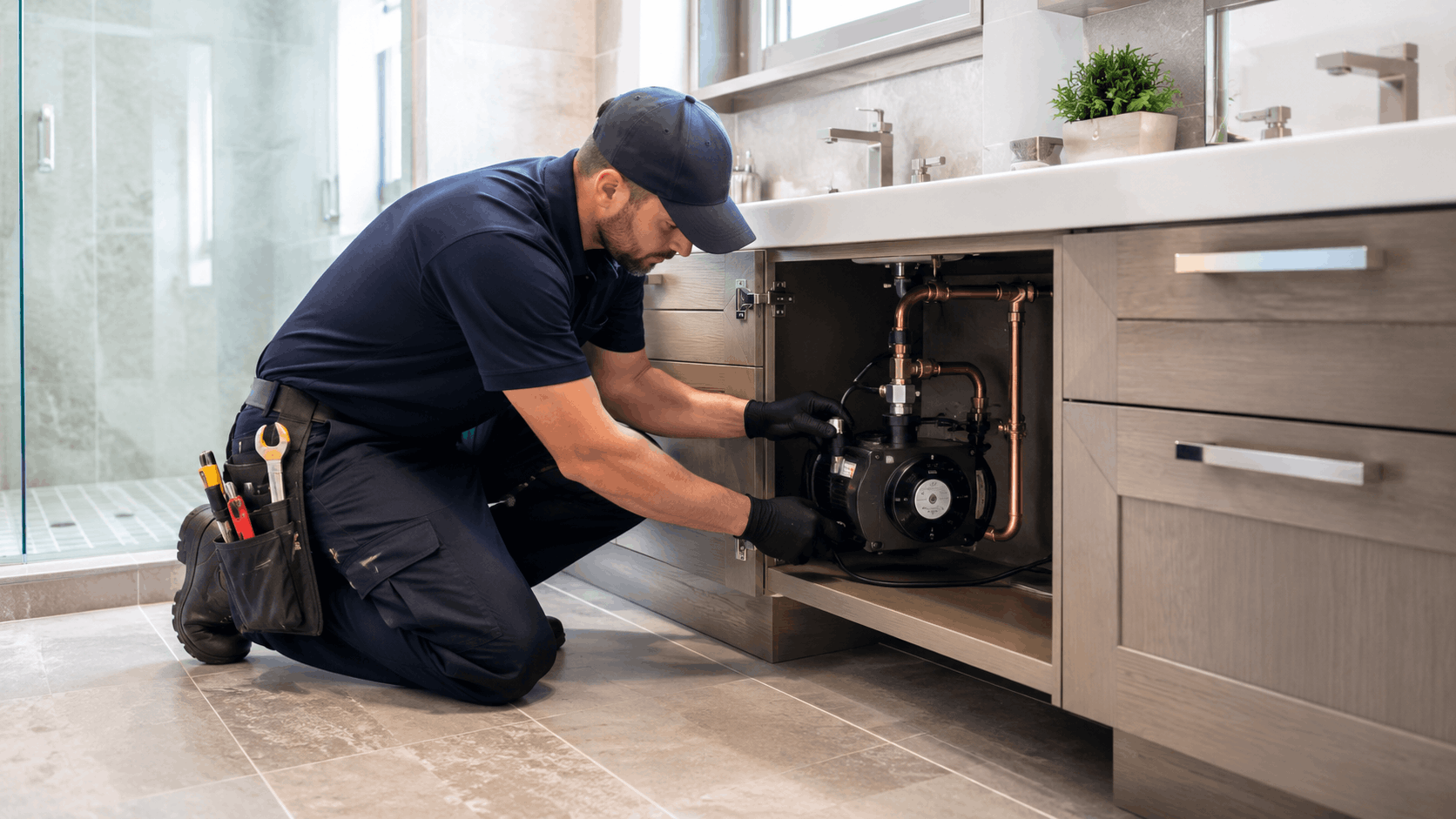
The pump itself is small, about the size of a bread loaf, and quiet. It mounts near the water heater and runs on a standard outlet. Most homeowners forget it is even there once it is installed.
Dedicated Return Line vs. Crossover Valve Systems
There are two main ways to build the loop. A dedicated return line is a separate pipe that carries cooled water back to the heater. It is the most efficient design and the standard choice for new construction.
The second option is a crossover valve system. It uses your existing cold water line as the return path, so no new pipe is needed. A small valve installed under the farthest sink lets warm water cross over into the cold line and travel back to the heater.
For most existing Summerlin homes, the crossover valve is the practical retrofit. It avoids tearing open walls to run new pipe, which keeps cost and mess down. Our recirculation pump installation team picks the setup that matches your home and budget.
A dedicated return line performs a little better because it does not warm the cold water line. But for a home that was never plumbed with a loop, a crossover valve delivers most of the benefit at a fraction of the cost.
Timers, Sensors, and On-Demand Buttons
Running a pump around the clock wastes energy, so smart controls make the system efficient. A basic timer runs the pump only during hours you actually use hot water, like mornings and evenings. That covers most family routines while keeping the pump idle overnight.
More advanced options use temperature sensors that switch the pump on only when the water in the loop cools below a set point. This keeps hot water ready without running the pump longer than needed. It is a good middle ground between comfort and savings.
On-demand systems are the most efficient of all. A button or motion sensor at the sink starts the pump only when someone is about to use water. The pump runs for a minute, hot water arrives, then it shuts off.
Smart controls take this further with app scheduling and learning routines. Families that want the tightest energy use often choose an on-demand button in the master bath plus a timer for the rest of the house.
Pairing With Tank and Tankless Water Heaters
Standard tank water heaters pair easily with recirculation pumps. The tank always holds a reservoir of hot water, so the pump has a warm source to circulate. Most tank installs are straightforward and quick.
Tankless water heaters are common in newer Summerlin homes and need a little extra planning. A tankless unit only fires when water flows through it, so the pump has to trigger the heater to run. Not every tankless model handles recirculation well.
Many modern tankless units include a built-in recirculation feature or a small buffer tank made for this purpose. Our team confirms compatibility before quoting, and we handle tankless water heater installation alongside pump work when needed. Matching the pump to the heater avoids short cycling and wasted gas.
If your home already has a tankless system, we check the model and its recirculation rating first. Some need an external pump with a built-in timer designed for tankless use. Getting this right keeps the heater healthy and the hot water fast.
Need Help in Las Vegas?
Active Plumbing serves Las Vegas and all of Las Vegas Valley.
Hot Water Recirculation Pump Cost in Las Vegas
Cost is the first question every homeowner asks, so let us get to real numbers. Recirculation pump cost in Las Vegas depends on the pump type, your home size, and whether you have a return line already. Below are the ranges we see in the local market.
Keep in mind these are typical figures for planning. An in-home assessment gives you the exact Las Vegas price for your floor plan and plumbing layout.
| System Type | Equipment Cost | Installed Total (Las Vegas) |
|---|---|---|
| Basic timer pump (crossover valve) | $150-$350 | $450-$900 |
| On-demand pump with sensor | $300-$600 | $700-$1,400 |
| Smart pump with app control | $400-$800 | $900-$1,800 |
| Dedicated return line system | $500-$1,000 | $1,500-$3,500+ |
Equipment Cost by Pump Type
A basic timer pump for a crossover valve retrofit is the most affordable choice. The pump itself runs roughly $150 to $350 depending on brand and flow rate. This covers most single-story and smaller two-story homes well.
On-demand pumps with temperature sensors cost more, usually $300 to $600 for the unit. They save the most energy because they only run when triggered. For families focused on both comfort and lower bills, they hit a good balance.
Smart pumps with app control and scheduling land in the $400 to $800 range for equipment. These let you set custom schedules from your phone and track usage. The extra cost buys convenience more than raw performance.
Dedicated-line systems carry the highest equipment cost because the pump is often larger and the design more involved. Big homes with long runs need pumps rated for higher flow, which raises the price. We match the pump type to your actual needs so you are not overpaying.
Installation Labor and Total Project Range
Labor cost depends on how complex the install is. A simple crossover valve retrofit takes two to four hours, so labor runs a few hundred dollars. That keeps the installed price for a basic system between roughly $450 and $900.
On-demand and smart systems take a bit more setup and wiring, pushing the installed total into the $700 to $1,800 range. The pump placement, outlet access, and control wiring all factor in. Most of these jobs still finish in a single day.
Dedicated return line installs are the biggest projects. If new pipe has to be run through walls or ceilings, the project total can reach $1,500 to $3,500 or more. These are usually reserved for remodels or new construction where walls are open.
We give a flat-rate quote before any work starts, so the installed price you approve is the price you pay. No surprise charges show up at the end. That upfront honesty is how we do every job.
What Drives the Price Up in Larger Floor Plans
Big Summerlin homes cost more to outfit for a simple reason: more house means more plumbing. Longer pipe runs need a pump with higher flow, and higher-capacity pumps cost more. The distance the water travels directly affects the equipment you need.
Some large homes have two separate hot water zones or two water heaters. In those cases, multiple loops or two pumps may be required to cover every fixture. That doubles part of the equipment and labor cost.
Pipe access is another big factor. If the water heater and the return point are easy to reach, the job is quick. If the pump has to tie into pipes buried in a finished ceiling or a tight mechanical closet, labor climbs.
Homes with a slab foundation and no attic access can add complexity too. We assess all of this during the visit so the large home cost is clear before we begin. No homeowner should get a vague estimate on a big job.
Long-Term Savings on Water and Energy
The upfront cost is easier to accept once you count the savings. A large family that wastes three to five gallons per hot water use adds up to thousands of gallons a year. Cutting that waste lowers your LVVWD bill month after month.
Smart controls keep energy use low so the pump does not undo the savings. An on-demand or timer-controlled pump uses very little electricity because it runs only when needed. The U.S. Department of Energy notes that demand-controlled recirculation is the efficient way to run these systems.
The payback period varies by home and habits. Families with long waits and high water bills often see the pump pay for itself within a few years through water savings alone. Add in the daily comfort and the value is clear.
There is also the value of not wasting a limited resource in the desert. Every gallon kept out of the drain helps in a region under long-term drought. That combination of savings and conservation makes the pump an easy call for many homeowners.
New Build vs. Retrofit: What Summerlin Homeowners Should Know
When you add the pump matters almost as much as which pump you choose. Installing during new construction is cheaper and cleaner than retrofitting later. But most homeowners are working with an existing home, and retrofits work well too.
Here is how the two paths compare on cost, effort, and results for Summerlin homes.
| Factor | New Construction | Retrofit (Existing Home) |
|---|---|---|
| Return line type | Dedicated line | Crossover valve |
| Efficiency | Highest | Very good |
| Typical cost | $500-$1,200 added to build | $450-$1,800 |
| Wall access needed | Open framing | None (usually) |
| Install time | During rough plumbing | Half a day |
Adding a Loop During New Construction
If you are building in Summerlin West, adding a dedicated return line before drywall is the smart move. With the framing open, a plumber can run the return pipe cheaply and cleanly. This gives you the most efficient system at the lowest install cost.
The added cost during a build is modest, often $500 to $1,200 for the line and pump. Compared to retrofitting later, that is a bargain. The pipe disappears into the walls and no one ever sees it.
A dedicated line means the pump never warms your cold water supply. Cold stays cold, hot stays hot, and the loop runs at peak efficiency. For a large custom home, this is the ideal setup.
We coordinate with builders and homeowners during the rough plumbing phase. Planning the loop early avoids costly changes later. If you are building now, this is the time to include it.
Retrofit Options for Existing Homes
Most homeowners call us after they already live in the house. Older homes near Sun City Summerlin rarely have a return line, so a crossover valve system is the answer. It uses the existing cold line as the return path and needs no wall demolition.
The retrofit is quick and clean. We mount the pump at the water heater and install the crossover valve under the farthest sink. In most homes the whole job wraps up in half a day.
Performance is very good even without a dedicated line. You will notice hot water arriving in seconds instead of minutes. For the vast majority of existing Summerlin homes, this is the right path.
The retrofit cost stays low because there is no new pipe to run. That keeps most projects in the $450 to $1,800 range depending on the pump and controls. It is the most popular option we install.
Working Around Slab Foundations
Many valley homes sit on a concrete slab with pipes routed through the attic or walls rather than under the floor. Slab construction makes running a new dedicated line hard because you cannot easily access under-slab plumbing. This is where a crossover valve retrofit shines.
Since the crossover system uses existing pipes, the slab is not an obstacle. We work from the water heater and the accessible fixtures without touching the foundation. That keeps the install simple even on slab-built homes.
When a home truly needs a dedicated line and sits on a slab, we route the pipe through the attic instead of the floor. It takes more planning but avoids cutting concrete. We map the best path during the assessment.
Every home is different, and slab layouts vary across neighborhoods. Our crews have handled these install challenges throughout the valley. We plan around your foundation so the job goes smoothly.
HOA and Permit Considerations
Summerlin communities have active HOAs, and some care about exterior work. A recirculation pump is an interior job, so HOA rules rarely apply. Still, we respect community guidelines on any visible work or noise.
Clark County oversees plumbing permits for the region. Most simple recirculation pump installs on existing plumbing do not require a permit, but larger jobs that add new water lines can. The Clark County Building and Fire Prevention department sets the standards we follow.
When a plumbing permit is needed, our team pulls it and handles the inspection. Homeowners never have to figure out the paperwork. We keep every job compliant with local code.
Doing the work to code protects your home and your resale value. Unpermitted plumbing can cause trouble when you sell. We make sure the install is done right and on the books when required.
Need Help in Las Vegas?
Active Plumbing serves Las Vegas and all of Las Vegas Valley.
Choosing the Right Pump for a Large Las Vegas Home
The best pump is the one that matches your home and your habits. A tiny pump on a huge home will disappoint, and an oversized pump wastes energy. Here is how to choose a pump that fits your floor plan.
Sizing the Pump to Your Square Footage
Pump sizing comes down to flow rate and pipe length. Longer runs in bigger homes need a pump that moves more water per minute to keep the loop warm. A pump sized for a 1,500 square foot condo will struggle in a 4,000 square foot two-story.
We calculate the total length of your hot water pipe and match the pump flow rate to it. Getting this right means hot water reaches every fixture fast, not just the ones near the heater. Undersizing is a common mistake we correct.
Very large homes sometimes need a higher-capacity pump or a second unit for a separate zone. The goal is even, quick delivery everywhere. We size for the farthest fixture, not the average.
Proper sizing also protects the pump. A pump forced to work beyond its rating wears out sooner. Matching flow rate to square footage keeps the system reliable for years.
Smart Controls for Busy Households
Families in busy neighborhoods like The Cliffs run hot water on a schedule without realizing it. Mornings before school and work, evenings around dinner and baths. Smart controls learn or follow that pattern so the pump runs only when the family needs it.
App-based pumps let you set schedules from your phone and adjust on the fly. Heading out of town? Pause the pump. Guests staying over? Extend the hours. That flexibility fits real family life.
Scheduled timers are a simpler, cheaper version that still saves plenty of energy. You set the active hours once and forget it. For most households this covers the need without an app.
On-demand buttons add another layer for households that want the tightest control. A press in the master bath starts hot water only when someone is about to shower. Mixing controls to fit your routine is often the smartest choice.
Energy-Saving Features Worth Paying For
Some upgrades pay for themselves and some are just nice to have. A temperature sensor or on-demand control is worth the money because it slashes runtime and energy use. That is the feature we recommend most.
An energy-efficient pump motor is also worth it. Newer ECM motors use far less power than older models over years of use. On a pump that may run daily, that adds up.
App control and fancy displays are convenient but not necessary for performance. If the budget is tight, skip the screen and keep the sensor. Spend where it affects the bill, not just the look.
We help homeowners weigh cost value on every feature. There is no reason to pay for extras that do not improve comfort or savings. Our advice points you to the upgrades that matter.
Brands and Warranties to Look For
Reliable pump brands make a real difference in a hard water city. We install units from established manufacturers with strong track records in desert conditions. A cheap off-brand pump often fails early when scale hits it.
Look for a warranty that covers at least the pump motor for several years. Good brands back their products because they hold up. A short warranty is a warning sign about reliability.
We match the brand to your water heater and home so parts and service stay easy down the road. Standard, well-supported models mean quick repairs if anything ever goes wrong. That saves you headaches years from now.
Warranty coverage in Las Vegas conditions matters because our water is tough on equipment. We explain what each warranty covers before you buy. Choosing a proven brand up front protects your investment.
What the Installation Process Looks Like
Knowing what happens on install day takes the mystery out of the project. Most recirculation pump installs are quick and low-mess. Here is the process from the first visit to the final test.
The In-Home Assessment
Every job starts with an in-home assessment. Our plumber inspects the water heater, traces the pipe layout, and finds the farthest fixtures from the tank. That tells us the length of the run and which pump fits.
We check whether the home has a dedicated return line or needs a crossover valve. We also look at outlet access near the heater and any space constraints. All of this shapes the quote.
The assessment lets us give an accurate, flat-rate quote instead of a vague range. You know the price and the plan before any work begins. Questions get answered on the spot.
This visit usually takes under an hour. It is the step that makes the rest of the job smooth. A good assessment prevents surprises later.
Install Timeline and Cleanup
A standard crossover valve retrofit takes two to four hours, often finished same day. On-demand and smart systems add a little time for wiring and setup. Even complex jobs usually wrap in one day.
Dedicated line installs on existing homes take longer if pipe has to be routed. We give a realistic timeline during the quote so you can plan your day. No open-ended jobs that drag on.
We protect the workspace and clean up when we are done. The area around your water heater looks the same as before, minus the old wait for hot water. Tools and debris leave with us.
Homeowners are often surprised how little disruption there is. Most of the work happens near the heater and under one sink. Life goes on around the install with barely a pause.
Testing Hot Water Delivery Times
Before we call the job done, we test the results. We measure the wait time at the farthest fixture before install and again after. That before-and-after comparison proves the pump is doing its job.
A home that waited two minutes for hot water should now see it in ten to twenty seconds. We run each affected fixture to confirm delivery time improved everywhere. If any spot lags, we adjust.
This testing step matters because it confirms the pump was sized and set right. You get to watch the improvement yourself. No guessing whether it worked.
We also walk you through the controls so you can set schedules or use the on-demand button. You leave knowing how to run the system. The results speak for themselves at the tap.
Maintenance and Scale Prevention
Pump maintenance in Las Vegas is mostly about fighting scale. Hard water leaves mineral buildup that can shorten pump life if ignored. A few simple habits keep the system running for years.
The best defense is treating the water itself. A softener or conditioner reduces the scale that reaches the pump and pipes. Many homeowners pair the pump with salt free water conditioning to protect everything downstream.
For tankless setups, periodic descaling keeps the heater and loop clear. Our tankless maintenance and descaling service handles that upkeep. Regular attention prevents slow buildup from becoming a big problem.
We recommend a quick check of the pump every year or two. Catching a worn part early is cheaper than a failure. With basic hard water care, a quality pump lasts a long time in the valley.
Need Help in Las Vegas?
Active Plumbing serves Las Vegas and all of Las Vegas Valley.
Why Local Homeowners Trust Active Plumbing
Choosing who installs your pump matters as much as the pump itself. Active Plumbing has worked in homes across the Las Vegas valley for years. Our local experience shows in every install.
| What Homeowners Get | Why It Matters |
|---|---|
| Flat-rate upfront quotes | No surprise charges at the end |
| Licensed and insured crews | Work meets Clark County code |
| Local valley experience | We know Summerlin floor plans |
| Follow-up support | Help after the job is done |
Real Experience Across the Valley
We do not just work in one corner of town. Our crews install and repair plumbing in Summerlin, Henderson, and Centennial Hills every week. That range means we have seen nearly every floor plan and pipe layout the valley has.
From custom homes near The Ridges to family houses in Stonebridge, we know how these communities are built. That local plumber knowledge speeds up every job. We know where the water heater usually sits and where the long runs hide.
Experience across neighborhoods also means we know the local water conditions. Hard water affects every part of the valley, and we plan for it. That practical knowledge is hard to fake.
When you hire a crew that has worked hundreds of local homes, you skip the learning curve. We arrive knowing what to expect. That saves time and gets your hot water flowing more quickly.
A Written Price Before Work Starts
We quote flat-rate before any work starts. You see the full installed price and approve it, then that is what you pay. No hourly meter running and no add-ons at the end.
A written price before work starts matters because plumbing quotes have a bad reputation for creeping higher. We break that pattern with an honest quote you can trust. What we say is what you owe.
If the assessment reveals something unexpected, we tell you before we proceed. You always approve any change. No work happens behind your back.
That transparency has earned us repeat customers and referrals across the valley. Homeowners appreciate knowing the number up front. Fair pricing builds trust that lasts.
Licensed Work That Meets Local Code
We are a licensed plumber and fully insured. Every install meets Clark County code and passes inspection when a permit applies. That protects your home and your investment.
Licensing means our team knows the current standards for plumbing work in the region. We do not cut corners that could cause problems later. Code compliance is built into how we work.
Insurance protects you if anything unexpected happens during the job. A licensed, insured crew is not the place to skimp. It is basic protection for any home project.
When we handle a permit, we manage the whole process. You never have to deal with the county paperwork. We keep the job legal and clean.
Ongoing Support After the Job
Our relationship does not end when the pump is running. We offer follow-up service and answer questions after the install. If a setting needs adjusting or you have a question, we are a call away.
Homeowners can reach our local team directly for support. We handle warranty questions and any tune-ups the system needs. You are not left on your own with a new device.
That ongoing support is part of why local homeowners come back to us for other work. Water heaters, drains, and leak detection all fall under one trusted crew. One call covers your home.
We treat every install as the start of a long relationship. Your comfort matters to us after the truck leaves. That is how a local business earns loyalty.
Final Thoughts
A hot water recirculation pump turns a two-minute wait into a few seconds, saves water, and lowers your LVVWD bill. For big Summerlin floor plans with the master bath far from the garage heater, it is one of the best upgrades a homeowner can make. Costs range from about $450 for a simple retrofit to a few thousand for a dedicated line in a large home.
The right pump depends on your square footage, your habits, and your water heater. Pairing it with water treatment protects the system from our hard water. Done right, a quality pump delivers instant hot water for years.
If you are tired of waiting for hot water in your Summerlin home, our team is ready to help. Contact Active Plumbing for an in-home assessment and a flat-rate quote. We will measure your wait time, size the right pump, and get hot water flowing fast.
Frequently Asked Questions
- How much does a hot water recirculation pump cost in Las Vegas?
- A basic crossover valve retrofit runs about $450 to $900 installed. On-demand and smart systems land between $700 and $1,800. A dedicated return line in a large home can reach $1,500 to $3,500 or more. The final price depends on your home size, pump type, and pipe access. We give a flat-rate quote after an in-home assessment so you know the exact cost.
- How fast will hot water reach my far bathroom after install?
- Most large floor plans that waited one to three minutes for hot water see it arrive in about ten to twenty seconds after install. The exact time depends on pipe length and pump flow rate. We size the pump to your farthest fixture and test the before-and-after wait time to confirm the improvement. You will notice the difference at the tap the same day.
- Can a recirculation pump work with a tankless water heater?
- Yes, but it needs the right setup. Tankless units only fire when water flows, so the pump has to trigger the heater or use a model with a built-in recirculation feature and buffer tank. Not every tankless model handles recirculation well. Our team checks compatibility first and picks a pump designed for tankless use to avoid short cycling and wasted gas.
- Do I need a return line, or can I retrofit my existing home?
- Most existing Summerlin homes do not have a dedicated return line, and that is fine. A crossover valve system uses your existing cold water line as the return path, so no new pipe is needed. We install the pump at the water heater and a valve under the farthest sink. The retrofit is clean, quick, and delivers most of the benefit of a dedicated line.
- Will a recirculation pump raise my energy bill?
- Only slightly, and smart controls keep it minimal. A pump running around the clock would use more energy, but timers, temperature sensors, and on-demand buttons run it only when hot water is needed. An efficient ECM motor uses very little power. For most homes, the water savings offset the small energy cost, especially with demand-controlled operation.
- How does Las Vegas hard water affect the pump?
- Our hard water leaves scale that can build up inside the pump and pipes over time. Left alone, scale narrows pipes and shortens pump life. The best protection is treating the water with a softener or conditioner and descaling tankless systems periodically. With basic hard water care and yearly checks, a quality pump holds up well in the valley.
- How long does installation take?
- A standard crossover valve retrofit takes two to four hours and often finishes the same day. On-demand and smart systems add a little time for wiring and setup but usually wrap in one day. Dedicated line installs that require new pipe take longer. We give a realistic timeline during the quote so you can plan your day.
- Does a recirculation pump save water?
- Yes, and the savings add up fast in large homes. Without a pump, a big floor plan can waste three to five gallons per hot water use while you wait. A recirculation pump keeps that water in the pipes instead of the drain. For a family of four, that adds up to thousands of gallons saved each year.
- Do I need a permit for a recirculation pump in Clark County?
- Most simple pump installs on existing plumbing do not require a permit. Larger jobs that add new water lines can trigger a permit under Clark County rules. When a permit applies, our team pulls it and handles the inspection so you never deal with paperwork. We keep every job compliant with local code.
- How long do recirculation pumps last?
- A quality recirculation pump typically lasts eight to twelve years, sometimes longer with good care. Hard water can shorten that if the system is neglected, which is why water treatment and yearly checks help. Reliable brands come with warranties covering the motor for several years. Choosing a proven pump and protecting it from scale gets you the longest life.
Licensed plumbing professionals serving Las Vegas and Las Vegas Valley.
Licensed in Nevada · License #0047021
Last updated on
Why trust Active Plumbing?
Founded in 1991, Active Plumbing is a licensed and insured plumber serving Las Vegas and Las Vegas Valley. All content is reviewed by our licensed technicians.

Need Help in Las Vegas?
Active Plumbing serves Las Vegas and all of Las Vegas Valley.
Related Articles
Commercial Water Heater Installation Cost for Las Vegas Restaurants and Salons: Sizing, Code, and Recovery Rates
Real commercial water heater installation costs for Las Vegas restaurants and salons, plus sizing math, recovery rates, and Clark County code you need before you buy.
Tankless Water Heater Installation Cost in Las Vegas: Gas Line Upsizing, Venting, and Permit Line Items
A clear breakdown of tankless water heater installation cost in Las Vegas, including gas line upsizing, venting, permits, and hard water factors for valley homes.
Tankless Water Heater Installation Cost Vegas: 3-Bedroom vs 5-Bedroom Pricing
Compare tankless water heater installation costs in Las Vegas for 3-bedroom vs 5-bedroom homes, with pricing ranges, sizing tips, local factors, and Clark County permit details.