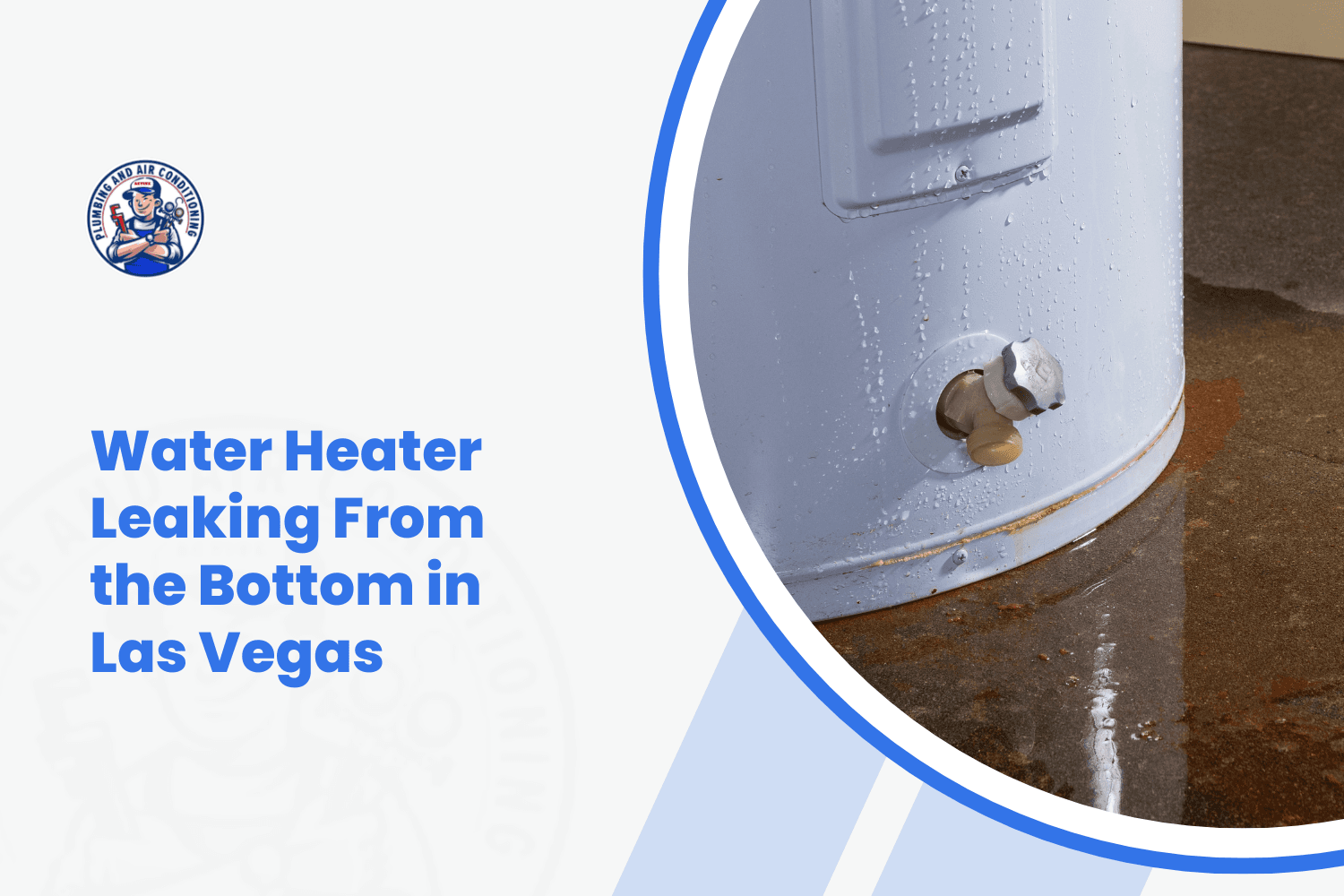
Water Heater Leaking From the Bottom in Las Vegas: What to Shut Off in the First 5 Minutes
Key Takeaways
- Shut off the cold water inlet valve first, then cut the gas valve or flip the water heater breaker.
- If the inlet valve is stuck, use your home's main water shutoff near the front hose bib or garage.
- Do not drain a hot tank right away, since scalding water raises the burn risk.
- Las Vegas hard water leaves sediment that speeds up tank corrosion and causes most bottom leaks.
- Drain valve and TPR valve leaks are usually repairable, but a leaking tank seam or base means replacement.
- Tanks last about 8 to 12 years here, and annual flushing plus a water softener extends that life.
- Water heater replacements require a Clark County permit and licensed installation to meet code.
- Active Plumbing offers fast, upfront-priced emergency water heater service across the Las Vegas Valley.
In This Article
It is a hot Summerlin morning, and a homeowner walks into the garage to grab a bike before the heat climbs past 105. Their sock lands in a cold puddle spreading across the concrete, right under the water heater. That sinking feeling is one our team hears about almost every week during the summer months.
The good news is that the first five minutes are the ones that matter most, and any homeowner can handle them. Shutting off the right valves stops the flow, protects the floor, and keeps a small leak from turning into a full flood. This guide walks through exactly what to shut off, why water heaters fail at the base here in the Valley, and how to tell if you need a repair or a full replacement.
We have driven from Peccole Ranch to Lake Las Vegas on these calls, and the pattern is always the same. Fast action buys time. Here is how to take control before help arrives, then how to decide what comes next.
The First 5 Minutes: What to Shut Off Right Away
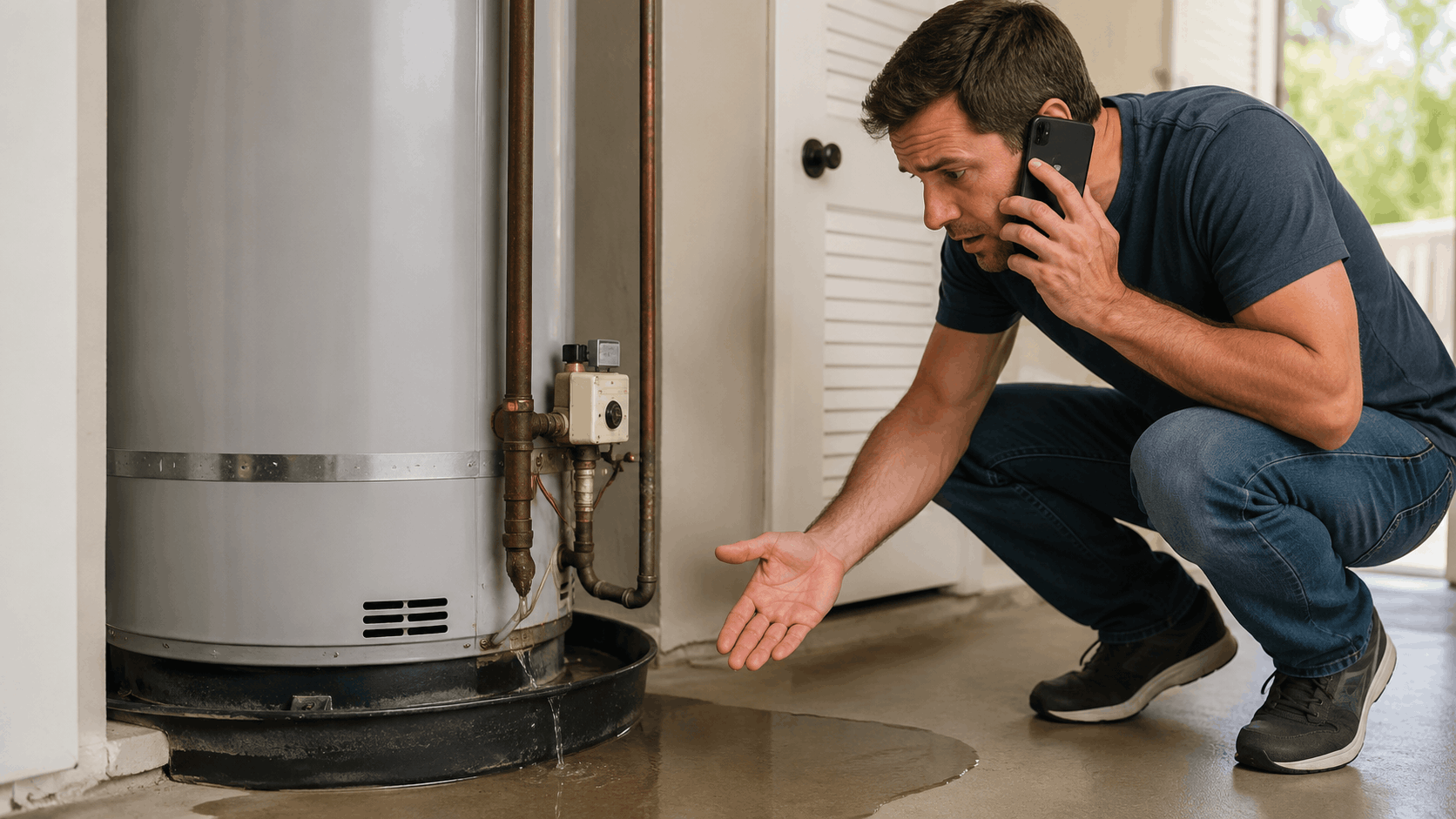
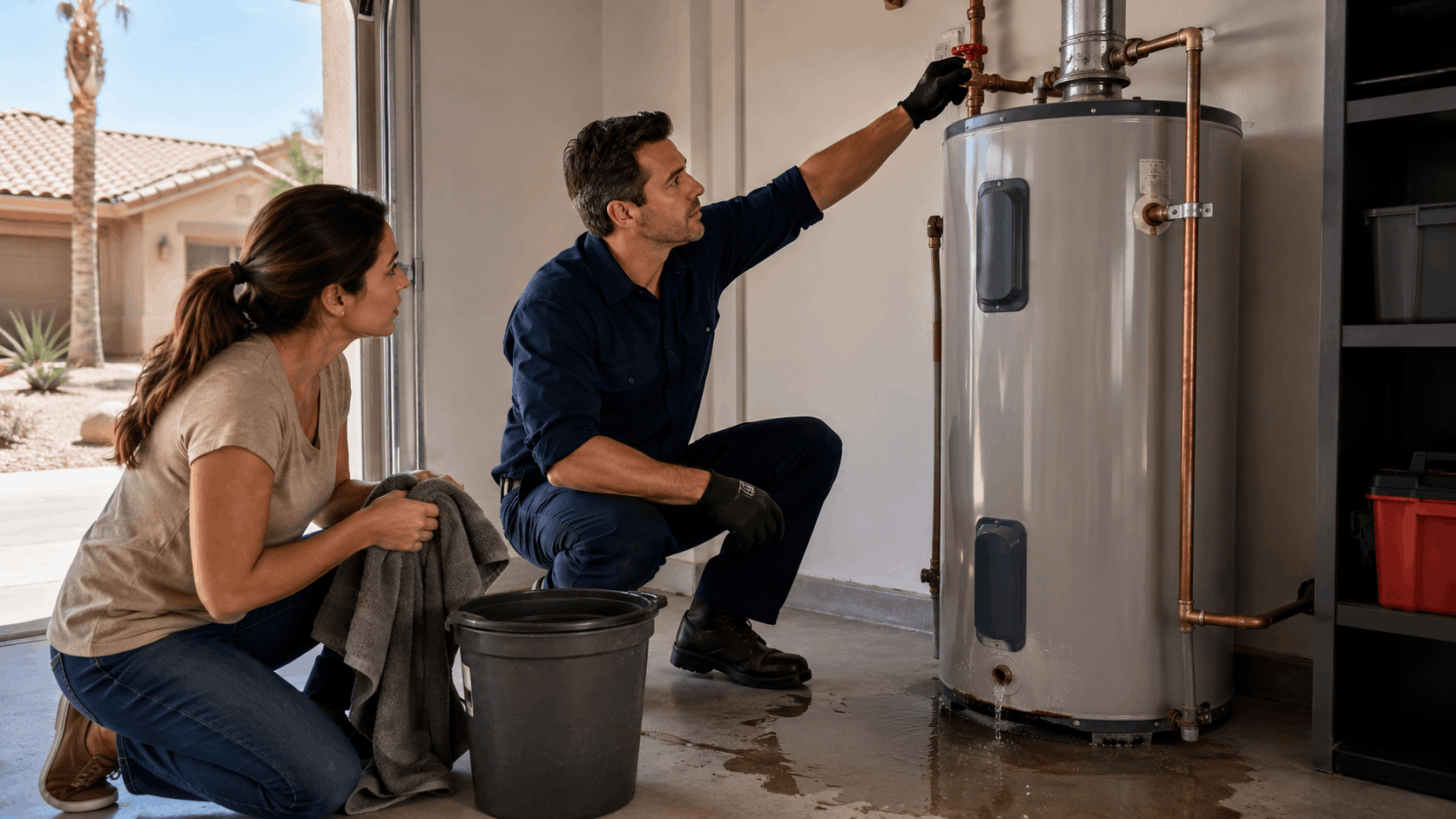
When water is pooling under the tank, the goal is simple: cut the water and cut the power. Doing these two things stops the leak from growing and removes the safety hazards that come with a failing unit. A calm, ordered response beats panic every time.
The table below gives a quick snapshot of the first-five-minute plan. Read it once, then keep it handy near your water heater so anyone in the house knows the order.
| Step | Action | Where to Look | Time |
|---|---|---|---|
| 1 | Close the cold water inlet valve | Top of the tank, cold side | 1 minute |
| 2 | Turn the gas valve off or flip the breaker | Base of tank or electrical panel | 1 minute |
| 3 | Use the main water shutoff if the inlet fails | Front hose bib or garage | 2 minutes |
| 4 | Do not drain the tank yet | Wait for it to cool | - |
Turn Off the Cold Water Inlet Valve First
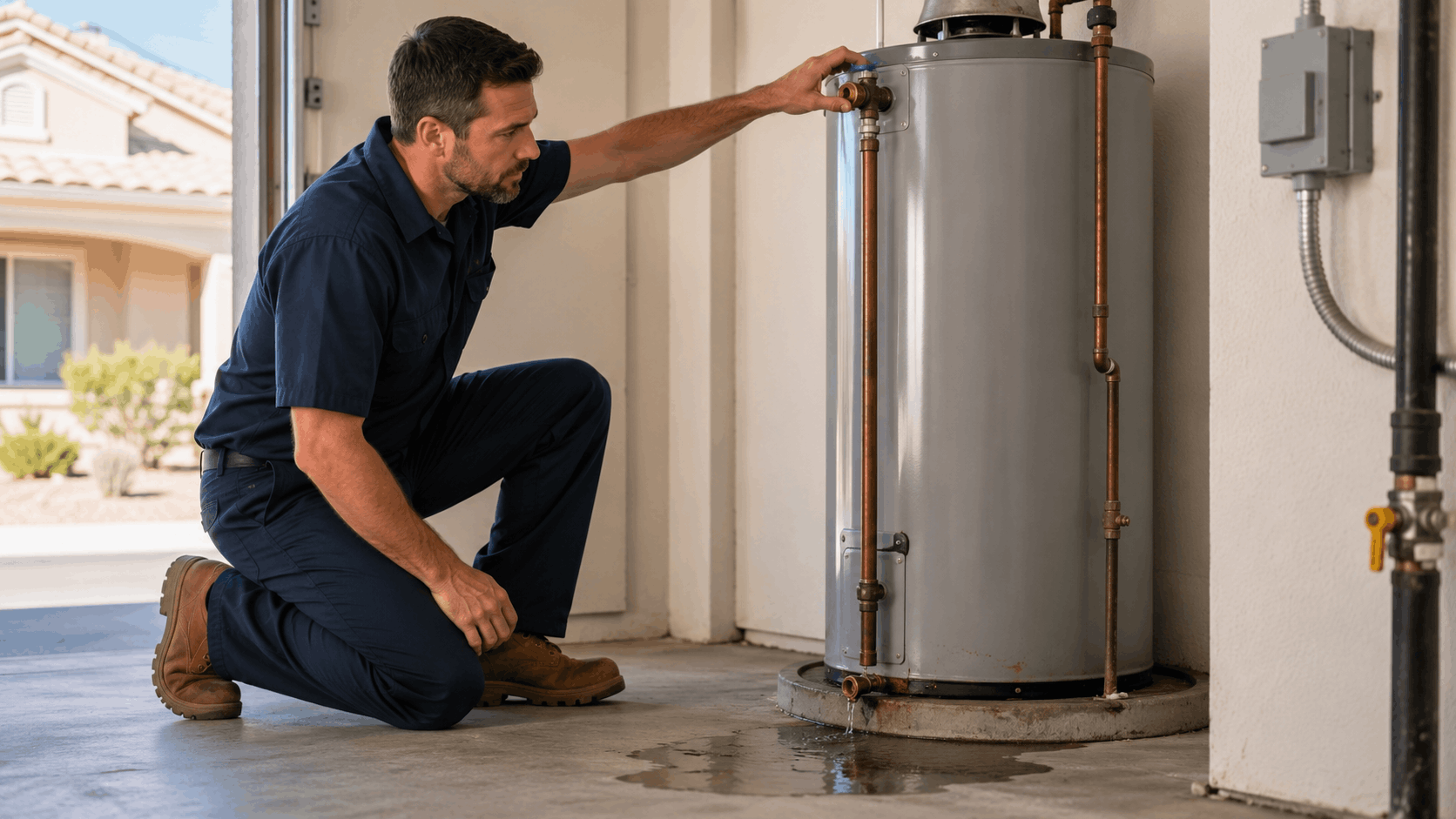
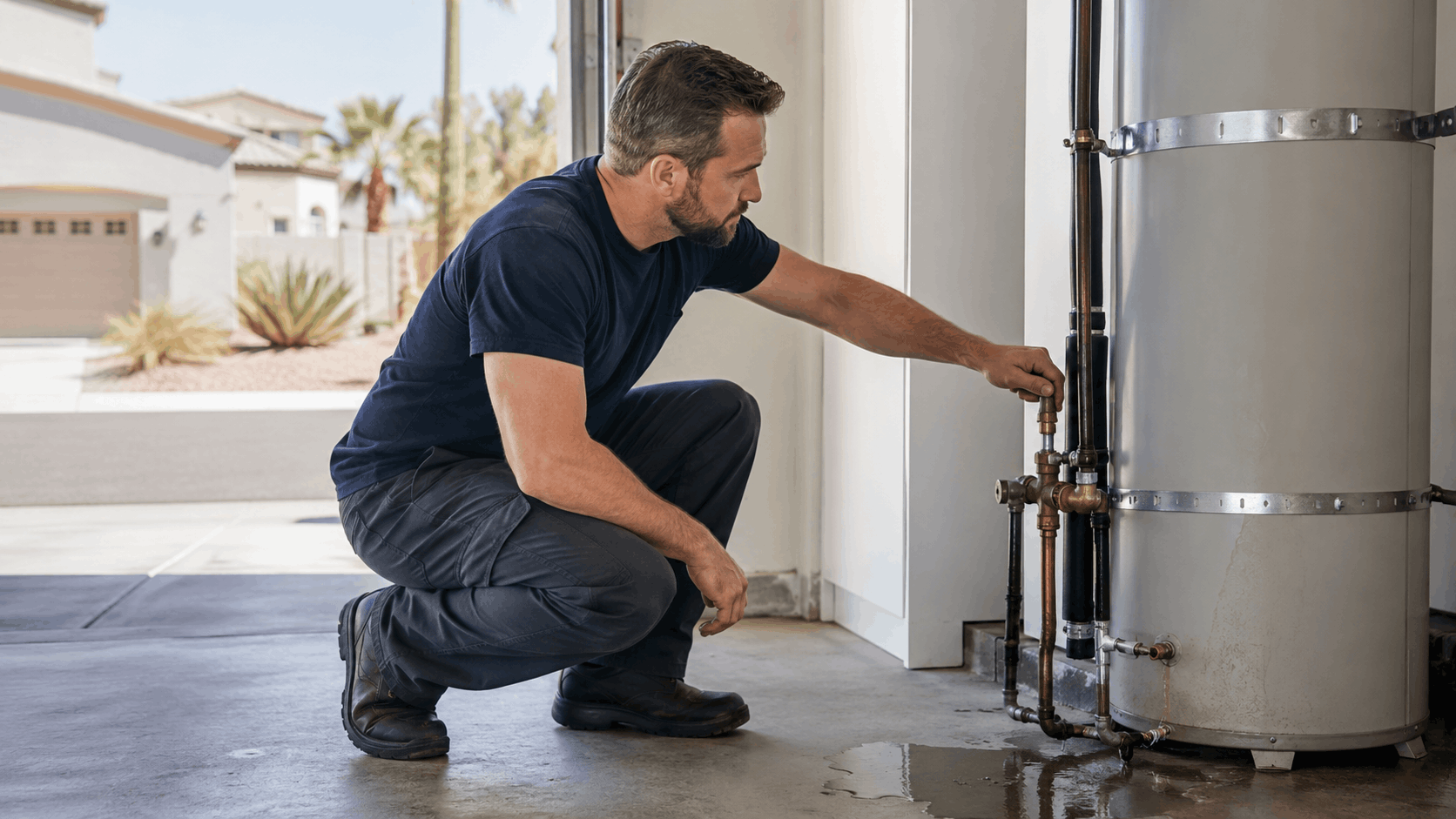
The cold water inlet valve sits on top of the tank, on the pipe marked or positioned on the cold side. It is usually a round handle or a lever. Turning off the water supply here stops fresh water from feeding the leak, which is the fastest way to slow the flow.
If it is a round handle, turn it clockwise until it stops. If it is a lever style, give it a quarter turn so the handle sits across the pipe. This one move often cuts the leak to a trickle within seconds.
In older homes around Downtown and the Historic Westside, that shut off valve can be corroded or frozen in place. Do not force a stuck valve with pliers, because a snapped valve makes the flood worse. If it will not budge, move straight to your home's main water shutoff instead.
A little penetrating oil and gentle pressure can free a stiff valve, but only try that if water is not actively spraying. When time matters, skip the wrestling match and shut the whole house off.
Shut Off the Gas or Electric Power
Once the water supply is off, cut the energy source so the unit does not keep heating an empty or draining tank. On a gas water heater, find the control dial near the bottom of the tank and turn it to the "off" position. Getting the gas valve off protects the burner and the pilot from running with low water.
For an electric unit, walk to your electrical panel and flip the breaker labeled for the water heater. It is usually a double breaker. If nothing is labeled, shut off the main breaker to be safe.
Never let an electric element run dry. When the tank loses water and the heating element stays powered, the element can burn out quickly and even crack the tank further. Flipping the water heater breaker removes that risk instantly.
If you smell gas along with the leak, leave the house and call the gas company from outside. A gas issue turns a simple leak into an emergency, and our gas leak detection and repair team can help once the area is safe.
Find Your Home's Main Water Shutoff if the Inlet Won't Close
When the local valve is stuck, the main water shutoff is your backup. In most Las Vegas Valley Water District homes, it sits near the front hose bib on the exterior wall, or just inside the garage where the main line enters. Look for a lever or a wheel handle on the largest pipe.
Turn the lever a quarter turn or the wheel clockwise until the water stops. This kills water to the entire house, which is exactly what you want when the tank valve fails. It is worth finding this shutoff today, before any emergency, so you are not searching in a panic.
Some newer builds in Summerlin West and Mountains Edge place the main shutoff in a small ground box near the sidewalk. The Las Vegas Valley Water District can confirm your meter location if you are not sure. Knowing where yours is saves precious minutes.
Once the water is off at the main, the leak should stop feeding. From there, you can breathe, dry the floor, and figure out the next step without water spreading across the garage.
Do Not Try to Drain It Yet
The instinct to drain the tank right away is understandable, but it can hurt you. The water inside a working heater can sit at 120 degrees or higher, and opening the drain valve too soon can send scalding water across your feet. Hot water safety comes before cleanup.
Cutting the supply and power first is the correct order. Draining a hot tank does not stop the leak quicker, and it adds burn risk plus a large volume of water on the floor all at once. Let the shutoffs do their job.
Give the tank time to cool, usually a couple of hours, before anyone considers draining it. In most cases, a technician will handle the drain and removal during the repair or replacement visit anyway.
If you want to drain water heater tanks yourself down the line for maintenance, do it when the water is cool and the power is off. For an active leak, patience protects your skin and your floors.
Get Your Quote
Tell us what's going on and we'll get back to you. We're open 24/7.
Why Water Heaters Leak From the Bottom in Las Vegas Homes
Bottom leaks are rarely random. Our water and our climate put unusual stress on tanks, and that shows up at the base where sediment and rust collect. Knowing the cause helps a homeowner decide whether the unit can be saved.
The table below sorts the common causes by whether they usually mean a repair or a replacement.
| Cause | What Happens | Repair or Replace |
|---|---|---|
| Sediment buildup | Minerals settle and speed rust | Often replace |
| Rusted-through tank | Pinholes and cracks in steel | Replace |
| Drain valve leak | Loose or worn valve drips | Repair |
| TPR valve leak | Pressure or temperature release | Repair |
Hard Water and Sediment Buildup in the Valley
Las Vegas hard water is some of the most mineral-heavy in the country, drawn largely from the Colorado River through Lake Mead. All those dissolved minerals settle to the bottom of the tank as sediment over the years. That layer traps heat against the steel and speeds up corrosion.
Homes in Henderson and Spring Valley see this constantly, since the water there carries the same heavy calcium and magnesium load. Over time the sediment hardens into a crusty layer that the burner has to heat through, which stresses the bottom of the tank.
That extra stress is why so many bottom leaks trace back to sediment. The base overheats, the steel weakens, and eventually it gives way. A tank that never gets flushed can build up several inches of this material.
You can often hear the warning signs before a leak, like popping or rumbling as the burner fights through the sediment. That sound is a signal to flush the tank or plan for a replacement.
A Rusted-Through Tank
Every steel tank rusts from the inside out over its life. Once the internal lining and the anode rod wear away, the water starts eating the steel directly. This tank corrosion eventually creates pinholes and hairline cracks that weep water from the base.
A rusted tank cannot be patched or sealed in any lasting way. Once the steel wall has failed, water will keep finding its way out no matter what a homeowner tries. This kind of leak means replacement, not repair.
Rusty or brown-tinted hot water is an early clue that the inside of the tank is breaking down. If the water heater is also older, that discoloration usually points toward tank failure on the horizon.
When our techs confirm a rusted-through base, we walk homeowners through water heater replacement options rather than throwing money at a lost cause. A new unit costs far less than the water damage a failing tank can cause.
Drain Valve and TPR Valve Leaks
Not every puddle means the tank is done. A leaking drain valve at the base can look exactly like a tank leak while being a cheap, quick fix. These plastic or brass valves loosen and wear over time and can drip steadily.
The temperature and pressure relief valve, or TPR valve, is another common culprit. It sits on the side or top and connects to a discharge pipe running down the tank. When pressure or temperature climbs too high, it releases water, and a worn TPR valve can drip even under normal conditions.
Water from either of these valves can run down the tank and pool at the bottom, fooling people into thinking the tank itself failed. That is why a careful look at the source matters before assuming the worst.
Both a drain valve leak and a TPR valve leak are usually repairable. Our water heater repair team swaps these parts regularly, often in a single visit.
Age and Older Neighborhood Plumbing
Water heaters last roughly 8 to 12 years, and hard water shortens that window. In older parts of town near Downtown and the Historic Westside, we find plenty of tanks that have quietly pushed past their expected lifespan. Age catches up with them fast.
An aging tank can look fine for years, then spring a sudden bottom leak overnight. The steel has been thinning the whole time, and one weak spot finally gives out. Homeowners are often surprised because the unit "was working yesterday."
Older neighborhoods also tend to have original plumbing that adds pressure and wear over the years. When the incoming pressure runs high, it puts extra strain on an already tired tank.
If a water heater is more than a decade old, we treat any bottom leak as a likely replacement. Pushing an old tank further usually just delays the inevitable and risks a flood.
Need Help in Las Vegas?
Active Plumbing serves Las Vegas and all of Las Vegas Valley.
How to Tell If It's the Tank or Just a Valve
Before calling anyone, a homeowner can do a quick leak diagnosis to narrow down the problem. Figuring out whether it is a valve or the tank itself helps you know if you are facing a repair or replace situation. A few minutes with a dry towel tells you a lot.
Check the Drain Valve at the Base
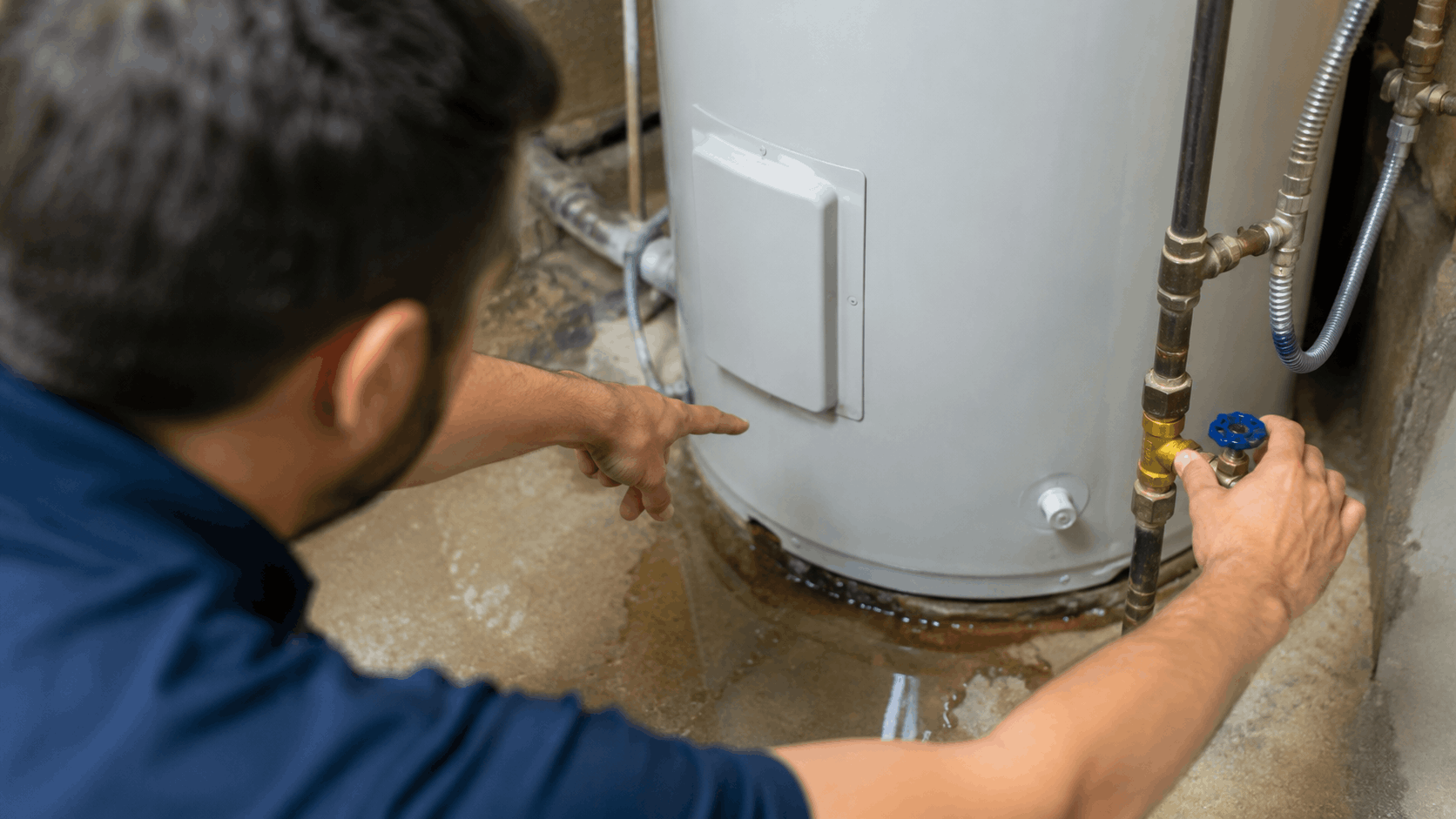
Start at the drain valve near the bottom of the tank. Wipe it completely dry with a towel or paper towel, then watch it closely for a couple of minutes. If new drips form right at the valve, that is your leak source.
A drain valve leak is usually a cheap fix. The valve can be tightened, capped, or replaced without touching the tank. This is the best-case outcome and often means no new water heater is needed.
Sometimes the valve just was not closed fully after a past flush. Snugging it up can stop the drip entirely in those cases.
If the valve stays dry but water keeps appearing elsewhere, you can rule this out and move up the tank. This water heater leak check takes only a few minutes and saves confusion.
Look at the TPR Valve and Discharge Pipe
Next, follow the discharge pipe that runs down from the TPR valve on the side or top of the tank. Dry the end of that pipe and the valve body, then watch for water. If it is wet again quickly, the pressure relief valve is releasing.
A running TPR valve often signals that pressure or temperature inside the tank is too high. That can come from a thermostat set too hot or from high incoming water pressure, both common in parts of the Valley.
This is usually repairable. A tech can replace the valve, adjust the temperature, or add an expansion tank to relieve the pressure. It rarely means the tank has failed.
If you see water pouring steadily from the discharge pipe, lower the thermostat and shut off the supply until it can be checked. A constantly discharging TPR valve should never be ignored.
Trace Water Coming From the Seam or Base
Now dry the entire bottom of the tank and the floor around it. Watch where new water appears. If it seeps from the bottom seam or wells up from under the tank with no clear valve source, that is the telltale sign of a failed tank.
A tank seam leak means the steel body has cracked or rusted through. There is no reliable repair for this. Water will keep escaping because the pressure vessel itself is compromised.
This kind of failed water heater needs replacement, plain and simple. Sealants and epoxy might slow it for a day, but they will not hold under pressure and heat.
When the source is the base or seam rather than a valve, plan for a new unit. Continuing to run it risks a sudden burst and a much larger flood.
When to Call a Licensed Plumber
Once the DIY check points to a valve leak, a rusted base, or you simply cannot find the source, it is time to bring in a Las Vegas plumber. A trained eye confirms the diagnosis and prevents costly guesswork.
Our team handles water heater service across the entire Las Vegas Valley, from Summerlin to Henderson. We can usually tell on the first visit whether a part swap will do or a replacement makes more sense.
If water is still flowing after you have shut off the supply, or you smell gas, treat it as an emergency. Our emergency plumbing line is ready for those calls day or night.
Calling early almost always costs less than waiting. A small leak caught fast rarely turns into torn-out drywall and ruined flooring.
Protecting Your Home While You Wait for Help
With the water and power off, the next job is limiting water damage while help is on the way. A few smart moves protect your floors, drywall, and stored belongings. Leak containment now saves a big cleanup bill later.
Soak Up Standing Water Fast
Grab towels, a mop, or a wet vacuum and start pulling up the standing water right away. The sooner you clear it, the less chance it has to creep into living areas or under walls. Water cleanup speed makes a real difference.
A shop-style wet vacuum is the best tool for this if you have one in the garage. It pulls up far more water than towels and reaches into corners and along baseboards.
Watch the edges of the garage where water can slip under a door into the house. Laminate flooring swells and warps quickly, and carpet holds moisture that breeds mold.
Keep drying until the surface feels dry to the touch. Even a thin film left behind can cause problems over the next day or two.
Move Boxes and Valuables Off the Floor
Many Las Vegas garages double as storage, so a garage water heater leak often threatens boxes, holiday decorations, and tools. Lift anything sitting on the floor up onto shelves or a workbench. Cardboard wicks water fast and falls apart.
Pay special attention to items with sentimental or high value, like photos, documents, and electronics. These are the things people regret losing most after a leak.
If you have plastic bins, they usually hold up better than cardboard. Still, move them clear of the puddle so they do not soak at the base.
Getting storage off the wet floor also gives your cleanup and any technician room to work around the tank. Clear space speeds up the whole process.
Open the Space for Airflow
Even in our dry desert climate, mold can start growing in as little as 24 to 48 hours on damp materials. Open the garage door and any nearby windows to get air moving. Airflow speeds drying and slows mold prevention problems.
Point a box fan or two at the wet area to push air across the concrete and baseboards. Moving air dries surfaces far more quickly than still air, even when the humidity is low outside.
If you have a dehumidifier, run it in the space to pull moisture from the air. This helps in closets and interior rooms where a water heater leak has fewer places to vent.
Keep the airflow going for a day or more after the water is gone. Hidden moisture in drywall and framing takes time to fully dry out.
Snap Photos for Insurance
Before you finish cleaning, take clear photos and a short video of the leak and any damage. Water damage photos help your homeowners insurance claim move more quickly and back up what happened.
Capture the water heater, the puddle, wet flooring, and any soaked belongings. Wider shots plus a few close-ups give the adjuster a full picture.
Note the date and time, and hang on to receipts for any cleanup supplies or emergency service. Documentation strengthens an insurance claim if you file one.
Many policies cover sudden water heater failures but not slow leaks left unaddressed. Acting fast and recording the damage supports your case either way.
Need Help in Las Vegas?
Active Plumbing serves Las Vegas and all of Las Vegas Valley.
Repair vs. Replace: What Makes Sense for Las Vegas Homeowners
Once the emergency is under control, the big question is whether to fix the unit or buy a new one. Age, the type of leak, and our hard water all factor into the water heater replacement decision. Weighing repair cost against a new install helps you spend wisely.
| Situation | Best Move | Typical Range |
|---|---|---|
| Under 6 years, valve leak | Repair | $150 - $400 |
| Over 10 years, tank leak | Replace | $1,500 - $3,000+ |
| Repeated repairs | Replace | Varies |
| Upgrading to tankless | Replace | $3,000 - $6,000+ |
When Repair Is the Right Call
If the tank is younger than about six years and the leak traces to a valve, repair is usually the smart choice. A drain valve swap or a new TPR valve is a small job compared to a full replacement. There is no reason to replace a healthy tank over a $30 part.
Valve replacement and minor fixes make sense when the tank body itself is sound. A newer unit still has years of life left, so patching the small stuff keeps it running.
We also check the anode rod and thermostat during a repair visit. Catching small issues early can add years to a water heater's life.
The rule of thumb: if the tank is young and the fix is cheap, repair it. Water heater repair on a good unit is money well spent.
When Replacement Saves Money Long Term
A rusted tank or any unit past ten years is usually worth replacing. Given the hard water wear in the Valley, an old tank that leaks once will likely leak again soon. Repeated repairs on a dying unit add up fast.
When the tank base or seam has failed, replacement is the only real answer. No repair holds against a cracked pressure vessel. Spending on a patch just delays the new unit and risks a flood in between.
Replacing before a full tank failure also protects your home from water damage. A planned swap is far cheaper than an emergency plus flooring repairs.
A new tank runs more efficiently too, which trims the gas or electric bill. Between reliability and savings, replace water heater choices often pay off within a few years.
Tank vs. Tankless in the Desert Climate
When it is time for a new unit, homeowners often ask about tankless. A tankless water heater heats water on demand and takes up far less space, which helps in tight closets or crowded garages. It also removes the risk of a bottom leak from a standing tank.
The trade-off is hard water. Our minerals scale up tankless units too, so they need regular descaling to stay efficient. A traditional tank water heater is simpler and cheaper up front, while tankless saves space and energy over time.
For many Valley homes, a tankless unit paired with a softener is a strong long-term setup. Our tankless water heater installation team can walk through the fit for your home.
If you go tankless, plan on annual descaling to keep it running well. The maintenance pays for itself in efficiency and lifespan.
Permits and Local Code in Clark County
Water heater replacements need a permit through the Clark County Building Department. This applies whether you swap a tank or upgrade to tankless. The permit protects you by requiring the work to meet local code.
Code covers things like proper venting, seismic strapping, expansion tanks, and the discharge pipe on the TPR valve. Skipping the permit can cause problems when you sell the home or file an insurance claim.
Licensed installation matters because a bad install can leak, vent poorly, or fail inspection. Our techs pull the Clark County permit and handle the inspection so you do not have to.
You can read more about local requirements from the Clark County Building Department. When the paperwork is done right, your new unit is safe and up to standard.
Preventing the Next Bottom Leak
A few simple habits go a long way toward avoiding a repeat emergency. Regular water heater maintenance fights the sediment and corrosion that cause bottom leaks in a hard water city. A little care each year adds years to the tank.
Flush the Tank Once a Year
Flushing the tank clears out the sediment that settles at the bottom and eats away at the steel. In Las Vegas, this is a yearly must because our water leaves so much mineral behind. Skipping it lets that crusty layer build and overheat the base.
To flush water heater tanks, you shut off the power and cold supply, attach a hose to the drain valve, and let the water run until it comes out clear. Doing this once a year keeps sediment removal on track.
If it has been years since your last flush, the drain valve may clog with debris during the process. That is common on neglected tanks and one reason many homeowners have us handle it.
An annual flush is one of the cheapest ways to extend a water heater's life here. It directly targets the number one cause of bottom leaks in the Valley.
Check the Anode Rod
The anode rod is a sacrificial metal rod inside the tank that rusts so the steel does not. It quietly protects the tank from corrosion, but it wears out over time. Once it is gone, the tank itself starts to corrode.
Inspect the anode rod every few years, or more often with our hard water. If it is heavily corroded or eaten down to the core wire, replacing it is a small job that buys years of protection.
Many homeowners never know this rod exists until their tank fails. Staying ahead of it is one of the best-kept secrets for a long-lasting water heater.
We check the anode rod during any maintenance visit. Swapping a worn rod costs far less than a new tank.
Consider a Water Softener
A whole-home water softener cuts the mineral buildup that damages tanks, pipes, and fixtures across the house. In the Valley, softened water means less sediment settling in the water heater and slower corrosion overall.
Beyond the tank, a softener helps every appliance that touches water, from the dishwasher to the shower heads. It is one upgrade that pays off all over the home.
Our water softener installation team sizes a system to your household and water use. For those who prefer no salt, we also offer salt-free water conditioning.
With hard water treatment in place, tanks in Henderson, Spring Valley, and beyond simply last longer. It is a smart move for any Valley homeowner tired of mineral problems.
Add a Drain Pan and Leak Alarm
A drain pan under the water heater catches small leaks and routes water to a drain instead of your floor. For garage and closet installs, this simple pan can prevent a lot of damage. It is inexpensive and easy to add during a replacement.
Pair the pan with a battery-powered leak detector that sounds an alarm at the first sign of water. That early warning can mean the difference between a wet pan and a flooded room.
Some homeowners go further with a whole-home leak detection system that shuts off the water automatically. That is worth considering for homes left empty during hot summer travel.
Catching the next leak early is the whole point. A pan and a sensor together turn a potential flood into a minor fix.
Need Help in Las Vegas?
Active Plumbing serves Las Vegas and all of Las Vegas Valley.
How Active Plumbing Handles Water Heater Emergencies Across the Valley
When a tank fails, homeowners want a fast, honest response from someone who knows local water. Active Plumbing runs emergency water heater service across the Las Vegas Valley with that in mind. Here is how our team handles these calls.
Fast Response From Summerlin to Henderson
Our trucks cover the whole Valley, from Summerlin West and Peccole Ranch out to Whitney Ranch and Green Valley. We also serve North Las Vegas neighborhoods like Aliante and Elkhorn. Coverage this wide means shorter drive times when water is on your floor.
We know the shortcuts and the traffic patterns, so we can reach most homes quickly even during rush hour. Getting there fast is what stops a small leak from becoming a big repair.
Whether you are near Sunset Park in Paradise or up in Tule Springs, our Henderson water heater and Summerlin plumber crews are close by. Local coverage is a real advantage in an emergency.
Call the moment you spot a leak, even after you have shut off the water. The sooner we are rolling, the sooner your home is protected.
Same-Day Replacement and Cleanup Coordination
In many cases we can pull the Clark County permit, remove the old unit, and complete a water heater install the same day. Same-day replacement means you are not stuck without hot water for long.
We also help homeowners deal with the mess left behind. Our team can point you toward cleanup resources and coordinate the drying and containment while we work.
Handling the swap and the aftermath in one visit keeps the whole ordeal short. You get a working heater and a clear plan for the cleanup before we leave.
If the leak damaged flooring or walls, we advise on next steps and what your insurance may cover. A single visit that solves the problem is our goal every time.
A Written Price Before Work Starts
Nobody likes a surprise bill after an emergency. We explain the cost before any work starts, so you know exactly what you are paying for. A written price before work starts means you see the plumbing quote before you approve it.
We walk through your options, whether that is a valve repair, a new tank, or a tankless upgrade. You choose the path that fits your budget and your home.
You get a written price before work begins. The estimate covers parts, labor, and the permit so there is nothing to wonder about later.
Clear pricing builds trust, and trust is why so many Valley homeowners call us back. You should never feel unsure about what a job will cost.
Licensed, Local Technicians Who Know Valley Water
Our technicians are licensed and know exactly how Valley water affects tanks and pipes. That local water heater expert knowledge means installs that hold up against our hard water and heat. A licensed plumber does the job to code the first time.
We understand why tanks in older Downtown homes fail differently than newer ones in Summerlin. That context helps us recommend the right unit and the right protection.
Every install meets Clark County code, with proper venting, strapping, and expansion protection. Doing it right the first time saves you headaches down the road.
You can learn more about our team on our about page. When local knowledge meets a license, you get work that lasts.
Final Thoughts
A water heater leaking from the bottom feels like a disaster, but the first five minutes are in your hands. Shut off the cold water inlet, cut the gas or power, and use the main water shutoff if you need to. Then protect the floor and figure out whether it is a valve or the tank.
Our hard water and older neighborhood plumbing make bottom leaks common across the Valley, so regular flushing and a softener go a long way. When it is time for a repair or replacement, our licensed team is ready across every Las Vegas neighborhood.
If you spot a puddle under your tank, contact Active Plumbing for fast, honest help. Call us today and we will get your hot water and your peace of mind back on track.
Frequently Asked Questions
- Is a water heater leaking from the bottom dangerous?
- Yes, a bottom leak carries real risks. Water can damage floors, drywall, and stored items, and on electric units it creates a shock hazard if it reaches wiring or the element. On gas units, a leaking tank near the burner can cause problems too. Fast shutoff of the water supply and power removes most of the danger and limits the damage while you arrange service.
- What should be shut off first when a water heater leaks?
- Shut off the cold water inlet valve first, located on top of the tank on the cold side. Turn it clockwise or a quarter turn on a lever until it stops. Next, cut the energy source by turning the gas valve to off or flipping the water heater breaker. If the inlet valve is stuck, use your home's main water shutoff near the front hose bib or garage instead.
- Can a water heater leaking from the bottom be repaired?
- It depends on the source. If the leak comes from the drain valve or the TPR valve, a plumber can usually repair or replace that part for a low cost. If water seeps from the bottom seam or the tank base with no valve source, the steel tank has failed and needs replacement. A quick dry-and-watch check helps you tell the difference before calling.
- How long does a water heater last in Las Vegas?
- Most tanks last about 8 to 12 years, but Las Vegas hard water often shortens that. Heavy mineral sediment settles at the bottom and speeds up corrosion, so a tank here may fail closer to the low end without maintenance. Annual flushing and a water softener can push a unit toward the longer end of that range and delay a bottom leak.
- How much does it cost to replace a water heater in Las Vegas?
- A standard tank replacement typically runs about $1,500 to $3,000 including install and the Clark County permit, depending on size and fuel type. Tankless units usually range from $3,000 to $6,000 or more, since they require additional work. Minor valve repairs on a healthy tank are far cheaper, often $150 to $400. We provide a written price before any work begins.
- Do I need a permit to replace a water heater in Clark County?
- Yes, the Clark County Building Department requires a permit for water heater replacements, whether tank or tankless. The permit makes sure the install meets code for venting, strapping, expansion tanks, and the relief valve discharge. Skipping it can cause issues when selling your home or filing an insurance claim. Our licensed team pulls the permit and handles the inspection as part of the job.
- Why does my water heater leak more after I flush it?
- Flushing an old tank can disturb the sediment that was partly plugging thin, rusted spots. Once that debris clears, water finds the weak points and the leak can worsen. The drain valve itself may also fail to reseal after opening, especially on older units. If flushing triggers a new leak, the tank is likely near the end of its life and worth having inspected.
- Should I turn off the water heater at night if it's leaking?
- Yes, shut off the cold water inlet and the power or gas until it is repaired. Leaving a leaking unit running overnight lets water spread across floors and into walls while everyone sleeps. Cutting the supply stops the flow, and cutting the energy protects the burner or electric element. In the morning you can arrange service with far less damage done.
- Can hard water really cause a bottom leak?
- Absolutely. Las Vegas water carries heavy minerals that settle as sediment at the bottom of the tank. That layer traps heat against the steel, speeds up corrosion, and weakens the base over the years. Eventually the stressed steel develops pinholes or cracks and leaks from the bottom. This is why annual flushing and a water softener matter so much in the Valley.
- How fast can Active Plumbing get to my home?
- We respond quickly across the Las Vegas Valley, from Summerlin and Peccole Ranch to Henderson, North Las Vegas, and Paradise. Our trucks cover the whole area, so most homes see a technician promptly, even during busy summer months. For active leaks, we prioritize emergency calls. Shut off your water and power, then call us and we will get moving toward your home.
Licensed plumbing professionals serving Las Vegas and Las Vegas Valley.
Licensed in Nevada · License #0047021
Last updated on
Why trust Active Plumbing?
Founded in 1991, Active Plumbing is a licensed and insured plumber serving Las Vegas and Las Vegas Valley. All content is reviewed by our licensed technicians.

Need Help in Las Vegas?
Active Plumbing serves Las Vegas and all of Las Vegas Valley.
Related Articles
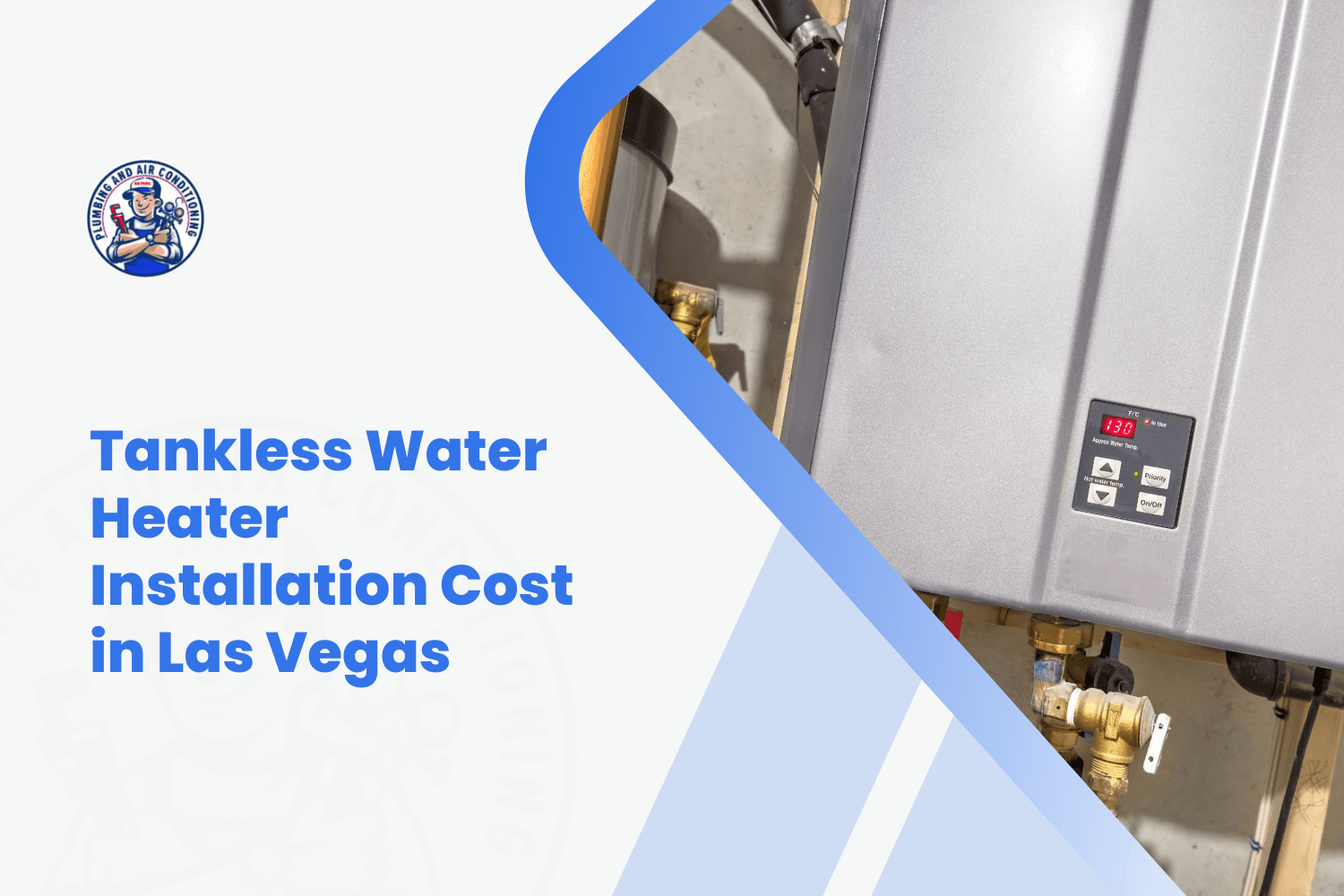
Tankless Water Heater Installation Cost in Las Vegas: Gas Line Upsizing, Venting, and Permit Line Items
A clear breakdown of tankless water heater installation cost in Las Vegas, including gas line upsizing, venting, permits, and hard water factors for valley homes.
Tankless Water Heater Maintenance in Las Vegas: Why Hard Water Makes It Critical
Las Vegas hard water from Lake Mead builds scale fast inside tankless heaters. Learn the warning signs, real maintenance steps, and how often valley homes need service.
Water Heater Explosions in Las Vegas: How Sediment and Pressure Cause Failures
Learn how Las Vegas hard water sediment and pressure buildup cause water heater failures, the warning signs to watch for, and how to prevent a dangerous burst.