Cost Guides
Tankless Water Heater Installation Cost Vegas: 3-Bedroom vs 5-Bedroom Pricing

Key Takeaways
- A 3-bedroom tankless install in Las Vegas typically runs $3,200 to $5,500, while a 5-bedroom can reach $6,000 to $11,000 or more.
- Bedroom count drives hot water demand, which sets the GPM flow rate and BTU output your unit needs.
- Winter groundwater temperatures in the Valley lower a unit's effective output, so sizing should always account for cold-month temperature rise.
- Gas is usually the better fuel for large homes, while electric units may trigger costly panel upgrades in older houses.
- Las Vegas Valley Water District hard water makes a softener and annual descaling important to protect the heat exchanger and warranty.
- Almost every tankless install needs a Clark County permit and inspection, and DIY jobs often fail over venting or gas sizing.
- Large homes in The Ridges, Anthem, and Southern Highlands often need recirculation or dual units for distant bathrooms.
- A properly installed and maintained tankless heater can last around 20 years in the Las Vegas climate.
In This Article
A homeowner in a tidy three-bedroom near Spring Valley called us last spring with a simple question. Her neighbor with a sprawling five-bedroom in Southern Highlands had just paid almost double for a tankless install, and she wanted to know why. The answer comes down to home size, hot water demand, and a handful of local factors that shape every quote across the Valley.
Tankless water heater cost in Las Vegas swings widely based on how many people use hot water at once and how the home is plumbed. A starter home running two showers needs far less unit power than a luxury property with five bathrooms, a soaking tub, and a kitchen pot filler. That gap shows up in equipment price, labor hours, gas line work, and venting.

How Home Size Changes Tankless Water Heater Costs in Las Vegas?
Home size is the biggest lever on tankless water heater cost in Las Vegas. A three-bedroom home and a five-bedroom home have very different hot water demands, and that demand sets the unit size, the fuel needs, and the install scope. The bigger the home, the more the price climbs.
Below is a quick look at how the two compare before we get into the details.
| Factor | 3-Bedroom Home | 5-Bedroom Home |
|---|---|---|
| Typical bathrooms | 2 to 2.5 | 3.5 to 5 |
| Recommended flow rate | 7 to 9 GPM | 10 to 14 GPM |
| Common setup | Single gas or electric unit | Single high-output or dual units |
| Typical install range | $3,200 to $5,500 | $6,000 to $11,000+ |
Why Bedroom Count Affects Hot Water Demand
More bedrooms almost always mean more bathrooms and more people. A two-person three-bedroom rarely runs three fixtures at once, while a busy five-bedroom can have two showers, a dishwasher, and a washing machine all pulling hot water during a morning rush. That simultaneous demand is what drives the size of the unit a home needs.
Bedroom count is a quick stand-in for fixture count. When we walk a home, we count showers, tubs, sinks, and hot-water appliances to estimate peak demand. A larger fixture count raises the gallons per minute the tankless heater must deliver without dropping temperature.
This is why two homes on the same street can need very different units. The three-bedroom might run fine on a mid-output heater, while the five-bedroom next door needs a high-output model or a second unit. Matching the heater to real hot water demand prevents lukewarm showers and short cycling.
Flow Rate and Temperature Rise in the Desert
Flow rate is measured in gallons per minute, or GPM, and it tells you how much hot water a unit can push at once. A single shower uses about 2 to 2.5 GPM. Add a second shower and a kitchen sink, and demand climbs past 6 GPM fast.
Temperature rise matters just as much in the Las Vegas Valley. In summer our groundwater runs warm, so the heater barely works to reach a comfortable 120 degrees. In winter, incoming water can drop into the 50s, which means the unit has to heat the water further and its effective GPM output falls.
That winter dip catches people off guard. A unit rated for 9 GPM in mild conditions might only deliver 6 GPM in January. We size both three-bedroom and five-bedroom homes around the coldest-month temperature rise so showers stay hot year-round, not just in July.
Gas vs Electric Tankless Pricing Differences
Fuel type changes both the unit price and the install scope. A gas tankless heater usually costs more up front and often needs a larger gas line and dedicated venting. An electric tankless unit can be cheaper to buy but may demand a panel upgrade to handle the heavy electrical load.
For a three-bedroom home, electric can sometimes work if the panel has room and demand is modest. The install stays simpler, with no venting and no gas work. That keeps labor lower and the project faster.
For a five-bedroom home, gas almost always wins. High flow rates need high BTU output, and electric units struggle to keep up without massive electrical upgrades. Our gas line services team often upsizes the supply line so a large gas unit gets the fuel it needs.
Get Your Quote
Tell us what's going on and we'll get back to you fast.
Tankless Installation Cost for a 3-Bedroom Las Vegas Home
A three-bedroom install is the most common job we do across the Valley. These homes have predictable demand and usually a clean spot to mount the unit. That keeps the 3-bedroom tankless cost reasonable and the Las Vegas installation straightforward in most cases.
| Cost Item | Typical Range |
|---|---|
| Tankless unit (7 to 9 GPM) | $1,100 to $2,200 |
| Labor and basic install | $1,200 to $2,000 |
| Venting and connections | $400 to $900 |
| Permit and inspection | $150 to $400 |
| Total typical range | $3,200 to $5,500 |
Typical Price Range and What Drives It
Most three-bedroom installs land between $3,200 and $5,500 in Las Vegas. The unit itself is the largest single line item, followed by labor. Venting, fittings, and the permit fill in the rest.
Labor cost depends on how much has to change. A simple swap where the gas line and venting already work runs lower. A job that needs new venting routed through a wall or roof pushes the price toward the top of the range.
The fuel type also shifts the total. A gas unit with existing supply stays affordable, while an electric unit that triggers a panel upgrade can add a thousand dollars or more. We spell out each of these items before any work begins.
Common Setups in Spring Valley and Summerlin Starter Homes
In Spring Valley, many three-bedroom homes from the 1990s have the water heater tucked in the garage. That makes a tankless swap easy, since the garage wall gives a clean spot to mount the unit and run venting straight out.
Older Summerlin neighborhoods like The Trails often have an interior closet heater. These take a bit more planning to vent properly, but the layouts are familiar to our crew. A garage install almost always comes in cheaper than a closet retrofit.
We have worked hundreds of these starter homes across the southwest Valley. Knowing the common layouts means fewer surprises on install day. That experience keeps both the timeline and the quote tight.
Single-Unit Sizing for Smaller Households
A three-bedroom home running two showers at once usually needs a unit in the 7 to 9 GPM range. On the gas side, that means roughly 150,000 to 199,000 BTU of output. One properly sized unit handles this demand with room to spare in summer.
Electric three-bedroom installs work when demand is lower and the panel can support it. These units often need 100 to 150 amps of dedicated capacity, which is a lot for an older home. We check the panel before recommending electric to avoid a costly surprise.
Right-sizing matters more than buying the biggest unit. An oversized heater wastes money up front and can short cycle on small draws. We match the BTU and GPM to how the household actually uses hot water.
Replacing an Old Tank Heater
Most three-bedroom jobs are a tank-to-tankless retrofit, and that adds a few costs. The old tank has to be drained, disconnected, and hauled away. The water and gas lines often need new fittings to match the tankless inlet sizes.
Venting is the other big change. A traditional tank vents differently than a tankless unit, so the old flue usually gets replaced with proper tankless venting. This is one reason a retrofit costs more than a simple unit-for-unit tank swap.
Our tankless water heater installation team handles the full retrofit so nothing gets left half-done. We also flush the lines and confirm the gas supply can feed the new unit. Done right, the changeover takes one day for most three-bedroom homes.

Need Help in Las Vegas?
Active Plumbing serves Las Vegas and all of Las Vegas Valley.
Tankless Installation Cost for a 5-Bedroom Las Vegas Home
Larger homes carry larger price tags, and the 5-bedroom tankless cost reflects more than just a bigger unit. A large home installation often involves higher BTU output, gas line upsizing, longer pipe runs, and sometimes a second unit. Here is what drives the cost up.
- Higher-output equipment: 10 to 14 GPM units or dual heaters cost far more than a single mid-size model.
- Gas line upgrades: high BTU demand often needs a larger supply line back to the meter.
- Extended venting: longer or more complex vent runs for distant utility rooms.
- Recirculation: many large homes add a pump to deliver hot water fast to far bathrooms.
- More labor: bigger jobs take a larger crew and more hours.
Typical Price Range for Larger Homes
- Most five-bedroom installs run between $6,000 and $11,000 or more in Las Vegas.
- The price climbs because a high-demand home needs more output and more plumbing work.
- A single high-output gas unit with a gas line upgrade often lands around $7,000 to $9,000.
- Dual-unit or recirculation setups push the total past $10,000.
The big driver is peak demand. A five-bedroom home with multiple morning showers needs hardware that a three-bedroom never would. That extra capacity costs more in both equipment and the supporting gas and venting work.
Big Homes in The Ridges, Anthem, and Southern Highlands
- Luxury homes in The Ridges often have three to five full bathrooms spread across two stories.
- Anthem properties in Henderson frequently include soaking tubs and large primary suites that demand high flow.
- Southern Highlands estates sometimes have detached casitas or guest wings with their own hot water needs.
These layouts spread fixtures far apart, which raises both demand and pipe-run length. A single heater near the garage may struggle to serve a master bath on the far side of the house. We often spec recirculation or a second unit to keep hot water fast everywhere.
When Two Units or a Recirculation System Make Sense
- Two parallel units make sense when peak demand exceeds what one heater can deliver, usually above 12 GPM.
- A recirculation system shines when far bathrooms wait a long time for hot water.
- Dual units add redundancy, so one keeps working if the other needs service.
For sprawling floor plans, a recirculation pump installation often solves the wait without a second heater. It loops hot water back so it is ready the moment a tap opens. We help homeowners weigh dual units against recirculation based on layout and budget.
Upgrading Gas Lines and Venting for High BTU Units
- High-output units can need 199,000 BTU or more, which a standard half-inch line may not feed.
- Upsizing the gas line back to the meter is common on older large homes.
- Longer vent runs and concentric venting add material and labor cost.
Many large homes were built with gas lines sized for a tank heater and a furnace, not a high-BTU tankless unit. Our gas line rerouting and upsizing work makes sure the new heater gets enough fuel to hit its rated output. Skipping this step leads to error codes and weak performance.
Side-by-Side Cost Comparison: 3-Bedroom vs 5-Bedroom
Seeing both scenarios together makes the price gap clear. This cost comparison shows the 3-bedroom vs 5-bedroom difference across equipment, labor, and long-term value. The extra spend on a larger home buys real capacity, not just a bigger box.
| Category | 3-Bedroom | 5-Bedroom |
|---|---|---|
| Unit output | 7 to 9 GPM | 10 to 14 GPM or dual |
| Equipment cost | $1,100 to $2,200 | $2,500 to $5,000+ |
| Labor and install | $1,200 to $2,000 | $2,500 to $4,500 |
| Gas/venting upgrades | $400 to $900 | $1,000 to $2,500 |
| Total typical range | $3,200 to $5,500 | $6,000 to $11,000+ |
Unit Cost Differences by Capacity
Unit capacity is where the price gap starts. A 7 to 9 GPM heater for a three-bedroom runs $1,100 to $2,200. A 10 to 14 GPM model for a five-bedroom can cost $2,500 to $5,000 by itself.
If a large home needs two units, the equipment cost roughly doubles. Two mid-size heaters wired in parallel often cost more than a single jumbo unit but offer redundancy. We help homeowners pick the path that fits both demand and budget.
Higher capacity also means heavier-duty internal parts. These units have larger heat exchangers and stronger burners, which adds to the sticker price. The payoff is steady hot water even when the whole house is busy.
Labor and Install Time Differences
A three-bedroom swap is usually a one-day job for a two-person crew. The unit mounts in the garage, the connections tie in, and venting runs straight out. Install complexity stays low when the existing infrastructure mostly works.
A five-bedroom install can stretch to two days with a larger crew. Gas line upsizing, longer vent runs, and recirculation loops all add labor time. More fixtures mean more testing to confirm every tap gets hot water.
That added labor is a real part of the quote, not padding. Complex homes simply take more hours to do right. We schedule the crew size to match the job so the work stays on track.
Long-Term Energy Savings by Home Size
Both home sizes save energy by heating water only on demand, but the dollar savings scale with usage. According to the U.S. Department of Energy, tankless units can be 24 to 34 percent more efficient than a tank for homes using moderate hot water.
A three-bedroom home might save $10 to $20 a month, giving a payback period of several years. A busy five-bedroom that uses far more hot water can save $25 to $50 a month, shortening the payback despite the higher install cost.
Longer unit lifespan adds to the value too. Tankless heaters often last 20 years versus 10 to 12 for a tank. Over that span, the energy savings and fewer replacements add up for both home sizes.
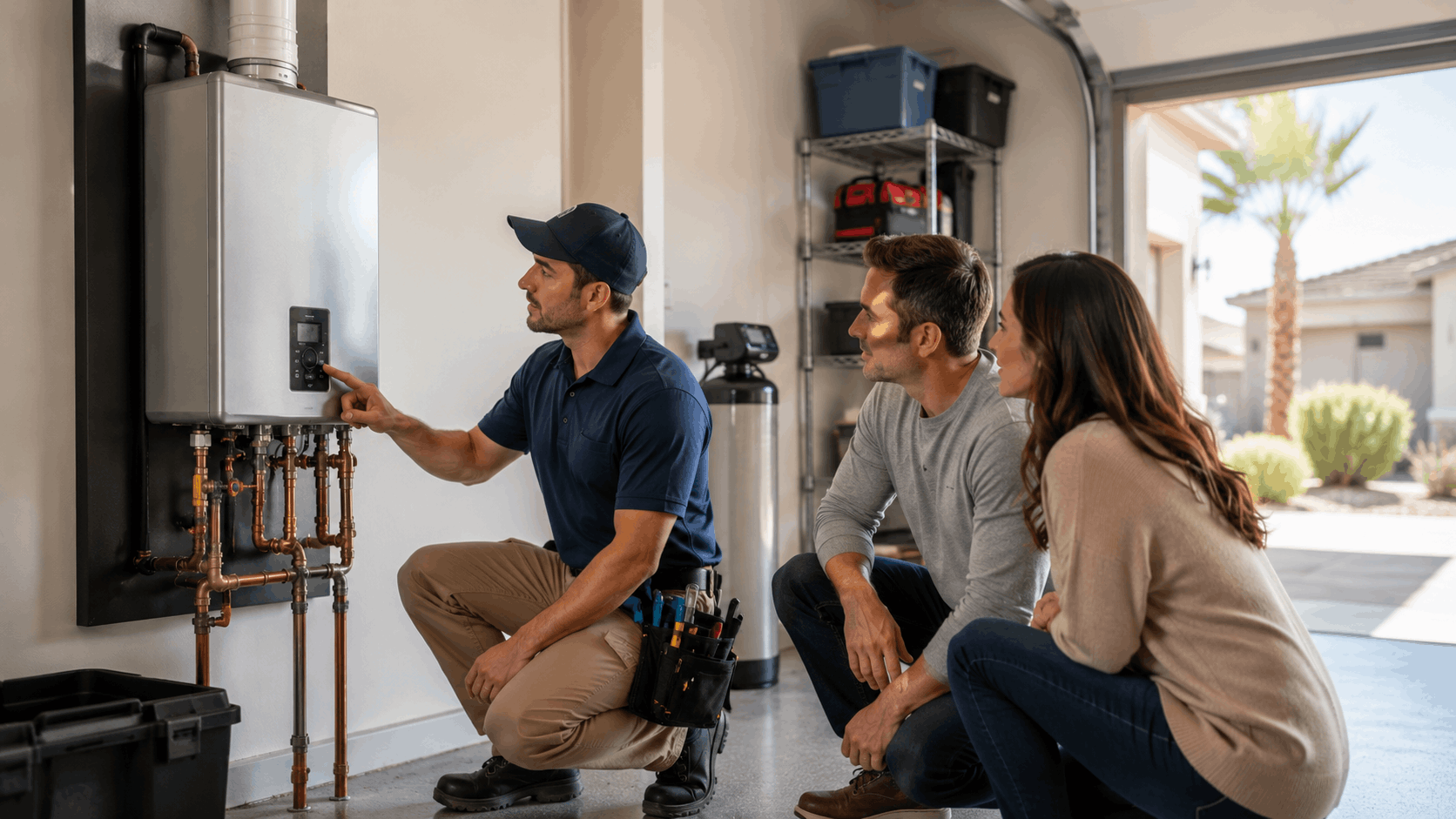
Hidden Costs and Local Factors That Affect Your Quote
A few Las Vegas factors can shift the final price beyond the basic unit and labor. These hidden costs are easy to miss until a plumber walks the home. Knowing them ahead of time keeps the quote from surprising you.
Hard Water and the Need for a Softener
The Las Vegas Valley Water District supplies some of the hardest water in the country, full of calcium and magnesium. That hard water leaves scale inside a tankless heat exchanger, which cuts efficiency and shortens the unit's life. Most manufacturers want scale protection to keep the warranty valid.
Adding a water softener installation raises the up-front cost but protects the investment. A softened supply lets the heat exchanger stay clean and run at full output for years. For many homeowners this is the difference between a 12-year unit and a 20-year unit.
Even with a softener, an annual descaling flush keeps things running clean. Our tankless maintenance and descaling service clears any buildup before it causes error codes. Skipping this in our hard-water Valley is the fastest way to lose a tankless heater early.
Electrical and Panel Upgrades for Electric Units
Electric tankless units pull a lot of amperage, often more than an older home can spare. Many Las Vegas homes built before 2000 have 100- or 150-amp panels already near capacity. Adding a big electric heater can force a panel upgrade.
A panel upgrade can add $1,500 to $3,000 to an electric tankless job. That extra electrical work often makes gas the cheaper choice once everything is counted. We check the panel load before recommending an electric unit.
For a three-bedroom with a modern panel, electric can still pencil out. For a larger home, the electrical demand usually tips the scale toward gas. The right call depends on the existing panel and the home's hot water needs.
HOA Rules and Exterior Venting Placement
Many Valley communities have HOA rules that govern where vents and equipment can sit. In Summerlin and Inspirada, an HOA may restrict vent placement on a street-facing wall. That can force a longer vent run to a side or rear wall, which adds cost.
Some HOAs also want vents screened or painted to match the exterior. We have handled these rules across dozens of guard-gated communities. Knowing the local guidelines up front avoids a redo after install.
It pays to check the HOA architectural guidelines before scheduling. We can help interpret what they allow for vent and unit placement. Getting it right the first time keeps the project on schedule and out of trouble with the board.
Older Homes Near Downtown and the Historic District
Older homes near Downtown Las Vegas and the Huntridge area often have dated plumbing and undersized gas lines. A tankless retrofit in these neighborhoods may need new water lines and a larger gas supply. That added work raises the quote compared to a newer home.
We see galvanized pipe and tight gas lines in many Scotch 80s and Huntridge bungalows. These need careful work to bring up to current standards. The reward is a modern system in a classic home that finally delivers steady hot water.
Older homes also tend to have unusual layouts that complicate venting. Our crew has worked these historic blocks for years and knows their quirks. We plan each retrofit around the home's actual condition, not a one-size estimate.
Need Help in Las Vegas?
Active Plumbing serves Las Vegas and all of Las Vegas Valley.
Permits and Code Requirements in Clark County
Tankless installs in the Valley fall under local permit and inspection rules. Knowing the Clark County code process helps homeowners plan timeline and cost. A proper permit also protects home value at resale.
When a Permit Is Required
Almost every tankless install needs a permit through the Clark County Building Department. Swapping fuel type, upsizing a gas line, or changing venting all trigger permit and inspection requirements. A licensed plumber pulls the permit as part of the job.
The permit fee usually runs $150 to $400 depending on the scope. Gas line and electrical work can add separate sub-permits. We fold these into the quote so there is no surprise line item later.
You can review local requirements through the Clark County Building and Fire Prevention department. Permitting keeps the work legal and on record. That record matters when you sell the home.
Inspection Steps and Timeline
After install, an inspector checks the gas connection, venting, water connections, and clearances. For a three-bedroom, the inspection is usually quick and passes in one visit. A five-bedroom with gas upsizing may need a separate gas inspection.
The full timeline from permit to passed inspection often runs one to two weeks. The install itself takes a day or two. The wait is usually for the inspector's schedule, not the plumbing work.
We coordinate the inspection so homeowners do not have to chase the county. Our crew is on site to answer any inspector questions. Most jobs pass on the first try when the work is done to code.
Why DIY Installs Often Fail Inspection
A DIY install often fails inspection over venting clearance, gas sizing, or missing permits. These code violations can be unsafe, especially with gas and combustion air. An improper vent can pull exhaust back into the home.
Failed inspections also hurt home value, since unpermitted work can derail a sale. Buyers and their inspectors flag work that has no permit on record. Fixing it later usually costs more than doing it right the first time.
A licensed install protects both safety and resale. Our team handles the permit, the install, and the inspection as one package. That keeps the homeowner out of the code-violation trap entirely.
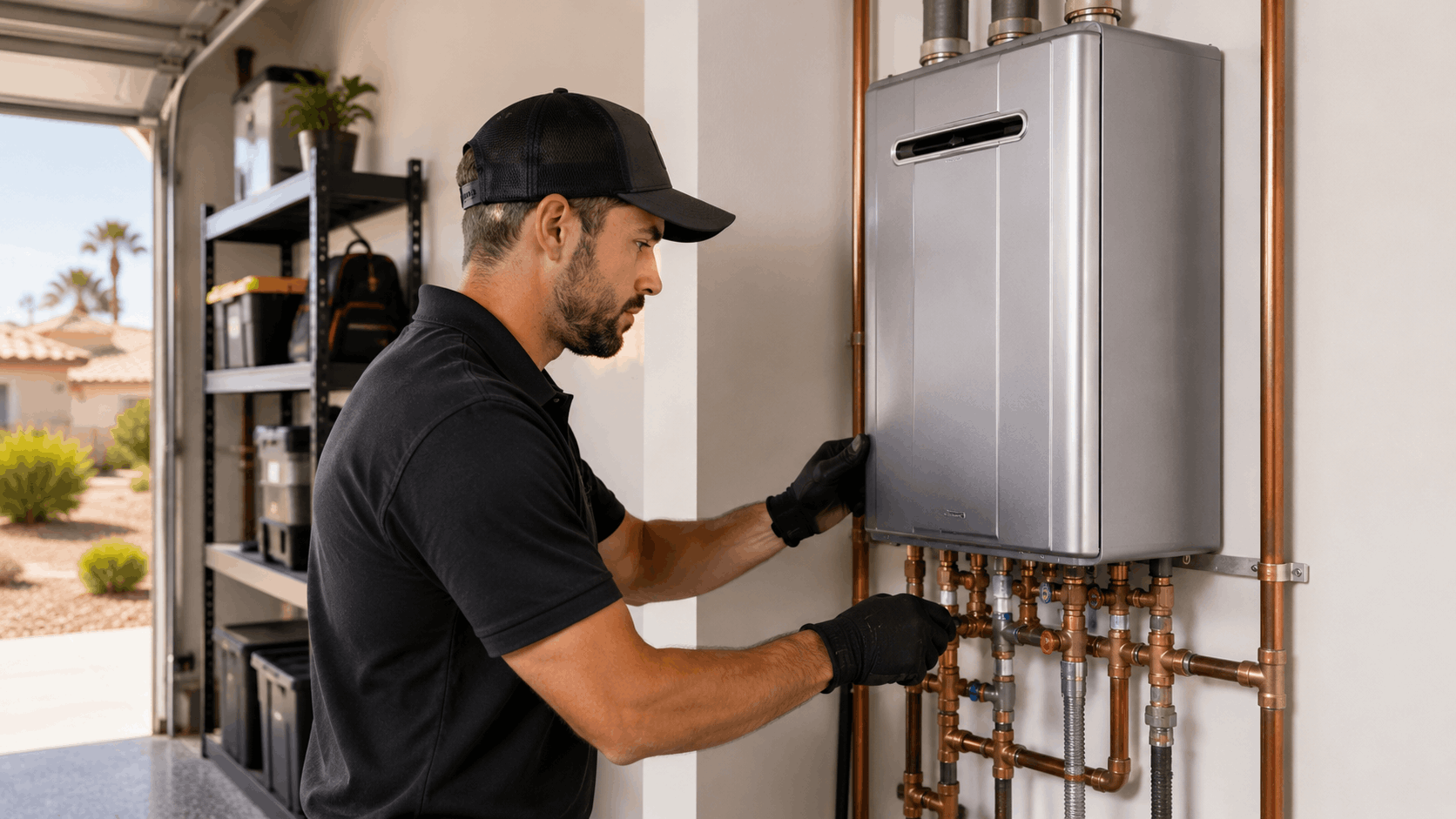
How to Pick the Right Tankless Unit for Your Home
Choosing a tankless unit comes down to demand, fuel, and budget. This sizing guide helps both three-bedroom and five-bedroom owners pick a heater that fits. A little planning up front avoids cold showers later.
Matching GPM to Your Fixtures
Start by adding up the GPM of fixtures that run at the same time. A shower uses about 2.5 GPM, a kitchen sink 1.5, and a washer 2. Add the peak load to find the flow rate your unit must hit.
A three-bedroom rarely needs more than 9 GPM at peak. A five-bedroom can easily reach 12 GPM or more during a busy morning. Use a high fixture count for the worst-case scenario, not an average day.
Remember to size for winter temperature rise, not summer. The same unit delivers less hot water when groundwater is cold. We always spec around the coldest month so the home never runs short.
Brands and Warranties Worth Considering
Reliable brands like Navien, Rinnai, and Noritz hold up well in hard-water areas. Look for units with stainless heat exchangers and warranties of 12 to 15 years on the exchanger. A longer warranty signals the maker trusts the build.
In the Valley, warranty terms often require proof of scale protection and annual flushing. Skipping maintenance can void coverage. We help homeowners keep records so a warranty claim holds up if needed.
Brand support matters when a part needs replacing years down the road. We stock common parts for the units we install. That keeps repairs fast instead of waiting weeks for a special order.
Balancing Upfront Cost With Long-Term Value
A cheaper unit saves money today but may cost more over its life. A higher-quality heater with a strong warranty often lasts longer and runs more efficiently. The long-term value usually favors the better unit in a hard-water market.
For a three-bedroom, a mid-range gas unit hits a good balance of price and lifespan. For a five-bedroom, spending more on capacity and recirculation pays off in comfort and efficiency. The right choice depends on how hard the household runs hot water.
We walk each homeowner through the trade-offs with real numbers. The goal is a unit that fits the budget without leaving the home short on hot water. A smart upfront choice keeps total cost lower over 20 years.
Why Active Plumbing Handles Las Vegas Tankless Installs
Active Plumbing has installed tankless systems in homes of every size across the Valley. Our Las Vegas tankless install work blends local knowledge with clean, code-compliant craftsmanship. Homeowners get a straight answer and a fair price.
Local Knowledge of Valley Water Conditions
Working across Henderson, North Las Vegas, and Enterprise teaches a crew how local water behaves. The hard supply across the Valley shapes every recommendation we make about scale protection. We know which neighborhoods see the heaviest buildup.
That experience helps us match the right softener and descaling plan to each home. A unit in a hard-water pocket needs more protection than the spec sheet alone suggests. Our advice comes from years of pulling scaled-up heaters across the area.
We also know the common home layouts in each community. From garage installs in Spring Valley to multi-bath estates in the southwest, we have seen them all. That local read keeps quotes accurate and installs smooth.
Upfront Quotes With No Surprise Charges
Every quote breaks down the unit, labor, venting, gas work, and permit as separate items. Homeowners see exactly where the money goes before any work starts. That pricing transparency builds trust on day one.
If a home needs a gas line upgrade or a softener, we flag it in the quote, not on install day. There are no surprise charges once the crew arrives. The number we give is the number you pay, barring hidden conditions we disclose if found.
We also explain the choices, like single unit versus dual or recirculation. That way the homeowner makes the call with full information. An upfront quote means no guessing about the final bill.
Licensed Installs Built to Pass Inspection
Every install is done by a licensed plumber to current Clark County code. We pull the proper permits and coordinate the inspection from start to finish. The work is code compliant so it passes the first time.
That licensed approach protects safety and home value alike. No unpermitted gas work, no improper venting, no shortcuts. The system is built to run clean for two decades.
If you ever need service, our water heater services team is a phone call away. We stand behind every install across the Valley. Reach out through our contact page to get started.
Need Help in Las Vegas?
Active Plumbing serves Las Vegas and all of Las Vegas Valley.
Final Thoughts
The gap between a three-bedroom and five-bedroom tankless install comes down to demand, capacity, and the extra gas, venting, and recirculation a big home needs. A three-bedroom usually lands between $3,200 and $5,500, while a five-bedroom can run $6,000 to $11,000 or more. Hard water, HOA rules, and Clark County permits all shape the final number.
Right-sizing the unit and protecting it from scale keeps a tankless heater running strong for 20 years in our climate. Whether you own a starter home in Spring Valley or an estate in Southern Highlands, the right setup pays off in steady hot water and lower bills.
Active Plumbing is ready to size, quote, and install the right tankless system for your home anywhere in the Valley. Call our team or reach out through our contact page for an upfront quote and a no-surprise installation.
Frequently Asked Questions
How much does tankless water heater installation cost in Las Vegas?
Most tankless installs in Las Vegas run between $3,200 and $11,000 depending on home size and fuel type. A three-bedroom with a gas unit and existing infrastructure usually lands around $3,200 to $5,500. A five-bedroom needing high output, gas upsizing, or recirculation can reach $6,000 to $11,000 or more. Electric units may add a panel upgrade cost in older homes.
Why does a 5-bedroom home cost more than a 3-bedroom home?
A five-bedroom home needs a larger unit, higher BTU output, and often a bigger gas line to feed it. More bathrooms mean more simultaneous hot water demand, which calls for 10 to 14 GPM of flow or even dual units. Longer pipe runs frequently require a recirculation loop, and the added gas and venting work all raise the labor and material cost.
Do I need a water softener with a tankless heater in Las Vegas?
It is strongly recommended. The Las Vegas Valley Water District supplies very hard water that leaves scale inside the heat exchanger. Scale cuts efficiency, triggers error codes, and shortens the unit's life. Many manufacturers require scale protection to keep the warranty valid. A water softener plus annual descaling can extend a tankless heater from about 12 years to a full 20.
How long does a tankless install take?
A three-bedroom retrofit usually takes one day with a two-person crew when the gas line and venting are in good shape. A five-bedroom job with gas upsizing, longer vent runs, or recirculation can stretch to two days. The full process from permit to passed inspection often runs one to two weeks, mostly due to the inspector's schedule rather than the plumbing work.
Do I need a permit to install a tankless heater in Clark County?
Yes. Almost every tankless install requires a permit through the Clark County Building Department, especially when changing fuel type, upsizing a gas line, or altering venting. A licensed plumber pulls the permit and coordinates the inspection. Permit fees usually run $150 to $400. Permitted work keeps the install safe and on record, which protects home value at resale.
Is gas or electric better for a large Las Vegas home?
Gas is usually the better choice for a high-demand five-bedroom home. High flow rates need high BTU output that electric units struggle to match without major electrical upgrades. An electric unit large enough to serve five bathrooms could force an expensive panel upgrade. Gas delivers the steady output a big home needs and often costs less once electrical work is counted.
Can one tankless unit serve a 5-bedroom home?
Often yes, if a high-output gas unit in the 11 to 14 GPM range matches the home's peak demand. When usage regularly exceeds about 12 GPM, or the floor plan spreads bathrooms far apart, two parallel units or a recirculation system makes more sense. We size each home around its worst-case simultaneous demand and winter temperature rise before deciding.
How much can a tankless heater save on energy bills?
A three-bedroom home typically saves $10 to $20 a month by heating water only on demand. A busy five-bedroom that uses far more hot water can save $25 to $50 a month. The U.S. Department of Energy estimates tankless units are 24 to 34 percent more efficient than tanks for moderate-use homes. Higher usage shortens the payback period despite the larger install cost.
How long do tankless water heaters last in the Las Vegas climate?
With proper care, a tankless heater can last around 20 years, nearly double a tank's 10 to 12 years. In our hard-water Valley, lifespan depends heavily on scale protection. A water softener and annual descaling keep the heat exchanger clean and running at full output. Skipping maintenance in hard water is the fastest way to lose a unit early.
Will my HOA allow a tankless install?
Most HOAs allow tankless installs but may restrict where the vent and unit can sit. Communities like Summerlin and Inspirada often limit vents on street-facing walls and may require screening or matching paint. Check the architectural guidelines before scheduling. We have handled these rules across many guard-gated communities and can help place the venting to satisfy the board.
Frequently Asked Questions
- How much does tankless water heater installation cost in Las Vegas?
- Most tankless installs in Las Vegas run between $3,200 and $11,000 depending on home size and fuel type. A three-bedroom with a gas unit and existing infrastructure usually lands around $3,200 to $5,500. A five-bedroom needing high output, gas upsizing, or recirculation can reach $6,000 to $11,000 or more. Electric units may add a panel upgrade cost in older homes.
- Why does a 5-bedroom home cost more than a 3-bedroom home?
- A five-bedroom home needs a larger unit, higher BTU output, and often a bigger gas line to feed it. More bathrooms mean more simultaneous hot water demand, which calls for 10 to 14 GPM of flow or even dual units. Longer pipe runs frequently require a recirculation loop, and the added gas and venting work all raise the labor and material cost.
- Do I need a water softener with a tankless heater in Las Vegas?
- It is strongly recommended. The Las Vegas Valley Water District supplies very hard water that leaves scale inside the heat exchanger. Scale cuts efficiency, triggers error codes, and shortens the unit's life. Many manufacturers require scale protection to keep the warranty valid. A water softener plus annual descaling can extend a tankless heater from about 12 years to a full 20.
- How long does a tankless install take?
- A three-bedroom retrofit usually takes one day with a two-person crew when the gas line and venting are in good shape. A five-bedroom job with gas upsizing, longer vent runs, or recirculation can stretch to two days. The full process from permit to passed inspection often runs one to two weeks, mostly due to the inspector's schedule rather than the plumbing work.
- Do I need a permit to install a tankless heater in Clark County?
- Yes. Almost every tankless install requires a permit through the Clark County Building Department, especially when changing fuel type, upsizing a gas line, or altering venting. A licensed plumber pulls the permit and coordinates the inspection. Permit fees usually run $150 to $400. Permitted work keeps the install safe and on record, which protects home value at resale.
- Is gas or electric better for a large Las Vegas home?
- Gas is usually the better choice for a high-demand five-bedroom home. High flow rates need high BTU output that electric units struggle to match without major electrical upgrades. An electric unit large enough to serve five bathrooms could force an expensive panel upgrade. Gas delivers the steady output a big home needs and often costs less once electrical work is counted.
- Can one tankless unit serve a 5-bedroom home?
- Often yes, if a high-output gas unit in the 11 to 14 GPM range matches the home's peak demand. When usage regularly exceeds about 12 GPM, or the floor plan spreads bathrooms far apart, two parallel units or a recirculation system makes more sense. We size each home around its worst-case simultaneous demand and winter temperature rise before deciding.
- How much can a tankless heater save on energy bills?
- A three-bedroom home typically saves $10 to $20 a month by heating water only on demand. A busy five-bedroom that uses far more hot water can save $25 to $50 a month. The U.S. Department of Energy estimates tankless units are 24 to 34 percent more efficient than tanks for moderate-use homes. Higher usage shortens the payback period despite the larger install cost.
- How long do tankless water heaters last in the Las Vegas climate?
- With proper care, a tankless heater can last around 20 years, nearly double a tank's 10 to 12 years. In our hard-water Valley, lifespan depends heavily on scale protection. A water softener and annual descaling keep the heat exchanger clean and running at full output. Skipping maintenance in hard water is the fastest way to lose a unit early.
- Will my HOA allow a tankless install?
- Most HOAs allow tankless installs but may restrict where the vent and unit can sit. Communities like Summerlin and Inspirada often limit vents on street-facing walls and may require screening or matching paint. Check the architectural guidelines before scheduling. We have handled these rules across many guard-gated communities and can help place the venting to satisfy the board.
A
Licensed plumbing professionals serving Las Vegas and Las Vegas Valley.
Licensed in Nevada · License #0047021
Last updated on
Why trust Active Plumbing?
Founded in 1991, Active Plumbing is a licensed and insured plumber serving Las Vegas and Las Vegas Valley. All content is reviewed by our licensed technicians.

Need Help in Las Vegas?
Active Plumbing serves Las Vegas and all of Las Vegas Valley.
Related Articles
Cost Guides
Best Water Heater Option for Las Vegas Homes: Tank vs Tankless
Compare tank vs tankless water heaters for Las Vegas homes. Costs, hard water effects, lifespan, permits, and which option fits your neighborhood best.

Cost Guides
Emergency Plumber Cost Las Vegas: After-Hours Pricing Breakdown
A clear breakdown of emergency plumber cost in Las Vegas, including after-hours pricing, fees, neighborhood factors, and smart ways to lower your bill.
Maintenance
Tankless Water Heater Maintenance in Las Vegas: Why Hard Water Makes It Critical
Las Vegas hard water from Lake Mead builds scale fast inside tankless heaters. Learn the warning signs, real maintenance steps, and how often valley homes need service.