Tips & Advice
Why Las Vegas Copper Gets Pinhole Leaks: Chloramine, Velocity, and Recirculation Loops Explained

Key Takeaways
- Pinhole leaks start inside copper pipes as pitting corrosion and work outward until water breaks through, often after months of hidden damage.
- Chloramine used by the Southern Nevada Water Authority slowly strips copper's protective layer, while hard water from the Colorado River adds scale and rough corrosion spots.
- High water velocity from strong pressure and undersized pipe scours copper at elbows and tees, a process called erosion corrosion.
- Hot water recirculation loops keep water moving constantly, and the mix of heat and flow wears out hot lines faster, especially in large homes in Southern Highlands and Anthem.
- The three factors combine into a perfect storm, so a single spot repair on an aging system usually leads to more leaks nearby.
- A working pressure reducing valve set to 50 to 60 psi, water treatment, and a timer or demand pump all extend copper pipe life.
- PEX resists chloramine and velocity damage better than copper, making it a common repipe choice for valley homes.
- Watch for water stains, green copper stains, musty smells, and rising bills as early warning signs of a hidden leak.
In This Article
A homeowner in Summerlin West noticed a faint brown ring on the living room ceiling one morning. It was small, maybe the size of a quarter, and easy to write off as nothing. Two weeks later the drywall started to sag, and a hidden copper line had been weeping the whole time.
This story plays out across the valley more often than most people think. From older tracts near East Las Vegas to newer custom builds in Anthem, copper pipes here fail in a very particular way. Tiny holes form from the inside and slowly leak until the damage shows up on a wall or ceiling.
Three things drive most of these failures in our area: chloramine in the treated water, water moving too fast through the pipes, and hot water recirculation loops that never stop pushing water. This guide breaks down how each one attacks copper, how they work together, and what local homeowners can do about it.

What a Pinhole Leak Actually Is?
A pinhole leak is exactly what it sounds like. A tiny hole opens up in the wall of a copper pipe and water starts seeping out, often so slowly that it goes unnoticed for months.
The technical name for what causes it is copper corrosion, specifically a form called pitting. Instead of the whole pipe rusting evenly, corrosion drills down in one concentrated spot until it punches all the way through.
Here is the plain-language version for homeowners:
- The hole is usually smaller than a pencil tip.
- It leaks slowly, not in a big gush.
- The pipe often looks fine on the outside until the very end.
- By the time you see a stain, the leak has been active for a while.
Because these leaks hide so well, many families in the valley live with one for weeks before the water finds its way to a visible surface.
The Difference Between a Pinhole Leak and a Burst Pipe
A burst pipe is loud and fast. The line splits open, water pours out, and you usually know within minutes because a floor floods or you hear rushing water behind a wall. That kind of failure often needs emergency burst pipe repair right away.
A pinhole leak is the opposite. It is a slow leak that drips a small amount over a long stretch of time. The pinhole vs burst difference matters because it changes how you find the problem and how much damage happens before you act.
With a burst, the damage is sudden but obvious. With a pinhole, the damage is quiet but sneaky, soaking into framing and drywall day after day. That slow soak is why a small pinhole can cost as much to fix as a dramatic burst once you count the water damage.
We tell homeowners that a burst is an emergency you cannot miss, while a pinhole is a threat you have to go looking for. Both need attention, but they show up in very different ways.
How Pitting Corrosion Forms From the Inside Out
Pitting corrosion almost always starts on the interior wall of the pipe, the surface touching the water. A small spot loses its protective layer, and corrosion begins eating into the copper right there.
Over time that spot deepens into a narrow pit. The interior corrosion keeps digging in one direction while the rest of the pipe wall stays mostly intact. This is why the outside can look healthy while the inside is nearly eaten through.
The pit finally reaches the outer wall and water breaks through. That moment is when the leak becomes visible, but the actual damage has been building for months or years. The pipe fails at its weakest single point, not across a broad area.
Water chemistry, flow speed, and temperature all decide how fast these pits grow. In the Las Vegas Valley, all three tend to push in the wrong direction, which is why we see so many of these leaks.
Early Warning Signs Homeowners Miss
The first clue is often a water stain that seems to appear out of nowhere. A yellow or brown mark on a ceiling or wall, especially near a bathroom or kitchen, is a classic sign of a hidden leak.
Green or blue-green copper stains around fittings or on a pipe you can see point to active corrosion. That color comes from copper reacting with moisture and air, and it usually means the pipe is losing material.
A musty or damp smell in a closet, cabinet, or corner is another warning. Even in our dry desert air, trapped moisture from a slow leak can grow mildew inside a wall cavity where you cannot see it.
Other hidden leak signs include a water bill that creeps up for no reason, warm spots on a floor over a slab line, and the faint sound of running water when every fixture is off. When several of these show up together, it is time to look closer.
Get Your Quote
Tell us what's going on and we'll get back to you fast.
How Las Vegas Water Chemistry Attacks Copper
The water that reaches most valley homes travels a long way and gets treated heavily before it comes out of the tap. That treatment keeps the water safe to drink, but the same chemistry is hard on copper.
Las Vegas water is both mineral-heavy and chemically treated, a combination that sets up copper for corrosion. The mineral content creates rough spots inside pipes, and the treatment chemicals slowly attack the metal.
Here is a quick look at what local water carries and how each part affects copper pipe.
| Factor | What It Is | Effect on Copper |
|---|---|---|
| Chloramine | Chlorine plus ammonia disinfectant | Slowly corrodes interior pipe walls |
| Hard water | High calcium and magnesium | Builds scale and rough corrosion spots |
| Dissolved oxygen | Air held in the water | Speeds up the corrosion reaction |
| pH swings | Changes in water acidity | Strips protective layers inside pipe |
Together these factors make copper pipe life shorter here than in many other parts of the country. Understanding the water chemistry helps explain why leaks cluster in certain homes and neighborhoods.
Chloramine and Why the Valley Uses It
The Las Vegas Valley Water District and the Southern Nevada Water Authority treat local water with chloramine, a mix of chlorine and ammonia. It disinfects water and stays active longer in the pipes than plain chlorine, which keeps the supply safe over long distances.
That staying power is good for public health but tough on copper. Chloramine reacts with the copper wall over time and slowly wears away the thin protective film that normally shields the metal. You can read more about local water treatment directly from the Southern Nevada Water Authority.
Once that protective film is gone, the bare copper is open to attack. The corrosion then focuses on weak points and starts forming pits. This is a big reason pinhole leaks are so common across the valley.
Filtration that reduces chloramine can slow this process. That is why some homeowners pair a repipe with a treatment system to protect the new pipes from the start.
Hard Water and High Mineral Content From the Colorado River
Most of the valley's water comes from the Colorado River by way of Lake Mead. That water carries a heavy load of calcium and magnesium, which is why it counts as hard water.
As the water moves through copper pipes, those minerals settle out and form scale on the interior walls. Scale looks like a chalky crust, and it does not build up evenly. It leaves rough patches and thin spots where corrosion likes to start.
Those rough spots become the exact places where pitting begins. The scaling changes the flow pattern too, creating little pockets of turbulence that scour the metal. Over years, this pairing of hard water and Colorado River minerals sets up the perfect ground for pinhole leaks.
A water softener installation reduces the mineral load and cuts down on scale. Less scale means fewer rough spots and slower corrosion inside the pipe.
pH, Oxygen, and the Corrosion Cycle
Water pH measures how acidic or basic the water is, and it does not stay perfectly steady in a big supply system. When the pH swings, it can strip the protective layer that copper forms on its inner wall.
Dissolved oxygen plays a part too. Water naturally holds air, and that oxygen feeds the chemical reaction that turns solid copper into corrosion. More oxygen and more pH movement means faster copper corrosion.
These forces work in a cycle. The protective layer gets stripped, oxygen attacks the bare metal, a pit forms, and the cycle repeats deeper into the wall. Each turn of the cycle brings the pipe closer to a leak.
Hot water speeds all of this up, which is why hot lines and recirculation loops often fail first. Temperature, oxygen, and pH together decide how quickly a pipe wears from the inside.
Why Some Neighborhoods See More Leaks Than Others
Not every home in the valley faces the same risk. Water age, pipe age, and local pressure all shift the odds from one neighborhood to the next.
Older tracts in Henderson and homes around East Las Vegas often have copper that has already been in the ground for decades. That pipe age alone puts them closer to the end of their service life. We see a steady stream of these calls across our Henderson service area.
Neighborhood water quality can vary by how long water sits in a section of the system before it reaches a home. Water that ages longer in the lines can pick up different chemistry, which changes how it treats copper.
Newer areas are not safe either, just at risk for different reasons like high pressure and undersized runs. Knowing a neighborhood's typical build era and water conditions helps predict where pinhole leaks are likely to show up.

Need Help in Las Vegas?
Active Plumbing serves Las Vegas and all of Las Vegas Valley.
Water Velocity: The Overlooked Cause of Copper Failure
Water chemistry gets most of the blame for copper leaks, but speed is the quiet partner in the problem. Fast-moving water physically wears away the inside of a copper pipe.
The technical term is erosion corrosion, and in plain words it means the water is scrubbing the metal off the pipe wall. Add the chemical attack from chloramine and you get copper pipe wear that adds up quickly.
This kind of damage hits hardest where water changes direction or squeezes through a tight space. That is why fittings and bends fail before straight runs do.
What Erosion Corrosion Looks Like Inside a Pipe
When we cut open a pipe that failed from high velocity, the damage has a distinct look. Instead of scattered random pits, we see smooth grooves and horseshoe-shaped dimples carved into the copper.
Those shapes come from water scouring the wall as it rushes past. The fast flow tears away the protective layer and then keeps grinding at the exposed metal. This pipe scouring points downstream, following the direction of flow.
Erosion corrosion often looks polished or shiny at the damaged spots, unlike the crusty buildup you see with pure chemical corrosion. That polished worn surface is the signature of water moving too fast.
Once we spot that pattern, we know the fix has to address velocity, not just replace a section. Otherwise the same wear starts again on the new pipe.
Undersized Pipe and High Pressure in New Builds
Growing areas like Summerlin and North Las Vegas often get high street pressure from the water system. When pressure is high and the copper is a size too small, water is forced to move faster than it should.
Builders sometimes use undersized pipe to save money or because a home added fixtures over the years. The result is water squeezing through narrow lines at speeds that chew up copper. We see this pattern in plenty of Summerlin West homes.
High water pressure feels great in the shower, but it drives velocity past safe limits. The faster the water, the harder it grinds at every bend and fitting along the way.
Correcting this often means both dropping the pressure and, in some cases, upsizing the worst runs. Getting the pipe size right for the flow is a big part of making copper last.
Elbows, Tees, and Trouble Spots
Straight pipe handles fast water fairly well. The trouble starts at the fittings, where water has to change direction or split off in two ways.
At a sharp elbow, water slams into the outer wall of the turn and creates turbulence. That churning flow scours the copper right at the bend, which is why elbows fail so often in high-velocity systems.
Tees are similar because the water splits and swirls where the branch meets the main line. These pipe fittings take the most abuse from turbulent flow, and they tend to be the first spots to spring a pinhole.
When we inspect a home, we pay close attention to these connection points. Finding worn fittings early can save a homeowner from a wall full of leaks later.
How Pressure Regulators Change the Picture
A pressure reducing valve, or PRV, sits where water enters the home and knocks the incoming pressure down to a safe level. It is one of the simplest tools for protecting copper from velocity damage.
Street pressure in parts of the valley can run high, sometimes well above what a home needs. Without a working PRV, that full pressure pushes through the pipes and drives velocity up.
A properly set PRV keeps household pressure in a safe range, usually around 50 to 60 psi. That single adjustment slows the water and eases the constant scouring at fittings and bends.
Many older homes either lack a PRV or have one that failed years ago. Checking and setting that valve is often the first thing we recommend for homes with repeat pinhole leaks. Our team handles this through our pipe and fixture services.
Recirculation Loops: Convenience With a Cost
Instant hot water at the tap is a feature many valley homeowners love. A hot water recirculation system makes that possible by keeping hot water moving through the pipes so you never wait for it to warm up.
The catch is that a recirculation loop keeps water flowing constantly, even when no one is using it. That nonstop movement, paired with heat, speeds up copper wear in a big way.
These systems are common in larger homes across the valley, which is exactly where we see a lot of loop-related failures.
How a Recirculation Loop Works
A recirculation loop uses a small recirculation pump and a return line to keep hot water ready at every faucet. Instead of hot water sitting still in the pipe between uses, the pump keeps it circulating back to the water heater.
The return line carries cooled water back to be reheated, and the loop repeats. This means hot water is always near the tap, so you get it almost instantly when you turn the handle.
It is a genuine convenience, especially in a big house where the water heater is far from the master bath. Nobody wants to run the tap for a minute waiting for warm water. Our recirculation pump installation service sets these up the right way.
The downside is that the hot water loop is working around the clock unless it is set to run on a schedule. That constant operation is where the pipe wear comes from.
Constant Flow Plus Heat Equals Faster Corrosion
Two things wear copper fastest: moving water and heat. A recirculation loop delivers both at the same time, all day long.
The constant flow keeps scouring the interior walls the way high velocity does, just without a break. Meanwhile the hot water corrosion runs faster than it would in a cold line because heat speeds up the chemical reactions with chloramine and oxygen.
Put those together and a hot recirculating line can wear out years before the cold lines in the same house. The pipe failure often shows up first on the loop, especially at fittings.
We have opened up recirculation lines in valley homes that were paper-thin inside while the cold lines were still solid. The loop simply gets a much harder life than the rest of the system.
Why Larger Homes in Southern Highlands and Anthem See More Loop Failures
Bigger custom homes tend to have longer plumbing runs, and long runs mean long recirculation loops. Areas like Southern Highlands and Anthem are full of these larger builds.
The longer the loop, the more copper is exposed to constant hot flow. That gives corrosion more surface to attack and more fittings to wear down along the way.
These custom homes often came with recirculation systems built in from day one. After a decade or more of nonstop operation, the loops start showing pinhole leaks well before the owners expect any trouble.
We regularly get calls from these neighborhoods where a homeowner finds a leak on a hot line while the rest of the house seems fine. The loop design is usually the reason those lines failed first.
Timer and Demand Pumps as a Middle Ground
You do not have to give up instant hot water to protect your pipes. Switching to a timer pump or a demand pump cuts the run time way down and gives copper a break.
A timer pump only runs during the hours you actually use hot water, like mornings and evenings. That alone can slash the total flow time in half or more, which extends pipe life.
A demand pump goes further by only running when you push a button or trigger a sensor before using a faucet. The loop moves water for a short burst instead of nonstop, so the copper spends most of the day at rest.
This kind of recirculation upgrade keeps the convenience while cutting the wear. For homes that already have pinhole history on the hot lines, changing the pump strategy is one of the smartest moves available.
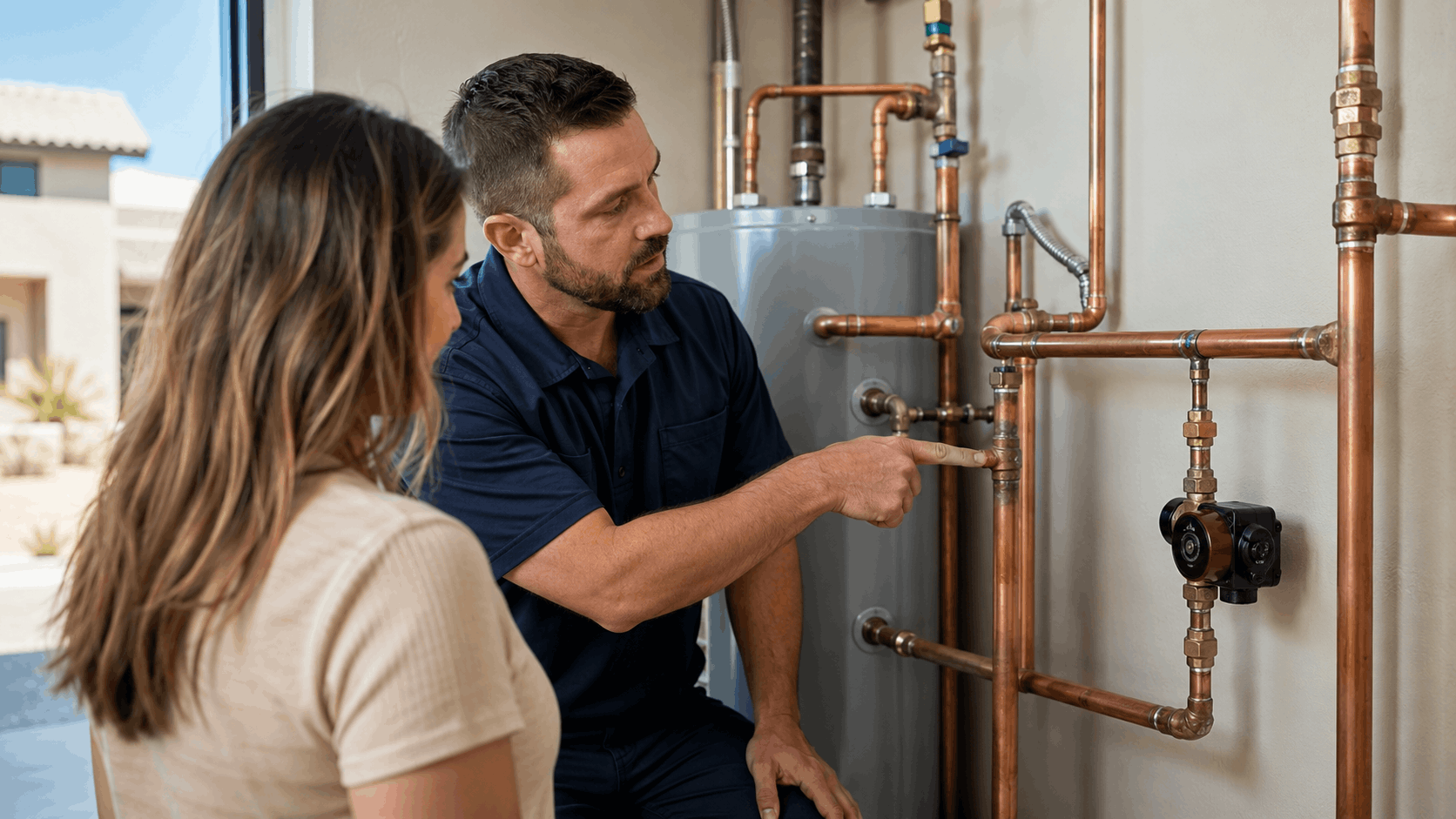
How the Three Factors Work Together
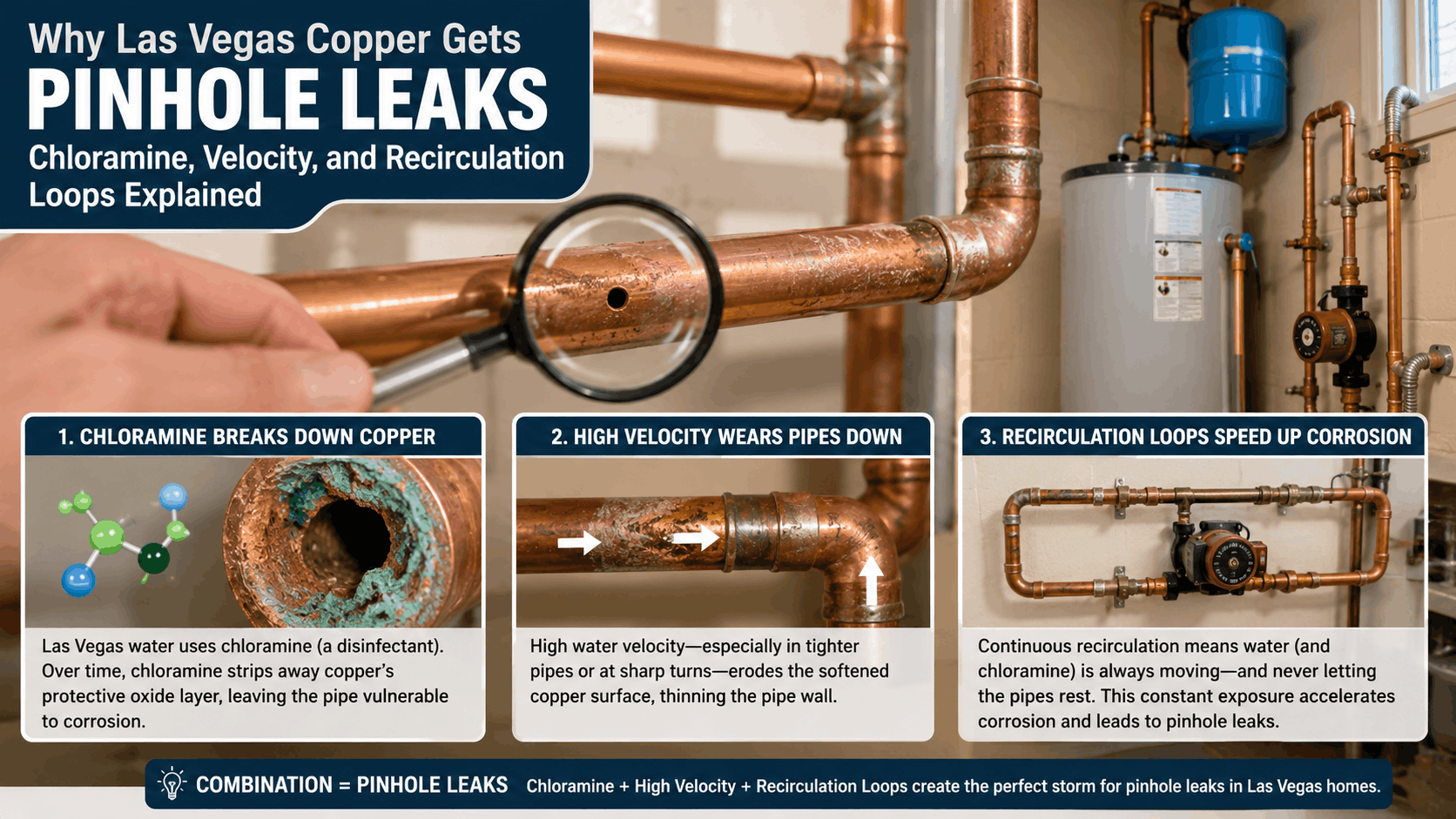
Chloramine, velocity, and recirculation each damage copper on their own. The real problem in the valley is that they rarely act alone.
These combined causes stack on top of each other and create a perfect storm for copper failure. A home might handle one of them for decades, but all three together shorten pipe life dramatically.
Seeing these compounding factors as a team explains why local copper fails faster than the same pipe would in a milder climate with different water.
A Typical Failure Timeline in a Valley Home
Picture a home built with copper 12 years ago somewhere in the central valley. For the first several years, everything runs fine and nobody thinks about the pipes.
Around year 8, the chloramine has thinned the protective layer, hard water scale has left rough spots, and the recirculation loop has been running the whole time. Small pits have formed but not broken through yet. This is a normal part of copper aging under local conditions.
By years 10 to 15, the first pinhole appears, usually on a hot line or at an elbow. The pipe lifespan here often lands shorter than the 30 to 40 years copper is supposed to reach elsewhere.
Once that first leak shows up, the leak timeline tends to speed up. The conditions that caused it are still present, so more leaks follow.
Why Repiping One Section Rarely Solves It
When a homeowner gets their first pinhole leak, a spot repair feels like the obvious answer. Fix the one bad spot and move on. The trouble is that the whole system faced the same water, pressure, and heat.
If one section corroded through, the pipe right next to it is usually close behind. That is why the repair vs repipe question matters so much here. A single patch often just buys a little time.
We see recurring leaks all the time where a home had one fix, then another a few months later, then another. Each spot repair costs money and opens a wall, and the total quickly passes what a full repipe would have run.
For homes with the local trifecta of conditions, a piecemeal approach rarely wins. Looking at the system as a whole leads to a better long-term decision.
Reading a Home's Risk Profile
Before we recommend anything, our team builds a risk assessment for the home. We look at how old the copper is, how the water pressure tests, and how the recirculation loop is set up.
A pipe inspection tells us where corrosion is already showing and which lines are worst. Cutting a small sample of pipe can reveal how thin the walls have gotten inside.
A water pressure test shows whether high pressure is driving velocity past safe limits. If the number is high and there is no working PRV, that is a clear risk factor we can fix.
Putting pipe age, pressure, and loop design together paints an honest picture. That picture guides whether a home needs a repair, a partial repipe, or a full replacement.
Need Help in Las Vegas?
Active Plumbing serves Las Vegas and all of Las Vegas Valley.
Finding and Confirming a Pinhole Leak
Because pinhole leaks hide behind walls and under slabs, finding them fast keeps damage down. The sooner a hidden leak is located, the less drywall, framing, and flooring gets ruined.
Leak detection is part detective work and part technology. There are simple checks a homeowner can do and precise tools we bring for the hard-to-find ones.
Slab leaks in particular need care, since the pipe runs under concrete where you cannot see or hear it easily.
Water Meter and Pressure Tests You Can Do at Home
A water meter test is the easiest DIY leak check. Turn off every faucet and water-using appliance, then look at the meter. If the dial or digits keep moving, water is going somewhere it should not.
For a cleaner reading, note the meter number, wait an hour with no water use, and check it again. Any change points to a leak somewhere in the system.
A pressure test adds another clue. A simple gauge that screws onto a hose bib shows your home's pressure, and a reading that climbs too high tells you velocity may be a problem.
These checks will not tell you exactly where the leak is, but they confirm whether one exists. That gives you solid reason to call for a professional locate before more damage happens.
Acoustic and Thermal Leak Detection Tools
Once we know a leak exists, we pinpoint it without tearing open every wall. Acoustic leak detection uses sensitive microphones that pick up the faint hiss of water escaping a pressurized pipe.
By moving the sensor along a wall or floor, we can zero in on the loudest spot, which marks the leak. This is a fast way to find a leak location that would otherwise be a guessing game.
Thermal imaging reads temperature differences on surfaces. A hot water leak warms the drywall or floor around it, and the camera shows that heat as a bright patch, which helps confirm the spot.
Together these tools let us open a small, targeted section instead of a whole wall. Our electronic leak detection service handles exactly this kind of work across the valley.
Checking for Hidden Damage and Mold
Even a slow leak leaves damage behind. Water soaks into drywall, wood framing, and insulation, weakening the material and staining surfaces.
People assume the desert is too dry for mold, but a slow leak creates a damp pocket inside a wall that stays wet. That trapped moisture can grow mold even when the air outside is bone dry.
When we find a leak, we also check the surrounding area for soft drywall, warped baseboards, and musty smells. Water damage that spreads unchecked can turn a small repair into a big remodel.
Catching and drying the affected area early protects both the home and the family's air quality. A whole-home leak detection setup can flag these problems before they get that far, which is why we install whole home leak detection systems.

Repair and Repipe Options for Local Homes
Once a pinhole leak is confirmed, homeowners have choices. The right one depends on the age of the pipe, how many leaks have shown up, and the conditions in the home.
Options range from a quick spot repair to a full repipe in copper or PEX. Here is how they compare:
- Spot repair: fastest and cheapest, but only fixes one spot.
- PEX repipe: replaces the system with flexible plastic pipe that resists local water.
- Copper repipe: keeps copper but corrects sizing and velocity.
- Partial repipe: replaces the worst runs, often the hot lines first.
The best choice balances cost today against the risk of more leaks down the road.
Spot Repairs and When They Make Sense
A spot repair replaces just the failed section of pipe. For a young system with a single leak from an odd cause, a copper patch can be a fine, low-cost fix.
If the home is only a few years old and the leak came from a bad fitting rather than system-wide corrosion, one fix may hold for a long time. In that case there is no reason to replace everything.
But when the pipe is aging and the leak came from pitting, a spot repair is a short-term fix at best. The pipe on either side faces the same corrosion and often leaks next.
We are honest with homeowners about which situation they are in. Spending on a patch that will fail again in months rarely makes sense.
PEX Repiping and Why Many Valley Homes Switch
PEX is a flexible plastic pipe that has become a popular replacement for copper in our area. The biggest reason is chloramine resistance. PEX does not corrode the way copper does when exposed to treated water.
PEX also handles velocity better because it is smooth inside and does not suffer the same erosion corrosion at bends. It flexes around corners, so there are fewer fittings to fail.
For a valley home facing all three of our problem factors, a PEX repipe often solves the root cause rather than treating symptoms. Pipe replacement with PEX tends to outlast copper under local conditions.
It installs faster too, since the flexible runs need fewer joints and less wall opening. Many homeowners choose PEX once they understand why their copper failed in the first place.
Sticking With Copper Done Right
Some homeowners prefer copper, and that is a fair choice when it is installed correctly. A new copper repipe can last if the system is sized and set up to avoid the problems that killed the old one.
Proper pipe sizing keeps water velocity in the safe range so erosion corrosion slows down. Pairing that with a working PRV to control pressure removes a major cause of wear.
A proper install also means smooth, well-made joints and thoughtful routing that avoids unnecessary sharp turns. Fewer trouble spots means fewer future leaks.
When copper is done right and paired with water treatment, it can reach its full service life even here. The old system likely failed because of sizing and conditions, not because copper itself is a bad material.
What a Repipe Costs and How Long It Takes
A whole home repipe in the Las Vegas area generally runs a few thousand dollars up into the higher single-digit thousands, depending on size and material. PEX usually costs less than copper for the same home.
Repipe cost depends on the number of bathrooms, the home's square footage, how accessible the pipes are, and whether it is single or two-story. A larger custom home naturally costs more than a compact single-story.
The repipe timeline for most homes is a few days from start to finish. That includes running new lines, connecting fixtures, and patching the access holes.
We give a firm quote after inspecting the home so there are no surprises. Reach out through our contact page to set up an assessment.
Preventing Future Pinhole Leaks
Whether you repipe or not, a few smart steps protect your plumbing from the local water and system conditions. Leak prevention comes down to controlling pressure, treating the water, managing recirculation, and keeping an eye on things.
None of these steps are complicated on their own. Together they add years to pipe life and cut the odds of waking up to a stained ceiling.
Here is where we focus when we help a homeowner protect their pipes.
Dialing In Pressure and Velocity
The first step is getting the pressure right. A pressure regulator set to a safe range takes the strain off the whole system and slows the water down.
We check the PRV setting and adjust it to keep household pressure around 50 to 60 psi. That range gives good flow at the tap without pushing velocity into damaging territory.
Velocity control also means fixing undersized runs that force water to move too fast. Where a line is a size too small for its job, upsizing it eases the wear.
Getting pressure and pipe size right is often the single most effective thing a homeowner can do for copper. It addresses the mechanical wear that chemistry alone cannot explain.
Whole-House Filtration and Softening
Treating the water before it reaches the pipes attacks the chemical side of the problem. A water softener pulls out the calcium and magnesium that cause scale and rough spots.
A whole house filter can reduce chloramine, easing the chemical attack on copper. Less chloramine reaching the pipe means the protective layer lasts longer. You can compare treatment approaches through our water treatment services.
Softer, filtered water also feels better and is kinder to fixtures and appliances throughout the home. The benefits reach past the pipes to water heaters and faucets.
For homes that plan to keep copper, water treatment is one of the strongest defenses available. It buffers the exact conditions that make local water so hard on pipes.
Smarter Recirculation Settings
If a home has a recirculation loop, adjusting how it runs makes a real difference. Cutting the constant flow gives copper long stretches of rest.
A recirculation timer limits the pump to the hours you actually use hot water. Setting it to run mornings and evenings instead of around the clock can roughly halve the wear.
Upgrading to a demand pump goes even further by only running when triggered before use. The right pump settings preserve the convenience while protecting the pipe.
For homes that have already lost a hot line to a pinhole leak, changing the recirculation strategy should be near the top of the list. It targets one of the biggest local causes head on.
Routine Inspections That Catch Problems Early
The last piece is keeping watch. A regular plumbing inspection catches small problems before they turn into leaks inside a wall.
We suggest a check every couple of years for most homes, and yearly for older systems or homes with a recirculation loop. Preventive maintenance is far cheaper than water damage repair.
Between visits, homeowners can run their own leak check with the water meter and a pressure gauge. A quick monthly glance at the meter takes seconds and can flag a problem early.
Staying ahead of leaks is always cheaper and less stressful than reacting to one. A little routine attention keeps small issues from becoming ceiling stains.
Need Help in Las Vegas?
Active Plumbing serves Las Vegas and all of Las Vegas Valley.
Final Thoughts
Pinhole leaks in the valley are not bad luck. They come from a specific mix of chloramine in the water, fast-moving flow, and recirculation loops that never stop.
Those three factors work together to wear copper from the inside out, which is why a single spot repair often leads to more leaks nearby. The lasting fixes involve controlling pressure, treating the water, adjusting recirculation, and choosing the right pipe for local conditions.
If you have spotted a stain, a green fitting, or a climbing water bill, do not wait for the drywall to sag. Our team knows valley water and valley homes, from Summerlin to Henderson to North Las Vegas. Call Active Plumbing or reach out through our contact page for an inspection and a straight answer about your pipes.
Frequently Asked Questions
What causes pinhole leaks in Las Vegas copper pipes?
Three local factors drive most pinhole leak causes here. Chloramine in the treated water slowly corrodes the inside of copper pipes. High water velocity from strong pressure and undersized lines scours the metal at bends and fittings. Hot water recirculation loops keep water moving nonstop, which speeds up both. When all three combine, copper wears through from the inside out and springs a tiny hole.
How long do copper pipes last in the Las Vegas Valley?
Copper can last 30 to 40 years in mild conditions, but the copper pipe lifespan in the valley often runs shorter, around 15 to 25 years. Some hot lines on recirculation loops fail even sooner. Chloramine, hard water scale, high velocity, and constant hot flow all shorten it. Water treatment, correct pressure, and smart recirculation settings can push the life closer to the higher end.
Is chloramine in the local water bad for my plumbing?
Chloramine keeps drinking water safe, but it is hard on copper. The chloramine effects include slowly stripping the protective film inside the pipe, which opens the metal to pitting corrosion. Over years this leads to pinhole leaks. A whole-house filter that reduces chloramine eases the attack and helps copper last longer. Homes planning to keep copper often add filtration to protect the pipes.
Can I just repair one pinhole leak or do I need a full repipe?
The repair or repipe choice depends on the pipe's age and the cause. A young system with one leak from a bad fitting can get a spot repair and be fine. But when an older pipe leaks from corrosion, the rest of the system faces the same conditions and more leaks usually follow. If you have had repeat leaks, a full repipe is often the cheaper long-term fix.
Does a recirculation pump really wear out my pipes faster?
Yes. A recirculation pump wear problem comes from constant hot water flow through the loop. Moving water and heat together speed up both erosion and chemical corrosion inside copper. Hot recirculation lines often fail years before the cold lines in the same home. Switching to a timer pump or a demand pump cuts the run time way down and extends the pipe life while keeping quick hot water.
Is PEX a better choice than copper in Las Vegas?
For local conditions, PEX vs copper often favors PEX. PEX does not corrode from chloramine and handles high velocity better because it is smooth inside with fewer fittings. That makes it a strong match for valley water. Copper can still work well when it is properly sized, paired with a good PRV, and backed by water treatment. Both are solid choices, but PEX tends to sidestep the exact problems that cause pinhole leaks here.
How much does whole-home repiping cost here?
The repipe cost in Las Vegas usually falls in the several thousand dollar range and can climb into higher single-digit thousands for larger homes. PEX is generally cheaper than copper for the same house. Price depends on square footage, number of bathrooms, one or two stories, and how accessible the pipes are. Most repipes finish in a few days. We give a firm quote after inspecting the home so you know the full number.
How can I tell if I have a hidden leak in my walls?
Watch for hidden leak signs like a water bill that keeps rising with no change in use. Look for yellow or brown stains on ceilings and walls, especially near bathrooms. Green or blue copper stains around fittings point to active corrosion. A musty smell, soft drywall, or warm spots on a slab floor are clues too. If you hear running water when everything is off, call for a leak locate.
Will a water softener stop pinhole leaks?
A water softener helps but does not fix everything on its own. Softening removes calcium and magnesium, which cuts scale and the rough spots where corrosion starts. That slows one cause of leaks. But a softener does not remove chloramine or lower high velocity, so water softener leaks protection is only partial. Pairing softening with a chloramine filter, correct pressure, and smart recirculation settings gives the fullest protection for copper.
What water pressure is safe for copper pipes?
A safe water pressure range for most homes is around 50 to 60 psi. Above 80 psi puts real strain on copper and drives velocity high enough to scour the pipe walls. Street pressure in parts of the valley can run higher than that, so a working pressure reducing valve matters. Checking your pressure with a simple gauge and setting the PRV correctly is one of the best ways to protect copper.
A
Licensed plumber professionals serving Las Vegas and Las Vegas Valley.
Licensed in Nevada · License #0047021
Last updated on
Why trust Active Plumbing?
Founded in 1991, Active Plumbing is a licensed and insured plumber serving Las Vegas and Las Vegas Valley. All content is reviewed by our licensed technicians.

Need Help in Las Vegas?
Active Plumbing serves Las Vegas and all of Las Vegas Valley.
Related Articles

Tips & Advice
5 Top Reasons Slab Leaks Happen In Las Vegas Homes
Discover the 5 main reasons slab leaks occur in Las Vegas homes, from desert soil movement to hard water damage, plus prevention tips and repair options from local experts.

Tips & Advice
Best Leak Detection Method in Las Vegas (Slab, Yard, Wall, and Ceiling Leaks)
Discover the most effective leak detection methods for Las Vegas homes including slab, yard, wall, and ceiling leaks. Professional techniques that save money and prevent damage.
Tips & Advice
Pinhole Leak in Copper in a Las Vegas Wall - Why Our Water Chemistry Eats Copper and What to Do Today
A pinhole leak in copper starts small but spreads fast in Las Vegas. Learn why local water eats copper, the warning signs, and what to do today.