What a Sewer Scope Really Shows - Reading Your Las Vegas Inspection Footage Like a Pro
Key Takeaways
- A sewer scope records the inside of your main line but cannot show soil depth or damage that has not broken through the pipe wall.
- Healthy pipes show smooth walls and steady flow, while standing water, roots, cracks, and buildup signal problems worth noting.
- The footage counter tells you exactly how far a defect sits from the cleanout, which is key for planning repairs and assigning responsibility.
- Older Las Vegas neighborhoods like Huntridge, Paradise Palms, and the Historic Westside often have aging clay or cast iron lines that need a scope before purchase.
- Hard water from Lake Mead leaves mineral scale, while desert soil movement causes bellies, cracks, and offset joints across the valley.
- Repair options range from hydro jetting to trenchless lining and full excavation, with larger jobs requiring a Clark County permit.
- Always ask for the problem location, the recommended repair method, and a copy of your inspection video.
In This Article
A homebuyer near Summerlin called us last spring, frustrated and a little scared. Her inspector had handed her a USB drive with grainy sewer scope video, and she could not tell if the dark blobs on screen meant a five-figure repair or nothing at all. She almost walked away from a house she loved over footage she did not know how to read.
That happens more than people think. A sewer scope is one of the smartest moves a Las Vegas buyer can make, but the video only helps if you understand what you are looking at. Smooth walls, standing water, root balls, cracks - each one tells a story, and each one carries a different price tag.
What a Sewer Scope Camera Actually Does?
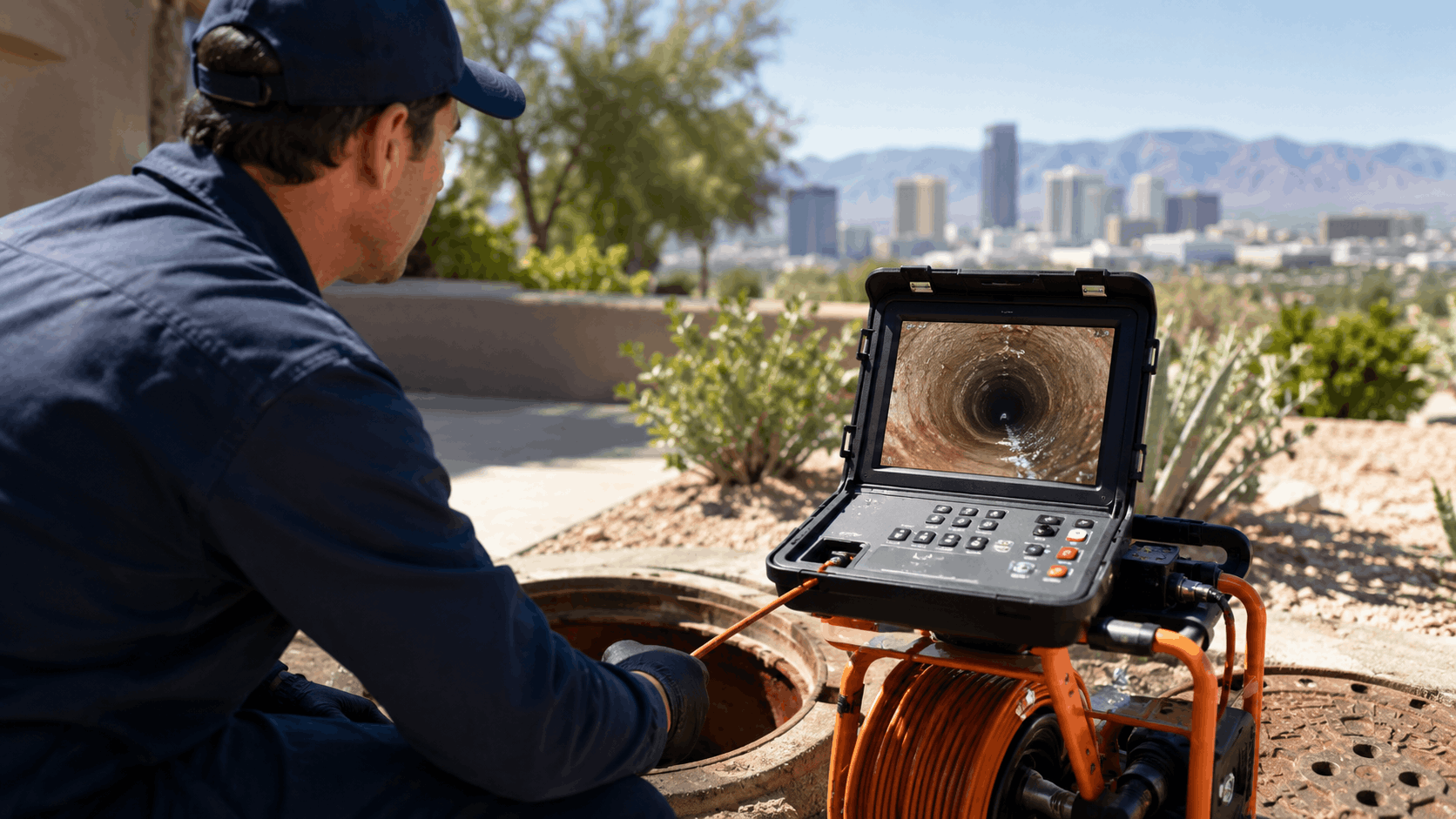
A sewer scope is a plumbing tool that sends a small waterproof camera down your home's drain line. It records live video as it moves, showing the inside of the pipe on a screen. That footage is the difference between guessing and knowing what shape your sewer is in.
Before anyone tries to read the results, it helps to know what the equipment can and cannot see. A camera inspection is powerful, but it has clear limits. Here is what a scope actually captures as it travels through the main line:
- The inside surface of the pipe - cracks, scale, roots, and buildup
- Water flow and pooling - where waste moves freely and where it stalls
- Distance readings - how far the camera has traveled from the cleanout
- Pipe material and joints - clay, cast iron, or plastic and how they connect
How the Camera Travels Through Your Pipes
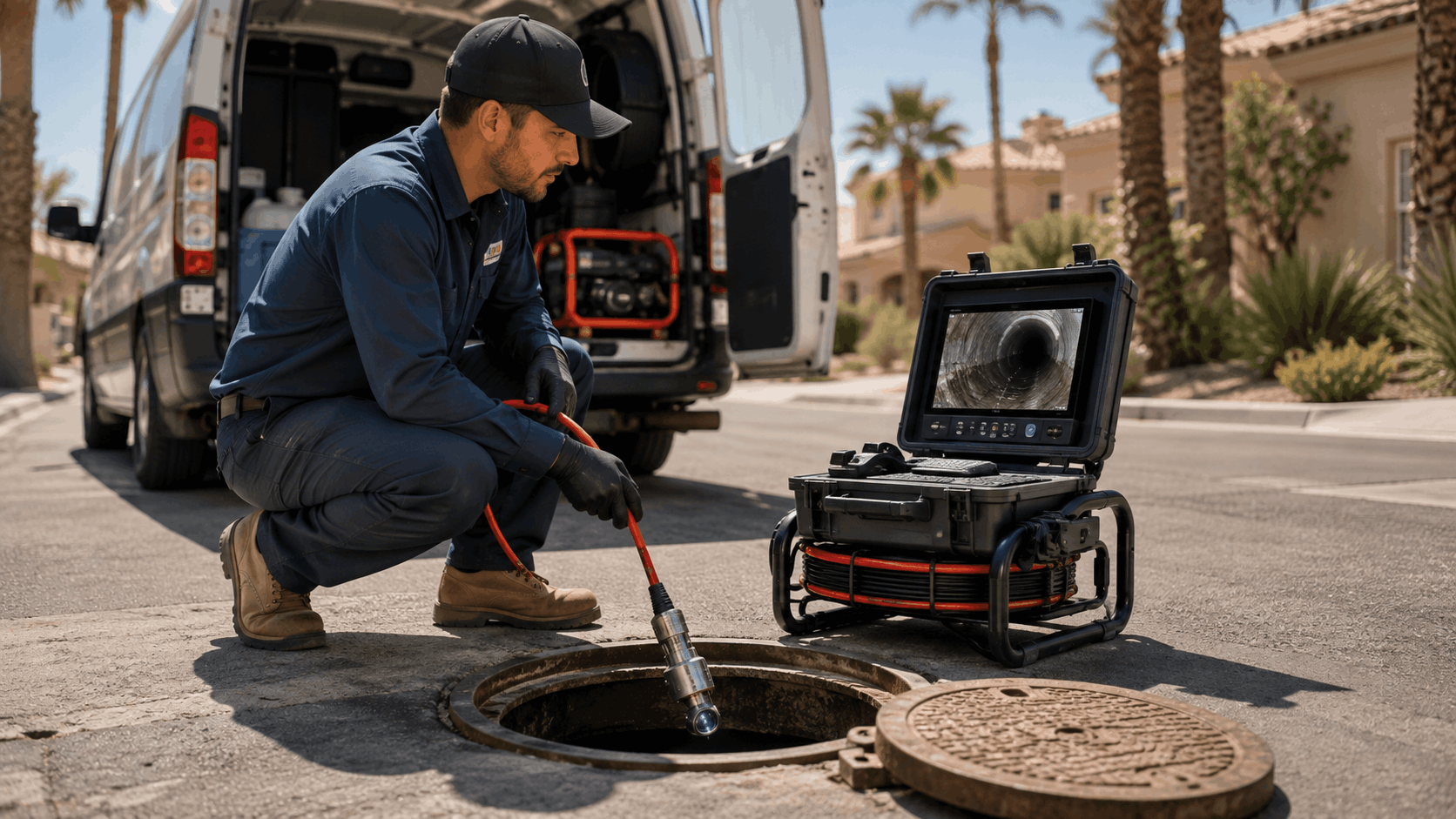
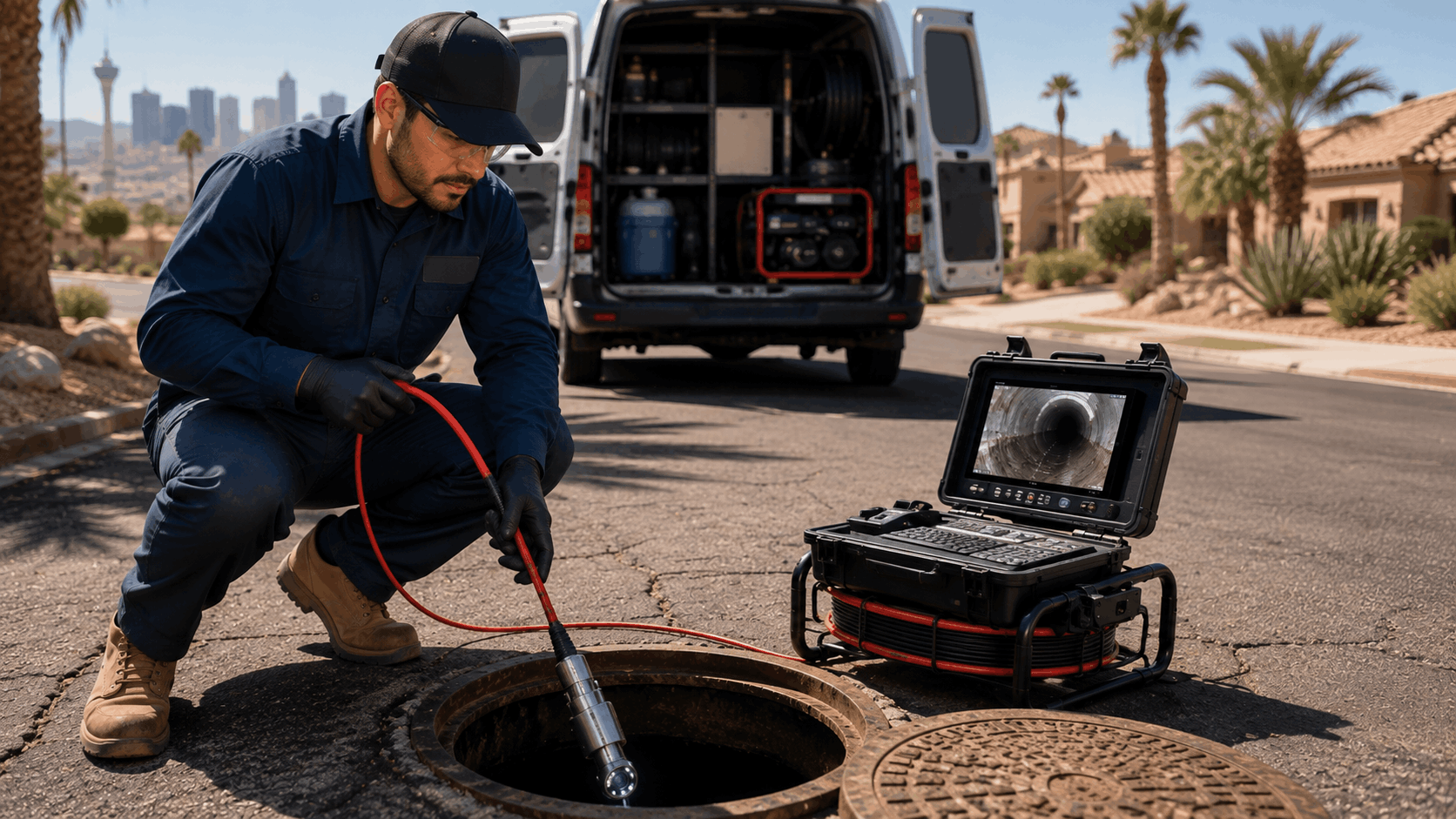
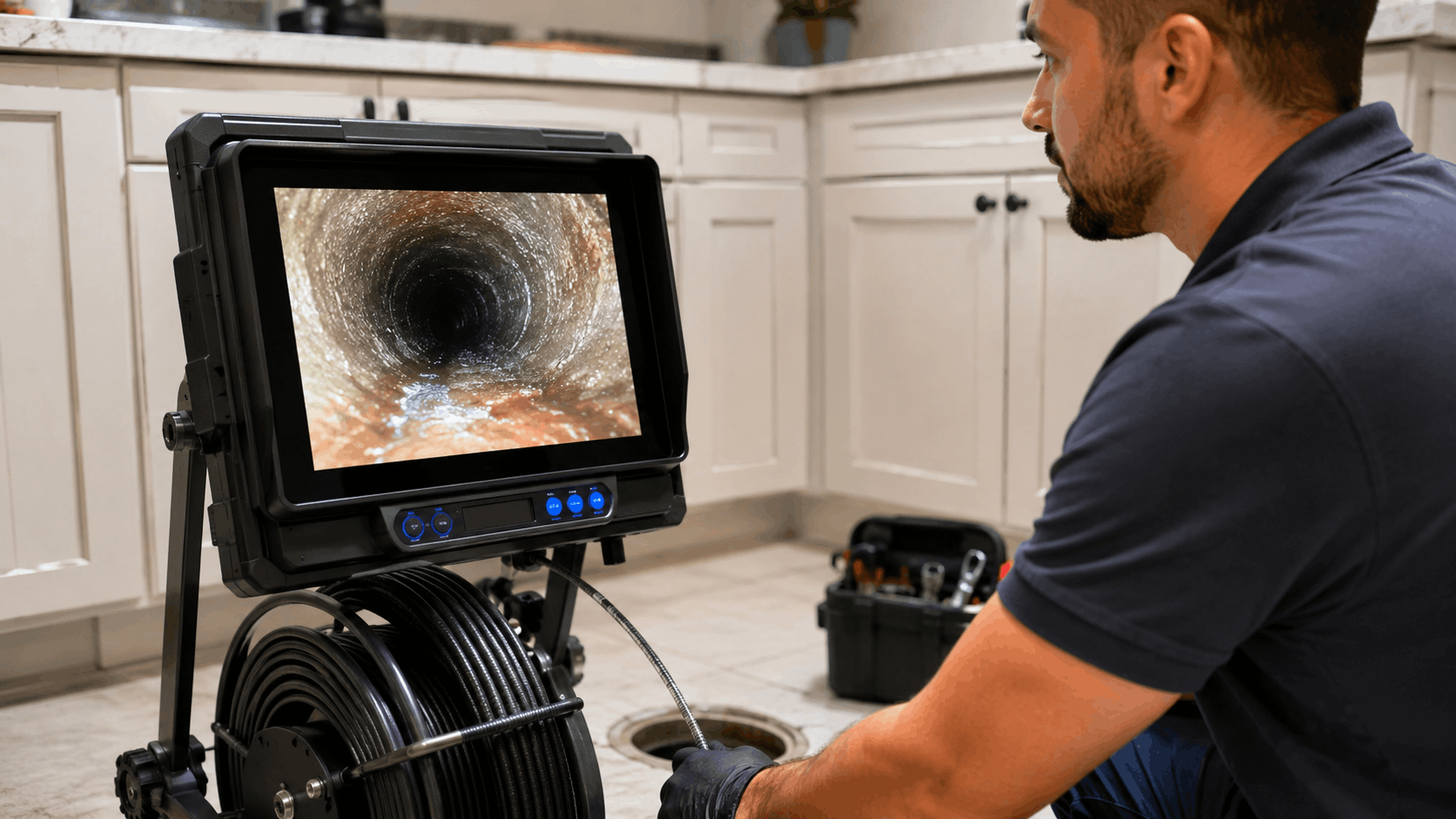
The heart of the tool is a flexible cable, sometimes called a push rod, with a small camera head on the tip. Our technician feeds this cable into the sewer line through an access point called a cleanout, which is usually a capped pipe near the house or in the yard.
As the cable pushes forward, the camera head sends video back to a monitor in real time. The operator watches the screen and controls the speed, slowing down at joints or trouble spots. The cable is stiff enough to push through bends but flexible enough to follow the pipe's shape.
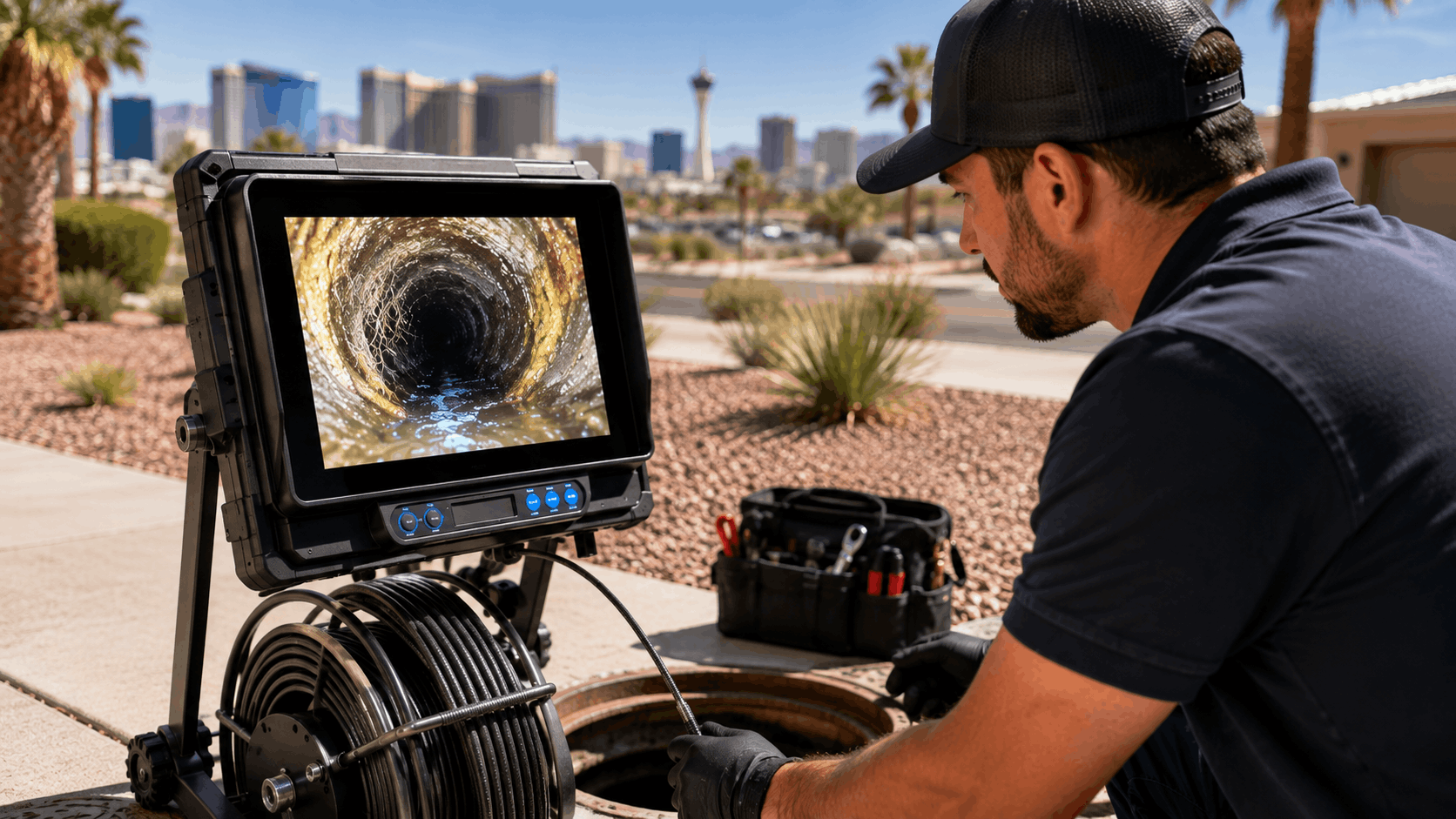
The camera travels from the cleanout, through the lateral line under the yard, and toward the city connection at the street. In most Las Vegas homes, that run is anywhere from 40 to over 100 feet. Along the way, the head lights up the pipe so the walls show clearly on video, even underground where no natural light reaches.
A good operator narrates as they go, calling out distance and anything unusual. That running commentary is part of why our sewer camera inspection service gives homeowners so much more confidence than a raw file with no context.
What the Footage Records and What It Misses
The footage shows the pipe interior in detail. You can see the texture of the walls, the color of buildup, and the shape of any cracks or offsets. If roots have pushed through a joint, they show up clearly on the video.
What the scope does not show is the world outside the pipe. It cannot tell you the exact soil depth above the line without a separate locator tool. It also cannot see through the pipe wall to spot damage that has not broken through to the inside yet.
These limitations matter when planning a repair. A camera might show a belly full of standing water, but it cannot measure how deep the pipe sits or what utilities run nearby. That is why a scope is a starting point, not the final word on every detail.
Knowing these gaps keeps expectations realistic. The video is honest about the pipe interior, but a full repair plan often needs a locator, a depth reading, and sometimes a second look before anyone starts digging.
Why Las Vegas Homes Need a Scope Before Purchase
A home purchase is one of the biggest checks most people ever write. A sewer scope protects that investment by revealing problems a standard inspection never catches, since the main line is buried and invisible from above.
Older neighborhoods carry the most risk. Homes in Huntridge and John S. Park were often built with clay or cast iron lines that have had decades to crack, corrode, and collect roots. A buyer who skips the scope in these areas is gambling on pipes that could be near the end of their life.
We have scoped hundreds of older properties across the valley, and the older pipes tell the same story again and again. Small offsets, root intrusion, and mineral scale are common in homes built before the 1970s. None of it shows up on the surface, which is exactly why the camera matters.
Even newer homes benefit from a baseline scope. It gives a buyer a record of the pipe's condition on day one, which comes in handy for future comparisons or resale down the road.
Get Your Quote
Tell us what's going on and we'll get back to you. We're open 24/7.
Reading the Screen: The Basics Every Homeowner Should Know
Reading footage does not require a plumbing license. Once you know what a healthy pipe looks like, the problems start to stand out on their own. The trick is watching for changes in color, shape, and how the water moves.
Think of the sewer video like a road trip through your pipe. A smooth, open road is good. Potholes, standing water, and roadblocks are the parts worth pausing on. Here is a simple framework any homeowner can use during an inspection.
What a Healthy Pipe Looks Like on Camera
A healthy pipe has smooth, even walls with no cracks or gaps. On screen, the surface looks consistent, and the camera moves forward without snagging or bouncing. The opening ahead stays round and clear.
Flow is another sign of good health. In a working line, water and waste move steadily away from the camera without pooling behind it. You should not see large puddles sitting in one spot as the camera passes through.
Color helps too. A clean plastic pipe often looks white or light gray inside, while an older but sound clay line looks reddish-brown but still smooth. As long as the walls are intact and the flow is steady, the pipe is doing its job.
Knowing this baseline makes everything else easier. Once you have seen what smooth walls and clear flow look like, anything that breaks that pattern jumps out on the screen right away.
Reading the Footage Counter and Distance Markers
Most sewer scopes display a footage counter on screen, usually a number in the corner of the video. This distance marker tells you how far the camera has traveled from the cleanout in feet. It is one of the most useful numbers in the whole inspection.
Say the operator spots roots at the 45-foot mark. That reading tells everyone exactly where the problem sits relative to the house and the property line. A plumber can use it to plan a repair without guessing where to dig.
The counter also helps separate the home's private line from the city's portion. In Las Vegas, the homeowner is generally responsible for the lateral up to the connection point, so knowing the distance to a defect clarifies who pays for the fix.
When you review your footage, jot down the distance for anything the operator flags. Locating a problem by distance is the first step in getting an accurate repair estimate later on.
Water Pooling and Sagging Sections
Standing water is one of the more common things buyers ask us about. When the camera reaches a spot where water sits still and covers part of the lens, that usually points to a low spot in the pipe called a belly.
A belly, or sag, forms when a section of pipe drops below the correct slope. Waste and water collect there instead of flowing on to the sewer. Over time, that trapped material can lead to slow drains and repeat clogs.
Not every puddle is a disaster. A small amount of water that the camera pushes through easily may be minor. A deep pool that the camera partly submerges into signals a more serious sag that traps waste and needs attention.
When you see standing water on your footage, note where it starts and how deep it looks. That detail helps our team judge whether the belly needs a repair now or just monitoring over time.
Why Blurry or Dark Footage Happens
Sometimes the video quality is just poor, and that has nothing to do with the pipe. Blurry footage often happens when the lens gets coated with grease, mud, or debris as it travels. A dirty lens can make a healthy pipe look alarming.
Dark footage usually means the light on the camera head is fighting heavy buildup or a lot of standing water. If the pipe is full of murky water, the camera cannot see the walls clearly, and the video turns cloudy and hard to read.
Fogging and reflection can also blur the image, especially in older pipes with rough surfaces. None of this means the inspection is worthless, but it does mean some sections may need a second pass to see clearly.
If large stretches of your footage are too dark or blurry to judge, it is fair to ask for a re-scope. A quick line cleaning followed by a fresh run often produces video you can actually trust.
Need Help in Las Vegas?
Active Plumbing serves Las Vegas and all of Las Vegas Valley.
Common Problems the Camera Reveals in Las Vegas Sewer Lines
After scoping homes from downtown to the far suburbs, we see the same sewer problems show up again and again. The valley's mix of old pipes, mature trees, and shifting desert soil creates a short list of usual suspects.
Here are a common types of pipe damage the camera reveals across Las Vegas, and what conditions cause each one:
- Root intrusion from trees near older clay lines
- Cracks and offsets from soil movement
- Mineral and grease buildup narrowing the pipe
- Bellied lines from settling ground
Root Intrusion From Mature Trees
Root intrusion is the number one problem we find in older parts of the valley. Tree roots search for moisture, and a slightly leaking joint in a clay pipe is exactly what they are looking for. Once a root finds that crack, it grows inside the pipe.
On camera, roots look like thin white or brown strands, sometimes forming a full mat that blocks the flow. In established areas near Charleston Boulevard and downtown, mature trees sit right over aging clay tile lines, which makes intrusion almost expected.
Clay pipe joints are the weak point because the old sealed connections loosen with age. As roots push in, they trap paper and waste, which leads to backups and slow drains. Left alone, the roots widen the crack and can eventually break the pipe apart.
Our hydro jetting and rooter service clears roots effectively, but the camera has to confirm how bad the intrusion is first. That footage tells us whether a cleaning solves it or the joint needs a real repair.
Cracks, Offsets, and Collapsed Sections
The desert ground under Las Vegas homes moves more than people realize. Soil expands, contracts, and settles with moisture and temperature swings. That shifting soil puts stress on rigid sewer pipes over the years.
On footage, a crack shows as a dark line running along or around the pipe wall. An offset joint appears as a ledge or step where two pipe sections no longer line up. The camera bumps or catches at that lip as it passes through.
A collapsed section is the worst case. The pipe wall caves in, and the camera simply cannot go any farther, showing a wall of debris or crushed material blocking the path. That usually means a full repair at that spot.
Offsets matter because they catch waste and let roots in. A minor offset might hold for years, but a major one that blocks half the pipe opening needs prompt attention before it fails completely.
Grease and Mineral Buildup
Las Vegas has famously hard water sourced largely from Lake Mead. That water carries a heavy load of minerals, and over time those minerals leave scale on the inside of pipes. On camera, mineral buildup looks like a rough, chalky crust narrowing the opening.
Grease adds to the problem, especially in kitchen lines. Cooking fats cool and stick to the pipe walls, then catch other debris. The result is a greasy layer that shrinks the flow path and traps everything that comes down the drain.
When scale and grease combine, the pipe opening can shrink to a fraction of its original size. Drains slow down, and clogs come back no matter how often you plunge them. The footage shows exactly how much the buildup has closed off the line.
Hard water is also why many valley homeowners consider a water softener installation. Reducing mineral content slows buildup not just in the sewer but throughout the whole plumbing system.
Bellied Lines From Settling Ground
A bellied line is a sag in the pipe where the ground beneath it has settled. Desert soil movement is a big cause here, since the earth under a slab or yard can shift and drop over the decades. When it does, the pipe follows and forms a low spot.
On footage, a belly shows up as standing water that does not drain away. The camera pushes into the puddle, and the water covers part of the lens. Waste settles in that dip instead of flowing to the city line.
Bellies cause slow drains and repeat clogs because solids pile up in the low section. The deeper the sag, the worse the problem gets. A shallow belly may only cause occasional trouble, while a deep one causes constant backups.
Fixing a belly usually means digging out and re-sloping that pipe section, since you cannot re-grade a sag from the inside. The footage helps confirm how long and how deep the low spot runs before any work begins.
Old Pipe Materials Found Under Las Vegas Homes
Las Vegas has housing from many eras, and the pipe material under a home usually matches its age. Learning to spot each type on camera helps you understand what repairs might cost and how long the line has left.
The three main materials you will see on footage are clay, cast iron, and plastic. Each looks different on video and each brings its own set of concerns for the sewer line below.
Clay Pipe in Pre-1970s Neighborhoods
Clay tile pipe was standard in homes built before the 1970s. On camera, it has a reddish-brown color and comes in short sections joined every few feet. Those frequent joints are where most clay pipe problems start.
Older sections like the Historic Westside and Paradise Palms are full of clay lines. In these historic homes, the joints have loosened over decades, opening the door to root intrusion and offsets. The clay itself can also crack under soil pressure.
Clay is durable when intact, but it is brittle. A shifting rock or a growing root can snap it. When the footage shows a clay line with multiple bad joints, spot repairs may not be enough, and lining or replacement often makes more sense.
If you are buying in one of these older neighborhoods, expect the scope to reveal at least some wear on a clay line. The question is whether it is minor and manageable or extensive enough to negotiate on price.
Cast Iron and Its Rust Problems
Cast iron was used in many mid-century Las Vegas homes, especially for interior drain lines. It is strong, but it corrodes from the inside out. On footage, corroded cast iron looks rough and scaled, with a dark, flaky surface instead of smooth walls.
As rust scale builds up, it forms rough ridges that catch debris and narrow the pipe. The camera reveals these bumpy, uneven walls clearly. Bad enough corrosion can leave the pipe wall thin and ready to fail.
In advanced cases, the bottom of a cast iron pipe rusts away entirely, a condition called channeling. The footage shows a trough worn along the pipe floor where the metal has eroded through. That is a sign the line is near the end of its life.
Cast iron rust cannot be reversed by cleaning. Once the corrosion is deep, replacement or lining is the path forward. The scope helps us judge how much of the run is still solid and how much needs work.
ABS and PVC in Newer Builds
Homes built from the 1980s onward mostly use plastic pipe, either ABS or PVC. On camera, these lines look smooth and light colored, white for PVC and black for ABS. The walls are clean and even, with long sections between joints.
Plastic resists corrosion and roots far better than clay or metal. That is why newer homes in Summerlin and Aliante tend to have fewer sewer issues. The glued joints stay tight, and the smooth interior keeps flow strong.
Plastic is not immune to trouble, though. Poor installation can create bellies, and heavy ground movement can still crack or offset a joint. But overall, a scope of a plastic line usually comes back cleaner than one of an older material.
If you are buying a home in a newer community like Summerlin West, a scope still makes sense. It confirms the plastic line was installed correctly and gives you a clean baseline for the future.
Need Help in Las Vegas?
Active Plumbing serves Las Vegas and all of Las Vegas Valley.
How to Tell a Real Problem From Normal Wear
Not every mark on your footage means a repair. Pipes age, and some wear is cosmetic. The skill is separating findings that need action from ones you can safely leave alone. That judgment keeps buyers from panicking over minor details.
Below are the three comparisons that come up most often, and how to tell the difference between a real problem and normal aging.
Minor Scale Versus Major Blockage
Light scale on the pipe walls is common in Las Vegas because of the hard water. A thin, rough coating that still leaves most of the pipe open is usually nothing to worry about. A routine cleaning handles it.
A major blockage is different. When scale, grease, or roots close off most of the pipe opening, water backs up and drains crawl. The footage shows a much smaller flow path, sometimes almost fully choked.
The test is how much open pipe remains. If the camera moves through easily and the opening looks mostly clear, minor scale is not urgent. If the opening is shrunk down to a small hole, that blockage needs real work.
A cleaning like hydro jetting clears buildup and restores flow in many cases. But if the footage shows the blockage is roots pushing through a broken joint, cleaning is only a temporary fix and the joint still needs repair.
Small Cracks That Still Function
Not every crack means the pipe is failing. A hairline crack that has not opened up or let in roots may function fine for years. On footage it shows as a thin line without any gap or displacement.
The concern is what the crack could become. Small cracks can widen with soil movement, and once they open, roots and water intrusion follow. A crack that is already letting in dirt or roots is on the path to failure.
Location matters too. A hairline crack in an otherwise solid plastic line is low risk. The same crack in a brittle clay pipe with other bad joints is a warning sign that the whole run is aging out.
For borderline cracks, monitoring is a reasonable choice. A follow-up scope in a year shows whether the crack is stable or growing. If it opens up or starts catching debris, that is the moment to plan a repair.
When Standing Water Is a Deal Breaker
Standing water from a belly is one of the trickier calls for a home buyer. A shallow puddle that the camera glides through may be a minor sag you can live with. A deep pool that submerges the lens is a bigger issue.
The depth and length of the belly decide how serious it is. A short, shallow dip might cause an occasional slow drain. A long, deep belly traps waste constantly and leads to repeat backups that never fully resolve.
For home buying, a severe belly is worth raising during negotiation. Re-sloping a buried pipe means excavation, which can run into thousands of dollars. That cost is fair to factor into an offer or ask the seller to address.
A minor belly is usually not a deal breaker on its own. The right move is to get an estimate for the fix, then decide whether to negotiate the price or simply keep an eye on it after closing.
Questions to Ask Your Plumber About the Footage
After an inspection, the right questions turn confusing video into a clear plan. A good plumber welcomes them. Here is a short script that helps any homeowner get straight answers about their inspection results.
Where Exactly Is the Problem Located?
Always ask for the exact location of any defect, both in distance and in position on the property. The footage counter gives the distance from the cleanout, which pinpoints where the problem sits underground.
Knowing the problem location shapes the entire repair plan. A defect ten feet from the house is easy to reach. One that sits under a driveway or a mature tree calls for a different approach and a different budget.
The distance reading also clarifies responsibility. If the issue falls within your lateral, it is your repair. If it is out at the city connection, the utility may share the cost. Pinning down the spot avoids surprises later.
Ask the plumber to mark the location on the surface if possible. A locator tool can trace the camera head and show the exact point above ground, which makes planning any repair far more precise.
What Repair Method Do You Recommend and Why?
Once a problem is found, ask which repair method fits and why. There is rarely just one option. The footage guides the choice between trenchless methods and traditional dig-and-replace.
Trenchless options like lining or bursting avoid tearing up the yard, which is ideal for finished landscaping or a driveway over the line. Dig-and-replace is sometimes the only choice for a fully collapsed section that cannot be relined.
A straight answer explains the tradeoffs. Trenchless work often costs more per foot but saves on restoration. Excavation may be cheaper in materials but pricier once you factor in replacing concrete or plants. The right pick depends on your specific line.
Our team explains exactly why we recommend a given method based on what the camera shows. For a full sewer line repair or replacement, the footage drives the plan from start to finish.
Can You Provide a Copy of the Video?
Always ask for a copy of the recorded video. A saved file is your own record of the pipe's condition on inspection day. It is worth keeping whether or not you need immediate work.
The video copy has real value for a home purchase. If you decide to get a second opinion, another plumber can review the same footage without a new inspection. It also gives you proof of condition if you negotiate with a seller.
For resale down the road, that recording shows the next buyer the state of the line when you owned it. It builds trust and can smooth a future sale, especially in older neighborhoods where sewer condition is a common concern.
Most reputable plumbers, including our team, provide the footage on request. If a company refuses to share the video, that is a reason to be cautious about the rest of their findings.
Need Help in Las Vegas?
Active Plumbing serves Las Vegas and all of Las Vegas Valley.
Repair Options After a Sewer Scope in Las Vegas
Once the footage reveals a problem, several repair paths exist. The right one depends on the damage, the pipe material, and the layout of your lot. Local conditions and Clark County permitting also play a part.
Here are the main sewer repair options homeowners choose after a scope, from simple cleaning to full replacement:
- Hydro jetting for buildup and roots
- Trenchless lining or bursting for damaged but intact runs
- Full excavation for collapsed pipe
- Local expert help from scope to finished repair
Hydro Jetting for Buildup and Roots
Hydro jetting uses high-pressure water to blast away grease, scale, and roots inside the pipe. A specialized nozzle sprays water forward and back, scouring the walls clean without any digging. It is one of the most effective ways to restore flow.
For root removal, jetting cuts through the intruding roots and flushes them out. It works well when the pipe itself is still sound and only the buildup is causing trouble. The footage confirms whether jetting alone will solve the issue.
Las Vegas homes with hard water scale respond well to jetting because it strips the mineral crust from the walls. After the cleaning, a follow-up scope shows how much open pipe was restored, which is satisfying to see on video.
Jetting is not a permanent fix if the underlying pipe is cracked or the joints are failing. In those cases it buys time, but a lasting repair still means addressing the damaged section itself.
Trenchless Pipe Lining and Bursting
Trenchless methods repair a line without a long trench across the yard. Pipe lining inserts a resin-soaked liner into the old pipe, then cures it in place to form a new pipe inside the old one. Pipe bursting pulls a new pipe through while breaking the old one apart.
These methods protect landscaping, driveways, and patios, which matters a lot on the tight lots common across the valley. Instead of digging up the whole run, the work happens through small access pits at each end.
Lining works well for pipes that are cracked or root-damaged but still hold their shape. Bursting suits lines that are collapsed or badly deteriorated and need to be replaced entirely. The footage helps decide which fits.
Trenchless repair often costs more upfront but saves the expense and mess of restoring a torn-up yard. For homes with mature landscaping or hardscape over the sewer line, that tradeoff usually pays off.
Full Excavation and When It Is Needed
Sometimes digging is the only real option. When the camera shows a fully collapsed pipe, a severe belly, or damage that trenchless methods cannot reach, excavation is the way to fix it properly.
Full excavation means opening the ground to expose the damaged section and replace it with new pipe. It allows re-sloping a bellied line and gives direct access to the worst failures. It is more disruptive but sometimes unavoidable.
In Clark County, sewer line work of this scale usually requires a permit. The permit process makes sure the repair meets code and passes inspection. Working with a licensed plumber keeps that paperwork correct and the job legal.
Excavation timelines vary with depth and lot access, but most residential jobs finish within a few days. The upside is a completely new, correctly sloped section that should last for decades.
How Active Plumbing Handles Las Vegas Sewer Work
Our process starts with the scope and never skips the explanation. We walk homeowners through the footage, point out what each finding means, and give the distance and location of every issue we see.
From there, we recommend the repair method that fits the specific line, whether that is jetting, trenchless lining, or excavation. We handle the Clark County permit steps and coordinate the whole job so nothing falls through the cracks.
We work across valley neighborhoods, from downtown clay lines to newer plastic runs in the suburbs. That daily experience across Las Vegas means we know how local soil, water, and housing age affect each repair.
Homeowners always get a copy of their footage and a clear estimate before any work begins. Our goal is a repair you understand and trust, not a surprise bill and a torn-up yard. Reach out through our drain and sewer services team to get started.
Final Thoughts
A sewer scope turns a hidden pipe into something you can actually see and judge. Once you know what smooth walls, standing water, roots, and cracks look like, the footage stops being a mystery.
For Las Vegas buyers, especially in older neighborhoods, that knowledge can protect thousands of dollars and a lot of stress. The camera shows the truth, and reading it well is what turns a scary video into a smart decision.
If you have footage you cannot make sense of, or you want a scope before you buy, our team is ready to help. Call Active Plumbing or reach out through our contact page for a straight answer about your sewer line.
Frequently Asked Questions
- How much does a sewer scope cost in Las Vegas?
- A standalone sewer scope in Las Vegas usually runs somewhere between 150 and 350 dollars, depending on access and line length. Homes with an easy cleanout cost less, while properties needing a roof access or extra time cost more. Some companies discount the scope when bundled with other work. Always confirm what the price includes, such as a recorded video copy and a written summary.
- How long does a sewer scope inspection take?
- Most sewer scope inspections take about 30 to 60 minutes from setup to finished footage. Locating the cleanout and prepping the equipment takes a few minutes, then the camera run itself is fairly quick. Longer lines or lines with heavy buildup take more time because the operator moves slowly to see clearly. A good technician also spends a few minutes explaining the footage afterward.
- Should I get a sewer scope before buying a home?
- Yes, a sewer scope is one of the smartest moves before buying, especially for a home in an older Las Vegas neighborhood. Standard inspections do not check the buried main line, so problems like roots, cracks, and bellies stay hidden. A scope reveals costly issues before you close, giving you room to negotiate or walk away. For pre-1970s homes, it is well worth the small cost.
- Can a sewer scope find the exact spot of a break?
- Yes, when paired with a locator tool the scope can mark the exact spot of a break. The camera head carries a signal that a locator picks up from above ground, showing both the position and the depth of the problem. This lets a plumber mark the surface right over the defect. That precision saves time and avoids unnecessary digging during repair.
- What does root intrusion look like on the video?
- Root intrusion shows up as thin white or brown strands growing into the pipe, often at a joint. In light cases you see a few hair-like roots. In heavy cases the roots form a dense mat or ball that blocks much of the opening and catches debris. On camera the flow slows or backs up where the roots grow. It is one of the easiest problems to spot once you know the look.
- Is standing water in the footage always a problem?
- Not always. A shallow film of water that the camera pushes through easily may be minor and nothing to worry about. Standing water becomes a problem when it forms a deep pool in a belly that traps waste and causes repeat clogs. The depth and length of the pooling tell the real story. A short, shallow dip is usually manageable, while a long, deep belly needs a repair.
- How often should Las Vegas homeowners scope their sewer line?
- For newer plastic lines with no tree cover, scoping every five to ten years is plenty. Older homes with clay or cast iron pipe, or lots with mature trees nearby, benefit from a scope every two to three years. If you have had backups or slow drains, more frequent checks make sense. Regular scopes catch small issues before they turn into costly emergencies.
- Can I get a copy of my inspection footage?
- Yes, you can and should request a copy of your inspection footage. A recorded video file gives you a record of the pipe's condition for your files, a future sale, or a second opinion. Most reputable plumbers provide it on a drive or as a digital file at no extra charge. If a company will not share the video, treat that as a warning sign.
- Does hard water in Las Vegas affect sewer lines?
- Yes, Las Vegas hard water sourced largely from Lake Mead carries heavy minerals that leave scale inside pipes over time. That buildup narrows the pipe opening and slows drainage, and it combines with grease to form stubborn clogs. Softening the water reduces how fast scale forms throughout the plumbing system. A scope often reveals just how much mineral buildup has accumulated in an older line.
- Do I need a permit for sewer line repair in Clark County?
- Larger sewer repairs and replacements in Clark County generally require a permit to make sure the work meets code. Minor cleaning like hydro jetting usually does not, but excavation and pipe replacement typically do. A licensed plumber handles the permit application and schedules the required inspection. Working with a licensed contractor keeps the job legal and protects you if you sell the home later.
Licensed plumbing professionals serving Las Vegas and Las Vegas Valley.
Licensed in Nevada · License #0047021
Last updated on
Why trust Active Plumbing?
Founded in 1991, Active Plumbing is a licensed and insured plumber serving Las Vegas and Las Vegas Valley. All content is reviewed by our licensed technicians.

Need Help in Las Vegas?
Active Plumbing serves Las Vegas and all of Las Vegas Valley.
Related Articles
Sewer Camera Inspection Cost in Las Vegas - and When It's Free With Service
Sewer camera inspection cost in Las Vegas runs $125-$400, and it is often free with a repair. See price factors, warning signs, and when the fee is waived.

Sewer Inspection in Scotch 80s and Rancho Circle: Estate Lots, Long Laterals, and Mature Trees
A local guide to sewer inspection in Scotch 80s and Rancho Circle, covering estate lots, long laterals, mature tree roots, camera scopes, and repair options in Las Vegas.
How to Choose Between Trenchless and Traditional Sewer Repair in Las Vegas
Trenchless or traditional sewer repair in Las Vegas? Compare costs, timelines, soil factors, and when each method fits your home from Active Plumbing.