Floor Drains in Las Vegas Garages and Laundry Rooms: Dry P-Traps and That Sewer Smell
Key Takeaways
- A sewer smell from a garage or laundry floor drain almost always means the P-trap has dried out and sewer gas is escaping.
- Las Vegas single-digit humidity and hot garages evaporate trap water fast, making dry traps far more common here than in wetter climates.
- The simple fix is pouring one to two quarts of water down the drain to refill the trap and restore the water seal.
- Adding a quarter cup of mineral oil floats on the water and slows evaporation, protecting rarely used drains for months.
- A monthly water routine and topping off traps before travel prevent most floor drain odors, especially in vacant snowbird homes.
- If the smell returns after refilling, the cause is likely a cracked trap, blocked vent, or sewer line crack that needs a plumber.
- A camera inspection pinpoints the real source, and trap primers permanently keep unused drains from drying out.
- Active Plumbing diagnoses and repairs floor drain odor across Summerlin, Henderson, North Las Vegas, Enterprise, and the whole valley.
In This Article
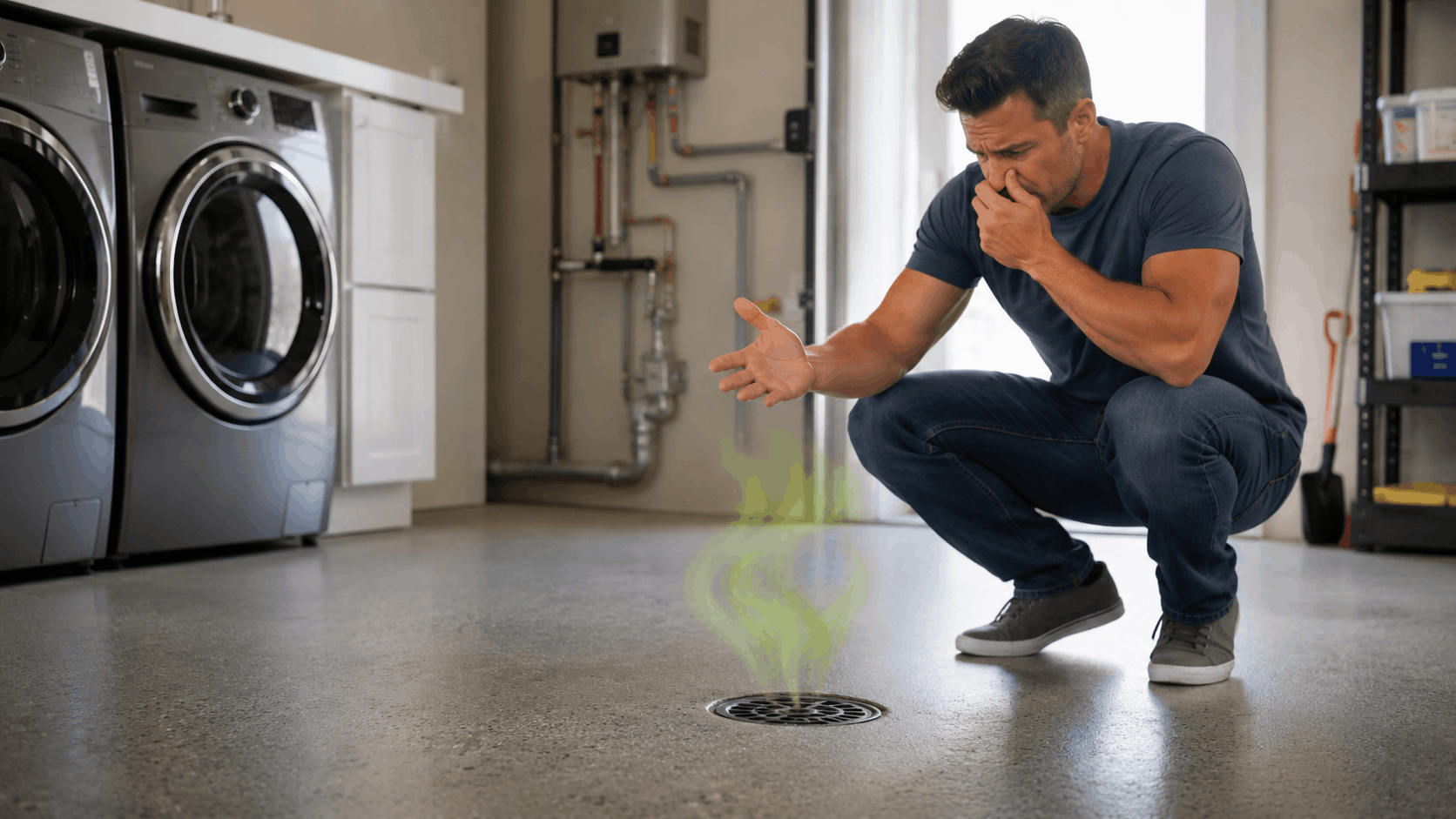
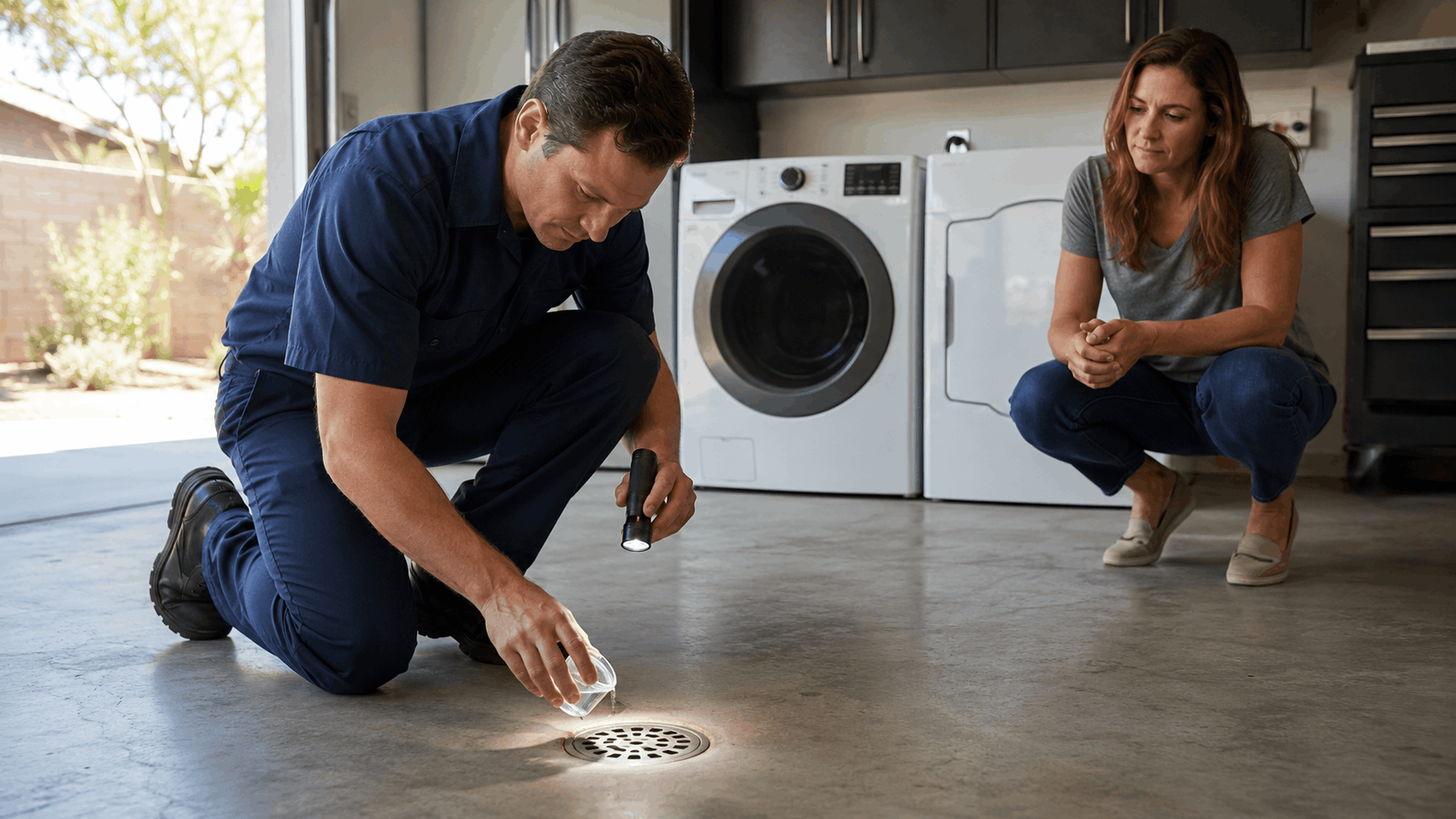
A homeowner in Summerlin West walks into the garage on a July morning to grab something from the freezer. Before the door even swings all the way open, a foul smell hits them - the unmistakable stink of raw sewage. They check the trash, sniff around the water heater, and find nothing. The source is right under their feet: the floor drain.
That sewer smell coming from a garage or laundry room floor drain is one of the more common calls our team gets during the hot months. The reason is almost always a dry P-trap, and the dry desert air here in the valley makes it happen far more often than it does in wetter parts of the country.
Why That Sewer Smell Shows Up in Garages and Laundry Rooms
A sewer smell in the house always feels alarming, but the cause is usually simple. Floor drains connect straight to the sewer system, and something has to keep that connection sealed. When the seal fails, the smell rolls right in.
Garages and laundry rooms are the top spots for floor drain odor in Las Vegas homes for a few clear reasons:
- These drains often go weeks or months without any water running through them
- Garages get extremely hot, which speeds up water loss
- Laundry rooms sometimes have a spare or backup drain that never gets used
- Both rooms are enclosed, so odors build up instead of drifting away
Once the smell shows up, it tends to get worse fast. Knowing what a floor drain actually does helps explain why.
What a Floor Drain Actually Does
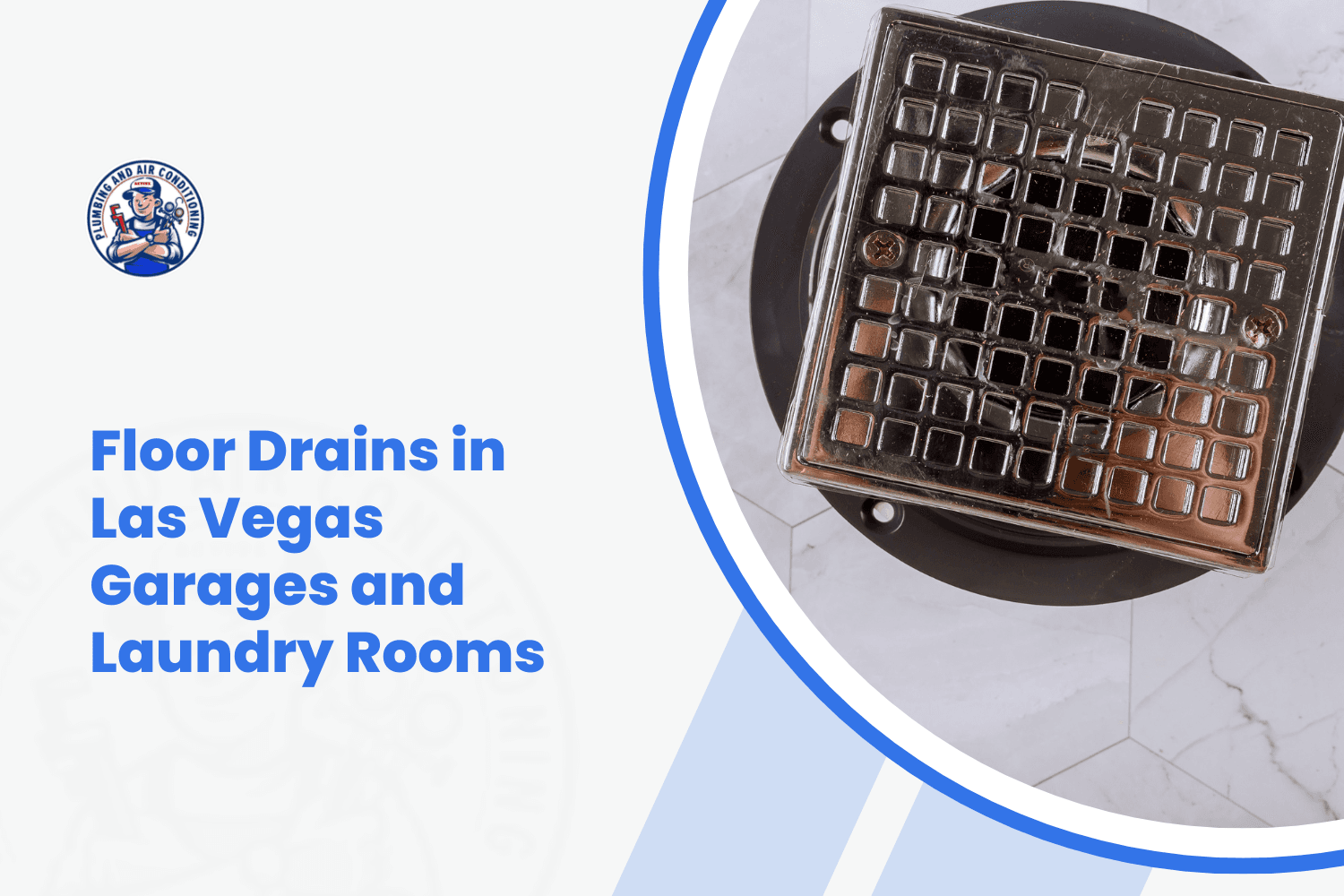
A floor drain is exactly what it sounds like - a drain set into the lowest point of the floor. In a garage, it catches water from car washing, rain that blows in, or a water heater that leaks. In a laundry room, it handles overflow from the washer or a burst supply line.
The whole point of the drain is to move that water safely away from the home. Water flows into the drain, travels through a pipe, and joins the main sewer or drainage line that carries it out to the municipal system. Without that path, a small leak could flood the room in a short time.
Underneath the drain grate sits a curved section of pipe called the trap. That curve is where the magic happens, because it holds a small pool of water at all times. That pool is the only thing standing between the room and the open sewer line below.
So a floor drain is not just a hole in the concrete. It is a two part system - the drainage path that carries water out, and the trap that keeps sewer gas from coming back in. When one half stops doing its job, the other half becomes a problem.
How Gas Travels Back Into the Room
The sewer line under a home is full of gas. Decomposing waste produces methane, hydrogen sulfide, and other gases that have to go somewhere. Normally these gases vent up through a pipe on the roof and never reach the living space.
The trap water blocks any gas from taking the shortcut up through the floor drain. As long as that water sits in the curve of the pipe, sewer gas cannot pass. It is a physical wall of water, plain and simple.
When the water disappears, the drain pipe becomes an open tunnel straight from the sewer to the room. Sewer gas rises through the drain and spreads across the floor and up into the air. That is the moment a homeowner walks in and gets hit with the smell.
The gas does not need much of an opening either. Even a partly dry trap lets enough through to stink up an entire garage. Once the seal breaks, the odor keeps flowing until the water is replaced.
Why It Smells Worse in Summer
Las Vegas heat turns a slow problem into a fast one. When garage temperatures climb past 100 degrees, the water in a trap evaporates much quicker than it would in a cool, humid climate. A trap that might last months elsewhere can dry out in weeks here.
Heat also makes sewer gas more active. Warm air holds and carries odor molecules more aggressively, so the same amount of gas smells stronger on a hot day. That is why the odor often seems worse in the afternoon than in the morning.
Evaporation is the real driver behind summer floor drain odor. The hotter and drier the air, the sooner the trap loses its seal. Combine a rarely used drain with a 115 degree garage and the water can be gone before anyone notices.
Many homeowners tell us the smell appeared out of nowhere in June or July. In almost every case, the trap had been slowly drying all spring and finally lost the last of its water once the heat arrived.
Get Your Quote
Tell us what's going on and we'll get back to you. We're open 24/7.
The Dry P-Trap Problem Explained
The dry P-trap is the heart of this whole issue. It is a simple piece of plumbing, but the way it fails causes a surprising amount of grief. Once a homeowner understands how the trap works, the smell stops being a mystery.
Here is a quick breakdown of how a healthy trap compares to a dry one:
| Condition | What Happens | Result |
|---|---|---|
| Full water seal | Water sits in the curve of the pipe | No odor, sewer gas blocked |
| Partly dry trap | Water level drops below the curve | Faint, on and off smell |
| Fully dry trap | No water left in the curve | Strong, constant sewer smell |
| Cracked trap | Water leaks out even after refilling | Smell returns after adding water |
Most floor drain odor traces back to one of these conditions. The good news is that a common one is also the easiest to fix.
What a P-Trap Is and How It Blocks Odor
A P-trap is the U-shaped bend of pipe you see under a sink, and the same design sits below a floor drain. The pipe dips down into a curve, then rises again on its way to the main line. That dip holds water.
The water caught in the curve is called the water seal. It usually amounts to a couple inches of standing water held permanently in the bend. Every time water runs down the drain, the old water pushes out and fresh water takes its place.
That standing water is the entire defense against sewer gas. Gas rising up the pipe hits the pool of water and cannot go any further. The trap seal is passive, so it works around the clock with no power and no moving parts.
Because it is so simple, a P-trap rarely breaks. The problem is almost never that the trap failed - it is that the water inside it left. When the seal water is gone, the trap is just an empty pipe.
How Desert Air Dries the Trap Out
In a humid climate, trap water barely evaporates because the surrounding air is already saturated. Las Vegas is the opposite. Our low humidity constantly pulls moisture out of any exposed water, including the little pool in a P-trap.
When humidity drops into the single digits, which happens often in the Mojave, the air acts like a sponge. It draws water vapor off the surface of the trap seal day and night. The lower the humidity, the sooner the water disappears.
Trap evaporation gets even worse when no water refills the trap. A drain that gets used daily keeps refilling itself, so evaporation never wins. A drain that sits idle loses water with nothing to replace it.
This is why the dry trap problem is so common across the valley and much rarer in places with regular rain and humidity. The desert air is quietly working against every unused trap in town.
Rarely Used Drains Are the Biggest Risk
The drains most likely to go dry are the ones nobody thinks about. A garage floor drain is the classic example. Many homeowners never intentionally pour water into it, so it only gets refilled by accident.
Spare laundry hookups are another common offender. Some homes have a second drain in the laundry room that was installed for a utility sink or backup washer that never got connected. That unused drain can sit empty for years.
Basement drains, rarely used guest bathrooms, and drains in detached casitas all carry the same risk. If water does not flow through it on a regular basis, the trap is a candidate to dry out. The longer the gap between uses, the higher the odds.
We see this constantly in homes across Enterprise and Spring Valley where a garage drain has never been touched since the house was built. The seal simply evaporated over time and left an open path for sewer gas.
Signs Your P-Trap Has Gone Dry
The most obvious sign is a rotten egg smell. Hydrogen sulfide in sewer gas produces that distinct sulfur odor, and it is the classic clue that a trap seal has failed. If a garage or laundry room smells like rotten eggs, the trap is the first suspect.
Another telltale sign is an odor that comes and goes. Air pressure changes can push gas up through a dry trap in waves, so the smell might be strong one hour and faint the next. That on and off pattern points to sewer gas rather than a stationary source like a spill.
Many homeowners notice the smell gets stronger right after the air conditioning runs. The AC changes air pressure inside the home and can pull sewer gas up through an open drain. If the odor spikes when the system kicks on, that is a strong sewer gas sign.
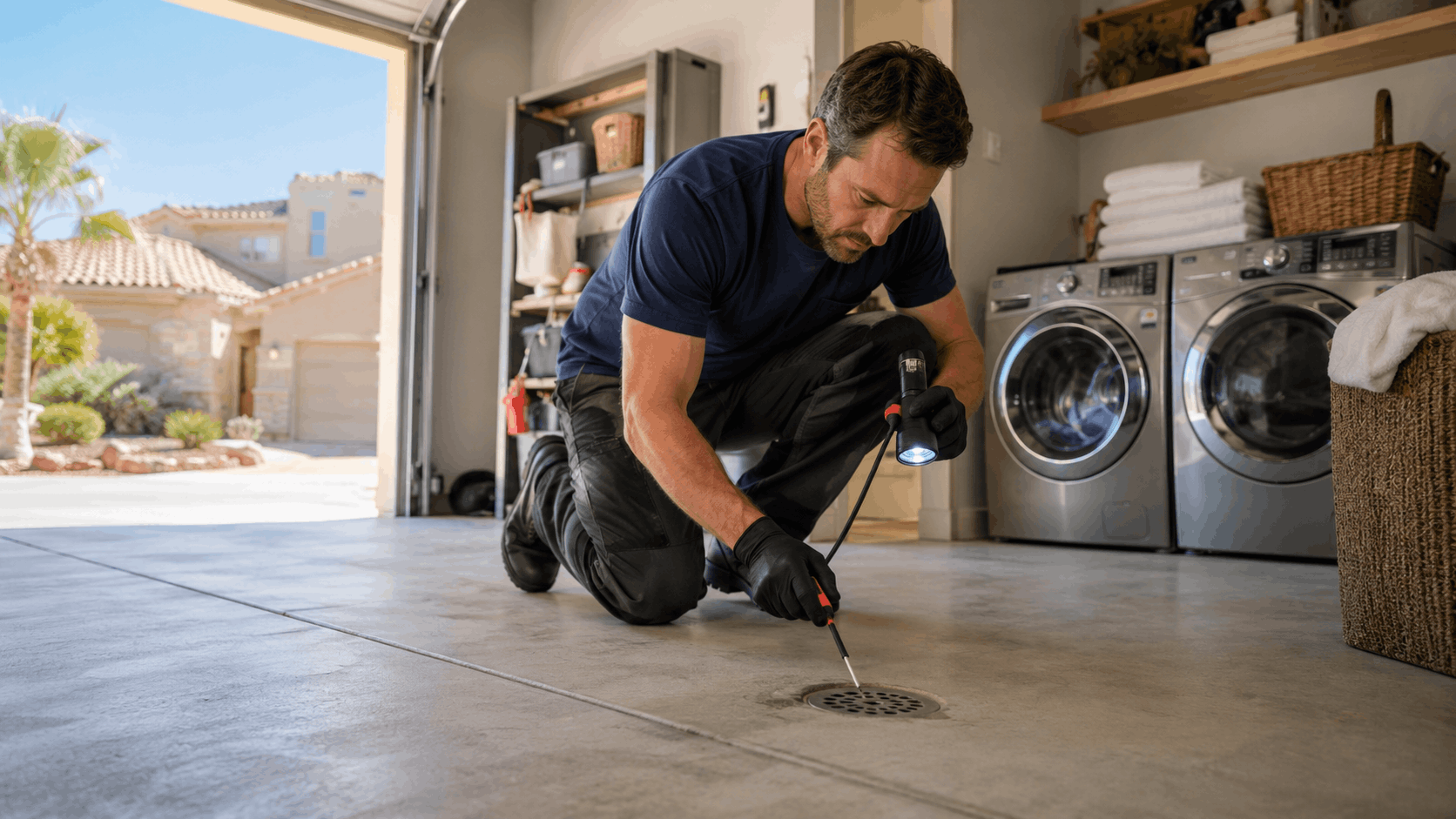
A smell that is worst near the floor drain itself is the final confirmation. Get down close to the grate and take a careful sniff. If the odor is clearly coming from the drain, a dry P-trap is almost certainly the cause.
Need Help in Las Vegas?
Active Plumbing serves Las Vegas and all of Las Vegas Valley.
Las Vegas Climate and Why It Makes This Worse
This is not a problem homeowners deal with everywhere. The Las Vegas climate creates near perfect conditions for dry traps, which is why floor drain odor is such a frequent complaint across the valley.
Three local factors stack up to make it worse: extreme low humidity, brutally hot garages, and a large number of part-time homes that sit empty. Each one speeds up the evaporation rate on its own, and together they can empty a trap in record time.
Single-Digit Humidity and Fast Evaporation
The dry desert air in southern Nevada is famous for a reason. Relative humidity here regularly falls below 15 percent, and on the driest days it can drop into the single digits. That is some of the lowest humidity in the country.
Low humidity dramatically increases how fast water evaporates. Air that holds very little moisture keeps pulling more from any water it touches. A trap seal exposed to that air loses water at a steady clip every single day.
The National Weather Service tracks these conditions closely, and Las Vegas consistently ranks among the driest major cities. You can see current humidity and forecast data through the National Weather Service Las Vegas office. Those low numbers explain why traps dry so quickly here.
A trap that would hold water for six months in a place like Seattle might dry out in six weeks in Las Vegas. The math is simple - drier air means quicker evaporation, and quicker evaporation means more sewer smell.
Hot Garages Along the Valley
Most garages in the valley are uninsulated and have no air conditioning. In summer, they turn into ovens. Interior garage temperatures of 110 to 120 degrees are normal in July and August.
Heat speeds up evaporation on top of the low humidity. A hot garage floor drain loses its water seal much more quickly than a drain inside the cooled part of the house. The concrete itself radiates heat that keeps the trap warm long after sunset.
We see this pattern in homes throughout Henderson and out in Spring Valley where afternoon sun bakes the garage all day. Homeowners in these areas call us most often once the real heat sets in. If you are dealing with a stubborn drain issue, our drain and sewer services team knows exactly where to look.
The takeaway is that a garage drain in Las Vegas faces two evaporation threats at once. Dry air and high heat combine to empty the trap far quicker than either would alone.
Seasonal Homes and Snowbirds
The valley is full of part-time residents. Many people own a home here for the mild winters and leave for the summer, while others keep a Las Vegas property as a second home. Those houses sit empty for long stretches.
A vacant home is the ideal setup for dry traps. Nobody runs water, nobody flushes toilets, and every trap in the house slowly evaporates with no one there to notice. When the owners return, the entire home can smell of sewer gas.
This is especially common in communities near Summerlin and the Sun City retirement neighborhoods, where snowbirds make up a large share of homeowners. We regularly get calls from property managers and returning owners dealing with dried out traps across an empty house. Homeowners in the area can find local help through our Summerlin service page.
The floor drains take the longest to recover because they are rarely part of a normal cleaning routine. A returning snowbird might flush the toilets and run the sinks but never think about the garage drain sitting dry in the corner.
How Homeowners Can Fix a Dry P-Trap Themselves
The best part about a dry P-trap is that most of the time, anyone can fix it in about two minutes with no tools. Before calling anyone, it is worth trying the simple fix. It works in the large majority of cases.
Here is how homeowners can handle a dry trap on their own, and how to tell when the DIY plumbing approach is not enough.
Pouring Water Down the Drain
The fix for a dry trap is to put the water back. Grab a pitcher or bucket and pour one to two quarts of water slowly down the floor drain. That refills the curve of the pipe and restores the water seal.
The smell should start fading within an hour as the trap seal blocks the gas again. Sometimes it takes a little while for the existing gas to clear out of the room, so opening the garage door helps speed things up. In most cases the odor is gone by the next day.
Make sure to pour enough water. A splash will not do it, because some of the water passes through before the trap fills. One to two quarts makes sure the curve is full and the seal is solid.
If pouring water clears the smell, the problem was almost certainly a dry trap and nothing more serious. That is the outcome we hope for, and it costs nothing but a few minutes.
Adding Mineral Oil to Slow Evaporation
For drains that dry out again and again, a little mineral oil helps. After refilling the trap with water, pour in about a quarter cup of mineral oil. The oil floats on top of the water because it is lighter.
That thin oil layer acts like a lid on the water seal. Oil evaporates far slower than water, so it dramatically reduces how fast the trap dries out. A trap treated this way can hold its seal for months instead of weeks.
Mineral oil is cheap, safe for drains, and available at any pharmacy or grocery store. Some people use cooking oil, but mineral oil is the better choice because it does not go rancid or attract pests. A single bottle treats a drain many times over.
This trick is a favorite for garage drains and unused laundry hookups that never see regular water. It buys a lot of time between refills and cuts down on how often anyone has to think about the drain at all.
Setting a Reminder for Unused Drains
The most reliable prevention is a simple habit. Once a month, pour a quart of water into every rarely used drain in the home. Put a recurring reminder on a phone so it never gets forgotten.
Drain maintenance like this takes just a couple minutes and prevents the vast majority of dry trap odors. Walking the garage and laundry room with a pitcher of water once a month is all it takes. Many homeowners tie it to another monthly chore so they remember.
During peak summer, it helps to do this more often. When garage temperatures spike, traps dry quicker, so refilling every two or three weeks is smarter. A monthly reminder is the baseline, not a hard rule.
For part-time residents, the best move is to top off every trap right before leaving town and add mineral oil to slow the loss. That single step prevents most of the empty-house sewer smell that greets returning owners.
When the Smell Comes Back Anyway
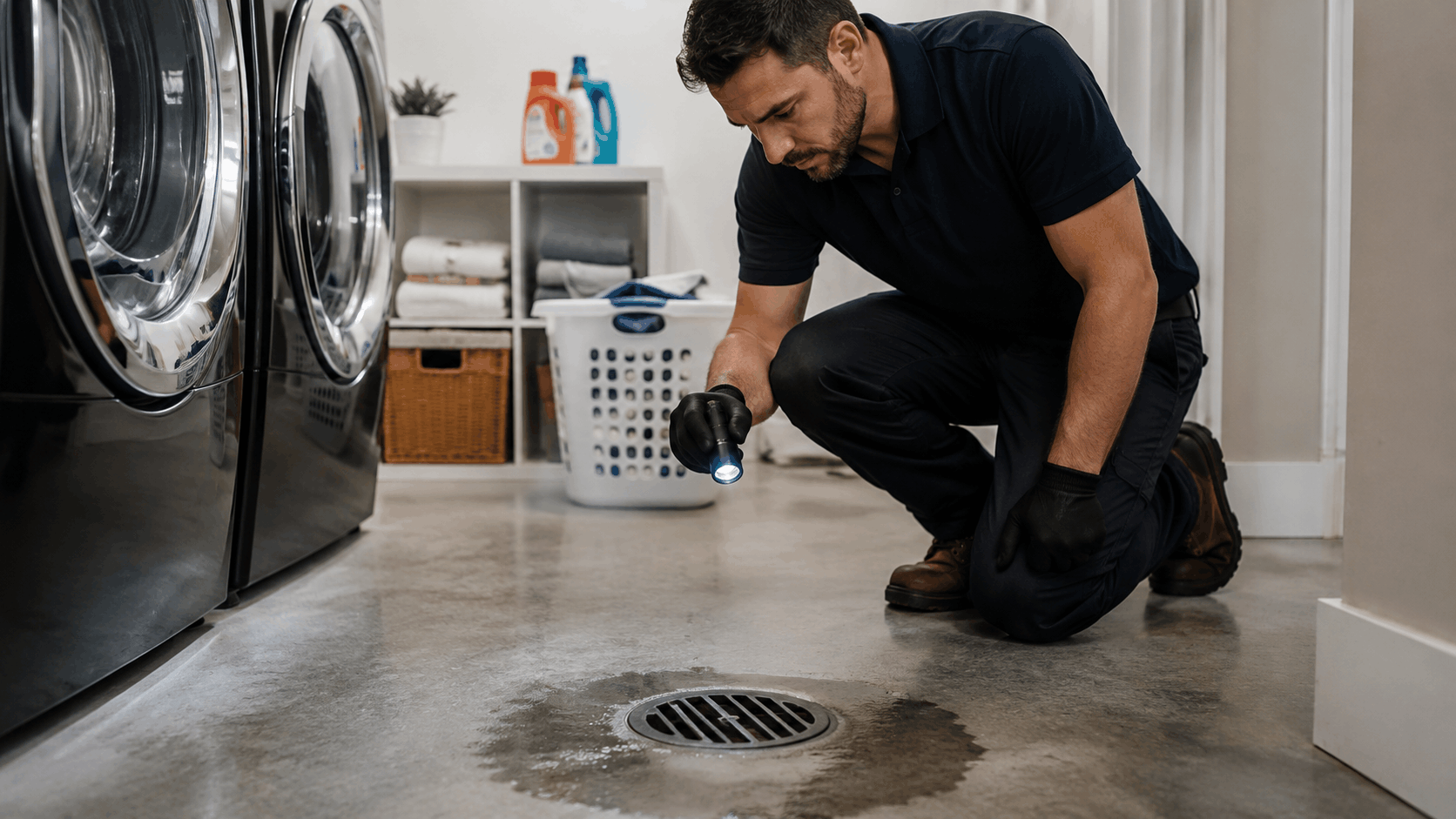
Sometimes the water goes in, the smell fades, and then it returns within a day or two. That is a red flag. A healthy trap that has been refilled should hold its seal for weeks, not hours.
A returning odor points to a deeper problem. The trap might be cracked and leaking the water back out. There could be a venting issue siphoning the water away, or a crack in the sewer line itself letting gas escape somewhere else.
At that point the DIY fix has done its job by ruling out the simple cause. If refilling the trap does not solve the problem for good, it is time to call a plumber. Our team is easy to reach and can track down what a bucket of water cannot fix.
There is no shame in calling for help here. A persistent smell usually means something is physically wrong with the plumbing, and those problems only get worse if ignored.
Need Help in Las Vegas?
Active Plumbing serves Las Vegas and all of Las Vegas Valley.
When the Problem Is Not Just a Dry Trap
When water alone does not fix the smell, the cause is usually a physical problem in the plumbing. These issues need real diagnosis and repair. Here is a look at the deeper causes and what they involve.
| Problem | Why It Causes Odor | Fix Type |
|---|---|---|
| Cracked P-trap | Water seal leaks out even after refilling | Trap replacement |
| Blocked or missing vent | Siphoning pulls water out of the trap | Vent clearing or repair |
| Sewer line crack | Gas escapes from a damaged pipe | Line repair or replacement |
| Missing trap | No water seal exists at all | Drain rework |
Cracked or Damaged Traps
A P-trap is usually made of PVC, ABS plastic, or metal, and any of these can crack over time. Old metal traps corrode and split. Plastic ones can crack from ground movement, freezing, or simple age.
A cracked trap cannot hold its water seal. Even after refilling, the water slowly leaks out through the crack, and the seal fails again within hours or days. That is why the smell keeps coming back no matter how much water goes in.
Sometimes the crack is in the trap arm or the fitting rather than the U-bend itself. A damaged pipe anywhere in that section can break the seal or let gas escape around it. Finding the exact spot takes a proper inspection.
The fix is straightforward once located - replace the cracked trap with a new one. It is not a job most homeowners can do on a concrete floor drain, but it is routine work for a plumber with the right tools.
Blocked or Missing Vent Pipes
Every drain system needs a vent, usually a pipe that runs up through the roof. The plumbing vent lets air into the pipes so water flows smoothly and pressure stays balanced. Without it, draining water creates suction.
That suction is a problem for traps. When a nearby fixture drains and the vent is blocked, the resulting pressure change can pull water right out of a floor drain trap. This is called siphoning, and it empties the seal even though the trap is perfectly fine.
Vents get blocked by bird nests, leaves, debris, or even a dead animal. In some older homes a vent was undersized or never properly installed. Any of these can cause traps to lose their water and let sewer gas back in.
Diagnosing a vent problem takes some detective work because the symptom appears at the drain, not the vent. A plumber checks whether the trap is being siphoned and clears or repairs the vent to stop it.
Sewer Line Cracks in Older Neighborhoods
Older homes carry older pipes. In neighborhoods near downtown Las Vegas and the Historic Westside, some houses still have original clay or cast iron sewer lines. These materials degrade over decades.
A cracked sewer line leaks gas into the surrounding soil, and that gas can find its way up into a garage or crawl space. In this case the smell is not coming from a dry trap at all - it is escaping from the damaged line underground. Refilling traps does nothing to help.
Old cast iron rusts from the inside out and eventually develops holes. Clay pipe cracks and lets roots invade. Both problems produce persistent odor along with slow drains and occasional backups. Our sewer line repair and replacement service handles exactly these aging pipe issues.
These repairs are more involved, but they are common in the valley's older housing stock. Catching a failing line early keeps a nuisance smell from becoming a full sewage backup down the road.
Improperly Installed Drains
Not every floor drain was installed correctly. In some older garages, especially ones with additions or amateur work, the drain was connected to the sewer with no trap at all. A missing trap means there was never a water seal to begin with.
A drain with no trap is an open pipe to the sewer 24 hours a day. No amount of water pouring will fix it because there is nowhere for the water to sit. The gas flows freely into the room around the clock.
Bad installs also include traps set at the wrong height, backwards fittings, or drains tied into the wrong line. Any of these can allow sewer gas straight into the living space. The problem hides until someone notices the persistent smell.
The solution is to rework the drain and add a proper trap. It is more labor than a simple repair, but it permanently solves a smell that would otherwise never go away.
How Active Plumbing Diagnoses and Solves the Smell
When a homeowner calls us about a stubborn floor drain smell, our first job is finding the real source. Guessing wastes money, so we diagnose before we repair. Here is how the team at Active Plumbing works through it:
- Confirm whether the trap is dry, cracked, or missing entirely
- Run a camera down the drain line to inspect the pipe
- Check the vent system for blockages or siphoning
- Test the surrounding lines for cracks or leaks
- Recommend the right fix based on what we actually find
This approach means the homeowner gets the correct repair the first time, not a series of guesses.
Finding the Real Source With a Camera Inspection
A camera inspection takes the mystery out of the diagnosis. We feed a small waterproof camera down the drain line and watch a live video feed of the pipe from the inside. Nothing hides from the lens.
The camera shows exactly what is going on inside the drain line. We can spot a cracked trap, a blockage, root intrusion, or a break in the sewer pipe. Instead of guessing, we see the problem with our own eyes.
This step saves homeowners money because it prevents unnecessary work. If the camera shows a simple dry trap, there is no reason to open up walls or dig. Our sewer camera inspection service pinpoints the trouble spot fast.
We also record the footage so the homeowner can see what we found. There is no need to take our word for it when the picture is right there on the screen.
Repairing or Replacing Traps and Vents
Once we know the cause, the repair is usually direct. A cracked trap gets a full trap replacement with new, code-compliant pipe. We cut out the damaged section and install a fresh trap that holds its seal.
Vent problems get handled based on what the inspection reveals. A blocked vent gets cleared, whether the blockage is debris, a nest, or buildup. A poorly installed or undersized vent gets a proper vent repair so siphoning stops pulling the trap dry.
Where gas is escaping through a gap around the drain, we seal it properly. Small openings around a floor drain can leak odor even when the trap is fine. Sealing those gaps closes off the last path for the smell.
Every repair is done to code so it lasts and passes any future inspection. We would rather fix it right once than come back for the same smell next summer.
Installing Trap Primers for Unused Drains
For drains that keep drying out, we often recommend a trap primer. A trap primer is a small device that automatically feeds a little water into the trap on a schedule. It keeps the seal full without anyone lifting a finger.
The primer taps into a nearby water line and releases a measured amount of water into the drain periodically. This automatic refill replaces exactly what evaporates. The trap never runs dry, so the smell never comes back.
Trap primers are the permanent answer for garage drains, unused laundry hookups, and homes that sit empty part of the year. They are especially useful in the Las Vegas climate where evaporation is relentless. Once installed, the homeowner can forget about the drain entirely.
For snowbirds and rental owners, a trap primer is one of the best small investments in a home. It eliminates the empty-house sewer smell that would otherwise greet every arrival.
Serving Homes Across the Valley
Our team works throughout the Las Vegas valley, so wherever the smelly drain is, we can get to it. We cover Summerlin, Henderson, North Las Vegas, Enterprise, Spring Valley, Paradise, and everywhere in between.
We know the housing in each area, from newer builds in Mountains Edge in Enterprise to established homes in older parts of the valley. That local knowledge helps us diagnose more quickly because we have seen the same issues in the same neighborhoods.
Whether the home is a seasonal property near Sun City or a busy family house in North Las Vegas, a Las Vegas plumber who knows the area makes the job smoother. We show up prepared for the conditions we know are common here.
No drain is too small a job for us. A floor drain smell is a real nuisance, and getting rid of it makes a home comfortable again.

Need Help in Las Vegas?
Active Plumbing serves Las Vegas and all of Las Vegas Valley.
Preventing Sewer Smell From Coming Back
Fixing the smell once is good. Keeping it gone is better. A little routine care and a few smart upgrades will keep floor drain odor out of a home for good.
Here is the long-term plan we recommend to prevent sewer smell from ever coming back.
A Simple Monthly Water Routine
The single most effective habit is adding water to unused drains once a month. Pour a quart or two down each garage and laundry drain to keep the trap seal full. It takes almost no time and prevents most odors.
Timing matters in the desert. Ramp up the routine before summer arrives, because that is when evaporation peaks and traps dry fastest. Topping off traps in late spring keeps them protected through the hottest stretch.
Making it a habit is the tricky part. Tie the drain water routine to something already on the calendar, like paying a monthly bill or changing the AC filter. Pairing it with an existing task means it actually gets done.
A phone reminder works just as well. However it happens, the goal is to never let those idle traps sit empty long enough to smell. Consistency beats any fancy fix.
Checking Drains Before You Travel
Anyone leaving a home empty for weeks or months should prep the drains first. A vacant home is where dry traps do their worst work, because nothing refills them while the owners are away. Travel prep prevents the whole problem.
Before locking up, pour water into every trap in the house, including toilets, sinks, showers, and floor drains. Add mineral oil to the floor drains and any rarely used fixtures to slow evaporation. That thin oil layer buys months of protection.
Part-time residents and snowbirds benefit most from this step. A ten minute walk through the house with water and mineral oil means coming home to fresh air instead of a sewer smell. It is the easiest travel insurance there is.
For homes left empty a long time, a trap primer removes the need to remember at all. That is the better solution for anyone who travels frequently or rents out a property.
Yearly Plumbing Checkups
An annual plumbing inspection catches problems while they are small. During a yearly checkup, a plumber can spot a failing vent, a corroding trap, or an aging sewer line before any of them cause a bigger mess. Early detection is always cheaper.
A checkup also covers more than just drains. Water heaters, supply lines, and fixtures all benefit from a regular look. Finding a slow leak or a worn part early prevents an emergency later.
For older homes, especially near downtown and other established neighborhoods, a yearly inspection is smart insurance. Aging pipes give warning signs long before they fail completely. Catching those signs saves homeowners from surprise repairs.
We are happy to include the floor drains and traps in any inspection. It is a quick check that adds real value, especially in a climate this hard on trap seals.
Upgrades That Stop the Problem for Good
Some upgrades solve the dry trap problem permanently. A trap primer is the top choice, since it automatically refills the trap and removes the need for any monthly routine. For a drain that always dries out, it is the definitive fix.
A quality drain cover helps too. A sealed or trap-guard style drain cover reduces evaporation and blocks odor even if the trap water gets low. It is a low cost add-on that provides an extra layer of protection.
For homes with aging pipes, replacing an old trap or a section of failing line prevents future odor and backups at the same time. Upgrading old plumbing pays off in comfort and reliability. It also protects the value of the home.
Our team can recommend the right combination of upgrades for any specific situation. Whether it is a single garage drain or a whole empty house full of dry traps, there is a solution that ends the smell for good.
Final Thoughts
That sewer smell in a garage or laundry room is almost always a dry P-trap, and the dry desert air here makes it a common problem across the valley. The simple fix is pouring a quart or two of water down the drain to restore the water seal. Adding mineral oil and keeping a monthly routine prevents it from coming back.
When the smell returns after refilling, the cause runs deeper - a cracked trap, a vent problem, or an aging sewer line. Those need a professional to diagnose and repair. A camera inspection finds the real source so the right fix happens the first time.
If a floor drain smell will not go away, our team is ready to help. Contact Active Plumbing or call for a consultation, and we will track down the odor and put a permanent end to it. Homeowners across Las Vegas and the surrounding communities count on us to keep their homes fresh and their plumbing working right.
Frequently Asked Questions
- Why does my garage floor drain smell like sewage?
- A common cause is a dry P-trap. The trap under your floor drain holds a small pool of water that blocks sewer gas from rising into the room. In the dry Las Vegas air, that water evaporates, especially in a rarely used garage drain. Once the seal is gone, sewer gas flows freely into the garage. Pouring a quart or two of water down the drain usually fixes it.
- How often should I pour water down an unused floor drain in Las Vegas?
- At least once a month is a good baseline. In peak summer heat, when garage temperatures hit 110 degrees or more, refill every two to three weeks because the trap dries more quickly. A quart or two of water each time keeps the seal full. Adding a bit of mineral oil slows evaporation and lets you go longer between refills on drains you rarely use.
- How much water does it take to refill a P-trap?
- For most home floor drains, one to two quarts of water is enough to fill the trap and restore the seal. Pour it slowly so it settles into the curve of the pipe rather than rushing straight through. A single splash will not do the job because some water passes through before the trap fills. Two quarts makes sure the U-bend is full and the smell is blocked.
- Is sewer gas from a dry P-trap dangerous?
- Sewer gas is more than just unpleasant. It contains hydrogen sulfide and methane, which can cause headaches, nausea, and eye or throat irritation at higher concentrations. Methane is also flammable. While a single dry trap rarely reaches dangerous levels, the smell should never be ignored. It signals an open path to the sewer that should be sealed. Refill the trap and address any odor that keeps returning.
- Why does the smell keep coming back after I add water?
- A healthy trap should hold water for weeks after refilling. If the smell returns within a day or two, something is wrong. The trap may be cracked and leaking, a blocked vent may be siphoning the water out, or a sewer line crack may be leaking gas elsewhere. In some cases the drain has no trap at all. These problems need a plumber and a camera inspection to diagnose.
- What is a trap primer and do I need one?
- A trap primer is a small device that automatically feeds a little water into a drain trap on a schedule. It taps into a nearby water line and releases just enough water to replace what evaporates. That keeps the seal full without anyone remembering to do it. If you have a garage drain, unused laundry hookup, or a home that sits empty part of the year, a trap primer is worth installing.
- Can mineral oil really stop my trap from drying out?
- Yes. After refilling the trap with water, pour in about a quarter cup of mineral oil. The oil floats on top of the water and forms a thin layer that evaporates much slower than water alone. That layer acts like a lid and can extend the trap seal from weeks to months. It is a cheap, safe trick that works well for garage drains and other rarely used fixtures.
- Do older Las Vegas homes have more floor drain problems?
- Often, yes. Homes in older neighborhoods near downtown Las Vegas and the Historic Westside may have aging clay or cast iron sewer lines that crack and leak gas. Some older garages also have drains installed without a proper trap. These issues cause odor that refilling water cannot fix. If you own an older home with a persistent floor drain smell, a camera inspection is the best way to find the cause.
- How much does it cost to fix a smelly floor drain?
- A simple dry trap costs nothing to fix yourself with a quart of water. If a plumber is needed, a basic service call and diagnosis is usually modest. Repairs range higher depending on the cause - replacing a cracked trap, clearing a vent, or installing a trap primer are mid-range jobs, while a sewer line repair costs more. A camera inspection tells us exactly which repair applies before any work begins.
- When should I call Active Plumbing instead of fixing it myself?
- Try the water refill first, since it solves most floor drain odors. Call us when the smell keeps coming back after refilling, when you cannot find the source, or when the odor is strong and constant. Those signs point to a cracked trap, a vent issue, a sewer line problem, or a missing trap. Our team runs a camera inspection to find the real cause and fixes it right the first time.
Licensed plumbing professionals serving Las Vegas and Las Vegas Valley.
Licensed in Nevada · License #0047021
Last updated on
Why trust Active Plumbing?
Founded in 1991, Active Plumbing is a licensed and insured plumber serving Las Vegas and Las Vegas Valley. All content is reviewed by our licensed technicians.

Need Help in Las Vegas?
Active Plumbing serves Las Vegas and all of Las Vegas Valley.
Related Articles
Henderson vs Las Vegas Water Pressure: Why Some Neighborhoods Have PRV Issues
Henderson vs Las Vegas water pressure varies by terrain, utility systems, and neighborhood age. Learn why PRV issues hit some areas harder and when to act.
Las Vegas Hard Water by ZIP Code: What SNWA Data Actually Shows
See actual SNWA water hardness data by Las Vegas ZIP code. Learn your neighborhood's GPG level and what it means for your plumbing, appliances, and home.
Sewer Smell in Las Vegas: How to Find the Cause Safely
A practical guide to finding the cause of a sewer smell in Las Vegas homes safely, covering common causes, safety steps, local risks, and professional fixes.