Cast Iron Drain Lifespan in 1950s-60s Las Vegas Homes - Downtown, Huntridge, Paradise Palms
Key Takeaways
- Cast iron drain pipe lasts 50 to 75 years, so 1950s-60s Las Vegas homes are now at or past the end of that range.
- Downtown, Huntridge, and Paradise Palms homes commonly still carry original hub-and-spigot cast iron with lead-packed joints.
- Caliche soil, hard water from the Las Vegas Valley Water District, and desert temperature swings all speed up cast iron failure.
- Warning signs include slow drains, repeated backups, sewer smells, rust-colored water, and yard sinkholes or soft spots.
- A sewer camera inspection reveals the real pipe condition and lets homeowners choose repairs based on evidence, not guesswork.
- Options range from spot repairs to trenchless lining or bursting to full PVC or ABS replacement, depending on damage.
- Avoiding grease and harsh drain cleaners, careful hydro jetting, and inspections every two to three years extend cast iron life.
- Active Plumbing inspects and repairs aging cast iron drains across Downtown, Huntridge, Paradise Palms, and the wider valley.
In This Article
A homeowner over in Huntridge called us last month about a bathroom sink that took forever to drain. She had lived in the house since the early 2000s, but the home itself dated back to 1951. The water pooled, gurgled, and slowly crept down while she brushed her teeth every morning.
She figured it was a simple clog. What we found instead was original cast iron drain pipe that had been quietly rusting from the inside for seven decades. That slow sink was one small symptom of a much larger story playing out under thousands of mid-century Las Vegas homes.
Why So Many Vegas Homes Still Have Cast Iron Drains?
When builders poured foundations across the valley after World War II, cast iron was the drain material everyone trusted. It was heavy, strong, and readily available during a construction boom that never seemed to slow down.
Decades later, that same pipe is still buried under floors and yards across town. Here is why it lingers:
- Cast iron was the plumbing standard from the 1940s through the late 1960s
- The pipe was built to outlast the mortgage, so owners rarely touched it
- Replacing drain lines is invasive, so many homes never got upgraded
- Older neighborhoods kept their original layouts and their original pipe
A working cast iron drain pipe gives no reason to think about it. That is exactly why mid-century plumbing keeps surprising people when it finally gives out.
The Post-War Housing Boom That Built Downtown and Huntridge
The Las Vegas building boom took off fast after 1945. Soldiers came home, jobs opened up, and neighborhoods sprang up almost overnight to house the growing population.
Huntridge history starts right in this window. The area near Maryland Parkway and Charleston filled in during the 1940s and 1950s with modest single-story homes on tight lots. These were starter houses built quickly and priced for working families.
Downtown Las Vegas homes tell a similar story, with some housing stock reaching back even earlier. As blocks filled in around the old rail and casino core, cast iron drains went into nearly every new build. Builders used what was proven, and cast iron was the proven choice of the day.
That means whole sections of the older valley share the same underground plumbing DNA. Homes a few streets apart often carry pipe of the same age, installed by the same crews, aging on the same clock.
How Cast Iron Was Installed in Homes of That Era
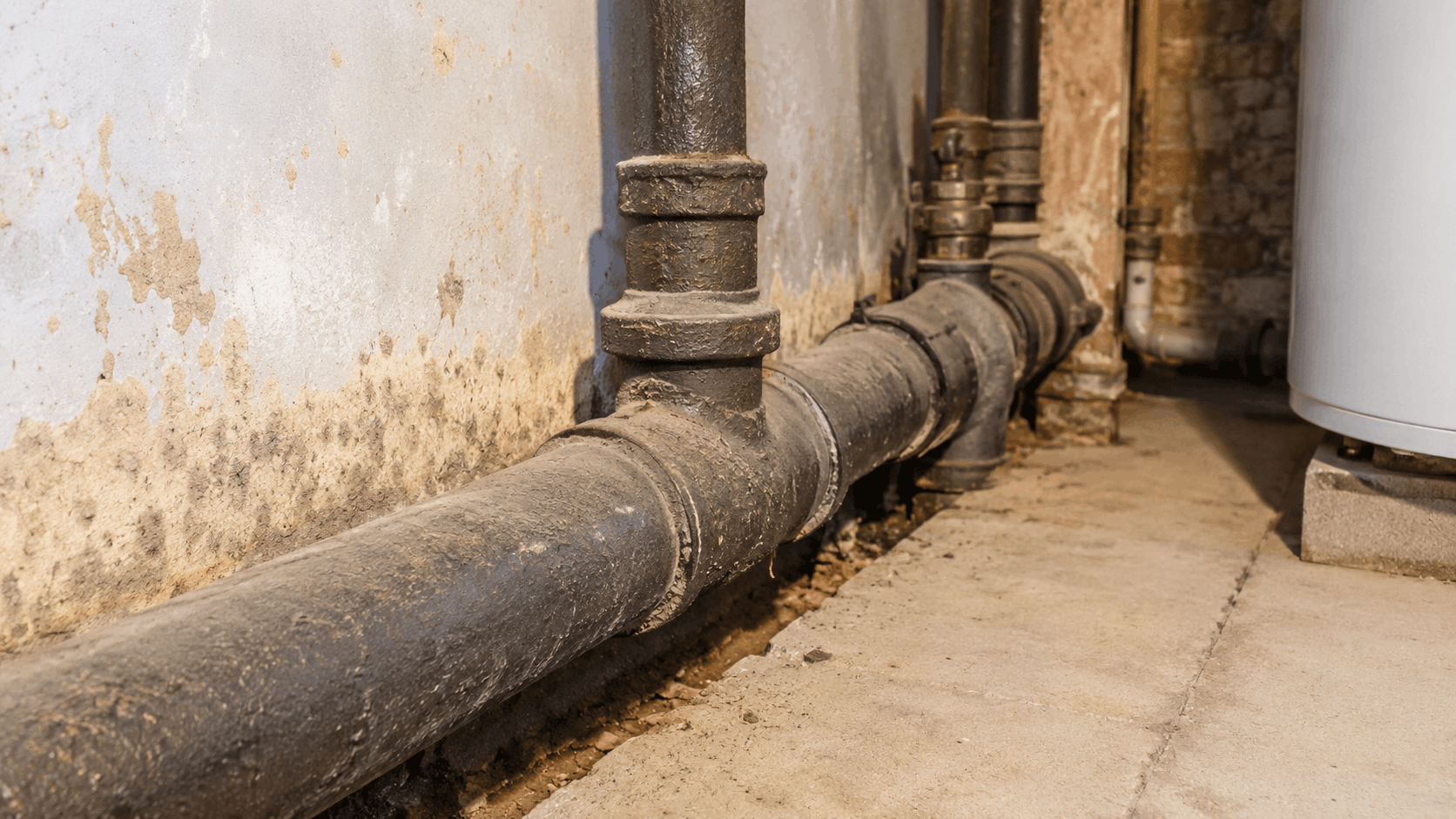
Plumbers of the 1950s did not glue pipe together like we do today. They used a method called hub and spigot, where the wide end of one pipe (the hub) received the narrow end of the next (the spigot).
To seal those cast iron joints, they packed the gap with oakum, a fibrous rope soaked in oil. Then they poured molten lead over the top and tamped it down to lock the connection tight.
This was skilled hand work. A good lead-packed joint could stay watertight for generations, which is part of why the pipe lasted as long as it did in the first place.
The trouble is that these joints were never designed for the ground movement and mineral loads that decades of desert living bring. Over time the oakum breaks down, the lead loosens, and the connection starts to weep or shift.
Why It Was Considered a Strong Choice at the Time
Cast iron earned its reputation honestly. It was a durable drain pipe that could take a beating, handle heavy loads under a slab, and resist the physical damage that softer materials could not.
Homeowners also liked how quiet it was. Cast iron muffles the sound of water rushing through walls, so you never heard the neighbor flush from the hallway. That quiet plumbing feature still makes some people prefer it in bedrooms and shared walls today.
Fire resistance mattered too. Cast iron does not burn or melt, which gave builders one less worry in multi-room homes packed close together.
All of these traits kept cast iron in service far longer than many other building materials of the same period. It worked so well that few people ever questioned whether it would one day wear out.
Get Your Quote
Tell us what's going on and we'll get back to you. We're open 24/7.
How Long Cast Iron Drains Actually Last
Cast iron does not last forever, even though it was sold as if it might. The metal corrodes from the inside as waste water and minerals scrape past it year after year.
Understanding the real cast iron lifespan helps homeowners plan instead of panic. Here is how the numbers break down against the drain pipe age of a typical mid-century Vegas home.
| Home Build Year | Approximate Pipe Age Today | Position in Lifespan | Failure Risk |
|---|---|---|---|
| 1950 | 75 years | At or past the ceiling | High |
| 1955 | 70 years | Upper end | High |
| 1960 | 65 years | Well into the range | Moderate to high |
| 1965 | 60 years | Middle to upper | Moderate |
The Typical 50 to 75 Year Range
Most cast iron drain pipe carries a service life of 50 to 75 years. That is the window the industry and manufacturers have long recognized for buried and under-slab lines.
The low end applies to pipe that faced harsh conditions, thin original walls, or heavy use. The high end goes to lines that were installed well and treated gently over the decades.
The federal Department of Housing and Urban Development has referenced similar drain material lifespans in its housing guidance, which lines up with what we see in the field. Pipe service life is a range, not a promise, and no two homes wear at the same rate.
What matters is that a home built in 1958 has already used up most of that window. The clock has been running quietly since the day the concrete was poured.
Why 1950s-60s Homes Are Now at the Edge of That Range
Do the simple math. A house built in 1955 is 70 years old, which puts its original pipe squarely at the top of the expected range.
These aging pipes are not failing because someone did something wrong. They are failing because they have reached the end of service life that was always built into the material.
That is why we get so many calls from Huntridge and Paradise Palms owners around the same stretch of years. Whole neighborhoods are crossing the finish line at once, and the symptoms show up within a season or two of each other.
If a home still has its original cast iron, now is the moment to know its condition. Catching a line at the edge of failure is far easier than cleaning up after it has already collapsed.
What Speeds Up or Slows Down Failure
Not every cast iron line ages the same. Several pipe corrosion factors decide whether a drain lasts 50 years or pushes past 75.
Soil chemistry plays a big part. Aggressive, mineral-heavy soil eats at the outside of buried pipe, while stable ground leaves it alone longer.
Inside the pipe, habits matter. Heavy water use, grease, and years of chemical drain cleaner damage the metal from within, thinning the walls and speeding rust. Harsh acids poured down a slow drain do far more harm than good on old lines.
Original pipe thickness also counts. Some 1950s pipe was cast thick and heavy, while cheaper runs went in thin and wore through decades sooner. Two homes on the same street can fail years apart for this reason alone.
Need Help in Las Vegas?
Active Plumbing serves Las Vegas and all of Las Vegas Valley.
How Las Vegas Soil and Climate Affect Cast Iron
The desert is hard on buried pipe. Between the ground, the water, and the temperature swings, Las Vegas puts cast iron through conditions that milder climates never see.
These local factors change the aging math for every mid-century home in the valley. Here is how the main ones stack up.
| Local Condition | Effect on Cast Iron | Where It Shows Up |
|---|---|---|
| Caliche soil | Pressure and abrasion on pipe walls | Under-slab and yard lines |
| Hard water | Interior mineral scaling and narrowing | Inside the pipe run |
| Temperature swings | Joint stress from expansion and contraction | Lead-packed connections |
| Ground movement | Cracks and misaligned joints | Buried sections and bends |
Caliche and Hard-Packed Desert Soil
Anyone who has dug in the valley knows caliche. It is a hard, cement-like layer of calcium carbonate that sits under much of the local soil.
Caliche soil presses against buried pipe and grinds at its exterior over time. On an underground drain, that outside pressure works alongside interior rust to weaken the wall from both sides.
It also makes repairs slower and tougher. Reaching a failed line under caliche often means breaking through rock-hard ground, which is one reason we recommend trenchless methods where they fit.
Homes with mature landscaping add root pressure to the mix. Old cast iron joints that have loosened over the years give roots an easy path right into the line.
Hard Water and Mineral Buildup From LVVWD Supply
Las Vegas water is famously hard. The supply that comes through the Las Vegas Valley Water District carries a heavy mineral load straight from the Colorado River system.
Inside old cast iron, that hardness causes mineral scaling. Layers of calcium and scale build up on the rough interior walls, narrowing the pipe like plaque in an artery.
As the opening shrinks, water flows slower and waste catches easier. This is why a 65-year-old line often drains sluggishly even when there is no single clog to blame.
Many owners pair drain work with a water softener installation to slow buildup across the whole home. Softer water is gentler on both old drains and the fixtures they feed.
Temperature Swings and Ground Movement
Desert days can hit triple digits while nights cool off fast. That daily swing makes pipe and soil expand and contract in a slow, endless cycle.
Over decades, this pipe stress works on the weakest points, which are almost always the old lead-packed joints. Each expansion loosens the seal a little more.
Ground movement adds another layer. Expansive soils in parts of the valley swell when wet and shrink when dry, tugging buried lines out of alignment.
A joint that has held for 60 years can finally crack after one wet winter followed by a hot, dry summer. The cast iron did not suddenly weaken. The ground around it simply moved one time too many.
Warning Signs Your Cast Iron Drain Is Failing
Failing cast iron rarely quits all at once. It sends warning signs for months or years before a full break, if you know what to watch for.
Owners in older neighborhoods tend to notice the same short list of drain warning signs. Here is how they usually show up.
| Warning Sign | Likely Cause | Urgency |
|---|---|---|
| Slow drains | Interior scaling or narrowing | Get it checked soon |
| Sewer smell indoors | Cracks or joint leaks | Address quickly |
| Rust-colored water | Pipe walls corroding through | Inspect right away |
| Yard sinkhole or soft spot | Underground leak eroding soil | Urgent |
Slow Drains and Frequent Backups
A slow drain is a common first clue. When one sink lags, it might be a local clog, but when several fixtures slow down together, the main line is likely narrowing.
Repeated sewer backup episodes point the same direction. If you snake a line and it clears for a few weeks only to back up again, the pipe itself is the problem, not the debris.
Cast iron scale creates rough ridges that grab paper, grease, and waste. Each snaking scrapes some away, but the rough wall keeps catching more.
When our team sees this pattern in a Huntridge or Downtown home, we recommend a camera look before spending money on repeat clearings. There is usually a reason the clogs keep coming back.
Sewer Smells, Stains, and Damp Spots
A drain line is a sealed system, so you should never smell it. A lingering sewer smell in a bathroom, closet, or along a baseboard often means a drain leak has opened somewhere.
Watch for stains too. Dark spots on flooring, discolored grout, or a patch of tile that stays cool and damp can all mark moisture rising from a cracked pipe below.
Under-slab leaks are sneaky because the water spreads sideways before it surfaces. By the time a stain shows on the floor, the leak has often been running a while.
If you catch odors or damp spots, our electronic leak detection can pinpoint the source without tearing up the whole floor. Finding it early keeps the repair small.
Rust-Colored Water and Rough Pipe Interiors
Brown or rust water backing up out of a drain is a loud warning. It means the cast iron is shedding rust and the metal is corroding through from the inside.
When we run a camera into these lines, the walls look rough and flaky, sometimes with dark tubercles of rust hanging into the flow. This is pipe corrosion in its late stage.
At this point the pipe is thin and fragile. A single snaking or a heavy flush can punch right through a weak spot.
Rust-colored water from a drain is different from rusty tap water, which points to supply lines instead. Either way, it deserves a professional look before it worsens.
Foundation Cracks and Yard Sinkholes
The scariest failures happen underground where you cannot see them. A leaking drain washes soil away grain by grain, hollowing out space beneath the slab or yard.
That erosion can create a yard sinkhole or a soft, sunken spot in the lawn. In bad cases it undermines the foundation itself, leading to cracks in walls or floors.
We have seen Paradise Palms yards develop low spots right over a failed section of main line. The homeowner blamed the grass, but the real cause was two feet down.
Foundation damage from a hidden drain leak is far costlier than the pipe fix would have been. This is exactly why catching a failing line early saves so much money and stress.
Neighborhood-by-Neighborhood: What We See in the Field
Every older Las Vegas neighborhood has its own personality, and its drains do too. Years of service calls have taught us what to expect on each street.
Here is a quick snapshot of what our crews tend to find across the three areas this guide covers.
| Neighborhood | Typical Build Era | Common Drain Issue |
|---|---|---|
| Downtown / John S. Park | 1930s-1950s | Very old, mixed-age cast iron |
| Huntridge | 1940s-1950s | Scaled lines, tight-lot access |
| Paradise Palms | 1960s | Aging joints, under-slab leaks |
Downtown and the John S. Park Historic District
Downtown Las Vegas holds some of the oldest housing stock in the valley. The John S. Park Historic District, just south of the main core, has homes dating back to the 1930s and 1940s.
These historic homes often carry cast iron that predates even the post-war boom. Some lines have already been partly replaced over the years, creating a patchwork of old and slightly less old pipe.
Because the district has preservation rules, owners want repairs that protect the home's character. Trenchless work often fits well here since it avoids tearing up mature yards and historic hardscape.
We approach these homes carefully, mapping the whole system before recommending anything. In a house this old, knowing what is really down there is the first step in any honest plan.
Huntridge Homes Near Maryland Parkway and Charleston
Huntridge is classic post-war Las Vegas. The tight-lot homes near Maryland Parkway and Charleston went up fast in the 1940s and 1950s, and most still hold their original layouts.
The recurring issue here is scaled, narrowed cast iron combined with limited yard space. Small lots mean less room to dig, which shapes how we plan repairs.
We handle a steady stream of drain and sewer service calls in this area every year. The pattern is consistent: original pipe from the same era hitting the same wall at the same time.
For many Huntridge owners, a camera inspection followed by targeted trenchless work is the practical answer. It respects both the tight lots and the age of the home.
Paradise Palms Mid-Century Homes Near the Boulevard Mall
Paradise Palms is one of the valley's showcase mid-century modern neighborhoods. Built mostly in the 1960s near the Boulevard Mall, its atomic-age homes draw design lovers from all over.
Those distinctive homes sit on cast iron that is now 55 to 65 years old. A common problems we see are failing joints and under-slab leaks that surface as soft floors or damp spots.
Owners here often invest heavily in restoring the look of these houses. Modernizing the drains underneath protects that investment and keeps the home fully livable.
We treat Paradise Palms lines with the same care the architecture deserves. A thorough inspection tells us whether spot repair, lining, or full replacement makes the most sense for each home.
Need Help in Las Vegas?
Active Plumbing serves Las Vegas and all of Las Vegas Valley.
How Active Plumbing Inspects Old Cast Iron Drains
Guessing about buried pipe wastes money. Our whole approach to drain inspection in Las Vegas centers on seeing the real condition before we recommend a single repair.
Here is how our team assesses old cast iron in a mid-century home:
- Run a video camera through the full line to document damage
- Locate and mark problem sections from above ground
- Grade the pipe condition based on what the camera shows
- Present honest options ranked by cost and remaining life
This pipe assessment turns a scary unknown into a clear picture. Owners get to make decisions based on evidence, not fear.
Camera Inspections That Show the Real Damage
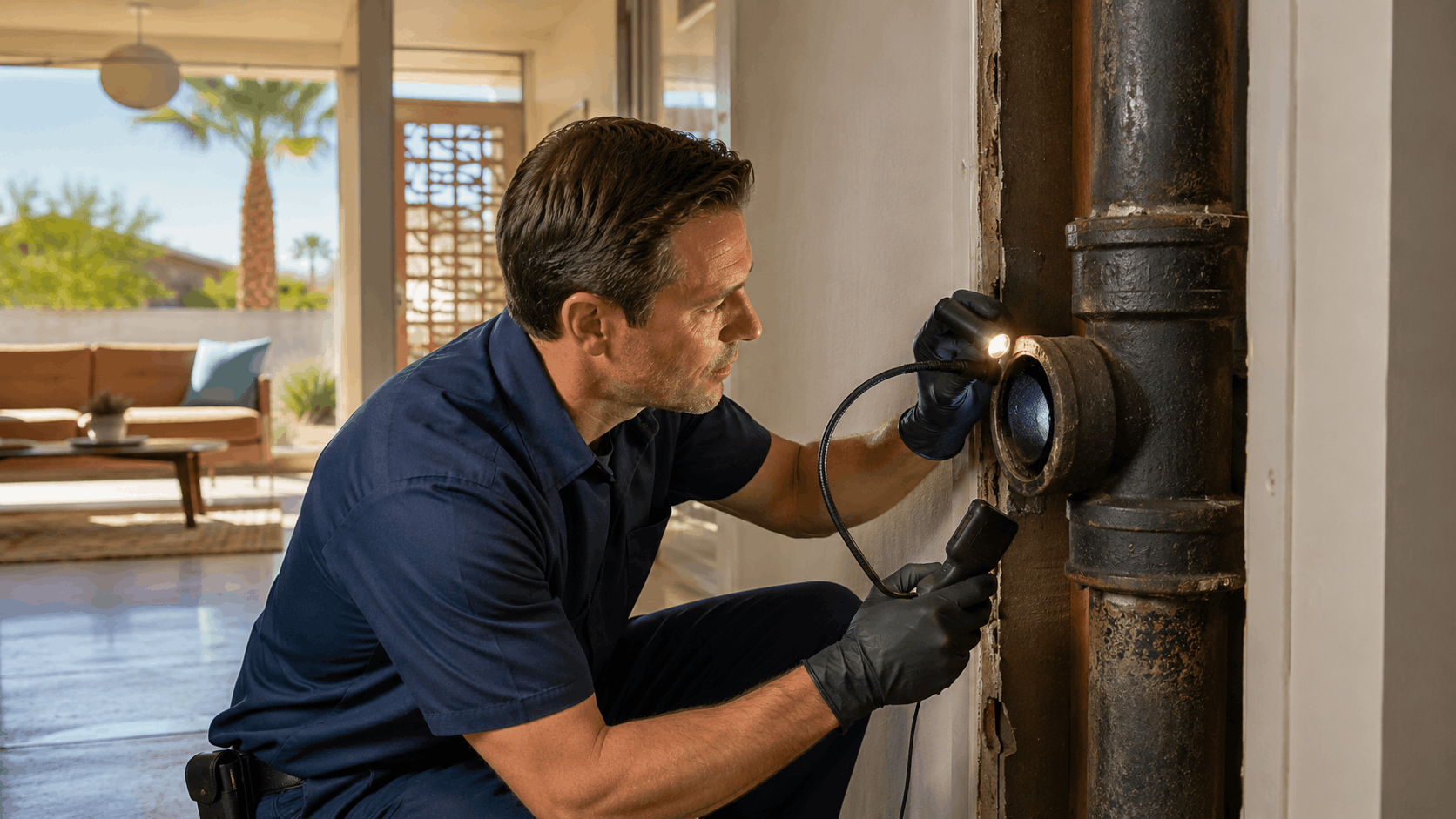
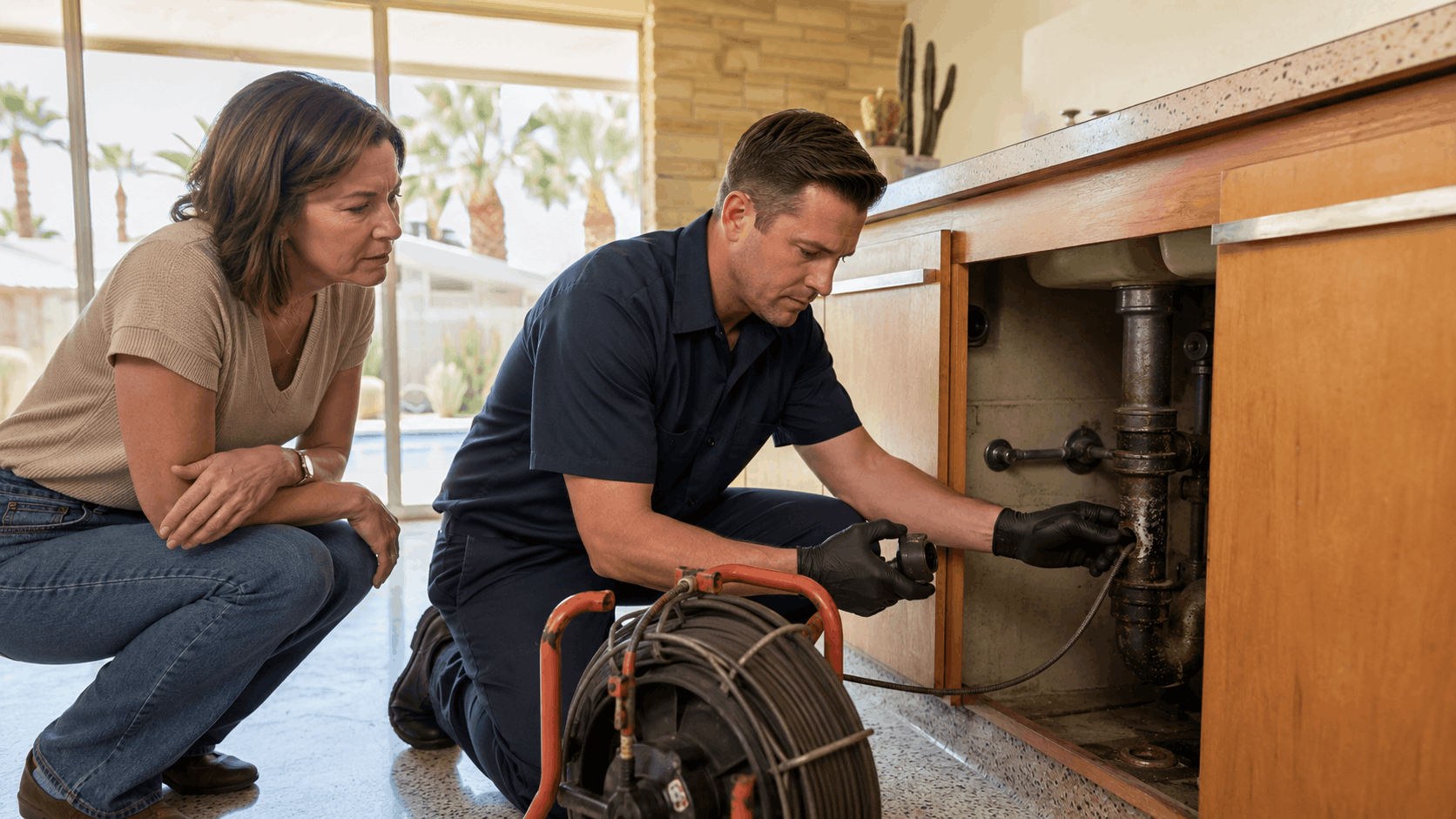
A sewer camera is the single most useful tool for old cast iron. We feed a waterproof video head through the line and watch a live feed of the interior on a monitor.
That video inspection reveals cracks, heavy scaling, root intrusion, and belly sections where the pipe has sagged and holds standing water. None of this shows from the surface.
Our sewer camera inspection gives homeowners a recorded view of exactly what they are dealing with. Seeing the flaking, rusted walls firsthand tends to answer a lot of questions on its own.
We save the footage so owners can review it and compare it against future checks. It becomes a baseline for the health of the whole drain system.
Locating Problem Sections Under Slab or Yard
Finding the exact failure point saves both time and floor. Once the camera spots trouble, we use pipe locating equipment to mark where that section sits under the slab or yard.
The camera head carries a signal that a locator picks up from above. That lets us stand on the floor and mark the precise spot and depth of a crack or a slab leak.
Accurate locating means we open only the ground we have to. On a Huntridge home with limited yard, that difference matters a great deal.
It also helps us plan around obstacles like caliche, mature trees, and hardscape. Knowing the target before we dig keeps the job clean and predictable.
Grading Pipe Condition and Planning Next Steps
After the camera and locate work, we grade the pipe. We rate how much usable life remains and flag which sections are failing versus merely aging.
That pipe condition report drives the recommendation. A line with one bad joint and otherwise solid walls calls for a very different plan than a line rusted through end to end.
We lay out the repair planning in plain terms, with real cost ranges and honest tradeoffs. No scare tactics, just what we found and what your realistic choices are.
Owners leave the conversation knowing exactly where their drains stand. That clarity is worth as much as the repair itself.
Repair Versus Replacement Options for Aging Drains
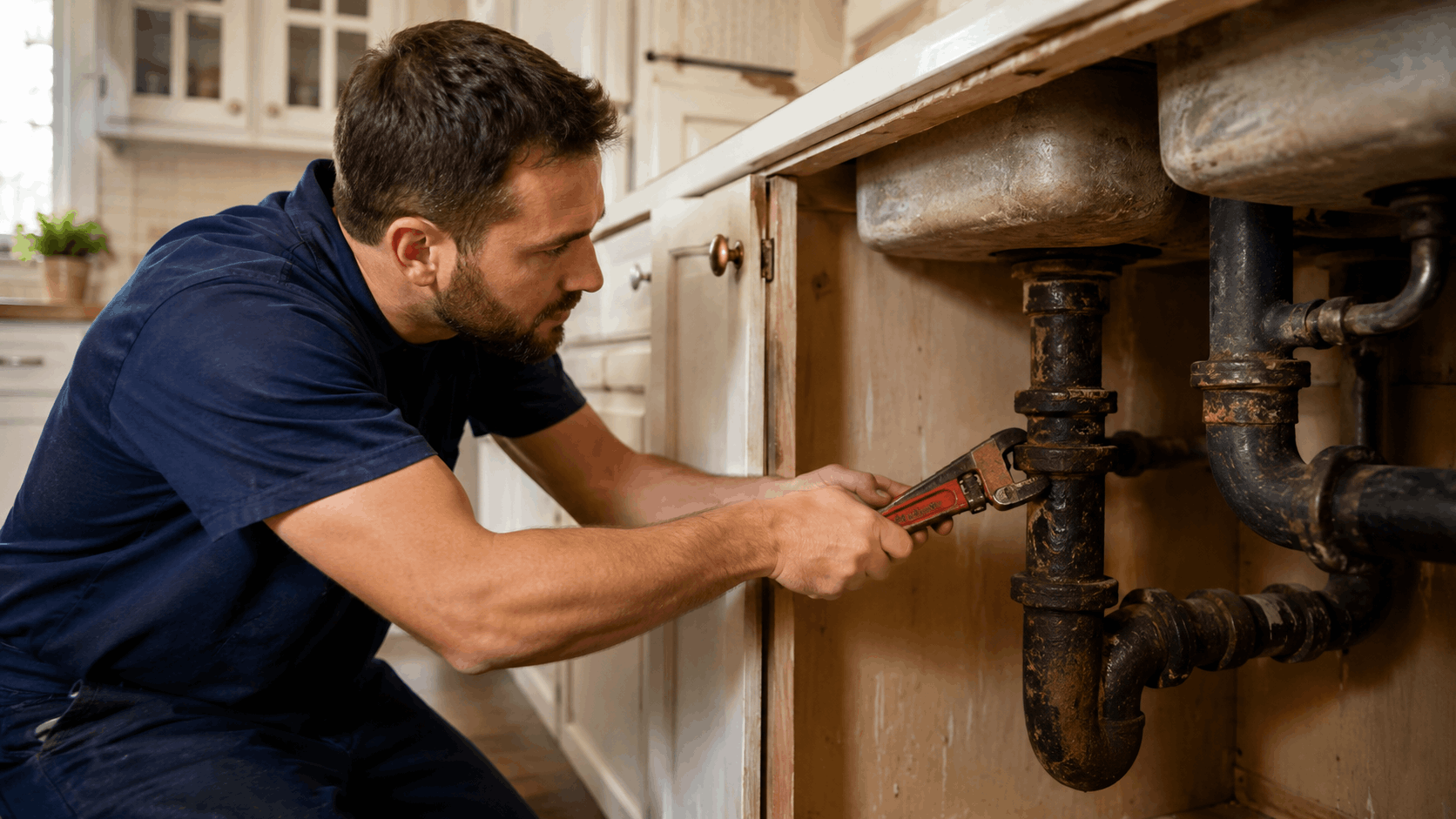
Once we know the condition, the next question is what to do about it. There is no single right answer, since it depends on how much of the line has failed and how long you plan to stay.
The choices range from small fixes to a full swap. Understanding each helps you weigh cast iron replacement against lighter options like trenchless repair and pipe lining.
Spot Repairs for Isolated Failures
Sometimes only one section has failed while the rest of the line still tests solid. In that case a spot repair makes sense.
We cut out the damaged length and splice in new pipe with proper couplings. This section replacement fixes the problem without touching the healthy runs.
Spot repairs cost the least and disrupt the home the least. They work best when the camera shows a clearly isolated crack, break, or root intrusion at one joint.
The catch is that old cast iron rarely fails in just one place forever. We are honest when a spot fix is likely a short-term patch on a line that will need more work soon.
Trenchless Pipe Lining and Bursting
Trenchless methods have changed drain repair for older homes. They let us rehabilitate or replace pipe with little or no digging, which suits tight Vegas lots and caliche-heavy ground.
Pipe lining pulls a resin-soaked sleeve into the old cast iron, then cures it into a smooth new pipe inside the old one. It seals cracks and covers rough scaling without opening the floor.
Pipe bursting is the other option. A bursting head fractures the old pipe outward while pulling new pipe into the same path, ideal when the original line is too far gone to line.
Both approaches shine on the small lots common in Huntridge and the historic Downtown blocks. Less digging means less damage to yards, driveways, and preserved landscaping.
Full Replacement With Modern PVC or ABS
When cast iron has failed across most of its length, patching no longer pays. A full repipe with modern PVC drain or ABS pipe is the lasting fix.
Modern plastic drain pipe does not rust, resists scaling, and installs with glued joints that stay sealed. It carries its own long service life measured in many decades.
A full replacement is more involved, often requiring access through the slab or extensive yard work. But it resets the clock completely and ends the cycle of repeat repairs.
For homes where the whole line is rusted through, this is usually the smart money. Our team handles complete sewer line repair and replacement from planning through final inspection.
Weighing Cost Against Home Value and Age
The right choice balances repair cost against how long you will own the home. A spot fix might carry you a few more years, while a full repipe protects the property for the long haul.
In historic areas like John S. Park, updated plumbing adds real appeal at resale. Buyers of older homes worry about the pipes, so a documented drain system eases that concern.
Home value matters here. Sinking a full repipe into a home you plan to sell next year plays out differently than one you will keep for twenty.
We help owners run this math without pressure. Sometimes the answer is to line it now and plan a full replacement later, and we will say so plainly.
Need Help in Las Vegas?
Active Plumbing serves Las Vegas and all of Las Vegas Valley.
How to Extend the Life of Cast Iron You Already Have
If your cast iron still tests healthy, good habits can stretch its remaining years. Simple drain maintenance keeps buildup down and slows corrosion.
These steps help protect cast iron and prevent clogs on lines that are not yet ready for replacement.
What Not to Put Down the Drain
Grease is the top enemy of old cast iron. Poured hot it flows, but it cools and hardens on rough pipe walls, building layer on layer until flow chokes down.
Keep grease, oil, and fat out of every drain. Wipe pans and pour cooled grease into the trash instead of the sink.
Harsh liquid drain cleaners cause real drain cleaner damage on aging pipe. The acids and lye that eat clogs also eat thinning cast iron walls, so avoid them entirely on old lines.
Skip flushing wipes, paper towels, and hygiene products too. These snag on scaled interiors and start the clogs that lead to backups.
Regular Cleaning Without Damaging the Pipe
Careful cleaning keeps a line clear without harming it. Done right, hydro jetting sends pressurized water through the pipe to strip grease and scale from the walls.
The key word is careful. On fragile, badly corroded cast iron, full-pressure jetting can punch through weak spots, so we camera the line first and adjust pressure to match its condition.
Our hydro jetting and rooter service follows this careful approach on older homes. We match the method to the pipe, not the other way around.
Safe drain cleaning on a healthy line can restore much of its original flow. It is one of the best ways to buy more years from cast iron worth keeping.
Scheduling Routine Checkups Before Problems Start
The best time to find a drain problem is before it becomes an emergency. Routine inspection catches slow-building failures while they are still small and cheap to address.
For mid-century homes with original cast iron, we suggest a camera checkup every two to three years. Homes already showing symptoms deserve a look sooner.
Preventive plumbing costs a fraction of an emergency dig. A short inspection now can head off a collapsed line, a ruined floor, or a foundation issue later.
Owners who stay ahead of their drains rarely face the middle-of-the-night backups that catch others off guard. A little planning goes a long way with 60-year-old pipe.
Final Thoughts
Cast iron served Las Vegas homes well, but the pipe under 1950s-60s houses in Downtown, Huntridge, and Paradise Palms has largely reached the end of its 50 to 75 year run. Local caliche, hard water, and ground movement only speed that clock.
The good news is that you do not have to guess. A camera inspection tells you exactly where your drains stand, and options from spot repair to trenchless lining to full replacement fit almost any home and budget.
If you own a mid-century home and have noticed slow drains, odors, or backups, our team at Active Plumbing can take a look and give you honest answers. Call us or reach out through our contact page to schedule a drain inspection for your Downtown, Huntridge, or Paradise Palms home.
Frequently Asked Questions
- How long do cast iron drains last in Las Vegas homes?
- Cast iron drains generally last 50 to 75 years. Local conditions push most valley homes toward the lower end of that range. Caliche soil presses on buried pipe, hard water from the Las Vegas Valley Water District scales the interior, and big temperature swings stress old joints. A home built in the 1950s or 1960s is at or near the end of that expected lifespan today.
- Do 1950s-60s Huntridge and Paradise Palms homes still have original cast iron?
- Many do, unless a previous owner already replaced the drains. These neighborhoods went up during the era when cast iron was the standard drain material, and buried pipe often gets left alone until it fails. Since it may already be 60 to 75 years old, a camera inspection is worth it to confirm what you have and grade its remaining life before trouble starts.
- What are the first signs of a failing cast iron drain?
- The earliest clues are slow drains and repeated backups, especially when several fixtures lag at once. Watch for sewer smells indoors, dark stains or damp spots on floors, and rust-colored water rising from a drain. Outside, a soft spot or sinkhole in the yard can signal an underground leak. Any of these deserve a professional look before the pipe fails completely.
- Can a cast iron drain be repaired, or does it need full replacement?
- It depends on how much has failed. If the camera shows one isolated bad section, a spot repair can cut out and replace just that length. For wider damage, trenchless pipe lining or bursting rehabilitates the line with little digging. When the pipe is rusted through end to end, a full replacement with modern PVC or ABS is the lasting fix.
- How much does cast iron drain replacement cost in Las Vegas?
- Cost varies widely based on the length of pipe, its depth, whether it runs under a slab, and how the ground digs. Spot repairs are the least expensive, trenchless lining sits in the middle, and full replacement costs the most. Caliche soil and tight lots also affect the price. We give clear ranges after a camera inspection so you can compare real options.
- Is trenchless repair possible on tight older lots Downtown?
- Yes, and trenchless methods often suit tight Downtown and historic lots better than open digging. Pipe lining and pipe bursting work through small access points instead of long trenches, so they spare yards, driveways, and preserved landscaping. On small properties with mature trees or historic hardscape, this limited-dig approach is frequently the practical choice for replacing failing cast iron.
- Does hard water in the valley damage cast iron more quickly?
- Hard water does not rust cast iron directly, but its heavy mineral content causes scaling on the rough interior walls. That buildup narrows the pipe, slows flow, and catches debris that leads to clogs and backups. Over decades this contributes to blockages and adds stress to already-aging pipe. Softening the home's water is one way to slow the buildup on both drains and fixtures.
- How often should older homes get a drain inspection?
- For mid-century homes still running original cast iron, a camera inspection every two to three years is a sound schedule. If the home already shows slow drains, odors, or backups, inspect sooner. Routine checks catch small failures while they are cheap to fix and help you plan replacement on your own timeline instead of during a middle-of-the-night emergency.
- Will replacing cast iron affect the value of a historic home?
- Updated plumbing generally helps resale, even in historic areas like the John S. Park district. Buyers of older homes worry about hidden pipe problems, so documented, modern drains ease a major concern. Trenchless methods let you upgrade the system without disturbing the home's historic character. A clean inspection report and new drain lines can be strong selling points.
- Does Active Plumbing service Downtown, Huntridge, and Paradise Palms?
- Yes. Our team works throughout the older Las Vegas neighborhoods, including Downtown, Huntridge, and Paradise Palms, along with communities across the greater valley. We handle camera inspections, spot repairs, trenchless lining, and full drain replacement on mid-century homes. Call us or reach out through our contact page to schedule an inspection and get honest answers about your cast iron drains.
Licensed plumbing professionals serving Las Vegas and Las Vegas Valley.
Licensed in Nevada · License #0047021
Last updated on
Why trust Active Plumbing?
Founded in 1991, Active Plumbing is a licensed and insured plumber serving Las Vegas and Las Vegas Valley. All content is reviewed by our licensed technicians.

Need Help in Las Vegas?
Active Plumbing serves Las Vegas and all of Las Vegas Valley.
Related Articles

Best Drain Cleaning Method for Las Vegas Hard Water Buildup
Las Vegas hard water ranks among the harshest in the US. Learn which drain cleaning methods actually work on mineral scale - and when to call a professional.

How to Stop Repeat Drain Clogs in Las Vegas Homes
Learn why Las Vegas homes get repeat drain clogs, from hard water and old pipes to tree roots, plus the professional methods that stop them for good.

Why Las Vegas Homes Built Before 1990 Need a Full Plumbing Inspection
Las Vegas homes built before 1990 face unique plumbing challenges from aging materials, desert conditions, and outdated construction practices that can lead to catastrophic failures.