Las Vegas Hard Water by ZIP Code: What SNWA Data Actually Shows
Key Takeaways
- Las Vegas water ranges from 12-25 GPG depending on ZIP code - 2 to 4 times harder than the national average of 5-7 GPG.
- Henderson and Green Valley ZIP codes (89002, 89052, 89074) can reach up to 25 GPG, while North Las Vegas areas (89084, 89085) tend to be slightly lower at 12-18 GPG.
- Lake Mead's declining water levels have contributed to more concentrated mineral content in Southern Nevada's water supply.
- A tank water heater without a softener can lose 30-40% of its efficiency within a few years at Las Vegas hardness levels.
- Salt-based ion exchange softeners are the only systems that actually remove calcium and magnesium - salt-free conditioners do not truly soften water at 16+ GPG.
- Water hardness fluctuates seasonally by a few GPG due to Lake Mead levels, demand changes, and treatment plant blending ratios.
- Tankless water heaters in Las Vegas should be descaled at least once a year, or every six months in homes without a water softener.
- A whole-house water softener installation in the Las Vegas area typically costs between $1,500 and $3,500 depending on system size and plumbing complexity.
In This Article
A homeowner in Summerlin steps out of the shower, glances at the glass door, and sees that familiar white crusty film already forming. Over in Henderson, someone notices their kitchen faucet aerator is almost completely clogged - again - after just a few months. That chalky, stubborn buildup is not dirt. It is mineral scale from some of the hardest municipal water in the entire country.
So how hard is the water in your specific Las Vegas neighborhood? The honest answer is that SNWA publishes hardness by treatment facility rather than by ZIP code, and the figure for the valley is 280 parts per million, or about 16 grains per gallon. This article explains what that means for each part of the valley, what genuinely differs between neighborhoods, and why per-ZIP hardness tables you may find elsewhere are not official data. We will cover what those numbers mean for plumbing, appliances, and daily life - and what local homeowners can do about it.
At Active Plumbing, we work in homes from Skye Canyon to Inspirada and everywhere between. The scale buildup we pull out of water heaters and pipes tells the same story the data does - Las Vegas water is relentlessly hard. Here is the full breakdown.
What Makes Las Vegas Water So Hard in the First Place?
Las Vegas has some of the hardest tap water of any major metro area in the United States, at 280 parts per million or about 16 grains per gallon according to the Southern Nevada Water Authority, and the reasons are geological. Nearly 90% of Southern Nevada's water comes from Lake Mead, which is fed by the Colorado River. That river travels more than 1,400 miles through rock formations loaded with limestone, dolomite, and other calcium- and magnesium-rich minerals before it ever reaches the valley.
The Colorado River water quality reflects every mile of that journey. By the time water arrives at SNWA's treatment facilities, it carries dissolved calcium and magnesium concentrations that put Las Vegas firmly in the "very hard" category on any water hardness scale. The table below shows how the main mineral sources contribute to local hardness levels.
| Factor | Impact on Water Hardness |
|---|---|
| Colorado River mineral pickup | Water dissolves calcium and magnesium from rock across 7 states |
| Lake Mead as primary source | Reservoir concentrates minerals, especially as water levels drop |
| Regional limestone geology | Local rock formations add to mineral content in groundwater blends |
| Low regional rainfall | Less natural dilution compared to wetter climates |
Lake Mead, the Colorado River, and Mineral Runoff
The Colorado River starts high in the Rocky Mountains of Colorado and runs through Utah, Arizona, and Nevada before feeding into Lake Mead. Along the way, it cuts through enormous deposits of sedimentary rock - particularly limestone and sandite formations that are rich in dissolved minerals. Every mile adds more calcium and magnesium to the water.
SNWA draws Southern Nevada water from two Lake Mead intake structures. One sits at about 1,050 feet elevation and the other at roughly 860 feet - a deeper intake added as lake levels have dropped over the past two decades. When Lake Mead levels fall, the remaining water becomes more concentrated with minerals because there is less volume to dilute them. Blending between those intakes and between surface water and groundwater is one reason a reading taken at home can differ slightly from the published figure.
How Water Hardness Is Measured in Grains Per Gallon
Water hardness is measured two ways: grains per gallon (GPG) and parts per million (PPM). One grain per gallon equals about 17.1 PPM. The USGS water hardness scale breaks it down like this:
- Soft: 0-1 GPG (0-17 PPM)
- Slightly Hard: 1-3.5 GPG (17-60 PPM)
- Moderately Hard: 3.5-7 GPG (60-120 PPM)
- Hard: 7-10.5 GPG (120-180 PPM)
- Very Hard: 10.5+ GPG (180+ PPM)
The Southern Nevada Water Authority states that the valley's water is 280 parts per million, or about 16 grains per gallon, which is categorised very hard. That figure applies to the treated supply across the valley rather than to any single ZIP code. That is not just a number on paper - it translates directly into the white residue on your fixtures, the scale inside your water heater, and the reduced lifespan of your dishwasher and washing machine.
Why Las Vegas Ranks Among the Hardest Water Cities Nationwide
To put Las Vegas water quality in perspective, consider how it stacks up against other major cities. Seattle and Portland average just 1-2 GPG. San Francisco sits around 3-4 GPG. Even Phoenix, another desert city drawing from the Colorado River, averages 12-15 GPG - still lower than many parts of the Las Vegas valley.
Las Vegas sits at about 16 grains per gallon, which is many times harder than the supply in cities like Seattle or Portland. That water hardness comparison makes it clear why the white spots on glass shock people who move here. No wonder the white spots on glass shower doors shock newcomers. The hardest water cities in America are concentrated in the desert Southwest and parts of the Great Plains - and Las Vegas is near the top of every list.
Get Your Quote
Tell us what's going on and we'll get back to you fast.
SNWA Water Hardness Data by Las Vegas ZIP Code
This is what most Las Vegas residents want to know: what is the hardness for my specific area? Here is the honest answer. SNWA does not publish a hardness table by ZIP code. It reports water quality by treatment facility in its annual Consumer Confidence Report, and the figure it states for the valley's water is 280 parts per million, or about 16 grains per gallon, categorised very hard. Which facility serves an address, and how much groundwater is blended in, matters more than any ZIP boundary, and readings move a little with season and blending.
Our Active Plumbing crew sees this play out every day. What actually changes the scale we pull out of a water heater is not the ZIP code on the envelope: it is whether the home has treatment, how old the unit is, and whether it has ever been flushed.
| What people ask | What the published data says |
|---|---|
| Hardness of the valley's treated water | 280 parts per million, about 16 grains per gallon, categorised very hard (Southern Nevada Water Authority) |
| How SNWA reports it | By treatment facility in the annual Consumer Confidence Report, not by ZIP code |
| Main treatment facilities | Alfred Merritt Smith and River Mountains, both drawing from Lake Mead |
| Source mix | About 90% Lake Mead and the Colorado River, the remainder groundwater, and the blend can shift |
| What varies at your tap | Facility and blend, plus your own plumbing, treatment equipment and fixtures |
Central and Downtown Las Vegas - 89101, 89104, 89106, 89107
The downtown Las Vegas corridor and surrounding central neighborhoods receive the same very hard supply as the rest of the valley, about 16 grains per gallon. What sets this area apart is not the water, it is the plumbing the water runs through.
What makes these ZIP codes even more problematic is the age of the housing stock. Many homes in 89101 and 89104 were built in the 1950s through 1970s and still have original galvanized steel or early copper plumbing. Very hard water running through aging galvanized pipe creates a double problem: scale settles on already corroding pipe walls, narrowing the interior diameter and cutting pressure. In the worst cases we find supply lines so restricted that flow at a single fixture drops long before anything leaks.
Older home plumbing in this part of the valley often needs a whole house repipe before a water softener installation even makes sense. There is no point softening the water if the pipes feeding your home are already half-closed with decades of scale.
Summerlin and the West Side - 89128, 89134, 89135, 89138, 89144, 89145
The Summerlin master-planned community stretches across the western edge of the valley, with Red Rock Canyon as a dramatic backdrop. Summerlin receives the same very hard valley supply, about 16 grains per gallon, and no village escapes it.
Newer construction in neighborhoods like Stonebridge, The Paseos and Summerlin Centre does not escape hard water just because the plumbing is modern. We have pulled significant calcium carbonate scale from tankless water heaters in homes that were only five to seven years old in these communities. Modern PEX and copper plumbing resists corrosion better than old galvanized pipe, but scale still accumulates inside valves, fittings, and water heating equipment.
West Las Vegas water quality in ZIP codes like 89145 and 89128 - areas near the western stretch of Charleston Boulevard and along Town Center Drive - falls in a similar range. Regardless of home age, a water treatment solution is a smart investment on this side of town.
Henderson and Green Valley - 89002, 89011, 89012, 89014, 89015, 89052, 89074
Henderson runs its own water utility, drawing from the same Colorado River supply through SNWA, so homes here get the same very hard water as the rest of the valley, about 16 grains per gallon. What differs in Green Valley and the older Henderson communities is the age of the plumbing the water passes through.
Active Plumbing frequently works in Anthem, Inspirada, MacDonald Highlands, and the Lake Las Vegas area. Henderson water hardness at these levels creates significant tankless water heater scale issues, particularly in Anthem homes built between 2000 and 2010 that are now hitting the age where deferred maintenance catches up. We have flushed tankless units in Inspirada that had so much calcium buildup the unit was triggering error codes and shutting down mid-shower.
If you live in Henderson and have not had your tankless water heater descaled in over a year, schedule that appointment sooner rather than later.
Need Help in Las Vegas?
Active Plumbing serves Las Vegas and all of Las Vegas Valley.
More ZIP Code Hardness Data - North Las Vegas, Spring Valley, and Enterprise
The remaining major areas of the Las Vegas valley are served by different SNWA distribution points, and the mineral levels can vary noticeably. North Las Vegas water, Spring Valley hard water, and Enterprise water hardness all fall within the "very hard" category, but the specific GPG readings differ by neighborhood.
North Las Vegas - 89030, 89031, 89032, 89033, 89081, 89084, 89085, 89086
North Las Vegas covers a wide area with both older neighborhoods near downtown NLV and rapidly growing master-planned communities further north. Here is how the North Las Vegas hard water readings break down:
- Older areas near Civic Center Drive and Craig Road: the water is the same, but 1940s to 1960s housing means galvanized supply and cast iron drains take the brunt of it.
- Aliante and the newer north: modern PEX plumbing handles minerals better, but water heaters, fixtures and tankless heat exchangers still scale from day one.
- Tule Springs and the Elkhorn area: the newest housing in the city, where many homes have a softener loop stubbed in the garage that has never been used.
North Las Vegas runs its own city utility, so permits and water service are handled by the city rather than Clark County. The hardness, however, is the valley figure: about 280 parts per million, or 16 grains per gallon.
Spring Valley and Southwest Las Vegas - 89113, 89117, 89118, 89147, 89148
Spring Valley sits in the heart of the southwest valley, with neighborhoods radiating around Desert Breeze Park and along Rainbow Boulevard. Spring Valley water hardness readings in these ZIP codes typically show 16-21 GPG.
- Along West Flamingo and near Durango: a mix of 1980s and 1990s homes where copper is reaching the age where pinhole leaks begin.
- The Blue Diamond Road corridor and Warm Springs: newer subdivisions on PEX, where the scale shows up in fixtures and water heaters rather than in the pipe.
- Older Spring Valley streets: homes built between about 1978 and 1995 may carry polybutylene, which fails for chemical reasons rather than because of hardness.
These neighborhoods include a mix of 1990s-era construction and newer builds. The older homes along Spring Mountain Road and Flamingo often have copper pipes that have been exposed to hard water for 25-30 years, while newer subdivisions have PEX plumbing that handles the minerals more gracefully - though the fixtures and appliances still take a beating.
Enterprise, Southern Highlands, and Mountains Edge - 89139, 89141, 89178, 89179
The southern corridor of the valley is one of the fastest-growing parts of the metro area. Enterprise, Southern Highlands, and Mountains Edge are filled with homes built after 2005 - many within the last decade. Yet brand-new construction does not mean freedom from hard water problems.
- Silverado Ranch: the oldest part of Enterprise, built from the mid-1990s, where water heaters are often on a second unit already.
- Southern Highlands: a community that climbs toward the mountains, where incoming pressure varies by elevation and the pressure regulator is the first thing to check.
- Mountain's Edge: built mostly from the mid-2000s, so failures here are equipment and fittings rather than pipe.
Active Plumbing has seen brand-new homes in these communities already showing visible scale buildup inside tankless water heaters and on fixtures within 2-3 years of construction. A young home does not mean a clean system when the water is this hard.
How SNWA Tests and Reports Water Hardness
The Southern Nevada Water Authority runs a thorough testing program that monitors water quality at every stage - from Lake Mead intake to treatment plants to distribution points throughout the valley. Hardness is just one of hundreds of parameters tested regularly. The SNWA water quality report is published annually and provides data specific to each treatment facility zone.
Knowing how to read that report - and recognizing its limitations - helps homeowners make better decisions about water treatment for their specific home.
Where to Find Your Official SNWA Water Quality Report
Every year, SNWA publishes a Consumer Confidence Report (also called the annual water report Las Vegas) that breaks down water quality data by treatment facility. The main facilities include the Alfred Merritt Smith Water Treatment Facility and the River Mountains Water Treatment Facility. Each facility serves different distribution zones throughout the valley.
To find your SNWA water report, visit the SNWA water quality report page. You can look up which treatment facility data covers your area and see reported hardness ranges. The reports list hardness in both PPM and GPG, so you can cross-reference with the ZIP code ranges listed in this article.
Why Your Water Hardness Can Change Seasonally
If you test your water in January and get 16 GPG, then test again in July and get 19 GPG, that is normal. Seasonal water hardness fluctuation happens for several reasons. Lake Mead levels change throughout the year - lower levels mean more concentrated minerals. Summer months bring higher water demand across the valley, which can change how much water each treatment plant processes and how blending ratios shift.
SNWA may also adjust the blend between surface water from Lake Mead and treated groundwater from wells, depending on supply conditions. Groundwater in parts of the valley can carry different mineral profiles than surface water. These shifts are usually only a few GPG, but they are worth knowing about if you are sizing a water softener or troubleshooting a sudden change in water feel.
Testing Your Own Water at Home
SNWA reports tell you what leaves the treatment plant. What actually reaches your faucet can be different, depending on your home's pipe condition, age, and distance from the distribution main. A home water test kit with simple test strips - available at most hardware stores on Decatur or along Eastern Avenue - gives a quick snapshot for a few dollars.
For a more accurate reading, professional water testing is the way to go. Active Plumbing offers water quality testing during any service call. We test right at the tap, which gives a real-time reading of what is actually reaching the fixtures inside the home - not just an average for the ZIP code. That specific reading is what we use to recommend the right softener size and treatment approach.
Need Help in Las Vegas?
Active Plumbing serves Las Vegas and all of Las Vegas Valley.
Does Las Vegas Have Hard Water?
Yes, Las Vegas has some of the hardest municipal water in the United States, consistently measuring between 12 and 25 grains per gallon depending on the neighborhood - well above the national average of 5 to 7 GPG.
The hardness comes directly from the water source. Nearly 90% of Southern Nevada's water originates from Lake Mead and the Colorado River, which travels through limestone and mineral-rich rock formations across multiple states before reaching treatment facilities. That journey loads the water with dissolved calcium and magnesium that remain present after treatment because standard municipal treatment is designed to make water safe to drink, not to remove hardness minerals.
For residents new to the valley, the visible signs appear quickly - white film on shower glass, cloudy spots on dishes, and clogged faucet aerators within months of moving in. These are not cosmetic annoyances. They reflect the same mineral concentration that builds up inside pipes, appliances, and water heating equipment throughout the home.
What 16+ Grains of Hardness Actually Does to Your Plumbing
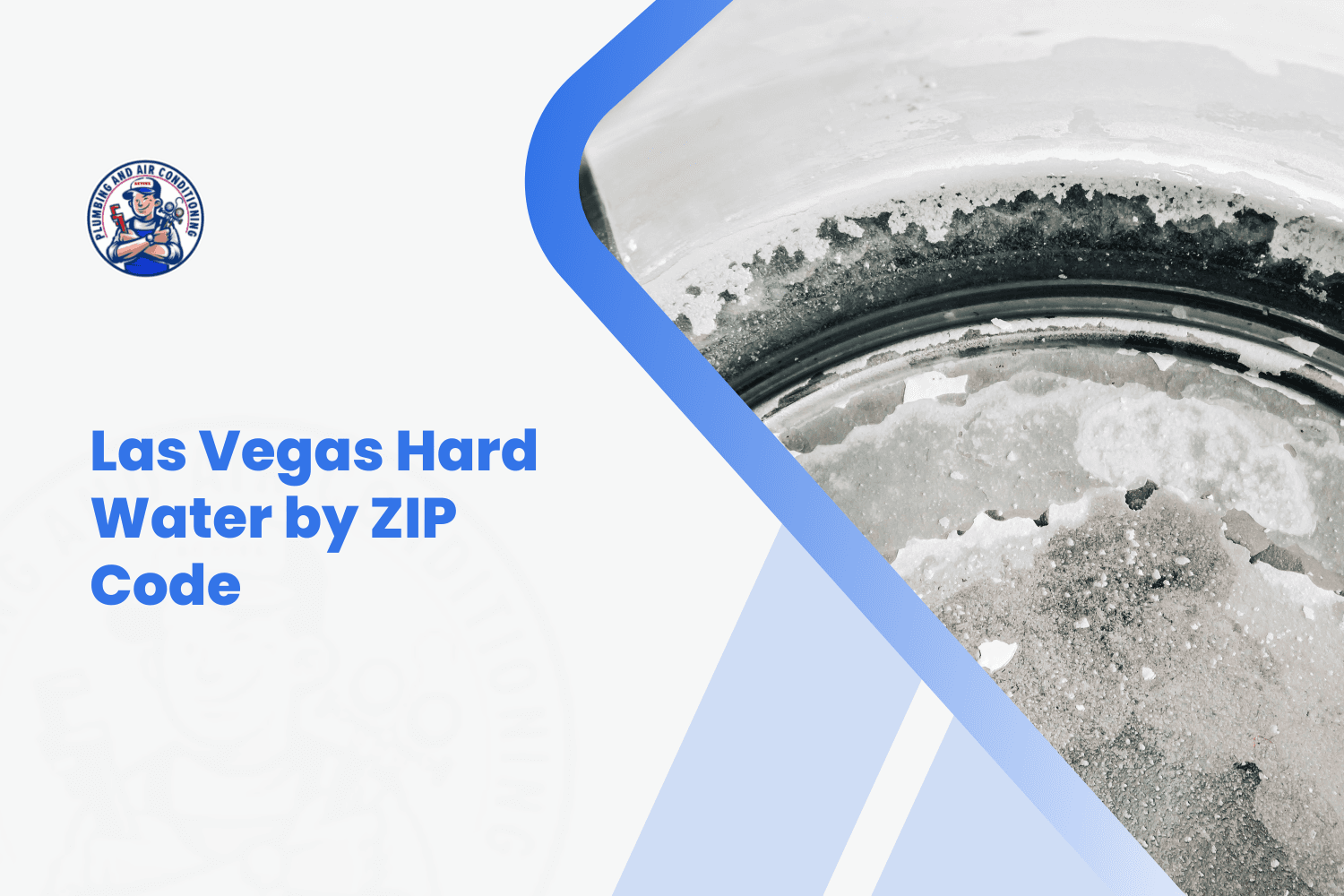
Numbers on a chart are one thing. Seeing what very hard water, about 16 grains per gallon, does to the inside of a water heater or a set of pipes is another. Hard water plumbing damage accumulates quietly - homeowners often do not notice until something breaks, leaks, or stops working entirely. Scale buildup in pipes and appliances is a slow-moving problem that costs real money when it finally shows up.
Here is what we see on service calls across the Las Vegas valley every single week.
Scale Buildup in Water Heaters and Tankless Units
Inside a tank water heater, hard water creates layers of calcium carbonate that settle on the bottom of the tank and coat the heating elements. At Las Vegas hardness levels, a tank water heater without a softener can lose 30-40% of its heating efficiency within a few years. The scale acts as insulation between the burner and the water, forcing the unit to work harder and run longer. Utility bills go up. The unit wears out sooner.
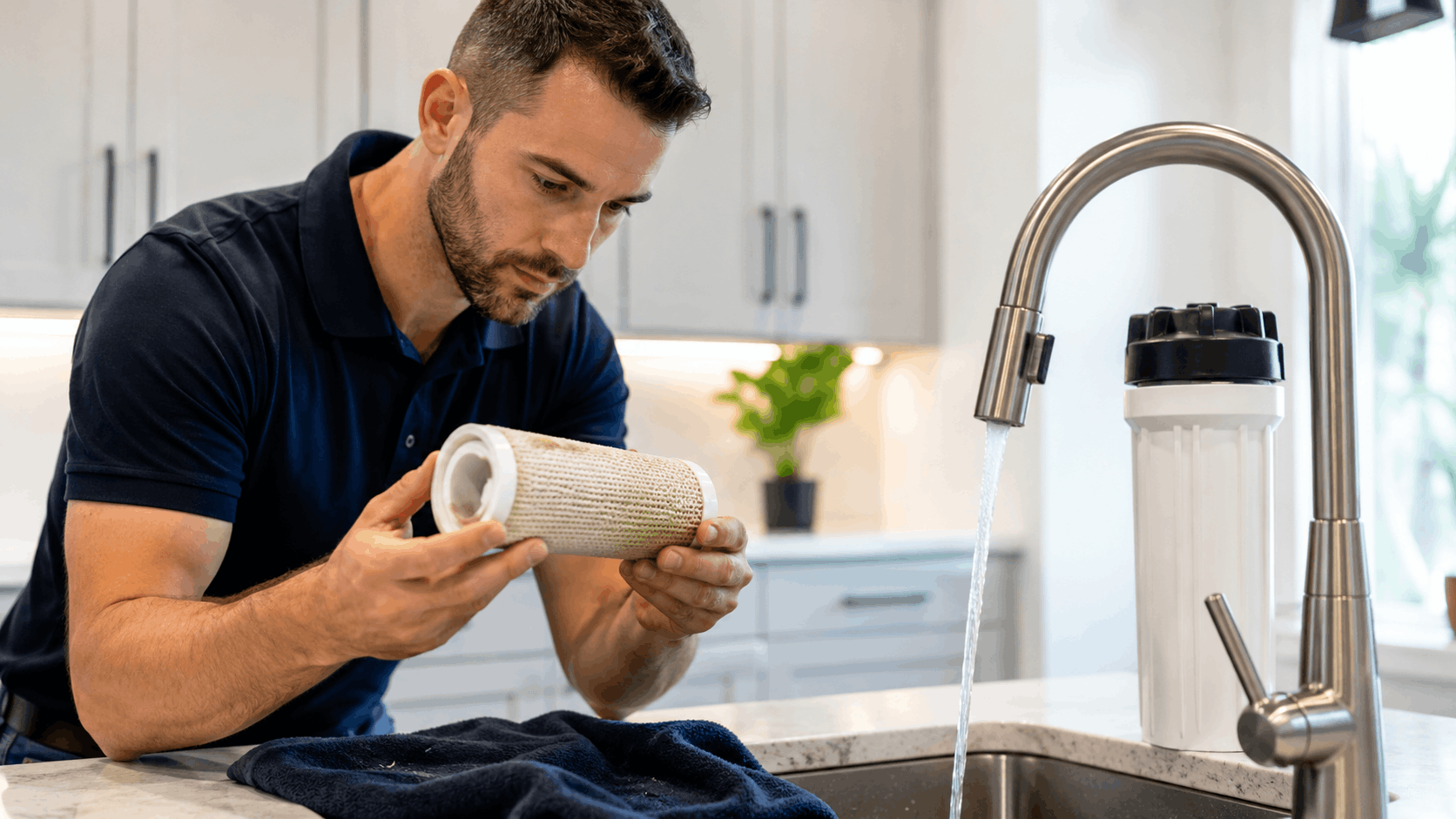
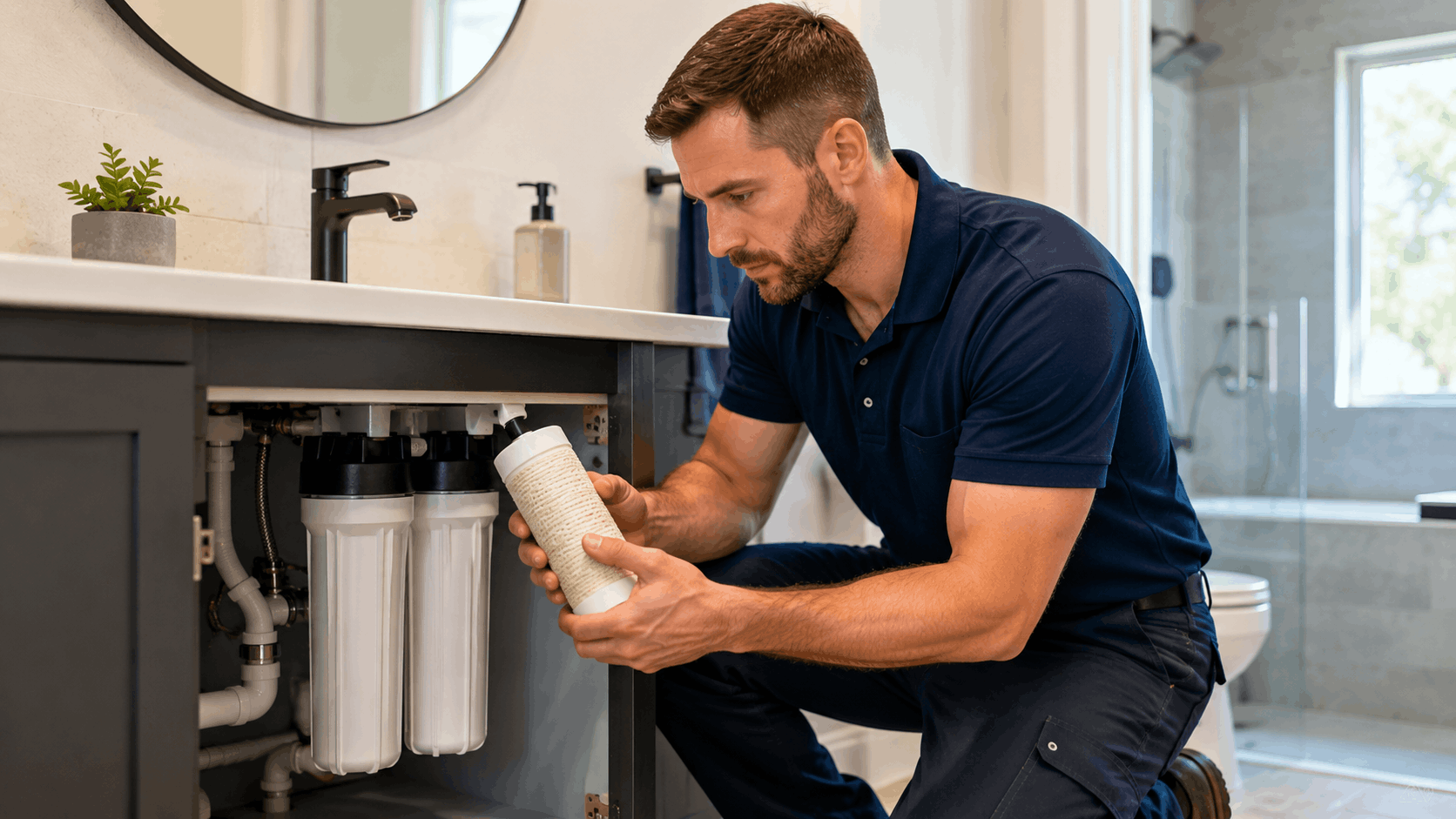
Tankless water heaters are not immune. The narrow heat exchanger passages inside tankless units are especially vulnerable to calcium carbonate buildup. Without annual flushing, a tankless unit in Las Vegas can start losing flow rate and eventually throw error codes within 3-4 years. Active Plumbing performs water heater services across the valley and sees premature tankless failures regularly in homes without softeners.
Faucets, Showerheads, and Fixture Damage
That classic white residue Las Vegas residents see on glass shower doors, around faucet bases, and on showerhead nozzles is calcium and magnesium deposit - the exact same minerals measured in GPG. Over time, these hard water stains etch into chrome and brushed nickel finishes, ruining the appearance of fixtures that should last a decade or more.
Clogged aerators are another constant issue. The fine mesh screen at the tip of every faucet catches mineral particles, and in Las Vegas water, those screens need cleaning or replacing every few months. When homeowners call about low water pressure at a single faucet, the culprit is almost always a faucet mineral buildup problem - not a plumbing failure. A quick fixture inspection and cleaning usually solves it.
Hidden Pipe Damage Homeowners Do Not See Until It Is Too Late
The most expensive hard water damage happens where nobody can see it - inside the walls and under the slab. Internal pipe scaling narrows the interior diameter of supply lines over time, causing gradual reduced water pressure that homeowners attribute to other causes. By the time the pressure drop is obvious, the pipes may be significantly restricted.
Older homes near East Las Vegas, along Maryland Parkway, and in established parts of Henderson with copper plumbing from the 1970s and 1980s are especially susceptible to pinhole leaks made worse by mineral deposits. Hard water chemistry combined with copper pipe aging creates conditions for pinhole leaks in copper pipes - tiny failures that can drip inside walls for weeks before anyone notices the damage. If you live in an older home with copper pipes and no softener, a leak detection inspection is a smart preventive measure.
Water Softener Options That Actually Work for Las Vegas Hardness Levels
Not every water treatment system performs the same at this level of hardness. Some products marketed as water softeners do not actually soften the water at all. Homeowners in the Las Vegas valley need to match their system to the specific hardness level in their ZIP code - otherwise they end up spending money on equipment that underperforms.
The table below compares the main options available for a water softener in Las Vegas.
| Feature | Salt-Based Softener | Salt-Free Conditioner |
|---|---|---|
| Method | Ion exchange - removes calcium and magnesium | Template-assisted crystallization - changes mineral structure |
| Actual Softening? | Yes | No |
| Scale Reduction | Eliminates scale | May reduce scale formation |
| Effective at 16+ GPG? | Yes | Limited effectiveness at high GPG |
| Requires Salt Refills? | Yes, regularly | No |
| Spot Prevention on Glass/Fixtures? | Yes | Minimal |
| Typical Cost Installed | $1,500-$3,500 | $1,000-$2,500 |
Salt-Based Softeners vs. Salt-Free Conditioners
A salt-based ion exchange softener is the only technology that truly removes calcium and magnesium from the water. It swaps those hardness minerals for sodium ions using a resin bed, and the result is genuinely soft water that does not leave scale or spots. For Las Vegas water at 16+ GPG, this is the technology that delivers real results.
Salt-free conditioners use a process called template-assisted crystallization (TAC) that changes the structure of calcium crystals so they are less likely to stick to surfaces. The water still tests hard. You still get spots on glass. The minerals are still there - they just behave slightly differently. At lower hardness levels (under 10 GPG), salt-free systems can be a reasonable choice. At Las Vegas hardness levels? Most local plumbers, including our team at Active Plumbing, recommend salt-based systems for homeowners who want the white deposits to actually stop.
Sizing a Water Softener for Your ZIP Code's Hardness Level
Buying a water softener without knowing your actual GPG is like buying shoes without knowing your size. The grain capacity of a softener needs to match your household's daily water usage multiplied by your local hardness level.
Here is a rough formula: (Number of people in home) x (gallons used per person per day - typically 75) x (GPG hardness) = grains needed per day. Multiply that by 7 for weekly capacity, then choose a system rated for that number. At the valley figure of about 16 grains per gallon, a family of four using roughly 75 gallons each per day needs in the region of 34,000 grains of capacity per regeneration cycle, while a couple needs far less. Getting this right matters - an undersized system regenerates too often, wasting salt and water, while an oversized system can develop bacteria in stagnant resin.
Reverse Osmosis and Whole-House Filtration Pairings
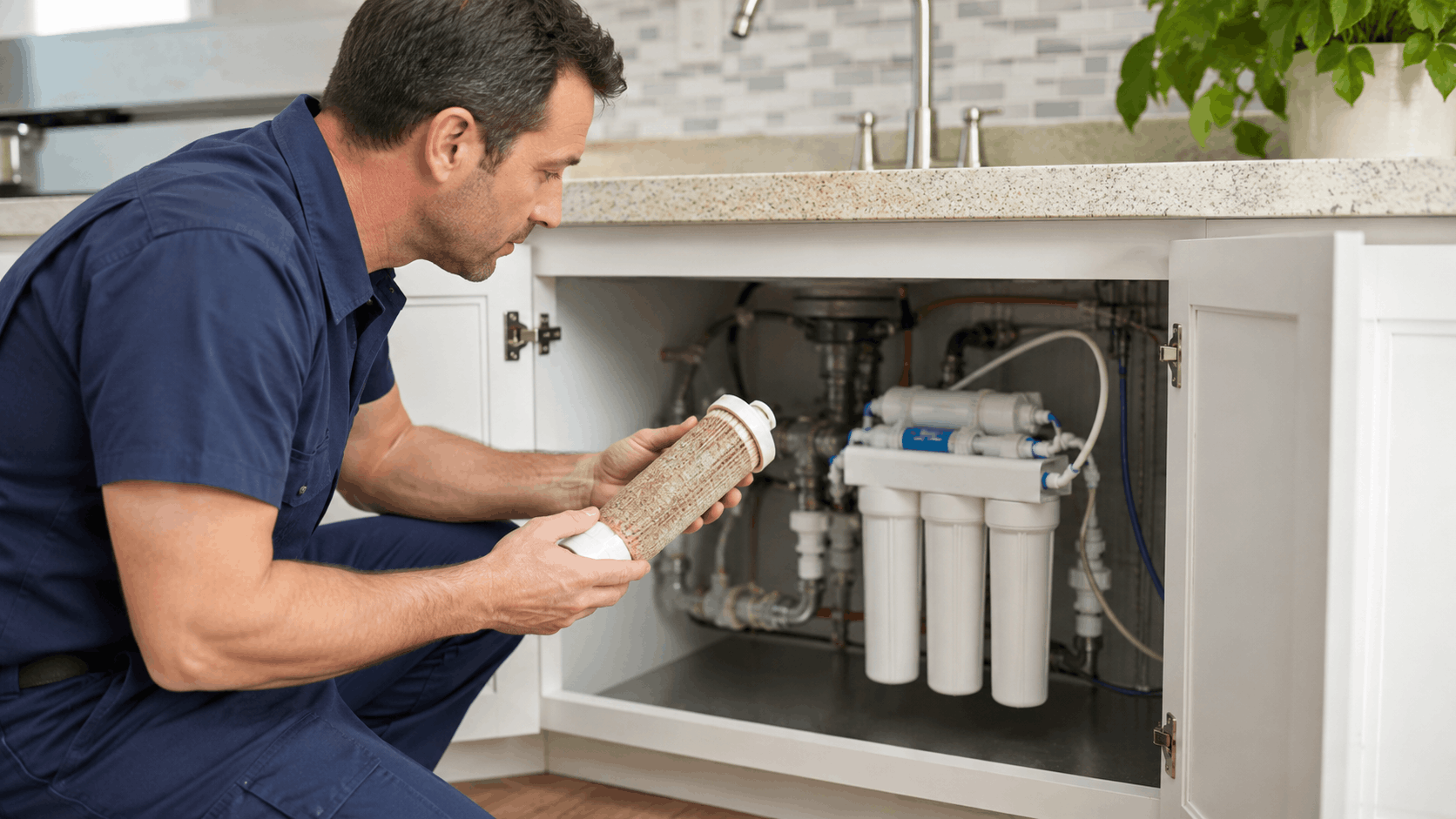
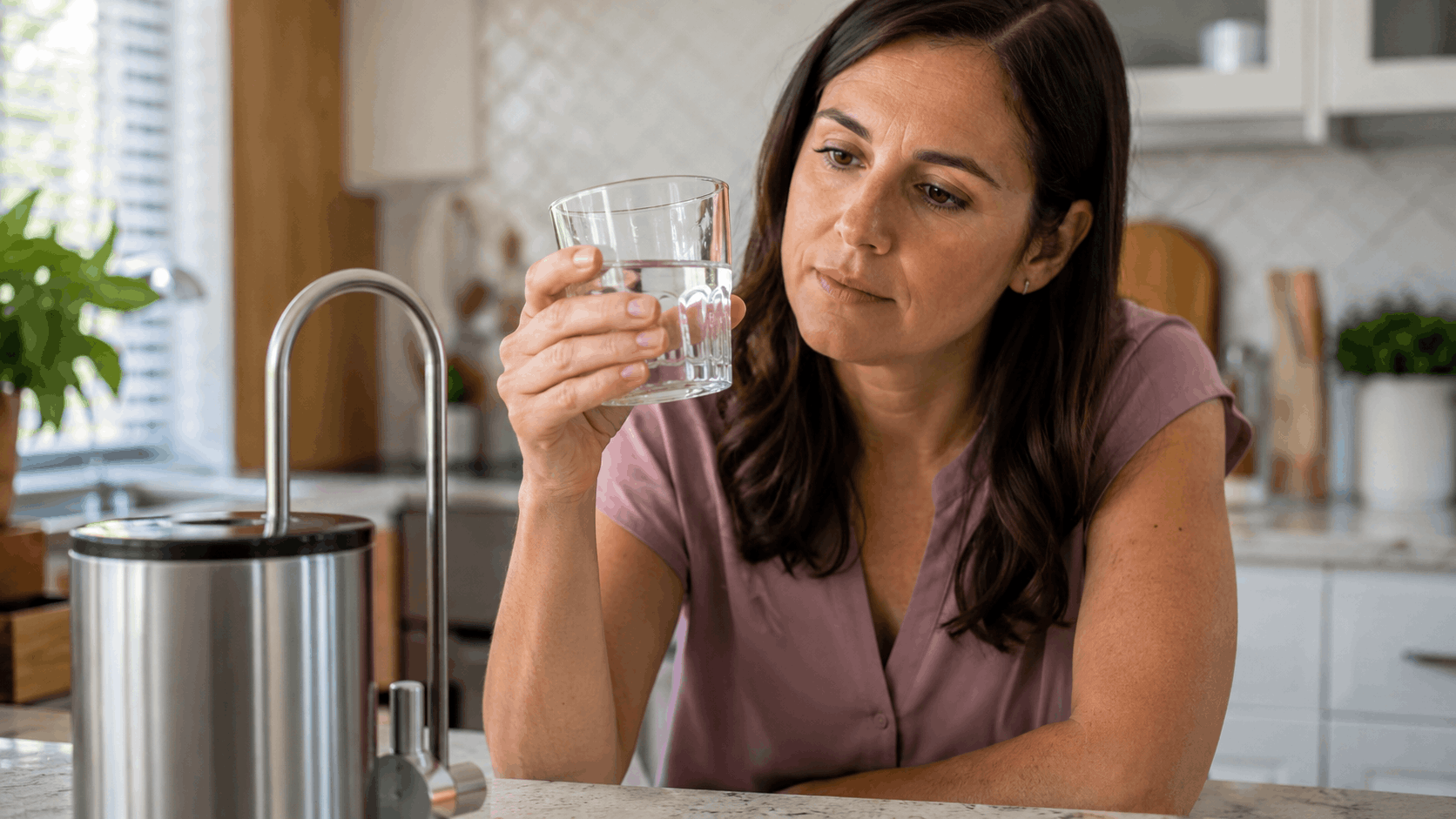
Many Las Vegas homeowners pair a whole-house softener with an under-sink reverse osmosis system for drinking water. The softener handles the hardness throughout the home, and the RO system removes the sodium added by the softener plus other contaminants like chlorine and dissolved solids at the kitchen tap.
A whole-house softener typically runs $1,500-$3,500 installed. A point-of-use RO system adds $300-$800 depending on the brand and installation complexity. For homeowners who want the full setup, Active Plumbing installs and services both whole house filtration and RO systems throughout the Las Vegas valley - and we can match the right combination to your home's specific water test results.
Need Help in Las Vegas?
Active Plumbing serves Las Vegas and all of Las Vegas Valley.
How Active Plumbing Helps Las Vegas Homeowners Deal with Hard Water
Active Plumbing has been working in homes across every corner of the Las Vegas valley, and hard water is the one problem that touches nearly every service call. Whether we are replacing a corroded faucet in a 1970s ranch house near East Charleston or installing a brand-new tankless unit in a Southern Highlands build, the effects of very hard water show up everywhere.
Our hard water plumbing services are shaped by real experience with local water conditions - not generic recommendations pulled from a product manual.
Free Water Hardness Testing During Service Calls
We test water hardness on-site during every service call where it is relevant. This gives homeowners a real reading for their specific home - not just the average for their ZIP code. Pipe condition, distance from the treatment facility, whether groundwater blending is occurring, and the home plumbing age all affect what actually comes out of the tap.
Two homes on the same street can test slightly differently depending on plumbing condition, existing treatment equipment and how recently the water heater was flushed. That is why we measure at the tap rather than quoting an area average. Our on-site water test takes just a few minutes and costs nothing during a scheduled visit. Book a service call and we will include a hardness reading.
Water Softener Installation and Annual Maintenance
A typical softener installation takes 3-5 hours. The unit goes near the main water entry point - usually in the garage for Las Vegas homes. We tie into the main supply line, install a bypass valve, connect the drain line, and program the control head based on your specific hardness reading and household size.
Active Plumbing works in homes from older neighborhoods near Charleston Boulevard to brand-new builds in Skye Canyon and everywhere in between. We carry and install multiple softener brands, and we match the system to the home rather than pushing one product for every situation. Annual maintenance includes checking the resin bed, inspecting the brine tank, cleaning the injector, and verifying that the system is regenerating on the correct schedule for your water hardness level.
Descaling Water Heaters and Tankless Units
Descaling a tankless water heater involves circulating a food-grade vinegar or citric acid solution through the heat exchanger to dissolve accumulated calcium carbonate. The process takes about 60-90 minutes. For tank water heaters, we drain the unit, flush sediment, and inspect the anode rod - which corrodes sooner in hard water.
In Las Vegas, this should be done at least once a year - twice a year if the home does not have a softener. Active Plumbing recommends scheduling these flushes before summer when demand on water heaters is highest. Peak summer temperatures mean your water heater runs more often for laundry, showers, and dishwashing. A scaled-up unit heading into a Las Vegas summer is a breakdown waiting to happen.
Final Thoughts
Las Vegas water is hard - the data confirms it and the scale inside local plumbing proves it. Whether a home sits downtown or in Mountain's Edge, the published figure is the same: 280 parts per million, about 16 grains per gallon, very hard water that affects pipes, fixtures and appliances year-round.
Knowing the actual GPG for a specific neighborhood is the first step toward doing something about it. The right water softener, properly sized and professionally installed, can protect plumbing, extend appliance life, and eliminate the constant battle with white mineral deposits.
Active Plumbing is here to help homeowners across the entire Las Vegas valley with water testing, softener installation, descaling, and all the plumbing maintenance that hard water demands. Contact Active Plumbing today to get a real hardness reading for your home and find the right treatment solution for your specific situation.
Frequently Asked Questions
- How hard is the water in Las Vegas compared to the national average?
- Las Vegas water is about 16 grains per gallon, or 280 parts per million, which the Southern Nevada Water Authority categorises as very hard. That is several times harder than the supply in most American cities. This dramatic difference is why hard water damage in Las Vegas progresses more quickly than in most other cities, and why water treatment is such a common recommendation from local plumbers.
- Does every ZIP code in Las Vegas have the same water hardness?
- Essentially, yes. SNWA reports hardness by treatment facility rather than by ZIP code, and the figure it publishes for the valley is 280 parts per million, or about 16 grains per gallon. Which facility serves an address, and how much groundwater is blended into the supply, can move a reading slightly, but there is no published table showing one ZIP code as hard and another as soft. Anyone presenting per-ZIP hardness numbers as official data is making them up.
- Is Las Vegas tap water safe to drink even though it is hard?
- Yes. Las Vegas tap water safety is not compromised by hardness. SNWA water meets all EPA water standards for safe drinking water. Calcium and magnesium are not harmful to human health - many people actually benefit from dietary mineral intake through water. Hardness is strictly a plumbing and appliance concern, not a safety issue. The minerals that make water hard cause scale and buildup, but they do not make the water unsafe to consume.
- How much does a water softener cost to install in Las Vegas?
- A quality whole-house water softener installation typically runs between $1,500 and $3,500 in the Las Vegas area. The final installation price depends on the system's grain capacity, brand, plumbing complexity, and whether any modifications are needed at the water entry point. Larger homes or those with very high hardness readings may need higher-capacity systems that fall at the upper end of that range. Active Plumbing provides written estimates based on individual home needs.
- How often should I flush my tankless water heater in Las Vegas?
- At minimum, a tankless flush should happen once a year. For homes without a water softener, every six months is the recommended water heater maintenance schedule. Las Vegas hardness levels cause calcium scale to build up inside tankless heat exchangers significantly more quickly than in cities with softer water. Skipping annual maintenance can lead to reduced hot water flow, error codes, and premature unit failure - all of which cost far more than a routine descaling.
- Will a water softener fix the white spots on my shower doors?
- A properly installed water softener will prevent new mineral deposits from forming on shower doors, fixtures, and glass surfaces. Existing hard water stains need to be removed first using a white vinegar solution, a paste of baking soda, or a commercial hard water stain removal product. Once the softener is running, homeowners notice a dramatic reduction in cleaning time because new deposits simply stop forming on wet surfaces.
- Does SNWA add anything to soften the water before it reaches my home?
- No. SNWA water treatment focuses on safety measures - disinfection with chlorine, pH adjustment, fluoride addition, and removal of regulated contaminants. The authority does not soften the water or reduce mineral content before distribution. Municipal water softening at the scale needed for Las Vegas would be extremely expensive, so any softening must be done at the individual home level with a point-of-entry treatment system.
- Can hard water cause pinhole leaks in copper pipes?
- Hard water alone does not directly punch holes in copper pipes, but mineral buildup combined with water chemistry changes can speed up corrosion at specific points along copper lines. This is common in older Las Vegas homes built in the 1970s through 1990s, especially in areas near East Las Vegas and established Henderson neighborhoods. Pinhole leaks in copper pipes are worsened by scale deposits that create uneven corrosion patterns along pipe walls.
- Should I get a salt-based or salt-free water softener for Las Vegas?
- At the valley's hardness of about 16 grains per gallon, a salt-based softener is the far more effective choice. Salt-free conditioners may provide some scale reduction but do not actually remove calcium and magnesium minerals from the water. Spots, film, and buildup will continue with a salt-free system. The best softener for Las Vegas conditions is a properly sized salt-based ion exchange system matched to the home's specific GPG reading and water usage.
- Where can I get my water tested for hardness in Las Vegas?
- Homeowners have several options for a water hardness test in Las Vegas. Basic test strips are sold at hardware stores across the valley for a few dollars. SNWA publishes annual data online for each treatment facility zone. For the most accurate home water testing result, a licensed plumber like Active Plumbing can test at the tap during any service visit - measuring exactly what is coming through the home's plumbing, not just what leaves the treatment plant.
Licensed plumbing professionals serving Las Vegas and Las Vegas Valley.
Licensed in Nevada · License #0047021
Last updated on
Why trust Active Plumbing?
Founded in 1991, Active Plumbing is a licensed and insured plumber serving Las Vegas and Las Vegas Valley. All content is reviewed by our licensed technicians.

Need Help in Las Vegas?
Active Plumbing serves Las Vegas and all of Las Vegas Valley.
Related Articles
Best Drain Cleaning Method for Las Vegas Hard Water Buildup
Las Vegas hard water ranks among the harshest in the US. Learn which drain cleaning methods actually work on mineral scale - and when to call a professional.
How to Prevent Water Heater Failure in Las Vegas (Hard Water Maintenance Plan)
Learn how Las Vegas hard water wears out water heaters sooner and follow our maintenance plan to extend your unit's lifespan years.
Tankless Water Heater Maintenance in Las Vegas: Why Hard Water Makes It Critical
Las Vegas hard water from Lake Mead builds scale fast inside tankless heaters. Learn the warning signs, real maintenance steps, and how often valley homes need service.