Industry News
Southern Nevada Health District Plumbing Code: What SNHD Actually Regulates

Key Takeaways
- The Southern Nevada Health District does not write or enforce the plumbing code; its plumbing role covers septic systems and public health facilities such as restaurants and hotels.
- Las Vegas and Clark County use the 2024 Uniform Plumbing Code with the Southern Nevada Amendments, in effect since January 2026 and adopted separately by each jurisdiction.
- Plumbing permits and inspections come from the building department for the address: Las Vegas, Henderson, North Las Vegas, Boulder City or Clark County.
- Areas such as Paradise, Spring Valley, Enterprise, Sunrise Manor and Summerlin South are unincorporated Clark County, even though residents call them Las Vegas.
- Backflow prevention is run by the water provider; the Las Vegas Valley Water District requires assemblies on commercial buildings, multifamily properties and irrigation systems.
- Valley water is very hard at about 280 parts per million (16 grains per gallon), which shortens water heater life and makes flushing and scale control worthwhile.
- Permit fees, fixture flow rates and code details change, so confirm them with the building department or the water authority before a project.
- Active Plumbing is licensed through the Nevada State Contractors Board under license #0047021 and pulls permits with the correct office for every address.
In This Article
Imagine a homeowner in Summerlin planning a bathroom remodel. A search for the Las Vegas plumbing code turns up the Southern Nevada Health District, so the homeowner assumes SNHD is where the permit comes from. It is not. For almost every home plumbing job in the valley, the permit and the inspection come from the building department for the address, and the rules come from the Uniform Plumbing Code as amended for Southern Nevada. SNHD matters too, but for a narrower and very specific set of situations.
This mix-up is common, and it costs people time. Knowing which agency handles which part of a plumbing project is the fastest way to get the right permit, pass inspection the first time, and avoid being bounced between offices. Whether you are a homeowner planning a remodel, a restaurant owner, or a contractor new to the valley, this guide lays out who actually does what.
At Active Plumbing, we pull permits and pass inspections across the valley every week, from tract homes in Henderson to commercial kitchens along Spring Mountain Road. Here is the plain-English version of how plumbing regulation works in Southern Nevada.
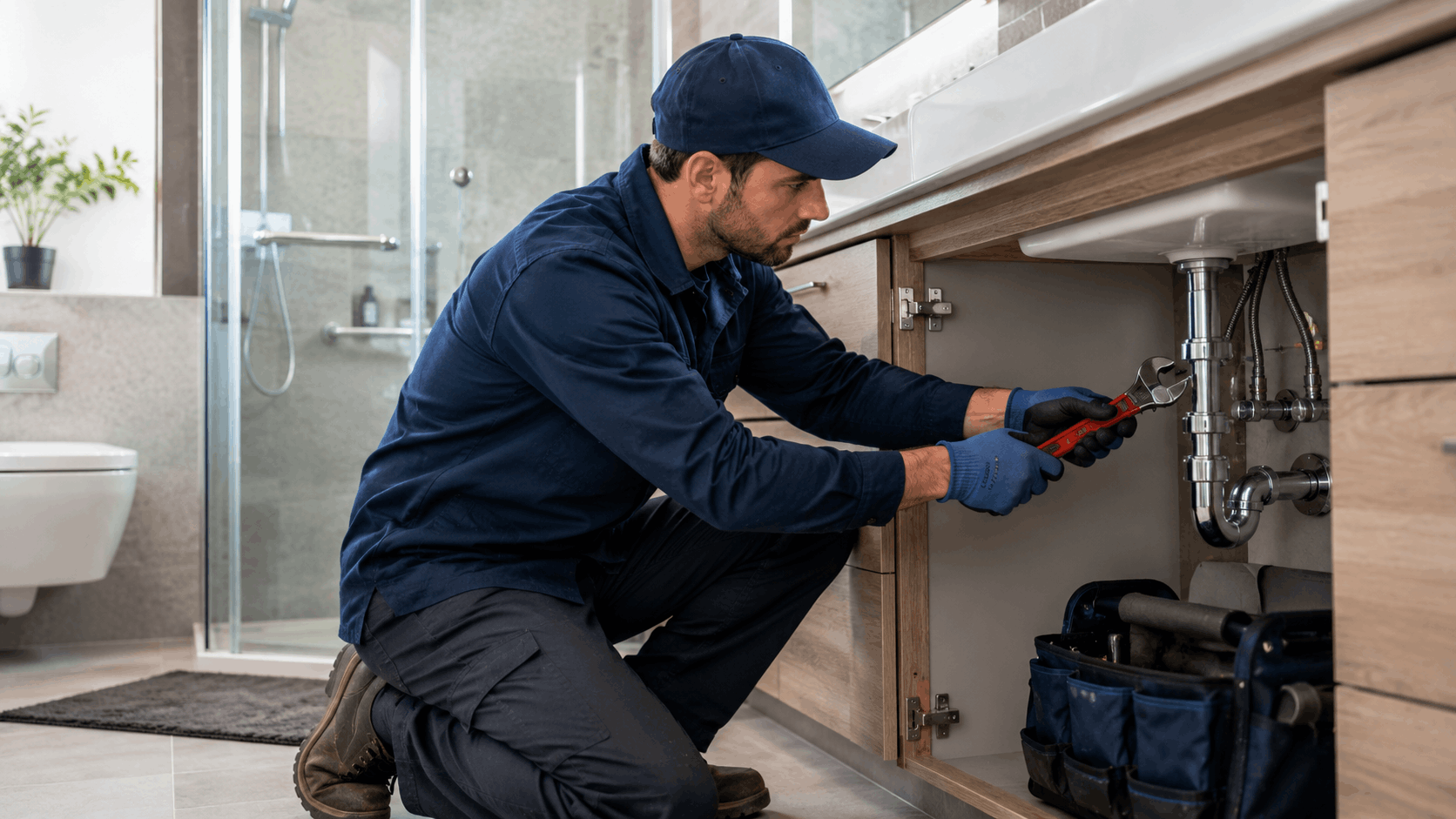
What the Southern Nevada Health District Actually Regulates for Plumbing
The Southern Nevada Health District is the public health agency for Clark County. It does not write or enforce the plumbing code for homes and ordinary buildings. Its plumbing-related work centres on public health: septic systems, and the plumbing in restaurants, other food establishments and public accommodations such as hotels.
On septic, SNHD issues permits for individual sewage disposal systems, keeps the records for existing septic systems in Clark County, and signs off building permits for pools and remodels on properties that use a septic system. For food establishments, the plans submitted to SNHD must show plumbing supply lines, waste lines and fixtures, and SNHD may carry out a rough plumbing inspection before its final permitting inspection. Everything else in a typical plumbing job runs through other agencies.
| Regulatory Area | Who Handles It | Where SNHD Fits |
|---|---|---|
| Residential water heater replacement | Building department for the address | Not involved |
| Backflow prevention / cross-connection control | Your water provider, such as LVVWD | Not the program operator |
| Plumbing code and inspections | Building department for the address | Not involved |
| Restaurant and food service plumbing | Building department | Yes - health permit plan review |
| Septic systems | SNHD | Yes - permits and records |
| Residential bathroom remodel | Building department for the address | Only if the home is on septic |
| Contractor licensing | Nevada State Contractors Board | Not involved |
SNHD vs. City of Las Vegas Building Department - Who Handles What
The building department is the authority for plumbing permits, plan review and inspections. It applies the Uniform Plumbing Code with the Southern Nevada Amendments, and its Building Official decides questions about alternate materials and methods. SNHD steps in only where public health rules apply: a restaurant health permit, a hotel, or a property on septic. For a simple bathroom remodel in a Summerlin home on city sewer, you deal only with the building department.
The valley has several building departments. Clark County, the City of Las Vegas, the City of North Las Vegas, the City of Henderson and Boulder City each run their own. Large areas that residents call Las Vegas are actually unincorporated Clark County, including Paradise, Winchester, Spring Valley, Enterprise, Sunrise Manor and Summerlin South, as well as places like Sunrise Manor and Whitney. In those areas, Clark County is the issuing authority rather than a city.
Active Plumbing confirms the jurisdiction for every address before quoting permitted work. On restaurant and hospitality jobs, we coordinate the building permit and the health permit requirements together so neither one holds up the other.
Types of Plumbing Work That Involve SNHD Review
SNHD review applies to specific situations. A new or remodelled restaurant, cafe or other food establishment needs a health permit, and SNHD reviews the plans, including plumbing supply lines, waste lines and fixtures. Public accommodations such as hotels have their own SNHD plan review rules, including hand sinks, indirect drains to floor sinks, and keeping sewer lines away from food areas.
Septic is the other major category. Properties that are not connected to a community sewer, often in outlying areas and parts of unincorporated Spring Valley or Enterprise, may use an individual sewage disposal system, and SNHD permits those systems and signs off remodels on those properties.
Homes in older areas near downtown Las Vegas are a good example of where the building department, not SNHD, drives the work. Sewer lateral repairs, repipes and fixture replacements there follow the building department's permit and inspection process.
Where to Find the Current Plumbing Code Documents
For the plumbing code itself, start with the building department for the address. Each jurisdiction adopts and codifies the Southern Nevada Amendments to the Uniform Plumbing Code through its own ordinance, and the published amendments state that they are not code unless adopted by the individual jurisdiction. The base code is published by the International Association of Plumbing and Mechanical Officials (IAPMO).
For septic permits and health permits for food establishments, the source is the Southern Nevada Health District at southernnevadahealthdistrict.org. Its main office is at 280 South Decatur Boulevard in Las Vegas.
For backflow prevention, the source is your water provider. Most of the valley is served by the Las Vegas Valley Water District, which runs its own backflow prevention program.
Get Your Quote
Tell us what's going on and we'll get back to you fast.
Where the Las Vegas Plumbing Code Really Comes From
Nevada has no statewide plumbing code. Las Vegas and Clark County use the Uniform Plumbing Code published by IAPMO together with the Southern Nevada Amendments, while northern Nevada uses its own amendment package. That means the code that applies is decided jurisdiction by jurisdiction.
The current edition took effect in early 2026. In July 2025, Southern Nevada's jurisdictions adopted the 2024 Uniform Plumbing Code with new Southern Nevada Amendments, replacing the 2018 edition. The effective dates were January 1, 2026 in North Las Vegas and Mesquite, January 2 in Henderson, January 5 in the City of Las Vegas and January 11 in unincorporated Clark County. The local adoption includes Appendix M, a newer method for sizing water supply pipes.
Here is what that means in practice for anyone planning plumbing work in the valley:
- The base rules come from the Uniform Plumbing Code published by IAPMO
- Southern Nevada adds its own local amendments to that code
- Each city and the county adopt those amendments through their own ordinance
- The building department for the address issues the permit and inspects the work
- The Building Official decides on alternate materials and methods
- SNHD adds requirements only for septic systems and public health facilities
- Your water provider runs backflow prevention and cross-connection control
Each of these layers has a different office and a different contact. Let us break them down.
The Southern Nevada Amendments to the Uniform Plumbing Code
The Southern Nevada Amendments are developed by the Southern Nevada Building Officials' Uniform Plumbing Code Committee. Voting on amendment proposals is limited to one vote each for Clark County, Henderson, Las Vegas, North Las Vegas, Boulder City and Mesquite, and, in the 2024 cycle, Pahrump, together with the Clark County School District and three industry representatives.
The amendments are not intended to prevent the use of any material or method not specifically prescribed, provided the alternate is approved and authorised by the Building Official. That is why a knowledgeable plumber talks to the building department, not SNHD, when a job calls for something outside the usual. Active Plumbing handles tank water heater installations to the rules of the jurisdiction the home sits in.
The same applies to tankless water heater installations, where venting and condensate details follow the manufacturer's instructions and the local code as adopted.
Why Your Address Decides the Rules
Because each jurisdiction adopts the code itself, the same job can involve a different permit office depending on the street. A home in Green Valley is in the City of Henderson. A home a few miles away in Spring Valley is in unincorporated Clark County, even though its owner describes it as Las Vegas. Establishing the correct jurisdiction before quoting permitted work is a routine first step in this market.
Telling a customer which department governs their address is a small thing, but it prevents the most common delay in the process: applying to the wrong office. It also matters for the whole house repipe projects that older homes often need, since those always require a permit.
Examples of What the Local Amendments Cover
The Southern Nevada Amendments include specific local rules. For example, urinals are limited to not more than 0.5 gallon per flush, with automatic periodic or continuous flushing devices prohibited. The amendments also specify the materials allowed for a relief valve drain located inside a building: galvanized steel, hard-drawn copper piping and fittings, CPVC, PP, or listed flexible corrugated connectors.
Details like these change between code cycles, which is why they should be confirmed with the building department rather than taken from memory. A plumber who works within the local code every day knows where to check.

Need Help in Las Vegas?
Active Plumbing serves Las Vegas and all of Las Vegas Valley.
How This Affects Residential Plumbing Projects
For homeowners, the practical takeaway is simple: residential plumbing permits come from the building department for your address, not from SNHD. The only common exception is a home on a septic system, where SNHD also signs off remodels and pool permits.
If you live in neighbourhoods like Summerlin South, Green Valley or Centennial Hills and have a remodel planned, the permit, plan review and inspections all run through your city or the county. The rules are manageable, but they require a plumber who knows which office handles your street.
Kitchen and Bathroom Remodels
Remodels that move or add fixtures, change drain or vent layouts, or open walls around plumbing generally need a permit from the building department. The inspector checks the work against the code as adopted by that jurisdiction, including drain sizing, venting, fixture spacing and cleanout access.
Active Plumbing handles the bathroom and kitchen remodel plumbing permit process so homeowners do not have to guess which office to call or what the inspector will look for.
Whole-House Repipes and Older Pipe
Las Vegas grew in waves, and the pipe in the ground reflects that. Pre-1960s housing in the historic core often has galvanized steel supply lines and cast iron drains, both of which fail through internal corrosion and scale. Many valley tracts built from the 1970s through the early 1990s used polybutylene supply lines, a material associated with failure at fittings and a standard candidate for replacement.
Kitec fittings appear in some later 1990s and 2000s construction, copper is widespread across the middle decades, and PEX dominates newer building. The build year is a useful guide, but the pipe should always be confirmed on site rather than assumed.
Active Plumbing has completed many whole house repipes in Las Vegas, and every one runs through the building department for the address.
Water Heaters and Hard Water
The Southern Nevada Water Authority states that the valley's water hardness is 280 parts per million, or 16 grains per gallon, which is classed as very hard. That scale builds up on water heater elements and tank bottoms, shortens heater life, and is especially hard on tankless units, where the heat exchanger is a narrow passage.
Water heater replacements typically need a permit, and the inspector checks venting, connections, strapping and relief valve discharge. In this valley, regular flushing and scale reduction extend equipment life rather than being optional extras.
Commercial Plumbing: Where SNHD and the Building Department Both Apply
Commercial projects are where SNHD most often enters the picture, alongside the building department and the water provider. Restaurants, food service and hotels need both a building permit and SNHD approval, while most offices, retail spaces and industrial buildings deal only with the building department and the water provider.
| Commercial Project Type | Building Department | Other Agencies |
|---|---|---|
| Restaurant / food service | Plumbing permit and inspections | SNHD health permit plan review |
| Medical / dental office | Plumbing permit and inspections | Water provider for backflow |
| Retail with restrooms | Plumbing permit and inspections | Water provider for backflow |
| Hotels / hospitality | Plumbing permit and inspections | SNHD public accommodations review |
| Mixed-use buildings | Plumbing permit and inspections | SNHD for any food tenants |
Restaurants and Food Service
A new or remodelled restaurant needs its building permit and a health permit from SNHD. The plans submitted to SNHD must show plumbing supply lines, waste lines and fixtures, and SNHD may carry out a rough plumbing inspection and a pre-final walkthrough before the final permitting inspection. For new construction, the certificate of occupancy from the building department must come first.
Once open, restaurants answer to SNHD inspections on health rules, and sewage backups or non-working sinks are treated as serious problems. Active Plumbing works with restaurant owners along Spring Mountain Road and in the Chinatown corridor, and our drain and sewer services team handles grease line jetting when buildup gets ahead of the cleaning schedule.
Hotels, High-Rises and Large Buildings
Large buildings bring their own concerns. The Southern Nevada Water Authority notes that while Legionella is found in relatively low concentrations in surface water and groundwater systems, it can grow in large plumbing systems such as those in offices, hospitals, hotels and high rises, where biofilm forms along the inside of pipes.
In a valley with a large hospitality and high-rise sector, that makes temperature management, dead legs, stagnation in low-use lines and recirculation design genuine commercial plumbing issues. Active Plumbing's commercial team handles fixture installation and plumbing repairs for commercial and healthcare facilities across the valley.
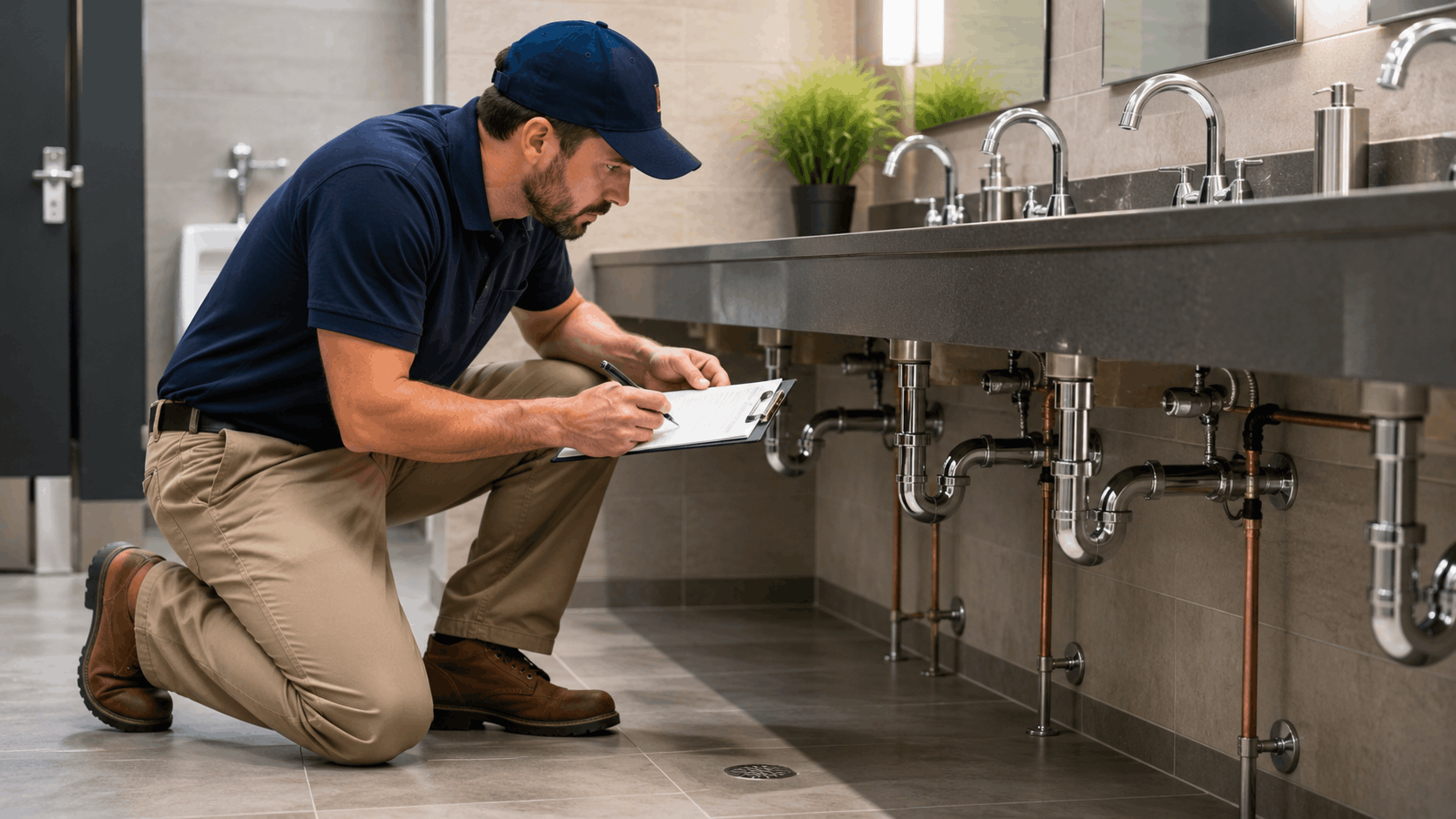
Permits, Inspections and Backflow Testing
Getting the right permit from the right office is most of the battle. The process itself is similar across the valley's building departments, but the forms, fees and timelines belong to each jurisdiction and change over time, so they should be confirmed with the office for the address rather than taken from an article.
Active Plumbing handles the permit and inspection process for customers across the Las Vegas Valley, from confirming the jurisdiction to being on site when the inspector arrives.
Who Issues Your Plumbing Permit
Your plumbing permit comes from the building department of the jurisdiction the property sits in: the City of Las Vegas, Henderson, North Las Vegas, Boulder City, or Clark County for unincorporated areas. That office reviews plans where required, issues the permit, and schedules inspections. SNHD approvals are added only for septic properties and public health facilities.
Homeowners can book an appointment with our team, and we handle the paperwork with the correct office.
Backflow Prevention Is Run by Your Water Provider
Backflow prevention in the valley is run by the water providers, under Nevada's rules for public water systems. The Las Vegas Valley Water District's backflow prevention program requires backflow prevention assemblies on commercial buildings, multifamily properties and irrigation systems. Nevada has required builders to install them on new commercial properties since the 1990s, and the Water District retrofits older buildings and services that predate the rule.
Other water providers in the valley run their own programs, so the rules and schedule depend on who supplies the water. Under the local amendments, backflow assemblies must be tested by a certified tester at installation, after any repair or relocation, and at least once a year after that. Active Plumbing helps property owners stay on schedule with their water provider's requirements.
Common Reasons Plumbing Inspections Fail in Clark County
After years of inspections across the valley, the same issues come up again and again. Improper drain slope is one of the most frequent: horizontal drains need a steady fall toward the sewer, and eyeballing it does not pass. Missing or inaccessible cleanouts are another common flag.
Other frequent problems include the wrong pipe material for the application, unsupported pipe runs, loose test caps, the wrong solvent cement on ABS or PVC joints, and pipe ends that were not reamed after cutting. A licensed plumber who works to the code daily catches these before the inspector arrives.
Need Help in Las Vegas?
Active Plumbing serves Las Vegas and all of Las Vegas Valley.
Nevada Hot Water Heater Code: What Clark County Requires
Nevada adopts the Uniform Plumbing Code as its statewide foundation, and Clark County applies it through local amendments enforced by both municipal building departments and the Southern Nevada Health District. The result is a layered set of requirements that go beyond the base state code.
Under the 2026 updates, every new tank-style water heater installation in Clark County must include an expansion tank regardless of whether a pressure-reducing valve or check valve is present on the supply line. Dual seismic straps are now required by code on all tank units over 50 gallons, placed in the upper and lower third of the tank. Single-wall vent connectors must maintain increased clearance from combustible materials under the revised venting standards.
For condensing tankless units vented with PVC or CPVC, the code now prohibits field modifications to vent termination locations without inspector approval. Permits for water heater work are issued through the relevant city building department, not SNHD, unless the installation involves a cross-connection concern. Confirming which local amendments apply to your specific jurisdiction within Clark County before roughing in any water heater is essential to passing inspection on the first visit.
Water Conservation Rules in a Desert Valley
Conservation requirements in Southern Nevada are enforceable through code and through water authority rules, reflecting a desert valley that depends on the Colorado River. Fixture flow rates, irrigation rules and landscape water restrictions all bear on plumbing work, and they are checked, not just recommended. The Southern Nevada Water Authority (SNWA) is the main source for the valley's conservation rules.
A plumber who can explain what is required, rather than just recommended, is more useful than one who cannot. Where a specific current flow rate, restriction or rebate is in question, the answer should be confirmed with the jurisdiction or the water authority, because these figures are updated.
Fixture Flow Rates: Confirm Before You Buy
Under the Southern Nevada Amendments to the 2024 code, toilets are limited to 1.28 gallons per flush, showerheads to 2.0 gallons per minute at 80 psi, private lavatory faucets to 1.5 gallons per minute and public lavatory faucets to 0.5 gallons per minute at 60 psi. Nevada law (NRS 278.582) also requires faucets, toilets, urinals and showerheads to be EPA WaterSense certified in buildings built, expanded or renovated since January 1, 2020.
These limits can change between code cycles, so confirm them with the building department before buying fixtures for a remodel.
Active Plumbing installs water-efficient fixtures that meet current local requirements. Our fixture installation service covers everything from a single faucet swap to a full commercial restroom retrofit.
Hot Water Delivery and Recirculation
Single-story homes across the valley often have long runs from the water heater to the farthest fixture, which means water wasted while waiting for it to heat up. A recirculation system can cut that waste, and hard water makes good equipment choices even more important.
Active Plumbing installs both timer-based and on-demand recirculation systems as part of our water heater services, sized to the home and the local rules.
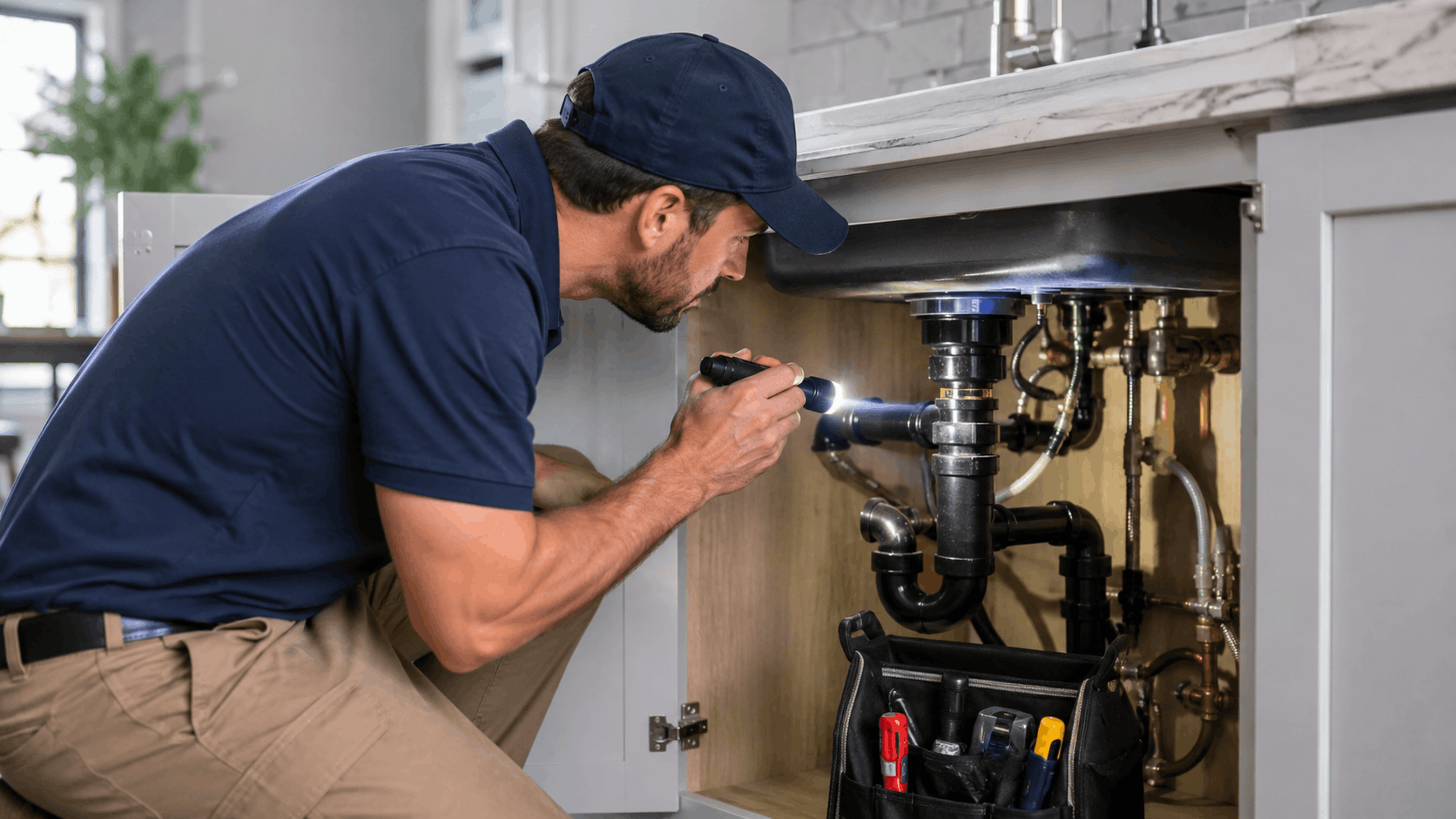
How Active Plumbing Works Within Las Vegas Plumbing Codes
Code knowledge means nothing if the plumber on the job does not apply it. Active Plumbing is a fourth-generation, family-owned plumbing company serving the valley since 1991, licensed through the Nevada State Contractors Board under license #0047021.
Plumbing contractors in Nevada are licensed through the Nevada State Contractors Board, and work requiring a permit must be performed by an appropriately licensed contractor. You are entitled to ask any plumber for their license number and to verify it with the board. In a market with a real unlicensed-trade problem, that one check protects you.
Licensed, Local and Accountable
Our team works to the code as adopted by each jurisdiction in the valley, and we confirm the right office for every permitted job. That translates into fewer failed inspections, correct materials the first time, and projects that close without surprises.
Homeowners in communities from The Lakes to Aliante benefit because the plumber in their home knows which department governs their street and what that inspector will check.
Serving Every Corner of the Las Vegas Valley
Active Plumbing's service area covers the full Las Vegas Valley - from Henderson and Boulder City in the southeast to North Las Vegas in the north and Summerlin in the west. Most of the valley is built slab-on-grade, which makes under-slab supply line failures a distinct category of work here.
Whether you need slab leak detection and repair in Paradise or a restaurant plumbing project near the Strip, our crews know the local agencies and the local conditions. We are a local family business that drives the same roads and deals with the same hard water as our customers.
Need Help in Las Vegas?
Active Plumbing serves Las Vegas and all of Las Vegas Valley.
Final Thoughts
The Southern Nevada Health District plays an important but narrow role in plumbing: septic systems and public health facilities like restaurants and hotels. The plumbing code itself comes from the Uniform Plumbing Code with the Southern Nevada Amendments, adopted and enforced by the building department for each address, while backflow prevention runs through your water provider. Knowing that saves time, avoids applying to the wrong office, and gets permits closed faster. Call our team at Active Plumbing or schedule a visit to discuss your next project with a plumber who knows which rules apply to your address.
Frequently Asked Questions About SNHD and the Las Vegas Plumbing Code
Does the Southern Nevada Health District write the plumbing code?
No. Nevada has no statewide plumbing code, and SNHD does not write one. Las Vegas and Clark County use the Uniform Plumbing Code published by IAPMO together with the Southern Nevada Amendments, which each city and the county adopt through their own ordinance. The building department for the address enforces it.
Who issues plumbing permits in Las Vegas?
The building department of the jurisdiction the property sits in: the City of Las Vegas, Henderson, North Las Vegas, Boulder City, or Clark County for unincorporated areas such as Paradise, Spring Valley, Enterprise and Summerlin South. Active Plumbing confirms the jurisdiction and pulls the permit on every permitted job.
When does SNHD get involved in plumbing?
SNHD is involved for septic systems, which it permits and keeps records for, and for public health facilities such as restaurants, other food establishments and hotels, where its plan review covers plumbing supply lines, waste lines and fixtures. For most homes on city sewer, SNHD is not involved in plumbing work at all.
Do I need a permit for a water heater replacement in Las Vegas?
In the valley's jurisdictions, water heater replacements typically require a permit from the building department, and the inspection covers venting, connections, strapping and relief valve discharge. Skipping the permit can cause problems when selling the home. Active Plumbing pulls the permit and schedules the inspection on every water heater job.
Who requires backflow testing in Las Vegas?
Your water provider. The Las Vegas Valley Water District runs a backflow prevention program that requires assemblies on commercial buildings, multifamily properties and irrigation systems, and other providers in the valley run their own programs. Under the local amendments, backflow assemblies must be tested by a certified tester at installation, after any repair or relocation, and at least once a year after that.
What pipe is likely in my Las Vegas home?
It depends on when and where the home was built. Pre-1960s homes often have galvanized supply and cast iron drains, many 1970s to early 1990s tracts used polybutylene, some later homes have Kitec fittings, and newer homes mostly use PEX. The pipe should always be confirmed on site rather than assumed from the build year.
How do I verify a plumber's license in Nevada?
Plumbing contractors are licensed through the Nevada State Contractors Board. Ask for the license number and check it with the board before work begins. Active Plumbing is licensed under Nevada license #0047021.
Are older homes grandfathered under the current code?
Existing plumbing that was installed legally can generally remain as it is until work is done on it. Once a remodel, addition or repair opens up part of the system, the building department will expect the new work to meet the current code. Galvanized and polybutylene systems are often replaced with a whole house repipe during renovations for that reason.
Can a homeowner pull their own plumbing permit in Las Vegas?
Some jurisdictions allow owners to pull a permit for work on their own home, with conditions. Ask the building department for your address what applies before starting. For anything beyond a simple fixture swap, a licensed plumber avoids failed inspections and costly rework.
Why hire a plumber who knows the local agencies?
A licensed plumber who knows which office governs your address, and what that inspector checks, gets the job done right the first time. Active Plumbing has built its reputation on code-compliant work across the valley. Contact Active Plumbing for code-compliant plumbing service.
Frequently Asked Questions
- Does the Southern Nevada Health District write the plumbing code?
- No. Nevada has no statewide plumbing code, and SNHD does not write one. Las Vegas and Clark County use the Uniform Plumbing Code published by IAPMO together with the Southern Nevada Amendments, which each city and the county adopt through their own ordinance. The building department for the address enforces it.
- Who issues plumbing permits in Las Vegas?
- The building department of the jurisdiction the property sits in: the City of Las Vegas, Henderson, North Las Vegas , Boulder City, or Clark County for unincorporated areas such as Paradise, Spring Valley, Enterprise and Summerlin South. Active Plumbing confirms the jurisdiction and pulls the permit on every permitted job.
- When does SNHD get involved in plumbing?
- SNHD is involved for septic systems, which it permits and keeps records for, and for public health facilities such as restaurants, other food establishments and hotels, where its plan review covers plumbing supply lines, waste lines and fixtures. For most homes on city sewer, SNHD is not involved in plumbing work at all.
- Do I need a permit for a water heater replacement in Las Vegas?
- In the valley's jurisdictions, water heater replacements typically require a permit from the building department, and the inspection covers venting, connections, strapping and relief valve discharge. Skipping the permit can cause problems when selling the home. Active Plumbing pulls the permit and schedules the inspection on every water heater job.
- Who requires backflow testing in Las Vegas?
- Your water provider. The Las Vegas Valley Water District runs a backflow prevention program that requires assemblies on commercial buildings, multifamily properties and irrigation systems, and other providers in the valley run their own programs. Under the local amendments, backflow assemblies must be tested by a certified tester at installation, after any repair or relocation, and at least once a year after that.
- What pipe is likely in my Las Vegas home?
- It depends on when and where the home was built. Pre-1960s homes often have galvanized supply and cast iron drains, many 1970s to early 1990s tracts used polybutylene, some later homes have Kitec fittings, and newer homes mostly use PEX. The pipe should always be confirmed on site rather than assumed from the build year.
- How do I verify a plumber's license in Nevada?
- Plumbing contractors are licensed through the Nevada State Contractors Board. Ask for the license number and check it with the board before work begins. Active Plumbing is licensed under Nevada license #0047021.
- Are older homes grandfathered under the current code?
- Existing plumbing that was installed legally can generally remain as it is until work is done on it. Once a remodel, addition or repair opens up part of the system, the building department will expect the new work to meet the current code. Galvanized and polybutylene systems are often replaced with a whole house repipe during renovations for that reason.
- Can a homeowner pull their own plumbing permit in Las Vegas?
- Some jurisdictions allow owners to pull a permit for work on their own home, with conditions. Ask the building department for your address what applies before starting. For anything beyond a simple fixture swap, a licensed plumber avoids failed inspections and costly rework.
- Why hire a plumber who knows the local agencies?
- A licensed plumber who knows which office governs your address, and what that inspector checks, gets the job done right the first time. Active Plumbing has built its reputation on code-compliant work across the valley. Contact Active Plumbing for code-compliant plumbing service.
A
Licensed plumbing professionals serving Las Vegas and Las Vegas Valley.
Licensed in Nevada · License #0047021
Last updated on
Why trust Active Plumbing?
Founded in 1991, Active Plumbing is a licensed and insured plumber serving Las Vegas and Las Vegas Valley. All content is reviewed by our licensed technicians.

Need Help in Las Vegas?
Active Plumbing serves Las Vegas and all of Las Vegas Valley.
Related Articles

Cost Guides
Does Emergency Plumbing Cost More in Las Vegas?
Yes, emergency plumbing costs more in Las Vegas. Learn why, see real price ranges, and discover how to avoid costly after-hours calls across the valley.
Safety & Prevention
PFAS in Las Vegas Water: What Homeowners Need to Know
PFAS chemicals in Las Vegas water explained - what they are, current levels, health risks, and which filtration systems actually work for Southern Nevada homes.
Safety & Prevention
Why Las Vegas Homes Built Before 1990 Need a Full Plumbing Inspection
Las Vegas homes built before 1990 face unique plumbing challenges from aging materials, desert conditions, and outdated construction practices that can lead to catastrophic failures.