Cost Guides
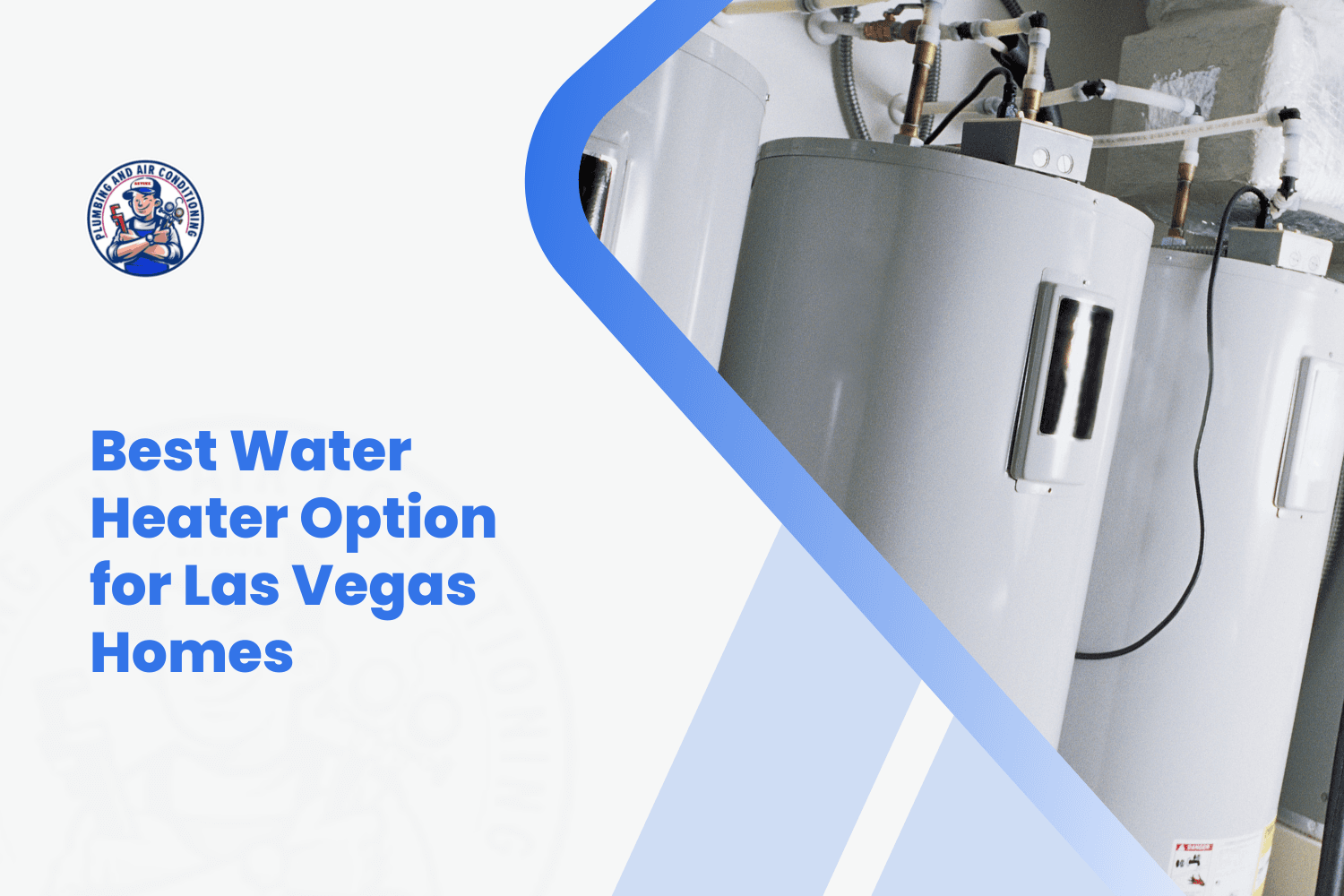
Best Water Heater Option for Las Vegas Homes: Tank vs Tankless
Key Takeaways
- Tank water heaters cost less upfront but last 6 to 10 years in Las Vegas hard water, while tankless units can run 15 to 20 years with regular descaling.
- The Las Vegas Valley has very hard water, often 250 to 300 ppm, which causes scale buildup that shortens the life of both systems.
- Tankless units need flushing every 12 months here, and a water softener can protect either system from mineral damage.
- Tank installs typically run $1,200 to $2,500, while tankless runs $3,000 to $6,000 once gas line or venting upgrades are added.
- Large families in Summerlin and Anthem may need a high-flow tankless unit or two units to avoid running out of hot water.
- Clark County and the City of Las Vegas require a permit and inspection for water heater replacement.
- Tankless saves space in condos and Downtown homes, while tanks remain the budget-friendly choice for many households.
- A licensed plumber handles sizing, permits, gas line upgrades, and inspection to keep the install safe and code-compliant.
In This Article
It is 6:45 on a Tuesday morning in Summerlin. The first two family members get warm showers, then the third turns the handle and gets a cold blast just as the school bus is rounding the corner. We hear this story almost every week from homes all across the valley, from Henderson down to North Las Vegas.
Running out of hot water is one of the most common reasons people call our team. The fix usually comes down to one big decision: a traditional tank water heater or a tankless system that heats on demand. Both work well in Las Vegas, but our hard water, hot summers, and home layouts change which one makes sense.
Let's break down the real numbers. We cover upfront and long-term costs, how hard water shortens lifespan, the maintenance each type needs, permits in Clark County, and which option fits different neighborhoods around the valley. By the end, you will know which water heater is the smarter buy for your home.
How Water Heaters Work in Las Vegas Homes
Both systems do the same job in the end. They give you hot water for showers, dishes, and laundry. How they get there is what sets them apart, and our desert conditions push on each one differently.
A tank water heater stores a big batch of hot water and keeps it warm all day. A tankless water heater skips the storage and heats water only when a faucet opens. The hard water across Las Vegas affects both, just in different ways.
| Feature | Tank Water Heater | Tankless Water Heater |
|---|---|---|
| How it heats | Stores and reheats 40-80 gallons | Heats on demand as water flows |
| Space used | Large floor footprint | Small wall-mounted box |
| Typical lifespan here | 6-10 years | 15-20 years |
| Upfront cost | Lower | Higher |
| Hot water supply | Limited by tank size | Continuous within flow limit |
What a Storage Tank Water Heater Does
A storage tank holds a reservoir of hot water ready to go. Most valley homes use a unit between 40 and 80 gallons, with 50 gallons being the most common size we install. A burner or electric element keeps that water hot around the clock so it is ready when someone opens a tap.
The size you need depends on how many people share the home and how many showers run back to back. A small condo might do fine with 40 gallons, while a four-bedroom house in Henderson often needs 50 or 75 gallons. Bigger tanks hold more, but they also lose more heat while sitting idle.
The tradeoff is simple. Once that stored hot water runs out, you wait for the tank to reheat. That is the cold-shower problem so many families run into on busy mornings.
Tanks are reliable and inexpensive to buy. For a lot of homes around the valley, they remain the practical pick, especially when budget drives the decision.
How a Tankless System Heats on Demand
A tankless water heater has no storage tank at all. When you open a hot tap, cold water flows through the unit and a powerful burner or coil heats it instantly. Shut the tap off and the unit stops heating.
Because it heats on demand, you never run out the way you do with a tank. The catch is flow rate, measured in gallons per minute. A single unit can only heat so much water at once, so running two showers and the dishwasher together can stretch a small unit thin.
Most tankless models for a typical valley home deliver 7 to 11 gallons per minute. We size the unit to match the number of fixtures your family runs at peak times. Get the flow rate right and the hot water simply never stops.
For homeowners who want continuous hot water and long life, our tankless water heater installation team sizes and fits the right model for the home.
Why Las Vegas Water Quality Changes the Math
Las Vegas has some of the hardest water in the country. The Las Vegas Valley Water District draws much of our supply from the Colorado River through Lake Mead, and that water carries a heavy load of calcium and magnesium.
Those minerals do not just sit there. They settle out as scale and sediment when water heats up. That mineral buildup coats heating elements, lines tanks, and clogs the narrow passages inside tankless units.
This is why a water heater that lasts 12 years in a soft-water state might last only 7 here. The hard water speeds up wear on both systems. You can learn more about regional water hardness from the U.S. Geological Survey.
The good news is that the right maintenance and equipment slow this damage down a lot. We will cover that further below.
Gas vs Electric in Local Homes
Most homes in Summerlin, Henderson, and across the valley run on natural gas water heaters. Gas heats water faster and usually costs less to run than electric in our market. Many newer subdivisions were built with a gas line already routed to the heater location.
Electric models still show up, especially in some condos and older units without a gas hookup. They cost less to buy and install but tend to run higher on the monthly bill. Electric tankless units also draw a lot of power and may need a panel upgrade.
For tankless, gas is almost always the better fit in valley homes because it delivers the high heat output needed for good flow rate. If your home already has gas, a gas tankless unit usually makes the most sense.
We check your existing hookups during the visit and recommend the option that matches your home and budget.
Get Your Quote
Tell us what's going on and we'll get back to you fast.
Hard Water and Its Effect on Water Heaters
If you have ever scrubbed white crust off a faucet or seen spots on clean glasses, you already know our water. That same mineral content works on the inside of your water heater every single day.
Hard water is the number one reason water heaters fail early in Las Vegas. Here is what it does to each system and how to fight back.
- Calcium and magnesium drop out as scale when water heats
- Scale buildup insulates heating surfaces and wastes energy
- Sediment collects and corrodes tank bottoms
- Mineral deposits clog tankless heat exchangers
- Regular maintenance and softening stretch water heater lifespan
How Hard Is the Water Across the Valley
Las Vegas water often tests around 250 to 300 parts per million, or roughly 16 to 18 grains per gallon. Anything above 10 grains is considered very hard. Our valley sits well past that line.
Water hardness does shift a little by area. Homes in North Las Vegas and Spring Valley often see readings on the higher end of that range. Newer parts of Centennial Hills can run similar depending on the supply blend.
No matter the exact number, every neighborhood here deals with hard water. We have pulled tanks in North Las Vegas and Spring Valley caked with so much sediment they sounded like a coffee pot when running.
Knowing your hardness helps set the right maintenance schedule and decide whether a softener is worth it.
Scale Buildup Inside Tanks
Inside a tank, heated water lets minerals fall to the bottom as sediment. Over the months that layer grows thick and hard. It bakes onto the bottom of the tank right where the burner sits.
That sediment layer causes two problems. It forces the burner to work harder and longer, which wastes gas and money. It also traps heat against the steel, which speeds up tank corrosion and can crack the glass lining inside.
You can often hear the trouble. A tank full of sediment pops, rumbles, or knocks as bubbles fight through the crust. That sound is a warning sign the tank is wearing out faster than it should.
Draining and flushing the tank once a year removes a lot of that sediment. We include this in our routine water heater service visits.
Why Tankless Units Need Regular Flushing Here
Tankless units have a heat exchanger with narrow channels that water flows through. In our hard water, mineral scale builds up inside those channels quickly. Left alone, it chokes the flow and can trip error codes or damage the unit.
That is why descaling matters so much in the desert. In many parts of the country a tankless unit can go two years between flushes. Here we recommend flushing every 12 months, sometimes sooner for homes without a softener.
The flushing process circulates a descaling solution through the unit to dissolve the buildup. It takes about an hour and restores full flow and efficiency. Skipping it is the fastest way to void a warranty and shorten the life of an expensive unit.
Our tankless maintenance and descaling service keeps these units running clean year after year.
Whether a Water Softener Helps
A water softener removes most of the calcium and magnesium before water reaches your heater. That single change protects both tank and tankless systems from the inside. Softened water means far less scale buildup and a longer life for the unit.
We get this question a lot from homeowners in older Paradise neighborhoods, where decades of hard water have worn through more than one heater. A softener pays off there, often adding years to a water heater and protecting fixtures and appliances too.
A softener does add an upfront cost and uses some salt over time. For many valley homes, the savings on repairs and replacements make it worth it. Salt-free conditioning is another option for those who want less maintenance.
Ask us about water softener installation when we assess your home in Paradise or anywhere across the valley.
Need Help in Las Vegas?
Active Plumbing serves Las Vegas and all of Las Vegas Valley.
Upfront and Long-Term Costs Compared
Cost is where most decisions land. A tank looks cheaper at the store, but the full picture covers buying, installing, running, and replacing the unit over many years.
Here is a realistic breakdown of water heater cost in the local market, including installation cost and energy savings over time.
| Cost Factor | Tank | Tankless |
|---|---|---|
| Unit and install | $1,200 - $2,500 | $3,000 - $6,000 |
| Average lifespan here | 6-10 years | 15-20 years |
| Monthly energy use | Higher (standby loss) | Lower (heats on demand) |
| Yearly maintenance | Annual flush | Annual descaling |
| Possible upgrades | Rarely needed | Gas line, venting |
Price to Buy and Install a Tank
A standard 40 to 50 gallon gas tank unit runs about $1,200 to $2,500 installed in most Las Vegas homes. The exact tank price depends on size, brand, and whether the old unit needs special removal. Electric tanks can land a bit lower on the unit itself.
Installation is usually straightforward when a tank replaces a tank in the same spot. The connections, venting, and water lines are already in place. That keeps labor reasonable and the job quick, often done in a single morning.
If the home needs new earthquake straps, an expansion tank, or a code-required drain pan, those add a little to the total. We spell out every line item before any work starts. No surprises on the final bill.
For most budget-focused households, the lower upfront tank price is the main draw.
Price to Buy and Install Tankless
Tankless costs more upfront, generally $3,000 to $6,000 installed. The unit itself is pricier, and the install often takes longer. The tankless price reflects more than the box on the wall.
Many homes need a gas line upgrade to feed the high burner output a tankless unit demands. Older homes especially may have a line too small to support it. New venting is also required since tankless units vent differently than tanks.
These upgrades are one-time costs. Once done, the unit is set for its long life. If your home was built tankless-ready, the total can come in toward the lower end of that range.
Our gas line rerouting and upsizing team handles these upgrades as part of a clean tankless install.
Monthly Energy Bills in the Desert
A tank reheats water all day to keep it warm, even when no one is home. That standby heat loss shows up on your NV Energy bill month after month. In a hot garage, the unit fights to hold temperature against shifting heat.
A tankless unit only fires when you need hot water. That cuts the wasted energy and improves overall energy efficiency. The Department of Energy estimates tankless can be 24 to 34 percent more efficient for homes that use a moderate amount of hot water, according to the U.S. Department of Energy.
The monthly savings are real but modest for most families. They add up over the long life of the unit. For a heavy hot-water household, the difference is more noticeable.
If a tank install is already part of your plan, a recirculation pump can cut wasted water and add convenience.
Rebates and Long-Term Value
Energy-efficient tankless and high-efficiency tank units sometimes qualify for rebates from utility or federal programs. These change year to year, so we check current offers when we quote a job. A rebate can shave a few hundred dollars off a tankless install.
The bigger value comes from lifespan. A tank may need replacing twice in the time one tankless unit lasts. Run the math over 15 to 20 years and the tankless lifespan value starts to close the gap on the higher upfront cost.
For a homeowner planning to stay put for many years, that long view matters. For someone who may move soon, the lower tank cost often wins. Both are valid choices depending on your plans.
We help you weigh both numbers honestly so the decision fits your situation, not a sales quota.
Lifespan and Maintenance Needs
How long a unit lasts here depends heavily on upkeep. Our hard water is tough on equipment, but smart maintenance buys real extra years. Here is what to expect from each type and the care it needs.
How Long Tanks Last With Hard Water
In soft-water regions a tank might last 12 years or more. In Las Vegas hard water, the realistic tank lifespan is closer to 6 to 10 years. Sediment and scale wear the tank from the inside long before its design life.
Homes without a softener sit at the low end of that range. We regularly replace tanks that are only 7 or 8 years old because corrosion has set in. The minerals simply do not give the steel a break.
A yearly flush and a fresh anode rod can stretch that lifespan toward the higher end. Skipping maintenance does the opposite. Many early failures we see trace back to a tank that was never flushed once.
If your tank is past 8 years and acting up, it is worth a checkup before it fails.
How Long Tankless Units Last
Tankless units last much longer, often 15 to 20 years when maintained. There is no tank to corrode, and many parts can be cleaned or replaced rather than scrapping the whole unit. That long tankless lifespan is a big part of the value case.
The thing that shortens it is neglect. Skip the yearly descaling and scale buildup chokes the heat exchanger, the most costly part to replace. We have seen units fail in five years because they never got flushed.
With steady maintenance, a tankless unit easily outlives two or three tanks. The key is treating that annual flush as a must, not an option. In our water, it is the difference between 7 years and 18.
Keep up the maintenance and the unit rewards you with reliable hot water for two decades.
Yearly Maintenance Each Type Needs
Tanks need an annual flush to clear sediment from the bottom. We also check the anode rod, the metal rod that corrodes on purpose to protect the tank. In hard water that rod wears out faster, so replacing it on time saves the whole tank.
Tankless units need an annual descaling to clear mineral scale from the heat exchanger. We also clean the inlet filter and check the burner and venting. The work is quick but matters a great deal here.
For both types, we check connections, the pressure relief valve, and signs of leaks. Small problems caught early stay cheap. Ignored, they turn into floods or failures.
Many homeowners put us on a yearly schedule so they never have to remember. We handle the annual flush and anode rod checks across the valley.
Warning Signs It Is Time to Replace
Rusty or brown hot water often means the tank is corroding inside. Once rust shows up, replacement is usually near. The tank lining has likely failed.
Watch for leaks or moisture around the base of the unit. A leaking tank rarely gets better and can flood a garage fast. Puddles are a clear signal to call.
Lukewarm showers, banging noises, and water that never gets fully hot are other replacement signs. These point to heavy sediment or a failing element. For tankless, repeated error codes signal it is time for service.
If you spot any of these, our water heater repair team can tell you whether to fix or replace.
Space, Hot Water Needs, and Household Size
The right unit also depends on your home and your family. A retired couple in a condo has very different needs than a family of six in Anthem. Matching household size and hot water demand to the system keeps everyone happy.
Sizing for Large Families
Big households in Summerlin and Anthem run a lot of hot water at once. Two showers, a dishwasher, and a load of laundry can hit at the same time on a school morning. That peak demand drives the sizing.
For a large household, a 75 to 80 gallon tank or a high-flow tankless unit handles the load. Some big homes in Summerlin do best with two tankless units or a tank paired with a recirculation system. We calculate the peak flow your family needs.
Undersizing is the classic mistake. A unit too small for the home means cold showers no matter the type. We size to the busiest moment, not the average.
Get the sizing right and even a packed house never runs short.
Best Fit for Small Homes and Condos
Tankless really shines in tight spaces. A small condo near the Arts District or an older Downtown home often has little room for a bulky tank. A wall-mounted tankless unit frees up a closet or corner.
The space saving is a real perk in these homes. We have tucked tankless units into spots where a tank would never fit. For a condo with one or two people, even a modest unit gives endless hot water.
Smaller homes also use less hot water overall, so a single tankless unit easily keeps up. The flow rate rarely gets stretched with fewer fixtures running. That makes tankless an easy win for compact living.
If space is tight, tankless is often the clear answer.
Garage and Closet Installation Options
Most valley homes put the water heater in the garage. Our hot garages are tough on tanks, since the heat makes them work harder to hold temperature. Tankless units handle garage heat better since they only fire on demand.
Some homes have the unit in an interior closet or utility space. Venting matters here, especially for gas units. Tankless venting runs differently and may need a new path to the outside.
We check clearances, gas supply, and venting routes before recommending a spot. Code sets rules on how close a unit can sit to walls and openings. Getting the garage install or closet layout right keeps it safe and legal.
Our team plans the placement so the unit fits your home and passes inspection.
Running Out of Hot Water During Peak Times
This is the cold-shower problem we opened with. A tank holds a fixed amount, and once it empties you wait for recovery rate to catch up. That recovery can take 30 to 60 minutes depending on the unit.
Tankless gives continuous hot water as long as you stay within its flow rate. It never runs out the way a tank does. For families who shower back to back, that endless supply is the main reason they switch.
The fix for a tank is often a larger size or a faster-recovery model. For some homes a recirculation pump speeds delivery to far faucets. We match the solution to how your family actually uses hot water.
No one should start the day with a cold blast. The right setup solves it.
Need Help in Las Vegas?
Active Plumbing serves Las Vegas and all of Las Vegas Valley.
Permits, Codes, and Installation in Las Vegas
Replacing a water heater is not just a swap. Local codes require permits and inspection to keep the work safe. Here is what proper installation involves in the valley.
Permit Requirements From the City and County
Clark County and the City of Las Vegas both require a permit to replace a water heater. The permit triggers an inspection that confirms the install meets code. This protects you and any future buyer of the home.
The permit covers things like proper venting, gas connections, seismic strapping, and the pressure relief valve. An unpermitted install can cause trouble when you sell or file an insurance claim. It can also hide unsafe work.
We pull the permit and schedule the inspection as part of the job. Homeowners do not have to chase paperwork. You can review the rules through the Clark County Building and Fire Prevention department.
Doing it by the book keeps everything clean and safe.
HOA Rules in Planned Communities
Planned communities add another layer. HOAs in Summerlin and Green Valley sometimes have rules about venting, exterior units, or where equipment can sit. A tankless vent or an outside-mounted unit may need approval.
We have worked with HOA guidelines across Henderson and Green Valley neighborhoods. Most rules are about appearance, like keeping vents off the front face of the home. Knowing them ahead of time avoids a redo.
If your community has an architectural committee, we help you understand what they will want. A little planning keeps the project smooth. No one wants a violation letter after the work is done.
We factor HOA rules into the plan from the start.
Gas Line and Electrical Upgrades
Older homes near Charleston Boulevard and other established areas sometimes have undersized gas lines. A tankless unit needs a larger gas line to feed its high burner output. Without the upgrade, the unit cannot reach full performance.
Electric tankless units have their own demand. They may need a panel upgrade or new circuit to handle the load. We check the home's existing gas and electrical setup during the assessment.
These upgrades are one-time costs that set the home up for years. Our gas line installation crew sizes the line correctly for the unit. We also run a safety check before finishing.
Proper supply lines are what let a tankless unit work the way it should.
Why Professional Installation Matters Here
A water heater involves gas, water, and venting all at once. A small mistake can mean a gas leak, a flood, or carbon monoxide risk. This is not a safe job for guesswork.
A licensed plumber knows local code, sizes the unit right, and handles the permit and inspection. We test every connection and confirm the venting draws properly. That protects your family and your home.
DIY installs are also a common reason warranties get voided. Manufacturers want proof of professional install and maintenance. Skipping that can cost you when something fails.
Our licensed team takes care of the whole job, from pull-out to inspection sign-off.
Which Option Active Plumbing Recommends
There is no single right answer for every home. Our water heater recommendation depends on your budget, household, and how long you plan to stay. Here is how we guide valley homeowners.
| Your Situation | Better Fit |
|---|---|
| Tight budget, quick replacement | Tank |
| Plan to stay 10-plus years | Tankless |
| Small condo, limited space | Tankless |
| Large family, heavy demand | High-flow tankless or large tank |
| Tank-to-tank swap, no upgrades | Tank |
When a Tank Is the Smarter Buy
A tank makes sense when budget is the main concern. The lower upfront cost gets hot water back fast without big upgrades. For a tank-to-tank swap, the install is quick and simple.
It also fits homes where the owner may sell soon. There is little reason to invest in a 20-year unit for a short stay. A solid tank covers the household needs for less money.
Renters' properties and many mid-size homes do fine with a quality tank and yearly maintenance. Pair it with a softener and you stretch the life nicely. For a lot of valley homes, the tank recommendation is simply the practical call.
We never push tankless when a tank serves you better.
When Tankless Pays Off
Tankless pays off for homeowners staying put for the long haul. The long-term savings on energy and the 15-to-20-year lifespan make the higher upfront cost worth it. Over two decades it can cost less than replacing tanks twice.
It also wins for homes short on space and families tired of running out of hot water. Endless flow and a small footprint solve real daily problems. Our tankless recommendation often goes to growing families and long-term owners.
If your home already has a properly sized gas line, the install is smoother and cheaper too. That tips the value further toward tankless. We run the numbers so you see the full picture.
When the fit is right, tankless is a smart investment.
How We Help You Decide
We start with an in-home assessment. Our team looks at your gas line, venting, space, and how your family uses hot water. We test your water hardness and check the existing setup.
From there we give you honest options with real numbers for each. We do this across the valley, from Henderson to Aliante and everywhere between. You see the costs and tradeoffs laid out plainly.
The goal is the right unit for your home, not the most expensive one. We answer every question before you decide. No pressure, just clear guidance from people who work these neighborhoods daily.
That home assessment makes the choice easy and clear.
Our Installation and Service Process
Once you choose, we handle the rest. We pull the permit, schedule the work, and arrive on time. Most tank installs finish the same day, and tankless usually takes a bit longer depending on upgrades.
We remove the old unit, install the new one to code, and walk you through how it works. Then we schedule the inspection and confirm everything passes. The installation process is clean and complete.
After that, we keep you on a maintenance schedule so the unit lasts. Annual flushing or descaling keeps performance high in our hard water. You always have a team to call if something comes up.
From quote to install to ongoing service, we stay with you the whole way.
Need Help in Las Vegas?
Active Plumbing serves Las Vegas and all of Las Vegas Valley.
Final Thoughts
Both tank and tankless water heaters work well in Las Vegas when matched to the home. Tanks cost less upfront and suit budgets and quick swaps. Tankless lasts longer, saves space, and never runs out, which pays off over many years.
Our hard water is the wild card that shortens lifespan and demands regular maintenance for either system. A softener and yearly service make a big difference. The right choice comes down to your budget, household size, and how long you plan to stay.
When you are ready for honest advice and a clean, code-compliant install, our team is here. Call Active Plumbing or contact us to schedule your in-home assessment anywhere across the valley. We will help you pick the water heater that fits your home and keep it running for years.
Frequently Asked Questions
Is a tankless water heater worth it in Las Vegas?
It often is for long-term homeowners. Tankless gives endless hot water, saves space, and can last 15 to 20 years, which spreads out the higher upfront cost. The tradeoff in our hard water is yearly descaling, which we strongly recommend. For families staying put and tired of cold showers, tankless usually pays off. For a tight budget or a short stay, a tank may serve you better.
How much does it cost to install a water heater in Las Vegas?
A standard tank install runs about $1,200 to $2,500 depending on size and any code-required additions. A tankless install runs roughly $3,000 to $6,000, since the unit costs more and may need a gas line or venting upgrade. Homes already set up for tankless land toward the lower end. We give a full line-item quote before any work starts so there are no surprises on the final bill.
How long do water heaters last with Las Vegas hard water?
Tanks typically last 6 to 10 years here, shorter than in soft-water areas because sediment and scale wear them from the inside. Tankless units last 15 to 20 years when descaled yearly. Skipping maintenance shortens both. A water softener and an annual flush or descaling are the best ways to reach the higher end of those ranges in our mineral-heavy water.
How often should a tankless water heater be flushed here?
We recommend flushing tankless units every 12 months in Las Vegas. Our hard water builds scale in the heat exchanger faster than in most regions. Homes without a water softener may benefit from flushing even sooner. Regular descaling keeps the unit efficient, protects the warranty, and prevents costly heat exchanger damage. We offer scheduled tankless maintenance so you never have to track it yourself.
Do I need a permit to replace a water heater in Clark County?
Yes. Both Clark County and the City of Las Vegas require a permit and inspection for water heater replacement. The permit confirms proper venting, gas connections, strapping, and the pressure relief valve. Unpermitted work can cause problems when selling your home or filing an insurance claim. We pull the permit and handle the inspection as part of every install, so the paperwork is fully covered.
Can a tankless unit supply hot water to a large home?
Yes, with the right sizing. A single high-flow tankless unit delivers 7 to 11 gallons per minute, enough for most homes. Large households running several fixtures at once may need a larger model or two units working together. We calculate your peak demand and recommend the setup that handles your busiest moments without running cold, common for big homes in Summerlin and Anthem.
Will a water softener extend my water heater's life?
Yes. A softener removes the calcium and magnesium that form scale and sediment inside your heater. Less buildup means less corrosion in tanks and clearer heat exchangers in tankless units. That can add years to either system and cut down on repairs. For homes in older areas like Paradise, a softener is often a smart investment that protects fixtures and appliances too.
Gas or electric water heater for a Las Vegas home?
Most valley homes use natural gas, which heats faster and usually costs less to run. If your home already has a gas hookup, a gas unit is generally the better choice, especially for tankless. Electric models suit condos and homes without gas, though they tend to cost more monthly and may need an electrical upgrade. We check your existing hookups and recommend the best fit.
What are the signs my water heater needs replacing?
Watch for rusty or brown hot water, leaks or moisture at the base, banging or rumbling noises, and water that never gets fully hot. For tankless units, repeated error codes are a red flag. These point to corrosion, heavy sediment, or a failing component. If you notice any of them, have it inspected soon before it fails and floods your garage or leaves you without hot water.
How fast can Active Plumbing install a new water heater?
Most tank replacements are done the same day, often in a few hours when it is a straight tank-to-tank swap. Tankless installs usually take longer, sometimes most of a day, especially when a gas line or venting upgrade is needed. We pull the permit, install to code, and schedule the inspection. Call us and we will get you back to hot showers as quickly as possible.
Frequently Asked Questions
- Is a tankless water heater worth it in Las Vegas?
- It often is for long-term homeowners. Tankless gives endless hot water, saves space, and can last 15 to 20 years, which spreads out the higher upfront cost. The tradeoff in our hard water is yearly descaling, which we strongly recommend. For families staying put and tired of cold showers, tankless usually pays off. For a tight budget or a short stay, a tank may serve you better.
- How much does it cost to install a water heater in Las Vegas?
- A standard tank install runs about $1,200 to $2,500 depending on size and any code-required additions. A tankless install runs roughly $3,000 to $6,000, since the unit costs more and may need a gas line or venting upgrade. Homes already set up for tankless land toward the lower end. We give a full line-item quote before any work starts so there are no surprises on the final bill.
- How long do water heaters last with Las Vegas hard water?
- Tanks typically last 6 to 10 years here, shorter than in soft-water areas because sediment and scale wear them from the inside. Tankless units last 15 to 20 years when descaled yearly. Skipping maintenance shortens both. A water softener and an annual flush or descaling are the best ways to reach the higher end of those ranges in our mineral-heavy water.
- How often should a tankless water heater be flushed here?
- We recommend flushing tankless units every 12 months in Las Vegas. Our hard water builds scale in the heat exchanger faster than in most regions. Homes without a water softener may benefit from flushing even sooner. Regular descaling keeps the unit efficient, protects the warranty, and prevents costly heat exchanger damage. We offer scheduled tankless maintenance so you never have to track it yourself.
- Do I need a permit to replace a water heater in Clark County?
- Yes. Both Clark County and the City of Las Vegas require a permit and inspection for water heater replacement. The permit confirms proper venting, gas connections, strapping, and the pressure relief valve. Unpermitted work can cause problems when selling your home or filing an insurance claim. We pull the permit and handle the inspection as part of every install, so the paperwork is fully covered.
- Can a tankless unit supply hot water to a large home?
- Yes, with the right sizing. A single high-flow tankless unit delivers 7 to 11 gallons per minute, enough for most homes. Large households running several fixtures at once may need a larger model or two units working together. We calculate your peak demand and recommend the setup that handles your busiest moments without running cold, common for big homes in Summerlin and Anthem.
- Will a water softener extend my water heater's life?
- Yes. A softener removes the calcium and magnesium that form scale and sediment inside your heater. Less buildup means less corrosion in tanks and clearer heat exchangers in tankless units. That can add years to either system and cut down on repairs. For homes in older areas like Paradise, a softener is often a smart investment that protects fixtures and appliances too.
- Gas or electric water heater for a Las Vegas home?
- Most valley homes use natural gas, which heats faster and usually costs less to run. If your home already has a gas hookup, a gas unit is generally the better choice, especially for tankless. Electric models suit condos and homes without gas, though they tend to cost more monthly and may need an electrical upgrade. We check your existing hookups and recommend the best fit.
- What are the signs my water heater needs replacing?
- Watch for rusty or brown hot water, leaks or moisture at the base, banging or rumbling noises, and water that never gets fully hot. For tankless units, repeated error codes are a red flag. These point to corrosion, heavy sediment, or a failing component. If you notice any of them, have it inspected soon before it fails and floods your garage or leaves you without hot water.
- How fast can Active Plumbing install a new water heater?
- Most tank replacements are done the same day, often in a few hours when it is a straight tank-to-tank swap. Tankless installs usually take longer, sometimes most of a day, especially when a gas line or venting upgrade is needed. We pull the permit, install to code, and schedule the inspection. Call us and we will get you back to hot showers as quickly as possible.
A
Licensed plumbing professionals serving Las Vegas and Las Vegas Valley.
Licensed in Nevada · License #0047021
Last updated on
Why trust Active Plumbing?
Founded in 1991, Active Plumbing is a licensed and insured plumber serving Las Vegas and Las Vegas Valley. All content is reviewed by our licensed technicians.

Need Help in Las Vegas?
Active Plumbing serves Las Vegas and all of Las Vegas Valley.
Related Articles
Maintenance
Sediment Tank Flush: Why Vegas Water Heaters Need It Every 18 Months
Las Vegas hard water causes rapid sediment buildup in water heaters. Learn why an 18-month flush schedule protects your tank, saves energy costs, and prevents expensive failures in the desert.
Maintenance
Tankless Water Heater Maintenance in Las Vegas: Why Hard Water Makes It Critical
Las Vegas hard water from Lake Mead builds scale fast inside tankless heaters. Learn the warning signs, real maintenance steps, and how often valley homes need service.

Maintenance
Tankless Water Heater Scale Buildup: Why Vegas Units Fail at 5 Years Without Descaling
Las Vegas hard water causes scale buildup that fails tankless units at five years. Learn the warning signs, descaling schedule, and treatment options to protect yours.