Same-Day Water Heater Service in Sun City Anthem: Senior-Friendly Scheduling and Code Updates on 90s Builds
Key Takeaways
- Hard water from the Las Vegas Valley Water District, aging 1990s builder-grade tanks, and desert garage heat all shorten water heater life in Sun City Anthem.
- Same-day service is possible for most urgent calls thanks to stocked trucks carrying common 40 and 50 gallon tanks plus code-upgrade parts.
- Senior-friendly scheduling means tight two-hour windows, reminder calls, HOA gate coordination, and written estimates before any work begins.
- Homes built in the late 1990s almost always need code updates like an expansion tank, seismic straps, correct T&P discharge, and updated venting.
- Full water heater replacements in Henderson require a permit, which the licensed team pulls and files so the install passes final inspection cleanly.
- Standard tanks fit most homes, while tankless suits smaller households with tight garages but needs regular descaling in hard water.
- Yearly flushing, anode rod checks, a whole-home water softener, and a 120-degree setting extend unit life and improve safety.
- Watch for rusty water, popping noises, lukewarm showers, and base leaks as early warning signs to call before a full failure.
In This Article
It usually starts the same way. A Sun City Anthem homeowner steps into the shower on a January morning, turns the handle, and waits for warm water that never arrives. The tank in the garage has finally given up, and now the whole day feels thrown off. For a 55-plus community full of homes built in the late 1990s, this scenario plays out more often than most residents expect.
The good news is that a cold shower does not have to mean a lost day or a week of waiting. Our team at Active Plumbing runs same-day water heater service across Henderson, and we know these Del Webb-built homes well. We have replaced dozens of original builder-grade tanks tucked into garages near Anthem Parkway and Del Webb Boulevard.
Why Water Heaters Fail Quicker in Sun City Anthem Homes?
Water heater failure comes down to a mix of local conditions, and Sun City Anthem checks nearly every box. Hard water, aging equipment, and desert heat all work against these tanks at the same time. A unit that might last 15 years in a milder region often struggles to reach 10 here.
The table below breaks down the main factors and how each one shortens the life of a tank in this Henderson community.
| Factor | Effect on the Unit | Common in Sun City Anthem? |
|---|---|---|
| Hard water minerals | Sediment buildup, reduced efficiency | Very common |
| Original 1990s tanks | Past expected lifespan, worn parts | Very common |
| Garage heat exposure | Stress on valves and connectors | Common |
| Skipped maintenance | Quicker corrosion and failure | Common |
Hard Water Buildup From the Local Supply
The water flowing into Sun City Anthem homes comes through the Las Vegas Valley Water District, and it carries a heavy mineral load. Calcium and magnesium settle at the bottom of a tank over time, forming a thick layer of sediment. That sediment acts like an insulating blanket between the burner and the water above it.
As the layer grows, the burner has to work harder and longer to heat the same amount of water. This drives up energy bills and puts extra stress on the steel tank walls. Many homeowners here notice a popping or rumbling sound, which is water trying to bubble up through the crusted sediment.
Hard water is one of the biggest reasons tanks in this valley fail years ahead of schedule. Without regular flushing, sediment can build up several inches deep inside a five- or six-year-old tank. We see this in nearly every original unit we pull from these homes.
The mineral content also chews through internal components more quickly. Anode rods, heating elements, and dip tubes all wear down quicker when the water is this hard. That is why local maintenance habits matter far more here than in softer-water regions.
Aging Builder-Grade Units From the 1990s
Sun City Anthem started construction in the late 1990s, and many of those first homes still hold their original water heaters. A builder-grade water heater is built to a price point, not to last decades. Most carry a manufacturer expectation of 10 to 12 years of service.
Do the math and it becomes clear why so many of these tanks are failing now. A unit installed in 1999 has been running for well over two decades in some cases. Every year past that lifespan raises the odds of a sudden leak or total failure.
These older tanks were also installed under plumbing rules that have since changed. That means when one fails, the replacement almost always requires code upgrades the original never had. We explain those in detail later in this guide.
If a home in Sun City Anthem still has its factory unit, it is living on borrowed time. Replacing it before it bursts is far cheaper than cleaning up water damage in a finished garage. A planned swap beats an emergency every time.
Garage Installations and Desert Heat
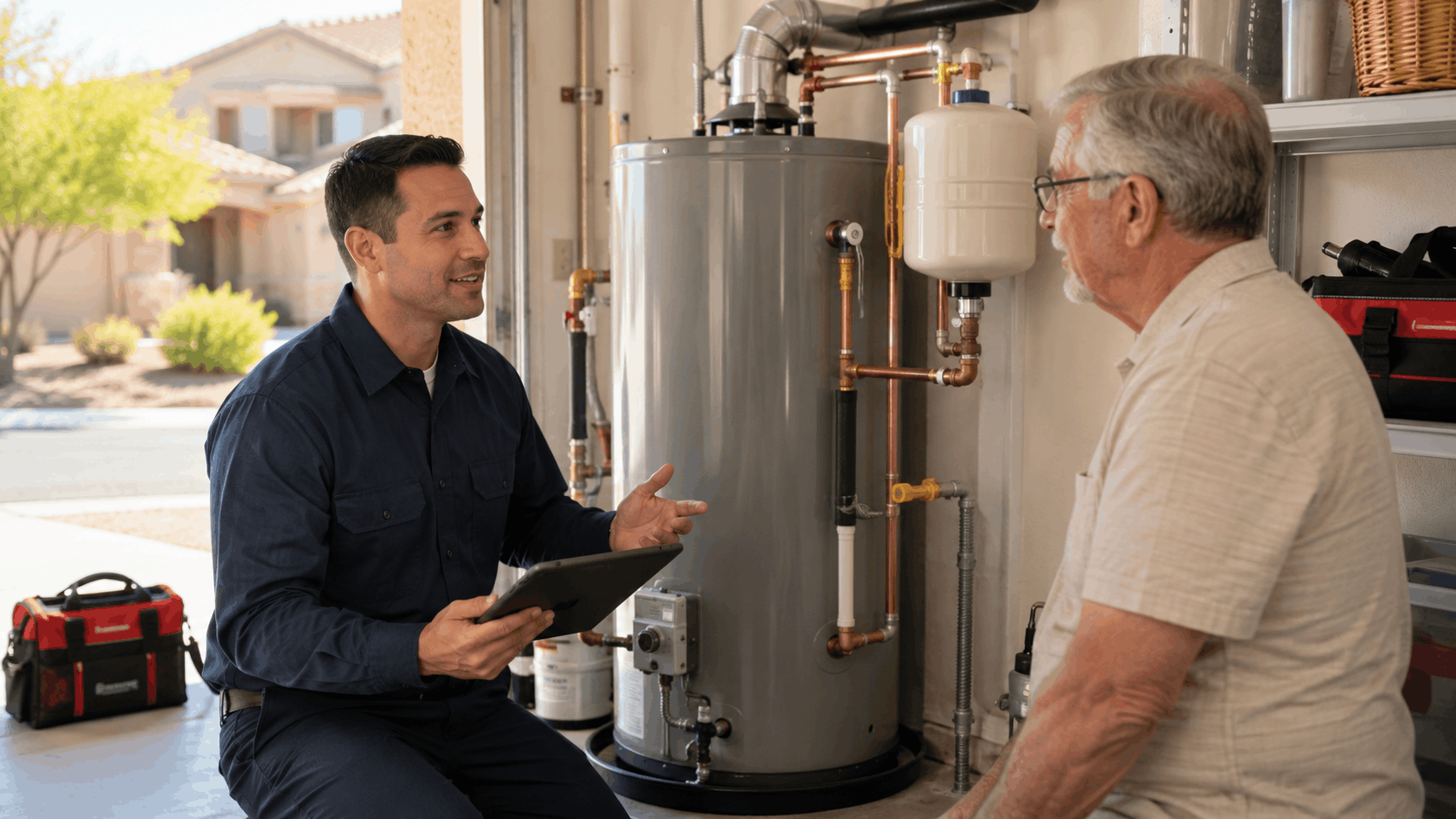
Most tanks in this community sit in the garage, which is standard for Del Webb builds. The problem is that garages near Anthem Parkway and Del Webb Boulevard get brutally hot in summer. Interior garage temperatures can climb past 110 degrees during a July heat wave.
That constant heat stresses the plastic and rubber components inside and outside the tank. Gaskets, valves, and connectors dry out and crack sooner than they would in a climate-controlled space. A garage water heater in the desert simply ages sooner than one in a basement back east.
The heat also makes the unit work against itself. A tank already fighting sediment now sits in an oven-like space for months. Combined, these conditions push a lot of units toward early failure.
We often find that garage-installed tanks show wear on the top fittings first. The heat rises and collects near the flue and gas connections, where problems tend to start. Regular checks of these areas catch trouble before it spreads.
Warning Signs Homeowners Notice First
Most water heater failures give warning before the flood. The trick is knowing what to watch for so you can call before a full failure. Catching these signs early can turn an emergency into a scheduled visit.
Rusty water is one of the earliest red flags. If hot water comes out with a brown or orange tint, the inside of the tank is corroding. That rust means the steel is breaking down and a leak may not be far off.
Sound is another clue. Popping, banging, or rumbling noises point to heavy sediment at the bottom of the tank. Lukewarm showers that never quite get hot suggest the burner or element is losing the fight against buildup.
A visible water heater leak around the base is the most urgent warning of all. Even a small puddle means the tank has failed and could burst. If you notice any of these signs, our water heater services team can inspect the unit before it becomes a bigger problem.
Get Your Quote
Tell us what's going on and we'll get back to you. We're open 24/7.
How Same-Day Water Heater Service Works
When the hot water stops, most people want it back the same day. Same-day service is possible more often than folks expect, especially when the crew is close and the truck is stocked. Here is how the process runs from the first call to a working unit by evening.
The flow usually looks like this:
- You call and describe the problem, and we ask a few quick questions.
- We confirm parts on the truck and give an arrival window.
- A technician arrives, diagnoses the unit, and offers a written estimate.
- We repair or replace the same visit whenever possible.
- We test the system and walk you through the finished work.
What Counts as a Same-Day Emergency
Not every plumbing call is an emergency, but water heater problems often qualify. A water heater emergency includes anything that leaves a home without hot water or risks water damage. These situations move to the front of the line for same-day dispatch.
No hot water at all is a common reason people call. When a family cannot bathe, wash dishes, or do laundry, waiting days is not an option. We treat a total loss of hot water as an urgent job.
A leaking tank is the other big one. Water pooling around the base can quickly damage garage flooring, storage, and drywall. That kind of leak needs fast attention before it spreads or the tank ruptures fully.
Pilot light failures and gas smells also rank high. A unit that will not stay lit, or one giving off a gas odor, needs a same-day look for safety. Our emergency plumbing team handles these calls throughout Henderson.
Our Response Times Across Henderson
Getting to Sun City Anthem quickly comes down to knowing the routes. The community sits off the 215 Beltway near the southern edge of Henderson. From there, we can reach most homes in the area within 30 to 60 minutes on a normal day.
For Sun City Anthem addresses, we typically offer arrival windows of a couple hours or less for urgent calls. Traffic on the 215 during rush hour can stretch that slightly, so we plan around it. Morning calls almost always get same-day handling.
Nearby communities get similar coverage. Areas like Whitney Ranch and Lake Las Vegas fall within our regular Henderson routes. We keep our crews spread across the region to cut down travel time.
Response time matters most with active leaks. The sooner we arrive, the less water damage a home takes on. That is why we prioritize dispatch by how urgent the situation is, not just the order calls come in.
Repair Versus Full Replacement Decisions
A same-day call does not always mean a new tank. Sometimes a repair fixes the issue for a fraction of the cost. The repair versus replace decision comes down to the age of the unit and the type of failure.
If the tank is under eight years old and the problem is a bad element, thermostat, or valve, a repair usually makes sense. These parts are affordable and quick to swap. A well-timed water heater repair can add years of service.
When the tank itself is leaking, replacement is the smarter call. You cannot patch a rusted-through tank, and throwing money at repairs on a 15-year-old unit rarely pays off. In those cases, we recommend a full water heater replacement.
We lay out both options with honest cost numbers so you can decide. Our technicians never push a replacement when a repair will do. The goal is the choice that saves you the most money over time.
Stocked Trucks and Common Parts
The reason we finish most jobs in one visit is simple. Our trucks carry the parts and units that Sun City Anthem homes need most. Stocked trucks turn a two-trip job into a single afternoon.
We keep common tank sizes on board, usually 40 and 50 gallon gas models. These fit the majority of homes in this community. Having them ready means no waiting on a supply house delivery.
Beyond full tanks, we carry heating elements, thermostats, gas valves, and relief valves. We also stock expansion tanks and strapping kits since these homes almost always need code updates. That way we can bring the whole system current in one visit.
This approach saves time and reduces disruption for residents. Nobody wants a plumber leaving mid-job to fetch a part. Being ready before we arrive is how we keep same-day promises.

Need Help in Las Vegas?
Active Plumbing serves Las Vegas and all of Las Vegas Valley.
Senior-Friendly Scheduling for Sun City Anthem Residents
Sun City Anthem is a 55-plus community, and scheduling here needs a different touch. Waiting all day for a technician who may or may not show is frustrating for anyone, but especially for older residents. We built our approach around clear communication and respect for people's time.
The table below shows how our senior-friendly scheduling compares to a typical open-ended service window.
| Feature | Typical Service | Our Approach |
|---|---|---|
| Arrival window | All-day window | Tight 2-hour window |
| Reminder contact | None | Reminder call before arrival |
| Pricing | Given after work | Written estimate upfront |
| Gate access | Homeowner handles it | We coordinate with the HOA |
Clear Appointment Windows and Reminder Calls
An all-day appointment window is a burden for anyone. For Sun City Anthem residents, it can mean canceling plans and sitting by the door for hours. We use tight arrival windows so people know roughly when to expect us.
Most of our windows run about two hours instead of a vague morning-to-evening span. That lets residents keep their routines, whether it is a walk at the community center or a lunch with friends. We respect that a full day of waiting is not acceptable.
We also make a reminder call before the technician heads over. A quick heads-up gives residents time to unlock the gate, secure pets, or clear the garage. No one gets surprised by a knock at the door.
If we run early or late, we call to update the window. Honest communication about timing removes most of the stress from the process. That is the standard we hold our crews to on every scheduling call.
Technicians Who Explain Every Step
A water heater problem can feel confusing when someone throws technical terms at you. Our technicians take the time to explain each part of the work in plain language. No jargon, no rushing, just a clear picture of what is happening.
Before any work starts, the technician walks through what failed and why. They show the corroded fitting, the leaking valve, or the sediment-packed tank. Seeing the problem firsthand helps residents feel confident in the recommendation.
During the job, we explain what each step accomplishes. If we install an expansion tank to meet code, we say why the code requires it. This keeps homeowners informed rather than in the dark.
Trusted technicians earn that trust by treating people like neighbors, not transactions. Many Sun City Anthem residents have called us back for other work because we took time to explain the first job. That kind of relationship matters in a close community.
Working With HOA Rules and Gate Access
Sun City Anthem is a gated, managed community with its own rules. The Sun City Anthem Community Association sets guidelines that affect service visits. We know how to work within those rules so nothing slows the job down.
Gate access is the first hurdle for any outside crew. We coordinate entry ahead of time so the technician is not stuck at the gate. Whether it is a code, a call to the gatehouse, or a resident escort, we handle it smoothly.
Some HOA rules touch on where equipment sits and how work areas look afterward. We keep the job clean and leave the garage the way we found it. Respecting the community standards is part of doing the job right.
Residents do not need to stress about the logistics of getting us in. A quick note on the gate procedure when scheduling is usually all it takes. We take care of the rest so the visit stays simple.
Written Estimates Before Any Work Begins
Surprise bills are never welcome, and they hit hardest for those on a fixed income. That is why we provide a written estimate before we touch a single fitting. Residents see the full cost, including any code upgrades, and approve it first.
The estimate spells out the unit, the labor, and any required parts. If a 1990s home needs an expansion tank or new strapping, that shows on the quote. Nothing gets added after the fact without your say-so.
A written price before work starts lets people make a calm decision. There is no pressure and no clock running while you think it over. For a big-ticket item like a water heater, that clarity means a lot.
Many Sun City Anthem residents budget carefully, and we honor that. A clear number in hand lets them plan and compare with confidence. Honest pricing is how we keep earning repeat business in this community.
Code Updates Needed on 1990s-Built Homes
Plumbing codes have changed a lot since Sun City Anthem was built. When a 1990s home gets a new water heater, the install must meet today's rules, not the ones from 25 years ago. That means several code updates almost always come with a replacement.
The table below lists the common upgrades and why they matter on older builds.
| Code Upgrade | Purpose | Found on 90s Homes? |
|---|---|---|
| Expansion tank | Controls pressure buildup | Rarely present |
| Seismic straps | Secures tank in place | Often missing or loose |
| T&P discharge pipe | Safe relief valve drainage | Often incorrect |
| Proper venting | Removes combustion gases | Sometimes outdated |
Expansion Tanks and Pressure Requirements
Modern code often requires an expansion tank on the water heater system. When water heats, it expands, and that extra volume raises pressure in a closed system. An expansion tank gives that pressure somewhere to go.
Homes from the 1990s were usually built without one. Back then, systems were more open and pressure could relieve itself. Newer backflow devices and pressure valves changed that, creating closed systems that need the extra tank.
Without an expansion tank, pressure spikes can stress the water heater and the home's pipes. Over time this leads to dripping valves, banging pipes, and shorter unit life. Adding the tank protects the whole plumbing system.
We include the expansion tank in the estimate whenever code calls for it. It is a small part that prevents big problems down the road. For a 1990s Sun City Anthem home, it is nearly always part of the job.
Seismic Straps and Proper Anchoring
Nevada sits in an area where earthquake safety codes apply to water heaters. Seismic straps hold the tank against the wall so it cannot tip or shift during ground movement. Current rules require two straps, one on the upper third and one on the lower third of the tank.
Older garage tanks in this community often have loose straps or none at all. Some have a single strap that no longer meets the standard. A tipping tank can rupture a gas line or water connection, which is a serious hazard.
Proper anchoring keeps the tank stable through the life of the unit. We use approved strapping kits secured to the wall studs, not just the drywall. This meets code and protects the home.
For garage installs near Anthem Parkway, this upgrade is common during replacement. We handle it as part of bringing the system current. It is a quick fix that adds real safety.
Temperature and Pressure Relief Valve Discharge
Every water heater has a temperature and pressure relief valve, known as a T&P valve. It releases water if pressure or temperature climbs too high, preventing a dangerous rupture. The rules for how that discharge pipe runs have tightened over the years.
On many 1990s installs, the discharge pipe is missing, too short, or routed wrong. Code now requires the pipe to run down to within a set distance of the floor or to an approved drain. This keeps scalding water from spraying out at head height if the valve opens.
An improper T&P setup is both a safety issue and a code failure. Inspectors catch these quickly, and they are common on original units here. We correct the piping to meet the current standard during replacement.
The relief valve itself sometimes needs replacing too. Old valves can seize up from mineral buildup and fail to open when needed. We test and replace as part of the code work.
Gas Line and Venting Corrections
Gas-fired units near Sun City Anthem Drive often show venting and connector issues on original installs. The flue must carry combustion gases safely out of the home. Over the years, some vents have shifted, corroded, or were never sized correctly.
A poorly vented gas water heater can leak carbon monoxide into the garage and beyond. That makes proper venting a safety matter, not just a code checkbox. We inspect the flue and vent connector on every gas job.
Old flexible gas connectors are another frequent find. Many original ones are past their service life or improperly sized. We replace them with code-approved connectors and check for leaks before finishing.
When gas work goes beyond a simple connector, our gas line services team steps in. Anything involving rerouting or a gas safety inspection gets handled by licensed pros. Safety around gas is never something we shortcut.

Need Help in Las Vegas?
Active Plumbing serves Las Vegas and all of Las Vegas Valley.
Permits and Inspections With the City of Henderson
Replacing a water heater in Henderson usually requires a permit. That step protects the homeowner by making sure the work meets code. It also creates a record that helps at resale. Here is how the process works and why it matters.
When a Permit Is Required
The Henderson Building Division requires a permit for most water heater replacements. Swapping out the full unit, changing the fuel type, or relocating the tank all trigger a permit. This applies to Sun City Anthem homes just like the rest of the city.
Minor repairs usually do not need a permit. Replacing a thermostat, element, or valve on an existing unit is generally exempt. The line falls at whether the tank itself is being replaced.
Because most 1990s units are being fully replaced, permits are the norm here. The permit ties the code upgrades to an official inspection. That protects the resident and confirms the work is done right.
According to the City of Henderson Building Division, permit rules exist to keep installations safe and up to standard. We stay current on their requirements. That keeps every job on the right side of local rules.
How the Team Handles Paperwork
Pulling a permit can feel like a hassle for a homeowner. We take that burden off your plate entirely. As a licensed plumber, our team handles the permit application and filing for you.
We submit the paperwork to the Building Division under our license. That includes the details of the unit and the code upgrades being made. Residents do not need to visit any office or fill out forms.
Because we know the local process, filing goes quickly. We have done this many times for Sun City Anthem homes. There is no learning curve that slows the job down.
Handling permits ourselves also keeps liability where it belongs, with the licensed contractor. Residents get the protection of a permitted install without any of the legwork. It is part of the full service we provide.
Passing the Final Inspection
After the install, a city inspector checks the work. The final inspection confirms the water heater meets code. Passing on the first try is the goal, and proper work makes that happen.
Inspectors look at the expansion tank, seismic straps, T&P discharge, venting, and gas connections. These are the exact items we bring up to code during replacement. Because we install to the standard, there are no surprises at inspection.
Code compliance from the start avoids callbacks and delays. A failed inspection means redoing work and rescheduling, which no one wants. We install it right so it passes clean.
Once the inspection passes, the job is officially closed with the city. That record stays tied to the property. It gives residents documented proof the work met code.
Why Unpermitted Work Causes Problems Later
Skipping a permit might seem like a shortcut, but it causes trouble down the line. Unpermitted work can complicate a home sale in Sun City Anthem. Buyers and their inspectors flag installs without proper records.
During resale, an unpermitted water heater can hold up closing. The seller may have to pay for a retroactive permit and inspection. Sometimes the work has to be redone entirely to pass.
Insurance is another risk. If an unpermitted unit fails and causes damage, a claim can be denied. The insurer may argue the work was not done to code.
Doing it by the book from the start avoids all of this. A permitted, inspected install protects the home's value and the owner's coverage. That protection is worth far more than the small permit fee.
Choosing the Right Water Heater for Your Home
Picking a new unit is a chance to match the water heater to how a household actually lives. The right choice depends on family size, garage space, and long-term costs. Here is how to weigh the main water heater types for a Sun City Anthem home.
Tank Units for Reliable Simplicity
The standard tank water heater remains a strong fit for most homes here. A 40 or 50 gallon tank stores hot water and delivers it on demand. This simple design has proven itself over decades.
For couples and small households, a 40 gallon unit often covers daily needs. Larger homes or those with guests may want a 50 gallon tank. Sizing to actual use keeps costs and heating efficient.
Tank units cost less upfront than tankless models. They are also familiar to service, with parts widely stocked. For a straightforward replacement, they are hard to beat.
The main downside is the storage footprint and standby heat loss. But in a garage install, space is rarely tight. For many Sun City Anthem residents, a quality tank is the practical choice.
Tankless Options and Space Savings
A tankless water heater heats water only as it flows, with no storage tank. That means on-demand hot water that never runs out during normal use. It also frees up floor space in the garage.
For smaller households, tankless models can lower energy use since there is no standby loss. They mount on the wall, which suits tight garages. Some residents like reclaiming that corner for storage.
The tradeoffs are a higher upfront cost and different maintenance. Tankless units need periodic descaling in hard-water areas like ours. Our tankless water heater installation team can walk through whether it fits your home.
Hard water makes descaling especially important for tankless longevity. Skipping it lets minerals clog the heat exchanger. With regular descaling service, a tankless unit can serve well past 15 years.
Gas Versus Electric in This Community
Most 1990s Sun City Anthem homes were built with gas water heaters. Southwest Gas serves the area, and gas lines already run to the garage. Sticking with gas is usually the simplest path on replacement.
Gas units heat water more quickly and often cost less to run in this region. The existing gas connection and venting are already in place, though both may need code updates. That keeps the swap straightforward.
Electric units avoid combustion and venting concerns entirely. They can suit homes without a gas line or those wanting to move away from gas. The tradeoff is often slower recovery and higher operating cost.
Switching fuel types adds cost and complexity, since it may involve new wiring or gas work. We help residents weigh whether staying with gas or going electric makes sense. The existing setup usually points to the easiest answer.
Matching Size to Household Needs
Water heater sizing is about matching capacity to real demand. Too small and you run out of hot water mid-shower. Too large and you pay to heat water you never use.
A good rule is to count peak usage, like back-to-back showers plus a dishwasher run. Most two-person Sun City Anthem homes do fine with 40 gallons. Homes hosting family visits may prefer 50.
Tankless sizing works differently, based on flow rate rather than gallons. We calculate how many fixtures might run at once. That sets the right unit for the household.
Getting the size right saves money both ways. It avoids the frustration of cold water and the waste of overheating. We size every install to the specific home, not a generic guess.

Need Help in Las Vegas?
Active Plumbing serves Las Vegas and all of Las Vegas Valley.
Extending the Life of Your Water Heater
A new water heater is an investment, and good habits make it last longer. Simple maintenance fights the hard water that wears units down here. Here are the steps that add years to a tank in the Las Vegas Valley.
Yearly Flushing to Clear Sediment
Flushing the tank once a year clears out sediment before it builds up. In hard-water areas like this valley, that annual flush matters more than almost anywhere. It keeps the burner working efficiently and the tank running quieter.
The process drains the tank and rinses the mineral buildup from the bottom. Left alone, that sediment insulates the burner and shortens the unit's life. A yearly flush breaks the cycle.
Many residents schedule the flush alongside other seasonal home tasks. It is quick and inexpensive compared to an early replacement. We can handle it during a maintenance visit.
Skipping flushes is the number one reason tanks fail early here. The buildup we pull from unflushed tanks is often inches thick. Regular flushing is the single best habit for local homeowners.
Checking the Anode Rod
The anode rod is a sacrificial part that protects the tank from rust. It corrodes so the steel tank does not. Over time it wears down and needs replacement.
In hard water, the anode rod wears sooner than the manufacturer schedule suggests. A rod that might last five years elsewhere may need swapping sooner here. Checking it every couple years keeps the tank protected.
Once the rod is used up, corrosion moves to the tank itself. That is when rust appears in the water and leaks begin. Replacing the rod on time can double a tank's working life.
The check is quick for a technician and inexpensive to fix. A new rod costs a fraction of a new tank. We inspect it during any maintenance call.
Whole-Home Water Softeners
A water softener treats hard water before it reaches the tank. That protects the water heater and every other fixture in the home. Softened water slows sediment and mineral scale across the whole system.
For Sun City Anthem homes on Las Vegas Valley Water District supply, a softener makes a real difference. Faucets, valves, and appliances all last longer with treated water. It is a whole-home benefit, not just a water heater fix.
Our water softener installation team sizes the system to the home. We can also discuss salt-free conditioning for those who prefer it. Both approaches cut down on scale buildup.
Softened water also feels better and leaves less spotting on dishes and glass. The protection it gives the water heater is the biggest payoff. Fewer minerals mean a longer-lasting tank.
Setting a Safe and Efficient Temperature
Setting the thermostat to 120 degrees hits the sweet spot for most homes. It is hot enough for showers and dishes but low enough to prevent scalding. That safety margin matters for older residents.
Higher settings raise the risk of burns and speed up mineral buildup. They also waste energy heating water hotter than needed. Dialing back to 120 degrees lowers bills without sacrificing comfort.
For homes with young grandchildren visiting, 120 degrees reduces scald risk at the tap. It is a small adjustment with real safety value. We set it during install and can adjust it anytime.
The U.S. Department of Energy recommends 120 degrees for the balance of safety and efficiency. It is an easy way to trim energy costs. Combined with flushing and a softener, it keeps a unit running strong for years.
Final Thoughts
A failed water heater does not have to derail a Sun City Anthem homeowner's day. With same-day service, senior-friendly scheduling, and proper code work, the whole process can be smooth. The homes here have known quirks, and our team knows them well.
Hard water, aging 1990s tanks, and desert heat all shorten unit life in this community. Catching warning signs early and keeping up with flushing and anode checks makes a big difference. When replacement time comes, doing it to code and with a permit protects the home for years.
If your hot water is acting up or your unit is past its prime, reach out to our team at Active Plumbing. Call us or contact our office to schedule a visit or a written estimate. We serve Henderson and the surrounding valley every day, and we are glad to help.

Frequently Asked Questions
- Can you really replace a water heater the same day in Sun City Anthem?
- Yes, most same-day water heater calls in Sun City Anthem finish within a few hours. Our trucks carry common 40 and 50 gallon gas tanks, plus the parts and code upgrades these 1990s homes need. As long as gate access is arranged and the install is standard, we can have hot water back by evening. Morning calls almost always get same-day handling.
- How much does a water heater replacement cost in this area?
- Cost depends on the unit type and the code upgrades your home needs. A standard 40 or 50 gallon tank replacement typically runs in the mid hundreds to low thousands, including required upgrades like an expansion tank and seismic straps. Tankless units cost more upfront but can save on energy. We provide a written estimate before any work starts, so you know the full number ahead of time.
- Why does my 1990s home need code updates during replacement?
- Plumbing and safety codes have changed since Sun City Anthem was built in the late 1990s. Today's rules require items your original install never had, such as an expansion tank, two-point seismic straps, and proper T&P valve discharge piping. When we replace the unit, the install must meet current code, not the old standard. These upgrades protect your home and are needed to pass the Henderson inspection.
- Do I need a permit to replace my water heater in Henderson?
- Yes, the Henderson Building Division requires a permit for most full water heater replacements. Minor repairs like a new element or valve usually do not need one. As a licensed plumber, our team pulls the permit and files the paperwork for you, so you skip the office visit. We also handle the final inspection to confirm the work meets code.
- How long should a water heater last in the Las Vegas Valley?
- Most tanks are built to last 10 to 12 years, but hard water here often cuts that short. Without regular flushing, sediment from the Las Vegas Valley Water District supply can push failure closer to 8 to 10 years. With annual flushing, anode rod checks, and a water softener, you can reach or exceed the upper end of that range. Local maintenance habits make the biggest difference.
- What are the signs my water heater is about to fail?
- Watch for rusty or brown hot water, which points to corrosion inside the tank. Popping or rumbling noises signal heavy sediment buildup. Lukewarm showers that never get hot suggest a failing burner or element. A puddle or drip around the base is the most urgent sign and means the tank may be close to bursting. Call for an inspection when you notice any of these.
- Do you offer scheduling that works for seniors on fixed incomes?
- Yes, our scheduling is built with the 55-plus community in mind. We use tight two-hour arrival windows instead of all-day waits, and we make a reminder call before the technician arrives. Every job comes with a written estimate upfront, including any code upgrades, so residents on fixed incomes know the cost before agreeing. There are no surprise charges added after the work.
- Is a tankless water heater a good choice for my home?
- Tankless units suit smaller households that want on-demand hot water and freed-up garage space. They can lower energy use since there is no standby heat loss. The tradeoffs are a higher upfront cost and the need for regular descaling in our hard-water area. For a two-person Sun City Anthem home with a tight garage, tankless can be a smart fit. We help you weigh it against a standard tank.
- How do you handle HOA gate access at Sun City Anthem?
- We coordinate with the Sun City Anthem Community Association and the gatehouse ahead of the visit. When scheduling, we ask about the gate procedure so our technician gets in without delay. Whether it needs a code, a call to the guard, or a resident escort, we sort it out in advance. That keeps the visit on time and stress-free for residents.
- How often should I flush my water heater here?
- Flush your water heater once a year in the Las Vegas Valley. Our hard water builds sediment fast, more quickly than in softer-water regions, so annual flushing is the right schedule. It keeps the burner efficient, cuts down on popping noises, and extends the tank's life. We can perform the flush during a maintenance visit and check the anode rod at the same time.
Licensed plumbing professionals serving Las Vegas and Las Vegas Valley.
Licensed in Nevada · License #0047021
Last updated on
Why trust Active Plumbing?
Founded in 1991, Active Plumbing is a licensed and insured plumber serving Las Vegas and Las Vegas Valley. All content is reviewed by our licensed technicians.

Need Help in Las Vegas?
Active Plumbing serves Las Vegas and all of Las Vegas Valley.
Related Articles
Garage Water Heater Code in Clark County: 18-Inch Stands, Drain Pans, and Seismic Straps
Clark County garage water heaters need 18-inch stands, drain pans, and seismic straps. Learn the code rules, permit process, and how Active Plumbing keeps Las Vegas installs compliant.
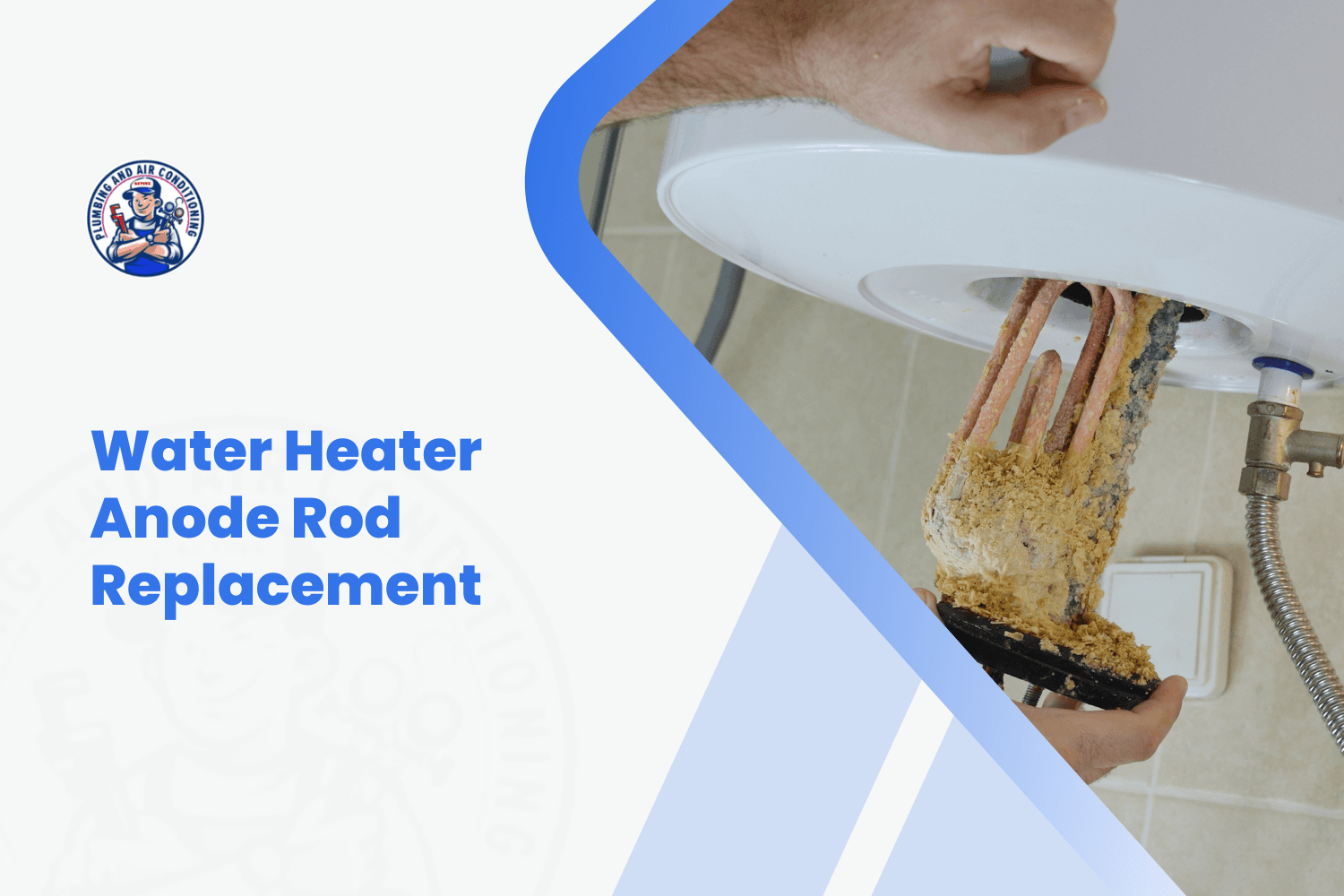
Water Heater Anode Rod Replacement: Why Vegas Hard Water Eats Them in 18 Months
Las Vegas hard water destroys anode rods in 18 months instead of years. Learn the warning signs, replacement costs, and how to protect your water heater long term.
Water Heater Replacement in Summerlin - HOA Rules, Garage Installs, and Same-Day Service
A local guide to water heater replacement in Summerlin covering HOA rules, garage install codes, Clark County permits, tank vs tankless, honest costs, and same-day service.