Tips & Advice
The Lakes Las Vegas Plumber: Lakefront Property Water Line Considerations

Key Takeaways
- Lakefront lots near The Lakes hold more soil moisture, which speeds pipe corrosion and causes ground movement that stresses buried water lines.
- Homes built between 1985 and 1995 may contain polybutylene pipe, which fails suddenly and should be replaced with PEX or HDPE.
- Early warning signs include soggy yard spots, climbing water bills, low water pressure, rusty water, and cracks tracking pipe routes.
- Electronic leak detection, pressure testing, and camera inspection locate problems precisely without tearing up landscaping.
- Spot repairs suit single breaks in newer lines, while recurring leaks, polybutylene, or widespread corrosion call for full replacement.
- Trenchless pipe bursting replaces lines with minimal digging, protecting mature landscaping, patios, and pools common in The Lakes.
- Water line work in The Lakes involves HOA approval, Clark County permits, and Las Vegas Valley Water District coordination.
- A water softener and yearly plumbing checkups slow hard water scale and catch small leaks before they become emergencies.
In This Article
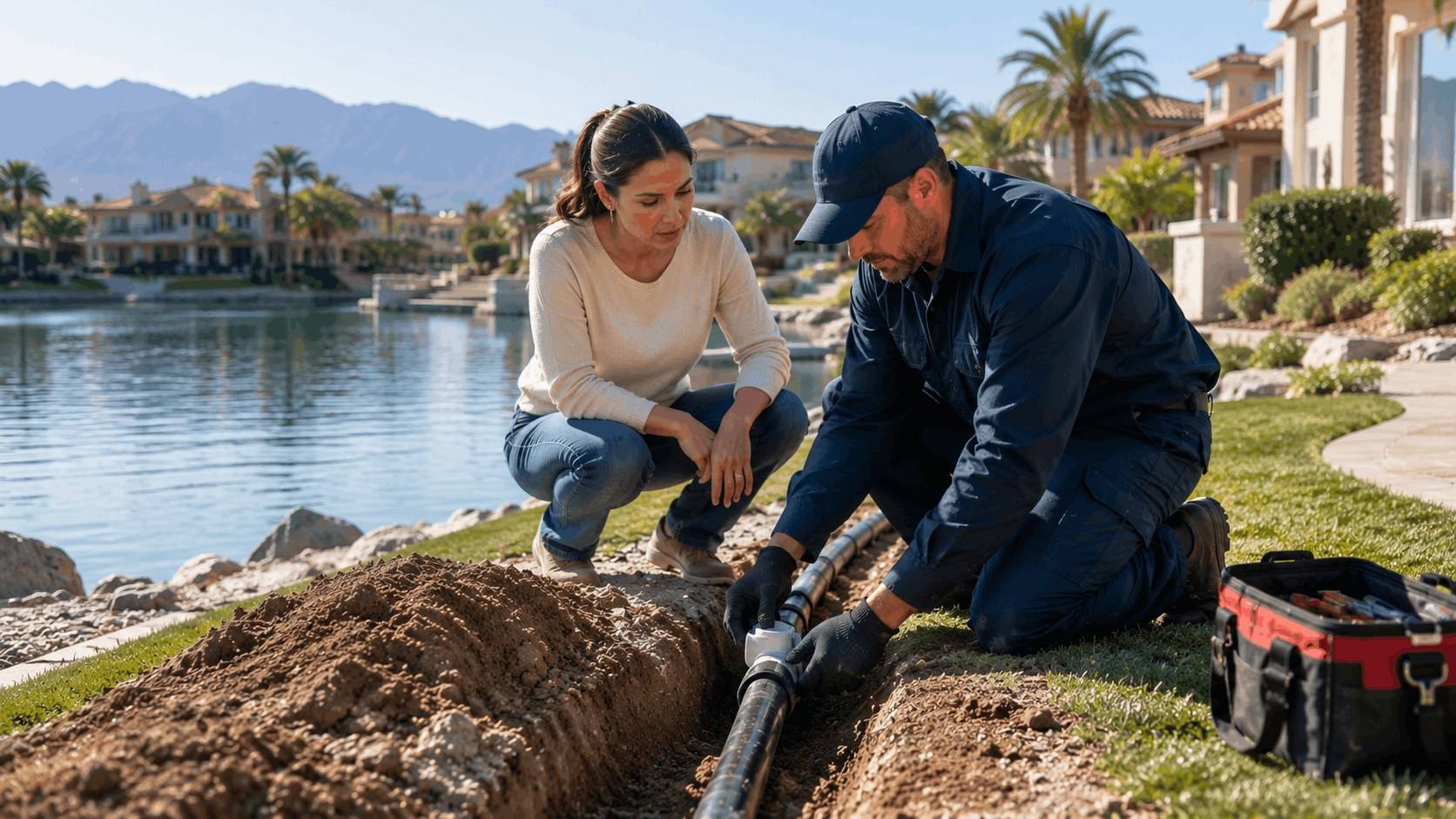
A homeowner near Lake Sahara called us one spring morning after noticing a patch of grass that stayed green and soggy long after the irrigation shut off. The rest of the yard was bone dry, but this one strip near the lakefront edge would not firm up. By the time we arrived, the water bill had already climbed by almost forty dollars, and the homeowner had no idea where the water was going.
That underground leak turned out to be a cracked service line, and it is a story we hear often from waterside homes in The Lakes. Properties built around these man-made lakes sit on soil that behaves differently than the dry inland lots a few miles away. That difference shows up in how buried pipes age, shift, and eventually fail.
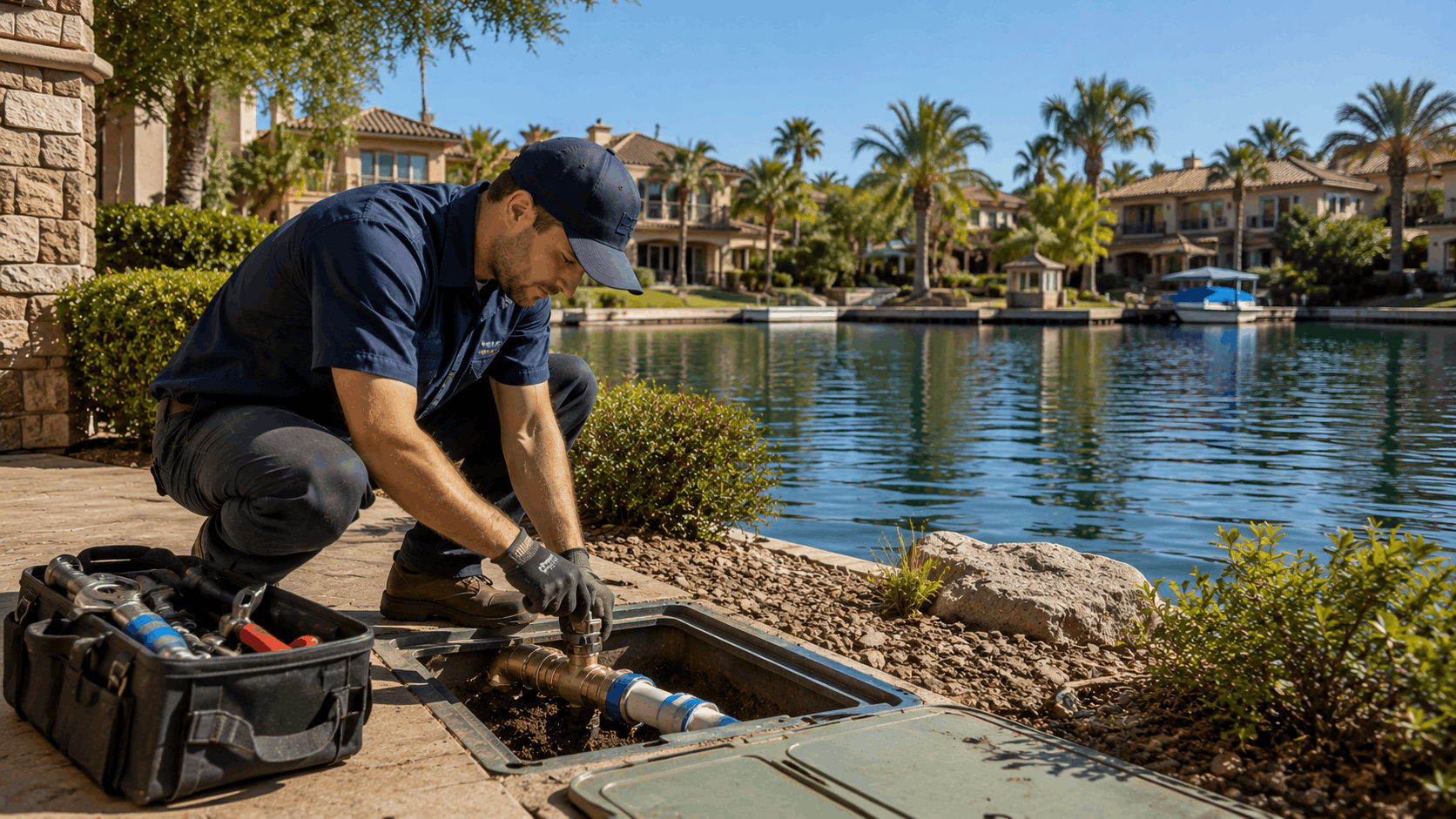
Why Lakefront Properties Near The Lakes Face Unique Water Line Issues?
Most homes in the Las Vegas valley sit on hard, dry desert soil that barely moves. Lakefront properties near The Lakes Las Vegas play by a different set of rules. The presence of a large man-made lake changes the moisture content of the ground for hundreds of feet inland.
That moisture creates a back-and-forth cycle. Soil swells when it takes on water and shrinks as it dries, and a buried lakefront water line gets pulled along for the ride. Over years, that movement stresses joints, fittings, and the pipe body itself.
The table below shows how waterside homes compare to standard inland lots in the same city.
| Condition | Inland Las Vegas Lot | Lakefront Property Near The Lakes |
|---|---|---|
| Soil moisture | Low and stable | Higher and fluctuating |
| Soil movement | Minimal | Frequent swell and shrink |
| Corrosion rate | Slower | Faster near damp ground |
| Drainage demand | Standard | Higher near shoreline |
| Common water line problems | Hard water scale | Scale plus joint stress and corrosion |
How the Soil Around Lake Sahara Affects Buried Pipes
The ground near Lake Sahara holds more moisture than the lots over by Durango Drive. Water seeps outward from the lake basin and keeps the surrounding soil damper than the surface ever shows. That hidden moisture is the start of most problems we see.
Soil movement is the real culprit. Damp clay-heavy soil expands when wet and contracts hard when it dries between irrigation cycles. Buried pipes are rigid, and the ground around them is not, so something has to give.
Over a decade or two, that constant push and pull works fittings loose and opens hairline cracks. We have pulled service lines near the lake that looked fine on the surface but had separated at a coupling because the soil had shifted an inch or more over the years. Dry inland lots rarely show this pattern.
The takeaway for waterside homeowners is simple. The same pipe that lasts forty years on a dry lot may need attention sooner near the water, and regular checks pay off.
Water Table and Drainage Concerns for Waterside Homes
A higher localized water table sits under many lakefront lots. The lake keeps the surrounding ground wetter, and that moisture reaches the depth where service and main lines run. Pipes that stay damp on the outside corrode faster than pipes in dry trenches.
Pipe bedding matters here too. The sand and gravel packed around a buried line is meant to support it evenly. When that bedding stays saturated, it can wash out or settle, leaving sections of pipe unsupported and prone to sagging or cracking.
Drainage around the property feeds into all of this. Yards that slope toward the home or hold water near the foundation push extra moisture toward buried lines and the slab. Good grading and working area drains keep that water moving away from the structure.
We often pair a water line review with a look at how a property drains. If you are also dealing with slow yard drains or backups, our drain and sewer services address those issues at the same time.
Older vs. Newer Builds in The Lakes Community
The Lakes community grew in waves, and the build date of a home tells us a lot about what is in the ground. Original homes from the 1980s and early 1990s near Lake Mead Boulevard often used pipe materials that have since fallen out of favor. Newer construction switched to materials that handle shifting soil far better.
Many older homes here were plumbed with copper or, in some cases, polybutylene. Copper holds up reasonably well but suffers from hard water scale and pinhole leaks over time. Polybutylene is a different story and a bigger concern, which we cover in detail further down.
Newer builds and recent repipes lean on flexible materials like PEX and HDPE for the main run. These bend with soil movement instead of fighting it, which is a real advantage on a lakefront lot.
When we get called to a home in The Lakes community, the first questions we ask are the build year and whether anything has been replaced. That history points us toward the most likely problem areas before we ever start digging.
Get Your Quote
Tell us what's going on and we'll get back to you fast.
Common Water Line Materials in The Lakes Area Homes
Knowing what your pipes are made of helps you predict how they will age. The water line materials in The Lakes area range from decades-old copper to modern plastics, and each reacts differently to the local desert climate and lake moisture.
Here are the materials we encounter most often in this part of Las Vegas:
- Copper - durable but vulnerable to hard water scale and pinhole leaks
- Polybutylene - found in some late-80s and early-90s homes, prone to sudden failure
- PEX - flexible plastic used in most modern repipes
- HDPE - high-density polyethylene used for main lines and trenchless work
- Galvanized steel - rare now, but still present in a few of the oldest homes
Copper Lines and Local Hard Water Wear
Copper has been a standard for decades, and plenty of homes near The Lakes still run it. It handles pressure well and resists most kinds of damage. The trouble in this valley comes from the water itself.
The Las Vegas Valley Water District delivers some of the hardest water in the country, loaded with calcium and magnesium minerals. Those minerals build up on the inside of copper pipe over years, narrowing the path water can flow through. The result is slowly dropping pressure and, eventually, restriction at the worst spots.
Hard water also contributes to pinhole leaks. Tiny corrosion points form on the copper wall, and one day a pinhole opens and starts spraying inside a wall or under a slab. We have traced more than a few mystery leaks to copper lines that looked perfect from the outside.
Signs of copper trouble include greenish staining at fittings, reduced flow at faucets, and a metallic taste. A water softener installation slows the buildup and can add years to copper lines.
Polybutylene Pipe Found in Some Older The Lakes Homes
Polybutylene is the material that keeps us up at night. It was a popular gray plastic pipe in the late 1980s and early 1990s, and some older homes in The Lakes still have it hidden in walls or underground. It was cheap and easy to install, which is exactly why it spread.
The problem is that polybutylene reacts poorly with the chlorine and chemicals in treated municipal water. Over time the pipe becomes brittle from the inside out. There is often no warning before it fails, and when it does, it can flood a home in minutes.
Because the damage happens inside the pipe wall, an inspection of the outside tells you little. If your home was built between 1985 and 1995 and has never been repiped, there is a real chance polybutylene is present. We always recommend a closer look.
Pipe replacement is the only reliable fix for polybutylene. We swap it for modern materials that do not break down the same way, and most insurers and buyers prefer a home that has already made the switch.
Modern PEX and HDPE for Waterside Repairs
When we repipe a home or replace a main line near the lake, we reach for PEX and HDPE. These materials solve the exact problems that older pipe struggles with on a shifting lakefront lot. They flex instead of crack.
PEX is a flexible plastic used for interior water lines and many repipes. It resists scale buildup far better than copper, handles freezing nights with more give, and installs with fewer joints, which means fewer potential leak points. For a full repipe in an older home, it is usually our first recommendation.
HDPE shines for buried main lines and trenchless work. It comes in long continuous lengths with fused joints, so there are almost no fittings underground to pull apart when soil moves. That makes it well suited to the damp, shifting ground near the lake.
Both materials carry long service lives and stand up to the local climate. When a homeowner asks what we would put in our own waterside home, the honest answer is PEX inside and HDPE for the main run.
Need Help in Las Vegas?
Active Plumbing serves Las Vegas and all of Las Vegas Valley.
Signs Your Lakefront Property Has a Water Line Problem
Catching a water line issue early is the difference between a small repair and a torn-up yard. Most leaks give off warning signs long before they become emergencies. Here are the water line leak signs we tell every homeowner near The Lakes to watch for:
- Sudden or gradual drops in water pressure
- Wet spots or soggy patches in an otherwise dry yard
- Water bills that climb with no change in usage
- Brown, rusty, or cloudy water at the tap
- New cracks in driveways, patios, or walkways
- The sound of running water when everything is off
Sudden Drops in Water Pressure
Low water pressure is one of the most common calls we get, and it often points straight at the main line. When a buried line cracks or partly blocks with scale, less water reaches the house. Showers go weak and filling a tub takes forever.
You can run a rough check yourself at an outdoor spigot. Attach a pressure gauge, available cheaply at any hardware store, and read the number with no other water running. Most homes should read somewhere between 45 and 75 psi.
A reading well below that range, or one that swings around, suggests a problem on the main line or service line. If pressure dropped suddenly rather than slowly, that often means a fresh break or a failing fitting.
Pressure trouble rarely fixes itself. Once we confirm where the loss is happening, the repair is usually straightforward, but ignoring it lets a small leak grow into a washout.
Wet Spots, Soggy Yards, and Higher Water Bills
A hidden leak underground has to go somewhere, and it usually surfaces as a soft, soggy spot in the yard. On a lakefront lot this is tricky, since the ground near the water already runs damp. The tell is moisture that does not match your irrigation pattern.
We tell homeowners to walk the yard a day after the sprinklers run. If one patch stays mushy while everything else dries out, especially near the lake side of the property, a buried line is likely leaking there. That is exactly the clue our Lake Sahara customer noticed.
A rising water bill backs up the suspicion. A jump of twenty, forty, or a hundred dollars with no change in habits means water is escaping somewhere you cannot see. Compare a few months of bills to spot the trend.
When both clues line up, soggy ground and a high water bill, it is time to call for leak detection before the soil washes out further. The longer it runs, the more it costs in both water and repair.
Discolored or Rusty Water at the Tap
Brown or rusty water that comes out of the tap is a red flag for pipe corrosion. It usually means the inside of a metal pipe is breaking down and shedding particles into your water. Galvanized steel and aging copper are the usual sources.
Cloudy or discolored water that clears after running for a minute is sometimes harmless, often just air or stirred-up sediment. Water that stays brown, or that shows up rusty first thing in the morning after sitting in the pipes overnight, points to corrosion that is getting worse.
Rusty water is more than an annoyance. It signals that the pipe wall is thinning, and a thinning pipe is closer to a leak or break than a sound one. It can also stain fixtures and laundry.
If discolored water shows up regularly, have the lines checked. Sometimes the fix is a single corroded section, and sometimes it is the start of a conversation about a repipe.
Cracks in Driveways or Patios Near Pipe Routes
Buried water lines often run beneath driveways, patios, and walkways. When one of those lines leaks, it slowly washes away the soil that supports the concrete above. Soil settling is the result, and cracks follow.
The pattern to watch for is cracking that runs in a line, roughly following where a pipe would travel from the meter toward the house. A single random crack from heat or age is common in Las Vegas. A crack that tracks a straight path over buried lines is more suspicious.
Sinking or uneven sections of a patio near the lake side of the home deserve a second look. Damp soil that loses support settles more dramatically than dry, packed ground. We have found service line leaks by tracing a sunken walkway back to its source.
If you notice new cracks or settling along a likely pipe route, do not just patch the concrete. Have the line under it checked first, or you will be repairing the same surface again next year.
Water Line Inspection and Leak Detection Methods We Use
Finding a buried leak without destroying a beautiful lakefront yard takes the right tools. Guesswork and random digging belong to the past. Our leak detection and water line inspection process pinpoints the problem first, so any digging is precise and limited.
Electronic Leak Detection for Hidden Lines
Most leaks near The Lakes hide under hardscape, mature landscaping, or the slab. Electronic leak detection lets us hear and locate them without tearing anything up first. It is the same approach we use across the valley with strong results.
Acoustic detection equipment picks up the faint sound of water escaping a pressurized pipe. Even a small leak makes a distinct hiss or rush that the human ear cannot catch through soil and concrete. Our sensors trace that sound to a tight spot on the ground.
We pair acoustic tools with electronic correlators and line tracing to map exactly where the pipe runs and where the loss is. On a lawn full of expensive shrubs near the lake, this precision saves the landscaping. We dig one small access hole instead of a long trench.
For homeowners who want ongoing protection, our electronic leak detection and whole-home monitoring options catch hidden leaks early. That matters most on waterside lots where damp ground masks the usual surface clues.
Pressure Testing the Main Water Line
Sometimes we need to confirm a line is losing water before we hunt for the exact spot. A pressure test does that. We isolate the main water line, charge it to a set pressure, and watch the gauge.
If the needle holds steady, the line is sound and the trouble lies elsewhere. If the pressure drops over the test window, water is escaping somewhere along the run. The rate of the drop even hints at how large the leak is.
The test itself is quick, usually wrapping up within an hour or two depending on the size of the system. It gives us a clear yes or no on whether the main line is the source. That keeps us from chasing the wrong problem.
Leak confirmation through pressure testing is a smart first step before any major repair decision. It tells the homeowner exactly what they are dealing with, with no guesswork and no surprise bills later.
Camera Inspections for Service and Sewer Lines
For lines running toward the street, a camera inspection shows us the inside of the pipe in real time. We feed a waterproof video camera on a flexible cable through the line and watch the feed on a monitor. Nothing gets hidden.
This is the best way to spot breaks, root intrusion, scale buildup, and bellied sections where the pipe has sagged. On older homes near Lake Mead Boulevard, we often find roots that have worked into joints or cracks that opened as the soil shifted. The camera shows precisely where and how bad.
Video inspection also gives the homeowner something to see for themselves. Instead of taking our word for it, they watch the actual condition of their sewer line or service line on screen. That transparency builds trust.
If your concern leans toward sewer or drain lines rather than the water supply, our sewer camera inspection service covers those runs in the same careful way.
Repair vs. Replacement: Making the Right Call
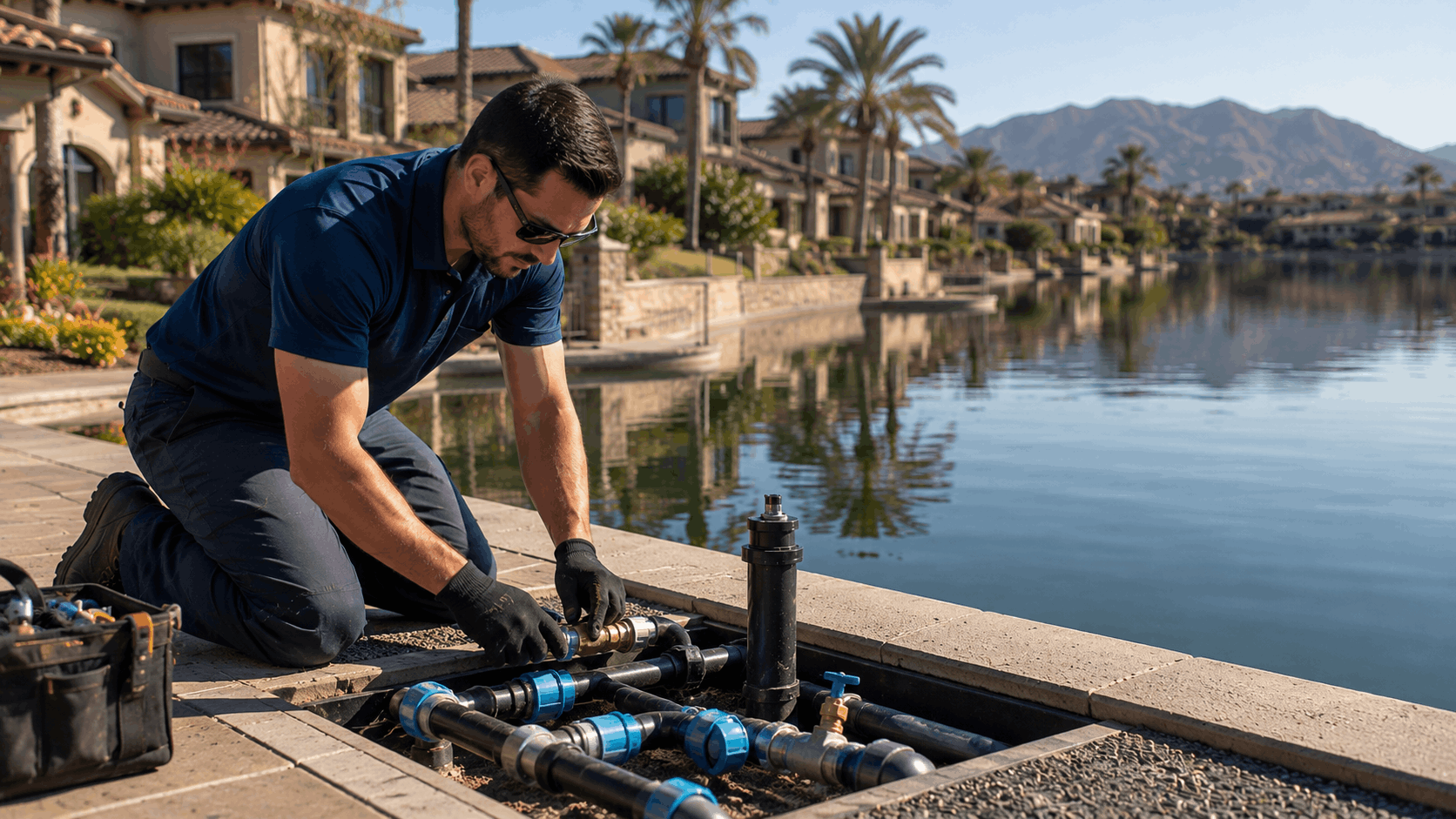
One of the hardest decisions a homeowner faces is whether to patch a water line or replace the whole thing. The right answer depends on the pipe age, the material, and how much damage is present. A water line repair makes sense in some cases, while a full water line replacement is the smarter spend in others.
This table lays out the general guidance we give:
| Situation | Recommended Approach | Typical Range |
|---|---|---|
| Single break in a newer PEX or copper line | Spot repair | $350 - $1,200 |
| Recurring leaks in aging copper | Full replacement | $3,500 - $8,000 |
| Any polybutylene piping | Full replacement | $4,000 - $9,000 |
| Main line under mature landscaping | Trenchless replacement | $5,000 - $12,000 |
When a Spot Repair Makes Sense
A spot repair is the right move when the damage is contained and the rest of the line is healthy. If a newer PEX or copper line takes a single break from soil movement or an accidental shovel strike, patching that one section is affordable and quick. There is no reason to replace good pipe.
We look at the age and material first. A line under fifteen years old, made of modern material, with one clear point of failure is a strong candidate for a pipe patch. We cut out the bad section, splice in new material, and pressure test to confirm the fix held.
A single break repair often wraps up in a few hours. The cost stays low because the work and the digging are limited to one spot. For many homeowners near The Lakes, this is all they ever need.
The caution is this: a spot repair only makes sense if the line is otherwise sound. Patching one leak in a pipe that is failing all over just delays a bigger bill.
When Full Replacement Is the Smarter Choice
Some situations call for replacing the whole line, even though it costs more upfront. Recurring leaks are the clearest sign. If we patch one spot and another opens up six months later, the pipe is telling you it is done.
Polybutylene is an automatic candidate for full replacement. Because the whole length degrades from the inside, fixing one failure point does nothing for the rest. We replace the entire run with PEX or HDPE and the worry goes away for good.
Widespread corrosion in old copper or galvanized steel falls in the same camp. When the pipe walls are thinning everywhere, a repipe costs less over time than a string of emergency calls. It also restores full water pressure that scale and corrosion had choked off.
A full replacement or repipe is an investment, but it ends the cycle of repeated repairs. For waterside homes where soil keeps stressing the line, that long-term stability is worth it.
Trenchless Options for Lakefront Landscaping
The Lakes is full of homes with mature landscaping, custom patios, pools, and lakefront views worth protecting. Tearing a long trench across that yard is the last thing anyone wants. Trenchless methods let us replace a line with minimal digging.
Pipe bursting is the technique we use most. We pull a new HDPE line through the path of the old one, breaking the old pipe outward as the new one takes its place. It needs only two small access pits instead of a continuous open trench.
That approach saves established trees, decorative rock, and hardscape from destruction. On a lakefront lot where the landscaping cost as much as the home improvements, the savings in restoration alone can offset much of the trenchless premium. The lawn looks nearly untouched when we finish.
Not every line qualifies for trenchless, but many do. We assess the route, depth, and condition first, then recommend the method that protects your property while solving the problem.
Cost Ranges Homeowners Can Expect
Cost is the question on everyone's mind, so we give straight ranges. A spot repair on a water line in the Las Vegas area typically runs from a few hundred dollars up to around twelve hundred, depending on access and depth. Most patches finish the same day.
A full water line replacement generally falls between $3,500 and $9,000. Trenchless replacement under landscaping can reach $5,000 to $12,000 because of the specialized equipment, though it saves heavily on yard restoration. The replacement price depends on length, depth, material, and how much hardscape sits in the way.
Timeframes vary too. A standard trench replacement takes one to two days, while trenchless work often finishes faster since there is less digging and backfill. We give every homeowner a written estimate before any work starts.
These are general figures to set expectations. Every lakefront lot is different, and the only accurate number comes after we see the property. Our estimates are free and carry no obligation.
Need Help in Las Vegas?
Active Plumbing serves Las Vegas and all of Las Vegas Valley.
HOA Rules and Permits for Water Line Work in The Lakes
Water line work in The Lakes is not just about the pipe. HOA rules and Clark County permits shape what you can do and how. We handle this side of the project so homeowners do not get caught off guard.
Working With The Lakes Community Association Guidelines
The Lakes Community Association has guidelines that affect digging and landscaping on lakefront lots. Before excavation, many projects need notice or approval, especially when work is near the shoreline. We help homeowners understand what their HOA expects.
Common HOA requirements cover landscaping restoration after digging. The association generally wants the yard returned to its original look, which is one more reason trenchless methods are popular here. Less digging means less to restore and faster approval.
Shoreline setbacks are another factor. Work close to the water edge may face extra restrictions to protect the lake and the shared community features. We plan the work to respect those setbacks from the start.
Knowing these guidelines ahead of time avoids fines and delays. We have worked within The Lakes association rules before and keep the paperwork moving so the job stays on schedule.
Permits Through Clark County and Local Utilities
Most water line replacements and many repairs require a plumbing permit through Clark County. A permit means the work gets inspected and meets code, which protects the homeowner and any future buyer. Skipping it can cause problems at resale.
We pull the Clark County permit and handle the paperwork as part of the job. Homeowners do not need to stand in line at the building department or decipher code requirements. We coordinate the inspections so the project clears every checkpoint.
Utility coordination is part of this too. Before any digging, lines must be marked so we avoid striking gas, electric, or communication lines. We arrange that marking through the proper channels. You can learn more about the dig-safe process through the national 811 program.
Handling permits correctly keeps the whole project legitimate and on the record. That documentation matters when you sell the home, and it gives you confidence the work was done right.
Coordinating With the Las Vegas Valley Water District
Any water line project involves the Las Vegas Valley Water District at some point. A meter shutoff is often the first step, since we need to stop the flow before working on the service line. We schedule that coordination so there is no surprise loss of water.
The water district owns the meter and the line up to it, while the homeowner owns the line from the meter to the house. Knowing exactly where that responsibility splits decides who pays for what. We clarify that line before quoting any work.
For larger replacements, we may need the district to confirm service details or arrange a temporary shutoff window. Their requirements are posted publicly, and homeowners can review service information directly through the Las Vegas Valley Water District.
We manage these touchpoints so the homeowner is not stuck on hold or chasing down approvals. The goal is a smooth project where water service comes back on schedule.
Protecting Your Lakefront Water Lines Year-Round
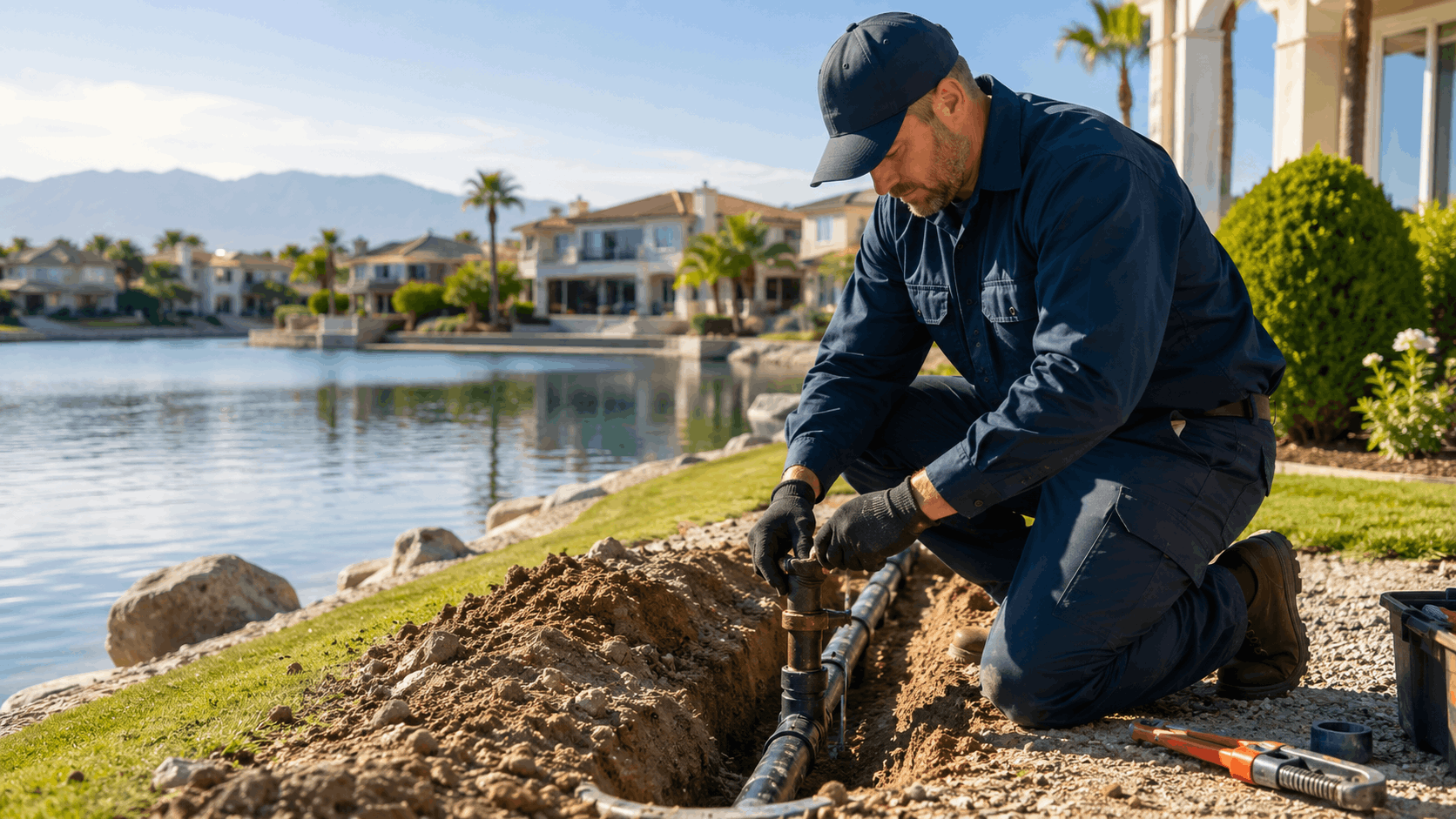
The best water line problem is the one that never happens. A few maintenance habits go a long way toward extending the life of pipes in the Las Vegas climate and near the lake. Preventive plumbing is far cheaper than emergency repair.
Managing Hard Water and Mineral Buildup
Hard water is the single biggest enemy of pipes in this valley. The minerals in Las Vegas water leave scale inside pipes, fixtures, and water heaters. Over years that buildup narrows lines and shortens their life.
A water softener removes much of the calcium and magnesium before it reaches your plumbing. Softened water keeps pipes clearer, protects appliances, and even makes soap lather better. For homes on hard water, a softener pays for itself in extended equipment life.
Regular flushing helps too. Draining sediment from the water heater once a year and clearing aerators on faucets keeps mineral buildup from accumulating. These small steps slow the scale that otherwise builds quietly inside the system.
If you want to cut mineral buildup at the source, our water treatment services include softeners and conditioning options matched to local water. Lakefront homeowners especially benefit since their pipes already face extra stress.
Winter Cold Snaps and Outdoor Lines
Las Vegas winters are mild, but the valley does see freezing nights, especially in December and January. Those occasional cold snaps catch homeowners off guard because nobody expects frozen pipes in the desert. Exposed outdoor lines are the most at risk.
Hose bibs and irrigation lines are the usual victims. Water left in an exposed line can freeze, expand, and crack the pipe or the fitting. The damage often does not show until the thaw, when the line starts leaking.
Simple steps prevent it. Disconnect garden hoses before a cold night, cover hose bibs with inexpensive foam covers, and shut off and drain irrigation when a hard freeze is forecast. These take minutes and save a repair bill.
For waterside lots with extensive landscaping and irrigation, protecting those outdoor lines matters more since there are more of them. A quick walk around before the first freeze each year is time well spent.
Scheduling Routine Plumbing Checkups
An annual plumbing inspection catches small problems before they become big ones. On a lakefront lot where soil keeps stressing buried lines, that yearly look is even more valuable. We find the slow leaks and weak fittings while they are still cheap to fix.
A routine checkup covers water pressure, visible pipe condition, fixtures, the water heater, and any signs of corrosion or moisture. We note anything trending the wrong way and give the homeowner a clear picture of their system's health. No pressure, just information.
Many homeowners pair the inspection with a leak detection check if they have any suspicion of moisture in the yard. Catching a buried leak at the inspection stage saves the soggy yard and the spiked water bill that come with letting it run.
Think of it like a yearly physical for your plumbing. A small annual investment in maintenance heads off the surprise emergencies that cost far more. We are happy to set up a checkup schedule that fits your home.
Why The Lakes Homeowners Call Active Plumbing
Plenty of plumbers work the Las Vegas valley, but lakefront water line work calls for local knowledge and an honest approach. Homeowners in The Lakes call Active Plumbing because we know this part of the city and treat their property like it matters.
Local Knowledge of The Lakes and Surrounding Streets
We know the neighborhoods around Lake Sahara, the homes off Sahara Avenue, and the lots along Durango Drive. We have worked on properties throughout The Lakes and the surrounding parts of Las Vegas. That familiarity means we arrive already understanding the soil and the common pipe materials here.
Local experience changes how we approach a job. When we hear a build date and a street, we already have a strong guess at what is in the ground and where the trouble likely sits. That saves time and digging.
We also understand the lake-driven moisture conditions that make these lots different. A plumber who only works dry inland tracts misses the soil movement and corrosion patterns specific to waterside homes. We do not.
That neighborhood knowledge shows up in faster diagnoses and fewer surprises. We have driven these streets and worked these homes, and it makes a difference on every call.
Honest Assessments and Clear Pricing
Nobody likes a vague estimate or a surprise charge. We give honest assessments and clear pricing from the start. If a spot repair will solve the problem, we say so, even when a full replacement would bring a bigger ticket.
Every job starts with a real look at the situation and an upfront quote in writing. The homeowner knows the scope and the cost before we begin. There are no add-ons that appear after the work is done.
We also tell homeowners when something does not need doing yet. If a line has years of life left, we will not push a replacement. That honesty is why so many of our customers come back and refer their neighbors.
Clear pricing and straight talk build trust, and trust is the foundation of our business in The Lakes. We would rather earn a customer for life than oversell one job.
Fast Response for Emergency Leaks
A water line leak does not wait for business hours. When a pipe bursts near the lake, every minute means more water in the soil and more damage to landscaping and foundations. Fast response matters, and we move quickly.
Our team responds rapidly to active leaks that threaten a property. We shut down the source, assess the damage, and start the repair before a small leak undermines a patio or floods a yard. Quick action limits the cost.
For around-the-clock help, our 24/7 emergency plumbing service covers The Lakes and the wider valley. A burst pipe at midnight gets the same urgent attention as one at noon.
Waterside homeowners take comfort knowing help is a phone call away. When water is going where it should not, we are the team to stop it fast.
Need Help in Las Vegas?
Active Plumbing serves Las Vegas and all of Las Vegas Valley.
Final Thoughts
Lakefront properties near The Lakes face water line challenges that standard inland homes never see. The lake keeps the soil damp and moving, which stresses buried pipes, speeds corrosion, and makes early detection harder. Knowing your pipe material, watching for warning signs, and acting on small leaks before they grow are the habits that protect your home.
Whether you need a quick repair, a full repipe with modern PEX or HDPE, or just a yearly checkup, the right plumber makes the work simple and the pricing clear. Our team knows The Lakes, handles the HOA and permit details, and protects your landscaping with trenchless methods when possible.
If you have noticed soggy ground, dropping pressure, or a climbing water bill, reach out to Active Plumbing today. Call us or use our contact page to schedule a free assessment of your lakefront water lines.
Frequently Asked Questions
How do I know if my water line is leaking underground?
Watch for soggy spots in an otherwise dry yard, water bills that climb with no change in usage, and dropping water pressure at the taps. The sound of running water when everything is off is another clue. On lakefront lots, look for moisture that does not match your irrigation pattern. If you spot any of these signs, call for professional leak detection before the soil washes out further.
How much does water line replacement cost in The Lakes area?
A full water line replacement in the Las Vegas area generally runs between $3,500 and $9,000. Trenchless replacement under mature landscaping can reach $5,000 to $12,000 because of the specialized equipment, though it saves on yard restoration. The price depends on the length, depth, pipe material, and how much hardscape sits in the path. We provide a free written estimate after seeing the property.
Does living near the lake make my pipes wear out faster?
Yes, in many cases. The lake keeps the surrounding soil damper than dry inland lots, and that moisture speeds corrosion on metal pipes. Damp soil also swells and shrinks more, which shifts buried lines and stresses fittings over time. The result is that pipes near the water often need attention sooner. Regular inspections and the right pipe materials offset much of that extra wear.
Can a water line be replaced without digging up my yard?
Often, yes. Trenchless methods like pipe bursting pull a new HDPE line through the path of the old one, needing only two small access pits instead of a long open trench. That protects mature trees, decorative rock, patios, and pools common on lakefront lots. Not every line qualifies, but many do. We assess the route, depth, and pipe condition first, then recommend the method that protects your property.
Do I need an HOA approval before water line work?
Often you do. The Lakes Community Association has guidelines covering digging, landscaping restoration, and shoreline setbacks, and many projects need notice or approval before excavation begins. Work near the water edge may face extra restrictions. We have worked within the association rules before and help homeowners handle the paperwork so the job stays on schedule and avoids fines or delays.
What pipe material is best for a lakefront home in Las Vegas?
For interior lines and repipes, PEX is usually our top pick. It flexes with soil movement, resists hard water scale better than copper, and installs with fewer joints to leak. For buried main lines, HDPE is excellent because its fused joints have almost no fittings to pull apart when soil shifts. Together, PEX inside and HDPE for the main run handle local conditions best.
How long does a water line replacement take?
A standard trench replacement usually takes one to two days, including the digging, the new pipe installation, pressure testing, and backfill. Trenchless replacement often finishes faster because there is far less digging and restoration involved. Permitting and inspection scheduling can add time on the front end. We give every homeowner a realistic timeframe with the written estimate so there are no surprises.
Should I be worried if my older home has polybutylene pipes?
Yes, polybutylene deserves real attention. This gray plastic pipe, common in homes built between 1985 and 1995, becomes brittle from the inside as it reacts with treated water. It can fail suddenly with little warning and flood a home. An outside inspection tells you little since the damage is internal. We recommend a closer look and, in nearly all cases, full replacement with modern material.
Will hard water damage my new water line?
Hard water will not destroy a new line quickly, but the minerals in Las Vegas water do leave scale that builds up over years and narrows pipes. Copper is more affected than PEX. A water softener removes the calcium and magnesium before they reach your plumbing, which extends pipe life and protects appliances. Regular flushing of the water heater and aerators also keeps buildup in check.
Who do I call for an emergency water leak in The Lakes?
Call Active Plumbing. Our 24/7 emergency service covers The Lakes and the wider Las Vegas valley, and we respond fast to active leaks that threaten landscaping and foundations. We shut down the source, assess the damage, and start the repair before a small leak undermines a patio or floods a yard. A burst pipe at midnight gets the same urgent attention as one at noon.
Frequently Asked Questions
- How do I know if my water line is leaking underground?
- Watch for soggy spots in an otherwise dry yard, water bills that climb with no change in usage, and dropping water pressure at the taps. The sound of running water when everything is off is another clue. On lakefront lots, look for moisture that does not match your irrigation pattern. If you spot any of these signs, call for professional leak detection before the soil washes out further.
- How much does water line replacement cost in The Lakes area?
- A full water line replacement in the Las Vegas area generally runs between $3,500 and $9,000. Trenchless replacement under mature landscaping can reach $5,000 to $12,000 because of the specialized equipment, though it saves on yard restoration. The price depends on the length, depth, pipe material, and how much hardscape sits in the path. We provide a free written estimate after seeing the property.
- Does living near the lake make my pipes wear out faster?
- Yes, in many cases. The lake keeps the surrounding soil damper than dry inland lots, and that moisture speeds corrosion on metal pipes. Damp soil also swells and shrinks more, which shifts buried lines and stresses fittings over time. The result is that pipes near the water often need attention sooner. Regular inspections and the right pipe materials offset much of that extra wear.
- Can a water line be replaced without digging up my yard?
- Often, yes. Trenchless methods like pipe bursting pull a new HDPE line through the path of the old one, needing only two small access pits instead of a long open trench. That protects mature trees, decorative rock, patios, and pools common on lakefront lots. Not every line qualifies, but many do. We assess the route, depth, and pipe condition first, then recommend the method that protects your property.
- Do I need an HOA approval before water line work?
- Often you do. The Lakes Community Association has guidelines covering digging, landscaping restoration, and shoreline setbacks, and many projects need notice or approval before excavation begins. Work near the water edge may face extra restrictions. We have worked within the association rules before and help homeowners handle the paperwork so the job stays on schedule and avoids fines or delays.
- What pipe material is best for a lakefront home in Las Vegas?
- For interior lines and repipes, PEX is usually our top pick. It flexes with soil movement, resists hard water scale better than copper, and installs with fewer joints to leak. For buried main lines, HDPE is excellent because its fused joints have almost no fittings to pull apart when soil shifts. Together, PEX inside and HDPE for the main run handle local conditions best.
- How long does a water line replacement take?
- A standard trench replacement usually takes one to two days, including the digging, the new pipe installation, pressure testing, and backfill. Trenchless replacement often finishes faster because there is far less digging and restoration involved. Permitting and inspection scheduling can add time on the front end. We give every homeowner a realistic timeframe with the written estimate so there are no surprises.
- Should I be worried if my older home has polybutylene pipes?
- Yes, polybutylene deserves real attention. This gray plastic pipe, common in homes built between 1985 and 1995, becomes brittle from the inside as it reacts with treated water. It can fail suddenly with little warning and flood a home. An outside inspection tells you little since the damage is internal. We recommend a closer look and, in nearly all cases, full replacement with modern material.
- Will hard water damage my new water line?
- Hard water will not destroy a new line quickly, but the minerals in Las Vegas water do leave scale that builds up over years and narrows pipes. Copper is more affected than PEX. A water softener removes the calcium and magnesium before they reach your plumbing, which extends pipe life and protects appliances. Regular flushing of the water heater and aerators also keeps buildup in check.
- Who do I call for an emergency water leak in The Lakes?
- Call Active Plumbing. Our 24/7 emergency service covers The Lakes and the wider Las Vegas valley, and we respond fast to active leaks that threaten landscaping and foundations. We shut down the source, assess the damage, and start the repair before a small leak undermines a patio or floods a yard. A burst pipe at midnight gets the same urgent attention as one at noon.
A
Licensed plumbing professionals serving Las Vegas and Las Vegas Valley.
Licensed in Nevada · License #0047021
Last updated on
Why trust Active Plumbing?
Founded in 1991, Active Plumbing is a licensed and insured plumber serving Las Vegas and Las Vegas Valley. All content is reviewed by our licensed technicians.

Need Help in Las Vegas?
Active Plumbing serves Las Vegas and all of Las Vegas Valley.
Related Articles
Tips & Advice
Henderson vs Las Vegas Water Pressure: Why Some Neighborhoods Have PRV Issues
Henderson vs Las Vegas water pressure varies by terrain, utility systems, and neighborhood age. Learn why PRV issues hit some areas harder and when to act.
Tips & Advice
Las Vegas Hard Water by ZIP Code: Actual SNWA Grain Hardness Data
See actual SNWA water hardness data by Las Vegas ZIP code. Learn your neighborhood's GPG level and what it means for your plumbing, appliances, and home.

Tips & Advice
What to Do When Your Water Shuts Off Suddenly in Las Vegas (Fast Checks)
Learn fast diagnostic steps Las Vegas homeowners can take when water suddenly shuts off - from checking meters to identifying utility outages before calling Active Plumbing.