How Extreme Las Vegas Heat Cycles Stress Plumbing Joints: CPVC Embrittlement and Slab Movement
Key Takeaways
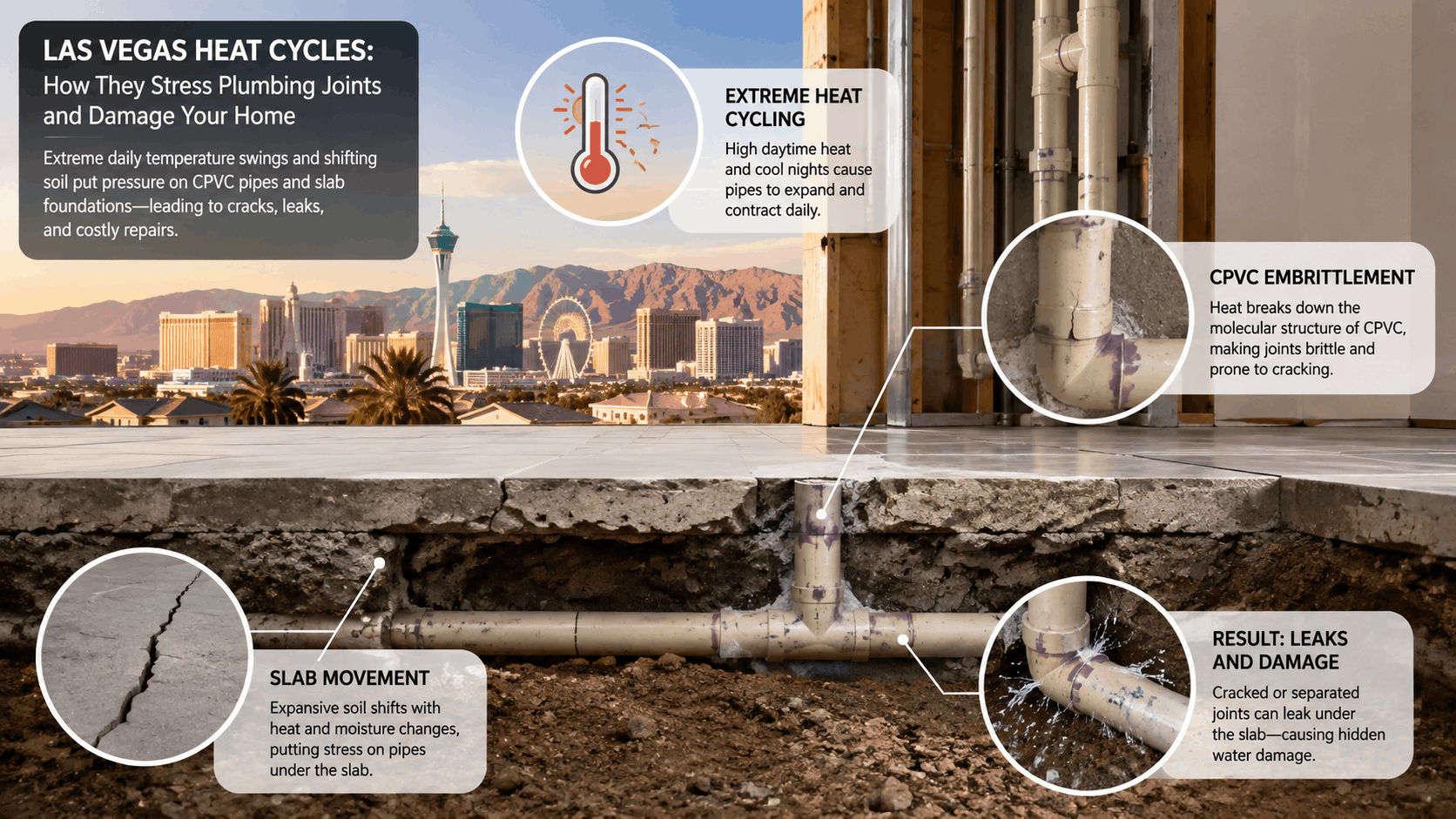
- Daily 40-degree temperature swings and attic heat above 140 degrees make pipes expand, contract, and wear out at their joints.
- CPVC embrittlement happens when years of heat dry out the plastic so it cracks instead of flexing, usually failing first at glued joints and elbows.
- Expansive clay and caliche soil under valley homes swells and shrinks with moisture, pulling on under-slab pipes and causing slab leaks.
- Warning signs include a jumping water bill, warm floor spots, low pressure, ticking or running sounds, and new cracks in walls or floors.
- Diagnosis uses pressure testing, acoustic and thermal leak location, camera inspection, and CPVC age assessment to pinpoint problems.
- Repair options range from spot repairs to full repipes, with PEX or copper and out-of-slab rerouting recommended for lasting results.
- Insulating pipes, balancing foundation watering, regulating pressure, and yearly inspections slow future heat and slab damage.
- Local knowledge of valley neighborhoods, soil, and water districts leads to quicker, more accurate repair decisions.
In This Article
A homeowner off Sun City Boulevard in Summerlin called us last August. She had just come home from a weekend away to find a damp patch spreading across her hallway tile after one of the hottest Julys on record. The pipe itself looked fine when we opened the wall, but the joint behind it had cracked clean through.
That kind of call happens a lot here. The heat in the Las Vegas valley does not just make people uncomfortable - it works on the pipes inside your walls and the ground under your slab, day after day, year after year.
Our team breaks down how extreme heat cycles wear out plumbing joints, why CPVC pipe turns brittle over time, and how shifting slabs pull on the lines running through your foundation. We will also cover the warning signs to watch for and the repair choices that make sense for valley homes.
Why Las Vegas Heat Is Hard on Home Plumbing?
Most people think of desert heat as something that only affects the air conditioner bill. The reality is that Las Vegas heat puts steady plumbing stress on every pipe, fitting, and buried line in a home. The extreme temperature swings we see between seasons and even within a single day are hard on materials that were never meant to move that much.
Here is what the desert climate does to a plumbing system over time:
- Expands and contracts pipe runs with every hot day and cool night
- Bakes plastic pipe in attics and wall cavities past its safe limit
- Dries the soil under the slab until the ground settles and shifts
- Speeds up wear at glued joints, elbows, and threaded fittings
When you add all of that up over 15 or 20 years, a small weakness at one joint becomes a leak. Let us look at each part of the problem.
Daily Temperature Swings and Pipe Expansion
The valley routinely swings 40 degrees between the afternoon high and the pre-dawn low. A summer day can hit 110 degrees, then drop into the 70s overnight. That daily rhythm never really stops, and your plumbing feels every bit of it.
Thermal expansion is the technical name for what happens next. When pipe warms up, it grows a little longer. When it cools, it shrinks back through pipe contraction. Over thousands of cycles, that tiny back-and-forth movement tugs on the fittings that hold everything together.
Metal and plastic both expand, but plastic moves more and moves more quickly. A long CPVC run in a hot attic can grow enough to strain the elbows at each end. The pipe itself might survive, but the glued joint slowly loosens its grip.
We see this a lot in homes where a straight run has no room to move. Without proper support and spacing, the pipe pushes against its fittings until one of them finally cracks or weeps.
Attic and Wall Cavity Heat Above 140 Degrees
Air temperature outside might top out at 112 degrees, but attic heat is a different animal. An unvented attic in Centennial Hills or a two-story home in Henderson can climb past 140 degrees on a July afternoon. That is far hotter than the air the weather report talks about.
Plastic pipe that runs through those spaces cooks in that heat for months. CPVC has a temperature rating, and hot water pushing through a line in a 140-degree attic can approach the edge of what the material can take. The wall cavity temperature behind sun-facing walls climbs too, especially on the west and south sides of a house.
Heat alone would be manageable if it were steady. The problem is that the pipe heats up, cools down, and does it again the next day. That constant cycling is what dries the plastic out and sets the stage for cracks.
When we inspect attics in older parts of the valley, the pipe running near the roof deck almost always looks worse than the same pipe down in a conditioned space. Heat is the difference.
Hot Water Lines Take a Double Hit
Cold lines get warm from the surrounding air. Hot water lines take a double hit - the heat inside the pipe from your water heater plus the desert heat pressing in from outside. That combination speeds up wear sooner than almost anything else in the system.
Every time hot water flows, the line jumps in temperature. Then it sits and cools between uses. Joint fatigue builds up at every elbow and coupling where the pipe changes direction, because those spots carry the most stress when the material moves.
Homes with recirculation systems can feel this even more, since hot water is moving through the lines more of the day. If you have noticed your hot side developing problems before your cold side, this is why. Our water heater services team checks hot line temperatures during a visit because a water heater set too high makes all of this worse.
The fix is often simpler than people expect. Lowering the water heater setting a few degrees and insulating the exposed hot runs can add years to those joints.
How Older Valley Homes Were Built
Building materials change with the decades, and older Las Vegas homes were often built with products chosen for the standards of that construction era. In the older parts of downtown, the Arts District, and stretches of Paradise, the pipe in the walls was picked before builders fully accounted for today's heat loads and long summers.
Some of those homes have galvanized steel that has corroded from the inside. Others got early plastic pipe that has now spent decades in hot attics. Neither was installed with the expectation that summers would run as long and hot as they do now.
Homes built during certain plastic-pipe years are the ones we watch most closely. The pipe was cheap and easy to install at the time, but nobody was thinking 30 years down the road about how the valley heat would treat it.
If you own a home in one of these older neighborhoods, it helps to know what is behind your walls before a joint gives out. A quick inspection tells you a lot about how much life the system has left.
Get Your Quote
Tell us what's going on and we'll get back to you. We're open 24/7.
What CPVC Embrittlement Actually Means
CPVC is one of the more common pipe materials in valley homes, and it is also one of the most misunderstood. CPVC embrittlement is the slow process where a flexible plastic pipe turns hard and easy to crack. Understanding what is happening inside your walls helps you decide when to act.
Here is a quick look at how CPVC compares to other common pipe materials in desert conditions:
| Material | Heat Tolerance | Flexibility Over Time | Typical Failure Point |
|---|---|---|---|
| CPVC | Moderate | Gets brittle with age and heat | Glued joints and elbows |
| PEX | Good | Stays flexible | Crimp fittings if done poorly |
| Copper | High | Rigid but stable | Pinholes from water chemistry |
Now let us break down what CPVC is and why it fails the way it does.
What CPVC Is and Where It Runs in Your Home
CPVC pipe is a cream or tan colored plastic used for both hot and cold water lines. It is easy to spot once you know the color - it looks a little like PVC but with that yellowish tan tint. Builders liked it because it was cheaper than copper and quick to glue together.
As a residential plumbing material, it shows up in a lot of valley homes built during certain decades. You will find it running through attics, down interior walls, and out to fixtures like sinks, showers, and hose bibs. In two-story homes it often runs long distances through hot upper spaces.
The pipe connects with solvent glue rather than crimped rings or soldered joints. That glued connection is quick to install, but it becomes the weak point as the pipe ages.
If you open a cabinet under a sink and see tan plastic pipe with glued fittings, that is CPVC. Knowing you have it is the first step toward keeping an eye on its condition.
How Heat and Time Make CPVC Brittle
When CPVC is new, it has a little give to it. Plastic aging changes that. Over years of heat, the chemistry inside the material shifts and the plastic slowly loses the compounds that keep it flexible.
Heat drives that process, and so do certain chemicals. Contact with some spray foams, glues, and even air fresheners can speed up material degradation in CPVC. In a hot attic, the pipe is already stressed, and any added chemical exposure makes it worse.
The end result is a pipe that no longer bends when it needs to. Instead of flexing when the temperature swings or the slab moves, it stays stiff and cracks. That is embrittlement in plain terms - the pipe went from bendable to breakable.
You cannot reverse it once it has set in. Once a section of CPVC has turned brittle, it will keep failing at new spots even if you patch one leak.
Warning Signs of Failing CPVC
Failing CPVC usually gives you clues before it bursts. The trick is knowing what to look for. Cracked pipe signs often start small and get worse over a few months.
Keep an eye out for these:
- Hairline cracks along the pipe or at a fitting
- Yellowing or darkening that looks worse than the original tan
- Fittings that feel stiff or look stressed at the shoulder
- A small pinhole leak or slow weep at a glued joint
A pinhole leak might only drip a few drops a day at first. That is easy to ignore, but it is a warning that the material is failing and a bigger break may follow.
If you spot any of these, it is worth having the run inspected before it lets go. Catching it early usually means a smaller, cheaper repair.
Why Joints and Fittings Fail First
Straight pipe can take a lot of abuse. It is the joints and fittings that give out first. A fitting failure is where most CPVC leaks start, and there is a reason for that.
Every elbow, tee, and coupling is a spot where the pipe changes direction or connects to another piece. Those spots carry the most stress when the pipe expands, contracts, or gets pulled by a shifting slab. The glued joint is also where the solvent weld can weaken over decades.
When brittle CPVC finally cracks, it almost always cracks at or near a fitting. The pipe body might look fine, but the elbow behind the wall has split. That is exactly what our Summerlin caller found.
This is why a single leak on old CPVC is rarely a one-time event. If one glued joint has failed, the others are usually not far behind.
Need Help in Las Vegas?
Active Plumbing serves Las Vegas and all of Las Vegas Valley.
Slab Movement in the Las Vegas Valley
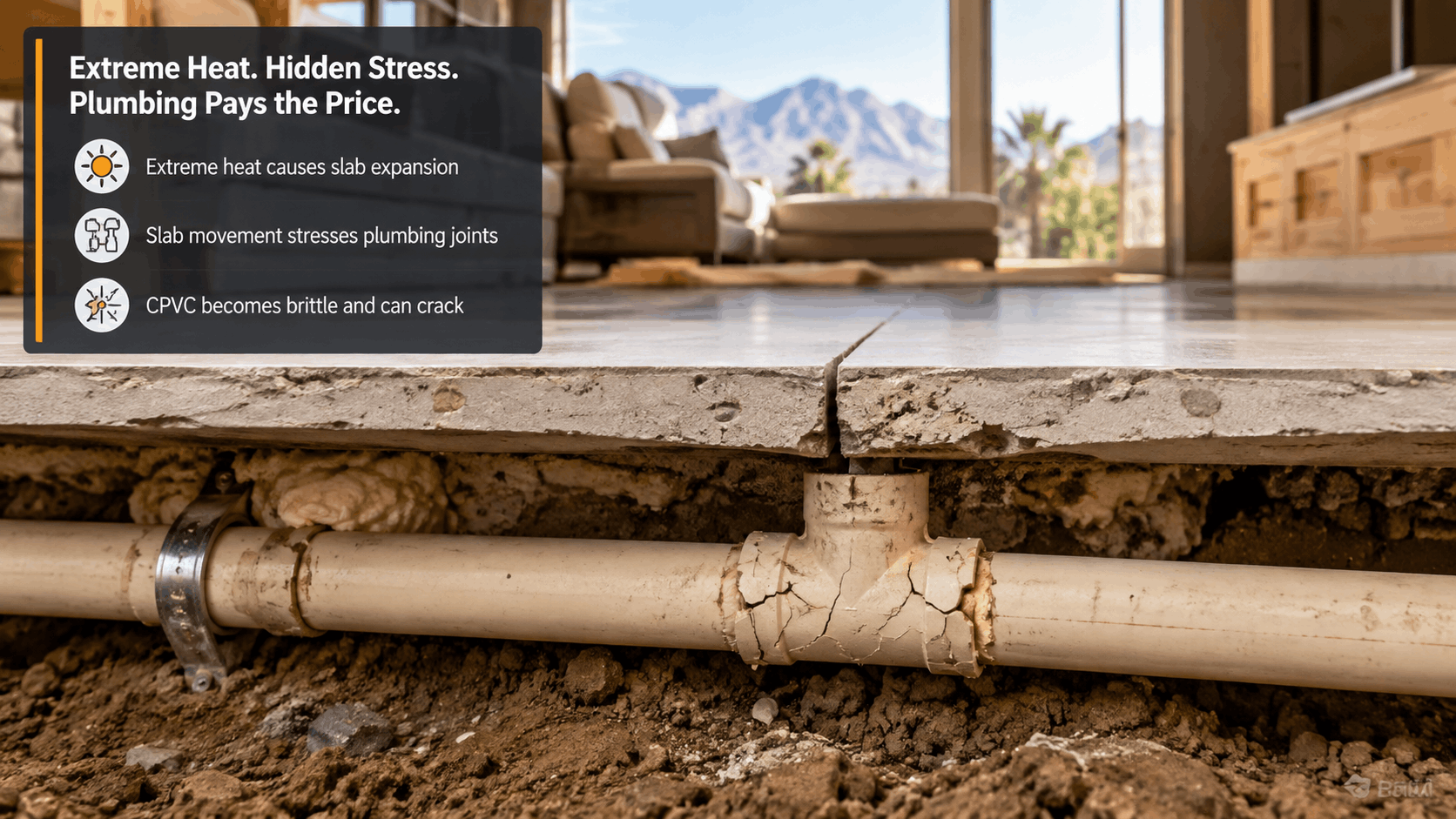
The ground under your home is not as still as it looks. Slab movement is a real issue across the valley, and the dry heat makes it worse. When the concrete shifts, it pulls on any pipe cast into or running under the slab.
Foundation shift here comes down to what our soil does when it dries out and gets wet again. The Las Vegas soil is a mix that reacts strongly to moisture changes, and that reaction never really stops.
Expansive Clay Soil Under Valley Homes
A lot of valley homes sit on expansive soil - ground that swells when wet and shrinks when dry. Mixed into that soil is caliche, a hard cement-like layer common across the valley, along with pockets of clay soil in areas like Spring Valley and North Las Vegas.
Clay soil is the troublemaker. When it takes on water, it expands and pushes up. When it dries, it pulls back and drops. That up-and-down movement happens right under your foundation.
Caliche adds another wrinkle because it is so hard and does not move the same way the clay does. When you have soft clay next to hard caliche, the ground can shift unevenly and stress the slab in spots.
Homes in newer master-planned areas and older neighborhoods alike sit on this soil. The difference is often how well the pad was prepared and how the yard has been watered since.
How Dry Heat Pulls Moisture From the Ground
The valley can go months with almost no rain. During those dry stretches, soil drying happens fast under the desert sun. The ground loses moisture, the clay shrinks, and the soil pulls away from the slab.
That drop in the soil leads to ground settling, where parts of the foundation sink slightly as the dirt beneath them shrinks. It rarely happens evenly across the whole house. One corner might settle more than another, which twists the slab just enough to stress the pipes inside it.
Then the winter rains or heavy watering come, and the soil swells back up. That wet-to-dry cycle repeats year after year. Each swing moves the slab a little.
Pipes cast in concrete cannot move with the slab freely. They get dragged along with it, and that is where the trouble starts.
Under-Slab Pipes Caught in the Movement
Many valley homes have supply and drain lines running under or through the concrete foundation. Under-slab plumbing is convenient to install but hard to reach later. When the slab moves, those buried lines get caught in the middle.
A pipe that gets pinched between shifting concrete can crack or crush. A joint that gets pulled can separate. Either way, water starts leaking under your floor where you cannot see it, and that is a slab leak.
Hot water lines under the slab are especially prone to this because they are already dealing with heat stress on top of the movement. A brittle old line plus a shifting slab is a bad combination.
Finding these leaks takes special tools, which is why our electronic leak detection service exists. Pinpointing the spot means we can fix it without tearing up the whole floor.
Irrigation and Landscaping That Make It Worse
How you water your yard has a direct effect on the soil under your foundation. Uneven irrigation is one of the biggest culprits behind slab stress in valley homes, especially in HOA communities where sprinkler zones are set once and forgotten.
When one side of the house gets heavy foundation watering from a planter or lawn and the other side stays bone dry, the soil swells on one side and shrinks on the other. That difference twists the slab. Over time it is enough to crack a buried line.
Drip lines that leak right next to the foundation are another common problem. A slow drip keeps one spot of soil wet all year while the rest dries out seasonally.
Balanced watering around the whole home keeps the soil moisture more even. It is one of the simplest things a homeowner can do to protect the plumbing below.
Spotting Early Signs of Stressed Plumbing Joints
Most plumbing failures give you a warning before they flood a room. The trick is catching the plumbing warning signs early. Whether the problem is joint stress, brittle CPVC, or a slab leak, the symptoms often show up weeks before the big break.
Here are the things valley homeowners should watch for:
- A water bill that jumps for no clear reason
- Warm spots on the floor and weak water pressure
- Ticking, popping, or running sounds in the walls
- New cracks in walls, tile, or the foundation
Any one of these on its own might be minor. Two or more together usually mean something needs a closer look.
Sudden Jumps in Your Water Bill
A high water bill is often the very first clue of a hidden leak. Water escaping under the slab or inside a wall still runs through your meter, so you pay for every gallon even though you never see it.
The Las Vegas Valley Water District bills based on what your meter records. If your usage climbs 20 or 30 percent with no change in your habits, that extra water is going somewhere. A hidden leak is a common reason.
Compare a few months of bills side by side. A steady creep upward or a sudden spike is worth investigating before it gets worse.
You can also check your meter with all water off in the house. If the dial keeps moving, water is flowing somewhere it should not be.
Warm Spots on the Floor and Low Pressure
A warm floor is one of the clearer signs of a hot water slab leak. When a hot line under the concrete cracks, the escaping water heats the floor above it. You might notice a warm patch on tile that has no reason to be warm.
Low water pressure often shows up at the same time. When water is escaping under the slab, less of it reaches your fixtures. If the pressure drops across the whole house, a leak may be the cause.
You may also hear the water heater or pump running more than usual. It is working harder to keep up with water that is draining away underground.
If you feel a warm spot and notice weak pressure together, that combination points strongly to a slab leak on the hot side. It is worth a call before the damage spreads.
Ticking, Popping, or Running Sounds
Pipes make noise when they move, and heat makes them move. Pipe noise like ticking or popping often comes from lines expanding and contracting against framing as they heat up and cool down.
Shifting pipes that rub against a stud or a slab edge can also tick and knock. A little of this is normal in any home. A lot of it, especially new noise you have not heard before, is worth paying attention to.
The sound to really worry about is running water when nothing is turned on. If you hear water moving inside a wall or under the floor with every faucet off, water is escaping somewhere.
Put your ear to the wall or floor in a quiet house. A faint hiss or trickle in one spot can help locate a hidden leak.
Cracks in Walls, Floors, and Foundation
Cracks tell a story about what the slab is doing. Wall cracks that run diagonally from door and window corners often point to foundation movement. So do cracks in floor tile that appear along a straight line.
Foundation cracks that you can see along the base of the house or in the garage floor are another sign the slab is shifting. That same movement is what stresses the pipes cast into the concrete.
Not every crack means a plumbing problem. But when you see new cracks along with warm floors, high bills, or pressure changes, the picture starts to add up.
Keep track of any crack that seems to grow. A crack that opens wider over a few months means active movement, and that movement is hard on your plumbing.
How Our Team Diagnoses Heat-Related Joint Failures
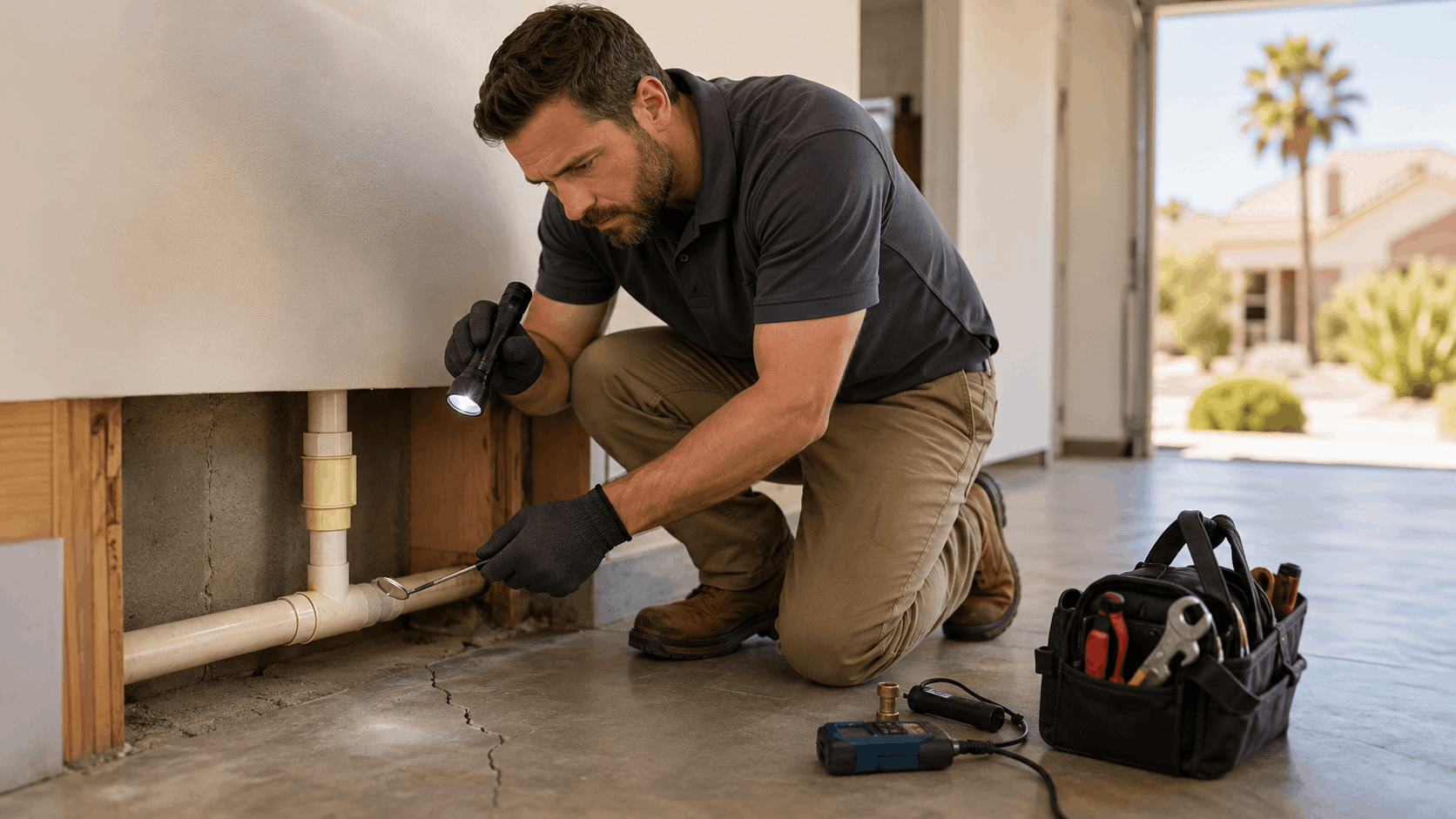
Finding a hidden leak is a process, not a guess. Good leak detection uses the right tools in the right order so we do not tear up floors we do not have to. Our plumbing diagnosis starts with the least invasive steps and works from there.
Here is how we work through a suspected heat or slab related failure:
- Pressure test the system to confirm a leak exists
- Use acoustic and thermal tools for slab leak location
- Run a camera through drain and supply lines
- Inspect CPVC color and fittings to judge its age
Each step narrows things down so the repair is targeted and clean.
Pressure Testing the System
A pressure test is usually where we start. We isolate the plumbing, bring it up to pressure, and watch whether it holds. If the pressure drops, the system is losing water somewhere.
This gives us leak confirmation before we open anything up. A system that holds pressure steady is not leaking, which saves everyone time and money. A system that drops tells us we need to keep looking.
By isolating sections, we can also narrow down roughly where the loss is happening. That helps us decide which part of the house to focus on next.
It is a simple test, but it is the foundation for everything that follows. We would rather confirm a leak exists than start cutting on a hunch.
Electronic and Acoustic Leak Location
Once we know a leak exists, we find it. Acoustic leak detection uses sensitive listening equipment that picks up the sound of water escaping under the slab. Even a small leak makes a distinct hiss that the gear can hear.
We pair that with thermal imaging, which reads temperature differences through the floor. A hot water leak shows up as a warm trail on the thermal camera, pointing right to the source.
Together these tools let us mark the exact spot of an under-slab leak. That means we cut a small, targeted opening instead of demolishing an entire floor.
For homes with recurring leaks, we also talk about a whole home leak detection system that watches for trouble automatically. It can shut the water off before a small leak becomes a flood.
Camera Inspection of Pipe Runs
For drain and sewer lines, a pipe camera shows us exactly what is going on inside. We feed the camera through the line and watch the video for cracks, offsets, and brittle sections.
A sewer camera inspection is the best way to see the real condition of a buried line without digging. We can spot a cracked joint, a section that has been pulled apart by slab movement, or roots that have found their way in.
On supply side runs where a camera fits, the same idea applies. Seeing the pipe beats guessing about it.
The video also gives you a record of the pipe's condition. That helps when deciding whether to repair one spot or plan for a larger replacement.
Checking CPVC Condition and Age
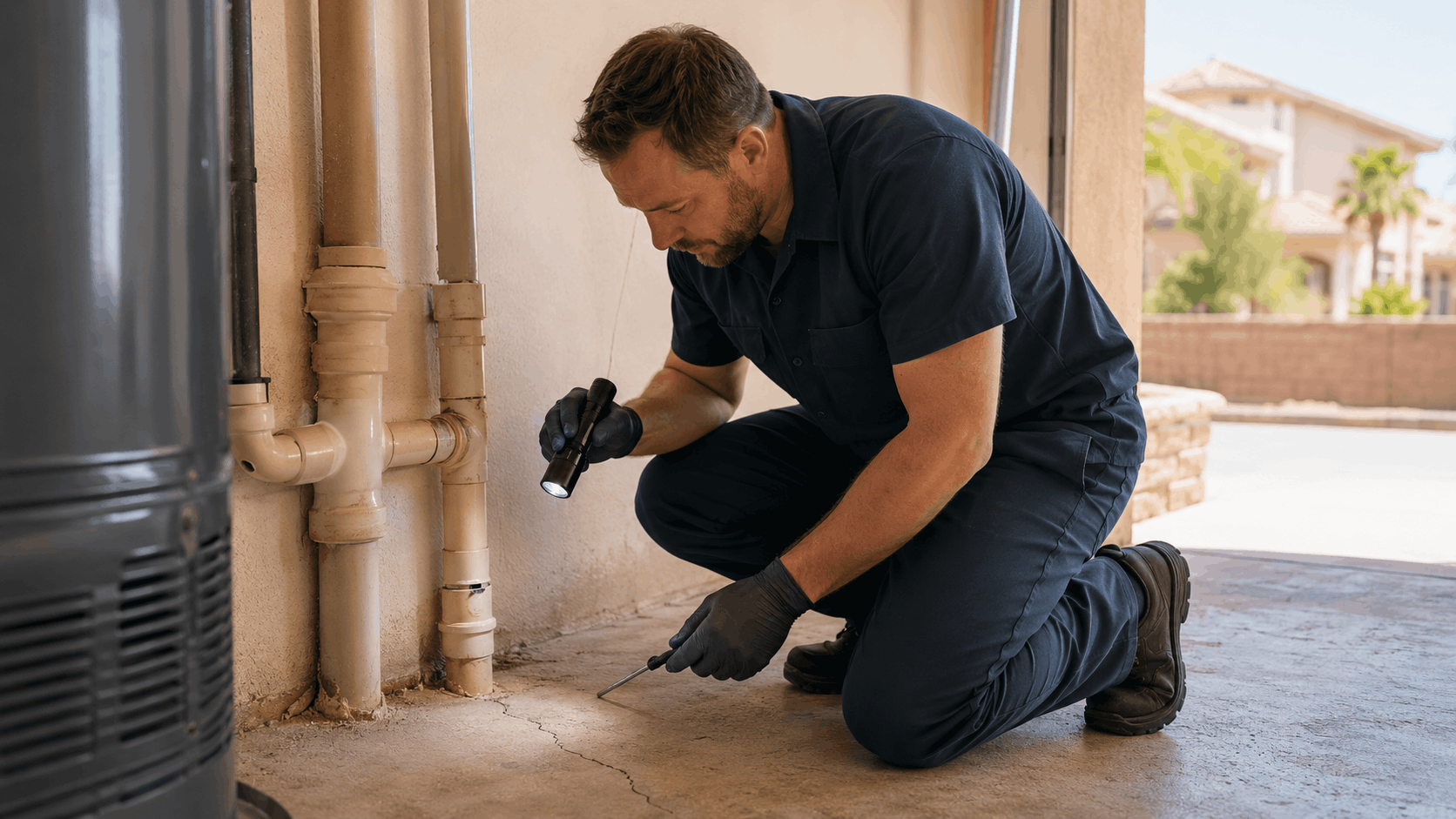
When we open a wall or attic, part of the job is a CPVC inspection. The color and feel of the pipe tell us a lot. Fresh CPVC has that even cream-tan look, while aged pipe darkens and yellows.
We check the fittings closely because that is where trouble starts. Stiff, discolored, or stressed elbows are a sign the material has turned brittle. A pipe age assessment helps us estimate how much life is left in the whole system.
We also look at where the pipe runs. A line that spends its life in a 140-degree attic has aged more quickly than the same pipe in a cool interior wall.
All of this feeds into an honest recommendation. If the CPVC is failing across the house, patching one joint is just buying a little time.
Need Help in Las Vegas?
Active Plumbing serves Las Vegas and all of Las Vegas Valley.
Repair and Repiping Options for Valley Homes
Once we know what is failing and why, the next question is what to do about it. The choices range from a quick spot repair to a full repipe. The right call depends on the pipe's condition and where it runs.
Our job is to lay out the honest options so you can make a smart decision for your home. Here is how the choices break down.
Spot Repairs vs. Whole-Home Repiping
A spot repair fixes one bad joint or one cracked section. If the rest of the system is in good shape, that is often all you need. It is quicker and cheaper than replacing everything.
The problem comes when the CPVC is brittle throughout the house. Fixing one joint on old, embrittled pipe often means the next joint fails a few months later. At that point a whole home repipe makes more sense.
We help you weigh the numbers. If you are paying for a spot repair every season, the cost of chasing leaks can pass the cost of a full replacement.
Age and material condition drive this decision. Newer pipe with one bad spot gets a repair. Old pipe that keeps failing is a repipe candidate.
Rerouting Pipes Out of the Slab
Slab leaks are frustrating because the pipe is buried in concrete. One good option is pipe rerouting, where we move the failing line out of the slab entirely. Instead of breaking up the floor again and again, we run the new line up into the walls and through the attic.
This overhead repipe approach takes the pipe out of the path of slab movement. If the concrete shifts in the future, there is no buried line to get pinched or cracked.
It also makes future service easier. A line in the wall or attic is far simpler to reach than one cast in concrete.
For homes that have had more than one slab leak, rerouting is often the smarter long-term move. It solves the root problem instead of patching the same trouble spot over and over.
Choosing Materials That Handle Desert Heat
When we repipe, material choice matters. PEX pipe is a popular option because it stays flexible and handles both heat and slab movement well. It bends instead of cracking, which is exactly what brittle CPVC fails to do.
A copper repipe is another option. Copper handles high heat and is very stable, though it costs more and can develop pinholes depending on water chemistry. For heat-resistant plumbing that flexes with the house, PEX is often the better fit in valley conditions.
We walk you through the tradeoffs based on your home and budget. There is no single right answer for every house.
Our pipe and fixture services cover both material paths. We help you pick the one that will hold up best against the heat cycles and soil movement your home actually deals with.
Permits and Local Code Requirements
A repipe is not a job you skip the paperwork on. Most repipes need a Clark County permit, and the work has to meet current plumbing code. That protects you and keeps the job up to standard.
We handle the permit process with the Clark County building department so you do not have to chase it down. We know what inspectors look for and how to pass inspection the first time.
Pulling a permit also matters when you sell the house. Unpermitted plumbing work can cause headaches during a sale or an insurance claim.
Doing it by the book means the work is documented and done right. That is worth more than the small cost and time the permit adds.
Protecting Your Plumbing From Future Heat Damage
Repairs fix today's problem. Good habits slow tomorrow's. A little pipe protection now can add years to your plumbing joints and cut down on surprise leaks.
These are the steps that make the biggest difference for heat damage prevention in valley homes. None of them are complicated, and most pay for themselves by avoiding a single leak.
Insulating Pipes in Attics and Garages
Pipe insulation is one of the cheapest, most effective moves you can make. Wrapping the pipe runs in your attic and garage cuts the heat load on the line, especially on the hot water side.
Attic pipes take the worst of the desert heat. Foam sleeves keep some of that heat off the pipe, which slows the drying and cracking that leads to CPVC breakdown. Insulation also helps keep hot water hot on its way to the tap.
Garage lines benefit too, since garages get very hot in summer. A few dollars of foam per foot is cheap next to a burst pipe.
We can insulate exposed runs during any service visit. It is a small add-on that protects the joints doing the most work.
Managing Watering Around the Foundation
Since soil movement stresses buried pipe, controlling foundation watering matters. The goal is even soil moisture around the whole house so one side does not swell while the other shrinks.
Check that your sprinklers and drip lines are not soaking one part of the foundation while leaving another dry. Fix leaking drip emitters near the slab so they are not keeping one spot wet all year.
Good drainage helps too. Grading the soil so water flows away from the foundation keeps the ground from getting saturated right against the slab after a storm.
Steady, balanced moisture is the enemy of the wet-to-dry swing that cracks pipes. It is free to adjust your watering, and it protects the lines underground.
Regulating Water Pressure and Temperature
High water pressure hammers every joint in the system. A pressure regulator keeps the pressure in a safe range, usually around 60 to 70 psi, which reduces strain on aging fittings.
If your pressure is running high, brittle CPVC joints feel it every time you turn on a tap. A regulator is a simple device that takes that stress off the whole system.
Water heater temperature matters just as much for the hot side. Setting the water heater to about 120 degrees instead of higher lowers the heat stress on hot lines while still giving you plenty of hot water.
Together, controlled pressure and a sensible temperature setting take a real load off your plumbing. Both are quick to check and adjust.
Scheduling Regular Plumbing Inspections
The best way to avoid a flood is to catch trouble early. A yearly plumbing inspection lets us spot brittle CPVC, early slab leaks, and stressed joints before they fail.
During a preventive maintenance visit, we check pipe condition, test pressure, look at fittings, and note anything that is starting to age out. Small problems caught early are cheap to fix.
For older homes with original pipe, this matters even more. A visit once a year is a small investment next to the cost of water damage from a burst line.
If it has been years since anyone looked at your pipes, that is a good place to start. You can contact our team to set up an inspection.
Need Help in Las Vegas?
Active Plumbing serves Las Vegas and all of Las Vegas Valley.
Why Local Experience Matters for Valley Plumbing
Plumbing is not the same everywhere. A local plumber who knows the valley makes better calls than a company that treats every city the same. Las Vegas plumbing has its own quirks tied to our heat, our soil, and how our neighborhoods were built.
That neighborhood knowledge is what turns a guess into a diagnosis. Here is how it plays out on the job.
Neighborhood-Specific Plumbing Patterns
After enough calls in one area, patterns emerge. In Summerlin, we see certain pipe and slab issues repeat in homes of a given age. Green Valley in Henderson has its own common problems, and Aliante up in North Las Vegas has another set.
Knowing those patterns saves time. When a call comes in from Summerlin West, we already have a good idea of what the pipe and slab situation is likely to be. The same goes for a call from Aliante in North Las Vegas.
These patterns come from years of working in the same communities. They point us toward the likely problem more quickly.
That head start means less digging around and a quicker path to the real fix.
Working With Valley Water Districts
Every leak job touches the water utility at some point. We work regularly with the Las Vegas Valley Water District and the Henderson utilities, so we know how to handle shutoffs and read the meter data that points to a hidden leak.
If a bill spike is the first clue, we know how to check the meter and confirm whether water is escaping. That utility coordination helps us move more quickly on a diagnosis.
Knowing the local shutoff procedures also matters in an emergency. We can get the water off quickly when a pipe bursts.
This familiarity is one of those things you only get from working the valley day in and day out.
Fast Response Across the Valley
When a pipe bursts, minutes count. Our team covers the whole valley from the northwest down to Henderson, and knowing the fastest routes gets us there before the damage spreads.
A leak that runs for an extra hour can ruin flooring and drywall. Our emergency plumbing service exists for exactly these moments. Fast response is the difference between a small repair and a major cleanup.
We know the shortcuts and the traffic patterns across the valley. That local knowledge shaves time off every emergency call.
Getting there quickly and stopping the water is always the first priority.
Honest Recommendations, Not Upselling
The best repair advice is the honest kind. An honest plumber tells you when a spot repair is enough and when a repipe is the smarter buy - based on the actual condition of your pipe, not a sales target.
If your CPVC has one bad joint and the rest is solid, we say so and fix the one spot. If the whole system is brittle and failing, we tell you that too, so you are not throwing money at repeated patches.
We would rather earn your trust with a straight answer than push a job you do not need. That is how we build long-term customers.
Our recommendations come from what we actually see during the inspection. You get the real picture and the choice that fits your home and budget.
Final Thoughts
Las Vegas heat works on your plumbing every single day. The temperature swings tug at joints, the attic heat dries out CPVC until it cracks, and the shifting soil pulls on the lines under your slab. None of it happens overnight, which is exactly why the warning signs are easy to miss.
Catching trouble early - a high bill, a warm floor, a hairline crack at a fitting - saves you from the flood that comes when a brittle joint finally lets go. Good habits like insulation, balanced watering, and yearly inspections slow the damage down.
If your home is showing any of these signs, our team is ready to take a look. Reach out to Active Plumbing to schedule an inspection or get help with a leak. We know the valley, we know the pipe, and we will give you the honest answer.
Frequently Asked Questions
- What is CPVC embrittlement and why does it happen in Las Vegas?
- CPVC embrittlement is when the plastic pipe loses its flexibility and turns brittle. In Las Vegas, the desert heat drives this process fast. Years of high attic temperatures and daily heat cycles dry out the compounds that keep the plastic bendable. Once it is brittle, the pipe cracks instead of flexing, and it usually gives out first at the glued joints and elbows behind your walls.
- How do I know if I have a slab leak?
- Common signs include a warm spot on the floor from a hot water line, a water bill that jumps with no change in habits, and low water pressure across the house. You may also hear running water when everything is off, or see your meter dial moving with all faucets shut. If you notice several of these together, call for leak detection right away.
- How long does CPVC last in the Las Vegas heat?
- CPVC can last 30 to 40 years in ideal conditions, but valley heat shortens that. Pipe running through attics that hit 140 degrees or more ages sooner and may start failing at 20 to 25 years. Hot water lines wear out sooner than cold ones. The exact lifespan depends on how hot the pipe runs and whether it has been exposed to chemicals that speed up breakdown.
- Is PEX or copper better for desert homes?
- Both beat brittle CPVC. PEX stays flexible, so it handles heat cycles and slab movement well and rarely cracks the way CPVC does. Copper tolerates high heat and is very stable but costs more and can develop pinholes depending on water chemistry. For most valley homes dealing with heat and soil movement, PEX is a strong choice, though copper works well where its strengths fit the situation.
- Can I repair a cracked CPVC joint myself?
- It is risky on brittle pipe. When CPVC has aged, cutting or gluing near a crack often creates new cracks nearby because the material is fragile. A quick patch may hold for a week and then fail again. If the pipe is old and embrittled, one leak usually signals more coming. It is safer to have a professional judge whether the whole run needs attention.
- How much does a repipe cost in Las Vegas?
- A whole home repipe typically ranges from a few thousand dollars up to eight thousand or more, depending on the home. Factors include the number of bathrooms, one or two stories, whether lines are rerouted out of the slab, and the material chosen. PEX usually costs less than copper. We give a clear quote after inspecting your home so you know exactly what the job involves.
- Does homeowners insurance cover slab leaks?
- It varies by policy. Many policies cover the water damage a slab leak causes, such as ruined flooring, but not the cost of the pipe repair itself. Some cover the access work to reach the leak. Gradual leaks are sometimes excluded, while sudden bursts are more often covered. Check your specific policy and talk to your agent, since coverage differs a lot from one plan to another.
- How can I lower the heat load on my pipes?
- Insulate the pipe runs in your attic and garage with foam sleeves to keep the desert heat off them. Improve attic ventilation so the space does not trap as much heat. Lower your water heater to around 120 degrees to reduce heat stress on hot lines. These simple steps slow the drying and cracking that lead to CPVC breakdown and extend the life of your joints.
- How often should valley homes get a plumbing inspection?
- Once a year is a good rule for most valley homes. If your home has original CPVC that is 20 years or older, or if you have already had a leak, an annual check is worth it. Newer homes with PEX or copper can sometimes go longer between inspections. Regular checks catch brittle pipe and early slab leaks before they cause water damage.
- What should I do first if I suspect a leak?
- Shut off the water at the main valve to stop the flow and limit damage. If it is a hot water leak, you can also shut off the water heater. Then check your meter to confirm water is still moving. Once the water is off, call for professional leak detection. Acting fast on the shutoff is the single best thing you can do to protect your home.
Licensed plumbing professionals serving Las Vegas and Las Vegas Valley.
Licensed in Nevada · License #0047021
Last updated on
Why trust Active Plumbing?
Founded in 1991, Active Plumbing is a licensed and insured plumber serving Las Vegas and Las Vegas Valley. All content is reviewed by our licensed technicians.

Need Help in Las Vegas?
Active Plumbing serves Las Vegas and all of Las Vegas Valley.
Related Articles
7 Signs Your Las Vegas Water Heater Is About to Fail - Sediment, Rust, Recovery Time, Age
Learn the 7 warning signs your Las Vegas water heater is failing, from sediment and rust to slow recovery and old age, plus how hard water speeds up wear.
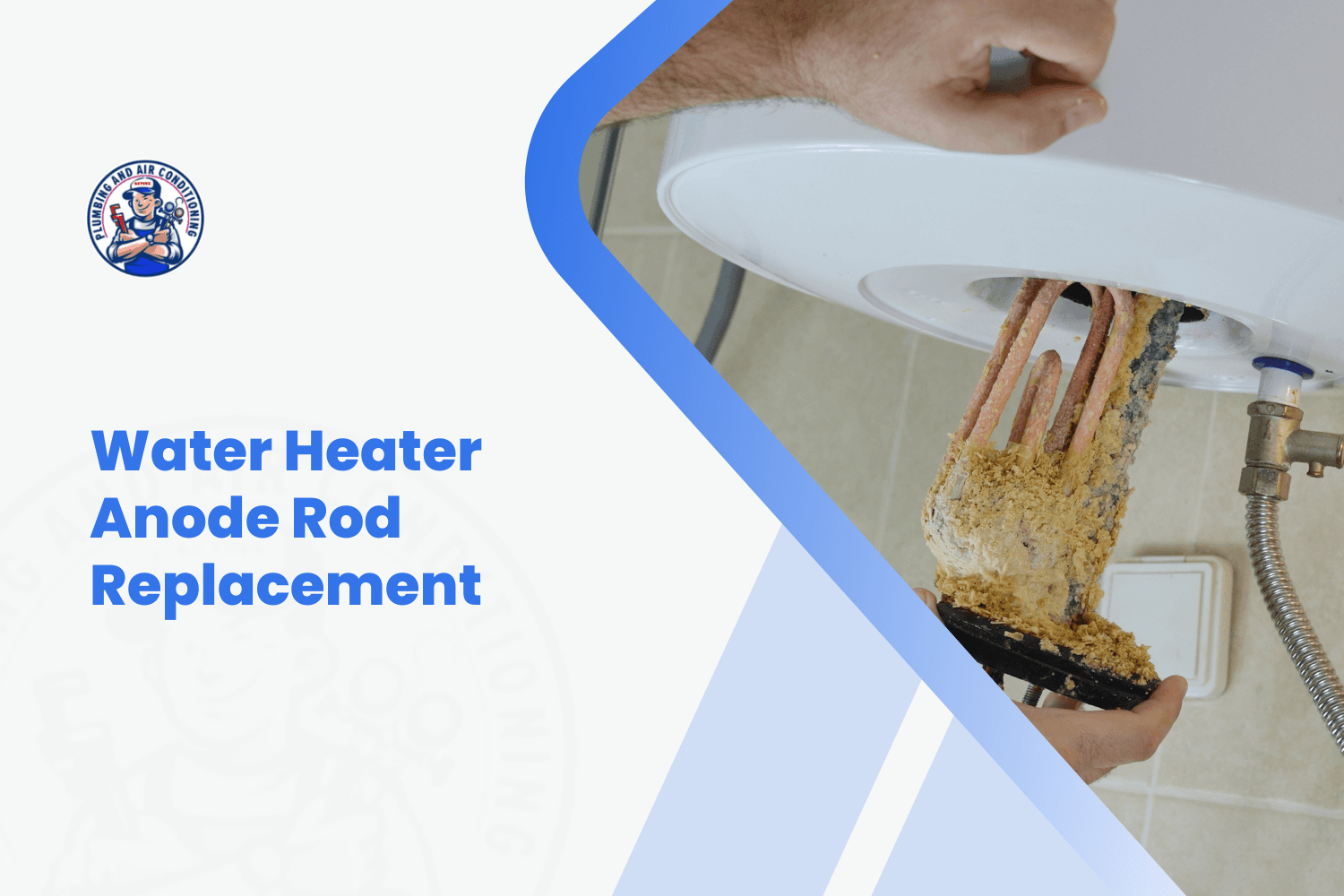
Water Heater Anode Rod Replacement: Why Vegas Hard Water Eats Them in 18 Months
Las Vegas hard water destroys anode rods in 18 months instead of years. Learn the warning signs, replacement costs, and how to protect your water heater long term.
Water Heater Making Popping Sounds in Las Vegas - Sediment Boil and How Close You Are to Failure
Popping water heater in Las Vegas? Learn what sediment boil means, how hard water speeds failure, and how close your tank is to leaking - plus flushing and repair tips.