Sewer Inspection in Scotch 80s and Rancho Circle: Estate Lots, Long Laterals, and Mature Trees

Key Takeaways
- Scotch 80s and Rancho Circle estate homes have long laterals, often 100 feet or more, that raise the odds of hidden sewer problems.
- Aging clay and cast iron pipes from the 1950s and 60s crack, corrode, and settle, opening gaps for roots and leaks.
- Mature trees like mulberry and ash send aggressive roots into cracked pipe joints, the top cause of backups in these neighborhoods.
- A camera sewer inspection finds and marks the exact problem and depth so any dig is precise and small.
- Repair options range from spot fixes to trenchless lining and full PVC replacement, chosen to protect mature landscaping.
- A pre-purchase or pre-sale sewer scope closes a gap standard home inspections miss on these older estate homes.
- Routine scopes every one to two years plus root treatment keep aging lines clear between problems.
- Local familiarity with downtown Las Vegas infrastructure and permits keeps estate repairs clean and on schedule.
In This Article
A homeowner off Rancho Drive called us last spring about a bathroom sink that drained slower each week. By the time we arrived, the master bath was gurgling and the laundry line had backed up onto the floor. The camera told the whole story: roots had wrapped through a cracked clay joint about 70 feet out, right under a row of old pines the family had planted decades ago.
That scene plays out often in Scotch 80s and Rancho Circle. These are some of the oldest luxury neighborhoods in Las Vegas, with big lots, tall trees, and sewer lines that were put in the ground long before most of the valley was built. The charm that makes these streets special is the same thing that puts their sewer lines at risk.
We cover the warning signs, how a camera inspection works, the biggest culprits, repair choices, real estate scopes, and the questions homeowners ask us most.
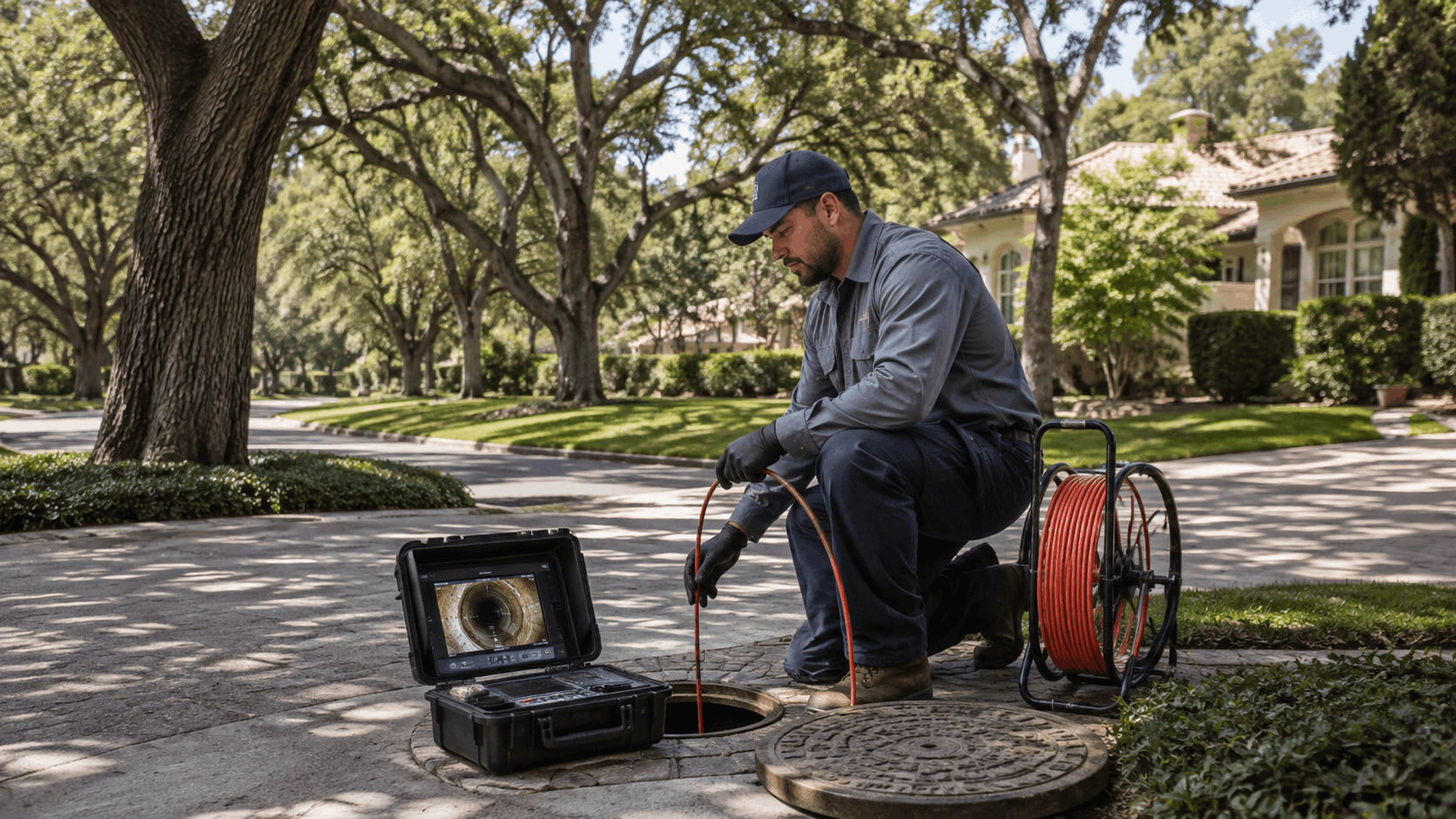
Why Scotch 80s and Rancho Circle Homes Are Different?
Most newer Las Vegas homes sit on tight lots with short, straight sewer runs. Scotch 80s and Rancho Circle are a different world. These historic estate neighborhoods near downtown were laid out for space, privacy, and mature landscaping.
That older layout changes everything about how the sewer system behaves. A few things set these homes apart:
- Large lots that push the sewer line much farther from the house
- Original pipe materials from the 1950s and 60s
- Decades of tree growth over and around the line
- Buried or forgotten access points after remodels
Working on Scotch 80s estate lots and Rancho Circle homes means planning for older sewer lines that behave nothing like a two-year-old build in Summerlin.
Estate Lots and Extra-Long Sewer Laterals
The homes off Rancho Drive and Shadow Lane were built on generous parcels, some well over a quarter acre. That extra space is beautiful, but it means the sewer lateral has a long way to travel from the house to the city main in the street.
On a standard tract home, that run might be 30 or 40 feet. On these estate lots, we regularly scope laterals that stretch 100 feet or more. Every extra foot adds another chance for a crack, a belly, or a root break somewhere in the middle where no one can see it.
A long sewer lateral also collects more debris over its length before anything reaches the main. Grease, paper, and grit settle in low spots and slow flow well before a full backup shows up inside the house. That is why estate lot plumbing calls for a full-length inspection, not just a quick look near the cleanout.
The distance also makes repairs pricier and access harder. Knowing the exact spot of a problem on a 100-foot run saves a homeowner from digging up half the yard. That precision starts with a proper camera scope.
Aging Clay and Cast Iron Pipes
Homes built in Scotch 80s and Rancho Circle during the 1950s and 60s were plumbed with the materials of that era. That usually means clay sewer pipe underground and cast iron pipe inside and just outside the foundation.
Clay sewer pipe was joined in short sections with mortar or gasket connections. Over 60 or 70 years, those joints shift, crack, and open small gaps. Those gaps are exactly where roots and groundwater find a way in.
Cast iron pipe holds up better at first, but it corrodes from the inside out. Decades of waste and Las Vegas hard water eat away at the wall until the pipe scales up, flakes, and eventually collapses. We often find cast iron that has lost half its inner diameter to rust buildup.
Neither material was made to last a century. When we scope these older lines, we are checking how much life is left, not just looking for one clog. That reading helps a homeowner plan ahead instead of reacting to an emergency.
Mature Trees and Deep Root Systems
The tall pines, elms, and mulberries that shade these streets are part of what makes the neighborhood feel established. Those same trees are the number one enemy of an old sewer line.
Tree roots chase water. A slightly leaking clay joint puts out a steady trail of moisture that roots follow straight to the source. Once a root finds a gap, it grows inside the warm, wet pipe and keeps expanding.
Mature trees sewer damage is worse here because the trees predate many of the current owners. Root systems have had 40 or 50 years to spread out and go deep, often reaching well past the trunk toward the lateral. A tree 20 feet from the line can still send roots into it.
We see tree root intrusion as a common single cause of backups in these two neighborhoods. The trees are worth keeping, but the pipe needs protection to survive alongside them. Our drain and sewer services team plans around that reality on every estate call.
Original Landscaping and Hidden Cleanouts
Estate homes rarely stay untouched for decades. Pools go in, patios expand, casitas get added, and mature planting beds fill every open space. All of that can bury the sewer cleanout access a technician needs.
On many original homes, the cleanout was installed near the foundation and later covered by a paver patio or a raised garden bed. Some homes never had a proper exterior cleanout at all. A buried cleanout turns a simple inspection into a hunt.
When we cannot find a cleanout, we locate the line electronically or pull a toilet to gain access. It works, but it takes longer and shows why records matter on older properties. Knowing where the access points sit saves time on every future visit.
Part of good estate service is documenting where these points are and, when it makes sense, adding a modern cleanout for easier access down the road.
Get Your Quote
Tell us what's going on and we'll get back to you. We're open 24/7.
Warning Signs an Estate Home Needs a Sewer Inspection
Most sewer failures give warning long before the full backup. The trouble is that the early clues are easy to shrug off, especially in a big house where one slow drain feels minor.
Homeowners in these neighborhoods tend to call us once the small signs pile up. Catching sewer line problems early keeps a manageable repair from turning into a flooded floor. Watch for these sewer backup signs:
- Slow or gurgling drains at more than one fixture
- Wet spots or sunken ground in the yard
- Roots that return weeks after snaking
- Sewer odors, drain flies, or new cracks near the line
Any one of these is worth a look. Two or more together usually means the main line, not a single fixture, is the real issue.
Slow or Gurgling Drains Across Multiple Fixtures
A single slow sink is often a local clog you can clear yourself. When several fixtures drain slowly at once, the problem is usually farther down the line where everything joins together.
Gurgling drains are a bigger tell. That sound is air pushing back through water because the main line cannot move waste fast enough. You might hear the toilet bubble when the washer drains, or the tub gurgle when a sink empties.
On estate lots with long laterals, multiple slow drains often point to a partial blockage 50 or more feet out. The house-side plumbing is fine, but the shared path to the street is choked. A camera scope confirms where and why.
When homeowners describe this pattern, we bring the camera on the first visit. Guessing on a long lateral wastes time and money, so we let the video make the call.
Wet Spots and Sunken Areas in the Yard
These lots get a lot of irrigation to keep mature landscaping green, so a little damp ground is normal. A spot that stays soggy when the sprinklers are off is not.
A persistent wet area over the lateral path is a classic sewer leak sign. Water and waste escaping a cracked pipe soak the surrounding soil and keep it saturated. The grass there may even grow greener and more quickly from the extra nutrients.
A yard sinkhole or a dip in the lawn is more serious. When soil washes into a broken pipe, the ground above loses support and settles. A sudden low spot over the sewer path often means the pipe below has cracked open or partly collapsed.
On large lots, these signs can hide behind shrubs or in a back corner for months. We walk the full lateral path during an inspection so nothing gets missed.
Repeated Backups After Root-Cutting
Snaking a line to cut roots feels like a fix, and for a while it is. When the same backup returns a few weeks later, the roots are telling you something.
A recurring root clog means the pipe joint itself is broken. Cutting the roots clears the current growth, but the open gap is still there, and roots grow right back through it. Each round comes back more quickly than the last.
We often meet homeowners who have snaked the same line two or three times in a year. That pattern is a clear signal that sewer snaking alone will not solve it. The pipe needs repair or lining, not another cutting.
A camera inspection after a snaking shows the true condition of the joint. Once we see the crack on video, the homeowner can stop paying for temporary fixes and choose a lasting one.
Odors, Pests, or Foundation Cracks
Some sewer clues have nothing to do with drains. A faint sewer odor in the yard or a room can mean gas is escaping a broken line somewhere underground.
Drain flies and small pests are another quiet sign. These insects breed in the organic film inside pipes and around leaks. A sudden batch of tiny flies near a floor drain or in a bathroom often traces back to a sewer problem.
New cracks in concrete near the line can point to shifting soil from a leak. When waste washes soil away under a slab, patio, or driveway, the concrete above can crack and settle. Foundation cracks that appear along the sewer path deserve a closer look.
None of these prove a sewer failure on their own, but together with a slow drain they build a strong case. When something smells or looks off near the line, a scope removes the guesswork.
Need Help in Las Vegas?
Active Plumbing serves Las Vegas and all of Las Vegas Valley.
How a Camera Sewer Inspection Works
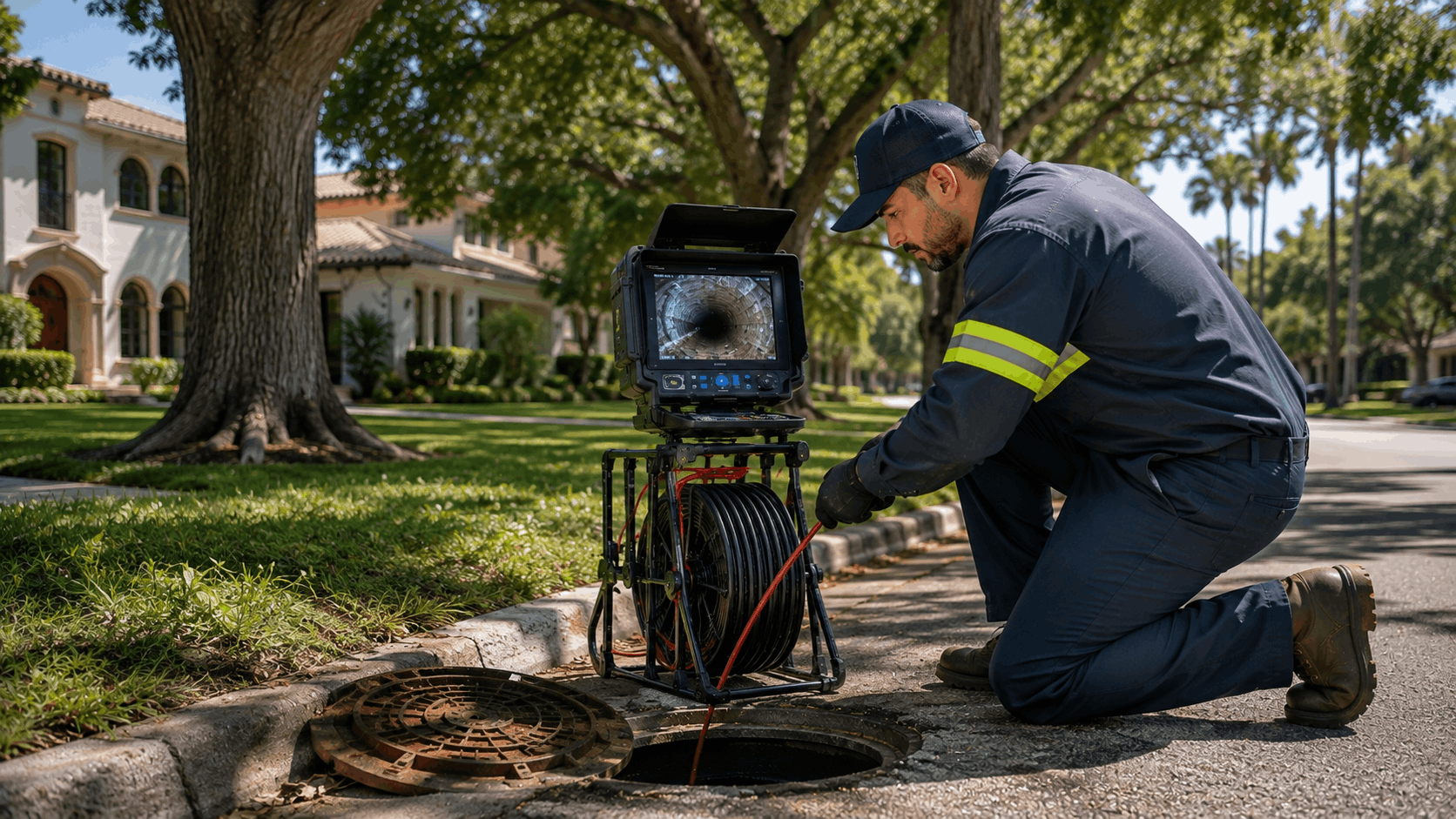
A camera sewer inspection takes the mystery out of a buried pipe. Instead of guessing where a problem sits, we send a video sewer scope down the line and watch the condition in real time.
For homeowners, the process is simple to follow once you know the steps. The whole point of a sewer line camera is to see exactly what is happening before anyone digs. Here is how a typical estate scope goes:
| Step | What Happens | What the Homeowner Sees |
|---|---|---|
| 1. Access | Technician finds the cleanout or pulls a toilet | Where the camera enters the line |
| 2. Camera run | Scope pushed the full length toward the main | Live video of the pipe interior |
| 3. Locate | Locator marks depth and exact spot of damage | A marked point in the yard |
| 4. Report | Footage saved with a written summary | A video and notes to keep |
Finding and Using the Right Access Point
Every inspection starts with a way into the line. The best option is an exterior sewer cleanout, a capped pipe that gives a straight shot toward the main.
Many older Scotch 80s and Rancho Circle homes have a cleanout, but it may be buried under landscaping or hardscape. We locate it, clear the cap, and set up the camera there when possible. This keeps the job clean and quick.
When a home has no accessible cleanout, we find another camera access point. Often that means pulling a toilet and running the scope through the closet flange. It sounds messy, but our team resets everything cleanly when the scope is done.
On homes with real access problems, we recommend adding a proper cleanout. It costs a bit up front and saves money and mess on every inspection for the life of the home.
Running the Camera the Full Length of the Lateral
Once the camera is in, we push it steadily toward the city main. On short suburban lines this takes minutes. On a 100-foot estate lateral, it takes patience and the right equipment.
The live video feed shows every foot of the pipe on a monitor. We watch for cracks, root balls, bellies where waste pools, offset joints, and buildup on the pipe wall. A sewer lateral inspection is only useful if it covers the entire run, not just the first stretch.
Long laterals sometimes have tight turns or heavy root masses that stop the camera. When that happens, we note the distance and often clear the obstruction with a jetter, then continue. We do not want a blind spot on the exact section most likely to fail.
Homeowners are welcome to watch the screen with us. Seeing your own pipe on video makes the repair conversation far clearer than any description could.
Locating and Marking Problem Areas
Finding a problem on video is only half the job. The other half is knowing exactly where that problem sits in the yard so any dig is precise.
Our cameras carry a small transmitter called a sonde. A sewer line locator on the surface picks up that signal and pinpoints the camera head. We mark the spot on the ground and note the pipe depth in feet.
Pipe depth marking matters most on estate lots. A break that sits eight feet down under a mature tree calls for a very different plan than one that is three feet down in open lawn. Precise marking means we dig one careful hole, not a long trench of guesses.
This step is what turns a scary unknown into a defined job with a clear scope and price. The homeowner knows the where, the depth, and the fix before work begins.
Getting a Recorded Report
After the scope, we save the footage and write up what we found. This sewer inspection report is more than paperwork.
The recorded footage gives the homeowner proof of the pipe condition. For a repair, it shows exactly what is being fixed. For a home sale, it documents the line for buyers and agents.
The written summary spells out the pipe material, the trouble spots, the depth, and our recommendations in plain language. It becomes part of the home's records, useful for resale or an insurance claim later.
We hand this to every customer because good records protect them long after we leave. On a high-value estate home, that documentation carries real weight during negotiations.
Tree Roots and Long Laterals: The Biggest Culprits
If we had to name the two things behind most sewer calls in these neighborhoods, it would be old pipes and big trees. Alone, each is a manageable risk. Together on a long lateral, they cause the bulk of the failures we see.
The pattern is so consistent that we plan around it. Understanding tree root intrusion and long lateral problems helps homeowners make smart choices instead of fighting the same backup over and over.
How Roots Enter and Grow Inside Pipes
Roots do not force their way through solid pipe. They find an existing weakness, usually a cracked or offset joint, and slip inside through the gap.
Root intrusion starts small. A few thin hairs work through a pipe joint crack chasing the moisture inside. Once inside the warm, nutrient-rich pipe, those hairs branch out and thicken quickly.
Over a season or two, a small root mass becomes a dense plug that catches paper and grease. Flow slows, then stops. The pipe that carried waste fine for years now backs up because a hidden root ball took over the inside.
This is why cutting roots is only a short-term answer. As long as the crack stays open, sewer root damage keeps coming back until the joint is sealed or replaced.
Why Distance Increases Risk
A short sewer run has few joints and little slope to manage. A long estate lateral is the opposite, and every added foot raises the odds of trouble.
A 100-foot long sewer lateral may have dozens of pipe joints, and each joint is a possible entry point for roots. More joints simply mean more chances for one to shift or crack over the decades.
Distance also complicates pipe slope. A long run needs a steady, gentle downhill grade to keep waste moving. Over 60 years, soil settles unevenly, creating low spots called bellies where waste and grit collect and start clogs.
The math is straightforward. A longer line with more joints and more slope changes fails more often than a short, simple one. That is the reality of these estate lots.
Species That Cause the Most Trouble Locally
Not all trees are equal threats to a sewer line. In Scotch 80s and Rancho Circle, a few species cause most of the damage we find.
Mulberry roots are among the worst offenders. Old fruitless mulberries planted for shade have aggressive, wide-spreading roots that seek water hard. Ash trees run a close second, with dense root systems that love a leaking joint.
Elms and some pines add to the problem on these older streets. The trees are decades old, so their tree species sewer risk is much higher than a young sapling in a new yard. Distance from the trunk offers little protection when roots have had 50 years to spread.
We are not telling anyone to cut down a beautiful mature tree. The better plan is to know which trees sit near the line and to keep that line protected and monitored.
Preventing Root Damage After Inspection
Once a scope shows the line is clear or repaired, the goal shifts to keeping it that way. A little maintenance goes a long way against roots.
Root treatment products applied inside the line can slow regrowth by killing roots at the pipe wall without harming the tree above. On homes with a history of intrusion, a regular treatment schedule keeps the pipe open between inspections.
A routine scoping schedule is the best insurance. For estate homes with big trees, we suggest sewer maintenance checks every one to two years to catch new growth early. Catching a small root mass beats fixing a backup.
When planting new trees, keep them well away from the lateral path and choose species with less aggressive roots. Our team can mark the line so new landscaping goes in the right place. Learn more about our hydro jetting and rooter service for stubborn root problems.
Need Help in Las Vegas?
Active Plumbing serves Las Vegas and all of Las Vegas Valley.
Repair Options for Damaged Estate Sewer Lines
When the camera finds a real problem, the next question is how to fix it. There is rarely just one answer, and the right choice depends on the pipe, the damage, and the yard above it.
On estate lots with mature landscaping, protecting what is on the surface matters as much as fixing what is below. Here are the main sewer line repair paths we discuss with homeowners:
- Spot repair for a single isolated break
- Trenchless pipe lining or bursting for longer damage
- Full line replacement when the pipe is worn out
- Careful planning to protect trees, patios, and driveways
We walk through each option with the video in hand so the decision is based on facts, not fear.
Spot Repairs for Isolated Breaks
Sometimes the camera shows one bad section on an otherwise solid line. In that case, a spot repair is often the smart, affordable choice.
A spot repair means digging down to the one damaged area and replacing that short section of pipe. Because we located and marked the exact spot, the dig is small and targeted. There is no need to disturb the rest of the yard.
Sewer section replacement works best when the surrounding pipe is still in good shape. If the clay or cast iron around the break is corroded or cracking too, a spot fix just moves the problem down the line.
We only recommend a spot repair when the rest of the line earns it. The video makes that call clear, so a homeowner is not paying for a full job when a small one will hold.
Trenchless Pipe Lining and Bursting
Trenchless methods are a strong fit for these neighborhoods because they protect the surface above the pipe. That matters when the surface is a mature garden or a custom patio.
Trenchless pipe lining pulls a resin-coated liner through the old pipe and cures it in place, forming a new pipe inside the old one. It needs only small access points at each end, so the lawn and trees stay mostly untouched. This works well on cracked or root-invaded lines that still hold their shape.
Pipe bursting is the other trenchless option. A special head pulls through the old pipe, breaking it outward while pulling new pipe in behind it. It replaces the line completely with only two small pits instead of a long trench.
Both methods can save a homeowner from tearing up decades-old landscaping. On an estate lot, that saved hardscape and mature planting can be worth as much as the pipe itself.
Full Line Replacement on Old Systems
Sometimes the honest answer is that the old line has reached the end. When clay or cast iron is cracked, bellied, and root-ridden along most of its length, patching is throwing good money after bad.
A full sewer replacement swaps the entire lateral for modern pipe. Today that usually means PVC sewer pipe, which resists roots, corrosion, and settling far better than the original materials. A properly installed new line can last 50 years or more.
On homes from the 1950s and 60s, we often find that the whole run is near failure, not just one spot. In those cases, a full replacement costs more up front but ends the cycle of repeat repairs for good.
We lay out the numbers plainly. When a line is truly worn out, replacement is the smarter long-term call, and we explain why with the footage to back it up. Our sewer line repair and replacement team handles both partial and full jobs.
Protecting Trees, Patios, and Driveways During Work
The features that make an estate home special are exactly the things a careless dig can ruin. We plan every job to work around them.
Before digging, we map the line against root balls, pavers, and driveways. Where a mature tree sits near the work, we plan the dig to avoid the main root mass whenever the layout allows. Trenchless methods often let us skip the disturbance entirely.
For patios and driveways, minimal excavation is the goal. Precise locating means one small opening instead of a wide trench across the hardscape. When we must cross a paved area, we plan the cut and restoration carefully.
Landscape protection is part of the job on these lots, not an afterthought. We treat a homeowner's mature trees and custom hardscape as the valuable, hard-to-replace features they are.
Sewer Inspections Before Buying or Selling in These Neighborhoods
Scotch 80s and Rancho Circle homes command premium prices, which raises the stakes on hidden problems. A broken sewer line can turn a dream purchase into a costly surprise.
A pre-purchase sewer inspection protects both sides of a deal. For homes this old and valuable, a real estate sewer scope is one of the smartest small investments a buyer or seller can make. It closes a gap that most home sale plumbing checks leave wide open.
Why Buyers Should Scope Before Closing
Buyers fall in love with the trees, the lot, and the character. The sewer line is the last thing on their minds, and that is where the risk hides.
A hidden broken lateral on one of these estate lots can cost tens of thousands to fix. A full replacement of a 100-foot line under mature landscaping is not cheap. Finding that out after closing means the new owner pays it all.
A buyer sewer inspection during the option period changes that. If the scope finds a problem, the buyer can negotiate a credit, ask the seller to repair it, or walk away. The cost of the scope is tiny next to the repair it can reveal.
Given the age of these homes, we treat a scope as a normal part of buyer due diligence, not an extra. The closing costs saved by catching a bad line early are well worth it.
How Sellers Benefit From a Clean Report
Sellers gain just as much from a scope, sometimes more. A documented clean line removes a common bargaining chip from the buyer's side.
A seller sewer report shows buyers the pipe is sound before they even ask. On a premium estate listing, that kind of documentation builds trust and speeds negotiations. It signals a well-maintained home.
If the scope does find an issue, the seller can fix it or price it in on their own terms. That beats a last-minute buyer demand that stalls the deal during escrow. Handling it early keeps the seller in control.
For a high-value listing in these neighborhoods, a clean report is a selling point worth having in the file. It answers a question smart buyers are already thinking about.
What Standard Home Inspections Miss
A general home inspection covers a lot, but it rarely includes the sewer line. That is one of the biggest home inspection gaps on older properties.
Most inspectors run water and check drains for flow, but they do not send a camera down the lateral. They cannot see cracked joints, root balls, or bellies buried 80 feet out in the yard. Those problems stay invisible without a scope.
On a newer home, that gap is a small risk. On a 60- or 70-year-old estate home with big trees, it is a major blind spot. The most expensive plumbing repair a buyer could face is the one the standard inspection never looks at.
A sewer scope add-on fills that gap. We work alongside the general inspection to cover the one system most likely to hold a costly surprise.
Timing Around Escrow Deadlines
Real estate deals move on tight timelines. An inspection window can be just a week or two, so speed matters.
We schedule sewer scopes quickly to fit inside the escrow timeline. A typical estate scope takes an hour or two on site, and we turn around the footage and report fast so buyers and agents can act within the window.
Because we work these neighborhoods regularly, we can often get out within a day or two of the call. That responsiveness keeps a deal on track when every day of the inspection period counts.
When a scope finds an issue, we can also provide a repair estimate quickly to support negotiations. Fast, clear information keeps the deal moving. Reach out through our contact page to book an inspection during your escrow window.
Need Help in Las Vegas?
Active Plumbing serves Las Vegas and all of Las Vegas Valley.
Working With Active Plumbing in the Las Vegas Estate Corridor
Serving Scotch 80s, Rancho Circle, and the historic streets near downtown takes more than a truck and a camera. It takes real familiarity with how these old lots and lines behave.
Our team knows this corridor. We have scoped and repaired lines up and down the older streets off Rancho Drive and Charleston Boulevard for years. That local knowledge shapes how we handle every estate plumbing service call.
Local Knowledge of Aging Downtown Infrastructure
The lines near Rancho Drive, Shadow Lane, and the historic core are not like the ones in newer suburbs. They are older, deeper, and often tied into city mains that date back decades.
We know the common failure points on these streets. The clay-to-cast-iron transitions, the long laterals, the root-prone joints near the big trees. That downtown Las Vegas plumbing experience means we know where to look first on a scope.
Aging infrastructure calls for a technician who has seen it before. When we run a camera on a Scotch 80s home, we recognize the patterns because we have fixed the same issues nearby many times.
That familiarity saves homeowners time and guesswork. We are not learning these neighborhoods on your job. We already know them.
Coordinating With the City and Water District
Sewer work that reaches the city main or the public right of way involves more than digging. It requires proper permits and coordination.
We handle Las Vegas permits when a repair or replacement calls for them. Pulling the right paperwork keeps the job legal and protects the homeowner from problems at resale. We know the process and manage it so the owner does not have to.
When work touches water service, we coordinate with the Las Vegas Valley Water District as needed. Knowing who to call and how these agencies operate keeps a project moving instead of stalling on red tape.
For a homeowner, that means one less thing to worry about. We manage the official side so the repair happens cleanly and on the books.
Respect for High-Value Properties and Landscaping
An estate home is not the place for a sloppy crew. These properties have custom hardscape, mature trees, and owners who value their privacy.
We treat every high-value property with care. That means protecting mature trees during any dig, working around custom pavers and pool decks, and keeping equipment off delicate landscaping. Estate property care is built into how we plan a job.
A clean job site is standard for us, not a bonus. We lay down protection, contain the mess, and restore the area when the work is done. The goal is for the yard to look like we were barely there.
Respecting a homeowner's property and privacy is how we earn repeat calls in these tight-knit neighborhoods. Word travels fast among neighbors on these streets.
Same-Area Response and Follow-Up
Being a local Las Vegas company means we are close by when these neighborhoods need us. That shows in our response and follow-up.
Our local response time is short because we already work this corridor daily. When a Rancho Circle homeowner calls with a backup, we are not driving in from across the valley. We serve the greater Las Vegas area and know the fastest routes to these streets.
Follow-up service is easier too. If a home needs a repeat scope, a root treatment, or a return check after a repair, coming back is simple. We keep records of each property's line so every visit builds on the last.
That ongoing relationship matters on old estate lines that need regular attention. For urgent problems, our emergency plumbing team is ready when a backup cannot wait.
Final Thoughts
Scotch 80s and Rancho Circle offer some of the most beautiful estate living in Las Vegas, but their sewer lines carry the weight of decades. Long laterals, aging clay and cast iron, and mature trees combine to make these lines a common source of trouble.
The good news is that a camera inspection removes the guesswork. Catching a root break or a bad joint early, before a backup, saves money and protects the landscaping that makes these homes special.
If your estate home shows slow drains, wet spots, or repeat backups, or if you are buying or selling in these neighborhoods, a sewer scope is the smart next step. Call Active Plumbing or reach out through our contact page to schedule a camera inspection with a team that knows these historic streets inside and out.
Frequently Asked Questions
- How often should an estate home have its sewer line inspected?
- For older homes in Scotch 80s and Rancho Circle with mature trees, we suggest a camera inspection every one to two years. Big trees and aging clay pipe make root intrusion a steady risk, and yearly scopes catch new growth before it causes a backup. If your line has a history of roots, stick closer to the yearly end of that range.
- How much does a sewer camera inspection cost in Las Vegas?
- A basic sewer camera inspection in Las Vegas often runs a few hundred dollars, though the exact price depends on the property. Long estate laterals take more time and equipment, and access matters too. A home with a clear cleanout costs less than one where we must pull a toilet or clear a buried access point. We give a clear quote before starting.
- Can a camera reach the full length of a long estate lateral?
- Yes. Our cameras carry cables long enough to cover 100-foot laterals and beyond. On very long runs, heavy roots or a tight bend can stop the camera partway. When that happens, we clear the obstruction, often with a jetter, then continue the scope so no part of the line goes unseen.
- What if my home has no accessible cleanout?
- Many older estate homes lack a usable cleanout. In that case, we gain access by pulling a toilet and running the camera through the flange, then reset it cleanly when done. For homes with ongoing access problems, we recommend installing a proper exterior cleanout, which makes every future inspection more quickly and cleaner.
- Will removing a tree stop root problems in the pipe?
- Not on its own. Even after a tree is removed, the existing roots inside the pipe can keep growing for a time, and any crack the roots used to enter is still open. The pipe joint usually still needs sealing, lining, or replacement to truly stop the problem. Removing a tree helps, but it rarely fixes the line by itself.
- How long does a sewer inspection take?
- A typical scope on an estate lot takes about one to two hours. Finding or opening the access point, running the camera the full length of a long lateral, and locating any problem spots all take time. If we clear an obstruction along the way, it may run a bit longer. We move carefully rather than rush the footage.
- Is trenchless repair possible with mature trees in the way?
- Often, yes. Trenchless pipe lining and pipe bursting need only small access pits at each end instead of a long open trench. That lets us repair or replace a line while leaving mature root systems and hardscape mostly undisturbed. Whether it fits depends on the pipe's condition, which the camera scope tells us.
- Do I need a permit to repair my sewer line in Las Vegas?
- Most sewer repairs and replacements in Las Vegas require a permit, especially when work reaches the city main or public right of way. We handle the permit process for our customers, pulling the proper paperwork and coordinating with the city so the job is done legally and holds up at resale.
- Should I get a sewer scope before buying in Scotch 80s?
- Absolutely. These homes date to the 1950s and 60s and sit under big trees on long laterals, so hidden line damage is common. A pre-purchase scope can reveal a broken lateral that costs tens of thousands to fix. The small cost of the inspection is well worth it before closing on a home this old.
- Does homeowners insurance cover sewer line repairs?
- Standard homeowners policies often exclude the buried sewer lateral, treating it as a maintenance item rather than sudden damage. Many insurers offer a service line endorsement that adds coverage for an extra fee. Check your policy details, and consider adding that endorsement if you own an older estate home with known line risks.
Licensed plumbing professionals serving Las Vegas and Las Vegas Valley.
Licensed in Nevada · License #0047021
Last updated on
Why trust Active Plumbing?
Founded in 1991, Active Plumbing is a licensed and insured plumber serving Las Vegas and Las Vegas Valley. All content is reviewed by our licensed technicians.

Need Help in Las Vegas?
Active Plumbing serves Las Vegas and all of Las Vegas Valley.
Related Articles

Bellied Sewer Lines in Las Vegas: How Caliche and Fill Soil Create Low Spots That Collect Waste
Caliche and fill soil across Las Vegas create low spots in sewer lines that trap waste. Learn to spot a bellied sewer line, confirm it with a camera, and fix it right.
Sewer Line Repair in Paradise and Winchester: 60s-70s Clay Pipe Root Intrusion Capital of the Valley
Paradise and Winchester's 60s-70s clay pipes are root intrusion magnets. Learn the warning signs, camera inspection, repair options, and costs from Active Plumbing.
Tree Roots in Las Vegas Sewer Lines: Mulberry and Olive Roots vs Your Clay Joints in Older Neighborhoods
Mulberry and olive roots invade clay sewer joints in older Las Vegas homes. Learn the warning signs, camera diagnosis, and repair options that stop backups for good.