Water Heater Making Popping Sounds in Las Vegas - Sediment Boil and How Close You Are to Failure
Key Takeaways
- Popping and rumbling come from water boiling under a hardened sediment layer at the bottom of the tank, a process called sediment boil.
- Las Vegas water runs 16-18+ grains per gallon from the Colorado River, forming sediment two to three times more quickly than average.
- Hard water cuts local tank lifespan to 6-9 years instead of the national 10-12 years.
- Rusty water, base leaks, slow reheating, and louder noise are warning signs that failure is near.
- Flushing every 6-12 months clears sediment, restores efficiency, and can add years to a tank's life.
- Repair makes sense on newer tanks with a single failed part, while age, rust, and repeated repairs point to replacement.
- A water softener slows future buildup and protects a new water heater from day one.
- Active Plumbing offers inspection, flushing, repair, replacement, and same-day emergency service across Summerlin, Henderson, Spring Valley, and the valley.
In This Article
It usually starts on a quiet evening. A homeowner in Summerlin walks past the garage and hears a loud pop, followed by a low rumble that sounds like a pot boiling over. The next morning it happens again, and now the water heater in the corner sounds more like a coffee percolator than a quiet appliance.
If that scene sounds familiar, you are not alone. Popping and rumbling from a water heater is one of the more common calls our team gets across the Las Vegas Valley. The noise is not random, and it is not something to shrug off.
What That Popping Sound Actually Means
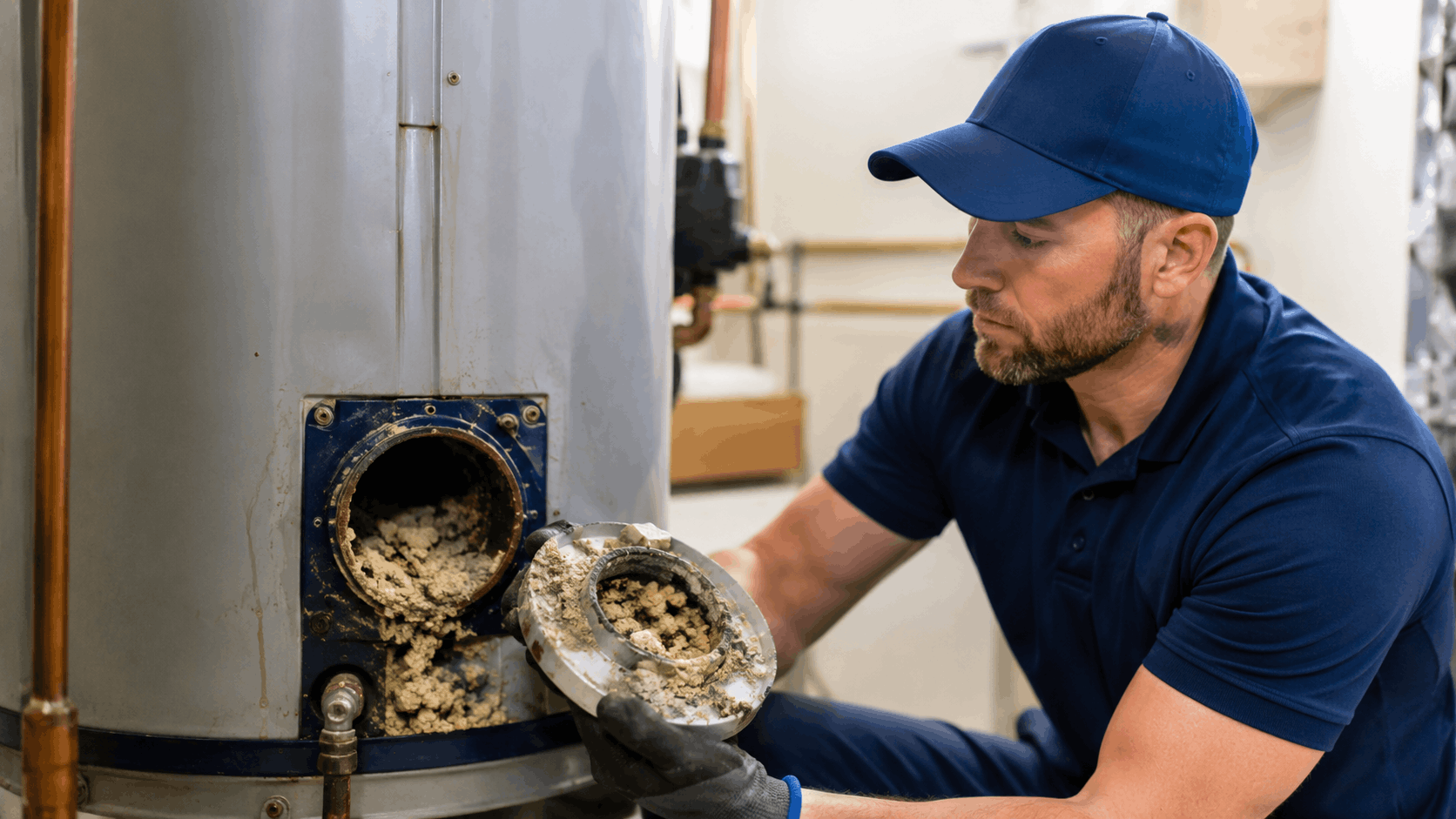
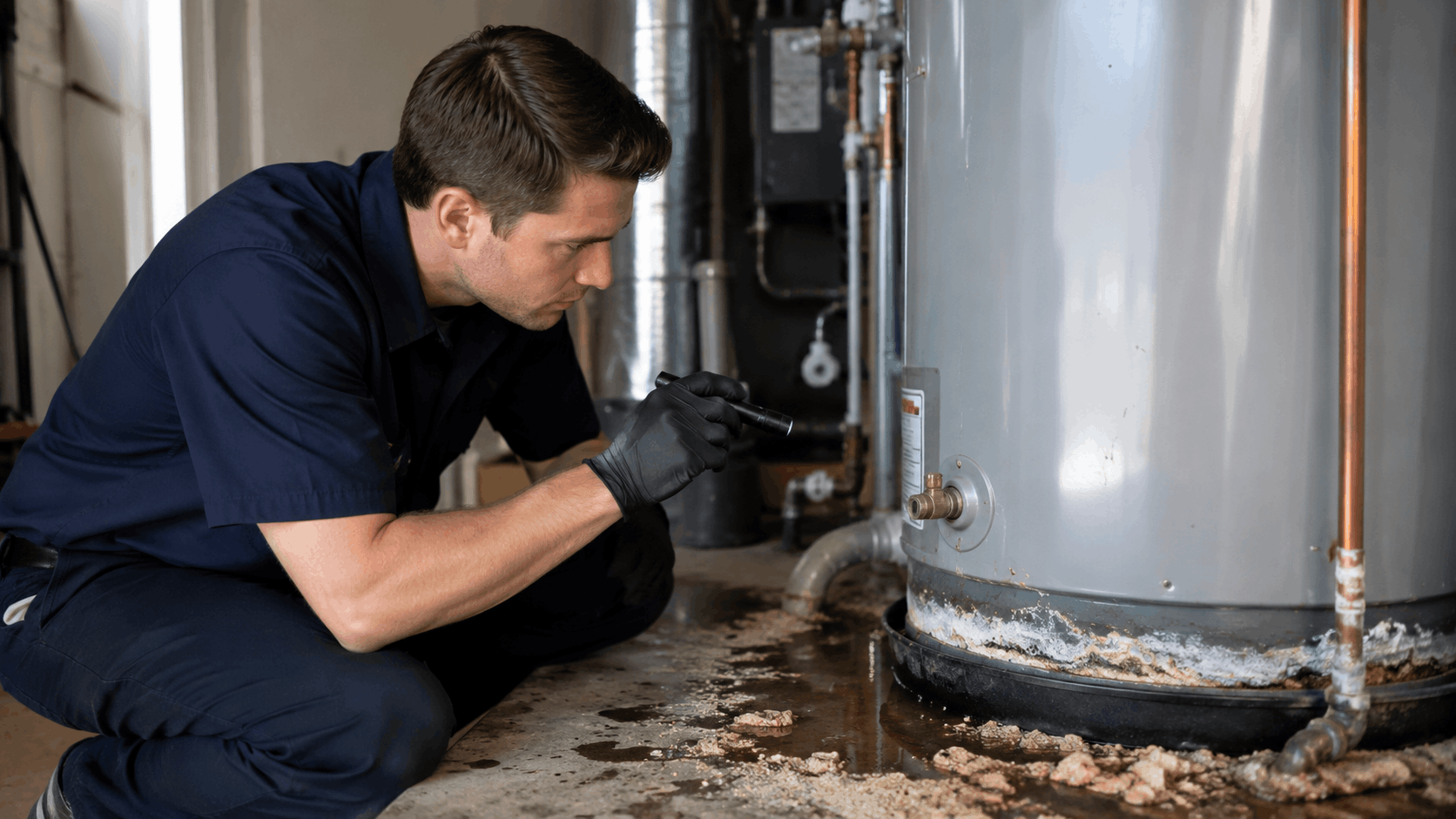
That popping water heater in your garage is trying to tell you something. In almost every case, the tank noise comes from sediment that has settled at the bottom of the tank over months or years. As the burner heats the tank, water gets trapped under that hardened layer and boils.
The process is often called sediment boil, and it is the number one reason a water heater goes from silent to loud. Once you understand the basic physics, the sound makes a lot more sense.
| Sound | Likely Cause | Severity |
|---|---|---|
| Popping | Water boiling under sediment | Moderate - buildup present |
| Rumbling | Thick sediment shifting during heating | Moderate to high |
| Crackling | Water forcing through mineral deposits on elements | Low to moderate |
| Banging | Large sediment chunks or pressure spikes | High - inspect soon |
Why Sediment Makes Popping and Rumbling Noises
Every time water heats up in Las Vegas, dissolved minerals like calcium and magnesium fall out of the water and drop to the bottom of the tank. Over time, this builds into a thick sediment layer that acts like a crust across the base of the tank. It is basically hardened rock sitting between the burner and the water.
When the burner fires up, it heats the metal at the bottom of the tank first. Water gets trapped in tiny pockets beneath the sediment and starts to boil before it can escape. As that boiling water bursts up through the crust, it creates the popping and rumbling sound you hear.
Think of it like water trapped under a lid that suddenly breaks free. Each pop is a small steam bubble punching through the sediment. The thicker the layer, the louder and more frequent the noise becomes.
This also explains why the noise tends to get worse over months rather than appearing overnight. The buildup grows slowly, and so does the sound. By the time most homeowners call us, the sediment has been forming for years.
The Difference Between Popping, Crackling, and Banging
Not all water heater sounds mean the same thing, and telling them apart helps you judge how worried to be. Popping is the classic sign of sediment boil at the bottom of a tank-style heater. It is common and usually means it is time for a flush.
Crackling and sizzling sounds often come from electric units where mineral deposits have coated the heating elements. Water works its way through the scale and makes a lighter, snapping noise. It points to buildup, but it is usually less advanced than heavy popping.
Banging is the one to take seriously. A loud bang or knock can mean large chunks of hardened sediment are moving around, or that the tank is dealing with pressure spikes. When we hear a customer describe banging, we want eyes on that tank quickly.
If your water heater sounds like a drum being hit, do not wait it out. That level of tank noise often shows up in units that are close to the end of their life.
When the Noise Is Harmless vs. a Warning Sign
A little occasional ticking or a soft pop now and then is usually nothing to lose sleep over. Early buildup makes light sounds that come and go, and a simple flush often clears them right up. At that stage, the tank still has plenty of life left.
The warning sign shows up when the popping becomes constant and loud during every heating cycle. That means the sediment layer is thick and the tank is working harder than it should. Ignoring it lets the problem snowball.
Rumbling paired with any discoloration in your hot water is another red flag. It suggests the buildup is heavy and the tank interior may be corroding. That combination moves a unit from routine maintenance into repair or replacement territory.
Our rule of thumb is simple. Quiet, occasional sounds mean schedule a flush soon. Loud, constant noise with other symptoms means get it inspected before it fails.
Get Your Quote
Tell us what's going on and we'll get back to you. We're open 24/7.
Why Las Vegas Water Heaters Suffer More Than Most
Water heaters everywhere collect some sediment, but tanks in our valley take a serious beating. The reason is the extremely hard water that flows into nearly every home here. Las Vegas hard water is loaded with minerals, and those minerals are what turn into sediment.
Most of our drinking water comes from the Colorado River through Lake Mead. That source carries a heavy mineral load, and by the time it reaches your tap, it is some of the hardest water in the country.
| Factor | Las Vegas | National Average |
|---|---|---|
| Water hardness | 16-18+ grains per gallon | 3-7 grains per gallon |
| Typical tank lifespan | 6-9 years | 10-12 years |
| Recommended flush frequency | Every 6-12 months | Once per year |
How Hard Is the Water in the Valley
Water hardness is measured in grains per gallon, and anything above 7 is considered hard. According to the Las Vegas Valley Water District, local water often measures around about 16 grains per gallon or higher. That puts our valley firmly in the very hard category.
All those grains come from dissolved calcium and magnesium picked up as the Colorado River water travels through rock and soil. When that water is heated inside your tank, the minerals separate out and settle to the bottom. More minerals in the water means more sediment forming more quickly.
You can read more about local hardness levels straight from the Las Vegas Valley Water District if you want the official numbers. The takeaway is that our water carries two to three times the minerals of an average city.
That is why a tank that might last a decade elsewhere often struggles to reach nine years here. The calcium is relentless, and it never stops depositing as long as the water keeps heating.
Neighborhoods Where We See the Worst Buildup
We work on water heaters all over the valley, and some areas stand out for heavy sediment. In parts of Summerlin, we regularly pull tanks with several inches of hardened mineral crust across the bottom. The newer master-planned sections are not immune just because the homes are recent.
Henderson's Green Valley is another spot where we see thick buildup, especially in homes that are ten to twenty years old. If you live in that area and hear popping, our team that handles plumbing service in Green Valley deals with these tanks constantly.
Older homes near Charleston Boulevard and the central corridor often show the worst damage. Many of those water heaters have gone years without a single flush, so the sediment has hardened into a rock-like slab.
Neighborhood matters less than water hardness and maintenance history, honestly. But since every home in the valley gets the same hard supply, any area can develop severe buildup when a tank is neglected.
How Desert Heat Adds to the Problem
Our desert climate makes a tough situation worse. During summer, incoming water temperatures are already high because the pipes and ground are baking in the heat. That means the water entering your tank starts warmer, which encourages more mineral scaling.
Most water heaters in the valley sit in the garage, and a Las Vegas garage in July can top 110 degrees. A garage water heater surrounded by that kind of heat cycles differently and the minerals in the tank deposit aggressively. The combination of hot incoming water and a hot environment speeds up scale formation.
This is also why so many homeowners tell us their tank sounds louder in summer. Higher temperatures create more intense boiling under the sediment layer. The popping gets more frequent when the whole system runs hotter.
Winter gives tanks a small break, but the damage from summer sticks around. Each hot season adds another layer of mineral scaling that never fully goes away without a flush.
Older Homes vs. New Construction
Age plays a big role in how bad the buildup gets. Older homes near Downtown and East Las Vegas often have original or aging water heaters that have collected sediment for years. Those tanks are frequently the loudest and closest to failure when we arrive.
Newer builds in places like Skye Canyon and Inspirada start with fresh tanks, which buys some time. But the same hard water flows through those homes, so sediment starts forming from day one. A five-year-old tank in a new community can already be noisy.
The difference is that newer homes are more likely to have a water softener loop or updated plumbing. When a softener is installed and running, the sediment forms much more slowly. Older homes usually lack that protection.
Whether the house is decades old or built last year, regular flushing is what keeps the tank healthy. We tell every customer the same thing regardless of their neighborhood or the age of their home.
Need Help in Las Vegas?
Active Plumbing serves Las Vegas and all of Las Vegas Valley.
How Close Your Water Heater Is to Failure
Once a tank starts popping, the big question is how much life is left. There is no exact countdown, but symptoms and age together give a solid estimate. The goal is to judge whether you have years or months before a full water heater failure.
Here are the main factors we weigh when a homeowner asks how close their tank is to the end.
- Age of the unit compared to the local average
- How loud and constant the noise has become
- Any signs of rust, leaking, or slow reheating
- Whether the tank has ever been flushed
- Water quality and softener presence in the home
Average Lifespan of a Tank in Las Vegas
Nationally, a standard tank water heater is expected to last 10 to 12 years. In the Las Vegas Valley, our hard water knocks that number down considerably. Most tanks here last 6 to 9 years before serious problems set in.
The reason is that constant sediment buildup corrodes the tank and wears out the burner or heating element early. Every year of hard water without maintenance chips away at the tank lifespan. A neglected unit can fail even sooner than six years.
On the other hand, a tank that gets flushed regularly and has a softener can push toward the higher end of that range. Maintenance genuinely adds years. We have seen well-cared-for tanks reach ten years even in our tough water conditions.
If your unit is already past six years and making noise, treat it as living on borrowed time. That is the window where we suggest planning ahead rather than waiting for a surprise.
Warning Signs That Failure Is Near
Certain symptoms tell us a tank is close to giving out. Rusty or brown hot water is one of the clearest. It means the inside of the tank is corroding, and rusty water rarely gets better on its own.
Water pooling or dripping at the base of the tank is another serious sign. A leaking tank near the bottom often means the steel shell has been compromised. That is not a repair situation in most cases.
Slow reheating is a quieter warning. When your hot water runs out more quickly than it used to or takes longer to recover, sediment is likely insulating the burner from the water. Combine slow heating with loud noise and you have a tank in trouble.
Any sudden increase in the popping or banging also counts. When a quiet tank turns loud fast, the buildup has reached a heavy stage. Watch for these red flags together rather than in isolation.
The Timeline From Popping to Leaking
A lot of homeowners want to know how long they have from the first pop to an actual leak. The honest answer is that it varies, but the process follows a pattern. Popping means sediment is causing the tank bottom to overheat.
That overheating creates hot spots that stress the steel and the glass liner inside the tank. Over time, the liner can crack, and once liner damage sets in, corrosion speeds up. The metal weakens where it was cooked repeatedly.
From heavy, constant popping to a real leak, we often see a leak timeline of several months to a couple of years. Some tanks hang on longer, and some fail fast. There is no way to predict the exact day.
The important point is that popping is the early stage and leaking is the end stage. Once you hear that tank noise consistently, the clock is running. Acting during the popping phase is far cheaper than cleaning up after a leak.
When a Popping Tank Is Still Safe to Keep
Not every noisy tank needs to be replaced right away. If the unit is only a few years old and the noise is moderate, a good flush often quiets it down. Removing the sediment lets the tank heat properly again.
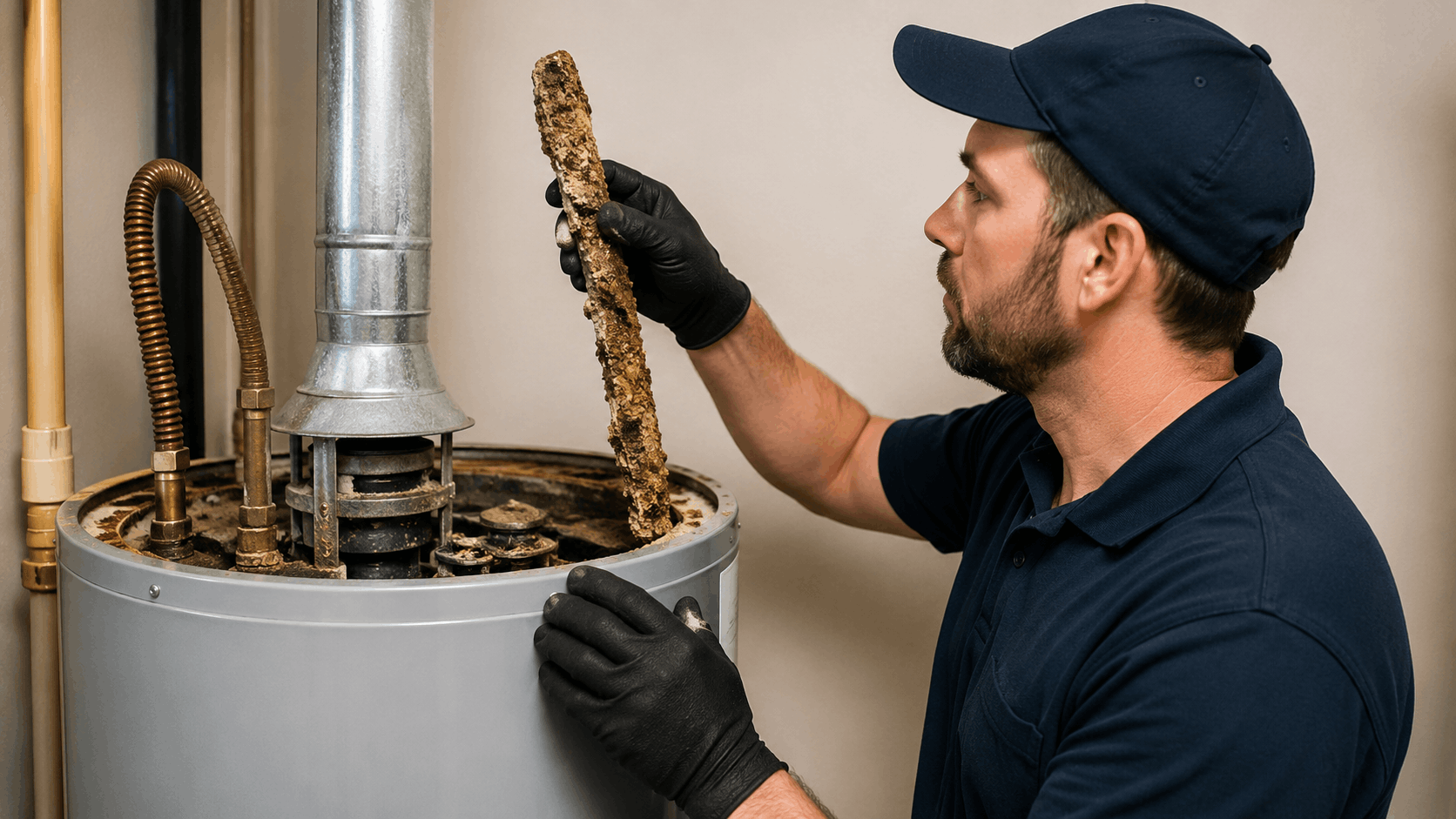
A newer tank with no rust and no leaking can usually be saved with maintenance. Flushing plus checking the anode rod can extend life by several years. In those cases we recommend cleaning it up rather than swapping it out.
The deciding factors are age, the absence of rust, and whether the tank still holds pressure without leaking. When all three check out, flushing is the smart move. Our water heater services team handles this kind of maintenance regularly.
Regular flushing after that first cleanup keeps the sediment from rebuilding. A tank that gets serviced every six to twelve months can stay quiet and functional for years. Maintenance is almost always cheaper than replacement.
The Real Damage Sediment Causes Over Time
Sediment does more than make noise. Left alone, it quietly damages efficiency, safety, and your wallet. Understanding the stakes helps homeowners decide when to take action instead of tuning out the sound.
| Problem | What Sediment Does | Result |
|---|---|---|
| Higher bills | Insulates burner from water | More gas or electricity used |
| Element burnout | Creates hot spots | Failed heating parts |
| Less hot water | Fills usable tank space | Shorter showers |
| Tank rupture | Corrodes tank walls | Flooding risk |
Higher Energy Bills From Trapped Heat
Sediment sits between the burner and the water, acting like an insulating blanket. That forces the burner or heating element to run longer to heat the same amount of water. The extra runtime shows up directly on your energy bills.
For gas units, that means more fuel burned every single cycle. For electric units, the element stays on longer and pulls more power. Either way, your NV Energy bill creeps upward as the sediment grows thicker.
Many homeowners never connect a rising bill to their water heater. But burner efficiency drops steadily as buildup forms. A tank with heavy sediment can waste a noticeable chunk of the energy it uses.
Flushing restores much of that lost efficiency. Once the sediment is gone, the burner heats the water directly again and runtime drops. It is one of the simplest ways to cut wasted energy in a home.
Overheating and Element Burnout
When sediment covers the bottom of a gas tank, the burner heats the steel to higher temperatures than it should reach. Those hot spots stress the metal and can warp or damage the tank. Over time this contributes to cracks and failure.
In electric water heaters, sediment can bury the lower heating element completely. Once an element is caked in scale, it overheats and burns out. A burned heating element means part or all of your hot water disappears until it is replaced.
These burnouts are common in our valley because of how fast scale forms. We replace elements regularly on tanks that were never flushed. The buildup is almost always the underlying cause.
Preventing hot spots is another reason regular maintenance matters so much here. Keeping sediment cleared protects both the elements and the tank body. A clean tank simply runs cooler and safer.
Reduced Hot Water Supply
Every inch of sediment at the bottom of the tank takes up space that used to hold water. As the layer thickens, your usable tank capacity shrinks. A 50-gallon tank might effectively hold far less after years of buildup.
That is why families sometimes notice their hot water supply running out more quickly than it used to. The showers get shorter and the last person in line ends up rinsing in lukewarm water. The tank size on the label no longer matches reality.
People often assume they need a bigger tank when the real problem is sediment. Before upgrading size, it is worth checking whether buildup has stolen the capacity. A flush can restore gallons of usable hot water.
If flushing does not bring back the supply, then buildup may have caused deeper damage. At that point the tank itself may be near the end. Either way, sediment is usually the culprit behind a shrinking hot water supply.
The Risk of a Sudden Tank Rupture
The most serious risk from long-term sediment is a full tank rupture. As the steel corrodes and weakens from years of overheating, it eventually loses the strength to hold pressure. When it gives out, the tank can dump dozens of gallons of water fast.
In a garage this is bad enough, but many valley homes have water heaters in interior closets. A rupture there can flood flooring, drywall, and belongings in short order. Flood damage from a failed tank often costs far more than the tank itself.
These failures rarely happen with warning at the moment they occur. That is why catching the earlier signs matters so much. A popping tank is the polite version of the warning a leaking tank gives too late.
If a tank does let go, our emergency water damage and burst pipe response can help fast. But the smarter path is replacing a failing unit before that ever happens. Prevention beats cleanup every time.
Need Help in Las Vegas?
Active Plumbing serves Las Vegas and all of Las Vegas Valley.
Flushing a Water Heater in the Las Vegas Valley
Flushing is the single best thing you can do to fight sediment in our valley. A water heater flush drains the tank and clears out the mineral buildup that causes popping and lost efficiency. Done regularly, it keeps a tank quiet and healthy for years.
Sediment removal is not glamorous work, but it pays off. Here is how flushing works and when it makes sense.
How Often Local Tanks Should Be Flushed
The standard advice everywhere is to flush a water heater once a year. In the Las Vegas Valley, that is not often enough. Because our water is so hard, we recommend flushing every 6 to 12 months.
Homes without a water softener should lean toward the shorter end of that range. The minerals build up so quickly here that a full year lets a thick layer form. A hard water flush twice a year keeps that layer from ever hardening into rock.
Homes with a working softener can often stretch to once a year safely. The softener removes many of the minerals before they reach the tank. That slows the buildup dramatically.
Setting a reminder tied to a season helps people stay on schedule. Many of our customers flush in spring and fall. Consistency is what keeps the flush frequency effective.
What Happens During a Professional Flush
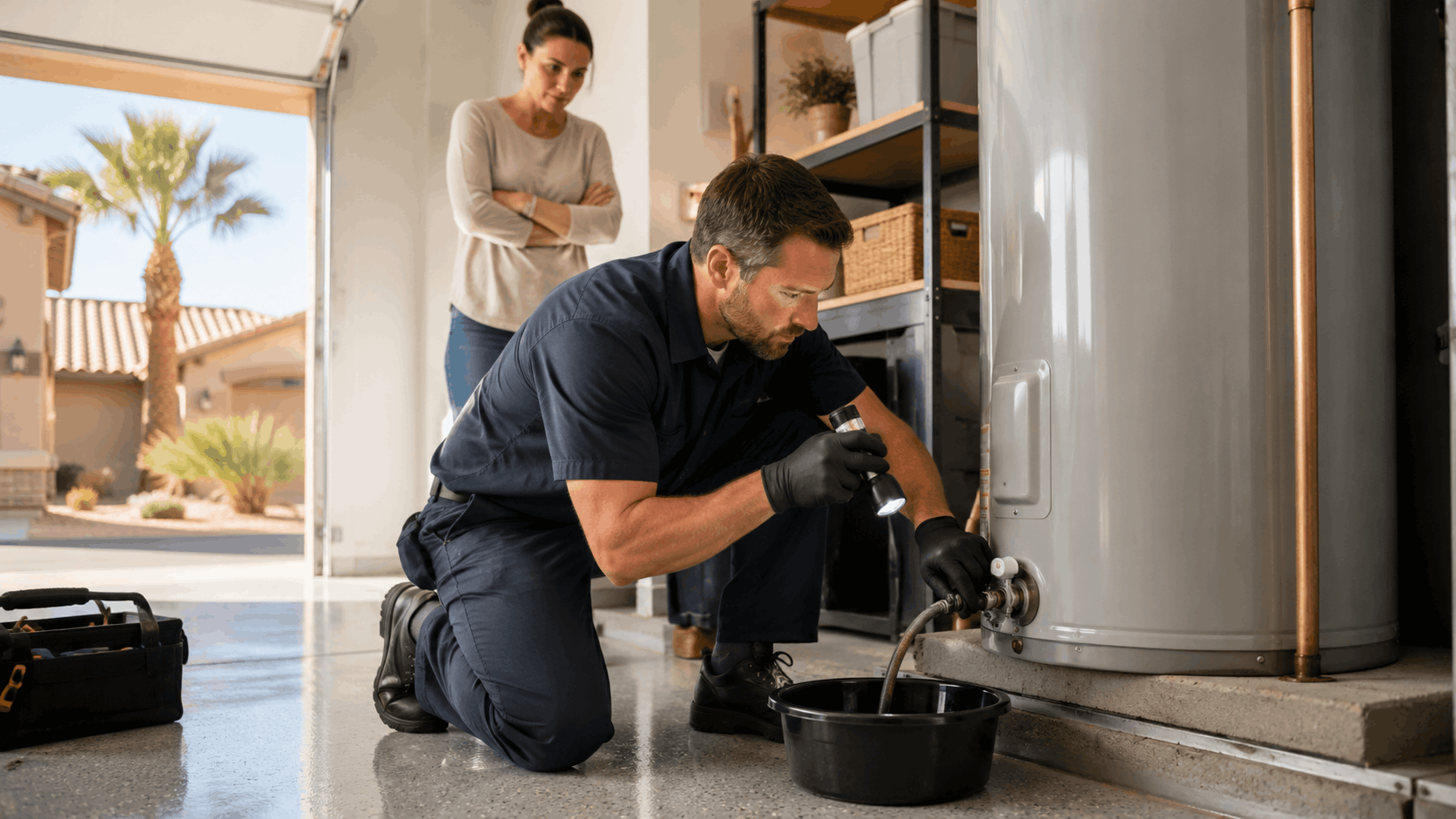
When our team performs a professional flush, we start by shutting off the power or gas and the water supply. We then connect a hose to the drain valve and empty the tank completely. This lets us see how much sediment is present.
Next comes the drain and refill process, where we run water through the tank to push out the loosened sediment. Sometimes we agitate the buildup to break it free so it flushes out cleanly. We keep flushing until the water runs clear.
While the tank is open, we inspect the anode rod, the valve, and the connections. This inspection catches small problems before they become big ones. Finding a worn anode rod during a flush can save a tank.
After refilling and restoring power, we confirm the unit heats properly and stays quiet. The whole visit gives us a clear picture of the tank's condition. Customers often notice better performance right away.
Why DIY Flushing Sometimes Fails
Plenty of homeowners try to flush their own tank, and sometimes it works fine. The trouble comes when the sediment has hardened into a dense mass at the bottom. A DIY flush often cannot break that up.
A common issue is a clogged drain valve. When thick sediment blocks the valve, water either will not drain or trickles out slowly. At that point the flush stalls and the buildup stays put.
Some homeowners also accidentally leave the valve partially clogged, which can cause a slow drip afterward. Older plastic drain valves are especially prone to jamming with mineral debris. Getting them fully clear takes the right tools.
Our team uses professional equipment to clear stubborn buildup and stuck valves. When a DIY flush fails, that is usually the reason people call us. Heavily caked tanks need more than a garden hose.
When Flushing Is No Longer Worth It
Flushing is powerful, but it cannot save every tank. If a unit is already leaking or producing rusty water, cleaning out sediment will not reverse the damage. At that stage the tank has structural problems.
Very old tanks past the local lifespan are usually beyond flushing too. Even if a flush quiets the noise briefly, the corrosion inside continues. Spending money to clean a failing tank rarely makes sense.
We are honest with homeowners about this replacement decision. When we see a tank that is past flushing, we say so rather than charging for a service that will not help. Nobody benefits from delaying the inevitable.
The good news is that catching a tank while flushing still works is far cheaper. That is why we push regular maintenance so hard. A tank flushed on schedule almost never reaches the point of no return.
Repair or Replace: Making the Right Call
When a water heater acts up, the biggest decision is whether to repair or replace it. The right answer depends on age, the type of problem, and the cost comparison. A good rule is to weigh the repair cost against how many years the tank has left.
Here is how we help homeowners decide between a fix and a new unit.
When a Repair Makes Financial Sense
Repairs make the most sense on a newer tank with a specific, fixable problem. A worn anode rod, a bad valve, or a burned-out element can often be swapped for a fraction of the replacement cost. On a three or four year old unit, that is money well spent.
The anode rod in particular is a wear part that protects the tank from corrosion. Replacing it before it is fully consumed can add years of life. A valve repair can stop a drip without touching the rest of the tank.
If the tank body is solid and only a component has failed, repair is usually the right call. Our water heater repair team handles these fixes across the valley. A single part replacement can restore a newer tank completely.
The math changes as a tank ages. On a newer unit a repair buys real value, but on an older one it may only delay a replacement by months.
Signs It Is Time for a New Unit
Certain conditions tip the scale toward replacement. Age is the first. A tank past six or seven years in our valley is already near the end of its expected run.
Rust in the water or on the tank body is another strong sign. Once corrosion reaches that point, no repair fixes the underlying problem. The steel is failing and it will only get worse.
Repeated repairs are a red flag too. If you have fixed the same tank twice in a year, you are pouring money into a losing unit. At some point replacing the water heater costs less than the running total of repairs.
When age, rust, and repeated repairs all appear together, the decision is easy. Replacing before a failure protects your home from water damage. It also gives you a fresh warranty and better efficiency.
Tank vs. Tankless in a Hard Water Area
When it is time to replace, homeowners often ask about going tankless. A tankless water heater heats water on demand and never stores it, so there is no tank of sediment to worry about. That sounds perfect for our hard water.
The catch is that tankless units are not immune to minerals. Scale builds up on the internal heat exchanger instead of a tank bottom. Without regular descaling, a tankless unit in our valley can lose efficiency or fail early.
The tank vs tankless choice comes down to habits and budget. Tankless units cost more upfront but save space and can last longer with proper care. Our tankless water heater installation team walks homeowners through the tradeoffs.
For tankless owners, we recommend routine tankless descaling maintenance to keep the heat exchanger clean. With that care, tankless works well even in Las Vegas. Skipping it leads to the same mineral problems as a neglected tank.
How a Water Softener Protects a New Tank
The best way to protect any new water heater in our valley is to soften the water first. A water softener removes much of the calcium and magnesium before it reaches the tank. Less mineral in the water means far less sediment forming.
Homeowners who add a softener often see their new tank stay quiet for years. Sediment prevention at the source is more effective than flushing alone. The two together give a tank the best possible shot at a long life.
A softener also protects fixtures, faucets, and appliances throughout the home. The same minerals that clog a water heater build up everywhere. Our water softener installation service pairs naturally with a new water heater.
For homeowners who prefer no salt, we also offer salt-free water conditioning options. Either way, treating the water is the smartest thing you can do for a fresh tank. It protects your investment from day one.
Need Help in Las Vegas?
Active Plumbing serves Las Vegas and all of Las Vegas Valley.
How Active Plumbing Helps Local Homeowners
Our team at Active Plumbing has worked on hundreds of water heaters across the Las Vegas Valley. As a local Las Vegas plumber, we know exactly what our hard water does to these tanks. That experience shapes every water heater service we provide.
From a quick diagnosis to a full replacement, here is how we help.
Inspection and Diagnosis of Noisy Tanks
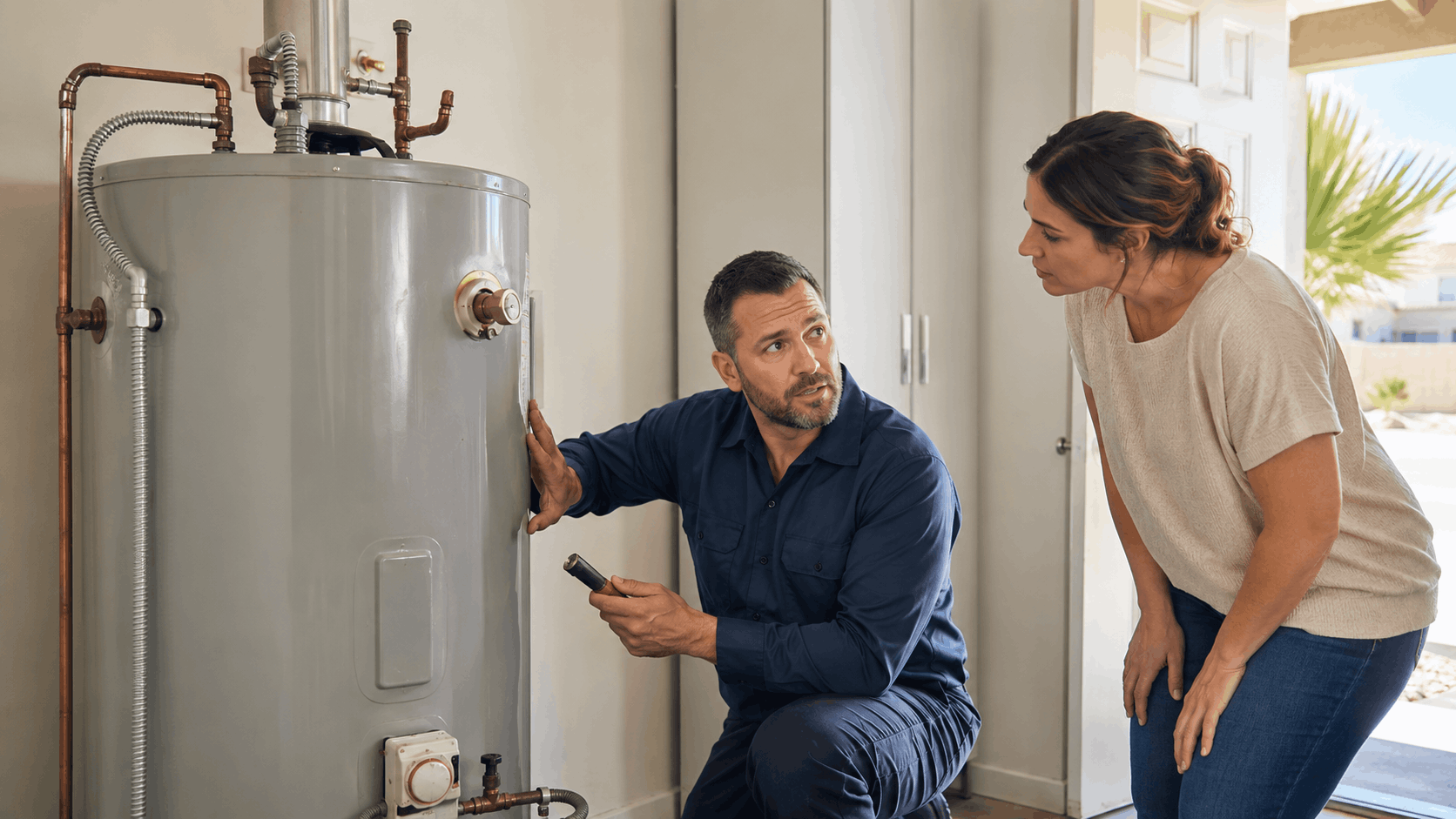
When a homeowner reports a noisy tank, the first step is a proper water heater inspection. We listen to the unit, check the age, and look for signs of sediment, rust, or pressure issues. Not every noise is sediment, so diagnosis matters.
Sometimes the sound comes from thermal expansion or a pressure problem rather than buildup. Pinpointing the real cause saves homeowners from paying for the wrong fix. We take the time to identify what is actually happening.
Our diagnosis also includes checking the anode rod and the tank's overall condition. That gives us a clear read on how much life the unit has left. We share what we find so the homeowner can make an informed choice.
An honest inspection is where good service starts. We would rather tell someone their tank has years left than push an unnecessary replacement. Straight answers build trust.
Flushing, Repair, and Replacement Options
Once we know the tank's condition, we lay out the options. For units with buildup and life left, a flush service clears the sediment and quiets the noise. It is the fastest and cheapest fix for a popping tank.
When a specific part has failed, we handle the repair, whether it is a valve, an element, or an anode rod. For tanks past their prime, we provide a straightforward replacement service. We cover both standard tanks and tankless units.
We also install recirculation systems for homeowners tired of waiting for hot water. Our recirculation pump installation pairs well with a new heater. The whole range of options lives under one roof.
The point is that we meet the tank where it is. A newer unit gets maintenance, a failing one gets replaced, and the homeowner always knows why. No pressure, just the right fix.
Areas We Serve Across the Valley
Our team covers the entire valley, not just one corner of it. We regularly handle water heaters in Summerlin, Henderson, and Spring Valley. Hard water affects every one of these communities.
We also serve North Las Vegas, Paradise, Winchester, and Sunrise Manor. From newer homes in the northwest to older properties near the center, we know the local water conditions. That familiarity helps us work more quickly.
Homeowners in Spring Valley and surrounding areas get the same reliable service. No matter the neighborhood, the hard water challenge is the same. We come prepared for it every time.
Being a local company means we are never far away. Our trucks are already out in these communities daily. That keeps response times short across the valley.
Same-Day and Emergency Help
A leaking or ruptured water heater cannot wait. That is why we offer same-day and emergency service for urgent situations. Fast response keeps a small leak from turning into major water damage.
When a tank fails in a garage or interior closet, every minute counts. Our 24/7 emergency plumbing team can respond quickly to shut off the water and start repairs. Getting there fast limits the damage.
We also help homeowners who wake up to no hot water and need it back the same day. A burned element or failed part often gets fixed in a single visit. Nobody should go without hot water for long.
For homeowners worried about future failures, a whole home leak detection system adds an extra layer of protection. It catches leaks early before they flood a room. That kind of prevention pairs well with regular tank maintenance.
Final Thoughts
A popping water heater is your tank telling you that sediment has built up inside. In the Las Vegas Valley, our hard water from the Colorado River makes that buildup form more quickly than almost anywhere else. Left alone, it wastes energy, shortens tank life, and can end in a costly leak.
The good news is that catching the problem early gives you options. Regular flushing quiets the noise and adds years, while a water softener protects the tank from future buildup. When a tank is truly at the end, replacing it before it fails saves you from a flooded garage.
If your water heater is making popping sounds, our team at Active Plumbing is ready to help. We serve homeowners across Summerlin, Henderson, Spring Valley, and the rest of the valley with inspections, flushing, repair, and replacement. Contact us today to schedule a visit and find out how much life your tank really has left.
Frequently Asked Questions
- Is a popping water heater dangerous?
- Popping itself is usually not an immediate danger, but it is a clear warning. The sound means sediment has built up and water is boiling underneath it. Over time, that buildup causes overheating that can crack the tank and lead to failure. So while the noise will not hurt you tonight, it signals a problem that gets worse and can end in a leak or rupture if ignored.
- Can I stop the popping sound myself?
- You can try a basic DIY flush by shutting off power and water, draining the tank through the drain valve, and refilling it. This sometimes clears lighter sediment and quiets the noise. The problem is that hardened buildup often clogs the drain valve and will not flush out with a garden hose. If the water will not drain or the noise returns fast, it is time to call our team for a professional flush.
- How much does a water heater flush cost in Las Vegas?
- A professional water heater flush in the valley generally runs somewhere in the range of 100 to 200 dollars, depending on the tank and its condition. Tanks with heavy, hardened sediment may take extra work and cost a bit more. Given how much a flush saves in energy and extended tank life, it is one of the most affordable maintenance steps you can take. We are happy to provide a quote before starting.
- How long will my tank last after it starts popping?
- Timelines vary, but popping usually means you have somewhere from a few months to a couple of years left. It depends on the tank's age, how heavy the buildup is, and whether other symptoms like rust or leaking have shown up. A newer tank that gets flushed can keep going for years. An older tank with constant loud noise is often close to the end, so it is worth an inspection.
- Why does my water heater sound worse in summer?
- Summer makes everything louder because the incoming water is already warmer and your garage is much hotter. Higher incoming water temperatures mean the tank reaches boiling more quickly under the sediment. A garage that tops 110 degrees also keeps the whole unit running hot. That combination creates more intense boiling under the sediment layer, so the popping becomes more frequent and noticeable during the hot months.
- Does hard water in Las Vegas really cause this?
- Yes, hard water is the main cause of sediment buildup here. Our water comes from the Colorado River and measures around about 16 grains per gallon or higher, far above the national average. Those minerals separate out when the water heats and settle at the bottom of the tank. That is why local tanks build sediment two to three times more quickly than tanks in areas with softer water.
- How much does a new water heater cost to install?
- Installed cost depends on the type and size of the unit. A standard tank water heater typically runs from around 1,200 to 2,500 dollars installed in our area. Tankless units cost more upfront, often in the 3,000 to 5,500 dollar range installed, but they save space and can last longer with proper descaling. We provide clear estimates so homeowners can compare options before deciding.
- Will a water softener stop future popping?
- A water softener greatly reduces sediment by removing much of the calcium and magnesium before the water reaches your tank. That slows buildup dramatically and keeps a new tank quieter for longer. It does not eliminate sediment completely, since some minerals still get through and other particles can settle. Pairing a softener with occasional flushing gives your water heater the best protection against future popping.
- How often should I flush my tank in the valley?
- Because our water is so hard, we recommend flushing every 6 to 12 months rather than the standard once a year. Homes without a water softener should aim for the shorter end, closer to every six months. Homes with a working softener can often stretch to once a year. Sticking to a regular schedule keeps sediment from hardening into a thick layer that is difficult to remove.
- Do you offer emergency water heater service?
- Yes, we offer same-day and 24/7 emergency service for urgent water heater problems across the valley. If your tank is leaking, ruptured, or has left you without hot water, our team can respond quickly to limit damage and get things working again. Fast response is what keeps a small leak from becoming a flooded garage or closet. Just call us and we will get someone out to you.
Licensed plumbing professionals serving Las Vegas and Las Vegas Valley.
Licensed in Nevada · License #0047021
Last updated on
Why trust Active Plumbing?
Founded in 1991, Active Plumbing is a licensed and insured plumber serving Las Vegas and Las Vegas Valley. All content is reviewed by our licensed technicians.

Need Help in Las Vegas?
Active Plumbing serves Las Vegas and all of Las Vegas Valley.
Related Articles
How to Prevent Water Heater Failure in Las Vegas (Hard Water Maintenance Plan)
Learn how Las Vegas hard water wears out water heaters sooner and follow our maintenance plan to extend your unit's lifespan years.
Sediment Tank Flush: Why Vegas Water Heaters Need It Every 18 Months
Las Vegas hard water causes rapid sediment buildup in water heaters. Learn why an 18-month flush schedule protects your tank, saves energy costs, and prevents expensive failures in the desert.
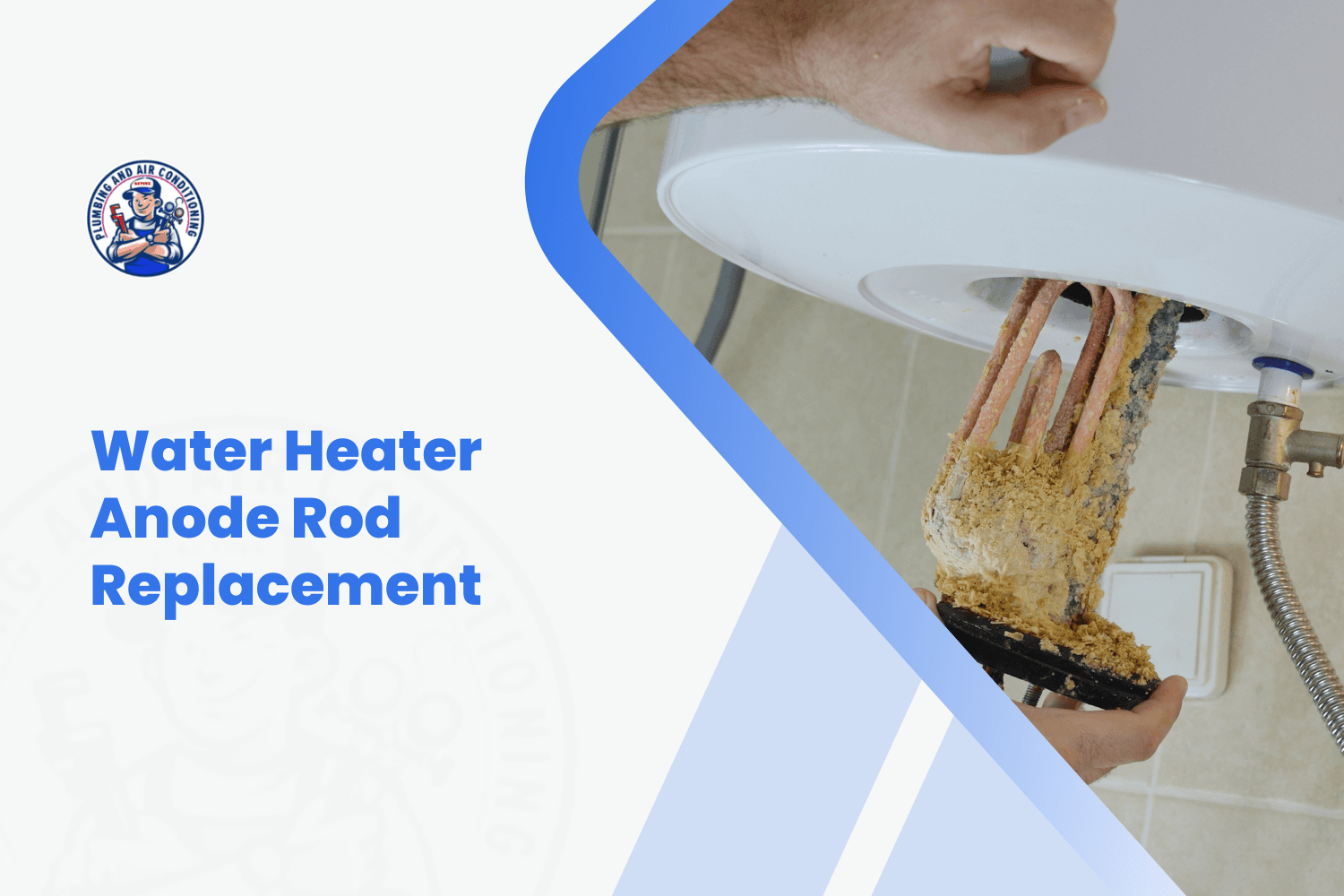
Water Heater Anode Rod Replacement: Why Vegas Hard Water Eats Them in 18 Months
Las Vegas hard water destroys anode rods in 18 months instead of years. Learn the warning signs, replacement costs, and how to protect your water heater long term.