7 Signs Your Las Vegas Water Heater Is About to Fail - Sediment, Rust, Recovery Time, Age
Key Takeaways
- Las Vegas water runs about 16 grains per gallon, among the hardest in the country, which shortens water heater life to 6 to 10 years for many tanks.
- Popping and rumbling noises signal hardened sediment at the tank bottom, one of the earliest warning signs in valley homes.
- Brown or orange water only from the hot tap points to internal rust and a failing tank lining.
- The anode rod protects the tank from corrosion but burns out fast in hard water, so it should be checked and replaced on time.
- Slow recovery time and running out of hot water often mean sediment buildup, a worn heating element, or a failing gas burner.
- Age matters: plan for replacement around 8 years for tanks, and decode the serial number to find the true manufacture date.
- Annual flushing, anode rod checks, pressure relief valve testing, and a whole-home water softener extend a unit's life in the valley.
- Schedule maintenance before summer heat and winter demand to avoid emergency failures during peak periods.
In This Article
A family in Summerlin wakes up on a Saturday, ready for hot showers before soccer practice, only to feel icy water sputter from the tap. Down in a garage near Centennial Hills, another homeowner steps out to find a slow puddle spreading under the water heater. These moments rarely come out of nowhere. Water heaters almost always send warning signs before they quit for good.
The trouble here in the valley is that our water is brutally hard, and that speeds up the wear on every tank in town. Minerals settle, metal corrodes, and heating parts strain harder than they would in a softer-water city. That means Las Vegas homeowners often see failure signs sooner than folks in other parts of the country.
Why Las Vegas Water Is So Hard on Water Heaters?
Our valley sits at the end of a long water journey, and the water that reaches your home carries a heavy load of dissolved minerals. That mineral content is the single biggest reason water heaters here don't last as long as the sticker on the box promises. Over years of daily heating and cooling, those minerals settle out and attack the tank from the inside.
Compared to cities with soft water, Las Vegas homes deal with more quickly mineral buildup, harder-working burners, and shorter tank life. The Las Vegas Valley Water District serves most of the metro area, and the hardness of that supply is no secret to anyone who has scrubbed white crust off a faucet. Knowing why the local water is so tough helps every warning sign in this article make more sense.
| Factor | Las Vegas Valley | Soft-Water City |
|---|---|---|
| Water hardness (grains per gallon) | 16-18 gpg | 1-3 gpg |
| Typical tank lifespan | 6-10 years | 10-15 years |
| Sediment buildup rate | Fast | Slow |
| Recommended flush frequency | Once or twice a year | Every 1-2 years |
The Truth About Valley Water District Hardness Levels
Water hardness gets measured in grains per gallon, and anything above 10 grains per gallon counts as very hard water. Most Las Vegas Valley Water District readings land somewhere between 16 and 18 grains per gallon, which puts our supply among the hardest in the country. That number tells a homeowner exactly how much calcium and magnesium is riding along in every gallon.
The reason for those high numbers traces back to the source. Roughly 90 percent of our drinking water comes from Colorado River water pulled out of Lake Mead, and that river water picks up minerals as it flows across hundreds of miles of rock and soil. By the time it reaches your street, it is loaded with the dissolved solids that harden a water heater's insides.
For a homeowner, high grains per gallon means minerals drop out of the water every time the tank heats it. Those minerals form a crusty layer that never really goes away without maintenance. The higher the water hardness, the sooner that layer grows, and the sooner a tank starts showing trouble.
None of this means the water is unsafe to drink. It simply means the equipment heating that water takes a beating over the years. That is why local homes benefit from more frequent care than the manufacturer's generic schedule suggests.
How Desert Heat Adds Extra Stress
Most water heaters in newer valley neighborhoods live in the garage, and garages here get brutally hot. In communities like Centennial Hills and Enterprise, summer garage temperatures can push past 110 degrees for weeks at a time. That heat forces the tank to work in an oven-like environment day after day.
A garage water heater already struggles to hold temperature when the surrounding air is scorching. The tank expands and contracts with every cycle, and constant heat swings put extra tank stress on the seams, fittings, and glass lining inside. Metal that flexes over and over eventually cracks or loosens.
Desert heat also raises the temperature of the incoming water and the air around the unit, which can shorten the life of electronic controls and gas valves. Parts that would coast along in a mild climate wear out sooner here. We see more heat-related part failures in valley garages than almost anywhere else.
Placement matters too. A unit crammed into a tight, unventilated garage corner runs hotter than one with airflow around it. Simple things like keeping the space clear and checking for good ventilation help a tank survive the summer.
Why Older Homes Near Downtown Face More Problems
Head toward the center of the city and the housing stock gets much older. Homes near the Historic Westside and the John S. Park neighborhood were often built decades ago, and many still run on tanks and pipes that have aged well past their prime. Older homes tend to hide problems that newer builds simply don't have yet.
Aging plumbing brings its own headaches. Galvanized supply lines, corroded fittings, and undersized shutoff valves all make a water heater harder to service and quicker to fail. When old pipes shed rust into the system, that debris settles in the tank and adds to the mineral load already coming from the hard water.
We also find that many older tanks in these neighborhoods were installed years ago and never flushed. Decades of neglect combined with our mineral-heavy supply is a recipe for early failure. Homeowners in these areas often get the least warning before a tank gives out.
If a home near downtown still has its original water heater, age alone is reason enough for a professional inspection. Pairing a new unit with updated shutoff valves and supply lines usually pays off in fewer surprise leaks down the road.
Get Your Quote
Tell us what's going on and we'll get back to you. We're open 24/7.
Sign 1 and 2: Sediment Buildup and Strange Noises
The earliest trouble sign is often something a homeowner hears rather than sees. As sediment buildup collects at the bottom of the water heater tank, it starts making noise every time the unit runs. In valley homes, that noise usually shows up years sooner than it would elsewhere because of how fast minerals accumulate here.
Here are the sounds and symptoms that point to sediment problems:
- Popping or crackling when the burner kicks on
- A low rumbling noise during heating cycles
- Hot water running out more quickly than it used to
- Higher energy bills with no change in usage
- A knocking sound as the tank heats and cools
What the Popping and Rumbling Sounds Mean
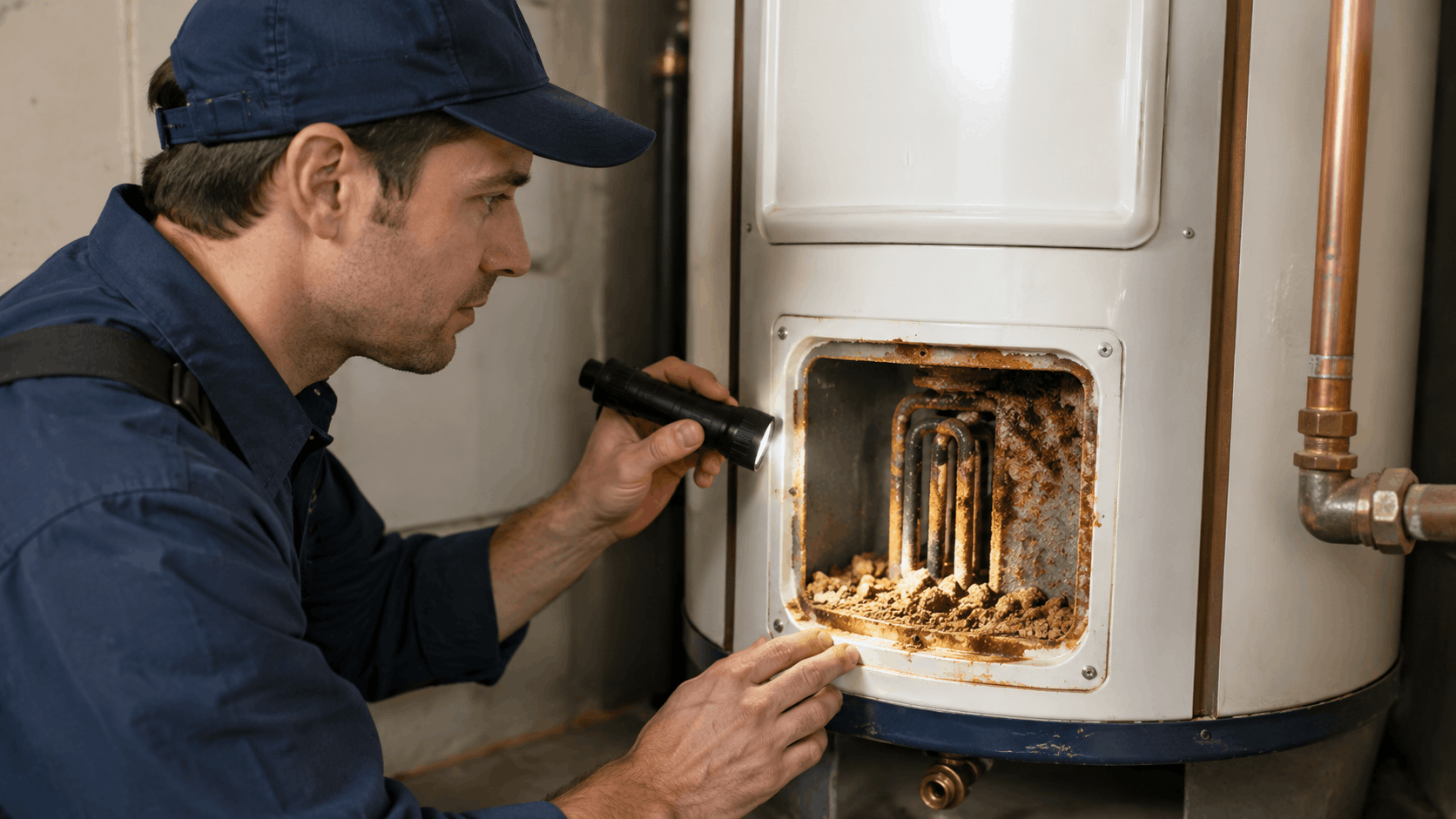
When sediment settles at the tank bottom, it traps a thin layer of water underneath against the burner or heating element. As that trapped water heats up, it boils and forces steam bubbles up through the hardened sediment. That escaping steam is what makes the popping and crackling you hear.
The rumbling noise comes from the same process on a larger scale. Bigger deposits shift and vibrate as water works its way through and around them. What sounds like gravel rattling in a pot is really mineral rock knocking against the inside of the tank.
These sounds mean the sediment has already hardened into a solid crust. Early on, minerals are loose and easy to flush out, but over time they cement into a stubborn layer. Once you hear consistent popping, the buildup has reached a stage that needs attention.
A little noise now and then is normal, but daily popping and rumbling is a clear message. It tells you the tank is fighting through a layer of minerals just to do its job. Ignoring it only lets the layer grow thicker.
How Sediment Robs Your Hot Water Supply
Every inch of sediment at the bottom of the tank takes up space that used to hold hot water. A tank that once delivered a full supply now holds less, so households run out sooner. That is why an older unit seems to shrink over time even though it never physically changes size.
Sediment also acts like an insulating blanket between the burner and the water above it. The burner has to run longer and hotter to push heat through that layer, which drops burner efficiency and drives up energy bills. Many homeowners notice their gas or electric bill creeping up before they realize the water heater is the cause.
The reduced capacity hits hardest in busy homes. A family that used to get through back-to-back morning showers suddenly finds the last person shivering. The tank simply cannot keep up when a chunk of its volume is filled with rock.
Left alone, this cycle feeds itself. A struggling burner overheats the tank bottom, which speeds up more mineral buildup, which makes the burner work even harder. Breaking that cycle early keeps both comfort and utility costs in check.
Why Flushing Matters More in the Valley
In softer-water cities, homeowners might flush a tank once every couple of years. Here, with about 16 grains per gallon coming out of the tap, annual maintenance is the bare minimum, and twice a year is better for hard-working units. Regular tank flushing clears loose minerals before they harden into that crusty layer.
A proper flush drains the tank, stirs up the settled sediment, and rinses it out through the drain valve. Done on schedule, it keeps capacity high and the burner running clean. Skip it for a few years and the deposits cement in place where flushing alone can no longer remove them.
Our team handles sediment removal as part of routine water heater service across the valley. We drain, flush, and inspect the tank while we are there, so small issues get caught before they grow. For homes with heavy buildup, we may recommend more frequent visits.
Flushing is cheap insurance against expensive failure. An hour of maintenance costs far less than an emergency replacement on a hot summer weekend. For most valley homeowners, it is the single best habit for stretching a tank's life.
Need Help in Las Vegas?
Active Plumbing serves Las Vegas and all of Las Vegas Valley.
Sign 3 and 4: Rusty Water and Corrosion
Discolored water and visible rust are two of the loudest alarms a water heater can raise. When rust shows up, it usually means the metal inside or outside the tank has started breaking down. Telling the difference between a plumbing issue and a dying tank saves a lot of guesswork.
Watch for these corrosion warning signs:
- Brown or orange water only from the hot side
- A metallic smell or taste in hot water
- Rust streaks running down the outside of the tank
- Corroded or crusty fittings at the top or base
- Small puddles or damp spots around the tank bottom
Brown or Orange Water From the Hot Tap
The first test is simple: run the cold tap and then the hot tap separately. If only the hot water comes out brown or orange, the rust is coming from inside the water heater rather than the city supply. That points straight to internal rust eating away at the tank lining.
Brown water from the hot side means the protective glass lining has failed somewhere. Once bare steel is exposed to hot, mineral-rich water, it corrodes quickly. The rust you see in the tub or sink is metal that used to be part of your tank.
If both hot and cold run discolored, the problem is more likely in the pipes or the municipal line. In that case, a quick call and a pipe inspection make more sense than replacing a heater. Isolating the source with that hot-versus-cold test tells you where to look first.
Brown hot water is rarely a health emergency, but it is a strong sign the tank is on borrowed time. Once internal rust starts, it does not reverse. Planning a replacement before the tank leaks beats scrambling after it fails.
The Role of the Anode Rod
Inside every tank sits a long metal anode rod, sometimes called a sacrificial rod. Its whole job is to attract corrosion to itself so the tank walls stay protected. The rod corrodes on purpose, sacrificing its own metal to save the steel around it.
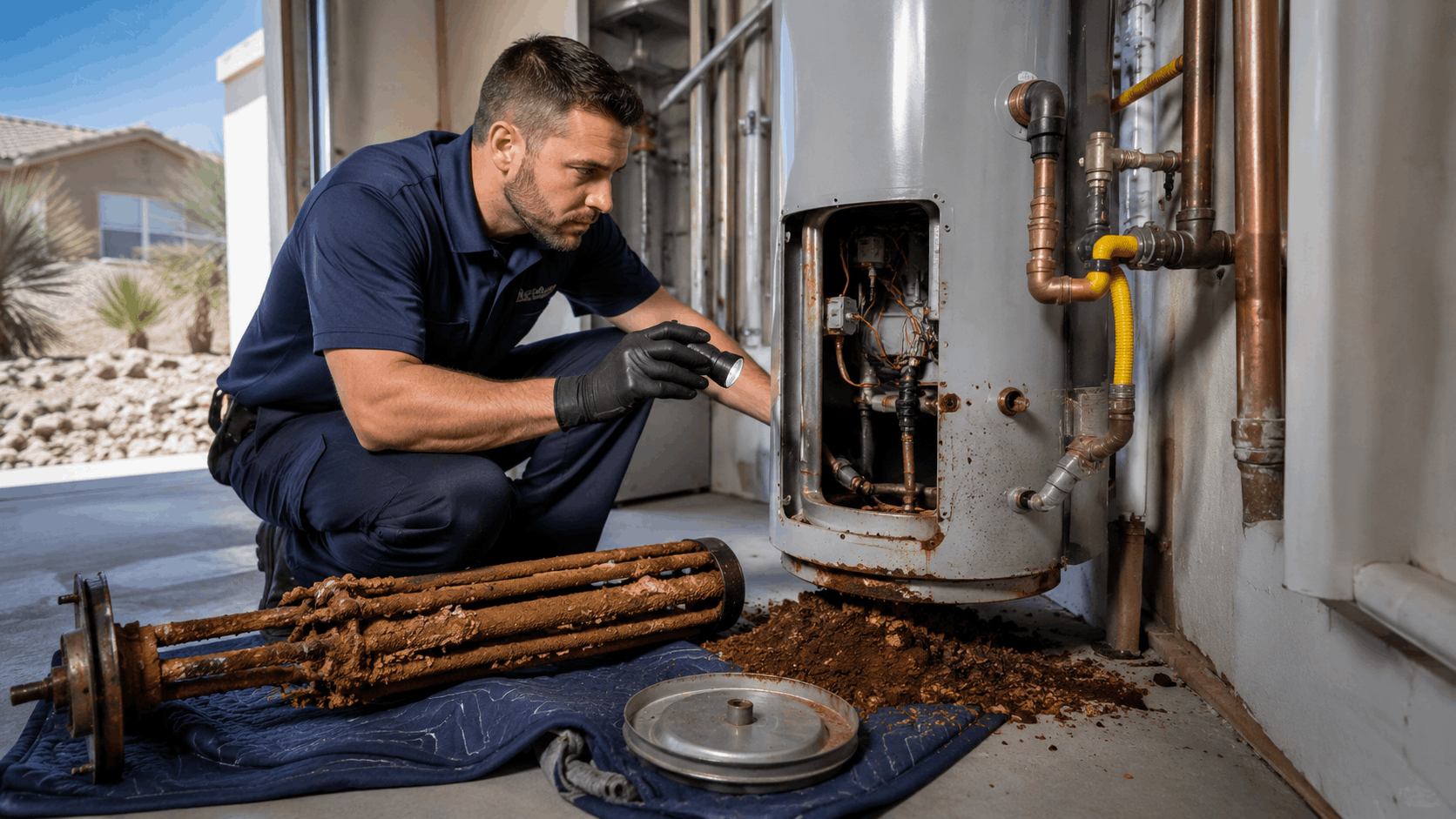
In our hard water, the anode rod burns out far more quickly than the manufacturer expects. High mineral content speeds up the reaction, so a rod rated for five years might be spent in two or three. Once the rod is gone, corrosion protection disappears and the tank itself becomes the target.
Checking and replacing the anode rod is one of the smartest maintenance moves for a valley homeowner. A fresh rod costs a fraction of a new tank and can add years of life. Our technicians pull and inspect the rod during service to see how much is left.
Many homeowners have never heard of the anode rod, and that is exactly why so many tanks rust out early. A rod that gets replaced on time keeps the sacrificial cycle working the way it should. Neglect it, and the tank pays the price.
Spotting Visible Rust and Leaks Around the Base
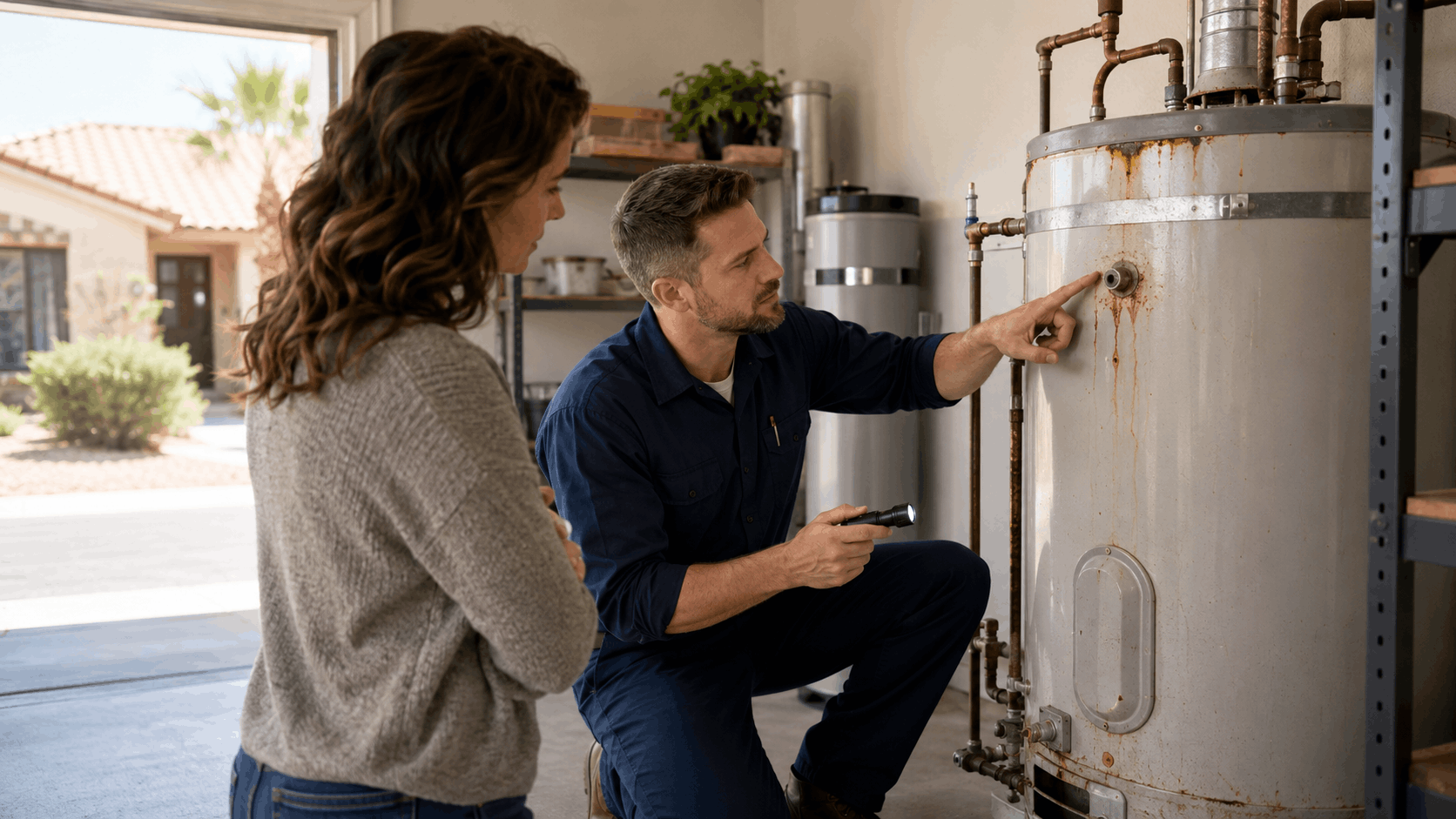
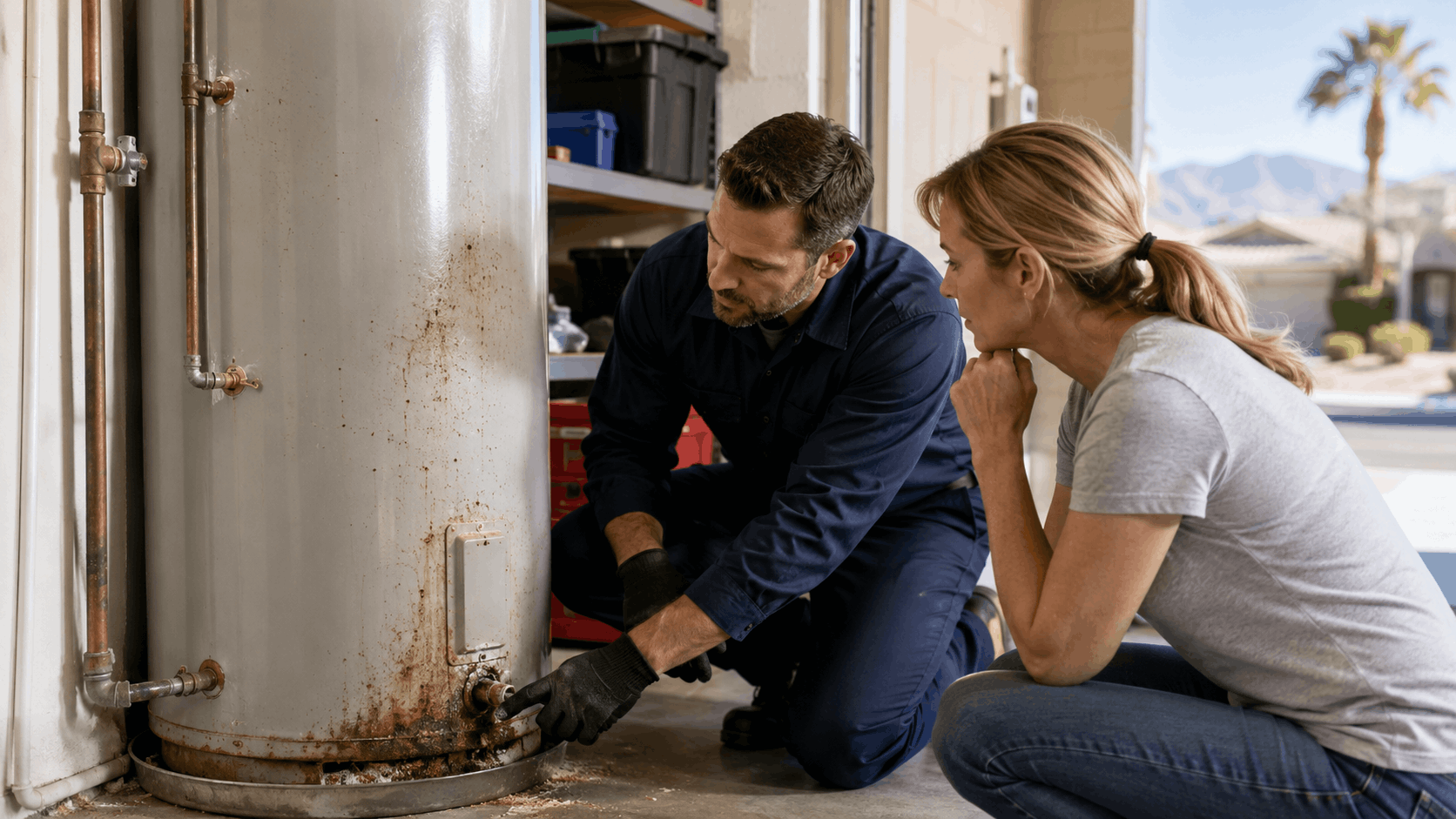
Take a flashlight to the water heater and look it over closely. Rust streaks running down the sides, crusty buildup on the fittings, and orange staining near seams all signal corrosion working through the metal. Visible rust on the outside often means worse damage inside.
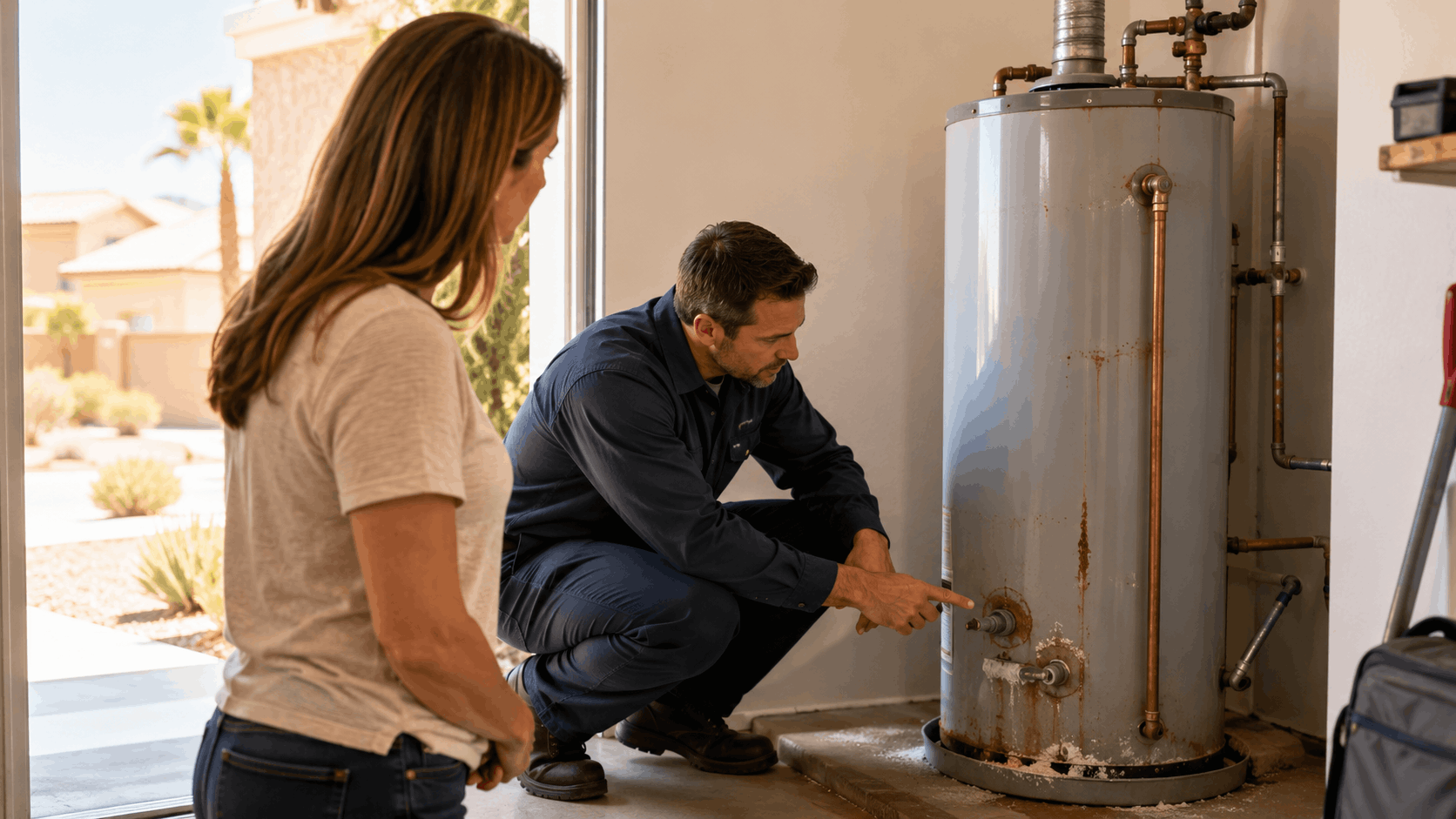
Water pooling at the base is the sign that worries us most. A small damp ring or a slow drip usually means the tank wall has corroded through. Once a tank leaks from the body, no repair will fix it, and a full failure could come at any moment.
Check the connections too. Corroded fittings at the cold inlet, hot outlet, or the temperature and pressure valve can leak on their own, and sometimes those are fixable. The trick is telling a fitting leak apart from a tank leak, which is where a professional eye helps.
If you find standing water around the tank, treat it as urgent. A corroded tank can go from a slow drip to a burst in a short time, flooding a garage or closet. Our emergency plumbing team responds fast when a tank starts letting go.
Sign 5 and 6: Slow Recovery Time and Not Enough Hot Water
When the hot water starts running short or takes forever to come back, the tank is losing its ability to do the one thing it exists for. Slow recovery time and not enough hot water usually trace back to a failing heating element, a worn burner, or heavy sediment. These signs hit daily life hard because everyone notices a cold shower.
Common symptoms in this category include:
- Hot water that runs out much more quickly than before
- Longer waits between showers for hot water to return
- Lukewarm water even at the highest setting
- Only the first person in the morning getting a hot shower
- Sudden cold bursts during a normal-length shower
What Recovery Time Really Measures
Recovery time is how long a water heater takes to reheat a full tank after the hot water gets used up. A healthy gas tank might recover in 30 to 40 minutes, while an electric unit can take an hour or more. That recovery rate tells you how quickly the household can go from empty back to a full hot supply.
When the reheat time starts stretching out, something is slowing the transfer of heat into the water. Sediment on the tank bottom is a common culprit, since it blocks the burner from warming the water efficiently. A weakening element or burner does the same thing by producing less heat than it used to.
Homeowners usually notice recovery problems as a gap between showers. Where the family once ran three showers in a row, now they wait an hour between the second and third. That growing wait is the tank telling you its performance is slipping.
Tracking recovery time over the seasons helps catch decline early. A tank that suddenly needs twice as long to reheat is signaling either heavy buildup or a part on its way out. Either way, it deserves a look before it fails completely.
Cold Showers in Bigger Households
Larger families feel a weakening tank first because they push more hot water demand through it. In busy homes around Mountains Edge or Aliante, morning routines can drain a marginal tank before everyone gets a turn. A unit that just barely kept up two years ago cannot handle the same load once its capacity drops.
Tank size plays a big part here. A 40-gallon tank might suit a couple, but a family of five often needs a 50- or 75-gallon unit to avoid cold mornings. When a household outgrows its tank, no repair will create hot water that the tank cannot hold.
Sediment makes the problem worse by shrinking an already-tight tank. A 50-gallon heater with a thick mineral layer might only deliver 40 gallons of usable hot water. For a big family, that lost capacity is the difference between comfort and complaints.
When we size a replacement, we look at how many people live in the home and how they use water. Getting the right capacity up front prevents the frustration of a tank that never quite keeps up. Matching the unit to the household is one of the most useful things we do on a replacement.
Failing Elements vs. Failing Gas Burners
An electric water heater relies on one or two heating elements submerged in the tank. When an element burns out, the water may only get lukewarm or run cold fast, since half the heating power is gone. Sediment coating an element also causes it to overheat and fail early in our hard-water conditions.
A gas burner heats from below the tank and fails in different ways. A dirty burner, a bad thermocouple, or a failing gas valve can leave the pilot struggling or the flame weak. Yellow or sputtering flames and trouble staying lit point toward burner problems rather than an element.
Telling the two apart guides the repair. Electric units get diagnosed by testing element resistance, while gas units get checked at the burner, valve, and venting. Our technicians carry the tools to test both and pinpoint the failing part quickly.
Sometimes the fix is a straightforward part swap, and sometimes the age of the unit means replacement makes more sense. Our water heater repair team walks homeowners through which path fits their situation. Either way, catching a failing heat source early beats waking up to cold water.
Need Help in Las Vegas?
Active Plumbing serves Las Vegas and all of Las Vegas Valley.
Sign 7: Old Age and Warranty Expiration
Sometimes the biggest warning sign is simply the number of candles on the tank's birthday cake. Water heater age matters because parts wear out, linings break down, and warranties run out. Once a unit passes a certain point, failure becomes a question of when, not if.
Age-related warning signs to keep in mind:
- The unit is past its warranty period
- The manufacture date is more than 8 to 10 years old
- Repairs are becoming more frequent
- The tank has never been flushed or serviced
- Multiple other warning signs are showing up at once
How Long Water Heaters Last in Las Vegas
A standard tank water heater is rated to last 10 to 15 years, but our hard water usually cuts that short. In the valley, many tank units start failing around 6 to 10 years, especially without regular flushing. The mineral load simply wears them out more quickly than the ratings suggest.
Tankless units generally last longer, often 15 to 20 years, because they don't store water and corrode from the inside. Even so, hard water wear takes a toll through scale buildup on the heat exchanger. Without descaling, a tankless lifespan here can shrink well below its potential.
These ranges assume some level of care. A tank that gets flushed yearly and has its anode rod replaced can reach the higher end, while a neglected one fails early. Knowing where your unit falls on the calendar helps you plan instead of react.
The bottom line for valley homeowners is to expect less lifespan than the box promises. Planning for replacement around the 8-year mark on a tank keeps you ahead of trouble. Waiting for total failure usually means an emergency call at the worst time.
Reading the Manufacture Date on the Label
Most homeowners have no idea how old their water heater is, but the answer is printed right on the unit. Look for a sticker or label near the top that shows a serial number, which contains the manufacture date in code. Decoding it reveals the true unit age.
Many brands start the serial number with letters and numbers that mark the month and year of production. For example, a serial beginning with a letter for the month and two digits for the year tells you when it left the factory. Some brands spell it out plainly, while others need a quick check of the manufacturer's coding guide.
If the label is faded or missing, the installation paperwork or a home inspection report may list the age. When all else fails, our technicians can usually date a unit by its model number and features. Knowing the real age changes the whole repair-versus-replace conversation.
Write the date down somewhere you will remember it, like inside a kitchen cabinet. Tracking the age lets you plan a replacement on your own schedule. A planned swap is always cheaper and less stressful than an emergency one.
When Repair Stops Making Sense
Every aging unit reaches a point where another repair is throwing money at a lost cause. A good rule of thumb: if a repair costs more than half the price of a new unit and the tank is past 8 years old, replacement usually wins. The repair-versus-replace math tilts toward a new unit as age climbs.
Reliability matters as much as cost. An aging unit that has already needed two or three repairs will likely need more, and each breakdown risks water damage. At some point the replacement cost buys peace and a fresh warranty instead of one more temporary patch.
Newer units also run more efficiently, so a replacement can trim energy bills at the same time. When we weigh options with a homeowner, we factor in age, repair history, efficiency, and the risk of a sudden leak. That full picture makes the decision clear rather than a guess.
For a unit under warranty with a simple fault, repair is often the right call. For an old, rusting, noisy tank, pouring money into it rarely pays off. We give an honest recommendation either way, because a tank that fails a month after a costly repair helps no one.
What to Do When You Spot the Warning Signs
Noticing a warning sign does not mean panic. It means it is time for a clear action plan, starting with a few safe checks and ending with a professional water heater inspection if needed. A calm, step-by-step approach keeps a small issue from turning into a flooded garage.
Safe Steps a Homeowner Can Take First
Start with the easy stuff before assuming the worst. Check the thermostat setting on the unit, since a bumped dial can explain lukewarm water without any real fault. The sweet spot for most homes is 120 degrees, which balances comfort, safety, and energy use.
Listen and look while you are down there. Note any popping or rumbling, scan the base for moisture, and check the fittings for rust or drips. Writing down what you find gives a technician a head start if you end up calling for help.
If you spot an active leak, act on leak safety right away. Turn off the cold water supply using the shutoff valve above the tank, and shut off the gas or power to the unit. Cutting the water and the heat source prevents both flooding and a dangerous dry-firing situation.
Never try to open a pressure relief valve or drain a hot tank without knowing the steps, since scalding water is a real risk. When a problem goes past a simple setting or a shutoff, it is time to bring in a pro. Knowing your limits keeps you safe.
When to Call Active Plumbing in Las Vegas
DIY has its place, but rusty water, tank leaks, gas burner problems, and repeated cold showers all call for a professional inspection. Those signs point to failures that need proper diagnosis and tools. Guessing wrong on a water heater can mean water damage or a gas safety issue.
Our team serves neighborhoods across the whole valley, from Summerlin and Centennial Hills to Henderson and North Las Vegas. As a local Las Vegas plumber, we know exactly how the hard water here affects every brand of tank. That local knowledge means quicker, more accurate calls than a general checklist.
A professional water heater service visit includes testing the heating source, inspecting the anode rod, checking for leaks, and evaluating the tank's age and condition. From there we give a straight recommendation, whether that is a flush, a part, or a replacement. No upsell games, just what the unit actually needs.
If a tank is actively leaking or has failed completely, we treat it as urgent. Our team can get to homes quickly to shut things down and get hot water restored. Reaching out at the first serious sign almost always costs less than waiting.
Choosing Between Tank and Tankless Replacement
When replacement time comes, the big choice is a traditional tank or a tankless water heater. A tank costs less up front and handles high simultaneous demand well, which suits large families. Tankless units cost more to install but heat water on demand, save space, and often last longer.
Hard water shapes this decision more than most people expect. Tankless units are sensitive to scale on the heat exchanger, so they need regular descaling to stay reliable in the valley. A tank tolerates minerals a bit better but stores less usable hot water as sediment builds.
Space and gas capacity matter too. A garage with limited room may favor a wall-mounted tankless unit, while some homes need a gas line upgrade to feed a tankless burner. We check the existing setup before recommending installation options that actually fit the home.
For homeowners leaning toward on-demand hot water, our tankless water heater installation covers sizing, gas needs, and placement. For those who prefer a straightforward swap, a properly sized tank still serves valley homes well. The right pick depends on the household, not a one-size answer.
Need Help in Las Vegas?
Active Plumbing serves Las Vegas and all of Las Vegas Valley.
How Regular Maintenance Prevents Sudden Failures
Almost every surprise water heater failure we see could have been caught earlier with routine care. Water heater maintenance is the difference between a planned, budgeted replacement and a soaked garage on a holiday weekend. Given how hard the local water is, preventive care matters even more here than in most cities.
A Simple Yearly Maintenance Checklist
A solid yearly checklist keeps a unit healthy and extends its lifespan. Start with a full tank flush to clear out sediment before it hardens, which is the single most useful task for valley homes. Doing this once or twice a year fights the fast mineral buildup our water creates.
Next comes the anode rod check. Pulling the rod to see how much metal remains tells you whether the tank still has corrosion protection. Replacing a spent rod on time can add years to the tank at a small fraction of replacement cost.
Test the pressure relief valve as well, since a stuck valve is both a safety and a performance risk. Lifting the lever briefly should release a burst of water; if nothing happens or it keeps dripping, the valve needs replacing. This quick check guards against dangerous pressure buildup.
Round out the visit by inspecting fittings, checking the thermostat setting, and looking for early rust. Catching a loose connection or a weeping fitting during maintenance prevents a bigger leak later. Our team runs through all of this during a service visit so nothing gets missed.
Why Water Softeners Help in the Valley
The most effective long-term defense against our hard water is treating the water before it ever reaches the tank. A whole-home water softener removes much of the calcium and magnesium that cause mineral damage. Softer water means slower sediment buildup and a longer-lasting heater.
Homes in areas like Spring Valley and near the Henderson borders see real benefits from a softener. Beyond the water heater, softer water protects faucets, appliances, and pipes throughout the house. The whole-home system pays off in fewer repairs across the board.
Softening also keeps a tankless heat exchanger cleaner, which reduces how often it needs descaling. For anyone choosing tankless in the valley, a softener and the tankless unit make a strong pairing. Together they fight the hard-water wear that shortens equipment life.
Our team handles water softener installation matched to a home's size and water use. We size the system so it keeps up with demand without wasting salt. It is one of the best investments a valley homeowner can make for their plumbing.
Scheduling Service Before Peak Seasons
Timing maintenance right saves both money and misery. The worst time for a water heater to quit is during peak demand, when everyone is calling at once. Booking seasonal maintenance ahead of those crunch periods keeps you off the emergency list.
Summer is the toughest stretch for garage-mounted tanks fighting 110-degree heat, so a spring service visit makes sense. A pre-summer flush and inspection catches heat-stressed parts before they fail in the worst conditions. That timing gives the tank its best shot at surviving the season.
Winter brings a different strain as incoming water gets colder and the tank works harder to reach temperature. A fall checkup readies the unit for that heavier workload. Spreading service across the calendar keeps performance steady year-round.
Scheduling ahead also means picking a convenient time instead of scrambling during a breakdown. We help valley homeowners set up a service rhythm that fits their unit's age and condition. A little planning now prevents a cold-shower emergency later.
Final Thoughts
Water heaters rarely fail without warning. Sediment noises, rusty water, corrosion, slow recovery, running out of hot water, and plain old age all give homeowners a chance to act before disaster strikes. In a place with water as hard as ours, learning these signs is one of the smartest things a homeowner can do.
Our team has worked on hundreds of tanks across Summerlin, Henderson, Enterprise, and the older neighborhoods near downtown. We know how the local water and desert heat wear these units down, and we know how to catch trouble early. Whether it is a routine flush, a repair, or a full replacement, we give honest advice built on real valley experience.
If you have spotted any of these seven signs, reach out to our team for a water heater inspection. Call Active Plumbing or contact us to schedule service before a small issue becomes a cold-shower emergency.
Frequently Asked Questions
- How long does a water heater last in Las Vegas?
- A standard tank unit is rated for 10 to 15 years, but valley hard water often shortens that to 6 to 10 years, especially without flushing. Tankless units can last 15 to 20 years, though scale buildup on the heat exchanger cuts into that without regular descaling. Our high mineral content wears every unit quicker, so plan for the lower end of these ranges here.
- Why is my hot water coming out brown or rusty?
- Brown or rusty hot water usually means corrosion inside the tank or a spent anode rod. Run the hot and cold taps separately: if only the hot side is discolored, the rust is coming from your water heater. Once internal rust starts, it does not reverse, so it is a strong sign the tank is near the end and needs a professional look soon.
- What causes the popping noise in my water heater?
- Popping and rumbling come from hardened sediment at the tank bottom. Water gets trapped beneath that mineral layer, and when it boils, steam bubbles force their way up through the crust with a popping sound. In our hard-water valley, this buildup forms fast, so the noise often shows up sooner than in other cities. A tank flush usually helps if caught early.
- How often should I flush my water heater?
- In most cities, once every year or two is fine, but Las Vegas water runs about 16 grains per gallon, which is very hard. Because of that, we recommend flushing at least once a year, and twice a year for heavily used tanks. Regular flushing clears loose minerals before they harden into a crust that reduces capacity and strains the burner.
- Is it cheaper to repair or replace a failing water heater?
- It depends on age and repair cost. If the unit is under 8 years old and the repair is minor, fixing it usually makes sense. If it is older, already rusting, or the repair costs more than half the price of a new unit, replacement is the smarter buy. A new unit also brings a fresh warranty and better efficiency.
- Why does my water heater take so long to heat up now?
- Slow recovery time usually points to sediment buildup or a weakening heating element or burner. Sediment insulates the burner from the water, forcing it to work harder and longer. A failing electric element or a dirty gas burner produces less heat than it used to. Both issues are worth a professional check before the unit quits entirely.
- Should I switch to a tankless water heater in Las Vegas?
- Tankless units save space, heat water on demand, and often last longer than tanks. The catch in our valley is hard water, which scales the heat exchanger and requires regular descaling to stay reliable. Paired with a water softener, a tankless unit works well here. We help homeowners weigh cost, gas capacity, and space before deciding.
- What size water heater does my home need?
- Tank size depends on household size and hot water demand. A couple may do fine with a 40-gallon tank, while a family of five often needs 50 to 75 gallons to avoid cold mornings. Remember that sediment shrinks usable capacity over time, so sizing with some room to spare helps. We match the unit to how your household actually uses water.
- Can a water softener help my water heater last longer?
- Yes. A whole-home water softener removes much of the calcium and magnesium that cause mineral buildup inside the tank. Less sediment means the burner works easier, capacity stays higher, and the tank lasts longer. Softer water also protects a tankless heat exchanger and reduces how often it needs descaling. It is one of the best upgrades for valley homes.
- What should I do if my water heater is leaking?
- Act fast for safety. Turn off the cold water supply at the shutoff valve above the tank, then shut off the gas or power to the unit. Move anything valuable away from the water and avoid touching the tank if it is hot. Then call a licensed plumber right away, since a leaking tank can fail suddenly and flood the area.
Licensed plumbing professionals serving Las Vegas and Las Vegas Valley.
Licensed in Nevada · License #0047021
Last updated on
Why trust Active Plumbing?
Founded in 1991, Active Plumbing is a licensed and insured plumber serving Las Vegas and Las Vegas Valley. All content is reviewed by our licensed technicians.

Need Help in Las Vegas?
Active Plumbing serves Las Vegas and all of Las Vegas Valley.
Related Articles
How to Prevent Water Heater Failure in Las Vegas (Hard Water Maintenance Plan)
Learn how Las Vegas hard water wears out water heaters sooner and follow our maintenance plan to extend your unit's lifespan years.

Tankless Water Heater Scale Buildup: Why Vegas Units Fail at 5 Years Without Descaling
Las Vegas hard water causes scale buildup that fails tankless units at five years. Learn the warning signs, descaling schedule, and treatment options to protect yours.
Water Heater Making Popping Sounds in Las Vegas - Sediment Boil and How Close You Are to Failure
Popping water heater in Las Vegas? Learn what sediment boil means, how hard water speeds failure, and how close your tank is to leaking - plus flushing and repair tips.