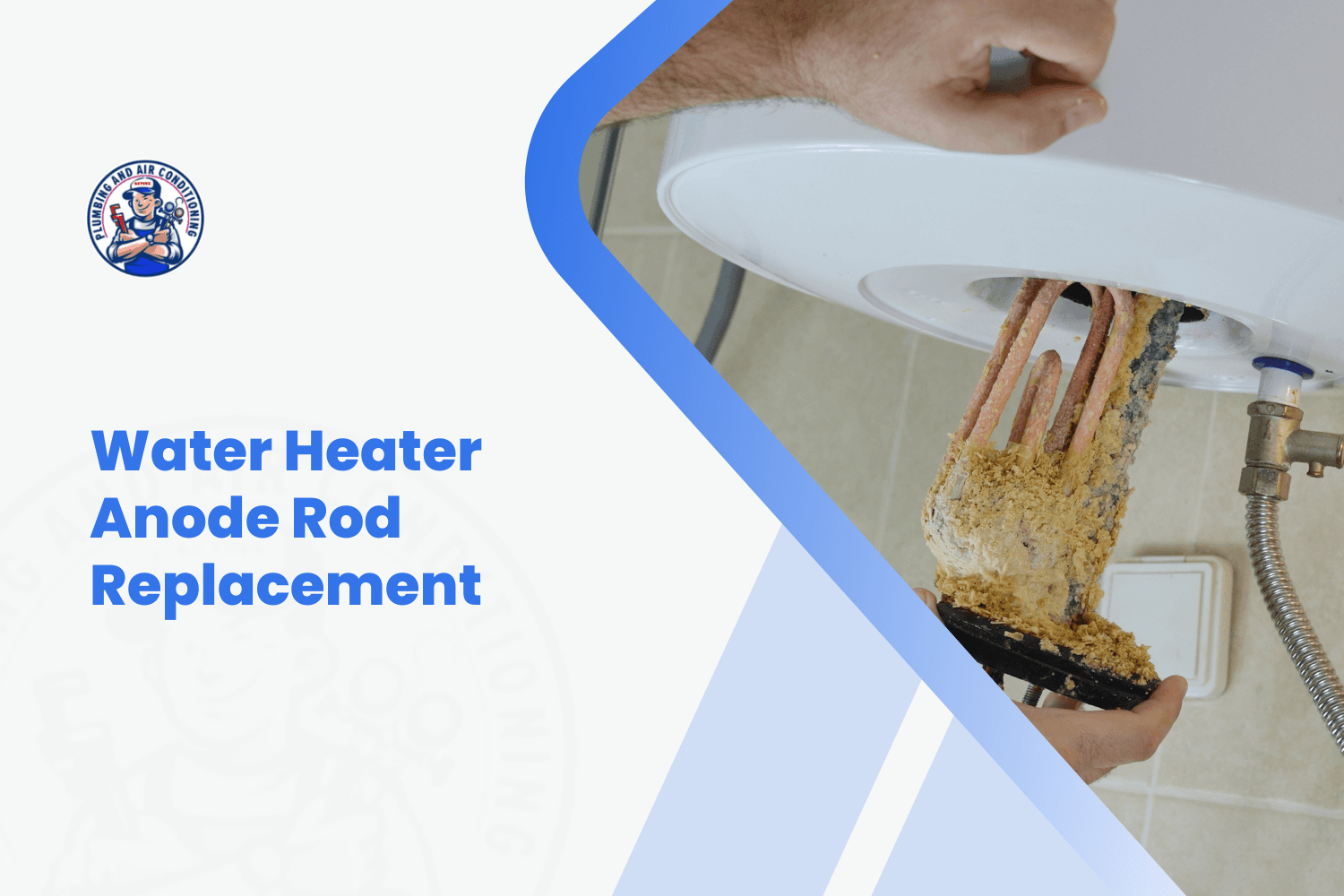
Water Heater Anode Rod Replacement: Why Vegas Hard Water Eats Them in 18 Months
Key Takeaways
- The anode rod is a sacrificial metal that corrodes on purpose so your water heater tank does not rust.
- Las Vegas hard water from Lake Mead and the Colorado River runs around 16 grains per gallon, eating rods in 18 to 24 months.
- Warning signs include rotten egg smell on hot water only, rusty water, popping noises, and higher energy bills.
- Vegas homeowners should inspect the anode rod yearly instead of following the national four to five year schedule.
- A rod swap costs $150 to $350, far cheaper than a $1,500 plus water heater replacement.
- A water softener can double rod life but may require switching from a magnesium rod to aluminum.
- A powered anode rod ends odor problems and never needs replacing, making it a strong long-term fix.
- Flushing the tank twice a year plus yearly rod checks can add many years to a water heater's life.
In This Article
A homeowner near Summerlin called our team last spring, frustrated and confused. Their water heater had failed after barely five years, and the inside of the tank looked like it had been left out in the rain for a decade. They assumed they bought a lemon. The truth was simpler and more common than they thought.
The tank rusted out early because nobody ever checked the small metal part that protects it. That part is called the anode rod, and in Las Vegas it wears out fast. Our local water is so hard that rods built to last four or five years often vanish in 18 months.
Let's explain exactly what the anode rod does, why Vegas hard water destroys it so quickly, and how often homeowners across the valley should replace it. Readers will also learn the warning signs of a dead rod, what replacement costs, and how to protect a water heater for the long haul.
What an Anode Rod Actually Does Inside Your Water Heater?
Most homeowners have never seen the inside of their water heater, and that is exactly the problem. There is a small metal rod hidden inside the tank doing one of the hardest jobs in the whole system. When it gives out, the tank itself starts to pay the price.
| Part | Job | What Happens When It Fails |
|---|---|---|
| Anode rod | Attracts corrosion to itself | Tank steel starts rusting |
| Steel tank | Holds and heats water | Leaks and tank failure |
| Glass lining | Protects bare steel | Cracks expose metal to water |
The Sacrificial Metal That Saves Your Tank
The anode rod is often called a sacrificial anode for a good reason. It is built to corrode on purpose so that the steel water heater tank does not. Through a process called electrolysis, the rod attracts the corrosive elements in the water and gives itself up first.
Think of it like a bodyguard standing in front of something valuable. The rod takes the damage so the tank walls stay clean and solid. As long as the rod has metal left to give, the steel tank is protected from rust.
The problem starts the moment that rod is fully eaten away. Once there is nothing left to sacrifice, the corrosion turns on the tank itself. That is when homeowners start seeing rusty water and, not long after, a puddle on the garage floor.
This is why the rod matters so much for tank life. A few dollars of magnesium or aluminum stands between a healthy heater and an expensive replacement. Ignoring it is a very common reason we see water heaters fail early in the valley.
Magnesium, Aluminum, and Powered Rods Compared
Not all anode rods are the same, and the material makes a real difference in our water. A magnesium anode offers the strongest protection and works hard to defend the tank. The downside is that magnesium reacts fast in hard, mineral-heavy water and wears out the quickest.
An aluminum anode lasts longer than magnesium because it corrodes more slowly. Many homeowners with very hard water or a softener switch to aluminum to stretch the replacement interval. The tradeoff is that aluminum offers slightly less protection and can leave more sediment behind in the tank.
Then there is the powered anode rod, which works completely differently. Instead of sacrificing metal, it plugs into an outlet and uses a low electrical current to stop corrosion. A powered rod never wears out the way the others do, so it can outlast the tank itself.
For Vegas homes dealing with smelly water or fast rod failure, a powered anode is often the smartest long-term pick. It costs more up front but ends the cycle of constant replacements. Our team helps homeowners weigh which option fits their tank and budget.
Where the Rod Sits and How It Wears Down
The anode rod threads into the top of the water heater, usually right next to the hot water outlet. Some tanks hide it under a plastic cap, while others combine it with the hot water nipple. It hangs down through the center of the tank interior, surrounded by water the entire time.
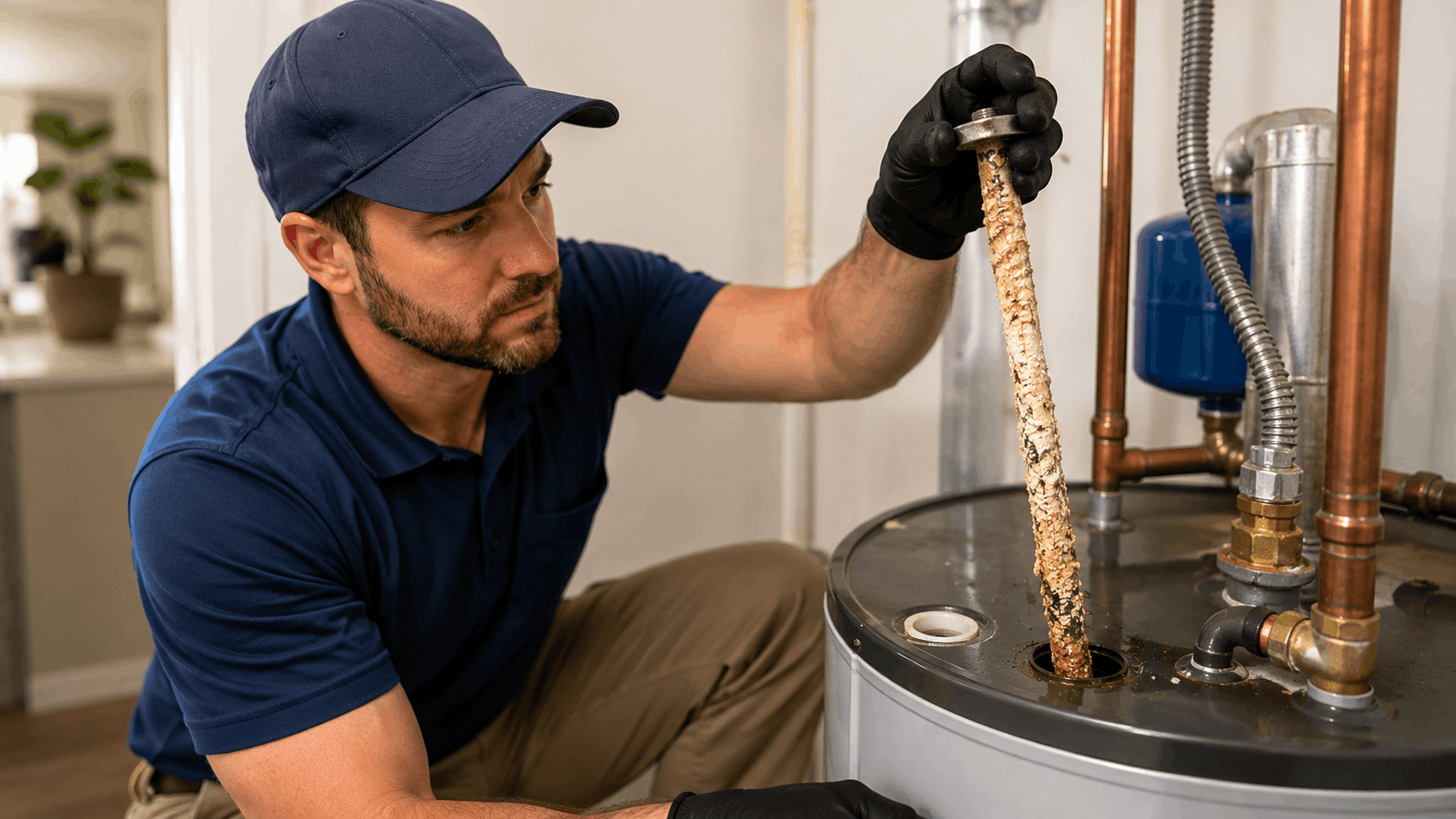
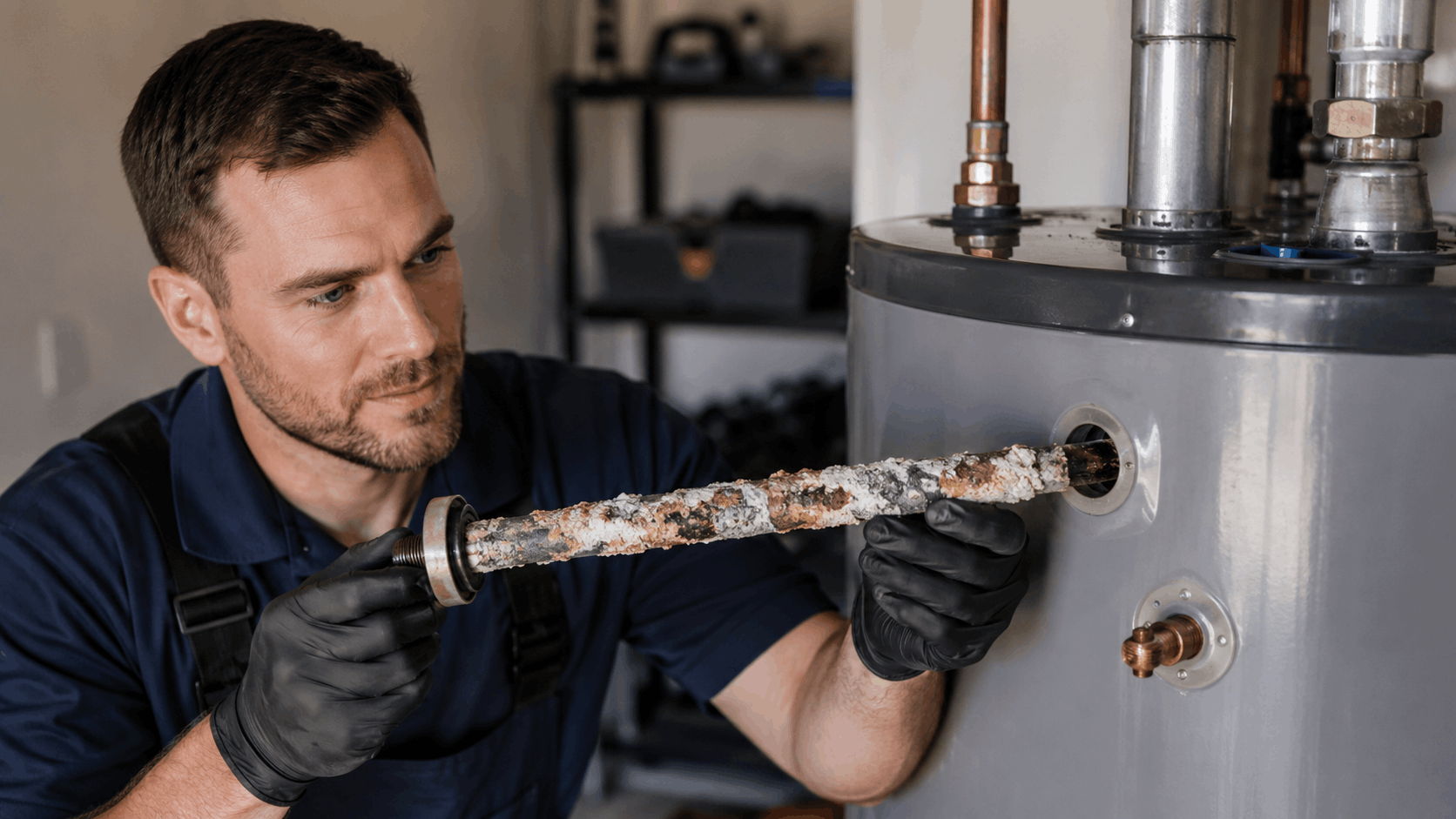
Because it sits inside a sealed tank, rod erosion is something homeowners never actually see. The rod starts as a solid bar about three quarters of an inch thick. Over months, it slowly thins out as the metal dissolves into the water.
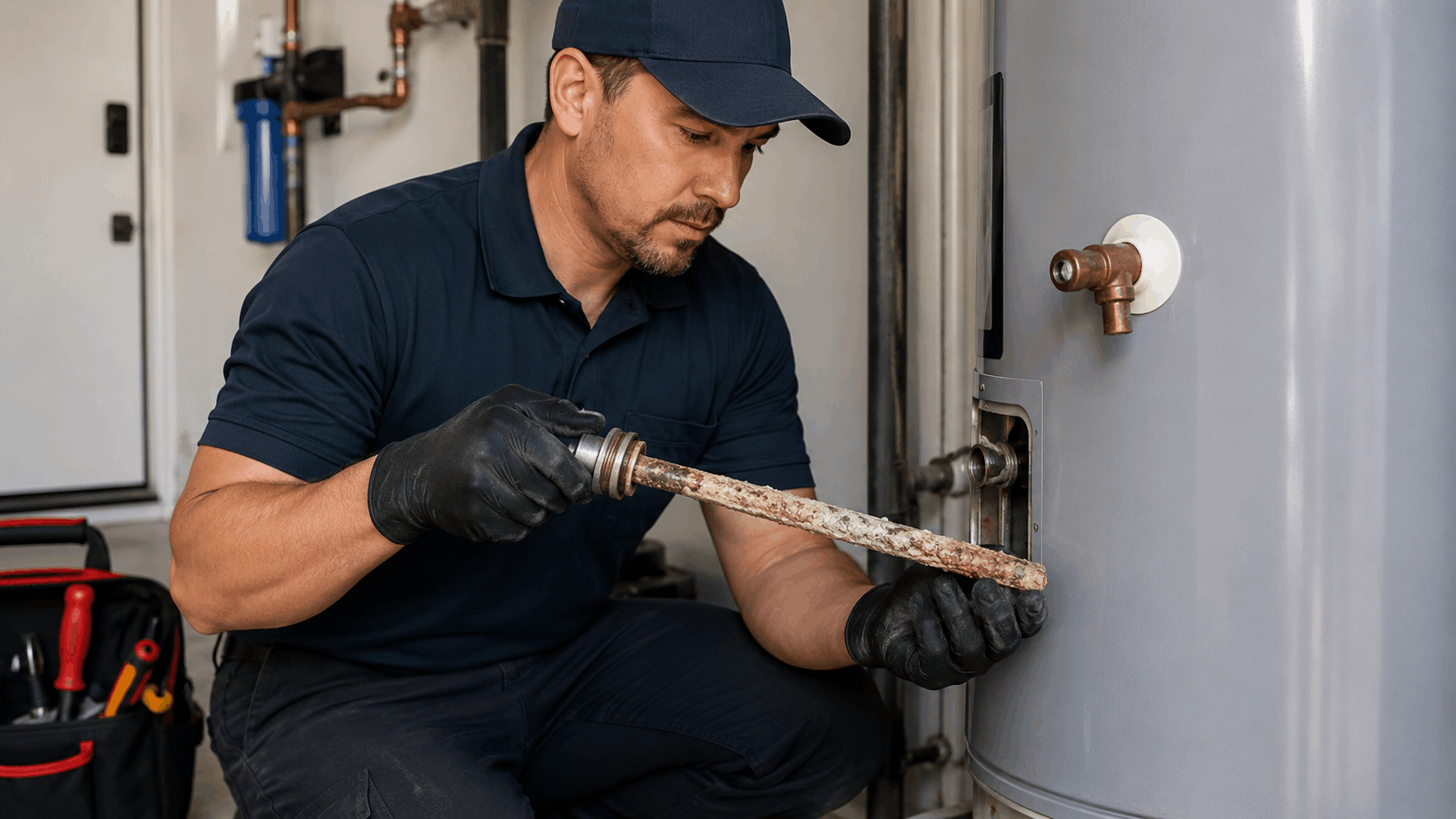
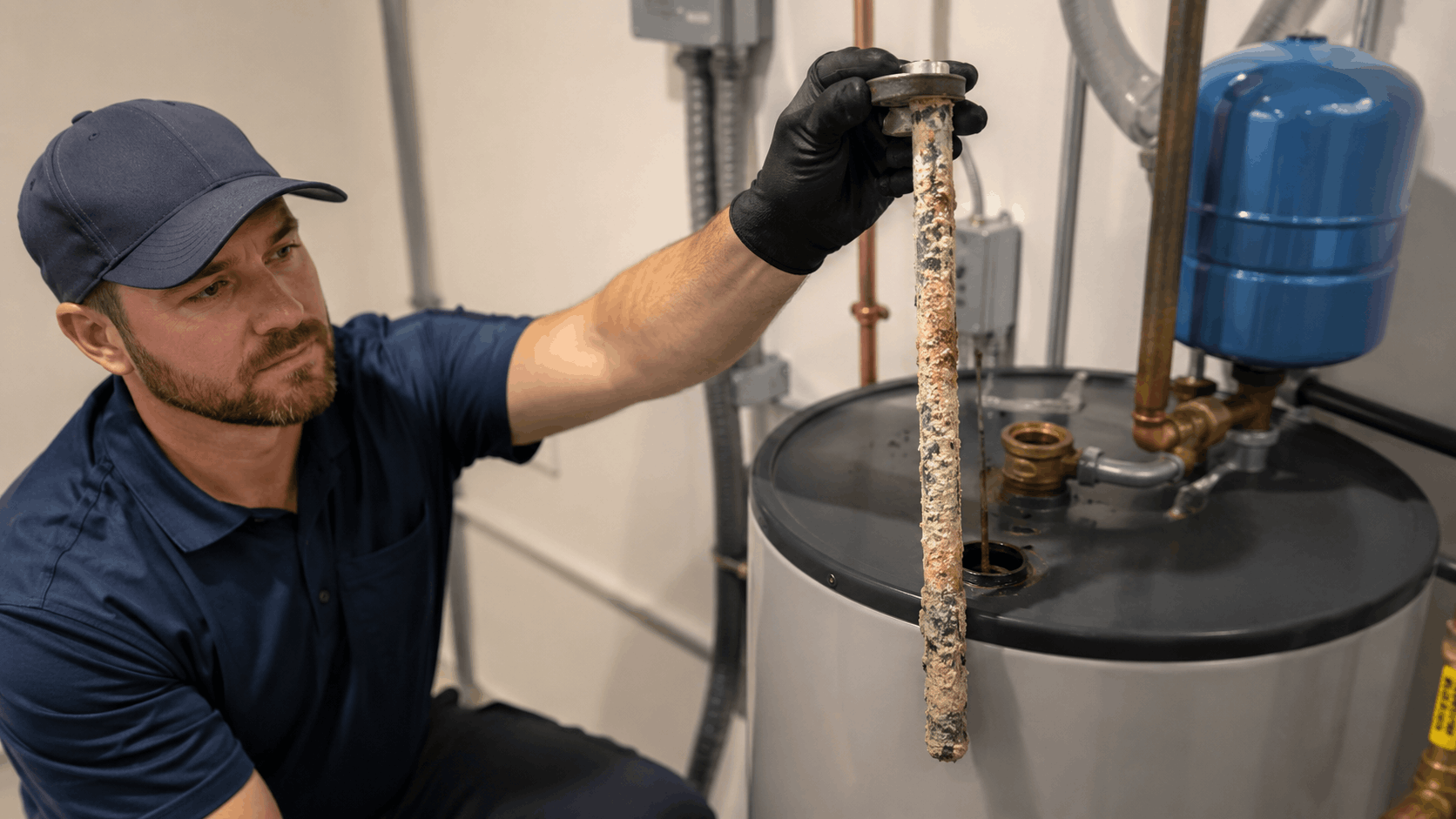
Eventually the rod erodes down to a thin wire wrapped around a steel core. By the time only the core is left, the protection is essentially gone. In Las Vegas, this entire process can happen in a year and a half rather than several years.
This hidden wear is exactly why inspection matters. There is no warning light and no obvious sign until damage spreads to the tank. Pulling the rod once a year is the only way to truly know how much life is left.
Get Your Quote
Tell us what's going on and we'll get back to you. We're open 24/7.
Why Las Vegas Water Is So Hard on Anode Rods
People move to Las Vegas from softer water cities and cannot believe how quickly their fixtures crust over. That same hardness attacks the inside of the water heater just as hard. The mineral content here is some of the highest in the country.
- Source water carries heavy calcium and magnesium loads
- Hardness levels run far above the national average
- Older neighborhoods add their own plumbing variables
- The result is rod failure on a much shorter clock
The Colorado River and Lake Mead Mineral Load
Most of the valley gets its drinking water from Lake Mead, which is fed by the Colorado River. As that water travels through hundreds of miles of rock and desert soil, it picks up minerals the whole way. By the time it reaches the tap, it is loaded with calcium and magnesium.
These dissolved minerals are what make Las Vegas hard water so aggressive. Calcium builds the white scale you see on faucets and shower glass. Inside a water heater, that same mineral content feeds the chemical reactions that eat anode rods.
The Colorado River water has always been mineral rich, but lower lake levels can concentrate it further. When the source shrinks, the same minerals end up in a smaller volume of water. That can make already hard water even tougher on your plumbing.
You can read more about regional water sources through the Bureau of Reclamation. The takeaway for homeowners is simple. Our water comes packed with the exact minerals that shorten anode rod life.
LVVWD Hardness Numbers Neighbors Should Know
The Las Vegas Valley Water District, or LVVWD, measures water hardness in grains per gallon. Local water often tests around 16 grains per gallon or higher. Anything above 10.5 grains per gallon is considered very hard by industry standards.
To put that in perspective, soft water cities sometimes sit below 3 grains per gallon. Our valley runs five times harder than those areas. That gap is the whole reason rods here fail so much more quickly.
The water district publishes these numbers, and they hold steady year after year. Homeowners can check current readings through their water provider. Knowing your hardness number helps explain why fixtures scale and rods disappear.
When neighbors compare notes about replacing water heaters every few years, hardness is usually the hidden cause. The mineral content is doing exactly what chemistry predicts. A water treatment system is one of the few ways to change that math.
How Hardness Speeds Up the 18-Month Timeline
Hard water speeds up corrosion because the dissolved minerals carry electrical charge through the tank. That charge drives the reaction that consumes the anode rod more quickly. More minerals mean more reaction, and more reaction means a shorter rod lifespan.
In a soft water town, a magnesium rod might last four or five years. In Las Vegas, that same rod often hits its rod failure timeline in 18 to 24 months. The water is simply doing five years of work in a fraction of the time.
Heat makes the problem worse, and water heaters run hot all day. Warm water speeds up chemical reactions, so the mineral load attacks the rod even harder. The combination of heat and hardness is brutal on sacrificial metal.
This is the core reason our team pushes shorter inspection intervals here. National advice does not match our local conditions. Following a four-year schedule in Vegas usually means the tank is already corroding by the time anyone checks.
Neighborhood Differences From Henderson to Centennial Hills
Not every part of the valley sees the exact same wear. Older homes in established areas sometimes have aging galvanized plumbing that reacts differently with the water. Newer builds in Summerlin and Centennial Hills tend to have copper or PEX, which changes the picture slightly.
In Henderson, we see a mix of older and newer neighborhoods, so wear patterns vary block to block. Some pockets fed by different parts of the system carry slightly different mineral concentrations. The hardness is high everywhere, but local plumbing adds its own twist.
Homes that draw from well water in outlying areas can face even higher mineral loads. Those properties often burn through rods more quickly than city-fed homes. We adjust our recommendations based on the exact street and water source.
The point is that no single timeline fits every home perfectly. A house in Centennial Hills and one near downtown can wear rods at different rates. That is why we check each tank rather than guessing from a chart.
Need Help in Las Vegas?
Active Plumbing serves Las Vegas and all of Las Vegas Valley.
Warning Signs Your Anode Rod Is Already Gone
The good news is that a dying anode rod usually gives off clues before the tank fails. Homeowners who know what to watch for can act early and save the heater. Here are the signs we hear about most from valley customers.
- A rotten egg smell coming from hot water only
- Rusty or brown water at the tap
- Popping or rumbling noises from the tank
- Shorter hot showers and higher energy bills
Rotten Egg Smell From Hot Water Only
One of the clearest anode failure signs is a sulfur smell like rotten eggs. The odor comes from hydrogen sulfide gas forming inside the tank. It usually shows up only on the hot water side, which is a big clue.
This happens when a magnesium rod reacts with certain bacteria in the water. The reaction releases that sulfur smell every time the hot tap runs. Cold water stays clean because it never sits in the heated tank.
Many homeowners blame the city water or the drain at first. Once they notice it only affects hot water, the heater becomes the obvious suspect. A worn or reactive rod is almost always the cause.
Switching rod types or moving to a powered anode usually solves the odor for good. Our team diagnoses the smell and recommends the right fix. Ignoring it does not just stink, it signals the rod needs attention.
Rusty or Discolored Hot Water at the Tap
Brown, orange, or cloudy hot water is a serious warning. It often means the anode rod is depleted and tank corrosion has begun. The rust you see is steel from the tank walls leaching into the water.
At first the discoloration might come and go, especially after the heater sits unused. Over time it gets more constant as the corrosion spreads. Once the inside of the tank rusts, there is no way to reverse it.
Some homeowners confuse this with rust from old pipes. A quick test is to check whether cold water runs clear while hot runs rusty. If only the hot side is discolored, the tank is the likely source.
Rusty water means time is running out for that heater. Replacing the rod earlier could have prevented it. If you spot this sign, it is worth scheduling a water heater inspection right away.
Popping, Rumbling, and Sediment Noise
Strange popping or rumbling from the water heater points to sediment buildup. Hard water drops calcium and mineral chunks to the bottom of the tank. When the burner heats that layer, trapped water boils and makes noise.
That rumbling noise means the sediment has grown thick over time. The same minerals that wear out the rod also pile up as scale. A heavy layer forces the heater to work harder to warm the water.
Sediment and rod failure usually go hand in hand in our valley. Both come from the high mineral content in local water. Hearing those sounds is a sign the tank needs both flushing and a rod check.
Left alone, sediment bakes onto the tank and traps heat against the steel. That extra stress can crack the glass lining and speed up failure. Regular flushing keeps the noise and the damage in check.
Shorter Hot Water Runs and Higher Bills
When showers turn cold more quickly than they used to, the tank may be losing capacity. Sediment takes up space that should hold hot water. A depleted rod often means that buildup has gone unchecked for a while.
That same sediment layer causes real efficiency loss. The burner has to push heat through a crust of minerals before it reaches the water. That wasted effort shows up directly on monthly energy bills.
Homeowners often notice the cost creep up slowly without an obvious reason. A heater fighting through sediment can burn noticeably more gas or power. The fix is usually cheaper than the money lost over time.
A healthy rod and a clean tank keep the heater running lean. Staying on schedule protects both comfort and your wallet. We help homeowners catch these efficiency drops before they get expensive.
How Often Vegas Homeowners Should Replace the Rod
The replacement schedule you read online is almost never written for Las Vegas. National advice assumes average water, and ours is far from average. Local timelines run much shorter, and the right inspection interval makes all the difference.
| Water Type | Rod Lifespan | Inspection Interval |
|---|---|---|
| Soft water city | 4 to 5 years | Every 2 to 3 years |
| Las Vegas hard water | 18 to 24 months | Every year |
| With water softener | 2 to 3 years | Every year |
The Real 18 to 24 Month Window in Hard Water
The honest local answer is that most rods here last 18 to 24 months. That is well under the national four to five year average everyone quotes. The hard water timeline in our valley is simply on a quicker clock.
We see this every week pulling rods from valley water heaters. Many that should still have years left are already worn down to the core. The high mineral content explains the short rod lifespan every time.
Homeowners who plan around the longer national number get burned. By the time they finally check, the tank has often started corroding. Treating two years as the outer limit keeps them ahead of trouble.
The smart move is to mark the calendar at install time. A quick check before the two year mark catches the rod while there is still tank to protect. That single habit can add many years to a heater.
Yearly Inspection Habits That Pay Off
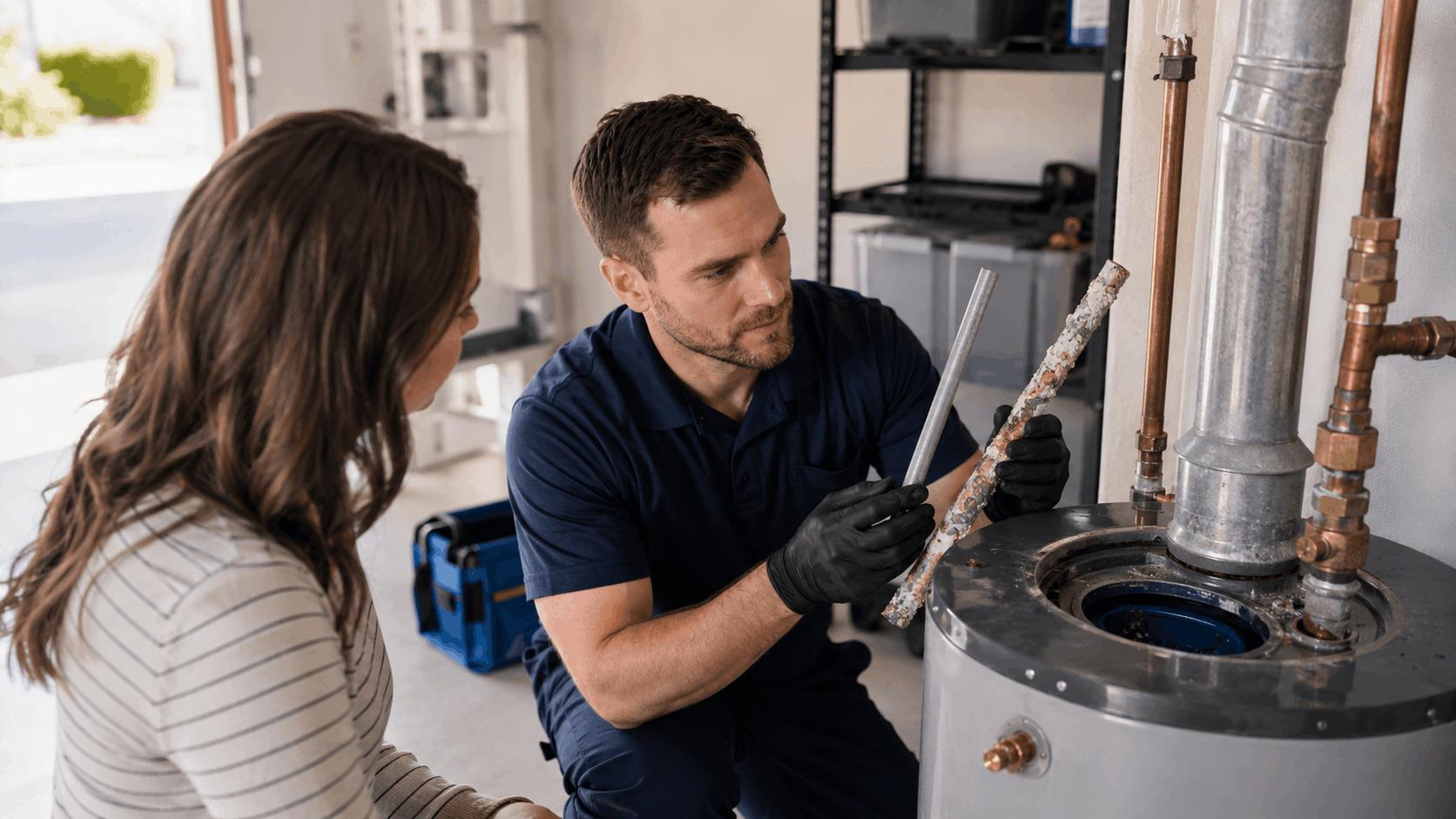
An annual inspection is the cheapest insurance a water heater can get. Once a year, a plumber pulls the rod and looks at how much metal remains. If it is more than half gone or coated in scale, it gets replaced.
During that visit, we also check the tank for sediment and signs of rust. A quick flush often goes along with the rod inspection. This preventive maintenance routine catches small problems before they become leaks.
Yearly checks fit naturally with other home upkeep, like changing air filters. It only takes a short visit but saves a major expense. Skipping it is a common reason tanks fail early here.
Homeowners on a yearly schedule rarely face surprise water heater failures. They replace a cheap rod instead of a whole tank. That is exactly the outcome we want for every customer in the valley.
How a Water Softener Changes the Schedule
A water softener changes the equation in an interesting way. By cutting hardness, it slows the mineral attack on the tank and rod. Many homes with softeners stretch rod life to two or three years.
There is one important catch with softened water. Soft water can make a magnesium rod corrode sooner and worsen the sulfur smell. That is why some softened homes do better with an aluminum rod instead.
We often pair a water softener installation with a rod material switch. The combination protects the tank while avoiding the odor issue. It is a small detail that makes a big difference in results.
Even with a softener, yearly inspection still matters. Softened water is gentler, but it is not zero wear. Checking the rod keeps the schedule honest no matter what treatment is in place.
Need Help in Las Vegas?
Active Plumbing serves Las Vegas and all of Las Vegas Valley.
What Anode Rod Replacement Looks Like Step by Step
Replacing an anode rod sounds simple, and on a fresh tank it can be. In Vegas, hard water often turns a quick job into a wrestling match. Here is what the replacement process actually involves from start to finish.
Shutting Down and Draining the Tank Safely
The first step is shutting off the heat source for safety. On a gas unit, that means a proper gas shutoff at the valve. On an electric model, the breaker gets switched off before any work begins.
Next, the cold water supply gets closed so no new water enters. We connect a hose to the drain valve and release a few gallons. The rod sits at the top, so the tank only needs partial draining, not a full empty.
Draining some water lowers the pressure and prevents a mess up top. It also lets trapped air escape when the rod comes out. Skipping this step can leave you fighting a spray of hot water.
Doing the shutoff correctly is where DIY attempts often go wrong. Gas work in particular calls for care, which is why our team handles the gas line side safely. A proper shutdown keeps the whole job clean and safe.
Breaking Loose a Rod Stuck by Hard Water
This is the step that surprises most homeowners. After years in hard water, the rod threads often seize tight. The mineral buildup acts like glue, locking the rod in place.
Freeing a seized rod takes serious leverage and the right tools. A breaker bar and a good socket are the bare minimum. Sometimes we need an impact wrench to break the bond without damaging the tank.
Too much force in the wrong direction can crack the tank fitting. That is the real risk of forcing it without experience. Steady, controlled pressure is what gets a stubborn rod moving.
We have pulled rods so corroded they snapped on the way out. Those jobs require patience and the right technique to avoid harm. This is the main reason DIY rod swaps go sideways in older valley homes.
Choosing the Right Replacement Rod for Your Tank
Picking the correct rod matters as much as installing it. The replacement needs to match the tank in length, diameter, and thread size. Rod sizing varies by brand and tank capacity.
Material choice depends on your water and any odor history. Magnesium gives strong protection, aluminum lasts longer, and powered rods skip sacrifice entirely. We match the rod to the home rather than grabbing whatever is on the shelf.
For tight spaces, a flexible anode rod is a lifesaver. It bends to fit where a rigid rod cannot clear the ceiling. Many Vegas garage installs simply do not have room for a straight rod.
Choosing wrong means another early failure or a job that cannot finish. The right rod protects the tank and fits the space the first time. Our trucks carry several types so we can match any setup on site.
Why Tight Closets and Low Garages Complicate It
A long rod needs nearly as much clearance above the tank as the tank is tall. In a roomy garage that is no issue. In a cramped utility closet, there is no way to lift a rigid rod straight out.
Many valley homes tuck the water heater into a tight closet or low garage corner. Pulling a full length rod in those spots is physically impossible. Garage clearance becomes the deciding factor on the job.
This is exactly where a flexible, segmented rod earns its keep. It threads in and out a few inches at a time. We carry these specifically for tight Vegas installs.
Knowing the layout ahead of time saves real frustration. We check clearance before starting so there are no surprises. That planning is part of why a pro install goes smoothly in any home.
Cost of Replacement Versus a Whole New Water Heater
The money question is the one homeowners care about most. A rod swap is cheap compared to a new heater, but only if the tank is still healthy. Here is how the costs stack up in the valley.
| Option | Typical Cost | Best For |
|---|---|---|
| Anode rod replacement | $150 to $350 | Healthy tank, routine upkeep |
| Powered anode upgrade | $300 to $500 | Smelly water, long-term fix |
| New water heater | $1,500 to $3,000+ | Rusted or leaking tank |
Typical Rod Replacement Price Range in the Valley
A standard anode rod replacement usually runs between $150 and $350 in our area. That covers both the part and the labor to swap it. The anode rod cost itself is small, so most of the price is the work.
Labor cost climbs when the old rod is seized or the space is tight. A stubborn rod that needs an impact wrench takes longer to free. Flexible rods for tight installs may add a little to the part price too.
A powered anode upgrade lands higher, often $300 to $500 installed. It costs more up front but never needs another swap. For homes fighting odor or fast failure, that math often works out.
Compared to a full heater replacement, these numbers are minor. A rod swap is a fraction of the cost of a new tank. That gap is the whole argument for staying on schedule.
When the Tank Is Too Far Gone to Save
There comes a point where a new rod cannot help anymore. Once the tank itself has rusted through, the damage is permanent. At that stage, replacing the rod is throwing money at a lost cause.
Signs of true tank failure include constant rusty water and visible leaks. A puddle under the heater usually means the steel has given way. No anode rod can rebuild a tank that has already corroded.
Tank age plays a big role in this call too. A heater past ten years with heavy sediment is near the end anyway. Spending on it rarely pays off when failure is close.
In those cases, the smart move is to replace the water heater. We help homeowners weigh the tank condition honestly. Sometimes a tankless water heater is worth considering as the upgrade.
The Long-Term Savings of Staying on Schedule
The real savings come from treating the rod as routine upkeep. A $200 rod swap every two years can add a decade to a tank. That turns a $2,000 heater into a much better investment.
Maintenance savings show up in avoided replacements and steadier energy bills. A protected tank with clean water runs efficiently for years. The cost of neglect always dwarfs the cost of upkeep.
We have seen heaters last 15 years with regular rod and flush service. We have also seen brand new tanks die in five from neglect. The difference is almost always whether anyone watched the rod.
Stretching tank lifespan this way is the best value in plumbing. Small, predictable costs beat one big surprise expense. Our maintenance plans keep valley homeowners on track without the guesswork.
Need Help in Las Vegas?
Active Plumbing serves Las Vegas and all of Las Vegas Valley.
Protecting Your Water Heater From Vegas Water Long Term
Swapping rods is the foundation, but a few extra habits go further. Real water heater protection means tackling the hard water at the source. These steps keep tanks healthy across the whole home.
Flushing Sediment Out Twice a Year
A tank flush clears out the mineral sludge that hard water leaves behind. Doing it twice a year keeps the bottom of the tank clean. Less sediment means less stress on the steel and better efficiency.
Sediment removal is straightforward but easy to skip. Over a single year, the buildup in Vegas can grow surprisingly thick. Regular flushing stops that crust from baking onto the tank.
Flushing also helps the burner heat water directly instead of through scale. That keeps energy bills lower and showers hotter. It is one of the simplest ways to protect a heater here.
We often pair a flush with the annual rod inspection. Two jobs in one visit covers the biggest threats at once. Together they are the backbone of water heater care in hard water.
Adding a Whole-Home Water Softener
A whole-home softener attacks the problem before water ever reaches the heater. By removing calcium and magnesium, it slows wear on the rod and tank. The benefits reach every appliance and fixture in the house.
Softer water means longer rod life, less scale, and cleaner glassware. The water treatment also protects dishwashers, faucets, and pipes. It is a single upgrade that pays off all over the home.
For homeowners tired of constant rod swaps, a softener changes the routine. The mineral load that drives the 18 month cycle drops sharply. Many customers see their replacement interval roughly double.
If salt-based systems are not your preference, there are salt-free conditioning options too. We help match the right system to each home. The goal is gentler water for the whole house.
Upgrading to a Powered Anode for Smelly Water
When the rotten egg smell will not quit, a powered anode rod is often the answer. It uses electric current instead of sacrificial metal, so no reaction feeds the odor. That usually clears up the sulfur smell for good.
Powered rods also last far longer than magnesium or aluminum. They do not erode away, so there is no constant replacement cycle. For odor control plus long life, they are hard to beat.
The tradeoff is the upfront cost and the need for a nearby outlet. Once installed, though, the maintenance nearly disappears. Homeowners trade a recurring task for a one-time upgrade.
We recommend powered anodes most for homes with chronic smell complaints. They solve the problem at its root rather than masking it. Our team handles the install and wiring cleanly.
How Active Plumbing Handles Vegas Water Heaters
Active Plumbing works on water heaters across the entire valley every day. From Spring Valley to Green Valley, we know how local water behaves block by block. That hands-on experience shapes every recommendation we make.
Our team inspects rods, flushes tanks, and installs softeners and powered anodes. We carry flexible rods for tight closets and the tools to free seized ones. No valley install is too cramped or too corroded for us to handle.
We also tie water heater care into broader home protection, including leak detection for early warning. Catching a small issue beats cleaning up a flooded garage. Prevention is always cheaper than emergency repair.
Homeowners trust us because we explain the why behind every fix. We treat each tank like it is our own. That local, straightforward approach is what sets our service apart.
Final Thoughts
The anode rod is the quiet hero inside every water heater, and Vegas hard water is its toughest enemy. Knowing the 18 to 24 month window keeps homeowners ahead of expensive tank failure. A small, regular rod swap protects a major appliance for years.
Watch for the warning signs, stay on a yearly inspection schedule, and consider a softener or powered rod for long-term relief. These steps turn a constant headache into a simple routine. The valley's hard water does not have to win.
If your water heater is showing signs of trouble or it has been more than a year since a rod check, our team is ready to help. Reach out to Active Plumbing to schedule an inspection or a consultation. We will keep your tank running strong against Vegas water.
Frequently Asked Questions
- How do I know if my anode rod needs replacing?
- The clearest signs are a rotten egg smell from hot water, rusty or discolored water at the tap, and popping or rumbling noises from the tank. Shorter hot showers and rising energy bills also point to trouble. In Las Vegas, the best practice is a yearly inspection where a plumber pulls and checks the rod, since hard water hides the wear inside the sealed tank.
- Why does my hot water smell like rotten eggs in Las Vegas?
- That sulfur odor comes from hydrogen sulfide gas forming inside the tank. It happens when a magnesium anode rod reacts with certain bacteria in our local water. The smell shows up only on the hot side because cold water never sits in the heated tank. Switching to an aluminum rod or a powered anode usually clears the odor for good, and our team can diagnose the exact cause.
- How much does anode rod replacement cost in Las Vegas?
- A standard anode rod replacement typically runs between $150 and $350 in the valley, covering both the part and labor. The cost climbs if the old rod is seized by hard water and needs extra tools to remove. A powered anode upgrade lands higher, around $300 to $500 installed, but never needs replacing again. All of these are far cheaper than a full water heater replacement.
- Can I replace the anode rod myself?
- It is possible on a newer tank with plenty of clearance, but Vegas conditions make it tricky. Hard water often seizes the rod in place, requiring a breaker bar or impact wrench to free without cracking the tank. Tight closets and low garages also make pulling a rigid rod impossible without a flexible replacement. When the rod is stuck or space is cramped, calling a pro saves time and damage.
- How long does an anode rod last in Vegas hard water?
- In Las Vegas, most anode rods last only 18 to 24 months. That is far shorter than the national average of four to five years. The high mineral content from Lake Mead and the Colorado River drives quicker corrosion, and the heat inside the tank speeds it up further. Treating two years as the outer limit and checking yearly keeps homeowners ahead of tank damage.
- Will a water softener help my anode rod last longer?
- Yes, a whole-home softener removes the calcium and magnesium that wear rods out, often doubling rod life to two or three years. There is one catch worth knowing. Softened water can make a magnesium rod corrode sooner and worsen the sulfur smell, so many softened homes do better with an aluminum rod. We usually pair softener installs with the right rod material to get the best of both.
- What happens if I never replace the anode rod?
- Once the rod is fully consumed, the corrosion turns on the steel tank itself. You will start seeing rusty water, then the tank walls thin out and eventually leak. At that point the damage is permanent and no new rod can save it. Skipping rod replacement is a very common reason water heaters fail years earlier than they should in our valley.
- Magnesium or aluminum rod: which is better for Las Vegas?
- It depends on your water and odor history. Magnesium offers the strongest protection but wears out fastest in hard water and can cause the rotten egg smell. Aluminum lasts longer and resists the odor, which makes it a common choice for softened homes. For chronic smell or fast failure, a powered anode often beats both since it never erodes and ends the replacement cycle.
- Does flushing my tank reduce how often I need a new rod?
- Flushing and rod replacement work together to protect the tank. Flushing removes the mineral sediment that piles up from hard water, which reduces stress on the steel and improves efficiency. It does not directly extend rod life, but a cleaner tank corrodes more slowly overall. We recommend flushing twice a year alongside the annual rod inspection for the best protection.
- Is it worth fixing an old water heater or buying new?
- The answer depends on tank age and condition. If the tank is under ten years old and the steel is still solid, a rod swap and flush are well worth it. If you see constant rusty water, leaks, or heavy sediment on a heater past ten years, replacement makes more sense. Our team inspects the tank honestly and helps you decide which option saves more money.
Licensed plumbing professionals serving Las Vegas and Las Vegas Valley.
Licensed in Nevada · License #0047021
Last updated on
Why trust Active Plumbing?
Founded in 1991, Active Plumbing is a licensed and insured plumber serving Las Vegas and Las Vegas Valley. All content is reviewed by our licensed technicians.

Need Help in Las Vegas?
Active Plumbing serves Las Vegas and all of Las Vegas Valley.
Related Articles
How to Prevent Water Heater Failure in Las Vegas (Hard Water Maintenance Plan)
Learn how Las Vegas hard water wears out water heaters sooner and follow our maintenance plan to extend your unit's lifespan years.
Sediment Tank Flush: Why Vegas Water Heaters Need It Every 18 Months
Las Vegas hard water causes rapid sediment buildup in water heaters. Learn why an 18-month flush schedule protects your tank, saves energy costs, and prevents expensive failures in the desert.
Tankless Water Heater Maintenance in Las Vegas: Why Hard Water Makes It Critical
Las Vegas hard water from Lake Mead builds scale fast inside tankless heaters. Learn the warning signs, real maintenance steps, and how often valley homes need service.