Manifold (Home-Run) PEX vs Trunk-and-Branch in Las Vegas Repipes: Pressure Balance in Big Homes
Key Takeaways
- Manifold home-run PEX gives each fixture its own dedicated line, holding pressure steady when multiple fixtures run at once.
- Trunk-and-branch PEX uses a shared main line with branches, costing less but dipping in pressure under peak demand.
- Large valley homes struggle with pressure due to hard LVVWD water, long pipe runs, and hillside elevation changes.
- A trunk-and-branch repipe typically runs $6,000 to $12,000, while a manifold system runs $9,000 to $18,000 for large homes.
- PEX resists mineral buildup far better than old copper or galvanized pipe, restoring strong flow after a repipe.
- Repipes require building permits through Las Vegas, Henderson, or Clark County, plus possible HOA approval in communities like Summerlin.
- Adding a pressure regulator and expansion tank stabilizes water pressure for either layout during a repipe.
- An on-site assessment measuring pressure, fixtures, and floor plan determines the best layout for each home.
In This Article
A family in Summerlin called us last summer with a problem we hear all the time. Two teenagers were showering before school while someone ran the kitchen sink, and every shower in the house went weak and lukewarm. The home was barely fifteen years old, but the water pressure could not keep up with a busy morning.
This is one of the more common complaints we get from owners of large homes across the valley. The good news is that a repipe with modern PEX can fix it. The real question most homeowners face is which layout to choose: a manifold home-run system or the more traditional trunk-and-branch design.
Below, our team breaks down how manifold PEX and trunk-and-branch PEX layouts compare for Las Vegas repipes. We will cover pressure balance, cost, timelines, local permits, and how to pick the right approach for your home and budget.
Why Big Homes in the Las Vegas Valley Struggle With Water Pressure?
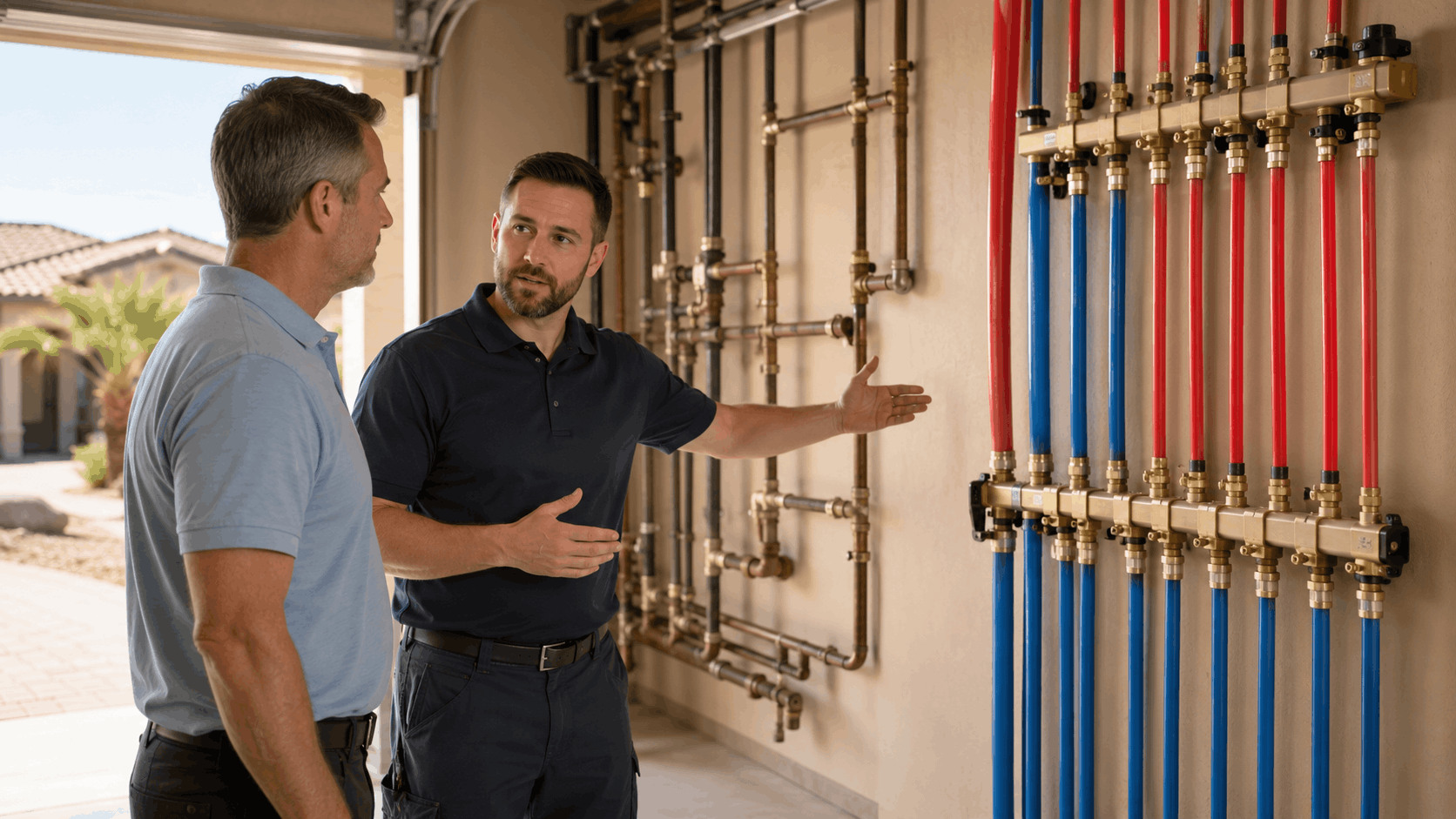
Large homes in neighborhoods like Anthem, MacDonald Highlands, and The Ridges have more bathrooms, longer pipe runs, and higher demand than a small starter home. That combination puts real stress on the plumbing. When we walk a big property, the pipe layout often matters as much as the pipe material itself.
Water pressure problems in large homes usually come from a handful of predictable sources:
- Too many fixtures pulling from shared lines at the same time
- Old pipes narrowed by mineral buildup from local water
- Long distances between the meter and far-off bathrooms
- Elevation changes on hillside lots
A well-planned repipe solves most of these issues, but only if the layout is designed for the way the home actually gets used.
How Simultaneous Water Use Drops Pressure
Water pressure feels personal when a hot shower suddenly turns cold. In a big home, that usually happens the moment another fixture opens somewhere else. A toilet flush, a dishwasher fill, or a second shower can steal flow from the line feeding your shower.
The reason is simple physics. A single pipe can only carry so much water at a given pressure. When two or three fixtures draw from that same pipe, the available flow gets split, and each fixture gets less.
This pressure drop under simultaneous use is the number one reason our large-home customers ask for a repipe. They are tired of yelling "someone turned on the sink" every morning. The fix is a layout that reduces how much fixtures interfere with each other.
Homes with three or more bathrooms feel this the most. When the whole family gets ready at once, the shared plumbing simply runs out of room. That is where the choice between manifold and trunk-and-branch starts to matter.
Hard Water and Mineral Buildup From the LVVWD Supply
The Las Vegas Valley Water District delivers some of the hardest water in the country. It comes largely from the Colorado River through Lake Mead, and it carries a heavy load of calcium and magnesium. Over the years, those minerals coat the inside of pipes.
In older copper and galvanized systems, this mineral buildup slowly narrows the pipe. A half-inch line that started at full diameter can lose real capacity to scale. Less room inside the pipe means less flow reaching your fixtures.
We see this constantly in homes built in the 1980s and 1990s around the eastern valley and older parts of Henderson. The pressure did not fail overnight. It faded as hard water did its slow work year after year.
PEX resists this buildup far better than metal pipe, which is one reason a repipe restores pressure. Many owners also pair a repipe with a water softener installation to protect the new plumbing and their fixtures long term.
Long Pipe Runs in Sprawling Floor Plans
Sprawling single-story homes in Summerlin and Anthem often stretch a hundred feet or more from end to end. The master bath might sit far from the water heater and the meter. That distance costs pressure.
Every foot of pipe adds friction loss, which is the resistance water fights as it travels. Longer runs mean more friction and lower pressure at the tap. Add a few elbows and fittings, and the losses stack up fast.
The floor plan drives this. A compact two-story loses less to distance than a wide ranch with wings on both ends. We measure these runs during our on-site visit so the new layout accounts for the real distances involved.
Trunk-and-branch and manifold systems handle long runs differently. A manifold can route a dedicated line the shortest sensible path to a far bathroom, while trunk-and-branch shares a main line that everything taps into along the way.
Elevation Changes Across the Valley
The valley is not flat, and neither is its water pressure. Hillside homes near Lake Las Vegas, MacDonald Highlands, and the western edge of Summerlin sit at different elevations than homes down in the basin. Elevation changes static pressure.
Static pressure is the pressure in the pipes when no water is moving. For every foot of elevation gain inside a home, static pressure drops a little. A three-story home on a hillside lot can feel noticeably weaker on the top floor.
We often see the opposite problem on lower lots, where incoming pressure runs high and needs a regulator to protect the plumbing. Both extremes show up across the valley depending on where a home sits.
A repipe is the right time to address elevation issues. We can size pipes and add supporting equipment to balance pressure between the lowest and highest fixtures in the house.
Get Your Quote
Tell us what's going on and we'll get back to you. We're open 24/7.
What Manifold (Home-Run) PEX Actually Means
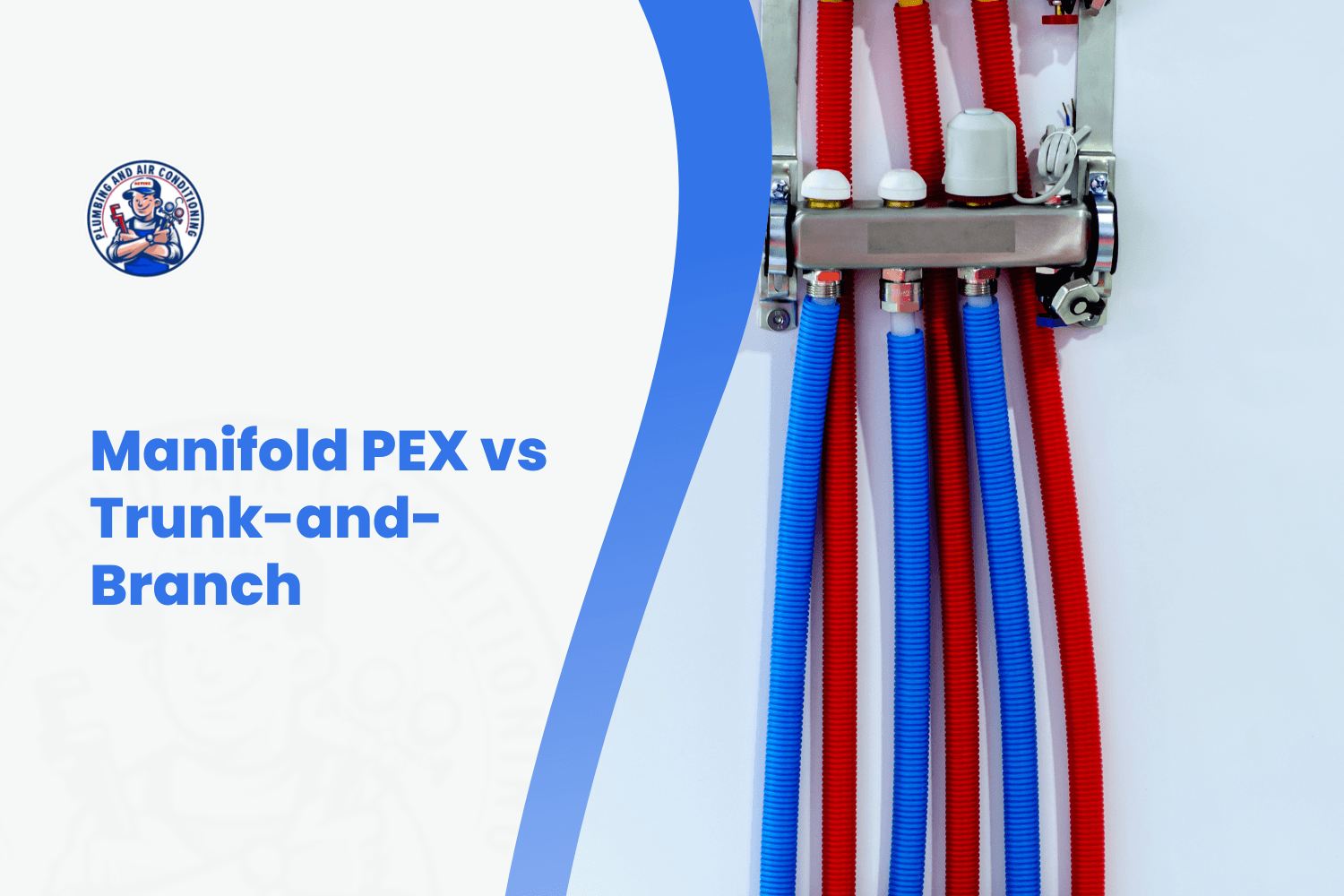
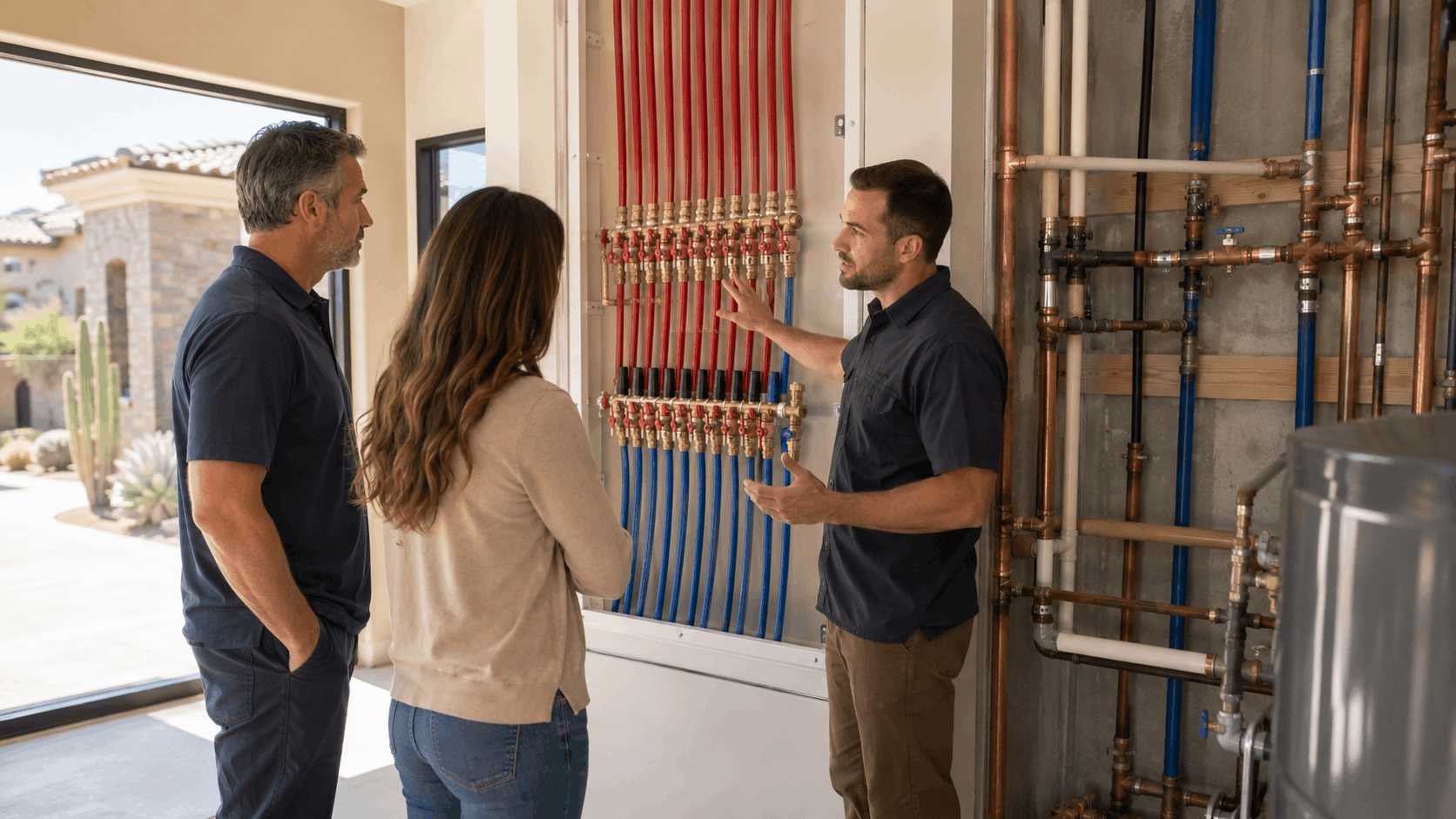
A manifold home-run system is the newer approach to home plumbing, and it borrows an idea from electrical panels. Instead of one big line feeding everything, each fixture gets its own dedicated line back to a central point. Think of it like a breaker box, but for water.
When homeowners weigh a PEX repipe, the manifold layout is the premium option. It costs more up front but delivers steadier pressure and easier control. Here is what makes it work:
- A central manifold that acts as the water distribution hub
- One dedicated PEX line running to each fixture
- Individual shutoff valves at the manifold
- A tidy install spot in a garage or mechanical closet
For large multi-bath homes, this layout addresses the exact pressure problems we described above.
The Central Manifold Explained
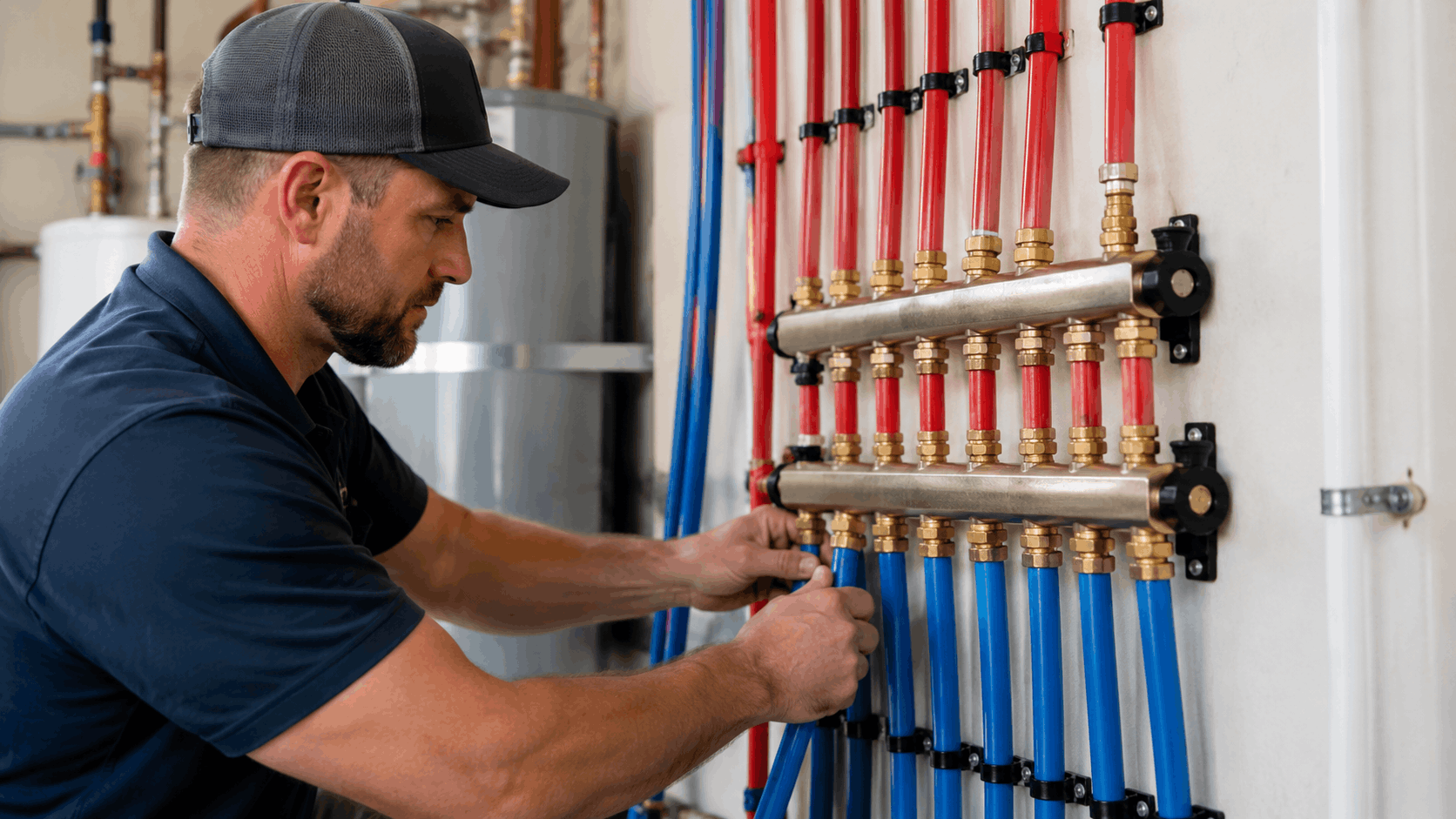
The manifold is the heart of a home-run system. It is a compact block with several ports, one hot and one cold set for the whole house. Water comes in from the main and gets distributed out through the ports.
Each port feeds a single dedicated line. So the master shower has its own line, the kitchen sink has its own line, and the guest bath has its own line. Nothing shares a pipe on the way to the fixture.
This is different from older systems where one pipe branched out to serve many fixtures. The manifold keeps everything separate and organized. It also gives our team one central place to manage the whole home's water.
Homeowners like that they can see the entire plumbing layout at a glance. Each line is often labeled, so you know exactly which valve controls which fixture. That clarity pays off during repairs.
One Line Per Fixture and What That Buys You
The biggest payoff of one line per fixture is steady pressure. When your shower has its own dedicated line straight from the manifold, another fixture cannot steal its flow. The kitchen sink pulls from its own line, not yours.
This nearly eliminates the morning rush problem. Two showers can run at once and both hold pressure because neither shares a pipe with the other. For a busy family in a five-bathroom home, that difference is dramatic.
Each fixture line is usually a smaller diameter, like three-eighths inch, because it only serves one point. Smaller lines also mean hot water arrives more quickly with less waste down the drain while you wait.
The tradeoff is more total pipe. A home-run system uses far more PEX than a shared layout, since every fixture gets its own run back to the manifold. That extra material is part of what raises the cost.
Shutoff Control at the Manifold
Every dedicated line at the manifold has its own shutoff valve. That means our team can isolate a single fixture without cutting water to the entire house. This is a real advantage during repairs.
Say a guest bathroom faucet needs work. With a manifold, we close that one valve, and the rest of the home keeps full water service. The family can still use the kitchen and other bathrooms while we fix the problem.
Compare that to older homes where a single leak often means shutting off the whole house. With a manifold, isolation is built in from day one. It turns a disruptive repair into a minor one.
This isolation also helps in emergencies. If a fixture line springs a leak, closing one valve stops the water fast. Pairing this with a whole-home leak detection system gives large homes strong protection against water damage.
Where the Manifold Usually Gets Installed in Local Homes
In valley homes, we most often mount the manifold in the garage. It stays cool, stays accessible, and keeps all the lines close to the point where water enters the home. Garages are the natural fit for most Summerlin and Henderson properties.
Mechanical closets are another common spot, especially in two-story homes where a central location shortens the runs. We look for a place near the water heater and main line to keep the layout efficient. The right manifold location reduces total pipe length.
We also consider access for future work. The manifold needs to stay reachable, so we avoid burying it behind storage or finished walls. Homeowners should be able to walk up and read the labels easily.
Placement affects performance too. A central mounting spot balances the distances to far-flung bathrooms, so no single fixture sits at the very end of a long line. Our team plans this during the walk-through of every home.
Need Help in Las Vegas?
Active Plumbing serves Las Vegas and all of Las Vegas Valley.
How Trunk-and-Branch PEX Layouts Work
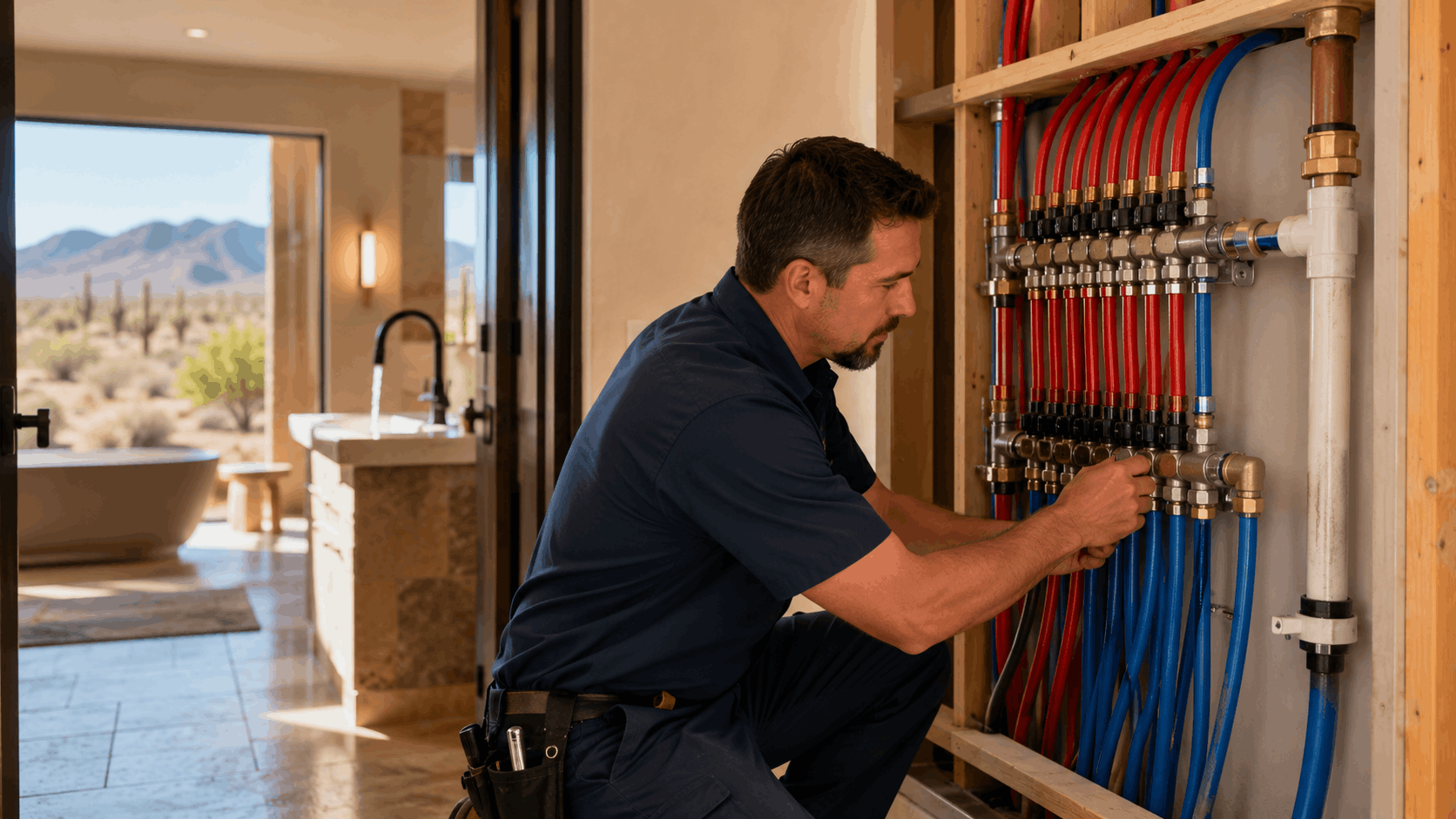
Trunk-and-branch is the traditional layout, and it is still a solid choice for many homes. It uses one large main line, the trunk, that runs through the house. Smaller branch lines split off from the trunk to feed fixtures along the way.
If you have ever seen an old copper plumbing system, you have seen trunk-and-branch. PEX simply replaces the copper with flexible tubing while keeping the same basic shape. It uses less pipe and fewer parts than a manifold.
| Feature | Trunk-and-Branch | Manifold Home-Run |
|---|---|---|
| Pipe used | Less | More |
| Fittings | More along the run | Fewer buried |
| Pressure under load | Can dip | Very steady |
| Fixture isolation | Limited | Per fixture |
| Up-front cost | Lower | Higher |
The Main Trunk and Its Branches
The trunk is a larger diameter pipe, often three-quarter inch, that carries the bulk of the home's water. It runs from the water heater and main supply through the core of the house. This is the backbone of the system.
Branch lines, usually half-inch, tee off the trunk to reach nearby fixtures. A branch might serve a bathroom group, feeding the sink, toilet, and shower from one split. Several fixtures can share a single branch.
This structure is simple and logical. Water flows down the trunk and peels off into branches as it goes. The design mirrors how water naturally moves through a home from one central spine.
The layout works well when fixtures are grouped close together. A cluster of bathrooms near the trunk gets good service. Problems appear when many fixtures share one branch during heavy use.
Fewer Fittings and Less Pipe
Because branches serve multiple fixtures, trunk-and-branch uses less total pipe than a manifold. There is no need to run a separate line all the way back for every faucet. That saves material.
Less pipe means a lower material cost, which shows up in the final repipe price. For budget-minded homeowners, this is the main draw of the traditional layout. The savings can be meaningful on a large home.
The catch is fittings. Trunk-and-branch has more tees, elbows, and connection points spread throughout the walls. Each fitting is a spot where water turns, which adds a little friction and one more potential future issue.
Modern PEX fittings are reliable, so this is not a major worry with quality work. Our team uses proven connection methods on every branch. Still, the count of buried fittings is higher than a manifold layout.
Why It Mirrors Old Copper Systems
Most homes across the valley were originally plumbed with copper in a trunk-and-branch pattern. When we do a copper repipe, swapping to PEX in the same layout is the natural path. The new pipe follows the old routes.
This familiarity has real advantages. The existing wall openings and access points often line up with the original plumbing. That can reduce how much drywall we need to open during the job.
Owners of homes in older neighborhoods near the eastern valley and central Las Vegas often start here. Their original plumbing was already trunk-and-branch, so a like-for-like PEX repipe feels straightforward. It restores flow without reinventing the whole system.
Our pipe and fixture services team handles these copper-to-PEX conversions regularly. We know the common routing in valley homes and where the trunk usually runs. That experience keeps the job clean and efficient.
Pressure Behavior During Peak Use
The weak spot of trunk-and-branch is peak demand. When several fixtures on one shared branch run at once, they compete for the same water. That competition causes pressure dips.
This is the classic scenario where a shower fades as the toilet refills next door. Both pull from the same branch, so both lose flow. In a big home with heavy morning use, these dips get noticeable.
Smart branch design reduces the problem. We can split demand across more branches so fewer fixtures share a line. Proper pipe sizing on the trunk also helps carry more water to the branches.
Still, a shared branch will never match a dedicated line for holding steady pressure. For homes where simultaneous use is constant, this is the tradeoff to weigh against the lower cost. It comes down to how the household actually uses water.
Pressure Balance: Head-to-Head in Large Homes
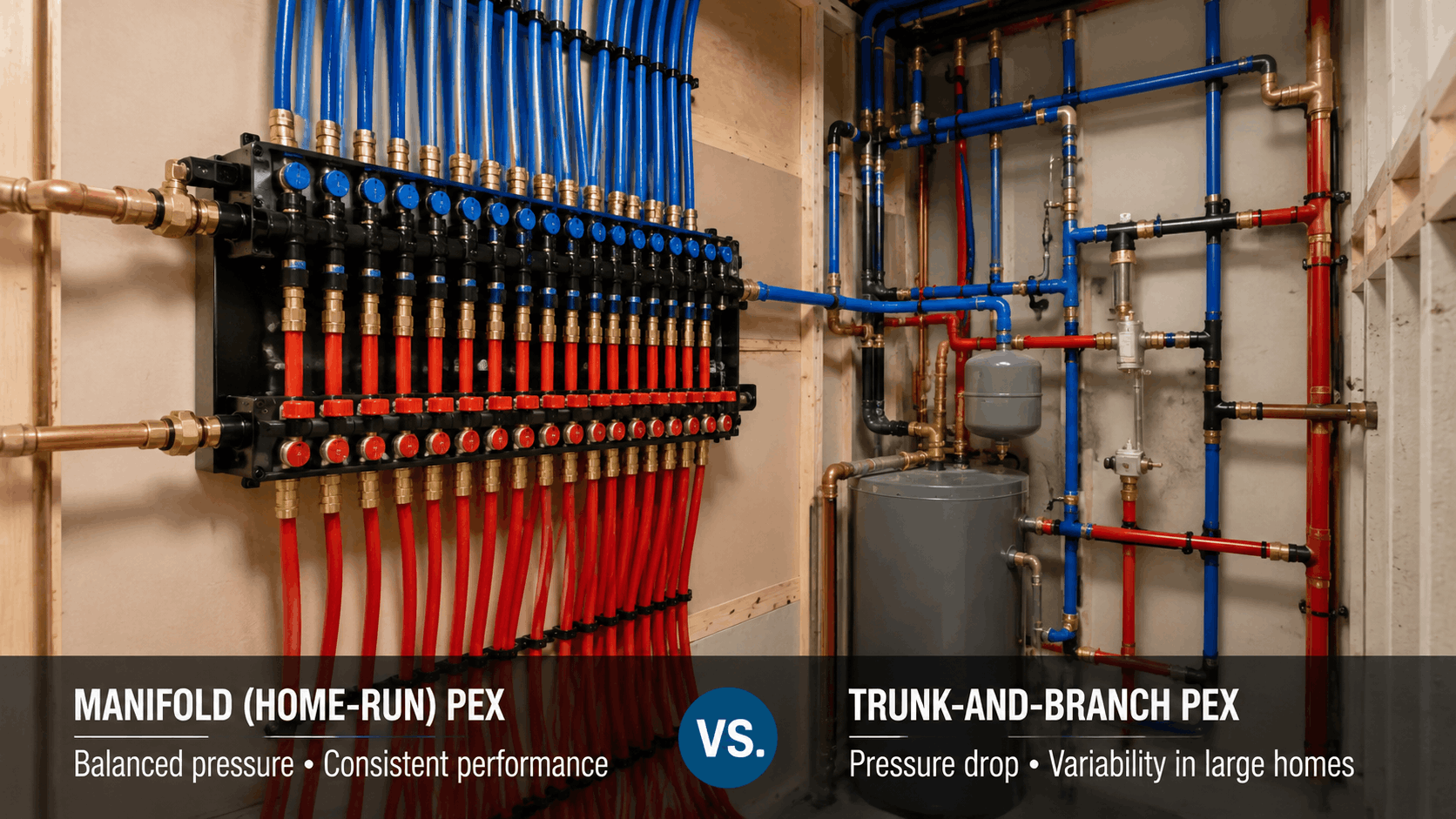
Now for the direct comparison. When a big home needs to hold pressure while several fixtures run, the layout choice shows its true colors. Both systems can work, but they behave differently under load.
The core difference is sharing versus dedicating. Trunk-and-branch shares lines, so fixtures interfere. Manifold dedicates lines, so they do not. That single distinction drives most of the pressure balance story.
Shower Temperature Swings and Fixture Interference
The cold-shock scenario is familiar to anyone in a busy home. You are mid-shower, someone flushes a toilet, and a blast of hot water hits you as the cold supply drops. It is uncomfortable and sometimes unsafe.
This happens because the toilet steals cold water from a shared line. With less cold reaching the shower valve, the mix skews hot. A temperature swing follows within seconds.
Trunk-and-branch is more prone to this because fixtures share branches. When the shower and toilet sit on the same branch, interference is likely during peak use. Modern pressure-balancing shower valves help, but they cannot fully fix a starved supply line.
A manifold layout largely removes the problem. The shower and toilet each have their own dedicated line, so the toilet flush does not touch the shower's water. That is why manifold homes feel so stable during a busy morning.
Flow Rates Across Multiple Bathrooms
Flow rate is measured in gallons per minute, or GPM. A typical shower uses about 2 to 2.5 GPM. A home with three or more bathrooms can easily demand 6 to 10 GPM when several fixtures run together.
In a trunk-and-branch home, that combined demand can outrun a single branch. If two showers and a sink all pull from lines fed by the same section, each one drops below comfortable flow. The result is weak streams across the board.
A manifold handles multiple bathrooms more gracefully. Each fixture draws from its own line, so total demand spreads across many small lines rather than choking one shared pipe. Two showers can each hold near their full GPM.
The larger and busier the home, the more this matters. A five-bathroom home in Anthem with a full house of guests will feel the difference clearly. For homes with lighter use, the gap narrows.
Pipe Sizing Choices That Affect Balance
Pipe diameter is a lever we pull in both systems. A larger diameter carries more water at a given pressure, which reduces friction loss on long runs. Sizing is where good design earns its keep.
In trunk-and-branch, we size the trunk generously, often three-quarter inch or larger, so it can supply all its branches. Undersizing the trunk is a common cause of pressure trouble in older homes. Getting this right improves peak performance.
In a manifold, each fixture line is smaller because it serves one point. The supply line to the manifold itself, though, must be sized to feed the whole home at once. That main feed is where we focus the sizing math.
Correct pipe sizing can make a modest trunk-and-branch system perform close to a manifold for many homes. It cannot fully match dedicated lines under extreme demand, but it closes much of the gap. Our team calculates fixture units to size every job properly.
Adding a Pressure Regulator and Expansion Tank
Supporting equipment helps either layout handle valley water. A pressure regulator, also called a PRV, controls incoming pressure from the main. Many valley homes receive pressure above the safe 80 PSI ceiling that code allows.
A regulator brings that down to a steady, safe level, usually 60 to 70 PSI. This protects the new PEX, the fixtures, and the water heater. We check incoming pressure on every repipe and install or replace the regulator as needed.
An expansion tank pairs with the water heater to absorb pressure spikes as water heats and expands. Without one, that expansion pushes against a closed system and stresses the plumbing. It is often required by code on newer installs.
These additions matter for both manifold and trunk-and-branch systems. They stabilize pressure at the source so the layout can do its job. Our water heater services team often installs these alongside a repipe.
Need Help in Las Vegas?
Active Plumbing serves Las Vegas and all of Las Vegas Valley.
Cost, Labor, and Timeline for Each Repipe Method in Las Vegas
Homeowners want real numbers before they commit. Repipe cost depends on home size, number of fixtures, layout choice, and drywall repair. Below are honest ranges we see for large valley homes.
Keep in mind these are ballpark figures. A precise quote requires an on-site look at your home. The table gives a starting point for planning your budget and timeline.
| Factor | Trunk-and-Branch | Manifold Home-Run |
|---|---|---|
| Typical cost (large home) | $6,000 - $12,000 | $9,000 - $18,000 |
| Labor time | 2 - 4 days | 3 - 6 days |
| Pipe used | Less | More |
| Wall openings | Moderate | Can be more |
| Future repair ease | Standard | Simpler with isolation |
Material and Labor Cost Ranges
For a large valley home, a trunk-and-branch PEX repipe typically runs $6,000 to $12,000. The lower material use and simpler routing keep the price down. This makes it the value pick for many homeowners.
A manifold home-run repipe usually lands between $9,000 and $18,000 for a similar home. The extra pipe, the manifold hardware, and the added labor push the cost higher. You are paying for pressure stability and control.
Fixture count drives the price more than square footage. A home with six bathrooms costs more to repipe than a four-bathroom home of the same size. Each fixture adds pipe and connections.
Additions like a pressure regulator, expansion tank, or new shutoff valves add to either total. We itemize these so homeowners see exactly where the money goes. There are no surprise charges on a proper quote.
How Long Each Job Takes
A trunk-and-branch repipe on a large home usually takes 2 to 4 days. The crew runs the trunk, connects the branches, tests, and then handles inspection. Fewer total lines mean quicker installation.
A manifold job runs longer, often 3 to 6 days. Every fixture needs its own line pulled back to the manifold, which is more labor. The payoff is the cleaner, more controllable finished system.
Home size and access affect the timeline both ways. A sprawling single-story with tight attic access takes longer than a compact layout. We give a realistic day count during the estimate so you can plan.
Most homes keep partial water service during the work. We stage the job so the family is not fully without water for days. Full shutoff usually happens only during specific connection windows.
Drywall and Access Considerations
Both layouts require opening walls to run new pipe. Trunk-and-branch often reuses existing access points from the old plumbing, which can limit the openings. That tends to mean less drywall repair.
A manifold system sometimes needs more openings because dedicated lines take new paths to each fixture. More runs can mean more holes to patch. We map the route to keep openings as few as possible.
We cut cleanly and mark every opening so patching is straightforward afterward. Some homeowners handle their own drywall repair, while others want us to coordinate it. We are upfront about which walls we expect to open.
Access through attics and crawl spaces reduces wall cutting. Many valley homes have good attic access, which lets us drop lines down to fixtures with fewer openings. Our team uses these paths whenever they save the walls.
Long-Term Value and Repair Savings
Up-front cost is only part of the picture. A manifold system pays back over time through easier repairs. Isolation valves let us fix one fixture without disrupting the home, which lowers labor on future service calls.
Fewer buried fittings also help. A manifold keeps most connections at the central hub, out in the open, rather than hidden in walls. Accessible connections are cheaper and more quickly to service.
Trunk-and-branch still offers solid long-term value, especially with quality PEX and good fittings. PEX resists corrosion and mineral buildup, so both layouts last for decades. The difference is mostly in repair convenience.
For homeowners planning to stay long term, the manifold's repair savings can offset its higher price. For those on a tighter budget or shorter horizon, trunk-and-branch remains a smart, durable choice. We help weigh this during the estimate.
Permits, Codes, and Local Requirements Around the Valley
A repipe is not a job to do off the books. It requires permits and inspection to be legal and safe. Each jurisdiction in the valley has its own process, and we handle the paperwork for our customers.
Skipping permits can cause problems when you sell the home or file an insurance claim. Proper permitting protects you. Here is what to expect across the area.
| Requirement | What to Know |
|---|---|
| Building permit | Required for repipes in most jurisdictions |
| Jurisdiction | City of Las Vegas, Henderson, or Clark County |
| HOA approval | May be needed for exterior work |
| Inspection | Rough-in and final checks |
| Water meter/backflow | Coordinated with LVVWD as needed |
Pulling Permits Through Local Building Departments
Where your home sits decides who issues the permit. Homes in the City of Las Vegas go through the city building department. Homes in Henderson use their own department, and unincorporated areas fall under Clark County.
Each department reviews the scope and issues a building permit for the repipe. As licensed plumbers, our team pulls the permit and manages the process. Homeowners do not have to stand in line at a counter.
You can read more about local requirements through the Clark County Building and Fire Prevention department. The permit fee is a small part of the total job cost. It buys official inspection and peace of record for your home.
Permit timing rarely delays a repipe much. We factor it into the schedule from the start. Knowing the jurisdiction early keeps the whole project moving.
HOA Rules in Communities Like Summerlin and Green Valley
Many valley neighborhoods sit inside an HOA. Communities like Summerlin, Green Valley, and Anthem have rules that can affect a repipe, especially if any work touches the home's exterior. HOA approval sometimes adds a step.
Interior repiping usually does not concern the HOA. But if we need exterior access, trenching, or any visible change, approval may be required first. This can affect the project timeline.
We advise homeowners in Summerlin and similar communities to check their HOA guidelines early. Getting approval lined up before the job avoids delays. Most interior repipes clear this hurdle quickly.
Our team is familiar with how these communities operate. We plan work to minimize any exterior impact, which often removes the need for lengthy HOA review. Clear communication keeps everyone on the same page.
Inspection Points for PEX Systems
Inspectors check a repipe at two main stages. The rough-in inspection happens before walls close, when pipes and connections are visible. This is when the inspector confirms the work meets plumbing code.
For PEX systems, inspectors look at proper support and spacing of the lines, correct fittings, and safe routing away from heat sources. They verify the pressure test holds. Both manifold and trunk-and-branch installs face the same core checks.
The final inspection confirms the finished system after walls close. The inspector checks fixtures, shutoffs, and overall code compliance. Passing both inspections closes out the permit cleanly.
We build our installs to pass on the first try. Following the Uniform Plumbing Code, published by the IAPMO, keeps every job on solid footing. That standard guides pipe support, sizing, and connection methods.
Water Meter and Backflow Considerations
Some repipes touch the water meter or the main supply, which involves the Las Vegas Valley Water District. If the service line or meter needs attention, we coordinate with LVVWD. This keeps the connection to the public supply proper.
Backflow prevention matters when a repipe changes how water enters the home. A backflow device stops used water from flowing back into the clean supply. Certain fixtures and irrigation setups trigger this requirement.
We check whether your home needs backflow protection during the assessment. Adding or updating a device is a small part of the job when required. It protects both your home and the community water supply.
The LVVWD also has rules about pressure and metering that can come up. We handle any coordination so the repipe stays compliant. Homeowners rarely need to contact the water district themselves.
Need Help in Las Vegas?
Active Plumbing serves Las Vegas and all of Las Vegas Valley.
Choosing the Right Layout for Your Home
The best layout depends on your home size, budget, and pressure goals. There is no single right answer for every property. Our job is to match the system to how your household actually uses water.
A few honest questions guide the decision. How many bathrooms run at once? How much are you willing to invest? How long do you plan to stay? The answers point toward one layout or the other.
When Manifold Home-Run Makes the Most Sense
The manifold shines in large, busy homes. A multi-story home in Anthem or MacDonald Highlands with five or more bathrooms is a perfect candidate. Dedicated lines keep pressure steady even when the whole family gets ready at once.
Homeowners who value control and easy future repairs lean manifold. The per-fixture shutoffs make service simpler for years to come. If you plan to stay long term, that convenience adds up.
Homes with heavy simultaneous use benefit most. If mornings mean three showers running while the kitchen fills the coffee maker, the manifold stops the pressure fights. It is the layout we recommend for demanding households.
The higher up-front cost is the main tradeoff. For owners who want the best pressure balance and can invest in it, the manifold is worth it. Large homes in premium hillside neighborhoods often justify the choice.
When Trunk-and-Branch Is the Smarter Pick
Trunk-and-branch fits many homes very well. If your budget is the top concern, the lower material and labor cost make it attractive. It is a proven, durable layout that has served valley homes for decades.
Homes with fixtures grouped close together do great on trunk-and-branch. When bathrooms cluster near the trunk, shared branches serve them efficiently. The pressure penalty stays small with good design.
Lighter household use also favors this layout. If it is rare for three fixtures to run at once, you may never notice the difference from a manifold. Paying extra for dedicated lines would not add much value.
Owners planning a shorter stay often choose trunk-and-branch too. It restores pressure and reliability at a lower cost. For a solid, budget-conscious repipe, it remains a smart pick.
Hybrid Approaches for Older Valley Homes
Sometimes the best answer mixes both methods. Older homes near the Arts District and downtown often have tricky layouts that do not suit a pure system. A hybrid can give the best of both.
In a hybrid, we might run dedicated manifold lines to the busiest fixtures, like master showers, while keeping trunk-and-branch for a cluster of low-use fixtures. This targets pressure where it matters most without the full cost of an all-manifold job.
Older homes also have space constraints and existing routes that shape the design. A hybrid lets us work with the home's bones instead of forcing one approach. It is a practical solution for character homes.
We often recommend hybrids after seeing the actual conditions on-site. Every historic home is different. The flexibility of PEX makes these blended layouts possible and reliable.
How Active Plumbing Evaluates Each Home
We do not guess at the right layout. When our team visits, we measure the incoming water pressure at the hose bib with a gauge. That tells us the baseline we are working with.
Next we count fixtures and map the floor plan. We note which bathrooms sit far from the water heater and which fixtures tend to run together. This shapes whether dedicated lines or shared branches make more sense.
We check the existing pipe material and condition, plus elevation and access. All of this feeds a clear recommendation with real numbers. You get a layout suited to your home, not a one-size answer.
Then we walk you through the options honestly. If trunk-and-branch serves you better for less money, we say so. You can reach our team through our contact page to set up an on-site evaluation.
Final Thoughts
Both manifold and trunk-and-branch PEX layouts can fix the weak, swinging pressure that plagues large valley homes. The manifold delivers the steadiest pressure and easiest repairs, while trunk-and-branch offers proven performance at a lower cost. The right choice depends on your home, your use, and your budget.
Hard water from the LVVWD, long runs in sprawling floor plans, and hillside elevation all shape how a repipe should be designed. A good plan accounts for all of them, plus a pressure regulator and expansion tank to stabilize the whole system.
If your showers fade when the house gets busy, it may be time for a repipe. Our team knows the neighborhoods, the water, and the local codes across the valley. Call Active Plumbing to schedule an on-site pressure and fixture assessment, and we will recommend the layout that fits your home best.
Frequently Asked Questions
- What is the difference between manifold and trunk-and-branch PEX?
- A manifold home-run system gives every fixture its own dedicated line back to a central hub, so nothing shares a pipe. Trunk-and-branch uses one large main line with smaller branches that split off to serve several fixtures at once. The manifold uses more pipe but holds pressure better, while trunk-and-branch uses less material and costs less to install.
- Which layout gives better water pressure in a big home?
- The manifold layout usually holds pressure better in large homes. Because each fixture has its own dedicated line, running one shower does not steal water from another. Under simultaneous use, like a busy morning with several fixtures going at once, the manifold keeps flow steady. Trunk-and-branch can dip when multiple fixtures share the same branch during peak demand.
- How much does a whole-home repipe cost in Las Vegas?
- For a large valley home, a trunk-and-branch PEX repipe typically runs $6,000 to $12,000. A manifold home-run system usually costs $9,000 to $18,000 because it uses more pipe and labor. Fixture count matters more than square footage. Add-ons like a pressure regulator or expansion tank affect the total. An on-site visit gives an exact quote for your home.
- How long does a PEX repipe take?
- A trunk-and-branch repipe on a large home usually takes 2 to 4 days. A manifold system runs longer, often 3 to 6 days, because each fixture needs its own line pulled to the manifold. Home size, fixture count, and attic or crawl space access all affect the timeline. Most homes keep partial water service during the work.
- Does PEX hold up to hard Las Vegas water?
- Yes. PEX resists the mineral buildup that clogs old copper and galvanized pipe. The hard water from the Las Vegas Valley Water District coats metal pipe interiors over time, narrowing them and cutting flow. PEX has a smoother inner surface that scale does not cling to as easily. That is a major reason a repipe restores strong pressure.
- Do I need a permit to repipe my home?
- Yes, a repipe requires a building permit in most valley jurisdictions, whether the City of Las Vegas, Henderson, or Clark County. As licensed plumbers, our team pulls the permit and schedules the inspections for you. Permitting protects you when selling the home or filing insurance claims. The fee is a small part of the total job cost.
- Will a manifold system make repairs easier later?
- Yes. Each dedicated line at the manifold has its own shutoff valve, so we can isolate one fixture for repair without cutting water to the whole house. Most connections stay at the central hub, out in the open, instead of buried in walls. That makes future service more quickly and cheaper compared to hunting for a hidden fitting.
- Can I add a pressure regulator during a repipe?
- Absolutely. A repipe is the ideal time to install or replace a pressure regulator, also called a PRV. Many valley homes receive incoming pressure above the safe 80 PSI code limit. A regulator brings it down to a steady 60 to 70 PSI, protecting the new PEX, fixtures, and water heater. We check incoming pressure on every job.
- Is trunk-and-branch outdated?
- No. Trunk-and-branch is still a valid, cost-effective method used in many homes today. It mirrors the copper layouts most valley homes were built with and uses less pipe than a manifold. For homes with grouped fixtures and lighter simultaneous use, it performs well at a lower price. It remains a durable, smart choice for the right situation.
- How do I know which layout my home needs?
- The best way is an on-site assessment. Our team measures your incoming water pressure, counts fixtures, maps the floor plan, and checks pipe condition and elevation. We note which bathrooms sit far away and which fixtures tend to run together. From there we recommend the layout that fits your home and budget. Reach out to schedule a visit.
Licensed plumbing professionals serving Las Vegas and Las Vegas Valley.
Licensed in Nevada · License #0047021
Last updated on
Why trust Active Plumbing?
Founded in 1991, Active Plumbing is a licensed and insured plumber serving Las Vegas and Las Vegas Valley. All content is reviewed by our licensed technicians.

Need Help in Las Vegas?
Active Plumbing serves Las Vegas and all of Las Vegas Valley.
Related Articles
How to Stop Repeat Drain Clogs in Las Vegas Homes
Learn why Las Vegas homes get repeat drain clogs, from hard water and old pipes to tree roots, plus the professional methods that stop them for good.
LVVWD vs SNWA: Who's Responsible When Your Vegas Water Pressure Drops
Confused about LVVWD vs SNWA when your Vegas water pressure drops? Learn who handles what, who pays for repairs, and how to diagnose the problem fast.
Polybutylene Pipe Identification: Which Vegas Neighborhoods Still Have It
Learn how to identify polybutylene pipe, which Las Vegas neighborhoods still have it, why local water makes it fail sooner, and what a modern repipe costs.