How-To Guides
Polybutylene Pipe Identification: Which Vegas Neighborhoods Still Have It
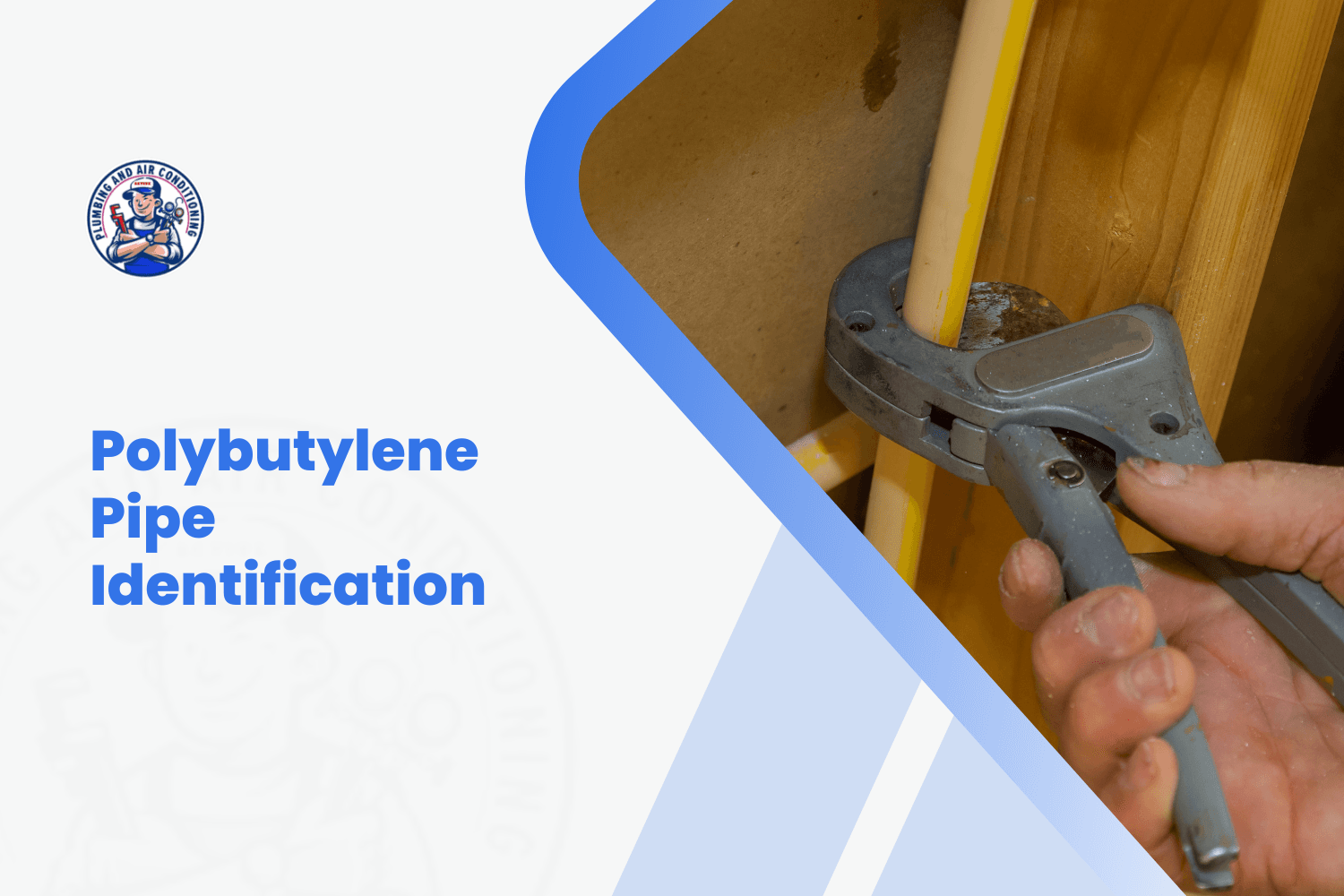
Key Takeaways
- Polybutylene is a flexible gray, blue, or black plastic pipe marked PB2110, used in homes built roughly 1978 to 1995.
- Spring Valley, Paradise, Sunrise Manor, and early Green Valley and Henderson tracts carry the highest risk in the valley.
- Most Summerlin and other post-mid-1990s homes use copper or PEX and rarely have polybutylene.
- Local hard water, chlorine treatment, and extreme attic heat all speed up polybutylene cracking and failure.
- Watch for fitting leaks, low water pressure with plastic flaking, and sudden bursts as warning signs.
- A whole home repipe with PEX or copper typically costs $6,000 to $15,000 and takes two to four days.
- Polybutylene affects home sales through inspection reports, insurance denials, and disclosure expectations in Nevada.
- A quick visual check at the water heater, sinks, and main line helps confirm the pipe before calling a plumber.
In This Article
A homeowner in Spring Valley opens the cabinet under the bathroom sink to grab a spare bottle of cleaner. Instead, she notices a dull gray pipe running up to the shutoff valve. It does not look like copper. It does not look like the white PVC in the garage. It flexes a little when she touches it, and there is a faint stamp printed along the side.
That gray pipe is almost certainly polybutylene. If your home in the valley was built between the late 1970s and the mid 1990s, there is a real chance it is hiding in your walls right now. The material was popular for years, then it earned a reputation for cracking, leaking, and flooding homes without much warning.
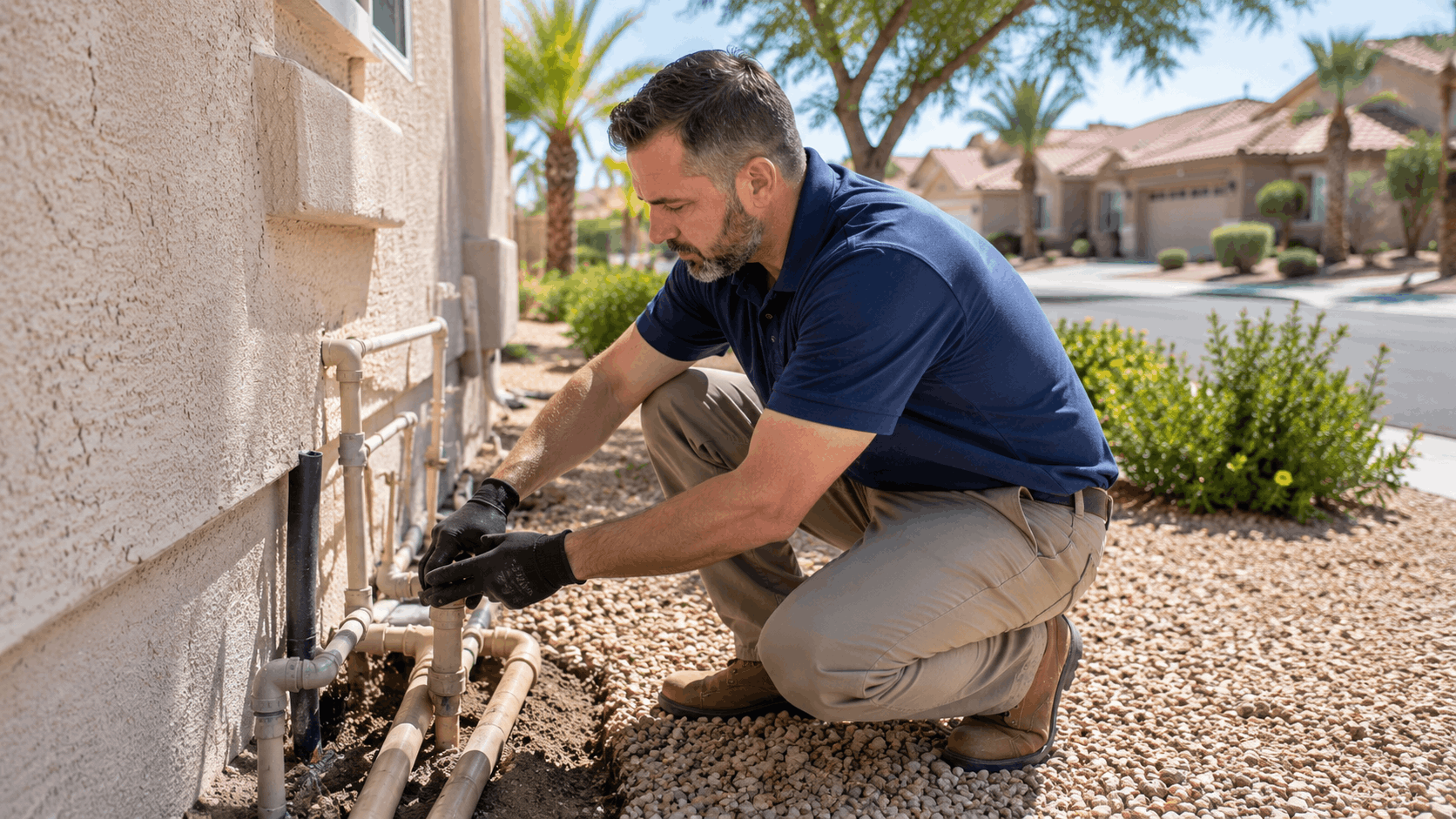
What Polybutylene Pipe Actually Is?
Polybutylene pipe is a flexible gray plastic plumbing line that builders ran through millions of American homes for about two decades. It was a budget-friendly alternative to copper, and at the time nobody knew how poorly it would age.
Before you go checking your own pipes, here is the background that helps it all make sense:
- It is a soft plastic resin, not metal, so it bends and feels lighter than copper.
- It was used for both hot and cold supply lines throughout the home.
- It connects with plastic or metal fittings, and those fittings are often the first part to fail.
- It looks similar to modern PEX, which causes a lot of confusion for homeowners.
Why Builders Used It From the 1970s to the 1990s
From roughly 1978 to 1995, polybutylene was everywhere in new construction. Builders loved it because it was a cheap plumbing material that cost far less than copper, which was climbing in price during those years. A crew could plumb an entire house in a fraction of the time it took to solder copper joints.
The Las Vegas valley was booming during that exact window. Tracts in Spring Valley, Paradise, and the east side went up fast, and developers wanted to keep costs down on every unit. Polybutylene fit that goal perfectly, so it ended up in tens of thousands of valley homes.
The flexibility was another selling point. Crews could snake the soft tubing through framing without needing as many fittings or elbows. That speed and savings made PB plumbing the default choice for production builders across the southwest for nearly twenty years.
Estimates suggest somewhere between six and ten million homes nationwide were built with this pipe. A large share of those sit in fast-growing sunbelt markets exactly like ours, which is why local plumbers still run into it constantly.
How the Material Breaks Down Over Time
The trouble with polybutylene starts on the inside of the pipe, where you cannot see it. City water carries chlorine and other oxidants used to keep it safe to drink. That chlorine reaction slowly attacks the plastic resin and breaks down its structure.
As the reaction continues, the inner wall of the pipe begins to flake and turn brittle. Tiny fractures form and spread outward through the pipe wall over months and years. This is why pipe failure with polybutylene tends to happen suddenly even though the damage built up gradually.
The fittings degrade in a similar way. Acetal plastic fittings used in many installations crack at the joints, and the seal between pipe and fitting gives out. By the time water shows up under a cabinet, the material is already compromised in spots you never noticed.
Higher chlorine levels and hotter water both speed up this process. That matters a great deal in a desert city where water sits in hot lines and treatment levels stay consistent year-round, a point we cover in more detail below.
Why It Was Eventually Banned From New Homes
As failures piled up across the country, homeowners filed lawsuits against the manufacturers. The most famous result was the Cox v. Shell Oil class action settlement, which paid out hundreds of millions of dollars to people whose pipes leaked. You can read more about that history through resources like the Federal Trade Commission.
That legal pressure changed how the industry viewed the material. Building code bodies stopped approving polybutylene for potable water systems, and by the mid 1990s it was effectively off the table for new construction.
Clark County and the rest of the valley followed those national code changes. Homes built after the mid 1990s here use copper, CPVC, or modern PEX instead. That cutoff is one of the most reliable clues for guessing whether your own home has it.
It is worth noting the pipe was never recalled from existing homes. It is still sitting in walls all over Las Vegas, perfectly legal, quietly aging until it fails.
Get Your Quote
Tell us what's going on and we'll get back to you fast.
How to Identify Polybutylene in Your Home
You do not need a plumber to take a first look. With a flashlight and a few minutes, most homeowners can spot polybutylene or rule it out. The trick is knowing the color, the markings, and where to check.
Here is a quick reference for telling common pipe types apart during your own polybutylene identification check:
| Pipe Type | Color | Feel | Common Stamp |
|---|---|---|---|
| Polybutylene | Gray, blue, or black | Soft, flexible | PB2110 |
| PEX | Red, blue, or white | Soft, flexible | ASTM F876 |
| Copper | Reddish metal | Rigid, hard | Etched type letter |
| CPVC | Cream or tan | Rigid plastic | CPVC 4120 |
The Telltale Gray, Blue, or Black Color
The classic look is a dull gray plastic pipe, though it also came in blue and black versions. The gray supply lines inside the home are the most common in valley houses. The blue and black versions usually show up on the main line coming in from outside.
Color alone can fool people because PEX is also a flexible plastic. The difference is that PEX usually comes in bright red or blue for hot and cold, or sometimes white. If you see a muted, chalky gray tube, you are likely looking at polybutylene rather than PEX.
In the PEX vs polybutylene comparison, age is your best tiebreaker. Bright colored flexible pipe in a 2005 home is almost always PEX. Dull gray flexible pipe in a 1985 home is almost always polybutylene.
Copper and CPVC are easy to rule out by touch. Copper is a hard metal that does not flex, and CPVC is a stiff cream-colored plastic. If the pipe bends slightly under finger pressure and looks gray, keep investigating.
Reading the PB2110 Stamp
The most reliable confirmation is the printing on the side of the pipe. Polybutylene supply lines carry a PB2110 marking somewhere along their length. That code is the industry designation for the material, and seeing it removes all doubt.
You may need to rotate the pipe or wipe off dust to find the stamp. The text runs lengthwise and repeats every few feet. Bring a flashlight, because the print can be faint on older lines that have weathered for decades.
The main water line version may show a different code such as PB1110 along with manufacturer details. Both fall in the same family of polybutylene products. Any PB stamp on a pipe stamp is your signal to take the situation seriously.
If you find no markings at all, do not assume you are safe. Years of grime can bury the print, and some sections never had it visible. In that case, the color, feel, and home age together still tell most of the story.
Where to Check: Water Heater, Under Sinks, and the Main Line
Start at the water heater, since the connections there are often exposed. Look at the lines feeding into and out of the tank. A gray flexible line at the water heater connection is a strong early indicator. While you are there, our water heater services team often spots PB during routine visits.
Next, open the cabinets under bathroom and kitchen sinks. The shutoff valves and the short runs leading to them are usually visible. This is where many valley homeowners first notice the dull gray tubing.
Then find where the main water line enters the home, often in the garage, a utility closet, or near the front of the house. The incoming line and the shutoff are good places to spot the blue or black versions. A gray or blue main water line entering an older home points strongly toward polybutylene.
Check the laundry hookups and any exposed runs in an unfinished area as well. Each visible spot adds confidence to your guess. The more gray flexible pipe you find, the more likely the whole system is polybutylene.
When the Pipe Is Hidden Behind Walls
Most of the plumbing in a finished home is concealed plumbing, buried in walls and ceilings where you cannot see it. When the visible sections are limited, you have to reason from clues. Home age is the single strongest one.
If your house was built between 1978 and 1995 in the valley, treat polybutylene as a likely possibility until proven otherwise. Pair that with any gray fittings you can see at fixtures or the water heater. Matching colors at multiple points usually means the same material runs throughout.
Check original permit records or the year built on your county property listing. A build date in the polybutylene window combined with even one gray pipe sighting is enough to call a plumber for confirmation. Visible fittings at the main shutoff often reveal the material even when the runs are hidden.
When the evidence is mixed, a professional can confirm it quickly. We open a small access point or inspect the few exposed sections and read the situation in minutes. That beats guessing and waiting for a leak to make the decision for you.
Need Help in Las Vegas?
Active Plumbing serves Las Vegas and all of Las Vegas Valley.
Las Vegas Neighborhoods Most Likely to Still Have It
Because polybutylene tracks so closely with build dates, certain valley neighborhoods carry far more of it than others. The areas that grew fastest during the 1980s and early 1990s are the hotspots. Here is how the local risk breaks down by area.
| Area | Main Build Era | Polybutylene Risk |
|---|---|---|
| Spring Valley | 1980s | High |
| Paradise | 1980s | High |
| Green Valley / Henderson | 1978 to mid 1990s | Moderate to High |
| Sunrise Manor / East Side | 1980s to early 1990s | High |
| Summerlin | Mid 1990s and later | Low |
Spring Valley and Paradise Homes From the 1980s
Spring Valley filled in heavily through the 1980s, and a large share of those homes went up during the peak polybutylene years. Streets off Jones, Rainbow, and Tropicana hold many original-plumbing houses. We find gray pipe in these homes on a regular basis.
Paradise NV tells a similar story. The neighborhoods between the airport and the university grew through the same era and used the same cheap plumbing material. Many of these homes still have their original supply lines four decades later.
If you own a single-story ranch in Spring Valley or Paradise built before 1990, the odds of polybutylene are high. We see it constantly when responding to leaks in these zip codes. Homeowners in these areas lean on our Spring Valley emergency plumbing help when a fitting finally gives out.
That does not mean every home is affected, since some have been repiped over the years. But the base rate is high enough that a quick check is worth your time. Catching it before a burst saves you a flooded floor and a much larger bill.
Green Valley and Henderson's Early Build-Out
Green Valley was one of the valley's first major master-planned communities, and its earliest sections date to 1978, with much of the build-out through the 1980s and early 1990s. Those original tracts fall right inside the polybutylene window. We still pull gray pipe out of plenty of Green Valley homes.
The newer Green Valley South sections trend later, so risk drops as you move into homes built after the mid 1990s. Knowing your specific build year matters more than the neighborhood name alone. A 1989 home and a 1998 home on the same side of town can have completely different plumbing.
Across Henderson older homes near the original downtown core and the earliest subdivisions show the material often. If your Henderson house predates the mid 1990s, treat it as a candidate. Our Green Valley plumbing crews keep replacement parts on the truck for exactly this reason.
Henderson has seen waves of repiping as these homes change hands. Even so, plenty of original systems remain in place. A short inspection settles the question before you buy or before a small drip becomes a big one.
Sunrise Manor and the East Side Tracts
Sunrise Manor and the east Las Vegas neighborhoods near Nellis Air Force Base grew through the 1980s and into the early 1990s. Many of those mid-era homes used polybutylene throughout. We respond to leaks in this part of the valley often.
The tracts off Nellis, Lake Mead, and Owens are full of homes from this period. The affordable construction that made these areas attractive to buyers also meant builders chose the cheaper plumbing. That choice is now reaching the end of its lifespan.
Homeowners on the east side sometimes discover the pipe only after a ceiling stain or a cabinet leak. By then the failure is already underway. Our Sunrise Manor plumbing team handles these calls and can confirm the pipe type during the visit.
If you live near Nellis in an older single-family home, a proactive check makes sense. The cost of looking is nothing compared to the cost of a burst line over a finished room. East-side homes are squarely in the high-risk group.
Why Summerlin's Newer Sections Are Mostly Clear
Summerlin started its major build-out in the early to mid 1990s, right as polybutylene was leaving the market. Most of its homes use copper or PEX from the start. That timing makes Summerlin one of the lower-risk areas in the valley.
The newer construction in the western and northwestern villages almost never has polybutylene. Communities like The Trails and the later Summerlin North and South sections went up after the cutoff. Homeowners there rarely face this particular problem.
That said, the very earliest Summerlin homes from around 1991 to 1993 sit near the boundary. A small number could still have it. If your Summerlin home is among the oldest in the community, a quick look is still worth doing.
For most newer Summerlin and northwest valley owners, the worry is minimal. If you are unsure, our Summerlin plumbing team can confirm your pipe type in one visit. For the vast majority, the answer is good news.
Why Las Vegas Water Makes Polybutylene Worse
Polybutylene fails faster in some places than others, and our valley is one of the harder places on it. Local water chemistry and desert climate both work against the material. Here is how each factor speeds up the damage.
How Hard Water From the Colorado River Affects Pipes
Most of our drinking water comes from the Colorado River by way of Lake Mead. That source carries a heavy mineral load, which gives Las Vegas hard water its reputation. The valley ranks among the hardest water regions in the country.
Inside aging plastic pipe, that mineral content adds stress and accelerates wear. Mineral buildup combines with the already-degrading inner wall to roughen the surface and restrict flow. The pipe works harder and fails sooner as a result.
Hard water also pushes homeowners toward treatment systems, which is a good idea on its own. A water softener installation reduces mineral load and protects whatever piping you have. It will not save failing polybutylene, but it helps your new pipes last longer after a repipe.
The combination of soft plastic and hard water is rough on these old systems. Each year that passes adds more scale and more brittleness. That is part of why local polybutylene tends to fail earlier than the national average.
Chlorine Levels From the Las Vegas Valley Water District
The Las Vegas Valley Water District treats water with disinfectants to keep it safe, and chlorine treatment is part of that process. Those chemicals are good for public health. They are not kind to polybutylene.
Chlorine is the primary driver of the chlorine pipe damage that destroys this material from the inside. The oxidant attacks the resin, causing the flaking and micro-cracking we described earlier. Steady year-round treatment means the pipe never gets a break.
Hot water lines see the worst of it because heat speeds the reaction. The supply running to your water heater and the hot side of your fixtures often degrade first. That is why hot lines frequently fail before cold ones in valley homes.
None of this is a knock on the water district, which does its job well. The pipe is simply the wrong material for chlorinated water over the long term. Decades of safe, treated water slowly eat away at it.
Desert Heat and Attic Pipe Stress
Summer attic temperatures in the valley can climb well past 130 degrees. Any plumbing routed through an attic bakes in that heat for months. Attic heat pushes polybutylene toward brittleness faster than indoor runs.
The constant cycle of extreme summer heat and cooler winter nights flexes the material. That expansion and contraction stresses joints and weak spots. Over years, the repeated cycling helps cracks form and spread.
Many valley homes run hot water lines through the attic or the upper wall spaces. Those are some of the first sections to give out. A leak that starts in an attic line can soak insulation and drywall before anyone notices.
When an attic line lets go, the water damage is often severe by the time it shows. Our whole home leak detection system can catch a hidden attic leak before it ruins a ceiling. In a climate this harsh, early detection matters more than ever.
Warning Signs Your Polybutylene Is Failing
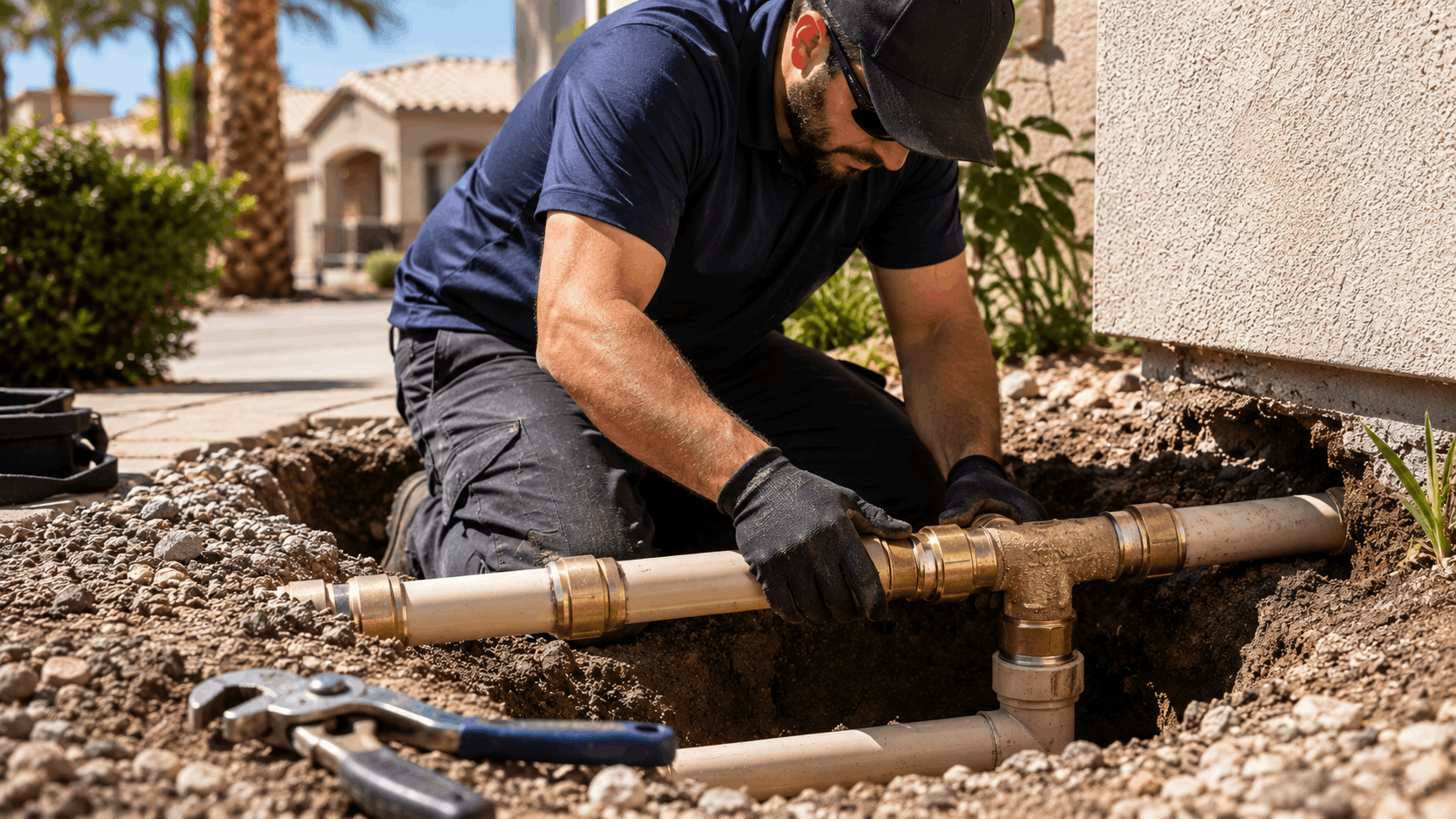
Polybutylene rarely fails all at once with no warning. There are usually small clues first if you know what to look for. Catching these pipe failure signs early can be the difference between a quick fix and a flooded home.
Small Drips at Fittings and Joints
The fittings almost always fail before the straight runs of pipe. Plastic acetal fittings crack at the joint where pipe meets connector. Those fitting leaks are usually the first sign of trouble.
Look under sinks for small drips, water stains, or a damp smell inside the cabinet. A slow drip at a joint may only show as a faint ring of moisture at first. That early sign is easy to dismiss but important to act on.
Joint failure tends to repeat once it starts. Fix one fitting and another often lets go a few months later. That pattern is a strong hint that the whole system is reaching the end of its life.
If you spot a leaking fitting on gray pipe, do not just patch it and forget it. Treat it as a signal to evaluate the entire system. Our pipe and fixture services team can assess how far the deterioration has spread.
Low Water Pressure and Flaking Inside the Line
As the inner wall breaks down, bits of plastic flake off into the water stream. That pipe flaking collects at aerators and valves and slowly restricts flow. The result is low water pressure that creeps up on you over time.
You might notice weaker flow at a particular faucet or showerhead first. Cleaning the aerator and finding plastic debris is a telling sign. That debris is the inside of your pipe coming apart.
Pressure drops that affect the whole house point to widespread interior breakdown. The material is failing in many places at once. At that stage, spot repairs no longer make sense.
Flaking also feeds into clogs and fixture problems downstream. The pipe is essentially shedding itself into your water. When you see this, the system is well into its decline.
Sudden Bursts and Hidden Water Damage
The worst outcome is a sudden pipe burst, often inside a wall or attic. Because the damage builds up out of sight, the break can come with little warning. A line that held for years can let go overnight.
Hidden water damage from a burst inside a wall is expensive and disruptive. By the time it shows through drywall, the cavity may already hold mold and rot. A single burst can ruin flooring, cabinets, and ceilings.
If a polybutylene line bursts, shut off your main water valve right away and call for help. Our burst pipe repair crews respond fast across the valley. Quick action limits how far the water spreads.
The threat of a sudden burst is the main reason to replace this pipe proactively. Waiting for it to fail puts your home and belongings at risk. A planned repipe beats an emergency cleanup every time.
Need Help in Las Vegas?
Active Plumbing serves Las Vegas and all of Las Vegas Valley.
What Replacement Looks Like in a Vegas Home
The lasting fix for polybutylene is a whole home repipe that removes the old material entirely. Patching individual sections only delays the next failure. Here is what the process looks like for a typical valley home.
PEX and Copper Options for Local Homes
Modern repipes use either PEX or copper, and both hold up far better than polybutylene. PEX pipe is a flexible plastic that resists chlorine and handles our hard water well. It installs quickly and costs less than copper, which keeps the project affordable.
A copper repipe is the traditional rigid metal option. Copper lasts for decades and stands up to heat, though it costs more in both material and labor. Some homeowners prefer it for its long track record.
For most valley homes, PEX is the popular choice today. It tolerates the chlorine and minerals in our water and resists the brittleness that doomed polybutylene. The flexibility also means fewer joints, which means fewer potential leak points.
We help homeowners weigh both options based on budget and the layout of the house. Either material is a major upgrade over what you have now. The goal is plumbing that outlasts you, not pipe you have to worry about again.
How Long a Repipe Takes and What It Costs
A typical single-story valley home can be repiped in roughly two to four days. Larger or two-story homes take longer. The repipe timeline depends on the size of the house and how the existing plumbing runs.
The repipe cost for a single-family home in the area generally falls in a range of several thousand dollars, often between $6,000 and $15,000. The exact figure depends on home size, material choice, and the number of fixtures. PEX usually lands lower in that range than copper.
That number can feel steep until you compare it to the cost of repeated leaks and water damage. One serious burst over a finished room can approach the price of a full repipe by itself. Replacing the system removes that ongoing risk.
We provide a clear written estimate after inspecting your home so there are no surprises. The price reflects your specific layout, not a generic guess. Knowing the real number lets you plan the project with confidence.
Permits and Inspections Through Clark County
A repipe in the valley requires a proper Clark County permit. The permit makes sure the work meets current code and protects you down the road. Skipping it can cause problems when you sell.
After the new pipe goes in, a plumbing inspection confirms the installation passes code. The inspector checks connections, materials, and pressure. Passing that review documents that the work was done right.
We handle the permit paperwork and schedule the inspection as part of the job. You do not have to deal with the county yourself. That keeps the process smooth from start to finish.
Permitted, inspected work also matters for insurance and resale value. A documented repipe is something you can show a buyer or an insurer. It turns a liability into a selling point.
How Our Team Handles Repipes With Minimal Disruption
A repipe sounds invasive, but Active Plumbing works to keep the disruption small. We open only the access points we need and protect floors and furniture before we start. Our goal is to leave your home as close to how we found it as possible.
We plan the work to limit your time without water. In most cases you keep water service at night and during breaks in the work. We coordinate the schedule around your routine so the project fits your life.
Our crews patch and prepare the wall openings for finishing once the new pipe passes inspection. We communicate each step so you always know what is happening. That minimal disruption approach is what local homeowners count on us for.
From the first inspection to the final patch, we treat your home with care. We have repiped houses all over the valley and know how to keep these projects clean and efficient. You get new plumbing without your house being torn apart.
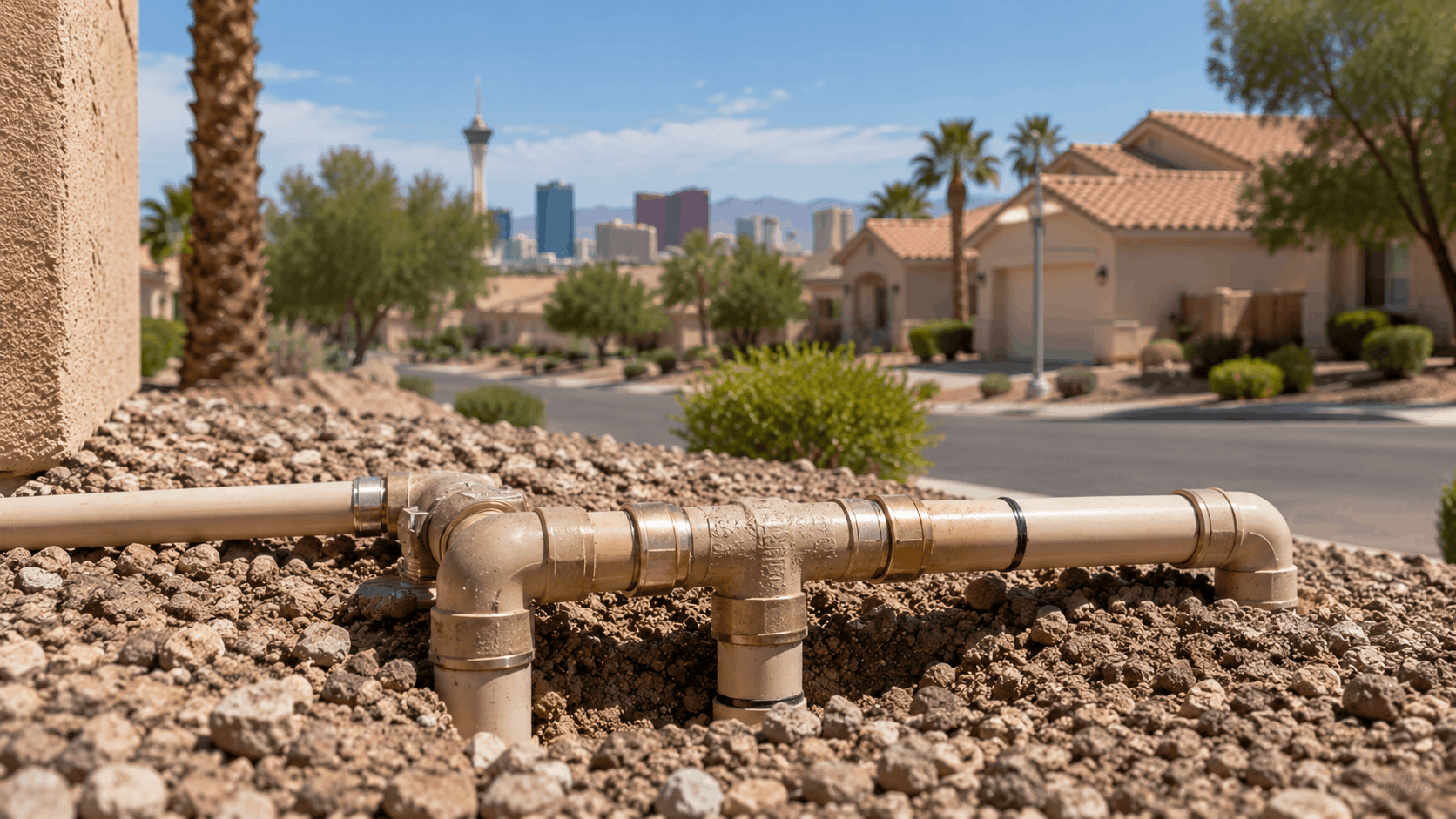
Polybutylene and Buying or Selling a Home Here
Polybutylene comes up constantly in valley real estate deals. It can affect price, insurance, and whether a sale closes at all. Both buyers and sellers need to understand how it plays out.
How Inspectors Flag It During a Sale
A home inspector almost always notes polybutylene when they find it. The gray pipe and PB stamp are well known red flags in the industry. Expect it to appear prominently in the inspection report.
Once it is in the report, buyers tend to ask for a credit, a price reduction, or a repipe before closing. The pipe becomes a negotiating point. Sellers who know about it ahead of time keep more control over the outcome.
Inspectors are not plumbers, so their note is often a recommendation to have a plumber evaluate it further. A plumbing assessment can confirm the extent and condition. That detail helps both sides reach a fair agreement.
The takeaway for sellers is to deal with it on your terms, not at the last minute. A surprise finding during escrow puts you on the back foot. Knowing in advance lets you plan.
Insurance Companies That Refuse to Cover It
Some insurers treat polybutylene as too risky to cover. They may deny a new homeowners insurance policy outright on a home that still has it. Others charge higher premiums to take on the risk.
A coverage denial can complicate a purchase because lenders require insurance. If a buyer cannot get a policy, the deal can stall. That is one more reason the pipe matters during a sale.
Even when coverage exists, a claim from a polybutylene leak may face scrutiny. Insurers sometimes argue the pipe was a known defect. That can leave a homeowner fighting over a denied claim.
Replacing the pipe usually resolves the insurance issue cleanly. A documented repipe makes the home insurable on normal terms. It removes the obstacle for the next buyer too.
Getting an Inspection Before You Close
If you are buying an older valley home, get a pre-purchase inspection that includes the plumbing. Have a plumber confirm the pipe type before you close. That plumbing check protects you from inheriting a costly surprise.
Knowing the pipe is polybutylene before closing gives you room to negotiate. You can ask the seller to repipe or adjust the price. After closing, that leverage is gone.
We perform pre-purchase plumbing inspections across Las Vegas, Henderson, and the surrounding valley. We confirm the material, check its condition, and explain your options in plain terms. You walk into the deal knowing exactly what you are buying.
Spending a little on an inspection now can save you thousands later. A repipe is a known quantity when you plan for it. A burst pipe three months after move-in is not.
Need Help in Las Vegas?
Active Plumbing serves Las Vegas and all of Las Vegas Valley.
Final Thoughts
Polybutylene was a cheap fix that became an expensive problem, and a lot of valley homes still carry it. If your house was built between 1978 and 1995, take a few minutes to check for gray plastic pipe at the water heater, under the sinks, and at the main line. Our hard water, chlorinated supply, and brutal attic heat all push this material toward failure faster than in milder places.
If you find polybutylene or you are not sure what you have, the smart move is to confirm it now rather than wait for a leak. Active Plumbing inspects, identifies, and repipes homes across Las Vegas, Henderson, Spring Valley, Sunrise Manor, and the rest of the valley. Contact our team or call us today to schedule an inspection and get a clear answer about your pipes before they decide for you.
Frequently Asked Questions
What does polybutylene pipe look like?
Polybutylene is a flexible plastic pipe that is usually dull gray, though it also came in blue and black. It bends slightly under finger pressure, unlike rigid copper or CPVC. The surest way to confirm it is the PB2110 stamp printed along the side of the pipe. Check the water heater, under sinks, and the main line where the pipe is exposed and the markings are readable.
What years were homes built with polybutylene in Las Vegas?
In the Las Vegas valley, polybutylene shows up mostly in homes built between roughly 1978 and 1995. That window covers the fast growth in Spring Valley, Paradise, Sunrise Manor, and the early Green Valley and Henderson tracts. Homes built after the mid 1990s, including most of Summerlin, generally use copper or PEX instead. Your build year is the single best clue when the pipe is hidden behind walls.
Is polybutylene pipe still legal?
Polybutylene is no longer allowed in new construction, since building codes stopped approving it for potable water by the mid 1990s. However, existing polybutylene in older homes is not illegal, and there is no requirement to remove it. It remains in walls across the valley perfectly legally. The risk is practical rather than legal, since the material tends to crack and leak as it ages.
How long does polybutylene pipe last?
Polybutylene is often cited with a lifespan of about 10 to 15 years, though some installations last longer. In our area, hard water, steady chlorine treatment, and extreme attic heat tend to shorten that window. Many valley homes still running original 1980s pipe are well past their expected life. Because failures come suddenly, living on borrowed time with this pipe is a gamble.
Can polybutylene pipe be repaired instead of replaced?
You can patch a single failed fitting or section, but it is only a short-term fix. Once one part fails, the rest of the chlorine-damaged system usually follows within months. Repeated patch repairs add up in cost and never solve the underlying problem. A full repipe with PEX or copper is the lasting answer and removes the risk of the next surprise leak.
How much does it cost to replace polybutylene in a Vegas home?
A whole home repipe for a single-family valley home generally runs between about $6,000 and $15,000. The exact price depends on home size, number of fixtures, story count, and whether you choose PEX or copper. PEX typically lands at the lower end of that range. We provide a written estimate after inspecting your specific layout so the number reflects your actual home.
Will my insurance cover a polybutylene leak?
Coverage varies a lot between insurers. Some companies deny new policies on homes with polybutylene, while others raise premiums or scrutinize claims tied to the pipe. A leak claim can be denied if the insurer treats the pipe as a known defect. Replacing the polybutylene usually clears the issue and makes the home insurable on normal terms going forward.
Do I have to disclose polybutylene when selling?
Nevada expects sellers to disclose known material defects in the property, and a plumbing system known to be failure-prone falls into that category. If you are aware your home has polybutylene, the honest and safer course is to disclose it. Buyers and inspectors usually find it anyway. Handling it openly, or repiping before listing, protects you and keeps the deal on track.
How long does a repipe take?
A typical single-story home in the valley can be repiped in about two to four days. Larger homes and two-story layouts take longer. In most cases we keep your water on overnight and during breaks in the work so you are never without service for long. We also handle permits and the final inspection as part of the schedule.
Can I check for polybutylene myself before calling a plumber?
Yes, a simple visual check works well as a first step. Grab a flashlight and look at the water heater connections, under bathroom and kitchen sinks, and where the main line enters the home. Watch for dull gray flexible pipe and the PB2110 stamp. If you find it or you are unsure, give us a call and we will confirm the pipe type and explain your options.
Frequently Asked Questions
- What does polybutylene pipe look like?
- Polybutylene is a flexible plastic pipe that is usually dull gray, though it also came in blue and black. It bends slightly under finger pressure, unlike rigid copper or CPVC. The surest way to confirm it is the PB2110 stamp printed along the side of the pipe. Check the water heater, under sinks, and the main line where the pipe is exposed and the markings are readable.
- What years were homes built with polybutylene in Las Vegas?
- In the Las Vegas valley, polybutylene shows up mostly in homes built between roughly 1978 and 1995. That window covers the fast growth in Spring Valley, Paradise, Sunrise Manor, and the early Green Valley and Henderson tracts. Homes built after the mid 1990s, including most of Summerlin, generally use copper or PEX instead. Your build year is the single best clue when the pipe is hidden behind walls.
- Is polybutylene pipe still legal?
- Polybutylene is no longer allowed in new construction, since building codes stopped approving it for potable water by the mid 1990s. However, existing polybutylene in older homes is not illegal, and there is no requirement to remove it. It remains in walls across the valley perfectly legally. The risk is practical rather than legal, since the material tends to crack and leak as it ages.
- How long does polybutylene pipe last?
- Polybutylene is often cited with a lifespan of about 10 to 15 years, though some installations last longer. In our area, hard water, steady chlorine treatment, and extreme attic heat tend to shorten that window. Many valley homes still running original 1980s pipe are well past their expected life. Because failures come suddenly, living on borrowed time with this pipe is a gamble.
- Can polybutylene pipe be repaired instead of replaced?
- You can patch a single failed fitting or section, but it is only a short-term fix. Once one part fails, the rest of the chlorine-damaged system usually follows within months. Repeated patch repairs add up in cost and never solve the underlying problem. A full repipe with PEX or copper is the lasting answer and removes the risk of the next surprise leak.
- How much does it cost to replace polybutylene in a Vegas home?
- A whole home repipe for a single-family valley home generally runs between about $6,000 and $15,000. The exact price depends on home size, number of fixtures, story count, and whether you choose PEX or copper. PEX typically lands at the lower end of that range. We provide a written estimate after inspecting your specific layout so the number reflects your actual home.
- Will my insurance cover a polybutylene leak?
- Coverage varies a lot between insurers. Some companies deny new policies on homes with polybutylene, while others raise premiums or scrutinize claims tied to the pipe. A leak claim can be denied if the insurer treats the pipe as a known defect. Replacing the polybutylene usually clears the issue and makes the home insurable on normal terms going forward.
- Do I have to disclose polybutylene when selling?
- Nevada expects sellers to disclose known material defects in the property, and a plumbing system known to be failure-prone falls into that category. If you are aware your home has polybutylene, the honest and safer course is to disclose it. Buyers and inspectors usually find it anyway. Handling it openly, or repiping before listing, protects you and keeps the deal on track.
- How long does a repipe take?
- A typical single-story home in the valley can be repiped in about two to four days. Larger homes and two-story layouts take longer. In most cases we keep your water on overnight and during breaks in the work so you are never without service for long. We also handle permits and the final inspection as part of the schedule.
- Can I check for polybutylene myself before calling a plumber?
- Yes, a simple visual check works well as a first step. Grab a flashlight and look at the water heater connections, under bathroom and kitchen sinks, and where the main line enters the home. Watch for dull gray flexible pipe and the PB2110 stamp. If you find it or you are unsure, give us a call and we will confirm the pipe type and explain your options.
A
Licensed plumbing professionals serving Las Vegas and Las Vegas Valley.
Licensed in Nevada · License #0047021
Last updated on
Why trust Active Plumbing?
Founded in 1991, Active Plumbing is a licensed and insured plumber serving Las Vegas and Las Vegas Valley. All content is reviewed by our licensed technicians.

Need Help in Las Vegas?
Active Plumbing serves Las Vegas and all of Las Vegas Valley.
Related Articles

How-To Guides
Best Drain Cleaning Method for Las Vegas Hard Water Buildup
Las Vegas hard water ranks among the harshest in the US. Learn which drain cleaning methods actually work on mineral scale - and when to call a professional.
Tips & Advice
Henderson vs Las Vegas Water Pressure: Why Some Neighborhoods Have PRV Issues
Henderson vs Las Vegas water pressure varies by terrain, utility systems, and neighborhood age. Learn why PRV issues hit some areas harder and when to act.
How-To Guides
Whole-House Repipe in Las Vegas: Copper vs PEX for Desert Climate
Las Vegas homeowners face faster pipe failure from hard water and desert heat. Compare copper vs PEX for a whole-house repipe and learn what Active Plumbing recommends for valley homes.