Repipe vs Reroute After a Las Vegas Slab Leak: The Second-Leak Statistics That Decide It
Key Takeaways
- A slab leak is a break in a water line under the concrete foundation, common in valley homes due to hard water and slab-on-grade construction.
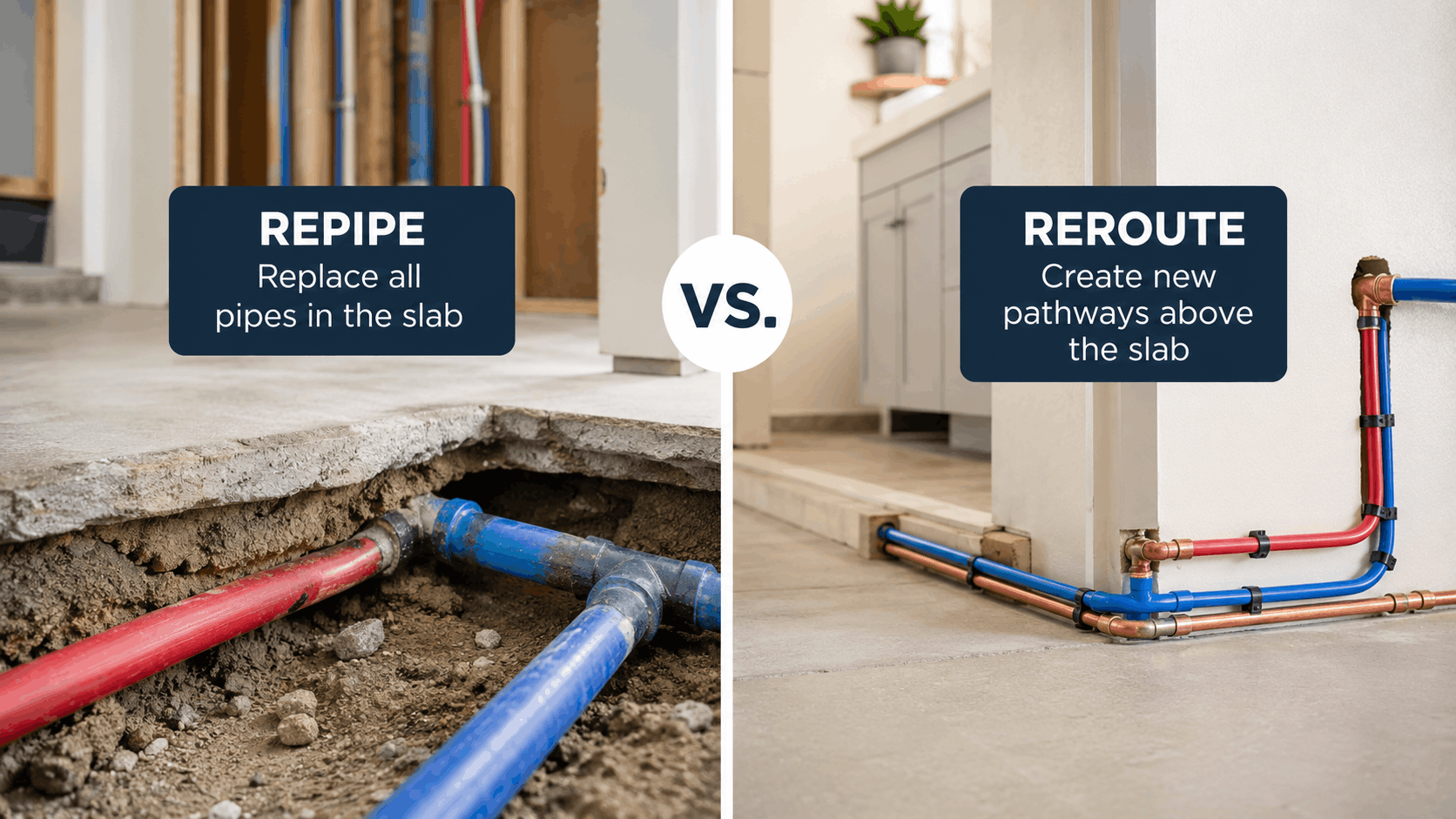
- A reroute bypasses one failed line, while a whole-house repipe replaces all supply lines, usually with PEX.
- On aging copper systems, a second leak after a spot repair is common, often within one to three years, because the whole system aged together.
- For older copper homes, a full repipe usually beats a reroute on ten-year cost by ending the repeat-leak cycle; newer PEX homes often suit a reroute.
- Reroutes typically run $1,500 to $5,000 while whole-house repipes run $6,000 to $15,000 or more, plus drywall, flooring, and cleanup costs.
- Insurance may cover leak access and water damage but often excludes pipe repair, and permits are generally required for repipes in Clark County.
- Water providers commonly offer a leak adjustment credit once a confirmed leak is repaired, if requested within a few months.
- An honest on-site diagnosis of pipe age, material, and layout is the best way to decide between a reroute and a repipe.
In This Article
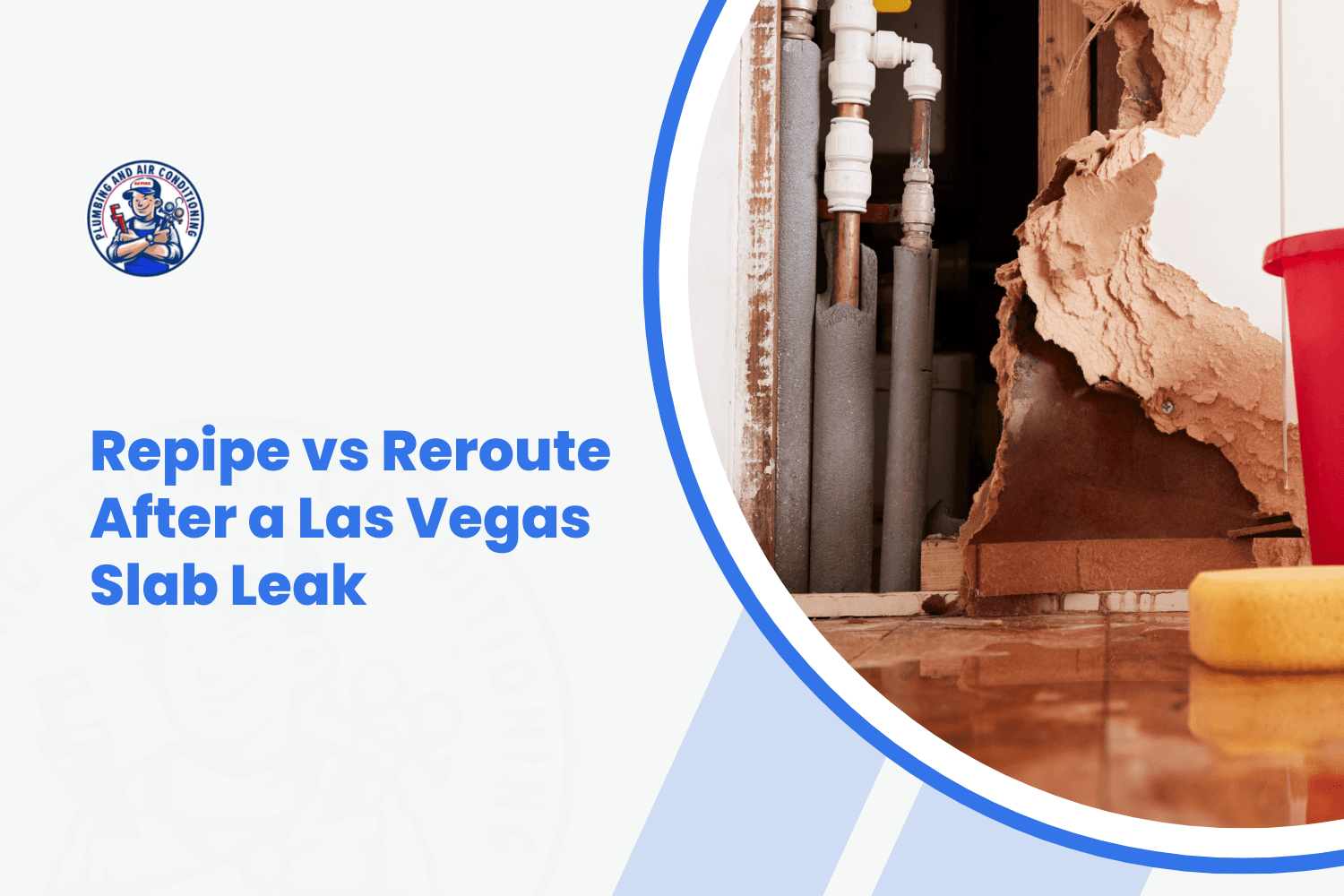
A homeowner in Summerlin walks across the kitchen barefoot one morning and stops cold. There is a warm patch on the tile that was not there yesterday. A week later, the water bill jumps by sixty dollars with no change in habits. That combination points to one thing our team sees across the valley almost every week: a slab leak.
When a slab leak turns up, most people face the same fork in the road. Do they pay for a smaller reroute, or bite the bullet on a whole-house repipe? The answer is not just about the price tag today. It comes down to the odds of a second leak showing up a year or two from now.
What a Slab Leak Actually Is and Why Las Vegas Homes Get Them
A slab leak is a break or pinhole in a water line that runs beneath the concrete foundation of a home. Because the pipe sits under solid concrete, the water has nowhere to go but into the slab, the soil, or up through the floor. That is why the first sign is often a warm spot on the floor rather than a visible puddle.
Las Vegas plumbing takes a beating from the local water and the way homes here are built. Slab-on-grade construction is the norm across the valley, which means the under-slab pipe carries hot and cold water directly beneath living spaces. When one of those lines fails, the repair gets complicated fast.
A few local conditions make these leaks more common here than in many other parts of the country:
- Extremely hard, mineral-heavy tap water that wears on metal from the inside out
- Slab-on-grade foundations that put supply lines under concrete instead of in a basement
- Big temperature swings that cause pipes to expand and rub against the slab
- Soil movement across the valley that stresses buried lines over the years
How Water Ends Up Leaking Under the Concrete
In most valley homes, supply lines branch off the main and run through or below the foundation slab to reach kitchens, baths, and laundry areas. Hot water lines usually fail first because heat speeds up corrosion and expansion. When a copper pipe rubs against the rough concrete over time, the outer wall thins until a pinhole forms.
A pinhole leak might drip quietly for months before anyone notices. The water follows the path of least resistance, sometimes surfacing through a crack in the tile and sometimes escaping into the soil under the foundation slab. Either way, the pressure loss and constant moisture start to show up in bills and floors.
Not every slab leak comes from corrosion. Some start with a manufacturing flaw or a spot where the pipe was kinked during the original build. A fitting that was soldered poorly decades ago can also give out, especially on a hot line that cycles temperature all day.
Once a leak begins, it rarely heals or slows on its own. The moving water widens the opening, and mineral buildup can mask the problem until the flow becomes serious. That is why early detection matters so much for keeping repair costs down.
Hard Water and Chlorine in the Valley
Water from the Las Vegas Valley Water District comes largely from the Colorado River by way of Lake Mead. That source is naturally high in dissolved minerals, which is why homeowners here fight scale on faucets, glass doors, and water heaters. The same hard water flows through the copper pipes buried under the slab.
Over years of contact, hard water and disinfectants like chlorine chip away at copper from the inside. This copper corrosion starts as tiny surface pitting and slowly eats through the pipe wall. On hot water lines the process moves more quickly because heat speeds up the chemistry.
The U.S. Environmental Protection Agency treats chloramine as a safe and common drinking water disinfectant, and it is used across many public systems. It does the job of keeping water clean, but it can be tough on older metal plumbing over decades of exposure. You can read more about it on the EPA chloramines page.
Many homeowners slow this wear by adding a water softener or a whole-home conditioning system. Softer water is easier on both the pipes and the fixtures. It will not undo damage already done, but it can extend the life of new plumbing after a repair.
Older Homes Near the East Side and Newer Builds in Summerlin
Home age tells us a lot about leak risk before we ever pop a panel. Older neighborhoods like Charleston Heights and the streets around East Sahara were built with copper supply lines that have now spent forty or more years in contact with hard water. Those systems are prime candidates for slab leaks.
In those east-side and central homes, when we find one corroded line, the rest of the copper is usually the same age and the same batch. That changes the whole conversation about reroute versus repipe, which we cover in detail below. The pipe simply has a lot of miles on it.
Newer developments tell a different story. Many homes in Summerlin and other master-planned areas were built with PEX or a mix of copper and PEX. PEX resists the pitting corrosion that plagues copper, so leaks in those homes more often come from fittings, ground movement, or install defects rather than worn-out pipe walls.
That said, even a ten-year-old home can throw a slab leak. We have chased them in Summerlin West and across the newer edges of the valley. The repair path in those cases usually looks very different from what an older Charleston Heights home needs.
Warning Signs Homeowners Notice First
The earliest red flag is almost always a water bill spike with no change in usage. If a household of four suddenly uses the water of a household of eight, something is running that should not be. A slab leak lets water flow around the clock.
A warm floor is the classic tell for a hot-water slab leak. Homeowners describe a patch of tile or laminate that feels warm underfoot even when the heat is off. That warmth traces the path of hot water escaping into the slab below.
Other leak signs include the sound of running water when every fixture is off, a drop in water pressure, or a spot on the floor that stays damp. Some people notice a musty smell or see hairline cracks appear in the tile grout. Any one of these deserves a closer look.
When two or more of these signs stack up together, it is time to call for professional leak detection. Catching a slab leak early keeps the repair smaller and the water damage minimal. Waiting turns a manageable fix into a much larger project.
Get Your Quote
Tell us what's going on and we'll get back to you. We're open 24/7.
Reroute vs Repipe: What Each Repair Really Means
Once a slab leak is confirmed, the repair choice usually narrows to two real options: reroute the affected line or repipe the whole house. Both bypass the failed pipe under the slab, but they differ sharply in scope. A slab leak repair should match the condition of the whole system, not just the one leaking spot.
Understanding the difference upfront saves homeowners from paying twice. Here is a side-by-side look at the main approaches before we break each one down.
| Method | What It Covers | Best For | Typical Lifespan |
|---|---|---|---|
| Spot Repair | One leak, accessed through the slab | Very new pipe, single defect | Uncertain |
| Reroute Plumbing | Abandons one line, runs new pipe through walls or attic | Isolated leak, otherwise sound system | Decades for the new line |
| Whole-House Repipe | Replaces all supply lines with new material | Older copper, multiple risk lines | 40 plus years |
How a Reroute (Single-Line Bypass) Works
A line reroute leaves the leaking pipe in the slab and simply stops using it. Instead of digging through concrete, the plumber runs a fresh line from the source to the fixture through the walls, ceiling, or attic. The old line gets capped at both ends and abandoned in place.
The attic run is common in valley homes because it avoids tearing up floors. New pipe drops down inside a wall cavity to reach a sink, shower, or water heater. This pipe bypass restores full water service to that fixture without touching the foundation.
A reroute is quicker and cheaper than a repipe because it targets a single line. It also skips the mess and cost of cutting concrete. For a home with one bad line and otherwise healthy plumbing, it can be the right call.
The catch is that a reroute only fixes the one line that failed. If the rest of the system is the same age and material, those lines carry the same risk. That is where the second-leak numbers come into play.
How a Whole-House Repipe Works
A repipe replaces every supply line in the home, usually with PEX piping. The old copper stays in the slab, abandoned, while new lines route through walls and the attic to every fixture. When the job is done, no water flows through the aging under-slab copper at all.
PEX has become the go-to material for repipes in the valley for good reason. It flexes, resists the pitting corrosion that hard water causes in copper, and installs with fewer joints. Fewer joints mean fewer potential failure points down the road.
A repipe is a bigger job than a reroute. It touches more walls, takes more days, and costs more upfront. Our pipe and fixture team handles the access cuts, the new runs, and the reconnection of every faucet and appliance.
The payoff is a clean slate. All the supply lines start fresh on the same day, so the home is not carrying old pipe that could fail next year. For older copper homes, this is often the smarter long-term move.
The Spot Repair Option and Why It Rarely Pays Off
A spot repair means jackhammering through the slab to reach and fix the single leaking section. It sounds cheap because it targets just one spot. In practice, the slab access alone can eat up the savings.
Cutting concrete is loud, dusty, and slow. The crew has to break the floor, dig to the pipe, make the repair, then patch the concrete and refinish the flooring above it. That concrete cut leaves a scar that flooring work has to hide.
The bigger problem is what a spot repair ignores. It fixes the one hole while leaving the rest of the same-age pipe in the ground. On a corroded copper system, that is like patching one bald tire and driving off on three more that are just as worn.
We rarely recommend a spot repair unless the pipe is genuinely new and the leak came from a one-off defect or a nail strike. For most valley homes with older copper, the money is better spent on a reroute or repipe that actually reduces future risk.
Which Homes Suit Which Method
Home layout, pipe material, and age drive the right choice more than anything else. A single-story home with an accessible attic is easy to reroute or repipe because new lines drop straight down into walls. A two-story with finished ceilings takes more work and more access cuts.
Pipe material is the next big factor. A home with PEX that springs a leak from a fitting or ground shift is a good reroute candidate, since the rest of the PEX is likely fine. A home with original copper from the 1970s or 1980s is a different story entirely.
Age ties it all together. Copper systems past the thirty-five year mark in valley water are living on borrowed time. When one line fails at that age, the odds that a second follows within a few years climb sharply.
Our approach is to match the fix to the whole system, not just the leak. A newer home usually gets a reroute. An older copper home usually gets a repipe. The next section explains why the numbers back that up.

Need Help in Las Vegas?
Active Plumbing serves Las Vegas and all of Las Vegas Valley.
The Second-Leak Statistics That Change the Decision
Here is the part that settles most of these debates. The core question is not just what the first repair costs. It is how likely a second leak becomes once the first one appears, and how each repair method changes those odds.
Leak recurrence is the reason a cheap fix often turns out to be the expensive one. When we look at the repair failure rate across valley homes, the pattern is consistent enough to guide real decisions. The pipe that leaked is a warning about the pipe that has not leaked yet.
How Often a Second Leak Shows Up After a Spot Repair
On aging copper systems, a second leak after a spot repair is common rather than rare. Industry experience and our own field work point to a recurrence rate that often lands in the range of one in two to two in three within a few years on older copper. The repaired spot holds, but a new spot fails nearby.
Most repeat leaks show up within one to three years of the first. That timeframe lines up with how corrosion works. When the pipe wall has thinned enough to fail in one place, it is usually thin in several other places along the same run.
Copper failure is not random on these systems. It follows the water chemistry, the temperature cycling, and the years in service. A spot repair does nothing to change any of those factors for the rest of the pipe.
That is why we tell homeowners to think past the first fix. A spot repair that costs less today can lead to two or three more callouts before the decade is out. Each one brings fresh concrete cutting and floor damage.
Why One Corroded Pipe Usually Means Others Are Failing
Systemic corrosion is the core idea behind the second-leak math. The supply lines in a home were installed at the same time, from the same batch of copper, carrying the same water at the same temperatures. When one line reaches the end of its life, the others are close behind.
Pipe age is the great equalizer here. A home does not have one old pipe and a bunch of young ones. It has a whole system that aged together, and the leak simply marks the first pipe to give out.
The same-batch copper matters because manufacturing quality and wall thickness were shared across the whole install. If the copper was on the thinner side or the water was especially hard, every line felt it. The first failure is the canary, not the exception.
This is the reason a whole-house repipe often makes more sense than repairing one line on an old system. Replacing everything at once addresses the systemic problem instead of chasing it pipe by pipe. It swaps a recurring headache for a single solution.
Reroute Odds vs Full Repipe Odds Over Ten Years
Look at the ten-year outlook and the choice gets clearer. A single reroute on an older copper home fixes one line, but the remaining copper still carries a high leak probability over the next decade. It is realistic to expect one or more additional slab leaks in that window.
A full repipe resets that clock. With all-new PEX, the ten-year leak probability drops close to zero for age-related failures. The home is no longer running water through pipe that is past its prime.
Put simply, the long-term repair math favors the repipe on older systems. Homeowners who reroute one line on 1980s copper often call us back within a couple of years for the next leak. Those who repipe rarely call back for the same problem.
On newer homes the math flips. A reroute on a PEX system usually solves the problem for good because the rest of the pipe has decades of life left. The right answer depends entirely on the age and material of what is already in the walls and slab.
What the Numbers Look Like on Local Copper Systems
On valley plumbing built in the 1980s and earlier, we see the recurrence pattern play out again and again. Copper piping that has spent thirty-five or more years in hard water tends to fail in clusters once it starts. One leak in the spring can become three by the next year.
Homes in older east-side neighborhoods and the central valley are where we see this most. The copper is the right age, the water has been hard the whole time, and the hot lines have cycled temperature for decades. All the ingredients for repeat leaks are present.
Newer copper, say from the late 1990s or 2000s, sits in a middle zone. It may have years left or it may be entering the risk window, depending on how the specific home was built. That is a case where an on-site look really matters.
We use this local pattern to give honest advice rather than a one-size answer. For genuinely old copper, the repipe usually wins on ten-year cost. For newer systems, a targeted reroute often does the job.
Cost Comparison: Reroute, Repipe, and the Hidden Expenses
Money drives the decision for most households, so it helps to see the real ranges side by side. The sticker price of a repair is only part of the story. Restoration, future repairs, and water damage all belong in the total.
Here is a general breakdown of what valley homeowners can expect. Actual numbers depend on home size, pipe access, and how much the leak has already damaged.
| Repair Type | Typical Range | Restoration Cost | Future Leak Risk |
|---|---|---|---|
| Spot Repair | $1,500 - $4,000 | Concrete and flooring | High on old copper |
| Single-Line Reroute | $1,500 - $5,000 | Drywall patches | Moderate to high on old copper |
| Whole-House Repipe | $6,000 - $15,000+ | Multiple drywall areas | Very low |
Typical Price Ranges in the Las Vegas Area
In the local market, a single-line reroute usually falls somewhere between fifteen hundred and five thousand dollars. The price range depends on how far the new line has to travel and how hard it is to reach the walls and attic. A short bypass to a nearby bathroom sits at the low end.
A whole-house repipe in Las Vegas typically runs from six thousand to fifteen thousand dollars or more. Labor cost is the biggest driver, since a crew spends multiple days opening walls, running new PEX, and reconnecting every fixture. Larger and two-story homes push toward the top of that range.
Las Vegas rates reflect the skilled labor involved and the access work that valley slab homes require. Cutting drywall, protecting floors, and pulling permits all factor into the quote. A fair estimate spells out each of these pieces instead of lumping them together.
These are ballpark figures, not promises. The only way to get an accurate number is an on-site look at the home, the pipe, and the leak. We give written estimates so homeowners can compare fairly.
Drywall, Flooring, and Cleanup Costs
Plumbing repair is only half the project. Once the new lines are in, drywall repair, texture, and paint follow to close the access holes. Those restoration costs can add hundreds to a few thousand dollars depending on how many walls were opened.
A reroute usually means a handful of drywall patches along the pipe path. A repipe touches more of the home, so there are more spots to close and refinish. Matching older texture and paint takes skill to make the patches disappear.
Flooring enters the picture when a spot repair cuts the slab. Tile, laminate, or wood over the cut has to be pulled and replaced, and matching existing flooring is not always possible. That single detail is a big reason spot repairs cost more than they first appear.
Cleanup rounds out the job. Concrete dust, drywall dust, and debris all need proper removal. A good crew protects belongings and leaves the home livable, not a construction zone.
The Cost of a Second Repair Down the Road
This is where the second-leak numbers hit the wallet. A reroute or spot repair on old copper often means a future repair within a couple of years. When that repeat cost lands, the cheaper fix stops looking cheap.
Add it up over a decade. Two or three separate leak repairs, each with its own detection fee, drywall work, and restoration, can easily exceed the price of a single repipe. The long-term value of doing it once is real.
Every repeat visit also carries disruption. Water gets shut off, walls get opened again, and the household loses time. Those costs do not show up on an invoice but they are still costs.
We lay out this math for homeowners so the decision is clear-eyed. Sometimes the reroute truly is the best value. On tired copper, spending more now usually saves more later.
Water Damage and Mold Risk to the Budget
A slab leak left alone does more than waste water. Constant moisture under and around the foundation slab creates a mold risk inside walls and under flooring. Once mold takes hold, remediation adds a serious line item to the budget.
Water damage can also reach baseboards, subfloor, and cabinetry. The longer a leak runs, the wider that damage spreads. What started as a plumbing fix turns into a repair job across several trades.
In the worst cases, prolonged leaking affects the foundation itself as soil shifts and voids form. That kind of structural risk is expensive to correct and worth avoiding at all costs. Fast action keeps a leak from ever reaching that point.
This is why we treat active slab leaks as urgent. Our emergency plumbing team can stop the flow quickly and limit the damage while the repair plan comes together. Catching it early protects both the home and the budget.

Need Help in Las Vegas?
Active Plumbing serves Las Vegas and all of Las Vegas Valley.
Insurance, Water Districts, and Permits in Clark County
Beyond the plumbing itself, three outside players shape a slab leak project: the insurance company, the local building department, and the water provider. Knowing how each one works helps a homeowner plan and avoid surprises. HOA rules add a fourth layer in many communities.
Sorting this out early keeps the project moving. A little paperwork upfront saves headaches later.
What Homeowners Insurance Usually Covers
Homeowners insurance and slab leaks have a complicated relationship. Many policies cover the cost to access the leak and repair the resulting water damage, but not the pipe repair itself. In other words, they may pay to open and close the slab or wall while excluding the plumbing labor.
Coverage varies widely between carriers and policies. Some include a water damage policy provision that helps with drywall, flooring, and mold cleanup. Others exclude gradual leaks, arguing the damage built up slowly over time.
Filing a slab leak claim usually requires documentation. A leak detection report and photos help show the cause and the damage. We provide detailed findings that homeowners can hand straight to their adjuster.
It pays to call the insurer early and read the policy closely. The Nevada Division of Insurance offers consumer guidance for homeowners with coverage questions, available on the Nevada Division of Insurance website. Knowing what is covered before work starts prevents disputes later.
Permits and Inspections Through the Building Department
A whole-house repipe generally requires a building permit in Clark County. The permit ensures the new work meets plumbing code and passes inspection. A licensed plumber pulls the permit and schedules the inspection as part of the job.
Reroutes may or may not need a permit depending on scope. A larger reroute that changes several lines usually does, while a minor bypass sometimes falls under repair rules. When in doubt, permitting is the safe path and protects resale value.
Inspection confirms the work is done right. An inspector checks the new lines, connections, and pressure before the walls close. That third-party check gives the homeowner confidence the repair will last.
Homeowners can verify permit requirements through the county. The Clark County Building and Fire Prevention department publishes the rules and process. We handle this step so homeowners do not have to chase it themselves.
Working With Your Water Provider on Bill Adjustments
A slab leak can dump thousands of gallons before it is found, and that shows up on the bill. Most water providers offer a leak adjustment or billing credit once a confirmed leak has been repaired. The credit refunds part of the excess charge tied to the leak.
The process usually starts with a request form and proof of repair. A paid invoice from a licensed plumber and a leak detection report typically satisfy the requirement. The provider then reviews the usage spike against the repair date.
Timing matters here. Most programs require the request within a set window after the repair, often a few months. Waiting too long can forfeit the credit entirely.
We give homeowners the documentation they need to file. A clear repair invoice and detection findings make the leak adjustment request smoother. It is worth the small effort to recover part of an inflated bill.
HOA Rules in Communities Like Green Valley and Aliante
Many valley homes sit inside managed communities with their own rules. In areas like Green Valley in Henderson and Aliante in North Las Vegas, HOA rules can affect exterior work, noise hours, and scheduling. A repipe that needs any outside access may require HOA notice or approval.
Noise is a common HOA concern. Concrete cutting and crew activity have to fit within allowed hours, which vary by community. Planning the work around those windows keeps everyone on good terms.
Some HOAs also govern shared walls and utility connections in attached homes. Coordinating with the association prevents violations and fines. It also keeps neighbors informed when work might affect them.
Our team is used to working within HOA guidelines across the valley. We schedule around quiet hours and keep the work area tidy. Managing these details is part of a smooth project in a managed community.
The Repair Process Step by Step
Knowing what to expect takes the stress out of a slab leak repair. From the first leak detection appointment to the final pressure test, the process follows a predictable path. Here is how a typical project unfolds.
| Stage | What Happens | Typical Time |
|---|---|---|
| Detection | Locate the leak with acoustic and pressure tools | 1 - 2 hours |
| Plan and Quote | Recommend reroute or repipe, provide estimate | Same day |
| Reroute | Run new line, patch drywall | 1 - 2 days |
| Repipe | Replace all supply lines, close walls | 2 - 5 days |
| Test and Inspect | Pressure test, final inspection | Same day as finish |
Locating the Leak With Electronic Detection
The first step is finding the leak without tearing up the whole floor. Electronic leak detection uses acoustic sensors that listen for the sound of water escaping under the slab. A trained tech can pinpoint the spot to within a small area.
A pressure test confirms the diagnosis. By isolating sections of the system and watching for pressure drops, the tech verifies which line is leaking. This narrows the work to exactly where it is needed.
Acoustic and pressure methods together keep the job clean. Instead of guessing and cutting, the crew opens only the spots that matter. Our electronic leak detection service saves homeowners from unnecessary damage.
Accurate detection also feeds the repair decision. Knowing the location and the pipe condition tells us whether a reroute or repipe fits best. Good data at the start makes the rest of the project smoother.
Timeline for a Reroute vs a Full Repipe
A reroute is the quicker of the two. Most single-line reroutes wrap up in one to two days, and the water shutoff is limited to a few hours while the new line is connected. Homeowners are often back to normal service by that evening.
A full repipe takes longer because every line is replaced. The project runs two to five days depending on home size and layout. Water is off for stretches during the work but usually restored each night.
The repair timeline also depends on access. A single-story home with an open attic moves more quickly than a two-story with finished ceilings. We give a realistic schedule upfront so households can plan.
Weather rarely stops indoor plumbing work in the valley, which helps. The bigger scheduling factor is drywall drying and paint between steps. We sequence the work to keep momentum without cutting corners.
Living in the Home During the Work
Most homeowners stay home during a reroute without much trouble. The water is off only briefly, and the work is confined to a few areas. A little prep goes a long way toward comfort.
A repipe brings more disruption, but staying home is still doable for many families. Filling a few water containers before a shutoff helps with cooking and washing. Knowing the daily schedule lets the household plan around water-off windows.
Prep tips make the project easier on everyone. Clearing access to walls, closets, and the water heater speeds the crew along. Moving valuables and covering nearby furniture protects belongings from dust.
For larger repipes or households with young children, some families choose to stay elsewhere for a night or two. It is a personal call based on tolerance for dust and noise. We work to keep the home livable throughout.
Final Testing and Warranty
Before we call a job done, the new system gets a full pressure test. This confirms every joint holds and there are no new leaks in the fresh lines. The test protects the homeowner from a callback later.
A final inspection follows on permitted work. The county inspector verifies the repair meets code, which matters for resale and insurance. Passing inspection is the official sign-off that the work is sound.
Warranty terms should be clear and in writing. A solid repipe warranty covers both labor and materials, with PEX manufacturers often backing the pipe for decades. Labor coverage of at least one year is a reasonable baseline for quality work.
We stand behind our repairs with a warranty homeowners can count on. A good warranty is a sign the plumber trusts the work. Ask for the terms in writing before the job begins.

Need Help in Las Vegas?
Active Plumbing serves Las Vegas and all of Las Vegas Valley.
How Active Plumbing Helps Las Vegas Homeowners Decide
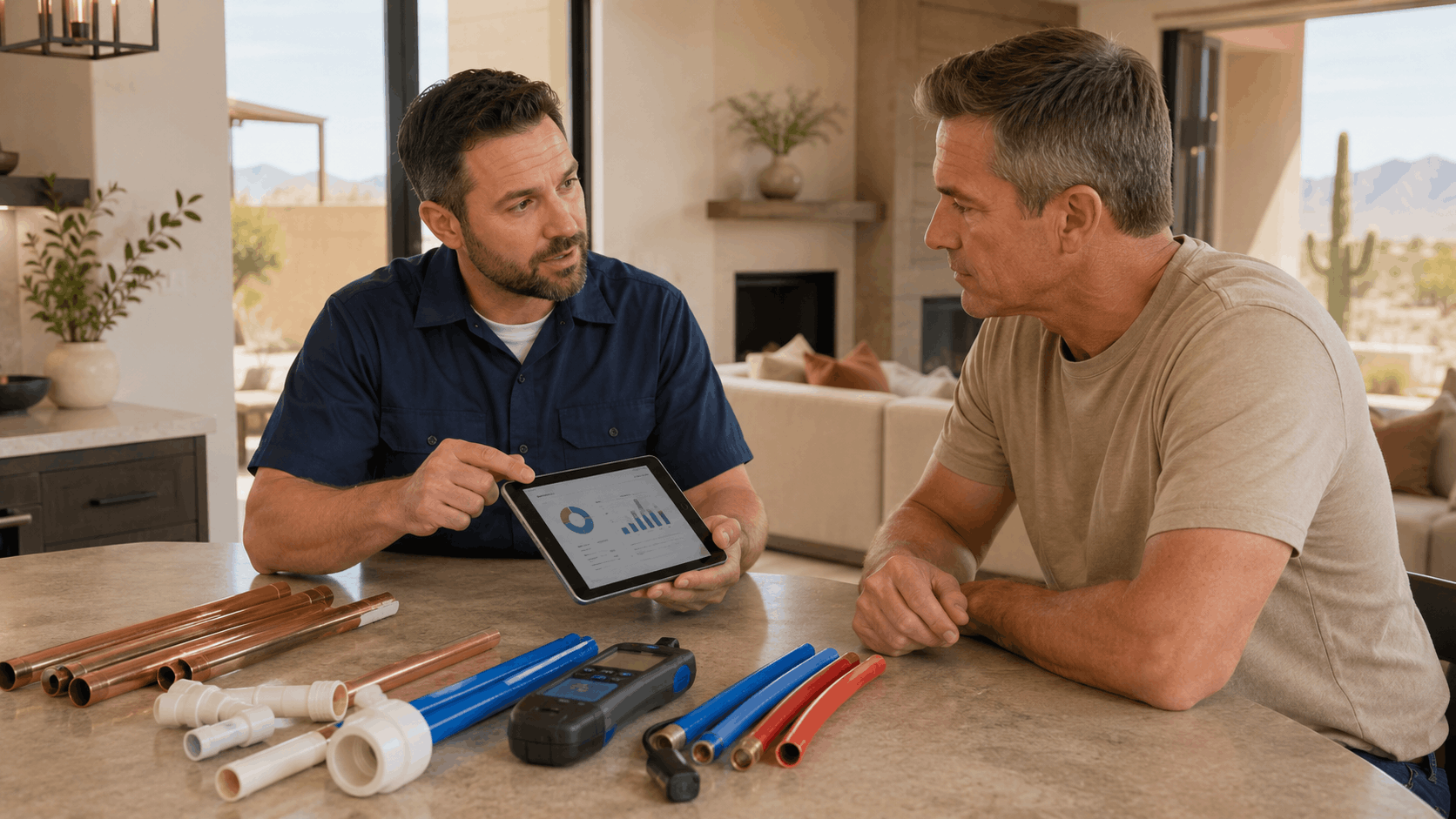
Choosing between a reroute and a repipe should not be a guessing game. Active Plumbing helps valley homeowners make the call with real data and an honest look at the home. As a local Las Vegas plumber, our slab leak service starts with facts, not a sales pitch.
Here is how our team approaches every slab leak:
- On-site inspection before any recommendation
- Honest advice weighed against second-leak odds
- Local knowledge of valley water and slab construction
- Fast response for active leaks
On-Site Diagnosis Across the Valley
Every home is different, so we start by looking at yours. Our team inspects properties from Henderson to North Las Vegas and everywhere in between. That in-person visit tells us the pipe material, the age, and the leak location.
We serve the whole valley, including Henderson, North Las Vegas, and the central Las Vegas neighborhoods. Knowing the area helps us anticipate what we will find. Homes in certain neighborhoods share build eras and pipe types.
The inspection is where guesswork ends. Acoustic detection, a pressure test, and a visual check of accessible plumbing give us the full picture. From there we can lay out honest options.
No two recommendations are identical because no two homes are. A 1980s copper home gets different advice than a newer PEX build. The on-site look is what makes the recommendation reliable.
Honest Recommendations Based on Pipe Age and Layout
Our advice hinges on the specifics: pipe age, material, and home layout. We weigh the second-leak odds against the cost for each home individually. That home assessment leads to a recommendation the homeowner can trust.
For a newer home with an isolated leak, we often recommend a reroute because the rest of the pipe has years left. For older copper that is failing systemically, we usually recommend a repipe to head off repeat leaks. We explain the reasoning either way.
We do not push the bigger job when the smaller one is right. The goal is the best long-term value for the homeowner, not the largest invoice. When a reroute solves the problem, that is what we suggest.
We also lay out the numbers so the choice is clear. Homeowners see the cost today alongside the ten-year outlook. That transparency helps them decide with confidence.
Local Experience With Valley Water Conditions
Years of work across the valley have taught us how local water treats pipe. Hard water from Lake Mead wears copper down in patterns we recognize on sight. That local experience sharpens every diagnosis.
Slab construction here is its own challenge. Slab-on-grade homes hide their plumbing under concrete, so knowing how these homes are built speeds up the work. We know where lines tend to run and where they tend to fail.
We also see how newer materials perform over time. PEX has held up well against valley water, which shapes our repipe recommendations. Firsthand experience beats generic advice every time.
Homeowners fighting hard water often ask about prevention too. A water treatment system can ease the strain on new plumbing after a repair. We are happy to talk through those options during the visit.
Emergency Response and Scheduling
An active slab leak does not wait for business hours. Our emergency plumber team responds fast to stop the flow and limit damage. Quick action keeps a leak from becoming a flood.
Fast response matters most in those first hours. Shutting off the affected line and drying the area protects the home while the repair plan takes shape. We prioritize active leaks across the valley.
Scheduling the repair works around families and HOAs. We book the work at times that fit the household and respect community quiet hours. Clear communication keeps everyone in the loop.
When a warm floor or a spiking bill shows up, calling early saves money and stress. Reach out to our team and we will get a diagnosis on the calendar. The sooner we look, the smaller the fix tends to be.
Final Thoughts
The choice between a reroute and a repipe comes down to the odds of a second leak. On newer homes with isolated leaks, a reroute usually solves the problem for good. On older copper systems, the second-leak numbers push most homeowners toward a full repipe that stops the cycle.
Cost, insurance, permits, and HOA rules all factor in, but the pipe itself tells the real story. Aging copper that failed once tends to fail again, and paying twice costs more than doing it once. An honest on-site diagnosis is the only way to know which path fits a specific home.
If a warm floor, a running-water sound, or a jump in the water bill has shown up, do not wait for the damage to spread. Call Active Plumbing or reach out through our contact page for a slab leak diagnosis and a straight answer. Our valley team will find the leak, explain the options, and help decide the smart way forward.
Frequently Asked Questions
- How do I know if my slab leak needs a reroute or a full repipe?
- The deciding factors are pipe age, material, and the odds of a second leak. A newer home with PEX and one isolated leak is usually a good reroute candidate. An older home with original copper past thirty-five years often needs a repipe, because the rest of the same-age copper is likely to fail next. An on-site inspection with leak detection gives the clearest answer for your specific home.
- How likely is a second slab leak after a spot repair?
- On aging copper systems, a second leak is common, often landing between one in two and two in three within a few years. Most repeat leaks appear within one to three years of the first. This happens because of systemic corrosion: the supply lines aged together from the same batch of copper. Fixing one spot does nothing to change the water chemistry or wear on the rest of the pipe.
- How much does a whole-house repipe cost in Las Vegas?
- A whole-house repipe in the Las Vegas area typically runs from six thousand to fifteen thousand dollars or more. Home size, number of bathrooms, single or two-story layout, and pipe access all affect the total. Drywall repair, texture, and paint add to the figure. The only way to get an accurate number is an on-site look, and we provide written estimates so homeowners can compare fairly.
- Does homeowners insurance cover slab leak repairs?
- It depends on the policy. Many carriers cover the cost to access the leak and repair the resulting water damage, such as opening and closing the slab or wall. The pipe repair labor itself is often excluded, and gradual leaks are sometimes denied. Filing a claim usually requires a leak detection report and photos. Call your insurer early and read the policy so there are no surprises later.
- How long does a reroute take compared to a repipe?
- A single-line reroute usually takes one to two days, with water off for only a few hours during the connection. A full repipe runs two to five days depending on home size and layout, with water off for stretches but usually restored each night. Access matters too: a single-story home with an open attic moves more quickly than a two-story with finished ceilings.
- Can I stay in my home during the repair?
- Most homeowners stay home during a reroute without much trouble, since the water is off only briefly and the work is confined. A repipe brings more dust and longer shutoffs, but many families still stay put by filling water containers and planning around the daily schedule. Households with young children or a low tolerance for dust sometimes choose to stay elsewhere for a night or two.
- Is PEX better than copper for Las Vegas water?
- For local hard water, PEX holds up better against the pitting corrosion that eats through copper over decades. It flexes, installs with fewer joints, and resists the mineral-heavy water from Lake Mead. Copper is still a quality material, but in valley water it has a shorter effective lifespan on hot lines especially. Most repipes here use PEX for that reason, and manufacturers often back it for decades.
- Do I need a permit for a repipe in Clark County?
- A whole-house repipe generally requires a building permit in Clark County, and a licensed plumber pulls it and schedules the inspection. Larger reroutes often need a permit too, while minor bypasses may fall under repair rules. The permit ensures the work meets plumbing code and passes inspection, which protects resale value and insurance coverage. We handle the permitting and inspection so homeowners do not have to chase it.
- Can I get a bill credit for water lost to a slab leak?
- Most water providers offer a leak adjustment or billing credit once a confirmed leak is repaired. The process usually starts with a request form plus proof of repair, such as a paid invoice and a leak detection report. Timing matters, since programs often require the request within a few months of the repair. We provide the documentation homeowners need to file and recover part of an inflated bill.
- What warranty should come with a repipe or reroute?
- A solid repipe warranty covers both labor and materials in writing. PEX manufacturers often back the pipe itself for decades, while labor coverage of at least one year is a reasonable baseline for quality work. Ask for the terms before the job begins, since a clear warranty is a sign the plumber trusts the repair. We stand behind our slab leak work with a warranty homeowners can count on.
Licensed plumbing professionals serving Las Vegas and Las Vegas Valley.
Licensed in Nevada · License #0047021
Last updated on
Why trust Active Plumbing?
Founded in 1991, Active Plumbing is a licensed and insured plumber serving Las Vegas and Las Vegas Valley. All content is reviewed by our licensed technicians.

Need Help in Las Vegas?
Active Plumbing serves Las Vegas and all of Las Vegas Valley.
Related Articles

Best Time to Call a Plumber in Vegas to Avoid Emergency Rates
Learn the best time to call a plumber in Las Vegas to avoid emergency rates, plus seasonal tips, neighborhood factors, and how to tell a real emergency from a job that can wait.
Slab Leak Repair Cost in Lake Las Vegas: Granite Construction Considerations
Slab leak repair in Lake Las Vegas costs $1,500-$15,000+ depending on method. Learn why granite, caliche, and post-tension slabs raise prices for hillside homes.

Whole House Repipe Cost in Las Vegas by Square Footage
A local guide to whole house repipe cost in Las Vegas by square footage, plus how pipe material, home age, and permits shape the final price.