Cost Guides
Slab Leak Repair Cost in Lake Las Vegas: Granite Construction Considerations
Key Takeaways
- Slab leak repairs in Lake Las Vegas run $1,500-$4,500 for direct access, $1,800-$4,000 for reroutes, and $8,000-$15,000+ for full repipes.
- Granite bedrock and caliche under hillside slabs add $500-$2,000 in rock excavation costs, pushing local jobs 15-30% above valley-floor prices.
- Post-tension slabs common in The Falls and Reflection Bay homes require GPR cable scanning ($300-$600) before any concrete cutting.
- Henderson's 16+ grain hard water and 20-25 year old copper pipes make pinhole leaks increasingly common across the 89011 zip code.
- Warning signs include warm tile spots, a 3,000+ gallon spike on the Henderson water bill, and running water sounds with all fixtures off.
- Insurance typically covers water damage and slab access but not the pipe repair itself, and gradual leaks risk claim denial.
- Two or more slab leaks within a few years usually means a whole-home PEX repipe costs less than repeated emergency repairs.
- A $350-$700 pressure reducing valve plus a water softener extends copper pipe life on high-pressure hillside lots.
In This Article
A homeowner in SouthShore steps onto the kitchen tile one morning and feels an odd warm patch under bare feet. A week later, the City of Henderson water bill arrives - and it has nearly doubled. No dripping faucets, no wet ceilings, nothing obvious. In Lake Las Vegas, that combination almost always points to one thing: a slab leak running beneath the foundation.
Slab leaks are never cheap, but they cost more in the hills around Lake Las Vegas than almost anywhere else in the valley. The granite bedrock, caliche layers, and post-tension slabs under these homes change everything about how a repair gets done and what it costs. A job that runs $2,500 in a flat Green Valley neighborhood can climb past $4,000 once rock excavation enters the picture.
Active Plumbing has repaired slab leaks across the 89011 zip code for years, and the numbers below come from that field experience.
Why Slab Leaks Hit Lake Las Vegas Homes Differently?
A slab leak in Lake Las Vegas is not the same job as a slab leak in central Henderson or older Las Vegas neighborhoods. The communities built into the foothills near the River Mountains sit on a mix of granite bedrock, caliche, and engineered fill - conditions that affect everything from how pipes were routed during construction to how hard it is to reach them now. Lake Las Vegas plumbing problems demand a contractor who has actually worked on this ground before.
Here is a quick comparison of how a foundation leak plays out on a typical valley-floor lot versus a hillside lot near the lake:
| Factor | Flat Valley Lot (Green Valley, Central Henderson) | Hillside Lot (Lake Las Vegas) |
|---|---|---|
| Soil under slab | Sandy soil, some caliche | Granite bedrock, thick caliche, compacted fill |
| Slab type | Standard 4-inch slab | Post-tension slab, often thicker |
| Excavation difficulty | Moderate | High - rock breaking often required |
| Typical access repair cost | $1,500 - $3,000 | $2,000 - $4,500+ |
| Pipe stress pattern | Even settling | Differential settling at rock-to-fill boundaries |
What a Slab Leak Actually Is
A slab leak is a water line - usually a pressurized copper supply line, sometimes a drain line - that has developed a leak underneath the concrete foundation of a home. Because the pipe sits below the slab, water escapes into the soil or rock under the house instead of showing up as a visible drip. The leak can run for weeks or months before anyone notices, which is why the first sign is often a water bill spike rather than a puddle.
Most slab leaks in this area start as a pinhole leak in copper. Copper pipe corrosion happens from the inside out: minerals and chemistry in the water slowly eat tiny pits into the pipe wall until water forces its way through. A pinhole the size of a pencil tip can release hundreds of gallons a day under municipal pressure.
Under-slab plumbing was the standard installation method when most Lake Las Vegas homes were built. Builders ran hot and cold copper lines through the soil before pouring the slab on top, which kept costs down during construction but left every one of those lines buried under several inches of concrete - and in this area, under rock as well.
How Hillside Lots in SouthShore and MonteLago Change the Picture
Homes near SouthShore, MonteLago Village, and along Grand Mediterra Boulevard were not built on flat desert ground. Grading crews carved building pads out of the hillsides, cutting into rock on one side and filling with compacted soil on the other. That means a single home's slab can rest partly on solid granite and partly on engineered fill - two materials that behave very differently over time.
This hillside foundation setup changed how the original plumbers routed under-slab lines. In spots where bedrock sat close to the surface, crews trenched shallower or rerouted pipes around rock, creating extra joints and bends that become stress points decades later. Active Plumbing technicians regularly find leaks at exactly these transition points in SouthShore custom homes.
The slabs themselves often run thicker on hillside pads, and many include post-tension cables for added strength on sloped ground. Both factors make a slab leak harder and more expensive to reach than the same leak under a standard tract home in Green Valley or central Henderson.
Hard Water and Pipe Age in Henderson's 89011 Zip Code
Hard water Henderson residents receive is among the hardest municipal water in the country. City of Henderson Utility Services delivers water sourced from Lake Mead that typically measures 16 grains per gallon or higher, according to data published by the Southern Nevada Water Authority. All that dissolved calcium and magnesium builds scale inside copper lines and accelerates pinhole corrosion.
Most Lake Las Vegas homes went up between the late 1990s and the mid-2000s, which puts their original copper plumbing at 20 to 25-plus years old. Copper pipe lifespan in soft-water regions can reach 50 years, but local conditions cut that number sharply. In this water, 20 to 25 years is when pinhole leaks start showing up in clusters.
The math is simple: aging copper plus extremely hard water plus high pressure on hillside lots equals a neighborhood-wide wave of slab leaks. Active Plumbing has seen entire streets in the 89011 zip code go through this cycle, with neighbors calling within months of each other.
Get Your Quote
Tell us what's going on and we'll get back to you fast.
Average Slab Leak Repair Costs in Lake Las Vegas
Honest numbers matter more than vague promises, so here are the real ranges Active Plumbing sees on slab leak repair cost in Lake Las Vegas. Plumbing repair prices here run higher than valley-floor neighborhoods, and the reasons are physical, not arbitrary - rock under the slab, thicker foundations, and high-end finishes all add labor and time.
| Service | Typical Lake Las Vegas Cost | Timeline |
|---|---|---|
| Electronic leak detection | $250 - $600 | 1 - 2 hours |
| Direct access spot repair | $1,500 - $4,500 | 1 - 2 days |
| Single-line reroute | $1,800 - $4,000 | 1 - 3 days |
| Epoxy pipe lining | $3,000 - $8,000 | 2 - 3 days |
| Whole-home PEX repipe | $8,000 - $15,000+ | 3 - 5 days |
| Rock excavation surcharge | +$500 - $2,000 | Added to access repairs |
Leak Detection Costs: $250 to $600
Before anyone swings a jackhammer, the leak has to be found - precisely. Electronic leak detection in the Lake Las Vegas area runs $250 to $600 depending on home size and how deep the lines sit. That fee is the best money a homeowner spends in the entire process.
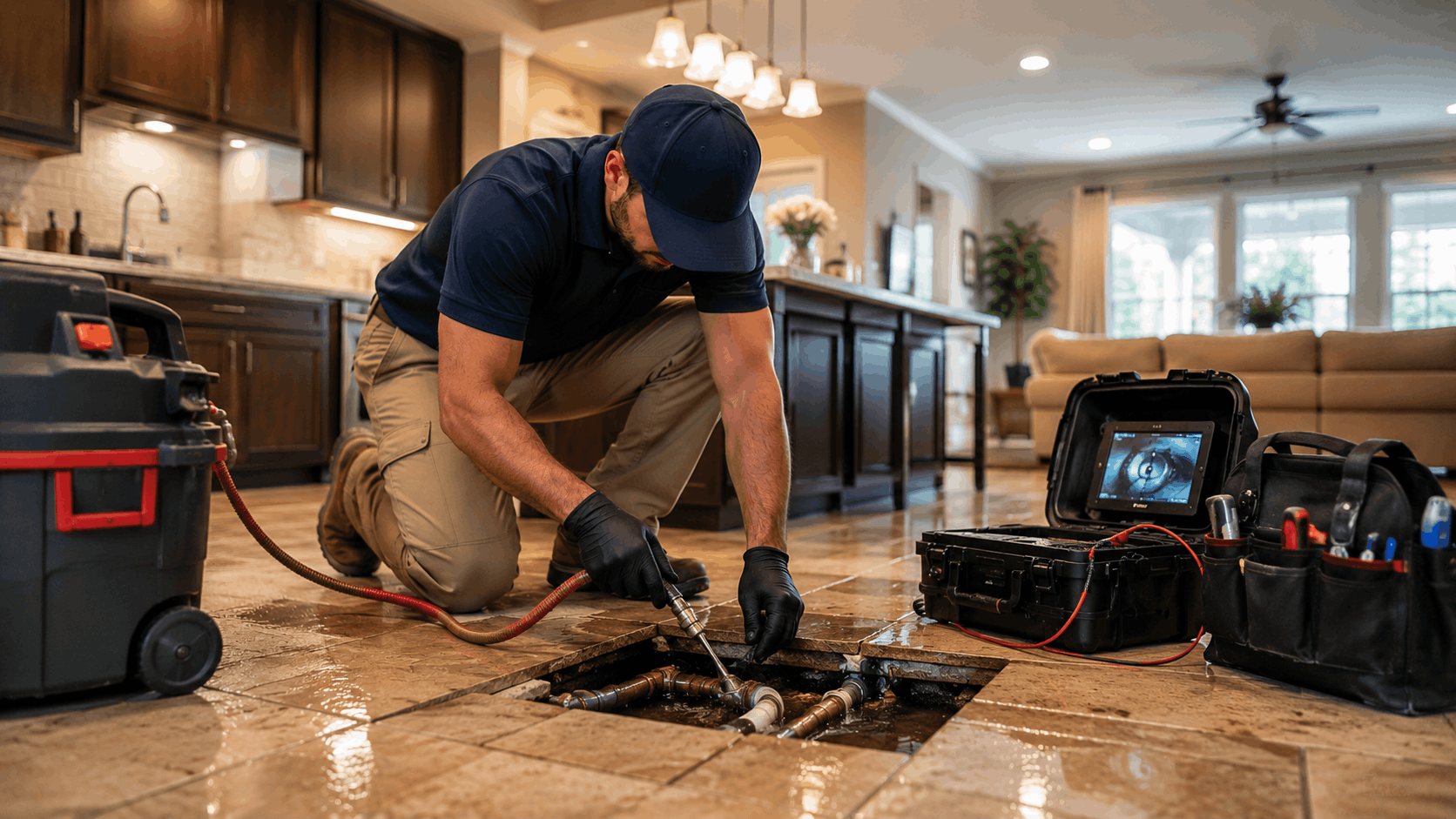
Acoustic leak detection uses sensitive ground microphones to hear pressurized water escaping under the slab, while thermal imaging cameras pick up the temperature signature of a hot water line leak through tile or carpet. Technicians also use line tracing and pressure isolation to confirm which pipe is leaking and where, often narrowing the location to within a foot or two.
Skipping accurate detection is how repair bills explode. Opening the slab in the wrong spot means a second hole, a second patch, and a second round of flooring restoration - easily $1,000 or more in wasted work. Pinpointing first means one hole, one repair, one patch.
Direct Access Repair: $1,500 to $4,500
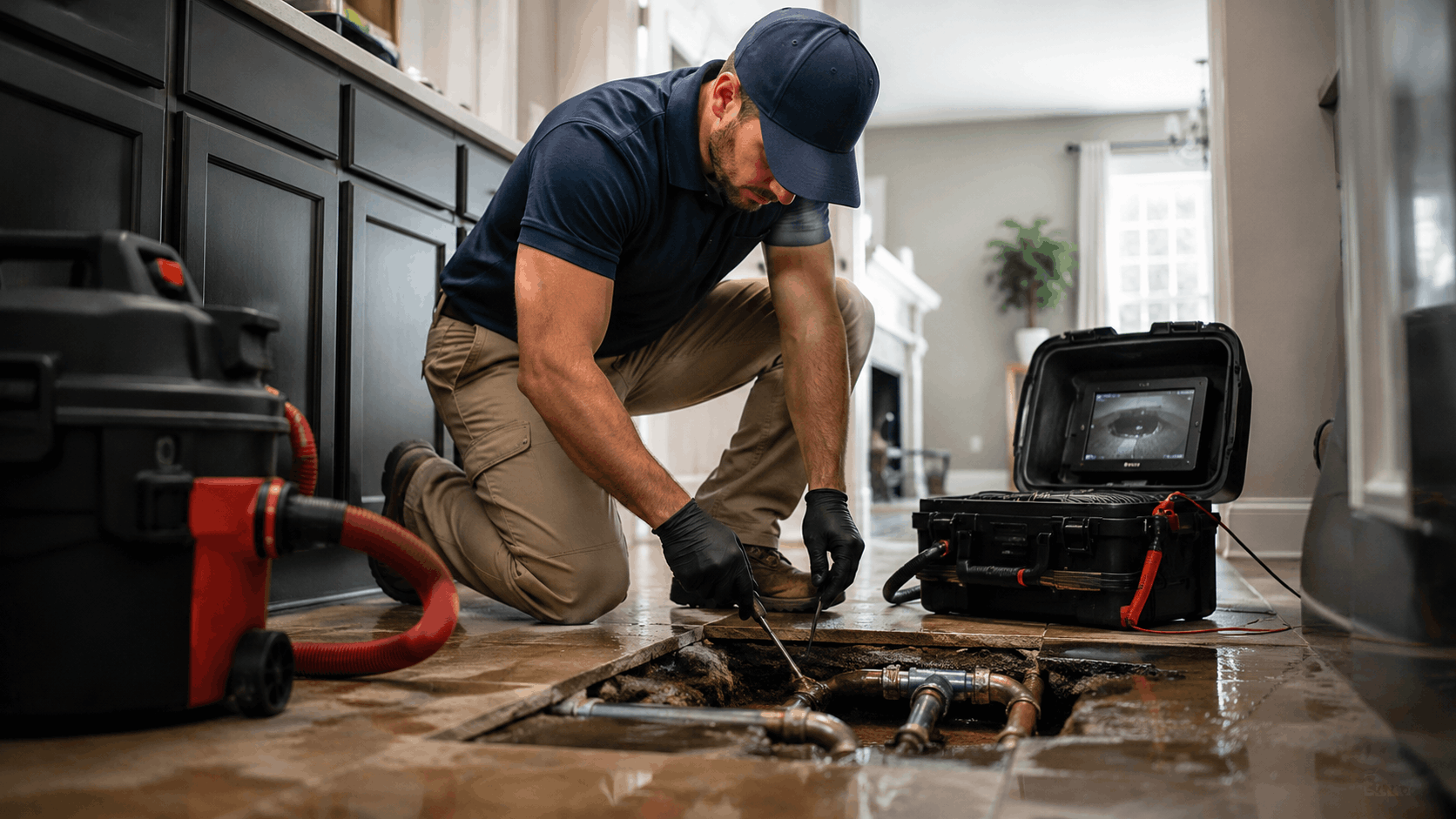
Slab penetration repair is the traditional fix: cut and jackhammer through the concrete directly above the leak, dig down to the pipe, repair or replace the damaged section, then backfill and pour a new concrete patch. In Lake Las Vegas, this method runs $1,500 to $4,500 - noticeably above the valley average.
Concrete demolition is the wild card. On a flat-lot home with sandy soil under a standard slab, a crew can open access in a couple of hours. On a SouthShore hillside pad, the same crew may hit caliche or granite six inches below the slab and spend half a day breaking rock just to expose the pipe.
Pipe repair cost itself is the small part of the bill - a copper coupling and a few feet of new pipe are inexpensive. The labor to reach the pipe and restore the slab and flooring afterward is where the money goes, which is exactly why ground conditions drive Lake Las Vegas pricing.
Reroute and Repipe Options: $1,800 to $15,000+
A pipe reroute abandons the leaking under-slab line entirely and runs a new line overhead - up a wall, across the attic, and back down to the fixtures it serves. A single-line reroute in this area costs $1,800 to $4,000, and it completely sidesteps the rock excavation problem because no concrete gets cut at all.
A whole home repipe replaces every supply line in the house with PEX, a flexible plastic pipe that shrugs off the hard water that destroys copper. PEX repiping for a typical Lake Las Vegas home runs $8,000 to $15,000 or more for larger custom properties, including drywall patching after the work.
The financial logic is straightforward. One leak in an otherwise healthy system favors a spot repair or single reroute. A second or third leak within a few years signals system-wide copper failure, and at that point a repipe costs less than continuing to chase leaks one at a time.
Why Lake Las Vegas Jobs Often Cost 15-30% More
Four specific factors push Lake Las Vegas slab leak bills 15-30% above comparable jobs in flat Henderson neighborhoods. First, granite excavation and caliche breaking under the slab add labor hours and equipment wear that simply do not exist on sandy-soil lots. Second, post-tension slab construction requires cable scanning before any cut, adding $300 to $600 to the front end of the job.
Third, gated community logistics add friction. Crews need gate access coordination, parking arrangements for equipment trailers, and compliance with HOA work-hour windows - small delays that add up across a multi-day job. Active Plumbing builds this into scheduling so the homeowner is not surprised.
Fourth, the finishes. Travertine flooring repair, custom stone, and large-format imported tile are common in SouthShore and MonteLago homes, and matching or restoring them after a slab cut costs far more than replacing builder-grade ceramic. A travertine restoration alone can run $1,000 to $3,000 depending on availability of matching stone.

Need Help in Las Vegas?
Active Plumbing serves Las Vegas and all of Las Vegas Valley.
Granite and Caliche: What Sits Under Lake Las Vegas Slabs
How Granite Bedrock Complicates Under-Slab Excavation
Granite bedrock is the single biggest cost driver named in this article's title, and for good reason. When a leaking pipe sits in a trench cut through or beside granite, reaching it means breaking rock - not scooping soil. Bedrock excavation requires heavier electric or pneumatic demolition hammers, carbide and specialty bits, and far more labor hours than standard digging.
Jackhammer rates against granite tell the story. A crew that can hand-dig 18 inches through sandy soil in 30 minutes might spend three to four hours breaking through the same depth of rock, with bit changes and equipment cooling along the way. Rock trenching cost on a typical access repair adds $500 to $2,000 to the bill, depending on how much rock stands between the slab and the pipe.
There is also a precision problem. Swinging heavy demolition tools inches from a fragile, corroded copper line takes patience and skill, because cracking the pipe further or damaging a neighboring line turns one repair into two. Experienced crews slow down near the pipe and finish the last few inches by hand, which is tedious but protects the homeowner from compounding damage.
Caliche Layers Common Along Lake Las Vegas Parkway
Caliche is a naturally cemented layer of calcium carbonate that forms in desert soils, and it can be nearly as hard as poured concrete. Lots along Lake Las Vegas Parkway and in communities like Bella Fiore commonly have caliche layers starting just below the slab, sometimes several feet thick. The U.S. Geological Survey documents these hardpan formations throughout the Las Vegas Valley, and the Henderson foothills have some of the thickest deposits.
The caliche layer punishes hand excavation. Digging bars bounce off it, shovels are useless, and crews end up alternating between demolition hammers and hand tools in a cramped hole under a kitchen island or hallway. What would be a one-hour dig in soft soil becomes a half-day grind.
Homeowners sometimes question why two quotes for the "same" repair differ by $1,500. The honest answer is that one contractor priced for soft soil and will hit the homeowner with change orders when caliche appears, while the other priced the ground conditions realistically up front. Active Plumbing quotes Bella Fiore and Parkway-corridor jobs with rock contingencies stated in writing.
Cut-and-Fill Pads and Shifting Pipe Stress
A cut and fill pad is created when graders cut soil and rock from the high side of a slope and use it to fill the low side, producing a level building surface. The result is a pad that is part native rock and part compacted fill - and those two halves do not settle at the same rate. Differential settlement of even a quarter inch puts real bending stress on rigid copper lines crossing the boundary.
Over 20-plus years, that constant stress works on the pipe like bending a paperclip back and forth. A pipe stress fracture or an accelerated pinhole failure tends to appear right at the rock-to-fill transition line, and experienced local techs know to check that zone first during detection. It is one of the patterns that separates Lake Las Vegas slab leaks from random valley-floor failures.
This pattern also informs repair strategy. Spot-repairing a line at a stress boundary often buys only a few years before the next failure on the same run, because the underlying movement has not stopped. In those cases, rerouting the line overhead - off the moving ground entirely - is the repair that actually ends the problem.
Post-Tension Slabs in The Falls and Reflection Bay Area Homes
Many homes in The Falls, near Reflection Bay, and across newer Lake Las Vegas phases sit on post-tension slabs. These foundations contain steel cables tensioned to tens of thousands of pounds of force, which lets the slab span and resist the differential movement of hillside pads. They are excellent foundations - and dangerous slabs to cut blindly.
Cutting into a tensioned cable can cause it to snap and whip through the concrete with enough force to injure workers and structurally compromise the slab. Repairing a severed cable requires a structural contractor and can cost $1,500 to $3,000 on its own, on top of the original plumbing repair. No reputable crew touches a post-tension slab without locating the cables first.
GPR scanning - ground penetrating radar - maps the cable locations so the access cut lands safely between them. The scan adds $300 to $600 and an hour or two to the job, which is cheap insurance against a five-figure mistake. Active Plumbing scans every post-tension slab before demolition, no exceptions.
Warning Signs Lake Las Vegas Homeowners Should Watch For
Warm Spots, Damp Carpet, and the Sound of Running Water
The most common slab leak signs customers describe on the phone are warm floor spots. A hot water line leak heats the concrete above it, and homeowners feel it through tile - usually in kitchens, hallways, or primary bathrooms where hot lines cluster. If the dog suddenly loves sleeping on one specific tile, that spot deserves a closer look.
Other water leak symptoms include damp baseboards or carpet edges with no obvious source, musty smells in rooms that were never humid before, and visible moisture wicking up interior walls. On hillside lots, leaking water sometimes travels along the rock surface under the slab and surfaces at the downhill edge of the foundation, appearing as a mysteriously wet patio or planter.
The running water sound is the clincher. With every fixture off and the water heater quiet, standing in a hallway and hearing a faint hiss or rush means pressurized water is escaping somewhere. That sound, combined with a warm spot or a billing spike, justifies scheduling detection the same day - and Active Plumbing offers 24/7 emergency plumbing response for exactly these calls.
Reading Your City of Henderson Water Bill for Clues
The Henderson water bill shows monthly usage in thousands of gallons, and most households run consistent numbers month to month once seasonal irrigation is accounted for. A water usage spike of 3,000 or more gallons with no change in habits is a red flag. Even a modest pinhole leak can push 100-plus gallons a day through the meter, which adds up to 3,000 gallons monthly.
Homeowners can run a simple water meter test in 30 minutes. Shut off every fixture and appliance that uses water, then watch the meter near the curb - most Henderson meters have a small leak indicator dial that spins with any flow. If that dial moves with everything off, water is leaving the system somewhere, and an under-slab line is the prime suspect when nothing visible is wet.
The EPA WaterSense program estimates household leaks waste nearly 10,000 gallons per home per year on average, and slab leaks sit at the extreme end of that range. Catching the spike on the first abnormal bill rather than the third saves both water and thousands in damage.
Foundation Cracks and Door Frames That Stick
A leak that runs unnoticed for months does more than waste water - it erodes and softens the material supporting the slab. On flat sandy lots that causes gradual slab settlement; on Lake Las Vegas cut-and-fill pads, water migrating along the rock-to-fill boundary can wash out fill and create voids that let sections of slab drop.
The structural symptoms show up in small ways first. Hairline foundation cracks appear in tile grout lines or at the corners of door openings, interior doors start sticking or swinging on their own, and grout separates from baseboards. Any of these alongside a high water bill points to a leak that has progressed past the early stage.
Structural damage is where slab leak costs multiply fastest. A leak fixed at the warm-spot stage might cost $2,500 total, while the same leak left to undermine a hillside slab can require foundation stabilization running well into five figures. The hillside lots that make these homes beautiful also make them less forgiving of delayed repairs.
Repair Methods Compared: Which One Fits Your Home
Spot Repair Through the Slab
Spot repair makes sense when detection confirms a single leak in a relatively accessible location. The crew cuts a section of flooring and slab directly above the leak, excavates to the pipe, replaces the failed section, pressure tests it, then backfills and pours a concrete patch. The whole process usually takes one to two days, plus flooring restoration afterward.
Among slab leak repair methods, this is the most direct and often the cheapest - when the ground cooperates. Slab access through soft soil keeps the job near the $1,500 to $2,500 mark. Granite or caliche directly under the leak pushes the same job toward $3,500 to $4,500 because of the rock-breaking labor described earlier.
The honest caveat: a spot repair fixes one failure point in a pipe that may have a dozen more developing. On copper that is 20-plus years old in Henderson's water, homeowners should treat a first slab leak as a warning about the whole system, not just a one-time event. A good contractor will say so before cutting the concrete, not after.
Overhead Reroute Through Walls and Attic
An overhead reroute abandons the leaking under-slab line where it sits and runs a new PEX line up through a wall, across the attic, and back down to serve the same fixtures. The old line gets capped and depressurized, the leak stops immediately, and not a single inch of concrete gets cut. For homes sitting on granite, this is frequently the smarter path.
The pipe reroute vs repair question often comes down to ground conditions and finishes. In MonteLago Village condos, where slab access can affect shared structures and HOA-controlled flooring, and in SouthShore custom homes with travertine and stone floors, avoiding slab demolition protects finishes worth far more than the plumbing itself. Attic plumbing runs are insulated against the summer heat and winter cold snaps that hit the foothills.
A new PEX line is also a partial upgrade. The rerouted section becomes immune to the copper corrosion eating the rest of the system, and future reroutes can extend from it. Some Lake Las Vegas homeowners use a first reroute as phase one of a gradual whole-home conversion, spreading the cost over a few years.
Epoxy Pipe Lining for Hard-to-Reach Lines
Epoxy lining is a trenchless repair that coats the inside of existing copper lines with an epoxy barrier, sealing pinholes and stopping further corrosion without opening the slab. Crews drain and dry the lines, blast them clean with abrasive air, then blow epoxy through to coat the interior walls. Pipe coating cost in this market runs $3,000 to $8,000 depending on the size of the system.
The method shines where access is worst - lines buried under granite, under expensive stone floors, or beneath additions where rerouting is impractical. For a home with early-stage pinholes but structurally sound pipe walls, lining can add 10 to 15 years of service life without demolition dust or flooring damage.
Its limits are real, though. Badly corroded pipe with paper-thin walls cannot hold the lining process pressure, and collapsed or heavily scaled lines cannot be coated at all. Detection findings and a camera or pressure assessment determine whether a system qualifies, which is another reason the detection-first approach matters.
When a Full Repipe Beats Repeated Repairs
The rule of thumb Active Plumbing gives homeowners: two or more slab leaks within a few years means the copper system is failing as a whole, not failing in one spot. Copper pipe failure from hard-water corrosion happens system-wide because every line has carried the same water at the same pressure for the same decades. The next leak is a matter of when, not if.
The arithmetic favors the repipe sooner than most people expect. Three separate emergency spot repairs at $3,000 to $4,000 each - plus three rounds of flooring restoration and three insurance deductibles - costs more than a planned whole house repipe at $8,000 to $15,000. The repipe also ends the 2 a.m. emergency calls entirely.
Repeated slab leaks carry hidden costs beyond the invoices. Each undetected leak risks more soil erosion under a hillside slab, each repair disrupts the household for days, and a home with a documented leak history can face scrutiny during a future sale. A repipe converts an unpredictable liability into a one-time, scheduled project with a warranty.
Need Help in Las Vegas?
Active Plumbing serves Las Vegas and all of Las Vegas Valley.
Permits, HOAs, and Insurance in the Lake Las Vegas Area
The paperwork side of a slab leak catches many homeowners off guard. Between the Henderson plumbing permit process, HOA requirements in gated communities, and the fine print of slab leak insurance coverage, the administrative steps can affect both the timeline and the final out-of-pocket cost. Here is what to expect:
- Permits: Required for reroutes and repipes through the City of Henderson
- HOA coordination: Gate access, work hours, and sometimes architectural approval
- Insurance: Usually covers damage and access, rarely the pipe itself
- Documentation: Detection reports and photos support every claim
City of Henderson Permit Requirements for Repipes and Slab Work
The City of Henderson Building Department requires a plumbing permit for pipe reroutes, whole-home repipes, and most work that alters the plumbing system layout. A minor like-for-like repair of a single pipe section sometimes falls under repair exemptions, but anything involving new routing needs the permit. Fees typically run $100 to $300 depending on scope.
Inspection scheduling in Henderson is generally efficient, with most inspections available within one to two business days of request. For a repipe, the inspector verifies the new lines before walls are closed, which means drywall restoration waits on the inspection. A contractor who pulls permits routinely builds that day into the schedule rather than letting it stall the job.
Unpermitted work is a false economy. It can void portions of homeowners insurance coverage, complicate a future home sale when buyers request permit history, and leave no official record that the repair met code. Active Plumbing pulls the permit, schedules the inspection, and hands the homeowner the documentation at completion.
Working With Lake Las Vegas Master Association and Sub-HOAs
The Lake Las Vegas Master Association oversees the resort community, and individual neighborhoods like Vita Bella, The Estates, and MonteLago Village each have sub-HOAs with their own rules. Gated community access means contractors register at the gate, and homeowners typically need to authorize vendor entry in advance. A crew showing up unannounced at a SouthShore gate loses an hour minimum.
Work-hour restrictions are common - many sub-HOAs limit noisy work like concrete demolition to weekday daytime windows, often 7 a.m. to 5 p.m. or tighter. Jackhammering on a Saturday morning in Vita Bella can draw a violation notice for the homeowner, so scheduling around the rules protects everyone.
HOA approval becomes a formal step when any work touches the exterior. An overhead reroute that requires exterior wall penetration, a visible vent, or equipment placement may need architectural review committee sign-off before work begins. Contractors who have worked these communities know which jobs trigger review and submit the paperwork early so it does not delay an active leak repair.
What Homeowners Insurance Covers - and What It Does Not
The typical insurance claim slab leak outcome surprises people: most policies pay for the resulting water damage and the cost of tearing out and restoring the slab and flooring to access the pipe, but exclude the actual pipe repair itself. The logic is that the pipe failed from wear and age, which policies treat as maintenance, while the sudden water damage is the covered event.
Water damage coverage usually includes damaged flooring, drywall, baseboards, cabinets, and mold remediation if caught in time. Gradual leaks are the danger zone - if an adjuster concludes the homeowner ignored obvious signs for months, the claim can face partial or full denial under gradual-damage exclusions. Fast action protects both the house and the claim.
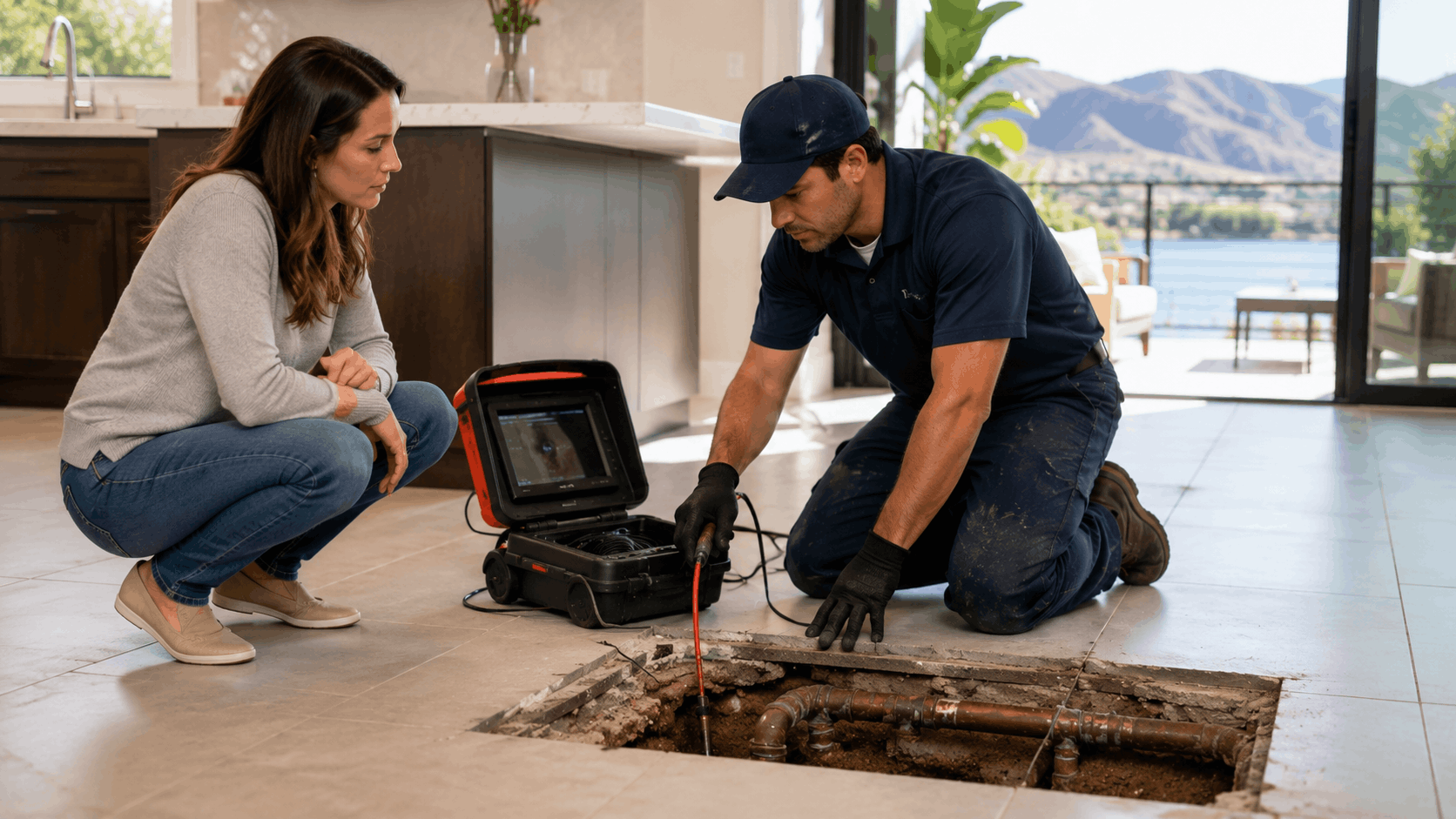
A detailed leak detection report is the strongest document in a claim file. It establishes when the leak was found, where it was, and what damage it caused, with photos and instrument readings. Active Plumbing provides written detection reports specifically formatted to support insurance claims, and adjusters in the Henderson market know the format well.
How to Keep Repair Costs Down Without Cutting Corners
Homeowners cannot change the granite under their slab, but they can control nearly everything else about what a slab leak costs. The biggest levers to reduce slab leak cost are speed, accurate detection, method selection, and leak prevention going forward:
- Act within days, not weeks - damage compounds daily
- Pay for precise detection first - one hole beats three
- Compare repair methods - reroutes often beat rock excavation
- Install a water pressure regulator and softener - prevent the next leak
- Demand quotes with rock contingencies in writing
Why Early Detection Saves Thousands
The cost gap between an early catch and a late one is dramatic. A leak found in week one might mean a $400 detection visit and a $2,500 repair with minimal flooring damage. The same leak found in month three can add $3,000 to $8,000 in flooring replacement, $2,000 to $6,000 in mold remediation cost, and in worst cases foundation stabilization work on top of everything else.
Mold is the silent multiplier. Moisture trapped under flooring and inside wall cavities in a closed, air-conditioned home grows mold within 48 to 72 hours, and remediation requires containment, removal, and clearance testing - none of it cheap. Early leak detection prevents the moisture from ever reaching that stage.
For homeowners who travel or own a Lake Las Vegas property as a second home, a whole-home leak detection system is worth serious consideration. These devices monitor flow continuously and shut off the main automatically when they detect abnormal usage, which can be the difference between a non-event and a flooded vacant house. Water damage prevention through monitoring costs a fraction of a single remediation job.
Pressure Regulators and Water Softeners for Henderson's Hard Water
Hillside lots near the lake often receive municipal water at higher pressure than flat neighborhoods, because the supply system has to push water uphill and homes at lower pad elevations catch the excess. Static pressure above 80 PSI accelerates pinhole formation and stresses every joint in the system. A pressure reducing valve installed at the main, typically $350 to $700, brings pressure into the safe 50-70 PSI range.
The hard water damage side of the equation responds to treatment. A properly sized water softener removes the calcium and magnesium that drive scale buildup and copper corrosion, slowing the chemistry that creates pinhole leaks in the first place. Active Plumbing handles water softener installation sized for the 16-plus grain hardness common across the 89011 area.
Together, a regulator and softener address the two forces that shorten copper life in this area: pressure and chemistry. For a home that has had one slab leak already, this pairing is the most cost-effective way to delay the next one while the homeowner plans a longer-term repipe on their own schedule rather than during an emergency.
Getting Quotes That Account for Rock Conditions
The most common Lake Las Vegas billing dispute starts with a quote written for soft soil. The crew opens the slab, hits caliche or granite, and the homeowner gets a change order for $1,500 they never budgeted. Estimate accuracy in this area depends entirely on whether the contractor priced the ground honestly up front.
Before accepting any plumbing quote for slab work near the lake, homeowners should ask three questions in writing. Does the price include a rock excavation contingency, and what is the cap? Does it include GPR post-tension cable scanning before cutting? Does it cover concrete patching and specify who handles flooring restoration?
A contractor who has actually worked SouthShore, The Falls, and Bella Fiore will answer all three without hesitation, because they have hit the rock before and priced for it. A vague answer or a suspiciously low number usually means the excavation contingency will arrive later as a surprise. The lowest bid on paper is frequently the highest invoice at the end.
Why Lake Las Vegas Homeowners Call Active Plumbing
Experience With Hillside and Post-Tension Foundations
Active Plumbing Las Vegas crews have repaired slab leaks across the Lake Las Vegas hillside communities, from MonteLago Village condos to custom homes above SouthShore. That history means the team recognizes the leak patterns these lots produce - the rock-to-fill stress fractures, the hot-line failures under kitchen islands, the pressure-driven pinholes on lower pads - before the first instrument comes out of the truck.
Slab cutting safety is non-negotiable on these foundations. Every post-tension slab gets cable scanning before any concrete cut, and crews carry the rock-breaking equipment hillside excavation demands so a granite surprise does not stall the job for days while gear gets sourced. Post-tension experience is not something a homeowner should let a contractor learn on their house.
Hillside home plumbing also means the team plans for slope-specific drainage, downhill water migration, and access logistics that flat-lot crews never consider. For slab leak repair Henderson hillside properties demand, that local pattern knowledge shortens detection time and reduces the size of the access cut.
Fast Response From Las Vegas to the 89011 Area
From the Las Vegas side, the route to the lake runs out Lake Mead Parkway through Henderson, then in via Lake Las Vegas Parkway - a drive Active Plumbing trucks make routinely, with Galleria Drive as the backup when Parkway traffic stacks up. Realistic arrival times to SouthShore or MonteLago run 30 to 45 minutes from dispatch, faster during off-peak hours.
Same-day service for leak detection is the standard for suspected slab leaks, because every day of delay adds damage. When a homeowner calls describing a warm floor and a billing spike, the office can usually have detection equipment on site that afternoon. As an emergency plumber serving all of Henderson, the team treats active slab leaks as priority dispatches.
The phone call itself starts the help. Dispatchers walk homeowners through locating and closing the main shutoff valve - usually near the front hose bib or at the meter - which stops the water loss immediately while the truck is en route. For an active leak under pressure, those few minutes of guidance can save hundreds of gallons and real money.
Straightforward Pricing and Detection-First Approach
The process is the same on every slab leak call: locate the leak precisely first, then present the homeowner with repair options and a written estimate for each. A typical presentation includes the spot repair price, the reroute price, and - where the system's age warrants it - the repipe price, with the trade-offs of each explained plainly. The homeowner picks; nobody gets pressured into the biggest number.
Upfront pricing means the rock contingency, the GPR scan, the permit fee, and the concrete patch are all in the written estimate before any demolition starts. No surprise charges appear after the slab is open and the homeowner has no leverage. That single policy is why so many Lake Las Vegas referrals come from neighbors of past customers.
Every job closes with documentation: the detection report, permit records where applicable, photos of the completed repair before closure, and warranty terms in writing. Homeowners filing insurance claims get the paperwork adjusters actually need. Questions before committing to anything are welcome - the contact page and phone line both reach a real local team.
Need Help in Las Vegas?
Active Plumbing serves Las Vegas and all of Las Vegas Valley.
Final Thoughts
Slab leak repair cost in Lake Las Vegas runs higher than the valley floor for reasons buried in the ground itself: granite bedrock, caliche hardpan, cut-and-fill pads, and post-tension slabs all add labor, equipment, and care to every repair. Detection runs $250 to $600, spot repairs $1,500 to $4,500, reroutes $1,800 to $4,000, and full repipes $8,000 to $15,000 or more - with rock conditions adding 15-30% to access work.
The homeowner's best moves are simple: act on the first warm spot or billing spike, insist on precise detection before any demolition, compare repair methods rather than defaulting to slab cutting over granite, and get quotes that name the rock contingencies in writing. Prevention through a pressure regulator and softener buys aging copper years of extra life.
Anyone in SouthShore, MonteLago Village, The Falls, or anywhere along Lake Las Vegas Parkway noticing the warning signs should call Active Plumbing for same-day leak detection. One phone call gets the leak found, the options priced in writing, and the water damage stopped before it gets expensive.
Frequently Asked Questions
How much does slab leak repair cost in Lake Las Vegas?
Expect $1,500 to $4,500 for direct access repairs through the slab, $1,800 to $4,000 for single-line overhead reroutes, and $8,000 to $15,000 or more for full home repipes. Electronic leak detection adds $250 to $600 up front. Rock conditions under Lake Las Vegas slabs - granite and caliche - commonly add 15-30% versus comparable jobs on flat valley lots with sandy soil.
Why does granite under my home make the repair more expensive?
Granite and caliche cannot be dug with shovels. Reaching a pipe under these materials requires heavy demolition hammers, specialty carbide bits, and several extra hours of labor compared to soft soil. Crews must also work carefully near the fragile copper line to avoid causing more damage. The added rock excavation typically runs $500 to $2,000 on top of a standard access repair price.
How do I know if I have a slab leak or just high water usage?
Run a meter test. Shut off every fixture and water-using appliance, then watch the Henderson water meter for 30 minutes - if the leak indicator dial spins with everything off, water is escaping somewhere. Combine that with physical checks: warm spots on tile floors, damp baseboards or carpet edges, musty odors, or the sound of running water with all fixtures closed all point toward a slab leak.
Does homeowners insurance cover slab leak repair?
Usually partially. Most policies cover the resulting water damage - flooring, drywall, mold remediation - and the cost of accessing the pipe through the slab, but exclude the pipe repair itself as a maintenance item. Gradual leaks ignored for months can face claim denials under gradual-damage exclusions. A detailed written leak detection report with photos strengthens any claim, so request one from your plumber.
How long does a slab leak repair take?
Electronic detection takes one to two hours. A spot repair through the slab typically runs one to two days including concrete patching, while a single-line reroute takes one to three days. A whole-home repipe needs three to five days of plumbing work, plus drywall restoration afterward. Permit inspections in Henderson add a day or two for reroutes and repipes before walls close.
Is it safe to cut into a post-tension slab?
Only after locating the cables. Post-tension slabs - common in The Falls, near Reflection Bay, and across newer Lake Las Vegas homes - contain steel cables under tens of thousands of pounds of tension. Cutting one can injure workers and compromise the foundation, with cable repairs costing $1,500 to $3,000. GPR scanning before demolition, typically $300 to $600, maps the cables so the cut lands safely between them.
Should I repair the leak or reroute the pipe?
A first leak in an otherwise healthy copper system usually favors a spot repair, especially if the leak sits in accessible soil. Leaks located over granite, under expensive travertine, or in copper systems 20-plus years old usually favor an overhead reroute, which avoids rock excavation entirely. Two or more leaks within a few years point toward a full repipe rather than continued patching.
Do I need a permit for slab leak repair in Henderson?
It depends on scope. A minor like-for-like repair of a single pipe section often falls under repair exemptions, but pipe reroutes and whole-home repipes require a plumbing permit through the City of Henderson Building Department. Permit fees typically run $100 to $300, and inspections are usually available within one to two business days. Reputable contractors handle the permit paperwork as part of the job.
Can hard water in Henderson cause slab leaks?
Yes, it is a leading cause. City of Henderson water sourced from Lake Mead measures 16-plus grains per gallon of hardness, and the dissolved minerals accelerate internal copper corrosion that produces pinhole leaks. High pressure on hillside lots makes it worse. A water softener and a pressure reducing valve slow the damage substantially and extend the life of existing copper lines.
What should I do right now if I suspect a slab leak?
Shut off the main water valve - usually near the front hose bib or at the meter - to stop the water loss immediately. Photograph any visible damage, warm spots, or damp areas for insurance documentation. Then schedule electronic leak detection before agreeing to any demolition, since pinpointing the leak first prevents unnecessary slab cuts. Active Plumbing offers same-day detection across the Lake Las Vegas area.
Frequently Asked Questions
- How much does slab leak repair cost in Lake Las Vegas?
- Expect $1,500 to $4,500 for direct access repairs through the slab, $1,800 to $4,000 for single-line overhead reroutes, and $8,000 to $15,000 or more for full home repipes. Electronic leak detection adds $250 to $600 up front. Rock conditions under Lake Las Vegas slabs - granite and caliche - commonly add 15-30% versus comparable jobs on flat valley lots with sandy soil.
- Why does granite under my home make the repair more expensive?
- Granite and caliche cannot be dug with shovels. Reaching a pipe under these materials requires heavy demolition hammers, specialty carbide bits, and several extra hours of labor compared to soft soil. Crews must also work carefully near the fragile copper line to avoid causing more damage. The added rock excavation typically runs $500 to $2,000 on top of a standard access repair price.
- How do I know if I have a slab leak or just high water usage?
- Run a meter test. Shut off every fixture and water-using appliance, then watch the Henderson water meter for 30 minutes - if the leak indicator dial spins with everything off, water is escaping somewhere. Combine that with physical checks: warm spots on tile floors, damp baseboards or carpet edges, musty odors, or the sound of running water with all fixtures closed all point toward a slab leak.
- Does homeowners insurance cover slab leak repair?
- Usually partially. Most policies cover the resulting water damage - flooring, drywall, mold remediation - and the cost of accessing the pipe through the slab, but exclude the pipe repair itself as a maintenance item. Gradual leaks ignored for months can face claim denials under gradual-damage exclusions. A detailed written leak detection report with photos strengthens any claim, so request one from your plumber.
- How long does a slab leak repair take?
- Electronic detection takes one to two hours. A spot repair through the slab typically runs one to two days including concrete patching, while a single-line reroute takes one to three days. A whole-home repipe needs three to five days of plumbing work, plus drywall restoration afterward. Permit inspections in Henderson add a day or two for reroutes and repipes before walls close.
- Is it safe to cut into a post-tension slab?
- Only after locating the cables. Post-tension slabs - common in The Falls, near Reflection Bay, and across newer Lake Las Vegas homes - contain steel cables under tens of thousands of pounds of tension. Cutting one can injure workers and compromise the foundation, with cable repairs costing $1,500 to $3,000. GPR scanning before demolition, typically $300 to $600, maps the cables so the cut lands safely between them.
- Should I repair the leak or reroute the pipe?
- A first leak in an otherwise healthy copper system usually favors a spot repair, especially if the leak sits in accessible soil. Leaks located over granite, under expensive travertine, or in copper systems 20-plus years old usually favor an overhead reroute, which avoids rock excavation entirely. Two or more leaks within a few years point toward a full repipe rather than continued patching.
- Do I need a permit for slab leak repair in Henderson?
- It depends on scope. A minor like-for-like repair of a single pipe section often falls under repair exemptions, but pipe reroutes and whole-home repipes require a plumbing permit through the City of Henderson Building Department. Permit fees typically run $100 to $300, and inspections are usually available within one to two business days. Reputable contractors handle the permit paperwork as part of the job.
- Can hard water in Henderson cause slab leaks?
- Yes, it is a leading cause. City of Henderson water sourced from Lake Mead measures 16-plus grains per gallon of hardness, and the dissolved minerals accelerate internal copper corrosion that produces pinhole leaks. High pressure on hillside lots makes it worse. A water softener and a pressure reducing valve slow the damage substantially and extend the life of existing copper lines.
- What should I do right now if I suspect a slab leak?
- Shut off the main water valve - usually near the front hose bib or at the meter - to stop the water loss immediately. Photograph any visible damage, warm spots, or damp areas for insurance documentation. Then schedule electronic leak detection before agreeing to any demolition, since pinpointing the leak first prevents unnecessary slab cuts. Active Plumbing offers same-day detection across the Lake Las Vegas area.
A
Licensed plumbing professionals serving Las Vegas and Las Vegas Valley.
Licensed in Nevada · License #0047021
Last updated on
Why trust Active Plumbing?
Founded in 1991, Active Plumbing is a licensed and insured plumber serving Las Vegas and Las Vegas Valley. All content is reviewed by our licensed technicians.

Need Help in Las Vegas?
Active Plumbing serves Las Vegas and all of Las Vegas Valley.
Related Articles

Tips & Advice
5 Top Reasons Slab Leaks Happen In Las Vegas Homes
Discover the 5 main reasons slab leaks occur in Las Vegas homes, from desert soil movement to hard water damage, plus prevention tips and repair options from local experts.

Safety & Prevention
How Henderson Homeowners Can Prevent Slab Leaks in Desert Soil
Henderson's desert soil, hard water, and high pressure make slab leaks more common here. Learn prevention tips, warning signs, and what repair costs to expect.
Signs & Symptoms
Slab Leak in Las Vegas: How to Spot the Signs and Protect Your Floors
Slab leaks in Las Vegas are common - caliche soil and desert heat cause pipe movement and pinholes. Learn the signs, how to protect your floors, and when to call for slab leak detection and repair.