Same-Day Plumber Las Vegas: Which Companies Actually Arrive Within 60 Minutes
Key Takeaways
- A true 60-minute response depends on how close the nearest crew is, not on company size or advertising claims.
- Ask direct questions on the first call: where is the nearest truck, and what is the expected arrival window.
- Burst pipes, sewer backups, water heater failures, and total pressure loss are emergencies that get worse by the minute.
- Valley traffic on the I-15, US-95, and 215 Beltway plus monsoon storms directly affect real arrival times.
- Response windows vary by area, from about 25-50 minutes downtown to 40-70 minutes in outlying Henderson and Anthem.
- A good emergency visit stops the water first, gives a written price before work starts, and fixes the problem on the first visit.
- Expect after-hours, weekend, and holiday surcharges, and confirm all fees before the crew is dispatched.
- Before help arrives, shut off the main water valve, contain the spill, and avoid chemical drain cleaners or gas repairs.
In This Article
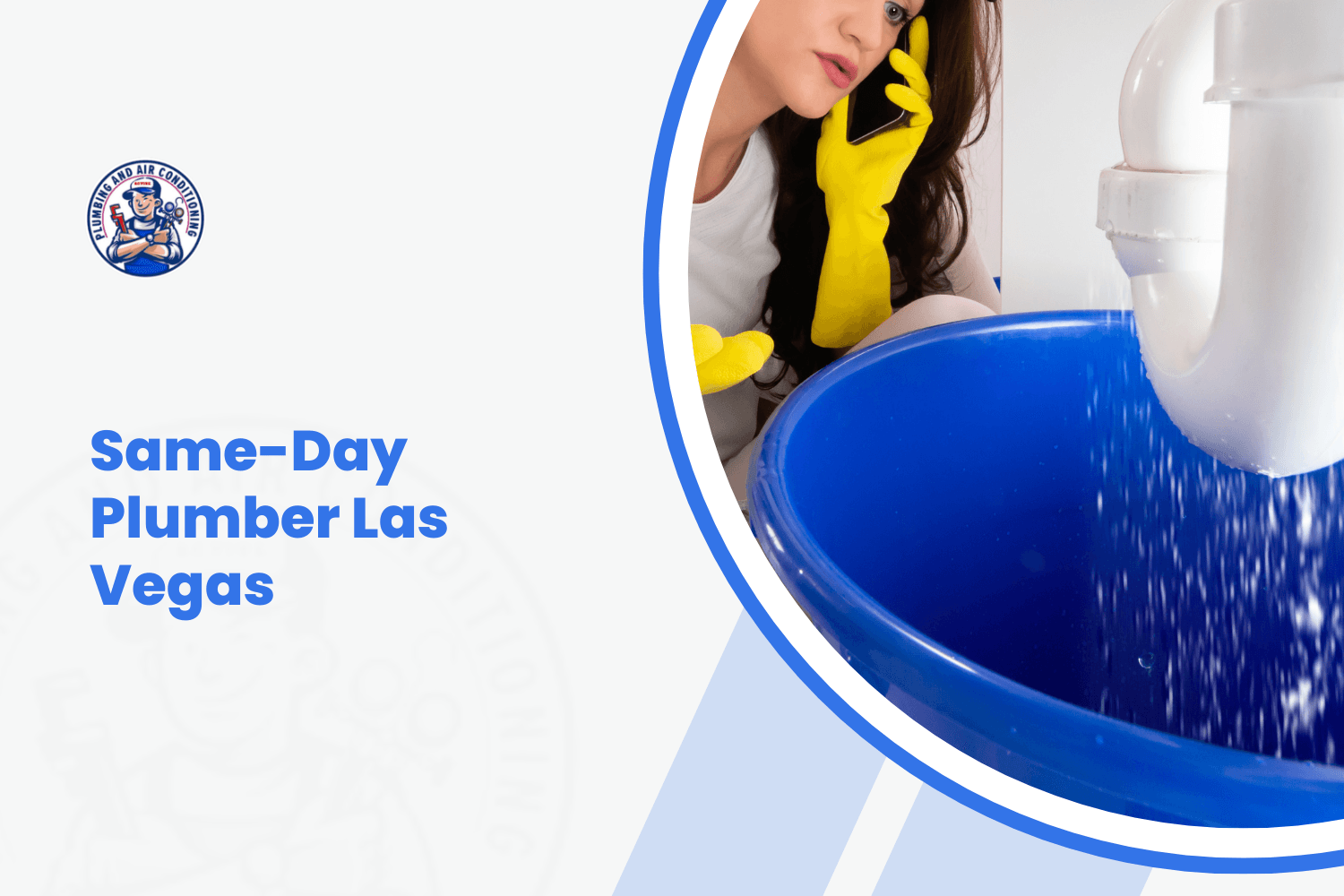
It usually starts with a sound. A hiss behind the drywall, a gurgle from the kitchen sink, or the sudden roar of water where there should be silence. A homeowner near Peccole Ranch might walk into the laundry room at 6 a.m. and step into an inch of water. Someone in Green Valley might watch a toilet back up into the tub during a holiday dinner. In those moments, the only question that matters is how fast someone can get there.
Plenty of plumbers advertise "same-day" and "60-minute" service. Far fewer actually pull into the driveway within that window. The gap between what gets promised on a billboard and what happens after the phone call can cost a homeowner thousands in water damage.
What 'Same-Day' and '60-Minute Arrival' Really Mean in Las Vegas?
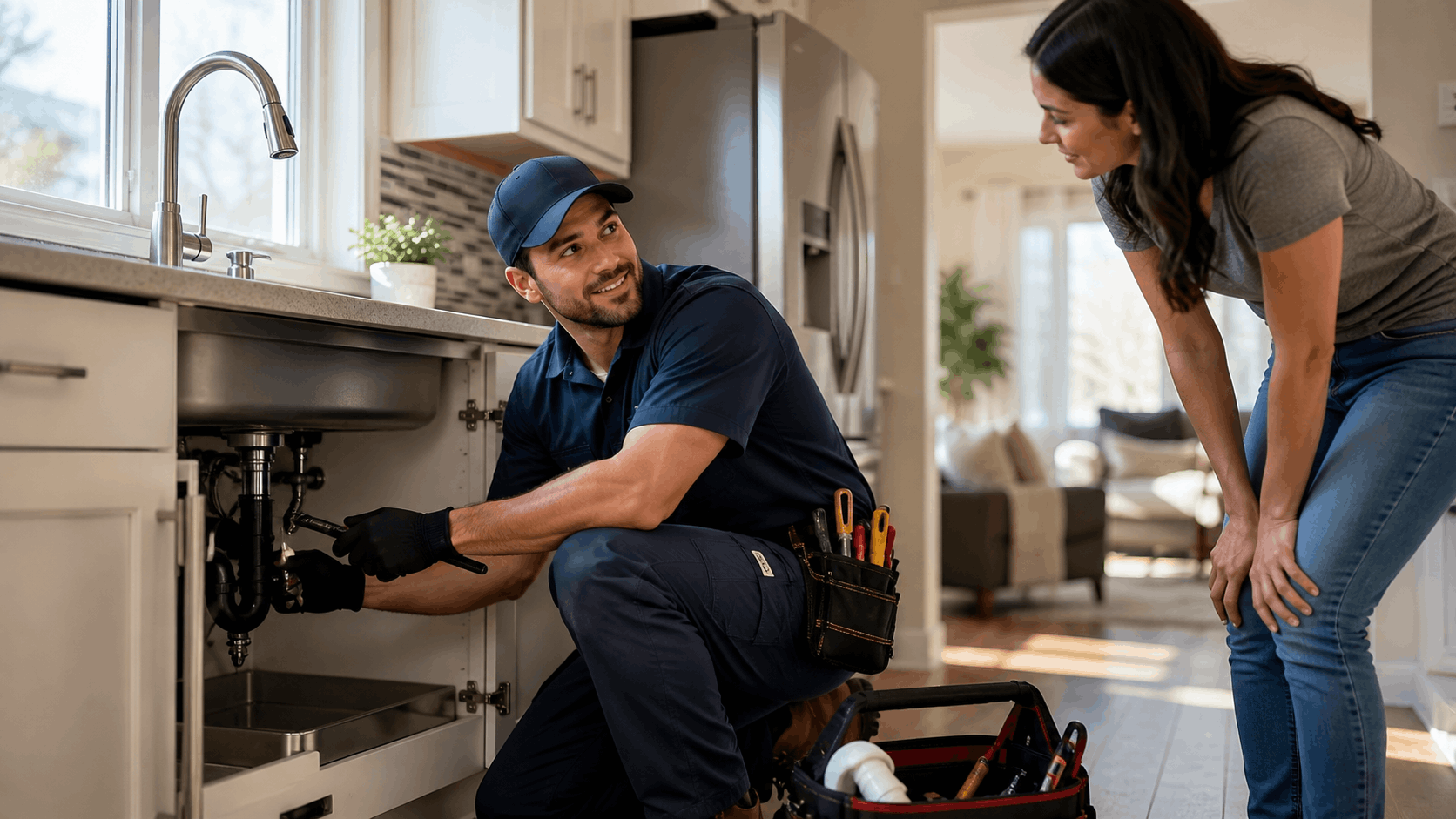
A same-day plumber and a 60-minute response are not the same thing, even though companies often blur the two. Same-day means someone gets to the home before the day ends. A true 60-minute response means a truck is rolling toward the address within the hour. In a valley that stretches from Aliante down to Anthem, that difference is measured in real drive time.
Emergency plumbing depends on three things working together: where the nearest crew is, how the dispatch system routes calls, and how bad traffic is at that exact hour. A company can want to arrive fast and still fail if their closest truck is 40 minutes out. That is why homeowners should treat arrival claims as questions to verify, not promises to trust.
The Gap Between Advertised and Actual Response Times
Many plumbing companies run ads promising a plumber at the door within an hour, but their real average sits closer to two to four hours. The claim brings in the phone call. The dispatch reality catches up later, usually after the homeowner has already committed and turned off their search.
The trouble is that response time depends on how many crews a company actually keeps on the road and where they are placed. A business with two trucks covering the whole valley cannot promise every caller a fast arrival. They can promise it to the caller who happens to be near an idle truck, and everyone else waits.
A smart plumbing dispatch system tracks each crew's live location and job status, then routes the closest available tech. Without that, the office is guessing. Homeowners can spot the difference by asking one direct question: where is your nearest truck right now, and what time will it reach my street?
If the answer is vague, treat it as a two-hour-plus wait. If the dispatcher can name a cross street and give a specific arrival window, that is a company that knows where its people are. That single answer tells more than any advertisement.
How Valley Traffic Affects Arrival Windows
Las Vegas traffic shapes every arrival window, and the freeways are the biggest variable. The I-15 through the resort corridor jams up during morning and evening rush, and a crash near the Spaghetti Bowl can strand a truck for 20 extra minutes. A plumber leaving from one side of the valley during those hours is fighting the clock the whole way.
The US-95 and the 215 Beltway carry crews between the northwest, the southwest, and Henderson. The 215 is quicker than surface streets for long hauls, but exits back up near Summerlin Parkway and the airport connector during peak times. A good dispatcher plans around these chokepoints instead of ignoring them.
During rush hour, our team leans on neighborhood side routes and positions crews so they rarely need a long freeway run for an emergency. A call in Spring Valley gets a truck already working the west side, not one crawling up the I-15 from the south. Local knowledge of when Charleston, Sahara, or Rainbow will be clogged saves real minutes.
Weather matters too. Monsoon storms in late summer flood underpasses along Decatur and Tropicana and slow everything down. When the sky opens up, arrival windows stretch across the whole valley, and honest plumbers say so instead of promising an hour they cannot hit.
Why Crew Location Beats Company Size
A big company with a fleet of trucks sounds like the safe bet, but size does not decide who arrives first. Location does. A plumber already finishing a job two miles away in Summerlin will beat a larger outfit dispatching from a yard across the valley every single time.
Local dispatch is what makes this work. When crews are spread across the map instead of parked at one central shop, the nearest one can peel off and head straight to the emergency. That is how a mid-sized local team can out-respond a national brand with a call center.
Our approach keeps trucks working in clusters across areas like Summerlin, Henderson, and the central valley so someone is usually close. A homeowner in Whitney Ranch does not need the biggest company. They need the closest qualified plumber with the right parts on the truck.
This is why we ask callers for their nearest major intersection right away. Knowing whether someone is off Eastern in Henderson or near Fort Apache in the southwest lets us match them to the crew who can get there fastest. Company size never shows up on that map. Position does.
Get Your Quote
Tell us what's going on and we'll get back to you. We're open 24/7.
Plumbing Emergencies That Cannot Wait in a Las Vegas Home
Some plumbing problems can wait until morning. Others get worse by the minute and turn a small repair into a flood-restoration project. Knowing the difference helps homeowners decide when to call right away versus when to schedule a normal visit.
The emergencies below are the ones people describe when they call in a panic. Each one shares a common trait: waiting makes the damage and the bill grow. Here are the situations that demand a fast plumber in a Las Vegas home.
- Burst pipes spraying water into walls, ceilings, or under the slab
- Sewer backups pushing waste up through drains, tubs, or floor drains
- Water heater failures leaking or flooding a garage or closet
- Total water loss or a sudden pressure drop across the whole house
- Gas odors near a water heater or line, which need immediate attention
Burst Pipes and Slab Leaks
Older homes near downtown and the Historic Westside were built with copper piping and cast iron that has been in the ground for decades. Over time, that copper corrodes and the joints weaken, and a small pinhole can blow open into a full burst pipe. When it happens under a slab, the water has nowhere to go but into the foundation.
Desert heat adds stress that many people overlook. Ground temperatures swing hard between seasons, and that expansion and contraction wears on pipe joints year after year. A slab leak often shows up first as a warm spot on the floor, a spike in the water bill, or the sound of running water when every faucet is off.
Catching a slab leak early keeps it from undermining flooring and the foundation itself. Our team uses electronic listening equipment and pressure testing to pinpoint the leak without tearing up the whole floor. If you suspect a hidden leak, our electronic leak detection service finds it fast.
For a pipe that has already burst, speed is everything. Shutting off the water and containing the spray in the first few minutes decides whether a homeowner faces a patch job or a gutted room. Our burst pipe repair crews carry the fittings to stop the leak on the first visit.
Sewer Line Backups and Overflowing Drains
Mature neighborhoods like John S. Park and other mid-century areas near the middle of the valley have big, beautiful trees. Those same trees send roots searching for water, and the moisture inside an old sewer line is a magnet. Roots slip into cracked joints and grow into a thick mass that blocks the flow.
When that happens, waste has nowhere to go and backs up into the lowest drain in the house. Homeowners usually notice it first in a downstairs tub or a floor drain in the garage. A sewer backup is a health hazard, not just a mess, so it moves to the front of the line.
Clearing the immediate blockage is step one, but root intrusion comes back if the pipe stays cracked. We run a camera down the line to see exactly what is going on and where. Our sewer camera inspection shows homeowners the real condition of their pipe before anyone commits to a repair.
For stubborn roots and heavy grease, a simple snake often is not enough. High-pressure water scours the pipe walls clean and buys years before the problem returns. Our hydro jetting and rooter service handles the backups a basic drain cleaning cannot touch.
Water Heater Failures
Las Vegas Valley Water District delivers some of the hardest water in the country, and that hardness is rough on water heaters. Minerals settle to the bottom of the tank as sediment, and that layer bakes onto the burner or heating element. Over time it kills efficiency and cracks the tank from the inside.
Most tank water heaters in the valley last eight to twelve years, but hard water can cut that short. A unit that suddenly floods a garage or closet was often failing quietly for months. Warning signs include popping or rumbling sounds, rusty water, or a pilot that will not stay lit.
When a heater fails, homeowners want hot water back the same day. Our trucks carry common parts for water heater repair so we can often fix the unit on the first visit instead of scheduling a return. Our water heater repair team handles both gas and electric units.
Homeowners tired of sediment problems sometimes switch to a tankless unit or add water treatment to protect the system. Flushing a tank yearly slows sediment buildup, and a water softener installation attacks the hardness at the source. Both extend the life of every fixture in the house.
No Water or Low Pressure Across the House
When water stops flowing everywhere at once, something upstream has failed. A common causes are a main line break outside the house or a failed pressure regulator. Both need a plumber, and a main break can be dumping water underground the whole time.
Pressure regulators are common in valley homes because the incoming pressure from the street can run high. When one fails, homeowners see either a slow trickle or a sudden surge that hammers the pipes. A failing regulator often causes noisy pipes or faucets that spit before they settle.
A main line break shows up as low pressure paired with a wet spot in the yard or a soaring water bill. These lines run from the meter near the street to the house, and a break under a driveway or landscaping is easy to miss until the damage adds up. Fast diagnosis keeps a small leak from washing out a foundation.
Our plumbers test pressure at the hose bib, check the regulator, and trace the main to find the true cause. Guessing wastes time and money, so we diagnose before we dig. Getting water and normal pressure restored the same day is the goal on every one of these calls.
Need Help in Las Vegas?
Active Plumbing serves Las Vegas and all of Las Vegas Valley.
How to Tell if a Plumber Will Actually Arrive Within 60 Minutes
The first phone call reveals almost everything a homeowner needs to know. A fast plumber who really tracks their crews will answer specific questions with specific answers. A company that overpromises will hedge, deflect, or give a window so wide it means nothing.
Below is a practical checklist for vetting an emergency plumbing service before anyone commits. When searching "plumber near me" during a flood, these questions cut through the marketing and show who can actually help.
Questions to Ask During the First Phone Call
Start with the most direct question there is: where is your nearest crew right now, and how soon can they reach my address? A local plumber with live dispatch can name a general area and give a real time estimate. A call center reading a script cannot.
Ask whether the person on the phone is local or part of a national answering service. Out-of-state call centers take the message and pass it along, which adds a layer of delay and guesswork. Speaking to someone who knows the valley means the arrival window is grounded in reality.
Ask for a specific arrival window, not just "as soon as possible." A confident dispatcher will commit to a time range and call back if anything changes. If the answer is a shrug wrapped in friendly words, plan on a long wait.
Finally, ask what the plumber will do when they arrive and whether they carry common parts. A company that stocks its trucks is a company that expects to finish the job the same day. Those four questions separate the real responders from the rest.
Red Flags That Signal a Long Wait
Vague timeframes are the biggest red flag. Phrases like "sometime this afternoon" or "we'll try to get someone out" usually mean the caller is not near an available truck. Real fast service comes with real numbers.
Watch for a trip fee charged before dispatch with no arrival window attached. Some companies collect a fee just to roll a truck, then still show up hours later. A trip fee is only fair when it comes with a committed window and gets credited toward the repair.
Out-of-town phone numbers and heavy call-center scripts are another warning. If the person cannot answer a basic question about local neighborhoods or freeways, they are not dispatching from here. That distance shows up in every arrival estimate they give.
Be cautious of pressure to approve work sight unseen or quotes that change once the plumber arrives. A plumbing scam often starts with a lowball phone price and ends with a surprise bill. Clear answers up front are the best protection against both slow service and inflated charges.
Why Local Dispatch and Nearby Trucks Matter
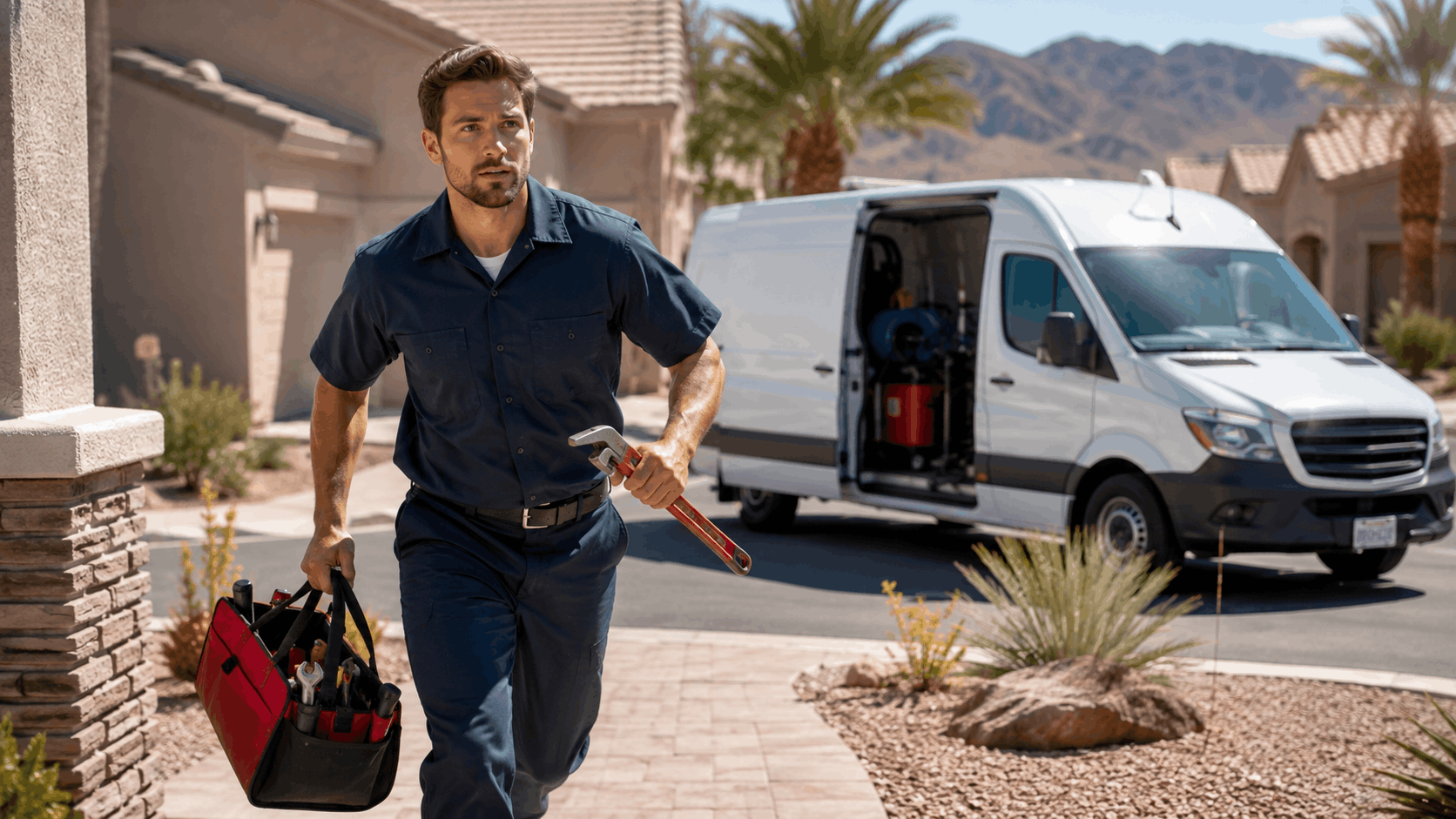
The reason we can commit to tight windows is simple: our trucks are spread across the valley, not parked at one yard. Crews work in and around Spring Valley, Enterprise, and the Arts District so someone is usually minutes from most homes. Nearby trucks shorten drive times more than any marketing promise ever could.
Truck stock matters just as much as position. A crew that arrives fast but lacks the right part still leaves the homeowner waiting for a return trip. Our trucks carry the common fittings, valves, and water heater parts needed to close out most emergencies on the spot.
Local dispatch ties it together. When a call comes in, our team looks at live crew locations and job status, then sends the closest qualified plumber. That routing is what turns a promise of fast service into an actual truck in the driveway.
A homeowner in the Arts District gets matched with a downtown crew, not one fighting through freeway traffic from the far side of the valley. That is the whole point of positioning trucks where the people are. Coverage plus stock plus local dispatch equals real 60-minute response.
Neighborhood-by-Neighborhood: Response Times Across the Valley
Arrival times are not the same everywhere. Where a home sits, how the roads run, and where the nearest crew is working all shape the window. Knowing the metro layout is how a plumber gives an honest estimate instead of a hopeful one.
The table below shows typical response ranges across the valley under normal traffic. These are realistic windows for our plumber coverage area, not best-case fantasies. Rush hour and monsoon storms can add time to any of them.
| Area | Typical Response Window | Main Timing Factor |
|---|---|---|
| Summerlin, The Lakes, West Valley | 30-55 minutes | 215 Beltway exits, HOA gate access |
| Henderson, Green Valley, Anthem | 40-70 minutes | Distance and 215 corridor traffic |
| North Las Vegas, Aliante, Centennial Hills | 40-65 minutes | Spread-out newer developments |
| Central Vegas, Downtown, Historic Districts | 25-50 minutes | Central crews, older street grids |
Summerlin, The Lakes, and West Valley
Summerlin and The Lakes are full of newer HOA communities where the plumbing is builder-grade and mostly consistent. Common calls involve pressure regulators, angle stops that wear out, and water heaters aging past their tenth year. Because these homes were built in similar waves, the same issues tend to show up across whole streets.
Drive times to Summerlin are usually good because our west-side crews work nearby. The main slowdown is the 215 Beltway near Summerlin Parkway during rush hour and the gated entrances that need access codes or a call to the resident. We ask for gate details up front so the crew is not stuck at the callbox.
Villages across Summerlin sit at different elevations and distances from the freeway, so windows vary within the area. A home in Summerlin West may take a few more minutes than one closer to the central parkway. Even so, arrival here is within our 30 to 60 minute window on most days.
Builder-grade fixtures in these communities often fail around the same age, so we stock the parts these homes commonly need. That means a leaking valve or failed water heater in Summerlin usually gets fixed on the first visit. Fast arrival paired with the right parts is what keeps these calls short.
Henderson, Green Valley, and Anthem
The southeast communities sit farther from the central valley, so distance is the main factor in their windows. Henderson and Green Valley are well served when a crew is already working the southeast, but a call during heavy 215 traffic can stretch the timing. Anthem, sitting up the hill, adds a few more minutes on top.
The 215 corridor is the lifeline for these areas, and it moves well outside of rush hour. During morning and evening peaks, exits near Green Valley Parkway and Eastern back up and slow arrivals. Our dispatch plans around those windows by keeping a crew positioned on the southeast side when possible.
Housing here ranges from established Green Valley homes to newer master-planned neighborhoods, so the plumbing problems vary. Older Green Valley homes see more aging fixture issues, while newer builds near Lake Las Vegas tend toward builder-grade wear. We match the right parts to the age of the home.
For most Henderson addresses, a 40 to 70 minute window is realistic depending on traffic and crew placement. We give an honest estimate rather than a flat one-hour promise we cannot always keep. When a crew is already nearby, arrivals often land at the shorter end.
North Las Vegas, Aliante, and Centennial Hills
The north side has grown fast, and the newer developments spread out over a wide area off the 215. That spread is the main challenge for response times, since neighborhoods sit far apart with long stretches between them. A crew covering the north can still cover a lot of ground between calls.
Aliante and Centennial Hills are newer, so the plumbing skews toward builder-grade components that fail in predictable ways. Water heaters, pressure regulators, and angle stops make up a big share of the calls. Because the homes are similar, we can often diagnose the likely issue before the truck even arrives.
The 215 on the north end moves well most of the day, which helps arrivals to Aliante and the surrounding developments. The bigger variable is which side of the north valley the nearest crew is working. Positioning a truck up north during busy periods keeps windows tight.
For growing areas like Elkhorn and Tule Springs, we plan routes that account for the long distances between subdivisions. A typical North Las Vegas call lands in the 40 to 65 minute range under normal conditions. Honest windows beat empty promises every time.
Central Vegas, Downtown, and the Historic Districts
The central and downtown neighborhoods hold the oldest housing stock in the valley, and that changes everything about the work. Homes near the John S. Park district and the older grids around downtown were built with copper and cast iron that is now decades old. Aging infrastructure means a quick response matters even more here.
Central location is the upside. Our crews work these areas often, so drive times downtown and to the historic districts are among the shortest in the valley. The narrow older street grids and tight alleys can slow the final approach, but the overall window stays low.
The problems in older homes tend to be more urgent. A cast iron sewer line that has been corroding for fifty years can collapse, and old copper develops pinhole leaks that spray inside walls. These are not cosmetic issues, so getting a plumber there quickly protects the structure itself.
For historic homes, we combine fast arrival with the right diagnostic tools to avoid tearing into old finishes unnecessarily. A camera inspection or electronic leak detection often reveals the problem without destroying original woodwork or plaster. In these central Las Vegas neighborhoods, careful and fast go together.
What a Fast-Arriving Plumber Should Do When They Get There
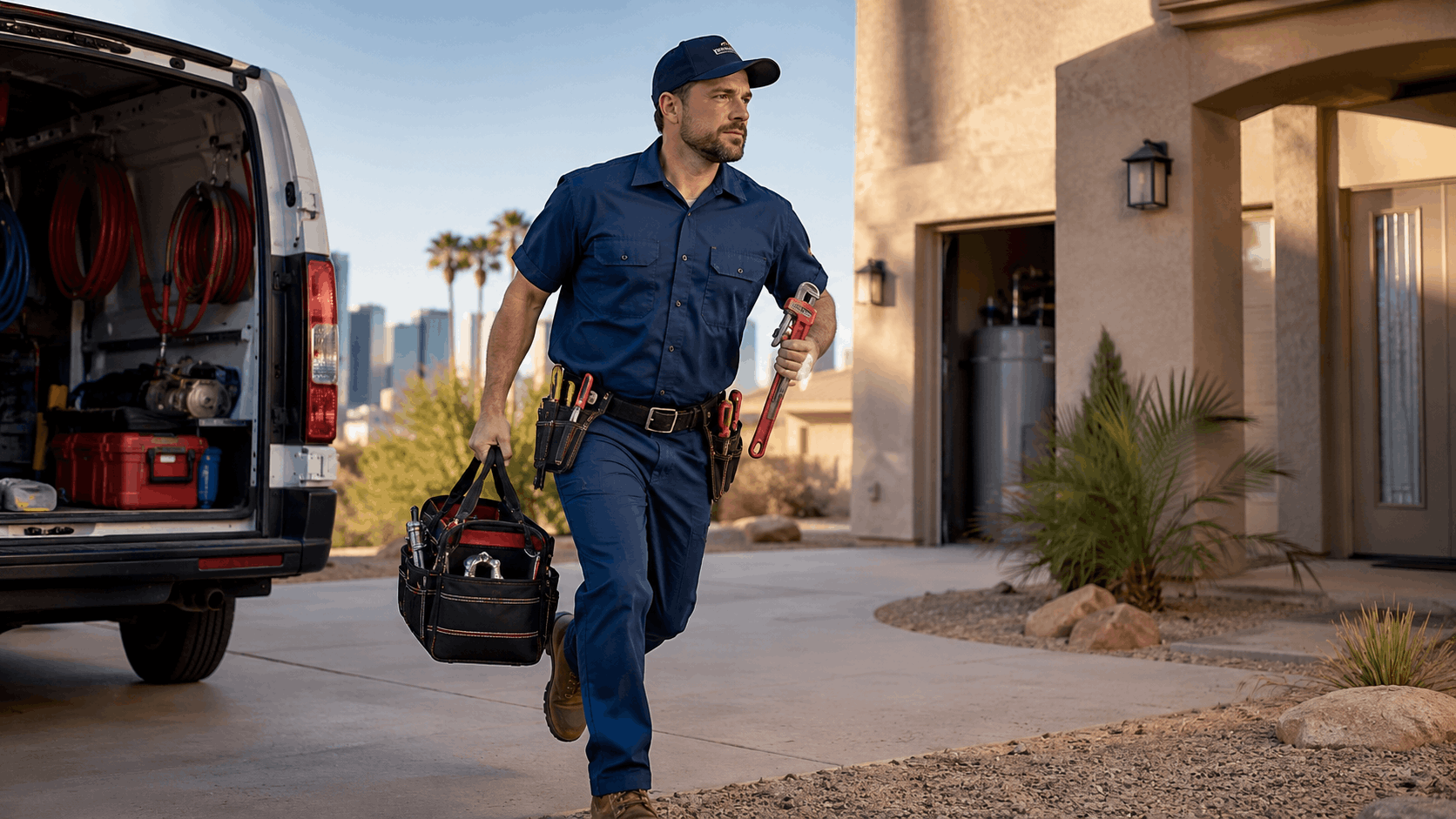
Arriving fast is only half the job. What happens after the truck pulls up decides whether the visit actually solves the problem. A proper emergency plumbing repair follows a clear order, and homeowners should know what good service looks like.
The steps below set expectations for a professional plumber visit. From the first minute of diagnostics to the final repair, each stage protects the home and the homeowner's wallet.
Stopping the Damage First
The first move on any active leak is to stop the water, not to start writing an estimate. A good plumber locates the nearest shutoff, closes it, and stops the flow before anything else. Every minute of running water adds to the damage and the eventual repair cost.
Once the water is off, the crew contains what has already spilled. That means directing water away from walls and belongings and keeping a small leak from spreading into a big one. Leak containment in those first minutes often saves flooring and drywall that would otherwise need replacing.
With the emergency stabilized, the plumber can safely diagnose the full problem without water actively pouring. This order matters because rushing to diagnose while a pipe sprays only makes the water damage worse. Stop, contain, then investigate.
Homeowners can help by knowing where their main shutoff is before trouble ever starts. When the crew arrives to a home where the water is already off, the visit moves more quickly and the damage stays smaller. We walk homeowners through their shutoff locations so they are ready next time.
A Written Price Before Work Begins
No homeowner should have to guess what a repair will cost while water is on the floor. A professional plumber diagnoses the problem, then presents a written estimate before touching a wrench. A written price before work starts removes the fear of a surprise bill at the end.
Flat-rate pricing works better than hourly during an emergency because the number does not climb while the clock runs. The homeowner knows the total before approving the work. That transparency matters most when stress is high and decisions feel rushed.
A good estimate spells out what the job includes and what it does not. If the plumber finds a second problem after opening a wall, they stop and re-quote rather than piling on charges. Honest communication at this stage builds the trust that keeps homeowners calling the same company for years.
We put every price in writing and explain the options before any work starts. A homeowner facing a burst pipe deserves to know whether they are looking at a quick fix or a larger repair. Clear numbers up front are how emergency work stays fair.
Fixing the Problem on the First Visit
The best emergency visit ends with the problem solved, not with a return trip scheduled. That only happens when the truck carries the parts the job needs. A stocked truck is the difference between a same-day fix and a second appointment.
Our crews load their trucks with the fittings, valves, cartridges, and water heater parts that valley homes commonly need. Because so many neighborhoods share builder-grade fixtures, we can predict what most calls will require. That preparation turns a two-visit repair into a first-visit repair.
Some jobs, like a full sewer line replacement or a specialty part for an older home, genuinely need a follow-up. When that happens, we say so clearly and schedule it right away. Honesty about scope beats pretending every job fits in one trip.
For the great majority of emergencies - burst pipes, clogged drains, failed water heaters, leaking valves - one visit is enough. Fast arrival plus a stocked truck plus a skilled plumber closes the loop. That is what same-day service should actually deliver.
Need Help in Las Vegas?
Active Plumbing serves Las Vegas and all of Las Vegas Valley.
The Cost of Same-Day and Emergency Plumbing in Las Vegas
Nobody likes talking price during an emergency, but going in blind is worse. Knowing the typical ranges helps a homeowner budget and spot a fair quote from an inflated one. Emergency plumber cost in Las Vegas depends on the job, the time of day, and the parts involved.
The ranges below reflect the local market. Actual plumbing prices in Las Vegas vary with the specifics of each home, but these numbers give a realistic starting point.
Typical Price Ranges for Common Emergencies
Basic drain cleaning usually runs from around 150 to 400 dollars, depending on the clog and the access point. A tougher blockage that needs hydro jetting costs more because it takes heavier equipment and more time. Root-clogged sewer lines sit at the higher end of that range.
Water heater repair typically falls between 200 and 700 dollars, driven by the failed component. A thermocouple or heating element is on the low end, while a control valve or major part costs more. A full replacement is a separate, larger project priced by tank size and type.
Leak repair varies the most because it depends on where the leak hides. A visible supply-line leak is a quick, lower-cost fix, while a slab leak that needs detection and access work costs considerably more. Finding the leak precisely keeps the repair cost from ballooning.
These are general ranges, not quotes. The real number comes after a plumber sees the problem and provides a written estimate. Anyone quoting a firm price over the phone without seeing the job is guessing.
After-Hours, Weekend, and Holiday Charges
Many plumbers charge more for after-hours plumbing, and homeowners should expect it. Nights, weekends, and holidays often carry a surcharge because crews are working outside normal hours. This is standard across the industry, not a trick.
Weekend rates and holiday service fees vary by company, so the smart move is to confirm them on the phone before the truck rolls. A fair company tells the caller about any after-hours premium up front. A vague answer about pricing is a warning sign worth noting.
Some emergencies genuinely cannot wait for Monday, and the surcharge is worth it to stop a flood or restore water. Others can safely wait until standard hours to avoid the premium. Knowing which is which helps a homeowner decide.
We are clear about any after-hours or holiday charges before dispatching a crew. There is no benefit in surprising a customer with a fee they never agreed to. Transparency about timing-based pricing is part of honest emergency service.
How to Avoid Overpaying During an Emergency
The pressure of an emergency makes it easy to overpay, but a few habits protect the wallet. Ask whether there is a diagnostic fee and whether it gets credited toward the repair. A fee that applies to the final bill is fair; one that stacks on top is worth questioning.
Always ask for an itemized quote that separates labor, parts, and any fees. A clear breakdown makes it obvious what the money is buying and where there might be room to adjust. Vague lump sums hide inflated charges.
Even under pressure, take sixty seconds to read the estimate before approving it. A fair plumber will explain each line and answer questions without rushing. If someone pushes hard to sign immediately, slow down and ask more.
Fair pricing is not about finding the cheapest number - it is about paying a reasonable rate for honest work. A slightly higher quote from a plumber who arrives fast and fixes it right beats a lowball that turns into a return trip. Clear communication is the best defense against overpaying.
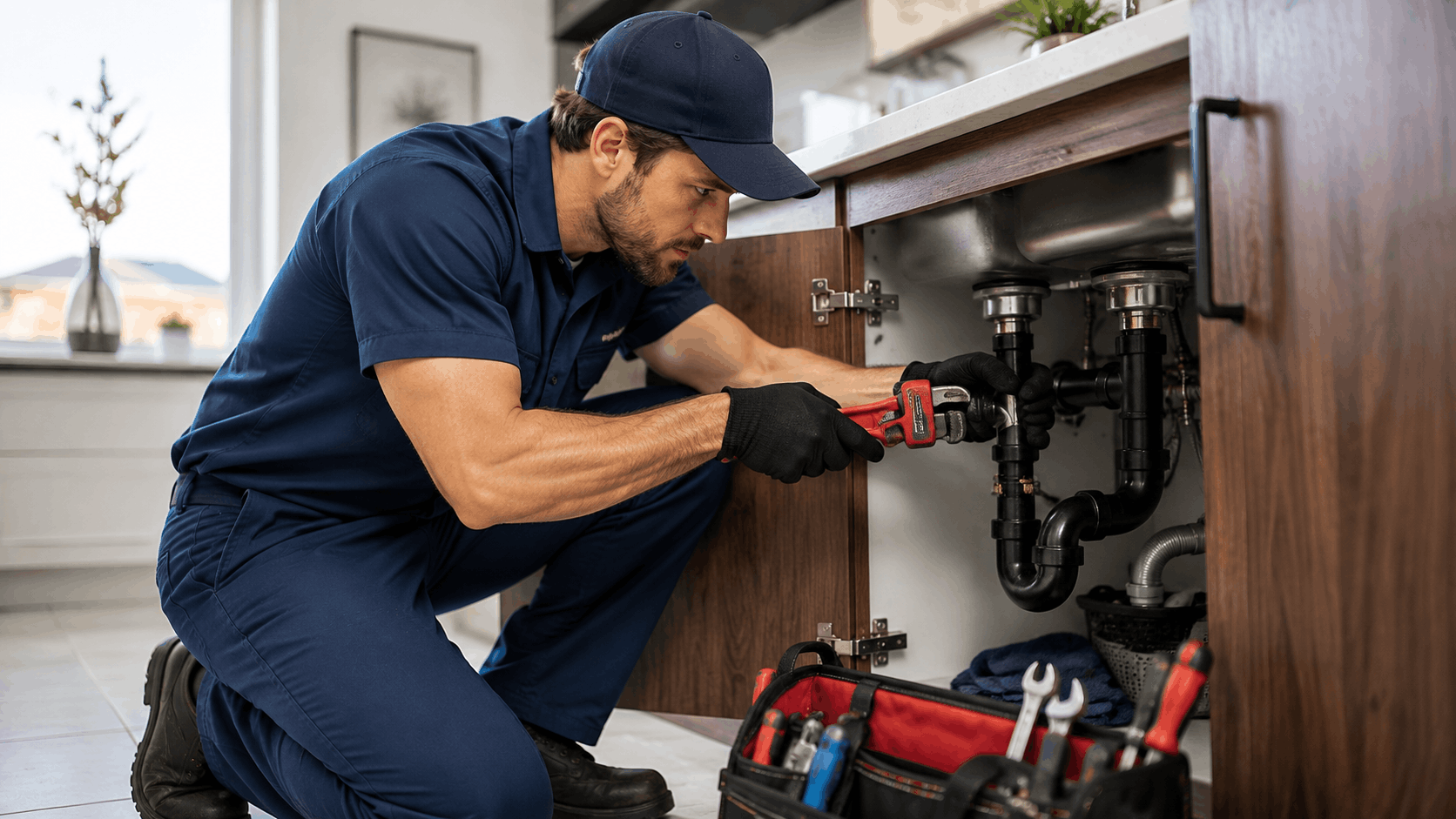
Why Active Plumbing Responds Fast Across the Las Vegas Valley
Fast response is not luck. It comes from how a company positions its people, trains its plumbers, and runs its dispatch. Active Plumbing built its operation around getting a qualified Las Vegas plumber to the door quickly, across the whole valley.
The pieces below explain the systems behind our fast response. None of it is sales language - it is how the work actually gets done.
Trucks Positioned Around the Valley
We spread our crews across the west, south, and north instead of clustering them at one yard. That positioning keeps drive times low for most calls because someone is usually working nearby. A truck already in the southwest reaches an Enterprise emergency within our 30 to 60 minute window.
Our service area covers the core neighborhoods where most calls come from, and we plan crew placement around the day's demand. When one part of the valley heats up, we shift coverage to keep windows tight. Local crews who know their zones get around more easily than someone unfamiliar with the streets.
Truck positioning also means the nearest available plumber can respond without waiting for a distant crew to free up. This is the heart of real 60-minute response. Coverage across the map is what makes the promise achievable rather than aspirational.
From Mountain's Edge in the southwest to the north-side developments, we aim to keep a qualified crew within reach. The goal is simple: shorten the distance between the emergency and the fix. Position solves that better than fleet size.
Licensed Local Plumbers Who Know the Codes
Every job goes to a licensed plumber who knows Clark County's requirements. Knowing the local permitting and building department rules speeds up repairs that need inspection and keeps the work compliant. A plumber unfamiliar with local code wastes time and risks failed inspections.
Clark County permit requirements apply to major work like water heater replacements, repipes, and sewer line jobs. Our team handles the permitting process correctly the first time so homeowners are not stuck with delays. Doing it right protects the homeowner if they ever sell the property.
Local knowledge extends to how valley homes are actually built. Slab construction, common fixture brands, and neighborhood-specific quirks are all familiar territory for a plumber who works here every day. That familiarity turns a guessing game into a fast, accurate repair.
You can verify any Nevada contractor's license through the Nevada State Contractors Board. We encourage homeowners to check, because licensing matters most on emergency work. A licensed, local team is a safer choice than an unknown responder.
Real Local Dispatch, Not a Call Center
When someone calls us, they reach a local team member, not an out-of-state call center. That difference shows up immediately in the arrival estimate. A local dispatcher can see live crew locations and give a realistic window instead of reading a script.
Customer service works better when the person on the phone knows the valley. They understand which freeway is jammed, which neighborhoods a crew is near, and how long a route actually takes. That knowledge makes every estimate more accurate.
Call centers add a layer of delay because they take the message and forward it. Our dispatch skips that step and routes the closest crew directly. Fewer hands on the request means quicker action.
A homeowner deserves a straight answer about when help will arrive. Talking to real local dispatch is how they get one. That direct line between caller and crew is a big part of why our windows hold up.
Need Help in Las Vegas?
Active Plumbing serves Las Vegas and all of Las Vegas Valley.
What Homeowners Can Do While Waiting for the Plumber
The minutes before the plumber arrives are the ones that decide how much damage happens. A few simple actions can limit the flood and lower the repair bill. Here is how to protect a home while help is on the way.
These emergency steps are safe for any homeowner to take. They focus on stopping water and containing the mess, not on attempting the repair itself.
Finding and Turning Off the Main Water Valve
The single most useful thing a homeowner can do is shut off the main water valve. In most valley homes, the main shutoff sits near the front of the house, often in a box near the street meter or where the water line enters the home. Some are in the garage or an exterior wall.
To stop the water, turn the valve clockwise until it stops, or if it is a lever, rotate it a quarter turn until it is perpendicular to the pipe. This cuts water to the whole house and stops the leak at its source. Knowing this location before an emergency saves precious minutes.
For a single fixture leak, like a toilet or sink, there is usually a smaller shutoff right at that fixture. Turning that one off stops the leak without cutting water to the whole home. Look for a small oval or football-shaped handle on the supply line.
If the valve is stuck or the leak continues after shutting it, the main valve is the safe fallback. Finding these shutoffs on a calm day, before anything breaks, is one of the smartest things a homeowner can do. We show customers exactly where theirs are during every visit.
Protecting Floors, Walls, and Belongings
Once the water is off, the next goal is limiting where the spilled water spreads. Move furniture, boxes, and anything valuable away from the wet area. Water damage prevention is often about keeping a small spill from reaching more rooms.
Towels, blankets, and a wet-dry vacuum help soak up standing water and slow its spread across flooring. Blocking a doorway with towels can keep water out of a carpeted room. Every gallon kept off the floor is money saved on restoration.
Lift the corners of area rugs and move electronics off the floor to protect them from spreading water. Flooring protection matters most with wood and laminate, which warp quickly when wet. Fast action here directly lowers the cleanup and repair bill.
If water has reached the ceiling from a leak above, place a bucket underneath and, if it is safe, poke a small hole to drain a bulging spot in a controlled way. This keeps the ceiling from collapsing all at once. When in doubt, wait for the crew and just contain what you can.
What Not to Touch or Attempt
Some DIY moves make an emergency worse. Chemical drain cleaner is one of the biggest offenders - it can sit in a fully blocked pipe, generate heat, and damage the line or splash back dangerously. Skip the drain cleaner and let a plumber clear the clog properly.
Gas water heaters and gas lines are off-limits for DIY during an emergency. If there is a smell of gas near the heater, leave the area, avoid switches and flames, and call the gas utility and a professional. Gas safety is not worth a shortcut.
Do not attempt to open walls, cut into pipes, or force a stuck valve with heavy tools. These moves can turn a contained problem into a much bigger one and create a safety hazard. The EPA's guidance on household leaks is a good reminder that most fixes belong to a professional.
The safest approach is to stop the water, contain the mess, and wait for the plumber. A homeowner who resists the urge to over-fix usually ends up with a smaller bill. Leave the repair to the crew that arrives ready to do it right.
Final Thoughts
The plumbers who truly arrive within 60 minutes are the ones with trucks spread across the valley, real local dispatch, and stocked vehicles ready to fix the problem on the first visit. Marketing claims are easy to make and hard to keep, so the smart move is to ask direct questions before committing.
Fast response protects a home from the water damage that turns a small repair into a major project. Knowing your main shutoff, spotting the red flags of a slow responder, and understanding fair pricing all put a homeowner in control during a stressful moment.
When a burst pipe, sewer backup, or failed water heater strikes anywhere from Summerlin to Henderson, Active Plumbing is positioned to respond fast. Reach out through our contact page or call our local team, and check our emergency plumbing services to see how we handle the calls that cannot wait.
Frequently Asked Questions
- Which plumbers actually arrive within 60 minutes in Las Vegas?
- The companies that hit a 60-minute window most often are the ones with locally positioned trucks and real dispatch, like Active Plumbing. Fast arrival depends on how close the nearest crew is, not how big the fleet looks in ads. Ask any plumber where their nearest truck is right now and for an expected arrival window before you commit to the call.
- How much does a same-day plumber cost in Las Vegas?
- Same-day plumber cost varies with the job and the time of day. Basic drain clearing often runs 150 to 400 dollars, water heater repair 200 to 700 dollars, and leak repair depends heavily on the location of the leak. After-hours, weekends, and holidays usually add a surcharge, so confirm pricing on the phone before the truck is dispatched to your home.
- Do plumbers charge extra for emergency and after-hours calls?
- Yes, most plumbers apply an after-hours charge for nights, weekends, and holidays because crews work outside normal hours. The emergency fee amount varies by company, so ask about it up front before dispatching anyone. A fair plumber tells you about any premium clearly on the first call rather than surprising you with it on the final bill.
- What should someone do before the plumber arrives?
- Shut off the water first. Find the main water valve near the meter, garage, or where the line enters the home, and turn it off to stop the flow. Then contain the mess by moving belongings, laying down towels, and blocking water from spreading. These emergency steps limit damage and lower your final repair bill while the crew is on the way.
- Are same-day plumbers available on weekends and holidays?
- Many local plumbers offer weekend and holiday service, though often at higher rates. A weekend plumber or holiday service call carries a surcharge because crews are working outside regular hours. If the emergency involves a flood, sewer backup, or no water, the premium is usually worth paying. Confirm the rate before the crew is dispatched so there are no surprises.
- How fast can a plumber reach Summerlin or Henderson?
- A Summerlin plumber usually arrives in 30 to 55 minutes under normal traffic since west-side crews work nearby. A Henderson plumber typically lands in 40 to 70 minutes because of distance and 215 corridor traffic. Rush hour and monsoon storms can add time to both. When a crew is already positioned near the area, arrivals often come at the shorter end of those windows.
- Can most emergency repairs be finished in one visit?
- Yes, common emergencies are handled as a one-visit repair when the truck is well stocked. Burst pipes, clogged drains, failed water heaters, and leaking valves are usually completed the same day because our crews carry the common parts these jobs need. Larger projects like full sewer line replacement may need a follow-up, and we tell you that clearly up front.
- How do I know if a leak is an emergency or can wait?
- A leak is an emergency when water is actively spreading, soaking walls or floors, coming from a sewer line, or paired with total loss of pressure. Those need an immediate call. A slow drip under a sink that you can contain in a bucket can often wait for a standard appointment. When in doubt, shut off the water and call - it is cheaper than water damage.
- Are Las Vegas plumbers licensed and insured?
- Reputable ones are. You can verify any contractor's license through the Nevada State Contractors Board before hiring, which matters most on emergency work. A licensed, insured plumber protects you if something goes wrong and confirms the work meets Clark County code. Always confirm licensing and insurance, especially when someone shows up quickly during a stressful situation.
- What causes so many plumbing emergencies in Las Vegas homes?
- Three things drive most valley plumbing emergencies. Hard water from the Las Vegas Valley Water District leaves sediment that kills water heaters and clogs fixtures. Aging pipes in older neighborhoods near downtown corrode and burst. And the desert climate stresses pipe joints through heavy temperature swings. Together they explain why so many homes here face sudden leaks, backups, and heater failures.
Licensed plumbing professionals serving Las Vegas and Las Vegas Valley.
Licensed in Nevada · License #0047021
Last updated on
Why trust Active Plumbing?
Founded in 1991, Active Plumbing is a licensed and insured plumber serving Las Vegas and Las Vegas Valley. All content is reviewed by our licensed technicians.

Need Help in Las Vegas?
Active Plumbing serves Las Vegas and all of Las Vegas Valley.
Related Articles
Active Plumbing vs Big Brand Plumbers: Why Local Vegas Companies Win on Service
See how local Vegas plumbers like Active Plumbing beat big brand franchises on response time, honest pricing, hard water know-how, permits, and warranties.
Best Plumber in Las Vegas: How to Compare Companies Without Just Reading Reviews
Learn how to compare Las Vegas plumbing companies using license checks, pricing, warranties, response time, and local experience instead of relying on star ratings alone.
Sewer Line Clog Vegas: When You Need Same-Day vs Scheduled Service
Learn when a Las Vegas sewer line clog needs same-day emergency service versus a scheduled visit, plus local causes, costs, and prevention tips from Active Plumbing.