Sewer Line Clog Vegas: When You Need Same-Day vs Scheduled Service
Key Takeaways
- Multiple slow drains, gurgling toilets, sewer smells, and water crossover between fixtures signal a main line clog, not a single fixture problem.
- Raw sewage inside the home, no working plumbing, water near electrical, and multi-unit backups are same-day emergencies that cannot wait.
- A single slow drain, recurring minor backups, preventive cleaning, and planned repairs are best handled with a scheduled appointment to avoid emergency rates.
- Vegas clogs are driven by hard water scale, aging cast iron and clay pipes in older neighborhoods, tree root intrusion, and grease or wipes.
- Basic snaking runs roughly 150 to 400 dollars and hydro jetting 400 to 900 dollars, with same-day timing and job difficulty raising the total.
- Before help arrives, stop using water, use the sewer cleanout to relieve pressure, protect floors, and avoid chemical drain cleaners.
- Prevent future clogs with careful drain habits, routine camera inspections, scheduled hydro jetting, and hard water treatment.
- Active Plumbing offers both same-day emergency response and scheduled service across the Las Vegas valley.
In This Article
A family in Summerlin West wakes up early, hoping to beat the morning heat with a quick shower before work. Instead, they step into a tub that will not drain, water pooling around their feet with a faint smell that gets worse by the minute. Down the hall, the toilet gurgles every time the washing machine runs a cycle. That sinking feeling is one our team hears about almost every week across the valley.
When a sewer line clog hits, the first question most homeowners ask is simple: does this need help right now, or can it wait a day or two? The answer changes the cost, the stress, and sometimes whether raw sewage ends up on the bathroom floor. Knowing the difference saves money and protects your home.
How to Spot a Sewer Line Clog Before It Gets Worse?
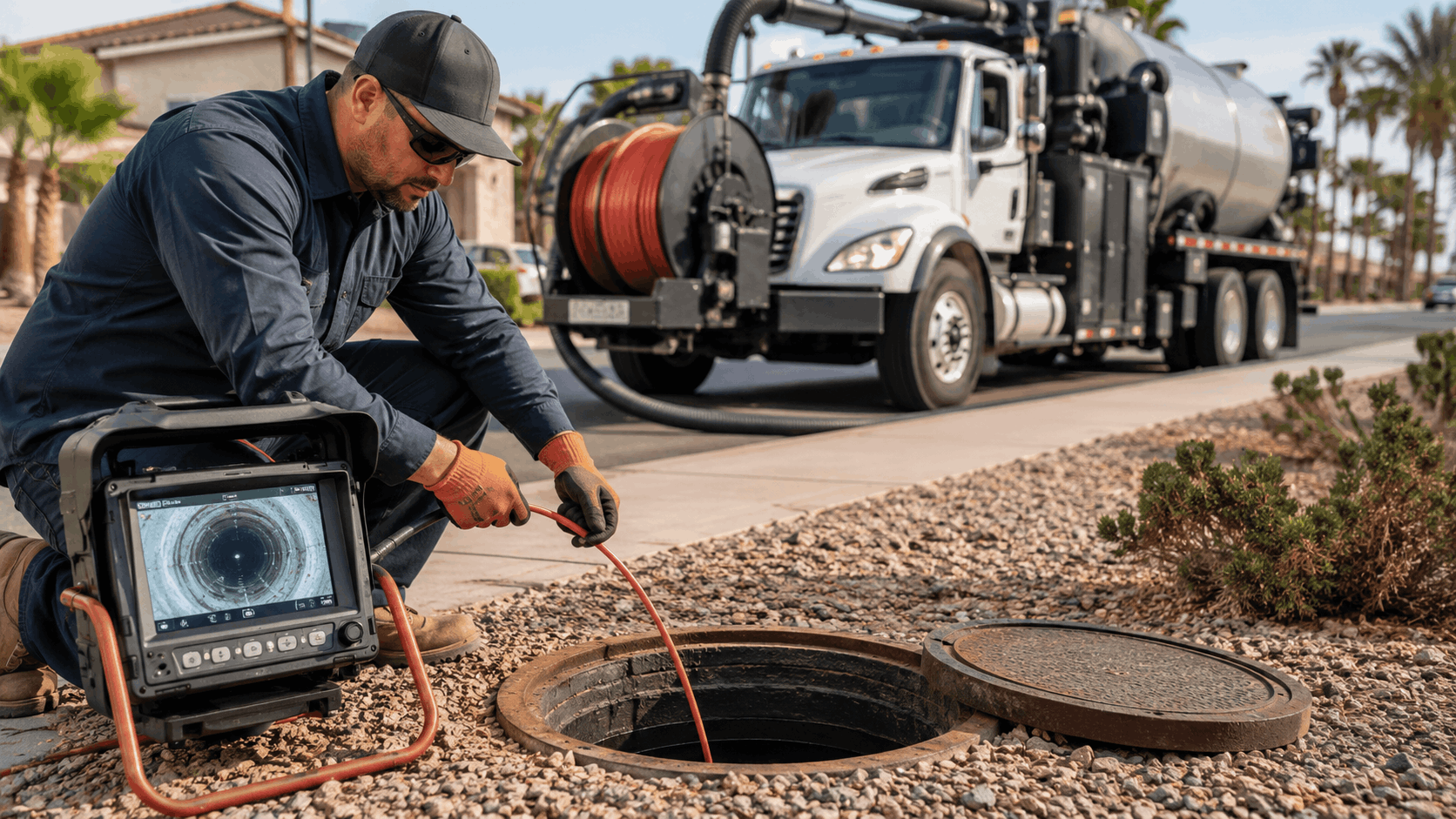
Most sewer problems give warning signs long before sewage backs up into the house. The trick is knowing what to watch for. Homeowners who catch the early clues often pay for a simple drain cleaning instead of a full-blown cleanup.
Some sewer line clog signs are loud and obvious. Others are quiet and easy to ignore until the problem grows. Here is what our team tells neighbors to look for.
Multiple Drains Slowing Down at Once
A single slow sink usually means a local clog near that fixture. But when the kitchen sink, the bathroom tub, and the laundry drain all slow down around the same time, that points to something bigger. The problem sits in the main line that carries waste away from the whole house.
Think of your home's drains like branches on a tree. Each one feeds into a single trunk, the main sewer line. When that trunk gets blocked, everything upstream backs up together. This is the clearest sign of a main line backup rather than a fixture-level issue.
We see this pattern often in older ranch homes near Charleston and Eastern, where the original clay lines have narrowed over decades. If two or more slow drains show up on the same day, it is time to stop guessing and get the line inspected. Ignoring simultaneous slow drains almost always leads to a worse mess later.
One quick test: run water in a bathroom sink and watch a nearby toilet. If the toilet bubbles or the water level shifts, your main sewer line is likely the culprit, not the sink.
Gurgling Sounds and Sewer Odors
A gurgling toilet is one of the more common early warnings we hear about. That bubbling noise happens when trapped air cannot escape past a partial blockage in the line. The air pushes back through the water in your toilet bowl or drain, making that odd glugging sound.
Along with the noise, many homeowners notice a rotten-egg or sewer smell drifting up from drains. That odor comes from sewer gas that would normally flow out through the vent and away from the home. When a clog blocks the path, the gas backs up into the house instead.
These two symptoms together, a gurgling toilet and a sewer smell, are a strong clue that drain problems are moving toward the main line. We tell folks in neighborhoods like Peccole Ranch not to spray air freshener and hope it passes. The smell is a signal, not a nuisance.
If you catch these signs early, a straightforward drain and sewer cleaning often clears the line before any water ever backs up into a fixture.
Water Backing Up Into Tubs and Toilets
Here is a symptom that scares most people, and rightly so. You flush the toilet, and water rises up in the bathtub across the room. Or you run the washing machine, and the toilet bowl fills higher than normal. That crossover means the clog has reached the main line.
When one fixture pushes water into another, the blockage is downstream of both of them. The water has nowhere else to go, so it takes the path of least resistance and comes up through the lowest drain in the house. In many Vegas homes, that lowest point is a ground-floor tub or shower.
A toilet overflow tied to using a different fixture is not a minor clog you can plunge away. The plunger only works on the trap right below the toilet. A main line water backup sits far past that point, sometimes under the yard or the foundation.
When we see this at a home, we treat it as urgent because the next flush could push sewage onto the floor. Cutting off water use right away buys time until help arrives.
Wet Spots or Sinkholes in the Yard
Not every sewer clue shows up indoors. Sometimes the yard tells the story first. A soggy patch of grass that stays wet with no sprinkler running, or a low spot that keeps sinking, can point to a cracked or clogged buried sewer line underground.
When a sewer line breaks or backs up below ground, waste and water leak into the surrounding soil. The ground gets saturated, then settles, which creates a yard sinkhole or a spongy area you can feel underfoot. In our dry climate, an unexplained wet spot really stands out.
We have traced these soft patches to broken clay lines in established east valley yards more times than we can count. The buried sewer line runs from the house out to the city connection, usually under the front yard or a side yard. A dip or wet zone along that path deserves a closer look.
A sewer camera inspection can confirm whether the underground line is cracked, collapsed, or blocked without tearing up your landscaping to find out.
Get Your Quote
Tell us what's going on and we'll get back to you. We're open 24/7.
When a Sewer Line Clog Is a Same-Day Emergency
Not every clog is a crisis, but some absolutely are. A few situations put your health or your home at real risk, and those cannot wait for a scheduled slot next week. Knowing which ones qualify helps you make the right call fast.
Our team handles same-day sewer service across the valley for exactly these moments. The table below sums up the clearest emergency signs, and the sections after it explain each one.
| Situation | Why It Cannot Wait | Service Needed |
|---|---|---|
| Raw sewage inside the home | Health hazard, contamination | Same-day emergency |
| No working toilets or drains at all | Whole house unusable | Same-day emergency |
| Standing water near wiring or floors | Shock and structural damage risk | Same-day emergency |
| Multi-unit or rental backup | Multiple tenants affected | Same-day emergency |
Sewage Backing Up Into the Home
Raw sewage on the floor is the clearest plumbing emergency there is. It is not just gross, it is a genuine health hazard. Sewage carries bacteria and viruses that can make a family sick, and it contaminates anything it touches.
When a sewage backup reaches your bathroom floor, laundry room, or a floor drain, that is not a job for a scheduled appointment. Every hour the waste sits there, the contamination spreads and the cleanup grows. Porous materials like carpet, baseboards, and drywall soak it up fast.
The U.S. Environmental Protection Agency notes that sewage backups pose real health risks and should be handled quickly with proper protection. You can read their guidance on managing wastewater systems for more on why speed matters here.
Our sewage backup cleanup crews respond the same day because this problem only gets worse with time. Keep kids and pets away from the affected area until help arrives.
No Working Toilets or Drains at All
When every toilet and drain in the house stops working, life grinds to a halt. Nobody can flush, wash hands, or run water without it backing up. A full-house shutdown almost always means the clogged main line is completely blocked.
This happens more often in older homes near Downtown and the Historic Westside, where original cast iron and clay lines have decades of buildup and cracking. Once the main line seals shut, there is no partial workaround. The whole system depends on that single pipe.
A home with no working plumbing is not livable, especially with children, older adults, or anyone with medical needs. That is why we treat a total blockage as a same-day call. Waiting overnight is rough on any household.
Our emergency plumbing team can usually clear a fully blocked main line quickly once we locate the obstruction and choose the right tool for it.
Standing Water Near Electrical or Flooring
Water and electricity are a dangerous mix. When a backup sends standing water toward outlets, appliance cords, or the electrical panel, the risk of shock climbs fast. That combination turns a plumbing problem into a safety emergency.
Standing water also destroys building materials. Hardwood floors warp and cup, drywall wicks moisture up the wall, and cabinet bases swell and fall apart. The flooding risk to your home's structure grows every hour the water sits.
We tell homeowners that water damage is often the most expensive part of a sewer backup, more than the clog itself. A quick response limits how far the water spreads and how much has to be torn out and replaced. That is where same-day service pays for itself.
If water is near anything electrical, avoid the area and shut off power to that zone at the breaker if you can do so safely. Then call for help right away.
Multi-Unit and Rental Property Backups
A clog in a single-family home affects one household. A clog in a duplex, apartment, or HOA-managed property affects many. When a shared main line backs up, several units can lose plumbing at once, which turns one problem into a building-wide emergency.
Landlords and property managers in communities like Aliante and Mountain's Edge cannot leave tenants without working toilets. There are habitability rules to meet and multiple families relying on fast action. A delay can mean unhappy tenants and possible liability.
We handle rental property plumbing and HOA sewer issues with the same urgency we give a family in crisis. The stakes multiply with every unit connected to the blocked line. Speed protects both the tenants and the owner's investment.
For larger commercial and multi-unit sites, our commercial sewage cleanup crews are set up to move quickly and restore service to everyone affected.
Need Help in Las Vegas?
Active Plumbing serves Las Vegas and all of Las Vegas Valley.
When a Scheduled Service Visit Makes More Sense
Emergency service is a lifesaver when you need it, but you should not pay rush rates for a problem that can wait. Plenty of clogs are annoying without being urgent. In those cases, a planned appointment costs less and works just fine.
Here is how to tell when scheduling beats calling for same-day help. Knowing the difference keeps money in your pocket.
A Single Slow Drain With Other Fixtures Working
One slow bathroom sink while the rest of the house drains normally is almost always a localized clog. The blockage sits in the trap or the branch line for that one fixture, not the main sewer line. That kind of problem is not going to flood your home overnight.
A single slow drain gives you room to plan. You can book a drain cleaning appointment for a day or two out and keep using the rest of your plumbing in the meantime. There is no reason to pay emergency pricing for it.
We see this a lot with kitchen sinks that slow down from grease buildup or bathroom drains clogged with hair. These are common and easy to clear once we get there. They just do not carry the same risk as a main line backup.
If that single slow drain turns into two or three slow drains, the picture changes and it moves up the priority list. Until then, scheduling is the smart, budget-friendly choice.
Recurring Minor Backups You Want Inspected
Some homeowners deal with the same small backup over and over. The toilet clogs every few weeks, or the tub drains slow no matter how often it gets cleared. A recurring clog like that is trying to tell you something.
In older Vegas neighborhoods, repeat backups often trace to root intrusion. Tree roots creep into cracks and joints in the buried line, catch debris, and slowly choke the flow. Clearing the clog helps for a while, but the roots grow back.
A scheduled sewer camera inspection finds the real cause instead of treating the symptom again and again. We send a camera down the line to see exactly what is happening, whether it is roots, a belly in the pipe, or a cracked section. This turns guesswork into a clear plan.
Because a recurring minor backup is not an active flood, this is a perfect job to schedule. You get answers without the pressure of an emergency, and you can plan any repairs on your own timeline.
Preventive Cleaning Before Problems Start
The best sewer clog is the one that never happens. Homeowners with a history of clogs often do better with routine cleaning on a set schedule than waiting for the next backup. Prevention almost always costs less than emergency repair.
Hydro jetting is our go-to for preventive drain cleaning. It uses high-pressure water to scour the inside of the pipe clean, blasting away grease, scale, and root fragments that a simple snake leaves behind. The result is a line that flows like new.
For homes with older pipes or heavy grease use, we sometimes recommend jetting every year or two. Restaurants and kitchens benefit even more from regular hydro jetting and rooter service to stay ahead of buildup. A planned schedule beats a surprise shutdown.
Scheduling preventive cleaning also lets us spot small issues early, before they grow into the kind of clog that ruins a weekend. It is a quiet way to protect your home.
Planning Repairs Around Your Budget
When a sewer line needs real repair, not just cleaning, scheduling gives you control over cost. You can get a clear plumbing estimate, ask questions, and compare your options without the clock ticking on an emergency. That freedom often saves real money.
Emergency work happens fast by necessity, which means less time to weigh choices. A planned visit lets you decide between a spot repair and a full line replacement, and to time the work around your finances. Repair planning works best when you are not in crisis mode.
Our team lays out exactly what a job needs and what it costs before any work begins. For larger jobs like sewer line repair or replacement, that upfront clarity helps families budget with confidence. No surprises, no pressure.
If your problem is not urgent, take the time to plan it right. A well-scheduled repair almost always goes smoother and costs less than a rushed one.
Why Sewer Clogs Are So Common in Las Vegas Homes
Sewer clogs are not random bad luck. Here in the valley, several local factors work together to slow down and block pipes. Once you know the causes, the pattern makes a lot of sense.
Vegas soil, water, and home age all play a part in these Las Vegas sewer problems. Here is what we see under homes across the valley.
Hard Water and Mineral Buildup
Las Vegas has some of the hardest water in the country. The water served by the Las Vegas Valley Water District carries heavy amounts of calcium and magnesium. Those minerals do not just leave spots on your dishes, they build up inside your pipes.
Over the years, hard water buildup coats the inside of drain and sewer lines with mineral scale. That layer narrows the pipe, leaving less room for waste to flow. A line that was once wide open slowly closes down, and clogs catch more easily.
You can learn more about local water quality from the Las Vegas Valley Water District, which publishes reports on the mineral content of the supply. That hardness is a big reason many valley homes see repeat drain problems.
Treating the water at the source helps slow this process. A water softener installation reduces the scale that would otherwise keep narrowing your lines.
Aging Pipes in Older Neighborhoods
Older parts of the valley were built with materials that do not last forever. Homes in Huntridge, John S. Park, and near the Historic Westside often still run on cast iron pipes or clay sewer lines. Both were standard decades ago, and both break down over time.
Cast iron rusts from the inside out, leaving a rough, flaking surface that snags debris. Clay lines crack and shift, and their joints separate as the ground moves. Either way, the aging pipe becomes a magnet for clogs and root intrusion.
We have crawled under a lot of mid-century homes in these neighborhoods, and the story is often the same. The original line has served well but is now near the end of its life. Repeated clogs are usually the first sign.
When aging pipe is the root cause, cleaning only buys time. A camera inspection shows the true condition and helps homeowners decide whether repair or replacement makes more sense.
Tree Roots Seeking Water in Dry Soil
Our desert is bone dry most of the year, and tree roots know it. Mature landscaping sends roots searching far and wide for any source of moisture. A sewer line full of water and nutrients is exactly what they are hunting for.
Roots find the tiny gaps in pipe joints and cracks, then push their way inside. Once in, sewer line roots grow into a dense mat that traps everything flowing past. This tree root intrusion is one of the more common causes of repeat backups in established east valley homes.
Big shade trees planted decades ago are often the culprit, even when they sit some distance from the line. The roots travel much farther than most people expect. The older the tree and the line, the higher the odds.
Hydro jetting with a cutting head clears roots effectively, and a follow-up camera check confirms the line is open. For lines with ongoing root problems, a scheduled jetting plan keeps them under control.
Grease, Wipes, and Ground Shifting
Some clogs are simply about what goes down the drain. Cooking grease poured down the kitchen sink cools and hardens inside the pipe, building a sticky wall that catches food scraps. A grease clog can shut a line down over time.
So-called flushable wipes are another frequent offender. Despite the label, they do not break down like toilet paper. They snag on any rough spot in the line and pile up until the pipe is blocked. We pull these out of main lines constantly.
On top of human causes, desert soil moves. Ground shifting stresses buried lines, and even newer developments like Skye Canyon feel it. Expanding and contracting soil can crack or misalign a pipe that was fine at installation.
The fix starts with better habits at the sink and toilet, but when the line is already blocked, professional clearing is the only real answer. We often find a mix of grease and wipes behind a single stubborn clog.
How Active Plumbing Diagnoses a Sewer Line Clog
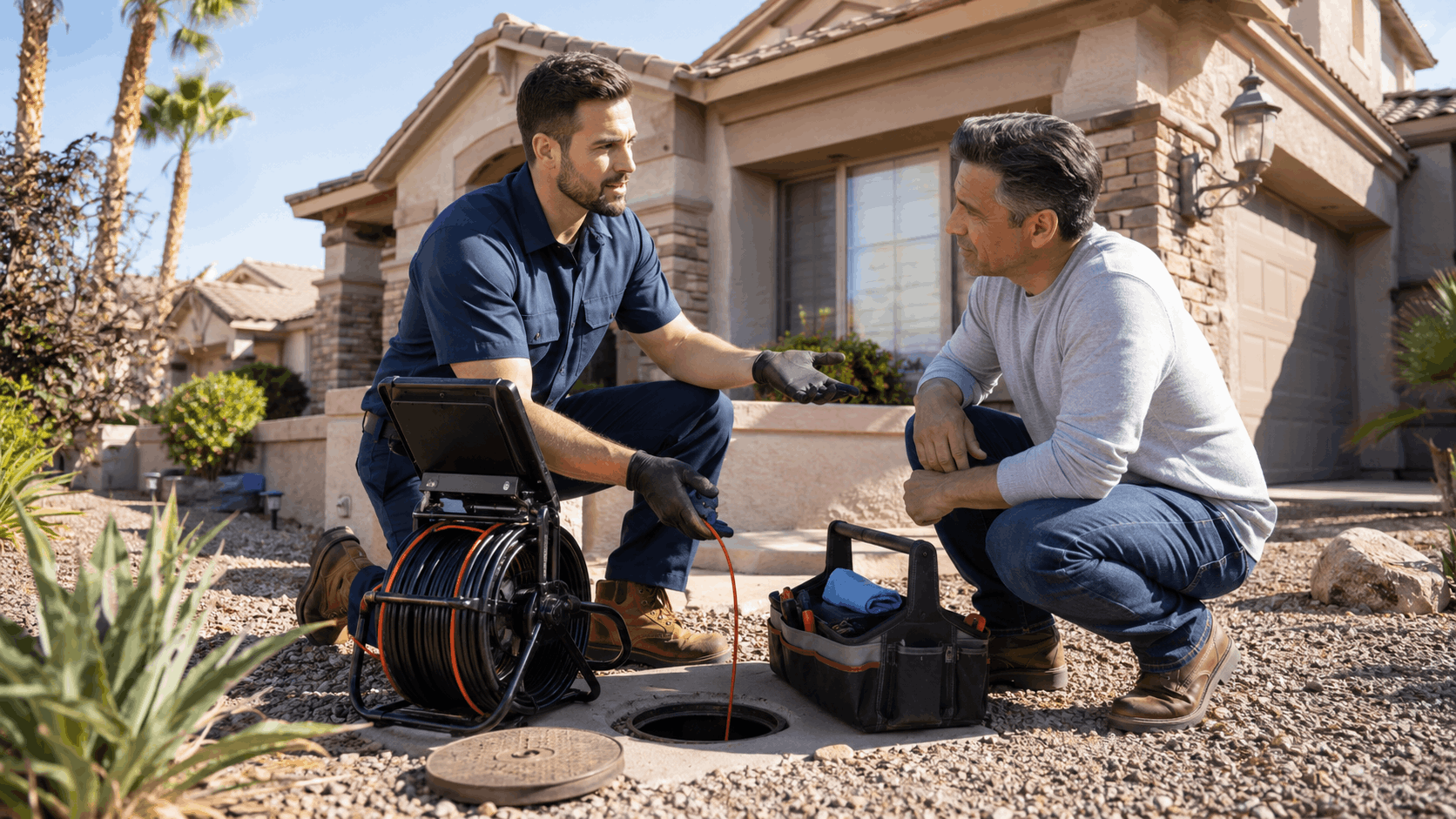
Guessing at a sewer clog wastes time and money. Our team follows a clear process to find the real cause before we start any work. Here is what a homeowner can expect during a sewer diagnosis with us.
Every job starts with information and ends with a clear plan. These are the steps we take from the moment we arrive.
On-Site Inspection and Questions We Ask
The first thing we do is talk with the homeowner and walk the property. A good plumbing inspection starts with the right questions. When did the problem start? Which drains are affected? Has this happened before?
Those answers tell us a lot about the clog location. If only one fixture is slow, we look near that fixture. If several drains back up together, we focus on the main line. This narrows the search fast.
We also check for the sewer cleanout, note the home's age, and look at the landscaping for clues about roots. A few minutes of careful observation often points us straight to the problem area. Experience across thousands of valley homes helps here.
Only after we understand the full picture do we move to the tools. Skipping this step leads to wasted effort and higher bills, so we never rush it.
Video Camera Line Inspection
The biggest advance in sewer work is the camera. A sewer camera lets us see inside the line without digging up the yard. We feed a waterproof camera down the pipe and watch a live video feed of exactly what is happening.
The video inspection shows the precise spot of a blockage, whether it is a root ball, a grease wall, or a cracked section of pipe. We can measure how far down the line the trouble sits, which makes repairs far more accurate. No more digging blind.
For homeowners, this means real answers instead of guesses. You can often see the problem on the screen yourself. A sewer camera inspection turns a mystery into a clear picture.
The camera also gives us a baseline. If we clear a clog, a follow-up scan confirms the line is truly open, not just partly cleared. That confidence is worth a lot.
Snaking vs Hydro Jetting the Line
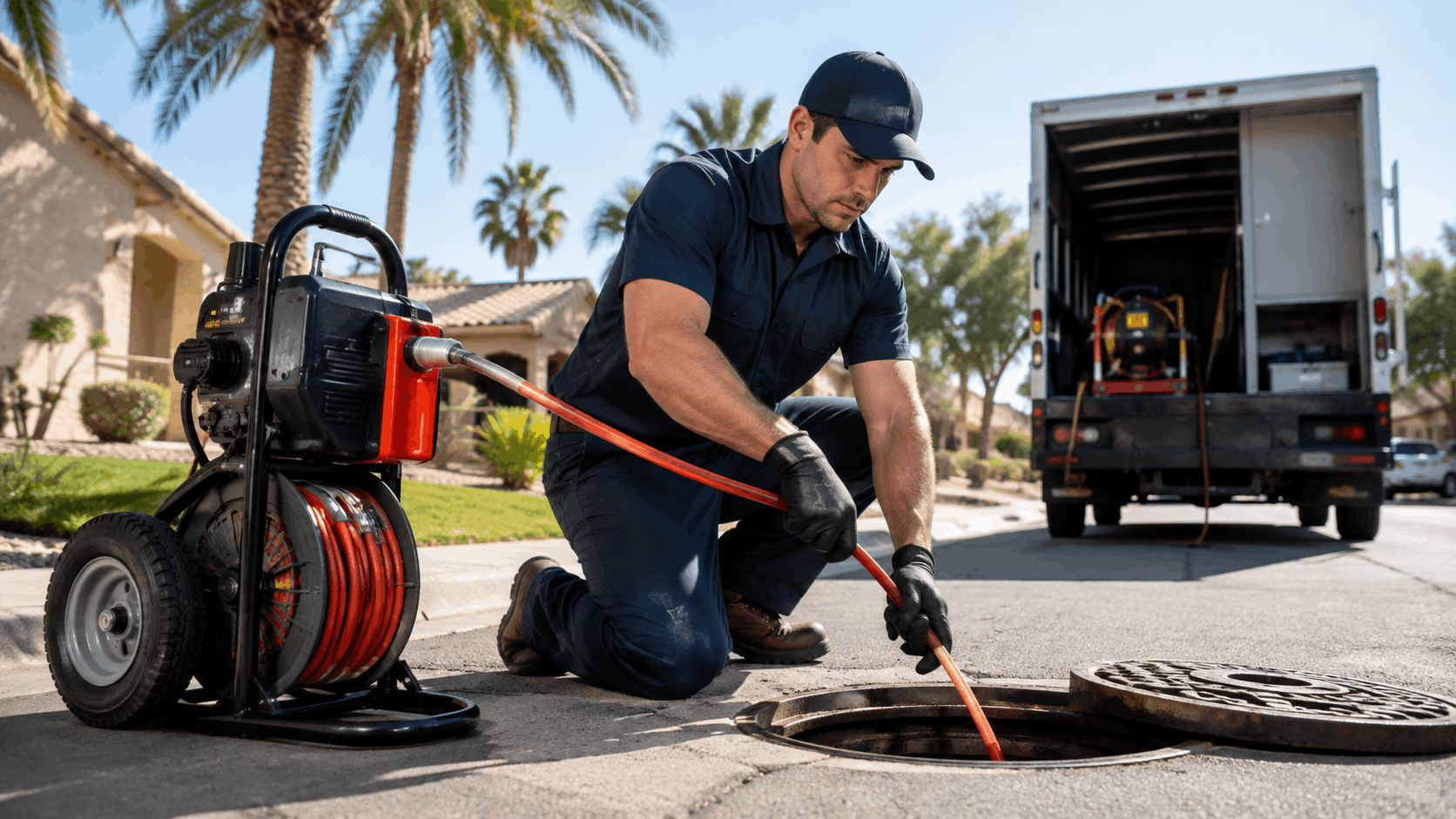
Once we know the cause, we pick the right clearing method. For a simple, soft clog, a drain snake often does the job. The snake, or auger, breaks through the blockage and pulls it out so water flows again. It is quick and effective for basic clogs.
For heavier problems, we turn to hydro jetting. Grease walls, mineral scale, and root mats do not respond well to a snake, which can punch a hole through without cleaning the pipe. Hydro jetting blasts the entire inner wall clean with high-pressure water.
Choosing between them comes down to what the camera shows. A single soft clog gets a snake. A line coated in years of buildup gets jetting. Matching the tool to the problem gets a lasting result instead of a temporary fix.
Sometimes we use both, snaking first to open a path and jetting after to clean thoroughly. The goal is always a line that flows freely for the long haul.
Locating and Pricing Any Needed Repairs
If the camera reveals damaged pipe, we do not just clear it and hope. We mark the exact location and depth of the damage so any repair is targeted and efficient. Pinpointing the spot avoids unnecessary digging.
Then we give a clear pipe replacement estimate before any dig or replacement starts. The homeowner sees what is wrong, why it needs fixing, and what it will cost. No work begins without approval.
For sewer line repair, we explain the options, whether a spot fix on one broken section or a longer replacement makes more sense. We lay out the tradeoffs in plain terms. You decide with full information.
This upfront approach means no surprise charges halfway through a job. Our drain and sewer services are built around clear pricing and clear communication from start to finish.
Need Help in Las Vegas?
Active Plumbing serves Las Vegas and all of Las Vegas Valley.
What Same-Day and Scheduled Sewer Service Costs in Vegas
Cost is on every homeowner's mind, and rightly so. Prices vary based on the job, but honest ranges help you budget. Here is what sewer work generally runs in the Las Vegas market and why timing changes the total.
These are ballpark figures. Every home is different, so we always give an exact quote after we see the problem.
Typical Price Range for Clearing a Clog
A basic drain snaking to clear a simple clog often falls in the range of roughly 150 to 400 dollars, depending on access and severity. This covers most single-fixture and straightforward main line clogs. It is the most affordable option when it fits the problem.
Hydro jetting costs more because it is a more thorough job. Hydro jetting price commonly runs from about 400 to 900 dollars or higher, based on line length and how much buildup has to be cleared. The payoff is a much cleaner, longer-lasting result.
A camera inspection on its own typically runs around 150 to 350 dollars, and we often fold it into a larger job. Knowing the true drain cleaning cost ahead of time helps families plan. We always confirm the number before starting.
These ranges reflect the local market and can shift with the details of your specific line. A quick look on-site turns a range into a firm price.
Why Same-Day Visits May Cost More
Speed comes with a tradeoff. Same-day, after-hours, and weekend calls usually carry an emergency rate above standard pricing. That premium covers the crew responding immediately, often outside normal hours.
After-hours plumbing means pulling a technician out on a night, weekend, or holiday to handle a crisis. That fast response is worth it when sewage is flooding a home, but it costs more than a planned midweek slot. The urgency is what you are paying for.
This is exactly why the same-day versus scheduled decision matters. If your problem is a true emergency, the higher rate is money well spent. If it can wait, booking a regular appointment avoids the premium entirely.
We are upfront about emergency pricing before we dispatch, so there are no shocks. You always know the tradeoff of speed versus cost before we roll a truck.
Factors That Change the Final Price
Two similar-sounding jobs can cost different amounts, and there are real reasons for that. Clog severity is a big one. A soft, shallow clog clears fast, while a dense root mat or hardened grease wall takes far more work.
Line depth and pipe access also move the number. A cleanout that is easy to reach keeps costs down, while a buried or hard-to-find access point adds time. Pipe material matters too, since old cast iron and clay behave differently than modern lines.
These plumbing cost factors explain why we quote each job individually. The length of the line, how deep it runs, and how the pipe is built all feed into the final price. There is no single fixed price that fits every home.
When we inspect first, we account for all of this and give you an honest number. That is fairer than a one-size-fits-all price that never matches reality.
How Waiting Can Raise the Bill
Here is the part many homeowners miss. A small clog left too long does not stay small. It can turn into a full backup, and a backup can cause water damage that costs far more than the original clog would have.
Once sewage or standing water reaches flooring, drywall, and cabinets, the water damage cost stacks up quickly. Now you are paying for cleanup and rebuilding on top of the plumbing fix. A delayed repair often multiplies the total bill.
We have seen a 250 dollar drain cleaning grow into thousands in damage because a warning sign got ignored for weeks. The line finally gave out at the worst possible time. Acting on early signs is the cheapest path by far.
The lesson is simple. Address a clog while it is minor, and you pay for a clog. Wait until it floods, and you pay for a flood.
What Homeowners Can Do Before the Plumber Arrives
Whether help is coming same-day or on a scheduled visit, there are smart steps you can take right now. These actions limit damage and keep your home safer while you wait. None of them require special tools.
A few minutes of the right moves can save a lot of cleanup. Here is what our team tells homeowners to do.
Stop Using Water Right Away
The single most helpful thing you can do is stop using water. Every flush, every faucet, and every appliance cycle sends more water toward a clog that cannot handle it. Cutting off water use prevents more sewage from backing into the home.
That means no flushing toilets, no running the dishwasher, and no starting the laundry. If the main line is blocked, all of that water has nowhere to go but back up through your lowest drains. Stopping the flow buys time.
Let everyone in the house know to hold off. A single forgetful flush can undo your efforts and push a backup over the edge. When in doubt, keep the water off completely until help arrives.
If the situation is severe, knowing how to shut off water at the main valve gives you full control. That valve is usually near the front of the house or by the water meter.
Find and Use the Sewer Cleanout
Most Vegas homes have a sewer cleanout, a capped pipe that gives direct access to the main line. It usually sits outside, often in the front or side yard near the house, or sometimes along the path to the street. It is typically a white or black capped pipe sticking up a few inches.
If sewage is backing up inside, carefully opening the cleanout cap can relieve pressure. Instead of coming up through your bathroom, the backup may vent out at the cleanout, which sits outside and away from your living space. This can spare your floors.
Open it slowly and stand clear, since there may be pressure behind it. This is a temporary relief measure, not a fix, but it can protect your interior while you wait for the crew.
If you cannot find the cleanout or are not comfortable opening it, that is fine. Just keep the water off and let our technician handle it on arrival.
Protect Floors and Belongings
While you wait, move what you can out of harm's way. Pick up rugs, towels, and anything sitting on the floor near the affected drains. Lifting belongings off the ground keeps them from soaking up contaminated water.
Shift furniture and boxes away from the area if it is safe to do so. In a garage or laundry room, get items up onto shelves or into a dry room. Every item you move is one you will not have to throw away later.
You can also block off the spread. Old towels, a wet vac, or a barrier at a doorway can help keep water from creeping into more rooms. Containing it early protects flooring in the rest of the house.
Keep kids and pets out of any area with standing water, especially if sewage is involved. Their safety comes first while you limit water damage.
Avoid Chemical Drain Cleaners
It is tempting to grab a bottle of drain cleaner from the store, but with a main line clog, that usually backfires. A chemical drain cleaner rarely reaches or clears a deep blockage. Instead, it sits in the pipe doing little good.
Those harsh chemicals can also cause pipe damage, especially in older cast iron or clay lines that are already fragile. The caustic formula can eat at weakened pipe walls and make a bad situation worse. Some blends even generate heat that harms fittings.
There is a safety issue too. If a chemical cleaner is sitting in a backed-up line and our technician arrives, that caustic water is a hazard to handle. It slows down the real fix and adds risk.
Skip the chemicals and stick to the safe steps above. Mechanical clearing and jetting solve main line clogs properly, without the risks that come from pouring acid into your pipes.
Need Help in Las Vegas?
Active Plumbing serves Las Vegas and all of Las Vegas Valley.
How to Prevent the Next Sewer Line Clog
Clearing a clog is only half the battle. Keeping the next one from forming saves money and stress down the road. A few simple habits go a long way toward a clog-free home.
These sewer care tips are the same ones we share with neighbors after every job. Small changes add up.
Watch What Goes Down the Drain
The easiest prevention is being careful about what enters your pipes. Grease is the biggest offender. Never pour cooking oil or bacon grease down the sink, since it hardens inside the line and catches everything else.
Instead, let grease cool in a can or jar and toss it in the trash. This one habit prevents a huge share of kitchen clogs. Wipe greasy pans with a paper towel before washing them.
In the bathroom, only flush toilet paper and human waste. So-called flushable wipes, cotton swabs, and feminine products do not break down and cause main line blockages. A small trash can by the toilet solves this easily.
Good drain habits, like scraping food scraps into the trash rather than the disposal, keep lines flowing. These little choices prevent most everyday clogs before they start.
Schedule Routine Camera Checks
You cannot fix what you cannot see. A periodic camera inspection catches trouble early, before it becomes a backup. This is especially smart for older homes with a history of clogs.
In older east valley neighborhoods, a routine inspection often finds root intrusion while it is still minor. Catching a small root before it becomes a full mat means an easy cleaning instead of an emergency dig. Early detection saves real money.
We recommend a camera check every couple of years for homes with older lines, and sooner if you have had repeat clogs. It is a small cost that heads off big ones. Think of it like a checkup for your pipes.
The scan gives you a clear record of your line's condition. If problems show up, you can plan repairs on your own schedule instead of scrambling during a crisis.
Consider Hydro Jetting on a Schedule
For homes that see repeat buildup, planned hydro jetting is a smart move. Instead of waiting for the next backup, you clean the line on a schedule and stay ahead of the problem. Prevention beats reaction every time.
Scheduled hydro jetting scours the pipe walls clean, removing grease, scale, and root fragments before they can cause a clog. A jetted line flows like new. For homes with known buildup issues, this keeps things clear for a long stretch.
How often depends on your home. Heavy grease users or homes with older lines might benefit from jetting every year or two. We help each homeowner set a sensible interval based on their line's history and condition.
Regular buildup removal turns surprise clogs into a predictable maintenance routine. That is a trade most homeowners are happy to make.
Address Hard Water Buildup
Since our water is so hard, tackling it at the source protects your whole plumbing system. Treating hard water slows the mineral scale that narrows pipes over the years. Less scale means fewer clogs and longer pipe life.
A water softener or conditioner reduces the calcium and magnesium that leave deposits inside your lines. Over time, this keeps drains and sewer pipes clearer and cuts down on repeat problems across the valley. It also helps your water heater and fixtures last longer.
Our water treatment options range from traditional softeners to salt-free conditioning, so there is a fit for most homes. Treating the water is one of the best long-term investments a Vegas homeowner can make.
Combine hard water treatment with good drain habits and routine inspections, and you have a solid plan to keep clogs rare. Prevention on all fronts works best.

Final Thoughts
A sewer line clog does not have to wreck your week. The main thing is knowing which situations demand same-day help and which can wait for a scheduled visit. Sewage in the home, no working plumbing, or water near electrical all call for immediate action, while a single slow drain or a recurring minor backup can be planned around your budget.
Watch for the early signs, take smart steps before help arrives, and build simple prevention habits into your routine. Those three things save Vegas homeowners real money and stress over the years.
Our team knows the valley's soil, water, and older neighborhoods inside and out. Whether it is an urgent backup or a planned cleaning, we are here to get your line flowing and keep it that way.
Frequently Asked Questions
- How do I know if my clog is in the main sewer line?
- The clearest sign of a main sewer line clog is multiple drains backing up at once. If your kitchen, bathroom, and laundry all slow down together, or water rises in the tub when you flush a toilet, the blockage is in the main line. A single slow drain with everything else working normally usually means a local fixture clog instead. When in doubt, a camera inspection confirms the exact location.
- Does a sewer clog always need same-day service?
- No. Only certain situations require same-day sewer service. Raw sewage backing up into the home, a total loss of working plumbing, or water reaching electrical and flooring are true emergencies. A single slow drain, a recurring minor backup, or a preventive cleaning can safely wait for a scheduled appointment. Scheduling non-urgent work also avoids the emergency rate, so you only pay a premium when speed genuinely matters.
- How much does it cost to clear a sewer clog in Las Vegas?
- Basic drain snaking generally runs from roughly 150 to 400 dollars, while hydro jetting commonly falls between about 400 and 900 dollars or more. A standalone camera inspection is usually around 150 to 350 dollars. The final sewer clog cost depends on severity, line depth, pipe access, and whether the visit is same-day or scheduled. We always give a written quote after inspecting the line, so there are no surprises.
- Can I use a store-bought drain cleaner first?
- We do not recommend it for a main line clog. A chemical drain cleaner rarely reaches a deep blockage and often just sits in the pipe. Worse, the caustic formula can damage older cast iron and clay lines that are already fragile. It also creates a hazard for the technician who later opens the line. Mechanical snaking and hydro jetting clear main line clogs safely and effectively.
- How long does it take to fix a sewer clog?
- A straightforward snaking job often takes about an hour or less once we locate the clog. Hydro jetting a heavily built-up line can run one to two hours. A camera inspection adds roughly 30 to 60 minutes. Full sewer repair time is different, since replacing a damaged section may take most of a day or longer depending on depth and access. We give a time estimate before starting any job.
- Why do older Las Vegas homes clog more often?
- Older home plumbing in areas like Huntridge, John S. Park, and near the Historic Westside often uses cast iron and clay pipes. Cast iron rusts and roughens inside, catching debris, while clay lines crack and separate at the joints. Those openings invite tree roots, which form clogs. Combined with decades of hard water scale, these aging lines back up far more often than newer plumbing does.
- What is a sewer cleanout and where is mine?
- A sewer cleanout is a capped pipe that gives direct access to your main sewer line. On most Vegas properties it sits outside, usually in the front or side yard near the house or along the path toward the street. It is typically a white or black pipe sticking a few inches above the ground with a screw-on cap. Opening it during a backup can relieve pressure outside and away from your living space.
- Will homeowners insurance cover a sewer clog?
- It depends on your policy. Routine clog clearing is usually considered maintenance and is not covered. However, sudden water damage from a backup may be covered if you carry sewer or water backup coverage, which is often an add-on. Coverage varies widely between policies, so check yours and call your insurer to confirm before assuming. Keeping records and photos of any damage helps if you do file a claim.
- How often should I have my sewer line inspected?
- For most homes, a sewer inspection every couple of years is a sensible schedule. If your home is older, sits in a neighborhood with mature trees, or has a history of repeat clogs, more frequent checks make sense. A camera inspection before buying an older home is also a smart move. Routine scans catch root intrusion and buildup early, turning a possible emergency into an easy, planned fix.
- Does Active Plumbing offer both same-day and scheduled service in Vegas?
- Yes. Our team handles both urgent backups and planned appointments across the valley, from Summerlin and Enterprise to North Las Vegas and Henderson. When sewage is flooding your home, we respond same-day for the emergency. When your problem can wait, we book a scheduled visit that avoids emergency rates. Contact Active Plumbing anytime to get the right level of service for your situation. If a sewer line clog has your home backed up or you simply want to get ahead of the next one, our team is ready to help. Reach out to Active Plumbing for same-day emergency response or a scheduled appointment anywhere across the Las Vegas valley. Call today and let us get your line flowing again.
Licensed plumbing professionals serving Las Vegas and Las Vegas Valley.
Licensed in Nevada · License #0047021
Last updated on
Why trust Active Plumbing?
Founded in 1991, Active Plumbing is a licensed and insured plumber serving Las Vegas and Las Vegas Valley. All content is reviewed by our licensed technicians.

Need Help in Las Vegas?
Active Plumbing serves Las Vegas and all of Las Vegas Valley.
Related Articles
Bellied Sewer Lines in Las Vegas: How Caliche and Fill Soil Create Low Spots That Collect Waste
Caliche and fill soil across Las Vegas create low spots in sewer lines that trap waste. Learn to spot a bellied sewer line, confirm it with a camera, and fix it right.
Same-Day Water Heater Service in Sun City Anthem: Senior-Friendly Scheduling and Code Updates on 90s Builds
Same-day water heater service in Sun City Anthem with senior-friendly scheduling, code updates on 1990s builds, Henderson permits, and a written price before work starts.
Tree Roots in Las Vegas Sewer Lines: Mulberry and Olive Roots vs Your Clay Joints in Older Neighborhoods
Mulberry and olive roots invade clay sewer joints in older Las Vegas homes. Learn the warning signs, camera diagnosis, and repair options that stop backups for good.