Maintenance
Sun City Summerlin Plumber: Active Adult Community Service Plans
Key Takeaways
- Most Sun City Summerlin homes were built in the 1990s, so original galvanized fittings, water heaters, and angle stops are now at the age where they wear out.
- Hard water from the Las Vegas Valley Water District scales pipes and shortens water heater life, making maintenance and water treatment worthwhile.
- Single-story slab-on-grade floor plans off Del Webb and Sun City Boulevard carry a real risk of hidden slab leaks that early detection catches.
- A service plan includes an annual inspection, priority scheduling, repair discounts, and water heater monitoring so residents avoid surprise failures.
- Planned maintenance saves fixed-income households money by catching small leaks early and spreading costs with flat, predictable pricing.
- Exterior plumbing may need HOA approval and larger jobs need Clark County permits, both of which our team handles for residents.
- Seasonal care matters in the desert: summer heat stresses outdoor lines, rare winter freezes can burst pipes, and spring is best for water heater flushing.
- Active Plumbing knows Del Webb floor plans, communicates clearly with senior homeowners, and reaches the community fast via the 215 Beltway and Lake Mead Boulevard.
In This Article
It usually starts on a quiet morning. A Sun City Summerlin homeowner walks into the kitchen, hears a hiss under the sink, and finds a slow drip turning into a puddle on the cabinet floor. By the time the towels come out, the question is already forming: who do they call, and how much is this going to cost?
Plumbing surprises hit harder when a home was built decades ago and the parts have quietly aged out. In an active adult community like this one, where many residents live on set retirement budgets, a sudden repair can throw off the whole month. That is the exact problem a plumbing service plan was built to solve.
Our team at Active Plumbing has worked on hundreds of homes across this community, from the streets off Del Webb Boulevard to the patio homes near the clubhouses. This guide walks through why these homes need their own kind of care, what a real service plan covers, the repairs we see most, and how planned maintenance keeps costs predictable for fixed-income households.
Why Sun City Summerlin Homes Need Their Own Kind of Plumbing Care?
Sun City Summerlin sits on the northern edge of Summerlin near the Spring Mountains, and it was one of the first major 55+ developments in the valley. The homes here share traits that newer Las Vegas builds simply do not have. That shapes how the plumbing ages and what residents should watch for.
Newer subdivisions across the valley were built with PEX lines, modern angle stops, and updated water heaters. Most homes in this active adult community came up a generation earlier. Sun City Summerlin plumbing tends to involve older materials that have been working hard for 25 to 35 years, and older homes show their age in predictable ways.
The Age of Homes Built in the 1990s
The bulk of this community went up between 1989 and the early 2000s. That 1990s construction was solid for its time, but plumbing parts were not made to last forever. Many homes still have original galvanized fittings, the first water heater the builder installed, and the same angle stops under every sink and toilet.
Galvanized pipes corrode from the inside as the years pass. The zinc coating wears away, rust builds up, and the inside diameter of the pipe slowly shrinks. That is why a home with aging plumbing often has weaker flow at the far end of the house than it did when the family moved in.
Most original parts hit a wear cliff around the 25 to 30 year mark. Angle stops get stiff and crack when you turn them. Supply lines go brittle. Water heaters that were never flushed start to fail. When a home is this age, the question is not if these parts need attention, but when.
That is why we treat 1990s homes differently than a build from last year. We look closely at the fittings, the shutoff valves, and the water heater first, because those are the parts most likely to give out. Catching a tired part before it fails saves a flooded cabinet and a frantic phone call.
Hard Water Damage From the Las Vegas Valley Water District
The water served across Summerlin by the Las Vegas Valley Water District is some of the hardest in the country. It carries a heavy load of calcium and magnesium minerals from the Colorado River system. Those minerals do not stay in the water. They settle out and stick to everything they touch.
Inside pipes and water heaters, that means mineral buildup. Scale forms a chalky layer that narrows pipes, coats heating elements, and shortens the life of every fixture in the house. Hard water is the single biggest reason plumbing wears faster here than in cities with softer supplies.
Residents usually notice the signs before they understand the cause. White crust on faucet tips and showerheads. Spots on glassware that will not rinse away. A water heater that takes longer to recover or makes popping sounds. These are all symptoms of the same mineral problem.
A whole-home water treatment system slows this damage dramatically. It is one of the best long-term moves a resident can make to protect aging plumbing in this part of the valley.
Common Issues Near Del Webb Boulevard and Sun City Boulevard
The homes off Del Webb Boulevard and Sun City Boulevard were mostly built on slab-on-grade foundations. That means the concrete slab sits directly on the ground, and the hot and cold water lines run through or under that slab. It is a common build style for single-story homes in this community.
Slab construction is sturdy, but it creates one specific risk: slab leaks. When a copper line under the slab develops a pinhole from years of hard water and movement, the water has nowhere to go but into the ground beneath the floor. The homeowner cannot see it, which is what makes it tricky.
We get calls from streets all around these main roads where a resident noticed a warm spot on the floor or a water bill that jumped for no reason. Those are classic early slab leak signs. The sooner we run electronic leak detection, the smaller the repair tends to be.
Knowing the construction style of these neighborhoods helps us find trouble faster. We have worked enough homes off Del Webb Boulevard to know where the lines tend to run and where leaks tend to start.
Get Your Quote
Tell us what's going on and we'll get back to you fast.
What a Service Plan Actually Covers
A plumbing service plan should be specific, not a vague promise. Residents deserve to know exactly what they get for their money before they sign up. Here is a plain breakdown of what our plans include and why each piece matters.
| Plan Feature | What It Includes | Why It Matters |
|---|---|---|
| Annual Inspection | Full check of water heater, valves, supply lines, fixtures, pressure | Catches small problems before they flood |
| Priority Scheduling | Plan members move to the front of the line | Faster help during a leak or clog |
| Repair Discounts | Reduced pricing on parts and labor | Lowers the cost of common fixes |
| Water Heater Monitoring | Tracks age and condition of the tank | Plan replacement before a sudden failure |
Scheduled Annual Plumbing Inspections
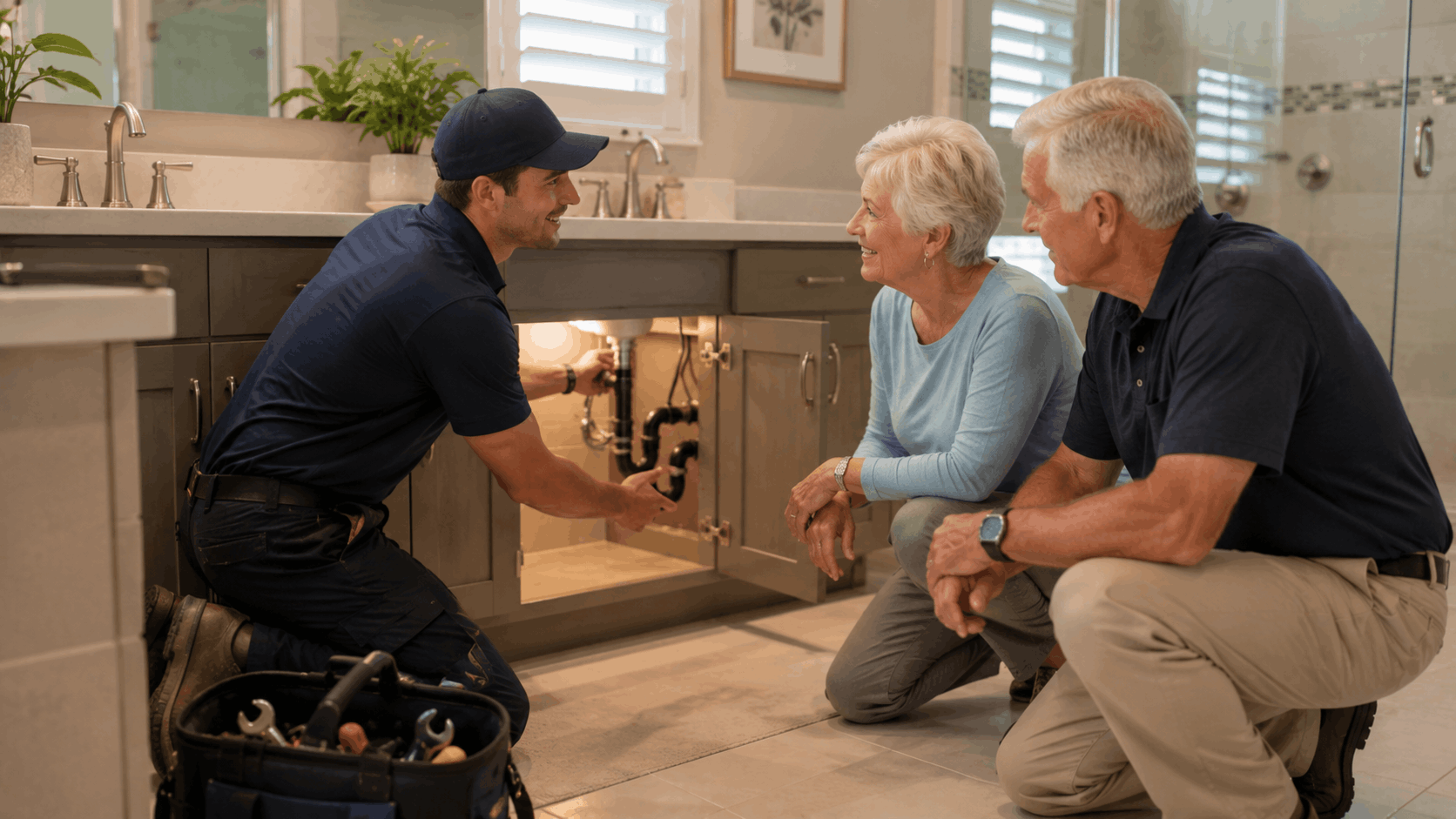
The annual inspection is the heart of any good plan. Once a year, a technician walks the whole home and checks every part of the plumbing system on a set list. Nothing gets skipped because the visit follows the same thorough routine each time.
We test the water heater for proper temperature, sediment, and signs of corrosion. We check every shutoff valve under sinks and toilets to make sure they still turn and seal. We inspect supply lines for brittleness and look at fixtures for drips, leaks, and mineral buildup.
Water pressure gets a real reading with a gauge, not a guess. Pressure that runs too high quietly wears out fixtures and supply lines over time. If we find it above the safe range, we recommend a pressure regulator before it causes damage.
By the end of the visit, the resident gets a clear report of what is fine, what to watch, and what needs attention soon. That kind of yearly snapshot is how older homes avoid emergencies. A pipe and fixture checkup each year keeps the whole system honest.
Priority Scheduling for Plan Members
When a pipe lets go or a drain backs up, waiting is the worst part. Plan members skip the back of the line. Their calls get bumped to priority status, which means a technician is routed to them faster than a standard request.
Across the Summerlin area, we aim to reach plan members the same day for urgent issues, and often within a couple of hours during normal operating times. Standard calls still get prompt service, but members come first when the schedule fills up.
That speed matters most during a true emergency, like a burst supply line spraying under a sink. Every minute of running water adds to the damage. Priority access to our emergency plumbing team can be the difference between a quick fix and a flooded room.
For residents who live alone or worry about handling a crisis, knowing they have a fast path to help brings real comfort. They are not starting from scratch trying to find a plumber while water spreads across the floor.
Discounts on Repairs and Replacements
Plan pricing lowers the cost of the repairs residents are most likely to need. Instead of paying full rate on parts and labor, members get a set discount applied to common jobs. Over a few years, those savings add up well past the cost of the plan itself.
To put it in real terms, swapping a cracked angle stop might run a non-member a certain rate, while a member pays noticeably less for the same part and labor. A water heater replacement, often a four-figure job, carries member pricing that trims hundreds off the total.
The discount also takes the sting out of saying yes to a needed repair. When the price is fair, residents fix the small thing now instead of waiting for it to become a big thing. That is the whole point.
Plan pricing turns plumbing from a wild card into a known cost. Members can predict roughly what a repair will run, which makes budgeting far easier on a set income.
Water Heater and Fixture Monitoring
One of the quiet benefits of a plan is that we keep records on the equipment. We track how old the water heater is, what condition it is in, and how it performed at the last visit. That history tells us when a tank is heading toward the end of its run.
Hard water shortens water heater life here, so we keep a close eye on the inside. During the inspection we flush sediment, check the anode rod, and note any rust or weeping at the fittings. A water heater service like this catches decline early.
The goal is simple. We want residents to replace a tank on a calm weekday, on their schedule, not on a holiday weekend when it fails and floods the garage. Planned replacement is always cheaper and less stressful than an emergency one.
Fixture monitoring works the same way. We note which faucets are wearing, which valves are getting stiff, and which lines are due. That preventive care keeps the whole home from hitting several failures at once.
Need Help in Las Vegas?
Active Plumbing serves Las Vegas and all of Las Vegas Valley.
Plumbing Problems We See Most Often in Active Adult Homes
After years of service calls across this community, the same handful of problems come up again and again. They are tied directly to the age of the homes and the hard water. Spotting them early is the difference between a small fix and a big mess.
| Problem | Common Cause | Early Warning Sign |
|---|---|---|
| Worn water heater | Age plus hard water sediment | Rusty water, popping sounds |
| Slab leak | Pinhole in line under slab | Warm floor, high water bill |
| Leaking angle stop | Dried rubber and plastic parts | Drip or dampness under sink |
| Low water pressure | Mineral-clogged aerators | Weak flow at faucets |
Worn Water Heaters Past Their Lifespan
Most original tanks in this community last 8 to 12 years in hard water, and many homes are well past that on their second or third unit. Sediment from the mineral-heavy supply builds up on the bottom of the tank and forces it to work harder than it should.
The warning signs are easy to spot once you know them. Rusty or brown water from the hot tap points to corrosion inside the tank. Popping or rumbling sounds during a heating cycle mean sediment is cooking on the bottom. Lukewarm showers that used to run hot show the unit is losing its strength.
Watch for these red flags:
- Rusty water coming only from the hot side
- Popping, banging, or rumbling during heating
- Water pooling near the base of the tank
- Showers that turn lukewarm faster than they used to
When a tank shows two or more of these signs, replacement is usually the smart call. A modern unit, or even a tankless water heater, runs more efficiently and handles hard water better with proper maintenance.
Slab Leaks Under Single-Story Floor Plans
Nearly every home in this community is single story, and those floor plans run water lines through the concrete slab. After decades of hard water and ground movement, a copper line can develop a pinhole leak hidden under the floor. The water seeps into the ground and the slab.
Residents often notice a slab leak before they understand what it is. A patch of floor feels warm underfoot when a hot line is leaking. The water bill climbs even though nothing in the home changed. Some people hear a faint sound of running water when every faucet is off.
These leaks waste a stunning amount of water and can undermine the slab if ignored. The trick is catching them early with leak detection equipment rather than tearing up the whole floor. We pinpoint the exact spot first, then choose the least invasive repair.
Anyone who suspects a slab leak should call right away. The longer water runs under a floor, the worse the bill and the damage become. Fast detection keeps a slab leak from turning into a major project.
Leaking Angle Stops and Supply Lines
Angle stops are the small shutoff valves under every sink and toilet. The supply lines are the flexible hoses that run from those valves to the fixture. Both rely on rubber washers and plastic parts that dry out and crack after 20 or 30 years.
When these parts fail, they often start with a slow drip that dampens the cabinet floor. Left alone, a dried-out supply line can split and spray water across the room. That is one of the most common emergency calls we get from older homes here.
The good news is that this is an easy and cheap fix when caught early. Swapping an angle stop or supply line takes a technician a short visit. During an annual inspection we check every one of these parts and replace any that feel brittle or stiff.
Residents can help by glancing under their sinks now and then. Any dampness, mineral crust, or stiffness when turning a valve is a sign to call our fixture repair team before it gets worse.
Low Water Pressure and Clogged Aerators
Weak flow at the kitchen or bathroom faucet is a frequent complaint, and hard water is usually behind it. Minerals collect in the small screen at the tip of the faucet, called the aerator, and in showerheads. Over time those screens clog and choke the flow.
This affects daily comfort in small but real ways. A faucet that takes forever to fill a pot or a shower with a sad trickle wears on a person. The fix is often simple once a plumber finds the cause.
The first thing we check is the aerator and showerhead, since a clogged screen is the easiest culprit. If those are clear, we look at the pressure regulator and the supply lines, especially in homes with aging galvanized pipe that has narrowed from rust inside.
If low pressure shows up across the whole house, that often points to a bigger plumbing issue rather than a single fixture. A water treatment system reduces the mineral load and keeps aerators clear far longer.
How Service Plans Save Money for Fixed-Income Households
For retirees on a fixed income, a surprise plumbing bill is more than an annoyance. It can mean shuffling the whole monthly budget. Preventive maintenance is how residents stay ahead of those surprises and save money over the long run.
The math is straightforward. Small, planned care costs a fraction of a major emergency repair. Spread that care over the year and it becomes a manageable line item instead of a sudden shock.
Catching Small Leaks Before They Flood
A leaking supply line caught during an inspection might cost a small part and a few minutes of labor. The same line, ignored until it bursts, can soak a cabinet, warp the floor, and lead to a water damage claim in the thousands. The difference is staggering.
We have seen a worn rubber washer worth a few dollars prevent a flood that would have run a homeowner a four-figure cleanup. Early detection is the cheapest insurance in plumbing. The leak you fix today never becomes the disaster you pay for next month.
Water damage also brings problems money cannot fully fix, like mold and ruined belongings. In a home where someone has lived for years, those losses sting. Stopping the leak before it spreads protects more than the budget.
This is the core reason planned inspections pay for themselves. One caught leak often covers the cost of the plan for years. A whole-home leak detection system adds another layer of early warning.
Spreading Costs With Flat Monthly Pricing
A predictable plan fee turns plumbing into a known number. Instead of bracing for a random bill, residents pay a flat monthly or annual amount that covers their inspection and unlocks member pricing. Budgeting around a steady cost is far easier than guessing.
On a fixed income, predictability is worth a lot. Knowing that plumbing care fits a set line in the budget removes a source of worry. There is no scrambling to cover an unexpected four-figure repair out of savings.
The flat fee also encourages residents to stay on top of maintenance. When the visit is already paid for, people actually use it. That keeps the home in better shape year after year.
For couples and single residents alike, that steady cost beats the rollercoaster of surprise bills. It is one of the most practical reasons plans make sense in this community.
Extending the Life of Water Heaters and Fixtures
Routine maintenance adds real years to plumbing equipment. Flushing the water heater clears the sediment that hard water leaves behind, which lets the tank heat efficiently and last longer. A tank that gets flushed every year often outlives one that never does.
The maintenance steps are not complicated. We drain and flush the tank, check the anode rod that protects against corrosion, test the temperature and pressure relief valve, and inspect the fittings. Each step fights the wear that hard water causes.
Treating the hard water at the source helps every fixture in the house. A water softener installation cuts the mineral load that scales pipes, clogs aerators, and shortens fixture life. Equipment simply lasts longer when it is not fighting scale every day.
Stretching a water heater from 8 years to 12, or a fixture from a decade to fifteen years, delays the next big expense. For a household watching every dollar, that delay is money saved.

Working With Sun City Summerlin HOA Rules
Plumbing work in this community has to fit within the Sun City Summerlin Community Association guidelines. The rules mostly affect exterior and shared work, not what happens inside the home. Knowing where the lines fall keeps residents out of trouble and avoids delays.
We deal with these guidelines regularly, so we know what needs sign-off and what does not. That experience saves residents the headache of figuring it out alone.
When Exterior Work Needs HOA Approval
Most interior repairs need no HOA approval at all. Where the community association gets involved is outdoor and visible work. Adding or relocating a hose bib, tying into the irrigation system, or installing a water softener loop on an exterior wall may need sign-off.
The reason is that the association cares about how the community looks and how outdoor systems connect. Anything that changes the exterior or touches shared infrastructure tends to fall under their review. It is worth checking before the work starts.
We help residents figure out which jobs need approval before we begin. That way there is no surprise stop-work order halfway through. A quick check up front keeps the project moving smoothly.
When a softener loop or exterior line does need approval, we provide the details the association asks for. Residents do not have to chase paperwork on their own.
Coordinating With Neighbors on Shared Lines
Some attached units and patio homes near the clubhouses sit close enough that plumbing runs near a shared wall. In those cases, a repair on one side can affect the neighbor next door. We handle that situation with care and clear communication.
Before working near a shared line, we identify exactly which lines belong to which unit. That avoids confusion and keeps the right party responsible for the right repair. Nobody wants a surprise bill for a neighbor's pipe.
When work genuinely involves a shared line, we coordinate with both households so everyone knows what is happening and when. Good communication prevents disputes and keeps the repair on schedule.
This kind of neighbor coordination is part of working in an attached-home setting. We treat both homes with the same respect and keep everyone in the loop.
Permits Through Clark County Building Department
Bigger jobs often require a permit from the Clark County Building Department. Water heater replacements, gas line work, and repiping typically need one. Small repairs like swapping an angle stop usually do not.
Permits exist to make sure work meets code and stays safe. Skipping a required permit can cause problems later, especially when a home is sold and an inspection turns up unpermitted work. It is not worth the risk.
We handle the permit process so residents do not have to. We pull the paperwork, schedule any required inspections, and make sure the job passes. That takes the bureaucratic burden off the homeowner entirely.
For residents, the result is simple. The work gets done right, it meets county code, and the records are clean. That matters most when it comes time to sell the home.
Need Help in Las Vegas?
Active Plumbing serves Las Vegas and all of Las Vegas Valley.
Seasonal Plumbing Care for the Las Vegas Climate
The desert climate puts its own kind of stress on plumbing. Long stretches of triple-digit heat in summer and a few hard freezes in winter both create risks. A simple seasonal checklist keeps a home ahead of the weather.
Residents who live near the Spring Mountains foothills feel these swings more sharply than homes lower in the valley. Knowing what each season brings helps avoid the worst surprises.
Summer Heat and Outdoor Pipe Stress
Summer in Summerlin means weeks of temperatures past 105 degrees, and homes near the foothills off Hualapai Way bake in the afternoon sun. That heat stresses exposed pipes, hose bibs, and irrigation lines. Plastic parts grow brittle and rubber seals dry out faster.
Irrigation systems take the hardest hit because they run on hot exterior lines all summer. A cracked irrigation line wastes water and can quietly raise the bill. We check these lines and fittings before the worst heat arrives.
Exposed outdoor faucets also suffer in the sun. The constant heat-and-cool cycle works seals loose over time. A quick summer check of every outdoor fixture catches small leaks before they grow.
Indoors, summer is peak demand on the water heater and the whole system. It is a good time to make sure everything is running clean and efficient before the cooling bills already pile up.
Winter Freeze Risk on Exposed Lines
Las Vegas only drops below freezing a handful of nights each winter, but those nights catch people off guard. Outdoor faucets near patios, exposed lines, and irrigation backflow devices can freeze and burst when temperatures fall into the 20s.
A burst pipe in winter creates a fast, messy emergency. The simple fix is freeze protection: cover outdoor faucets with insulated caps, disconnect any hoses, and know where the main shutoff is. These small steps prevent a big repair.
Residents who travel during the winter holidays should take extra care. A pipe that bursts in an empty home can run for days before anyone notices. A neighbor check or a leak detection system guards against that.
If a line does freeze and burst, fast action limits the damage. Our burst pipe repair team can respond quickly across Summerlin when the cold hits.
Spring Water Heater and Pressure Checkups
Spring is the best time to get the plumbing ready before summer demand peaks. The weather is mild, the system is not under heavy load, and any fixes can happen without urgency. It is the calm window for maintenance.
The water heater should be flushed in spring to clear the sediment that built up over the year. A clean tank heats more efficiently and is far less likely to fail when summer pushes it hard. This single step extends the unit's life.
Spring is also when we test water pressure across the home. High pressure that crept up over the winter gets caught and corrected before it wears out fixtures. A balanced system handles the busy season far better.
Booking a spring checkup means heading into summer with confidence. The water heater is clean, the pressure is right, and there are no lingering small leaks waiting to grow in the heat.
Why Active Plumbing Is the Right Fit for This Community
Plenty of plumbers serve the valley, but few know this community the way our team does. We have worked these streets for years, and that local knowledge shows up in faster diagnoses and smoother repairs. Here is what sets us apart for Sun City Summerlin residents.
Beyond the technical side, we treat residents with the patience and respect they deserve. That matters as much as the wrench work in an active adult community.
Familiar With Del Webb Floor Plans
The Del Webb models in this community share common layouts and pipe routing. After working hundreds of these homes, our team already knows where the lines run, where the shutoffs hide, and where leaks tend to start. That familiarity saves time on every visit.
When we walk into a known floor plan, we are not guessing. We have a strong sense of how the plumbing is laid out before we even start. That means faster diagnosis and less time spent hunting for the problem.
This local knowledge also helps with slab leaks, since the line routing under these floor plans tends to follow patterns. Knowing those patterns helps us pinpoint a leak with less guesswork and less disruption to the floor.
For residents, the payoff is a quicker, cleaner repair. Our team that knows the homes off Del Webb Boulevard and the surrounding streets gets to the root of the issue without wasted effort.
Clear Communication for Senior Homeowners
We explain every job in plain language, not technical jargon meant to confuse. Before any work starts, residents get a written estimate they can read and understand. There are no surprises on the final bill.
We never rush a decision. Residents get the time they need to ask questions, think it over, and decide what is right for their home and budget. A good repair should never feel like a pressure sale.
For senior homeowners especially, that patience builds trust. We answer questions as many times as needed and make sure the resident truly understands what we are recommending and why.
Clear estimates and honest talk are how we earn repeat business in this community. Residents send us to their neighbors because we treat them straight every time.
Fast Routes Across Summerlin
Reaching Sun City Summerlin quickly comes down to knowing the roads. We use the 215 Beltway and Lake Mead Boulevard to move across Summerlin fast and reach the community without delay. That route knowledge matters during an emergency.
When a leak is spreading, arrival time is everything. Our familiarity with the fastest paths in and out of the community means we are not stuck circling unfamiliar streets while water runs. We get there and get to work.
Plan members get priority routing, which trims that arrival time even further. For urgent calls, we aim for same-day and often same-hour response during operating times. We also serve nearby Summerlin neighborhoods like Summerlin North and the surrounding areas.
Living near the foothills should not mean waiting longer for help. Our service area covers this whole part of the valley, and we know how to reach every corner of it quickly.
Need Help in Las Vegas?
Active Plumbing serves Las Vegas and all of Las Vegas Valley.
Final Thoughts
The homes in Sun City Summerlin have aged into a stage where the original plumbing parts need attention. Hard water, slab construction, and 25-plus years of wear all point to the same conclusion: planned care beats waiting for a failure.
A service plan turns unpredictable repairs into a steady, manageable cost. For residents on a fixed income, that predictability protects both the home and the budget. One caught leak often pays for the plan many times over.
Our team knows these floor plans, these streets, and these guidelines. If you live in the community and want plumbing care built around how these homes actually work, reach out to our team for a consultation. We are ready to help you stay ahead of the next surprise.

Frequently Asked Questions
What does a plumbing service plan cost in Sun City Summerlin?
Most plans run as a flat monthly fee or a single annual payment, and the price depends on home size and which inclusions you choose. A basic plan with an annual inspection and member discounts sits at the lower end, while plans that add leak monitoring cost a bit more. The savings from caught repairs usually outweigh the fee. Call us for current pricing tailored to your home.
How often should an older home here have its plumbing inspected?
Homes built in the 1990s should have a full plumbing inspection once a year. At 25 to 35 years old, the original angle stops, supply lines, and water heaters are at the age where parts start to fail. A yearly check catches brittle valves and worn lines before they leak. Annual inspections are the simplest way to avoid emergency repairs in aging Sun City Summerlin homes.
Are slab leaks common in single-story Sun City homes?
Yes, they are one of the more common serious issues here. These single-story floor plans run water lines through the concrete slab, and after decades of hard water a copper line can develop a pinhole. Watch for a warm spot on the floor, a sudden jump in your water bill, or the sound of running water when everything is off. Early detection keeps the repair small.
How long do water heaters last with Las Vegas hard water?
Expect 8 to 12 years from a tank water heater in this area's hard water. The mineral-heavy supply leaves sediment that builds up and forces the tank to work harder, which shortens its life. Flushing the tank every year clears that sediment and can push the unit toward the upper end of that range. Skipping maintenance usually means replacing the tank sooner.
Does the HOA need to approve plumbing repairs?
Interior repairs like fixing a leak, replacing an angle stop, or swapping a water heater inside the garage do not need HOA approval. Exterior or visible work can require sign-off, including new hose bibs, irrigation tie-ins, and exterior water softener loops. We help residents figure out which jobs need community association approval before we start so there are no delays or violations.
What should a resident do during a plumbing emergency?
First, shut off the water. For a single fixture, turn the angle stop under the sink or behind the toilet. For a major leak, find the main shutoff valve, usually near the front of the home or at the meter, and turn it off. Then call our emergency line right away. Stopping the water flow first limits the damage while help is on the way.
Can a service plan be transferred if the home is sold?
In most cases, yes. If a resident sells within the community, the remaining plan coverage can often transfer to the new owner, which can even be a selling point. The new homeowner inherits the inspection records and member pricing. Let us know when a sale is happening and we will handle the transfer details so the coverage carries over smoothly.
Is a water softener worth it for hard water in Summerlin?
For most homes here, yes. A water softener cuts the mineral load that scales pipes, clogs aerators, and shortens water heater life. It protects the whole plumbing system and keeps fixtures working longer. Keep in mind that an exterior softener loop may need HOA approval, which we help arrange. Over time, a softener often pays for itself through fewer repairs and longer-lasting equipment.
How fast can Active Plumbing reach a Sun City Summerlin home?
Plan members get priority routing, so we aim for same-day and often same-hour arrival during operating times for urgent calls. Standard calls still receive prompt service, usually the same day or next day depending on the schedule. Our knowledge of the 215 Beltway and Lake Mead Boulevard helps us reach the community fast, even during a spreading leak when minutes count.
Do plans cover both repairs and routine maintenance?
The plan covers routine maintenance, including the annual inspection, water heater flush, and system checks. Actual repairs, like replacing a failed water heater or fixing a slab leak, are billed separately but at the reduced member rate. So the plan keeps your system maintained and lowers the cost when a repair is needed. We make clear what falls under maintenance versus a separate repair before any work begins.
Frequently Asked Questions
- What does a plumbing service plan cost in Sun City Summerlin?
- Most plans run as a flat monthly fee or a single annual payment, and the price depends on home size and which inclusions you choose. A basic plan with an annual inspection and member discounts sits at the lower end, while plans that add leak monitoring cost a bit more. The savings from caught repairs usually outweigh the fee. Call us for current pricing tailored to your home.
- How often should an older home here have its plumbing inspected?
- Homes built in the 1990s should have a full plumbing inspection once a year. At 25 to 35 years old, the original angle stops, supply lines, and water heaters are at the age where parts start to fail. A yearly check catches brittle valves and worn lines before they leak. Annual inspections are the simplest way to avoid emergency repairs in aging Sun City Summerlin homes.
- Are slab leaks common in single-story Sun City homes?
- Yes, they are one of the more common serious issues here. These single-story floor plans run water lines through the concrete slab, and after decades of hard water a copper line can develop a pinhole. Watch for a warm spot on the floor, a sudden jump in your water bill, or the sound of running water when everything is off. Early detection keeps the repair small.
- How long do water heaters last with Las Vegas hard water?
- Expect 8 to 12 years from a tank water heater in this area's hard water. The mineral-heavy supply leaves sediment that builds up and forces the tank to work harder, which shortens its life. Flushing the tank every year clears that sediment and can push the unit toward the upper end of that range. Skipping maintenance usually means replacing the tank sooner.
- Does the HOA need to approve plumbing repairs?
- Interior repairs like fixing a leak, replacing an angle stop, or swapping a water heater inside the garage do not need HOA approval. Exterior or visible work can require sign-off, including new hose bibs, irrigation tie-ins, and exterior water softener loops. We help residents figure out which jobs need community association approval before we start so there are no delays or violations.
- What should a resident do during a plumbing emergency?
- First, shut off the water. For a single fixture, turn the angle stop under the sink or behind the toilet. For a major leak, find the main shutoff valve, usually near the front of the home or at the meter, and turn it off. Then call our emergency line right away. Stopping the water flow first limits the damage while help is on the way.
- Can a service plan be transferred if the home is sold?
- In most cases, yes. If a resident sells within the community, the remaining plan coverage can often transfer to the new owner, which can even be a selling point. The new homeowner inherits the inspection records and member pricing. Let us know when a sale is happening and we will handle the transfer details so the coverage carries over smoothly.
- Is a water softener worth it for hard water in Summerlin?
- For most homes here, yes. A water softener cuts the mineral load that scales pipes, clogs aerators, and shortens water heater life. It protects the whole plumbing system and keeps fixtures working longer. Keep in mind that an exterior softener loop may need HOA approval, which we help arrange. Over time, a softener often pays for itself through fewer repairs and longer-lasting equipment.
- How fast can Active Plumbing reach a Sun City Summerlin home?
- Plan members get priority routing, so we aim for same-day and often same-hour arrival during operating times for urgent calls. Standard calls still receive prompt service, usually the same day or next day depending on the schedule. Our knowledge of the 215 Beltway and Lake Mead Boulevard helps us reach the community fast, even during a spreading leak when minutes count.
- Do plans cover both repairs and routine maintenance?
- The plan covers routine maintenance, including the annual inspection, water heater flush, and system checks. Actual repairs, like replacing a failed water heater or fixing a slab leak, are billed separately but at the reduced member rate. So the plan keeps your system maintained and lowers the cost when a repair is needed. We make clear what falls under maintenance versus a separate repair before any work begins.
A
Licensed plumbing professionals serving Las Vegas and Las Vegas Valley.
Licensed in Nevada · License #0047021
Last updated on
Why trust Active Plumbing?
Founded in 1991, Active Plumbing is a licensed and insured plumber serving Las Vegas and Las Vegas Valley. All content is reviewed by our licensed technicians.

Need Help in Las Vegas?
Active Plumbing serves Las Vegas and all of Las Vegas Valley.
Related Articles
Maintenance
Best Water Heater Reliability Plans for Las Vegas Homeowners
Discover how water heater reliability plans protect Las Vegas homes from hard water damage, including coverage, pricing, seasonal care, and how to pick the right plan.

Tips & Advice
Emergency Plumber in Summerlin: Same-Day Service for The Trails, Summerlin South, and The Ridges
A local guide to emergency plumbing in Summerlin, covering same-day service for The Trails, Summerlin South, and The Ridges, plus prevention tips and FAQs.
Cost Guides
Plumber in Green Valley Henderson: Service Costs and Response Times for Sun City Anthem Area
Real plumbing service costs, response times, and local conditions for Sun City Anthem, Green Valley, and the wider Henderson area from Active Plumbing.