Cost Guides
Commercial Plumbing Costs in Las Vegas: Office vs Restaurant vs Industrial
Key Takeaways
- Commercial plumbing costs in Las Vegas are driven by labor rates, permits, hard water, and building age before property type even factors in.
- Office plumbing is the most predictable, with service calls from $150 to $400 and water heater swaps from $1,800 to $4,500.
- Restaurant plumbing runs higher due to grease traps, heavy drain loads, gas lines, and Southern Nevada Health District rules.
- Industrial plumbing carries the highest costs from large-diameter pipe, process water, wastewater rules, and costly production downtime.
- Clark County permits and inspections add fees and timeline to most commercial jobs, and skipping them backfires later.
- The valley's hard water causes scale that shortens fixture life, making water treatment a smart long-term investment.
- Preventive maintenance plans and clear, itemized bids keep commercial plumbing budgets predictable and avoid surprise repairs.
- Hiring a licensed local plumber familiar with Las Vegas code and neighborhoods saves money over the life of a property.
In This Article
A Summerlin office manager near the Howard Hughes Center gets a plumbing bid for a clogged restroom line and a tired water heater. The number lands around what they expected. That same week, a Downtown restaurant owner off Fremont Street gets a bid for similar-sounding work and nearly falls out of their chair. The two quotes are worlds apart, and neither business owner fully understands why.
The gap is not random, and it is not a markup game. Office, restaurant, and industrial properties carry very different plumbing demands. Grease, gas lines, fixture counts, health rules, and pipe sizing all push the price in different directions. A restaurant simply asks more of its plumbing than an office ever will.
What Drives Commercial Plumbing Costs in Las Vegas?
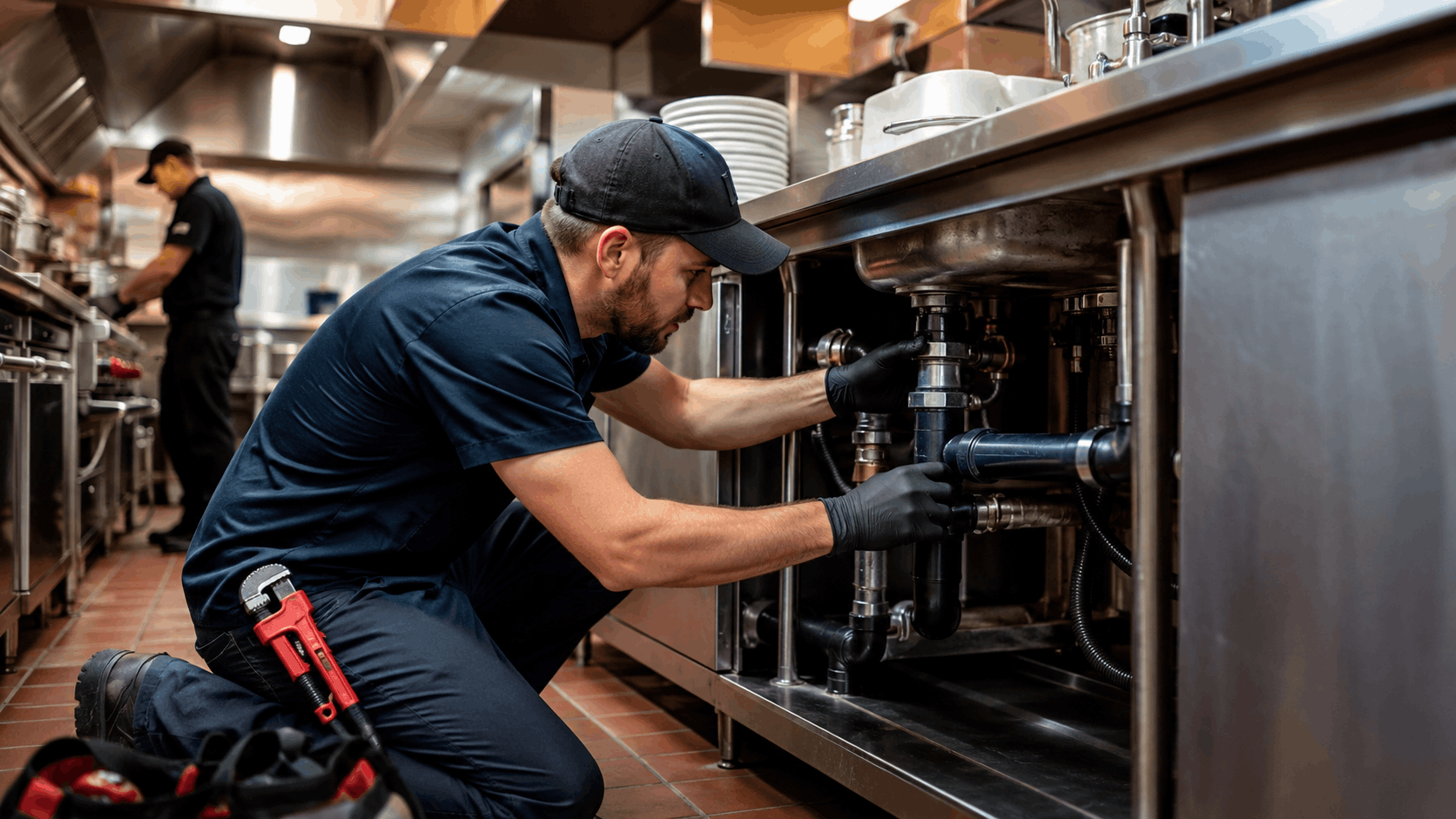
Before comparing property types, it helps to know the forces behind every commercial plumbing cost in the valley. A few core factors set the baseline for almost any job. Labor, permits, water conditions, and the age of the building all stack up to form the final number.
Las Vegas plumbing rates also shift with how busy the trade is and how hard a job is to reach. A simple fixture swap in a ground-floor suite costs far less than running new lines through a four-story building. Knowing these basics makes any quote easier to read.
Labor Rates and Job Complexity in the Valley
Licensed commercial plumbers in Las Vegas generally bill between $90 and $180 per hour, depending on the company and the type of work. Specialty tasks like gas line work or backflow testing often sit at the higher end of that range. Commercial plumber rates also climb when a job calls for two-person crews or after-hours scheduling to avoid disrupting a tenant.
Job complexity moves the labor cost more than almost anything else. A single leaky faucet might take an hour, while rerouting a drain line under a slab can take days. The number of fixtures, the depth of buried lines, and how tight the access is all add hours to the clock.
Older buildings near Downtown often hide surprises behind walls, which stretches labor time. Our crews factor in this unknown when they bid older properties. A clean, well-documented system in a newer Summerlin office takes far less guesswork.
Material costs ride alongside labor too. Copper, cast iron, and commercial-grade fixtures cost more than residential parts. When prices for those materials swing, the total job cost moves with them.
Permits and Clark County Building Department Requirements
Most commercial plumbing work in the valley needs a permit before a single pipe gets touched. Clark County permits and City of Las Vegas permits both carry fees that scale with the size and scope of the job. A small repair may need no permit, while a build-out or new line almost always does.
Permit fees often run from $100 for minor work up to several hundred dollars or more for larger installs. The fee is only part of the story, though. The bigger cost is often the time spent waiting on plan review and scheduling inspections.
A plumbing inspection adds a checkpoint that protects the building and the people in it. Inspectors verify that pipe sizing, venting, and backflow protection meet code. You can review permit guidelines through the Clark County Building and Fire Prevention Department.
Skipping permits to save money almost always backfires. Unpermitted work can fail at resale, void insurance claims, and force costly do-overs. Our team handles the permit process so owners avoid those traps.
Hard Water and Las Vegas Valley Water District Conditions
The valley sits on some of the hardest water in the country. Water from the Las Vegas Valley Water District carries heavy mineral content from the Colorado River and local sources. That hard water in Las Vegas leaves scale inside pipes, water heaters, and fixtures.
Scale buildup acts like plaque in an artery. Over time it narrows pipes, slows flow, and forces equipment to work harder. A commercial water heater that should last a decade may need replacing years early in untreated conditions.
For commercial properties, that scale translates into real money. More frequent descaling, shorter fixture life, and clogged aerators all add to the maintenance line of the budget. Restaurants feel it the most because they push so much hot water through their systems.
Treatment helps slow the damage. A commercial water treatment system or softener cuts scale and extends the life of every fixture downstream. We often recommend it for properties planning to stay put for years.
Property Age and Location Across the City
Where a building sits and how old it is shape repair costs more than many owners expect. Older buildings near Downtown Las Vegas and the Arts District often run galvanized steel or cast iron that has corroded over decades. Those materials clog, leak, and fail in ways modern PVC and PEX rarely do.
Newer construction in Summerlin, Inspirada, or Enterprise tends to use updated materials and cleaner layouts. That means faster diagnosis and fewer ugly surprises. A repair that takes a day in a new building might take three in an aged Downtown property.
Location also affects access and parking, which adds time. Tight Downtown lots and busy corridors slow crews down compared to open suburban office parks. Our familiarity with neighborhoods across the valley helps us plan around those quirks.
Soil and slab conditions vary across the city too. Some areas have lines buried deep or under thick concrete, raising the cost of any below-grade repair. We factor local conditions into every bid so the number reflects reality.
Get Your Quote
Tell us what's going on and we'll get back to you fast.
Office Building Plumbing Costs
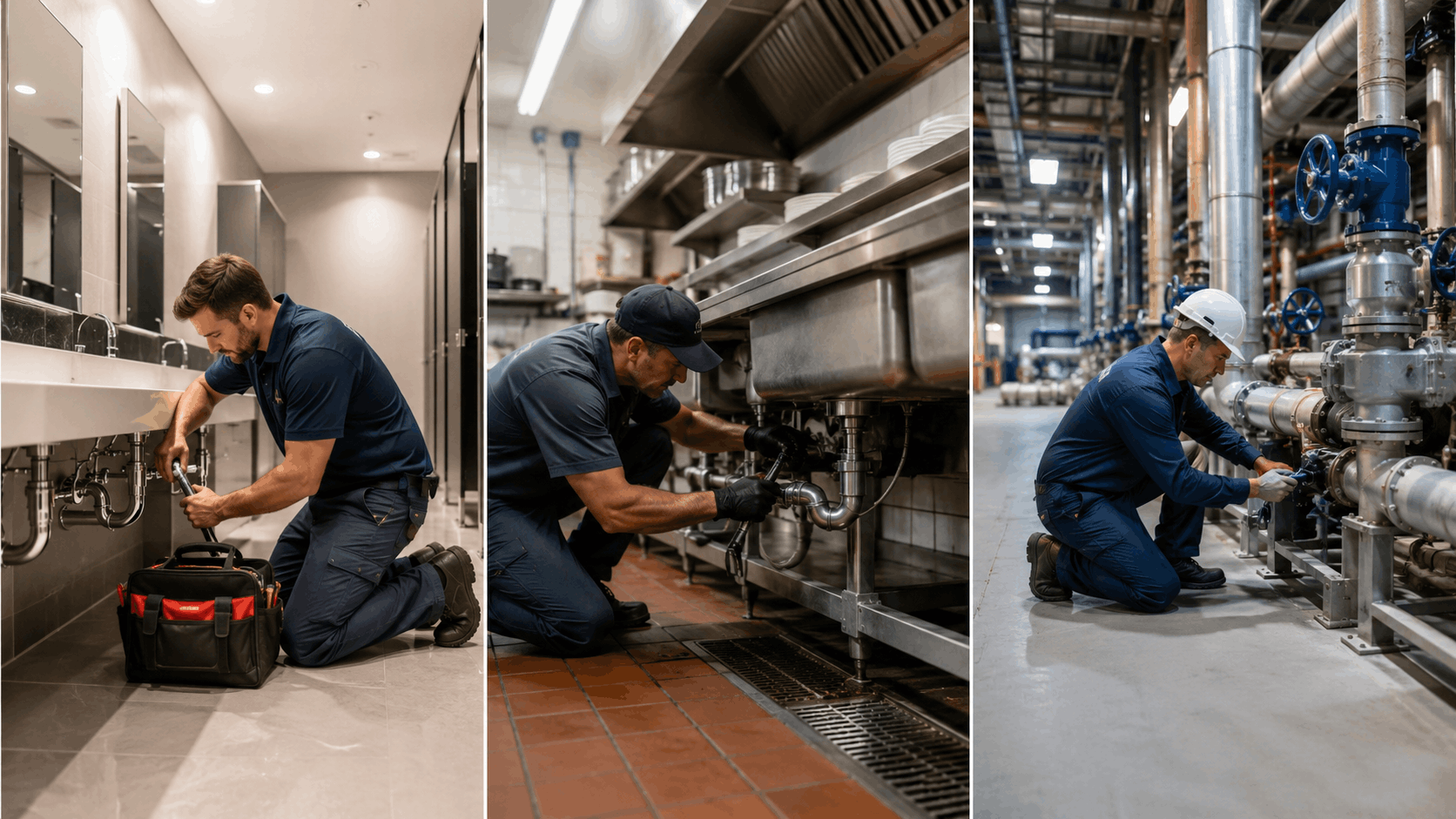
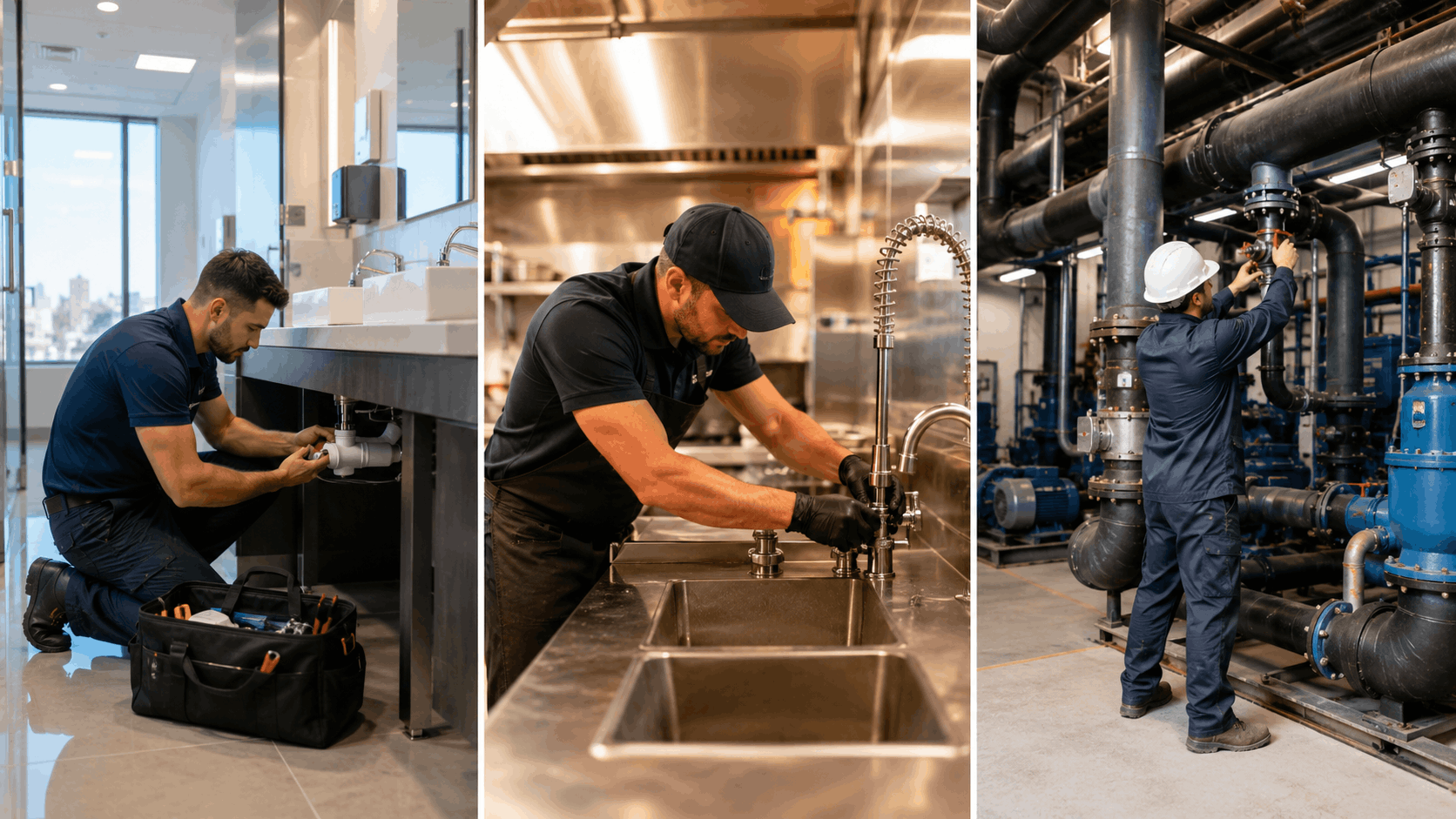
Office plumbing tends to be the most predictable of the three property types. Lower fixture counts and lighter daily demand keep most jobs straightforward. Still, build-outs and water heater replacements can add up fast for a property manager juggling several suites.
The office plumbing cost picture depends on whether the work is routine service or a full tenant improvement. Commercial restroom plumbing makes up a large share of office calls. Here is what owners around the valley can expect.
Typical Office Plumbing Systems and Fixtures
Most office buildings run a modest set of plumbing fixtures. Office restrooms, a break room sink, a water fountain, and maybe a kitchenette cover the bulk of it. Compared to a restaurant or warehouse, the fixture density stays low.
That lighter load means less stress on drain lines and water supply. A typical floor might share two restrooms and one break room among dozens of workers. The system runs steady but rarely gets pushed to its limits.
Break room plumbing usually involves a sink, a dishwasher line, and sometimes a coffee or ice machine hookup. These are small jobs individually but add up across a multi-tenant building. We see them often in the office parks around Spring Valley and Howard Hughes Center.
Because the demand is lighter, office fixtures often last longer than restaurant ones. Hard water still takes a toll, but slower use buys more time. Routine care keeps these simple systems running for years.
Cost Ranges for Office Service and Repairs
Common office repairs fall into friendly price ranges. A clogged drain typically runs $150 to $400 depending on access and severity. A leaky faucet or running toilet repair often lands between $125 and $350.
Water heater work is where office repair cost climbs. A standard commercial unit swap can run $1,800 to $4,500 installed, depending on size and type. Buildings around Spring Valley and the Howard Hughes corridor often use mid-size units that sit in this range.
| Office Job | Typical Cost Range |
|---|---|
| Clogged drain clearing | $150 - $400 |
| Faucet or toilet repair | $125 - $350 |
| Water heater replacement | $1,800 - $4,500 |
| Restroom fixture install | $300 - $900 |
| Leak detection and repair | $250 - $1,200 |
Our water heater services cover both repair and replacement for office buildings. Catching a failing unit early saves the bigger emergency bill later. We help managers plan those swaps before a tank floods a server room.
Tenant Improvement and Build-Out Plumbing
Tenant improvement work is where office plumbing gets pricey. When a new tenant moves in, they often want their own restroom, kitchenette, or break area. Adding fixtures means new supply and drain lines, which drives the cost up.
A simple kitchenette add might run $2,000 to $6,000. A full restroom build-out with multiple fixtures can climb to $10,000 or more. The number depends heavily on how far the new fixtures sit from existing lines.
Office build-out plumbing also has to clear permits and inspection. That adds time to the schedule and a layer of cost. We coordinate with general contractors to keep these projects moving without code surprises.
Layout matters more than people think. Placing a new restroom near an existing waste stack saves thousands compared to running fresh lines across a floor. We advise owners on smart placement before walls go up.
Ongoing Maintenance and Budget Planning for Offices
Preventive maintenance keeps office plumbing costs flat and predictable. A scheduled visit catches a slow drip or scaling water heater before it becomes a flood. For property managers, that predictability protects the annual budget.
A typical office maintenance plan includes fixture checks, drain inspections, and water heater flushing. Flushing matters here because of the valley's hard water and scale. Regular care extends equipment life across every suite.
Budgeting for plumbing works best when it is steady rather than reactive. Setting aside a small monthly amount beats getting hit with a surprise five-figure repair. We help managers build an office plumbing budget around their actual building age and fixture count.
Tenant turnover is the other budget driver to plan for. Each new lease may bring fixture changes or build-out work. Knowing this ahead of time keeps cash flow smooth across a multi-tenant property.
Need Help in Las Vegas?
Active Plumbing serves Las Vegas and all of Las Vegas Valley.
Restaurant Plumbing Costs
Restaurant plumbing runs higher than office work for clear reasons. Grease, heavy water use, gas lines, and strict health rules all pile on cost. A busy kitchen pushes its plumbing harder in a day than an office does in a week.
The restaurant plumbing cost picture starts with grease trap installation and rarely gets cheaper from there. Dining spots from the Strip to Chinatown all face the same demands. Here is where the money goes.
Grease Traps and Interceptors
Every commercial kitchen needs a grease trap or interceptor to catch fats, oils, and grease before they hit the sewer. Sizing depends on the kitchen's flow rate and the number of fixtures. Clark County health rules set firm requirements for capacity and service.
A small under-sink grease trap might cost $500 to $2,000 installed. A large in-ground grease interceptor for a high-volume restaurant can run $4,000 to $12,000 or more. The bigger the kitchen, the bigger the trap and the bigger the bill.
Cleaning is an ongoing cost, not a one-time one. Restaurants on the Strip and along Spring Mountain Road in Chinatown must service traps regularly to stay compliant. Skipping service leads to backups, fines, and ugly sewer problems.
Our grease trap pumping service keeps kitchens compliant and flowing. Regular grease interceptor cleaning protects the whole drain system. We schedule service around the restaurant's slow hours to avoid disrupting dinner rush.
High-Volume Drain and Water Line Demands
Commercial kitchen plumbing carries a much heavier fixture load than an office. Dishwashers, prep sinks, mop sinks, ice machines, and multiple hand sinks all tie into the same system. That volume demands bigger drain lines and stronger water supply.
A busy kitchen can run a drain line near capacity all night. Grease and food solids speed up clogs even with a trap in place. We often recommend hydro jetting to keep restaurant drain lines clear.
Installing this kind of system costs more upfront than an office layout. Larger pipe, more fixtures, and tighter spacing all add labor and material. A full kitchen rough-in can run several thousand dollars beyond a comparable office build.
Repairs cost more too because downtime hurts a restaurant directly. A backed-up kitchen drain can shut a dining room down on a Friday night. Fast, reliable drain service protects both compliance and revenue.
Gas Line and Water Heater Requirements
Restaurants rely on gas for ranges, fryers, ovens, and grills. Running or upsizing a gas line for this equipment is specialty work that carries specialty cost. A new commercial gas line install can run $1,500 to $8,000 depending on length and load.
Our gas line installation covers new equipment hookups and capacity upgrades. Every gas job needs proper sizing and a safety inspection. Cutting corners on gas work is never worth the risk.
Hot water demand is the other big driver. Sanitation rules require high-temperature water, so restaurants need large commercial water heaters. A commercial water heater for a busy kitchen can run $3,500 to $9,000 installed.
Our commercial water heater installation sizes the unit to the kitchen's real demand. An undersized heater leaves dish stations short on hot water during peak hours. We size for the rush, not the average.
Health Code Compliance and Inspection Costs
Health code compliance shapes much of a restaurant's plumbing spend. The Southern Nevada Health District sets rules for grease handling, backflow prevention, hand sink placement, and hot water temperature. Meeting those rules often means plumbing upgrades.
Inspections happen before opening and on a recurring basis. Failing one can delay an opening or force costly fixes on short notice. You can review food establishment requirements through the Southern Nevada Health District.
Backflow prevention is a common compliance cost. Devices that stop contaminated water from flowing back into the supply must be installed and tested. That testing is a recurring expense that owners need to budget.
Planning for compliance early saves money. Building the kitchen right the first time beats retrofitting after a failed inspection. Our team knows what local inspectors look for and builds to that standard.
Industrial Plumbing Costs
Industrial plumbing carries the highest price tags of the three property types. Warehouses and manufacturing sites run large systems under heavy demand. The scale alone pushes costs well beyond office or restaurant work.
Industrial plumbing cost reflects bigger pipe, specialized equipment, and strict environmental rules. Warehouse plumbing near North Las Vegas and Henderson industrial parks shows this clearly. Here is what drives the numbers up.
Large-Diameter Pipe and High-Pressure Systems
Industrial sites use large-diameter pipe to move high volumes of water. Where an office uses half-inch and three-quarter-inch supply, a plant may run four-inch or larger mains. Bigger pipe costs more in material and takes more labor to install.
High-pressure systems add pumps and control equipment that residential and office work never touch. These systems feed manufacturing processes, fire suppression, and equipment cooling. Each component adds to the install and the maintenance budget.
Facilities near the North Las Vegas industrial corridor and Henderson parks often run these systems around the clock. Constant use means wear and a steady maintenance need. We service these systems on schedules that match production demands.
Replacing or upgrading large-diameter pipe is a major project. Trenching, specialized fittings, and pressure testing all add cost. A single industrial line replacement can dwarf an entire office build-out.
Specialized Equipment and Process Plumbing
Process plumbing carries water and fluids through manufacturing operations. These lines often need specific materials to handle chemicals, heat, or pressure. That specialization raises both material and labor cost.
Backflow prevention is critical at industrial sites because of the contamination risk. Large backflow assemblies protect the public water supply from process water. These devices cost more and require regular certified testing.
Equipment hookups add another layer. Machines, boilers, and cooling systems each need precise connections to the plumbing system. A single hookup error can shut down a production line, so the work demands skilled hands.
Our team handles commercial and industrial plumbing across the valley. We coordinate with facility managers to install process lines without halting operations. Planning these jobs around production windows keeps costs and downtime in check.
Code, Safety, and Environmental Requirements
Industrial code requirements add cost that lighter properties never face. Wastewater handling rules govern what can enter the sewer and what must be treated first. Meeting those rules often means added equipment and monitoring.
Some industrial wastewater needs pretreatment before discharge. That can mean clarifiers, neutralization systems, or holding tanks. Each of these adds to the upfront and ongoing cost of the plumbing system.
Safety standards drive cost too. Emergency eyewash stations, safety showers, and hazardous material containment all tie into the plumbing system. These are required at many manufacturing sites and must be maintained.
Our sewage and waste services support industrial wastewater handling. We help facilities meet discharge rules and avoid costly violations. Staying ahead of these requirements protects both the budget and the environment.
Downtime and Emergency Response Costs
An industrial plumbing failure costs far more than the repair itself. When a water line bursts at a plant, production can stop entirely. Every hour offline burns labor and lost output on top of the fix.
That math is why fast emergency response matters so much at industrial sites. A quick fix on a major line can save tens of thousands in lost production. Our 24/7 emergency plumbing keeps a crew ready around the clock.
Emergency rates run higher than scheduled work, but the alternative is worse. A shuttered production line costs more by the hour than any after-hours surcharge. Speed pays for itself in these settings.
Preventive maintenance lowers the odds of these failures. Catching a worn valve or stressed pipe before it bursts avoids the whole crisis. We build maintenance schedules that target the parts most likely to fail under industrial load.
Need Help in Las Vegas?
Active Plumbing serves Las Vegas and all of Las Vegas Valley.
Side-by-Side Cost Comparison: Office, Restaurant, and Industrial
Seeing the three property types together makes the cost gaps clear. The dollars follow fixture count, system load, and compliance demands. A plumbing cost comparison helps owners understand where their money actually goes.
Commercial property plumbing scales with how hard the system works and how strict the rules are. An office, a restaurant, and a warehouse sit at very different points on that scale. Here is the breakdown.
Fixture Count and System Load Differences
Fixture count is the clearest driver of cost differences. An office might run a dozen fixtures across a floor. A restaurant kitchen can pack twice that into a few hundred square feet.
System load follows fixture count. More sinks, drains, and hot water demand mean bigger pipe and harder-working equipment. That heavier load raises both install and repair cost across the board.
Industrial sites push system load to the extreme. Process water, high-pressure feeds, and large-diameter mains dwarf the demands of an office. The plumbing has to match the scale of the operation.
This is why the same-sounding job costs so differently by property type. Clearing a drain in an office is simple. Clearing a grease-choked kitchen line or an industrial process drain is a different animal entirely.
Routine Service vs Major Installation Costs
Routine service calls stay relatively close across property types, but installs spread far apart. A service call cost might run $150 to $500 for most properties. The gap widens fast once major installation enters the picture.
| Work Type | Office | Restaurant | Industrial |
|---|---|---|---|
| Service call | $150 - $400 | $200 - $600 | $300 - $900 |
| Water heater install | $1,800 - $4,500 | $3,500 - $9,000 | $8,000 - $25,000+ |
| Drain line work | $300 - $1,500 | $1,000 - $5,000 | $5,000 - $30,000+ |
| Build-out / system install | $2,000 - $15,000 | $15,000 - $75,000 | $50,000 - $250,000+ |
The installation cost spread tells the real story. Office work stays modest, restaurant work climbs with grease and gas needs, and industrial work scales to project size. Each tier reflects the complexity beneath it.
Routine service is where every property type can save. Steady upkeep keeps small problems from becoming the big installs above. We help owners stay on the low end of these ranges.
Compliance Demands by Property Type
Code compliance shifts the final bill more than many owners realize. An office faces basic plumbing code and occasional permits. The compliance load stays light.
A restaurant faces health district rules on top of building code. Grease handling, backflow testing, and hot water standards all add commercial inspection requirements. Each rule can mean an upgrade and a recurring cost.
Industrial sites carry the heaviest compliance burden. Wastewater rules, safety standards, and environmental monitoring all apply. These demands add equipment and ongoing testing that lighter properties skip.
The more rules a property must meet, the higher its plumbing budget. Compliance is not optional, so planning for it beats reacting to a failed inspection. We build compliance into every commercial bid from the start.
How to Budget and Save on Commercial Plumbing in Las Vegas
Controlling plumbing spend does not mean cutting corners. Smart owners protect their budget by planning ahead and treating problems early. A few habits keep costs predictable across any property type.
A solid plumbing budget mixes prevention, treatment, and clear bidding. These steps help owners save on plumbing without risking compliance or quality. Here is where to focus.
Preventive Maintenance Agreements
A maintenance agreement turns surprise repairs into scheduled care. Regular visits catch a slow leak or scaling heater before it fails. That early catch saves the bigger emergency bill almost every time.
Preventive plumbing visits typically include fixture checks, drain inspections, and water heater flushing. For restaurants, grease trap service joins the list. For industrial sites, valve and pressure checks matter most.
The cost of a maintenance plan is small next to a single emergency repair. A flooded suite or shuttered kitchen costs far more than a year of scheduled visits. We tailor plans to each property's age, fixtures, and risk.
Steady maintenance also extends equipment life. Fixtures and heaters last longer when scale and wear get addressed early. That longevity stretches every dollar in the budget.
Water Treatment for Hard Water Protection
The valley's hard water is a slow, steady threat to commercial plumbing. Scale shortens fixture life and forces equipment to work harder. A water softener or treatment system fights that damage directly.
Hard water treatment cuts scale buildup in pipes and heaters. That protection extends the life of every fixture downstream. For restaurants pushing heavy hot water, the savings add up fast.
Our water softener installation protects commercial systems across the valley. A salt-free conditioning option works well where space or salt handling is a concern. Either approach slows scale and lowers long-term cost.
Treatment pays off most for properties planning to stay put. The upfront cost spreads across years of extended equipment life. Owners around hard-hit areas like Spring Valley and Henderson see real returns.
Getting Accurate Bids and Avoiding Surprises
A clear plumbing bid prevents hidden charges later. A good commercial quote breaks out labor, materials, permits, and any contingencies. Vague one-line bids hide surprises that show up on the final invoice.
Owners should ask what the bid includes and what it excludes. Does it cover permits and inspection? What happens if the crew finds corroded pipe behind a wall? Clear answers up front protect the budget.
Comparing bids works best when each quote covers the same scope. A cheap bid that skips permits or testing is not really cheaper. We provide detailed quotes so owners can compare apples to apples.
Asking for references and proof of license rounds out the check. A solid plumber stands behind their numbers and their work. Transparency at the quote stage signals reliability through the whole job.
Working With a Licensed Local Plumber
Hiring a licensed, insured plumber saves money over the life of a property. A licensed plumber knows Las Vegas code and passes inspections the first time. That avoids the costly do-overs that unlicensed work invites.
Local experience matters in a valley with hard water, aging Downtown buildings, and strict Clark County rules. A plumber who works these neighborhoods every day knows what to expect. That knowledge keeps jobs efficient and bids accurate.
Active Plumbing has served businesses across the valley for years, from Summerlin offices to Chinatown restaurants and North Las Vegas warehouses. We know the codes, the water, and the quirks of each area. You can learn more about our team and approach.
Working with one trusted plumber also builds history with your property. We learn your system, track its quirks, and plan ahead. That continuity is where the real long-term savings live.
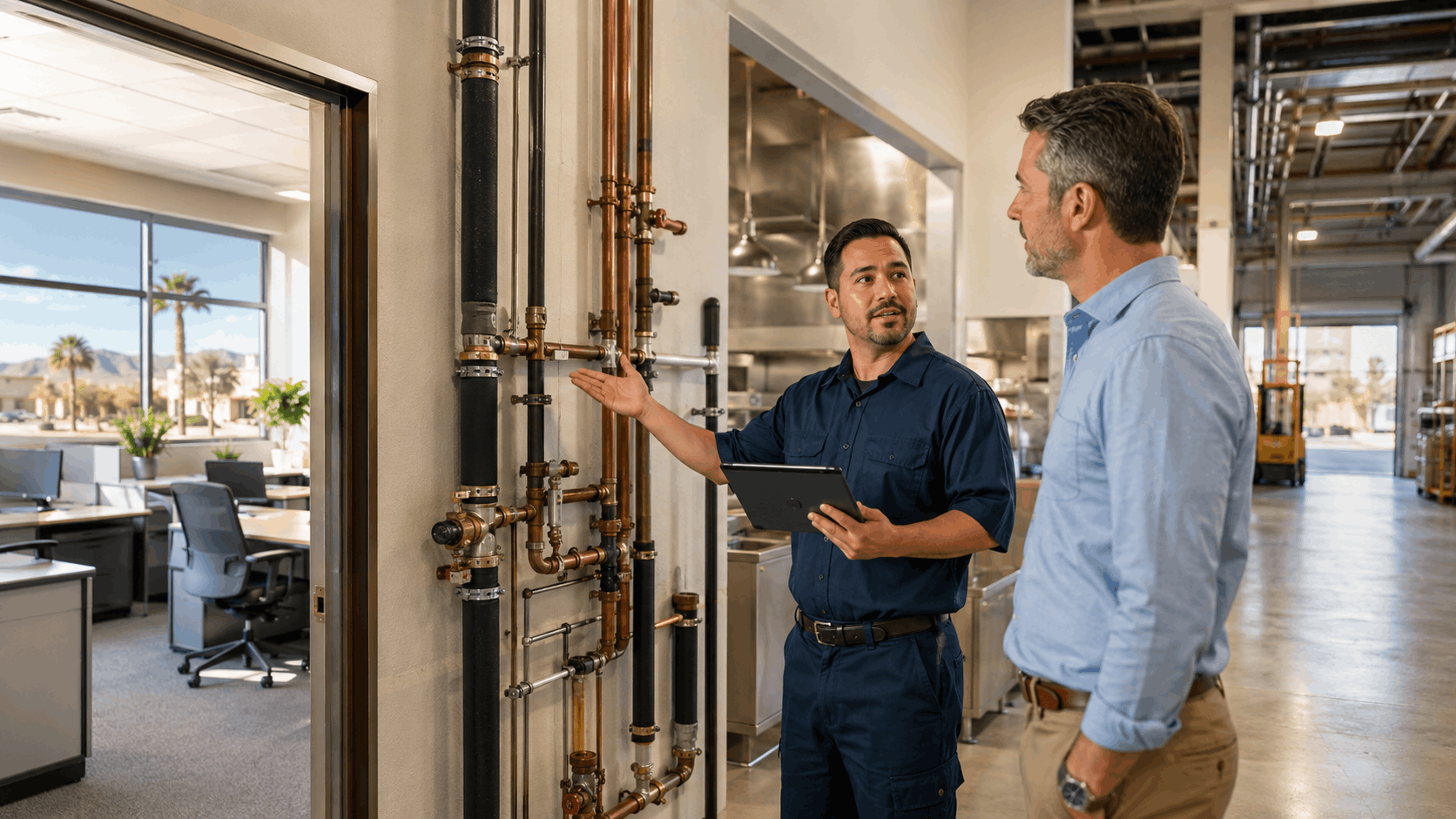
Need Help in Las Vegas?
Active Plumbing serves Las Vegas and all of Las Vegas Valley.
Final Thoughts
Commercial plumbing costs in Las Vegas vary widely because office, restaurant, and industrial properties ask very different things of their systems. Offices stay light and predictable, restaurants climb with grease and gas demands, and industrial sites top the scale on every front. Labor, permits, hard water, and building age set the baseline for all three.
The smartest way to control these costs is to plan ahead with preventive maintenance, water treatment, and clear bidding from a licensed local plumber. Reactive emergency work always costs more than steady care.
Whether you manage an office in Spring Valley, a restaurant in Chinatown, or a warehouse near North Las Vegas, our team can help you budget and protect your system. Contact Active Plumbing for a consultation or call us for an accurate commercial quote. We are ready to keep your business flowing.
Frequently Asked Questions
How much does commercial plumbing cost in Las Vegas?
Commercial plumbing costs in Las Vegas vary widely by property type. Office service calls often run $150 to $400, restaurant work climbs higher with grease and gas needs, and industrial projects can reach tens of thousands. Factors like fixture count, permits, hard water, and building age all move the price. The best way to get a real number is a detailed on-site quote for your specific property.
Why is restaurant plumbing more expensive than office plumbing?
Restaurants push their plumbing far harder than offices do. They need grease traps, heavy-duty drain lines, large commercial water heaters, and gas lines for cooking equipment. They also face Southern Nevada Health District rules that demand backflow prevention and hot water standards. All these added fixtures and compliance requirements stack up, making restaurant plumbing several times more expensive than comparable office work.
How much does a grease trap installation cost in Las Vegas?
A small under-sink grease trap typically runs $500 to $2,000 installed. A large in-ground grease interceptor for a high-volume kitchen can cost $4,000 to $12,000 or more. Sizing depends on the kitchen's flow rate and fixture count, and Clark County health rules set firm capacity and service requirements. Regular cleaning is an ongoing cost that keeps the restaurant compliant and the drains clear.
Do commercial plumbing jobs require permits in Clark County?
Most commercial plumbing work in Clark County needs a permit before work begins. Minor repairs may not, but build-outs, new lines, and major installs almost always do. Permit fees range from around $100 to several hundred dollars or more, and inspections add time to the schedule. Skipping permits can void insurance, fail at resale, and force costly do-overs, so we handle the process for clients.
How does Las Vegas hard water affect commercial plumbing costs?
Hard water from the Las Vegas Valley Water District leaves scale inside pipes, fixtures, and water heaters. That buildup narrows pipes, slows flow, and forces equipment to fail years early. The result is more frequent descaling, shorter fixture life, and higher maintenance costs over time. Restaurants feel it most because of heavy hot water use. A water softener or treatment system slows the damage and saves money.
What is the average cost of a commercial water heater?
A commercial water heater for an office typically runs $1,800 to $4,500 installed. A larger unit for a busy restaurant kitchen can cost $3,500 to $9,000, and industrial systems run even higher. Sizing is the main cost driver, since restaurants need more hot water for sanitation than offices do. We size each unit to the property's real peak demand so it never runs short during busy hours.
How long does a commercial plumbing project take?
Timelines depend on the work. A routine service call often takes a few hours to a day. A tenant build-out or kitchen rough-in can run one to several weeks, including permits and inspections. Large industrial installs may take months. Older buildings near Downtown often add time due to hidden surprises behind walls. We give a realistic schedule with every quote so owners can plan around it.
Are maintenance plans worth it for commercial properties?
For most commercial properties, yes. A preventive maintenance plan catches small leaks, scaling heaters, and clogging drains before they become expensive emergencies. The cost of a yearly plan is small next to a single flooded suite or shuttered kitchen. Steady care also extends equipment life and keeps the budget predictable. We tailor plans to each property's age, fixtures, and risk level for the best value.
How can a business get an accurate plumbing quote?
Provide as much detail as possible: property type, fixture count, building age, and the specific problem or project. A good commercial quote breaks out labor, materials, permits, and any contingencies for surprises like corroded pipe. Ask what is included and excluded, and confirm the plumber is licensed and insured. We provide detailed, itemized quotes so owners can compare bids fairly and avoid hidden charges.
Does Active Plumbing handle emergency commercial calls?
Yes. Active Plumbing offers 24/7 emergency response for businesses across the Las Vegas valley, from Summerlin and Spring Valley to Henderson and North Las Vegas. A burst pipe or backed-up kitchen drain can shut a business down fast, so we keep crews ready around the clock. Fast response limits downtime and lost revenue, especially for restaurants and industrial sites where every hour offline costs real money.
Frequently Asked Questions
- How much does commercial plumbing cost in Las Vegas?
- Commercial plumbing costs in Las Vegas vary widely by property type. Office service calls often run $150 to $400, restaurant work climbs higher with grease and gas needs, and industrial projects can reach tens of thousands. Factors like fixture count, permits, hard water, and building age all move the price. The best way to get a real number is a detailed on-site quote for your specific property.
- Why is restaurant plumbing more expensive than office plumbing?
- Restaurants push their plumbing far harder than offices do. They need grease traps, heavy-duty drain lines, large commercial water heaters, and gas lines for cooking equipment. They also face Southern Nevada Health District rules that demand backflow prevention and hot water standards. All these added fixtures and compliance requirements stack up, making restaurant plumbing several times more expensive than comparable office work.
- How much does a grease trap installation cost in Las Vegas?
- A small under-sink grease trap typically runs $500 to $2,000 installed. A large in-ground grease interceptor for a high-volume kitchen can cost $4,000 to $12,000 or more. Sizing depends on the kitchen's flow rate and fixture count, and Clark County health rules set firm capacity and service requirements. Regular cleaning is an ongoing cost that keeps the restaurant compliant and the drains clear.
- Do commercial plumbing jobs require permits in Clark County?
- Most commercial plumbing work in Clark County needs a permit before work begins. Minor repairs may not, but build-outs, new lines, and major installs almost always do. Permit fees range from around $100 to several hundred dollars or more, and inspections add time to the schedule. Skipping permits can void insurance, fail at resale, and force costly do-overs, so we handle the process for clients.
- How does Las Vegas hard water affect commercial plumbing costs?
- Hard water from the Las Vegas Valley Water District leaves scale inside pipes, fixtures, and water heaters. That buildup narrows pipes, slows flow, and forces equipment to fail years early. The result is more frequent descaling, shorter fixture life, and higher maintenance costs over time. Restaurants feel it most because of heavy hot water use. A water softener or treatment system slows the damage and saves money.
- What is the average cost of a commercial water heater?
- A commercial water heater for an office typically runs $1,800 to $4,500 installed. A larger unit for a busy restaurant kitchen can cost $3,500 to $9,000, and industrial systems run even higher. Sizing is the main cost driver, since restaurants need more hot water for sanitation than offices do. We size each unit to the property's real peak demand so it never runs short during busy hours.
- How long does a commercial plumbing project take?
- Timelines depend on the work. A routine service call often takes a few hours to a day. A tenant build-out or kitchen rough-in can run one to several weeks, including permits and inspections. Large industrial installs may take months. Older buildings near Downtown often add time due to hidden surprises behind walls. We give a realistic schedule with every quote so owners can plan around it.
- Are maintenance plans worth it for commercial properties?
- For most commercial properties, yes. A preventive maintenance plan catches small leaks, scaling heaters, and clogging drains before they become expensive emergencies. The cost of a yearly plan is small next to a single flooded suite or shuttered kitchen. Steady care also extends equipment life and keeps the budget predictable. We tailor plans to each property's age, fixtures, and risk level for the best value.
- How can a business get an accurate plumbing quote?
- Provide as much detail as possible: property type, fixture count, building age, and the specific problem or project. A good commercial quote breaks out labor, materials, permits, and any contingencies for surprises like corroded pipe. Ask what is included and excluded, and confirm the plumber is licensed and insured. We provide detailed, itemized quotes so owners can compare bids fairly and avoid hidden charges.
- Does Active Plumbing handle emergency commercial calls?
- Yes. Active Plumbing offers 24/7 emergency response for businesses across the Las Vegas valley, from Summerlin and Spring Valley to Henderson and North Las Vegas. A burst pipe or backed-up kitchen drain can shut a business down fast, so we keep crews ready around the clock. Fast response limits downtime and lost revenue, especially for restaurants and industrial sites where every hour offline costs real money.
A
Licensed plumbing professionals serving Las Vegas and Las Vegas Valley.
Licensed in Nevada · License #0047021
Last updated on
Why trust Active Plumbing?
Founded in 1991, Active Plumbing is a licensed and insured plumber serving Las Vegas and Las Vegas Valley. All content is reviewed by our licensed technicians.

Need Help in Las Vegas?
Active Plumbing serves Las Vegas and all of Las Vegas Valley.
Related Articles
Cost Guides
Clark County Sewer Permit Costs and Timeline for Bathroom Additions
A clear guide to Clark County sewer permit costs and timelines for bathroom additions, including fees, the permit process, neighborhood factors, and how Active Plumbing helps Las Vegas homeowners.
Cost Guides
Does Emergency Plumbing Cost More in Las Vegas?
Yes, emergency plumbing costs more in Las Vegas. Learn why, see real price ranges, and discover how to avoid costly after-hours calls across the valley.
Cost Guides
Plumber in Green Valley Henderson: Service Costs and Response Times for Sun City Anthem Area
Real plumbing service costs, response times, and local conditions for Sun City Anthem, Green Valley, and the wider Henderson area from Active Plumbing.