Safety & Prevention
SNWA Backflow Prevention Requirements for Las Vegas Residences
Key Takeaways
- Backflow happens when contaminated water reverses into clean lines through back-siphonage or back-pressure, putting the shared valley water supply at risk.
- Homes with irrigation, pools, wells, or fire lines usually need a tested backflow assembly, while simple homes often do not.
- SNWA sets regional policy while local purveyors like LVVWD, Henderson, and North Las Vegas enforce testing through their cross-connection control programs.
- Every backflow device must pass an annual test by a certified Clark County tester, with the report filed before the deadline to avoid fees or water shutoff.
- PVBs suit standard irrigation, RPZ units handle high-hazard connections like pools and wells, and device choice depends on hazard level and line size.
- Annual tests run roughly 75 to 150 dollars, while repairs use rebuild kits and full installs require a permit and inspection.
- Desert heat, winter freezes, and hard water all wear devices down, so insulation and maintenance protect assemblies year-round.
- Active Plumbing handles certified testing, repairs, permitted installs, report filing, and annual reminders across Summerlin, Henderson, and the whole valley.
In This Article
A Summerlin homeowner near the Vistas opened her mailbox last spring and found a notice from her water provider. It mentioned her backflow device, an annual test, and a deadline she did not recognize. She had lived in the house for six years and never thought about the gray valve sticking up near her irrigation box.
That scenario plays out across the valley every year. Homeowners with sprinklers, pools, or wells get a letter and suddenly need to figure out what it means. The good news is the rules are not complicated once someone explains them in plain language.
What Backflow Prevention Means for a Las Vegas Home?
Backflow is when water flows backward through your plumbing instead of the direction it should go. Clean water is supposed to move from the city main into your home. Backflow happens when something reverses that flow and pulls used or contaminated water back toward the public supply.
The Southern Nevada Water Authority, or SNWA, cares about this because everyone in the valley shares the same drinking water. A single contaminated connection at one house can affect neighbors down the street. That shared risk is why backflow rules exist for homes, not just businesses.
- Backflow: water moving the wrong direction in your pipes
- SNWA: the regional agency that sets clean water protection policy
- Cross-connection: any point where clean and non-potable water could mix
How Backflow Actually Happens
There are two main ways backflow occurs, and both come down to pressure. The first is back-siphonage. This happens when the pressure in the city main drops suddenly, like when a fire hydrant opens nearby or a water main breaks down the block.
When that pressure drops, it creates a suction effect. Think of it like sipping through a straw. The low pressure can pull water sitting in a hose, a pool, or an irrigation line back into the clean pipes that feed your house.
The second cause is back-pressure. This happens when pressure on your side of the system becomes higher than the city supply. A pump, a boiler, or even a tall plumbing setup can push contaminated water backward into the main.
Both situations sound rare, but they happen more often than people expect in a growing valley with constant construction and hydrant use. A backflow assembly stops the reverse flow no matter which cause triggers it. That is the whole point of the device near your meter or irrigation box.
Why Clean Water Protection Matters in the Valley
Almost all of the drinking water in Southern Nevada comes from Lake Mead. That water travels through treatment plants and a network of mains before it reaches the tap in your kitchen. Every home connected to that system shares the same source.
Because the supply is shared, one bad cross-connection puts more than one household at risk. Cross-connection control is the practice of preventing those mixing points from ever sending dirty water back into the system. It protects the whole neighborhood, not just the property with the device.
The desert makes this matter even more. Water is a limited resource here, and the region cannot afford contamination events that take supply offline. Protecting drinking water at the source keeps the entire valley safer.
That is why local water providers take backflow seriously and follow up with notices and deadlines. They are guarding the same water your family drinks. The device on your property is one small part of a much larger safety net.
Common Backflow Risks Around Residences
Most homes do not think they have a cross-connection, but several common features create one. Irrigation systems are the biggest source. Sprinkler lines sit in the dirt where fertilizer, pet waste, and bacteria collect, and that water can siphon backward without protection.
A pool fill line is another risk. When a hose or fill valve sits below the water surface, a pressure drop can pull pool water back toward the house supply. Chlorine and other chemicals do not belong in drinking water.
Water softeners and treatment systems also create connection points. These units cycle water through media and brine tanks, and without a proper backflow assembly that water could reverse course. If you have a softener, our water softener installation team can confirm the setup meets code.
Wells, fire suppression lines, and even outdoor sinks add to the list. The takeaway is simple. Most valley homes have at least one feature that needs protection, which is why so many residents receive testing notices.
Get Your Quote
Tell us what's going on and we'll get back to you fast.
SNWA and Local Water District Rules That Apply to Homes
SNWA sets the regional framework, but the day-to-day rules come from your local water purveyor. A purveyor is the agency or company that actually delivers water to your address. In most of the valley that is the Las Vegas Valley Water District, but other providers serve specific cities.
This layered structure trips up a lot of homeowners. They get a notice and assume it came from SNWA directly. In reality, SNWA sets the standard and the local purveyor enforces it through its cross-connection control program.
| Agency | Role | Who They Serve |
|---|---|---|
| SNWA | Sets regional clean water policy | All of Southern Nevada |
| Las Vegas Valley Water District | Delivers water and enforces testing | Las Vegas and parts of the valley |
| Local city purveyors | Manage their own systems and rules | Henderson, North Las Vegas, others |
How SNWA Coordinates With Local Purveyors
SNWA acts as the umbrella agency for the region. It coordinates the broad water supply and sets the policies that member agencies follow. The actual pipes, meters, and billing belong to the local purveyor serving your street.
The Las Vegas Valley Water District, or LVVWD, handles most of the Las Vegas area and large parts of the unincorporated county. If you live near the Strip, in the central valley, or in many western neighborhoods, LVVWD is likely your provider. They send the backflow notices and track your test dates.
Other cities run their own systems. Henderson has its own utility services department, and North Las Vegas operates its own water utility too. Each follows the same regional standard but uses its own forms and deadlines.
This is why the address matters so much. A home in North Las Vegas submits paperwork to a different office than a home in central Las Vegas. We track which purveyor covers each property so reports land in the right place.
Which Residential Properties Are Required to Comply
Not every home needs a backflow assembly, but many do. The residential requirement usually kicks in when a property has a feature that creates a cross-connection hazard. The most common trigger is an in-ground irrigation system.
Homes with swimming pools, spas with auto-fill lines, or private wells also fall under the rules. So do properties with a dedicated fire line for sprinkler systems. If any of these apply, the purveyor expects a tested device on record.
Irrigation systems are the single biggest reason valley homes need a device. Almost every yard with grass or drip lines has one. That covers a huge share of homes across Summerlin, Henderson, and the southwest.
A small home with no sprinklers, no pool, and no well often does not need an assembly at all. If you are unsure, check your notice or ask us to look at your setup. We can tell you quickly whether your property has a reportable connection.
The Cross-Connection Control Program Basics
Every purveyor runs a cross-connection control program. This program keeps a database of properties with backflow devices and tracks each one's test history. It is how the water district knows your device exists and when it is due.
When a device is installed, it gets logged into that program. From that point on, the system generates a notification each year as the test date approaches. That letter in your mailbox is the program doing its job.
Compliance means having a current passing test on file before the deadline. The program does not care who tests the device, only that a certified tester does it and files the report. Miss the window and the property shows up as out of compliance.
Homeowners often do not realize they are in the program until they get that first notice. If you bought a home with an existing device, you inherited its test schedule. We can pull up the device details and get you back on track.
Penalties for Ignoring the Requirements
Skipping the test does not make the requirement go away. Purveyors start with reminder notices, but they escalate when those go ignored. The penalties can hit your wallet and your water service.
Many providers add fees or administrative charges for non-compliance. These stack up the longer a device stays untested. What started as a routine annual test can turn into a bigger bill.
The most serious consequence is water shutoff. Providers reserve the right to interrupt service to a property that refuses to comply. That is a worst-case outcome, but it is real and it does happen to repeat offenders.
The simplest way to avoid all of it is to test on time every year. A single annual visit keeps the property clear and avoids fees entirely. We handle the test and the paperwork so nothing slips through the cracks.
Need Help in Las Vegas?
Active Plumbing serves Las Vegas and all of Las Vegas Valley.
Types of Backflow Prevention Devices Used on Las Vegas Homes
Not all backflow assemblies are the same. The right one depends on the hazard level of the connection and how the water is used. Most valley homes use one of three types.
Picking the wrong device wastes money or fails inspection. A simple irrigation line does not need the most heavy-duty unit, and a high-hazard connection cannot use the lightest one. Here is how the common types compare.
| Device | Best For | Hazard Level |
|---|---|---|
| Pressure Vacuum Breaker (PVB) | Residential irrigation | Low to moderate |
| Reduced Pressure Zone (RPZ) | Pools, wells, fire lines | High |
| Double Check Valve | Lower-hazard supply lines | Moderate |
Pressure Vacuum Breaker (PVB) Assemblies
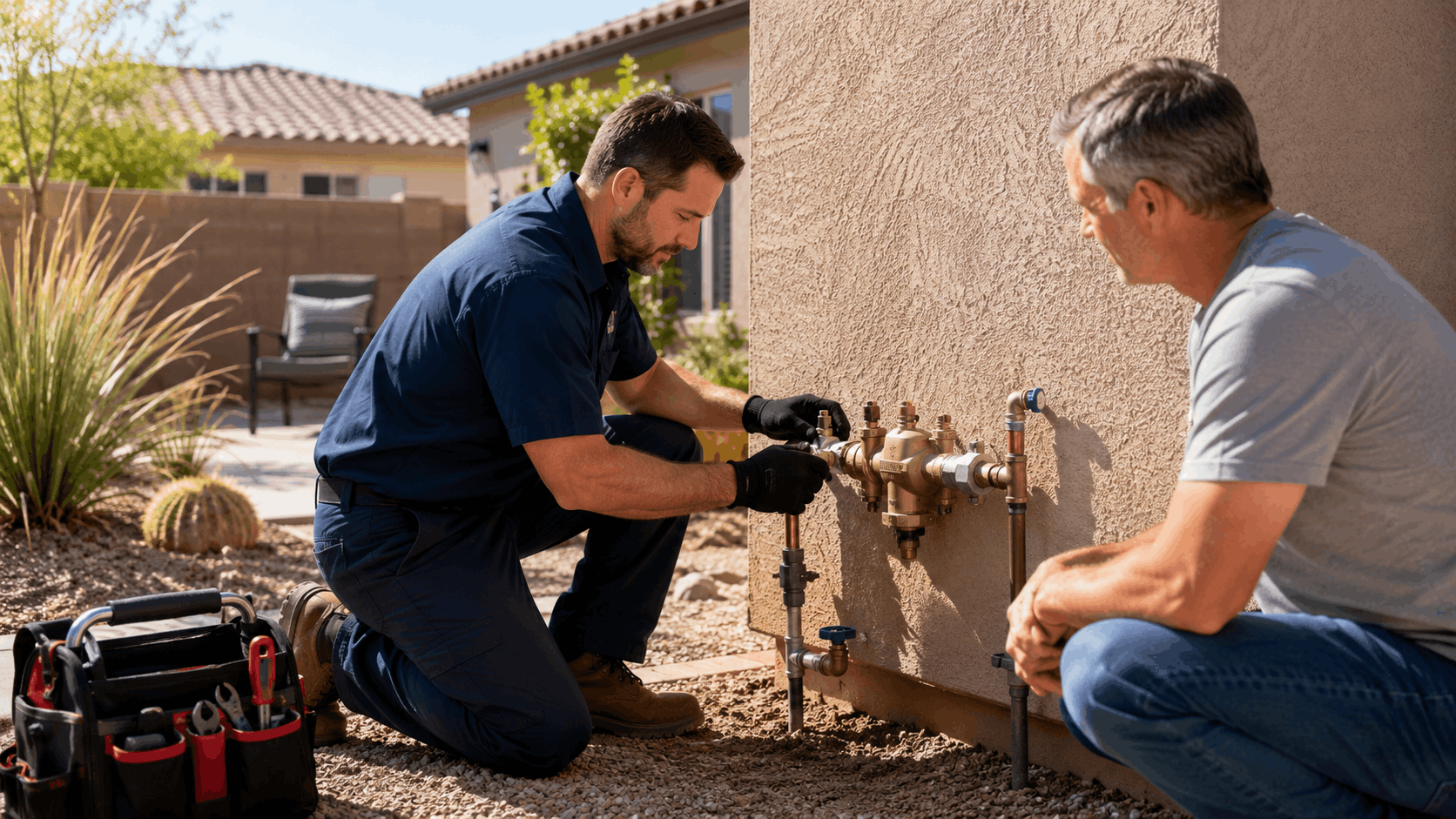
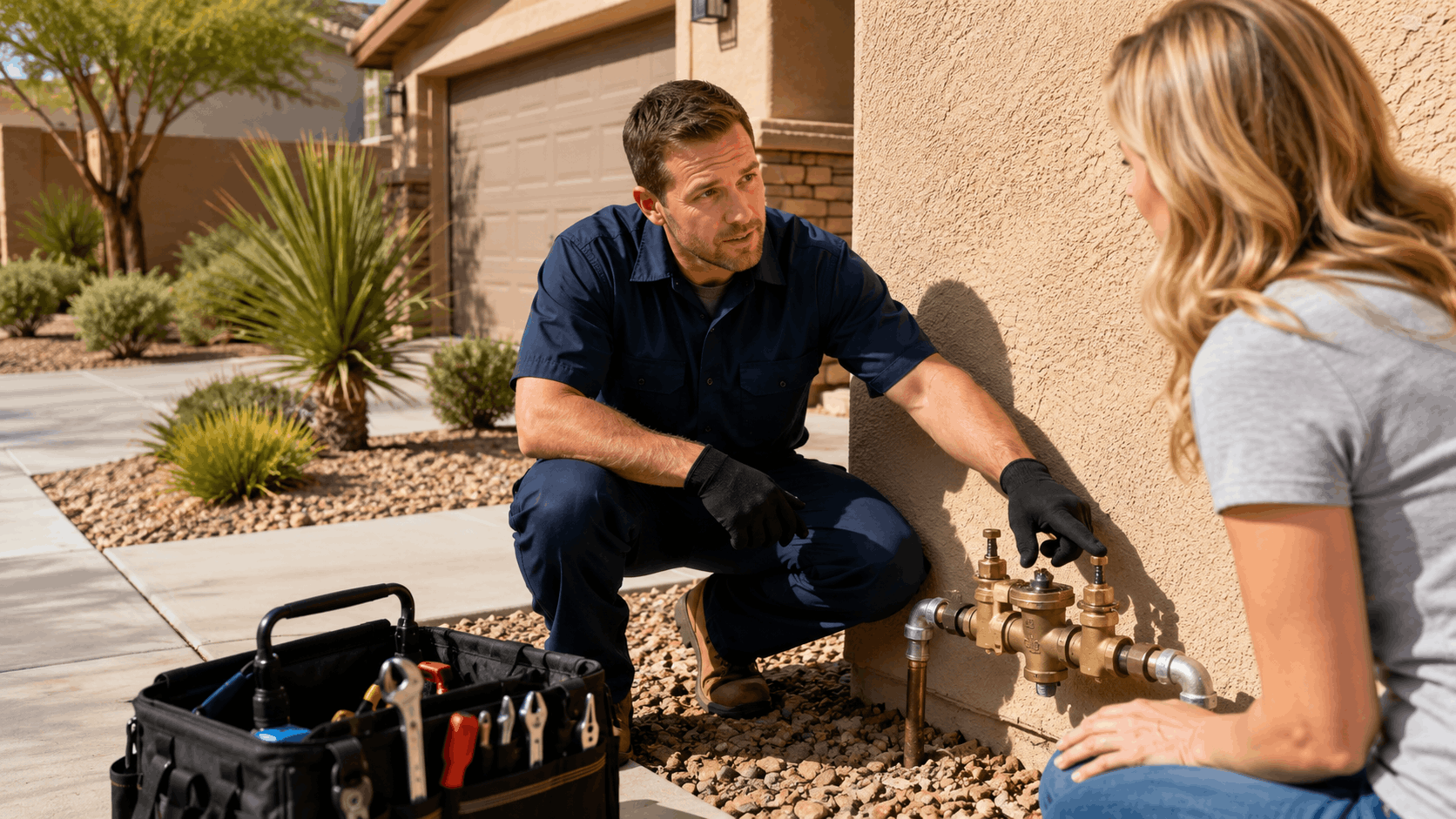
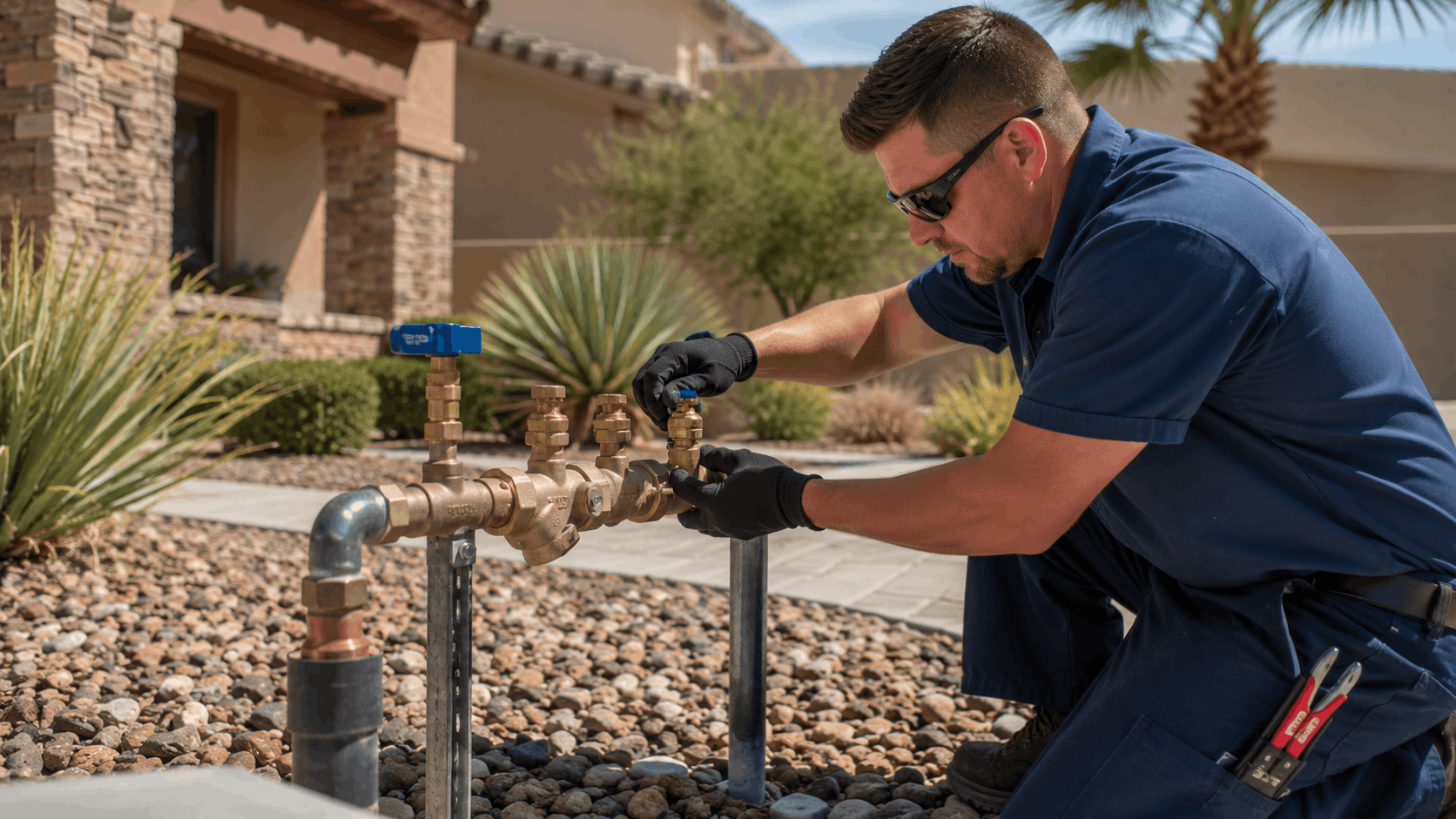
The pressure vacuum breaker is the workhorse of valley irrigation. If you have sprinklers and a single gray valve sticking up near the box, it is probably a PVB. They are common across nearly every neighborhood with landscaped yards.
A PVB protects against back-siphonage, which is the main risk for irrigation lines. It uses a spring-loaded check and an air inlet that breaks the vacuum if pressure drops. That stops dirty sprinkler water from reversing into the house supply.
PVBs must sit at least a foot above the highest sprinkler head. That height requirement is why you see them standing up on a riser rather than buried. The placement matters for both function and inspection.
For standard irrigation backflow on a typical home, a PVB is usually the correct and most affordable choice. It handles the common low-to-moderate hazard well. Most Summerlin and Centennial Hills homes with sprinklers use this type.
Reduced Pressure Zone (RPZ) Assemblies
The reduced pressure zone assembly is the heavy-duty option. An RPZ protects against both back-siphonage and back-pressure, which makes it the choice for high hazard connections. It is the most reliable type of protection available.
RPZ devices are required where contamination would be dangerous, not just unpleasant. That includes pools with chemical feeders, private wells, and fire lines that hold stagnant water. Anything that could send harmful substances into the supply gets an RPZ.
This type has a relief valve that discharges water if it senses a problem. That means an RPZ needs an air gap and proper drainage, so placement is more involved. You may see a small puddle under one occasionally, which is normal during operation.
Because they are more complex, RPZ units cost more to buy and test. They are also more sensitive to debris and freezing. The extra protection is worth it for genuinely high-hazard situations.
Double Check Valve Assemblies
A double check valve assembly uses two independent check valves in series. If one fails, the second still blocks reverse flow. It sits in the middle of the hazard range, above a PVB but below an RPZ.
Double check assemblies work for moderate-hazard connections where back-pressure is a concern but contamination is not toxic. They can also be installed below grade in a vault, which a PVB cannot. That makes them useful in certain layouts.
The main difference from an RPZ is the lack of a relief valve. A double check does not discharge water, so it does not need the same drainage. That is both a convenience and a limitation depending on the hazard.
For most homes, the choice comes down to a PVB for irrigation or an RPZ for higher hazards. Double check assemblies show up more on specific supply configurations. We help homeowners figure out which applies to their property.
Picking the Right Device for Your Property
Choosing the right device starts with the hazard level. Ask what the water touches before it could flow backward. Plain irrigation water is lower hazard, while pool chemicals or well water rank higher.
Water use and line size also matter. A large property with a heavy irrigation demand may need a bigger assembly than a small lot. The purveyor's approved list narrows the options further.
Older homes complicate things. Many homes near Charleston Boulevard were built before current backflow rules and may have outdated or missing devices. When we work on these properties, we often find a connection that was never protected.
Device selection is not a guessing game. The hazard, the local rules, and the existing plumbing all point to one correct choice. We assess the property and recommend the assembly that passes inspection and protects the supply.
Annual Backflow Testing Requirements
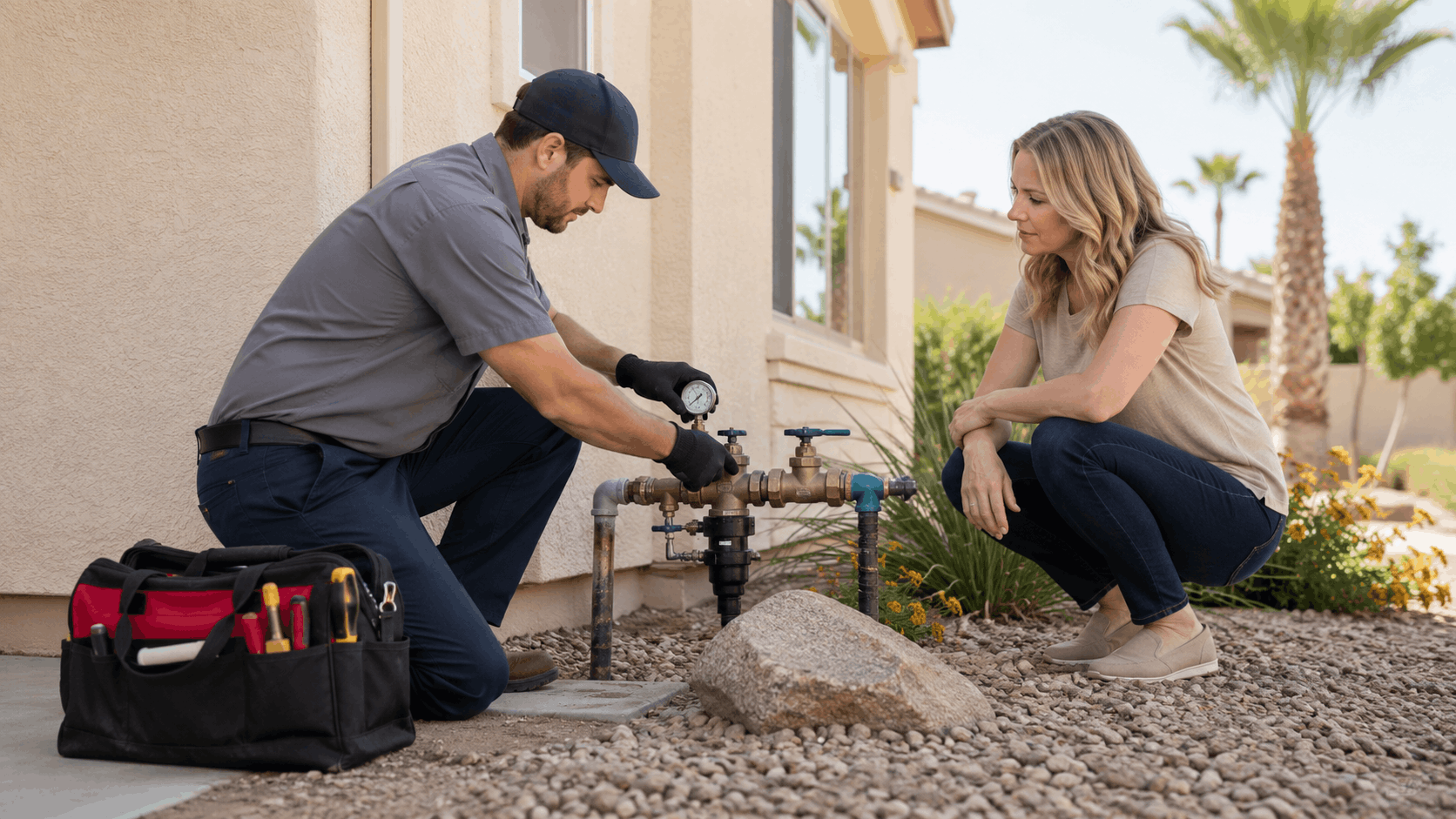
The core rule is simple. Every backflow assembly on a residential property must pass a test once a year. A certified tester performs the test and files a report with your water purveyor.
That yearly cycle is non-negotiable in the valley. The device might look fine, but the only way to confirm it works is to test it. Here is what the requirement involves.
- Annual testing: required once every twelve months
- Certified tester: the only person allowed to perform the test
- Test report: the document filed with your provider as proof
Why Testing Is Required Every Year
Backflow assemblies have internal parts that wear out. Springs lose tension, rubber seals harden, and debris collects on the check valves. None of that is visible from the outside.
A device can look perfectly fine and still fail to stop reverse flow. The annual test is the only way to catch silent device failure before it becomes a contamination risk. A passing test confirms the assembly still does its job.
The valley's water and weather speed up wear. Hard water leaves mineral deposits, and temperature swings stress the seals. A device that passed last year may not pass this year.
That is why the rule is yearly rather than every few years. Twelve months is about how long providers trust a device before it needs verification. Skipping a year leaves the supply exposed to a fault no one can see.
Who Is Certified to Test in Clark County
Only a certified backflow tester can legally perform the test in Clark County. Certification means the tester completed approved training and uses a calibrated test gauge. The purveyor will not accept a report from anyone else.
This is not a formality. The test involves attaching gauges, manipulating valves, and reading pressure differentials in a precise sequence. A calibrated gauge is required because a small error can pass a failing device or fail a good one.
Homeowners can verify a tester's credentials before hiring. Ask for the certification number and confirm the gauge has a current calibration date. A legitimate tester provides this without hesitation.
Our technicians carry current certification recognized across Clark County. We bring calibrated equipment to every job and document the results properly. That keeps your report valid when it reaches the water district.
Submitting Your Test Report on Time
Passing the test is only half the job. The test report has to reach your purveyor by the deadline on your notice. That deadline is usually tied to the anniversary of your last test or your install date.
Each provider has its own submission process and forms. LVVWD, Henderson, and North Las Vegas all accept reports differently. Sending paperwork to the wrong office is a common way deadlines get missed.
If a device fails the test, the report still gets filed, but now the clock starts on repairs. The failed test triggers a follow-up requirement to fix and retest the assembly. Ignoring a failure is treated the same as ignoring the test entirely.
We file the report with the correct purveyor as soon as the test passes. If it fails, we explain the repair options and schedule the retest. The homeowner does not have to track forms or offices.
Installation Standards and Permits in the Las Vegas Valley
Installing a backflow device is not just bolting on a valve. There are installation standards covering the device type, placement, and protection. Most installs also need a permit and an inspection from the local building department.
Getting these steps right the first time saves money and headaches. A bad install fails inspection and has to be redone. Here is what proper installation involves.
Approved Devices and Placement Rules
Every purveyor maintains a list of approved devices. The assembly has to be a model on that list, tested and certified by a recognized lab. An off-list device fails inspection no matter how well it is installed.
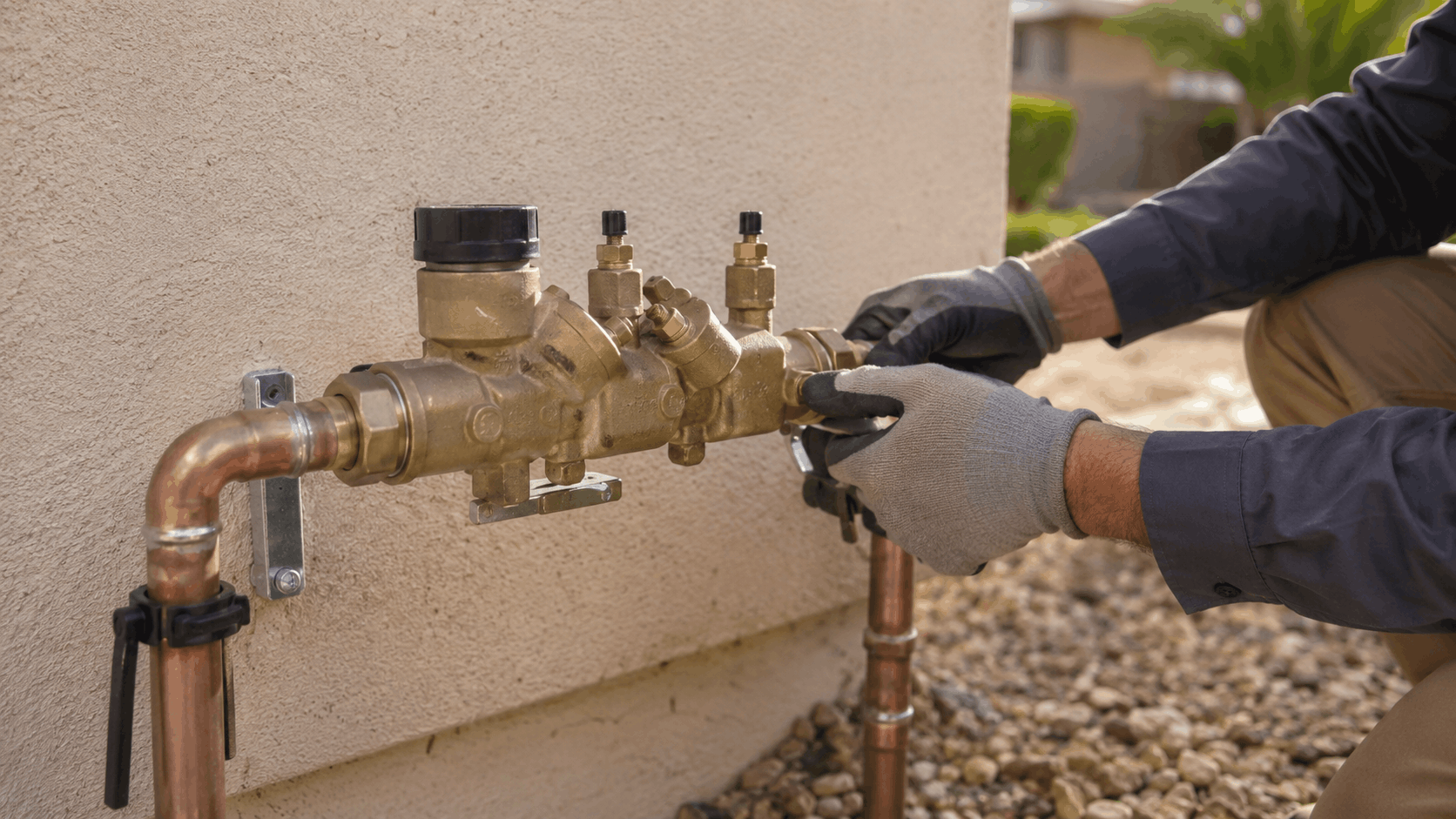
Placement rules are specific. A PVB has to sit at least twelve inches above the highest downstream outlet, and the assembly needs clearance for testing access. The device cannot be crammed into a spot where a tester cannot reach the valves.
Freeze protection matters in the valley despite the heat. Winter mornings drop below freezing, and an exposed assembly can crack. Insulated covers or proper enclosures keep the device safe through cold snaps.
We follow these standards on every install. The right model, the correct height, and freeze protection built in from the start. That is what passes inspection and survives a January cold snap.
Permits and Inspections by Area
Permit rules vary by jurisdiction across the valley. The City of Las Vegas, the City of Henderson, and unincorporated Clark County each have their own building departments. The process differs depending on which one covers your address.
A backflow install usually requires a plumbing permit and a final inspection. The inspector confirms the device is approved, placed correctly, and protected. Only after passing inspection does the install count as complete.
Homes in Spring Valley and other unincorporated areas go through Clark County, while homes inside city limits go through their city department. Knowing which applies prevents delays. We pull permits with the right office for each job.
Skipping the permit creates problems later. An unpermitted install can surface during a home sale or a future inspection. Doing it correctly the first time avoids that risk entirely.
Why DIY Installs Often Fail Inspection
We see plenty of homemade backflow installs, especially in older neighborhoods. Many homes near Huntridge and across Paradise have devices a previous owner installed without a permit. They often look fine but miss the details inspectors check.
The most common mistake is the wrong height. A PVB mounted too low or sideways fails immediately. Others install a device that is not on the approved list or skip the freeze protection.
Test access is another frequent issue. A device wedged against a wall or buried in a planter leaves no room to attach gauges. Even a working device fails if a tester cannot reach it.
DIY installs also skip the permit, which means no inspection ever happened. That catches up with the homeowner during a sale or a compliance check. Our pipe and fixture team corrects these installs so they pass and stay compliant.
Need Help in Las Vegas?
Active Plumbing serves Las Vegas and all of Las Vegas Valley.
What Backflow Compliance Costs Las Vegas Homeowners
Cost is the first question most homeowners ask. The good news is that staying compliant is usually affordable. The expense depends on whether you need a test, a repair, or a new install.
Knowing the ranges helps you budget and spot a fair quote. Backflow cost varies by device type and the work involved. Here is what to expect.
Typical Annual Testing Fees
A standard annual backflow test runs in the range of roughly 75 to 150 dollars for most homes. A single residential PVB sits at the lower end. The testing fee covers the inspection and filing the report with your purveyor.
Several factors move the price. An RPZ takes longer to test than a PVB, so it costs more. Multiple devices on one property add to the total as well.
Access also affects the price. A device tucked behind landscaping or in a tight vault takes more time to reach. A clean, accessible install keeps the annual cost low.
For most homes, the yearly test is a small predictable expense. Bundling it with other plumbing maintenance can save a trip charge. We often catch minor issues during the visit before they grow.
Repair vs. Replacement Costs
When a device fails, the choice is repair or replacement. A repair usually means a rebuild kit that replaces the worn springs, seals, and rubber parts. Rebuild kits are affordable and bring many devices back to passing condition.
A rebuild makes sense when the body of the assembly is sound. If the device is only a few years old and the failure is a worn seal, a kit is the smart fix. The repair plus a retest costs far less than a new unit.
Replacement makes more sense when the device is old, corroded, or obsolete. Some older models are no longer on the approved list, so a repair only buys time. In those cases a new assembly is the better value.
We assess the device and give an honest recommendation. Sometimes the rebuild kit is clearly right, and sometimes replacement saves money over the long run. The age and condition of the assembly drive the call.
New Installation Pricing Factors
A new backflow installation has a wider price range because more variables come into play. The device type is the biggest factor, since an RPZ costs more than a PVB. Line size matters too, as larger lines need larger and pricier assemblies.
Access to the meter and connection point affects labor. An easy tie-in near an existing valve goes quickly. A buried line or a difficult location adds time and cost.
The permit and inspection are part of the total. The fee depends on the jurisdiction, whether that is the city or Clark County. We fold that into the quote so there are no surprises.
For a typical residential irrigation PVB install, costs are moderate. A high-hazard RPZ on a larger line runs higher. We give a clear quote after looking at the line size, device type, and access at your property.
Seasonal and Neighborhood Issues That Affect Backflow Devices
The valley's climate is hard on backflow assemblies. Heat, cold snaps, and hard water all wear devices down. Where you live also shapes the kind of problems you see.
Knowing the seasonal risks helps you protect your device and avoid surprise failures. A little prevention goes a long way here. Here is what we see across the year.
Winter Freeze Damage in the Valley
People assume the desert never freezes, but January proves them wrong. Overnight lows dip below freezing several times each winter. An exposed backflow assembly full of water can crack when that water freezes and expands.
The crack often goes unnoticed until spring. The homeowner turns on the irrigation and finds water spraying from the device. By then the assembly needs repair or replacement.
Insulation is the simple fix. An insulated cover or a wrap around the assembly holds enough warmth to prevent the freeze. We recommend covering exposed PVBs before the first cold snap each year.
Homes in higher elevation areas like the western edge of Summerlin see colder mornings. Those properties are most at risk for freeze damage. A few dollars in insulation prevents a much larger repair bill.
Summer Heat and UV Wear
Summer brings the opposite problem. The Mojave sun beats down on devices for months at a time. That intense UV exposure degrades plastic parts and breaks down rubber seals.
Over a few seasons, the sun makes plastic brittle and cracks the bonnet or test cocks. The rubber seals inside harden and lose their grip. That is a common reason a device fails its annual test.
UV damage is slow but steady. A device in full afternoon sun ages faster than one in shade. South and west-facing installs take the worst of it.
A protective cover helps with summer heat the same way it helps in winter. Shielding the assembly from direct sun extends its life. Replacing worn seals during a rebuild restores protection when UV damage sets in.
Hard Water and Older Lines by Neighborhood
Valley water is hard, loaded with calcium and other minerals. Those minerals build up inside backflow assemblies over time. The deposits coat the check valves and keep them from sealing fully.
Mineral buildup is a leading cause of test failures in older devices. The springs and seats get crusted, and the device can no longer hold pressure. Cleaning or a rebuild usually solves it.
Older neighborhoods add another layer. Homes around Spring Valley and the older east side often have aging service lines that shed sediment. That debris collects in the assembly and speeds up wear. A water treatment system can reduce the mineral load reaching your devices.
If your home has hard water and an older line, expect more frequent maintenance. A device on a clean modern line lasts longer. We factor neighborhood conditions into our recommendations when we service a property.
How Active Plumbing Keeps Las Vegas Homes Compliant
Backflow rules feel like a hassle when you handle them alone. Our team takes the whole process off your plate. From the test to the paperwork, we keep your property compliant year after year.
We work across the valley every day and know each purveyor's process. That local experience means fewer mistakes and no missed deadlines. Here is how we help.
- Certified testing with calibrated gauges and proper documentation
- Repairs and installs handled with permits pulled for you
- Report filing with the correct water purveyor on time
- Annual reminders so your test date never sneaks up
Certified Testing and Report Filing
Our technicians are certified backflow testers recognized in Clark County. We bring calibrated gauges to every visit and run the test in the correct sequence. The results are documented accurately on the spot.
Once the device passes, we file the report with your specific purveyor. Whether that is LVVWD, Henderson, or North Las Vegas, we send it to the right office. You get a copy for your records.
If the device fails, we explain exactly why and what it takes to fix it. There is no upselling or guesswork. We walk you through the repair and schedule the retest.
This end-to-end handling is what most homeowners want. They do not have to learn the forms or chase deadlines. We close the loop from test to filing.
Repairs, Replacements, and New Installs
Our work covers the full range of backflow needs. A failed device might just need a rebuild kit to replace worn parts. We carry common kits and can often fix a device the same visit.
When a device is too old or obsolete, we install a replacement from the approved list. For homes that never had protection, we handle new installs from the ground up. That includes selecting the right device for the hazard level.
We pull the permit and coordinate the inspection for every install. The homeowner does not deal with the building department. We make sure the install passes the first time.
From a simple rebuild to a complete high-hazard RPZ install, the process is handled. We size the device to the line, place it correctly, and add freeze protection. That keeps it compliant and durable.
Serving Neighborhoods Across the Valley
We service homes across the entire valley, not just one corner. Our trucks run through Summerlin, Centennial Hills, the southwest, and everywhere in between. We know the local routes and the conditions in each area.
That local knowledge speeds up every job. We know which homes near Charleston have older connections and which Summerlin communities sit at elevations that freeze. We arrive ready for the property's specific situation.
Henderson homes go through their own utility process, and we handle that filing correctly. Communities like Green Valley and Whitney Ranch each have their quirks, and we know them. The same goes for North Las Vegas and the central valley.
Covering the whole valley means we are familiar with every purveyor and jurisdiction. No matter where your home sits, we know the rules that apply. That coverage keeps the process smooth.
Annual Reminders So Nothing Slips
The easiest way to miss a deadline is to forget it. We track every test due date for the homes we serve. When your annual test approaches, we reach out to schedule it.
That reminder system means you never get caught off guard by a notice. We contact you before the deadline, not after. The test happens on time and the report files on time.
For busy homeowners, this is the difference between staying compliant and racking up fees. The device gets tested every year without you having to remember. We carry that responsibility for you.
One annual visit keeps the property clear and the water safe. We make that visit happen on schedule. That is how we keep valley homes compliant year after year.
Need Help in Las Vegas?
Active Plumbing serves Las Vegas and all of Las Vegas Valley.
Final Thoughts
Backflow rules exist to protect the water everyone in the valley drinks from Lake Mead. If your home has irrigation, a pool, a well, or a fire line, you likely need a tested device on file. The annual test is a small task that prevents fees and protects your neighborhood.
The process is simple once someone handles it for you. A certified test, the right paperwork, and a reminder each year is all it takes. Our team manages every step so nothing slips through.
If you received a notice or are not sure about your device, reach out to us. Contact Active Plumbing for a backflow test, repair, or new install anywhere across Las Vegas and the valley. We will keep your home compliant and your water safe.
Frequently Asked Questions
Here are the questions Las Vegas residents ask us most often about backflow and SNWA rules.
Do all Las Vegas homes need a backflow device?
No, not every home needs one. The residential requirement applies to properties with a cross-connection hazard, which usually means an in-ground irrigation system, a pool, a private well, or a fire line. A small home with none of those features often does not need an assembly. If you got a notice or have sprinklers, you almost certainly fall under the rule. We can check your setup to confirm.
How often does SNWA require backflow testing?
The standard is annual testing, meaning once every twelve months. Your local water purveyor tracks the deadline through its cross-connection control program and sends a notice as it approaches. The device must pass the test and the report must reach the purveyor before the due date. Skipping a year puts the property out of compliance and can trigger fees. We track your date and schedule the test so you never miss it.
Who can legally test my backflow assembly?
Only a certified backflow tester recognized in Clark County can perform the test. Certification requires approved training and the use of a calibrated test gauge. The water purveyor will not accept a report from anyone without proper credentials. You can ask any tester for their certification number to verify it. Our technicians carry current certification and bring calibrated equipment to every job.
What happens if my device fails the test?
A failed test means the assembly is not protecting the supply and needs attention. The fix is either a repair, usually a rebuild kit that replaces worn seals and springs, or a full replacement if the device is too old. After the repair, the device has to be retested to confirm it passes. The retest report then gets filed with your purveyor. We handle the repair and the retest in one process.
How much does an annual backflow test cost?
A typical residential test runs roughly 75 to 150 dollars depending on the device. A single PVB sits at the lower end, while an RPZ or multiple devices cost more. Access also affects the price, since a hard-to-reach device takes longer. The fee covers the inspection and filing the report. We give a clear quote before any work begins.
Can I test my own backflow device?
No, homeowners cannot legally test their own devices. The test requires a certified backflow tester using a calibrated gauge and the correct testing sequence. An uncalibrated gauge can pass a failing device or fail a good one, which defeats the purpose. The purveyor only accepts reports from certified testers. Hiring a certified professional is the only way to file a valid report.
What happens if I ignore the testing notice?
Ignoring the notice leads to escalating consequences. Providers start with reminders, then add fees or administrative charges for non-compliance. The most serious outcome is water shutoff, which providers can use for properties that refuse to comply. These penalties grow the longer the device stays untested. A single annual test avoids all of it, which is why we recommend staying on schedule.
Do I need a permit to install a backflow device?
Yes, a new installation usually requires a permit and a final inspection through your local building department. The City of Las Vegas, Henderson, and unincorporated Clark County each have their own process. The inspector confirms the device is approved, placed correctly, and protected from freezing. Skipping the permit can cause problems during a home sale or future inspection. We pull the permit and coordinate the inspection for every install.
Why did my backflow device crack in winter?
The desert freezes more than people expect, with several nights below freezing each January. Water trapped inside an exposed assembly expands when it freezes and cracks the body or test cocks. The damage often shows up in spring when irrigation turns back on. An insulated cover prevents this by holding enough warmth around the device. We recommend wrapping exposed assemblies before the first cold snap each year.
How long does a backflow test take?
A standard residential backflow test takes about fifteen to thirty minutes for a single device. An RPZ or multiple devices take a bit longer. After the test passes, we complete the report and file it with your purveyor, usually the same day. The whole visit is quick and minimally disruptive. Most homeowners barely notice we were there once it is done.
Frequently Asked Questions
- Do all Las Vegas homes need a backflow device?
- No, not every home needs one. The residential requirement applies to properties with a cross-connection hazard, which usually means an in-ground irrigation system, a pool, a private well, or a fire line. A small home with none of those features often does not need an assembly. If you got a notice or have sprinklers, you almost certainly fall under the rule. We can check your setup to confirm.
- How often does SNWA require backflow testing?
- The standard is annual testing, meaning once every twelve months. Your local water purveyor tracks the deadline through its cross-connection control program and sends a notice as it approaches. The device must pass the test and the report must reach the purveyor before the due date. Skipping a year puts the property out of compliance and can trigger fees. We track your date and schedule the test so you never miss it.
- Who can legally test my backflow assembly?
- Only a certified backflow tester recognized in Clark County can perform the test. Certification requires approved training and the use of a calibrated test gauge. The water purveyor will not accept a report from anyone without proper credentials. You can ask any tester for their certification number to verify it. Our technicians carry current certification and bring calibrated equipment to every job.
- What happens if my device fails the test?
- A failed test means the assembly is not protecting the supply and needs attention. The fix is either a repair, usually a rebuild kit that replaces worn seals and springs, or a full replacement if the device is too old. After the repair, the device has to be retested to confirm it passes. The retest report then gets filed with your purveyor. We handle the repair and the retest in one process.
- How much does an annual backflow test cost?
- A typical residential test runs roughly 75 to 150 dollars depending on the device. A single PVB sits at the lower end, while an RPZ or multiple devices cost more. Access also affects the price, since a hard-to-reach device takes longer. The fee covers the inspection and filing the report. We give a clear quote before any work begins.
- Can I test my own backflow device?
- No, homeowners cannot legally test their own devices. The test requires a certified backflow tester using a calibrated gauge and the correct testing sequence. An uncalibrated gauge can pass a failing device or fail a good one, which defeats the purpose. The purveyor only accepts reports from certified testers. Hiring a certified professional is the only way to file a valid report.
- What happens if I ignore the testing notice?
- Ignoring the notice leads to escalating consequences. Providers start with reminders, then add fees or administrative charges for non-compliance. The most serious outcome is water shutoff, which providers can use for properties that refuse to comply. These penalties grow the longer the device stays untested. A single annual test avoids all of it, which is why we recommend staying on schedule.
- Do I need a permit to install a backflow device?
- Yes, a new installation usually requires a permit and a final inspection through your local building department. The City of Las Vegas, Henderson, and unincorporated Clark County each have their own process. The inspector confirms the device is approved, placed correctly, and protected from freezing. Skipping the permit can cause problems during a home sale or future inspection. We pull the permit and coordinate the inspection for every install.
- Why did my backflow device crack in winter?
- The desert freezes more than people expect, with several nights below freezing each January. Water trapped inside an exposed assembly expands when it freezes and cracks the body or test cocks. The damage often shows up in spring when irrigation turns back on. An insulated cover prevents this by holding enough warmth around the device. We recommend wrapping exposed assemblies before the first cold snap each year.
- How long does a backflow test take?
- A standard residential backflow test takes about fifteen to thirty minutes for a single device. An RPZ or multiple devices take a bit longer. After the test passes, we complete the report and file it with your purveyor, usually the same day. The whole visit is quick and minimally disruptive. Most homeowners barely notice we were there once it is done.
A
Licensed plumbing professionals serving Las Vegas and Las Vegas Valley.
Licensed in Nevada · License #0047021
Last updated on
Why trust Active Plumbing?
Founded in 1991, Active Plumbing is a licensed and insured plumber serving Las Vegas and Las Vegas Valley. All content is reviewed by our licensed technicians.

Need Help in Las Vegas?
Active Plumbing serves Las Vegas and all of Las Vegas Valley.
Related Articles
Safety & Prevention
Clark County Backflow Prevention Testing Schedule: What's Required When
Learn Clark County's backflow prevention testing schedule, deadlines, and requirements. Active Plumbing explains who must comply and how to stay current across the Las Vegas valley.
Tips & Advice
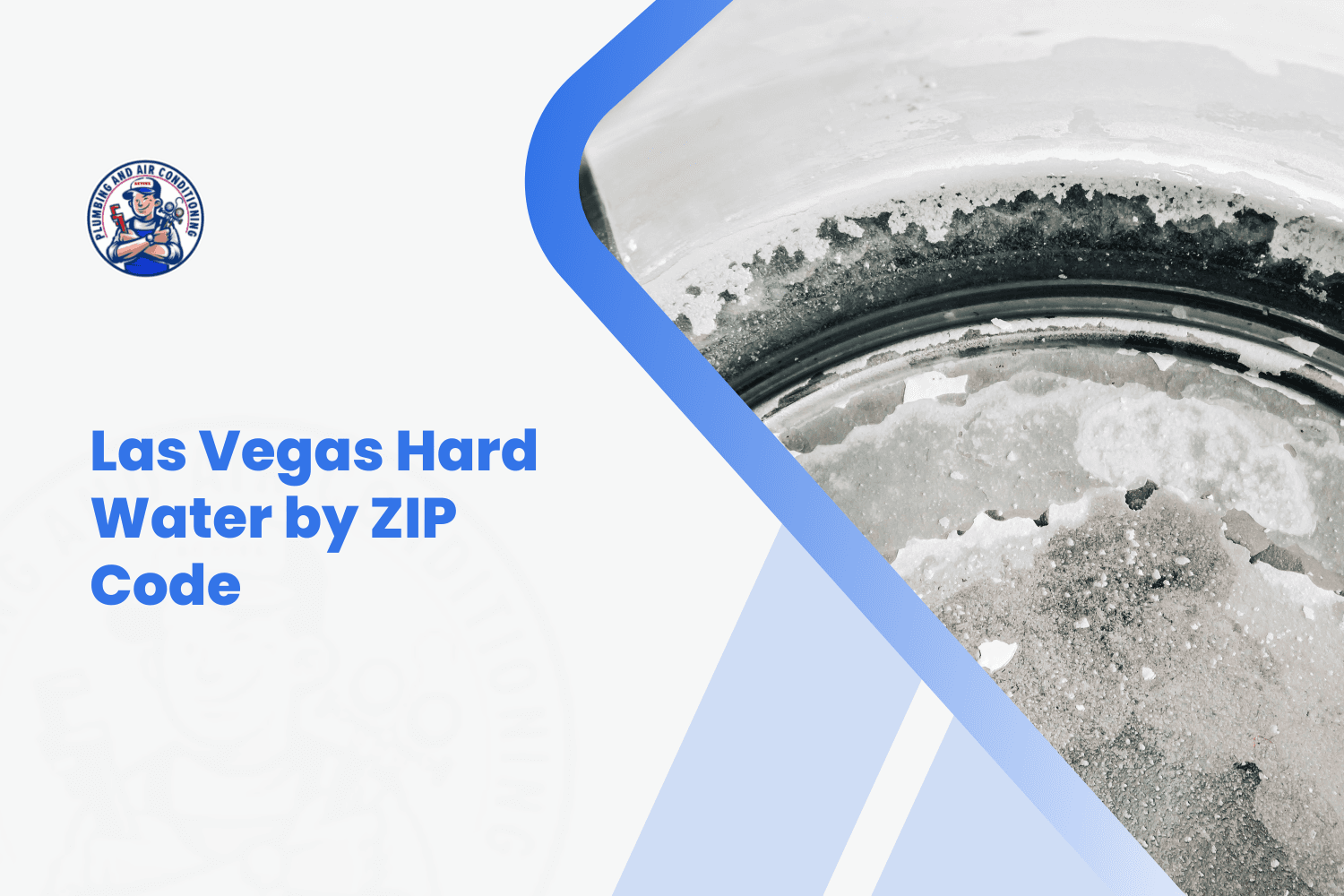
Las Vegas Hard Water by ZIP Code: What SNWA Data Actually Shows
See actual SNWA water hardness data by Las Vegas ZIP code. Learn your neighborhood's GPG level and what it means for your plumbing, appliances, and home.
Safety & Prevention
Why Las Vegas Homes Built Before 1990 Need a Full Plumbing Inspection
Las Vegas homes built before 1990 face unique plumbing challenges from aging materials, desert conditions, and outdated construction practices that can lead to catastrophic failures.