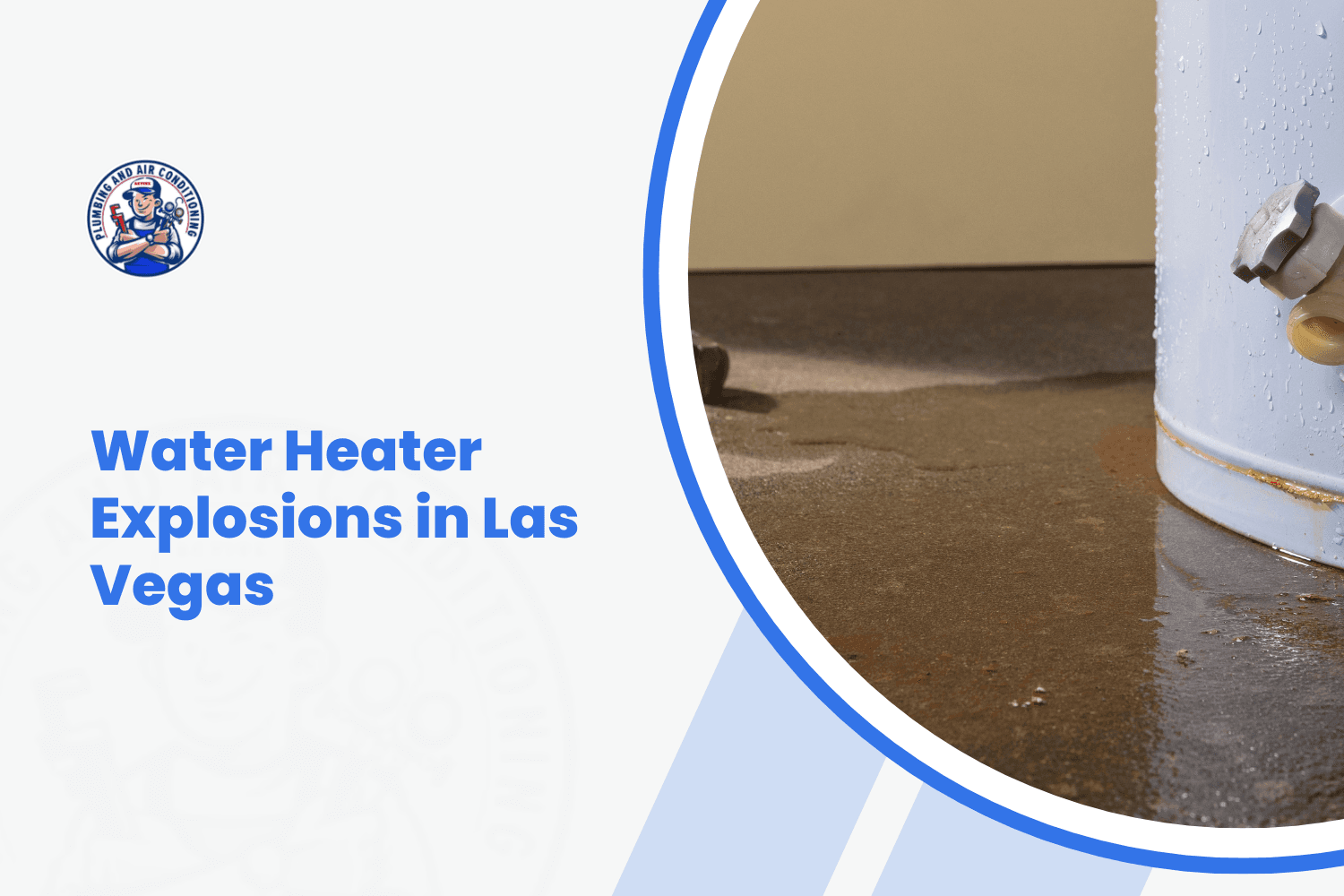
Water Heater Explosions in Las Vegas: How Sediment and Pressure Cause Failures
Key Takeaways
- Las Vegas hard water from Lake Mead leaves heavy mineral sediment that drives most local water heater failures.
- Popping and rumbling sounds mean sediment is trapping and boiling water, an early warning sign to act on.
- Sediment causes overheating and hot spots while pressure builds, and together they create real explosion risk.
- A working T&P relief valve is the main safety device, so test it yearly and never cap a leaking one.
- Flush the tank every six months in the valley's hard water and check the anode rod to extend tank life.
- A water softener or conditioner cuts sediment buildup at the source and protects the whole plumbing system.
- Most valley tanks last 7 to 10 years; replace a leaking, corroded, or repeatedly failing unit rather than repairing it.
- Active Plumbing offers inspections, flushing, fast replacement, and emergency response across the valley.
In This Article
It usually starts with a sound. A homeowner in Paradise Palms is brushing their teeth one morning and hears a deep popping noise coming from the garage. It almost sounds like someone dropped a handful of rocks into a pot of boiling water. They shrug it off, the hot water still works, and life goes on. A few months later, that same water heater fails, floods the garage, and leaves them with a cold shower and a big repair bill.
That popping noise is rarely random. In the Las Vegas Valley, it is often the first sign of sediment piling up at the bottom of a tank. When that sediment combines with rising pressure, the conditions for a serious failure start to form. In rare cases, that means an actual explosion.
Let's talk about why local water heaters face extra risk, how sediment and pressure work against the tank, the warning signs to watch for, and what homeowners can do to stay safe. Our team at Active Plumbing has worked on hundreds of these units across the valley, and the patterns repeat themselves in neighborhood after neighborhood.
Why Las Vegas Water Heaters Face Extra Risk
Water heaters wear out everywhere, but they wear out sooner here. The combination of mineral-heavy water and brutal desert heat puts these tanks under more stress than they would face in cooler, softer-water regions. Understanding the local conditions helps explain why a tank that might last 12 years elsewhere often gives up sooner in the valley.
The biggest driver of water heater risk in the area is Las Vegas hard water. The minerals in that water settle inside the tank as sediment buildup, and that buildup is the root of most failures we see. Below is a quick look at how local factors stack up against the average home.
| Local Factor | Effect on Water Heater | Risk Level |
|---|---|---|
| Hard water minerals | Heavy sediment buildup at tank bottom | High |
| Desert ambient heat | Higher operating temperatures, more wear | Medium |
| Aging homes and plumbing | Older tanks, corroded fittings | High |
| High city water pressure | Extra stress on tank and valves | Medium |
The Hard Water Problem Across the Valley
The Las Vegas Valley Water District pulls most of the area's supply from Lake Mead and the Colorado River. That water is loaded with dissolved minerals, mostly calcium and magnesium. By the time it reaches a home in Spring Valley or Winchester, it carries enough mineral content to rank among the hardest water in the country.
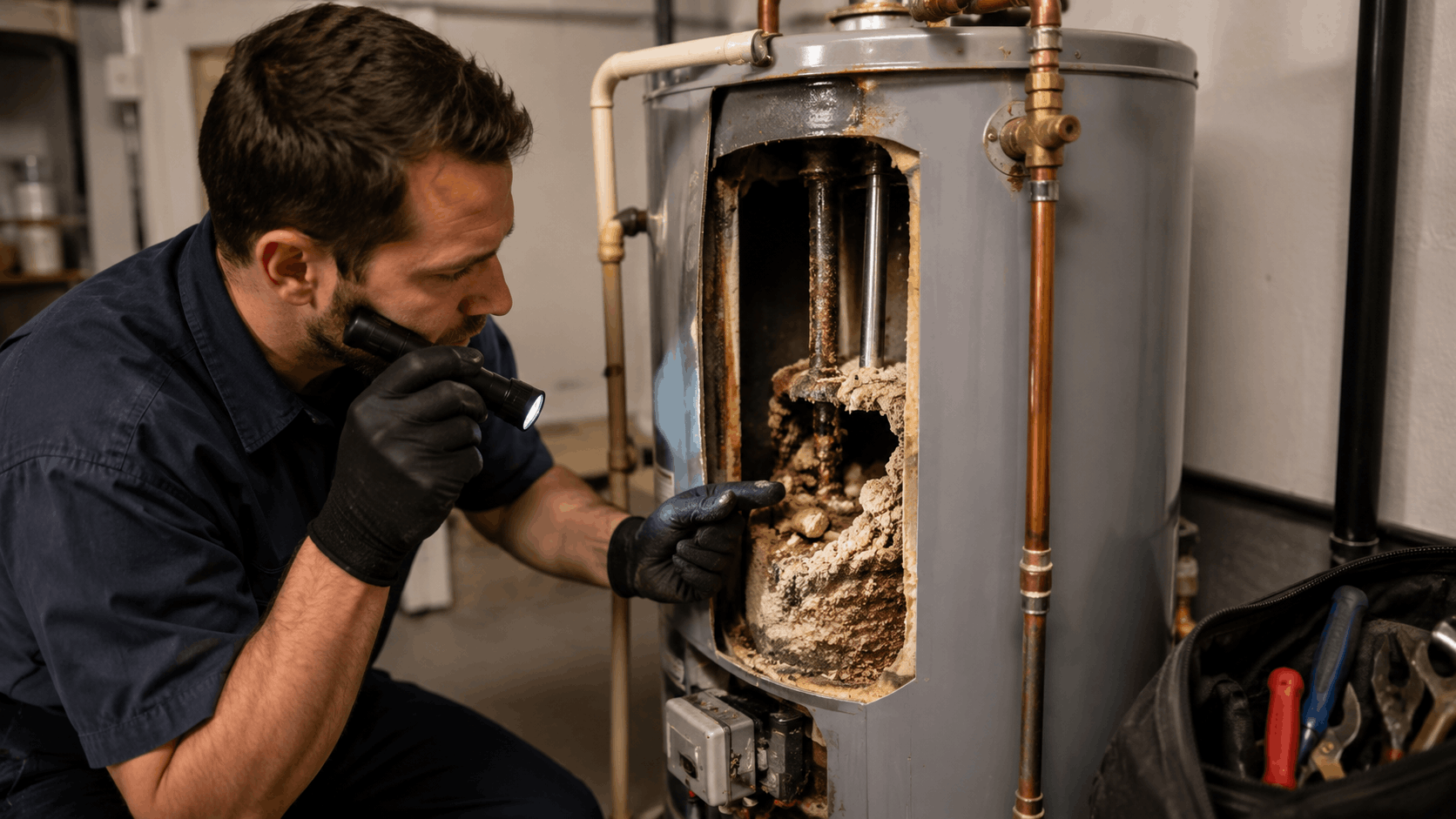
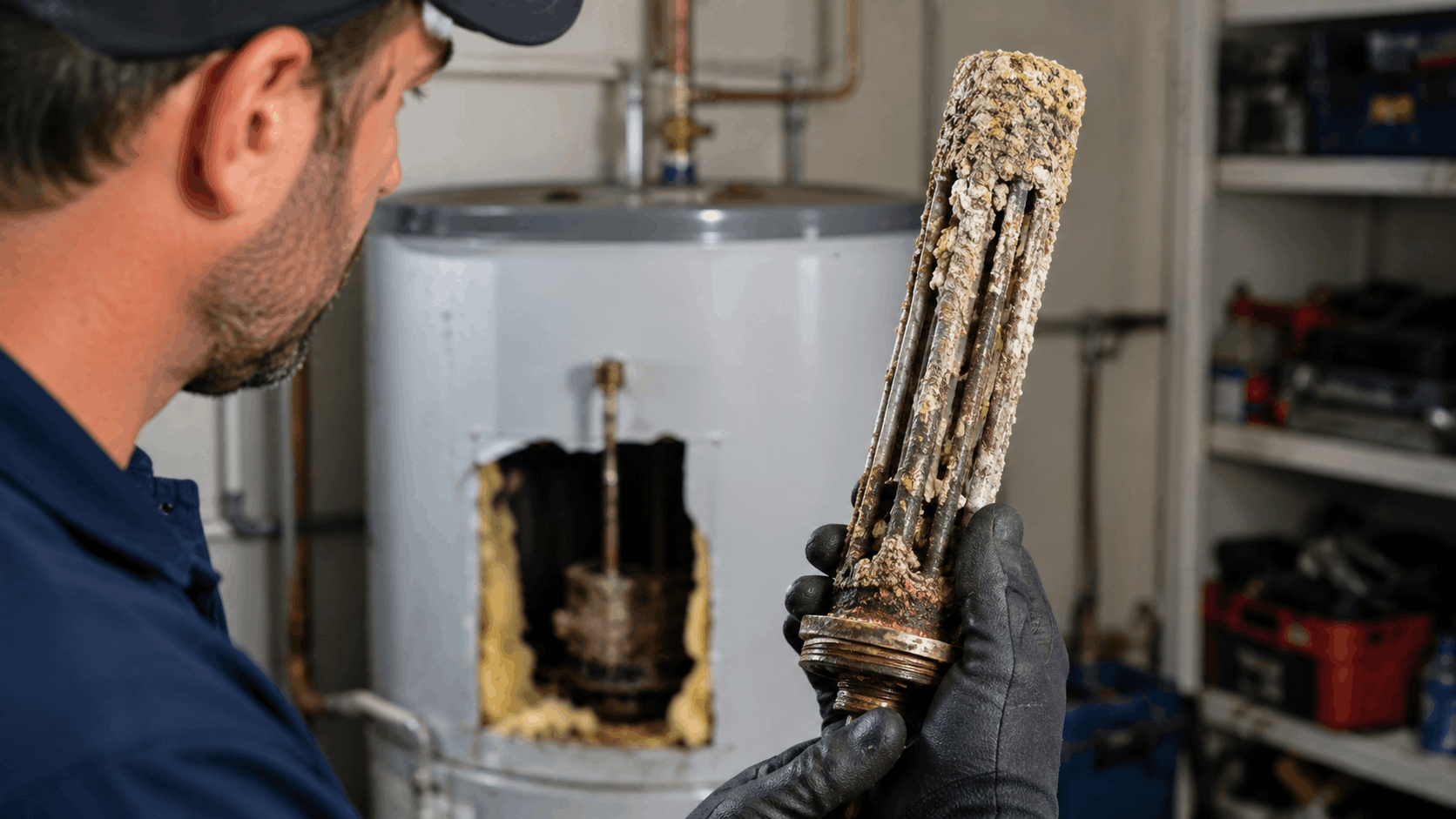
Those minerals do not disappear when the water heats up. Instead, they fall out of the water and settle as a gritty layer inside the tank. Over a few years, that layer can grow several inches thick at the bottom of a standard 40 or 50 gallon unit.
The harder the water, the sooner the buildup. Homes connected to the Las Vegas Valley Water District deal with this constantly, which is why local tanks need attention sooner than the manufacturer's average suggests. If a homeowner has never flushed their heater, there is a good chance a thick mineral bed is already sitting in there.
This is also why water treatment options matter so much in this region. Reducing mineral content before it ever reaches the tank changes the whole equation for how long that heater lasts.
Older Homes in Areas Like Huntridge and Paradise Palms
Some of the valley's most charming neighborhoods are also some of its oldest. Huntridge, near Charleston and Maryland Parkway, has homes dating back to the 1940s and 1950s. Paradise Palms, tucked behind the Boulevard Mall, carries that classic mid-century look.
The trouble is that an aging water heater often hides in the garage or a closet of these homes. We regularly find units that are 15 or even 20 years old, well past their safe service life. Older homes also tend to have outdated plumbing, including galvanized pipes that corrode and restrict flow.
When a tank that old sits on top of decades of sediment, the risk climbs fast. The tank walls thin out from corrosion, the safety valves stiffen, and the margin for error shrinks. We have replaced units in these neighborhoods that were one bad day away from a major leak.
Homeowners in these historic areas benefit from a simple inspection. Knowing the age and condition of a heater lets a family plan a replacement on their own schedule instead of during an emergency flood.
Desert Heat and Garage Installations
Most homes in Summerlin and Henderson keep the water heater in the garage. That makes sense for space, but the desert heat creates a hidden challenge. Garage temperatures can climb past 110 degrees in July and August, and that heat surrounds the tank all day.
A garage water heater working in that environment has to fight higher ambient temperatures. The unit runs warmer overall, which speeds up wear on the tank lining and the internal parts. The hotter the surroundings, the harder it is for the system to stay within safe limits.
This heat also affects pressure inside the tank, which we cover more below. Heat and pressure feed each other, and a garage in a Summerlin summer is a tough place for any appliance.
For newer Henderson builds, we often suggest looking at how the tank is positioned and whether added protection makes sense. Small adjustments can reduce the strain on a unit that already battles the climate every day.
Get Your Quote
Tell us what's going on and we'll get back to you. We're open 24/7.
How Sediment Builds Up Inside the Tank
To understand why local tanks fail, it helps to picture what is happening inside. The process is slow and quiet, which is exactly why so many homeowners miss it until the noises start. The good news is that the science is simple once it is broken down.
Sediment buildup begins with the calcium deposits that ride into the home with the water supply. Over time those deposits create the perfect setup for tank corrosion and overheating. Here is how the layers come together.
| Stage | What Happens | Homeowner Sign |
|---|---|---|
| Early | Thin mineral layer forms at the bottom | None yet |
| Middle | Sediment thickens, traps water | Popping and rumbling sounds |
| Advanced | Hot spots form, tank metal weakens | Longer heat times, rusty water |
| Critical | Corrosion and pressure stress combine | Leaks, valve drips, failure |
What Sediment Actually Is
Sediment is not dirt or sand from outside. It is the calcium and magnesium that was dissolved in the water all along. When water heats up, those minerals can no longer stay dissolved, so they drop out and gather at the bottom of the tank.
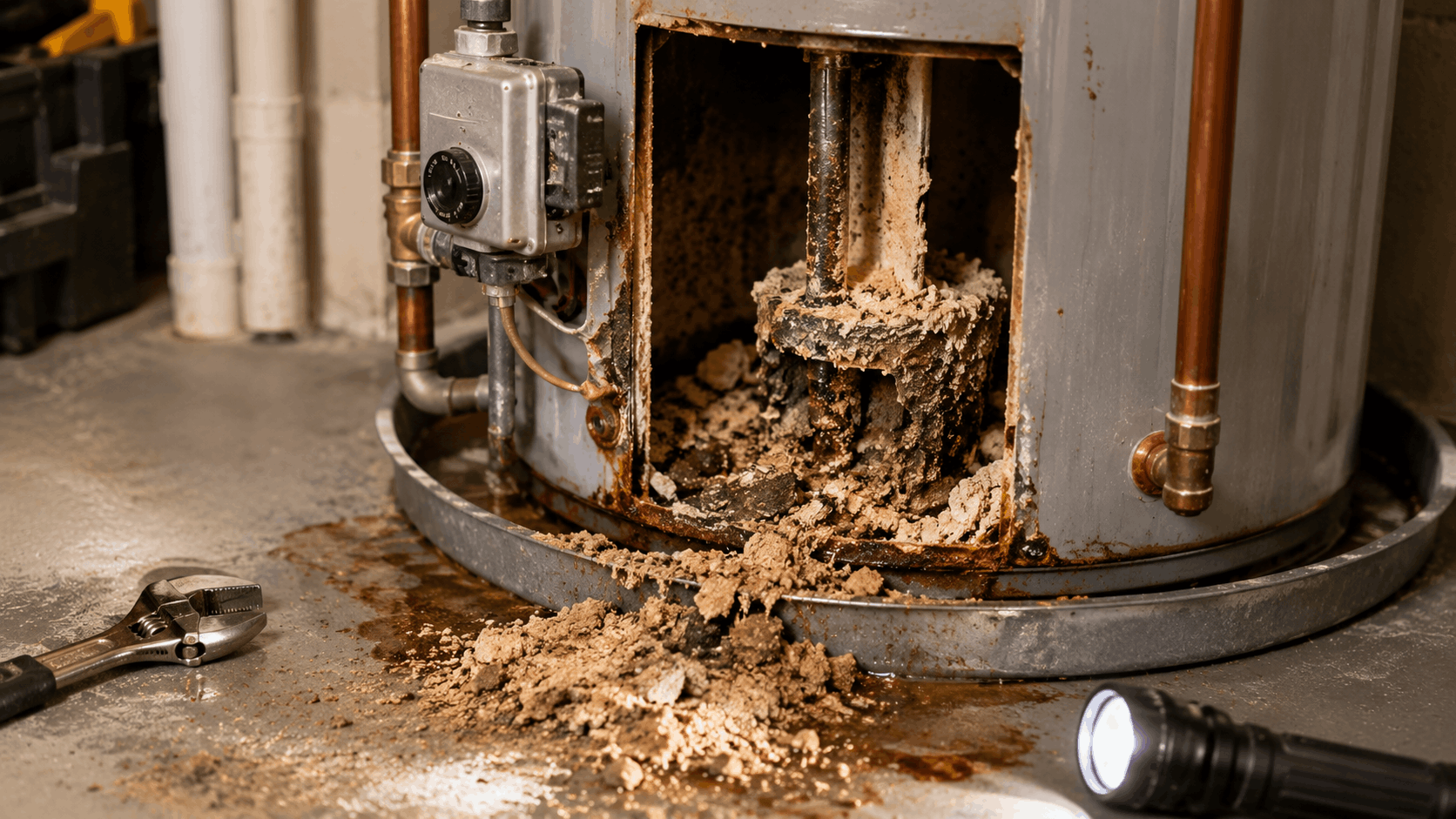
This mineral sediment looks like a chalky, sandy sludge. Scoop some out of an old tank and it feels gritty between your fingers. The more calcium and magnesium in the supply, the thicker that layer grows.
In a valley with water this hard, the buildup never really stops. Every gallon heated leaves a little more behind. A tank that has gone five years without a flush can hold pounds of accumulated mineral sediment.
That layer is the starting point for nearly every problem in this article. Once it forms, it changes how the entire heater behaves.
The Popping and Rumbling Sounds Homeowners Hear
The popping sounds people describe come from a real physical process. As sediment piles up, small pockets of water get trapped underneath it. When the burner or element heats that water, it boils inside those pockets.
The trapped steam has nowhere easy to go, so it forces its way up through the sediment with a pop or a rumble. A heavy buildup makes a rumbling water heater sound like a coffee pot or a pot of boiling pasta. Some homeowners say it sounds like marbles rolling around.
This noise is one of the clearest warning signs a tank can give. It means the sediment bed is thick enough to trap and boil water, which is far past the early stage. The louder and more frequent the sound, the worse the buildup.
When customers call us about strange noises from the garage, sediment is almost always the answer. Catching it at this stage gives a homeowner the chance to act before the tank fails.
How Sediment Causes Overheating
A clean tank lets heat move evenly from the burner or element into the water. A tank packed with sediment cannot do that. The mineral layer acts like a blanket between the heat source and the water above it.
To reach the set temperature, the heating element or gas burner has to run longer and hotter. That extra effort creates hot spots, places where the metal gets far hotter than it should. Over time those hot spots weaken and warp the tank steel.
On gas units, the bottom of the tank can overheat so badly that the protective glass lining cracks. Once the lining cracks, the bare steel underneath starts to rust quickly. On electric units, a buried element can burn out entirely.
This overheating cycle also drives up energy bills. A tank fighting through inches of sediment uses more gas or electricity to do the same job, so a sudden jump in a power bill can be a quiet clue.
Quicker Buildup in High-Mineral Zip Codes
Not every part of the valley sees the same buildup rate. Water chemistry shifts a bit depending on the supply line and the area. Parts of Centennial Hills and North Las Vegas tend to show quicker mineral buildup based on the local conditions we run into.
In some of these North Las Vegas neighborhoods, we open up tanks that are only six or seven years old and find a surprisingly thick sediment bed. The same age tank in a softer-water region might still be nearly clean inside.
Newer master-planned areas often have homes built close together on the same supply, so we see similar buildup patterns from house to house. When one neighbor needs a flush, the rest of the street usually does too.
Knowing your zip code's tendencies helps set a maintenance schedule. Homes in more quickly-buildup zones simply need more frequent attention to stay ahead of the problem.
Need Help in Las Vegas?
Active Plumbing serves Las Vegas and all of Las Vegas Valley.
The Role of Pressure in Tank Failures
Sediment alone can ruin a tank, but pressure is what turns a bad situation into a dangerous one. A water heater is a sealed metal vessel holding hot water, and that combination can store a lot of force. When the pressure has nowhere to go, the tank itself becomes the weak point.
Most homeowners never think about water heater pressure until something goes wrong. Understanding how pressure buildup happens makes it clear why a tank failure can be so violent and why the safety parts matter.
How Heat Turns Into Pressure
Water expands when it heats up. A full 50 gallon tank heated from cold to 140 degrees can try to add a noticeable amount of volume. In a sealed tank with no room to grow, that expansion turns directly into internal pressure.
This is called thermal expansion, and it happens every single heating cycle. In a healthy system, that pressure stays within safe limits and the relief valve handles any excess. The tank is built to take normal pressure swings.
The danger comes when the pressure climbs higher than the tank can handle and cannot escape. A sealed tank holding superheated water under high pressure stores an enormous amount of energy. If the tank wall finally gives way, that energy releases all at once.
That is the core mechanism behind a true water heater explosion. It is not the gas igniting. It is the sudden release of pressurized, superheated water flashing to steam.
The Temperature and Pressure Relief Valve
Every tank water heater has a temperature and pressure relief valve, usually called the T&P valve. It sits on the top or upper side of the tank with a discharge pipe running toward the floor. Its only job is to open and release water if temperature or pressure climbs too high.
When the system works right, the T&P valve is the safety backstop. If pressure spikes, the relief valve opens, lets out hot water, and drops the pressure back to a safe level. That pressure release is what keeps the tank from becoming a bomb.
The problem in hard water areas is that mineral buildup can clog or freeze the valve. A stuck valve cannot open when it needs to. If pressure rises and the one safety device is jammed, the tank has no way to vent.
This is why we test the relief valve on every service visit. A clean, working T&P valve is the single most important safety feature on the whole unit.
City Water Pressure in Las Vegas Homes
Incoming city water pressure varies across the valley. Some neighborhoods, especially those at lower elevations or near main supply lines, see higher incoming pressure than others. High city water pressure pushes against the tank and plumbing all day long.
Most water heaters and home plumbing systems are happiest between 50 and 70 psi. When pressure runs above 80 psi, the extra force stresses the tank, fittings, and valves. We have measured homes pushing well past that in certain areas.
A pressure regulator, also called a pressure reducing valve, controls how much pressure enters the home. When that regulator fails or was never installed, the full street pressure hits the system. Combined with thermal expansion, that can overwhelm the relief valve.
Checking incoming pressure is a quick step that prevents big problems. If the number is too high, adding or repairing a regulator protects the heater and every other fixture in the house.
When Sediment and Pressure Combine
Here is where the two threats meet. A tank full of sediment overheats, creating hot spots and pushing the thermostat to work harder. That extra heat drives extra thermal expansion and pressure inside the tank.
At the same time, the same mineral buildup that caused the overheating can clog the T&P valve. Now there is more pressure being generated and a blocked path for it to escape. That combined failure is exactly the recipe for a burst.
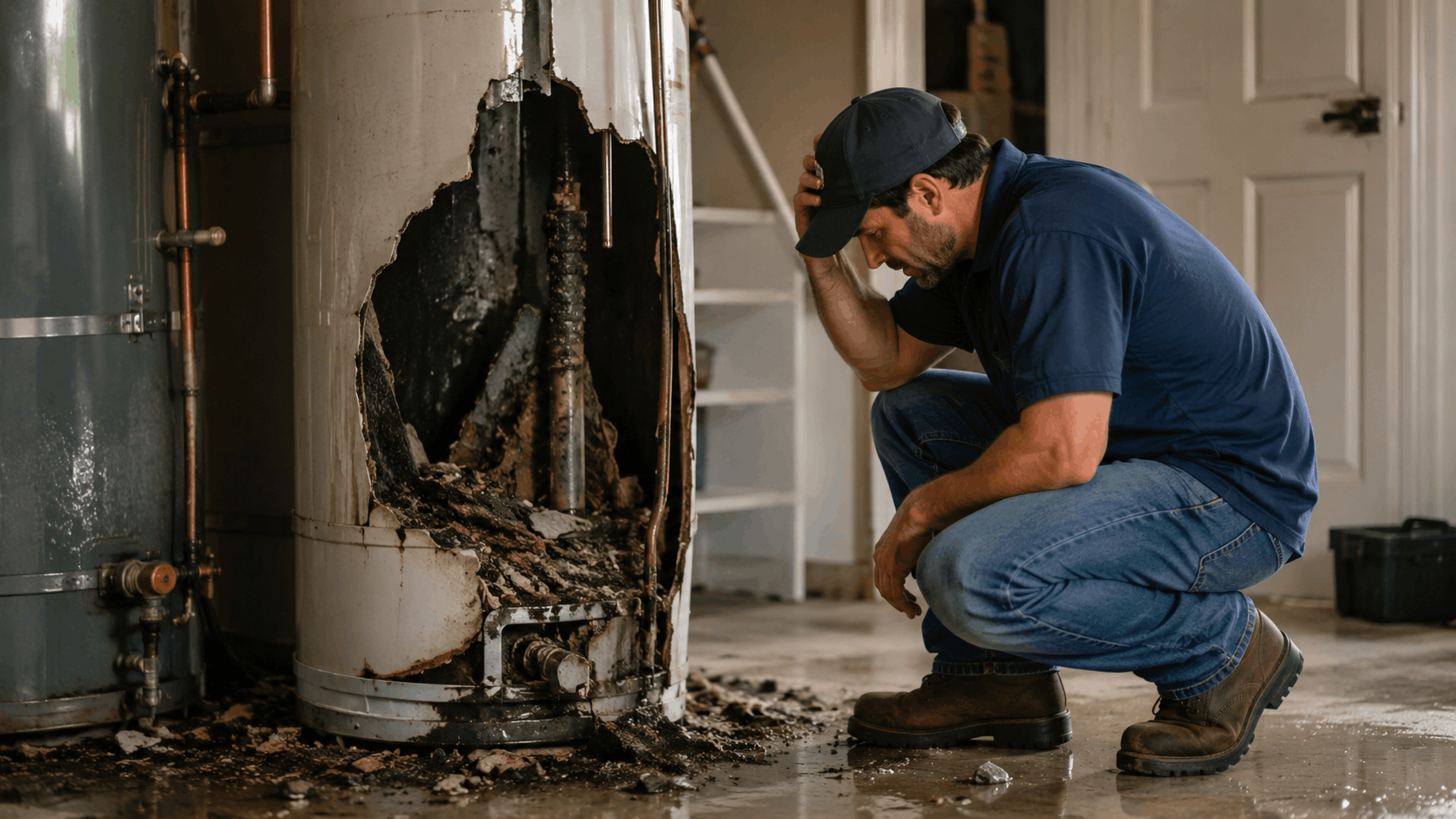
The overheating pressure keeps building with nowhere to vent, and the corroded, weakened tank walls have less strength to hold it. When the metal finally fails, the result is a sudden, forceful rupture. This explosion risk is small in any single home, but it is real and it is preventable.
Almost every dangerous failure we see traces back to this overlap. Sediment plus pressure plus a bad safety valve is the combination that demands fast action, sometimes through our emergency plumbing service.
Warning Signs Your Water Heater Could Fail
A failing tank almost always sends signals before it gives out. The trick is knowing what to watch and listen for. Most water heater warning signs are easy to spot once a homeowner knows the pattern.
Catching these early lets a family handle a repair or planned replacement instead of an emergency cleanup. Here are the main symptoms of a failing water heater that we tell every customer to keep an eye on:
- Loud popping, banging, or rumbling from the tank during heating cycles
- Rusty or cloudy hot water coming from the faucets
- Water pooling or dampness around the base of the unit
- A dripping or hissing relief valve on the side of the tank
- Longer wait times for hot water or running out more quickly than usual
- A sudden jump in gas or electric bills with no other cause
Strange Noises and Vibrations
The popping and banging noise is usually the first thing homeowners notice. As covered earlier, that sound comes from water boiling under a thick sediment layer. A loud banging noise during a heating cycle points to a heavy buildup that has been forming for years.
Some tanks also vibrate or shudder slightly when the sediment shifts. People describe it as a low rumble that comes and goes with the burner. These sediment sounds are the tank telling you it needs attention.
The noise will not fix itself and tends to get worse over time. A unit that pops a little this year will rumble loudly next year. The sooner the sediment comes out, the better the chance of saving the tank.
When a homeowner in Henderson or Spring Valley calls us about garage noises, a sediment flush is usually the first thing we check. Often that one service quiets the unit and buys it more years of life.
Rusty Water and Discoloration
Brown, orange, or cloudy hot water is a sign worth taking seriously. When only the hot water looks discolored, the rust is almost always coming from inside the tank. That rusty water means the protective lining has failed and the steel is corroding.
The trick is to check whether the discoloration shows up in cold water too. If both run rusty, the problem may be in the pipes. If it is just the hot side, the tank is the most likely source of the corrosion.
Discolored water can also leave stains in sinks, tubs, and laundry. A faint metallic taste or smell in the hot water is another clue. None of these signs should be ignored once they appear.
By the time the water turns rusty, the tank is often in its final stretch. We treat this as a strong signal to inspect the unit and plan ahead before it leaks.
Leaks and Moisture Around the Base
Any water around the bottom of the heater deserves immediate attention. A water heater leak might start as a small puddle or just a damp ring on the garage floor. People often blame a spill or condensation at first.
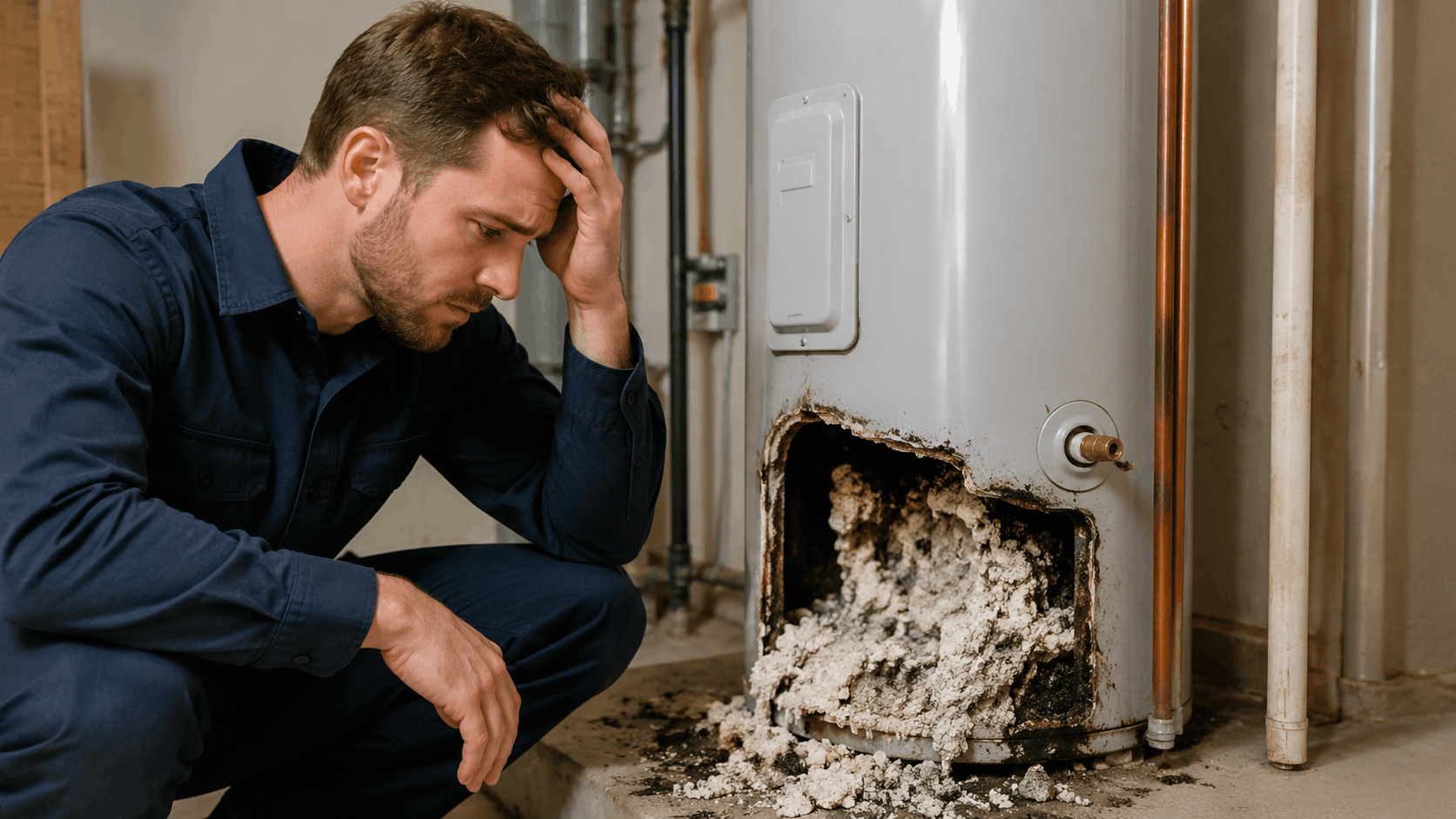
The danger is that a base leak frequently means the tank itself has cracked or rusted through. Once the steel tank starts leaking, there is no real repair. The moisture will only grow as the corrosion spreads.
A leaking tank can also fail suddenly and dump dozens of gallons of water at once. In a finished garage or an interior closet, that flood can ruin flooring, drywall, and stored belongings. This is why fast action matters so much.
If a homeowner finds standing water near the unit, we recommend shutting off the water supply to the heater and calling for help. A whole home leak detection system can also catch these problems before they spread.
A Dripping or Hissing Relief Valve
The T&P valve should stay quiet and dry during normal use. A dripping valve or one that hisses is trying to tell you something. It usually means pressure inside the tank is running too high.
Sometimes the valve drips because it is doing its job, releasing excess pressure from thermal expansion or high city water pressure. Other times it drips because the valve itself is worn or fouled with minerals. Either way, a hissing valve points to a pressure problem that needs a closer look.
What homeowners should never do is cap or plug a leaking relief valve. That removes the tank's last line of defense against pressure buildup. We have seen people try this, and it is one of the most dangerous shortcuts possible.
A dripping or hissing T&P valve calls for a professional check. The valve may need replacement, or the pressure issue behind it may need fixing first.
Need Help in Las Vegas?
Active Plumbing serves Las Vegas and all of Las Vegas Valley.
How to Prevent a Water Heater Explosion
The encouraging part is that nearly every failure described above is preventable. A handful of simple habits keep a tank healthy and safe for years. Learning how to prevent a water heater explosion comes down to managing sediment and pressure before they get out of hand.
Regular water heater maintenance is the foundation. Flushing the tank, testing the valves, and treating the water all work together to extend the life of the unit and lower the risk.
Flushing the Tank Regularly
Flushing the tank is the single best thing a homeowner can do here. The process drains water out through the bottom valve, carrying loose sediment with it. This removes the mineral bed before it grows thick enough to cause trouble.
In most parts of the country, once a year is fine. In the Las Vegas Valley, with water this hard, we usually recommend flushing every six months. Homes in more quickly-buildup zones may benefit from an even shorter interval.
A proper flush does more than empty the tank. It clears the drain sediment that quiets noises, restores heating efficiency, and protects the bottom of the tank from hot spots. Skipping flushes for years is a common reason we find ruined units.
Some homeowners handle a basic flush themselves, while others prefer to have our team do it during a tune-up. Either way, sticking to a schedule makes a real difference in how long the heater lasts.
Testing the Relief Valve
Testing the relief valve confirms the tank's main safety device still works. The basic check is simple. With a bucket positioned under the discharge pipe, you gently lift the valve's lever and let it snap back.
Water should rush out while the lever is up, then stop cleanly when it closes. If nothing comes out, the valve is likely stuck and dangerous. If it keeps dripping after the test, the valve may need replacement.
This T&P valve test should happen at least once a year. It takes only a minute but verifies that the tank can release pressure if it ever needs to. A working valve is what stands between a high-pressure event and a safe release.
If a homeowner is unsure about doing the safety check themselves, our team handles it on every water heater service visit. It is one of the most important steps we never skip.
Installing a Water Softener or Conditioner
Since hard water is the root cause, treating that water attacks the problem at the source. A water softener removes much of the calcium and magnesium before it ever reaches the heater. Less mineral content means far less sediment buildup over the years.
A salt-based softener swaps the hardness minerals for sodium, while a salt-free water conditioner changes how the minerals behave so they stick less. Both reduce the gritty layer that forms inside the tank. The right choice depends on the home and the homeowner's preferences.
The payoff goes beyond the water heater. Softened water is gentler on pipes, faucets, dishwashers, and laundry too. Many valley homeowners notice cleaner glassware and less scale on fixtures within weeks.
Our team installs both water softener systems and salt-free conditioning for homes across the valley. For a heater fighting this region's hard water, treatment is one of the smartest long-term investments.
Checking the Anode Rod
The anode rod is the unsung hero inside the tank. This metal rod is designed to corrode in place of the tank steel. Because it sacrifices itself to rust first, it is called a sacrificial rod.
Over time the anode rod wears away completely. Once it is gone, the corrosion turns on the tank itself. In hard water, the rod can wear out in just a few years rather than the typical six or so.
Checking and replacing the anode rod is a relatively low-cost service that adds real rust protection. A fresh rod can extend the life of a tank by years. Many homeowners never knew the part existed until we point it out.
We inspect the anode rod during maintenance visits and replace it when it is mostly consumed. It is a small part that protects a big investment.
When to Repair vs. Replace Your Water Heater
At some point every tank reaches the end of the road. The question of repair or replace water heater comes down to age, condition, and how often things go wrong. A newer unit with a single fault is worth fixing. An old tank that keeps failing is usually money better spent on a replacement.
Knowing the typical water heater lifespan in this area helps homeowners make the call with confidence. Here is how we think through it with our customers.
Typical Water Heater Lifespan in Las Vegas
A standard tank water heater is rated for roughly 8 to 12 years. In softer-water regions, many reach the top of that range or beyond. In the Las Vegas Valley, hard water wear pushes most tanks toward the shorter end.
It is common for us to see tanks here giving out at 7 to 10 years. Units that were never flushed or never had the anode rod changed can fail even sooner. The mineral content simply takes its toll more quickly.
Tank age is one of the first things we check. A unit past 10 years deserves a careful look even if it seems fine. Planning ahead beats waiting for a leak to force the decision.
Good maintenance can stretch the lifespan back toward the high end. A flushed, well-cared-for tank with a fresh anode rod outlasts a neglected one by years.
Repairs That Make Sense
Plenty of water heater problems are worth a simple repair. On a unit under about eight years old, fixing one part is often the right move. A failed heating element, a bad thermostat, or a worn T&P valve are all straightforward fixes.
Element replacement on an electric unit restores heat at a fraction of the cost of a new tank. Valve repair handles pressure and relief issues without touching the tank itself. These repairs make sense when the tank body is still sound.
The deciding factor is the tank itself. If the steel is solid and not leaking, repairing the parts around it is reasonable. Our water heater repair team handles these fixes regularly across the valley.
We always give homeowners an honest read on whether a repair buys real time. There is no point fixing a valve on a tank that is already rusting through.
Signs It Is Time for a New Unit
Some conditions point clearly toward replacement. A leaking tank tops the list, because a cracked or corroded tank body cannot be repaired. Once water is coming from the tank itself, the unit is finished.
Repeated repairs are another signal to replace the water heater. If a tank needs a new part every year, those costs add up fast. At some point a new unit is the better value.
Heavy corrosion, rusty water, and an age past 10 to 12 years all push toward replacement too. A corroded tank is a failure waiting to happen. Replacing it on your schedule is far cheaper than cleaning up after a burst.
When we recommend a new unit, it is because the math and the safety both favor it. We would rather a family replace a tired tank than risk a flooded garage.
Tankless and Modern Options for Valley Homes
Replacement is also a chance to upgrade. A tankless water heater heats water on demand and never stores a large volume under pressure. That design removes the sediment-and-pressure failure mode entirely.
Tankless and other high-efficiency options have grown popular in newer Summerlin and Henderson builds. They save space, lower energy use, and provide endless hot water. In hard water areas they still need periodic descaling, but they avoid the big tank failure risk.
We install and maintain tankless water heaters throughout the valley. For homes that go through a lot of hot water, the comfort and efficiency are hard to beat.
Modern tank units have improved too, with better insulation and smarter controls. Whether tank or tankless, today's options outperform the units installed a decade ago.
Need Help in Las Vegas?
Active Plumbing serves Las Vegas and all of Las Vegas Valley.
How Active Plumbing Helps Las Vegas Homeowners
Our team at Active Plumbing has spent years working on water heaters in every corner of the valley. From historic Huntridge bungalows to brand-new Henderson builds, we know how the local water treats these tanks. That experience shapes how we inspect, maintain, and replace them.
Whether a homeowner needs a quick flush or a full water heater service in Las Vegas, our goal is to keep families safe and their hot water running. Here is how we help.
Water Heater Inspections and Safety Checks
A thorough water heater inspection is where we start. We check the tank for corrosion, listen for sediment, and look at the connections and venting. The goal is to catch small problems before they grow into failures.
Part of every safety check is testing the T&P valve and measuring the incoming water pressure. These two readings tell us a lot about the tank's risk level. If the pressure is high or the valve is sluggish, we address it on the spot.
We also check the age and condition of the anode rod during this preventive service. Knowing how much rod is left helps us advise on timing for a replacement. An inspection gives the homeowner a clear picture of where the unit stands.
Many customers schedule an inspection after hearing noises or noticing higher bills. It is a low-cost way to find out whether a tank is safe or living on borrowed time.
Flushing and Maintenance Visits
Routine flushing is the workhorse of our maintenance service. We drain the tank, clear out the sediment, and check the valves and connections while we are there. For local hard water, we suggest scheduling this every six months.
We handle flushing and tune-up visits for homes from Spring Valley to Green Valley and everywhere between. Setting up a regular schedule keeps a tank quiet, efficient, and far less likely to fail. It is the easiest insurance a homeowner can buy.
During these visits we also descale tankless units for homes that have them. Tankless maintenance and descaling keeps those systems running at full efficiency. The hard water reaches them too, so they need care of their own.
A maintenance visit takes a fraction of the time and cost of an emergency. Families who stay on schedule rarely deal with surprise failures.
Fast Replacement and Emergency Response
Sometimes a tank fails without much warning. When that happens, our team moves quickly to handle the water heater replacement and stop the damage. A leaking or burst tank cannot wait, and we treat those calls with urgency.
We respond to emergency plumber calls across the valley, including after hours. A flooded garage or a no-hot-water situation in the middle of winter gets a fast response. Our trucks carry common units and parts to get homes back to normal quickly.
For burst tanks and major leaks, we also offer burst pipe repair and full cleanup support. The sooner the water is stopped, the less damage a home suffers. Speed matters when gallons are pouring onto the floor.
We aim to make a stressful day easier. A clear plan, an honest quote, and a fast turnaround help families recover from a failure without the runaround.
Serving Communities Across the Valley
Our service area covers the whole valley, not just one corner of it. We work in Centennial Hills to the north, Henderson to the southeast, and the central Las Vegas neighborhoods in between. Wherever the hard water reaches, we go.
That local reach means we already know the conditions in most neighborhoods. We have flushed tanks in Summerlin, replaced units in Paradise Palms, and tested valves in older central homes. The patterns repeat, and we have seen them all.
Being a local company, we understand the seasonal swings too. The summer garage heat and the winter cold snaps both put stress on tanks, and we plan service around those cycles. Knowing the area helps us give better advice.
Homeowners can reach our team to set up an inspection, a flush, or a replacement anywhere in the valley. Local knowledge plus fast service is what we bring to every call.
Final Thoughts
Water heater failures in the valley almost always come back to the same two forces: sediment and pressure. The hard water from Lake Mead leaves mineral deposits that overheat the tank, while pressure builds with nowhere safe to go. When those two meet a worn-out safety valve, the result can be a serious failure.
The good news is that simple habits prevent nearly all of it. Flush the tank twice a year, test the relief valve, check the anode rod, and consider treating the water. Those steps keep a heater safe and stretch its life by years.
If a tank in your home is making noise, running rusty, or showing its age, do not wait for it to fail. Our team at Active Plumbing is ready to inspect, maintain, or replace it across the entire valley. Reach out through our contact page or give us a call to set up a visit and keep your hot water safe and reliable.
Frequently Asked Questions
- Can a water heater really explode?
- Yes, it can. A sealed tank holds hot water under pressure, and when that pressure climbs with no safe release, the tank can rupture violently. This usually happens when sediment causes overheating and a clogged or stuck T&P valve cannot vent the building pressure. It is rare, but real, and that is exactly why the relief valve and regular maintenance matter so much.
- How often should I flush my water heater in Las Vegas?
- Because the valley has some of the hardest water in the country, we recommend flushing every six months rather than once a year. The high mineral content builds sediment fast, so a shorter interval keeps the tank clean and quiet. Homes in more quickly-buildup zip codes like parts of Centennial Hills may benefit from even more frequent flushing. Staying on schedule is the easiest way to extend a tank's life.
- What causes the popping sound in my water heater?
- That popping comes from sediment at the bottom of the tank. As the mineral layer thickens, it traps pockets of water underneath. When the burner or element heats that trapped water, it boils and forces steam up through the sediment with a pop or rumble. The louder the noise, the heavier the buildup, which means it is time for a flush or an inspection.
- How do I know if my relief valve is bad?
- Watch for a few clear signs. A T&P valve that drips constantly or hisses usually points to high pressure or a worn valve. When you test it by lifting the lever, water should rush out and then stop cleanly. If nothing comes out, or it keeps dripping afterward, the valve is failing and needs replacement right away.
- Does hard water shorten my water heater's life?
- It does. The calcium and magnesium in the valley's water settle as sediment and speed up both buildup and corrosion. That sediment causes overheating and hot spots, while the minerals wear down the anode rod and tank lining more quickly. A tank that might last 12 years in soft water often gives out closer to 7 to 10 years here. Treating the water helps a lot.
- Is a leaking water heater dangerous?
- A leak should always be addressed quickly. Water pooling at the base often means the tank itself has cracked or rusted through, which cannot be repaired. A failing tank can suddenly dump dozens of gallons and flood a garage or closet. Beyond water damage, a leak can signal advanced corrosion and rising failure risk. Shut off the water to the unit and call for help.
- Should I install a water softener to protect my heater?
- For most valley homes, it is worth considering. A water softener or salt-free conditioner reduces the calcium and magnesium that cause sediment buildup. Less buildup means less overheating, slower corrosion, and a longer-lasting tank. Softer water also protects pipes, fixtures, and appliances throughout the home. Given how hard the local supply is, treatment is one of the better long-term investments a homeowner can make.
- How long does a water heater last in the valley?
- A typical tank water heater lasts 8 to 12 years, but local hard water tends to push that toward the lower end. Many tanks here fail between 7 and 10 years, especially without regular flushing or anode rod changes. Good maintenance can extend life back toward the high end, while neglect shortens it. Tankless units can last longer with periodic descaling.
- What should I do if I smell gas near my water heater?
- Treat it as an emergency. Do not flip switches, light anything, or use phones near the smell. Get everyone out of the home and move to fresh air. From a safe distance, call your gas company and a licensed plumber. A gas odor near a heater can mean a leak that needs immediate professional attention before the unit is used again.
- How much does water heater maintenance cost?
- Costs vary by service and home, but routine work is generally affordable. A standard flush and basic tune-up typically falls in a modest range, while an inspection with safety checks is similar. Common repairs like a T&P valve or heating element replacement cost more but far less than a new unit. We provide clear, upfront quotes so homeowners know the cost before any work begins.
Licensed plumbing professionals serving Las Vegas and Las Vegas Valley.
Licensed in Nevada · License #0047021
Last updated on
Why trust Active Plumbing?
Founded in 1991, Active Plumbing is a licensed and insured plumber serving Las Vegas and Las Vegas Valley. All content is reviewed by our licensed technicians.

Need Help in Las Vegas?
Active Plumbing serves Las Vegas and all of Las Vegas Valley.
Related Articles
How to Prevent Water Heater Failure in Las Vegas (Hard Water Maintenance Plan)
Learn how Las Vegas hard water wears out water heaters sooner and follow our maintenance plan to extend your unit's lifespan years.
Sediment Tank Flush: Why Vegas Water Heaters Need It Every 18 Months
Las Vegas hard water causes rapid sediment buildup in water heaters. Learn why an 18-month flush schedule protects your tank, saves energy costs, and prevents expensive failures in the desert.
Tankless Water Heater Maintenance in Las Vegas: Why Hard Water Makes It Critical
Las Vegas hard water from Lake Mead builds scale fast inside tankless heaters. Learn the warning signs, real maintenance steps, and how often valley homes need service.