Clark County Backflow Prevention Testing Schedule: What's Required When
Key Takeaways
- Clark County requires annual backflow prevention testing for all properties with testable backflow assemblies, including residential homes with irrigation systems.
- New backflow prevention devices must be tested within 10 days of installation before they are considered compliant.
- LVVWD and other local water providers send testing notices 30 to 60 days before the due date - do not ignore these letters.
- Only certified backflow testers registered with the local water purveyor can perform valid tests in Clark County.
- Non-compliance can result in fines, water service disconnection, and legal liability if contamination occurs.
- Las Vegas hard water and extreme heat speed up wear on backflow device components, making annual testing even more important.
- Active Plumbing tracks testing dates, performs on-site repairs, and files all compliance reports with the water district on behalf of clients.
- Spring is the busiest testing season in the valley - scheduling early avoids delays and missed deadlines.
In This Article
Every year, thousands of property owners across the Las Vegas valley open their mailbox to find a notice from the Southern Nevada Water Authority or the Las Vegas Valley Water District about backflow prevention testing. For most people, the first reaction is confusion. What is a backflow preventer? Where is it on their property? And what exactly happens if they ignore the letter?
The reality is that Clark County takes backflow prevention seriously - and for good reason. In a desert valley with limited water resources, protecting the public water supply from contamination is not something regulators treat lightly. Whether someone owns a single-family home in Summerlin with an irrigation system or manages a restaurant on West Sahara Avenue, there are specific testing schedules, deadlines, and consequences tied to backflow compliance.
Let's cover the exact testing schedule Clark County enforces, which properties must comply, what the penalties look like for missed deadlines, and how Active Plumbing helps property owners across Las Vegas, Henderson, North Las Vegas, and the surrounding valley stay on top of their backflow requirements without the stress. We will walk through every detail so that the next time a testing notice shows up, readers will know exactly what to do and when to do it.
What Is Backflow Prevention and Why Does Clark County Require It
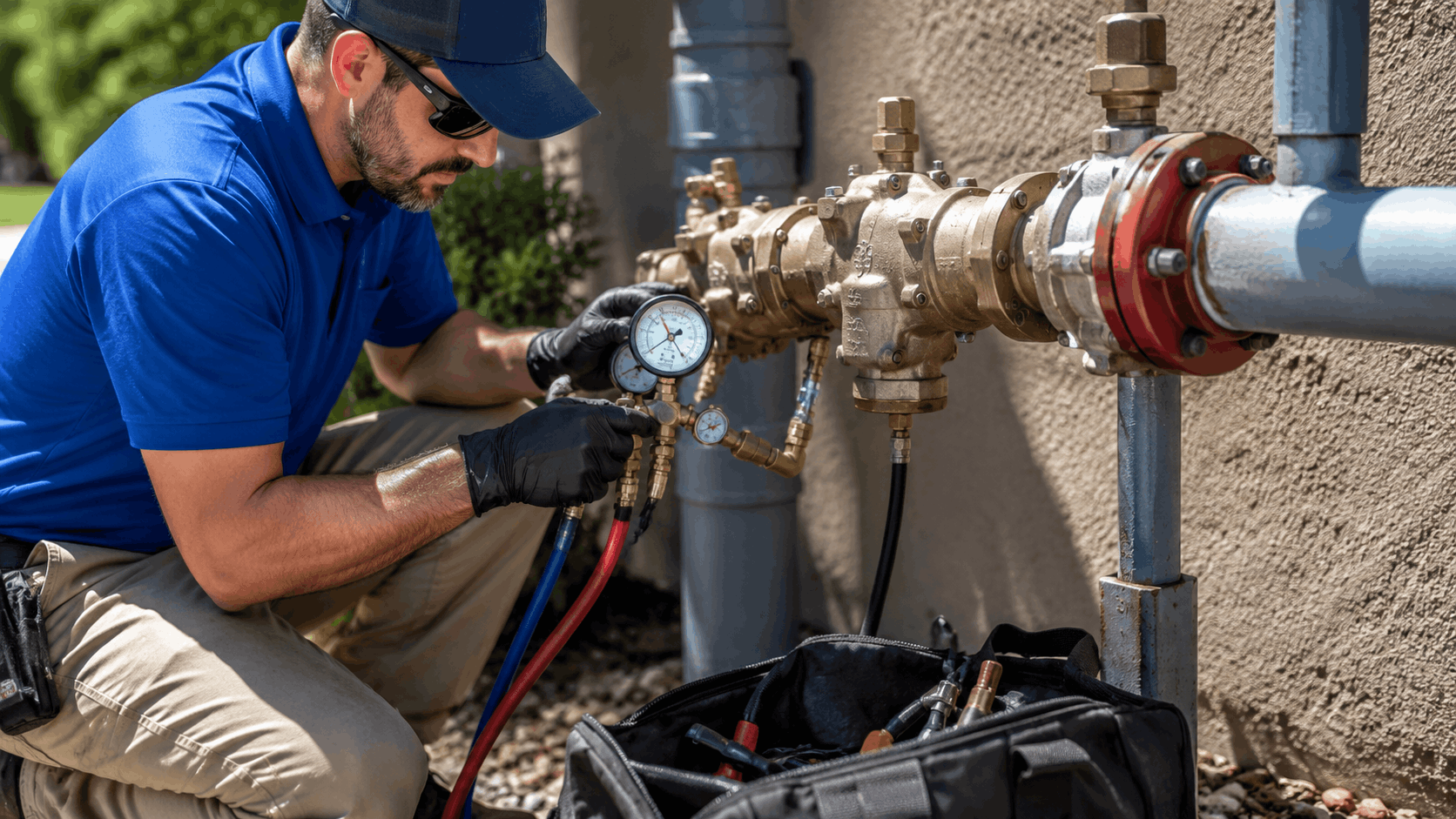
Backflow prevention is exactly what it sounds like - it stops water from flowing the wrong direction. In a properly functioning plumbing system, water moves from the public supply into the building. But under certain conditions, that flow can reverse, pulling contaminated water from a property back into the clean public water supply.
Clark County and the Las Vegas Valley Water District (LVVWD) enforce backflow prevention because the valley's water supply is finite. Lake Mead is the primary source, and any contamination event could affect thousands of residents. Cross-connection control programs exist specifically to prevent these incidents.
| Term | What It Means |
|---|---|
| Backflow | Water flowing backward from a property into the public water supply |
| Cross-Connection | Any physical link between clean drinking water and a potential contamination source |
| Backflow Preventer | A mechanical device installed to block reverse water flow |
| Cross-Connection Control Program | The regulatory program that identifies hazards and requires testing |
- Backflow events can introduce pesticides, fertilizers, chemicals, and bacteria into the drinking water system
- The Las Vegas Valley Water District manages one of the largest cross-connection control programs in the western United States
- Properties with irrigation, fire suppression, or chemical feed systems are at highest risk
How Backflow Happens in Las Vegas Properties
Backflow typically happens through two mechanisms - backpressure and back-siphonage. Backpressure occurs when downstream pressure exceeds supply pressure, pushing water backward. Back-siphonage happens when a sudden pressure drop in the supply line creates a vacuum that pulls water from the property back into the main.
Active Plumbing encounters backflow risks constantly across the valley. In Summerlin neighborhoods, irrigation systems connected to the domestic water line are a common backflow cause. Fertilizer-laden water from a sprinkler system can siphon back into the drinking water supply during a pressure drop.
Along Las Vegas Boulevard, commercial buildings with fire suppression systems create backpressure situations where stagnant water sits in pipes for months. During peak summer demand - when temperatures hit 115 degrees and every property in the valley runs its cooling systems - pressure fluctuations become more frequent. That is when back-siphonage events spike, especially in older areas near Downtown Las Vegas where the infrastructure sees the heaviest demand.
The Local Regulations Behind the Testing Requirement
Nevada's rules for public water systems and the water providers' own programs, such as the Las Vegas Valley Water District's backflow prevention program, establish requirements for backflow prevention and cross-connection control. These Clark County backflow regulations align with standards set by the American Water Works Association (AWWA), which is the national authority on water system protection.
The local water purveyors - LVVWD, Henderson Water Utility, and North Las Vegas Utilities - each run their own cross-connection control programs within their service areas. They identify properties with potential cross-connections, require backflow preventer installation, and enforce annual testing.
The Southern Nevada Health District adds its own requirements for food service establishments. Properties that fail to comply with these regulations face enforcement actions that can include water service disconnection. These are not suggestions - they are legal requirements with teeth.
Get Your Quote
Tell us what's going on and we'll get back to you. We're open 24/7.
Clark County's Annual Backflow Testing Schedule and Deadlines
Annual backflow testing is the standard in Clark County. Every property with an installed backflow prevention assembly must have it tested once per year by a certified tester. The testing deadline is typically tied to either the anniversary of the device installation or the notification cycle of the local water provider.
Here is how the general Clark County compliance timeline works:
- The water provider identifies properties with registered backflow devices
- A testing notice is mailed to the property owner or responsible party
- The property owner has a defined window - usually 30 to 60 days - to have the test completed
- The certified tester submits the passing report directly to the water purveyor
- If the device fails, repairs must be made and a retest submitted before the backflow testing deadline
When Annual Testing Notices Go Out
LVVWD and other local water providers send annual backflow testing notices approximately 30 to 60 days before the testing due date. The notice includes the device location, the serial number on file, and the deadline for submitting a passing test report.
Timing varies depending on the water provider. Properties in Henderson may receive notices on a different cycle than those served by LVVWD in the city of Las Vegas proper. Unincorporated Clark County properties and those in North Las Vegas follow their respective utility schedules.
Many property owners toss these notices aside, thinking they are junk mail. That is a mistake. The annual testing due date printed on that letter is a hard deadline, and the clock starts ticking the moment it is mailed.
Exact Timeframes for New Installations vs. Existing Devices
The rules differ depending on whether a backflow preventer is newly installed or already in service. New backflow preventers must be tested within 10 days of installation. This 10-day testing requirement applies to both residential and commercial properties and must be completed before the device is considered compliant.
Existing devices follow the annual cycle. Once a device passes its initial test, the next test is due within 12 months. Active Plumbing tracks these dates for commercial clients that have multiple assemblies across different properties - a restaurant group with locations on Flamingo Road, Eastern Avenue, and the commercial corridors along the 215 Beltway, for example. Missing even one device in a portfolio of 20 can trigger a compliance issue.
Seasonal Considerations for Las Vegas Property Owners
Spring is by far the busiest season for irrigation backflow testing in the Las Vegas area. Many homeowners shut down their irrigation systems during winter months, and the backflow devices sit idle. When the systems come back online in March and April, those devices need testing before the seasonal backflow schedule ramps up.
Properties near the Springs Preserve area and older neighborhoods around Downtown Las Vegas often have aging devices that need attention before the hot months. Rubber seals dry out over winter, and the hard Las Vegas water leaves mineral deposits that can cause a device to fail its spring test.
Active Plumbing recommends scheduling Las Vegas spring plumbing inspections early - by mid-February if possible. Once March hits, every backflow tester in the valley is booked solid, and waiting until April means risking a missed deadline.
Need Help in Las Vegas?
Active Plumbing serves Las Vegas and all of Las Vegas Valley.
Which Properties Need Backflow Testing in Clark County
Not every property in Clark County has a backflow preventer, but a surprising number do. The backflow testing requirements apply to any property where a cross-connection exists or could exist between the domestic water supply and a potential contamination source. This includes commercial buildings, industrial facilities, multi-family housing, and single-family homes with certain plumbing configurations.
If a property has an irrigation system, a fire suppression system, a boiler, a swimming pool fill line connected to domestic water, or any chemical feed equipment, it likely has - or should have - a backflow prevention device that requires annual testing.
Commercial and Industrial Properties
Commercial backflow prevention requirements are the most stringent. Restaurants must protect against contamination from commercial dishwashers and grease trap systems. Medical offices and dental clinics have high-hazard connections from equipment that uses chemicals or biological materials. Car washes on Boulder Highway and manufacturing facilities along the industrial corridor on Losee Road in North Las Vegas typically require multiple backflow assemblies.
Active Plumbing regularly services commercial properties on West Sahara Avenue, in the industrial parks near Cheyenne Avenue, and throughout the Paradise corridor. A single commercial property may have anywhere from 2 to 15 backflow assemblies that each need individual testing and documentation. Industrial backflow testing in Clark County is not something to handle at the last minute.
Residential Properties With Irrigation or Pool Connections
Many homeowners in master-planned communities like Summerlin, Inspirada, and Skye Canyon have backflow preventers on their irrigation lines and do not even know it. The device is usually installed near the water meter or in a below-grade valve box in the front yard.
Residential backflow testing in Las Vegas catches many homeowners off guard. They receive a notice and assume it was sent in error. But if the property has an irrigation backflow preventer, annual testing is required regardless of whether the homeowner was aware of the device.
HOA responsibilities versus homeowner responsibilities can also create confusion. In most cases, the backflow device on a single-family home lot is the homeowner's responsibility, even if the HOA manages the landscaping. Homeowners in areas served by Active Plumbing's water treatment and testing services should check their property records to confirm whether a device is registered.
Multi-Family and HOA-Managed Properties
Apartment complexes and condo associations face a different challenge. A single multi-family property may have shared backflow devices covering the entire building's irrigation or fire suppression system. These are typically the responsibility of the property owner or HOA board.
Active Plumbing works with property management companies throughout the valley to schedule bulk multi-family backflow testing. Complexes along Eastern Avenue, Flamingo Road, and throughout Spring Valley benefit from coordinated testing days where the team handles every device on the property in a single visit. HOA backflow compliance becomes much simpler when one company manages the scheduling, testing, and report filing for the entire community.
Types of Backflow Prevention Devices and Their Testing Requirements
Not all backflow preventers are the same. Clark County recognizes several types of devices, and each has a different application based on the hazard level of the cross-connection. The type of device installed determines the testing protocol and the tools required.
Here are a common backflow preventer types found in Clark County:
- Reduced Pressure Zone (RPZ) Assembly - required for high-hazard connections
- Double Check Valve Assembly (DCVA) - used for low-to-medium hazard connections
- Pressure Vacuum Breaker (PVB) - common on irrigation systems
- Atmospheric Vacuum Breaker (AVB) - non-testable, used in limited applications
- Spill-Resistant Vacuum Breaker (SVB) - a testable alternative to the PVB
Reduced Pressure Zone (RPZ) Assemblies
RPZ backflow preventers are the heavy hitters of the backflow prevention world. They provide the highest level of protection and are required on high-hazard connections where contamination could pose a serious health risk. The reduced pressure zone assembly has two independent check valves and a hydraulically operated relief valve between them.
Active Plumbing sees RPZ devices frequently on commercial properties throughout the Las Vegas Strip corridor, medical facilities near Sunrise Hospital, and industrial buildings in the warehouse districts of North Las Vegas. The annual test involves verifying the pressure differential across each check valve and confirming the relief valve opens at the correct pressure point.
RPZ devices discharge water when they activate, which means they must be installed where drainage is available. Properties that have an RPZ installed in an interior closet or a location without proper drainage may need pipe and fixture modifications to meet current code.
Double Check Valve Assemblies (DCVA)
Double check valve assemblies are a common type Active Plumbing tests on residential properties. These DCVA devices are used on low-to-medium hazard connections - primarily irrigation systems. They have two independently operating check valves that prevent backflow in both backpressure and back-siphonage conditions.
The DCVA testing process involves isolating the device, attaching a differential pressure gauge, and verifying that each check valve holds against a specified minimum pressure. Active Plumbing tests these regularly in neighborhoods like Green Valley, Aliante, and Providence, where irrigation backflow devices are standard on almost every home built after the early 2000s.
DCVAs are typically installed underground in valve boxes, which means they are exposed to soil moisture, insects, and sediment. Regular testing catches problems before they lead to a failed compliance report.
Pressure Vacuum Breakers and Other Devices
Pressure vacuum breakers (PVBs) are common on above-ground irrigation connections. PVB testing follows a similar process to other assemblies - the tester checks the air inlet valve and the check valve for proper operation. PVBs must be installed at least 12 inches above the highest downstream point to function correctly.
Atmospheric vacuum breakers are simpler devices that are not testable and cannot be used as a substitute for a testable assembly when Clark County requires one. Spill-resistant vacuum breakers are a newer option that provides protection against back-siphonage in indoor applications.
When a property's hazard level changes - for example, a homeowner adds a chemical fertilizer injector to their irrigation system - Clark County may require a backflow device upgrade from a PVB or DCVA to an RPZ assembly. Active Plumbing handles these upgrades regularly and can advise property owners on what their specific setup requires.
What Happens During a Backflow Prevention Test
Many property owners have never seen a backflow test performed. Knowing what to expect takes the mystery out of the process and helps property owners prepare. The backflow testing process is straightforward when performed by a certified backflow tester with the right equipment.
The entire test is designed to verify that the internal components of the backflow preventer are working correctly and will stop reverse flow if conditions demand it. A properly maintained device should pass without issue.
Step-by-Step Breakdown of the Test
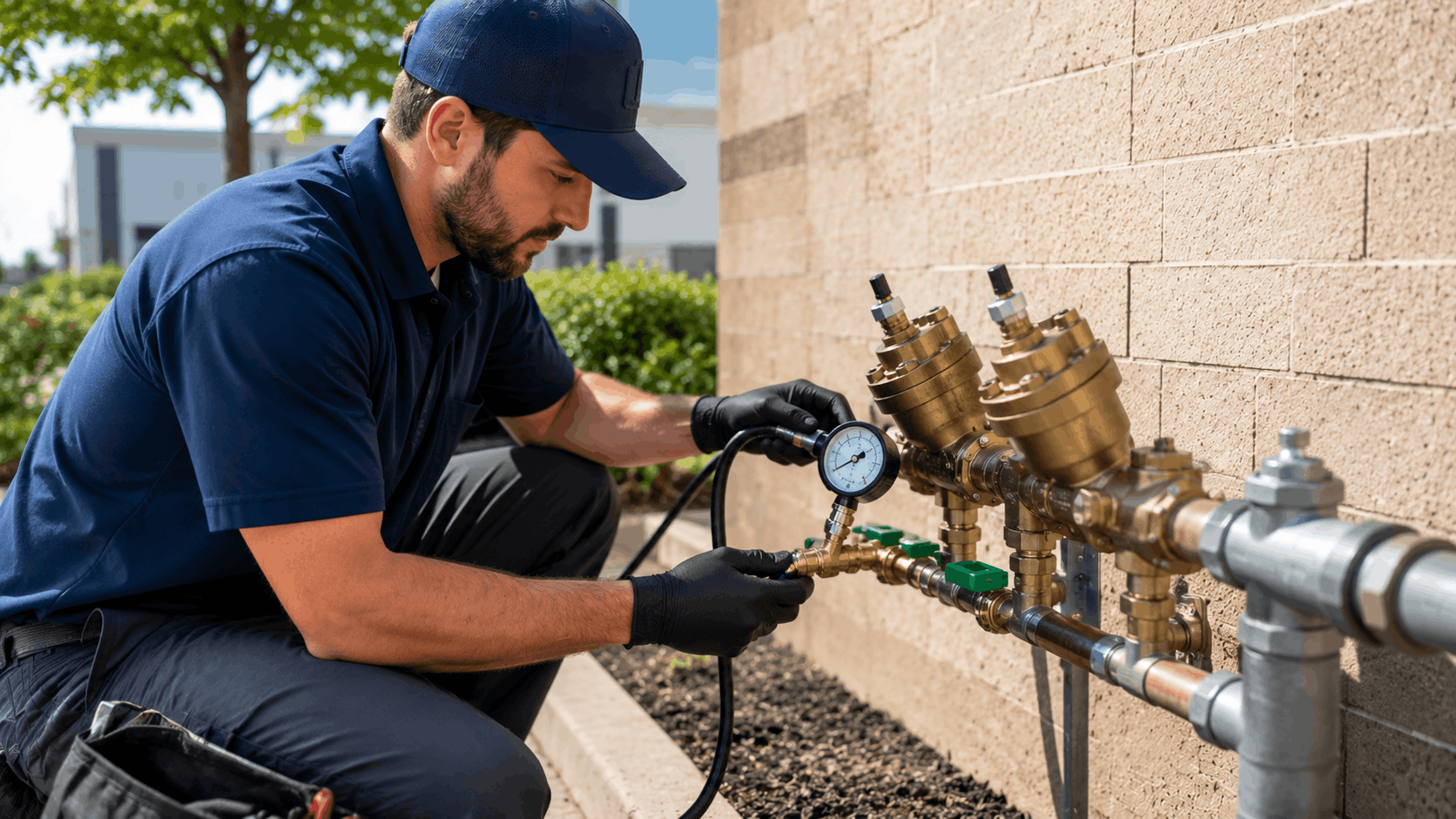
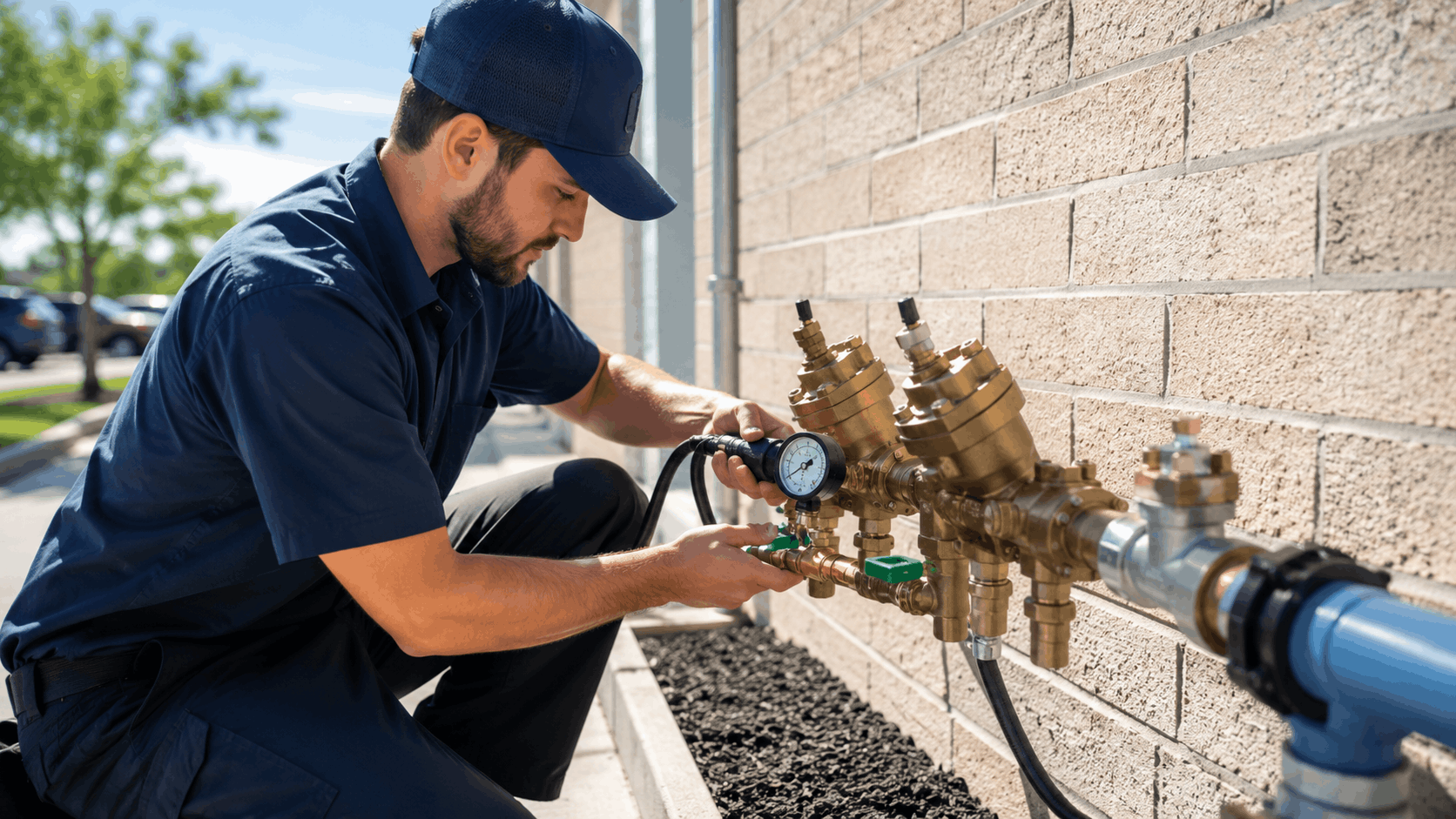
When an Active Plumbing tester arrives at a property, the backflow test steps follow a standard procedure:
- The tester locates the backflow device and verifies the serial number matches the water district records
- The downstream shutoff valve is closed to isolate the device
- A differential pressure gauge kit is attached to the test cocks on the assembly
- Each check valve is tested individually to verify it holds the required minimum pressure differential
- On RPZ devices, the relief valve opening point is recorded
- The tester removes the gauge kit, reopens the valves, and checks for leaks
- Results are recorded on the official test form
The backflow test duration is typically 15 to 30 minutes per device. Water will be temporarily shut off to the downstream side during testing, so occupants may notice a brief interruption. For properties with concerns about water interruptions, our emergency plumbing team can coordinate timing to minimize disruption.
What Certified Testers Look For
A backflow test is pass or fail. There is no gray area. The tester measures specific pressure differentials and compares them against minimum standards. For a double check valve, each check must hold at least 1.0 PSI. For an RPZ, the relief valve must open before the pressure differential drops below 2.0 PSI.
Active Plumbing's testers carry ABPA certification (American Backflow Prevention Association), which is one of the approved credentials Clark County accepts. The ABPA sets the standard for tester qualifications nationwide. Every tester must also be registered with the local water purveyor before their test reports will be accepted.
If a device fails, the tester documents exactly which component failed and what repair is needed. Active Plumbing carries common repair parts on every truck so that most repairs can happen on the spot.
Need Help in Las Vegas?
Active Plumbing serves Las Vegas and all of Las Vegas Valley.
Annual Backflow Testing in Las Vegas NV: How the Local Cycle Works
Backflow prevention in the Las Vegas Valley is run by the water provider, not by the city building department or the Southern Nevada Health District. The Las Vegas Valley Water District's backflow prevention program requires assemblies on commercial buildings, multifamily properties and irrigation systems, and other valley water providers run their own programs. If your property has an assembly on file, the provider tracks it and expects a passing test on record each year.
Under the Southern Nevada Amendments to the Uniform Plumbing Code, a backflow assembly is tested by a certified tester when it is installed, repaired or relocated, and at least annually after that. The tester checks that the check valves and relief valve hold as designed, records the results, and leaves the certification on site. The yearly date usually follows the anniversary of the last passing test, so keeping your own copy of each report makes the next cycle easier. Assemblies on irrigation lines sit outdoors in intense heat and sun, so worn seals and cracked parts can turn a routine test into a repair.
Backflow preventer testing typically runs $50 to $100 in the Las Vegas Valley, and backflow device installation typically runs $300 to $600. Those are typical ranges, not a quote, and Active Plumbing gives a written price before work starts. If your provider has sent a testing notice, call (702) 438-3357 and we can arrange the test and handle any repair it turns up.
Penalties for Missing Your Backflow Testing Deadline in Clark County
Missing a backflow testing deadline in Clark County is not a minor issue. The consequences are real and can be costly. Water purveyors have the authority to enforce compliance, and they use that authority regularly. This is not about scare tactics - it is about the facts of how the system works.
Fines, Water Shutoff, and Escalation Timelines
The enforcement process follows a predictable escalation. After the initial testing notice, a property owner who does not respond will receive a second warning - usually within 30 days. After that, the water provider sends a final notice with a firm deadline. If the property remains non-compliant, LVVWD and other providers can and do shut off water service.
Water shutoff for non-compliance is the most severe action, but it happens more often than people think. Reinstatement requires completing the overdue test, paying any outstanding backflow testing fines in Las Vegas (which can range from $50 to several hundred dollars depending on the jurisdiction), and covering the reconnection fee. LVVWD enforcement is consistent - they do not make exceptions simply because a property owner forgot.
Liability Risks for Property Owners and Managers
Beyond fines and shutoffs, there is a legal liability component. If a backflow incident on a property contaminates the public water supply, the property owner can be held financially responsible for cleanup costs, public health response, and damages to neighboring properties.
This backflow contamination liability applies to business owners, landlords, and HOA boards throughout Clark County. A commercial property owner on the Strip whose backflow device fails and allows chemical backflow into the municipal system could face six-figure liability. Landlords who manage rental properties are responsible for testing even if the tenant occupies the space. Staying current on testing is far less expensive than dealing with the aftermath of a contamination event.
How to Schedule Backflow Testing With a Certified Tester in Las Vegas
Scheduling a backflow test should not be complicated. The process works best when the property owner partners with a qualified testing company that handles everything from appointment scheduling to paperwork filing. Here is what to look for and what to expect on pricing.
What to Look for in a Backflow Testing Company
Not every plumber is a certified backflow tester. When choosing a backflow testing company in Las Vegas, property owners should verify three things. First, confirm the tester holds a current certification from an approved program like ABPA or the USC Foundation for Cross-Connection Control. Second, ask whether the company submits test reports directly to LVVWD or the applicable water district - this saves the property owner from having to handle paperwork. Third, verify the company carries proper insurance.
Active Plumbing handles all backflow report filing on behalf of clients. After every test, the completed report goes directly to the water authority so the property owner does not have to chase down compliance confirmation.
Typical Costs and What Affects Pricing
Backflow testing cost in Las Vegas varies based on several factors. For a single residential device, property owners can expect to pay in the range of $50 to $150 depending on the company and the device type. Commercial backflow testing rates for properties with multiple assemblies typically range from $35 to $100 per device, with volume discounts available.
Factors that affect pricing include the number of devices, the accessibility of each device (buried valve boxes are more time-consuming than above-ground assemblies), and whether repairs are needed. Active Plumbing provides a written price before work begins.
How Active Plumbing Manages the Process for Local Clients
Active Plumbing's approach to backflow service removes the burden from the property owner entirely. The team tracks testing dates for every registered device, sends reminders before deadlines arrive, performs the test on schedule, handles any needed repairs on the spot, and submits all paperwork to the appropriate water authority.
This backflow testing service covers the full Active Plumbing service area - Las Vegas, Henderson, North Las Vegas, Enterprise, and surrounding Clark County communities. For property managers with locations spread across the valley, having one company manage every device on every property means nothing falls through the cracks.
Need Help in Las Vegas?
Active Plumbing serves Las Vegas and all of Las Vegas Valley.
Common Backflow Preventer Repairs and Replacements in the Las Vegas Climate
The Las Vegas desert is brutal on plumbing components, and backflow preventers are no exception. Active Plumbing encounters the same repair issues repeatedly across the valley - and nearly all of them trace back to the extreme heat and the hardest water in the country.
Hard Water and Mineral Buildup Problems
Las Vegas water comes from Lake Mead and is among the hardest municipal water supplies in the United States. Calcium and mineral deposits accumulate inside backflow devices over time, causing check valves to stick open and relief valves to clog. When a check valve cannot close fully, the device fails its annual test.
Active Plumbing sees this constantly on older devices in neighborhoods like Paradise, Winchester, and the older parts of Spring Valley where the plumbing infrastructure dates back to the 1980s and 1990s. Mineral buildup is the number one reason devices fail testing in this market. Property owners who invest in water softener installation can reduce mineral damage to their entire plumbing system, but the backflow device itself still needs regular attention.
Heat and Sun Damage to Outdoor Devices
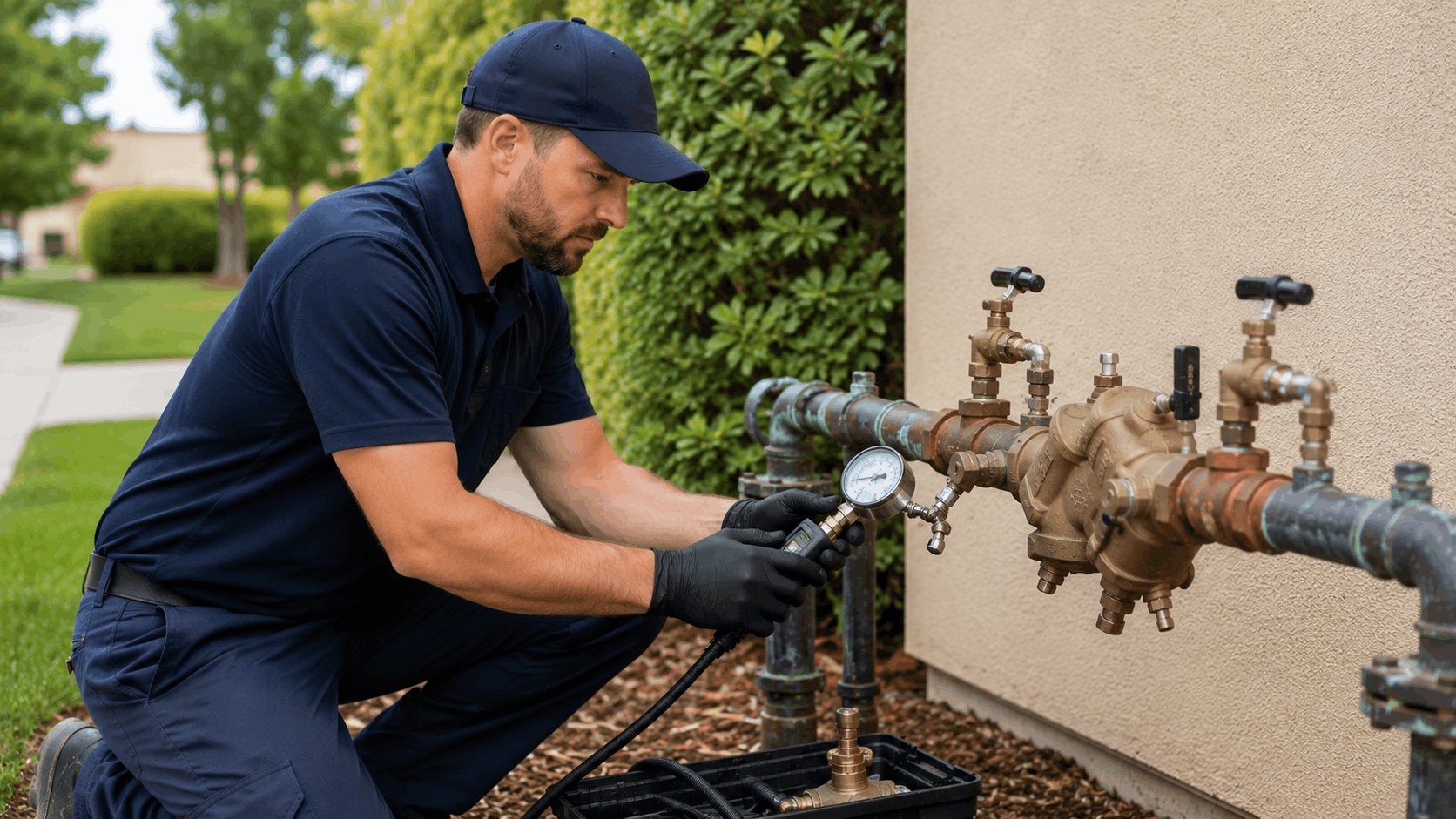
Above-ground RPZ assemblies and PVBs installed on south-facing or west-facing walls bake in direct sun for months. When surface temperatures on an exposed pipe reach 160 degrees or higher, the rubber seals and gaskets inside the device degrade much more quickly than they would in a cooler climate.
Active Plumbing recommends protective covers and insulation jackets for exposed backflow devices. These simple additions can extend the life of internal components by years. Properties in open areas - new construction zones near Mountain's Edge or commercial pads along the 215 Beltway - are especially vulnerable because there is no shade from surrounding structures.
More frequent inspections - every six months instead of annually - make sense for devices in full sun exposure. Catching a deteriorating seal before it causes a test failure saves the property owner the cost of an emergency repair and retest.
Final Thoughts
Backflow prevention testing in Clark County is a straightforward requirement with a clear schedule, but it catches too many property owners off guard every year. Annual testing is not optional - it is a legal obligation tied to protecting the public water supply that every Las Vegas valley resident depends on.
Active Plumbing handles backflow testing, repairs, and compliance paperwork for residential and commercial properties across Las Vegas, Henderson, North Las Vegas, and all of Clark County. Instead of scrambling when a notice arrives in the mail, property owners can call Active Plumbing to set up a testing schedule that runs on autopilot. Reach out through the Active Plumbing contact page or call directly to get on the schedule before the next deadline arrives.
Frequently Asked Questions
- How often do I need to test my backflow preventer in Clark County?
- Annual testing is required for all testable backflow prevention assemblies in Clark County. The due date is based on the anniversary of installation or the date assigned by the local water provider. Missing the annual window puts the property at risk of enforcement action, including fines and potential water service disconnection. Active Plumbing sends reminders so clients never miss their annual backflow test deadline.
- Who is allowed to perform backflow testing in Las Vegas?
- Only certified backflow assembly testers can perform the annual test in Las Vegas. The tester must hold a valid certification from an approved program such as ABPA or the USC Foundation for Cross-Connection Control and Hydraulic Research. The tester must also be registered with the local water purveyor - LVVWD, Henderson Water Utility, or North Las Vegas Utilities - before their reports are accepted as valid compliance documentation.
- How much does a backflow test cost in the Las Vegas area?
- A single residential backflow device test in Las Vegas typically costs between $50 and $150. Commercial properties with multiple assemblies may see per-device rates between $35 and $100, depending on volume. Repairs, if the device fails, are an additional cost. Active Plumbing provides a written price before work begins.
- What happens if my backflow device fails the test?
- If a backflow device fails testing, it must be repaired and retested before the compliance deadline. Common failures include stuck check valves and worn relief valve seals. Active Plumbing carries common repair parts on every service truck and can typically perform repairs on-site the same day. A passing retest report must be submitted to the water authority to clear the compliance requirement.
- Can my water really get shut off for not testing my backflow preventer?
- Yes. The Las Vegas Valley Water District and other local providers have the legal authority to disconnect water service to non-compliant properties. They typically send multiple warning notices before taking action, but service termination does happen regularly. Reconnection requires completing the overdue test, paying any accumulated fines, and covering a reconnection fee. The process is far more expensive than simply scheduling the annual test on time.
- Do homeowners in Summerlin and Henderson need backflow testing?
- If a property in Summerlin or Henderson has a backflow preventer installed - which is common on irrigation systems in master-planned communities - then annual testing is required. Many homeowners are unaware they have a testable device, often located near the water meter or in a valve box in the front yard. Checking with the local water provider or calling Active Plumbing for a property assessment can clarify whether a device exists and needs testing.
- Who files the backflow test report with the water district?
- The certified tester is responsible for submitting the completed test report to the appropriate water purveyor. Active Plumbing files all reports directly with LVVWD, Henderson Water Utility, or the relevant authority within the required timeframe after each test. Property owners receive a copy of the report for their records, and Active Plumbing confirms that the filing has been accepted by the water district.
- How long does a backflow prevention test take?
- A single backflow device test usually takes 15 to 30 minutes to complete. Properties with multiple assemblies - like restaurants, large commercial buildings, or HOA-managed communities - require more time. Active Plumbing schedules enough time at each appointment to handle any issues discovered during testing, including minor repairs, so that the property reaches compliance in a single visit whenever possible.
- Is backflow testing required for new construction in Clark County?
- Yes. All new construction in Clark County must have approved backflow prevention devices installed and tested within 10 days of installation. This test must pass before final building inspection approval. This requirement applies to new homes in growing areas like the southwest valley near Mountain's Edge and new commercial developments along the 215 Beltway. Active Plumbing works with builders and general contractors to meet this 10-day window.
- Can I test my own backflow preventer to save money?
- No. Clark County requires that only a certified backflow assembly tester perform the annual test using calibrated equipment. DIY testing is not accepted by any water district in the valley, and self-generated results cannot be submitted as a valid compliance report. The certification requirement exists because improper testing could give a false passing result and leave the public water supply unprotected.
Licensed plumbing professionals serving Las Vegas and Las Vegas Valley.
Licensed in Nevada · License #0047021
Last updated on
Why trust Active Plumbing?
Founded in 1991, Active Plumbing is a licensed and insured plumber serving Las Vegas and Las Vegas Valley. All content is reviewed by our licensed technicians.

Need Help in Las Vegas?
Active Plumbing serves Las Vegas and all of Las Vegas Valley.
Related Articles
How Henderson Homeowners Can Prevent Slab Leaks in Desert Soil
Henderson's desert soil, hard water, and high pressure make slab leaks more common here. Learn prevention tips, warning signs, and what repair costs to expect.
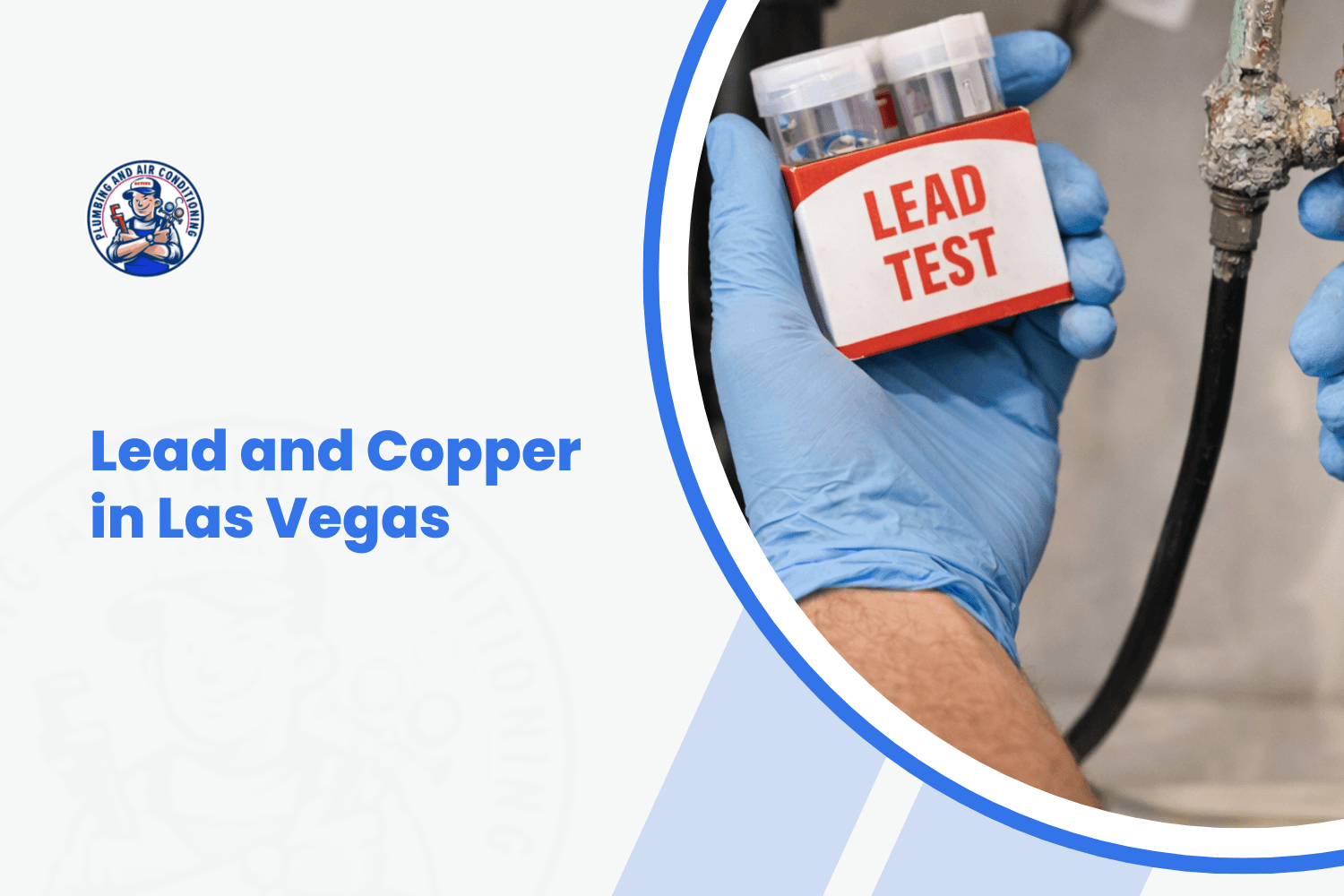
Lead and Copper in Las Vegas Tap Water: Should You Test Your Home?
Las Vegas homes built before 1990 may have lead solder or corroded copper pipes affecting tap water quality. Learn how to test, interpret results, and fix the problem.
Why Las Vegas Homes Built Before 1990 Need a Full Plumbing Inspection
Las Vegas homes built before 1990 face unique plumbing challenges from aging materials, desert conditions, and outdated construction practices that can lead to catastrophic failures.