How-To Guides
How to Choose Between Trenchless and Traditional Sewer Repair in Las Vegas
Key Takeaways
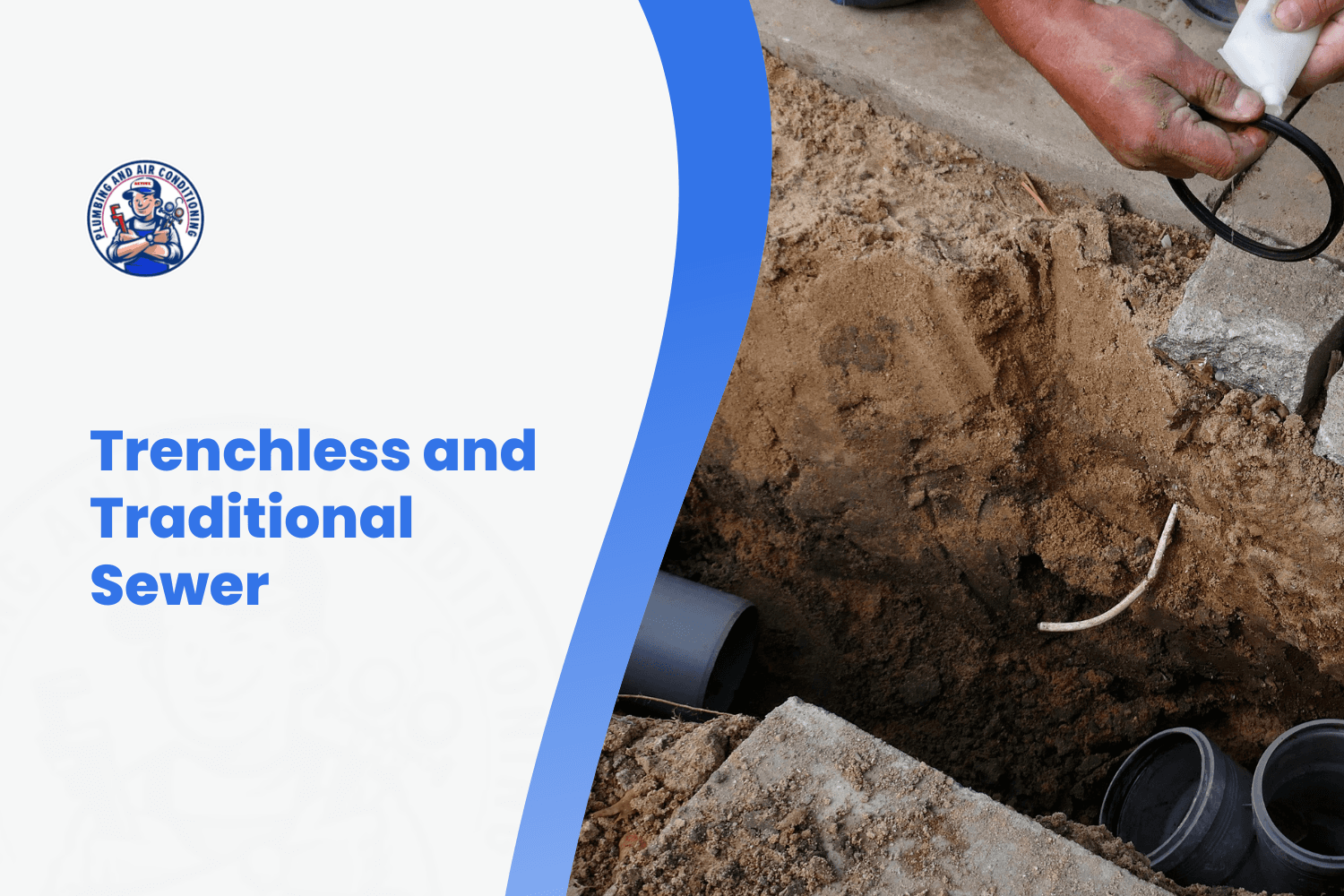
- Trenchless repair uses small access points to line or burst pipes, while traditional repair digs an open trench to replace the line.
- Las Vegas caliche soil makes digging harder and costlier, often favoring trenchless methods on rocky lots.
- Traditional repair runs $4,000-$15,000+ and trenchless $6,000-$14,000, but trenchless often wins on total cost after restoration.
- Trenchless fits lines under driveways, pools, and HOA-regulated yards, plus cracked pipes that still hold their shape.
- Traditional digging is required for fully collapsed pipes, severe bellies, rerouting, and hard-to-access lines.
- A sewer camera inspection is the smart first step and determines which repair method is possible.
- Most sewer repairs need a City of Las Vegas or Clark County permit, which a licensed plumber handles.
- Active Plumbing serves Henderson, Spring Valley, Enterprise, and neighborhoods across the valley with honest, written estimates.
In This Article
It usually starts with a gurgle. A homeowner in Huntridge flushes a toilet, and the shower drain bubbles back. A few days later, the whole line backs up and wastewater pools near the cleanout. Now they are standing in the yard staring at their lawn and driveway, wondering whether a crew is about to dig a giant trench through it all.
That is the moment most people first hear the words trenchless and traditional sewer repair. One method digs a trench to reach the pipe. The other fixes the pipe with little to no digging. Both work, but they fit very different situations across the Las Vegas Valley.
The Two Main Sewer Repair Methods Explained
Before comparing price and timing, it helps to know what each method physically involves. The gap between them is bigger than most people expect. One reshapes the yard, and the other barely touches it.
Below is a quick side-by-side look, then a closer explanation of each. Every home we visit for drain and sewer service gets matched to the method that fits the pipe, not the other way around.
| Feature | Traditional Sewer Repair | Trenchless Sewer Repair |
|---|---|---|
| Digging | Full open trench along the pipe | One or two small access pits |
| Yard impact | Heavy - landscaping torn up | Light - most surfaces stay intact |
| Typical timeline | 2 to 5 days or more | 1 to 2 days |
| Best for | Collapsed, bellied, or rerouted lines | Cracked or lined-in-place pipes |
What Traditional Sewer Repair Involves
Traditional sewer repair is the dig-and-replace method most people picture. A crew locates the damaged pipe, then uses an excavator or hand tools to open a trench down to it. In much of Las Vegas, that trench runs from a few feet deep to well over six feet.
Once the pipe is exposed, the crew removes the broken section and installs new pipe. This full pipe replacement lets them check the whole run, correct slope problems, and swap out old fittings. It is a direct, proven approach that has fixed sewer lines for decades.
The tradeoff is surface damage. Excavation tears through grass, gravel, pavers, and sometimes concrete. On a typical valley lot, that trench can cut straight across a front yard or driveway, which means restoration work after the pipe is fixed.
Traditional repair still shines when the damage is severe or the layout needs changing. It gives our team full access and full control over what goes back in the ground.
How Trenchless Sewer Repair Works
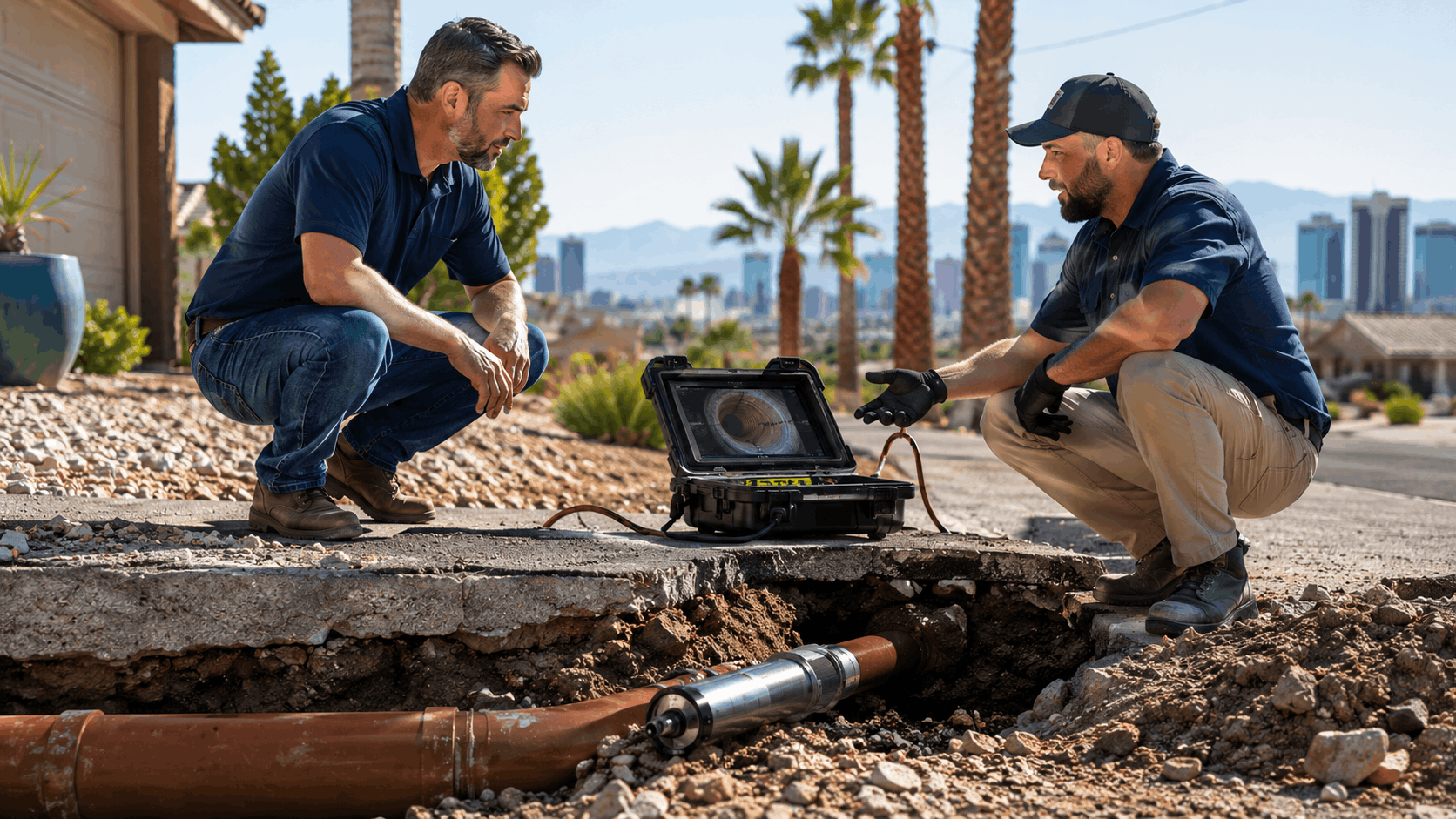
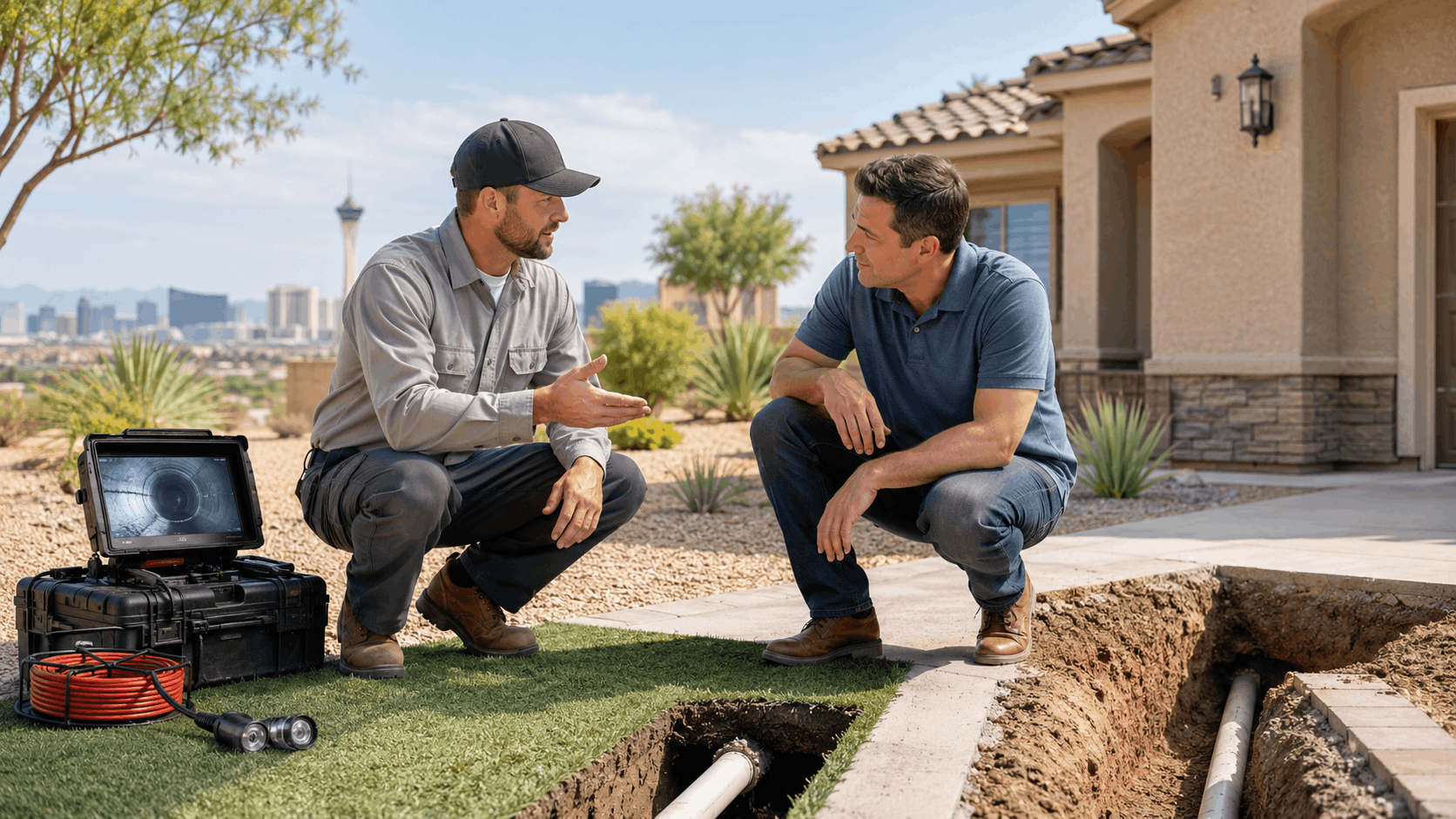
Trenchless sewer repair fixes the pipe with little or no digging. Instead of a long trench, our team uses one or two small access points to reach the line. From there, two main methods do the work.
The first is pipe lining, sometimes called cured-in-place pipe. A resin-soaked liner is pulled or inflated inside the old pipe, then hardened into a new pipe within the old one. It seals cracks and blocks roots without removing the original line.
The second is pipe bursting. A cone-shaped head is pulled through the old pipe, breaking it outward while dragging new pipe into place behind it. This no-dig repair replaces the line entirely without opening a full trench.
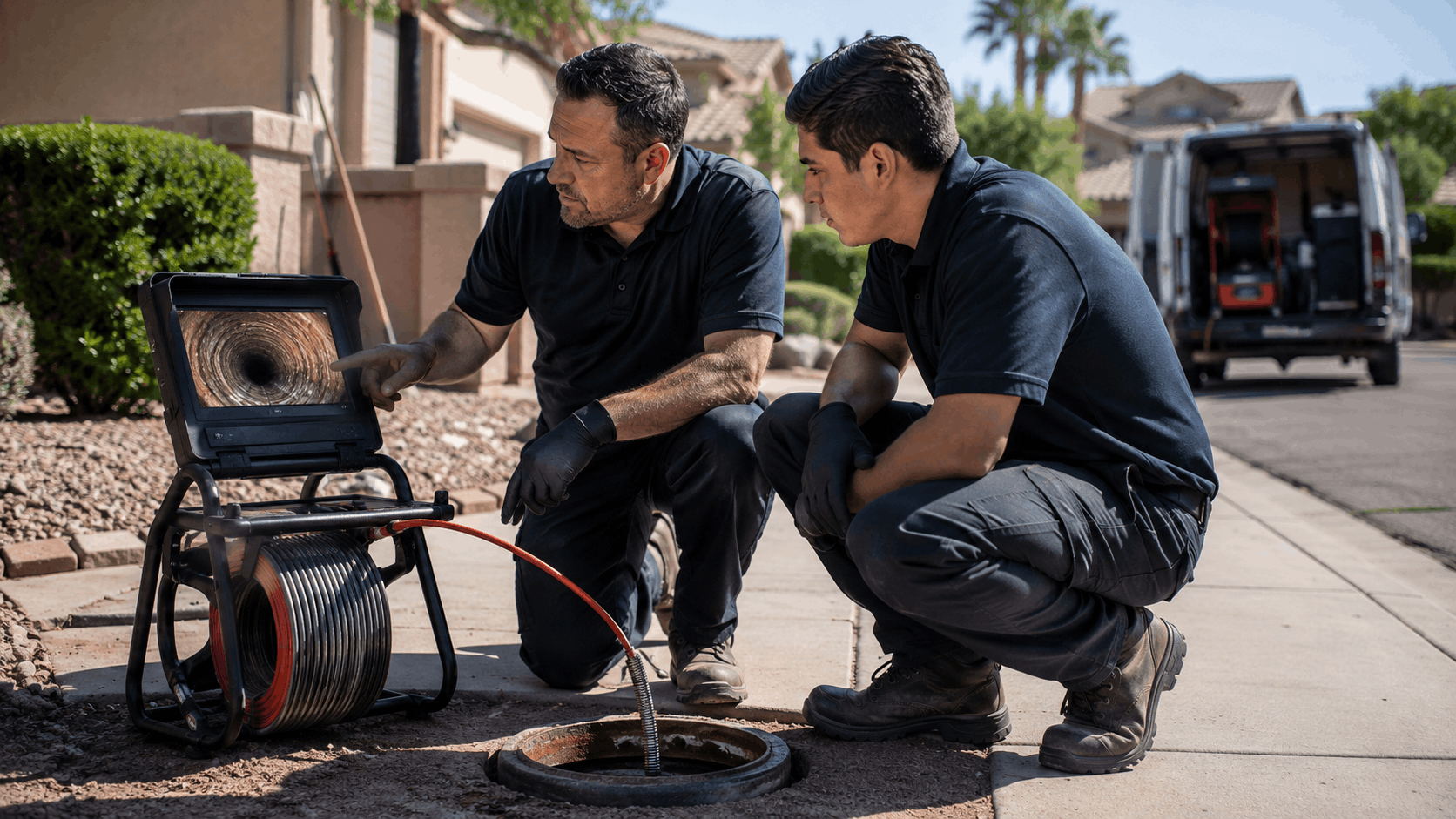
Both methods rely on a careful sewer camera inspection first. The camera confirms the pipe can handle lining or bursting before any equipment goes in the ground.
Why Both Methods Still Have a Place in Las Vegas
Neither method wins every time. The right sewer line option depends on the pipe's condition, its depth, and what sits above it. A cracked pipe under a pool deck is a trenchless candidate. A fully collapsed line under bare gravel might be faster to dig.
Las Vegas homes vary widely, from 1950s bungalows near downtown to newer builds on the edge of the valley. That range means both methods stay useful. Older clay lines often line beautifully, while badly sagged pipes usually need open-trench work.
Our job is to look at each situation honestly rather than push one method. Some companies only offer digging or only offer trenchless, so their advice bends toward what they sell. We keep both tools available so the recommendation stays about the pipe.
Get Your Quote
Tell us what's going on and we'll get back to you fast.
How Local Soil and Climate Affect Your Choice
Las Vegas ground is not like ground in wetter parts of the country. The desert plumbing conditions here change the math on digging. Hard soil, hidden rock layers, and brutal heat all push the decision one way or another.
Homeowners across the Las Vegas Valley run into these same ground realities. Knowing them ahead of time helps set fair expectations on cost and time.
Dealing With Hard Caliche and Rocky Ground
Much of the valley sits over caliche, a rock-hard layer of calcium carbonate cemented into the soil. Caliche can be inches thick or several feet thick, and it does not dig like normal dirt. It often needs heavy equipment, jackhammers, or rock saws to break through.
That hard soil excavation drives up traditional repair costs and time. A trench that would take a morning in soft earth can stretch into days when caliche blocks the path. Every extra hour of machine work and labor shows up on the final bill.
Trenchless methods sidestep much of this. Since lining and bursting work inside the existing pipe path, crews avoid tearing through deep caliche across the whole run. On caliche-heavy lots, that difference alone can decide the method.
We see this constantly on older properties where the original line was set before the caliche layer was fully mapped. When the rock is thick, no-dig repair often becomes the practical choice.
Older Pipes in Established Neighborhoods
Established areas like Huntridge, John S. Park, and the Historic Westside carry some of the oldest sewer lines in the city. Many homes there still run on clay sewer lines or cast iron pipes installed decades ago. These materials crack, corrode, and invite root intrusion over time.
Clay pipe joints separate as the ground shifts, letting roots sneak in and block flow. Cast iron rusts from the inside, narrowing the pipe until backups become routine. Homeowners in these neighborhoods often deal with slow drains long before a full failure.
The good news is that many of these older lines are strong candidates for lining. If the pipe holds its shape, a liner can seal it from the inside and add decades of life. That spares mature trees and original landscaping common in historic districts.
When a line has fully broken down, though, replacement becomes the answer. Our team checks the pipe with a camera before deciding, since two homes on the same street can need very different fixes.
Newer Builds in Summerlin and Southern Highlands
Newer developments like Summerlin and Southern Highlands tell a different story. These homes usually run PVC pipes, which resist rust and handle roots better than clay or cast iron. Failures here often come from ground movement or installation issues rather than age.
PVC lines can still crack, shift, or belly if the soil under them settles unevenly. When they do, the smooth interior and predictable layout of PVC often make trenchless methods a clean fit. Lining bonds well inside PVC, and bursting pulls new pipe cleanly.
Layout matters too. Newer lots often place sewer lines under decorative hardscape, pools, or tightly regulated landscaping. Digging through those features gets expensive fast, which nudges the choice toward no-dig work.
We work throughout these master-planned communities, including quieter pockets like Summerlin Mountain Trails, where preserving the finished yard is a top concern for owners.
Extreme Heat and Ground Movement
Desert heat does more than make summer miserable. Ground temperatures swing hard between seasons, and dry soil shrinks and expands as it dries out and gets watered. That constant movement stresses pipes and joints over the years.
Ground shifting around foundations is a common source of pipe cracks in the valley. When the earth moves, rigid pipe can snap or pull apart at a joint. Homeowners sometimes notice new backups after a long, hot summer for exactly this reason.
Heat also affects the repair work itself. Crews digging open trenches in July face triple-digit temperatures, which slows labor and raises safety concerns. Shorter trenchless jobs cut that exposure down considerably.
When we plan a repair, we factor in how the surrounding soil behaves. Fixing the pipe without addressing why it cracked can lead to a repeat problem, so we look at the whole picture.
Need Help in Las Vegas?
Active Plumbing serves Las Vegas and all of Las Vegas Valley.
Comparing the Costs of Each Method
Cost is usually the first question homeowners ask, and it deserves a straight answer. Sewer repair cost in Las Vegas depends on pipe length, depth, soil, and what sits above the line. Both methods have a range, and the cheapest option upfront is not always cheapest overall.
Here is a general look at Las Vegas pricing before the details. These are typical ranges, not quotes, since every property differs.
| Cost Factor | Traditional Repair | Trenchless Repair |
|---|---|---|
| Typical range | $4,000 - $15,000+ | $6,000 - $14,000 |
| Restoration costs | High - yard and hardscape | Low - minimal surface work |
| Cost driver | Depth, trench length, caliche | Pipe length, access points |
| Long-term value | Good with full replacement | Strong - long pipe lifespan |
Upfront Price Ranges for Both Options
For budget planning, traditional repair often runs between $4,000 and $15,000 or more. Shorter, shallow lines fall on the low end, while deep lines through caliche push toward the top. Rerouting or full replacement of a long run climbs higher still.
Trenchless repair pricing usually lands between $6,000 and $14,000. Pipe lining and pipe bursting carry higher equipment and material costs per foot, so the starting price is often higher than a simple dig. The gap narrows once digging conditions get tough.
The trench length and depth move the traditional number the most. A 40-foot line at four feet deep costs far less to dig than a 90-foot line at seven feet through rock. Trenchless pricing leans more on total pipe length than on depth.
Every home is different, so these ranges only set a starting point. A camera inspection and measurement give the real figure for a specific line.
Hidden Costs of Digging Up Your Property
The trench price is only part of the traditional story. After the pipe is fixed, the surface still has to be put back. Landscaping restoration, sod, gravel, and plants all add to the total.
Driveway repair is a bigger hit. If the line runs under concrete or pavers, that surface must be cut, removed, and rebuilt. Replacing a section of driveway or a paver walkway can add thousands on top of the pipe work.
Backyard features raise the stakes even more. Pool decks, retaining walls, and outdoor kitchens are costly to tear out and rebuild. A line running under these is exactly where hidden costs pile up fast.
These restoration expenses often surprise homeowners who only budgeted for the pipe itself. When we quote a traditional job, we spell out the surface work so there are no shocks later.
When Trenchless Saves Money Long Term
Trenchless can cost more per foot yet still come out cheaper overall. Because it leaves most surfaces intact, there is little to no restoration bill. On a lot with pools, pavers, or mature desert landscaping, that saved restoration often covers the price difference.
Pipe lifespan adds to the long-term savings. A quality cured-in-place liner is rated to last 50 years, and new bursting pipe carries similar longevity. That means one repair rather than repeated patch jobs on a failing old line.
There is also value in avoiding disruption. Less time without a working sewer, less mess, and no torn-up yard all carry real worth even if they never show on an invoice. For many owners, that tips the scale.
We walk homeowners through both the upfront and long-term numbers. The goal is a clear comparison so the choice is based on total value, not just the first line of the estimate.
Timeline and Disruption to Your Home
A backed-up sewer is not something families can wait weeks to fix. How long the repair takes, and how much it upends daily life, matters as much as the price. The two methods differ sharply here.
Knowing what to expect helps homeowners plan for water use, parking, and access while the work happens.
How Many Days Each Method Takes
Trenchless jobs are usually the faster option. Many lining and bursting projects wrap up in one to two days from start to finish. The short repair duration comes from skipping the long dig and the surface rebuild.
Traditional excavation runs longer. A straightforward trench might take two to three days, while deep lines, caliche, or long runs stretch the project length to a week. Restoration afterward adds even more time before the yard looks normal again.
Weather plays a part too. Summer heat forces crews to work carefully during open-trench jobs, which can slow progress. Trenchless work involves less exposed labor, so heat has less effect on the schedule.
These are general windows, and the camera inspection helps pin down a real timeline. Once we see the pipe, we can give a firm estimate of days rather than a rough guess.
Protecting Your Yard, Trees, and Driveway
Desert landscaping is an investment that takes years to mature. Established cacti, agave, and shade trees are hard to replace, and gravel designs and pavers are expensive to redo. Trenchless work keeps almost all of that intact.
Traditional digging cannot make the same promise. A trench cuts through whatever sits above the pipe, including root systems and hardscape. Mature plants in the trench path often do not survive the process.
Driveways and walkways face the same risk with open-trench work. Where a line runs under concrete, that concrete comes out. Trenchless access pits are small and usually placed to avoid the most valuable surfaces.
For homeowners who spent heavily on their yard, this difference alone often decides the method. Preserving the landscape is a real benefit, not just a convenience.
Living in the Home During the Work
Most families can stay in the home during either type of repair. The main issue is water use, since running water down a sewer under repair is not allowed. Crews schedule the actual repair window so water shutoff time stays short.
During a trenchless job, that shutoff is usually brief, often just part of one day. Traditional work may require more limited water access over several days while the trench is open. Planning around that keeps the household comfortable.
Home access is the other factor. Open trenches can block driveways and walkways, so parking and foot traffic may shift for a few days. Trenchless access pits are smaller and cause far less blockage.
For urgent failures, our emergency plumbing team can get water flowing safely as quickly as possible. We aim to keep daily life as normal as the situation allows.
When Trenchless Repair Is the Right Call
Trenchless is not magic, but in the right situation it is clearly the smarter move. The no-dig repair method fits several common valley scenarios where digging would be costly or destructive.
Here are the situations where trenchless benefits stand out most:
- Pipes under driveways, patios, or pool decks where digging means costly demolition
- Cracked pipes or lines with small root damage that still hold their shape
- HOA yards with strict rules that make tearing up landscaping a headache
- Lots with mature desert landscaping that would be expensive to replace
- Homes where fast turnaround matters more than the lowest upfront price
Lines Under Driveways, Patios, and Pools
Backyard pools and finished patios are everywhere in the valley. When a sewer line runs beneath a pool deck or a stamped concrete patio, digging becomes a major project on its own. Sewer lining or bursting reaches the pipe without touching that surface.
A pipe under a driveway is another classic case. Cutting and rebuilding concrete adds cost and time, and the patch rarely matches the original. Trenchless access from either end avoids the cut entirely.
These hardscape situations are where trenchless pays for itself most clearly. The saved demolition and rebuild often equal or beat the higher per-foot price. It is one of the first things we check when scoping a job.
For homes with expensive outdoor features, protecting that investment is a strong reason to choose no-dig repair.
Pipes With Cracks or Small Root Damage
Not every damaged pipe is a lost cause. A line with cracks, minor offsets, or early root intrusion often keeps enough shape to accept a liner. In that case, lining seals the damage and blocks roots from returning.
This works especially well on older clay lines where roots have found the joints. Once the interior is cleaned, usually with hydro jetting and rooter service, the liner goes in and forms a smooth, seamless pipe. Roots cannot penetrate the new surface.
The requirement is that the host pipe still holds together. If it has crumbled or collapsed, there is nothing to line against. That is why the camera inspection comes first.
When the pipe qualifies, lining is a fast, clean fix that adds decades of service. It turns a recurring root problem into a solved one.
HOA Communities With Strict Landscape Rules
Master-planned communities like Summerlin come with HOA rules that govern landscaping down to the plant type. Tearing up a regulated front yard for a trench can trigger approval headaches and required restoration to strict standards. Trenchless work avoids most of that.
Because the surface stays intact, there is far less to restore and fewer landscape rules to worry about. Homeowners keep their approved design without a lengthy re-approval process. That saves both time and frustration.
We work throughout HOA neighborhoods, from The Trails in Summerlin to newer villages across the valley. Owners there consistently appreciate that trenchless keeps their yards within the rules.
For anyone in a strict HOA, the reduced restoration and paperwork make no-dig repair an easy preference when the pipe allows it.
Need Help in Las Vegas?
Active Plumbing serves Las Vegas and all of Las Vegas Valley.
When Traditional Repair Makes More Sense
Trenchless gets a lot of attention, but digging is still the right answer in plenty of cases. Some pipe problems simply cannot be fixed from the inside. Knowing these situations helps homeowners avoid paying for a trenchless attempt that will not work.
Traditional repair remains the practical route in several scenarios found across Las Vegas.
Fully Collapsed or Severely Bellied Lines
A collapsed sewer line has lost its shape entirely. There is no intact pipe to line against, so a liner has nothing to grip. In these cases, the line has to be dug up and replaced.
A severe pipe belly is the other dealbreaker. When a section of pipe sags, waste and water pool in the low spot instead of flowing away. Lining that pipe would just create a smooth, sagging pipe with the same drainage problem.
Fixing a belly means correcting the slope, which requires exposing and resetting the pipe. Only open-trench work can restore proper grade. Trenchless cannot regrade a line.
These conditions show up in both old and newer homes when soil settles unevenly. When we find a collapse or a bad belly on camera, we recommend traditional repair without hesitation.
Rerouting or Adding New Connections
Sometimes the fix is not just repairing the existing path. If a line needs to be moved away from a structure, a tree, or a planned addition, that pipe rerouting calls for digging. Trenchless follows the existing route, so it cannot relocate a line.
Adding new connections works the same way. Tying in a new bathroom, a casita, or an extra fixture branch usually means new fittings at specific points. Open access makes those connections clean and reliable.
Remodels and property additions are common reasons for this work in the valley. Our pipe and fixture services handle these layout changes as part of a larger plumbing plan.
When the goal is changing where pipe goes rather than just fixing what is there, digging is the tool for the job.
Very Deep or Hard-to-Access Lines
Depth and access shape the decision too. Most trenchless work still needs access points at each end of the run. If those points are blocked or the pipe takes sharp turns, threading equipment through becomes difficult or impossible.
Very deep lines can also complicate trenchless setup, though depth usually hurts traditional digging more. In some layouts, a short open dig to reach a stubborn spot is simpler than forcing a no-dig method to work.
Access issues vary by property. A line running under a tight side yard with limited entry may steer the plan toward whichever method the site can actually accommodate.
Our team evaluates access before committing to a method. If trenchless equipment cannot reach the pipe cleanly, digging becomes the honest recommendation.
Permits, Inspections, and Local Requirements
Sewer work is not a free-for-all. The Las Vegas area has permit and inspection rules that protect both the homeowner and the public system. Skipping them can cause problems when selling the home later.
Here is what homeowners should know about the paperwork side of a repair.
City and County Permit Rules
Most sewer repairs require a permit. Whether it comes from the City of Las Vegas or Clark County depends on where the property sits. Homes in unincorporated areas like Enterprise and Paradise fall under Clark County permits, while addresses inside city limits go through the city.
The permit confirms the work meets code and that the new pipe is installed correctly. A licensed plumber pulls the permit and schedules the inspection as part of the job. Homeowners do not have to handle the process alone.
You can review local building and permit information through the Clark County Building and Fire Prevention department. Rules and fees update periodically, so current guidance matters.
Our team manages permits so the repair stays fully compliant. That protects the homeowner if the property is ever inspected or sold.
Working With the Local Water and Sewer District
Sewer repairs sometimes require coordination with local providers. The Las Vegas Valley Water District and the regional sewer district oversee parts of the system that connect to private lines. Where the private line meets the public main matters for scope and timing.
This coordination can affect scheduling. If the work touches the connection to the public system, there may be added steps and approvals. Planning for that keeps the project on track.
Knowing where responsibility shifts from homeowner to district also affects cost. Repairs on the private side are the owner's responsibility, while the district handles the public main.
We help homeowners understand that line of responsibility before work begins. Clear boundaries prevent confusion about who pays for what.
Camera Inspections Before Any Repair
No responsible repair starts without seeing the pipe. A video inspection sends a camera down the line to reveal the exact problem and its location. That footage shapes which method is chosen.
The camera shows whether a pipe is cracked, root-filled, bellied, or collapsed. Those findings decide between lining, bursting, and digging. Guessing without a camera risks choosing the wrong method entirely.
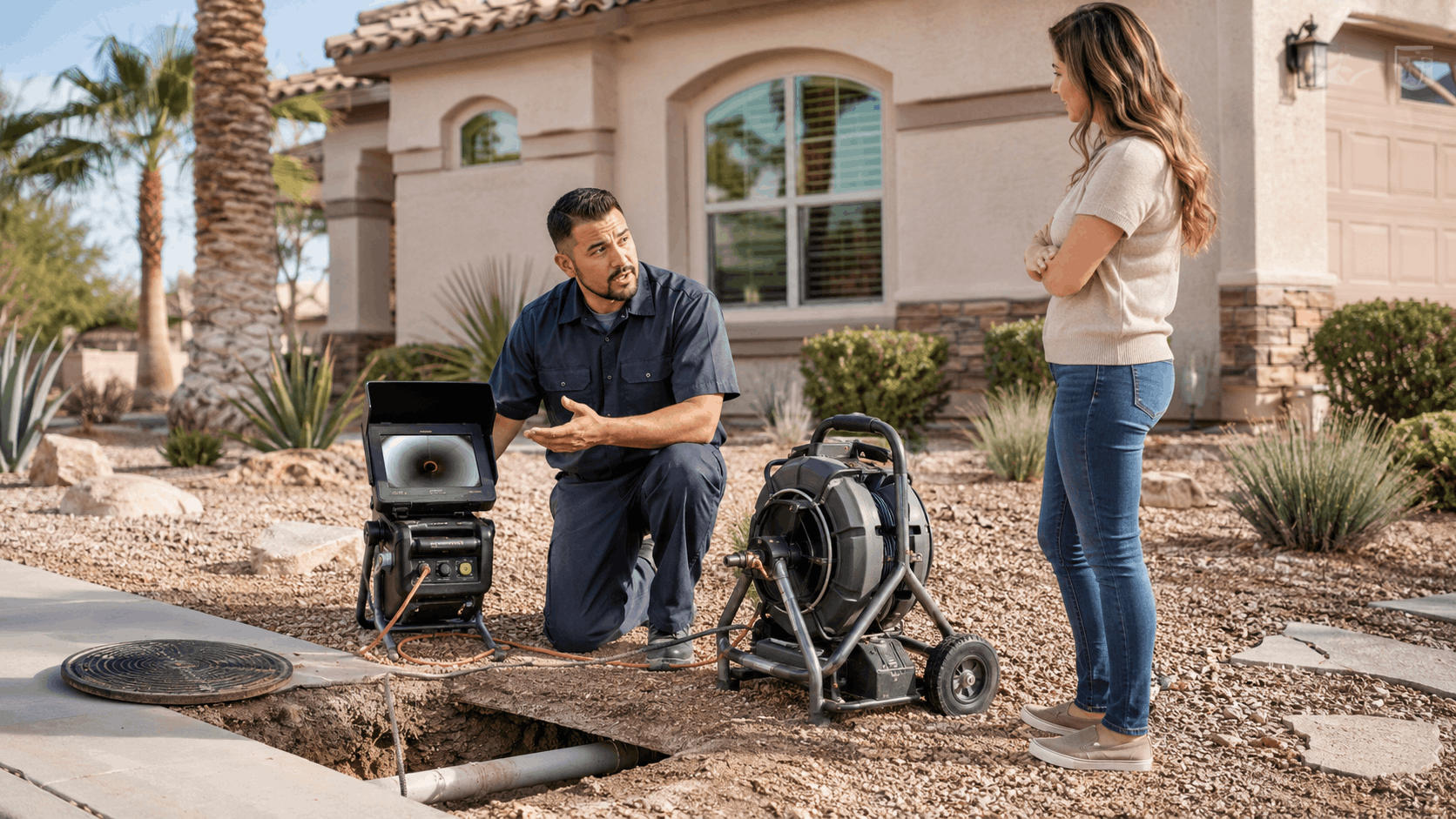
A sewer camera inspection also documents the pipe's condition for the permit and for the homeowner's records. It is the single most useful first step in any sewer decision.
We treat the camera inspection as the foundation of an honest recommendation. What the camera shows drives what we advise.
Need Help in Las Vegas?
Active Plumbing serves Las Vegas and all of Las Vegas Valley.
How Active Plumbing Helps You Decide
Choosing between trenchless and traditional repair is easier with someone who has seen hundreds of valley sewer lines. Our team focuses on matching the method to the pipe, not selling a single approach. That starts with a real look at the problem.
Here is how we guide Las Vegas homeowners through the decision.
On-Site Diagnosis and Honest Recommendations
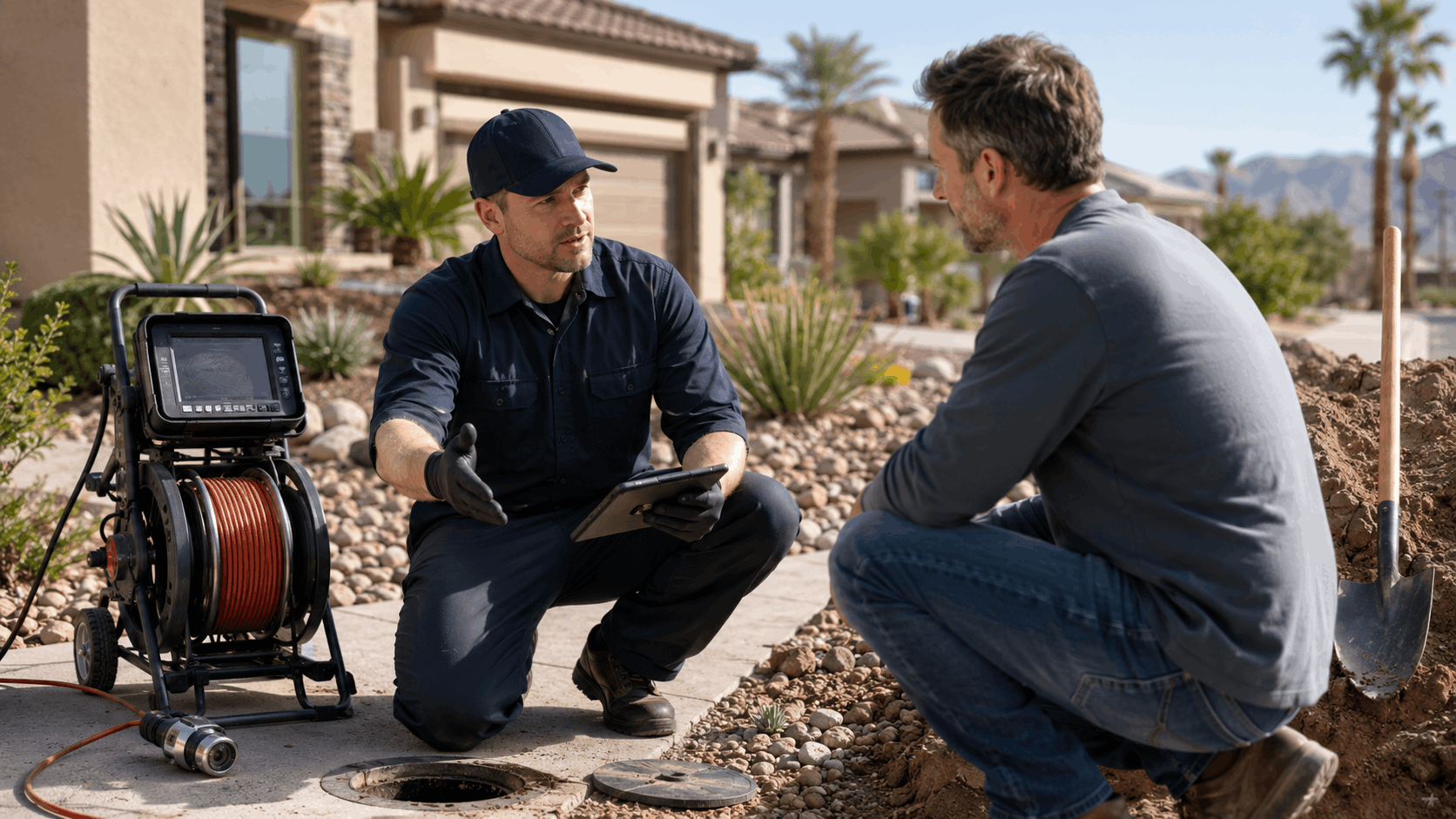
Every job begins with an on-site sewer diagnosis. We run the camera, locate the damage, and measure the line before saying a word about method. That way the recommendation rests on facts, not assumptions.
If a pipe qualifies for lining, we say so. If it is collapsed and needs digging, we say that too. Honest advice sometimes means recommending the less expensive option or explaining why the pricier one will actually last.
We would rather earn trust with a straight answer than push a method that does not fit. Homeowners deserve to know exactly what is wrong and what their real choices are.
That clarity helps people make a confident decision instead of feeling pressured. The pipe and the property set the direction.
Serving Neighborhoods Across the Valley
Our crews work across the entire valley, so we know the local ground and pipe patterns block by block. We regularly handle sewer work in Henderson, Spring Valley, and Enterprise, along with the older neighborhoods closer to downtown.
That local reach means we already know what to expect in many areas. We know where caliche runs thick, where older clay lines are common, and where newer PVC systems dominate. That knowledge speeds up accurate recommendations.
From established districts to master-planned communities, the same team handles the full range of pipe conditions. Local experience turns a guessing game into a clear plan.
Wherever the home sits in the valley, we bring the same honest, hands-on approach to the diagnosis.
Clear Estimates With No Surprises
After the inspection, homeowners get a written estimate that lays out the work in plain terms. When both methods are viable, we price them side by side. That transparent pricing lets people weigh upfront cost against long-term value.
The estimate covers the pipe work, permits, and any restoration so the number is complete. No vague line items or mystery fees appear later. What we quote is what the job runs, barring surprises found once the work opens up.
If something unexpected turns up mid-job, we stop and explain it before continuing. Homeowners stay in control of the decision at every step.
Reach our team through the contact page to schedule a diagnosis and get a clear comparison for a specific line.
Final Thoughts
Trenchless and traditional sewer repair both have a place in Las Vegas. Trenchless shines under driveways, pools, and mature landscaping, and for cracked pipes that still hold shape. Traditional digging wins for collapsed lines, bad bellies, rerouting, and tough access.
The right call depends on the pipe, the soil, and what sits above the line. A camera inspection removes the guesswork and points to the method that fits. Our team is ready to look at any line across the valley and give an honest answer.
If a sewer is backing up or draining slowly, call Active Plumbing for a camera inspection and a clear estimate. We will walk through both options and help choose the repair that protects the home and the budget.
Frequently Asked Questions
- Is trenchless sewer repair really no-dig?
- It is close to no-dig, not fully no-dig. Most trenchless jobs need one or two small access points to reach the pipe, rather than a long open trench. Those pits are much smaller than a traditional excavation. The result is minimal surface damage, with driveways, patios, and most landscaping left intact while the pipe is lined or burst into place.
- How much does sewer repair cost in Las Vegas?
- Traditional repair typically runs $4,000 to $15,000 or more, while trenchless usually lands between $6,000 and $14,000. The final price depends on pipe length, depth, soil conditions like caliche, and what surfaces sit above the line. Restoration of yards and driveways adds to traditional totals. A camera inspection and measurement give an accurate figure for a specific line.
- How long do trenchless pipe repairs last?
- A quality cured-in-place liner is rated to last around 50 years, and new pipe installed through bursting carries similar longevity. That matches or exceeds many full replacement jobs. The lifespan holds as long as the pipe was properly cleaned and lined and the surrounding soil stays stable. In most cases, one trenchless repair means no more work on that line for decades.
- Can every sewer line be repaired with trenchless methods?
- No. Trenchless needs a host pipe that still holds its shape, so fully collapsed lines cannot be lined. Severe bellies also rule it out, since lining cannot correct a sag in the slope. Rerouting a line or adding new connections requires digging as well. Difficult access or sharp bends can also push a job toward traditional excavation.
- Will my yard or driveway be damaged?
- It depends on the method. Trenchless keeps almost all surfaces intact, using only small access pits, so mature landscaping and concrete usually survive. Traditional digging cuts through whatever sits above the pipe, including grass, gravel, pavers, and driveways. When digging is required, our estimate includes restoration so the surface is put back after the pipe work is complete.
- Do I need a permit for sewer repair in Las Vegas?
- Yes, most sewer repairs require a permit. Depending on the address, it comes from either the City of Las Vegas or Clark County, with areas like Enterprise and Paradise falling under the county. A licensed plumber pulls the permit and schedules the required inspection as part of the job. Homeowners do not have to handle the paperwork on their own.
- How do I know if my sewer line is damaged?
- Watch for slow drains throughout the house, gurgling toilets, and repeated backups. Sewage odors in the yard or wet, sinking spots over the pipe path are strong warning signs. Multiple fixtures backing up at once often points to a main line problem. If any of these appear, a camera inspection can confirm the issue before it becomes a full failure.
- How fast can the work be completed?
- Trenchless jobs usually finish in one to two days from start to end. Traditional excavation runs two to five days or longer, especially with deep lines or caliche, plus added time for restoration. Both start with a camera inspection, which pins down the exact timeline. For urgent backups, we work to restore safe water flow as quickly as the situation allows.
- Does homeowners insurance cover sewer repair?
- Sometimes, but not always. Many standard policies exclude gradual wear, root damage, and age-related pipe failure, which cause most sewer problems. Coverage is more likely when damage is sudden and accidental, and some homeowners carry a separate service line endorsement. Check the specific policy and speak with the insurer, since terms vary widely between providers and plans.
- Should I get a camera inspection first?
- Yes, a video inspection is the smart first step before choosing any method. It shows the exact location and type of damage, whether the pipe is cracked, root-filled, bellied, or collapsed. That footage decides between lining, bursting, and digging, and it prevents paying for the wrong approach. It also documents pipe condition for permits and the homeowner's records.
A
Licensed plumbing professionals serving Las Vegas and Las Vegas Valley.
Licensed in Nevada · License #0047021
Last updated on
Why trust Active Plumbing?
Founded in 1991, Active Plumbing is a licensed and insured plumber serving Las Vegas and Las Vegas Valley. All content is reviewed by our licensed technicians.

Need Help in Las Vegas?
Active Plumbing serves Las Vegas and all of Las Vegas Valley.
Related Articles

How-To Guides
Best Drain Cleaning Method for Las Vegas Hard Water Buildup
Las Vegas hard water ranks among the harshest in the US. Learn which drain cleaning methods actually work on mineral scale - and when to call a professional.
How-To Guides
LVVWD vs SNWA: Who's Responsible When Your Vegas Water Pressure Drops
Confused about LVVWD vs SNWA when your Vegas water pressure drops? Learn who handles what, who pays for repairs, and how to diagnose the problem fast.
How-To Guides
Polybutylene Pipe Identification: Which Vegas Neighborhoods Still Have It
Learn how to identify polybutylene pipe, which Las Vegas neighborhoods still have it, why local water makes it fail faster, and what a modern repipe costs.