Sewer Camera Inspection Cost in Las Vegas - and When It's Free With Service
Key Takeaways
- A standalone sewer camera inspection in Las Vegas typically costs $125 to $250, with a written report adding more.
- The inspection is often free or credited when bundled with a repair, drain cleaning, or sewer line replacement.
- Access matters most for price - homes with an easy exterior cleanout cost far less than those needing a toilet pull or roof access.
- Local conditions like caliche soil, hard water scale, and tree roots make valley sewer lines prone to hidden damage.
- Repeat clogs, slow drains across fixtures, sewer odor, and gurgling sounds all signal a home needs a camera inspection.
- Buyers should add a pre-purchase sewer inspection since standard home inspections skip the sewer line.
- A built-in sonde locator pinpoints defects under the slab so digging stays small and repair costs stay low.
- Older homes with cast iron, clay, or Orangeburg pipe should be inspected every three to five years.
In This Article
A homeowner near Summerlin called our team last spring after weeks of slow drains in the master bath and kitchen. Two plumbers had already snaked the line, yet the water kept backing up every few days. Before spending money on a repair, they wanted to see what was actually happening inside the pipe - and that is exactly when a sewer camera inspection makes sense.
Stories like this play out across the valley, from Henderson to North Las Vegas. Homeowners get quotes that range wildly, and nobody explains what drives the price or when the inspection might be free. That guessing game costs people money and leads to the wrong repairs.
Let's talk about the real cost of a sewer camera inspection in Las Vegas. We cover typical price ranges, the factors that push the number up or down, and the situations where our team waives or credits the fee when you book service. By the end, a homeowner should know exactly what a fair quote looks like.
What a Sewer Camera Inspection Actually Is?
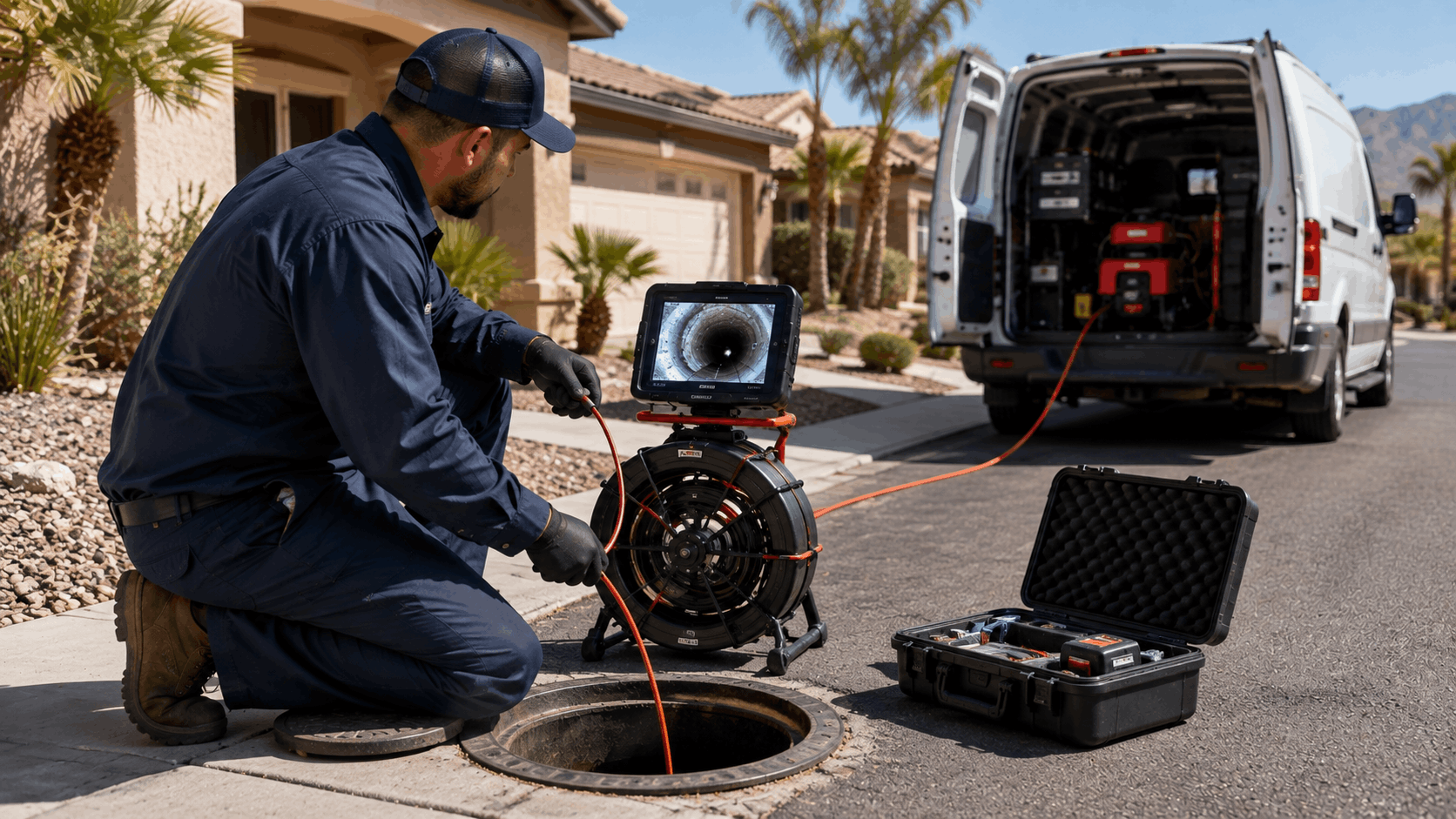
A sewer camera inspection is a simple idea that solves a hard problem. Instead of digging blind or guessing at what is wrong underground, a plumber feeds a small waterproof camera down the pipe and watches a live screen. That video pipe inspection turns a hidden sewer line into something you can actually see.
Homeowners in the valley request one when a drain keeps clogging, when they smell sewage, or before they buy a house. The camera shows the real condition of the line - cracks, roots, sagging spots, and buildup. It removes the guesswork so repairs match the actual damage.
| Inspection Element | What It Does |
|---|---|
| Fiber-optic camera | Sends live video from inside the pipe |
| Cleanout access | Entry point for the camera line |
| Sonde locator | Marks exact depth and location of a defect |
| Monitor screen | Lets the tech and homeowner watch together |
How the Camera Line Works
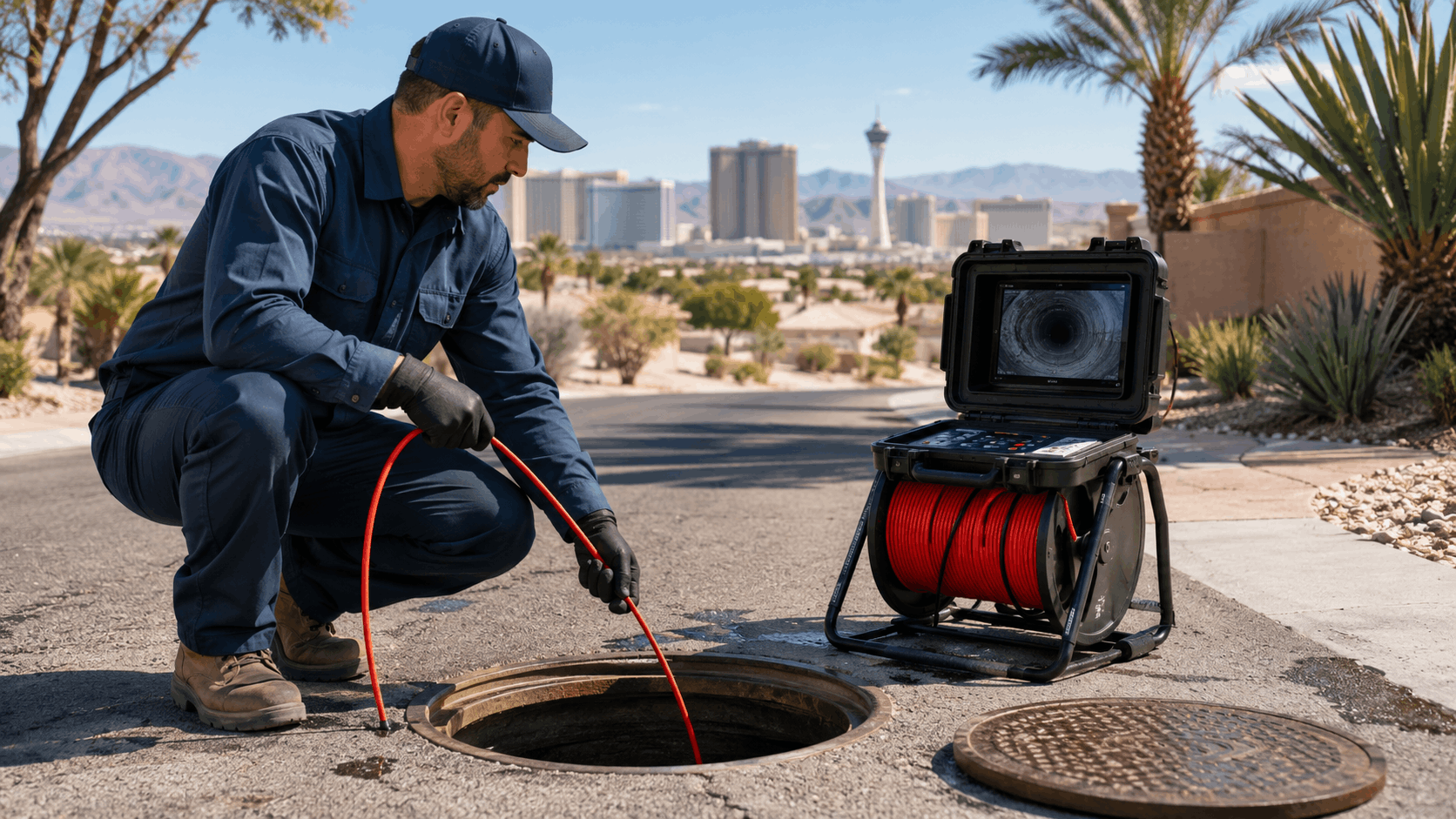
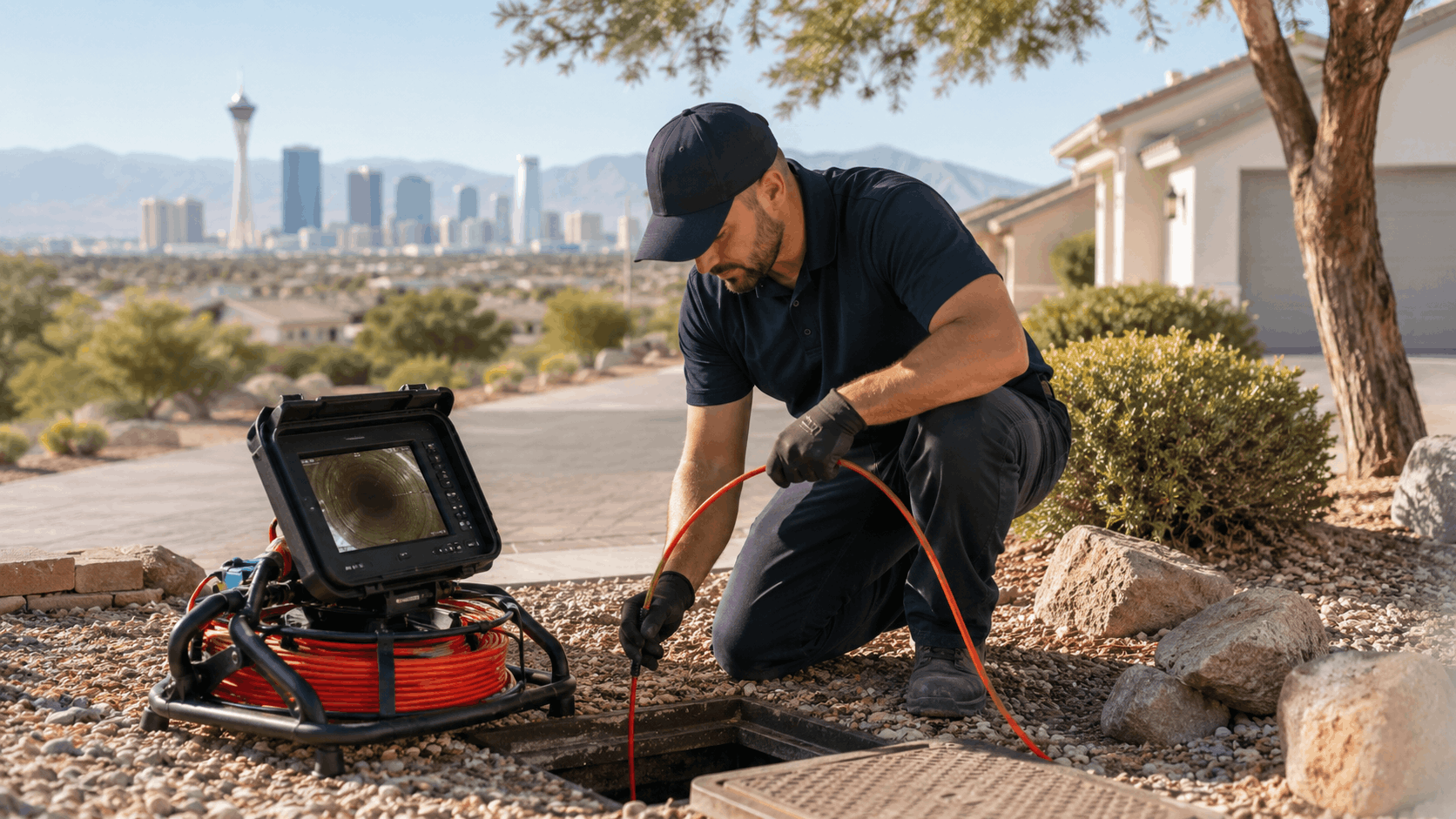
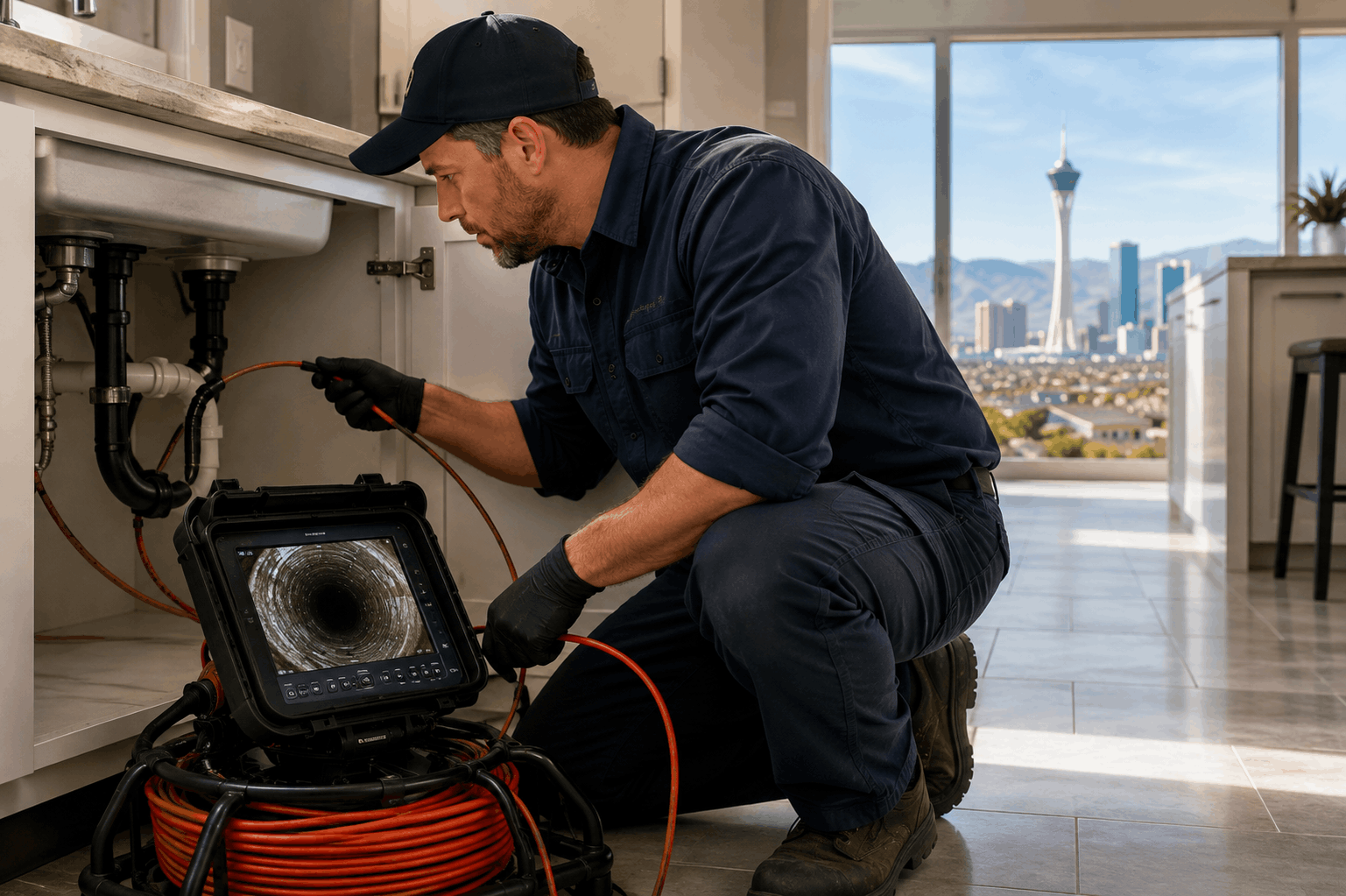
The tool at the heart of the job is a flexible fiber-optic camera mounted on a long, semi-rigid cable. Our technician feeds it through a cleanout access point, which is usually a capped pipe in the yard or garage. The cable is stiff enough to push through bends but flexible enough to follow the natural curves of the sewer line.
As the camera travels down the pipe, it beams a live feed back to a monitor. The technician reads that feed in real time, slowing down at joints, dips, and any spot that looks off. Bright LED lights on the camera head cut through the dark and murky water inside the line.
What makes this so useful is that the homeowner can watch too. There is no hidden report or vague verdict - you see the crack, the root ball, or the grease ring with your own eyes. That shared view builds trust and helps everyone agree on the right fix.
What the Inspection Can Find
Local homes throw up the same handful of problems again and again. Root intrusion is a big one - tree roots sneak into tiny cracks and grow into thick masses that choke the line. We see this often in mature yards where landscaping has been in place for decades.
A pipe belly is another common find. That is a section of line that has sagged and now holds standing water and waste, which leads to repeat clogs. The camera shows the belly clearly as water pools where it should be flowing.
Other issues include cracks in the pipe wall, heavy grease buildup narrowing the line, and offset joints where two pipe sections have shifted apart. Any of these can cause a blockage. Seeing which one you have changes the whole repair plan and the cost.
Locating the Problem With a Sonde
Finding a defect is only half the job - you also need to know where it sits underground. The camera head carries a built-in transmitter called a sonde. When the tech reaches the problem area, they switch the sonde on and it broadcasts a signal up through the soil.
A handheld line locating receiver picks up that signal from the surface. It pinpoints both the horizontal spot and the pipe depth, often within an inch or two. That means we can mark the exact patch of yard or slab that sits above the damage.
This matters most when digging is involved. Instead of tearing up a whole driveway or lawn, a sonde locator lets a crew open one small, precise area. Less digging means lower repair costs and far less mess for the homeowner.
Why Las Vegas Homes Need Them
Conditions here are hard on sewer lines in ways many homeowners never think about. Expansive clay swells and shrinks with moisture and settles under buried pipe, which stresses and cracks it over time, while caliche, the rock-hard mineral layer under much of the valley, abrades pipe and makes any excavation slower and dearer. Homes across Enterprise and the southwest sit on this ground.
Older neighborhoods bring their own issues. Cast iron pipe in downtown and historic areas corrodes and scales from the inside, narrowing the flow year after year. What was once a smooth four-inch line can shrink to a rough two-inch channel.
Then there is our hard water. Mineral-heavy supply leaves hard water buildup that coats pipe walls and traps waste. A camera inspection is the only way to see how much of this hidden trouble has stacked up inside a given line.
Get Your Quote
Tell us what's going on and we'll get back to you fast.
Typical Sewer Camera Inspection Cost in Las Vegas
Price is the first thing every homeowner asks about, so let us get specific. Around the valley, a sewer inspection cost usually lands somewhere between $125 and $400 for a standard visit. Where you fall in that range depends on access, line length, and whether you need paperwork.
A fair Las Vegas plumbing price should be a clear number, not a moving target. Below is a quick look at what different inspection scenarios tend to cost with a reputable local company.
| Service Type | Typical Cost Range |
|---|---|
| Standalone camera inspection | $125 - $250 |
| Inspection with written report | $250 - $400 |
| After-hours or weekend visit | $300 - $500+ |
| Bundled with repair or drain cleaning | Often free or credited |
Standalone Inspection Price Range
Booked on its own with easy access, a straightforward camera inspection commonly runs $125 to $250 in the Las Vegas area. That covers a technician arriving, running the camera through the cleanout, and reviewing the footage with you on site.
Some companies charge a flat fee inspection, which we prefer because it removes surprises. You know the number before we show up, and it does not creep upward while the tech is standing in your driveway.
The lower end of that price range applies to homes with a clean, accessible cleanout and a short line. The higher end kicks in when access is trickier or the line is long. Either way, a standard inspection rarely tops $250 without extras.
Cost With a Written Report
Sometimes you need more than a look - you need proof. A written report with recorded video, still images, and a plain summary of findings usually adds $75 to $150 on top of the base inspection. That brings the total into the $250 to $400 window.
Real estate deals are the main reason people ask for this. A buyer, seller, or agent wants documentation of the line's condition before closing. The inspection report becomes part of the paperwork and can support a price negotiation.
Insurance claims are another reason. If a damaged line causes a backup, the recorded video and written findings give the adjuster hard evidence. For records alone, many homeowners find the small extra cost worth it.
Emergency and After-Hours Pricing
Sewer trouble does not keep business hours. A backup at 10 p.m. on a Saturday in Henderson or a holiday flood in North Las Vegas will cost more than a scheduled weekday visit. After-hours plumbing rates reflect the crew coming out on their own time.
Expect an emergency call fee to push the total to $300 to $500 or higher, depending on the situation. If the camera work is paired with urgent clearing, the combined bill climbs accordingly. Our emergency plumbing team handles these calls across the valley.
When a true backup is threatening your home, waiting until Monday often costs more in damage than the after-hours rate saves. That said, for a routine inspection with no active flooding, booking a normal weekday slot keeps the price low.
How Our Pricing Compares Locally
Plenty of shops give a vague phone quote and then tack on trip charges, camera fees, and mystery labor once they arrive. That is how a $150 job becomes a $450 bill. We built our approach around flat-rate pricing so the number you hear is the number you pay.
A written price before work begins means no upsell just to point the camera down the pipe. The quote covers the inspection, the on-site review, and honest options.
We would rather earn a repeat customer with a fair price than win one job with a lowball quote that balloons later. Homeowners across the valley remember which company played it straight when they needed the next repair.
Need Help in Las Vegas?
Active Plumbing serves Las Vegas and all of Las Vegas Valley.
What Drives the Price Up or Down
Two homes on the same street can get different inspection quotes, and there are real reasons why. The main inspection cost factors are pipe access, line length, pipe material, and whether a clog blocks the camera. Understanding these helps a homeowner read a quote instead of just reacting to it.
| Factor | Effect on Price |
|---|---|
| Easy exterior cleanout | Lowers cost |
| Toilet pull or roof access | Raises cost |
| Long line on a large lot | Raises cost |
| Heavy clog needs clearing first | Adds a clearing charge |
Access Points and Cleanouts
The single biggest swing in price is how the camera gets into the line. A home with an easy exterior cleanout - that capped pipe sticking up in the side yard - is the cheapest to inspect. The tech pops the cap and feeds the camera right in.
Homes without a usable cleanout cost more. In those cases the tech may need a toilet pull access, meaning they remove a toilet to reach the line, then reset it afterward. That extra labor adds time and cost to the visit.
Roof access through a vent stack is another option when no cleanout exists, and it is the slowest of all. If your home has no accessible cleanout, adding one during a repair can save money on every future inspection.
Length and Layout of the Line
Longer lines take longer to inspect, plain and simple. A compact lot with a short run to the city main is quick work. A sprawling property in Southern Highlands or Mountain's Edge with a long sewer line length eats more time on the monitor.
Lot size drives this directly. Bigger lots mean more pipe between the house and the connection point, and every foot has to be watched carefully. Complex layouts with multiple branches also slow the process.
When a tech has to inspect two or three separate runs to trace a problem, the visit stretches out. More time on site means a higher bill, though a flat-rate company will still quote the whole job up front rather than charging by the minute.
Age and Material of the Pipes
What the pipe is made of changes both the inspection and the likely repair. Newer suburban homes usually have smooth PVC line that the camera glides through easily. Older properties are a different story.
Near downtown you still find Orangeburg pipe - an old tar-and-paper material that swells, sags, and collapses with age. Clay pipe is common in mid-century neighborhoods and cracks or shifts at the joints where roots love to enter.
These older materials often reveal more problems on camera, which can turn a simple inspection into a repair conversation. Knowing you have clay or Orangeburg before you buy or renovate a home is worth the inspection cost on its own.
Whether a Blockage Blocks the Camera
Here is a catch many people miss: if the line is fully clogged, the camera cannot pass through it. A heavy grease plug or root mass has to be cleared before the camera can reach the section beyond it.
That usually means running a cable machine or bringing in hydro jetting to blast the line open first. Drain clearing adds a charge, but it also often solves the immediate backup at the same time.
The upside is that clearing plus inspection in one visit is efficient. Once the line is open, the camera can finally show whether the clog was a one-time thing or a symptom of deeper damage that needs a real repair.
When the Inspection Is Free With Service
This is the question that brings most homeowners to this page. A free sewer inspection is very real - it just depends on what else you have booked. When the camera work is part of a larger job, our team routinely waives or credits the fee.
Here is how a waived inspection fee typically works, plus the honest exceptions where a charge still applies.
Free With a Drain Cleaning or Repair
A common way to get a free inspection is to book it alongside actual service. When a homeowner schedules a repair or a full drain cleaning service on the same visit, we often include the camera work at no extra cost.
The logic is simple. If we are already on site clearing a line or fixing a fixture, running the camera adds little to our time. Bundling it free with repair rewards the homeowner for handling the real problem instead of just paying for a diagnosis.
This is why we always tell people to ask before assuming the camera is a separate charge. If your drain needs clearing anyway, the inspection may cost you nothing beyond the service you already needed.
Credited Toward a Bigger Job
For larger work, the inspection fee usually gets credited rather than simply dropped. Say the camera reveals a collapsed section that needs a sewer line replacement or a trenchless repair. The inspection cost then comes off the total for that job.
So a $200 inspection becomes a $200 credit against your repair estimate. In effect, the diagnosis was free once you move forward with the fix it revealed. This keeps the process fair - you are not paying twice to solve one problem.
Trenchless repair jobs especially benefit from this, since the camera and sonde work is part of planning the fix anyway. The credited fee shows up right on the written estimate before any work starts.
Recurring Backups and Warranty Follow-Ups
When we service a line and it acts up again shortly after, we stand behind our work. A warranty inspection to check a recently cleared or repaired line is typically free within the coverage period. Nobody should pay twice to confirm a fix held.
Recurring backup on a warrantied line gets our attention fast. We come back, run the camera, and figure out whether the original issue returned or something new appeared. That re-inspection protects both the homeowner and our reputation.
These follow-ups matter most on older lines where one weak spot can hint at more to come. Free warranty re-inspections give homeowners a reason to trust that the first repair was done right.
What Is Not Included for Free
Honesty means being clear about the exceptions. A standalone real estate inspection with a printed report is a service in itself, not a lead-in to a repair, so a fee applies. You are paying for documentation, not just a diagnosis.
The standalone fee also covers the recorded video, still images, and written summary that a home sale or purchase requires. That paperwork takes extra time and carries real value for the transaction.
If there is no repair or drain cleaning attached and you only want the report, expect to pay the inspection cost. We always tell homeowners up front which category their visit falls into so there is no confusion on the bill.
Signs a Las Vegas Home Needs a Camera Inspection
Not every slow sink needs a camera, but certain warning signs point straight to a deeper problem. Recognizing these sewer problem signs early can save a homeowner from a messy backup or a costly surprise later.
- Slow drains across multiple fixtures - when several drains crawl at once, the trouble is usually in the main line, not one fixture
- Repeat clogs after snaking - a clog that returns within weeks means the snake only cleared a symptom
- Sewer smell inside or outside - a persistent sewage odor points to a crack, leak, or blockage
- Gurgling toilets and drains - trapped air escaping past a partial blockage makes that bubbling sound
- Water backing up into tubs or floor drains - a clear sign the main line is compromised
- Buying an older home - unknown pipe condition is worth checking before you close
Slow Drains and Repeat Clogs
A single slow drain might just be hair or grease near the fixture. But when the same drain clogs again a few weeks after a snake job, the real problem sits deeper in the line. Repeat clogs are the classic reason our team recommends a camera.
Snaking punches a hole through a blockage without removing the cause. If a root mass or pipe belly is behind it, the line closes back up fast. The camera shows exactly why the clog keeps coming back.
When multiple drains slow down together - the tub, the toilet, and the kitchen sink all at once - that points to the main line rather than any one fixture. That pattern almost always earns an inspection.
Sewer Odor and Gurgling Sounds
Your nose and ears often catch a sewer problem before your eyes do. A sewer odor drifting up from a drain or lingering in the yard usually means sewage is escaping through a crack or sitting in a spot it should not be.
Gurgling drains are another tell. When a toilet bubbles or a drain glugs as water goes down, air is being forced past a partial blockage or a venting issue. That sound is the line struggling to breathe.
Neither sign should be ignored, since both tend to get worse. A camera pinpoints whether you are dealing with a vent problem, a partial clog, or a broken section that needs real work.
Older Homes Near Downtown and Historic Areas
Age is one of the strongest predictors of sewer trouble. Homes in older neighborhoods like Huntridge and the John S. Park area often still run on original cast iron or clay lines that are decades past their prime.
An aging sewer line made of these materials corrodes, cracks, and lets roots in. Owners of these charming older properties are frequently surprised at what the camera reveals after years of small, nagging drain issues.
If you own or are eyeing a home in one of these historic pockets, an inspection is smart insurance. It is far better to know the line's condition on your terms than to discover it during a holiday backup.
Before Buying a Home
A standard home inspection almost never includes the sewer line, yet a line replacement can cost thousands. That gap is exactly why a pre-purchase inspection pays off for buyers in growing areas like Mountain's Edge or Aliante.
The camera shows whether the line is sound PVC or a tired clay run near failure. That knowledge can save a deal or justify a price adjustment before you sign. A few hundred dollars now can prevent a five-figure shock later.
We inspect lines for buyers all over the valley, from newer builds to resale homes with unknown history. It is one of the smartest checks a buyer can add to their due diligence.
Need Help in Las Vegas?
Active Plumbing serves Las Vegas and all of Las Vegas Valley.
Local Conditions That Affect Sewer Lines in the Valley
Las Vegas puts a specific set of stresses on underground pipe that homeowners elsewhere never face. The combination of our Las Vegas soil, hard water, roots, and monsoon flow all contribute to sewer line damage over time. Knowing these conditions explains why inspections matter here.
Caliche and Shifting Soil
Caliche is that concrete-like layer of calcium-cemented soil found across much of the valley. It is so hard that crews sometimes need special equipment just to dig through it. That same hardness makes it unforgiving on buried pipe.
The caliche layer does not flex with a pipe as the ground moves. Seasonal ground movement, settling, and expansion push and pull on the line, and over years that stress opens cracks and separates joints.
Homes across Enterprise, the southwest, and the northern edges all sit on this ground. A camera inspection reveals whether soil movement has already begun to damage a line before it fails outright.
Hard Water and Scale Buildup
Water served by the Las Vegas Valley Water District is famously hard, loaded with calcium and magnesium. That mineral content is tough on every pipe in the home, drains included.
Over time, mineral scale coats the inside of pipe walls and narrows the channel. In a sewer line, that rough coating catches waste and grease, which speeds up clogging. It is a slow process you never see until a backup hits.
Many homeowners pair a camera inspection with a water softener installation to slow future buildup. Treating the water protects the whole plumbing system, not just the sewer.
Tree Roots in Established Neighborhoods
Mature landscaping is beautiful until its roots find your sewer line. In older, tree-lined areas around Green Valley and established Summerlin streets, root intrusion is one of the top causes of blockages we find.
Roots seek moisture, and a tiny crack or loose joint in a sewer line is a buffet. Once inside, they grow into dense masses that snag debris and choke the flow. A snake clears a path briefly, but the roots grow right back.
The camera shows exactly where roots have entered and how bad the intrusion is. That tells us whether spot repair, hydro jetting, or a full replacement is the right call for that line.
Monsoon Season and Sudden Flow
Summer monsoon season brings sudden, heavy runoff to a valley that is mostly dry the rest of the year. That fast storm runoff can push debris and grit into lines and overwhelm systems already running slow.
The sudden surge sometimes exposes weak spots that limped along for years. A line with a hidden belly or crack may hold up in calm months, then back up hard during a monsoon downpour.
After a heavy storm season, we see a spike in inspection calls across the valley. Checking a suspect line before the summer rains arrive is a smart move for older properties.
What to Expect During an Active Plumbing Inspection
Homeowners feel better when they know what a visit looks like start to finish. Our inspection process is straightforward, and the whole thing usually wraps up in under an hour for most valley homes. Here is how a typical plumbing visit and sewer diagnosis unfolds.
Booking and Arrival Window
Scheduling is the first step, and we cover the whole valley. From Las Vegas proper out to Centennial Hills, and south to Henderson, our service area spans the entire metro.
When you book, we give an arrival window rather than a vague all-day promise. That lets you plan your day instead of waiting by the door. For urgent backups, we dispatch as soon as a crew is free, with a 30 to 60 minute arrival.
Our technicians know these neighborhoods well, so drive time and access are rarely a surprise. Knowing a street's typical pipe layout before arriving speeds up the whole visit.
The On-Site Walkthrough
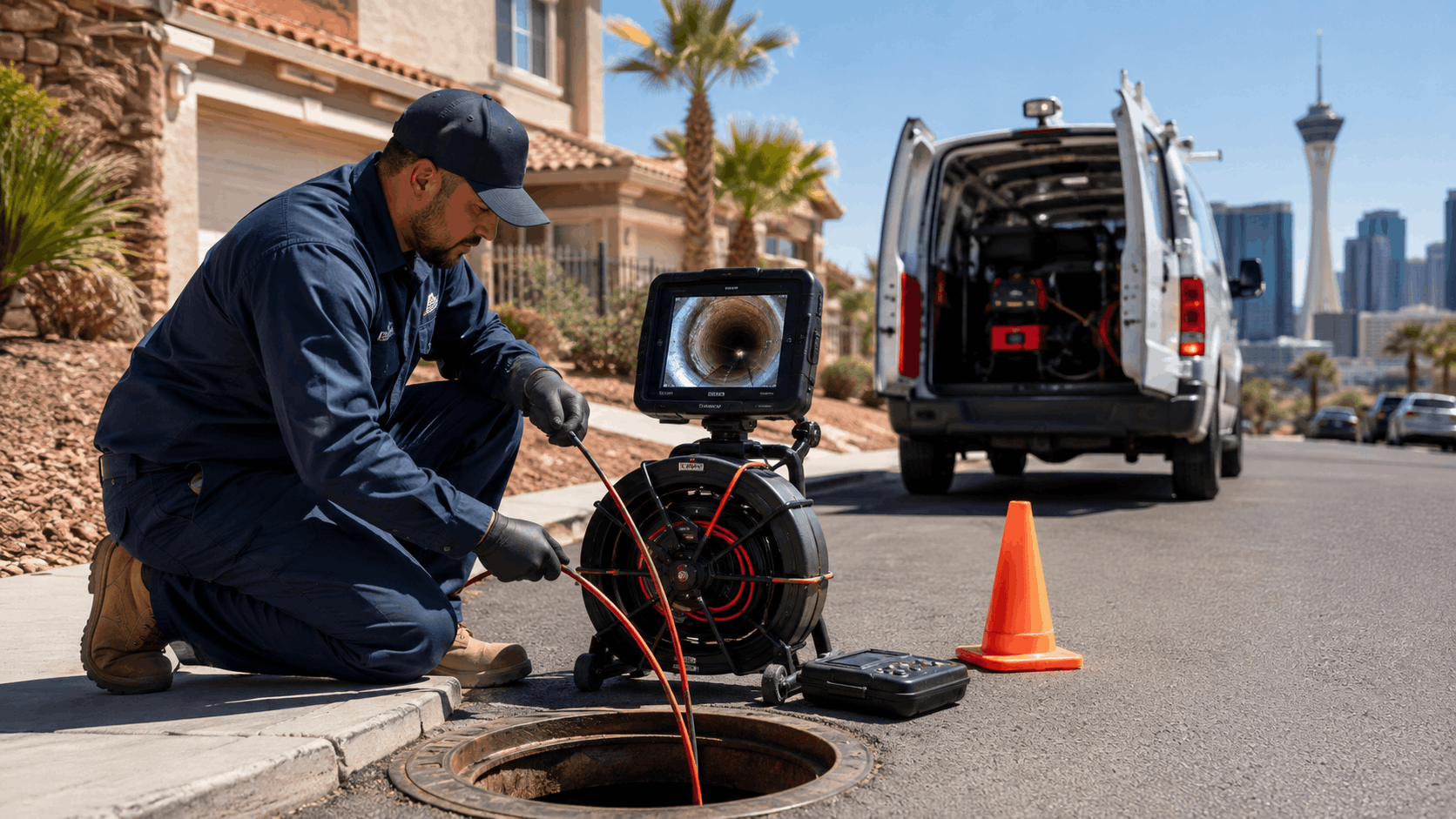
Once on site, the technician first locates the cleanout or the best access point for your home. They set up the camera, feed it into the line, and begin watching the live footage on the monitor.
As the camera moves, the tech narrates what they see and invites the homeowner to watch along. This on-site review is where roots, bellies, cracks, and scale become visible in real time. You are not taking anyone's word for it.
When they reach a defect, they use the sonde to mark its depth and location. By the end of the walkthrough, everyone knows what the problem is and roughly where it sits.
Getting Your Results and Options
Findings only help if they turn into clear choices. After the camera work, our technician explains what they found in plain language and lays out the repair options that fit your line and budget.
Those options come with a written quote before any work starts. Whether it is a spot repair, hydro jetting, or a full replacement, you see the price and the reasoning up front. No pressure, no surprise charges.
If the inspection was booked with a repair or qualifies for a credit, that shows on the quote too. The goal is a decision you feel good about, backed by video you saw with your own eyes.
Follow-Up and Recorded Footage
Many homeowners want a copy of what the camera found, and we are glad to provide it. Recorded footage is available for your records, an insurance record, or a future home sale.
That video becomes valuable documentation. If you sell the home, it proves the line's condition. If you file a claim, the adjuster has hard evidence of the damage.
We also keep notes on what we found so any follow-up visit starts with context. If a warranty question comes up later, we already know the history of your line.
Need Help in Las Vegas?
Active Plumbing serves Las Vegas and all of Las Vegas Valley.
How to Save Money on a Sewer Inspection
Nobody wants to overpay for a diagnosis. A few smart moves can lower the bill and get more value from the visit. These plumbing tips help homeowners land a sewer inspection deal without cutting corners.
Bundle It With Needed Work
The biggest saving comes from pairing the inspection with work you already need. When you book a drain cleaning or a repair, the camera fee is often free or heavily discounted as part of the job.
Since the crew is already on site and in the line, adding the camera costs them little time. That is why a bundle service almost always beats paying for a standalone inspection later.
If your drain is acting up anyway, do not split the visits. Handle the clearing and the diagnosis together and let the discounted inspection ride along with the service.
Have Your Cleanout Ready
Simple prep on your end saves labor time on ours. If your cleanout is buried under mulch, blocked by storage, or hidden behind landscaping, clearing that space before we arrive speeds up the job.
Easy cleanout access means the tech spends time inspecting, not hunting for the entry point or moving your things. Less labor time can mean a lower bill on jobs priced by time.
If you are not sure where your cleanout is, let us know when booking. We can often locate it quickly, but a heads-up helps the crew arrive ready.
Ask About Membership or Seasonal Offers
Repeat customers and members frequently pay less. A service plan can include discounted or free inspections along with priority scheduling and reduced rates on repairs.
We also run seasonal offer specials at certain times of year, often before monsoon season when line checks make the most sense. Asking about current promotions when you call can shave real dollars off the price.
For homeowners with older lines that need periodic checks, a service plan often pays for itself over a couple of visits. It is worth a quick question before you book.
Get One Quote, Not Guesswork
The most expensive mistake is paying for the wrong repair based on a guess. One camera inspection gives an accurate quote grounded in what the line actually looks like inside.
Without a camera, a plumber might recommend a full replacement when a spot repair would do, or vice versa. Seeing the real damage avoids the wrong repair and the wasted money that comes with it.
Think of the inspection as the cheapest insurance against a costly misdiagnosis. Knowing the true condition of the line before spending big is money well spent.
Final Thoughts
A sewer camera inspection turns a hidden, guesswork problem into something you can see and plan around. In Las Vegas, expect a standalone inspection to run roughly $125 to $250, with a written report adding more and after-hours visits costing extra.
The best value comes from bundling the inspection with a repair or drain cleaning, where the fee is often free or credited toward the fix. With caliche soil, hard water, and aging lines across the valley, knowing your pipe's real condition protects your home and your wallet.
If your drains are slow, your line keeps clogging, or you are buying a home in the valley, our team is ready to help. Contact Active Plumbing to schedule a camera inspection and get an honest, flat-rate quote from a local crew that knows these streets.
Frequently Asked Questions
- How much does a sewer camera inspection cost in Las Vegas?
- A standalone sewer camera inspection in the valley usually runs $125 to $250. Adding a recorded video and written report pushes it to $250 to $400, and after-hours or emergency visits can reach $500 or more. The final number depends on cleanout access, line length, pipe material, and whether a clog must be cleared first. Bundling with a repair often makes it free or credited.
- When is the inspection free with service?
- The camera fee is commonly waived when a homeowner books a repair or a full drain cleaning on the same visit, since our crew is already working in the line. For larger jobs like a sewer line replacement or trenchless repair, the inspection cost is credited toward the total. Warranty re-inspections on recently serviced lines are also free within the coverage period.
- How long does a camera inspection take?
- Most valley homes take 30 to 60 minutes for a full camera inspection. Homes with an easy exterior cleanout and a short line finish more quickly. Larger lots in areas like Southern Highlands, complex layouts, or lines that need clearing first take longer. The technician reviews the live footage with you during the visit, so you see the results the same day.
- Do I need a cleanout for the inspection?
- A cleanout is the easiest access point, but it is not the only one. If your home lacks a usable cleanout, the technician can access the line through a pulled toilet or a roof vent stack. Both add time and cost compared to a simple cleanout entry. If you do not have a cleanout, adding one during a repair saves money on every future inspection.
- Can the camera find a broken pipe under the slab?
- Yes. The camera travels through the line beneath the slab and shows breaks, cracks, and separations on the live feed. The built-in sonde transmitter then marks the exact depth and location from the surface. That pinpointing lets a crew open one small, precise area instead of tearing up an entire slab, which keeps the repair cost and mess to a minimum.
- Should I get an inspection before buying a home?
- Absolutely. A standard home inspection rarely includes the sewer line, yet a failing line can cost thousands to replace. A pre-purchase camera inspection reveals whether the line is sound PVC or a tired clay or Orangeburg run near failure. In areas like Mountain's Edge or Aliante, that knowledge can support a price negotiation or steer you away from a costly surprise after closing.
- Will I get a copy of the video?
- Yes. Recorded footage is available for your records, an insurance claim, or a future home sale. The video documents the exact condition of your line, which gives an adjuster hard evidence or proves the line's health to a buyer. Ask for a copy when you book if you know you will need documentation, and we will provide the recording along with any written summary.
- What if the camera finds a clog first?
- A fully blocked line stops the camera, so the clog has to be cleared before the camera can pass. That usually means a cable machine or hydro jetting to open the line, which adds a clearing charge. The upside is that clearing often solves your immediate backup, and once the line is open, the camera shows whether the clog was a one-time event or a deeper problem.
- Do you inspect lines in Henderson and North Las Vegas too?
- Yes. Our service area covers the entire valley, including Henderson, North Las Vegas, Summerlin, Enterprise, Spring Valley, Paradise, and Sunrise Manor. Wherever you are in the metro, our team can schedule a camera inspection and provide a flat-rate quote. We know the neighborhoods and typical pipe conditions across these areas, which helps us diagnose lines quickly and accurately.
- How often should older homes get a sewer inspection?
- For homes with cast iron, clay, or Orangeburg lines, an inspection every three to five years is a smart schedule. Properties in older neighborhoods like Huntridge or with mature trees and known root problems may benefit from checks every two to three years. Any home with repeat clogs, slow drains, or sewer odor should be inspected right away rather than waiting for a scheduled interval.
Licensed plumbing professionals serving Las Vegas and Las Vegas Valley.
Licensed in Nevada · License #0047021
Last updated on
Why trust Active Plumbing?
Founded in 1991, Active Plumbing is a licensed and insured plumber serving Las Vegas and Las Vegas Valley. All content is reviewed by our licensed technicians.

Need Help in Las Vegas?
Active Plumbing serves Las Vegas and all of Las Vegas Valley.
Related Articles
Anode Rod Replacement Cost in Las Vegas: Why It's the Cheapest Insurance Against Our 16+ Grain Water
Anode rod replacement costs $150-$350 in Las Vegas and protects your water heater from our brutal 16+ grain water. Learn timing, warning signs, and local tips.
Kitec Plumbing Replacement Cost in Las Vegas - and Why Insurers and Buyers Force the Issue
Kitec plumbing replacement cost in Las Vegas explained, plus why insurers and buyers force the issue. Real price ranges, the repipe process, and how to pick a plumber.
Sewer Line Replacement Cost in Las Vegas: Trenchless vs Open-Dig Per Foot in Caliche
See real per-foot sewer line replacement costs in Las Vegas for trenchless vs open-dig, and learn how caliche soil affects your quote and which method fits your home.