How-To Guides
Clark County Plumbing Permit Requirements: Which Repairs Need One
Key Takeaways
- Major jobs like water heater swaps, repipes, sewer line work, and new fixtures almost always require a Clark County plumbing permit and inspection.
- Minor repairs such as faucet swaps, drain cleaning, and like-for-like toilet or disposal replacements usually do not need a permit.
- Water softeners, slab leak reroutes, and repair-versus-replacement decisions are gray areas where a quick call clears up the rules.
- Homes inside Las Vegas, Henderson, or North Las Vegas city limits follow their own building departments, not Clark County.
- The permit process runs from application, often through the Citizen Access portal, to inspection and final sign-off, with fees typically from around fifty to a few hundred dollars.
- HOA rules in communities like Summerlin and Green Valley Ranch, plus Las Vegas Valley Water District requirements, can layer on top of county permits.
- Unpermitted work risks fines, denied insurance claims, and stalled home sales due to appraisal and buyer concerns.
- A licensed local plumber pulls permits, coordinates inspections, and knows which jurisdiction applies, protecting homeowners at resale.
In This Article
A homeowner in Summerlin pulls back the drywall in their guest bathroom, ready to swap out corroded galvanized pipes that have been rattling for years. Halfway through the tear-out, a neighbor stops by and asks a simple question: did they pull a permit for that? Suddenly the weekend project comes to a halt, and the homeowner starts wondering if they just created a problem bigger than the leaky pipe.
This scene plays out across the Las Vegas valley more often than most people think. Plumbing permits confuse a lot of homeowners because the rules feel murky. Some jobs clearly need one. Others do not. And a whole middle category leaves people guessing wrong.
How Plumbing Permits Work in Clark County?
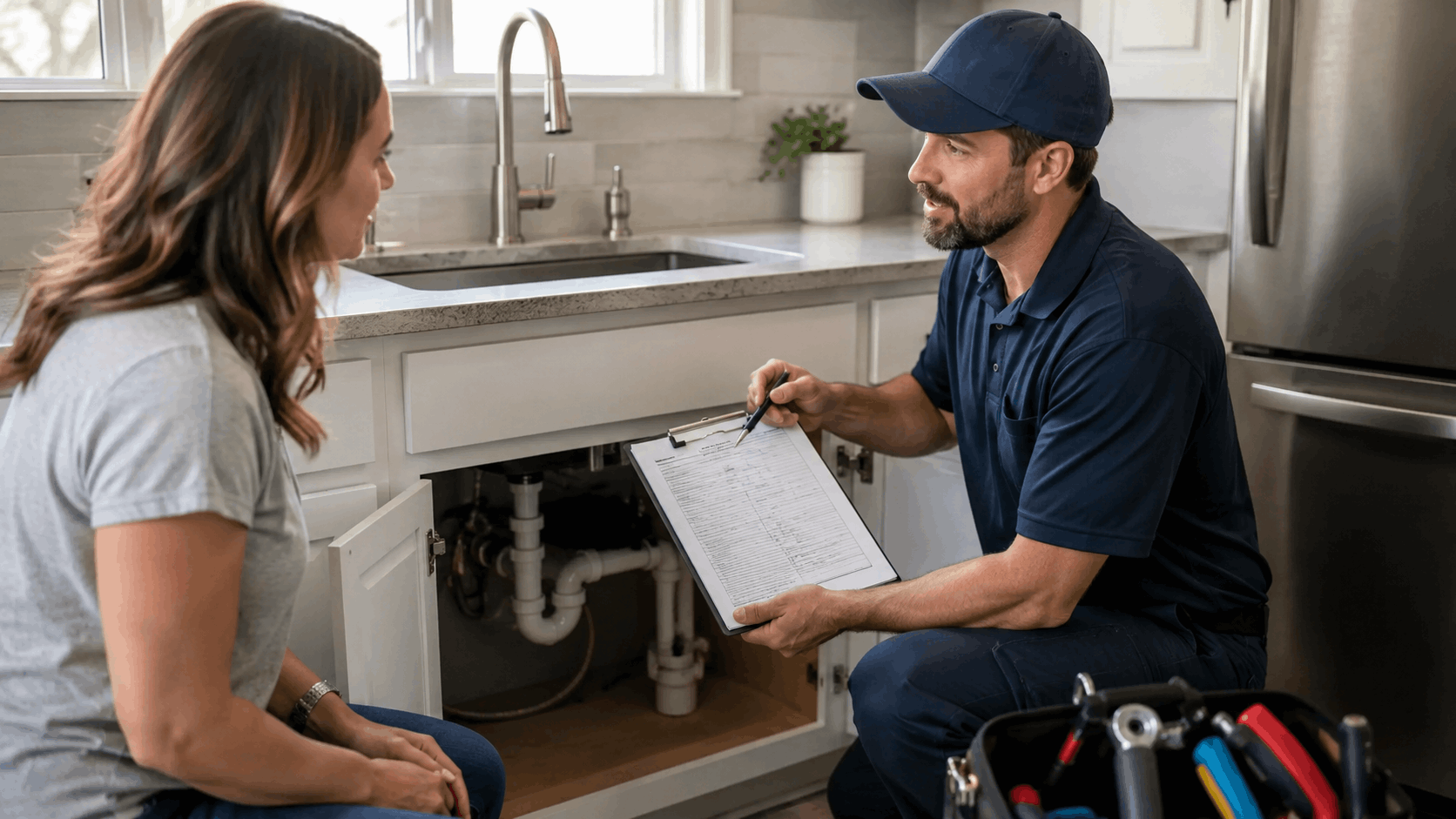
A permit is basically the county's way of checking that plumbing work meets safety codes before it gets buried in a wall or under a slab. Clark County requires them so that unsafe or sloppy work does not put homes and families at risk. Before we get into specific repairs, it helps to understand how the local system is set up.
Here is a quick snapshot of the major players and what they handle:
| Authority | What They Handle | Who It Applies To |
|---|---|---|
| Clark County Building Department | Permits and inspections for unincorporated areas | Summerlin, Spring Valley, Enterprise, Paradise, Winchester |
| City of Las Vegas | Its own permits and code enforcement | Homes inside Las Vegas city limits |
| City of Henderson | Separate building department | Green Valley, Whitney Ranch, and other Henderson zones |
| City of North Las Vegas | Independent permitting | Aliante, Elkhorn, and nearby areas |
What a Plumbing Permit Actually Covers
A plumbing permit is a formal approval from the local building department that lets you do certain plumbing work legally. In plain terms, it is a document that says the county knows about your project and will send an inspector to confirm it was done right. The permit ties directly to code compliance, which is the set of safety rules that govern how pipes, gas lines, and drains must be installed.
The permit itself does not just protect the county. It protects the homeowner from unsafe or non-code work that could cause leaks, gas hazards, or contaminated water down the road. When an inspector signs off, there is a record that the job met current standards at the time it was completed.
That paper trail matters more than people realize. If a pipe fails inside a permitted, inspected wall, the homeowner has documentation that the work was legitimate. Without it, they are left arguing with insurers and buyers about whether the work was ever safe.
The plumbing permit definition is simple, but the protection it offers runs deep. It is the difference between work the county recognizes and work that technically should not exist.
Who Issues Permits in the Las Vegas Area
The Clark County Building Department handles permits for the large unincorporated areas of the valley. That includes popular communities like Summerlin, Spring Valley, Enterprise, and Paradise. If a home sits in one of these zones, the county is the office that issues the permit and sends the inspector.
Things change once a home falls inside a city boundary. The City of Las Vegas permits department covers properties within Las Vegas city limits, and it runs on its own rules and fee schedule. A home a few blocks from a county property might answer to a completely different office.
Henderson and North Las Vegas each run their own building departments too. A repipe in Green Valley follows Henderson rules, while the same job in Aliante follows North Las Vegas rules. This is one of the most common places homeowners get tripped up.
Because the valley is a patchwork of jurisdictions, knowing which office applies is half the battle. Our crews at Active Plumbing in Las Vegas deal with these lines every single day, so we know where a given address actually lands.
Why Skipping a Permit Costs More Later
Skipping a permit feels like a shortcut, but unpermitted work tends to catch up with people. The most immediate risk is fines. If code enforcement discovers work done without approval, they can issue penalties and require the homeowner to bring everything up to code.
The bigger problem often shows up at resale. When a home goes on the market, buyers and their agents ask about permits for major work. Unpermitted plumbing can stall or kill a sale, and appraisers may knock down the value or refuse to sign off entirely.
Insurance is another quiet trap. If a pipe bursts and the insurer learns the work was never permitted, they may deny the claim. That leaves the homeowner covering water damage out of pocket, which can run into the tens of thousands.
Between fines, resale problems, and denied claims, the cost of skipping a permit almost always beats the cost of pulling one. The paperwork is cheap compared to the fallout.
Get Your Quote
Tell us what's going on and we'll get back to you fast.
Repairs That Almost Always Need a Permit
Some plumbing jobs are big enough that Clark County wants eyes on them no matter what. These are the permit required repairs where the risk of injury, property damage, or code violations is high. If a homeowner is thinking about tackling one of these solo, this is the moment to pause and check the rules.
Water Heater Replacement and Relocation
Swapping out a water heater sounds routine, but it almost always needs a permit and inspection in Clark County. That is because a water heater ties into gas, water, and sometimes venting, and any mistake can be dangerous. A water heater replacement done wrong can leak, flood a garage, or worse.
Gas units raise the stakes even higher. A poorly connected gas line can leak carbon monoxide or create a fire hazard that no homeowner wants to risk. Inspectors check the gas connection, the venting, the seismic strapping, and the pressure relief valve during the inspection.
Relocating a water heater is an even bigger deal. Moving it to a new spot means new gas, water, and vent runs, which all fall under permit rules. This is not a job to improvise on a Saturday afternoon.
Our team handles these swaps and moves through our water heater services, including tankless upgrades, and we pull the permit as part of the job. That way the inspection and paperwork are handled without the homeowner lifting a finger.
Repiping and Whole-Home Pipe Replacement
Older homes around Charleston Boulevard and the downtown Las Vegas core often reach a point where patching pipes no longer makes sense. Decades of hard water and aging galvanized lines lead to low pressure, rust-colored water, and repeat leaks. At that stage a full repipe becomes the smart move.
A repipe replaces the water supply lines throughout the whole house, which is a major structural plumbing change. Because the work touches so much of the system and often opens up walls, it always requires a permit. The county wants to inspect the new lines before they get sealed behind drywall.
Homes in neighborhoods like the Scotch 80s and other established areas are prime candidates for pipe replacement. These properties were built when materials and codes were different, so bringing them current protects the whole home. Skipping the permit here is a serious gamble given how much work is involved.
When we handle a repipe through our pipe and fixture services, we coordinate the permit and schedule inspections at the right stages. That keeps the project legal and keeps the homeowner clear of resale headaches later.
Sewer Line and Main Water Line Work
Digging up or replacing a sewer line or main water line is one of the biggest plumbing jobs a home can face. These lines run underground, often below the yard or driveway, and any work on them requires a permit. In many cases an excavation permit and right-of-way approval come into play too.
When a sewer line repair reaches the property boundary or the street, the county gets involved with street cuts and public utility rules. That means extra approvals beyond the basic plumbing permit. Homeowners who dig without checking risk hitting other utilities and facing steep fines.
A main water line failure can flood a yard or cut off water to the whole home. Because the repair often crosses into shared or public space, the paperwork is more involved than most people expect. This is not a DIY situation under any circumstances.
We map out the scope with a sewer camera inspection first, then handle the sewer line repair or replacement along with all required permits. That keeps the dig legal and the neighbors happy.
Adding or Moving Fixtures
Installing a new sink, toilet, or shower in a spot that has never had plumbing is new plumbing, plain and simple. Fixture installation in a fresh location means running new supply and drain lines, which triggers a permit. The county treats this very differently from swapping a fixture in an existing spot.
A bathroom addition is a classic example. Adding a half bath under the stairs or a wet bar in a game room requires new pipes, new venting, and new drains. All of that falls squarely under permit rules and needs an inspection.
Even moving a toilet a few feet over during a remodel counts as new plumbing. The moment pipes go somewhere they have not been before, the paperwork applies. Homeowners planning a remodel should factor this into the budget and timeline.
Our crews handle these projects and pull the permits so the remodel stays on the right side of code. It saves the homeowner from a nasty surprise when it comes time to sell.

Need Help in Las Vegas?
Active Plumbing serves Las Vegas and all of Las Vegas Valley.
Repairs That Usually Do Not Need a Permit
Not every plumbing job comes with paperwork. Plenty of small repairs fall into the no permit needed category, and homeowners can handle or hire them out without filing anything. The line usually comes down to whether the work is a simple fix in the same spot or a bigger change to the system.
Here is a quick reference for common minor plumbing repairs:
| Repair | Permit Needed? | Why |
|---|---|---|
| Replacing a faucet in the same spot | No | Repair, not new plumbing |
| Fixing a dripping valve | No | Same location, no new lines |
| Clearing a clogged drain | No | Routine maintenance |
| Swapping a toilet like-for-like | No | Existing connection reused |
| Replacing a garbage disposal | No | Direct swap in place |
Fixing Leaks and Replacing Faucets
Swapping out an old faucet for a new one in the same location is a repair, not a plumbing change. The supply lines and drain stay right where they are, so the county does not require a permit. This is one of the most common jobs homeowners tackle themselves.
The same logic applies to a leak repair. Fixing a dripping valve or replacing a worn washer keeps everything in the same spot, so no paperwork is needed. A faucet swap falls in the same easy bucket as long as nothing moves.
The rule of thumb is the same location test. If the work stays put and does not add or reroute pipes, it is almost always permit-free. That covers most kitchen and bathroom faucet upgrades people do on weekends.
If a faucet swap turns into something bigger, like moving the sink or reworking the supply lines, the rules change. When that happens, our pipe and fixture team can step in and handle it properly.
Clearing Clogs and Drain Cleaning
Drain cleaning is routine maintenance, and it does not need a permit anywhere in the valley. Snaking a slow shower drain or clearing a kitchen backup is normal upkeep, not a system change. Homeowners deal with this constantly, especially in older parts of town.
Older homes in Huntridge and Winchester often have clay pipes that catch grease and roots over time. Clog removal in these homes is a regular event, and none of it requires paperwork. The pipes are old, but clearing them is still maintenance.
For stubborn or recurring clogs, more powerful methods come into play. A hydro jetting service blasts the line clean without touching the permit process, since it is still cleaning rather than replacing. That makes it a solid option for grease-heavy or root-infested lines.
When drains keep backing up, it can signal a deeper issue. Our hydro jetting and rooter service handles the tough ones, and we can run a camera to check whether the problem is more than a clog.
Swapping Toilets and Garbage Disposals
Replacing a toilet with a new one in the same spot is a like-for-like swap, and it does not need a permit. The existing flange, water supply, and drain all get reused. Toilet replacement is one of the easiest upgrades a homeowner can make.
A garbage disposal works the same way. Pulling out an old unit and bolting in a new one under the same sink is a direct swap. No new plumbing means no permit in most cases.
The like-for-like principle is what keeps these jobs simple. As long as the connection point stays the same and no lines get rerouted, the county does not need to inspect. That is why these are popular do-it-yourself projects.
Trouble starts when a swap turns into a relocation or an upgrade that changes the plumbing layout. If a new fixture needs a different connection or moved lines, a permit enters the picture, and it is worth a quick call to confirm.
The Gray Areas Homeowners Get Wrong
Between the clear-cut jobs sit the permit gray areas that trip people up. These are the repairs where the answer depends on the details, and homeowners guess wrong more often than not. Knowing when to call and check saves a lot of grief.
Water Softeners and Filtration Systems
Hard water is a fact of life in Las Vegas, so water softeners are popular across the valley. The minerals in local water leave scale on fixtures, clog water heaters, and shorten the life of appliances. A softener helps, but installing one is not always as simple as it looks.
Whether a permit is needed depends on how the system ties in. A softener or filtration unit that connects to the main line often requires a permit because it involves the home's primary water supply. A simple under-sink filter usually does not.
The confusion comes from the range of products on the market. Some plug in with basic connections, while others need a plumber to tap the main line and add a loop. The main-line work is where the permit question comes up.
Our team handles these installs through our water softener installation service and knows when a permit applies. We sort out the paperwork so the softener is legal and done right against local hard water conditions.
Slab Leaks and Reroutes
Slab leaks are common in Spring Valley and Henderson homes built on concrete slabs. A pipe under the slab springs a leak, and suddenly there is a warm spot on the floor or a spike in the water bill. The fix depends on how the leak gets addressed.
A small spot repair may not trigger a permit, but a reroute usually does. When a plumber abandons the failed pipe under the slab and reroutes a new line through walls or the attic, that counts as significant new plumbing. The county wants to inspect that new run.
Rerouting through the concrete slab is a big enough change that the paperwork applies. It is not the same as patching a single joint. Homeowners who assume all slab leak work is permit-free often get this one wrong.
We use electronic leak detection to pinpoint the problem before opening anything up. From there we recommend either a targeted repair or a full pipe reroute, and we pull permits when the scope calls for it.
Repair Versus Replacement
The county draws a line between fixing a small section and replacing a full run of pipe. A repair on a single damaged pipe section is often treated as maintenance. Replacing an entire line crosses into work that needs a permit.
This code threshold is where the repair vs replacement question really matters. Patching a foot of pipe is different from swapping out the whole supply line to a bathroom. The scope of the work decides whether an inspector needs to see it.
Homeowners tend to underestimate how much they are actually replacing once a project gets going. What starts as a small fix can grow into a full run once the wall is open. At that point the permit rules can shift under their feet.
When there is any doubt, a quick call clears it up fast. Our team can look at the scope and tell a homeowner exactly which side of the line the job lands on before any pipe comes out.

Need Help in Las Vegas?
Active Plumbing serves Las Vegas and all of Las Vegas Valley.
How the Permit Process Works Step by Step
The permit process feels like a black box until someone walks you through it. In reality it follows a fairly predictable path from application to final sign-off. Once a homeowner sees the steps laid out, the mystery mostly disappears.
Here is the typical flow for a Clark County plumbing permit:
| Step | What Happens | Typical Timeframe |
|---|---|---|
| 1. Apply | Submit online or in person | Same day to a few days |
| 2. Review | Simple jobs cleared fast, complex ones need plan review | Over the counter to 2-3 weeks |
| 3. Do the work | Licensed plumber completes the job | Varies by scope |
| 4. Inspection | Inspector checks the work against code | Scheduled within days |
| 5. Final sign-off | Permit closed once work passes | Same day as passed inspection |
Applying Online or in Person
Clark County offers an online option through its Citizen Access portal, which lets homeowners and contractors apply without leaving home. The Clark County Building and Fire Prevention office runs the system and posts fee schedules and requirements online. For many simple jobs this is the fastest route.
Homeowners who prefer face-to-face help can visit the department in person. The building department off Grand Central Parkway near downtown handles walk-in applications and questions. Staff there can explain what a specific project needs.
The permit application itself asks for details about the property, the scope of work, and who is doing it. Accurate information up front prevents delays later. A vague or incomplete application slows everything down.
For city properties, the application goes to the right city department instead of the county. That is one more reason to confirm the jurisdiction before starting the paperwork.
Scheduling and Passing Inspection
Once the work is done, the next step is scheduling a plumbing inspection. Inspections are usually booked online or by phone, and the county assigns a window for the code inspector to arrive. The homeowner or plumber needs to be there to provide access.
The inspector checks that the work meets current code. For a water heater that means the gas connection, venting, and relief valve. For a repipe it means the new lines, fittings, and pressure test. They are looking for anything that could fail or create a hazard.
A failed inspection is not the end of the world, but it does mean rework. Common reasons work fails include improper venting, missing strapping, wrong materials, or connections that leak under pressure. The homeowner fixes the issue and calls for a re-inspection.
When a licensed plumber does the work, the inspection tends to go smoothly because the job was built to code from the start. That is one of the quiet advantages of hiring out the bigger projects.
Timelines and Permit Fees
Simple permits, often called over-the-counter permits, can be approved the same day. A straightforward water heater swap usually falls in this category. Jobs that need plan review, like large additions, can take two to three weeks or more.
Permit fees vary by the scope of the job and the jurisdiction. For most residential plumbing work in Clark County, homeowners can expect fees ranging from around fifty dollars to a few hundred dollars. Larger projects with more inspections cost more.
The approval timeline depends heavily on how complex the work is. A faucet-adjacent job clears fast, while a whole-home repipe with multiple inspection stages stretches longer. Planning for this keeps a project on schedule.
Budgeting for both the fee and the time upfront prevents surprises. Compared to the cost of the actual plumbing work, the permit fee is usually a small line item.
HOA Rules and Local Water District Considerations
Permits are only one layer of the picture in many Las Vegas communities. HOA plumbing rules and water authority requirements often stack on top of county permits. Ignoring these can create problems even when the county paperwork is perfect.
HOA Approval in Master-Planned Communities
Master-planned communities like Summerlin and Green Valley Ranch run tight architectural rules. Anything visible from the outside, including certain plumbing work, may need HOA sign-off before it starts. This applies to things like exterior water lines, backflow devices, or equipment mounted where neighbors can see it.
The Summerlin HOA in particular is known for its detailed approval process. Homeowners doing exterior work often need to submit plans and wait for a decision. Starting without that approval can lead to fines or orders to undo the work.
Green Valley Ranch and similar communities follow the same pattern. Interior plumbing usually flies under the HOA radar, but exterior work draws attention. The key is checking the community rules before breaking ground.
Our crews work throughout Summerlin and Henderson's planned communities, so we are familiar with how these approvals layer onto county permits. We help homeowners line up both so nothing stalls the project.
Working With the Las Vegas Valley Water District
The Las Vegas Valley Water District controls the water meter, the main connection, and the shutoff at the street. Any work involving these components goes through the district, not just the county. That includes upsizing a meter or tapping into the main.
Homeowners cannot simply move or replace a water meter on their own. The district owns that equipment and handles changes to it. Coordinating with them prevents service interruptions and violations.
Main connections and district shutoffs also fall under their authority. When a project touches the point where the home meets the public water supply, the district needs to be involved. The Las Vegas Valley Water District website spells out the rules and contact steps.
We regularly coordinate with the district on jobs that touch the meter or main. Knowing when to loop them in keeps a project legal and avoids costly do-overs.
Backflow Prevention Requirements
Backflow prevention devices stop contaminated water from flowing back into the clean supply. Homes with irrigation systems or pools often need one installed and tested. This is a health and safety rule that many homeowners overlook.
The requirement kicks in when there is a cross-connection risk, which is common with sprinkler systems in valley yards. A properly installed backflow device protects the drinking water for the whole neighborhood. Skipping it can lead to violations and required retrofits.
Annual testing is part of the deal. Once a backflow device is in place, most jurisdictions require it to be tested every year by a certified tester. The results get reported to the water authority to keep the system compliant.
For homes with pools or big irrigation setups, staying on top of backflow rules matters. Our team installs and tests these devices so homeowners stay compliant year after year.
Need Help in Las Vegas?
Active Plumbing serves Las Vegas and all of Las Vegas Valley.
Why Hiring a Licensed Plumber Simplifies Permits
The permit and inspection burden is exactly the kind of thing a licensed plumber Las Vegas homeowners trust takes off their plate. Our team at Active Plumbing has worked homes from Summerlin to Sunrise Manor, so permit handling is second nature. It is one less thing for the homeowner to sweat.
Pulling Permits on the Homeowner's Behalf
When we take on a permitted job, we pull the permit ourselves. The homeowner does not have to fill out forms, decode the requirements, or make trips to the building department. We handle the application and the details from the start.
We also coordinate the inspection so it lands at the right point in the project. Timing the inspection matters, especially on jobs where work gets covered up. Scheduling it wrong means tearing back into finished walls.
All the paperwork stays organized in one place. If a homeowner ever needs proof of permitted work for a sale or claim, we can point them to the record. That kind of documentation pays off years later.
Taking the paperwork off the homeowner's shoulders is a big part of why people hire out these jobs. It removes the stress of getting the process right.
Knowing Which City Department Applies
The jurisdiction question stumps a lot of homeowners, and getting it wrong wastes time. A local crew knows whether an address falls under Clark County, Las Vegas, Henderson, or North Las Vegas rules. We have worked all four and know the differences.
Henderson permits run through the city's own department, with its own forms and fees. A job in Henderson follows those rules, not the county's. Guessing wrong means starting the process over.
North Las Vegas works the same way with its independent department. Homes in Aliante or Elkhorn answer to North Las Vegas rules. We know exactly where a given address lands before we file anything.
That local knowledge saves days of confusion. Instead of the homeowner calling multiple offices, we go straight to the right one.
Avoiding Costly Rework and Failed Sales
Permitted, inspected work protects the homeowner long after the job is done. When a home goes up for sale, buyers and appraisers look for records of major plumbing work. Permitted work stands up to that scrutiny.
Unpermitted work can drag down an appraisal or scare off a buyer entirely. During resale, a lack of permits raises red flags and invites negotiation or delays. It can turn a smooth sale into a stalled one.
Doing the work right the first time also avoids costly rework. Failed inspections and torn-out walls cost far more than the permit ever would. Building to code from the start prevents that spiral.
Whether it is a water heater, a repipe, or an emergency plumbing repair, permitted work gives the homeowner a clean record. That record is worth real money at resale time.
Final Thoughts
Plumbing permits in Clark County are not as confusing as they first seem. Big jobs like water heaters, repipes, sewer lines, and new fixtures almost always need one. Small stuff like faucet swaps, drain cleaning, and like-for-like toilet replacements usually do not.
The gray areas, water softeners, slab leak reroutes, and the repair versus replacement line, are where a quick phone call saves a lot of trouble. Add in HOA rules and water district requirements, and it pays to have someone who knows the local system.
Our team at Active Plumbing pulls permits, coordinates inspections, and knows every jurisdiction across the valley. Whether the home is in Summerlin, Henderson, or downtown Las Vegas, we handle the paperwork so the work stays legal and safe. Contact us or give our office a call to talk through your project and get it done right.

Frequently Asked Questions
- Does replacing a water heater require a permit in Clark County?
- Yes, water heater swaps almost always need a permit and inspection in Clark County. This is especially true for gas units, since the gas connection, venting, and relief valve all have to meet code. An inspector checks the finished work to confirm it is safe. Our team pulls the permit as part of the replacement, so the homeowner does not have to deal with any of the paperwork or scheduling.
- Can a homeowner pull their own plumbing permit?
- Homeowners can sometimes pull an owner-builder permit for work on their own primary residence. That option has limits, and the homeowner takes on full responsibility for the work meeting code. Many people still hire a licensed plumber because the work needs to pass inspection anyway. A pro builds it to code from the start, handles the permit, and keeps the homeowner clear of failed inspections and rework.
- How much does a plumbing permit cost in Las Vegas?
- Most residential plumbing permits in the Las Vegas area run from around fifty dollars to a few hundred dollars. The exact fee depends on the scope of the job and the jurisdiction, since the county, Las Vegas, Henderson, and North Las Vegas each set their own rates. Larger projects with multiple inspections cost more. Compared to the price of the actual plumbing work, the permit fee is usually a small part of the total.
- What happens if I do plumbing work without a permit?
- Unpermitted work can lead to fines from code enforcement and orders to bring the work up to code. In some cases the county requires tearing out finished work to inspect what is behind it. The bigger problem often shows up at resale, when buyers and appraisers flag the missing permits. Insurance claims can also be denied if a failure traces back to work that was never permitted or inspected.
- Do I need a permit to replace a toilet or faucet?
- Like-for-like replacements in the same spot usually do not need a permit. Swapping an old toilet for a new one on the existing flange, or replacing a faucet on the same supply lines, counts as a repair rather than new plumbing. As long as nothing gets moved or rerouted, the county does not require paperwork. If the swap turns into a relocation or a bigger change, the rules shift and it is worth checking first.
- How long does it take to get a plumbing permit approved?
- Simple over-the-counter permits can be approved the same day, which covers most straightforward jobs like a water heater swap. Projects that need plan review, such as additions or complex reroutes, can take two to three weeks or longer. The timeline depends on how complex the work is and how busy the department is. Applying with complete, accurate information up front helps keep the approval moving.
- Does a slab leak repair need a permit?
- A small spot repair on a single pipe under the slab may not require a permit. A reroute or repipe usually does, since abandoning the failed line and running new pipe through walls or the attic counts as significant new plumbing. The county wants to inspect that new run before it gets covered. We use electronic leak detection to pinpoint the leak first, then advise which approach fits and pull permits when the scope calls for it.
- Are permits handled differently in Henderson or North Las Vegas?
- Yes, homes inside Henderson or North Las Vegas city limits follow their own building departments, not Clark County. Each city has its own forms, fees, and inspection process. A repipe in Green Valley goes through Henderson, while the same job in Aliante goes through North Las Vegas. Knowing the right jurisdiction up front prevents wasted time. Our crews work all of these areas and file with the correct office every time.
- Does my HOA also need to approve plumbing work?
- Master-planned communities like Summerlin and Green Valley Ranch may require HOA sign-off for exterior or visible plumbing work. This can include backflow devices, exterior lines, or equipment neighbors can see. Interior plumbing usually flies under the HOA radar. Starting exterior work without approval can bring fines or orders to undo it, so checking the community rules before breaking ground is a smart move alongside the county permit.
- Will unpermitted plumbing work affect selling my home?
- Unpermitted work can delay or even kill a home sale. Appraisers and buyers often ask about permits for major plumbing work, and missing records raise red flags. That can lower the appraisal, spook a buyer, or force costly fixes before closing. Permitted, inspected work gives the homeowner a clean paper trail that stands up to scrutiny. That documentation protects the home's value when it is time to sell.
A
Licensed plumbing professionals serving Las Vegas and Las Vegas Valley.
Licensed in Nevada · License #0047021
Last updated on
Why trust Active Plumbing?
Founded in 1991, Active Plumbing is a licensed and insured plumber serving Las Vegas and Las Vegas Valley. All content is reviewed by our licensed technicians.

Need Help in Las Vegas?
Active Plumbing serves Las Vegas and all of Las Vegas Valley.
Related Articles
Safety & Prevention
Clark County Backflow Prevention Testing Schedule: What's Required When
Learn Clark County's backflow prevention testing schedule, deadlines, and requirements. Active Plumbing explains who must comply and how to stay current across the Las Vegas valley.
Cost Guides
Clark County Sewer Permit Costs and Timeline for Bathroom Additions
A clear guide to Clark County sewer permit costs and timelines for bathroom additions, including fees, the permit process, neighborhood factors, and how Active Plumbing helps Las Vegas homeowners.
How-To Guides
Polybutylene Pipe Identification: Which Vegas Neighborhoods Still Have It
Learn how to identify polybutylene pipe, which Las Vegas neighborhoods still have it, why local water makes it fail faster, and what a modern repipe costs.