Sediment Tank Flush: Why Vegas Water Heaters Need It Every 18 Months
Key Takeaways
- Las Vegas water measures about 16 grains per gallon of hardness - roughly double the national average - causing rapid sediment buildup in water heaters.
- An 18-month flush schedule is the ideal interval for most Las Vegas homes, balancing local water conditions with practical maintenance frequency.
- Sediment acts as insulation between the burner and water, forcing the heater to run longer cycles and adding $15-30 per month to energy bills.
- A professional flush costs $100-200, while a full water heater replacement in Las Vegas ranges from $1,200-3,000 or more.
- Warning signs like popping noises, reduced hot water supply, and rising energy bills all point to sediment buildup that needs attention.
- Inspecting and replacing the anode rod during a flush can extend a water heater's lifespan from 8-10 years to 12-15 years.
- Tankless water heaters still need descaling every 12-18 months in Las Vegas to prevent scale buildup on the heat exchanger.
- Active Plumbing serves the entire Las Vegas valley and provides a written maintenance report with a recommended next service date after every flush.
In This Article
A homeowner in Summerlin ignored their water heater for three years. No flushes, no inspections - just hot showers and zero thought about the 50-gallon tank sitting in the garage. One Tuesday morning, they woke up to two inches of water spreading across the garage floor, soaking into drywall and ruining boxes of family photos. The tank had corroded from the inside out, and the bottom gave way overnight. The repair bill topped $8,000 when you counted the water damage cleanup and a brand-new water heater installation.
That story isn't unusual. Our team at Active Plumbing sees some version of it every month across the Las Vegas valley. Sediment buildup from our notoriously hard water is the silent killer of water heaters in this city. It collects at the bottom of every tank, day after day, forming a thick layer of mineral sludge that traps heat, corrodes steel, and shortens the life of your appliance by years.
What Is Sediment Buildup and Why Should Las Vegas Homeowners Care?
Every time your water heater fires up, it heats water that contains dissolved minerals - mostly calcium and magnesium. As the water temperature rises, those minerals fall out of suspension and settle to the bottom of the tank. Over months, this creates a layer of calcium deposits and mineral gunk that can be a quarter-inch thick or more.
In cities with softer water, this process happens slowly. In Las Vegas, it happens fast. Our water supply comes from Lake Mead through the Southern Nevada Water Authority, and it arrives loaded with dissolved minerals that turn into sediment buildup in your water heater. The harder the water, the more sediment collects - and Las Vegas hard water is among the hardest in the nation.
| Mineral | Effect on Water Heater | Severity in Las Vegas |
|---|---|---|
| Calcium Carbonate | Forms thick white scale on tank bottom and heating elements | High - primary sediment source |
| Magnesium | Contributes to hard scale and reduces heat transfer | Moderate to High |
| Silica | Creates abrasive grit that can damage drain valves | Moderate |
| Iron | Causes rust-colored deposits and staining | Low to Moderate |
How Hard Water From Lake Mead Creates a Mineral Problem
Las Vegas water hardness typically measures between 16 and 22 grains per gallon. That's classified as "very hard" by the Water Quality Association. The SNWA treats our water for safety - removing bacteria, adjusting pH, and handling contaminants - but the dissolved calcium and magnesium minerals remain. Those minerals are not harmful to drink, but they wreak havoc on plumbing and appliances.
The Colorado River feeds Lake Mead, and as it flows through miles of limestone and desert rock, it picks up an enormous mineral load. By the time that water reaches your tap in North Las Vegas or Southern Highlands, it's carrying more dissolved minerals per gallon than most cities deal with. Homes from North Las Vegas down through Henderson all receive water from the same SNWA source, so Lake Mead water hardness affects every neighborhood equally.
SNWA water quality reports confirm this consistently year after year. The mineral content doesn't fluctuate much because Lake Mead's geology stays the same. Your water heater is getting hit with the same hard water every single day.
What Sediment Actually Looks Like Inside a Vegas Tank
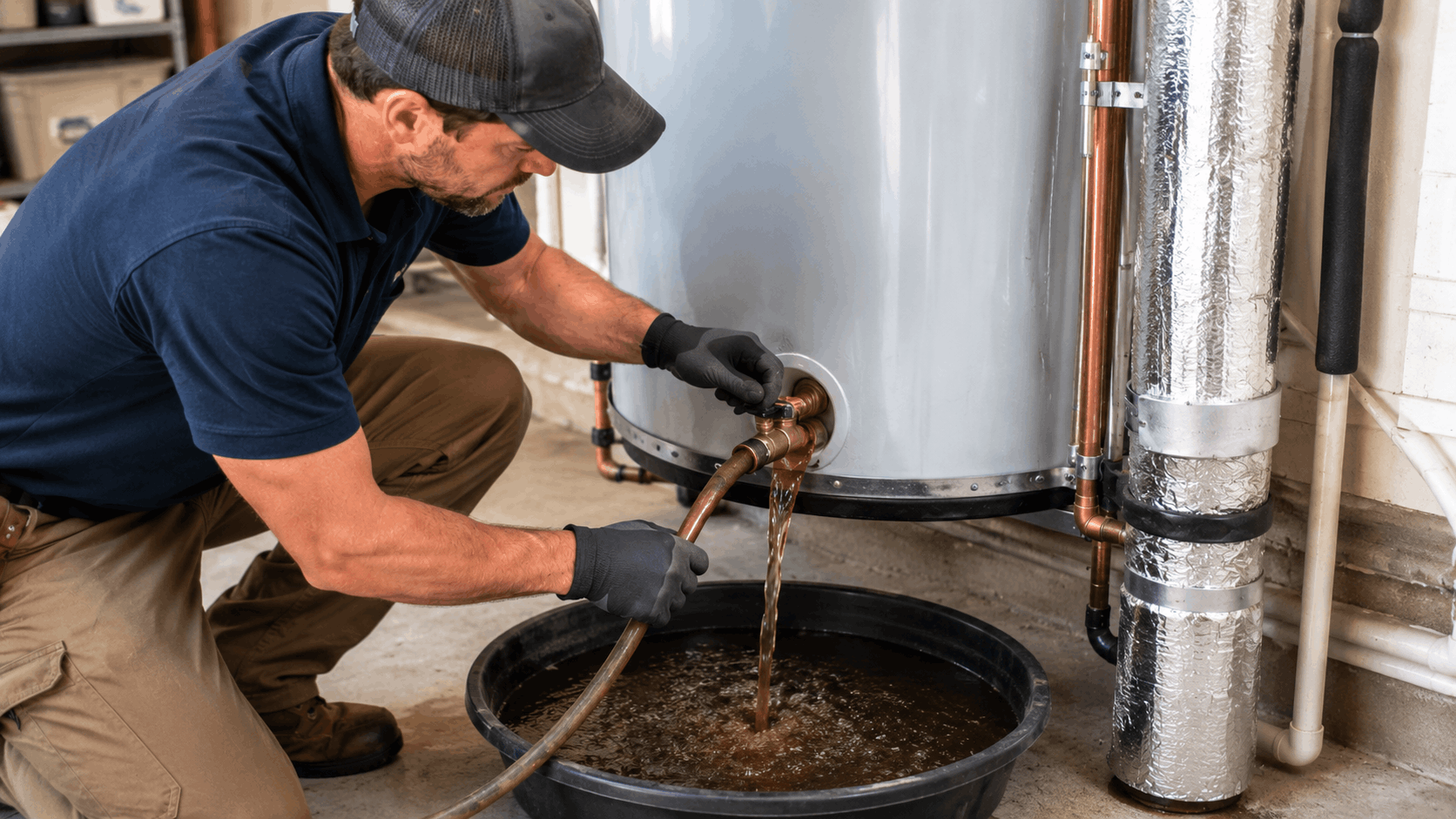
When our techs at Active Plumbing drain a water heater that hasn't been flushed in two or three years, the first thing that comes out is murky, tan-colored water. Then the chunks start flowing - chalky white and beige pieces of mineral sludge that look like wet sand mixed with small rocks. In some tanks, we find an inch or more of this material packed solid at the bottom.
Homeowners often call us about a water heater popping noise coming from the garage. That crunching, popping, or crackling sound is actually water getting trapped beneath the sediment layer and boiling. Steam bubbles form under the mineral sludge, push through it, and pop - similar to a thick sauce bubbling on the stove. It sounds alarming, and it should be. That noise means tank sediment is already thick enough to interfere with normal operation.
The mineral sludge we pull from Vegas tanks is noticeably heavier and more compacted than what plumbers find in cities with softer water. It's a direct result of our local water chemistry.
Why This Is Worse in the Desert Than Other Cities
The national average for water hardness falls around 7 to 10 grains per gallon. Las Vegas sits at roughly double that. A hard water comparison between our city and somewhere like Portland, Oregon - which averages about 1 grain per gallon - shows just how extreme the difference is.
Desert water heater problems go beyond just mineral content, though. During summer months, incoming cold water isn't cold at all. Ground temperatures push the "cold" water supply to 80 degrees or higher by July and August. That means your water heater doesn't have to work as hard to reach the set temperature, but the higher baseline temperature actually speeds up mineral precipitation. Warmer water drops its minerals more quickly.
And after a long day in 110-degree heat, every household in the valley still wants a hot shower. Water heaters in Las Vegas run hard, and they run in some of the toughest water conditions in the country. That combination demands more frequent maintenance than a tank in Seattle or Charlotte would ever need.
Get Your Quote
Tell us what's going on and we'll get back to you. We're open 24/7.
Why 18 Months Is the Right Flush Schedule for Vegas Homes
Most water heater manufacturers recommend flushing the tank once a year. That recommendation is written for a national audience with average water conditions. Plumbers in places like the Pacific Northwest or the Southeast might tell homeowners every two to three years is fine. Neither of those guidelines fits Las Vegas.
Our team at Active Plumbing has settled on the 18-month water heater flush schedule based on years of working in homes across the valley. We have drained a lot of tanks over the years, and the sediment tells a consistent story. At 12 months, some tanks - especially those with water softeners - show minimal buildup. At 24 months, most tanks have enough sediment to cause efficiency problems. Eighteen months is the sweet spot where we catch the buildup before it causes damage but avoid unnecessary service calls. How often to flush a water heater in Las Vegas comes down to local water conditions, and 18 months accounts for that.
What Happens If You Wait Two or Three Years
In older neighborhoods like Paradise and Spring Valley, we regularly work on tanks that haven't been touched in years. A common problem we find is a clogged drain valve. The sediment has hardened into a plug so dense that nothing comes out when we open the valve. At that point, a simple flush turns into a much bigger job.
When a drain valve clogs, we sometimes have to remove it entirely and clear the opening manually. In worst-case scenarios, the tank is so far gone that water heater failure is imminent - the bottom has hot spots, the steel is weakened, and a full replacement is the only safe option. A new water heater installed in a Paradise Las Vegas home runs $1,200 to $3,000 or more. That's a lot more than a routine flush would have cost.
We've also seen cases where sediment buildup caused the lower heating element on electric tanks to burn out completely. The element gets buried under mineral deposits and overheats trying to push warmth through the insulating layer.
Why Annual Flushing Can Be Overkill for Some Homes
Not every home in the valley needs a flush every 12 months. Homes with a properly maintained whole-house water softener in communities like Inspirada or Skye Canyon see significantly less mineral buildup. A water softener in Las Vegas exchanges calcium and magnesium ions for sodium ions before the water reaches the heater, which reduces scale formation dramatically.
With a functioning softener, the 18-month interval is a safe buffer that accounts for the softener not catching every mineral particle. If you don't have a softener - and many older Las Vegas homes don't - you might actually benefit from yearly flushes. The 18-month recommendation assumes a typical home without supplemental water treatment. Homes in newer master-planned communities with Inspirada homes or Skye Canyon addresses often have softeners pre-plumbed, which gives homeowners more flexibility.
How Active Plumbing Determines the Right Interval for Each Home
When our techs perform a flush, they pay close attention to what comes out of the tank. If the water runs clear within the first few minutes, 18 months might even be conservative for that particular home. If we're seeing heavy sediment and chunks after just a year and a half, we'll recommend shortening the custom flush schedule to 12 months.
Location matters too. Homes along the 215 beltway corridor in the southwest - places like Mountains Edge and Southern Highlands - tend to be newer construction with more modern plumbing. Properties closer to downtown Las Vegas or on the older east side often have tanks that are 10 or more years old and have never been flushed. Active Plumbing Las Vegas techs adjust their recommendations based on what they find in each individual home, not just a blanket schedule.
Need Help in Las Vegas?
Active Plumbing serves Las Vegas and all of Las Vegas Valley.
What a Professional Sediment Flush Actually Involves
A lot of homeowners don't know what happens during a professional tank flush, so the service feels mysterious. It shouldn't be. The process is straightforward, and knowing what to expect makes it easier to schedule and prepare. Here's exactly what our techs do from start to finish during a water heater flush process.
Step-by-Step: From Shutoff to Clear Water
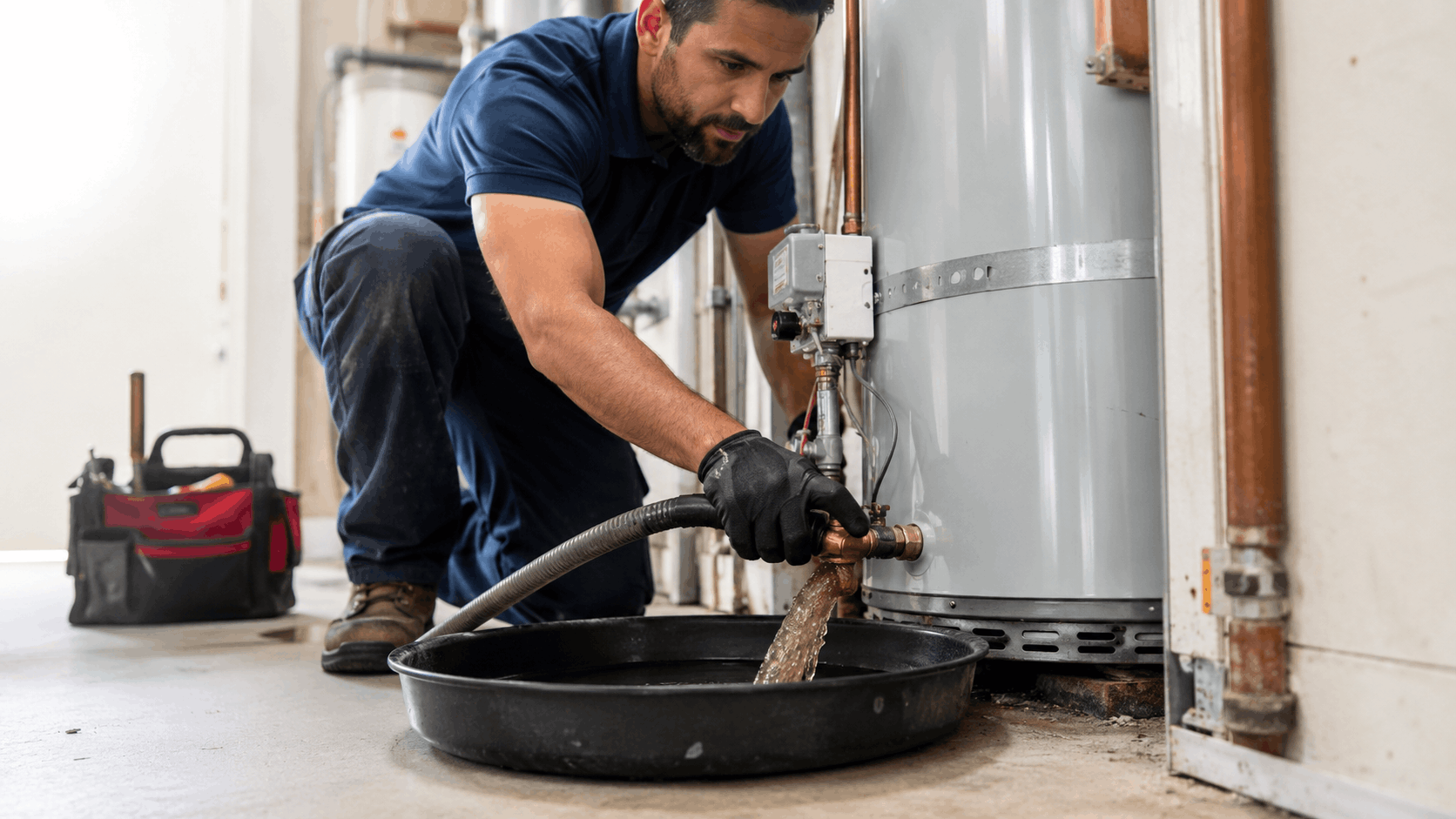
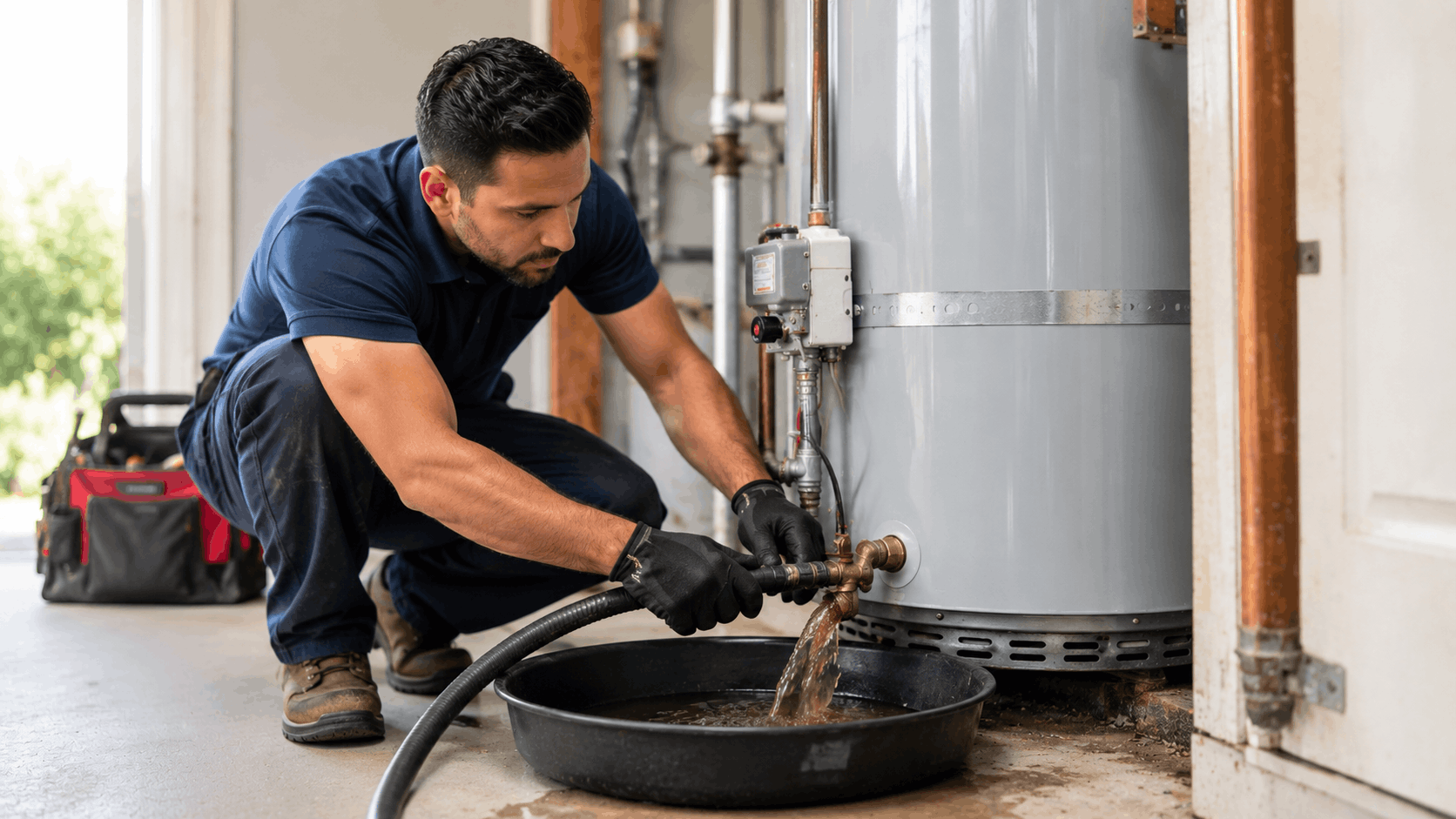
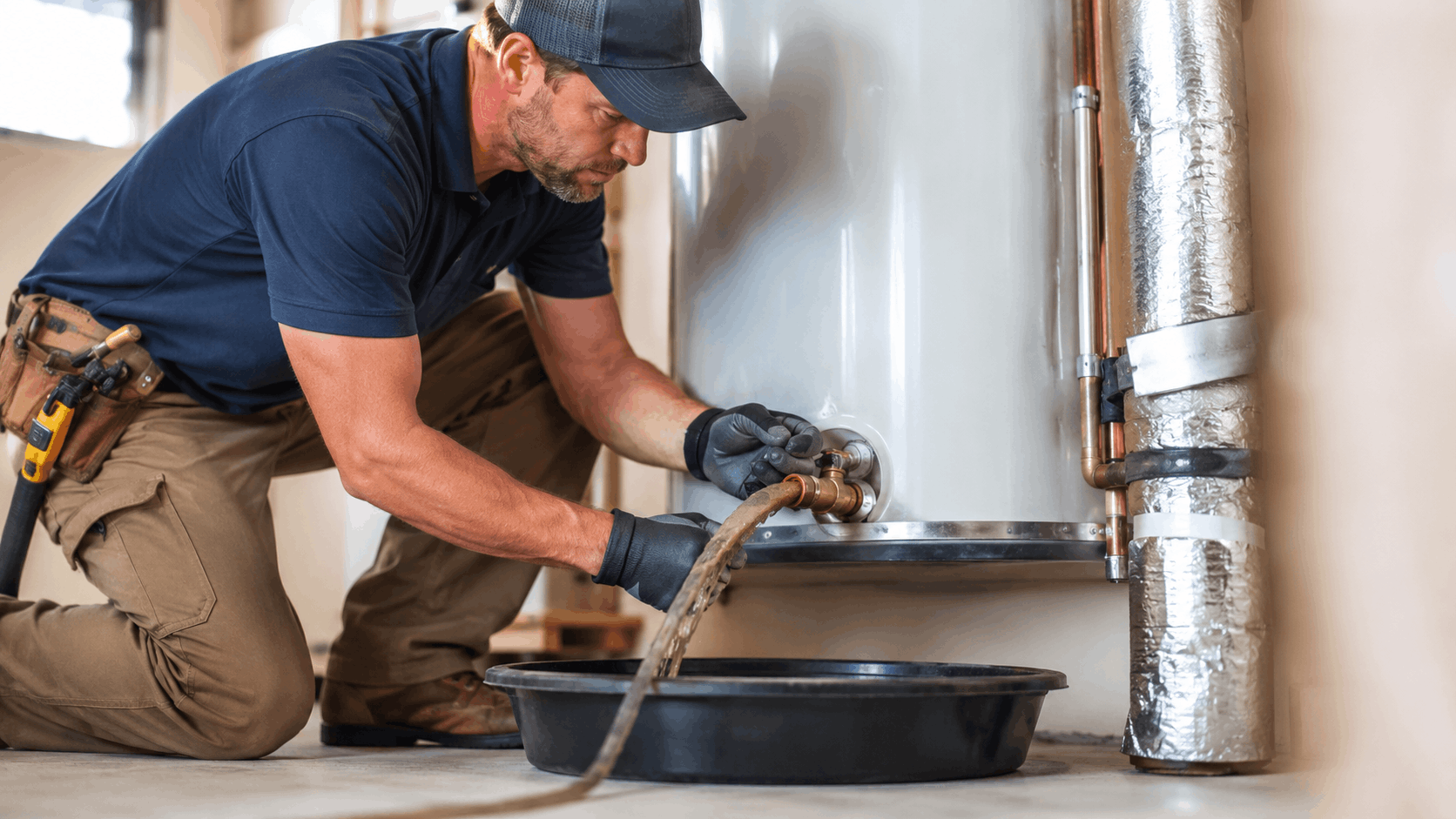
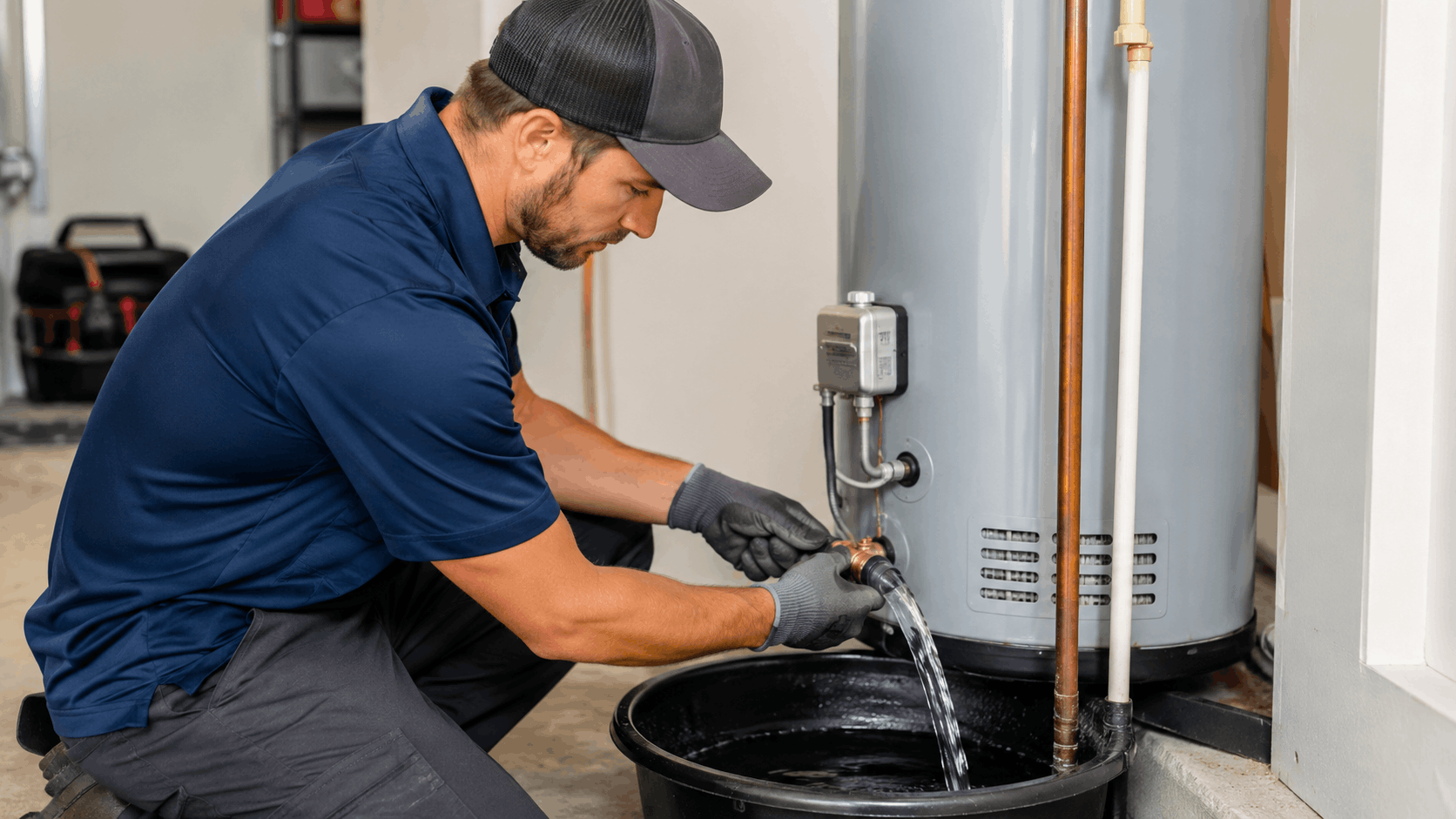
The tech arrives and locates the water heater - usually in the garage for most Las Vegas homes. First, they turn off the gas supply or flip the breaker for electric models. Then they connect a garden hose to the drain valve at the bottom of the tank and route it to a floor drain, driveway, or utility sink.
Next, the tech opens the pressure relief valve to allow air into the tank and break the vacuum. They open the drain valve and let the tank empty completely. Once drained, they turn the cold water supply back on to flush fresh water through the tank, pushing out loosened sediment until the water runs clear. While the tank is empty, our techs inspect the anode rod - more on that below.
Finally, they close the drain valve, shut the pressure relief valve, let the tank fill, and relight the pilot or reset the breaker. The whole job takes 45 minutes to an hour. You'll have hot water again within about 30 to 45 minutes after refilling.
Why the Anode Rod Check Matters During a Flush
Inside every tank water heater, there's a sacrificial anode rod - a metal rod made of magnesium or aluminum that hangs down from the top of the tank. Its job is to attract corrosion to itself instead of letting it eat through the tank walls. Think of it as a bodyguard for the steel lining of your water heater.
During a flush is the perfect time for an anode rod inspection because the tank is already drained and the tech is already working on the unit. If the rod is more than 50 percent corroded - which we see frequently in Vegas due to our water chemistry - it should be replaced. The part costs $30 to $80, and anode rod replacement can add three to five years to a tank's usable life. Skipping this check is like changing your oil but never looking at the filter. Water heater corrosion protection starts with a healthy anode rod.
What Active Plumbing's Techs Look for Beyond the Sediment
A sediment flush is a great opportunity for a quick water heater inspection. While our Las Vegas techs are at your home, they also test the T&P valve (temperature and pressure relief valve) to make sure it opens and reseats properly. A stuck T&P valve is a safety hazard.
They inspect gas connections for leaks on gas models, check electrical wiring on electric units, look for rust or moisture at pipe fittings, and test the hot water temperature at the nearest faucet. This Active Plumbing service visit doubles as a mini health check for the entire water heating system. It's the kind of thoroughness that catches small problems before they become expensive ones.
Signs Your Water Heater Is Overdue for a Sediment Flush
You don't need to open the tank to know sediment is building up. Your water heater will give you several warning signs if you know what to watch and listen for. These hot water problems are a common complaints we hear from homeowners who are overdue for a flush.
| Warning Sign | What It Means | Urgency |
|---|---|---|
| Popping or rumbling sounds | Water boiling under sediment layer | Flush soon - within 2-4 weeks |
| Hot water runs out more quickly | Sediment reducing usable tank capacity | Moderate - schedule within a month |
| Higher energy bills | Tank working harder to heat through sediment | Moderate - investigate and flush |
| Rusty or discolored hot water | Possible corrosion inside tank | High - call for inspection promptly |
| Lukewarm water at full heat | Heating element buried in sediment (electric) or burner inefficiency (gas) | High - service needed |
Popping, Rumbling, or Knocking Sounds From the Tank
A water heater rumbling noise is the number one complaint we get from homeowners in areas like Green Valley and Centennial Hills. The sound ranges from a gentle crackling to loud pops that you can hear from inside the house. It's caused by steam bubbles pushing through the sediment layer at the bottom of the tank.
The noise itself isn't immediately dangerous - your tank isn't about to explode. But it signals that a thick sediment bed is sitting on top of the burner plate (gas models) or around the lower heating element (electric models). That layer is forcing the system to work much harder than it should. If you're hearing these sounds, a sediment flush is overdue, and the problem will only get worse.
Hot Water Running Out Quicker Than It Used To
A 50-gallon water heater should deliver close to 50 gallons of hot water before needing to recover. But if two or three inches of compacted sediment fills the bottom of the tank, your usable capacity drops to 40 gallons or less. Hot water runs out fast, and families notice it first during the morning rush when multiple showers run back to back.
Reduced tank capacity also shows up when filling a bathtub or running the dishwasher while someone showers. If your household habits haven't changed but the hot water isn't lasting like it used to, sediment is almost certainly the cause. This is one of the clearest signs a sediment flush is needed, and it's an easy problem to fix before it becomes something bigger.
Higher Gas or Electric Bills Without an Obvious Cause
Sediment acts like a blanket of insulation between the burner and the water it's trying to heat. The water heater has to run longer and harder to push heat through that mineral layer, which drives up energy consumption. For NV Energy customers already dealing with brutal summer electricity bills from air conditioning, an inefficient water heater piles on an extra $15 to $30 per month.
Over a year, that's $180 to $360 in wasted energy - enough to pay for a professional flush two or three times over. Water heater efficiency loss from sediment is one of those hidden costs that homeowners don't connect to the right cause. If your NV Energy bill has crept up and you can't blame a new appliance or changed habits, check the water heater.
Can You Flush a Water Heater Yourself in Las Vegas?
A DIY water heater flush is possible for handy homeowners who are comfortable working around gas appliances and hot water. The basic steps are well documented, and the tools required are minimal - a garden hose and a flathead screwdriver. But in Las Vegas, the heavy sediment load and aging drain valves create complications that catch many DIY attempts off guard.
Here's what you'll need for a basic DIY attempt:
- A garden hose long enough to reach a drain or the driveway
- A flathead screwdriver or pliers for the drain valve
- Gloves and eye protection - the water is hot
- Bucket for testing initial water flow
- Knowledge of how to shut off your gas valve or electrical breaker
- Patience - a full drain and flush takes at least 30 minutes
The DIY Approach and Where It Usually Goes Wrong
A common problem is a stuck drain valve. Las Vegas sediment is gritty and hard, and it lodges inside plastic drain valves - which are standard on most residential tanks. Homeowners try to force them open, and the plastic cracks or breaks off. Now they have a broken valve and water pouring onto the garage floor.
Other issues include sediment chunks too large to pass through the valve opening, forgetting to turn off the gas before draining (a fire hazard), and scalding from 120-plus-degree water shooting out of the hose. Many homes in the older sections of Boulder City and Sunrise Manor have aging tanks where a DIY water heater drain attempt can quickly turn into an emergency plumbing call.
When to Call a Professional Instead
We recommend calling a professional water heater flush service if any of the following apply:
- The tank hasn't been flushed in over three years
- You hear loud popping or rumbling from the unit
- You've never done a flush before
- The water heater is located in a tight closet, utility room, or attic space
- The tank is more than eight years old
Two-story homes around Mountains Edge and Aliante Las Vegas often have water heaters tucked into second-floor closets or recessed utility spaces where working room is limited. Draining a tank in a tight space with no nearby floor drain is a recipe for water damage if anything goes wrong. A professional has the tools and experience to handle these situations safely.
Need Help in Las Vegas?
Active Plumbing serves Las Vegas and all of Las Vegas Valley.
How Sediment Flushing Saves Las Vegas Homeowners Money
The financial argument for regular sediment flushing is simple: spend a little now or spend a lot later. The numbers are clear for any Las Vegas homeowner willing to do the math on water heater maintenance cost versus the price of neglect.
Cost of a Flush vs. Cost of a Full Replacement
A professional sediment flush in Las Vegas typically costs between $100 and $200. The price varies based on tank size, accessibility, and whether additional work like anode rod replacement is needed. Compare that to a full water heater replacement in Las Vegas, which ranges from $1,200 to $3,000 or more depending on the type and installation complexity.
Regular flushing can extend a water heater's tank lifespan from the typical 8-to-10-year range to 12-15 years. That's an extra four to five years of service from an appliance that costs over a thousand dollars to replace. Over the life of a well-maintained water heater, five or six flushes at $150 each total $750 to $900 - far less than an early replacement.
Energy Savings Add Up in the Desert Heat
A clean tank heats water more quickly and runs shorter cycles. The burner fires for less time per heating cycle because there's no insulating sediment layer blocking heat transfer. Over 18 months, homeowners with clean tanks could save $200 to $400 in energy costs compared to a heavily loaded unit.
NV Energy rates have been climbing in recent years, and every watt or therm matters during the summer months when AC drives bills into the $300-to-$500 range. Efficient water heating might seem like a small piece of the puzzle, but it's one of the easiest to fix. A single flush visit can immediately reduce the energy your water heater consumes.
Avoiding Water Damage From a Failed Tank
When a corroded tank bursts, the damage goes well beyond replacing the water heater. A 50-gallon tank dumping its full contents into a garage or utility room can soak into drywall, flooring, stored belongings, and nearby electrical panels. Water damage cleanup from a burst tank typically runs $5,000 to $15,000 depending on what gets destroyed.
Many Vegas homes have water heaters in the garage right next to the wall shared with living spaces. Active Plumbing has responded to burst tank emergencies in Sunrise Manor and Whitney Ranch in Henderson where the water soaked through the shared wall and damaged flooring in adjacent rooms. A whole-home leak detection system can help catch these failures early, but preventing them with regular maintenance is far better.
Tankless Water Heaters and Sediment: A Different Problem
More Las Vegas homeowners are switching to tankless water heater installation for the energy savings and endless hot water. But going tankless doesn't mean you're free from mineral problems. Las Vegas hard water affects tankless units too - just in a different way. Instead of sediment piling up in a tank, mineral scale coats the heat exchanger inside the unit and reduces performance over time.
Why Tankless Units Still Need Regular Descaling
The heat exchanger is the core component of a tankless water heater. Water flows through narrow channels inside it while a gas burner or electric element heats those channels rapidly. In hard water areas like Las Vegas, calcium scale builds up on those channel walls, narrowing the passages and reducing water flow.
Heat exchanger scale also forces the unit to work at higher temperatures to compensate, which speeds up wear on internal parts. Most manufacturers - including Navien, Rinnai, and Noritz - require descaling every 12 to 18 months in hard water areas to maintain the tankless warranty. Skipping this service can void the warranty entirely, leaving homeowners responsible for expensive repairs on a unit that cost $2,000-plus to install.
Active Plumbing's Approach to Tankless Maintenance
Our tankless maintenance and descaling service uses a food-grade white vinegar solution circulated through the unit with a small pump. The vinegar dissolves the calcium scale without damaging the heat exchanger. The process takes about an hour, and we test the flow rate before and after to confirm the descaling was effective.
Many newer homes in Summerlin West and Cadence in Henderson were built with tankless units that are now reaching their first recommended service interval - usually around the two-year mark for homes without softeners. If you moved into a new build in one of these communities within the last couple of years, now is a good time to check whether your tankless unit has ever been serviced.
Need Help in Las Vegas?
Active Plumbing serves Las Vegas and all of Las Vegas Valley.
How Active Plumbing Helps Las Vegas Homeowners Stay on Schedule
Regular maintenance only works if you actually do it. Life gets busy, and water heater flushes are easy to forget about - especially when the tank is hidden in the garage and working fine on the surface. Active Plumbing makes it simple for Las Vegas homeowners to stay on track with water heater service and protect their investment.
Service Area Across the Entire Las Vegas Valley
Active Plumbing serves homes from Lone Mountain in the northwest to Anthem in the south. Our techs work along the Red Rock Canyon corridor in Summerlin, through the established neighborhoods in Enterprise and Spring Valley, and out to Lake Las Vegas properties in the east. We know the plumbing setups common to each area - from the polybutylene pipes in 1990s-era Spring Valley homes to the modern PEX systems in Skye Canyon new builds.
Whether you're in a single-story ranch near Nellis Air Force Base or a two-story home backing up to the mountains in Summerlin, our team has worked on homes just like yours. That local experience means quicker diagnostics and better recommendations.
Scheduling and What to Expect During a Visit
Booking a sediment flush with Active Plumbing is straightforward. Homeowners can call us directly or book through our website. We typically offer same-day or next-day availability for maintenance visits, since these are planned appointments rather than emergencies.
When the tech arrives, they'll confirm the type and age of your water heater, explain the process, and give you a written price before starting any work. After the flush, we provide a written maintenance report that documents what we found - including sediment amount, anode rod condition, and any concerns. That report also includes a recommended next service date so you can put it on your calendar and not think about it until then.
Bundling a Flush With Other Plumbing Maintenance
While a tech is already at your home, it's a smart time to knock out other small maintenance tasks. We can check for running toilets, inspect supply lines under sinks for bulging or corrosion, and test your home's water pressure to make sure it's in the safe range.
Las Vegas homes built during the 2004 to 2008 construction boom - and there are tens of thousands of them across the valley - often have CPVC supply lines and brass fittings that are now 15-plus years old. These components have a limited lifespan, and catching a failing supply line during a routine visit prevents a burst line and flooding later. Bundling services saves time, saves on trip charges, and gives you a more complete picture of your home's plumbing health.
Final Thoughts
Las Vegas water heaters work in some of the toughest conditions in the country. The combination of extremely hard water from Lake Mead, desert heat, and constant daily demand means sediment builds up more quickly here than in most American cities. An 18-month flush schedule is the right cadence for the majority of valley homes - long enough to avoid unnecessary service calls, short enough to prevent the kind of damage that leads to early tank failure and expensive replacements.
Active Plumbing performs sediment flushes across the entire Las Vegas valley every day. Our techs know what to look for, how to handle stubborn drain valves and heavy sediment loads, and how to advise each homeowner on the right maintenance interval for their specific situation. If your water heater hasn't been flushed in the last 18 months - or ever - contact Active Plumbing to schedule a visit. It's one of the simplest and most cost-effective ways to protect your home and your wallet.
Frequently Asked Questions
- How much does a water heater flush cost in Las Vegas?
- A professional sediment flush in Las Vegas typically costs between $100 and $200. The exact water heater flush cost depends on the tank size, ease of access, and whether additional work like anode rod replacement is needed. Active Plumbing provides upfront Las Vegas plumbing prices before starting any work, so there are no surprises when the job is done.
- How long does a sediment flush take?
- Most sediment flushes take 45 minutes to one hour from start to finish. The flush duration depends on how much buildup is inside the tank. If there's heavy sediment or a stuck drain valve, the process can stretch to about 90 minutes. Knowing how long it takes to drain a water heater helps homeowners plan their day around the appointment.
- Will I have hot water right after the flush?
- The tank needs about 30 to 45 minutes to reheat once it's been drained and refilled. Water heater recovery time varies by fuel type - gas models recover more quickly than electric models because gas burners produce more heat. Plan to wait about half an hour after the tech finishes before running a hot shower or starting the dishwasher.
- Is Las Vegas water really that hard?
- Yes. Las Vegas water hardness measures between 16 and 22 hard water grains per gallon, which the Water Quality Association classifies as very hard. The national average is about 7 to 10 grains. This mineral-heavy water comes from Lake Mead and the Colorado River, which flow through limestone-rich terrain before reaching Southern Nevada's treatment facilities.
- Can sediment damage my water heater permanently?
- Yes, sediment can cause permanent damage. Over time, the sediment layer traps heat against the bottom of the tank, creating hot spots that weaken the steel lining. These hot spots cause micro-cracks and eventual leaks that cannot be repaired. Sediment damage to a water heater leads to tank failure, and at that point, the only option is a full replacement.
- Do I still need a flush if I have a water softener?
- A water softener reduces mineral content significantly but does not eliminate it entirely. Homes with properly maintained softeners can often extend their flush interval to 18 to 24 months. However, skipping the flush altogether is not recommended in Las Vegas. Even softened water carries trace minerals that accumulate over time, and a periodic flush with a softener installed keeps the tank in good condition.
- What if my water heater is more than 10 years old - should I flush or replace?
- If your old water heater is 10-plus years old and has never been flushed, a professional should inspect it before attempting a drain. Sometimes flushing a badly corroded tank can dislodge sediment that was actually plugging small leaks, causing new water damage. Active Plumbing can assess whether a flush or full replacement makes more financial sense based on the tank's condition and water heater lifespan expectations.
- Does Active Plumbing flush both gas and electric water heaters?
- Yes. Active Plumbing services both gas and electric tank water heaters as well as tankless units that need descaling. The flush process differs slightly between gas and electric - gas models require relighting the pilot, while electric models need the breaker reset - but both types accumulate sediment the same way in Las Vegas. All Active Plumbing services related to water heaters follow the same thorough inspection protocol.
- Can I just run the hot water to clear out sediment?
- Running hot water from a kitchen or bathroom faucet will not remove sediment from the tank bottom. The sediment is heavier than water and settles well below the outlet pipe, which draws water from higher in the tank. The only effective way to remove sediment is through the drain valve at the base of the tank during a proper drain valve flush procedure.
- How do I schedule a sediment flush with Active Plumbing?
- Homeowners can schedule an Active Plumbing appointment by calling directly or booking online through the contact page . Maintenance visits are usually available within one to two business days. Active Plumbing serves the entire Las Vegas valley including Henderson, North Las Vegas, Summerlin, and all surrounding communities. A Las Vegas plumber appointment for a routine flush is one of the quickest services to book.
Licensed plumbing professionals serving Las Vegas and Las Vegas Valley.
Licensed in Nevada · License #0047021
Last updated on
Why trust Active Plumbing?
Founded in 1991, Active Plumbing is a licensed and insured plumber serving Las Vegas and Las Vegas Valley. All content is reviewed by our licensed technicians.

Need Help in Las Vegas?
Active Plumbing serves Las Vegas and all of Las Vegas Valley.
Related Articles
Best Water Heater Option for Las Vegas Homes: Tank vs Tankless
Compare tank vs tankless water heaters for Las Vegas homes. Costs, hard water effects, lifespan, permits, and which option fits your neighborhood best.
How to Prevent Water Heater Failure in Las Vegas (Hard Water Maintenance Plan)
Learn how Las Vegas hard water wears out water heaters sooner and follow our maintenance plan to extend your unit's lifespan years.
Tankless Water Heater Maintenance in Las Vegas: Why Hard Water Makes It Critical
Las Vegas hard water from Lake Mead builds scale fast inside tankless heaters. Learn the warning signs, real maintenance steps, and how often valley homes need service.