Water Heater Replacement in Centennial Hills: Two-Story Recirculation and Sizing
Key Takeaways
- Two-story homes near Providence, Skye Canyon, and Elkhorn strain undersized tanks, leaving upstairs showers cold during morning rushes.
- Most local two-story homes fit a 50 to 75 gallon tank or a properly sized tankless unit, with first hour rating mattering as much as tank gallons.
- Hot water recirculation, either a dedicated return line or a comfort valve retrofit, fixes the long wait at upstairs faucets.
- Hard water from the Las Vegas Valley Water District speeds sediment buildup, so annual flushing or descaling and a softener extend unit life.
- Watch for rusty water, leaks, popping noises, rising bills, and slow recovery as signs a water heater is failing.
- Clark County generally requires a permit for water heater replacement, which protects warranties and future home sales.
- Tank swaps cost roughly $1,500 to $3,500 and tankless installs $4,000 to $7,500, with recirculation adding $800 to $2,500.
- Active Plumbing handles sizing, recirculation design, permits, and fast emergency response across the northwest valley.
In This Article
It usually starts the same way. A family in a two-story home near Elkhorn Road turns on the upstairs shower during the morning rush, and the water stays cold for what feels like forever. By the time it finally warms up, half the tank is gone and the next person is out of luck. We hear this story week after week from homeowners across the northwest valley.
The problem is rarely just a bad water heater. In larger Centennial Hills homes, it comes down to three things working together: the right tank size, a smart recirculation setup, and knowing when a unit has reached the end of its run. Get one of those wrong and even a brand new heater leaves you shivering upstairs.
Let's talk through everything a two-story homeowner should know. We cover the warning signs of a failing water heater, how to size a unit for a multi-bathroom house, how hot water recirculation actually works, tank versus tankless trade-offs, the replacement process, local permit rules in Clark County, and real cost ranges. By the end, deciding on water heater replacement in Centennial Hills should feel a lot clearer.
Signs a Centennial Hills Two-Story Home Needs a New Water Heater
Most water heaters do not die overnight. They send warning signals for months before they quit. Catching those signs early gives a homeowner time to plan a water heater replacement instead of scrambling during a cold shower on a Monday morning.
In larger Centennial Hills homes, the strain shows up more quickly than in a small condo. More bathrooms and longer pipe runs push an aging unit harder every day. Here are the symptoms we see most often in this part of town.
- Hot water that runs out before everyone has showered
- Rusty or discolored water coming from hot taps
- Water pooling around the base of the tank
- Popping or rumbling sounds during heating cycles
- Energy bills creeping up without a clear reason
- A unit that is more than ten years old
Any one of these can point to a failing water heater. Two or three together usually mean a replacement is close.
Age and Hard Water Wear in Northwest Las Vegas
A standard tank water heater lasts roughly 8 to 12 years. In the northwest valley, most units land at the shorter end of that range because of the hard water. The water delivered by the Las Vegas Valley Water District carries a heavy load of dissolved minerals, and those minerals do not play nice with a metal tank.
As water heats, calcium and magnesium drop out of solution and settle at the bottom of the tank. Over the years, this sediment buildup forms a thick crust that traps heat and forces the burner to work overtime. The extra stress cooks the steel and speeds up corrosion from the inside out.
We regularly pull tanks in Providence and Iron Mountain Ranch that look ancient at just eight years old. The inside is caked with mineral scale, and the anode rod that protects against rust is long gone. Homeowners who install a water softener often add years to their heater's life because the sediment load drops sharply.
Flushing the tank once a year helps too, but hard water always wins eventually. That is why age plus local water conditions matter so much when judging whether a unit is worth keeping.
Running Out of Hot Water Upstairs
Two-story floor plans near Providence and Skye Canyon put real demand on a water heater. A single tank has to serve a downstairs kitchen, a laundry, and two or three upstairs bathrooms, often within the same 30-minute window each morning.
When a family outgrows a heater, the first sign is running out of hot water upstairs. The showers on the second floor sit at the end of the longest pipe runs, so they get whatever is left after the closer fixtures take their share. Cold showers become a daily fight.
An undersized tank cannot keep up with peak hot water demand. A 40-gallon unit might have been fine when the home had two people, but add teenagers and back-to-back showers and it falls behind fast. The tank simply cannot reheat quickly enough between uses.
This is one of the more common reasons homeowners in a two-story home call us. The fix is not always a bigger tank, but it always starts with matching capacity to real household use.
Rusty Water, Leaks, and Popping Noises
Some warning signs are easy to spot if a homeowner knows to look. Rusty water from the hot side of a faucet often means the inside of the tank is corroding. If the cold water runs clear but the hot water comes out brown or orange, the heater is usually the source.
A water heater leak is more serious. Water pooling around the base of the tank points to a crack or a failed seam, and those do not repair themselves. Once the steel tank splits, replacement is the only real option, and waiting risks a flooded garage.
Tank noise is another red flag. That popping, rumbling, or knocking sound happens when water gets trapped under a layer of hardened sediment and boils. The louder the noise, the more scale has built up, and the closer the unit is to failing.
When we hear all three of these together during a service call, we know the tank is near the end. Catching a leak early can be the difference between a planned swap and an emergency cleanup.
Rising Energy Bills and Slow Recovery
An aging water heater quietly costs more every month. As sediment coats the burner or heating element, the unit needs more energy to hit the same temperature. Homeowners often notice their gas or power bill climbing before they connect it to the heater.
Recovery rate is the other clue. This is how fast a tank reheats a full load of water after it is drained. A healthy unit recovers quickly, but a worn one lags, leaving busy households waiting far longer between hot showers.
For a two-story home with several bathrooms, slow recovery turns a morning routine into a scheduling problem. The last person to shower is stuck with lukewarm water because the tank never caught up. That frustration is usually what pushes families to finally replace the unit.
If bills are rising and recovery feels sluggish, the heater is telling you it is working too hard. A modern, properly sized unit almost always brings the monthly cost back down.
Get Your Quote
Tell us what's going on and we'll get back to you. We're open 24/7.
Sizing a Water Heater for a Two-Story Centennial Hills Home
Getting water heater sizing right is where most projects succeed or fail. A tank that is too small leaves people cold. One that is too large wastes energy heating water nobody uses. The goal is matching tank capacity to how the household actually lives.
For a two-story home, the math involves the number of bathrooms, the size of the family, and how much hot water gets used at the same time. Here is a quick reference we use as a starting point.
| Household Size | Bathrooms | Suggested Tank Size |
|---|---|---|
| 1-2 people | 1-2 | 40 gallon |
| 3-4 people | 2-3 | 50 gallon |
| 4-5 people | 3+ | 50-75 gallon |
| 5+ people | 3-4 | 75 gallon or tankless |
These are guidelines, not hard rules. Peak demand and pipe layout can shift the numbers, which is why an in-home look matters.
Counting Bathrooms, Fixtures, and Household Size
Household demand starts with counting people and fixtures. Every shower, sink, dishwasher, and washing machine draws hot water, and the more of them running at once, the higher the peak load. A four-bedroom home in Providence with three full baths behaves very differently than a smaller two-bath layout.
Bathroom count is the fastest shortcut. As a rough rule, each additional full bathroom adds meaningful demand, especially when family members shower around the same time. Two showers running together can pull 4 to 5 gallons per minute of hot water combined.
Fixture units give a more precise picture. Plumbers assign each fixture a value based on how much it draws, then add them up to estimate simultaneous demand. The larger floor plans found in Iron Mountain Ranch often carry high fixture counts that a small tank cannot cover.
We always ask about routines, not just square footage. A family that staggers showers needs less capacity than one where everyone rushes out the door at 7 a.m. Real usage beats a formula every time.
First Hour Rating vs Tank Gallons
Tank gallons tell you how much water the heater holds. First hour rating tells you how much hot water it can actually deliver in a single busy hour, including what it reheats along the way. For a two-story home, the first hour rating is the number that matters most.
Here is why. A 50-gallon tank with a strong burner might deliver 80 or more gallons of hot water in its first hour because it reheats as it drains. A different 50-gallon unit with a weak burner might only manage 60. Same tank size, very different real-world performance.
During peak demand, like the morning shower rush, first hour rating decides whether the last person gets a warm shower or a cold surprise. Two-story homes concentrate their usage into short windows, so a high first hour rating carries the load.
When we recommend a unit, we look at the label's first hour rating against the home's peak demand. Matching those two numbers prevents the classic problem of a big tank that still runs out.
Common Sizes for Local Two-Story Layouts
Most two-story homes in the area fall into a few common size ranges. A smaller layout with two bathrooms and three or four people usually does well with a 50 gallon water heater. That size handles back-to-back showers when the burner is strong.
Larger homes with three or more bathrooms often need a 75 gallon tank. These are the bigger floor plans found across Providence and Skye Canyon, where multiple showers, a soaking tub, and laundry can all fire up at once. A 50-gallon unit in these homes tends to fall short during the morning rush.
Home size alone does not decide it, but it points in the right direction. A 3,000-square-foot home with a growing family almost always needs more than the builder-grade 40-gallon tank that came with the house. Builders often install the cheapest unit that meets code, not the one that fits the family.
We size to the household, not the square footage. Two homes the same size can need very different tanks depending on who lives there and how they use hot water.
When to Consider a Tankless Upgrade
A tankless water heater heats water on demand as it flows through the unit, so it never runs out the way a tank does. For large two-story homes with high simultaneous demand, that endless supply can be a real advantage. Nobody gets stuck being last in line.
Tankless units perform best when sized correctly for flow rate. A single large gas tankless can run two or three fixtures at once in most homes, and larger setups handle even more. They shine in homes where several people shower in the same window every morning.
The trade-off is upfront cost and the need for adequate gas supply and venting. Some older homes need a gas line upsized to feed a tankless unit properly. That extra work factors into the decision.
For families tired of running out of hot water, a properly sized tankless installation often solves the problem for good. We walk through both options so homeowners see the full picture before committing.
Need Help in Las Vegas?
Active Plumbing serves Las Vegas and all of Las Vegas Valley.
How Hot Water Recirculation Works in Multi-Story Homes
Hot water recirculation is the fix for the long wait at upstairs faucets. Instead of hot water sitting in the pipes and cooling off between uses, a recirculation system keeps it moving so it is ready when someone opens a tap. For two-story plumbing, it is often the missing piece.
The basic idea is simple. A recirculation pump pushes hot water in a loop through the pipes, either continuously or on a schedule. When you turn on the upstairs shower, hot water is already close by. Here is how the main setups compare.
| System Type | Best For | Wait Time |
|---|---|---|
| Dedicated return line | New builds or remodels | Near instant |
| Comfort valve retrofit | Existing homes | A few seconds |
| No recirculation | Small single-story homes | 30-90 seconds |
Both active systems cut the wait dramatically. The right choice depends on whether the home already has a return line.
Why Upstairs Faucets Take So Long
The wait at an upstairs faucet comes down to distance. In a two-story home near Elkhorn and Grand Teton, the pipe run from the garage water heater to a second-floor bathroom can stretch 60 feet or more. Every foot of that pipe is full of water that cooled off since the last use.
When someone opens the tap, all that cold water in the pipe run has to drain out before hot water arrives. That is the 30 to 90 seconds of waiting families complain about most. The taller and larger the home, the longer the delay.
All that wasted water adds up. A household that runs several faucets a day can pour thousands of gallons down the drain each year just waiting for heat. In a desert city, that waste stings both the water bill and the conscience.
Recirculation attacks the root cause by keeping hot water near the fixture. Instead of draining a long cold slug first, the tap delivers warm water almost immediately.
Dedicated Return Line Systems
A dedicated return line is the gold standard for recirculation. It uses a separate pipe that runs from the farthest fixture back to the water heater, forming a complete recirculation loop. A pump keeps hot water cycling through that loop so it is always ready.
With this setup, hot water arrives at upstairs fixtures almost instantly. The pump maintains warm water right up to the fixture, so the wait drops to a second or two. For a large two-story home, that comfort is hard to beat.
The catch is that the return line usually needs to be installed during construction or a major remodel. Adding one to a finished home means opening walls, which raises the cost. Many newer Providence homes were built with the return line already in place.
When a home already has the loop, adding or replacing the pump is straightforward. Our team handles recirculation pump installation and can confirm whether a dedicated line exists before recommending anything.
Under-Sink Comfort Valve Retrofits
Most existing homes do not have a dedicated return line, and that is where a comfort valve retrofit comes in. This setup uses a small pump at the water heater and a crossover valve installed under the sink at the farthest fixture. It creates instant hot water without tearing open walls.
The crossover valve connects the hot and cold lines under that far sink. When the water in the hot line cools, the valve lets the pump push it back through the cold line toward the heater. This keeps warm water near the fixture without a separate return pipe.
For a two-story home that never had recirculation, retrofit recirculation is often the practical choice. It cuts the wait at upstairs faucets to a few seconds and costs far less than adding a full return line. Installation usually takes a few hours.
There are minor trade-offs, like slightly warm water in the cold line right after the pump runs. For most families the convenience easily outweighs that small quirk.
Timers, Sensors, and Energy Use
A recirculation system that runs nonstop wastes energy heating water nobody is using. That is why modern setups use controls to run only when needed. A recirculation timer lets homeowners schedule the pump for peak hours, like early mornings and evenings.
Even smarter systems use a demand sensor. These activate the pump only when someone approaches or turns on a fixture, so hot water arrives without the pump running all day. This approach delivers the comfort while keeping energy use low.
Energy efficiency matters in the Las Vegas climate, where cooling costs already run high in summer. A well-controlled pump adds very little to the monthly bill, often just a few dollars. The savings on wasted water can offset much of that.
We help homeowners choose controls that fit their routine. A family with predictable schedules may prefer a timer, while a busy household with irregular hours benefits from a demand sensor.
Tank vs Tankless for Centennial Hills Homeowners
The tank vs tankless question comes up on nearly every replacement call. Both water heater types work well in Centennial Hills homes, but they fit different needs and budgets. Being honest about the trade-offs helps homeowners choose without regret.
Here is a side-by-side look at how the two compare across the factors that matter most for a two-story home.
| Factor | Tank | Tankless |
|---|---|---|
| Upfront cost | Lower | Higher |
| Lifespan | 8-12 years | 15-20 years |
| Hot water supply | Limited by tank | Endless |
| Space needed | Large footprint | Wall mounted |
| Maintenance | Annual flush | Annual descaling |
Neither option is automatically better. The right pick depends on how a family uses hot water and what they want to spend.
Upfront Cost and Long-Term Savings
The installation cost gap between the two types is real. A standard tank replacement usually costs less to install than a tankless unit, sometimes by a wide margin when gas or venting upgrades are needed. For a budget-focused homeowner, the tank wins on day one.
Over the years, the math shifts. Tankless units are more efficient because they do not keep a full tank hot around the clock. Those energy savings add up, and in the Las Vegas climate a family can see a real dent in their monthly bill.
Lifespan matters for return on investment too. A tankless unit often lasts 15 to 20 years, nearly double a tank. Spreading the higher upfront cost across those extra years narrows the gap considerably.
For families who plan to stay in the home long term, tankless often pays off. For those watching the initial budget or planning to move soon, a quality tank makes solid sense.
Space and Placement in Two-Story Homes
Water heater placement affects both convenience and recirculation planning. Most Centennial Hills tanks live in the garage, where a 50 or 75 gallon unit takes up a decent footprint. That is fine in larger homes but can crowd a tight garage.
A tankless unit mounts on the wall and frees up floor space. Some homeowners install them in the garage, while others place a unit outdoors or in a utility closet. This flexibility can shorten pipe runs to certain fixtures.
Placement also shapes recirculation design. The closer the heater sits to the main bathroom cluster, the less work the recirculation loop has to do. A garage install on the far side of the house means longer runs and a stronger case for recirculation.
We look at the whole layout before recommending a spot. Getting placement right the first time avoids awkward pipe routing and keeps hot water delivery quick.
Hard Water and Maintenance Needs
Local hard water affects both types, but it hits tankless units differently. Mineral scale builds up on the heat exchanger inside a tankless unit, and if it is left unchecked, efficiency drops and the warranty can be voided. Regular descaling keeps it running clean.
Tank units deal with hard water through sediment buildup at the bottom. An annual flush clears most of it and extends the tank's life. Skipping that maintenance is the fastest way to shorten a tank's run in the northwest valley.
For tankless upkeep, we recommend a yearly descaling service, or more often in homes without a softener. The hard water served across the area makes this a real maintenance need, not an optional extra.
Many homeowners pair either type with a whole-home softener to cut the mineral load. Softened water slows scale in both systems and reduces how often descaling and flushing are needed.
Pairing Each Type With Recirculation
Recirculation compatibility differs between the two types. Tank heaters pair easily with any recirculation system because they always hold a reservoir of hot water for the pump to circulate. This makes them simple partners for both dedicated loops and retrofit valves.
Tankless recirculation takes more planning. Because a tankless unit fires only when water flows, it has a minimum flow rate to activate. A recirculation pump has to move enough water to trigger the burner, so the system needs to be matched carefully.
Many modern tankless models are built with a recirculation setting and even a small internal buffer tank. These handle recirculation smoothly and are worth choosing if instant hot water is a priority. Older or basic tankless units may struggle with it.
The lesson is to plan recirculation and the heater together, not separately. We match the pump, the controls, and the unit so the whole system works as one instead of fighting each other.
The Water Heater Replacement Process Step by Step
Knowing what happens during a replacement takes the mystery out of the day. A water heater installation follows a clear sequence, whether it is a simple swap or a bigger upgrade with recirculation. Here is how our plumbing service handles it from start to finish.
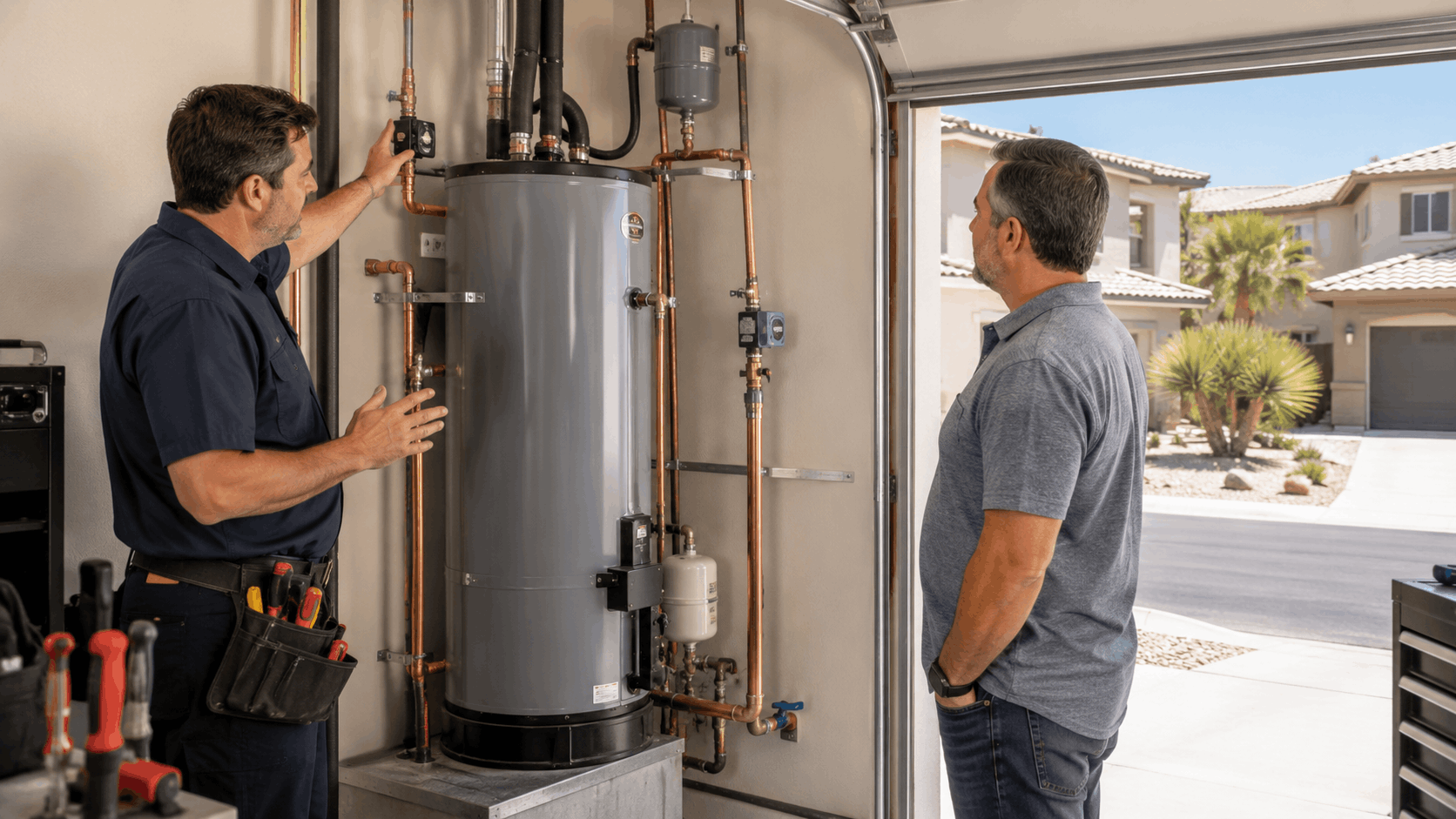
In-Home Assessment and Sizing Check
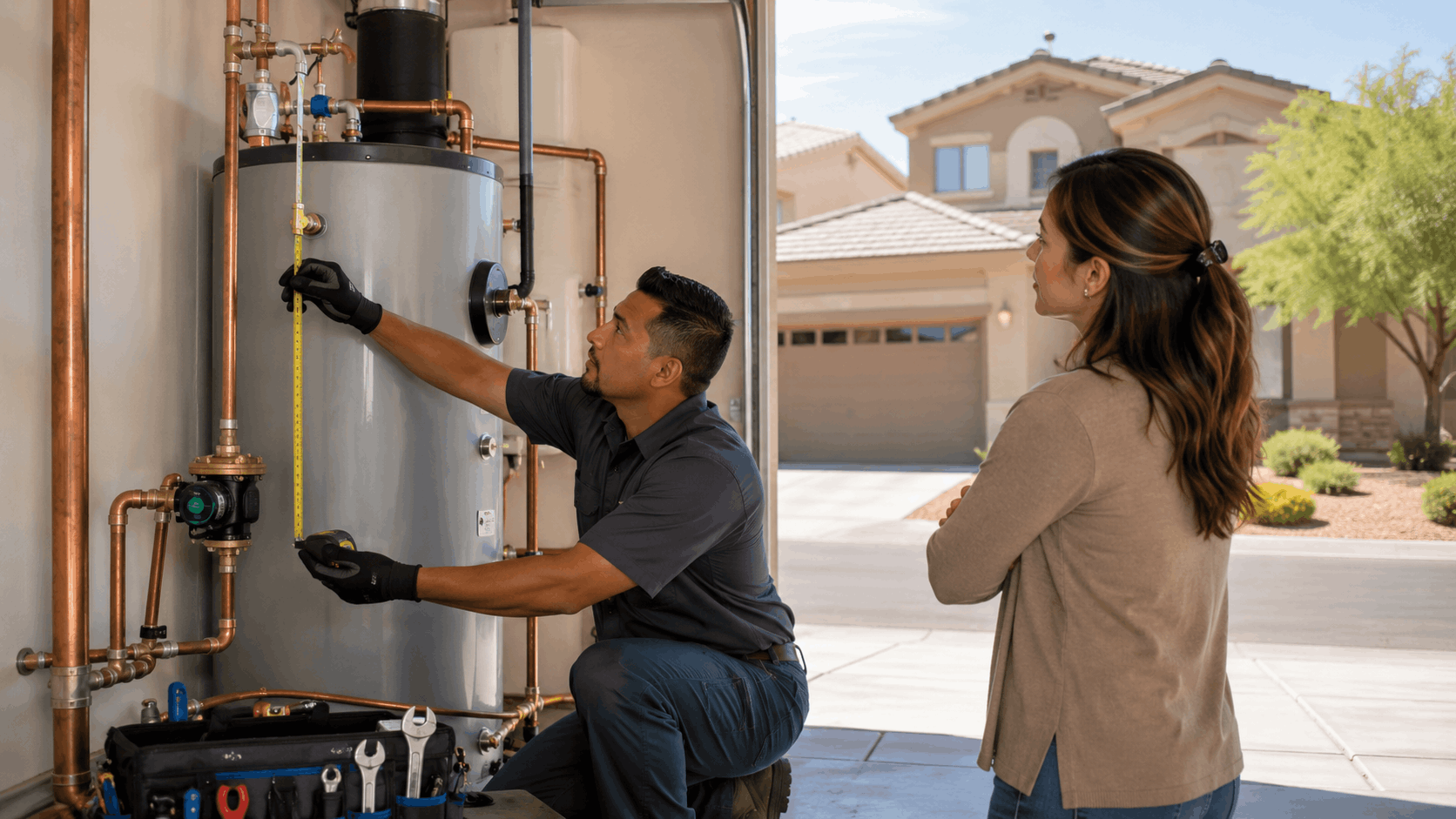
Every job starts with a home assessment. We look at the current unit's size, age, and condition, then check how it fits the household's needs. This is where the sizing check happens, matching capacity to the number of bathrooms and people.
Water pressure is part of the review. Homes across the northwest valley can have pressure that runs high, and that affects both the heater and the fixtures downstream. Checking it up front prevents surprises after installation.
We also look at gas supply, venting, and electrical if relevant. A tankless upgrade may need more gas capacity or different venting, and catching that during the assessment keeps the project on schedule. Nobody likes a mid-job surprise.
By the end of the visit, the homeowner has a clear recommendation and a firm quote. No guessing, no vague estimates, just a plan built around how the home actually uses hot water.
Removing the Old Unit and Draining
Once the new unit is ready, the old one comes out. Tank removal starts with shutting off the gas or power and the water supply. Then the tank has to be drained, which can take a while on a sediment-heavy unit.
Older tanks in the area are often packed with hardened scale that clogs the drain valve. When that happens, we work the sediment loose so the tank empties fully before we move it. A full tank is far too heavy and messy to haul out safely.
Draining and disconnecting a corroded unit calls for care. Rusty fittings can crumble, and a leaking tank makes a mess of a garage floor. Doing it methodically avoids water damage and keeps the workspace clean.
We haul away and dispose of the old unit as part of the job. The homeowner never has to figure out how to get rid of a heavy, waterlogged tank on their own.
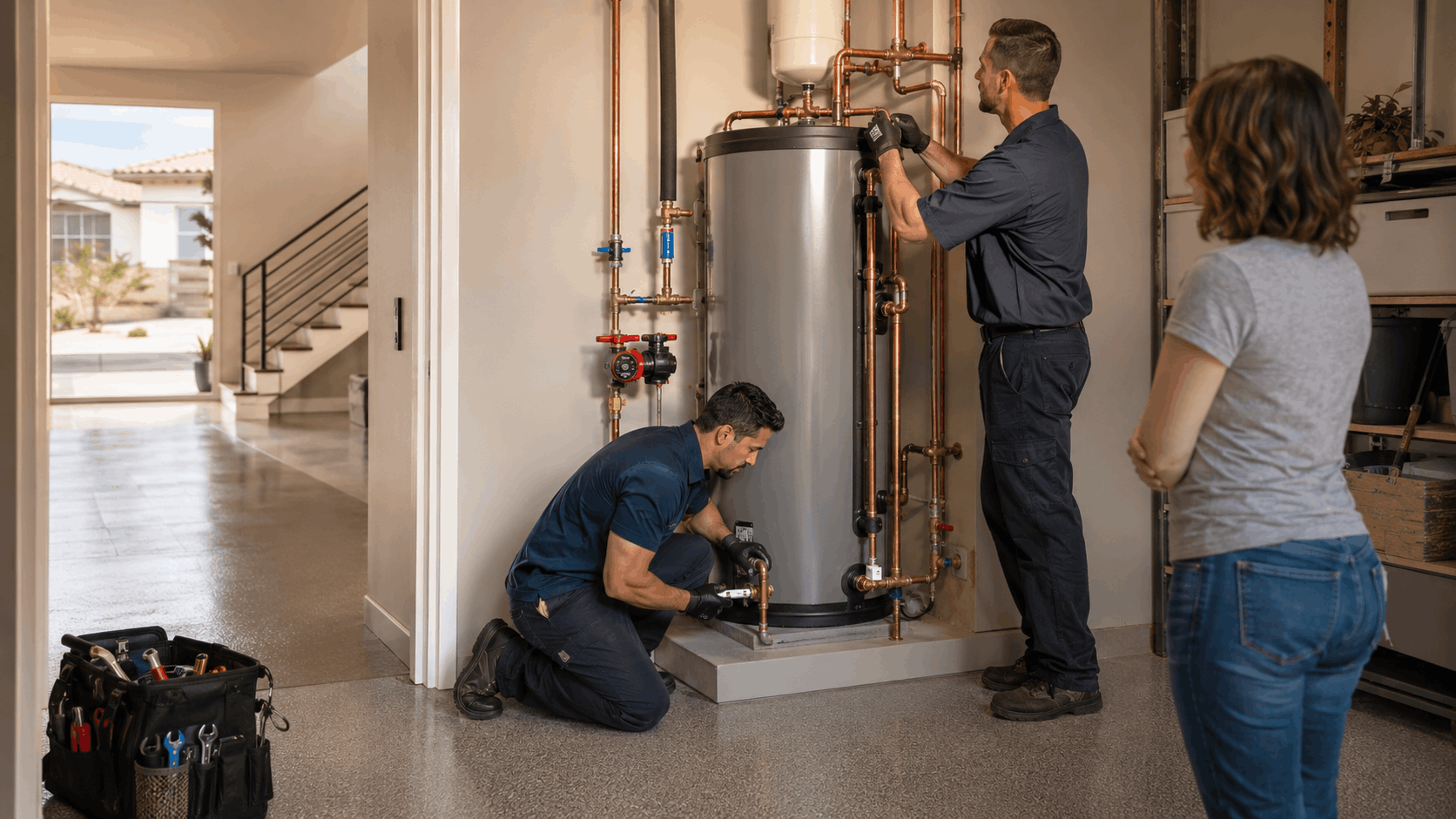
Installing and Connecting the New System
With the space clear, the new unit goes in. Connections depend on the type, whether it is gas or electric, and each has its own requirements for venting and safety. Gas units need proper flue routing, while electric units need the right circuit.
An expansion tank is part of most modern installs. It absorbs pressure changes as water heats and expands, protecting the tank and the home's plumbing. Clark County code requires one in many situations, and we install it as standard practice.
Venting gets careful attention on gas units. Improper venting is a safety hazard, so we confirm the flue draws correctly and meets code before moving on. Cutting corners here is never worth it.
If the job includes recirculation, this is when the pump installation happens. We tie the pump into the loop or install a crossover valve, then set the controls to match the household's schedule.
Testing, Flushing, and Cleanup
No job is done until it is tested. We run a full leak test on every connection, checking for even the smallest drip at the fittings and valves. A tiny leak now becomes a big problem later, so this step is thorough.
Then we set the temperature. A setting around 120 degrees balances comfort, safety, and energy use for most families. We flush the lines to clear any air or debris and confirm the water runs clean and hot.
For two-story homes, we do a final check at the upstairs fixtures. We want to confirm hot water reaches the farthest bathroom quickly, especially if recirculation was part of the project. That is the whole point, after all.
Cleanup is the last step. We remove the old unit, tidy the work area, and walk the homeowner through the new system. They leave knowing how it works and what maintenance keeps it running well.
Need Help in Las Vegas?
Active Plumbing serves Las Vegas and all of Las Vegas Valley.
Permits, Codes, and Local Requirements in Clark County
Water heater work in the Centennial Hills area falls under Clark County rules. A water heater permit protects the homeowner by confirming the work meets plumbing code and passes inspection. Skipping it can create headaches during a future home sale.
Here is a quick look at the local requirements homeowners should know before starting a project.
| Requirement | Applies To | Why It Matters |
|---|---|---|
| Permit | Most replacements | Legal compliance |
| Seismic strapping | Tank units | Safety in movement |
| Drain pan | Interior installs | Prevents water damage |
| Expansion tank | Closed systems | Pressure control |
Following these rules keeps a home safe and keeps the paperwork clean when it comes time to sell.
When a Permit Is Required
In most cases, replacing a water heater triggers a permit requirement through the Clark County Building Department. Even a straightforward swap of the same size unit usually needs one. The permit exists to confirm the installation meets current code.
Some homeowners skip the replacement permit to save time or money. That choice can backfire. Unpermitted work can complicate insurance claims and often surfaces during a home inspection when the property sells.
Pulling a permit also means a qualified inspector reviews the work. That extra set of eyes catches venting mistakes, pressure issues, and safety gaps before they become dangerous. It is protection, not just red tape.
Our team handles the permit process as part of the job. Homeowners do not have to figure out the county paperwork or schedule inspections themselves.
Seismic Strapping and Safety Codes
Local code requires seismic strapping on tank water heaters. These are metal straps that secure the tank so it cannot tip or slide if the ground shakes. Inspectors check for them on every tank install.
A drain pan is another common requirement, especially for interior installs. The pan catches leaks and routes water to a safe drain instead of letting it soak into flooring or walls. In a two-story home, an upstairs or closet install almost always needs one.
The expansion tank falls under safety code too. As water heats and expands in a closed system, pressure builds, and the expansion tank absorbs it. Without one, that pressure stresses the tank, the pipes, and the fixtures.
These rules exist because they prevent real damage. We install strapping, pans, and expansion tanks to code so the system passes inspection and stays safe for years.
HOA Rules in Providence and Skye Canyon
Many Centennial Hills communities have an HOA, and those rules can affect a water heater project. In Providence and Skye Canyon, some associations have guidelines about visible equipment, garage venting, or exterior tankless units mounted on a wall.
An exterior tankless unit is a good example. Some HOAs restrict where equipment can go on an exterior wall or require it be screened from the street. Checking the rules before installation avoids a compliance letter later.
Garage venting can also fall under HOA or code review, depending on the setup. Knowing the community's expectations up front keeps the project smooth and prevents having to redo work.
We are familiar with how these communities operate and help homeowners stay compliant. A little planning avoids conflict with the association down the road.
Warranty and Inspection Sign-Off
Proper permits and inspection do more than satisfy the county. They protect the manufacturer warranty on the new unit. Many warranties require professional installation and code compliance, and skipping the permit can void that coverage.
Inspection sign-off creates a paper trail that proves the work was done right. That record matters when a home goes on the market, because buyers and their inspectors look for it. Permitted, inspected work reassures a buyer.
An unpermitted heater can slow or complicate a home sale. Buyers may demand the work be inspected or redone, which costs time and money at the worst possible moment. A clean record avoids all of that.
We back our work with warranties and handle the inspection process so the homeowner has full documentation. That protection lasts long after the install day.
Costs, Timelines, and What Affects Your Quote
Homeowners always want to know the water heater cost before committing, and that is fair. The replacement price depends on several quote factors, from the type of unit to whether recirculation is added. Here are realistic ranges to help with budgeting.
| Project Type | Typical Range | Timeline |
|---|---|---|
| Tank swap (same size) | $1,500-$2,800 | 2-4 hours |
| Larger tank upgrade | $2,200-$3,500 | 3-5 hours |
| Tankless install | $4,000-$7,500 | 1 day |
| Add recirculation | $800-$2,500 | Half day |
These are general ranges. The final quote always depends on the specifics of the home and the unit chosen.
Typical Price Ranges by Type and Size
A standard tank install for a two-story home falls in the middle range, with a 50 or 75 gallon unit costing more than a small 40-gallon swap. The price range reflects the unit itself plus labor, venting, and code requirements like the expansion tank.
Tankless cost sits higher because the unit costs more and the install is more involved. Gas line upgrades, new venting, and mounting all add to it. That said, the longer lifespan and energy savings help balance the higher install cost over time.
Size drives the tank number the most. A 75 gallon unit costs more than a 50 gallon, both for the equipment and the heavier install work. Matching size to real demand avoids overpaying for capacity a family will never use.
Every home is a little different. The quote reflects the actual conditions we find during the assessment, not a one-size-fits-all sticker price.
Added Costs for Recirculation Systems
Adding recirculation raises the total, but by how much depends on the setup. A comfort valve retrofit is the cheaper path since it uses the existing pipes. The pump cost and a crossover valve make up most of the expense, and labor is modest.
Installing a full return line costs more, especially in a finished home where walls have to be opened. When a home already has a dedicated return line, the recirculation cost drops sharply because only the pump is needed.
For homes without a return line, the retrofit is almost always the smarter value. It delivers most of the comfort at a fraction of the price of adding new pipe. We usually recommend it for existing two-story homes.
Pairing recirculation with a heater replacement often saves money too. Doing both at once means one service visit and shared labor instead of two separate projects.
How Long the Job Takes
A standard tank swap is quick. The installation time for a same-size replacement usually runs 2 to 4 hours, and we often complete it the same day. Homeowners get hot water back by the afternoon.
Upgrading to a larger tank or changing the venting adds time. The job timeline stretches a bit when we adjust connections or add code-required parts. Even then, most tank projects wrap up in a single visit.
Converting to tankless takes longer, often a full day. Mounting the unit, running new venting, and possibly upgrading the gas line all add hours. Adding recirculation to any project adds roughly a half day on top.
We give a realistic timeline during the assessment so homeowners can plan. Knowing whether it is a quick same-day swap or a full-day project helps everyone set expectations.
Rebates and Ways to Save
Efficiency incentives can trim the cost of a new unit. Utility rebates are sometimes available for high-efficiency tankless models or Energy Star tanks, and they change from year to year. Checking current programs before buying can put money back in a homeowner's pocket.
The Energy Star program lists qualifying models that may unlock rebates. Southwest Gas and NV Energy occasionally offer incentives for efficient equipment, so it is worth a quick look during planning.
Energy savings are the longer-term payoff. A more efficient unit costs less to run every month, and over a decade those savings add up meaningfully in a warm climate with heavy hot water use.
We point homeowners toward any current rebates that apply to their chosen unit. Between incentives and lower bills, the smarter unit often costs less than it first appears.
Need Help in Las Vegas?
Active Plumbing serves Las Vegas and all of Las Vegas Valley.
Why Centennial Hills Homeowners Choose Active Plumbing
Choosing a local plumber for a job this size comes down to trust and experience. Active Plumbing has worked in homes across Centennial Hills and the wider northwest valley for years. We know the neighborhoods, the water, and the way these homes are built.
Experience With Local Two-Story Layouts
Our team has hands-on experience with the two-story layouts common around Providence, Iron Mountain Ranch, and Skye Canyon. We have seen how builders routed the plumbing and where the long pipe runs cause trouble. That neighborhood knowledge saves time on every call.
Each community has its quirks. Some Providence homes came with a dedicated return line already in place, while others need a retrofit. Knowing what to expect before we arrive means fewer surprises and a smoother install.
We have replaced heaters in these homes through the hottest summers and the cold snaps that catch desert residents off guard. That local experience shapes how we size units and plan recirculation for the real conditions here.
When a homeowner explains a slow-to-heat upstairs shower, we usually know the cause before we even see the pipes. That comes from working these exact layouts again and again.
Correct Sizing and Recirculation Design
Proper sizing is where we set ourselves apart. Instead of guessing or defaulting to whatever was there before, we match capacity and recirculation design to how the household actually uses hot water. That custom fit prevents both cold showers and wasted energy.
We look at bathroom count, family size, and daily routines together. A family that all showers at 7 a.m. needs a different setup than one that spreads usage out. The recommendation reflects the real home, not a generic formula.
Recirculation design gets the same care. We match the pump, controls, and heater type so the whole system works as one. For tankless setups, we account for minimum flow rates so the recirculation actually fires the burner.
The result is a system that delivers hot water where and when the family needs it. Getting the design right up front means fewer callbacks and a happier household.
Licensed, Permitted, and Warranty-Backed Work
We are a licensed plumber operating fully within Clark County rules. Every replacement includes the proper permits handled by our team, so homeowners never have to deal with county paperwork or inspection scheduling themselves.
Permitted work protects the homeowner in more ways than one. It keeps the manufacturer warranty valid, satisfies code, and creates the record buyers look for at resale. That documentation has real value down the road.
Our work is warranty backed, and we stand behind every install. If something is not right, we make it right. That accountability is part of what a homeowner is paying for when they hire a licensed pro.
Combining licensing, permits, and warranties gives homeowners long-term protection. The job is done to code, documented, and covered, which is exactly how a major home system should be handled.
Fast Response for Failed Water Heaters
Water heaters rarely fail at a convenient time. When a tank quits or springs a leak, homeowners need help fast, and our team responds quickly across the northwest valley. A cold house or a flooded garage cannot wait.
Our emergency service covers Centennial Hills and the surrounding communities. We keep common unit sizes on hand so a failed heater can often be replaced the same day rather than leaving a family without hot water for days.
Speed matters most when a tank is leaking. A ruptured heater can dump 50 gallons or more onto a garage floor, so quick emergency response limits the damage. We move fast to shut it down and swap it out.
Whether the job is a planned upgrade or a middle-of-the-night failure, we treat it with urgency. Homeowners across the area know they can reach us when their water heater lets them down.
Final Thoughts
A cold shower on the second floor is a solvable problem. The fix usually starts with matching the right tank size to how the family lives, then adding recirculation to kill the long wait at upstairs faucets. Both matter more in a two-story Centennial Hills home than in a small single-story house.
Watch for the warning signs, rusty water, leaks, popping noises, and slow recovery, so a failing water heater does not catch you off guard. Plan the replacement, pull the permit, and size it to your real demand. Done right, the new system serves the whole home quickly and quietly for years.
When it is time to replace or upgrade, our team is ready to help. Call Active Plumbing or reach out through our contact page for a consultation, honest sizing advice, and a clear quote for your two-story home.
Frequently Asked Questions
- What size water heater does a two-story home in Centennial Hills need?
- Most two-story homes here fit a 50 to 75 gallon tank or a properly sized tankless unit. A three or four person household with two or three bathrooms usually does well with 50 gallons. Larger families with three or more baths often need 75 gallons or a tankless unit. First hour rating matters as much as raw tank size, so we size to your actual peak demand.
- How much does water heater replacement cost in Centennial Hills?
- A standard tank swap typically runs $1,500 to $2,800, while a larger tank upgrade lands around $2,200 to $3,500. Tankless installs range from $4,000 to $7,500 depending on gas and venting needs. Adding recirculation can add $800 to $2,500. The final quote depends on unit size, type, and any code upgrades your home requires, which we confirm during the in-home assessment.
- Why does hot water take so long to reach my upstairs bathroom?
- The delay comes from long pipe runs in a two-story home. Water sitting in a 60-foot pipe cools between uses, so it all has to drain out before hot water arrives, often 30 to 90 seconds. A recirculation system keeps hot water moving near the fixture, cutting that wait to a few seconds and saving the water you would otherwise pour down the drain.
- Can I add a recirculation pump to my existing water heater?
- Yes. Homes without a dedicated return line can use a comfort valve retrofit. This uses a small pump at the heater and a crossover valve under the farthest sink, connecting the hot and cold lines so warm water stays close to the fixture. It installs in a few hours without opening walls and costs far less than adding a new return line.
- How long does a water heater last with Las Vegas hard water?
- A tank water heater usually lasts 8 to 12 years, but the hard water from the Las Vegas Valley Water District tends to push units toward the shorter end. Mineral sediment builds up and speeds corrosion. Annual flushing and a water softener both extend life. Tankless units can last 15 to 20 years with regular descaling to clear scale from the heat exchanger.
- Do I need a permit to replace a water heater in Clark County?
- In most cases, yes. Clark County requires a permit for water heater replacements, even a straightforward same-size swap. The permit confirms the work meets code and gets inspected for safety. It also keeps your manufacturer warranty valid and creates a record buyers look for at resale. Our team handles the permit and inspection so you do not have to.
- Is tankless worth it for a large two-story home?
- Often, yes. Tankless units deliver endless hot water, so no one gets stuck last in line during the morning rush. They last longer and cost less to run, which pays off over time in a warm climate. The trade-offs are a higher upfront cost and possible gas or venting upgrades. For high-demand homes planning to stay long term, it usually makes sense.
- How long does a water heater installation take?
- A standard same-size tank swap takes about 2 to 4 hours and is often done the same day. A larger tank upgrade with venting changes runs 3 to 5 hours. Converting to tankless usually takes a full day because of mounting, venting, and possible gas work. Adding a recirculation system adds roughly a half day to any of these projects.
- Does a recirculation system raise my energy bill?
- Only slightly when set up correctly. A pump running nonstop wastes energy, but modern systems use timers or demand sensors to run only when needed. A timer schedules the pump for busy hours, and a demand sensor activates it when someone uses a fixture. Managed this way, the cost is usually just a few dollars a month, often offset by the water it saves.
- What are the signs my water heater is about to fail?
- Watch for rusty or discolored water from hot taps, water pooling around the tank base, and popping or rumbling noises during heating. Rising energy bills and slow recovery, where hot water takes longer to come back, are also warning signs. A unit over ten years old showing any of these is likely near the end. Catching it early lets you plan instead of scramble.
Licensed plumbing professionals serving Las Vegas and Las Vegas Valley.
Licensed in Nevada · License #0047021
Last updated on
Why trust Active Plumbing?
Founded in 1991, Active Plumbing is a licensed and insured plumber serving Las Vegas and Las Vegas Valley. All content is reviewed by our licensed technicians.

Need Help in Las Vegas?
Active Plumbing serves Las Vegas and all of Las Vegas Valley.
Related Articles
Clark County Water Heater Permit Requirements: What Inspectors Flag in Garage Installs
Clark County requires a permit for garage water heater installs. Learn the rules, the top inspector flags, and how to pass the first time in Las Vegas.
Garage Water Heater Code in Clark County: 18-Inch Stands, Drain Pans, and Seismic Straps
Clark County garage water heaters need 18-inch stands, drain pans, and seismic straps. Learn the code rules, permit process, and how Active Plumbing keeps Las Vegas installs compliant.
Water Heater Replacement Same Day Las Vegas: Stock and Install Timelines
Learn how same-day water heater replacement works in Las Vegas, from local stock and realistic install timelines to permits, neighborhood factors, and prep tips.