Water Heater Replacement in Green Valley Henderson: High Water Pressure and PRV Pairing
Key Takeaways
- Green Valley and Henderson homes often see water pressure above 80 PSI due to elevation and municipal supply choices.
- High pressure strains water heater tanks and fittings, triggers early T&P valve discharge, and can void the manufacturer warranty.
- A pressure reducing valve steps down street pressure to a safe 50 to 60 PSI target for the whole home.
- Most homes with a PRV also need an expansion tank to absorb thermal expansion in a closed system.
- Replacement day is the best time to add a PRV, saving labor and protecting the new unit from day one.
- The combined heater and PRV job usually runs three to five hours and requires a City of Henderson permit.
- Henderson's hard water causes scale buildup, so flushing, descaling, or a water softener extends heater life.
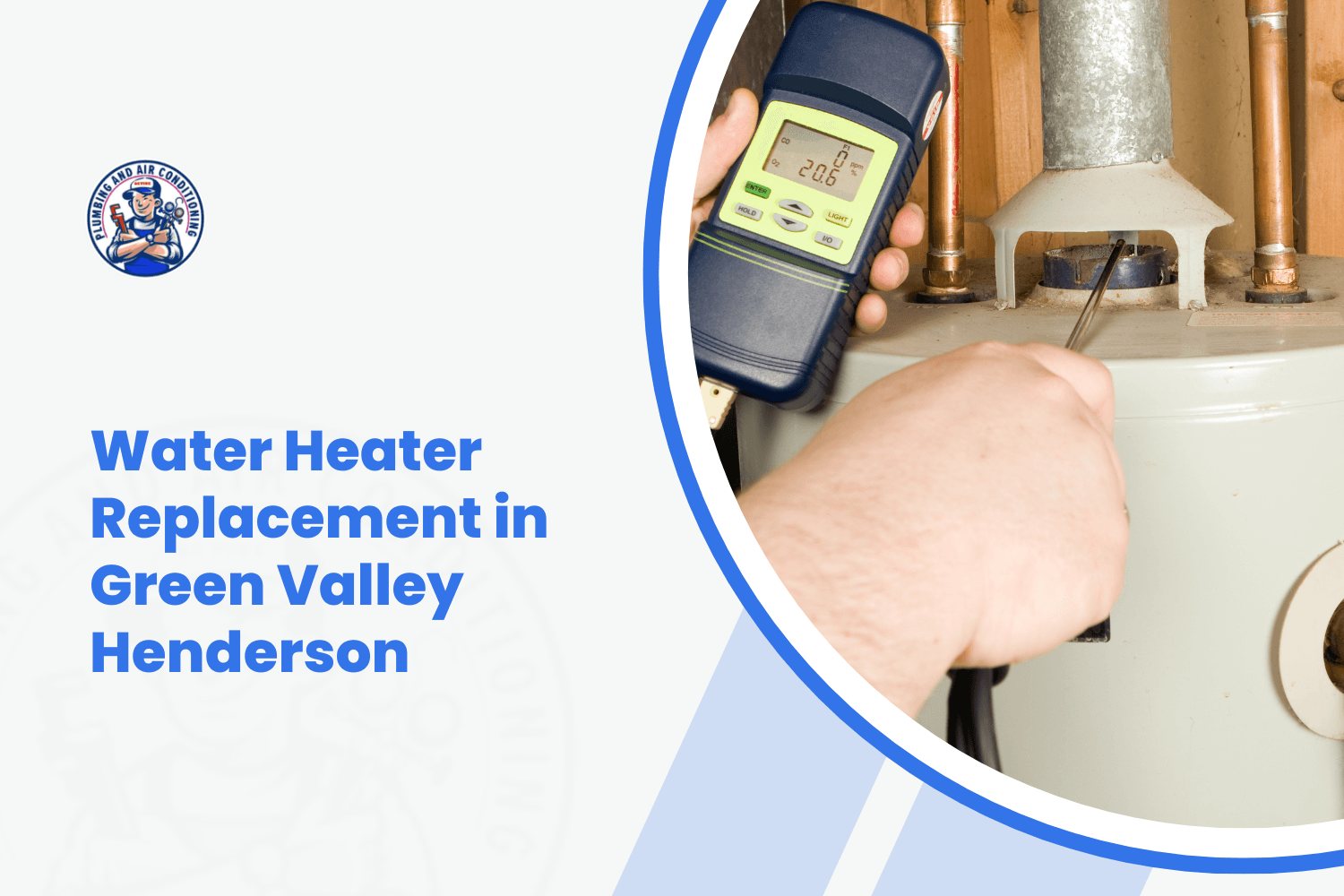
- Active Plumbing runs a pressure test on every water heater assessment and only recommends a PRV when the gauge proves the need.
In This Article
A few months back, a homeowner off Green Valley Parkway called us frustrated. She had replaced her water heater the year before, and it was already leaking from the top fittings. The unit was practically new, so what went wrong? When our team put a gauge on her main line, the answer showed up fast. Her street pressure was reading 92 PSI, well above what any tank is built to handle.
This story plays out more often than most Green Valley residents expect. A brand new heater gets installed, the old one gets hauled away, and everyone assumes the problem is solved. But if the incoming pressure is too high, that fresh tank is under stress from day one. High street pressure quietly shortens the life of every appliance in the home.
Why Green Valley Homes See Higher Water Pressure
Green Valley sits in a part of Henderson where terrain and municipal supply choices push pressure higher than the average home is built to handle. Many residents have no idea their line runs hot until something breaks. A quick gauge test often reveals numbers that surprise people.
The problem is not random. It ties back to elevation, the way the water system is engineered, and the age of the home. Here are the main factors we see across Green Valley water pressure complaints:
- Hilly terrain that forces higher base pressure to reach uphill homes
- Henderson water supply engineered to serve multiple elevation zones
- High street pressure that often exceeds 80 PSI at the meter
- Older homes with worn or missing pressure controls
Elevation and Pressure Zones Around Green Valley Ranch
Green Valley Ranch and the neighborhoods climbing toward the McCullough foothills sit at varying elevations. Water systems have to overcome gravity to push supply uphill to every home. To do that reliably, the system runs a higher base pressure across the entire zone.
The catch is that homes at the bottom of a pressure zone get the same high base pressure meant for homes higher up. So a house near the lower end of Green Valley Ranch might see far more pressure than it actually needs. The system does not fine-tune pressure for each lot.
These pressure zones are set up so the highest home still gets adequate flow. That design keeps everyone supplied, but it leaves lower homes exposed to excess force. We see this pattern in the foothill neighborhoods again and again.
When elevation and zone design combine, the result is a wide pressure range across a single community. One street may test at 65 PSI while another a block downhill reads 90 PSI. That difference is enough to matter for a water heater.
How the Las Vegas Valley Water District Sets Supply Pressure
The Las Vegas Valley Water District and local Henderson utilities engineer their systems to deliver consistent flow across a large service area. To keep water moving through miles of pipe and up varied terrain, delivered pressure is set on the higher side. That choice protects flow but passes strain on to individual homes.
In parts of Henderson, supply pressure at the meter regularly exceeds 80 PSI. Plumbing code treats 80 PSI as the upper limit for a reason. Above that number, fixtures and appliances start wearing out more quickly than they should.
You can read more about pressure standards from the EPA WaterSense program, which covers efficient water use and system pressure. The utility is not doing anything wrong by delivering high supply pressure. It simply falls on the homeowner to control pressure inside the property line.
That is exactly why a pressure reducing valve matters. The utility gives the home a strong supply, and the home is responsible for stepping it down to a safe range. Without that step-down device, whatever the street delivers is what the plumbing takes.
Older vs Newer Neighborhoods Near Sunset Road and Green Valley Parkway
Established areas along Sunset Road were built when pressure controls were less standard than they are today. Many of those homes either never had a pressure reducing valve or have one that failed years ago. Owners often do not realize the device even exists until it stops working.
Newer developments off Green Valley Parkway tend to include a PRV as part of the original build. But even those valves have a service life and can drift out of adjustment over time. A twelve-year-old PRV may no longer hold the pressure it was set to.
Home age tells us a lot before we even test. When we visit a 1990s home near Sunset Road, we expect to check for an aging or missing valve. When we visit a newer build, we check whether the existing PRV still holds its target.
Either way, the pattern is consistent across the community. Older homes need a valve added or replaced, and newer homes need theirs verified. Home age shapes the fix more than most owners expect.
Signs a Home Has Pressure Above Safe Limits
High pressure leaves clues around the house long before something fails. One of the more common is water hammer, a banging or knocking sound in the pipes when a faucet or valve shuts off. That noise means the water is moving with more force than it should.
Other high pressure symptoms include faucets that drip even after being turned off tight and toilets that run on their own. These small annoyances point to a system under constant strain. People often chase the drip when the real cause is upstream.
Appliance wear is another giveaway. Dishwashers, washing machines, and water heaters that fail earlier than expected often share one thing in common, which is high line pressure grinding on their internal parts.
If a home shows two or more of these signs, a pressure test is the next logical step. Our team carries a gauge on every visit for exactly this reason. A two-minute test answers the question with a hard number.
Get Your Quote
Tell us what's going on and we'll get back to you. We're open 24/7.
How High Pressure Damages Water Heaters
Too much pressure does not just annoy a homeowner. It mechanically wears out a water heater from the inside and outside. That is why we see so many premature water heater failures across Henderson tied back to pressure.
A tank or tankless unit is built for a specific pressure range. Push past it, and the damage adds up daily. Here is how high pressure damage shortens tank lifespan compared to a properly controlled system:
| Pressure Condition | Effect on Water Heater | Typical Lifespan Impact |
|---|---|---|
| 50 to 60 PSI (controlled) | Normal stress on tank and fittings | Full expected life, 8 to 12 years |
| 80 to 90 PSI | Elevated strain, early fitting leaks | Reduced by 2 to 4 years |
| 90+ PSI | Constant overstress, T&P discharge | Failure often within 3 to 5 years |
Stress on the Tank and Fittings
A water heater tank holds pressurized water all day, every day. When that pressure runs high, the steel shell, the internal welds, and every threaded connection carry extra load. Over months and years, that constant strain adds up.
Fittings are usually the first to give way. The threaded connections at the top of the tank loosen and weep under repeated pressure. That is what happened to the home off Green Valley Parkway we mentioned earlier.
The tank shell itself flexes slightly with each pressure change. High baseline pressure means less room to absorb spikes without stress. Small cracks and leaks tend to show up years before they otherwise would.
Once a tank starts leaking from stress, repair is rarely worth it. The damage is structural, and replacement becomes the only real fix. Controlling pressure from the start avoids this entire path.
Premature T&P Valve Discharge
Every water heater has a temperature and pressure relief valve, known as the T&P valve. Its job is to open and release water if pressure or temperature climbs too high. It is a safety device, not something meant to open during normal use.
When line pressure is already high, the T&P valve sits close to its trigger point all the time. Small daily pressure changes can push it over the edge, causing it to discharge water. Homeowners often find a puddle near the heater or a dripping discharge pipe.
Frequent discharge wears the valve out early. A relief valve that cycles open and closed constantly loses its ability to seal. Eventually it either sticks open and drips forever or fails to open when it truly should.
A leaking T&P valve is one of the more common calls we get. In many of those homes, the root cause is not the valve at all. It is the high pressure feeding the system.
Thermal Expansion With Nowhere to Go
When water heats up, it expands. In an open system, that extra volume pushes back toward the street. But most modern homes have a check valve or a PRV that creates a closed system, so the expanded water has nowhere to go.
In a closed system without protection, that expansion causes pressure spikes every time the heater runs. Those spikes can push the whole system well above street pressure for short bursts. The water heater and every fixture feel each one.
Thermal expansion is exactly why an expansion tank matters. It gives the heated water a cushion to expand into safely. Without it, the T&P valve becomes the only release, and it was never meant for that daily job.
Pairing pressure control with an expansion tank solves both problems at once. The PRV holds incoming pressure down while the expansion tank absorbs the heat-driven spikes. Together they keep the system stable.
Why Warranties Get Voided
Most water heater manufacturers set a maximum pressure limit in their warranty terms, often around 80 PSI. If a unit fails and the installer finds pressure above that limit, the claim can be denied. The manufacturer views high pressure as the homeowner's responsibility.
We have seen homeowners lose a warranty claim on a heater only a few years old because of high pressure. The failure was real, but the paperwork pointed to an uncontrolled system. That is an expensive lesson to learn after the fact.
A documented pressure test and an installed PRV protect that warranty. It shows the system was set up within the manufacturer's stated range. If a problem does come up, the claim stands on solid ground.
Our team documents pressure readings during every water heater service so the record is clear. Protecting the warranty is part of doing the job right. It costs far less than a denied claim down the road.
Need Help in Las Vegas?
Active Plumbing serves Las Vegas and all of Las Vegas Valley.
What a Pressure Reducing Valve (PRV) Actually Does
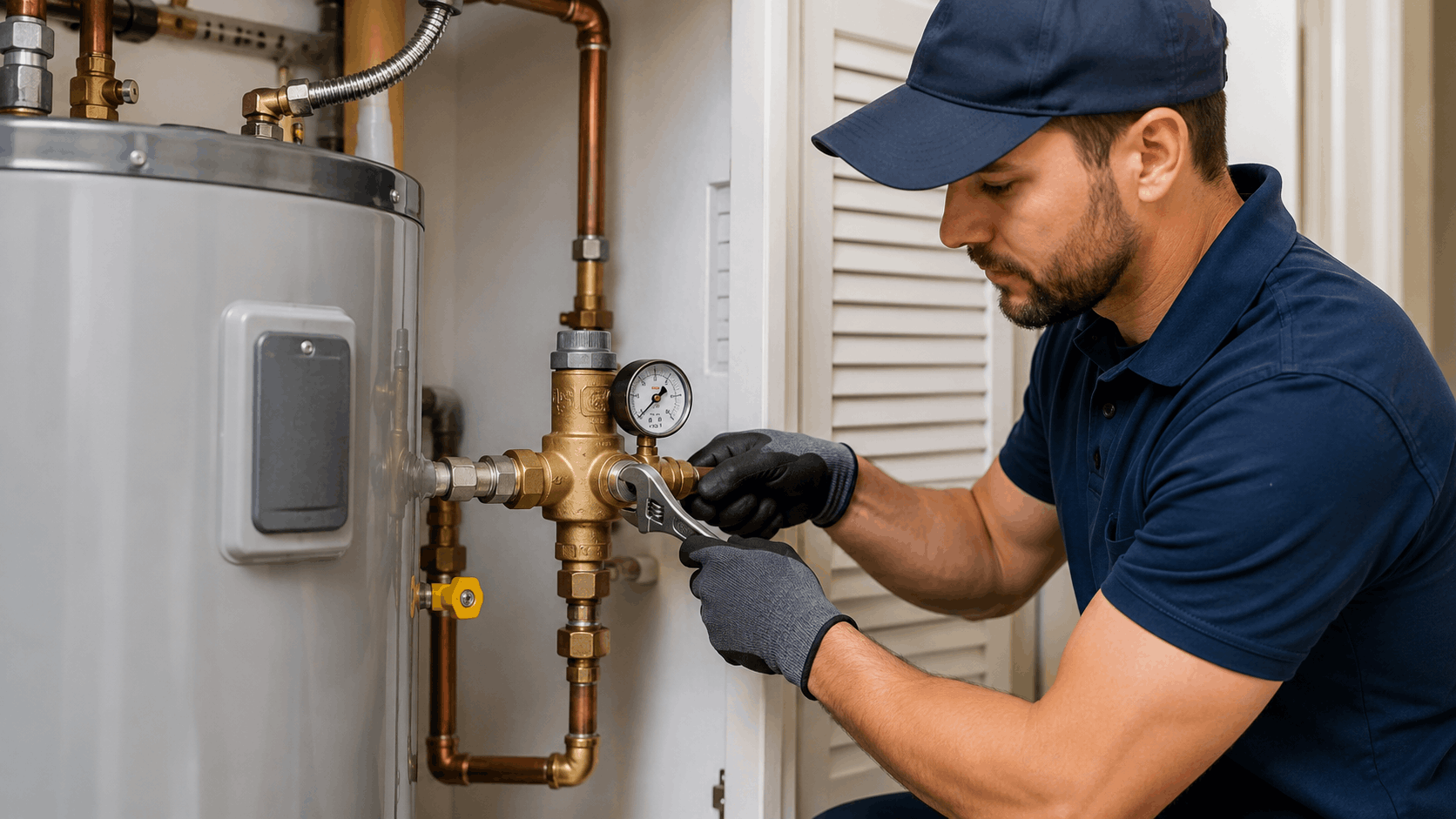
A pressure reducing valve is a small device that does a big job. It sits on the main water line and controls how much pressure enters the home. Most homeowners never think about it until it fails or is missing.
The concept is simple even if the mechanics are not. The PRV takes whatever the street sends and steps it down to a level the home can handle safely. Here is a quick breakdown of what water pressure control looks like:
| Device Role | What It Does | Where It Sits |
|---|---|---|
| PRV | Lowers incoming street pressure to a set range | Near the main shutoff |
| Expansion tank | Absorbs pressure from thermal expansion | Near the water heater |
| T&P valve | Safety release for extreme pressure or heat | On the water heater tank |
How a PRV Lowers Incoming Pressure
Inside a PRV is a spring-loaded diaphragm that reacts to the pressure passing through it. When street pressure pushes in, the valve restricts flow just enough to drop it to the set target. The result is a steady, lower pressure on the house side.
Think of it like a gatekeeper on the incoming pressure. The street can send 90 PSI, but the PRV only lets a safe level through. The home never feels the full force of the supply line.
The step-down happens automatically and continuously. As street pressure fluctuates through the day, the valve adjusts to hold the house at its target. Homeowners never have to touch it once it is set.
This is what keeps the whole system in a safe range. Every faucet, toilet, and appliance downstream benefits from that controlled pressure. The PRV protects the entire home from a single point.
Recommended PSI for Henderson Homes
For most Henderson homes, we set the PRV to hold pressure between 50 and 60 PSI. That target pressure gives strong flow at every fixture while staying well below the 80 PSI danger line. It is the sweet spot for both comfort and protection.
At 50 PSI, showers and faucets still feel strong and appliances run within their design range. At 60 PSI, flow feels even more forceful without crossing into risky territory. We choose within that window based on the home's fixtures and layout.
Going below 50 PSI can leave showers feeling weak, especially in two-story homes. Going above 60 PSI starts eating into the safety margin. That range balances both concerns for typical Green Valley households.
The Uniform Plumbing Code backs the 80 PSI ceiling that guides these settings. Our target of 50 to 60 PSI keeps a comfortable buffer below that limit. It protects the system without sacrificing performance.
Where the Valve Is Installed
A PRV is installed on the main water line, usually right after the main shutoff where water enters the property. That placement lets it control pressure for the entire home from one point. Everything downstream gets the benefit.
In many Henderson homes, that spot is near the front of the house, often in a below-grade box or against an exterior wall. The exact location depends on how the home was originally plumbed. Our team locates it during the initial visit.
Placing the valve at the main means no room is left unprotected. Whether it is the kitchen sink, the far bathroom, or the water heater, all of it runs at the controlled pressure. That whole-home coverage is the point.
Accessibility matters too. We place or replace the valve so it can be serviced later without tearing into walls. A well-located PRV makes future maintenance simple.
PRV vs Expansion Tank: Do Homes Need Both
People often confuse a PRV with an expansion tank, but they solve different problems. The PRV controls pressure coming in from the street. The expansion tank handles pressure created inside the home when water heats up.
When a PRV is installed, it usually creates a closed system because it prevents backflow toward the street. In a closed system, thermal expansion has nowhere to go without an expansion tank. So the two devices work as a pair more often than not.
Installing a PRV without an expansion tank can actually cause new pressure spikes. The heated water gets trapped with no release, and pressure climbs each heating cycle. That is why we rarely install one without the other.
For most homes with a new water heater, both devices belong together. The PRV keeps the baseline safe, and the expansion tank absorbs the heat-driven spikes. Skipping either one leaves a gap in protection.
Why Pairing a New Water Heater With a PRV Makes Sense
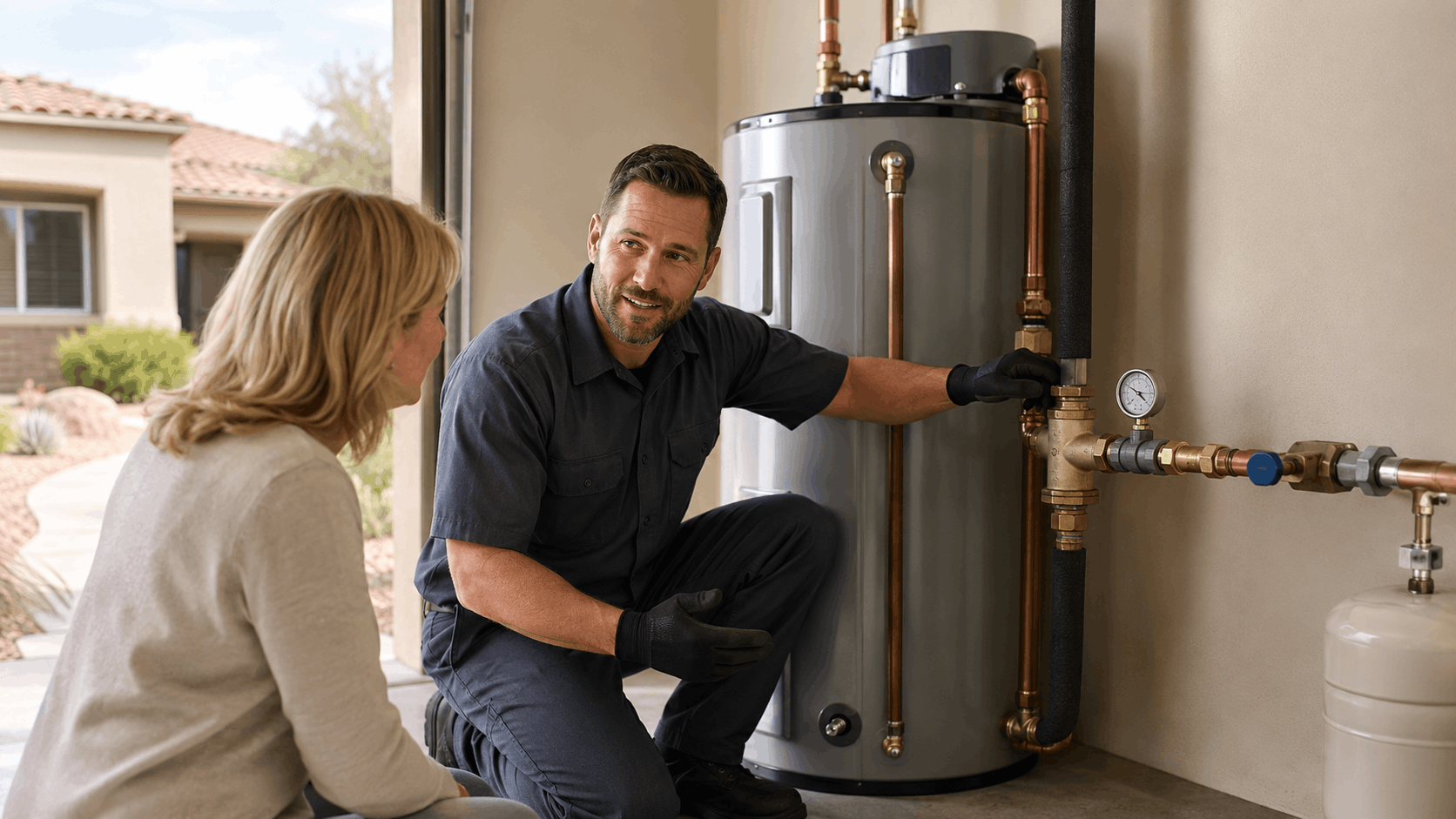
Replacement day is the ideal moment to address pressure. The system is already open, the old unit is coming out, and adding a PRV at the same time is far easier than a separate trip. Doing both together protects the investment right away.
The benefits stack up across cost, code, and long-term reliability. Here is how water heater replacement and PRV pairing compares to doing the heater alone:
| Approach | Upfront Cost | Long-Term Result |
|---|---|---|
| New heater only (high pressure) | Lower today | Early failure, possible voided warranty |
| New heater + PRV + expansion tank | Moderate today | Full lifespan, protected warranty, fewer callbacks |
Protecting the Investment on Day One
A new water heater is a real expense, so it makes sense to give it the best shot at a full life. Controlling pressure from the very first day means the tank never sees the strain that causes early failure. The unit starts its life in a safe range.
Homes that install a PRV alongside a new unit tend to get the full expected lifespan out of it. Instead of replacing a heater every four or five years, they get the eight to twelve years the unit was built for. That difference pays for the valve many times over.
The opposite is also true. A new unit dropped into a high pressure system inherits the same problem that may have killed the old one. Replacing the heater without addressing pressure is treating the symptom, not the cause.
We look at it as protecting the whole investment, not just installing a box. A properly protected new unit is money well spent. An unprotected one is a repeat call waiting to happen.
Saving Labor by Combining the Work
When our team is already at a home replacing a heater, the water is off and the main line is accessible. Adding a PRV at that moment uses labor that is already committed. A separate visit later would mean draining, shutting off, and setting up all over again.
Combining the work into one visit cuts the total labor cost noticeably. The homeowner pays for one trip, one setup, and one round of testing instead of two. That efficiency shows up directly in the final price.
It also means one interruption to the home instead of two. The water is off once, the work happens once, and the household gets back to normal more quickly. Nobody wants two separate no-water afternoons.
For most homes, this combined approach is the practical choice. The cost savings and convenience make the pairing an easy decision. Doing it in one visit is simply smarter scheduling.
Meeting Code and Warranty Terms
Local code sets an upper pressure limit, and inspectors check for it during permitted work. Installing a PRV when pressure runs high helps the home pass inspection cleanly. It shows the system meets the 80 PSI ceiling the code requires.
Manufacturer warranty terms line up with this. As covered earlier, many warranties require pressure below a set limit. A documented PRV install keeps those warranty terms intact and the coverage valid.
Skipping the valve can create a code compliance problem down the line. If pressure tests high during any future inspection, the home may fail. Handling it during the replacement avoids that headache entirely.
Our team pulls permits and sets pressure to code as part of the job. That way the home is protected on paper and in practice. Code compliance and warranty protection go hand in hand.
Preventing Callbacks Across the Home
Controlled pressure does far more than protect the water heater. It protects every faucet, toilet fill valve, and appliance connected to the system. The whole house runs easier when pressure sits in a safe range.
Homes with high pressure tend to generate repeat plumbing calls across the board. A dripping faucet here, a running toilet there, a washing machine hose that bursts. Many of those callbacks trace back to the same excess pressure.
Once a PRV brings pressure down, those small failures slow way down. Fixtures last longer, seals hold better, and hoses stop failing early. The homeowner spends less on scattered repairs over the years.
So the pairing does not just save one appliance. It reduces wear across the entire plumbing system. That whole-home benefit is one more reason we recommend it at replacement time.
Choosing the Right Water Heater for a Green Valley Home
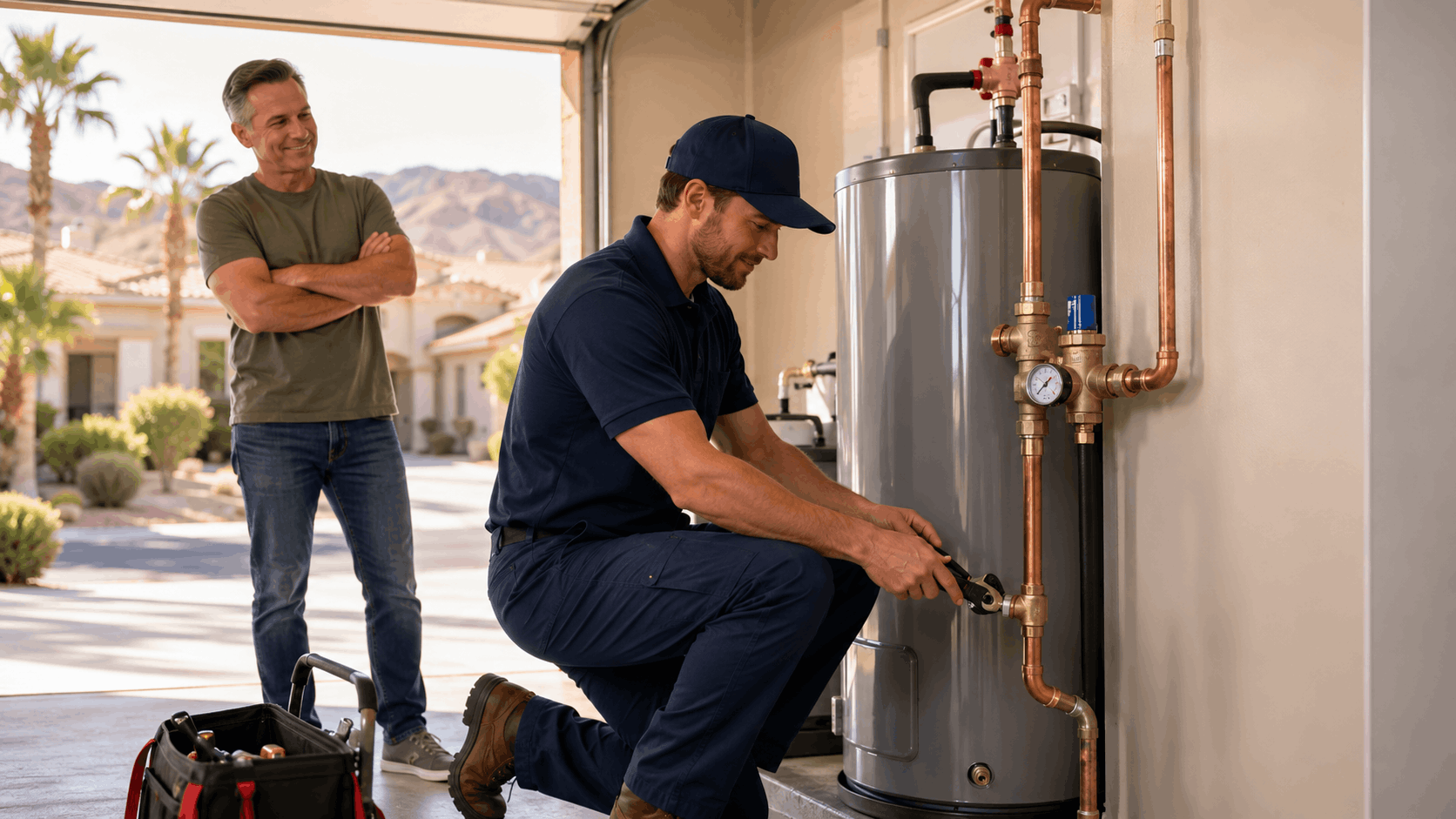
Picking the right unit matters as much as protecting it. The best choice depends on household size, available space, and how a home handles the local hard water. Green Valley conditions shape that decision in specific ways.
There is no single right answer for every home. A large family in a two-story house has different needs than a couple in a smaller place. We match the unit to the household and the water it will run.
Tank vs Tankless in Henderson Conditions
A traditional tank heater stores hot water and keeps it ready. It costs less upfront and works well for families who use a lot of water at once. The tradeoff is that it takes up more space and runs out during heavy use.
A tankless unit heats water on demand and never runs out. It saves space and can lower energy use over time. Our tankless water heater installation is popular with smaller households and homes short on space.
For larger families along Green Valley Ranch with multiple bathrooms running at once, a tank or a properly sized tankless both work. The choice comes down to family size, space, and long-term cost tolerance. Tankless costs more upfront but can pay back over years.
Henderson's hard water affects both types, which we cover below. That factor influences maintenance more than the tank versus tankless choice itself. We walk homeowners through the full comparison before they decide.
Sizing for the Household
Sizing a tank heater comes down to gallon capacity. A household with one or two people often does fine with a 40-gallon tank. Larger families with three or more bathrooms usually need 50 gallons or more to avoid running out.
Tankless sizing works on flow rate instead, measured in gallons per minute. A unit has to keep up with how many fixtures run at the same time. Two showers plus a dishwasher demand a higher flow rate than a single bathroom.
Getting the sizing right prevents cold showers and wasted energy. An undersized unit struggles and wears out sooner. An oversized one costs more than needed without adding value.
We base sizing on the number of bathrooms, occupants, and peak usage habits. A quick conversation about the household covers most of what we need. The goal is steady hot water without overspending.
Hard Water and Scale Buildup Across the Valley
Henderson and the wider Las Vegas Valley have famously hard water, loaded with calcium and other minerals. Those minerals settle as scale inside a water heater over time. Scale buildup reduces efficiency and shortens the life of any unit.
In a tank, scale collects at the bottom and forces the burner or element to work harder. In a tankless unit, scale clogs the narrow heat exchanger and can trigger error codes. Both types need attention to stay healthy.
Regular flushing and descaling keep the buildup in check. Our tankless maintenance and descaling service handles this for on-demand units. Many homeowners also add a water softener installation to slow scale across the whole home.
Addressing hard water protects the new heater the same way a PRV protects it from pressure. Both are about giving the unit its full life. In this valley, hard water is a factor no homeowner can ignore.
Gas vs Electric Options
Gas water heaters heat quickly and often cost less to run where natural gas is available. Many Green Valley homes already have a gas hookup at the heater location. When that hookup exists, gas is usually the straightforward choice.
Electric units cost less to install and work in homes without a gas line. They run a bit slower to recover but need less venting. For some homes, electric is the simpler path.
Existing hookups drive a lot of this decision. Switching from electric to gas means adding a gas line and venting, which raises the cost. Our gas line installation team handles that when a homeowner wants to convert.
We look at what the home already has before recommending a fuel type. Working with existing hookups keeps the project simpler and cheaper. When a change makes long-term sense, we lay out the full picture.
Need Help in Las Vegas?
Active Plumbing serves Las Vegas and all of Las Vegas Valley.
What the Replacement and PRV Installation Process Looks Like
Knowing what to expect takes the stress out of replacement day. The process follows a clear order from testing to final inspection. Most standard jobs wrap up in a single visit.
Our team keeps the home clean and the timeline predictable. Here is how the installation process usually unfolds from start to finish.
Testing Pressure Before Any Work Begins
Before touching the old unit, we put a pressure gauge on an outside spigot or the main line. That reading tells us the actual street pressure feeding the home. It is the diagnosis that decides whether a PRV is needed.
A PSI reading under 60 usually means the existing pressure control is working fine. A reading of 80 or higher tells us the home needs a PRV added or replaced. The gauge removes the guesswork entirely.
This step matters because we never recommend a PRV a home does not need. If the pressure tests fine, we say so and move forward with just the heater. Honest diagnosis starts with real numbers.
The whole test takes only a couple of minutes. It sets the plan for the rest of the visit. Everything after this point is based on what the gauge shows.
Removing the Old Unit Safely
Once the plan is set, we shut off the water and the fuel or power to the old heater. Then we drain the tank fully before disconnecting it. Draining first prevents spills and makes the unit safe to move.
Disconnecting involves the water lines, the gas or electric connection, and the venting on a gas unit. We handle each connection carefully to avoid damaging surrounding pipe. Rushing this step is how walls and floors get damaged.
After disconnecting, we haul the old unit out and take it for disposal. The homeowner never has to deal with getting rid of it. Old unit removal is part of the service.
We protect floors and walkways during the removal. A drained tank still holds sediment and residue, so we keep it contained. The space stays clean throughout.
Installing the New Heater and PRV Together
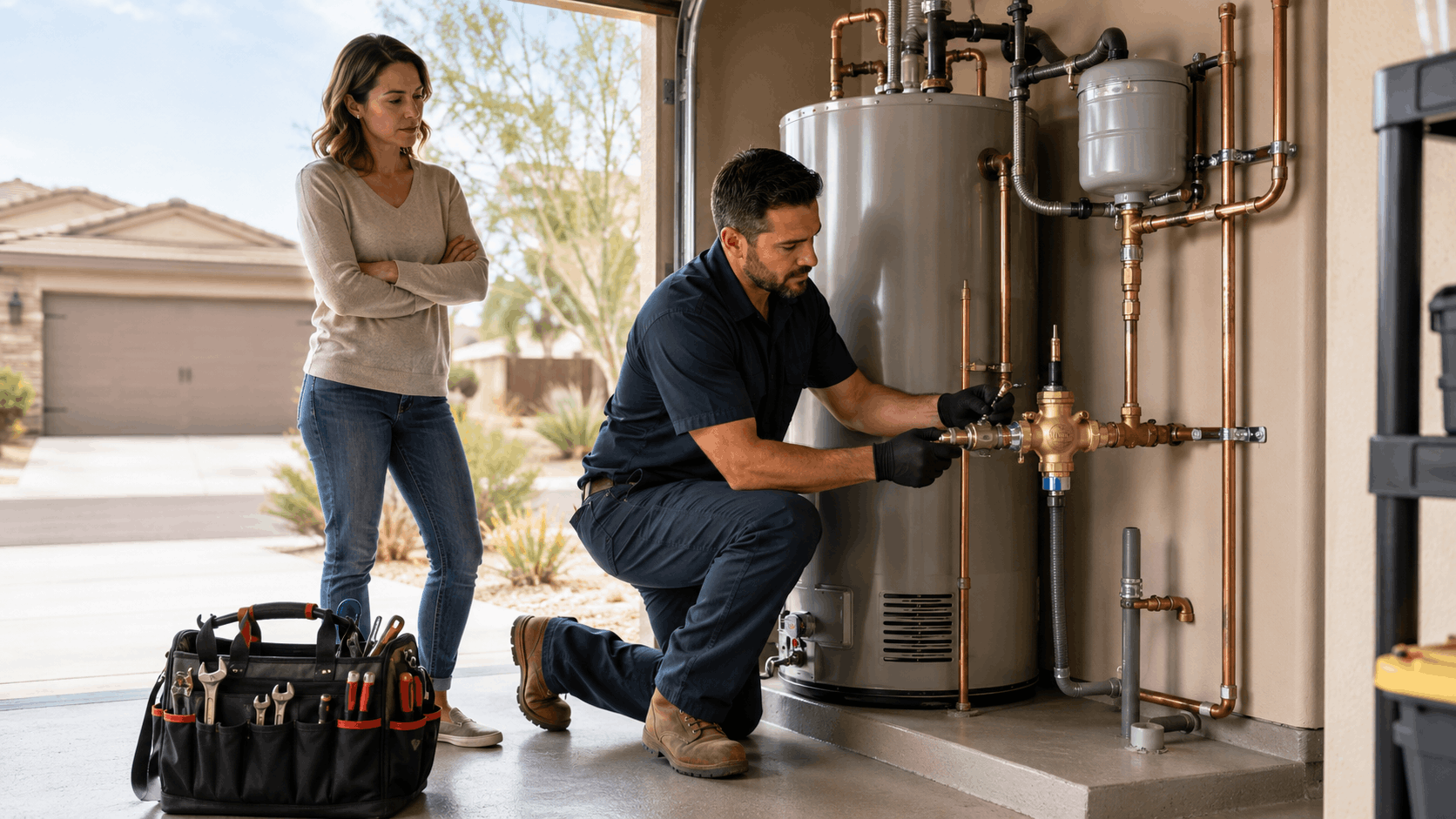
With the old unit gone, we set the new heater in place and make the connections. That includes water lines, the fuel or power hookup, and venting for a gas model. Everything gets connected to code.
If the pressure test called for it, we install the PRV on the main line at this stage. We also add an expansion tank near the heater to handle thermal expansion. The two work together in the closed system.
Then we set the PRV to the target pressure, usually between 50 and 60 PSI. We confirm the setting with the gauge before moving on. The PRV setting is dialed in precisely, not left to chance.
Doing the installation and the PRV together in one sequence keeps everything efficient. The system comes online balanced and protected. This is the pairing in action.
Final Testing and Cleanup
Before we call the job done, we turn the water back on and check every connection for leaks. We watch the new fittings and the PRV closely. A slow drip caught now saves a big problem later.
We run a final pressure test to confirm the PRV holds its target. We also verify the heater fires up and produces hot water as expected. The leak check and final test happen together.
Once everything passes, we clean up the work area completely. Tools, packaging, and any debris leave with us. The homeowner gets the space back the way it was, only better.
We walk the homeowner through what was done and how the new setup works. Any questions get answered before we leave. Clear communication closes out every job.
Costs, Timelines, and Permits in Henderson
Budgeting with real numbers helps homeowners plan. The combined job costs more than a heater alone, but it protects that heater and the whole home. Permits and HOA rules also factor into the timeline.
Here is a realistic look at costs, timing, and requirements for a replacement plus PRV in Henderson:
| Item | Typical Range | Notes |
|---|---|---|
| Water heater (tank) | $1,200 - $2,500 installed | Varies by size and fuel type |
| Tankless unit | $3,000 - $5,500 installed | Higher upfront, longer life |
| PRV + expansion tank | $400 - $800 added | Combined with heater labor |
| Henderson permit | Included in quote | Required for replacement |
Typical Cost Ranges for the Combined Job
A standard tank water heater installed usually runs between $1,200 and $2,500 depending on size and fuel type. Adding a PRV and expansion tank typically adds $400 to $800 when done in the same visit. That combined cost protects the entire investment.
Tankless units cost more upfront, often $3,000 to $5,500 installed. The higher price reflects the unit, the venting, and any gas line upsizing needed. Over a longer lifespan, many owners find the value there.
The labor for the PRV is far cheaper when combined with the heater install. Because the water is already off and the line is open, the added work is efficient. A separate PRV visit later would cost more overall.
Every home is a little different, so we quote based on the actual setup. Fuel type, unit size, and access all affect the final number. We give a clear price before any work starts.
How Long the Work Takes
A standard tank replacement with a PRV usually takes three to five hours. That timeframe covers testing, removal, installation, and final checks. Most homes have hot water back the same day.
Tankless installs can take longer, sometimes six to eight hours, especially with venting or gas line work. Converting fuel types adds time as well. We give a realistic duration estimate when we quote.
The pressure test and PRV install add very little to the overall timeline. Since the system is already open, the extra work fits neatly into the day. That efficiency is part of why pairing makes sense.
We schedule enough time to do the job right without rushing. Cutting corners to save an hour is not worth the risk of a leak. Same-day completion is the norm for standard jobs.
Permits and City of Henderson Requirements
The City of Henderson requires a building permit for water heater replacement in most cases. The permit ensures the work meets code and gets inspected. It protects the homeowner and the next buyer of the home.
You can find permit details through the City of Henderson Building Division. The inspection confirms the install, the pressure setting, and the venting all meet requirements. We handle the permit and coordinate the inspection.
Skipping a permit can cause problems at resale or with insurance claims. Unpermitted water heater work is a common flag during home sales. Doing it by the book avoids those issues later.
Our team folds the permit into the project so the homeowner does not have to chase paperwork. We know the local process and keep it moving. Code compliance is built into how we work.
HOA Rules in Green Valley Communities
Many Green Valley communities operate under HOA rules that can affect plumbing work. Some HOAs have guidelines about exterior water shutoffs, visible equipment, or work hours. Checking those rules ahead of time prevents surprises.
Most water heater work happens inside a garage or utility closet, so it rarely conflicts with HOA rules. But if a PRV sits in an exterior box or a shutoff needs adjustment, the community may have something to say. It is worth a quick check.
Homeowners in gated Green Valley communities should confirm any access or scheduling requirements too. Some communities need advance notice for service vehicles. A little planning keeps the day smooth.
We are familiar with how many local HOA communities handle this kind of work. If a rule applies, we help the homeowner stay within it. Community knowledge keeps projects on track.
Need Help in Las Vegas?
Active Plumbing serves Las Vegas and all of Las Vegas Valley.
Why Green Valley Neighbors Call Active Plumbing
Homeowners across Green Valley and greater Henderson call Active Plumbing because we know the local systems. We work these neighborhoods every week and understand their quirks. That experience shows up in every job.
We combine honest recommendations with proper licensing and fast scheduling. Here is what sets our team apart across the valley.
Local Knowledge of Henderson Water Systems
We know the pressure patterns from Green Valley Ranch to the foothills and beyond. Our team has tested lines in homes near Sunset Road, Green Valley Parkway, and across the wider area. That local knowledge means we know what to check before we arrive.
The same holds true across nearby communities. We handle pressure and heater work in Whitney Ranch and out toward Lake Las Vegas as well. Each area has its own supply conditions.
Anthem and the higher elevation neighborhoods often see the strongest pressure readings. We expect it and test for it. Knowing the terrain saves time on diagnosis.
This kind of experience is hard to fake. It comes from years of working homes throughout Henderson. We bring that context to every visit.
Written Prices and Honest Recommendations
We quote clearly before any work begins, so there are no surprises on the invoice. The price we give is the price the homeowner pays. Clear pricing builds the trust that keeps neighbors calling back.
We only recommend a PRV when a pressure test proves it is needed. If the gauge reads fine, we tell the homeowner and skip the extra work. Honest quotes mean recommending what the home actually requires.
That approach means some homes get just a heater and nothing more. We would rather earn repeat business than pad a bill. The pressure test decides, not a sales pitch.
Homeowners appreciate knowing the recommendation is based on real data. A number on a gauge is hard to argue with. That transparency is how we operate on every job.
Licensed, Insured, and Code-Ready Work
Our plumbers are licensed and insured, which protects the homeowner from liability. Licensed work also means the job meets code and passes inspection. That protection matters if anything ever goes wrong.
We pull the required permits and handle the inspection process. The homeowner does not have to deal with the paperwork or the city. Code compliant work is standard, not an upsell.
Insurance covers the rare event of accidental damage during a job. Working with an insured plumber shields the homeowner from unexpected costs. It is a basic part of doing business the right way.
Code-ready work also protects a home's resale value. Permitted, inspected installs hold up during a sale. We keep every job clean on paper and in the wall.
Fast Response Across the Valley
We serve Henderson, Green Valley, and the greater Las Vegas area with quick scheduling. When a heater fails or a pressure problem shows up, waiting is not an option. Our fast response keeps homes running.
Our service area covers communities from Las Vegas to the far edges of Henderson. Wherever a home sits in the valley, we can usually get there fast. Coverage across the region keeps wait times short.
For urgent situations, our emergency plumbing team responds quickly. A leaking heater or a burst fitting cannot wait for a slow appointment. We prioritize the calls that need immediate attention.
Scheduling a standard replacement is simple and quick as well. Most homeowners get a slot within a day or two. Fast, reliable service is what keeps the phone ringing.
Final Thoughts
High water pressure is the quiet reason many Green Valley water heaters fail early. The street sends more force than a tank is built to handle, and the damage adds up daily. Replacing a heater without addressing pressure just repeats the problem.
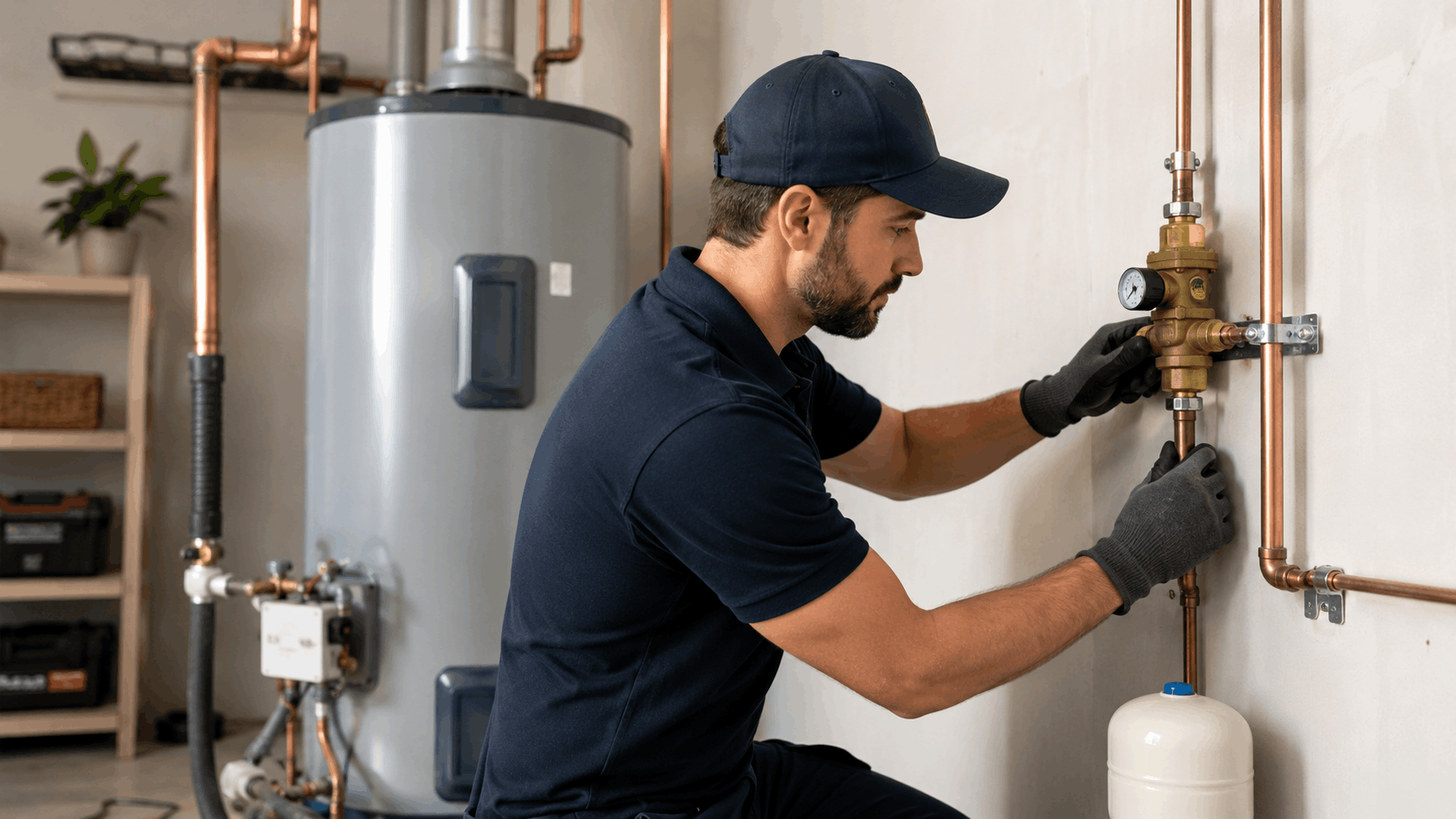
Pairing a new water heater with a pressure reducing valve solves the root cause. It protects the new unit, keeps the warranty valid, and shields every fixture in the home. Doing both together in one visit saves labor and prevents future callbacks.
If a Green Valley or Henderson home is due for a new water heater, a quick pressure test is the smart first step. Our team can measure the line, recommend the right unit, and set the PRV to protect it. Contact Active Plumbing or call to schedule a consultation and get a clear, upfront quote.
Frequently Asked Questions
- How do I know if my Green Valley home has high water pressure?
- The surest way is a gauge test on an outside spigot, which our team runs in about two minutes. Warning signs also include banging pipes when a faucet shuts off, toilets that run on their own, and faucets that drip after being turned off tight. Appliances failing early are another clue. If you notice two or more of these, a pressure test confirms the cause.
- What water pressure is too high for a water heater?
- Pressure above 80 PSI is a real concern and puts a water heater under constant strain. Plumbing code treats 80 PSI as the upper limit for good reason. The safe target for most Henderson homes is 50 to 60 PSI, which protects the tank and fixtures while keeping strong flow. Readings of 90 PSI or more often lead to early failure within a few years.
- Do I really need a PRV with a new water heater?
- It depends on what your pressure tests at. If the gauge reads below 60 PSI, an existing control is likely working and you may not need one. If it reads 80 PSI or higher, a PRV protects the new unit and keeps the manufacturer warranty valid. Many warranties require pressure below a set limit, so a PRV is often required to protect that coverage.
- How much does water heater replacement cost in Henderson?
- A standard tank heater installed usually runs $1,200 to $2,500 depending on size and fuel type. Tankless units cost more, often $3,000 to $5,500 installed. Adding a PRV and expansion tank typically adds $400 to $800 when done in the same visit. Factors like fuel conversion, unit size, and access all affect the final total, so we quote based on the actual setup.
- How long does a water heater and PRV install take?
- A standard tank replacement with a PRV usually takes three to five hours from testing to cleanup. Most homes have hot water back the same day. Tankless installs can take six to eight hours, especially with venting or gas line work. The pressure test and PRV install add very little time since the system is already open during the job.
- Will a PRV lower my water flow in the shower?
- No, a properly set PRV keeps strong flow while protecting the system. We set most Henderson homes to 50 to 60 PSI, which gives forceful showers and faucets. That range stays well below the danger line without weakening performance. Only pressure set too low, under 50 PSI, tends to feel weak, which is why we dial the valve in carefully.
- Do I need a permit for a water heater in Henderson?
- Yes, the City of Henderson requires a building permit for water heater replacement in most cases. The permit ensures the work meets code and gets inspected, which protects you and any future buyer. Unpermitted work can cause problems at resale or with insurance claims. Our team handles the permit and coordinates the inspection as part of the project.
- How often should a PRV be replaced?
- A pressure reducing valve typically lasts 10 to 15 years before it needs replacement. Signs of a failing valve include pressure that creeps back up, water hammer returning, or fluctuating flow at fixtures. If your home has an older valve, we check whether it still holds its target during a pressure test. Replacing an aging PRV during a heater install is a smart pairing.
- Does hard water affect my new water heater?
- Yes, Henderson's hard water causes scale buildup inside any water heater over time. In a tank, scale collects at the bottom and reduces efficiency. In a tankless unit, it clogs the heat exchanger and can trigger error codes. Regular flushing or descaling keeps it in check, and many homeowners add a water softener to slow scale across the whole home.
- Can Active Plumbing test my pressure before replacing my heater?
- Yes, a pressure test is part of every water heater assessment we do. Our team puts a gauge on the line before any work begins to get an accurate PSI reading. That number tells us whether a PRV is needed and what target to set. We never recommend a PRV a home does not need, so the test decides the plan.
Licensed plumbing professionals serving Las Vegas and Las Vegas Valley.
Licensed in Nevada · License #0047021
Last updated on
Why trust Active Plumbing?
Founded in 1991, Active Plumbing is a licensed and insured plumber serving Las Vegas and Las Vegas Valley. All content is reviewed by our licensed technicians.

Need Help in Las Vegas?
Active Plumbing serves Las Vegas and all of Las Vegas Valley.
Related Articles
Henderson vs Las Vegas Water Pressure: Why Some Neighborhoods Have PRV Issues
Henderson vs Las Vegas water pressure varies by terrain, utility systems, and neighborhood age. Learn why PRV issues hit some areas harder and when to act.
Same-Day Water Heater Service in Sun City Anthem: Senior-Friendly Scheduling and Code Updates on 90s Builds
Same-day water heater service in Sun City Anthem with senior-friendly scheduling, code updates on 1990s builds, Henderson permits, and a written price before work starts.
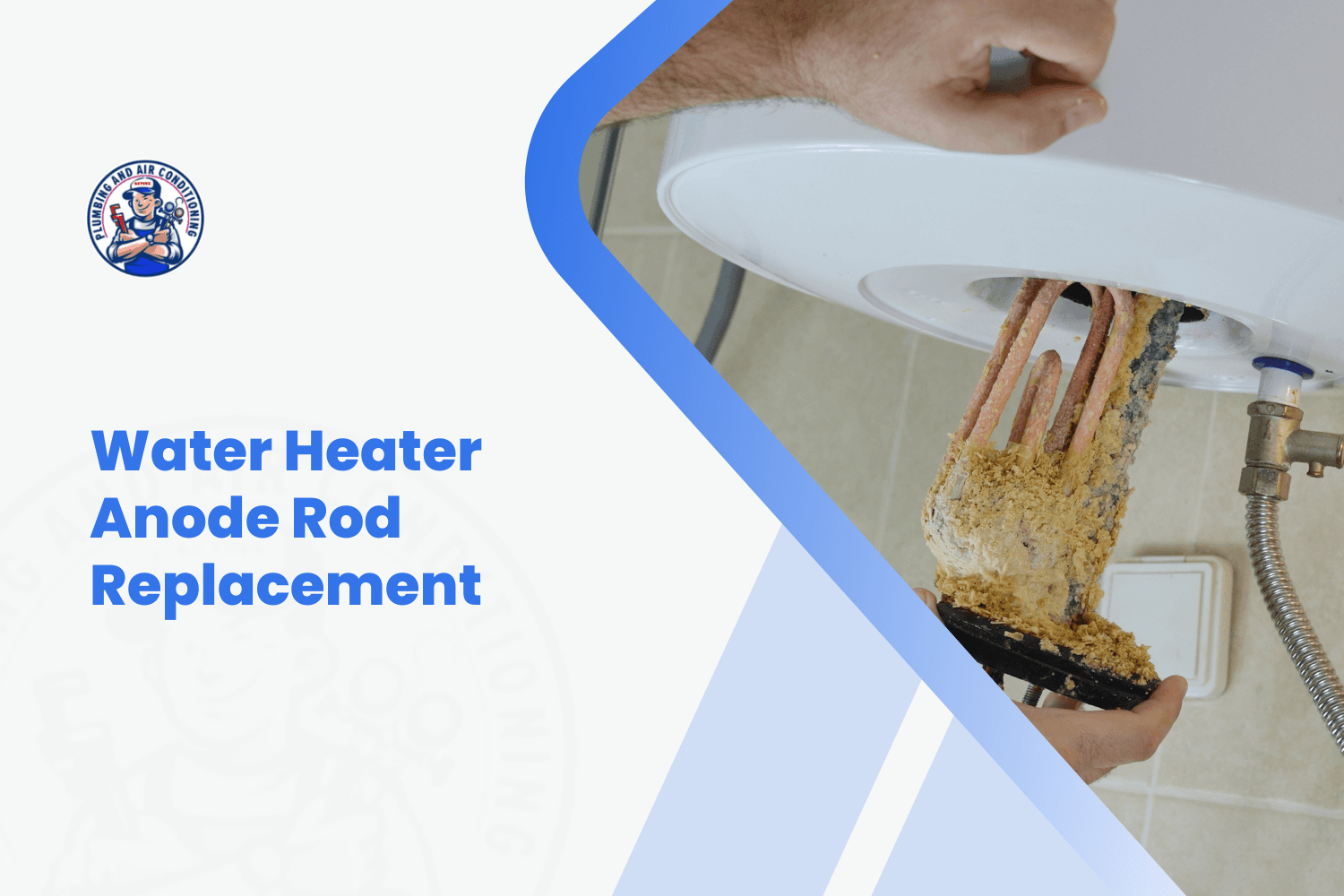
Water Heater Anode Rod Replacement: Why Vegas Hard Water Eats Them in 18 Months
Las Vegas hard water destroys anode rods in 18 months instead of years. Learn the warning signs, replacement costs, and how to protect your water heater long term.