No Hot Water in Henderson This Morning - Gas vs Electric Triage Before You Call
Key Takeaways
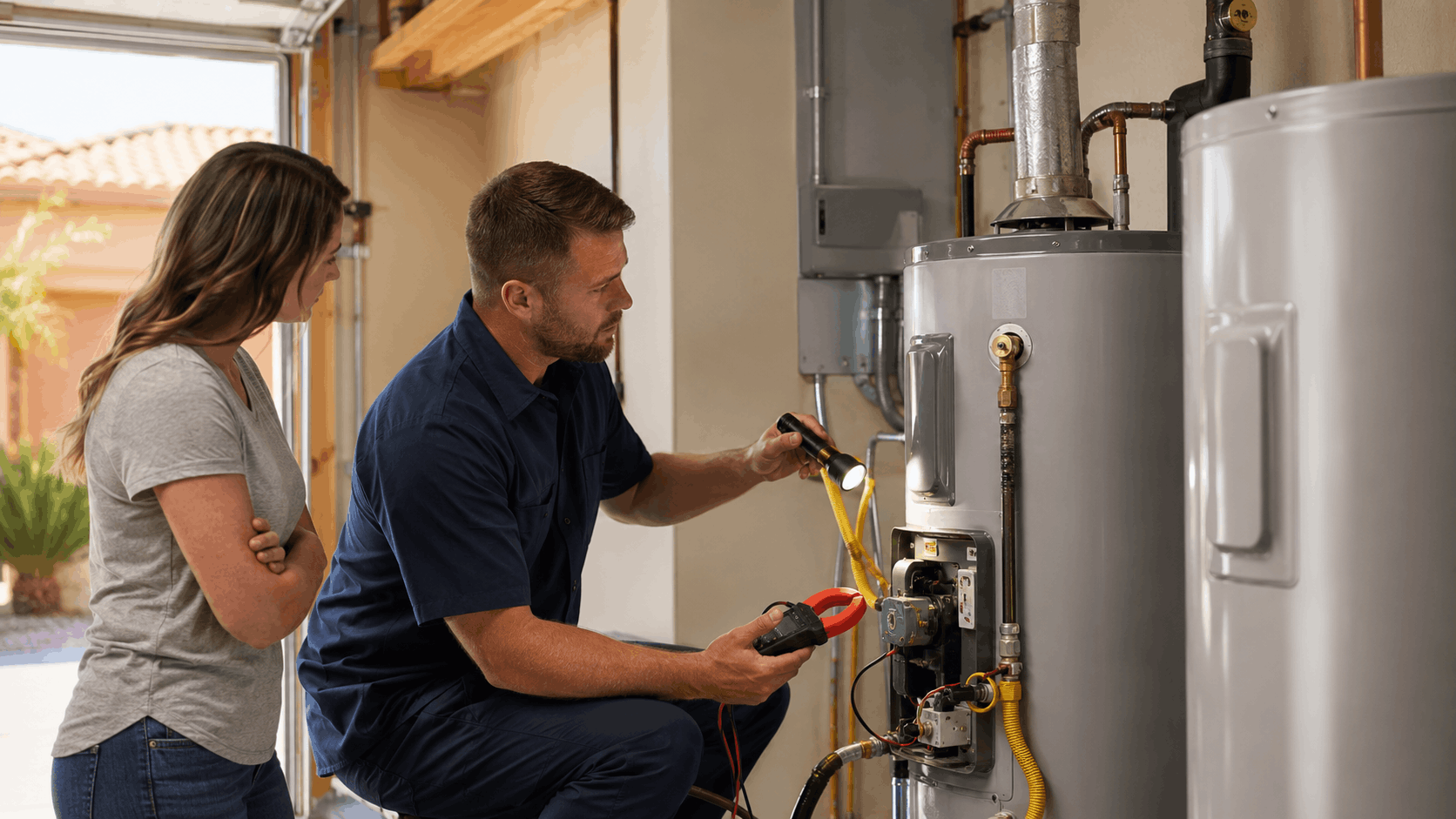
- Identify whether you have a gas or electric water heater first, since a gas line and flue pipe mean gas while a thick cable and side panels mean electric.
- Stop all troubleshooting if you smell rotten eggs or see standing water, and call Southwest Gas from a safe distance for any gas odor.
- For gas units, check the pilot light, gas control dial, and thermocouple before calling; a pilot that will not stay lit needs a plumber.
- For electric units, check the double-pole breaker and press the high-limit reset button once, but repeat trips signal a deeper fault.
- Henderson's hard water builds sediment that shortens the usual 8 to 12 year tank life, causing rumbling, short hot water, and early failure.
- Safe DIY checks include breakers, dials, and pilot windows, while gas valves, element swaps, and wiring belong to a licensed plumber.
- Replace rather than repair when you see rust, tank leaks, or repeat failures, and know that Henderson requires a permit for water heater installs.
In This Article
There is a particular kind of shock that comes with stepping into a shower on a cold Henderson morning and getting hit with an icy blast. One second you expect warmth, the next you are dancing away from the water and reaching to shut it off. It happens more than people think, especially when the desert nights dip low and water heaters get asked to work a little harder.
The good news is that a lot of no-hot-water problems are simple, and some you can even sort out yourself before anyone comes over. The catch is that the checks you run depend on whether you have a gas or electric water heater. Mix those up and you can waste time chasing the wrong fix, or worse, poke around something you should not touch.
First Things First: Figure Out If You Have Gas or Electric
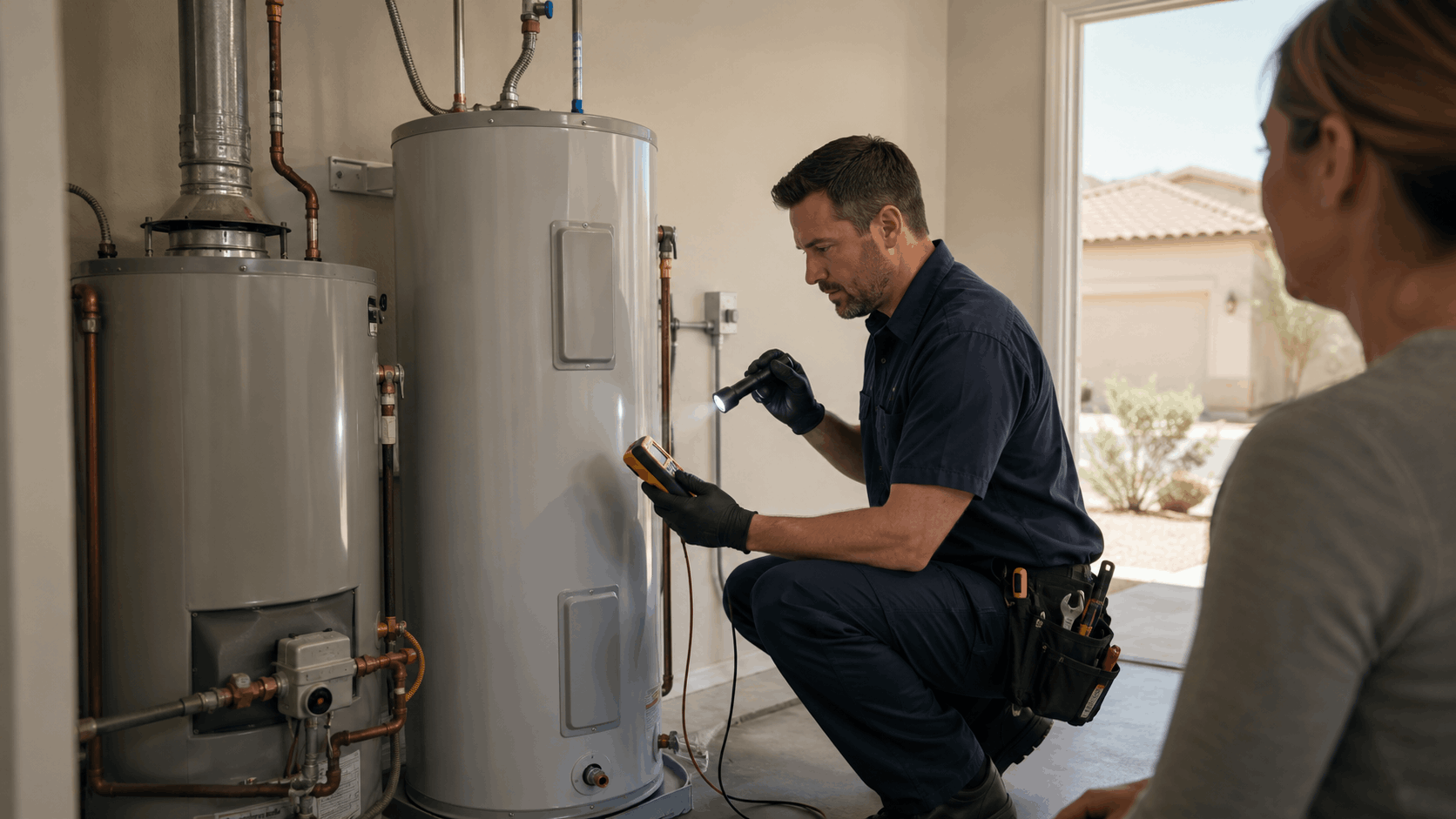
Before you touch a dial or flip a switch, you need to know what fuel your water heater runs on. Gas and electric water heaters look similar from across the garage, but they fail for different reasons and get fixed in different ways. Guessing wrong sends you down the wrong path.
Henderson homes span a wide range of ages and builders, and that affects what you find. A 1990s Green Valley house often has a gas unit tucked in the garage, while a newer Anthem or Cadence build might run electric or even tankless. Knowing the era of your home gives you a head start on identifying the water heater types you are dealing with.
Here is a quick reference to sort a gas water heater from an electric water heater at a glance.
| Feature | Gas Water Heater | Electric Water Heater |
|---|---|---|
| Supply line | Small gas pipe with a shutoff valve | Thick electrical cable running to the top |
| Top of tank | Metal flue pipe venting exhaust | No flue pipe at all |
| Bottom of tank | Burner access panel, sometimes a pilot flame visible | Solid base, no burner |
| Side panels | Usually one lower access door | One or two panels covering heating elements |
| Power source | Runs on natural gas from Southwest Gas | Runs on a 240-volt circuit breaker |
Where Water Heaters Usually Sit in Henderson Homes
Most of the time, the fastest place to look is the garage. In Green Valley homes and older Whitney Ranch builds, the garage water heater is the standard setup, often standing in a corner near the water main. If you park your car and turn around, it is usually right there against the shared wall with the house.
Newer builds in Anthem and up the hill toward the McCullough Range sometimes place the unit in an exterior closet accessed from the side yard or patio. These closets keep the tank out of the living space and make venting easier. If your garage has no tank, check outside before you assume the worst.
Interior utility spaces are the third common spot. Townhomes and some two-story homes hide the water heater in a hallway closet, a laundry room, or a small mechanical room. If you have a two-story place near Green Valley Parkway, listen for the faint hum or look for a louvered door near the laundry hookups.
Once you find it, take a phone photo of the label and the top of the tank. That single picture helps our team enormously when you call, and it saves you from running back and forth during the conversation.
Telltale Signs It Runs on Gas
The clearest sign is a gas line. Look for a thin metal or flexible pipe feeding into the bottom of the unit, usually with a small handle-style shutoff valve nearby. That valve is your gas shutoff, and it is worth knowing where it sits.
Next, check the bottom of the tank for a burner access panel. Many gas models have a small viewing window or a removable cover where you can see the pilot light glowing. If you spot a tiny blue flame down low, that is your pilot doing its job.
Look up at the top of the tank as well. A gas water heater vents combustion gases through a metal flue pipe that rises off the top and heads toward the roof or an exterior wall. Electric units never have this pipe, so its presence is a dead giveaway.
Put those three clues together - gas line, burner panel, and flue pipe - and you can be confident you are working with gas. That means your water heater service checks will focus on the pilot, thermocouple, and gas control valve.
Telltale Signs It Runs on Electric
An electric water heater tells a different story. Instead of a gas line, you will see a thick electrical cable, often in flexible metal conduit, running into the top of the tank. There is no small gas pipe and no shutoff valve for fuel.
The top of the tank stays clear too. With no combustion happening inside, there is no flue pipe venting exhaust. If you look up and see nothing but the hot and cold water connections, you are almost certainly looking at electric.
On the side of the tank you will find one or two access panels, usually held on by a screw or two. Behind each panel sits a heating element and a thermostat. These panels are how the unit heats water, and they are also where a lot of electric problems hide.
Many Henderson townhomes and condos, especially newer attached units, lean electric because it simplifies venting and construction. If your home has no gas service at all, then your stove, dryer, and water heater all run off the breaker panel, and the water heater is electric by default.
What About Tankless Units?
Tankless water heaters look nothing like the tall cylinder most people picture. They are compact wall-mounted boxes, usually white or gray, about the size of a carry-on suitcase, mounted in the garage or on an exterior wall. If you cannot find a big tank anywhere, this is likely why.
These units are common in newer Inspirada and Cadence homes, where builders installed them to save space and cut standby energy loss. They heat water on demand as it flows through, so there is no reservoir sitting hot all day. That design changes how you troubleshoot them.
When a tankless unit acts up, it usually flashes an error code on a small digital display. That code points to the exact issue, which is very different from the guesswork on a tank model. Write down the code before you call, because it tells us a lot.
Tankless triage often involves checking the gas supply, the venting, and mineral scale inside the heat exchanger. Our team handles tankless water heater installation and tankless maintenance and descaling, which matters a lot given Henderson's hard water.
Get Your Quote
Tell us what's going on and we'll get back to you. We're open 24/7.
Safety Checks Before You Touch Anything
Before you start flipping switches or turning dials, take one minute for safety. A water heater sits at the intersection of gas, electricity, and water, and each of those can turn a small problem into a big one. A calm check now prevents a scary moment later.
The two things that stop all troubleshooting cold are a gas smell and standing water. Both mean you set down the flashlight and handle safety first. Water heater safety is not about being timid, it is about knowing which situations need a professional right away.
Run through these quick checks before anything else:
- Sniff the air near the unit for a rotten egg or sulfur smell that signals a gas leak.
- Look at the floor around the base for pooling or damp spots.
- Locate your cold water shut off valve, gas valve, and the breaker so you can act fast.
- Make sure the area around the tank is clear of stored boxes or flammable items.
If You Smell Gas, Stop and Leave
Natural gas has no natural odor, so utilities add a chemical that smells like rotten eggs. If you catch that smell near your water heater, treat it as a real gas leak until proven otherwise. Do not assume it will clear on its own.
Do not flip any light switch, do not press the reset button, and do not use anything that could spark. Even turning a light on or off can ignite gas that has built up in a closed space. Leave the appliances alone and get people and pets out of the house.
Once you are outside and a safe distance away, call Southwest Gas at their emergency line to report the smell. They respond to gas odor calls fast and will check the line for free. Only after they clear it should you think about the water heater itself.
If you need repair work on the gas side afterward, our gas leak detection and repair team handles it safely. Never try to seal or tighten a gas fitting yourself when you can smell an active leak.
Look for Leaks and Standing Water
Walk around the base of the tank and look for a water heater leak. A small puddle might come from a loose fitting or the drain valve, but a steady pool often points to the tank itself giving out. Standing water is always worth taking seriously.
Touch the floor and nearby drywall to feel for dampness. In garages this water can seep under stored items and into the slab, and in interior closets it can soak baseboards and subfloor. The longer it sits, the more damage it does to the surrounding materials.
If the tank has rusted through, that is tank failure, and no amount of dial-turning will fix it. A rusted-out bottom means the unit is at the end of its life and needs replacement. Catching it early keeps a leak from becoming a flooded garage.
When water is spreading fast, shut off the cold water supply and call for help. Our emergency plumbing crew responds to leaking water heaters across Henderson, and stopping the flow early limits the mess.
Know Where Your Shutoffs Are
Every homeowner should know three shutoffs by heart. The first is the cold water shutoff, a valve on the pipe entering the top of the tank. Turn it clockwise to stop water from feeding the heater.
The second is the gas shutoff valve, that small handle on the gas line near the base of a gas unit. When the handle sits parallel to the pipe, gas flows. Turn it a quarter turn so it crosses the pipe, and the gas is off.
For electric units, the third shutoff is the circuit breaker. Head to your electrical panel and find the double-pole breaker labeled for the water heater. Switching it off cuts all power to the unit before you inspect anything.
Knowing these three ahead of time means you are not fumbling during an actual emergency. Take a moment on a calm day to find each one and maybe even label them. Future you will be grateful.
Need Help in Las Vegas?
Active Plumbing serves Las Vegas and all of Las Vegas Valley.
Gas Water Heater Triage: What to Check
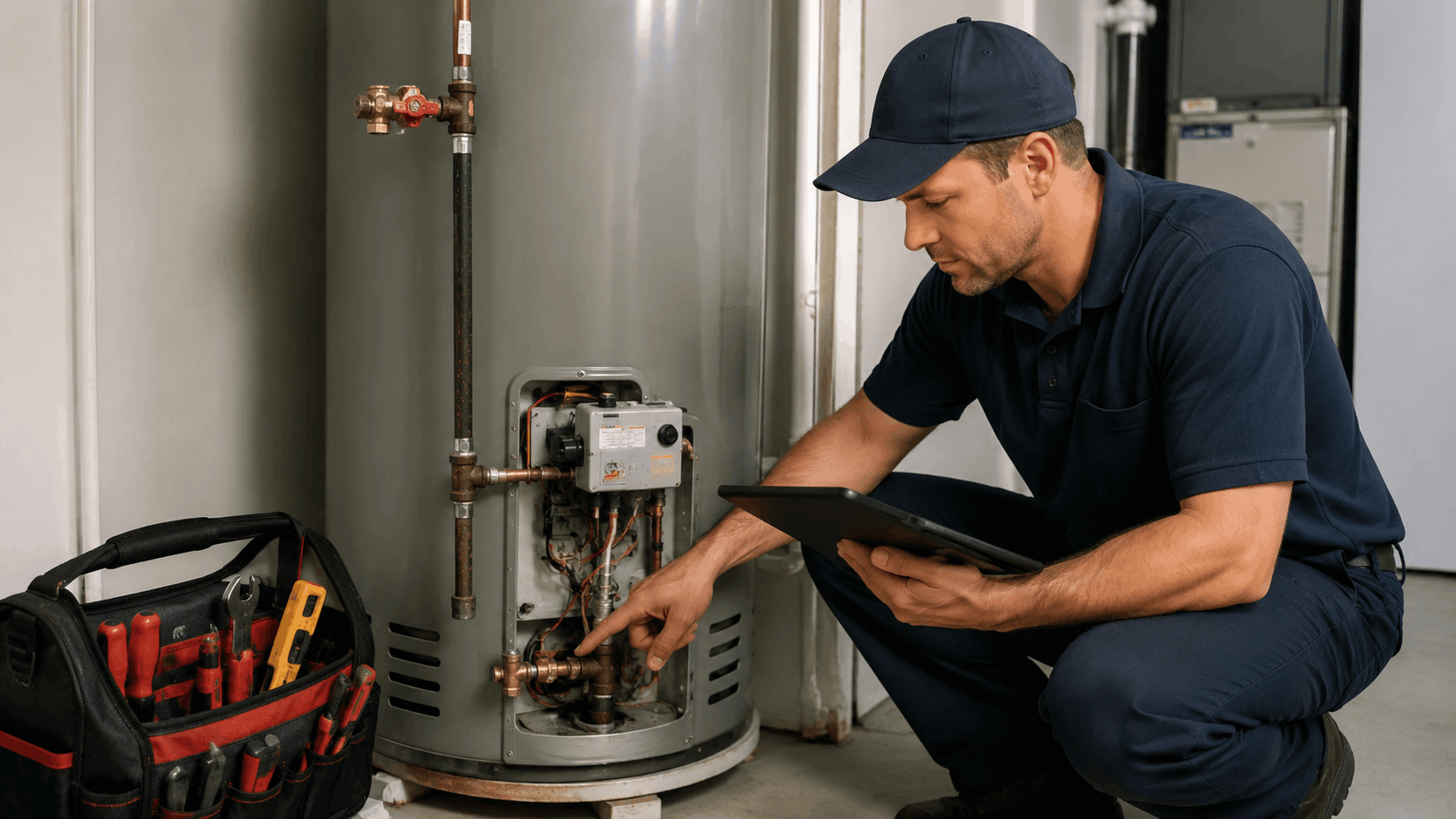
If you have confirmed a gas unit and there is no gas smell or leak, you can safely run through a few checks. Gas water heater troubleshooting is mostly about the pilot, the controls, and the burner. Many cold-morning problems trace back to one of these.
Work through them in order, from simplest to most involved. Some you can fix quickly, others tell you it is time to call a plumber. Knowing the difference saves you money and frustration.
Here is what to look at on a gas unit:
- Check the pilot light through the viewing window at the base.
- Confirm the gas control dial has not been bumped to a low or off setting.
- Listen for the burner igniting when there is demand for hot water.
- Note any sediment rumble that suggests buildup inside the tank.
Is the Pilot Light Out?
A common overnight gas problem is a pilot light out. Look through the small viewing window at the bottom of the tank. If you see no flame, the pilot has gone out and the burner has nothing to light from.
Most gas water heaters have relight instructions printed right on the label near the gas control valve. The steps usually involve turning the dial to pilot, holding the ignition button, and clicking the sparker. If it lights and stays lit, you may be back in business within the hour.
A relight is worth trying once if you smell no gas and the area is clear. If the pilot lights but dies as soon as you release the button, or if it will not light at all, stop there. Repeated failure points to a deeper issue with the gas control valve or thermocouple.
Never keep clicking the igniter over and over if nothing happens, since that can let gas build up. One or two clean attempts is the limit before you call for help.
Check the Thermostat and Gas Control Dial
Sometimes the fix is almost embarrassingly simple. The gas control dial on the front of the tank sets the temperature, and it can get bumped by a broom, a storage bin, or a curious kid. A dial knocked down to its lowest temperature setting leaves you with cold water.
Look for the round dial near the base and check where it points. Most homes run comfortably with the thermostat setting around 120 degrees, often marked with a dot or the word warm. If it sits at vacation or pilot, that explains the cold shower.
Turn it back to your normal temperature setting and give the tank 30 to 60 minutes to recover. A full tank of cold water takes time to heat back up. Do not crank it way past 120, since scalding hot water is a real burn risk, especially with kids around.
If the dial was already set correctly and the burner still is not firing, the control itself may be failing. That is a repair for a professional, not a homeowner adjustment.
Signs the Thermocouple or Burner Failed
The thermocouple is a small safety sensor that tells the gas valve the pilot is lit. When it fails, the valve shuts the gas off as a safety measure, which is why the pilot will not stay lit. This is one of the more common gas repairs we handle.
If your pilot lights but dies the second you let go of the button, the thermocouple is the prime suspect. It can get dirty, bent, or simply wear out over years of heat cycling. Replacing it is straightforward for a plumber but involves gas components best left to a pro.
Another red flag is a burner assembly that clicks or tries to ignite but never catches a real flame. That can mean a clogged burner, a bad igniter, or a gas supply problem. None of those are safe to disassemble yourself.
When you see these symptoms, our water heater repair team can test and swap the part quickly. Trying to force a unit that will not stay lit only risks a gas hazard.
Why Hard Water Wears Gas Units Quicker Here
Henderson water comes from the Colorado River through Lake Mead, and it carries a heavy load of minerals. That hard water leaves calcium and lime deposits inside the tank over time. On a gas unit, that sediment settles right on the bottom, directly over the burner.
As sediment buildup grows, it forms an insulating layer between the flame and the water. The burner has to run longer and hotter to push heat through, which wears out the tank and raises your gas bill. You may also hear popping or rumbling as trapped water boils under the sediment.
This is why Henderson water heaters often show their age sooner than the same model in a soft-water region. A tank rated for 12 years might start failing at eight or nine here. Regular flushing slows the process but cannot stop it entirely.
Many homeowners pair a new water heater with a water softener installation to protect the investment. Softer water means less scale, longer tank life, and better heat transfer across the board.
Electric Water Heater Triage: What to Check
Electric units fail in their own way, and the checks are different from gas. Electric water heater troubleshooting centers on power, the reset button, and the heating elements. The good news is that the first checks require no tools at all.
Always confirm the power is off at the breaker before you open any panel on an electric unit. The elements run on 240 volts, which is more than enough to hurt you. Safety comes before curiosity every time.
Run through these steps on an electric water heater:
- Check the breaker panel for a tripped double-pole breaker.
- Look behind the access panel for the red high-limit reset button.
- Notice whether water is lukewarm or fully cold, since that points to different elements.
- Consider whether a thermostat could be stuck or failed.
Start at the Breaker Panel
The first stop for an electric unit is your electrical panel. Water heaters use a double-pole breaker, which is two switches joined together, usually rated 30 amps. Find the one labeled water heater, or look for the wide double breaker if nothing is labeled.
A tripped breaker often sits in the middle position rather than fully on or off. To reset it, push it firmly all the way off first, then back on. If it holds, you may have your hot water back within an hour as the elements reheat the tank.
Breakers commonly trip after a summer monsoon storm or a brief power dip, both familiar in the Henderson valley. A one-time trip is usually nothing to worry about. Reset it and go about your morning.
If the breaker trips again right away or within a day, stop resetting it. A repeat trip means something inside the unit is drawing too much current, and that needs a professional to diagnose before it becomes a fire risk.
The High-Limit Reset Button
Behind the upper access panel on an electric water heater sits a small red high-limit switch button. This safety device cuts power if the water gets too hot. When it trips, you lose all hot water even though the breaker looks fine.
With the breaker off, remove the upper access panel and pull back the insulation to find the button. Press it firmly and you may feel or hear a small click. Then replace the panel, restore power, and wait for the tank to heat.
Pressing the reset button once is fine and often solves the problem. What matters is what happens next. If it pops again, do not keep resetting it, because the high-limit switch is doing its job by shutting down an overheating unit.
A repeat trip usually means a failing thermostat or a stuck element letting the water overheat. That is a signal to call a plumber rather than keep fighting the button. Ignoring it can lead to dangerously hot water or worse.
When a Heating Element Burns Out
Electric tanks have two heating elements, an upper and a lower. When one fails, you get a classic symptom pattern. A burned-out lower element usually gives you lukewarm water that runs cold quickly, while an upper element failure can leave you with almost no hot water at all.
Heating element failure is common on older units, and hard water speeds it up by coating the elements in scale. That scale makes them work harder until they finally break. You cannot see this from the outside, which is where testing comes in.
Confirming a bad element requires a multimeter and shutting off power to test for continuity. This is doable for a very handy homeowner but risky around 240-volt wiring. Most people are better off having element testing done by a pro.
Swapping an element is a routine repair for our team and far cheaper than a new tank. If you have lukewarm water on an otherwise sound unit, a fresh element often brings it right back to full temperature.
Thermostat Problems on Electric Units
Each heating element pairs with its own electric thermostat that controls when it turns on. When a thermostat fails, it can leave water cold by never calling for heat, or leave it dangerously hot by never shutting off. Both are problems worth fixing quickly.
A stuck thermostat is often the real culprit behind a tripping high-limit button. The thermostat lets the element run too long, the water overheats, and the safety switch cuts in. Fixing the thermostat solves the whole chain.
Temperature control on electric units should sit around 120 degrees, the same as gas. If your water suddenly runs scalding or stays stubbornly cold, suspect the thermostat before the tank itself. It is a small part with a big effect.
Thermostat replacement is a quick and affordable repair, usually done in the same visit as element testing. Since both live behind the same panels, our team often checks and replaces them together to save you a second trip.
Need Help in Las Vegas?
Active Plumbing serves Las Vegas and all of Las Vegas Valley.
Problems That Look the Same on Both Types
Some water heater problems do not care whether you burn gas or run on electricity. They show up on any unit and cause the same headaches. Knowing these no hot water causes keeps you from chasing the wrong repair.
These issues tend to build slowly and then announce themselves all at once. A shower that used to last fifteen minutes suddenly goes cold in five. Recognizing the pattern helps you describe the problem accurately when you call.
Sediment Buildup and Rumbling Sounds
Sediment is the number one shared enemy of Henderson water heaters. The minerals in our supply settle to the bottom of the tank and harden into a crusty layer. Over time this reduces how much hot water the tank can actually deliver.
The telltale sign is a rumbling or popping tank. As the burner or lower element heats water trapped under the sediment, steam bubbles pop and rattle the deposits. It sounds like gravel tumbling in a kettle, and it is louder in the morning when demand kicks in.
Flushing the water heater once a year clears much of this buildup and restores capacity. It involves draining the tank through the bottom valve until the water runs clear. Skipping this maintenance in a hard-water area like ours shortens the life of any unit.
If your tank rumbles and your hot water seems short, a flush may buy you time. Pairing that with water treatment attacks the root cause instead of just the symptom.
A Failing Dip Tube
The dip tube is a long plastic pipe that carries incoming cold water to the bottom of the tank so it heats before rising to your faucet. When the dip tube cracks or breaks, cold water dumps in near the top instead. That cold water mixing ruins your hot supply.
The classic symptom is short hot water that turns cold fast, even though the tank seems to be working. You get a burst of warm, then a quick slide to cold, because unheated water is blending straight into the hot outlet. It is maddening and easy to misdiagnose.
Dip tubes fail more often on units around a decade old, when the plastic becomes brittle. Sometimes pieces of a broken tube even clog faucet aerators around the house. If you find white plastic flakes in your screens, the dip tube is likely the cause.
Replacing a dip tube is a moderate repair and usually cheaper than a new tank on an otherwise healthy unit. Our team can confirm the diagnosis quickly by checking the outlet temperature against the tank setting.
Running Out of Hot Water Too Quickly
Sometimes the water heater works fine, but the household simply outpaces it. A 40-gallon tank that served a couple can fall short once teenagers and back-to-back showers enter the picture. This shows up as everyone racing to shower first.
Larger homes in Seven Hills and MacDonald Highlands often have big soaking tubs and multiple bathrooms that a small tank cannot keep up with. When the hot water capacity is undersized for the demand, no repair will fix it. The tank is just too small.
The solution is either a bigger tank or a switch to tankless, which heats endlessly on demand. For a busy household, upgrading tank size or going tankless ends the morning shower race for good. It is a comfort upgrade as much as a repair.
A recirculation pump installation can also deliver hot water more quickly to distant bathrooms in a sprawling floor plan. That cuts the wait and the wasted water at the tap.
When to Try a Fix Yourself and When to Call
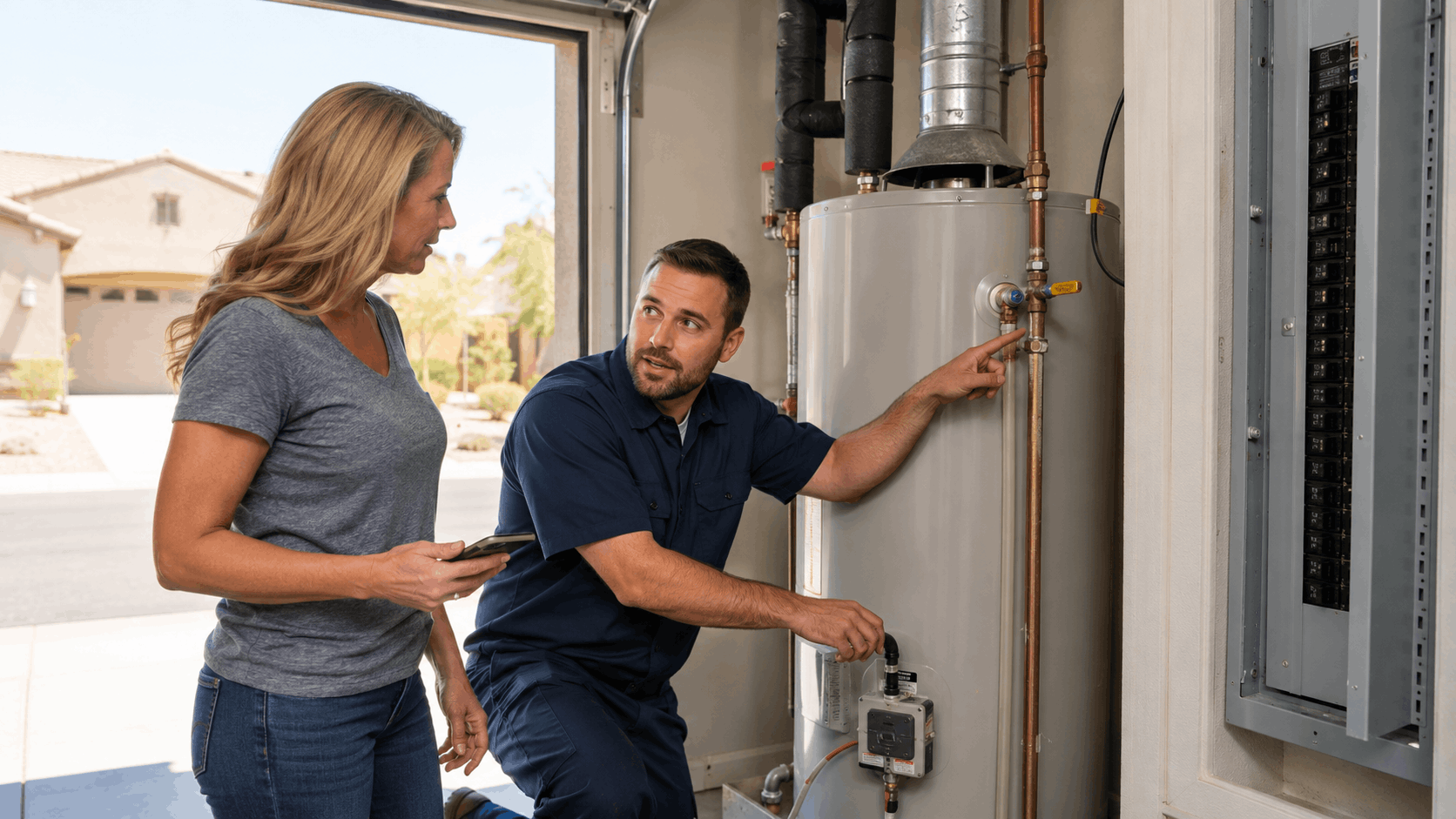
Not every water heater problem needs a plumber, and not every problem is safe to handle alone. Drawing that line correctly protects both your wallet and your safety. Some DIY water heater checks take two minutes, while other jobs belong to a licensed plumber.
The rule of thumb is simple. If a fix involves only looking, resetting, or turning a dial, it is fair game for a homeowner. If it involves opening gas fittings, swapping wired components, or touching live voltage, it is time to call a plumber.
Safe Checks Any Homeowner Can Do
Plenty of homeowner checks require no tools and carry no real risk. You can look through the pilot window to see if the flame is lit. You can check whether the gas control dial got bumped off its normal setting.
On an electric unit, you can walk to the panel and reset a tripped breaker one time. You can press the high-limit reset button once after cutting power. These quick fixes solve a surprising share of no-hot-water mornings.
You can also check simple things like whether a recent power outage reset a tankless unit's settings, or whether someone left the temperature on vacation mode. None of these need tools and none put you in harm's way. They are the first things we would check ourselves.
If one of these gets your hot water back, wonderful. If they do not, you have already ruled out the easy stuff and can describe exactly what you tried when you call.
Repairs That Need a Professional
Once a fix crosses into gas or wiring, it belongs to a professional. Gas valve repair, thermocouple replacement, and burner work all involve live gas lines where a small mistake has big consequences. A licensed and insured plumber has the training and tools to do it safely.
On electric units, swapping a heating element or thermostat means working around 240-volt connections. Even with the breaker off, mistakes in reconnecting the wiring can cause shorts or shocks. Professional repair means it is done right and up to code.
Anything involving the tank itself failing, major leaks, or repeated breaker trips also needs a pro. These point to problems that a homeowner cannot safely resolve at the panel. Pushing past them risks water damage or worse.
Working with an insured plumber also means you are protected if something goes wrong. That coverage is one reason licensed work is worth the cost on gas and electrical repairs.
How Active Plumbing Helps Henderson Homeowners
Our team works across Henderson every day, from Green Valley to Anthem and out toward Cadence. That means we know the common setups in each neighborhood and can often guess the problem before we arrive. Local knowledge speeds up the diagnosis.
We start with a straight diagnostic, tell you what we find, and give honest recommendations. If a simple element or thermocouple fixes it, that is what we do. We will not push a new tank when a repair makes sense.
Because we cover neighborhoods like Whitney Ranch and Green Valley South, we usually reach homes quickly. Fast response matters most when a tank is leaking or a family is stuck with cold showers.
Every job includes advice on preventing a repeat, whether that means a yearly flush or a water softener to fight our hard water. We would rather help you avoid the next problem than just patch this one.
What to Tell Us When You Call
A few details on the phone help us arrive with the right parts and save everyone time. First, tell us whether the unit is gas, electric, or tankless, using the clues from earlier in this guide. That alone shapes what we load on the truck.
Next, describe the symptom clearly. Is there no hot water at all, or is it lukewarm? Did the pilot go out, did the breaker trip, or is there water on the floor? These specifics speed up the water heater diagnosis.
Share the age of the unit if you know it, and read off any error code on a tankless display. A photo of the label texted over is even better. The more we know before arriving, the sooner the fix.
Finally, tell us if there is any gas smell or active leak, since that changes how we prioritize the service call. You can reach us anytime through our contact page or by phone.

Need Help in Las Vegas?
Active Plumbing serves Las Vegas and all of Las Vegas Valley.
Repair or Replace: Making the Call in Henderson
At some point every water heater faces the repair-or-replace question. The answer depends on the age of the unit, the cost of the fix, and how hard our local water has been on the tank. Getting this call right saves money over the long run.
A good rule is to weigh the repair cost against the age. Spending a little to keep a newer unit going makes sense, while pouring money into an old rusting tank usually does not. Here is a quick guide.
| Situation | Lean Toward | Why |
|---|---|---|
| Unit under 6 years, minor part failure | Repair | Plenty of life left, fix is cheap |
| Unit 6 to 10 years, single repair | Repair or plan | Fix it but start budgeting |
| Unit over 10 years, major failure | Replace | Past its expected life here |
| Rusty water or tank leaking | Replace | Tank corrosion cannot be repaired |
| Repeat repairs in one year | Replace | Money better spent on new unit |
How Long Water Heaters Last Around Here
A standard tank water heater is rated to last 8 to 12 years. In much of the country that range holds true, but Henderson's hard water tends to shave a few years off. Our mineral-heavy supply builds sediment and scale that wears tanks out early.
That means many local tanks start showing trouble around the eight-year mark. Once your unit passes that age, it is wise to start planning for replacement even if it still works. Waiting until it fails often means an emergency and a rushed decision.
You can check the tank age from the serial number on the label, where the first digits usually encode the year. If you cannot decode it, our team can tell you on site. Knowing the age frames every other decision.
Tankless units last longer, often 15 to 20 years, but they still need descaling to survive our water. A well-maintained tankless can outlive two tank units in a Henderson home.
When Repair Makes Sense
For a unit under about eight years old, repair is usually the smart move. Common fixes are affordable and extend the life of a sound tank. A thermocouple or element replacement often runs a fraction of the cost of a new unit.
Typical repair costs land in a modest range for parts like thermocouples, thermostats, and heating elements. A dip tube or gas control valve costs a bit more but still beats replacement on a newer tank. The cost comparison clearly favors repair when the tank has years left.
The exception is when repairs start stacking up. If you have fixed two or three things in a single year, the tank is telling you it is done. At that point repair money is better applied to a new unit.
Our team gives you the honest math on site so you can decide. We will never talk you into a new tank when a simple water heater repair keeps you running.
When Replacement Is the Smarter Move
Certain signs point clearly toward water heater replacement. Rusty or brown hot water usually means the inside of the tank is corroding, and there is no fixing a rusty tank. Once corrosion sets in, a leak is only a matter of time.
Repeat failures are another signal. If the same unit needs a new part every few months, you are renting time on a dying tank. A visible leak from the body of the tank, as opposed to a fitting, means replacement now.
Rising energy bills can also flag a tank choked with sediment that has to work overtime. A new, cleaner unit heats more efficiently and often lowers the bill. That savings offsets part of the replacement cost over time.
Many Henderson homeowners use replacement as a chance to move to tankless. A tankless upgrade frees up space and delivers endless hot water, which suits busy households well.
Permits and Code in the City of Henderson
Water heater installs are not a no-permit job in Henderson. The City of Henderson Building Division requires a permit for water heater replacement, and for good reason. The permit process confirms the work meets safety code for venting, gas, and seismic strapping.
Proper work matters because a bad install can leak carbon monoxide from a gas unit or cause water damage from a poor connection. Building code exists to prevent exactly those hazards. A permitted install gives you a documented, inspected job.
A licensed plumber pulls the Henderson permit and handles the inspection as part of the service. You do not have to figure out the paperwork yourself. That is one of the advantages of hiring a pro over a handyman.
If you ever sell your home, a permitted water heater install shows up as proper documented work. Cutting corners on the permit can create headaches at closing. It is worth doing right the first time.
Final Thoughts
A cold shower on a chilly Henderson morning is a rough way to start the day, but most causes are simpler than they feel. Figure out whether you have gas or electric, run the safe checks, and you will often solve it yourself or at least know exactly what is wrong.
When the fix crosses into gas fittings, wiring, or a failing tank, that is our cue to step in. Our team knows the homes and the water conditions across Henderson, and we will give you honest advice on repair or replacement.
If your morning check does not restore hot water, reach out to Active Plumbing. Call us or use our contact page, and we will get a technician out to your Henderson home to warm things back up.
Frequently Asked Questions
- How do I know if my water heater is gas or electric?
- Look for three quick clues. A gas water heater has a small gas supply line with a shutoff valve, a burner panel at the bottom, and a metal flue pipe venting off the top. An electric water heater has a thick electrical cable running to the top, no flue pipe, and one or two access panels on the side covering the heating elements. When in doubt, snap a photo and send it to us.
- Why did I lose hot water overnight with no warning?
- Overnight losses usually trace to a few common causes. On a gas unit, the pilot light can go out from a draft or a weak thermocouple. On an electric unit, a double-pole breaker can trip after a power dip, or the high-limit reset can pop. A failing heating element can also fade out without warning. Check the pilot or breaker first before assuming the worst.
- Is it safe to relight my own gas pilot light?
- A relight is fine if you smell no gas and the area is clear. Follow the instructions printed on the tank, and try once or twice at most. If the pilot will not stay lit, that points to a failing thermocouple or gas valve, which needs a plumber. If you smell rotten eggs at any point, stop, leave the house, and call Southwest Gas from outside before doing anything else.
- What does the red reset button on my electric heater do?
- The red button is the high-limit reset switch, a safety device behind the upper access panel. It cuts power when the water overheats. With the breaker off, you can press it firmly one time to reset it. If it holds, your problem is solved. If it trips again, do not keep resetting it, because a repeat trip means a failing thermostat or element that a plumber needs to check.
- Why does my hot water run out so fast?
- Three culprits are most likely. Sediment buildup from Henderson's hard water shrinks the usable capacity of the tank. A broken dip tube lets cold water mix straight into the hot outlet, so warm turns to cold quickly. Or the tank is simply too small for your household demand. A flush, a dip tube replacement, or a bigger unit each addresses one of these depending on the cause.
- How much does a water heater repair cost in Henderson?
- Costs vary by the part and the unit, but common repairs like thermocouples, thermostats, and heating elements fall in a modest range. Larger fixes such as a gas control valve or dip tube cost more but still beat replacement on a newer tank. One thing to keep in mind is that our hard water can make sediment-related issues recur, which is why many homeowners pair repairs with a water softener.
- How long should a water heater last in Henderson?
- A standard tank is rated for 8 to 12 years, but Henderson's hard water often shortens that. Many local tanks start showing trouble around the eight-year mark from sediment and scale wear. Tankless units last longer, often 15 to 20 years, though they still need regular descaling to reach that age. Once your tank passes eight years, it is smart to start planning ahead.
- Do I need a permit to replace a water heater in Henderson?
- Yes. The City of Henderson Building Division requires a permit for water heater replacement. The permit confirms the install meets code for venting, gas connections, and strapping, which keeps your home safe from carbon monoxide and leaks. A licensed plumber pulls the permit and handles the inspection for you, and a documented install also helps if you ever sell the home.
- Should I turn off my water heater if it is leaking?
- Yes, act quickly to limit damage. Shut off the cold water supply valve on the pipe entering the top of the tank. Then cut the power at the breaker for an electric unit, or turn the gas valve to off for a gas unit. That stops the tank from refilling and keeps the situation from getting worse until we arrive to assess it.
- How fast can Active Plumbing get to my Henderson home?
- We serve neighborhoods across Henderson, from Green Valley and Whitney Ranch to Anthem and Cadence, so response times are typically quick. Leaking tanks and no-hot-water calls get priority, especially in the cold months. The fastest way to reach us is by phone or through our emergency plumbing page, and having your unit details ready helps us arrive prepared.
Licensed plumbing professionals serving Las Vegas and Las Vegas Valley.
Licensed in Nevada · License #0047021
Last updated on
Why trust Active Plumbing?
Founded in 1991, Active Plumbing is a licensed and insured plumber serving Las Vegas and Las Vegas Valley. All content is reviewed by our licensed technicians.

Need Help in Las Vegas?
Active Plumbing serves Las Vegas and all of Las Vegas Valley.
Related Articles
Best Drain Cleaning Method for Las Vegas Hard Water Buildup
Las Vegas hard water ranks among the harshest in the US. Learn which drain cleaning methods actually work on mineral scale - and when to call a professional.
Garage Water Heater Code in Clark County: 18-Inch Stands, Drain Pans, and Seismic Straps
Clark County garage water heaters need 18-inch stands, drain pans, and seismic straps. Learn the code rules, permit process, and how Active Plumbing keeps Las Vegas installs compliant.
Gas vs Electric Water Heaters in Las Vegas: NV Energy Rates vs Southwest Gas, Real Monthly Numbers
Compare gas vs electric water heaters in Las Vegas with real monthly numbers, NV Energy rates vs Southwest Gas rates, install costs, and which fuel fits your home.