Rheem vs Bradford White vs AO Smith in Las Vegas Conditions - What Our Techs See Fail First
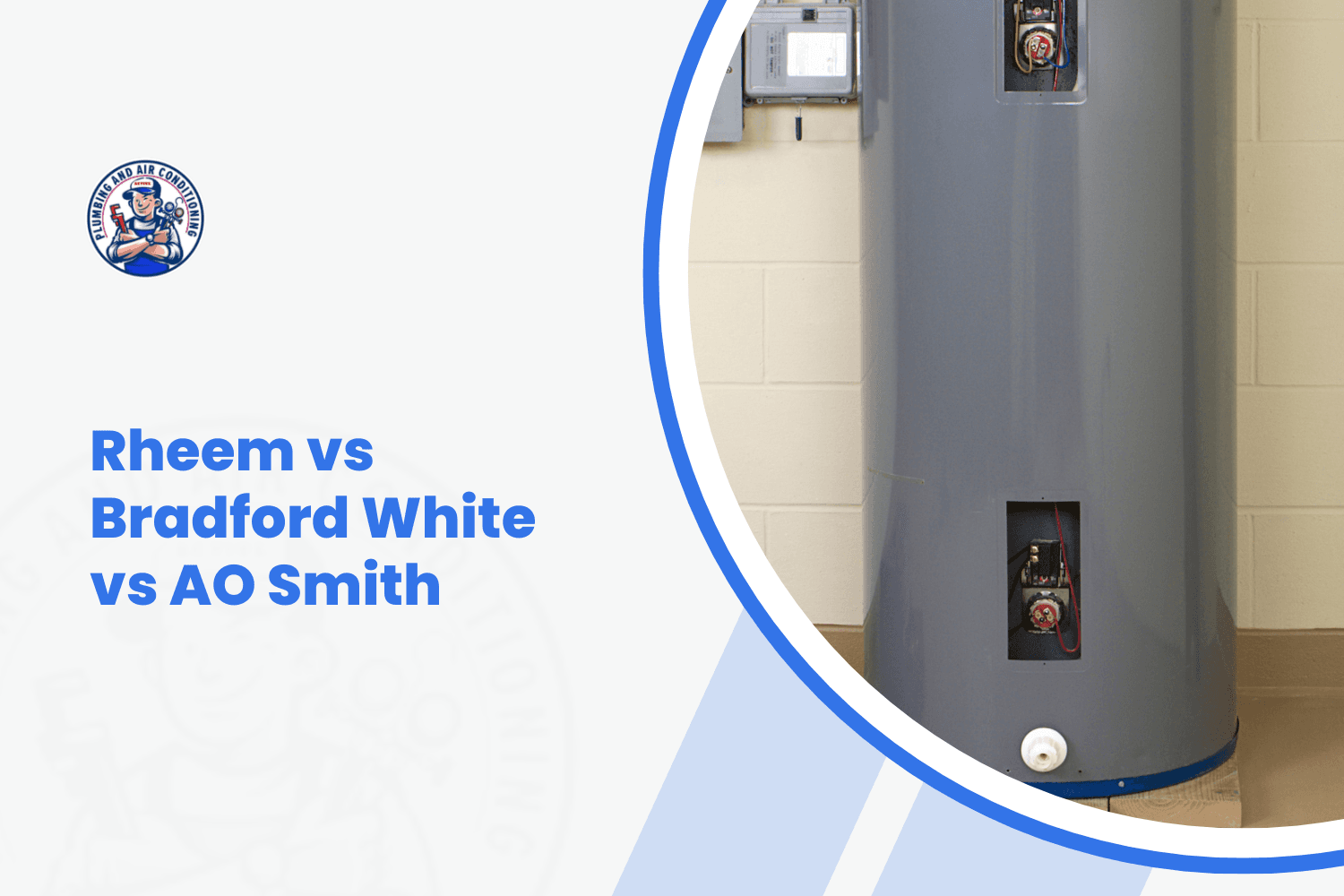
Key Takeaways
- Las Vegas hard water runs about 16 grains per gallon versus a national average near 7, which shortens water heater life across every brand.
- Bradford White lasts longest in the valley at 10-13 years thanks to its Vitraglas liner and heavier build.
- Rheem offers the lowest repair cost and fastest part availability but usually lasts only six to nine years locally.
- AO Smith performance depends heavily on whether you buy the retail big box model or the sturdier pro-grade version.
- Flushing twice a year and replacing the anode rod every three to five years are the cheapest ways to add years to any tank.
- A whole home water softener cuts scale at the source and protects the heater plus every fixture in the house.
- Replace rather than repair when the tank is past eight years and the fix costs more than half a new unit, or when you see rust water or a bottom leak.
- Clark County requires a permit for water heater replacement, which Active Plumbing pulls and handles for local homeowners.
In This Article
A homeowner in Summerlin called our shop last summer after finding a puddle spreading across the garage floor. Her water heater was only six years old, but the bottom had rusted through and started leaking. She was frustrated, because the tank was supposed to last twice that long.
Stories like hers are common across the valley. The hard water and desert heat here wear down every brand more quickly than the box or warranty card would suggest. That is why picking the right water heater matters more in Las Vegas than in most other cities.
Our techs pull dozens of dead tanks out of local homes every month. In this guide, we break down what we actually see fail first on Rheem, Bradford White, and AO Smith units, with real timeframes and part names. By the end, you will know which brand holds up best in our conditions and how to make any of them last longer.
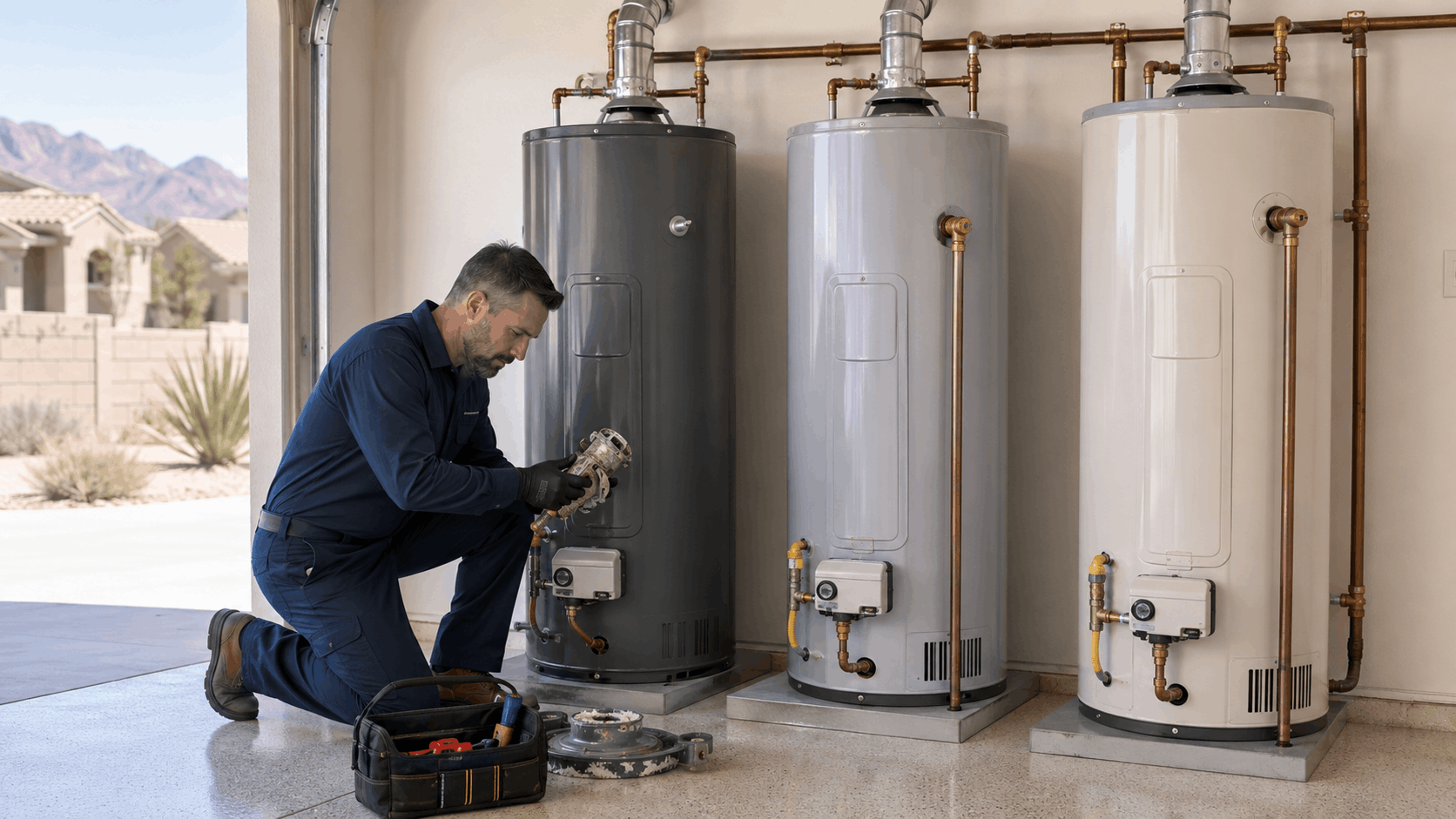
Why Las Vegas Water Is Hard on Every Water Heater Brand?
No matter which brand you buy, the water coming into your house is working against it. Las Vegas hard water is loaded with dissolved minerals that build up inside the tank over time. That buildup shortens water heater lifespan no matter how good the steel or the warranty is.
This is why brand comparisons matter more here than in a city with soft water. In a place like Seattle, a cheap tank might last 15 years without much fuss. Here, that same tank might barely reach eight. The difference between brands gets magnified when the water is this aggressive.
| Factor | Las Vegas | National Average |
|---|---|---|
| Water hardness | about 16 grains per gallon | 7 grains per gallon |
| Typical tank lifespan | 6-10 years | 10-13 years |
| Summer garage temps | 110-125 degrees | 75-90 degrees |
How Hard the Water Really Is From the LVVWD
The water most of us drink comes from the LVVWD, which pulls the bulk of its supply from the Colorado River through Lake Mead. That river water carries a heavy mineral load picked up as it flows through rock and soil. By the time it reaches your tap, it is some of the hardest water in the country.
Hardness is measured in grains per gallon. The national average sits around 7 grains per gallon, which most people would call moderately hard. Our valley routinely tests between 16 and 18 grains per gallon, which lands squarely in the very hard category.
Most of that hardness comes from calcium and magnesium. Calcium is the main culprit inside water heaters because it drops out of the water and forms solid deposits when the water heats up. The hotter the water, the sooner that calcium comes out of solution and sticks to metal.
You can see the proof on your own faucets and shower glass. Those white crusty spots are the same mineral that coats the inside of your water heater. If it builds up that fast on glass, imagine what it does inside a tank running at 120 degrees all day.
What Scale Buildup Does Inside the Tank
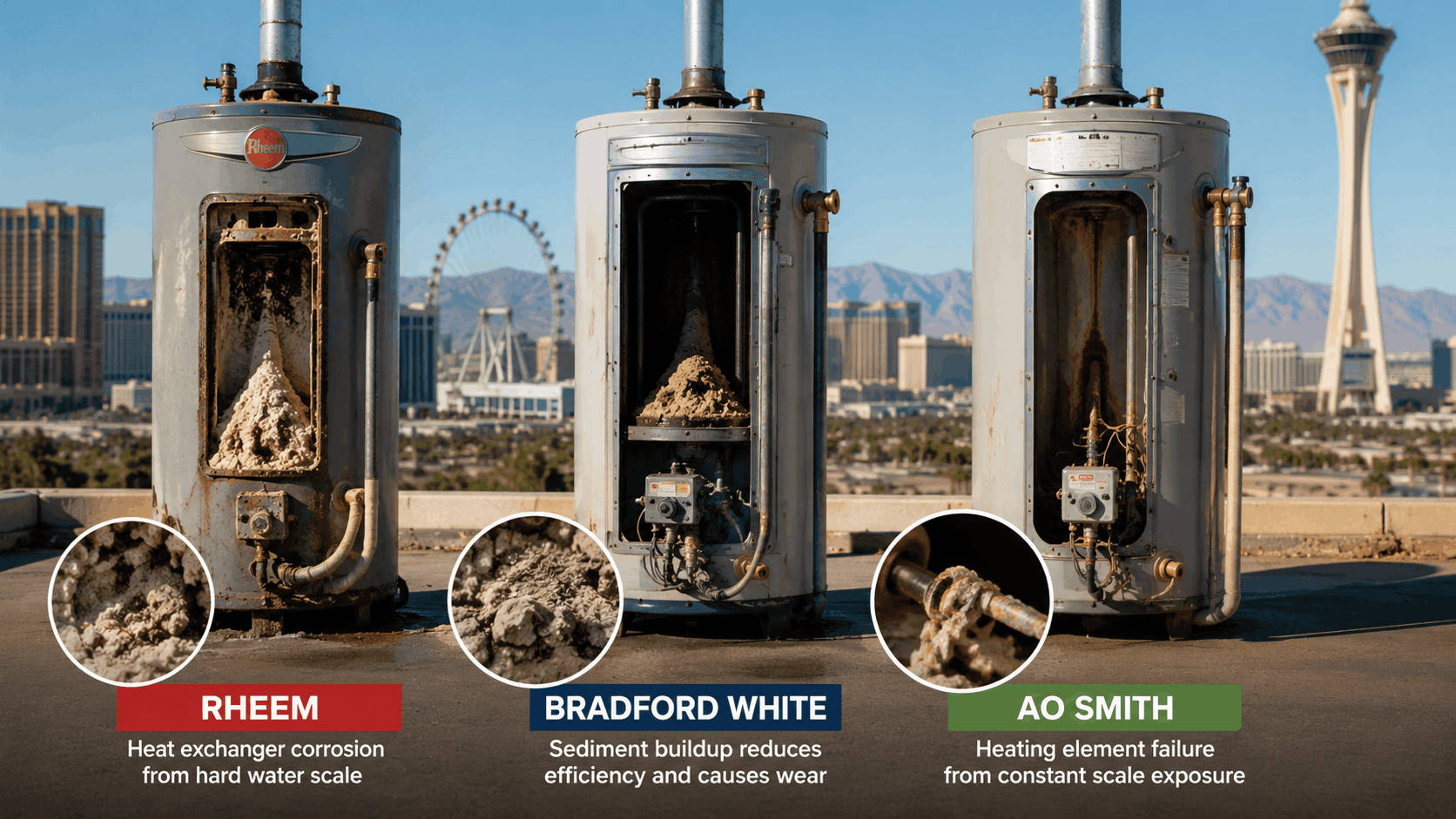
Every time the burner fires, minerals settle to the bottom of the tank. Over months and years, this sediment buildup forms a thick, rock-hard layer of scale. In gas tanks, that layer sits directly between the burner flame and the water it is supposed to heat.
That scale acts like a blanket over the burner. It ruins burner efficiency because the heat has to fight through inches of hardened mineral before it reaches the water. The unit burns more gas, runs longer cycles, and still struggles to keep up with demand.
The extra work takes a toll on the steel. Trapped heat and moisture speed up tank corrosion from the inside out. That is exactly how a six-year-old tank ends up leaking on a garage floor when it should have had years left.
You can often hear this problem before you see it. When we get calls about a water heater making popping or rumbling sounds, it is usually water boiling underneath the sediment layer. That noise is a warning that scale is stealing years off the tank.
How Desert Heat Adds to the Problem
Most valley homes keep the water heater in the garage or, in some older builds, the attic. Neither spot gets air conditioning. In July and August, a closed garage can hit 115 to 125 degrees during the afternoon.
That desert heat forces the tank to work in an oven. The unit already has to heat water to 120 degrees, and now the surrounding air is nearly that hot too. The thermal stress on the steel, welds, and fittings never really lets up during summer.
The controls suffer even more than the tank body. Gas valves, thermostats, and electronic boards are not built to bake in triple-digit heat month after month. Heat is one of the fastest ways to kill sensitive electronics on modern units.
We see this pattern clearly on garage water heaters across the valley. A tank installed in a hot garage often dies a year or two before an identical model kept in a cooler indoor closet. The heat is silent, but it adds up.
Neighborhoods Where We See the Worst Wear
Older homes near the east valley tend to show the worst scale problems. Many of these houses have had the same tank and plumbing for a decade or more without a single flush. In the Sunrise Manor state streets area, we routinely pull tanks packed with several inches of hardened sediment.
Newer builds are not immune either. Mountains Edge and the surrounding Enterprise neighborhoods have plenty of homes under 15 years old already fighting scale. Fresh construction does not change the water, so a new tank starts collecting minerals from day one.
Heat plays a bigger role in some pockets than others. Homes with west-facing garages in Mountains Edge get brutal afternoon sun that pushes garage temps to the top of the range. Those units tend to lose their controls early.
Across every neighborhood, the common thread is the water. Whether the house is 40 years old near Nellis or brand new out west, the same calcium is working on the tank. The difference is how well the homeowner keeps up with maintenance.
Get Your Quote
Tell us what's going on and we'll get back to you. We're open 24/7.
Rheem Water Heaters: What We See Fail First
Rheem is one of the more common brands in valley homes, partly because it is easy to find and priced fairly. That popularity means our techs see a lot of them, and we know exactly where a Rheem water heater tends to break down first. Most Rheem failure calls come down to a handful of parts.
The good news is that many of these failures are repairable if the tank is still young. The bad news is that some of them signal the tank is close to done. Knowing the difference saves homeowners from throwing money at a unit that should be replaced.
| Rheem Part | Typical Failure Window | Repair or Replace |
|---|---|---|
| Thermopile / pilot assembly | 3-6 years | Repairable |
| Gas control valve | 5-8 years | Repairable |
| Anode rod (worn out) | 3-5 years | Replace rod |
| Tank leak (bottom rot) | 7-10 years | Replace unit |
The Gas Valve and Thermopile Problems
The first thing to go on many Rheem gas tanks is the thermopile. This small sensor generates the tiny voltage that tells the gas valve it is safe to fire. When it weakens, the pilot light will not stay lit and the burner will not come on.
Homeowners usually call us saying their pilot keeps going out or they have no hot water at all. On Rheem units, we often trace this to a tired thermopile in the three to six year range. It is an affordable fix if we catch it early.
The gas valve itself is the next weak spot. This is the control block that houses the temperature dial and safety shutoffs. Heat in the garage cooks these valves, and we see them fail somewhere between five and eight years.
A gas valve costs more than a thermopile, but it is still cheaper than a new tank on a young unit. If your water heater is under six years old and the valve fails, repair usually makes sense. Our water heater repair team stocks these parts for quick turnarounds.
How the Anode Rod Holds Up in Hard Water
Every tank has a sacrificial anode rod inside it. The rod is designed to corrode instead of the steel tank, taking the damage so the walls stay intact. It is the single most important part for tank longevity, and most homeowners never think about it.
In our hard water, the standard Rheem anode rod burns through fast. We often find rods that are completely spent in just three to five years. Once the rod is gone, the aggressive minerals go straight to work on the bare steel.
That is the moment early tank corrosion begins. The tank might still make hot water fine for a while, but the countdown to a bottom leak has started. Without the rod protecting it, the steel does not stand a chance against valley water.
This is why we push anode inspections so hard. Swapping a worn rod is one of the cheapest ways to add years to a Rheem tank. Skip it, and you are essentially letting the tank rust from the inside.
Typical Lifespan We See on Rheem in the Valley
Rheem markets many tanks with six, nine, or twelve year warranties. Those numbers assume average water conditions, which we do not have here. Real Rheem lifespan in the valley tends to run shorter than the paperwork promises.
Across the homes we service, most Rheem tanks give six to nine years before a major failure. Units in cooler indoor closets that get flushed regularly land at the higher end. Neglected tanks in hot garages often check out closer to six.
Warranty claims can help on the tank itself, but they rarely cover the labor. So even a covered tank means paying for install on a water heater replacement. Many homeowners are surprised the warranty does not make it free.
Our honest take is that Rheem is a solid mid-tier brand for the price. It will not outlast a premium unit here, but it is a reasonable value if you commit to maintenance. Ignore the flushing and anode, and the lifespan drops fast.
Parts and Service Availability Locally
One real advantage of Rheem is parts availability. Because the brand is so common in Las Vegas, thermopiles, gas valves, and elements are easy to source. Local supply houses keep them in stock year round.
That translates to quicker repair time. When a Rheem part fails, we can usually get the component the same day and have hot water restored quickly. That matters a lot during a hot Las Vegas summer when nobody wants a cold shower.
Big box stores also carry Rheem and its close cousins, so DIY parts are within reach. We still recommend professional installation on any gas component for safety. A gas valve is not a good place to guess.
For homeowners who value quick, affordable repairs, this availability is a genuine plus. It keeps repair costs and downtime low. When paired with regular upkeep, a Rheem can be a smart pick for many valley households.
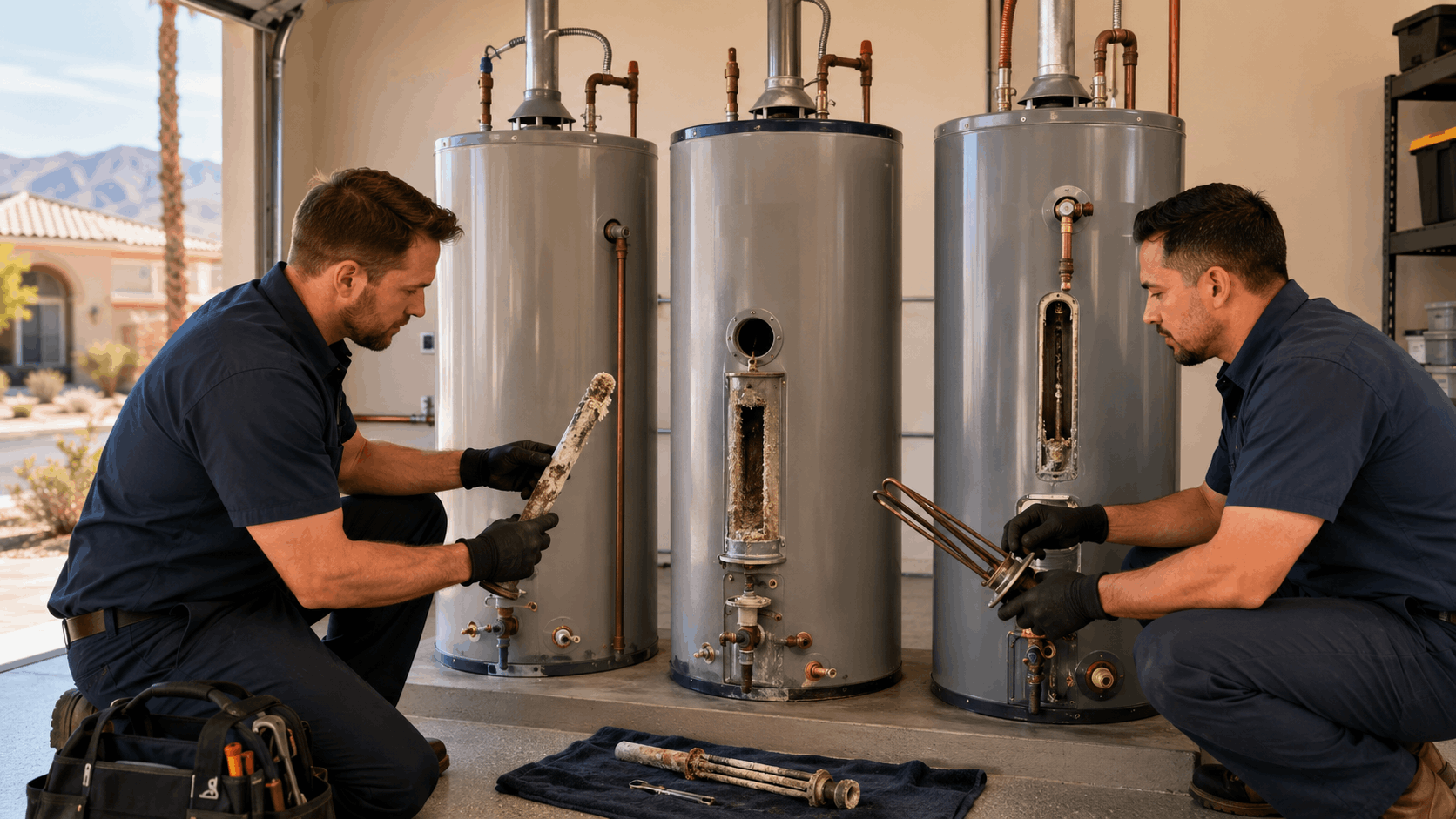
Need Help in Las Vegas?
Active Plumbing serves Las Vegas and all of Las Vegas Valley.
Bradford White Water Heaters: What We See Fail First
Bradford White is the brand our techs reach for on tough installs, and there is a reason for that. It is a contractor-focused water heater brand built with heavier materials than most retail units. It is not sold at big box stores, which keeps it in the hands of professionals.
That said, no tank is bulletproof against valley water. Even the best build faces the same calcium every other brand does. Here is where we see Bradford White failure show up, and where it still outperforms the competition.
| Bradford White Part | Typical Failure Window | Repair or Replace |
|---|---|---|
| Anode rod (worn out) | 4-6 years | Replace rod |
| Dip tube | 6-9 years | Repairable |
| Gas valve / thermostat | 7-10 years | Repairable |
| Vitraglas liner failure | 10-14 years | Replace unit |
The Vitraglas Liner and Hard Water
Bradford White lines its tanks with a proprietary coating called Vitraglas. This liner bonds glass to the steel to slow corrosion. It is one of the better tank liner systems on the market, and it holds up notably well against scale.
The coating resists the pitting that eats through cheaper tanks. In our experience, this is a big part of why the brand lasts longer here. The steel underneath stays protected longer even as scale collects.
Still, no liner is perfect against 18 grain water for a decade straight. Over many years, tiny cracks and pits can develop where the coating stresses. Once water reaches bare steel, corrosion begins just like any other tank.
The difference is timing. Where a budget tank might pit at year seven, a well-maintained Bradford White often holds off scale-related liner failure into the low double digits. That extra time is what buyers are paying for.
Dip Tube and Sediment Issues
The dip tube carries incoming cold water down to the bottom of the tank so it heats properly. When this tube cracks or breaks, cold water mixes near the top and goes straight out to your taps. The result is a classic lukewarm water complaint.
We get these calls regularly from valley homeowners who suddenly cannot get a hot shower. On Bradford White units, the dip tube usually holds up well, failing somewhere in the six to nine year range. When it does go, it is a straightforward repair.
Sediment plays into this problem too. As the bottom fills with mineral debris, the dip tube outlet can get buried or restricted. That reduces how well the tank mixes and heats fresh water.
Flushing solves most of it. A tank that gets flushed on schedule rarely develops severe sediment issues. Neglect the flush, and even a premium Bradford White will start delivering lukewarm water sooner than it should.
Why Plumbers Often Prefer This Brand
Ask most valley plumbers which tank they put in their own homes, and Bradford White comes up a lot. The contractor grade build simply feels more solid. Thicker steel, better fittings, and that Vitraglas liner add up to a plumber preferred reputation.
Because it is not sold at retail, the brand focuses on the trade. That means the units are designed for durability and serviceability rather than the lowest possible shelf price. Our techs know the parts and layout well.
The build quality shows in how the tanks age. They tend to resist the early control failures we see on cheaper units. In a hot garage, that heavier construction buys real time.
We do not claim any tank beats our water forever. But when a homeowner wants the longest realistic life, Bradford White is usually our recommendation. It costs more up front and earns it on the back end. Talk to our water heater services team about which model fits your home.
Lifespan We Track in Local Homes
Bradford White lifespan in the valley tends to beat the other two brands by a couple of years. Well-maintained units regularly reach 10 to 13 years before major trouble. That is close to what other cities see from average tanks.
We track this across a wide service area. From Henderson homes near Lake Las Vegas to newer builds in the northwest valley, the pattern holds. The brand simply resists our conditions a bit better.
Maintenance still decides the outcome. A neglected Bradford White in a scorching garage will not hit those numbers. Flushing and anode swaps make the difference between 8 years and 13.
For homeowners planning to stay put a long time, the extra lifespan often justifies the price. Fewer replacements over the years can offset the higher initial cost. That math works well for owner-occupied homes across the valley.
AO Smith Water Heaters: What We See Fail First
AO Smith is another brand we run into constantly, since the company makes water heaters sold under many names. Quality varies a lot depending on which model line a home has. Our techs see clear patterns in how AO Smith failure tends to unfold.
The retail versions and the pro versions are not the same animal. That distinction drives a lot of the repair calls we handle. Here is where these tanks tend to break down and what parts are involved.
| AO Smith Part | Typical Failure Window | Repair or Replace |
|---|---|---|
| Electronic control board | 4-7 years | Repairable |
| Heating element (electric) | 3-6 years | Repairable |
| Anode rod (worn out) | 3-5 years | Replace rod |
| Tank rot / bottom leak | 6-10 years | Replace unit |
Electronic Controls and Sensor Faults
Many newer AO Smith units use an electronic control board and electronic ignition instead of a standing pilot. These systems are efficient when they work. The trouble is that circuit boards hate heat.
In a garage that hits 120 degrees all summer, the control board bakes day after day. We see sensor fault codes and dead boards on these units in the four to seven year range. A homeowner will get an error light and no hot water.
Replacing a control board is possible but not always cheap. On a tank past seven or eight years, the cost of the board plus labor starts pushing toward replacement territory. On a newer unit, the repair usually makes sense.
Heat is the common thread on these failures. Units kept in cooler spaces last much longer before control problems appear. If your AO Smith lives in a hot garage, the electronics are the part to watch.
Heating Elements on Electric Models
On electric water heaters, the heating element is submerged right in the mineral-heavy water. Scale coating builds up on the element surface fast in our conditions. That layer of calcium acts as insulation and forces the element to overheat.
An overheated element burns out early. On AO Smith electric models, we replace elements as early as three to six years, well before you would expect. The homeowner notices water that runs lukewarm or cold.
The upper and lower elements can fail at different times. A dead lower element often shows up as hot water that runs out quickly. A dead upper element usually means no hot water at all.
Element swaps are one of the cheaper repairs we do. The issue is that hard water keeps attacking the new one just as fast. Softening the water is the only real way to stop the cycle of scale coating and burnout.
Tank Rot and Bottom Leaks
Like every brand, AO Smith tanks eventually rot from the inside. The anode rod is supposed to prevent this, but the standard rod wears out quickly here. Once it is gone, the steel begins its slow rust toward a tank leak.
We see bottom leaks on AO Smith units in the six to ten year range depending on the model. The retail models tend to fall on the earlier side. A leaking bottom is not repairable, so this failure means a full replacement.
The anode setup on many AO Smith tanks is adequate but not exceptional for our water. In hard water, the rod simply cannot keep up without help. That is why we recommend checking it around year three.
A tank that is dripping or pooling water on the floor is telling you it is done. If you spot rust-colored water or moisture at the base, call us before it becomes a flood. Catching it early prevents water damage.
Availability at Big Box Stores vs Pro Supply
Here is where AO Smith gets confusing for buyers. The AO Smith retail units sold at big box stores are built to a price point. The pro grade models sold through plumbing supply houses use better components.
Two tanks can wear the same badge and perform very differently. A homeowner who buys the cheapest one at a big box store often gets a thinner tank and lighter parts. That unit tends to fail on the early end of our ranges.
The pro-grade versions compete much better with Bradford White. Heavier construction and better anodes give them a real shot at a decade in our water. The catch is you generally buy them through a contractor.
Our advice is to know which version you are getting. If you want AO Smith to last in the valley, skip the entry-level big box model. Ask us about the pro-grade line if you prefer the brand.
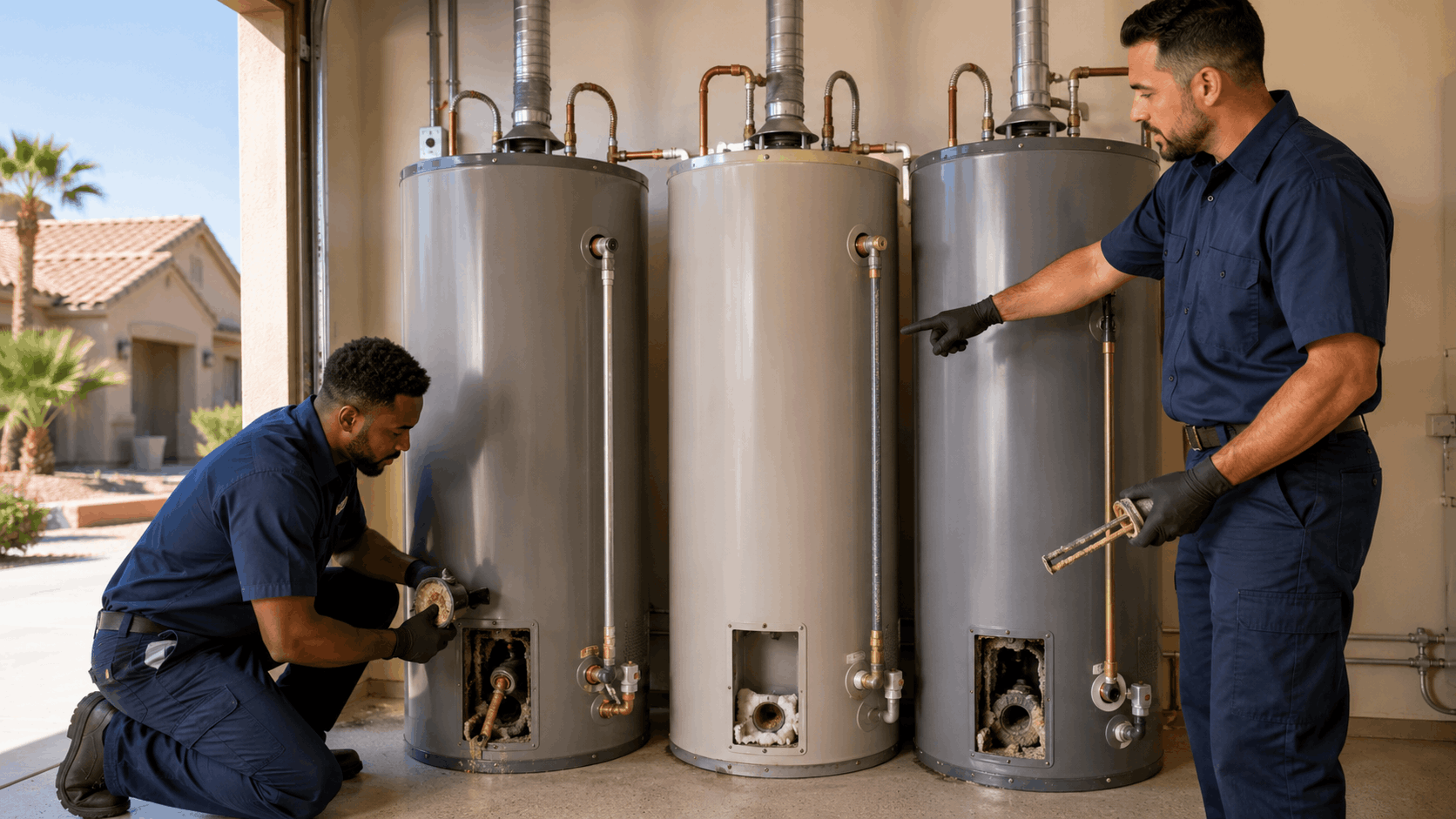
Need Help in Las Vegas?
Active Plumbing serves Las Vegas and all of Las Vegas Valley.
Side-by-Side: Which Brand Lasts Longest in Las Vegas
Now the question everyone asks. After pulling hundreds of tanks out of valley homes, our water heater comparison points to a clear pattern. When homeowners want the longest lasting Las Vegas water heater, one brand edges out the others.
That said, the best choice depends on your budget, your home, and how long you plan to stay. Here is how the three stack up on lifespan, repair cost, and failure patterns in our conditions.
| Brand | Avg Lifespan (LV) | Repair Cost | Best For |
|---|---|---|---|
| Bradford White | 10-13 years | Moderate | Long-term homeowners |
| Rheem | 6-9 years | Low | Value and fast repairs |
| AO Smith (pro) | 8-12 years | Moderate | Brand loyalists |
| AO Smith (retail) | 6-9 years | Low-Moderate | Rentals, tight budgets |
Average Years Before First Major Failure
Tracking real timeframes tells the true story better than any warranty. On water heater lifespan, Bradford White leads with 10 to 13 years to first major failure. That assumes regular flushing and anode care.
Rheem and retail AO Smith cluster together at six to nine years before their first big repair or replacement. The repair timeline usually starts with controls or elements, then ends with a tank leak. Pro-grade AO Smith lands in the middle at eight to twelve years.
Heat and maintenance shift every one of these numbers. A neglected premium tank can underperform a well-kept budget one. The habits matter as much as the badge.
The pattern is consistent across the homes we service. Better build plus good maintenance equals more years. That is the whole equation in our water.
Repair Cost and Parts Comparison
Repair cost is where Rheem shines. Because parts are everywhere in Las Vegas, a Rheem repair often costs the least. Thermopiles and gas valves are cheap and stocked locally.
Bradford White parts price runs a bit higher and sometimes takes an extra day to source. The parts are quality, but they come through supply houses rather than retail shelves. The repairs are still very doable.
AO Smith sits in the middle on water heater repair. Control boards on the electronic models can be pricey, which sometimes tips the decision toward replacement. Elements and rods, though, are inexpensive.
Over the full life of a tank, the premium brands often cost less because you replace them less often. Cheaper repairs mean little if the whole unit dies in six years. The long view usually favors the sturdier tank.
Best Pick for Different Home Types
For a small condo near the Strip, a mid-tier Rheem or a standard 40 gallon tank is usually plenty. The demand is low and the budget often matters more than squeezing out extra years. Fast, cheap repairs keep these units running.
For a larger Summerlin home with several bathrooms, we lean toward Bradford White. The extra capacity and durability match a household that uses a lot of hot water. Paired with a softener, these homes get the longest service.
For a rental property, the math changes. Many landlords want the lowest up-front cost, which points to a retail unit. We still steer them toward at least a pro-grade tank to cut down on service calls between tenants.
Every home is a little different. The right pick balances budget, hot water needs, and how long you plan to own the place. We help homeowners weigh those factors every day.
How to Make Any Brand Last Longer in the Valley
Here is the part that saves you the most money. Good water heater maintenance can add years to any brand, even a budget one. A few cheap habits fight our water and heat directly.
These steps are not complicated, and most cost little. They are the same things our techs do to keep our own tanks alive. Do them, and you extend lifespan no matter which badge is on the unit.
Flushing the Tank on a Local Schedule
A tank flush clears the sediment that piles up at the bottom. In most cities, once a year is fine. In Las Vegas, our mineral load is heavy enough that we recommend flushing every six months.
The process drains the tank through the bottom valve to wash out loose scale. Doing it twice a year keeps the sediment removal ahead of the buildup. That protects burner efficiency and prevents that popping noise.
You can do a basic flush yourself with a garden hose if you are handy. Turn off the gas or power first, connect the hose to the drain valve, and let it run until the water runs clear. Follow your model instructions closely.
If you would rather not deal with it, we handle flushes as part of routine service. Sticking to a maintenance schedule is the single best thing you can do for tank life here. It is cheap insurance against an early leak.
Replacing the Anode Rod Before It's Gone
The anode rod is your tank's bodyguard, and it wears out fast in our water. Anode rod replacement is one of the most cost-effective ways to prevent early tank rot. A rod costs a fraction of a new water heater.
We recommend inspecting the rod around year three and swapping it when it is more than half consumed. In our hard water, that often means replacing it every three to five years. Waiting too long lets corrosion attack the bare steel.
Some homes with very hard water benefit from a powered or aluminum rod. These options can hold up better than the standard magnesium rod. We can advise on the right type for your water.
Think of the rod as the difference between a tank that leaks at year six and one that reaches year twelve. That single part is doing more for tank protection than almost anything else. It is easy to overlook and easy to fix.
Adding a Water Softener or Conditioner
The most effective long-term fix is treating the water before it ever reaches the tank. A whole home water softener removes the calcium and magnesium that cause scale. That means far less buildup inside your heater and every other fixture.
Softened water protects more than the water heater. It saves faucets, shower valves, and appliances from the same scale damage. Many homeowners notice cleaner glass and softer laundry too.
If you prefer not to add salt, a salt-free conditioner is another option. It does not remove minerals but changes them so they stick less. Our water softener installation team can walk you through both approaches.
For scale prevention across a whole house, treating the water is the gold standard. It attacks the root cause instead of just managing symptoms. In our valley, it often pays for itself in extended equipment life.
Setting the Right Temperature for Hard Water
Your temperature setting affects both scale and your energy bill. The hotter the water, the sooner calcium drops out and hardens on the metal. Running the tank too hot speeds up scale buildup.
We recommend setting most tanks to 120 degrees. That is hot enough for showers and dishes while slowing mineral deposits. It also cuts your energy use compared to a tank cranked up higher.
Higher settings do not just waste gas or electricity. They speed up the exact damage that kills tanks early here. Lowering the dial a few degrees is a free way to add life.
If you have a large household that runs out of hot water, we would rather size the tank correctly than push the temperature up. That gives you the energy savings without the scale penalty. Small adjustments add up over years.
Need Help in Las Vegas?
Active Plumbing serves Las Vegas and all of Las Vegas Valley.
When to Repair and When to Replace Your Water Heater
The repair vs replace question comes down to age, cost, and the type of failure. Some problems are quick fixes on a young tank. Others are clear signs the unit is finished.
Knowing the difference keeps you from pouring money into a dying tank. Here is how we help homeowners decide when water heater replacement is the smarter move.
Warning Signs a Tank Is Near the End
Certain symptoms mean the tank itself is failing, not just a part. Rust water coming from your hot taps is a major red flag. It usually means the steel inside is corroding through.
A visible tank leak or moisture at the base is the clearest sign of all. Once the tank body leaks, there is no repair. The unit needs to be replaced before it floods the garage.
Loud popping noise from the tank points to heavy sediment and stressed steel. It is a warning that the tank is working way too hard. Combined with age, that noise often signals the end is close.
Other clues include water that never gets fully hot and frequent repairs stacking up. When several of these show at once, the tank is telling you it is done. Trust the pattern rather than one symptom alone.
The Repair Cost Line That Says Replace
A simple rule keeps the decision clear. If the repair cost is more than half the price of a new tank, and the unit is past eight years, replace it. Spending big on an old tank rarely pays off.
Consider the age of the unit against its expected life here. A five-year-old tank with a bad gas valve is worth fixing. A ten-year-old tank with the same problem is on borrowed time.
Also weigh replacement value. A new tank comes with a fresh warranty, better efficiency, and years of trouble-free service. That is often worth more than nursing an old unit through one more repair.
We give honest advice on this every day. If a repair makes sense, we will tell you. If you are throwing good money at a dying tank, we will say that too.
How Active Plumbing Handles Local Swaps
When it is time for a new unit, our team handles the whole water heater install from start to finish. We haul away the old tank, set the new one, and connect the water, gas, and venting to code. Everything is done right the first time.
Clark County requires a permit for water heater replacement in most cases. We pull the permit and handle the inspection so you do not have to. Skipping the permit can cause problems when you sell the home.
Following Clark County code matters for safety and resale. Proper venting, expansion tanks, and seismic strapping are all part of a compliant install. Our techs know the local requirements inside and out.
If you are considering a switch, we also install tankless units and can advise on tankless water heater installation for homes that want endless hot water. Whatever direction you choose, we make the swap smooth. Reach out and we will size the right system for your home.
Final Thoughts
Every water heater brand faces the same enemy in Las Vegas: hard water and desert heat. Bradford White tends to last the longest, Rheem offers strong value with cheap fast repairs, and AO Smith depends heavily on whether you get the retail or pro-grade version.
The brand matters, but maintenance matters just as much. Flushing twice a year, replacing the anode rod, adding a softener, and keeping the temperature at 120 degrees will add real years to any tank. Those habits are cheaper than a surprise replacement.
If your tank is aging, making noise, or already leaking, our team is ready to help. Call Active Plumbing or contact us for an honest assessment and a proper install that meets Clark County code. We will help you pick the right water heater for your home and our tough valley water.
Frequently Asked Questions
- Which water heater brand lasts longest in Las Vegas?
- In our experience, Bradford White holds up best against local hard water. Its Vitraglas liner and heavier construction resist scale and corrosion better than most retail units. Well-maintained Bradford White tanks routinely reach 10 to 13 years here. Pro-grade AO Smith comes close, while standard Rheem and retail models tend to land in the six to nine year range in this brand comparison.
- How long should a water heater last with our hard water?
- Most tanks in the valley last six to ten years, shorter than the 10 to 13 years common in soft-water cities. Our high mineral content shortens water heater lifespan across every brand. A premium tank with regular flushing and anode replacement can reach the higher end. A neglected unit in a hot garage often fails on the early side.
- Is Bradford White worth the higher price?
- For homeowners planning to stay several years, yes. The Bradford White price is higher up front, but the tank usually outlasts cheaper units by two to four years in our water. Fewer replacements over time can offset the initial cost. If you are treating it as a long-term investment in an owner-occupied home, the durability and value tend to pay off.
- Why does my tank fail so fast in Las Vegas?
- Early failure comes down to two things: mineral scale and heat. Our water carries about 16 grains per gallon of hardness, so calcium builds up fast inside the tank. That scale insulates the burner, stresses the steel, and speeds corrosion. Add a garage that hits 120 degrees in summer, and the tank ages sooner than it would almost anywhere else.
- How often should I flush my water heater here?
- We recommend flushing every six months in Las Vegas, twice as often as the national once-a-year guideline. Our heavy mineral load fills the bottom of the tank with sediment quickly. A twice-yearly flush keeps buildup under control, protects burner efficiency, and prevents that popping noise. Staying on this maintenance schedule is one of the cheapest ways to extend tank life.
- Are AO Smith and Rheem the same company?
- No, they are separate companies. AO Smith and Rheem are two of the largest water heater makers in the country, but they compete directly. AO Smith does manufacture units sold under several other brand names, which causes some confusion around brand ownership. Rheem also makes tanks under related labels. When you shop AO Smith Rheem options, you are looking at two distinct manufacturers.
- Does a water softener help my water heater last longer?
- Yes, a water softener is one of the most effective ways to protect your tank. By removing calcium and magnesium before they reach the heater, it cuts scale buildup dramatically. Less scale means less strain on the burner or elements and slower corrosion. That scale protection extends the life of the water heater plus your faucets, valves, and appliances throughout the home.
- What size water heater do most Las Vegas homes need?
- Water heater size depends on household size. A small condo or one-bathroom home usually does fine with a 40 gallon tank. Most standard valley homes with two to three bathrooms run a 50 gallon unit. Larger Summerlin homes with heavy hot water demand may need 75 gallons or a tankless system. We size the gallon capacity to your actual usage during an in-home assessment.
- Do I need a permit to replace my water heater in Clark County?
- Yes, Clark County requires a permit for most water heater replacements. The permit ensures the install meets code for venting, gas connections, and safety features like expansion tanks. Our team pulls the permit and schedules the inspection as part of the job. Skipping this step can create headaches when you sell the home or file an insurance claim later.
- How much does water heater replacement cost in Las Vegas?
- Replacement cost varies by brand, size, and install complexity. For a standard tank unit with professional installation, most valley homeowners pay somewhere in the range of a mid-tier appliance plus labor and permit. Premium brands and larger capacities cost more, and tankless systems run higher still. We provide a clear, upfront quote before any work so you know the full install price.
Licensed plumbing professionals serving Las Vegas and Las Vegas Valley.
Licensed in Nevada · License #0047021
Last updated on
Why trust Active Plumbing?
Founded in 1991, Active Plumbing is a licensed and insured plumber serving Las Vegas and Las Vegas Valley. All content is reviewed by our licensed technicians.

Need Help in Las Vegas?
Active Plumbing serves Las Vegas and all of Las Vegas Valley.
Related Articles
7 Signs Your Las Vegas Water Heater Is About to Fail - Sediment, Rust, Recovery Time, Age
Learn the 7 warning signs your Las Vegas water heater is failing, from sediment and rust to slow recovery and old age, plus how hard water speeds up wear.

Tankless Water Heater Scale Buildup: Why Vegas Units Fail at 5 Years Without Descaling
Las Vegas hard water causes scale buildup that fails tankless units at five years. Learn the warning signs, descaling schedule, and treatment options to protect yours.
Water Heater Making Popping Sounds in Las Vegas - Sediment Boil and How Close You Are to Failure
Popping water heater in Las Vegas? Learn what sediment boil means, how hard water speeds failure, and how close your tank is to leaking - plus flushing and repair tips.