4.9/550,000+ Happy ClientsFinancing available

Water Treatment in John S. Park Historic District, Las Vegas

Serving ZIP 89104

Repipes, drain work and sewer laterals for the Colonial Revival, Tudor and ranch homes of John S. Park

Active Plumbing has provided water treatment to John S. Park Historic District, Las Vegas since 1991. License #0047021. Fully insured.

Licensed and Insured24/7 AvailabilityWritten Price Before Work Starts35+ Years Experience
Technicians arrive in 30-60 minutesWritten price before work starts

Get Your Quote

Open 24/7. Written price before work starts.

BBB

BBB A+ Rated

Accredited Business with an A+ rating from the Better Business Bureau.

Licensed & Insured

Nevada plumbing contractor - Lic #0047021 - with full liability coverage.

Since 1991

35+ years serving the Las Vegas Valley - family-owned and operated.

24/7 Emergency Service

Nights, weekends, and holidays - real emergency response across the Valley.

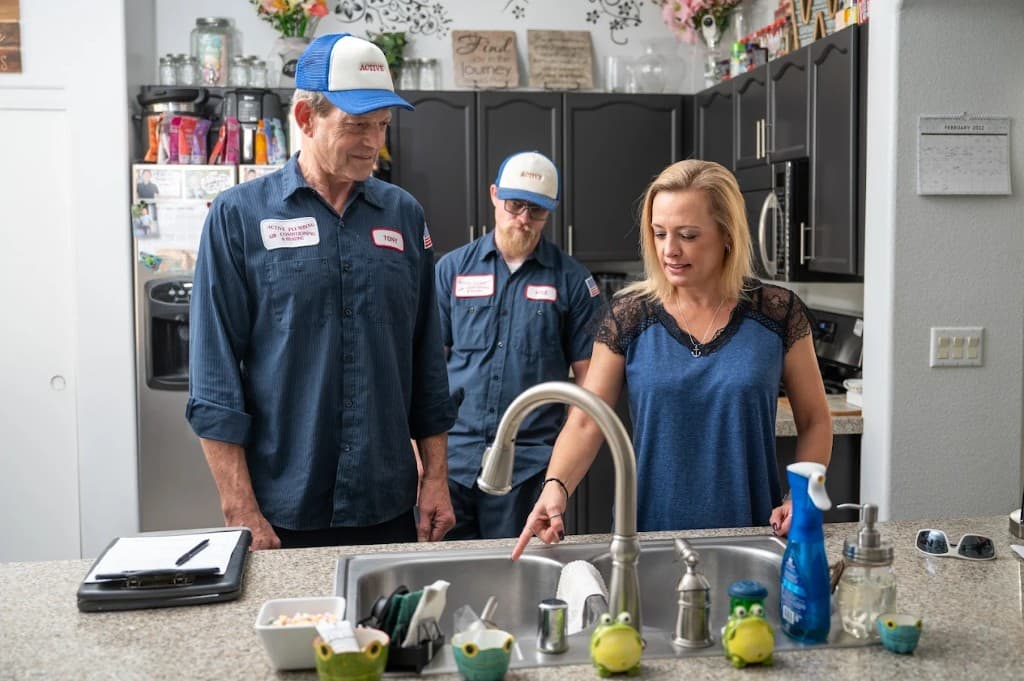
Active Plumbing technicians consulting with a homeowner at a kitchen sink during a service visit for Water Treatment in John S. Park Historic District, Las

Expert Water Treatment in John S. Park Historic District

Plumbing for the John S. Park Historic District, the 1931 to 1952 Park Place Addition and Vega Verde homes near downtown Las Vegas. Galvanized supply, cast iron drains, crawl spaces and clay sewer laterals under mature street trees.

The John S. Park Historic District takes in the Park Place Addition and Vega Verde subdivisions, roughly bounded by Charleston Boulevard, Las Vegas Boulevard, Franklin Avenue and South 9th Street in ZIP code 89104. Park Place Addition was built between 1931 and 1952 as the first complete planned subdivision in the city approved by the FHA for home loans, and it borrowed English Garden City planning, so its curving streets break from the surrounding grid. Homes range from Colonial Revival and some of southern Nevada's last Tudor-style houses to 1940s and 1950s Vega Verde ranches. It is the only Las Vegas historic district designated both locally and nationally, both in 2003.

Water Treatment in John S. Park Historic District: What Changes Here

Water softener installation, whole-house filtration and reverse osmosis systems are the core water treatment services for homes in the John S. Park Historic District. What shapes every decision here is the combination of very hard valley water at about 280 parts per million and supply lines that in many cases date to the 1930s and 1940s. Galvanized pipe that has already narrowed from scale and corrosion responds differently to treatment than modern pipe, and that changes how systems are sized, where they connect and what a water test needs to measure before any equipment is chosen.

Sizing a softener around narrowed galvanized supply

Water softener installation in a home with original galvanized supply requires accounting for reduced flow before the softener is sized. A pipe that has already narrowed from internal scale and corrosion delivers less volume than its nominal diameter suggests, so a unit sized only on household count and published hardness may regenerate on the wrong schedule. Confirming actual flow at the main line before specifying capacity gives a more accurate result than working from build year alone.

Crawl-space access changes whole-house filtration placement

Whole-house filtration connects to the main supply line after the shutoff, and in the district's crawl-space homes that line is often accessible from below rather than through a finished wall or ceiling. That access can simplify the tie-in compared with slab construction, but the crawl space itself needs to be dry and reachable before a plumber can work safely. Confirming clearance and moisture conditions before scheduling avoids a wasted trip.

Water testing panels should reflect mixed-material plumbing

Water quality testing in homes here needs to account for the mixed plumbing that decades of repair have left behind. A house with original galvanized supply, a 1960s copper patch and modern PEX at a remodeled kitchen can produce different readings at different taps. A hardness and TDS panel alone may miss elevated metals at a tap downstream from a corroded galvanized section or a dissimilar-metal joint, so the test panel should be matched to what is actually in the walls.

Exterior equipment placement may require historic review

Salt-free conditioners and whole-house filtration systems mount on the main supply line, which in many district homes is inside the crawl space or a utility area and raises no exterior concerns. Where a job requires any visible exterior component, such as a backflow assembly on a street-facing elevation or a new penetration through a historic wall, the City of Las Vegas Historic Preservation staff should be consulted before the permit application is submitted, not after.

Get Your Quote

Tell us what's going on and we'll get back to you. We're open 24/7.

Local Knowledge

Common Water Treatment Issues in John S. Park Historic District

Softener brine discharge needs a reachable drain

Water softener installation requires a code-compliant drain connection for the brine rinse cycle. In crawl-space homes in the district, the nearest drain may be a cast iron line that is already scaled or cracked. Confirming the condition of the drain before the softener is specified avoids discovering mid-installation that the tie-in point needs repair before the new equipment can be connected.

Lead and copper results vary by tap here

In a house with original galvanized supply and later copper repairs, a first-draw lead and copper sample taken at the kitchen tap may not reflect what is happening at a bathroom tap on a different branch. Sampling from the tap used most for drinking gives the most relevant result. A single sample from an arbitrary fixture can understate or overstate actual exposure at the tap a family uses daily.

RO drain air gap placement in a historic kitchen

Under-sink reverse osmosis installation requires a proper drain connection, typically with an air gap fitting mounted through the sink deck or countertop. In a kitchen with original or period-appropriate fixtures, drilling a new hole through the sink deck needs to be done carefully. Confirming the sink material and available deck space before the appointment avoids a situation where the planned drain connection point is not workable on the day of installation.

PFAS screening panel mismatched to current EPA status

PFAS screening results need to be read against the limits that applied when the sample was analyzed. As of September 2026, enforceable limits covered PFOA and PFOS at 4 parts per trillion each, while proposed changes to limits for other compounds were not yet final. A homeowner comparing results to a panel that includes now-proposed limits may draw conclusions that do not reflect current enforceable standards.

Conditioner media sizing for reduced-flow supply lines

Salt-free conditioning units are sized partly on household flow rate. In a district home where galvanized supply has narrowed internally, the actual flow at the main line may be lower than a standard household calculation assumes. Installing a unit sized for full nominal flow on a restricted supply line means water may contact the conditioning media longer than the system was designed for, which can affect performance.

What we offer in John S. Park Historic District

Our Water Treatment Services in John S. Park Historic District

Water Softener Installation in John S. Park Historic District

A softener is the only common home treatment that actually removes calcium and magnesium from your water. Active Plumbing sizes the unit to your household and hardness, installs it with a bypass, brine tank and properly discharged drain line, and sets the regeneration schedule before we leave. You get a written price before work starts.

Learn more →

Whole-House Water Filtration in John S. Park Historic District

Whole-house filtration treats water where it enters the home, so showers, laundry and every faucet get filtered water. In the valley that usually means a sediment stage and an activated carbon stage to remove chlorine taste and odor. Active Plumbing designs the system around your water and flow, and gives a written price before work starts.

Learn more →

Reverse Osmosis System Installation in John S. Park Historic District

Las Vegas Valley water is safe and treated, but it is very hard, and that shows up in taste, cloudy ice and scaled kettles. A reverse osmosis system at the kitchen sink removes most of the dissolved minerals from the water you drink and cook with. Active Plumbing installs the unit, the faucet, the drain connection and any ice maker line, and gives you a written price before work starts.

Learn more →

Water Quality Testing in John S. Park Historic District

Testing at the tap tells you two things the utility's own reports cannot: what your home's pipes add to the water, and how hard your water actually is at your address. Active Plumbing collects the sample following lab protocol, sends it to a certified laboratory and walks you through the report. If treatment would help, we tell you which kind, and if it would not, we say so.

Learn more →

Salt-Free Water Conditioning in John S. Park Historic District

A salt-free conditioner does not remove the calcium and magnesium in valley water. It changes how those minerals behave so less of them sticks to pipes, heater tanks and fixtures as scale. Active Plumbing explains plainly what a conditioner will and will not do before you decide, and gives a written price before work starts.

Learn more →

Lead & Copper Testing in John S. Park Historic District

The water leaving the treatment plant is not always the water that reaches your glass. Lead and copper usually come from the plumbing inside a home - solder, brass fittings and corroding pipe - so the only meaningful test is one taken at your tap. Active Plumbing collects samples properly, has them analyzed by a certified laboratory and explains what the numbers mean for your plumbing.

Learn more →

PFAS Screening in John S. Park Historic District

PFAS are measured in parts per trillion, so a reliable result depends on careful collection and a certified laboratory. Active Plumbing takes PFAS samples at your tap or well using the lab's containers and handling protocol, then walks you through each compound in the report. If treatment makes sense, we explain your options before anything is installed.

Learn more →

Our Water Treatment Process in John S. Park Historic District

  1. 1

    Check hardness and layout

    Call (702) 438-3357. We confirm household size, hardness and whether there is a softener loop or the supply needs rerouting.

  2. 2

    Size and written price

    We recommend a unit capacity matched to your use and give a written price before work starts.

  3. 3

    Install and connect

    We tie in the softener with a bypass valve, set the brine tank and run the drain line to an air gap.

  4. 4

    Program and test

    We program regeneration, check that treated water is soft, explain salt top-ups, and follow up after the job.

Water Treatment in John S. Park Historic District, Las Vegas

Ready to Get Started?

Trusted plumber in John S. Park Historic District, Las Vegas. Call now or book online. Technicians arrive in 30 to 60 minutes.

Local Tips

Water Treatment Tips for John S. Park Historic District Residents

If you are ordering a water test before installing a softener or filter, collect samples from more than one tap. Mixed-material plumbing in these homes can produce different readings at different fixtures, and a single sample may not represent the whole system.

Before scheduling a whole-house filtration or softener installation, locate your main water shutoff and confirm it actually closes. Shutoff valves in crawl-space homes from the 1930s and 1940s may not have been turned in years and can fail to seal fully, which affects how the tie-in is done.

Lead and copper testing in a pre-1986 home here should use a first-draw sample taken after water has sat in the pipes overnight. That protocol captures what leaches from the plumbing during non-use, which is the reading most relevant to daily drinking water exposure.

If a salt-free conditioner is going into a utility area or crawl space with no nearby drain, confirm the location is accessible for future media replacement. The unit needs no drain for operation, but the media does eventually need to be serviced, and a difficult-to-reach space makes that harder.

Need Water Treatment in John S. Park Historic District? We're Open 24/7.

Serving John S. Park Historic District, Las Vegas and all of Clark County

What Customers Say About Our Water Treatment in John S. Park Historic District

Real reviews from John S. Park Historic District and nearby Las Vegas neighborhoods.

We put in a water softener and RO under the sink. Our water was 28 grains - they tested it first and sized everything right. No sales pitch, just showed us the numbers. Install was clean, permit pulled. Drinking water is finally decent. Happy customer.

Lisa C.

Downtown Las Vegas

Google review, undefined 2025

A cracked yard hydrant was wasting water at the dog run. Frost-free hydrant on a new lateral with a drain gravel pit. We were in Scotch Eighty, Las Vegas. The run is dry except when we choose to water.

Esme M.

Scotch Eighty, Las Vegas

Google review, August 2026

The upstairs shower went scalding when a toilet filled. A pressure-balance cartridge and new stops behind the trim. That call was from Westleigh. Kids can shower while someone flushes now.

Finn N.

Westleigh, Las Vegas

Google review, June 2026

Water Treatment in John S. Park Historic District: FAQs

The district is inside the City of Las Vegas, so permits and inspections run through the City of Las Vegas building department under the Southern Nevada Amendments to the Uniform Plumbing Code. Because the district is locally designated, a permit application for work that affects a historic resource goes to the Historic Preservation Commission, so exterior work is checked with Historic Preservation staff before it begins.

Interior repairs and repipes do not generally change a designated resource. Work that alters the exterior can, including an exterior tankless unit, a visible water heater enclosure, a backflow assembly on a street-facing elevation, a new gas meter location or trenching that affects a historic feature. We confirm with the city first rather than after.

A whole-house repipe typically runs $4,000 to $15,000 in the Las Vegas Valley. That is a typical range, not a quote. Crawl-space access, the number of fixtures and how much of the original galvanized remains all affect the job, and Active Plumbing gives a written price before work starts.

In a house with original galvanized supply, the pipe closes up from the inside as corrosion and hardness scale build, and the smallest or farthest runs usually show it first. Discolored water at the tap is another sign. A pressure test and a look at accessible runs, often from the crawl space, shows how far it has gone.

Sewer laterals from this era are frequently clay or cast iron, and the district's mature street trees send roots into joints. Recurring slow drains often come before a full backup. A camera inspection shows whether it is roots, a separated joint or scaled cast iron, which decides between cleaning and repair.

Active Plumbing is open 24/7 and technicians arrive in 30 to 60 minutes anywhere in the valley. The district's curving streets, limited entry points and on-street parking near downtown are worth mentioning when you call so the technician knows where to park.

Testing first is the more reliable approach here. Published valley hardness is about 16 grains per gallon, but a home with original galvanized supply or mixed-material plumbing may show elevated metals or sediment at the tap that affect which treatment stages are needed and how equipment is sized. Water quality testing typically runs $75 to $200 depending on the panel, and the result shapes every equipment decision that follows.

An under-sink reverse osmosis unit connects to the cold supply and drain under the kitchen sink and adds a dedicated faucet through the sink deck or countertop. That work is entirely interior and does not alter a designated historic resource, so it does not trigger Historic Preservation Commission review. Only work that changes the exterior of the home, such as a new penetration through a historic wall, would need to be confirmed with city preservation staff first.

The mature trees are a sewer lateral concern rather than a direct water treatment issue, but they are connected. If root intrusion in a clay or cast iron lateral is causing recurring backups, resolving that before adding a whole-house filtration or softener system avoids installing equipment on a supply line that may need to be accessed again soon. A water test and a drain inspection are reasonable first steps in a home with both old supply and old sewer.

Also serving

Water Treatment Near John S. Park Historic District

Other Services in John S. Park Historic District, Las Vegas

OUR SERVICE AREA

Proudly Serving All of Las Vegas Valley

Address:3580 Polaris Ave #17, Las Vegas, Nevada 89103Phone:(702) 438-3357Hours:Open 24/7Email:service@activeplumbinginc.com

Active Plumbing is Las Vegas-based and open 24/7 for residential and commercial plumbing across Las Vegas Valley. We handle Emergency Plumbing, Drain & Sewer Services, Water Heater Services, Water Treatment, Gas Line Services, Pipe & Fixture Services and Sewage & Waste Services, with warranties on parts and labor.

Our licensed technicians serve Enterprise, Henderson, Las Vegas, North Las Vegas, Paradise, Spring Valley, Summerlin, Sunrise Manor, Whitney, Winchester, and the surrounding neighborhoods.

Let's Start a Conversation

Book Your Service Call Now

Contact us:

(702) 438-3357

service@activeplumbinginc.com

3580 Polaris Ave #17, Las Vegas, Nevada 89103

Hours: Open 24/7