Cost Guides
Kitec Plumbing Replacement Cost in Las Vegas - and Why Insurers and Buyers Force the Issue
Key Takeaways
- Kitec plumbing was installed in many Las Vegas homes built roughly 1995 to 2007 and fails early due to corroding brass fittings and dezincification.
- Las Vegas hard water from the Colorado River speeds up Kitec failure, so valley systems often leak faster than in softer-water regions.
- Full repipe costs typically run $4,500 to $15,000, with large custom homes reaching $25,000 or more depending on size, bathrooms, and slab vs attic access.
- Insurers treat Kitec as a known liability and respond with non-renewals, denied water damage claims, and premium increases.
- Buyers, home inspectors, and FHA or VA lenders push for full replacement, and deals often fall apart over repipe credits.
- A proper repipe requires a permit and inspection through the Clark County building department so the work is documented for insurers and buyers.
- Modern PEX-A is usually the best repipe material for valley homes because it resists corrosion and mineral scaling at a lower cost than copper.
- The Kitec class-action settlement claim deadline has passed, so replacement cost now falls entirely on the homeowner.
In This Article
A homeowner in Summerlin West called our team last spring with a stack of paperwork on the kitchen counter. She had a buyer under contract, a moving truck reserved, and a home inspection report that flagged something called Kitec plumbing in bold red text. Two days later her buyer asked for a full repipe credit, and the deal started to wobble.
Stories like hers play out across the valley every week. Some owners find out during a sale. Others get a letter from their insurer saying the policy will not renew because of the pipes hidden in their walls. Either way, the surprise is rarely a pleasant one.

What Kitec Plumbing Is and Why It Ended Up in So Many Las Vegas Homes
Kitec plumbing is a type of water piping that was popular from the mid 1990s through the late 2000s. It was marketed as a modern alternative to copper, easier to install and cheaper to run through walls. Builders across the valley used it in thousands of homes during a period of rapid growth.
The problem is that Kitec pipe and its fittings fail far earlier than the systems it replaced. Instead of lasting decades, many systems started leaking within ten to fifteen years. That failure rate is why a nationwide settlement eventually followed, and why the pipe now scares insurers and buyers.
Here is what makes Kitec plumbing stand out in Las Vegas homes:
- It uses an aluminum pex pipe design, with an aluminum layer sandwiched between plastic.
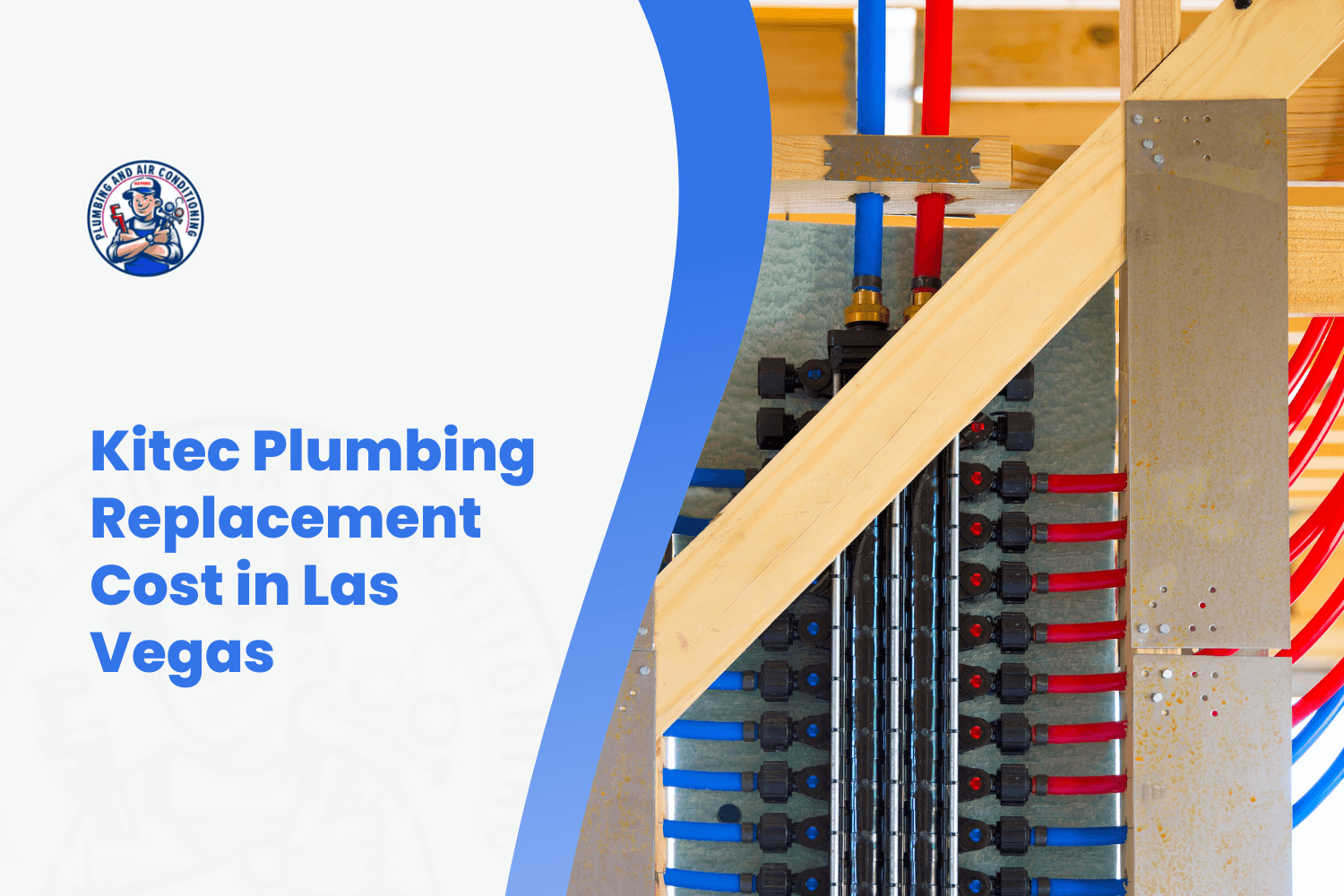
- It relies on brass fittings that corrode from the inside.
- It was installed heavily in production homes built during the valley's expansion.
- It often hides behind finished walls, so owners never see the warning signs until a leak appears.
How Kitec Pipe Is Built and Why It Fails
Kitec pipe is built as a layered tube. There is an inner plastic layer, a thin aluminum core in the middle, and an outer plastic jacket. That aluminum pex pipe design was supposed to give the flexibility of plastic with the strength of metal. On paper it sounded smart.
The trouble starts at the brass fittings that connect the pipe. Those fittings were made with a brass alloy that reacts badly to water over time. In a process called dezincification, zinc leaches out of the brass and leaves behind a weak, brittle metal that crumbles and clogs.
As dezincification advances, mineral deposits build up inside the fittings and restrict water flow. Pressure rises, and the weakened brass finally gives way. Pipe corrosion along the aluminum layer adds another failure point, especially where the plastic layers separate.
The result is a system that can burst without much warning. We have seen fittings fail behind a bathroom vanity with no leak history at all. Once one fitting goes, the rest of the system is usually on borrowed time.
Which Las Vegas Neighborhoods and Build Years Are Affected
If your house was built roughly between 1995 and 2007, it sits squarely in the Kitec window. That stretch covers the valley's biggest building boom, when subdivisions went up faster than anyone could track. Many production builders reached for Kitec because it was cheap and fast to install.
We see it constantly in older parts of Summerlin, across Green Valley in Henderson, and in newer North Las Vegas communities like Aliante that filled in during the mid 2000s. Homes built 1995-2007 in these areas are the most common candidates. That does not mean every home has it, but the odds climb sharply in that build range.
Some builders switched materials partway through a project, so two houses on the same street can differ. A model from 2001 might have Kitec while its neighbor from 2004 does not. That is why we always inspect rather than guess based on the year alone.
If you own a home in Summerlin or across the line in Henderson and it dates to this era, a quick check of your pipes is a smart move before it becomes an emergency.
How to Spot Kitec Pipes in Your Home
Kitec identification is easier than most homeowners expect once they know where to look. Start at the water heater and the main manifold, which is often in a garage, closet, or laundry area. The pipes there are usually exposed and easy to read.
The most reliable clue is the color. Kitec typically uses orange and blue pipe for hot and cold lines, though some installs used other colors. If you see bright orange and blue flexible pipe running to a plastic manifold, that is a strong sign.
Next, look for printed markings along the pipe. Kitec was sold under several names, so check for the words Kitec, KERR, PlumbBetter, or IPEX stamped on the outer jacket. IPEX was the parent brand, and its name shows up on many valley installs.
If you find these markings or the telltale colors, take clear photos and note the locations. That documentation helps a plumber quote the job and helps you later with insurers or buyers. When in doubt, our team can confirm it during a visit.
Why Las Vegas Water Chemistry Speeds Up the Problem
Las Vegas hard water makes a bad situation worse. Our supply comes largely from the Colorado River through the Las Vegas Valley Water District, and it carries a heavy load of dissolved minerals. That mineral content is tough on any plumbing, but it is especially rough on Kitec's brass fittings.
Hard water accelerates the dezincification process inside those fittings. The same minerals that leave white crust on faucets and shower heads also settle inside the pipe. Over the years, mineral buildup narrows the passage and raises pressure at the weakest points.
Because our water is so mineral rich, Kitec systems in the valley often fail faster than the same pipe would in a softer water region. A system that might last twenty years elsewhere can start leaking here in twelve or fifteen. That local factor is one reason we treat valley Kitec homes with extra urgency.
Many owners pair a repipe with a water softener installation to protect the new lines. Softer water extends the life of any plumbing and cuts down on the mineral buildup that ruins fixtures.
Get Your Quote
Tell us what's going on and we'll get back to you fast.
Kitec Plumbing Replacement Cost in Las Vegas: Real Numbers
The first question almost every homeowner asks is simple: what will this cost? The honest answer is that Kitec replacement cost depends on your home's size, layout, and finishes. Still, we can give real ranges that hold up across most valley properties.
A whole home repipe removes the failing Kitec system and runs new lines throughout the house. Most repipe cost Las Vegas quotes land in a predictable window once a plumber sees the property. The table below shows typical ranges so you can start budgeting.
| Home Type | Approx. Size | Typical Repipe Cost Range |
|---|---|---|
| Single-story, 2 bath | 1,200 - 1,800 sq ft | $4,500 - $8,000 |
| Single-story, 3 bath | 1,800 - 2,500 sq ft | $7,000 - $11,000 |
| Two-story, 3 bath | 2,500 - 3,500 sq ft | $9,000 - $15,000 |
| Large custom home | 3,500+ sq ft | $14,000 - $25,000+ |
Average Repipe Price Ranges by Home Size
For a rough gauge, most single-story homes in the valley fall in the $4,500 to $11,000 range depending on the number of fixtures. A modest three bedroom in Aliante or Green Valley usually lands near the middle of that band. Two-story homes cost more because pipe has to travel between floors.
One helpful way to think about repipe price ranges is cost per fixture. A fixture is any point where water is used, such as a sink, tub, toilet, or hose bib. Plumbers often estimate somewhere between $500 and $800 per fixture, which lets you sanity check a quote against your own fixture count.
By square footage, valley repipes tend to run around $4 to $7 per square foot when drywall work is included. Home size matters, but two houses of the same size can differ if one has more bathrooms or a harder layout. Use these numbers as a starting point, not a final price.
The only way to get a firm figure is an on-site look. Photos and floor plans help, but a walk-through catches the details that move the price.
What Drives the Cost Up or Down
Several repipe cost factors decide where a quote lands. The biggest one is how the pipe is routed. Homes where lines run through the attic are usually cheaper to repipe because the crew can access them from above without tearing into finished ceilings on every floor.
Slab access is the opposite story. When pipe is buried in a concrete slab, rerouting through walls and ceilings takes more labor and more patching. A slab home with lines cast into the foundation almost always costs more than an attic-run home of the same size.
The number of bathrooms is another driver. Each bathroom adds fixtures, and each fixture adds pipe, connections, and access points. A four bathroom home simply has more work than a two bathroom home even at the same square footage.
Finish quality matters too. High-end tile, custom cabinetry, and specialty wall textures raise the cost of accessing and repairing walls. That is why a builder-grade tract home and a custom home the same size can get very different quotes.
Drywall Repair, Permits, and Hidden Line Items
The pipe itself is only part of the job. Drywall repair often makes up a large share of the total, since the crew has to open walls to reach the old lines. Patching those holes, sanding, and texture matching all take time and skill.
Las Vegas homes use knockdown and orange-peel textures that are hard to blend. Good crews take pride in matching the existing texture so the repair disappears once painted. If a quote leaves out texture and paint, ask exactly what is included before you sign.
Permits are another real cost. A proper repipe requires a plumbing permit through the Clark County building department or the City of Las Vegas, depending on where the home sits. That permit triggers an inspection that documents the work.
Some owners are tempted by cheaper quotes that skip the permit. That is a mistake, because insurers and future buyers want proof the work was inspected. Undocumented work can cost you far more later than the permit fee saves you now.
PEX vs Copper: How Material Choice Changes the Quote
Most valley repipes today use one of two materials. A PEX repipe uses modern cross-linked polyethylene, usually the PEX-A type, which is flexible and fast to install. A copper repipe uses rigid copper pipe soldered at the joints.
On material comparison, PEX-A almost always costs less because it installs faster and needs fewer fittings. It also handles our Las Vegas hard water well, since it resists the corrosion and mineral scaling that plagued Kitec's brass. For most homes, PEX-A is the practical choice.
Copper still has fans and lasts a long time, but it costs more, takes longer to install, and can pit over decades in mineral-heavy water. The price gap can be several thousand dollars on a full house. Copper makes sense for specific situations, but it is not the default for most valley owners.
Our recommendation for most Las Vegas homes is modern PEX-A. It gives excellent lifespan, holds up to our water, and keeps the project affordable. You can review our pipe and fixture services to see how we handle full repipes.

Need Help in Las Vegas?
Active Plumbing serves Las Vegas and all of Las Vegas Valley.
Why Insurance Companies Force Kitec Replacement
Insurers hate uncertainty, and Kitec plumbing is a known source of expensive claims. Carriers have paid out on enough burst-pipe losses to treat the material as a red flag. When they spot it, they act to protect themselves.
For homeowners, that shows up in three ways: denied coverage, non-renewal, and higher premiums. The insurance Kitec problem is real, and it catches many owners off guard at renewal time. The table below sums up how carriers typically respond.
| Carrier Action | What It Means | Homeowner Impact |
|---|---|---|
| New policy denial | Carrier refuses to write a policy | Hard to insure the home at all |
| Non-renewal | Existing policy not renewed | Scramble for new coverage |
| Premium increase | Higher rates to offset risk | Hundreds more per year |
| Claim denial | Water damage claim refused | Repair costs fall on owner |
How Insurers Flag Kitec as a Known Risk
Carriers keep records of which materials cause claims, and Kitec sits high on that list. The insurance risk flag comes from years of leak data and a well-known class action settlement tied to the product. Once a material earns that reputation, underwriters treat it as a known liability.
This is the same pattern insurers use with polybutylene pipe and aluminum wiring. Both had widespread failures, and both now trigger coverage problems. Kitec joined that group for the same reason: predictable, costly failures.
When you apply for a policy or renew one, some carriers now ask directly about plumbing materials. If an inspection or your own disclosure reveals Kitec, the underwriter has to decide whether the risk is worth it. Many decide it is not.
The class action settlement resolved past legal claims but did nothing to fix the pipes in your walls. So from the carrier's view, every Kitec home still carries the same failure risk it always did.
Policy Non-Renewals and Denied Water Damage Claims
The most common story we hear starts with a non-renewal letter. A homeowner opens the mail to find their carrier will not renew because of the plumbing. Now they have weeks to find new coverage, often at a higher rate from a less picky insurer.
The harsher story is a denied claim. A Kitec fitting bursts, floods a hallway, and ruins flooring and drywall. The owner files a water damage claim expecting help, only to learn the carrier denies it because the loss stems from a material they consider a known defect.
The financial fallout is steep. A burst-pipe cleanup with flooring and drywall repair can run five figures. Paying that out of pocket, on top of a repipe, hits hard. Some owners face both at once.
If you are dealing with a sudden leak while sorting out coverage, our burst pipe repair team can stop the damage fast while you plan the full replacement.
What Proof of Replacement Insurers Want
Once you repipe, insurers want proof before they restore good terms. The core of that proof of repipe is a permit and a passed final inspection from the local building department. That paperwork shows the work met code.
They also want a licensed contractor invoice that spells out the scope, the material used, and the date of completion. A vague receipt from an unlicensed crew rarely satisfies an underwriter. The invoice needs to name the licensed company and describe a full-home repipe.
The inspection sign-off is the final piece. When a city or county inspector signs off, that record becomes something you can hand to any carrier. It turns your home from an uninsurable risk back into a normal policy.
We provide all of this documentation as part of our repipe service, so you have a clean package to hand your insurance agent the day the job is done.
Why Buyers and Lenders Push Kitec Off the Table
A home sale is where Kitec problems often surface for the first time. The valley resale market moves fast, and buyers have options. When an inspection turns up Kitec, buyers get nervous and start asking for concessions.
The home sale Kitec issue can derail a deal in several ways. Inspections flag it, appraisals may require repairs, and buyer negotiation shifts hard in the buyer's favor. Here is how it usually unfolds:
- The home inspection report lists Kitec as a material defect or safety concern.
- The buyer requests a full repipe or a large credit against the price.
- Some lenders or government-backed loans require repairs before funding.
- Sellers who refuse to address it often watch the buyer walk.
How Home Inspectors Report Kitec
Las Vegas home inspectors know Kitec well and flag it every time they find it. The home inspector report usually names the material, notes the failure history, and recommends a licensed plumber evaluate it. That language alone can spook a buyer.
Inspectors often use phrases like potential for premature failure or recommend replacement in their findings. When a buyer reads flagged plumbing described that way, they immediately think of flood risk and future cost. The inspection findings become a bargaining chip.
Because inspectors are careful about liability, they rarely soften the language. They write it plainly so no one can claim they missed it. That plain reporting is good for buyers and tough for sellers who did not plan ahead.
Once Kitec is in writing on an inspection report, it does not go away. It stays part of the negotiation until someone addresses it or the deal dies.
Deals That Fall Apart Over Repipe Demands
We have watched plenty of deals stall over a repipe credit. A buyer under contract sees the inspection, then asks the seller to either repipe before closing or knock thousands off the price. Sellers who dig in often end up with a failed sale.
In a competitive resale market like the valley, buyers know they can find another home. If a seller refuses reasonable seller concessions, the buyer moves on to a house without the pipe problem. The seller then has to disclose the Kitec finding to the next buyer anyway.
Some sellers try to counter with a smaller credit. That sometimes works, but if the credit does not cover the real repipe cost, savvy buyers will not budge. The number has to reflect an actual quote to hold the deal together.
The lesson is that ignoring Kitec rarely saves money. It usually just delays the cost while risking the whole transaction.
Lender and Appraisal Roadblocks
Financing adds another layer. Some lenders and certain appraisals require repairs before they will fund a loan. An appraisal repair condition tied to plumbing can freeze a closing until the work is done.
FHA and VA loans are stricter than most. These government-backed programs care about the home's condition and habitability. If an FHA VA loan appraiser notes failing or high-risk plumbing, the lender may require it fixed before funding.
That requirement creates a closing delay that frustrates everyone. The buyer wants the house, the seller wants to move, and the loan sits stuck until a licensed plumber addresses the pipe. In some cases the deal collapses over timing alone.
Sellers who repipe before listing avoid this trap entirely. A documented repipe clears the appraisal hurdle and keeps the closing on schedule.
Selling As-Is vs Replacing Before Listing
Sellers usually face a choice: sell as-is at a discount, or do a pre-listing repipe. Each path has tradeoffs, and the right call depends on your timeline and equity. Neither is automatically wrong.
Selling as-is means less upfront cost but a lower sale price and a smaller buyer pool. Many buyers avoid Kitec homes outright, and cash investors who accept them expect a steep discount. You may net less than the repipe would have cost.
A pre-listing repipe costs money now but widens your buyer pool and removes a major objection. Homes with fresh, documented plumbing sell faster and closer to asking. If you have decent home equity, the repipe often pays for itself in a smoother, higher sale.
Our guidance is simple. If you plan to sell soon and have the equity, repipe first and market the home as fully updated. If you need to sell immediately with no cash, an as-is sale to the right buyer may be your best move.
What a Full Kitec Repipe Actually Involves in a Las Vegas Home
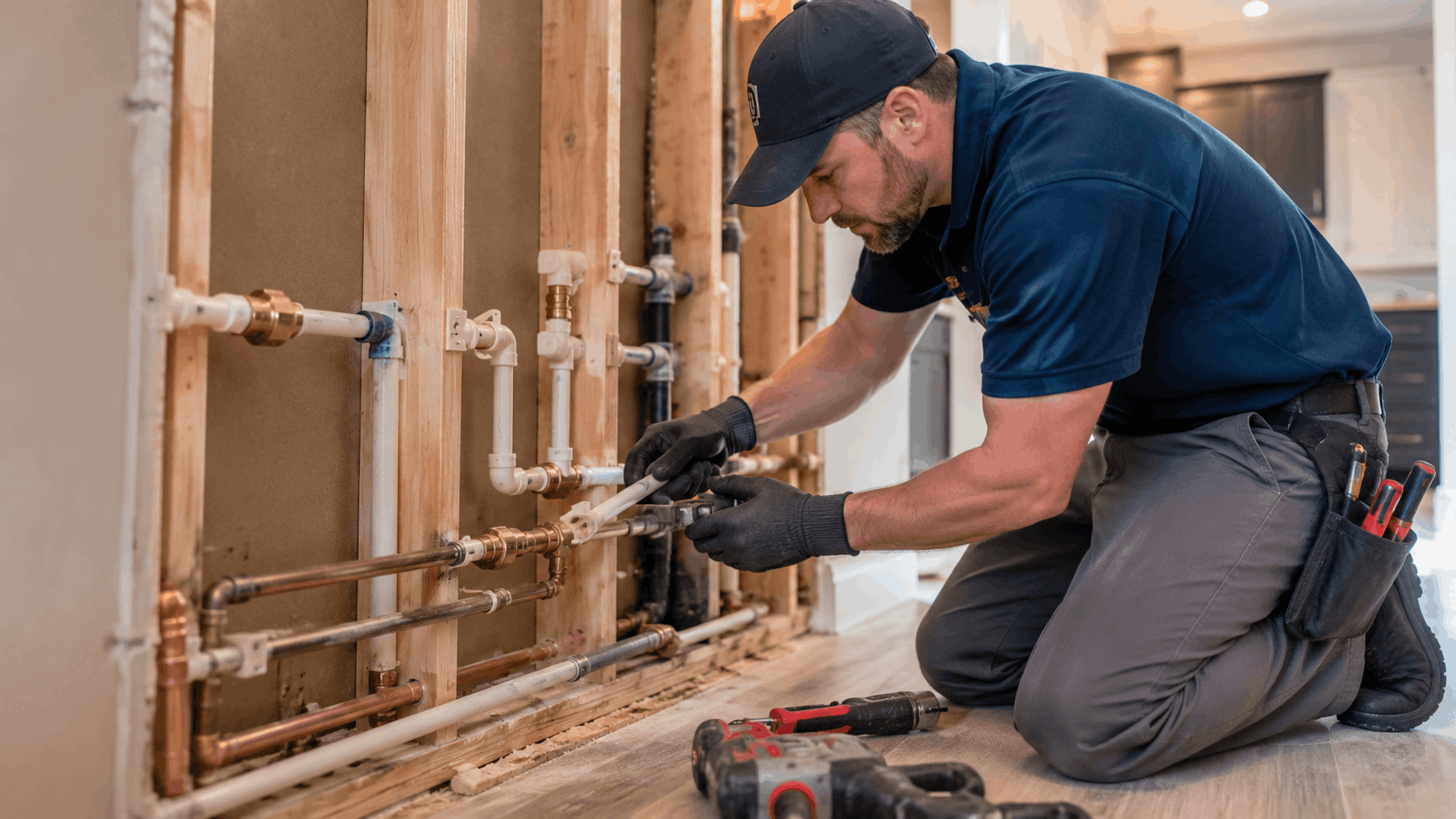
Homeowners often picture a repipe as chaos, but a well-run job is orderly and predictable. The repipe process follows clear steps from estimate to final inspection. Knowing the sequence takes the fear out of it.
A whole home repipe on a typical valley property is a multi-day project, not a weeks-long ordeal. Good planning keeps the plumbing timeline tight and the disruption manageable. Here is how our crews approach it.
The Assessment and In-Home Estimate
Every repipe starts with an in-home estimate. Our tech walks the property, opens the manifold, and does line mapping to trace where the pipe runs. This step reveals whether the lines go through the attic, the slab, or a mix of both.
The fixture count comes next. We tally every sink, tub, shower, toilet, and outdoor connection, because that number drives the material and labor. A precise count means an accurate quote with no surprise add-ons later.
We also check wall textures, flooring, and cabinetry to plan the access points and the patching. Seeing these details in person is why an on-site look beats a phone quote every time. Two homes that look identical online can need very different work.
By the end of the visit, you get a written estimate that lists the scope, the material, the permit, and the drywall work. That clarity lets you compare quotes fairly and budget with confidence.
Timeline and Water Shutoff Expectations
For most valley homes, the repipe timeline runs two to four days. Smaller single-story homes can finish faster, while large two-story or custom homes take longer. The job duration depends on fixture count and access.
Water shutoff is the part families worry about most. In practice, water is usually off only during active work hours, and we restore it each evening whenever possible. You are rarely without water overnight.
We schedule the work to keep your household running. Crews stage materials, cut access points, and run new lines in an order that minimizes the time your water is down. Clear communication each day tells you exactly what to expect.
By the last day, the new system is pressure tested and connected. The old Kitec is abandoned in place or removed where practical, and your home runs on fresh, reliable pipe.
Wall Access, Patching, and Cleanup
Reaching the old pipe means cutting access holes in walls and sometimes ceilings. Our crews plan these openings carefully to keep them small and in logical spots. After the new lines are in, we cap and repair each opening.
Wall patching is a craft. The patch has to sit flush, then get taped, mudded, sanded, and textured to match the surrounding surface. Las Vegas knockdown and orange-peel textures take practice to blend, and we take that step seriously.
Protecting your home during the work matters as much as the plumbing. We cover flooring, move and shield furniture, and clean up debris each day. A repipe should not leave your house dusty and torn up for weeks.
We set clear expectations on texture matching and paint from the start. Some quotes include paint and some prime the patch for you to finish. Knowing which upfront prevents any confusion at the end.
Permits and Final Inspection in the Las Vegas Valley
A proper repipe is permitted and inspected. We pull the plumbing permit through the correct authority, whether that is the Clark County building department or a specific city office, based on where the home sits.
Once the new system is in and pressure tested, an inspector reviews the work. Passing that final inspection confirms the repipe meets code. That step is what turns a repair into a documented repipe you can prove.
The documentation is what insurers and buyers demand. A permit number and a passed inspection give you a clean record to hand any carrier or any future buyer's agent. It removes doubt about the quality of the work.
We hand you that paperwork at the end of the job. Whether you keep the home or sell it, you have proof that the Kitec is gone and the new system is legitimate.
Need Help in Las Vegas?
Active Plumbing serves Las Vegas and all of Las Vegas Valley.
Choosing the Right Repipe Company in Las Vegas
Not every plumber does repipes well, and the price gap between a proper job and a cheap patch is wide for a reason. Choosing the right repipe company protects your money and your home. A little vetting up front saves a lot of grief later.
A good repipe means new pipe, proper permits, quality patching, and a warranty. A bad one means skipped permits, sloppy walls, and no paper trail. The table below shows what to look for when you hire a plumber.
| What to Check | Good Sign | Warning Sign |
|---|---|---|
| License | Active Nevada contractor license | No license number offered |
| Permits | Pulls permit and schedules inspection | Says permit is not needed |
| Estimate | Detailed written scope | Vague verbal number |
| Drywall | Patching and texture included | Leaves holes for you |
| Payment | Standard invoicing | Cash only, large deposit |
License, Insurance, and Nevada Requirements
Start with the Nevada contractor license. Nevada requires plumbing contractors to hold a license through the state contractors board, and you can verify it online. A licensed contractor has met training and testing standards for this exact work.
A proper company is also a bonded plumber with liability insurance. Bonding protects you if the work is not completed as agreed, and insurance covers accidental damage during the job. Both give you recourse if something goes wrong.
Before you sign anything, verify license status directly with the state board rather than trusting a business card. It takes two minutes and confirms the license is active and in good standing. The Nevada State Contractors Board makes this lookup easy.
Hiring an unlicensed crew to save money almost always backfires. Their work may not pass inspection, and insurers will not accept undocumented repairs from an unlicensed party. That defeats the whole point of the repipe.
Questions to Ask Before Signing a Repipe Contract
Before you sign a repipe contract, ask a few direct questions. What warranty covers the material and the labor, and for how long? Warranty questions separate confident companies from ones cutting corners.
Ask whether drywall repair and texture matching are included, or whether you are left to patch the holes. Confirm who pulls the permit and schedules the inspection. These details often explain why one quote is cheaper than another.
Get the payment schedule in writing and be wary of large upfront deposits. A fair quote comparison looks at the full scope, not just the headline price. The cheapest number often leaves out the costly parts.
Finally, ask how long the crew has done repipes and whether they can show local references. Experience with valley homes and textures shows in the finished result. A company that answers all of this clearly is one worth considering.
Why Local Knowledge of the Valley Matters
A local plumber who works the valley every day brings real advantages. We know which building department covers each area and how each one handles permits and inspections. That knowledge keeps your job moving without paperwork snags.
HOA rules add another wrinkle. Communities like Summerlin and Anthem in Henderson have their own guidelines about exterior work, dumpsters, and work hours. Knowing those HOA rules ahead of time avoids fines and delays.
We also know the common Kitec layouts across valley neighborhoods. The way a builder routed pipe in a mid-2000s Aliante home differs from a Green Valley model, and that familiarity speeds up the assessment. We have seen these floor plans many times.
That is the edge our team at Active Plumbing brings. Deep familiarity with valley homes, water, and local departments means fewer surprises and a smoother project from start to finish.
Red Flags That Signal a Bad Repipe Deal
Some warning signs should stop you cold. The biggest red flag is a plumber who says no permit is needed for a repipe. Skipping the permit leaves you with undocumented work that fails insurers and buyers.
Cash only demands are another warning. A company that will not invoice properly or wants a huge deposit before starting is a risk. Standard businesses accept normal payment methods and reasonable deposits.
Vague estimates are a problem too. If a quote is a single number with no scope, you cannot tell what you are getting. Missing drywall repair is a common trick that makes a quote look cheap until you get stuck patching walls yourself.
Trust your instincts. If a deal feels too cheap or a contractor dodges basic questions, walk away. A repipe is a big investment, and cutting corners on the crew undoes all of it.
How Active Plumbing Handles Kitec Replacement Across the Valley
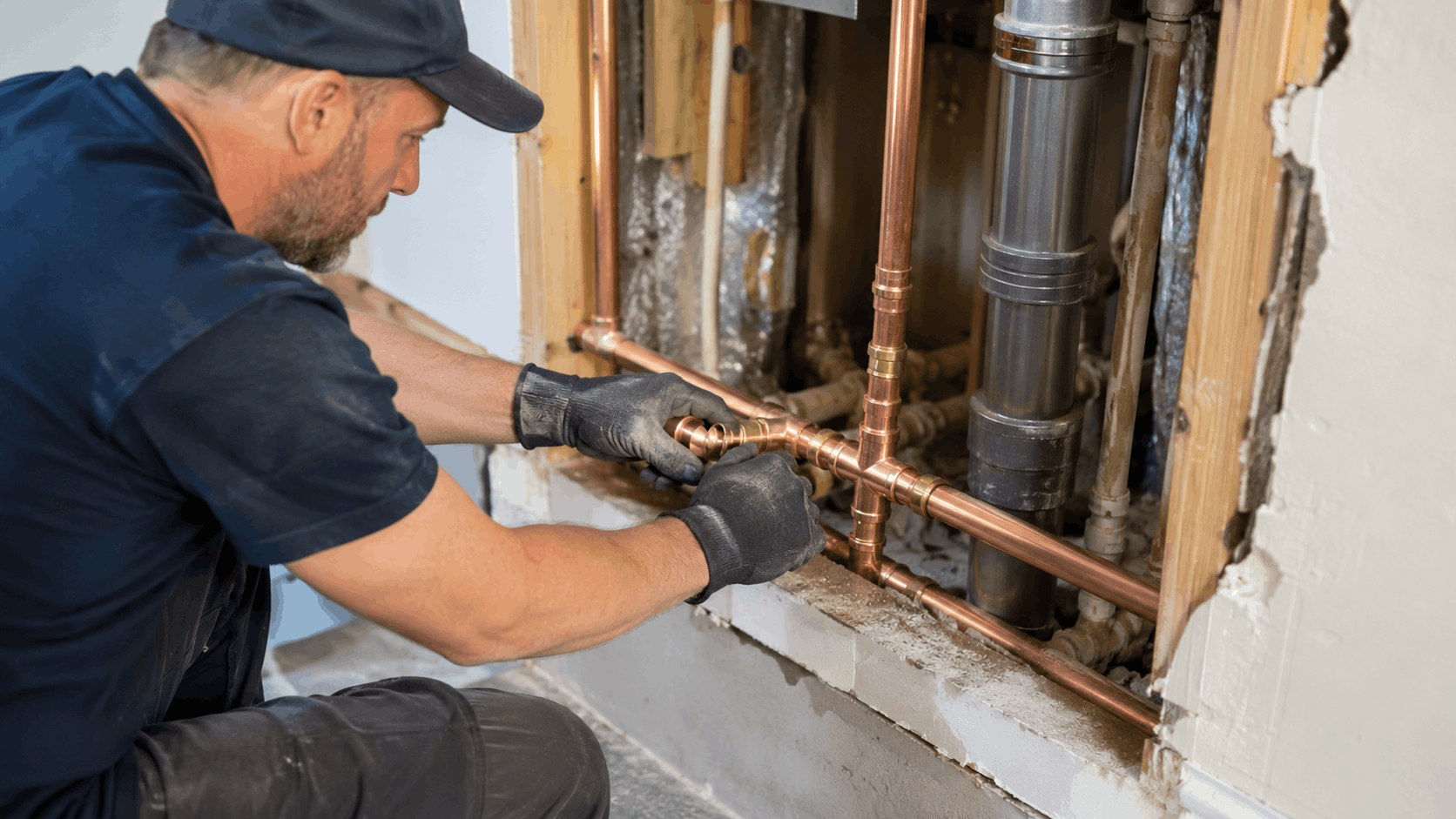
Our team has repiped homes across the valley for years, and Kitec jobs are a regular part of the work. We built our Kitec repipe service around what homeowners actually need: clear pricing, clean work, and proof for insurers and buyers. No pressure, just a straight path to a fixed problem.
As a local Las Vegas plumber, Active Plumbing focuses on making a stressful job simple. Here is how we approach it:
- We assess the home in person and give a detailed written estimate.
- We pull permits and schedule inspections so the work is documented.
- We use modern PEX-A suited to Las Vegas hard water.
- We patch and texture walls so your home looks whole again.
- We hand you the full paperwork package for insurance and resale.
Service Areas from Summerlin to Henderson
We cover the whole valley, from the west side to the east and everywhere between. That includes Summerlin West, Green Valley, and the Henderson communities near Lake Las Vegas and Whitney Ranch. We know the roads and the neighborhoods.
On the north end, we serve Aliante and other North Las Vegas areas that filled in during the Kitec era. Centennial Hills and the growing edges of the valley are on our regular routes too.
Central and east valley homes in Spring Valley, Paradise, Sunrise Manor, and Winchester round out our coverage. Wherever your Kitec home sits, our crews likely work nearby already. You can browse our full list of service locations to confirm your area.
Because we cover so much ground, we can usually schedule an assessment quickly. Fast scheduling matters when a sale or a renewal deadline is bearing down on you.
Upfront Pricing and Documented Work
We give upfront pricing with a written estimate that spells out every part of the job. You see the pipe material, the fixture count, the permit, and the drywall work in plain terms. No hidden line items appear at the end.
Documented work is the backbone of our repipe service. We pull the permit, complete the inspection, and provide the licensed invoice and sign-off. That package is exactly what insurers and buyers ask to see.
Clear paperwork protects you long after the crew leaves. If you sell in five years, you still have proof the Kitec is gone. If your insurer asks, you hand them a clean record and keep good terms.
We would rather answer every question up front than surprise you later. Transparent pricing and full documentation are simply how we run every repipe.
Warranty and Post-Repipe Support
A repipe should last for decades, and we stand behind ours. Our work comes with a repipe warranty covering both material and labor, so you are protected if anything goes wrong after the job.
The labor warranty means we come back if a connection ever needs attention. Modern PEX-A carries a long manufacturer warranty on the pipe itself, and our workmanship warranty covers the installation. Together they give real long-term coverage.
Follow-up support is part of the deal. If you have a question weeks or months later, our team is a phone call away. We do not disappear once the invoice is paid.
That long-term support is why so many valley homeowners trust us with a job this size. Reach out through our contact page to start with an assessment.
Need Help in Las Vegas?
Active Plumbing serves Las Vegas and all of Las Vegas Valley.
Final Thoughts
Kitec plumbing is a problem that only gets more expensive the longer it waits. The pipe fails, insurers flag it, and buyers demand it gone. Between our hard water and the valley's boom-era building, thousands of local homes still carry these lines.
The good news is that a proper repipe solves it for good. A documented whole home repipe restores your insurability, clears the path to a sale, and gives you decades of reliable plumbing. The cost is real but predictable, and it beats a burst-pipe flood every time.
If your Las Vegas home was built between 1995 and 2007, get your pipes checked before a leak or a renewal forces the issue. Our team at Active Plumbing is ready to assess your home, give you an honest written estimate, and handle the work with full permits and paperwork. Call us or reach out through our contact page to schedule a consultation.

Frequently Asked Questions
How do I know if my Las Vegas home has Kitec plumbing?
Check your water heater and main manifold for bright orange and blue flexible pipe running to a plastic manifold. Look for pipe markings that read Kitec, KERR, PlumbBetter, or IPEX. Homes built between 1995 and 2007 in the valley are the most likely candidates. If you spot these signs, photograph them and have a licensed plumber confirm the identification during a visit.
How much does Kitec replacement cost in Las Vegas?
Most valley repipes run between $4,500 and $15,000, with larger custom homes reaching $25,000 or more. The Kitec cost depends on home size, number of bathrooms, and whether the pipe runs through the attic or the slab. Finish quality and drywall repair also affect the repipe price. An on-site assessment gives you a firm number rather than a rough guess based on square footage alone.
Can I get an insurance payout for Kitec failure?
Often no. Many carriers deny a water damage claim caused by Kitec because they treat the material as a known defect rather than sudden accidental damage. A denied claim leaves the repair cost on the homeowner. Some policies may still cover certain losses, but coverage is inconsistent. Read your policy and talk to your agent, but do not count on a payout for Kitec-related failures.
Will my insurer drop me if I have Kitec pipes?
It is common. Many carriers issue a policy non-renewal when they learn a home has Kitec, and others apply a premium increase to offset the risk. Some refuse to write new policies at all. A documented repipe usually restores good terms because it removes the risk the insurer was worried about. Once the pipe is gone and inspected, your home insures like any other.
Do I have to replace Kitec before selling my home?
You are not legally required to, but it heavily affects the sale. Once you sell a home with Kitec, buyers usually demand a repipe or a large credit, and some walk away entirely. If you have the equity, a repipe before selling widens your buyer pool and speeds the sale. If you need to sell fast with no cash, an as-is sale at a discount may be the realistic path.
How long does a full repipe take?
Most valley homes take two to four days depending on size and fixture count. Smaller single-story homes finish faster, while large two-story homes take longer. Water shutoff during a repipe is usually limited to active work hours, and we restore water each evening whenever possible. Families rarely spend a night without water, and clear daily updates tell you exactly what to expect.
Does the repipe include drywall repair?
With our team it does. We cut access holes, run the new lines, then patch, tape, mud, sand, and texture-match every opening. Las Vegas knockdown and orange-peel textures take skill to blend, and we handle that as part of the job. Always confirm in the quote whether patching, texture, and paint are included, since some cheaper quotes leave the holes for you to fix.
Is PEX or copper better for a Las Vegas repipe?
For most valley homes, modern PEX-A is the better choice. In the PEX vs copper comparison, PEX-A costs less, installs faster, and resists the corrosion and mineral scaling our hard water causes. Copper lasts a long time but costs more and can pit over decades in mineral-heavy water. As a repipe material, PEX-A gives excellent lifespan at a lower price for nearly every home here.
Do I need a permit to replace Kitec plumbing?
Yes. A proper repipe requires a plumbing permit through the Clark County building department or the appropriate city office, followed by an inspection. Documented work protects you because insurers and future buyers want proof the repipe met code. Any plumber who claims a permit is not needed is a warning sign. Skipping the permit saves a small fee but can cost you far more later.
What was the Kitec class-action settlement and does it help me now?
A large class action settlement was set up years ago to compensate owners of homes with Kitec plumbing. Unfortunately, the claim deadline has long passed, so new claims are no longer accepted. That means the cost of replacement now falls entirely on the homeowner. You can learn more about the product's history through the Consumer Product Safety Commission, but plan to fund the repipe yourself.
Frequently Asked Questions
- How do I know if my Las Vegas home has Kitec plumbing?
- Check your water heater and main manifold for bright orange and blue flexible pipe running to a plastic manifold. Look for pipe markings that read Kitec, KERR, PlumbBetter, or IPEX. Homes built between 1995 and 2007 in the valley are the most likely candidates. If you spot these signs, photograph them and have a licensed plumber confirm the identification during a visit.
- How much does Kitec replacement cost in Las Vegas?
- Most valley repipes run between $4,500 and $15,000, with larger custom homes reaching $25,000 or more. The Kitec cost depends on home size, number of bathrooms, and whether the pipe runs through the attic or the slab. Finish quality and drywall repair also affect the repipe price. An on-site assessment gives you a firm number rather than a rough guess based on square footage alone.
- Can I get an insurance payout for Kitec failure?
- Often no. Many carriers deny a water damage claim caused by Kitec because they treat the material as a known defect rather than sudden accidental damage. A denied claim leaves the repair cost on the homeowner. Some policies may still cover certain losses, but coverage is inconsistent. Read your policy and talk to your agent, but do not count on a payout for Kitec-related failures.
- Will my insurer drop me if I have Kitec pipes?
- It is common. Many carriers issue a policy non-renewal when they learn a home has Kitec, and others apply a premium increase to offset the risk. Some refuse to write new policies at all. A documented repipe usually restores good terms because it removes the risk the insurer was worried about. Once the pipe is gone and inspected, your home insures like any other.
- Do I have to replace Kitec before selling my home?
- You are not legally required to, but it heavily affects the sale. Once you sell a home with Kitec, buyers usually demand a repipe or a large credit, and some walk away entirely. If you have the equity, a repipe before selling widens your buyer pool and speeds the sale. If you need to sell fast with no cash, an as-is sale at a discount may be the realistic path.
- How long does a full repipe take?
- Most valley homes take two to four days depending on size and fixture count. Smaller single-story homes finish faster, while large two-story homes take longer. Water shutoff during a repipe is usually limited to active work hours, and we restore water each evening whenever possible. Families rarely spend a night without water, and clear daily updates tell you exactly what to expect.
- Does the repipe include drywall repair?
- With our team it does. We cut access holes, run the new lines, then patch, tape, mud, sand, and texture-match every opening. Las Vegas knockdown and orange-peel textures take skill to blend, and we handle that as part of the job. Always confirm in the quote whether patching, texture, and paint are included, since some cheaper quotes leave the holes for you to fix.
- Is PEX or copper better for a Las Vegas repipe?
- For most valley homes, modern PEX-A is the better choice. In the PEX vs copper comparison, PEX-A costs less, installs faster, and resists the corrosion and mineral scaling our hard water causes. Copper lasts a long time but costs more and can pit over decades in mineral-heavy water. As a repipe material, PEX-A gives excellent lifespan at a lower price for nearly every home here.
- Do I need a permit to replace Kitec plumbing?
- Yes. A proper repipe requires a plumbing permit through the Clark County building department or the appropriate city office, followed by an inspection. Documented work protects you because insurers and future buyers want proof the repipe met code. Any plumber who claims a permit is not needed is a warning sign. Skipping the permit saves a small fee but can cost you far more later.
- What was the Kitec class-action settlement and does it help me now?
- A large class action settlement was set up years ago to compensate owners of homes with Kitec plumbing. Unfortunately, the claim deadline has long passed, so new claims are no longer accepted. That means the cost of replacement now falls entirely on the homeowner. You can learn more about the product's history through the Consumer Product Safety Commission , but plan to fund the repipe yourself.
A
Licensed plumbing professionals serving Las Vegas and Las Vegas Valley.
Licensed in Nevada · License #0047021
Last updated on
Why trust Active Plumbing?
Founded in 1991, Active Plumbing is a licensed and insured plumber serving Las Vegas and Las Vegas Valley. All content is reviewed by our licensed technicians.

Need Help in Las Vegas?
Active Plumbing serves Las Vegas and all of Las Vegas Valley.
Related Articles

Cost Guides
Commercial Plumbing Costs in Las Vegas: Office vs Restaurant vs Industrial
Commercial plumbing costs in Las Vegas vary by property type. See real price ranges for office, restaurant, and industrial work, plus what drives the gaps.

Cost Guides
Does Emergency Plumbing Cost More in Las Vegas?
Yes, emergency plumbing costs more in Las Vegas. Learn why, see real price ranges, and discover how to avoid costly after-hours calls across the valley.

Cost Guides
Whole-House Repipe Cost in Las Vegas by Home Size - 1,500 to 4,000+ Sq Ft Real Ranges
Real whole-house repipe cost ranges in Las Vegas by home size from 1,500 to 4,000+ sq ft, plus pipe materials, permits, timelines, and local factors.