Tips & Advice
Summerlin Plumbing Problems: What New Construction Homeowners Miss
Key Takeaways
- New construction plumbing in Summerlin still fails from rushed builds, subcontractor shortcuts, and shifting desert soil, often within the first two years.
- Las Vegas hard water from the Valley Water District builds scale in new pipes, fixtures, and water heaters from day one, so an early water softener protects the home.
- Slab leaks happen in brand-new homes from nicked pipes, abrasion against rebar, and soil movement; warm floor spots and high water bills are key warning signs.
- Water pressure should stay between 50 and 70 psi, and elevation across Summerlin neighborhoods like The Ridges affects readings, so test and adjust the regulator early.
- Builder-grade water heaters are often undersized and cut short by sediment, making annual flushes, right-sizing, tankless upgrades, and expansion tanks worth considering.
- Construction debris and improper pipe slope cause early drain clogs, and a sewer camera inspection catches hidden defects while the warranty still applies.
- Document problems with photos and dates and get an independent inspection before the builder warranty expires to keep repairs on the builder.
- Active Plumbing offers inspections, leak detection, softener installs, and fast service across Summerlin and the Las Vegas Valley for new construction owners.
In This Article
The keys arrive, the moving truck pulls away, and a family settles into a brand-new home near The Ridges or Red Rock Country Club. Everything gleams. The faucets shine, the water heater still has the manufacturer stickers, and the drywall smells fresh. Then, a few months later, the trouble starts. White spots crust the shower glass, the hot water runs out halfway through a second shower, and a strange warm patch shows up on the tile floor.
New construction homeowners across Summerlin learn a hard lesson every year. A new home does not mean a flawless plumbing system. Builders move fast, subcontractors cut corners, and the desert soil and hard water go to work the moment the meter turns on.
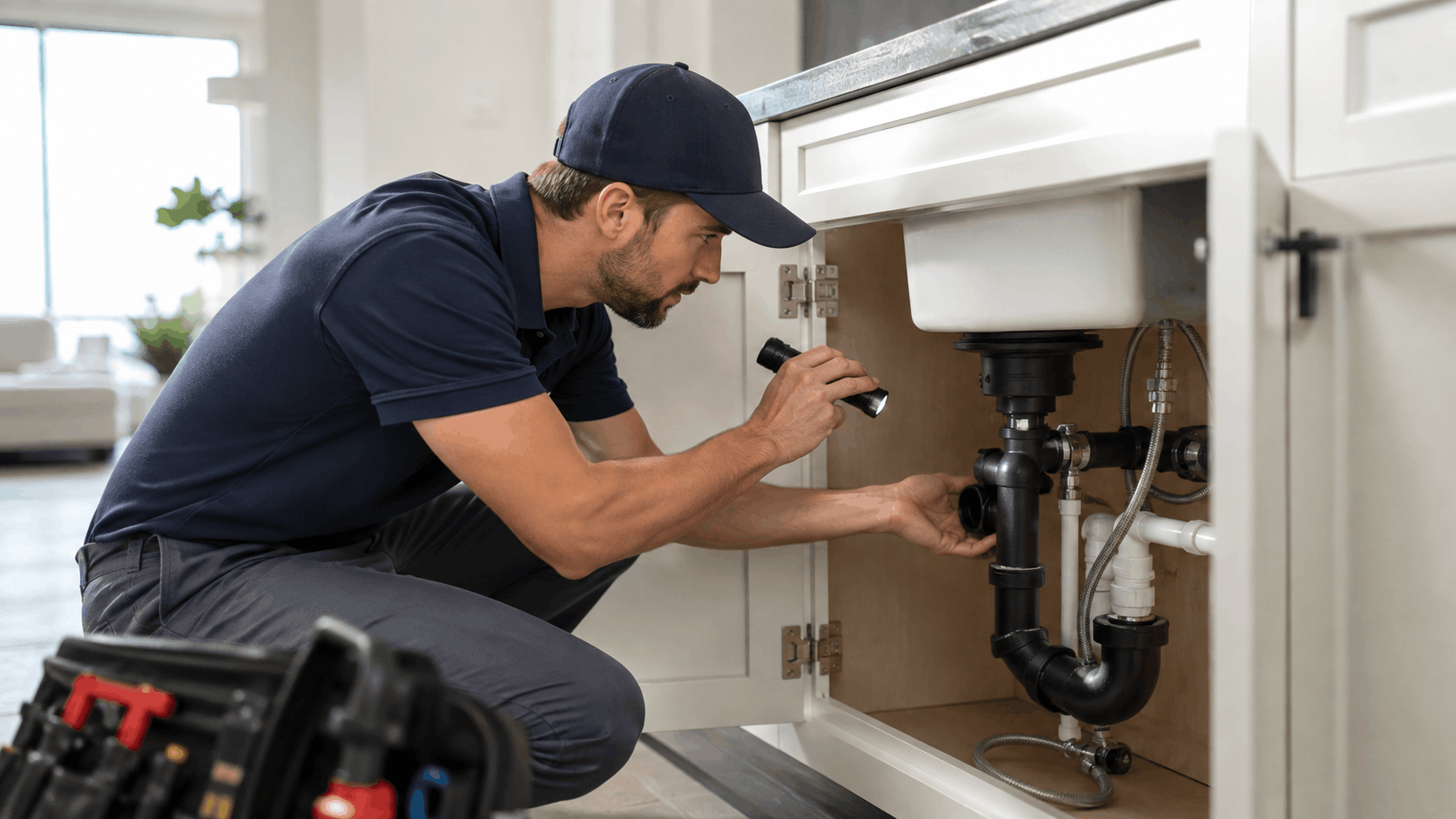
Why New Construction Homes in Summerlin Still Have Plumbing Trouble?
People assume a new home comes with a perfect plumbing system. In reality, new construction plumbing has its own set of problems that often show up right as the builder warranty starts ticking. Summerlin homes get built fast, and speed leaves marks behind the walls.
Here are the main reasons brand-new homes still spring leaks and clogs:
- Tight build schedules push crews to work faster than careful plumbing allows.
- Different subcontractors handle rough-in and finish work, so nobody owns the whole job.
- Desert soil shifts under the slab and stresses new pipe runs.
- Some inspections get rushed or skipped during busy building booms.
Fast Build Timelines and Rushed Installations
Summerlin West and Stonebridge have exploded with new homes over the past several years. Builders race to hit closing dates, and plumbing crews often get squeezed between framing and drywall. When a schedule slips, the plumbers are the ones told to hurry.
A rushed plumbing install shows up in small ways that matter later. A joint gets glued with too little cure time. A fitting gets hand-tightened instead of properly torqued. A supply line gets run at a slight angle that stresses the connection over months.
We have opened walls in two-year-old homes and found connections that were never fully seated. The pipe held long enough to pass a quick pressure test, then loosened as the house settled. By the time water shows up on the ceiling, the crew that built it is three subdivisions away.
Fast timelines also mean missed inspections. When a building department is slammed during a boom, some checks get a quick glance instead of a real look. That leaves hidden defects sitting behind finished walls in plenty of Summerlin homes.
Subcontractor Shortcuts Homeowners Never See
Most homeowners never watch the rough-in plumbing go in. That is where the shortcuts hide. Different crews handle the underground work, the wall rough-in, and the finish fixtures, and each one trusts the next to catch mistakes.
Improperly glued pipe joints top the list of hidden plumbing defects we find. PVC and ABS need the right primer, the right cement, and a few seconds of hold pressure. Skip a step and the joint looks fine but weeps under pressure years down the road.
Missing pipe supports cause the next wave of trouble. Long horizontal runs need straps and hangers at set intervals. When those get skipped, the pipe sags, water pools, and connections take strain they were never meant to hold.
Unsealed penetrations round out the list. Where a pipe passes through a wall plate or foundation, it should be sealed. Left open, those gaps let in moisture, pests, and slow drips that hide behind the drywall for a long time.
Desert Soil and Slab Movement
Summerlin sits on expansive desert soil that swells and shrinks with moisture. When the ground moves, the concrete slab moves with it. That movement puts real stress on the pipes cast into and under the slab.
Foundation settling is normal in the first two years of any new home. The problem is that rigid copper and plastic lines do not flex much. A slab that settles even a fraction of an inch can pull a joint apart or crack a fitting under the foundation.
We see this most in newer pockets where builders graded and compacted the pad quickly. When the soil was not prepped well, slab movement shows up faster and hits the plumbing harder. Homes near the Red Rock foothills deal with rockier, less predictable ground.
Desert soil also dries hard and shifts again when irrigation and rain add moisture back. That cycle repeats season after season. Each swing tugs a little more on the new pipe runs beneath the floor.
Get Your Quote
Tell us what's going on and we'll get back to you fast.
Hard Water Damage Nobody Warns New Buyers About
The Las Vegas Valley Water District delivers some of the hardest water in the country. Most of it comes from the Colorado River through Lake Mead, loaded with calcium and magnesium. A brand-new Summerlin home without a softener starts building scale from the very first glass of water.
Hard water Las Vegas homeowners face is not a minor annoyance. It quietly damages pipes, fixtures, and appliances from day one. Here is what buyers need to know:
- Scale forms inside water heaters, faucets, and copper lines within months.
- Many builders leave out or cap the water softener loop to save money.
- Early warning signs are easy to spot once you know what to look for.
- A whole-home system protects the investment before damage sets in.
How Hard Water Attacks New Fixtures and Pipes
Scale buildup is calcium and magnesium hardening onto surfaces as water heats and sits. Inside a new water heater, it settles at the bottom of the tank and coats the heating elements. That crust makes the heater work harder and wastes energy.
Faucets and shower heads clog from the inside as mineral deposits collect in the tiny passages. New chrome fixtures lose their shine and start spitting uneven streams within a year. We pull aerators off two-year-old faucets that are already half blocked with white crust.
Copper and PEX lines narrow slowly as scale lines the walls of the pipe. That reduces flow and raises pressure at weak points. Hard water damage compounds over time, so the sooner it is addressed, the less it costs.
In Summerlin, we see scale show up faster than many homeowners expect. The combination of hard water and high heater temperatures speeds the process. A home that looked perfect at closing can show real buildup by its first anniversary.
Why Builders Rarely Include a Water Softener Loop
A softener loop is the pre-plumbed connection point that lets a plumber tie in a whole-home softener easily. In a smart build, the loop sits in the garage near the water heater. In many production builds, it is missing or capped off.
Production builders in areas like Summerlin and Centennial Hills work on tight margins. Builder upgrades cost extra, and a softener loop is an easy line item to skip when the buyer does not ask. That leaves the new owner to add the connection later at a higher cost.
When the loop is missing, installing a softener takes more labor and creative routing. Our team handles that regularly, but it is cheaper and cleaner when the loop exists. Buyers who catch this during the build phase can often ask for it as an upgrade.
If you are buying now, ask the builder directly whether a softener loop is included. Get the answer in writing. It is a small request that saves money and hassle down the road.
Signs Your New Home Already Has Scale Problems
The earliest sign is white spots on glassware and shower doors that never fully wipe away. Those spots are mineral deposits left behind as water dries. If your new dishes come out of the dishwasher cloudy, hard water is the reason.
Low water pressure at faucets and shower heads is another early flag. As scale narrows the passages, flow drops even though nothing is broken. Homeowners often blame the fixture when the real culprit is buildup.
Watch for crusty rings around drains and faucet bases too. That chalky ring is scale forming where water sits and evaporates. In a home only a year or two old, it points to hard water working overtime.
Skin and hair feeling filmy after a shower is another honest sign. Hard water and soap do not rinse cleanly. When a family notices it in a brand-new house, the water chemistry is to blame, not the plumbing quality.
What a Whole-Home Softener Adds to a Summerlin Property
A whole-home softener treats every drop entering the house, protecting pipes, fixtures, and appliances. It removes the calcium and magnesium that cause scale before the water ever reaches a faucet. Our water softener installation team sizes and installs these systems across Summerlin.
Cost ranges depend on the system, but most whole-home softeners land in a fair mid-range price for the equipment and install. Homes with an existing loop cost less to hook up. Homes without one need extra plumbing, which raises the price.
The payoff is longer appliance life and fewer repairs. A softener can add years to a water heater, protect the dishwasher and washing machine, and keep fixtures clear. Over time, water treatment often pays for itself in avoided damage.
The best time to install is right after move-in, before scale has a chance to build. Some homeowners prefer a salt-free conditioning option if they want to avoid adding sodium. Either way, treating water early protects a new investment.
Need Help in Las Vegas?
Active Plumbing serves Las Vegas and all of Las Vegas Valley.
Slab Leaks and Hidden Pipe Problems in New Builds
Slab leaks are not just an old-home problem. New Summerlin homes built on a concrete slab develop slab leaks from installation errors and shifting soil. A hidden pipe leak under the foundation can run for weeks before anyone notices.
These leaks are sneaky because the water hides under the floor. By the time it surfaces, it may have already damaged flooring or the slab itself. Catching one early saves thousands.
How Slab Leaks Start in Newer Homes
Slab leak causes in new homes often trace back to the day of the pour. A pipe can get nicked by a tool or a rebar tie during construction. That small scratch weakens the line and turns into a leak once water pressure works on it.
Pipe abrasion is another common trigger. When a copper line rubs against rebar or a rough edge in the slab, the friction wears a hole over time. Movement from the settling foundation speeds that wear along.
Pressure issues finish the job. If the home runs at high pressure because of a bad regulator, weak points fail faster. A nicked or rubbing pipe that might have lasted years fails in months under too much pressure.
Because all of this hides under concrete, the homeowner sees nothing at first. The leak grows quietly until a warm spot, a high bill, or a sound gives it away. That is why early detection matters so much in newer builds.
Warning Signs Homeowners Miss
Warm floor spots are the classic sign of a hot-water slab leak. If one patch of tile or floor feels warm for no reason, hot water may be escaping beneath it. Many families walk over that spot for weeks without connecting the dots.
A sudden high water bill is another red flag. If usage jumps with no change in habits, water is going somewhere it should not. A slab leak can waste hundreds of gallons a day while staying completely out of sight.
The sound of running water when every fixture is off points to a hidden leak too. Stand still in a quiet house and listen near the floor. A faint trickle or hiss with everything shut off is a warning worth acting on.
Cracks in the floor, damp carpet edges, or a musty smell can also signal trouble. Any of these in a new home deserves a look. The longer a slab leak runs, the more damage it does to the foundation and finishes.
Detection and Repair Options in Summerlin
Modern leak detection is non-invasive, so there is no need to tear up floors to find the problem. Our team uses acoustic tools and pressure testing to pinpoint the exact spot. Our electronic leak detection finds leaks without guesswork.
Once located, repair options depend on the leak. A spot repair opens a small section of slab to fix the damaged pipe directly. That works well when a single leak is found and the rest of the plumbing is sound.
Rerouting is another route for lines that have failed more than once. Instead of chasing leak after leak under the slab, the line is rerouted through walls or the attic. This avoids repeated slab work and gives a long-term fix.
Active Plumbing handles slab leak repair across Summerlin, from Summerlin West to the established communities near Peccole Ranch. We also install whole-home leak detection systems that shut off water automatically when a leak is sensed. That protection is smart for any new home.
Water Pressure Issues That Show Up After Move-In
Plenty of Summerlin homeowners notice water pressure problems a few weeks after moving in. Sometimes the pressure is too high and hammers the fixtures. Other times it is too low and the shower feels weak. Both trace back to elevation, regulators, or builder settings.
Here is a quick look at common pressure problems and their causes:
| Symptom | Likely Cause | Typical Fix |
|---|---|---|
| Banging pipes, leaky fixtures | High pressure from a bad regulator | Replace or adjust the PRV |
| Weak flow at one faucet | Clogged aerator or debris | Clean or replace the aerator |
| Weak flow whole house | Failed regulator or supply issue | Test and reset pressure |
| Pressure varies by time of day | Elevation and system demand | Regulator and booster options |
Elevation and Pressure Across Summerlin Neighborhoods
Summerlin climbs from the valley floor up toward the Red Rock foothills. That change in elevation affects water pressure across neighborhoods. Higher zones near The Ridges sit at a different pressure than lower Summerlin areas closer to the 215.
Water systems are built to serve a range of elevations, so pressure is not identical everywhere. Homes up near Red Rock can see pressure swings as the district balances demand. That is normal, but it interacts with the home's own regulator.
When a home sits high on the grade, the builder should set the regulator to match. If they used a one-size setting for the whole tract, some homes end up over or under pressure. That mismatch shows up right after people move in and start using water.
Our team knows how pressure behaves across Summerlin because we work these streets constantly. We check both the district supply and the home's regulator together. That gives a true picture instead of a guess.
Faulty or Missing Pressure Regulators
A pressure regulator valve, or PRV, keeps incoming pressure at a safe level for the house. Most homes should run between 50 and 70 psi. When the PRV fails or is set too high, pressure can climb past 80 psi and start damaging things.
High water pressure is hard on everything. It stresses fixtures, shortens the life of appliances, and makes leaks and slab problems more likely. A toilet fill valve or a washing machine hose fails far sooner under too much pressure.
Sometimes the PRV is present but set wrong from the build. Other times it fails early because of a manufacturing defect or hard water. Either way, the fix is straightforward once the problem is found.
We recommend testing pressure within the first months in a new home. A simple gauge reading tells the story. If it reads high, replacing or adjusting the regulator protects the whole pipe and fixture system from early wear.
Low Pressure From Clogged Aerators and Lines
Low pressure in a new home usually is not a supply problem. More often, construction debris got into the lines during the build. Bits of solder, plastic shavings, and grit collect at the aerators and slow the flow.
A clogged aerator is the easiest fix in plumbing. The little screen at the tip of the faucet catches debris and clogs. Unscrew it, rinse it out, and flow returns. When several fixtures act up at once, debris is almost always the reason.
Early scale adds to the problem. As hard water starts leaving deposits, those minerals combine with construction grit to choke the passages faster. That is one more reason a softener helps a new home.
If cleaning the aerators does not restore flow, the issue may be deeper in the lines. Our team flushes the system and checks for debris caught at valves and fittings. Solving low pressure early keeps a new home comfortable.
Water Heater Mistakes Builders Make in New Homes
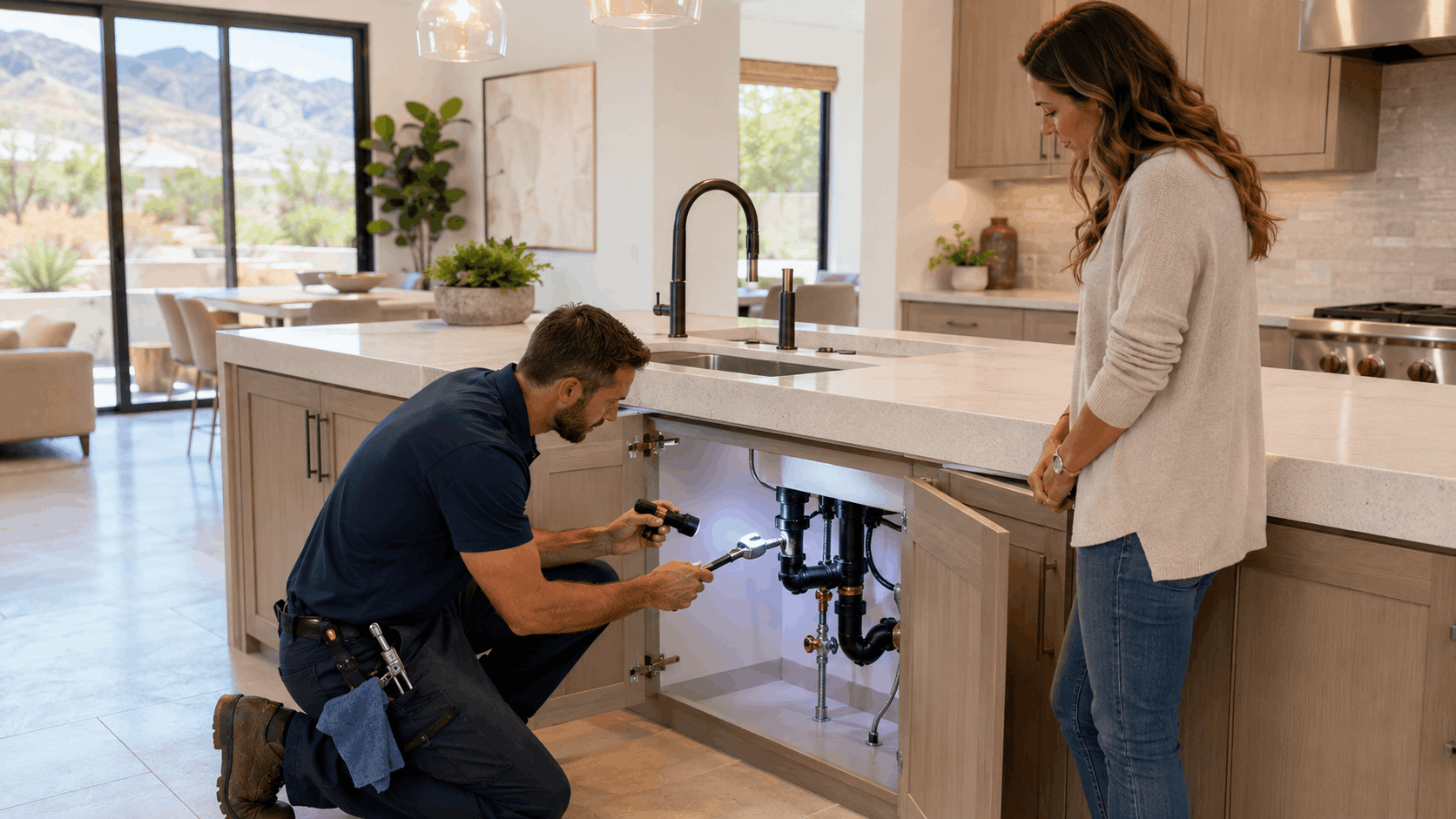
Water heaters in new Summerlin builds often get chosen for speed and cost, not for the family that moves in. Builders pick a standard tank and move on. That leaves new owners short on hot water or facing early failure. Here is what to check.
Undersized Tanks for Growing Families
Builder-grade water heaters are sized for an average, not for your household. A 40- or 50-gallon tank might work for a couple but not for a family in a five-bathroom home. In larger Summerlin houses, that gap shows up fast.
Hot water capacity runs out when several people shower back to back. The first shower is fine, the second is warm, and the third is cold. That is a tank size problem, not a broken heater.
Bigger homes near The Ridges and in Stonebridge often need more capacity than the builder installed. We help families right-size their system based on real usage. Sometimes that means a larger tank, and sometimes it means a different approach entirely.
Matching the water heater to the household prevents daily frustration. It also stops people from cranking the temperature dangerously high to stretch the hot water. Getting the size right the first time is worth it.
Hard Water Shortening Heater Life
Las Vegas hard water is rough on water heaters. As the water heats, minerals drop out and form sediment buildup at the bottom of the tank. That layer insulates the burner or element and forces the heater to run longer.
Sediment cuts a heater's lifespan short. A tank that should last ten to twelve years can fail years early when scale piles up. The buildup also causes popping and rumbling sounds as water boils under the sediment layer.
A regular water heater flush clears the sediment and extends the tank's life. We recommend flushing at least once a year in Summerlin because the water is so hard. It is a small maintenance step with a big payoff.
Pairing a flush schedule with a softener protects the heater even better. Our water heater service team handles flushes and repairs across the valley. Staying ahead of sediment saves money and cold showers.
Tankless Upgrades and Expansion Tanks
A tankless water heater heats water on demand and never runs out. For a busy Summerlin family, that solves the back-to-back shower problem for good. Our tankless water heater installation is a popular upgrade in new homes.
Tankless units save space and energy since they only heat when water flows. They do need descaling in hard-water areas, but with softened water they run for many years. The higher upfront cost pays back over the unit's long life.
Expansion tanks are the other piece builders often skip. Modern homes are closed systems because of the check valve at the meter. When water heats and expands, it needs somewhere to go, and an expansion tank absorbs that pressure.
Without an expansion tank, that pressure pushes on the water heater and fixtures every heating cycle. It shortens equipment life and can trip the relief valve. Adding one is a small, smart fix that many new Summerlin homes are missing.
Need Help in Las Vegas?
Active Plumbing serves Las Vegas and all of Las Vegas Valley.
Drain and Sewer Problems in Newly Built Summerlin Homes
New drains are not immune to clogs and slope problems. In fact, drain and sewer trouble often shows up soon after people move in. Construction leftovers and installation mistakes are usually behind it.
Here are the most common new-home drain issues we find:
| Problem | Cause | What Helps |
|---|---|---|
| Early clogs | Grout, drywall mud, and debris in pipes | Hydro jetting and cleaning |
| Slow drains | Improper pipe slope | Camera inspection and correction |
| Repeated backups | Standing water from bad grade | Sewer line evaluation |
| Gurgling drains | Venting issues | Vent inspection |
Construction Debris in Drain Lines
During construction, open drain lines catch all kinds of debris. Grout, drywall mud, thinset, and plain trash fall into the pipes before fixtures go on. When the mud dries inside the line, it hardens like cement.
Those hardened chunks cause early clogs in a home that is only months old. A shower that drains slow or a toilet that backs up in a new house usually has drain debris to blame. It is not a design flaw, just leftover mess.
We clear these with a thorough cleaning, and for stubborn buildup we use hydro jetting to scour the pipe walls clean. That removes construction leftovers the original crew never flushed out. Once cleared, the drains usually run fine.
If clogs keep returning, it points to something beyond debris. That is when a deeper look at the line makes sense. Repeated backups are a sign to investigate the slope.
Improper Slope and Standing Water
Drain pipes need the right slope to carry waste and water away. The standard is a quarter inch of fall per foot of pipe. Too little slope and water sits; too much and the water races ahead of the solids.
When a crew rushes the underground work, pipe slope suffers. A line with a low spot holds standing water where debris settles. That creates slow drains and repeated backups even in a brand-new home.
Standing water in a poorly sloped line also breeds odors and clogs over time. The problem does not fix itself and often gets worse. Correcting it means finding the bad section and re-grading it.
Because slope problems hide underground, a camera is the only way to see them clearly. We can watch water pool on the screen and locate the exact spot. That turns a guess into a targeted repair.
Why a Sewer Camera Inspection Helps Early
A sewer camera inspection sends a small camera down the line to show its true condition. It reveals debris, bad slope, cracks, and connection problems without any digging. For a new home, it is one of the smartest checks to run.
The best part is timing. Running a sewer camera inspection while the builder warranty still applies means the builder pays to fix what is found. Wait too long and those repairs fall on the homeowner.
We record the footage so there is clear proof of any defect. That video holds up when filing a warranty claim. Builders respond faster when they see the problem on screen.
Catching slope or debris issues early prevents years of recurring backups. A single inspection in the first year can save real money and hassle. It is a check every new Summerlin owner should consider.
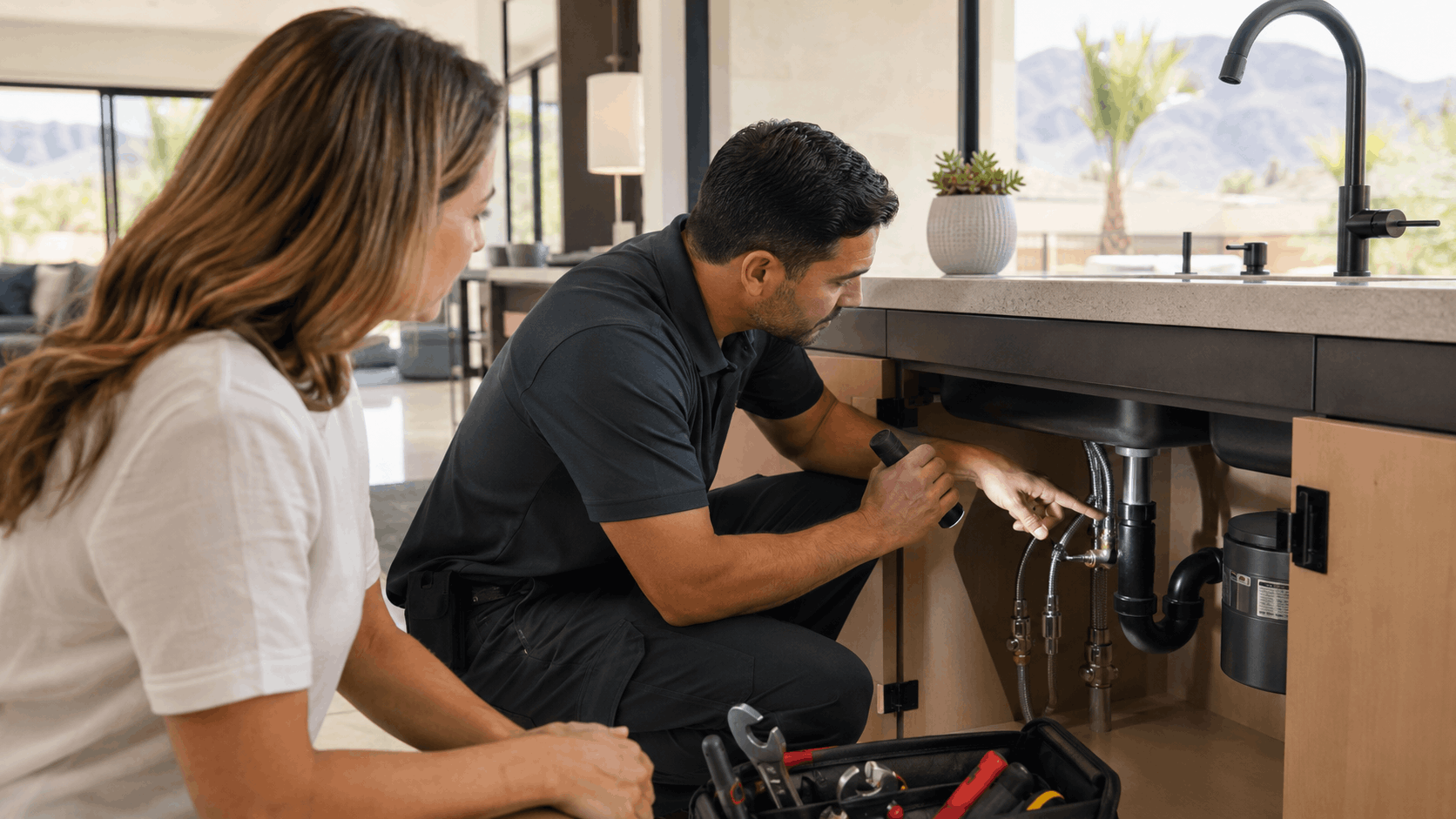
Using Your Builder Warranty Before It Expires
Most new Summerlin homes come with a limited plumbing warranty. The window to use it closes faster than people expect. Knowing what is covered and how to report problems protects the buyer.
What Plumbing Coverage Typically Includes
Builder warranties usually stack in layers. The first year covers workmanship and most plumbing components. That includes leaks, fixture defects, and installation mistakes the crew made.
Longer coverage often applies to the systems themselves. Many builders offer two years on plumbing lines and up to ten years on major structural items. The details vary, so read the actual warranty document that came with the home.
Workmanship coverage is where most plumbing claims land. If a joint leaks or a drain was sloped wrong, that is a workmanship issue the builder should fix. The catch is that you have to report it in time.
Keep the warranty paperwork somewhere easy to find. Note the exact expiration dates for each layer of coverage. Missing a deadline by a week can turn a free repair into an out-of-pocket bill.
Getting an Independent Plumbing Inspection
Builders inspect their own work, which is not the same as an unbiased review. An independent inspection from a third-party plumber catches issues the builder overlooks. It puts an expert on your side of the table.
Our team performs independent inspections across Summerlin before warranties expire. We check pressure, water heater setup, drains, and visible connections. We also run a camera on the sewer line to spot hidden defects.
Because we do not answer to the builder, we report exactly what we find. That honest read gives homeowners the leverage to demand proper fixes. A defect on paper is far easier to get covered.
The ideal time for this inspection is a month or two before the first-year warranty ends. That leaves time to file claims. Our team knows the Summerlin builders and the common problems in each tract.
Documenting Problems the Right Way
Good documentation wins warranty claims. Start with clear photos of every problem, taken from a few angles. A blurry picture is easy for a builder to dismiss.
Write down the date you first noticed each issue. Keep a simple log with descriptions and any related events, like a water bill spike. Dated notes carry weight when a builder tries to argue the timeline.
Put your claim in writing and send it in a way you can track. Email creates a record that a phone call does not. Save every reply so there is a paper trail from start to finish.
If your home sits in an HOA community, loop them in when the issue touches shared systems. Clear records help with both the builder and the HOA. Solid documentation turns a dispute into a straightforward fix.
How Active Plumbing Helps Summerlin New Construction Owners
A local Las Vegas plumber makes a real difference for a new homeowner. We support Summerlin families with inspections, upgrades, and repairs the builder missed. Here is how our team protects a new investment:
- Local knowledge of Summerlin water chemistry and desert soil conditions.
- Services that guard the home from early hard-water and pressure damage.
- Fast response across Summerlin and the wider Las Vegas Valley.
- Honest, independent inspections that hold builders accountable.
Local Knowledge of Summerlin Water and Soil
Our team works Summerlin every week, so we know the conditions here. We understand how Las Vegas Valley Water District water behaves and how fast it builds scale. That knowledge shapes the fixes we recommend.
We also know the desert soil under these homes. The way the ground shifts near Red Rock differs from the flatter areas closer to the 215. That local read helps us spot slab and pipe risks early.
Every Summerlin tract has its own quirks. Some builders skip softener loops, others set pressure too high, and each has its own common defect. Working here daily means we know what to check first.
A local plumber beats an out-of-area company that treats every job the same. We match the fix to Summerlin conditions. That saves homeowners time and money.
Services That Protect a New Investment
We offer the services a new Summerlin home actually needs. That starts with water softener installs to stop scale before it damages fixtures and pipes. Treating the water early is the single best move for a new build.
Leak detection is another core service. We use non-invasive tools to find slab leaks and hidden pipe leaks without tearing up the house. Catching a leak early prevents costly damage to floors and foundation.
We also handle water heater upgrades, from right-sizing a tank to installing a tankless unit with an expansion tank. And we run full plumbing inspections, including a camera on the sewer line. Every service aims to protect the home before problems grow.
Whether it is a drain issue, a pressure problem, or a warranty inspection, our team covers it. We fix what the builder missed and set the home up for the long haul. That is how a new investment stays protected.
Fast Response Across the Las Vegas Valley
When something goes wrong, speed matters. Our team responds fast across Summerlin, including Summerlin West and the surrounding communities. A leak caught quickly costs far less than one left to spread.
We cover the whole valley, from Summerlin out to Centennial Hills and beyond. No matter which part of town a new home sits in, help is close. That reach means quick service when it counts.
For real emergencies, our emergency plumbing crew is ready around the clock. A burst line or a fast-growing slab leak cannot wait. We move quickly to stop the water and protect the home.
Reliable, fast response is part of being a true local plumber. We are close by and we answer the call. That is the difference for a new Summerlin homeowner facing a surprise problem.
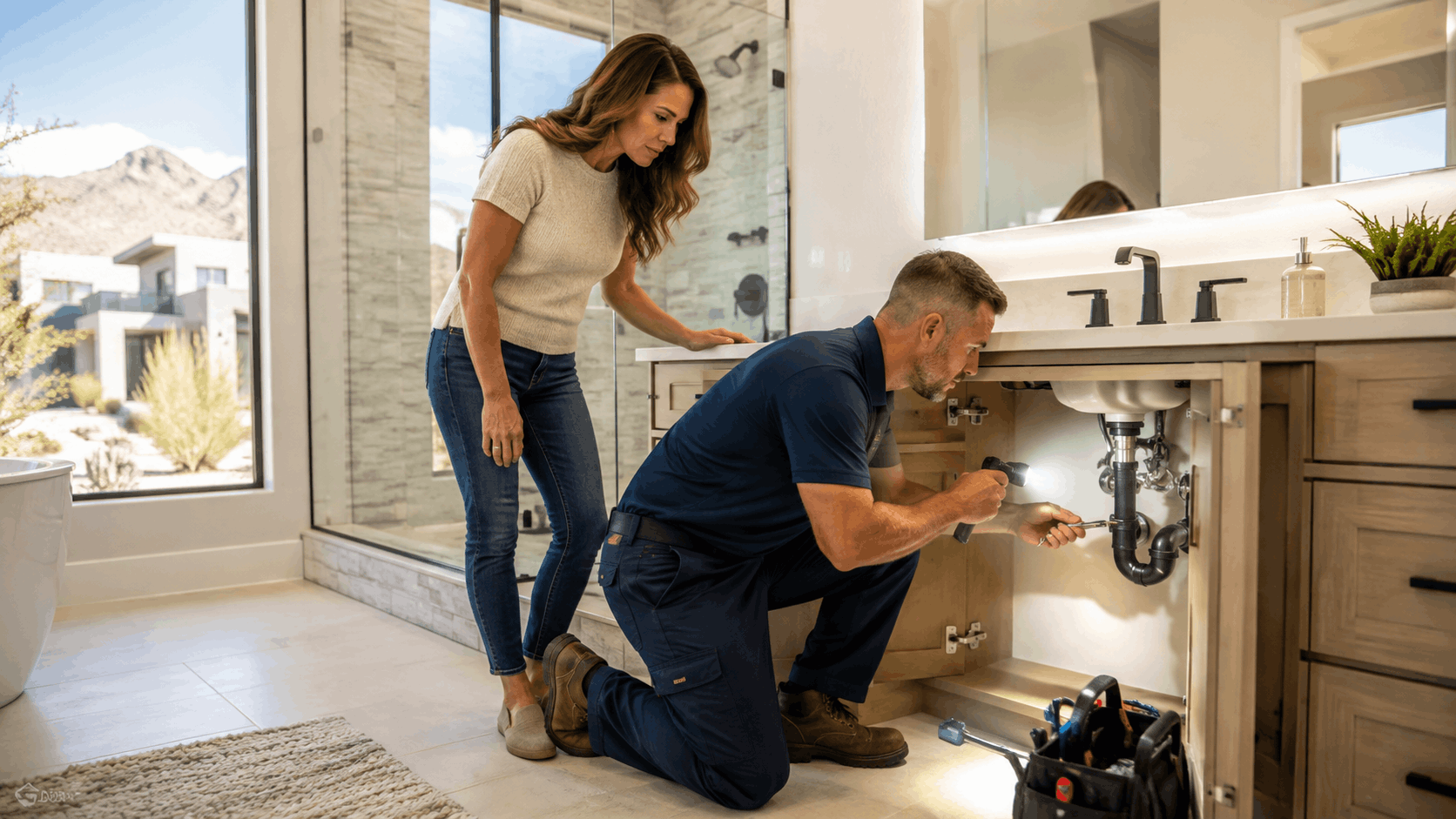
Need Help in Las Vegas?
Active Plumbing serves Las Vegas and all of Las Vegas Valley.
Final Thoughts
A brand-new Summerlin home is a big investment, and its plumbing deserves attention from day one. Rushed builds, subcontractor shortcuts, hard water, and shifting desert soil all create problems that surface within the first two years. The good news is that most are easy to catch and fix when you know what to look for.
Get a plumbing inspection while the builder warranty is still active. Add a water softener early, test your pressure, and run a camera on the sewer line. Those simple steps protect the home and your wallet.
Our team knows Summerlin water, soil, and builders because we work these neighborhoods every week. If you just moved into a new home or are approaching your warranty deadline, reach out. Contact Active Plumbing for an independent inspection or a consultation, and let us help you protect your new home.
Frequently Asked Questions
Do new construction homes in Summerlin really have plumbing problems?
Yes, they do. Rushed build timelines, subcontractor shortcuts, and desert soil conditions all create issues that appear within the first two years. Fast schedules lead to sloppy joints and missed inspections, while shifting ground stresses new pipe runs. Hard water starts building scale from day one. A new home does not mean a problem-free plumbing system, which is why an early inspection matters.
How soon should a new Summerlin homeowner get a plumbing inspection?
Get an inspection within the first year while the builder warranty is still active. The ideal time is a month or two before the first-year coverage ends, which leaves room to file any claims. An independent inspection checks pressure, drains, the water heater, and the sewer line. Catching defects during the warranty window means the builder pays to fix them instead of you.
Why does my new home have hard water spots already?
Las Vegas has some of the hardest water in the country, delivered by the Las Vegas Valley Water District. Without a softener, calcium and magnesium leave white spots on glass, fixtures, and dishes almost immediately. Scale also forms inside pipes and the water heater from the first day. Those spots are mineral deposits, and they will keep coming until the water is treated with a softener.
Can a brand-new home have a slab leak?
Yes. Slab leaks happen in new builds from installation errors and soil movement. A pipe can get nicked during the concrete pour, rub against rebar, or fail under high pressure. Shifting desert soil under the slab adds stress that opens leaks within a few years. Warm floor spots, a high water bill, and the sound of running water with everything off are common warning signs.
Is a water softener worth it for a new Summerlin home?
For most Summerlin homes, yes. A whole-home softener protects fixtures, pipes, and appliances from the scale that hard water causes. It can add years to a water heater and reduce repairs on the dishwasher, washing machine, and faucets. Installing one right after move-in stops damage before it starts. Over time, the protection often pays for itself in avoided repairs and longer appliance life.
What water pressure is normal for a Summerlin home?
A healthy home runs between 50 and 70 psi. Anything above 80 psi is too high and stresses fixtures, appliances, and pipes. Elevation affects pressure across Summerlin, so homes higher up near The Ridges can behave differently than lower zones near the 215. A simple gauge test tells you where your home stands, and a pressure regulator can bring high readings back into a safe range.
Does the builder warranty cover plumbing repairs?
Usually, yes, within its time limits. Most builder warranties cover workmanship and plumbing components in the first year, with longer coverage on the pipes and systems themselves. Leaks, fixture defects, and installation mistakes typically qualify. File claims in writing with photos and dates before the coverage expires. Missing the deadline turns a free repair into an out-of-pocket cost, so track your expiration dates carefully.
Why are my new drains clogging so soon?
Construction debris is the usual cause. Grout, drywall mud, and trash fall into open drain lines during the build and harden inside the pipes. That leads to early clogs in a home only months old. Improper pipe slope is the other common cause, since a low spot holds standing water and debris. A cleaning or a camera inspection finds and fixes the real problem.
How long do builder-grade water heaters last with Las Vegas water?
Hard water shortens their life. A tank that should last ten to twelve years can fail several years early when sediment piles up at the bottom. That buildup makes the heater work harder and causes popping sounds. Flushing the tank at least once a year clears the sediment and extends its life. Pairing a flush schedule with a water softener protects the heater even more.
Can Active Plumbing inspect my home before the warranty ends?
Yes. Our team offers independent plumbing inspections across Summerlin and the Las Vegas Valley. We check pressure, the water heater, drains, and visible connections, and we run a camera on the sewer line to spot hidden defects. Because we do not answer to the builder, we report exactly what we find so you can file warranty claims. Reach out to schedule before your coverage expires.
Frequently Asked Questions
- Do new construction homes in Summerlin really have plumbing problems?
- Yes, they do. Rushed build timelines, subcontractor shortcuts, and desert soil conditions all create issues that appear within the first two years. Fast schedules lead to sloppy joints and missed inspections, while shifting ground stresses new pipe runs. Hard water starts building scale from day one. A new home does not mean a problem-free plumbing system, which is why an early inspection matters.
- How soon should a new Summerlin homeowner get a plumbing inspection?
- Get an inspection within the first year while the builder warranty is still active. The ideal time is a month or two before the first-year coverage ends, which leaves room to file any claims. An independent inspection checks pressure, drains, the water heater, and the sewer line. Catching defects during the warranty window means the builder pays to fix them instead of you.
- Why does my new home have hard water spots already?
- Las Vegas has some of the hardest water in the country, delivered by the Las Vegas Valley Water District. Without a softener, calcium and magnesium leave white spots on glass, fixtures, and dishes almost immediately. Scale also forms inside pipes and the water heater from the first day. Those spots are mineral deposits, and they will keep coming until the water is treated with a softener.
- Can a brand-new home have a slab leak?
- Yes. Slab leaks happen in new builds from installation errors and soil movement. A pipe can get nicked during the concrete pour, rub against rebar, or fail under high pressure. Shifting desert soil under the slab adds stress that opens leaks within a few years. Warm floor spots, a high water bill, and the sound of running water with everything off are common warning signs.
- Is a water softener worth it for a new Summerlin home?
- For most Summerlin homes, yes. A whole-home softener protects fixtures, pipes, and appliances from the scale that hard water causes. It can add years to a water heater and reduce repairs on the dishwasher, washing machine, and faucets. Installing one right after move-in stops damage before it starts. Over time, the protection often pays for itself in avoided repairs and longer appliance life.
- What water pressure is normal for a Summerlin home?
- A healthy home runs between 50 and 70 psi. Anything above 80 psi is too high and stresses fixtures, appliances, and pipes. Elevation affects pressure across Summerlin, so homes higher up near The Ridges can behave differently than lower zones near the 215. A simple gauge test tells you where your home stands, and a pressure regulator can bring high readings back into a safe range.
- Does the builder warranty cover plumbing repairs?
- Usually, yes, within its time limits. Most builder warranties cover workmanship and plumbing components in the first year, with longer coverage on the pipes and systems themselves. Leaks, fixture defects, and installation mistakes typically qualify. File claims in writing with photos and dates before the coverage expires. Missing the deadline turns a free repair into an out-of-pocket cost, so track your expiration dates carefully.
- Why are my new drains clogging so soon?
- Construction debris is the usual cause. Grout, drywall mud, and trash fall into open drain lines during the build and harden inside the pipes. That leads to early clogs in a home only months old. Improper pipe slope is the other common cause, since a low spot holds standing water and debris. A cleaning or a camera inspection finds and fixes the real problem.
- How long do builder-grade water heaters last with Las Vegas water?
- Hard water shortens their life. A tank that should last ten to twelve years can fail several years early when sediment piles up at the bottom. That buildup makes the heater work harder and causes popping sounds. Flushing the tank at least once a year clears the sediment and extends its life. Pairing a flush schedule with a water softener protects the heater even more.
- Can Active Plumbing inspect my home before the warranty ends?
- Yes. Our team offers independent plumbing inspections across Summerlin and the Las Vegas Valley. We check pressure, the water heater, drains, and visible connections, and we run a camera on the sewer line to spot hidden defects. Because we do not answer to the builder, we report exactly what we find so you can file warranty claims. Reach out to schedule before your coverage expires.
A
Licensed plumbing professionals serving Las Vegas and Las Vegas Valley.
Licensed in Nevada · License #0047021
Last updated on
Why trust Active Plumbing?
Founded in 1991, Active Plumbing is a licensed and insured plumber serving Las Vegas and Las Vegas Valley. All content is reviewed by our licensed technicians.

Need Help in Las Vegas?
Active Plumbing serves Las Vegas and all of Las Vegas Valley.
Related Articles

Tips & Advice
Emergency Plumber in Summerlin: Same-Day Service for The Trails, Summerlin South, and The Ridges
A local guide to emergency plumbing in Summerlin, covering same-day service for The Trails, Summerlin South, and The Ridges, plus prevention tips and FAQs.
Tips & Advice
Emergency Plumbing in Summerlin: Gate Codes, HOA Notification, and Our Response Protocol
A Summerlin homeowner's guide to emergency plumbing: gate codes, guard gates, HOA notification steps, our response protocol, and what to do before the plumber arrives.

Tips & Advice
Mountain's Edge Plumber: New Construction Warranty Plumbing Issues
New Mountain's Edge homes can still have plumbing problems. Learn common defects, how builder warranties work, and when to call a local Las Vegas plumber.