Cost Guides
Drain Cleaning Cost in Las Vegas: Snake vs Hydro Jet, Honest Price Ranges
Key Takeaways
- A basic drain snake in Las Vegas typically costs $100 to $250, while hydro jetting runs $350 to $800.
- Snaking punches through clogs quickly but leaves buildup behind, which often leads to repeat clogs.
- Hydro jetting cleans the full pipe wall and is the smarter choice for grease, roots, and hard water scale.
- For drains that clog every few months, one jetting often costs less over a year than repeated snake visits.
- Home age, pipe condition, clog location, and after-hours timing all move the final price up or down.
- Hard water and desert soil are major causes of valley drain problems, from mineral scale to pipe bellies.
- A camera inspection should come first on old or fragile lines before jetting to avoid pipe damage.
- A fair estimate is written, lists the method and price, and explains what happens if the first attempt fails.
In This Article
It usually starts on a Saturday. A Summerlin homeowner is rinsing dishes after a family breakfast, and the kitchen sink starts pooling with gray water that will not drain. By the time the pancakes are cold, that slow drain has turned into a standing puddle, and the whole weekend feels ruined.
Our team hears this story every week across the valley, from newer builds in Skye Canyon to older homes near Downtown. The first question most people ask is simple: how much is this going to cost? The honest answer depends on the method, and the two most common are a drain snake and hydro jetting.
Let's talk about real price ranges, explain how each method works, and help homeowners decide which one fits their situation. A basic snake job usually runs between $100 and $250, while hydro jetting typically lands between $350 and $800. By the end, readers will know exactly what a fair quote should look like and how to avoid paying for more than they need.
What Drain Cleaning Actually Costs in Las Vegas
Before getting into the details, homeowners deserve straight numbers. Drain cleaning cost in the valley depends on the method, the location of the clog, and how easy it is to reach.
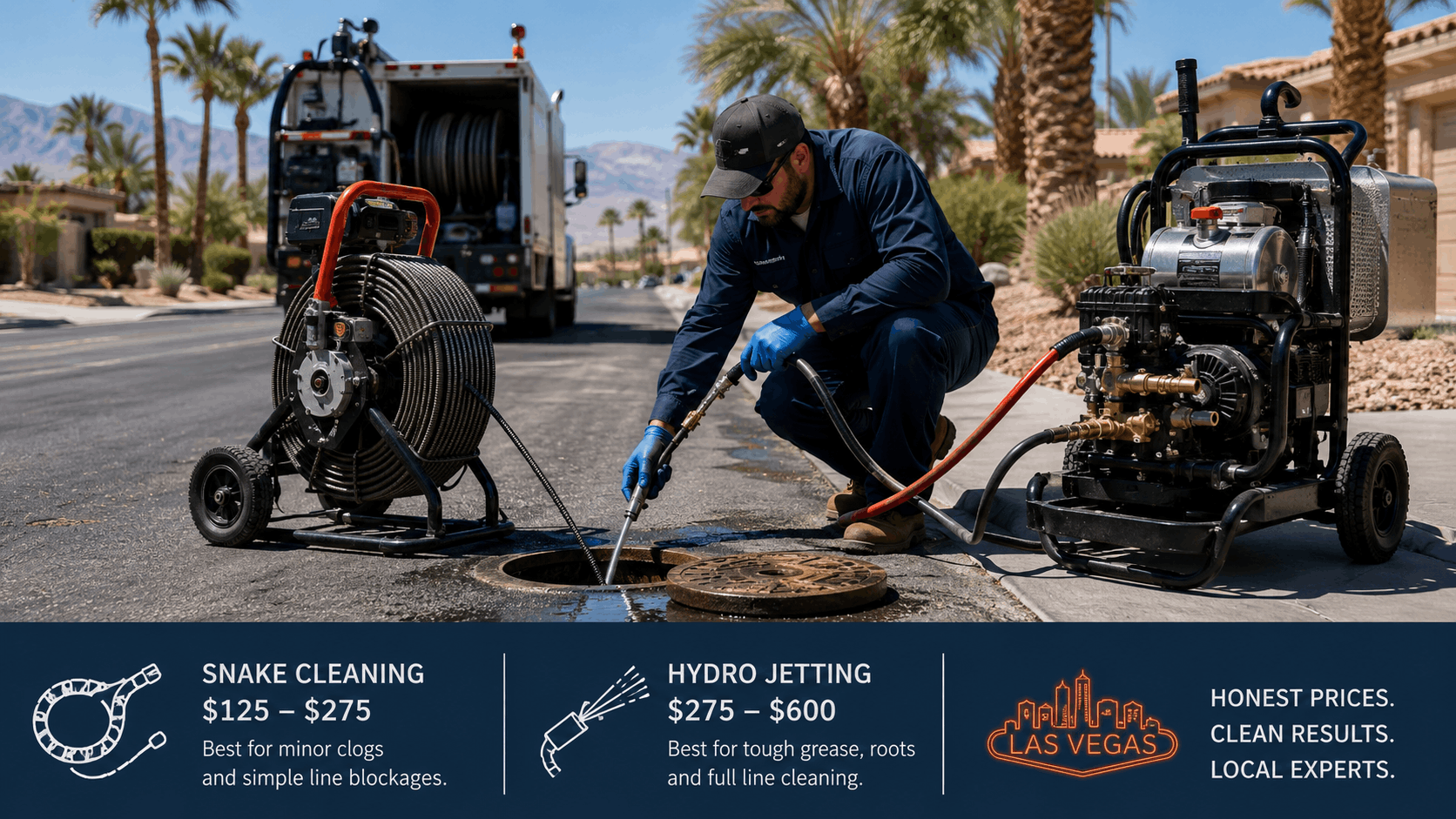
Here is a quick look at the typical spread of Las Vegas plumbing prices our team sees on service calls. These ranges cover most single-family homes across the valley.
| Service | Typical Price Range | Best For |
|---|---|---|
| Basic drain snake | $100 - $250 | Single slow drain, soft clog |
| Main line snake | $150 - $350 | Larger sewer clogs |
| Hydro jetting | $350 - $800 | Grease, roots, heavy buildup |
| Sewer camera inspection | $100 - $300 | Diagnosing recurring problems |
Average Price Range for a Basic Drain Snake
Most simple clog jobs fall into the $100 to $250 window. That drain snake price covers a technician arriving, running a cable auger through the affected line, and clearing a basic clog in one visit. For a single kitchen sink or bathroom drain, this is the most common fix.
What a homeowner gets for that money is a clear drain and a working fixture, usually within an hour. The lower end of the range applies when the clog sits close to an accessible drain opening. The higher end shows up when the technician has to pull a toilet or work through a tricky trap.
A basic clog rarely needs anything fancier than a snake. If the drain runs freely afterward and the water swirls down without gurgling, the job is done. Our team always tests the line before packing up so the customer sees the result.
Keep in mind that this price assumes normal daytime hours and reasonable access. Add-ons like a camera check or after-hours service change the number, which we cover further down.
Average Price Range for Hydro Jetting
Hydro jet cost typically runs from $350 to $800 for a residential line. That higher price reflects the equipment, training, and time involved in high pressure cleaning. Instead of poking through a clog, jetting scours the entire inside of the pipe.
The reason it costs more is the machine itself. A hydro jetter pushes water through a specialized nozzle at pressures up to 4,000 psi, and running that safely takes skill. Our hydro jetting and rooter service handles the buildup a snake simply cannot touch.
Where the price lands depends on the length and condition of the line. A short kitchen branch line sits at the lower end, while a full main sewer line with heavy grease or roots pushes toward the top.
For homes that clog again and again, that one-time cost often replaces several snake visits. We explain when that math works in the comparison section below.
Why Quotes Vary Across the Valley
Two neighbors can get very different quotes for what sounds like the same problem. Quote variation comes down to three things: where the home sits, how old it is, and how easy the pipes are to reach.
Home age plays a big part. An older property in the Historic Westside may have cast iron or clay lines that trap debris and slow the whole system down. A newer build out in Skye Canyon usually has smooth PVC pipe that clears faster and costs less to service.
Access matters just as much. A home with a proper cleanout in the yard is quick to service. A home where the only access point is under a slab or behind a wall takes longer, and that time shows up on the bill.
Location within the valley can also affect scheduling and travel, though our team keeps pricing consistent across neighborhoods. The real driver is always the condition of the specific line, not the zip code.
What a Fair Estimate Should Include
A trustworthy plumber gives a written estimate before starting work. Transparent pricing means the homeowner sees the total, not a vague number that balloons once the job is underway.
A fair written estimate should list the method being used, whether that is a snake or a jet. It should state the price for that method and note any conditions that could change it, like needing to pull a toilet or add a camera inspection.
It should also spell out what happens if the first attempt does not clear the line. Honest companies explain the next step and its cost up front rather than surprising the customer later.
If a quote is a single lump sum with no breakdown, that is a warning sign. Our team walks every customer through the estimate so there are no surprises when the invoice arrives.
Get Your Quote
Tell us what's going on and we'll get back to you fast.
How Drain Snaking Works and When to Use It
Drain snaking is the workhorse of the plumbing world. It handles the majority of everyday clogs and does it quickly. Here is what actually happens when a technician runs a snake down a line.
- A flexible cable feeds into the drain opening
- A motor spins the cable as it travels
- The tip breaks apart or grabs the clog
- The line is flushed and tested to confirm flow
What a Cable Auger Really Does
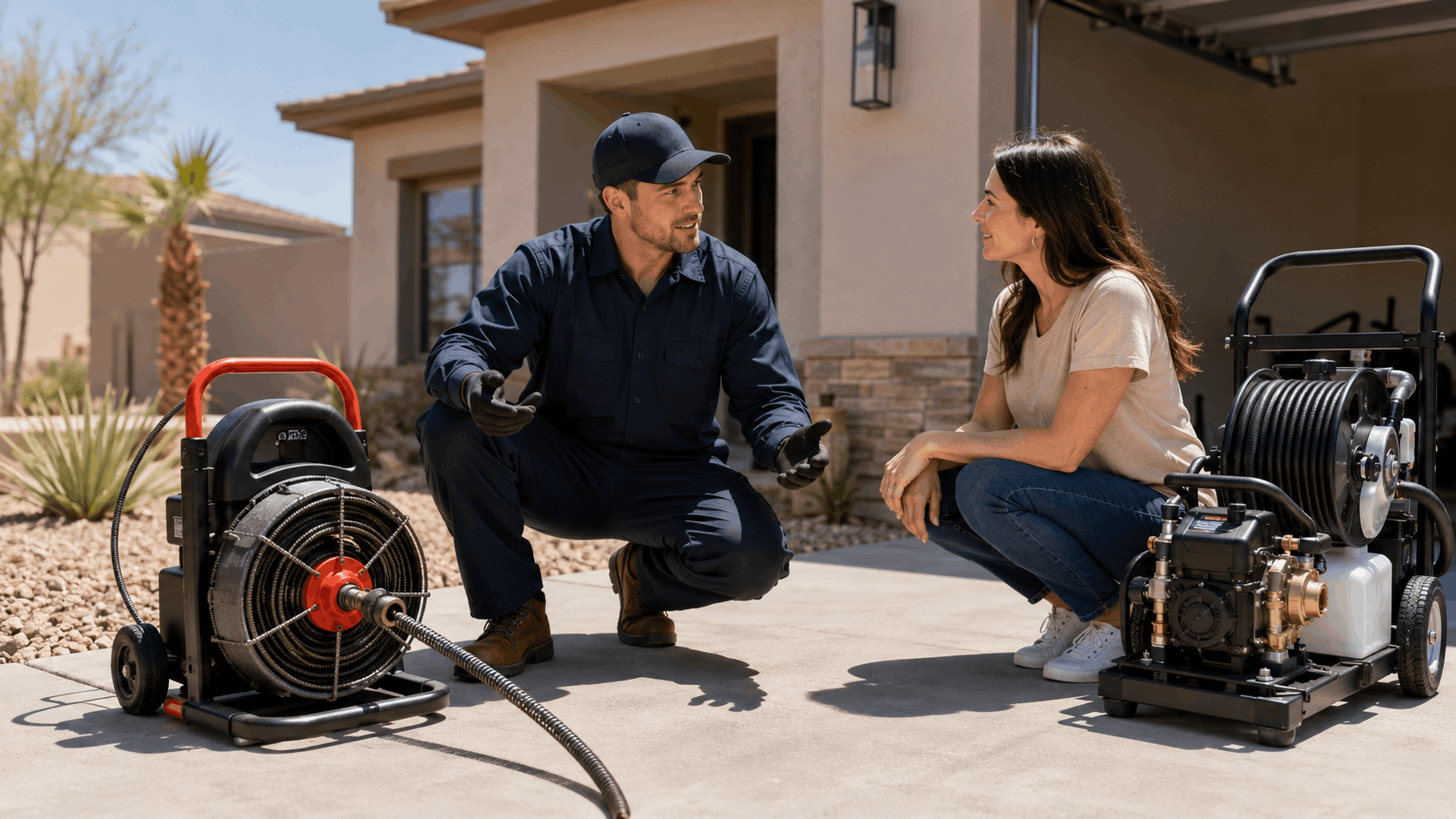
A cable auger is a long, flexible steel cable with a cutting or grabbing head on the end. The plumber feeds it into the drain and runs a motor that spins the cable as it moves deeper into the pipe.
When the head reaches the clog, the spinning motion does the work. It either chews through soft material or hooks onto an object and pulls it back out. For hair wrapped around a bathroom drain, the auger grabs and drags it free.
The size of the cable matches the size of the pipe. A small hand auger handles a sink line, while a larger machine tackles a main sewer line. Clog removal with the right tool is fast and clean.
The whole process is mechanical. There is no chemical involved, which makes snaking safe for most pipe materials found in valley homes.
Best Situations for Snaking
Snaking shines on simple problems. A soft clog made of food scraps, soap, or hair is exactly what a cable auger was built to clear.
A single fixture backup is the classic case. One slow bathroom sink or a gurgling shower drain usually means a localized clog that a snake clears in minutes. There is no reason to jump to jetting for that.
It also works well for the first time a drain acts up. If a home has never had trouble and suddenly a sink slows down, a snake is the logical first step. Our drain and sewer services start here for most routine calls.
Snaking is also the budget-friendly choice when the problem is clearly minor. Spending on a full jetting job for a single soft clog would be overkill.
Limits of a Drain Snake
A snake has a real weakness. It punches a hole through a clog rather than cleaning the whole pipe. Water starts flowing again, but the buildup coating the pipe walls stays put.
That leftover residue is why a repeat clog is so common after snaking. The opening the cable made closes back up as more debris catches on the sticky walls. Within weeks or months, the same drain slows down again.
Grease is the worst offender. A snake pokes through hardened grease, but the greasy layer remains and quickly rebuilds. The same goes for mineral scale from hard water.
When a homeowner is snaking the same drain two or three times a year, that is the signal the buildup needs a real cleaning, not another hole poked through it.
How Long a Snake Job Takes
Most snake jobs are quick. A straightforward single-fixture clog takes 30 minutes to an hour from setup to testing.
Job time stretches a bit when access is difficult or the clog sits far down the line. Pulling a toilet to reach a blockage adds time, as does working through multiple bends in older plumbing.
The good news is that snaking is almost always same day. Because the equipment is compact and the process is simple, our team can usually clear a basic clog on the first visit without any special ordering or prep.
For homeowners who need a working drain fast, a snake job is the quickest path back to normal. Most people are back to their day within an hour of the technician arriving.
Need Help in Las Vegas?
Active Plumbing serves Las Vegas and all of Las Vegas Valley.
How Hydro Jetting Works and When It Pays Off
Hydro jetting is the heavy-duty option. When a snake cannot keep a drain clear, jetting steps in and cleans the pipe from wall to wall. Here is how the process works.
- A camera often checks the line first
- A high pressure hose feeds into the pipe
- Water blasts out of a specialized nozzle
- The stream scours grease, scale, and roots away
The High Pressure Water Method Explained
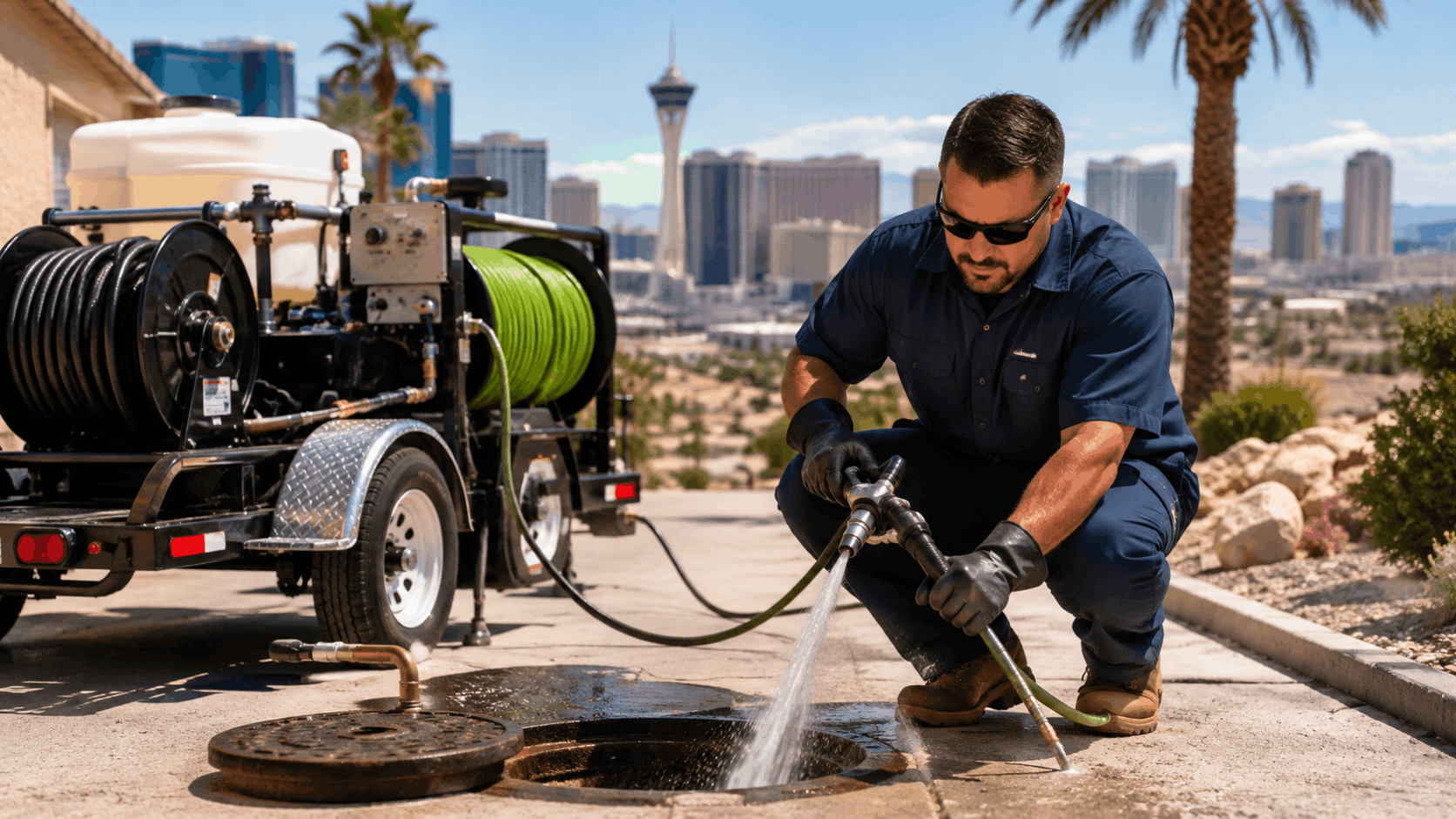
Hydro jetting uses pressurized water to clean the full inside surface of a pipe. The machine pushes water through a hose to a nozzle that sprays multiple streams, some forward and some backward.
The forward jets cut into the clog while the rear-facing jets pull the hose deeper and flush debris back toward the cleanout. The result is a pipe that is genuinely clean, not just punched open.
Pressure levels typically run between 1,500 and 4,000 psi depending on the pipe and the buildup. That force is enough to strip away years of accumulated gunk in a single pass of pipe cleaning.
Because it cleans the whole diameter, jetting restores the pipe to close to its original flow capacity. A snake never comes close to that level of clean.
Grease, Roots, and Mineral Scale
Jetting handles the tough stuff a snake struggles with. Grease buildup is the biggest one. Cooking oil hardens into a thick coating that a cable just pokes through, but high pressure water melts and blasts it away completely.
Tree roots are another target. When roots invade a sewer line, jetting with a root-cutting nozzle shears them off and clears the passage. This is common in older neighborhoods with mature landscaping.
Then there is mineral scale. The hard water across the Las Vegas Valley Water District supply leaves a chalky crust inside pipes over time. That scale narrows the pipe and catches debris, and jetting scrubs it off the walls.
For homes dealing with all three at once, jetting is often the only method that truly resets the line. A water softener installation can slow the return of scale afterward.
When Jetting Is the Smarter Long-Term Choice
Sometimes paying more up front saves money down the road. For homes with recurring clogs, jetting breaks the cycle that snaking never quite fixes.
Restaurants and commercial kitchens are the clearest example. Grease loads build fast, and a snaked line clogs again within weeks. A jetted line with a maintenance schedule stays clear far longer, which is why our grease trap pumping service pairs well with jetting for food businesses.
Older homes near Downtown see the same long term value. When cast iron lines are caked with decades of scale, one thorough jetting outperforms three or four snake visits over a year.
The math is simple. If a drain clogs every few months, the cost of repeat snaking adds up past the price of a single jetting. That is when jetting becomes the cheaper option over time.
When Jetting Is Not the Right Fit
Jetting is powerful, and that power is not always welcome. Fragile pipes can be damaged by high pressure water, so the method has limits.
Old, corroded cast iron or cracked clay lines may not survive full-pressure jetting. If a pipe is already thin or broken, the force could worsen the damage instead of clearing it.
This is why a camera inspection comes first on questionable lines. Our team runs a sewer camera inspection to check pipe condition before ever turning on the jetter.
If the camera shows a compromised pipe, the right answer may be repair or replacement rather than cleaning. Jetting a broken line just wastes money and risks a bigger mess.
Snake vs Hydro Jet: A Side-by-Side Comparison
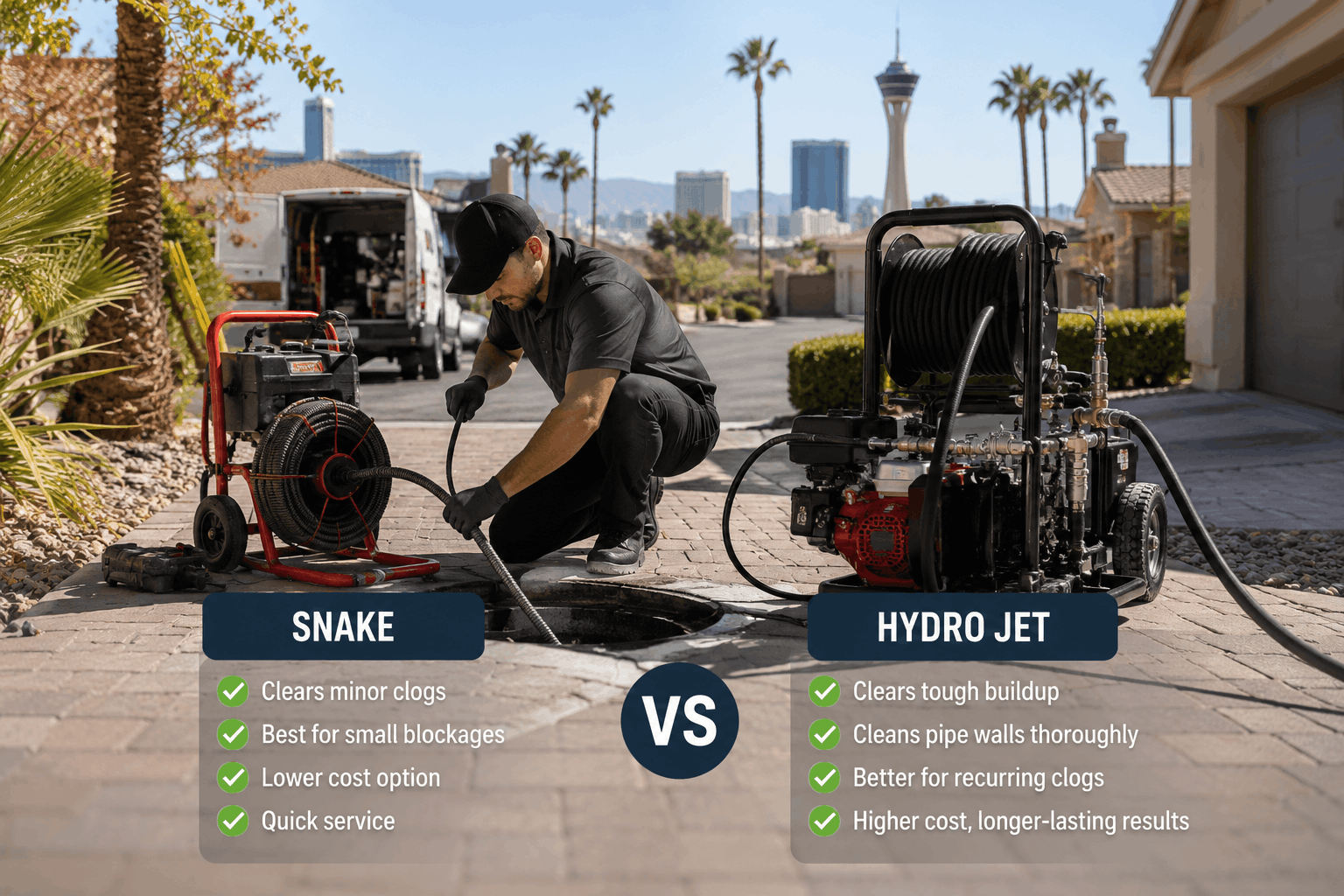
Now for the head-to-head. The snake vs hydro jet decision comes down to cost, how long results last, and the type of problem. This drain cleaning comparison lays it out clearly.
| Factor | Drain Snake | Hydro Jet |
|---|---|---|
| Typical cost | $100 - $250 | $350 - $800 |
| How it works | Punches through clog | Cleans full pipe wall |
| Results last | Weeks to months | Months to years |
| Best for | Soft clogs, single drains | Grease, roots, scale |
| Pipe safety | Safe for most pipes | Needs camera check on old lines |
Cost Difference Broken Down
On paper, a snake is far cheaper. At $100 to $250, it beats jetting's $350 to $800 for a single visit. For a one-time soft clog, snaking wins the cost comparison easily.
The picture changes when clogs come back. Figure the price per year for a home that clogs every three months. Four snake jobs at $200 each equals $800, roughly the same as one thorough jetting that lasts far longer.
For a chronic problem, jetting often costs less over 12 months even though the sticker price is higher. The trick is knowing whether the clog is a one-off or a pattern.
Our technicians help homeowners run this math on the spot. If it is a first-time clog, we snake it. If it is the third call this year, we talk about jetting.
How Long Results Last
Lasting results are where jetting pulls ahead. A snaked drain might stay clear for a few weeks or a few months, depending on how much buildup was left behind.
A jetted line stays clog free much longer because the pipe walls are actually clean. With nothing sticky left to catch debris, water flows freely for months or even years.
The difference is like wiping a greasy pan versus scrubbing it. One clears the surface, the other removes the layer that causes the next problem.
For anyone tired of calling a plumber every season, the longer results from jetting are worth the higher price. It buys real time between service calls.
Which Homes Benefit Most From Each
Home type points toward the right method. A newer home in Inspirada with smooth PVC lines and no history of trouble rarely needs more than a snake. The pipes are clean and clogs are almost always simple.
Older homes are a different story. Properties in areas like Rancho Circle sit near mature trees, and root intrusion into sewer lines is a regular problem. Those lines benefit from jetting with a root cutter.
Homes with cast iron or clay plumbing also lean toward jetting because of decades of scale. A quick snake there just delays the next clog.
Commercial kitchens and multi-family properties almost always benefit from jetting because of the heavy grease and volume they handle. Matching the method to the property saves money in the long run.
How Our Team Recommends One Over the Other
The technician recommendation always starts with an on site assessment. We look at the fixture, the age of the home, and the history of the drain before suggesting anything.
If it is a single slow drain with no prior issues, we snake it and keep the cost low. There is no reason to sell a jetting job for a simple clog.
If the drain has clogged repeatedly, or the camera shows heavy grease, roots, or scale, we explain why jetting makes more sense. We show the customer the footage so the recommendation is easy to see.
The goal is matching the fix to the actual problem. An honest plumber does not push the pricier option when the cheaper one will do the job.
What Drives Drain Cleaning Prices Up or Down
The final invoice depends on several price factors. Knowing these drain cost variables helps homeowners understand their quote and avoid surprises.
Location of the Clog and Access Points
Where the clog sits changes everything. A blockage right at an accessible cleanout is quick and cheap to reach. The plumber opens the cap, runs the equipment, and is done.
Clog location gets expensive when the blockage is buried. A clog under a slab foundation or deep in a wall takes far more time and effort to reach and clear.
Cleanout access is the friend of a low bill. Homes with a well-placed cleanout in the yard or garage save time, and that saved time keeps the cost down.
When there is no cleanout at all, the plumber may have to pull a toilet or access the line another way. That extra work adds to the total, which is why access is one of the biggest price drivers.
Age and Condition of the Pipes
Old pipes complicate the job. Homes with aging plumbing in neighborhoods like John S Park often have cast iron or clay lines that are rough inside and easy to snag.
Cast iron corrodes over the decades, leaving a pitted surface that catches debris. Working these lines takes more care and sometimes more passes to clear fully.
Clay lines crack and shift with age, which can turn a simple cleaning into a repair conversation. A camera check often becomes worth it just to see what the plumber is dealing with.
Newer PVC lines are the opposite. They are smooth, forgiving, and quick to clear, which keeps the price at the lower end of the range.
Time of Day and Emergency Calls
Timing affects price. A scheduled daytime visit costs less than an urgent call at 11 p.m. on a Sunday. After hours work carries a higher rate because of the off-schedule labor.
An emergency rate applies when a backup cannot wait, like sewage coming up into a tub at midnight. Our emergency plumbing team responds around the clock for exactly these situations.
Weekends and holidays also fall outside standard hours for most companies. The convenience of immediate service comes with a premium, and an honest plumber states that rate before dispatching.
For non-urgent clogs, scheduling during business hours is the way to keep costs down. If the drain can wait until Monday morning, waiting saves money.
Camera Inspection Add-Ons
A sewer camera is sometimes worth the extra cost. It adds to the bill but can save far more by finding the real problem instead of guessing.
The inspection cost typically runs $100 to $300. For that, a technician sends a waterproof camera down the line and shows exactly what is happening inside the pipe.
This matters most for recurring clogs. If a drain keeps backing up, a camera reveals whether the cause is roots, a collapsed section, or a low spot trapping debris.
Without a camera, repeat clogs turn into repeat guesswork. Spending once on a sewer camera inspection often prevents several wasted service calls.
Need Help in Las Vegas?
Active Plumbing serves Las Vegas and all of Las Vegas Valley.
Common Drain Problems in Las Vegas Homes
The valley has its own set of drain headaches. These Las Vegas drain problems tie directly to local conditions like hard water and desert soil. Here are the common clogs our team sees most.
| Problem | Common Areas | Best Fix |
|---|---|---|
| Mineral buildup | Valley-wide | Jetting, water softener |
| Tree roots | Older neighborhoods | Jetting with root cutter |
| Grease clogs | Kitchens, restaurants | Hydro jetting |
| Pipe bellies | Areas with soil movement | Camera, then repair |
Hard Water and Mineral Buildup
The valley has some of the hardest water in the country. All that calcium and magnesium leaves scale inside pipes, on fixtures, and in water heaters.
Over time, hard water mineral buildup narrows the inside of a pipe. What starts as a wide-open line slowly closes up as the crust thickens, and drains get sluggish.
This buildup also catches other debris. Food, soap, and grease stick to the rough scale instead of washing away, which speeds up the clogging.
Jetting removes existing scale, and a water treatment setup slows how fast it comes back. Together they keep hard water from wrecking a home's plumbing.
Tree Roots in Older Established Areas
Mature trees are beautiful, but their roots hunt for water. In older neighborhoods like Paradise Palms and the Scotch 80s, roots find their way into sewer lines through tiny cracks and joints.
Once inside, roots grow into a thick mass that snags everything flowing past. A homeowner notices slow drains, gurgling, and eventually a full backup.
A snake can trim roots temporarily, but they grow back fast. Jetting with a root-cutting nozzle clears them far more thoroughly.
For lines with repeated root problems, our team may recommend a sewer line repair or replacement to seal the cracks roots use to get in.
Grease Clogs in Kitchen Lines
Grease is the number one kitchen drain villain. It goes down the sink as a warm liquid and cools into a solid coating inside the pipe.
Every time more grease washes down, the layer thickens. Eventually the grease clog narrows the line so much that water backs up into the sink.
Pouring hot water helps for a day, but it just moves the grease further down to harden again. The only real fix is removing the coating entirely.
Jetting blasts the hardened grease off the pipe walls in a way a snake never can. For busy kitchens, regular jetting keeps the lines flowing.
Shifting Desert Soil and Pipe Bellies
Desert soil moves. Expanding and contracting ground can shift a buried pipe over the years, creating low spots called pipe bellies.
A pipe belly is a sag where the line dips below its proper slope. Water and debris collect in that low spot instead of flowing through, and clogs form there again and again.
Soil movement is common across the valley thanks to the clay-heavy ground and dry-wet cycles. Newer developments and older ones alike can develop bellies.
A camera inspection is the only way to confirm a belly. Once found, the fix is usually a spot repair to correct the slope, since cleaning alone will not solve a structural sag.
How to Choose the Right Drain Cleaning Company
Picking the right plumber protects both the home and the wallet. Here is how to choose a plumber who quotes honestly and skips the upsells. Use this checklist when calling a drain cleaning company.
Questions to Ask Before Booking
The right questions to ask reveal a lot before anyone shows up. Start by asking whether the quote is a flat rate or an estimate that could change.
Ask what method they plan to use and why. A good company explains whether a snake or jet fits the problem, rather than defaulting to the pricier option every time.
Before booking, ask what happens if the first attempt does not clear the line. Honest answers describe the next step and its cost clearly.
Also ask whether a camera inspection is included or extra. Knowing that up front prevents a surprise line item on the invoice.
Red Flags of Overpriced Quotes
Some warning signs point straight to overpricing. The biggest red flag is pressure to jet a line when a simple snake would clearly do the job.
Watch for vague quotes with no breakdown. If a company will not put the method and price in writing, that is a reason to pause.
Be cautious of scare tactics too. A plumber who insists the whole line must be replaced without showing camera proof is worth a second opinion.
Prices far above the ranges in this guide, with no clear reason like difficult access, are another red flag. A fair quote fits the work being done.
Licensing and Local Experience
A licensed plumber is not optional. Nevada requires proper licensing, and it protects the homeowner if something goes wrong. Homeowners can verify a contractor through the Nevada State Contractors Board.
Local experience matters just as much. A plumber who works the valley every day knows how hard water, desert soil, and older neighborhoods affect drains.
That knowledge shows up in the diagnosis. A local pro recognizes a scale problem or a root issue quickly because they have seen it hundreds of times nearby.
Familiarity with valley conditions also means better long-term advice. A plumber who understands local water and soil can recommend fixes that actually last here.
Why Homeowners Call Active Plumbing
Homeowners across the valley call Active Plumbing because the pricing is upfront and the recommendations are honest. Our team serves neighborhoods from Summerlin to Henderson with the same straight approach.
We quote in writing, explain the method, and never push jetting when a snake will do. If a customer only needs a basic clog cleared, that is what we charge for.
Our technicians know the valley's older lines and hard water firsthand. That experience lets us pick the right method the first time and get the drain working fast.
Whether it is a slow sink in Spring Valley or a main line backup near Downtown, homeowners get the same upfront pricing and clear explanation every time.
How to Prevent Clogs and Keep Costs Down
The cheapest drain cleaning is the one a homeowner never needs. A few simple habits prevent clogs and cut down on service calls. Here is how to keep up basic drain maintenance.
Simple Kitchen and Bathroom Habits
Good kitchen habits stop most clogs before they start. Never pour grease down the sink. Let it cool in a can and toss it in the trash instead.
Scrape plates into the garbage before rinsing. Food scraps, coffee grounds, and starchy leftovers are common clog builders in kitchen lines.
In the bathroom drain, a simple hair catcher over the shower and sink drains works wonders. Hair is the top cause of bathroom clogs, and a $5 strainer stops it.
Only flush toilet paper and waste. Wipes labeled flushable are not truly flushable and are a leading cause of backups across the valley.
Yearly Maintenance for Older Homes
Older homes need a schedule. Properties with aging lines in areas like Charleston Heights benefit from a yearly maintenance check on the main sewer line.
A once-a-year inspection catches problems early. Roots, scale, and small blockages are far cheaper to handle before they turn into a full backup.
For older homes with a history of clogs, a yearly jetting keeps the lines clear. It is far cheaper than emergency service after a Saturday-night flood.
Homes with cast iron or clay plumbing especially benefit from this routine. Staying ahead of buildup prevents the surprise clogs these older lines are prone to.
Dealing With Hard Water Effects
Fighting hard water protects the whole plumbing system. A water softener removes the minerals that cause scale before they ever reach the pipes.
With softened water, scale builds far more slowly inside drains, water heaters, and fixtures. That slows the narrowing that leads to clogs.
Our team offers hard water treatment options including traditional softeners and salt-free conditioning. Both reduce the mineral load the valley's water carries.
Softer water also extends the life of appliances and reduces the crusty buildup on faucets. It is a fix that pays off in more than just drains.
When to Skip DIY and Call a Pro
DIY has real limits. A plunger or a small hand auger handles a minor clog, and that is fine to try first.
Store-bought chemical drain cleaners are where trouble starts. They can damage pipes, especially older ones, and often just push the clog deeper without clearing it.
When a drain clogs repeatedly, or more than one fixture backs up at once, that signals a deeper problem. That is the point to call a pro rather than keep experimenting.
Any sign of sewage backing up is an immediate call. Those situations are health hazards, and DIY limits are reached the moment waste water appears where it should not.

Need Help in Las Vegas?
Active Plumbing serves Las Vegas and all of Las Vegas Valley.
Final Thoughts
Drain cleaning cost in the valley comes down to the method and the problem. A basic snake runs $100 to $250 and clears simple clogs fast, while hydro jetting at $350 to $800 handles grease, roots, and hard water scale for the long haul.
The right choice depends on the drain's history. A first-time slow sink usually needs a snake, while a drain that clogs every few months often saves money with a single jetting.
Our team helps valley homeowners make that call every day with upfront pricing and honest recommendations. If a drain is acting up, contact Active Plumbing for a clear estimate and the right fix the first time.
Frequently Asked Questions
Here are answers to the most common drain cleaning questions Las Vegas homeowners ask. This FAQ covers cost, methods, and what to expect.
How much does drain cleaning cost in Las Vegas?
A basic drain snake usually runs $100 to $250 for a single clogged fixture. Hydro jetting, which cleans the entire pipe, typically costs $350 to $800 depending on the line length and buildup. Main line snaking falls in between at $150 to $350. Add-ons like a camera inspection or after-hours service raise the total. Our team quotes the exact price in writing before starting any work.
Is hydro jetting worth the extra money?
Jetting is worth it when clogs keep coming back. For a one-time soft clog, a snake is cheaper and does the job. But if a drain clogs every few months from grease, roots, or scale, jetting cleans the whole pipe and lasts far longer. Four snake visits a year can cost as much as one jetting that keeps the line clear for months, making jetting the smarter long-term value.
How long does a drain cleaning appointment take?
A basic snake job takes 30 minutes to an hour from setup to testing. Difficult access or a deep clog can stretch it a bit longer. Hydro jetting usually takes one to two hours because it cleans the full length of the pipe and often includes a camera check. Both are typically same-day services, so most homeowners have a working drain the same day they call.
Can hydro jetting damage my pipes?
Jetting is safe for pipes in good condition, including most PVC and healthy cast iron. The risk shows up with fragile or already-damaged lines, like corroded cast iron or cracked clay. That is why our team runs a sewer camera inspection first on older or questionable lines. If the camera shows a compromised pipe, we recommend repair instead of jetting so the pressure does not make the damage worse.
Why do my drains keep clogging after snaking?
A snake punches a hole through the clog but leaves the buildup coating the pipe walls behind. That sticky layer of grease or scale quickly catches more debris, and the drain slows down again within weeks or months. When a drain clogs repeatedly after snaking, it usually means the pipe needs a full cleaning. Hydro jetting scours the walls clean, which stops the cycle of repeat clogs.
Do I need a sewer camera inspection?
A camera makes sense when clogs keep returning or when the cause is a mystery. For $100 to $300, it shows exactly what is inside the line, whether that is roots, grease, scale, or a collapsed section. It saves money by pinpointing the real problem instead of guessing through repeat service calls. For a single first-time clog, though, a camera is usually not needed.
Are weekend or emergency calls more expensive?
Yes. After-hours, weekend, and holiday calls carry a higher rate than scheduled daytime service because of the off-schedule labor. If a clog is truly urgent, like sewage backing up into the home, the emergency rate is worth it for immediate help. If the drain can wait until regular business hours, scheduling then keeps the cost lower. An honest plumber states the after-hours rate before dispatching.
Does hard water in Las Vegas cause drain problems?
Definitely. The valley's water is very hard, and the calcium and magnesium leave scale inside pipes over time. That scale narrows the line and gives food, soap, and grease a rough surface to cling to, which speeds up clogging. Jetting removes existing scale, and a water softener slows how fast it returns. Hard water is one of the top drivers of slow drains across the valley.
Can I clear a clog myself before calling a plumber?
For a minor single-drain clog, a plunger or a small hand auger is safe to try. Avoid chemical drain cleaners, since they can damage pipes and often just push the clog deeper. If the clog will not budge, keeps coming back, or affects more than one fixture, it is time to call a pro. Any sign of sewage backing up is an immediate call, not a DIY project.
How often should older homes get drain maintenance?
Homes with aging cast iron or clay lines benefit from a yearly check on the main sewer line. An annual inspection catches roots, scale, and small blockages before they become a full backup. For homes with a clog history, a yearly jetting keeps the lines clear and prevents surprise floods. This routine is far cheaper than emergency service and protects the older plumbing common in established valley neighborhoods.
Frequently Asked Questions
- How much does drain cleaning cost in Las Vegas?
- A basic drain snake usually runs $100 to $250 for a single clogged fixture. Hydro jetting, which cleans the entire pipe, typically costs $350 to $800 depending on the line length and buildup. Main line snaking falls in between at $150 to $350. Add-ons like a camera inspection or after-hours service raise the total. Our team quotes the exact price in writing before starting any work.
- Is hydro jetting worth the extra money?
- Jetting is worth it when clogs keep coming back. For a one-time soft clog, a snake is cheaper and does the job. But if a drain clogs every few months from grease, roots, or scale, jetting cleans the whole pipe and lasts far longer. Four snake visits a year can cost as much as one jetting that keeps the line clear for months, making jetting the smarter long-term value.
- How long does a drain cleaning appointment take?
- A basic snake job takes 30 minutes to an hour from setup to testing. Difficult access or a deep clog can stretch it a bit longer. Hydro jetting usually takes one to two hours because it cleans the full length of the pipe and often includes a camera check. Both are typically same-day services, so most homeowners have a working drain the same day they call.
- Can hydro jetting damage my pipes?
- Jetting is safe for pipes in good condition, including most PVC and healthy cast iron. The risk shows up with fragile or already-damaged lines, like corroded cast iron or cracked clay. That is why our team runs a sewer camera inspection first on older or questionable lines. If the camera shows a compromised pipe, we recommend repair instead of jetting so the pressure does not make the damage worse.
- Why do my drains keep clogging after snaking?
- A snake punches a hole through the clog but leaves the buildup coating the pipe walls behind. That sticky layer of grease or scale quickly catches more debris, and the drain slows down again within weeks or months. When a drain clogs repeatedly after snaking, it usually means the pipe needs a full cleaning. Hydro jetting scours the walls clean, which stops the cycle of repeat clogs.
- Do I need a sewer camera inspection?
- A camera makes sense when clogs keep returning or when the cause is a mystery. For $100 to $300, it shows exactly what is inside the line, whether that is roots, grease, scale, or a collapsed section. It saves money by pinpointing the real problem instead of guessing through repeat service calls. For a single first-time clog, though, a camera is usually not needed.
- Are weekend or emergency calls more expensive?
- Yes. After-hours, weekend, and holiday calls carry a higher rate than scheduled daytime service because of the off-schedule labor. If a clog is truly urgent, like sewage backing up into the home, the emergency rate is worth it for immediate help. If the drain can wait until regular business hours, scheduling then keeps the cost lower. An honest plumber states the after-hours rate before dispatching.
- Does hard water in Las Vegas cause drain problems?
- Definitely. The valley's water is very hard, and the calcium and magnesium leave scale inside pipes over time. That scale narrows the line and gives food, soap, and grease a rough surface to cling to, which speeds up clogging. Jetting removes existing scale, and a water softener slows how fast it returns. Hard water is one of the top drivers of slow drains across the valley.
- Can I clear a clog myself before calling a plumber?
- For a minor single-drain clog, a plunger or a small hand auger is safe to try. Avoid chemical drain cleaners, since they can damage pipes and often just push the clog deeper. If the clog will not budge, keeps coming back, or affects more than one fixture, it is time to call a pro. Any sign of sewage backing up is an immediate call, not a DIY project.
- How often should older homes get drain maintenance?
- Homes with aging cast iron or clay lines benefit from a yearly check on the main sewer line. An annual inspection catches roots, scale, and small blockages before they become a full backup. For homes with a clog history, a yearly jetting keeps the lines clear and prevents surprise floods. This routine is far cheaper than emergency service and protects the older plumbing common in established valley neighborhoods.
A
Licensed plumbing professionals serving Las Vegas and Las Vegas Valley.
Licensed in Nevada · License #0047021
Last updated on
Why trust Active Plumbing?
Founded in 1991, Active Plumbing is a licensed and insured plumber serving Las Vegas and Las Vegas Valley. All content is reviewed by our licensed technicians.

Need Help in Las Vegas?
Active Plumbing serves Las Vegas and all of Las Vegas Valley.
Related Articles
Cost Guides
40 vs 50-Gallon Water Heater Cost in Las Vegas: Real Installed Prices and When the Bigger Tank Pays Off
Real installed prices for 40 vs 50-gallon water heaters in Las Vegas, plus how to pick the right size for your household, energy costs, and hard water.
Cost Guides
Water Heater Repair vs Replace in Las Vegas: The Price Math at Years 6, 8, and 10 in Our Hard Water
Repair or replace your water heater in Las Vegas? See the real price math at years 6, 8, and 10, plus how hard water shortens tank life across the valley.
Cost Guides
Whole-House Repipe Cost in Las Vegas by Home Size - 1,500 to 4,000+ Sq Ft Real Ranges
Real whole-house repipe cost ranges in Las Vegas by home size from 1,500 to 4,000+ sq ft, plus pipe materials, permits, timelines, and local factors.