Safety & Prevention
Galvanized Pipe Lead Risk: Why North LV Homes Need Testing Before Renovation
Key Takeaways
- Galvanized pipe is common in North Las Vegas homes built from the 1950s through the early 1980s, especially near Downtown North Las Vegas and Cheyenne Avenue.
- The steel itself has no lead, but its rough, corroded interior traps lead from old solder, brass fittings, and upstream service lines.
- Remodel work like cutting and banging on old pipe can shake trapped lead loose, raising water contamination risk during the project.
- Testing before a renovation is cheaper and smarter because open walls make pipe replacement easier and protect kids and pregnant family members.
- A full test includes first-draw and flushed water samples plus a camera scope, with lab results measured in parts per billion against the EPA 15 ppb action level.
- Options after testing range from a full copper or PEX repipe to partial section replacement or a certified point-of-use filter as a short-term guard.
- Repipe work in North Las Vegas requires a permit through the City Building Safety Division, and Active Plumbing handles the paperwork and inspections.
In This Article
A young family off Civic Center Drive started tearing into their kitchen last spring. They wanted new cabinets, a bigger sink, and a fresh tile backsplash. When the contractor opened the wall behind the old sink, he found dull gray pipe streaked with rust. The family had no idea what they were looking at, and they asked us a simple question: is this water safe to drink?
That gray pipe is galvanized steel, and it is common in older North Las Vegas homes. What most people do not know is that galvanized pipe can trap lead inside its rough, corroded walls. When a remodel disturbs that pipe, trapped lead particles can break loose and end up in the water.
What Galvanized Pipe Is and Why Older North LV Homes Have It
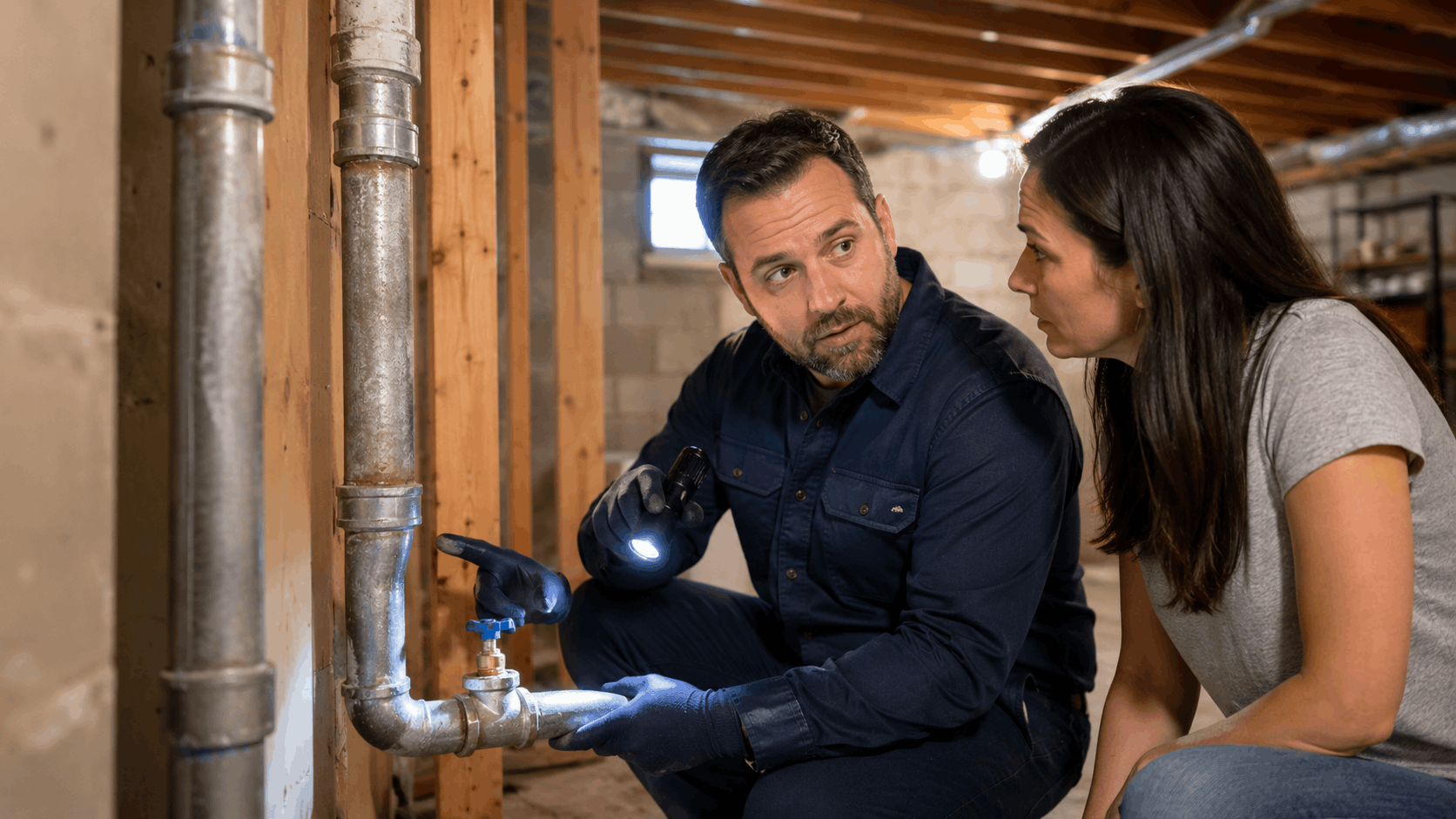
Galvanized pipe is steel pipe coated in a layer of zinc. Builders used it for decades because it resisted rust better than bare steel. In older North Las Vegas plumbing, it is one of the most common types of old water pipes still carrying water today.
Here is what makes galvanized pipe stand out in a home:
- It has a dull, silvery gray color that darkens with age
- The surface often shows rust spots or chalky white buildup
- Fittings are threaded, not soldered or glued
- It feels heavy and solid compared to plastic pipe
- Tapping it produces a dull metallic sound, not a hollow ring
Homes built in the middle of the last century used this pipe as the standard. That means a large slice of the north valley housing stock still runs on it. Finding it during a remodel is common, and it is a good moment to check its condition.
How to Recognize Galvanized Pipe Behind Your Walls
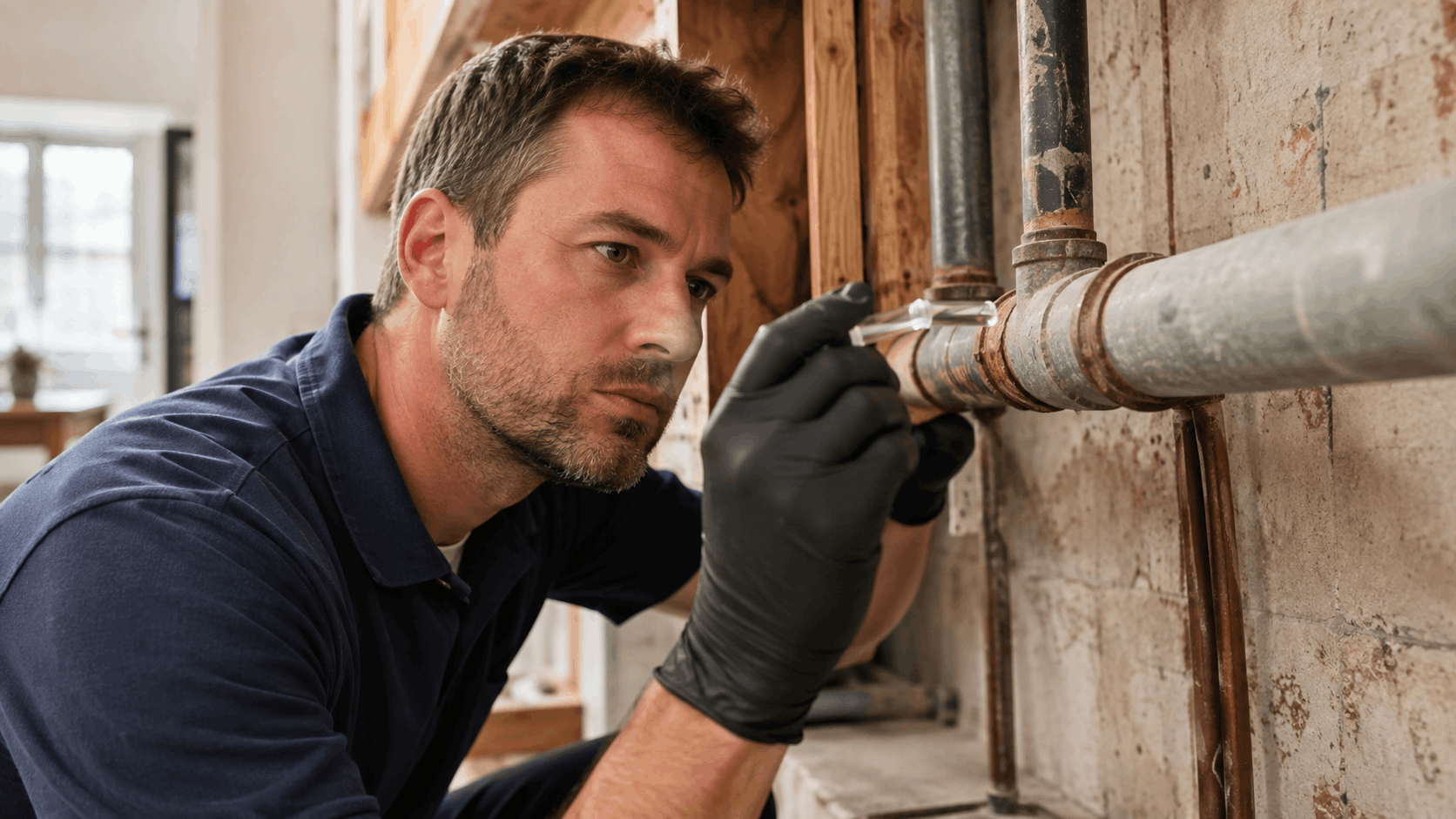
The easiest first check is color. Galvanized steel starts out a bright silvery gray, but decades of exposure turn it a dull, flat gray with darker patches. If you see rust bleeding out of a threaded joint or a chalky white crust forming around a fitting, that is a strong sign you are looking at aging galvanized pipe.
The magnet test is the next step, and it is simple enough for any homeowner. Galvanized steel is magnetic, so a common refrigerator magnet will stick firmly to it. Copper and PEX will not attract a magnet at all, so if your magnet grabs the pipe, you are almost certainly dealing with steel.
Pipe identification gets easier when you look at the fittings. Galvanized systems use threaded connections, meaning the pipe screws into elbows, tees, and couplings. Copper is usually soldered with smooth joints, and PEX uses crimp rings or push fittings, so threaded gray metal is a telling detail.
One more trick works well. Take a flat screwdriver or a coin and scrape the surface of the pipe in a small spot. If a bright silver metal shows through under the dull gray, that silver is the zinc coating over steel, which confirms galvanized pipe.
Which North Las Vegas Neighborhoods Still Have It
Older housing near Downtown North Las Vegas is where we see galvanized pipe most often. Homes along Civic Center Drive and the surrounding streets went up when galvanized was the go-to material, and many still have their original supply lines. Owners in these pockets are often surprised how much original pipe remains hidden in the walls.
Mid-century neighborhoods near Cheyenne Avenue are another spot where old water pipes still run. Ranch-style homes from that stretch of years commonly used galvanized supply lines throughout. Some have been partially updated over the years, but partial updates leave mixed systems that still carry risk.
Build eras matter here. Homes constructed from the 1950s through the early 1980s are the prime candidates for galvanized pipe. If a north valley home predates the mid-1980s and has never been repiped, there is a solid chance galvanized steel is still in the walls.
The Historic North Las Vegas area is one of our regular service zones for this exact issue. Older homes there were built when galvanized was standard, and many owners only learn about it during a remodel or after a pressure problem.
Why Builders Used Galvanized Pipe in the First Place
Before copper pipe and PEX became common, galvanized steel was the default choice for water supply lines. It was strong, widely available, and cheaper than the alternatives at the time. Plumbers knew how to work with it, and it held up well against physical damage.
The zinc coating was the selling point. Zinc was meant to slow rust by shielding the steel underneath from water and air. In theory, the coating would protect the pipe for decades before corrosion set in.
The problem is that no coating lasts forever. Over 40, 50, or 60 years, the zinc wears away from the inside out. Once the bare steel is exposed to water, rust starts to build and the pipe begins its slow decline.
Copper and PEX took over for good reasons. Copper resists corrosion far better, and PEX flexes without rusting at all. Both are the standard for a modern pipe and fixture upgrade, which is why galvanized is now considered outdated for supply lines.
Get Your Quote
Tell us what's going on and we'll get back to you fast.
How Lead Hides Inside Galvanized Plumbing
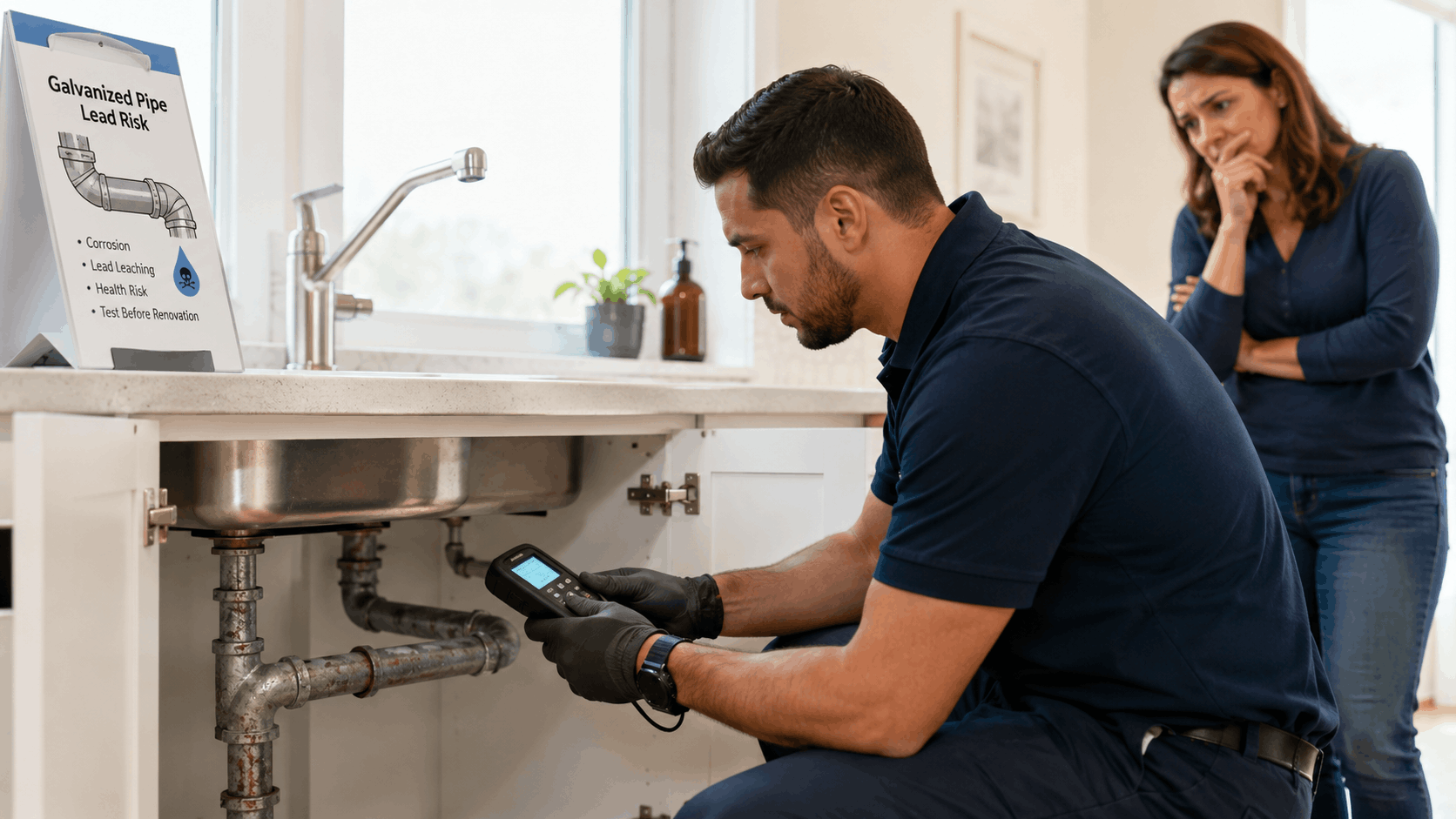
Galvanized pipe does not contain lead as part of the steel itself. The lead risk comes from what the rough, corroded interior can trap and later release. This is a detail many homeowners miss, so it is worth breaking down in plain terms.
The main sources of lead in an older system include:
- Lead solder used at pipe joints before 1986
- Old lead service lines feeding water into the home
- Brass fittings that contained small amounts of lead
- Corrosion buildup inside galvanized pipe that catches lead particles
When corrosion roughens the inside of the pipe, that surface acts like a trap. Lead particles from upstream sources snag on the rust and collect over time. Disturbing the pipe can then send that lead into the water.
The Rust-and-Lead Trap Explained Simply
Think of the inside of galvanized pipe as a slow-motion timeline. When the pipe is new, the zinc coating leaves the interior smooth and protected. Water flows past without much interaction, and there is little chance for anything to stick.
As the years pass, the zinc wears thin and rust buildup begins on the pipe interior. That rust is not smooth like the original surface. It is rough, flaky, and pitted, which gives passing particles plenty of places to lodge.
Lead particles from old solder or a lead service line upstream travel through the water and settle into that rough rust layer. The corroded interior slowly accumulates these particles over decades. A pipe that looks fine from the outside can hold a hidden reservoir of contaminants inside.
The danger is that this buildup is not stable. Changes in water flow, pressure, or physical vibration can shake those particles loose. Once free, they move with the water toward the tap.
Lead Solder and Old Fittings
For much of the last century, plumbers joined copper connections with lead-based solder. It flowed easily, sealed well, and was cheap, so it was used almost everywhere. In an older home, those solder joints are still sitting in the plumbing system.
The 1986 ban changed the rules. Federal law restricted lead in solder and fixtures, so work done after that point should be lead-free. The trouble is that homes built or plumbed before the mid-1980s often still carry the older lead solder at their joints.
Old pipe fittings add to the picture. Brass fittings from that era commonly contained a small percentage of lead as part of the alloy. Each of those fittings is another spot where lead can leach into water sitting in the line.
When galvanized pipe and lead solder appear together, the risk compounds. The corroded steel traps particles, and the aging joints keep feeding lead into the system. That combination is exactly why we recommend a professional water evaluation for older homes.
How Renovation Work Stirs Lead Loose
A remodel is one of the most disruptive things that can happen to old plumbing. Cutting pipe, banging on walls, and swapping out sections all send vibration through the system. That physical disturbance is exactly what knocks trapped lead loose.
Picture a contractor sawing through a galvanized line to tie in a new fixture. The vibration travels up and down the connected pipe, shaking rust and lead particles free from the interior. Those particles then ride the next rush of water toward the taps.
Even work that seems unrelated to plumbing can cause pipe disturbance. Hammering studs, moving walls, or dropping tools against a supply line can all jar loose buildup. The result can be a spike in lead that was not present a day earlier.
This is why water contamination risk actually climbs during a renovation, not after it settles. Families sometimes assume the water is safest while the house is being improved, when the opposite can be true. Testing before and monitoring during the work gives a clear read on what is happening.
Need Help in Las Vegas?
Active Plumbing serves Las Vegas and all of Las Vegas Valley.
Why Testing Should Happen Before You Renovate, Not After
A remodel is the single best window to deal with pipe problems. The walls are open, the schedule is already set, and the crew is on site. Waiting until after everything is closed up throws away that advantage.
Early water testing gives a family real information before they commit to finishes. Lead testing at the start of renovation planning turns guesswork into a clear decision. It also protects the money spent on new cabinets and tile from being torn out later.
Open Walls Are the Cheapest Time to Replace Pipe
Repipe cost is driven largely by access. When drywall is already down for a remodel, a plumber can reach the pipe directly without cutting new holes or patching afterward. That open access can cut labor hours and reduce the total bill.
Compare that to a later emergency repipe. If a galvanized line fails a year after the remodel, the crew has to open freshly finished walls, then patch, texture, and repaint them. Those repairs can add thousands to a job that would have been simpler during the original work.
Open walls also let us plan a cleaner run for new pipe. We can route copper or PEX along the most direct path instead of fishing it through finished spaces. That leads to a tidier system and fewer joints where problems can start.
The renovation savings add up when the work is combined. One crew, one setup, and one round of drywall repair beats doing plumbing and finish work twice. Homeowners who plan a whole-home pipe replacement during a remodel almost always spend less than those who wait.
Protecting Kids and Pregnant Family Members
Lead exposure is not equally dangerous to everyone. Young children absorb lead far more readily than adults, and even low levels can affect development. The EPA notes there is no known safe level of lead for children.
Pregnant family members carry added concern. Lead can pass to a developing baby, which is why doctors urge extra caution during pregnancy. For a household expecting a child, knowing the water is clear before a remodel is worth the test.
Testing gives families clear answers about their drinking water. Instead of worrying about what might be in the pipe, they get a number they can act on. That kind of certainty is hard to put a price on when children are in the home.
When results show a problem, a family can switch to filtered or bottled water right away. They can also plan pipe replacement with confidence, knowing exactly why the work matters. Clear data drives better choices for child health.
Avoiding Surprise Delays Mid-Project
Few things stall a remodel like discovering bad pipe halfway through. A contractor opens a wall, finds badly corroded galvanized line, and suddenly the whole timeline shifts. Now the homeowner is scrambling to line up a plumber while finish work sits idle.
Early plumbing inspection prevents that scramble. When we test and scope the pipe before the remodel starts, everyone knows what they are dealing with from day one. There are no mid-project surprises that force a stop.
Project delay ripples outward once it starts. A stalled plumbing issue can push back tile, cabinets, countertops, and paint, and each trade has its own schedule. A one-week pipe surprise can turn into a month of shuffled bookings.
Keeping the remodel timeline on track is easier when plumbing is settled first. We coordinate with the general contractor so pipe work fits into the flow of the job. That planning keeps the whole project moving without avoidable stops.
What a Lead and Pipe Test Actually Looks Like
Homeowners often picture testing as complicated, but the process is straightforward. A good test combines a water sample, a visual look at the pipe, and a lab analysis. Together these give a clear picture of both water quality and pipe condition.
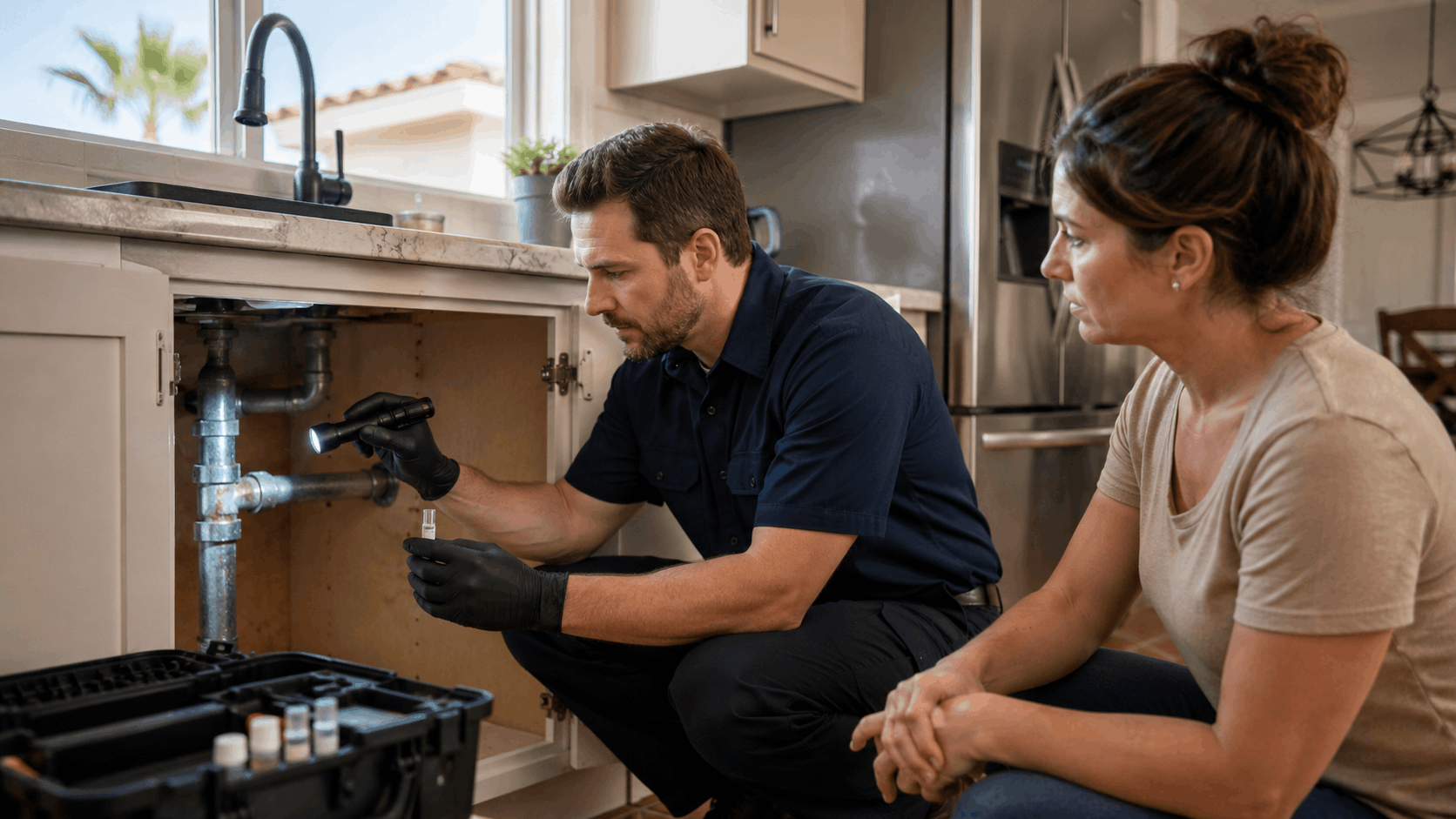
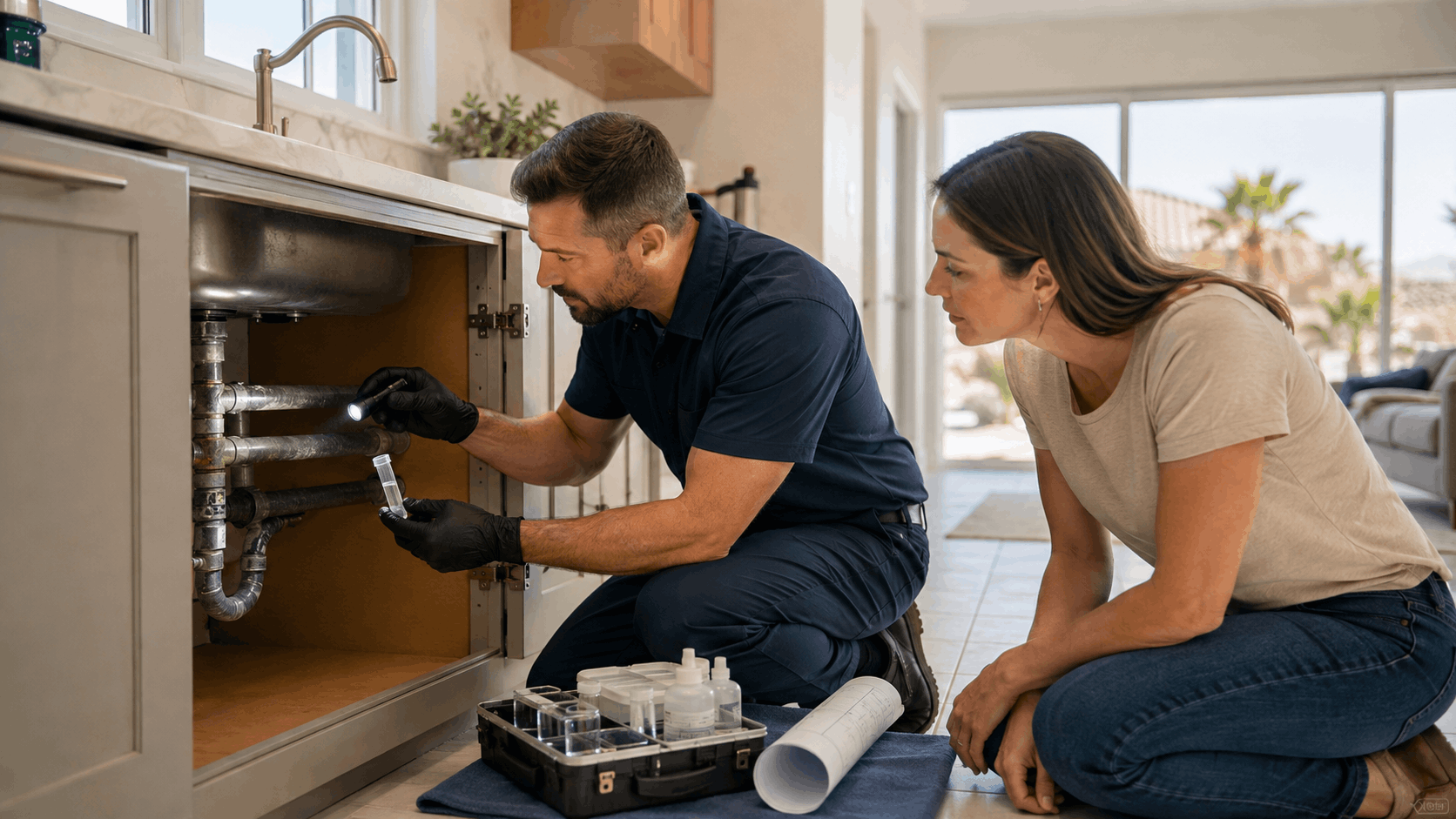
When our team brings out a water test kit, the goal is to answer two questions. Is there lead in the water right now, and what shape is the pipe in? The lead test and plumbing inspection work together to answer both.
Water Sample Collection Step by Step
A proper lead test uses more than one sample. The first-draw sample is taken from a tap that has sat unused for at least six hours, often first thing in the morning. This water has been sitting in the pipe, so it shows the highest contact with any lead in the system.
The flushed sample comes next. After running the tap for a set time, we collect a second sample to see what the water looks like once the standing water is cleared out. Comparing the two tells us how much the pipe itself is adding to the water.
Timing of collection matters a great deal. If a sample is taken right after water has been running, it will not reflect the worst-case exposure. That is why we give clear instructions on when and how to collect from the tap.
Both tap water samples get sealed, labeled, and sent to a certified lab. The lab measures lead and other contaminants with equipment far more precise than any home strip. That accuracy is what lets a family trust the result and act on it.
Visual Pipe Inspection and Camera Scoping
A water sample tells you what is in the water, but a camera scope shows you the pipe itself. We feed a small waterproof camera into the line and watch a live feed of the interior. This pipe inspection reveals what is happening inside the walls without tearing them open.
The camera shows rust buildup in real detail. We can see how much the interior has narrowed, where flaking has started, and how rough the surface has become. A pipe that looks fine from outside can be badly restricted inside, and the scope makes that visible.
This kind of inspection saves guesswork and money. Instead of opening every wall to check pipe by hand, we target the trouble spots the camera finds. Our camera inspection service uses the same approach we rely on for sewer lines.
The footage also helps homeowners see the problem for themselves. A description of corrosion is one thing, but watching rust choke a pipe on screen makes the decision clear. That visual record supports an honest conversation about repair or replacement.
Reading Your Lab Results in Plain Terms
Lab results come back in parts per billion, written as ppb. One part per billion is a tiny amount, roughly a single drop in a very large tank. Lead is measured this precisely because even small amounts matter.
The EPA action level for lead in drinking water is 15 parts per billion. If a public water system exceeds that at enough taps, it must take corrective steps. For a home, that number gives a benchmark to compare your own results against.
A result of concern is any reading that approaches or passes that action level, and given that no lead level is considered safe for children, lower is always better. We walk each homeowner through what their specific number means for their household. Context matters, since a number alone can be hard to judge.
Reading lab results should not require a science degree. Our team translates the ppb figure into plain guidance about whether to filter, replace pipe, or simply retest. The goal is a clear next step, not a confusing report.
North Las Vegas Water, Local Rules, and What They Mean for You
Understanding the local water picture helps homeowners see where the risk actually sits. The water arriving at the property is treated and monitored, but the pipe inside the home is the wild card. Local rules also shape how repipe work has to be done.
Here is a quick reference for the local factors that matter:
| Factor | North Las Vegas Detail | Why It Matters |
|---|---|---|
| Water provider | City of North Las Vegas Utilities Department | Treats and delivers water to the meter |
| Source water | Colorado River via Lake Mead | Mineral-heavy and hard |
| In-home pipe | Homeowner responsibility | Main variable for lead risk |
| Permits | City Building Safety Division | Required for repipe work |
Where Your Tap Water Comes From
The City of North Las Vegas Utilities Department handles water for most of the area. The department treats the water and delivers it to the meter at each home. By the time it reaches the property line, it has met federal drinking water standards.
Most of that Colorado River water comes through Lake Mead. It is treated at regional facilities before it enters the distribution system. You can review water quality details in the City of North Las Vegas Utilities information published each year.
The important point is where responsibility shifts. Once water passes the meter, it flows through the home's own pipe. That in-home pipe is the main variable for lead, since the source water leaves the plant clean.
This is why two homes on the same street can have very different water quality at the tap. One with new copper stays clean, while a neighbor with old galvanized may pick up lead along the way. The difference is the pipe, not the source.
Hard Water and Its Effect on Old Pipe
The valley is known for hard water, and the numbers back it up. Colorado River source water carries a heavy load of calcium and magnesium. That mineral content is what makes local water hard.
Hard water speeds up trouble inside old pipe. Mineral scaling builds a crusty layer on pipe walls, narrowing the interior and roughening the surface. In galvanized pipe that already has rust, this scaling makes the buildup worse.
Corrosion and scaling feed each other over time. A rough, scaled interior holds moisture against the steel and traps more particles. That accelerates the decline of pipe that is already decades past its prime.
Managing hard water helps protect newer pipe too. A water softener installation can slow scaling and extend the life of a fresh repipe. It also improves how fixtures and water heaters hold up in valley conditions.
Permits and Inspections for Repipe Work
Repipe work in North Las Vegas requires a plumbing permit. Permits are pulled through the City of North Las Vegas Building Safety Division. That step brings the work under code review and inspection.
A licensed plumber handles the permit and the inspection process. That matters because permitted, inspected work protects the homeowner if anything goes wrong later. It also confirms the new system meets current code.
Skipping the permit can cause real headaches at resale. Buyers and their inspectors look for permitted work, and unpermitted plumbing can stall a sale or lower an offer. Doing it right the first time protects the home's value.
Our crew manages the permit paperwork as part of the job. Homeowners do not have to figure out the Building Safety Division process on their own. We handle the filings and coordinate the required inspections.
Need Help in Las Vegas?
Active Plumbing serves Las Vegas and all of Las Vegas Valley.
Repair and Replacement Options After Testing
Once test results come back, the path forward gets clearer. Options range from a full repipe to a targeted section fix, with filtration as a short-term guard. The right choice depends on pipe condition, budget, and how long the family plans to stay.
Not every result calls for the same response. A badly corroded system points toward full pipe replacement, while a localized problem may allow a partial fix. We lay out the real trade-offs so homeowners can choose with open eyes.
Full Repipe With Copper or PEX
A full repipe replaces every supply line in the home. It is the most complete fix, and it removes the galvanized pipe and its lead trap entirely. For older homes with system-wide corrosion, it is often the honest long-term answer.
Copper repipe is the traditional premium choice. Copper lasts 50 years or more, resists bacteria, and holds up under pressure. The trade-off is a higher material cost, and copper can be affected by very aggressive water over long periods.
PEX repipe has become the go-to for many homes. It flexes, resists corrosion completely, and shrugs off the mineral scaling that plagues valley plumbing. PEX usually costs less than copper and installs faster, which lowers labor.
Pipe lifespan is strong with either modern material when installed correctly. In our experience across north valley homes, PEX often makes the most sense against local hard water. We help each homeowner weigh copper versus PEX based on their specific situation.
Replacing Just the Affected Sections
Sometimes only a portion of the system is in bad shape. A partial repipe replaces the worst runs while leaving newer sections in place. This section replacement can address a specific failing area at lower cost.
Spot repair makes sense in certain cases. If a single visible run of galvanized feeds a kitchen being remodeled, replacing just that stretch may be reasonable. It solves the immediate problem while the wall is open.
The catch is that partial fixes are often a stopgap. The galvanized pipe left in other walls keeps aging and can fail next. A home that gets one section replaced today may need more work in a few years.
We are upfront about this trade-off. A partial repipe can be the right budget choice for now, but it is not a permanent cure for a system-wide galvanized problem. Understanding that helps a family plan the next step instead of being caught off guard.
Filtration as a Short-Term Safeguard
When a repipe cannot happen right away, filtration can bridge the gap. A certified point-of-use filter installed at the kitchen sink can reduce lead in drinking and cooking water. That gives a family safer water while they save and plan.
Not every filter is equal. Look for units certified to reduce lead under recognized standards, such as those tested by NSF for lead reduction. A random pitcher filter may not handle lead at all.
Point-of-use filtration has real limits. It treats water at one tap, not the whole house, so other fixtures still deliver untreated water. It also does nothing to stop the pipe from corroding further.
We treat filtration as a safeguard, not a cure. A filter buys time and protects drinking water, but it does not fix the corroded pipe behind the wall. Our water treatment options can pair a filter with a plan to replace the pipe later.
How Active Plumbing Handles North LV Pipe Testing and Repipes
Our team has worked on hundreds of older homes across the north valley. We know what galvanized pipe looks like behind these particular walls and how it behaves against local water. That experience shapes how we approach every test and repipe.
Here is what working with us on a remodel looks like:
- We test water and scope pipe before drywall goes back up
- We coordinate with the homeowner's remodel schedule
- We provide itemized quotes with no vague line items
- We handle permits through the Building Safety Division
- We explain results and options in plain language
Our Test-First Approach for Remodel Projects
We built our process around testing before the walls close. When a homeowner plans a remodel, we come out early to run a lead test and scope the pipe. That pre-renovation check tells everyone what the plumbing is really doing.
Pipe testing at this stage saves money and stress. Catching a corroded line while the wall is open avoids tearing out finished work later. It also lets the homeowner budget for pipe work upfront instead of as a surprise.
Remodel coordination is part of the job. We time our work to fit the general contractor's schedule so the plumbing does not stall other trades. That keeps the whole project moving on its planned timeline.
The result is a cleaner, calmer remodel. Homeowners know the state of their pipe before they invest in finishes. No one is left guessing what is hiding behind the drywall.
Serving Older Homes Across the North Valley
Our local reach covers the neighborhoods where galvanized pipe is most common. We regularly work in homes around Aliante and the surrounding north valley streets. Each area has its own housing quirks that we have learned firsthand.
We also serve the edges of Sunrise Manor and the older pockets that border it. Homes off Lake Mead Boulevard often carry original supply lines that are ready for evaluation. Our crews know the driving routes and the building styles across these areas.
Being a local plumber means we see patterns others miss. When several homes on one street share the same build era, we know what to expect inside the walls. That familiarity speeds up diagnosis and keeps our quotes accurate.
From across North Las Vegas to nearby communities, our team stays close to the homes we serve. That proximity lets us respond quickly and plan work around each neighborhood's needs.
Clear Quotes and Permit Handling
We give itemized quotes so homeowners see exactly what they are paying for. Each line spells out materials, labor, and permit fees. There are no lump-sum mysteries that leave people guessing about cost.
Permit handling is included in our service. We file the plumbing permit through the City of North Las Vegas and schedule the required inspections. Homeowners do not have to deal with the paperwork themselves.
A clear plumbing estimate builds trust from the start. When people understand the cost breakdown, they can make a confident decision. We would rather explain every number than surprise anyone at the end.
If questions come up during the job, we answer them directly. Our goal is a homeowner who knows what is happening at every stage. That kind of clarity is how we like to do business.
Need Help in Las Vegas?
Active Plumbing serves Las Vegas and all of Las Vegas Valley.
Final Thoughts
Galvanized pipe in an older North Las Vegas home is common, and its lead risk is real but manageable. The rough, corroded interior can trap lead from old solder and service lines, and a remodel can shake that lead loose. Testing before the work starts turns a hidden risk into a clear plan.
A remodel is the best time to deal with old pipe, since the walls are already open and the crew is on site. Early water testing protects children and expecting family members, keeps the project on schedule, and saves money on future repairs. Whether the answer is a full repipe, a section fix, or filtration for now, the right choice starts with real data.
If your North Las Vegas home was built before the mid-1980s and you are planning a renovation, our team can test the water and scope the pipe before the drywall goes up. Reach out to Active Plumbing through our contact page to schedule a pre-renovation evaluation and get honest answers about your water.
Frequently Asked Questions
How do I know if my North Las Vegas home has galvanized pipe?
Start with the magnet test, since galvanized steel is magnetic and a fridge magnet will stick to it. Look for dull gray pipe with rust spots and threaded fittings that screw together rather than solder joints. Scraping the surface to reveal bright silver metal confirms it. The build year is a strong clue too, since homes from the 1950s through early 1980s commonly used it.
Can galvanized pipe really put lead in my water?
Yes, though the lead does not come from the steel itself. The corroded, rough interior of galvanized pipe traps lead particles from old lead solder, brass fittings, or upstream lead service lines. As the pipe ages and rusts, that trapped lead can break loose and enter the water. Disturbing the pipe during a remodel makes a release more likely, which is why testing matters.
How much does a lead water test cost?
A professional lead and water quality test in the Las Vegas area typically runs from about 100 to 300 dollars, depending on the number of samples and the scope of the analysis. Adding a camera scope of the pipe raises the total but gives a fuller picture. Given what is at stake for a family's water, it is a small cost before a major remodel.
How much does a whole-home repipe cost in North Las Vegas?
Costs vary with home size and material. A PEX repipe for a typical single-family home often falls between 4,000 and 8,000 dollars, while copper usually runs higher, roughly 8,000 to 15,000 dollars. Larger homes or complex layouts push the range up. Doing the work while walls are open for a remodel can lower the labor portion of the bill.
Is it safe to drink the water while I renovate?
Lead risk actually climbs during a remodel because cutting and banging on old pipe can knock trapped particles loose. Until testing confirms your water is clear, it is smart to use a certified filter or bottled water for drinking and cooking. This is especially wise if you have young children or a pregnant family member in the home.
How long does a repipe take?
A standard single-family home repipe usually takes two to four days for the plumbing work itself. Drywall repair, texture, and paint add time after that. When the job is combined with an active remodel and the walls are already open, the plumbing portion often moves faster since access is easy.
Do I need a permit to replace my pipes?
Yes, repipe work in North Las Vegas requires a plumbing permit pulled through the City Building Safety Division. The permit brings the work under code review and inspection, which protects you if problems come up later. Permitted work also matters at resale, since buyers and inspectors look for it. Our team handles the permit filing and inspections for you.
Will a water filter fix a lead problem?
A certified point-of-use filter can reduce lead at a single tap, which helps for drinking and cooking water. It does not fix the corroded pipe behind the wall, and it only treats the one fixture where it is installed. Think of it as a short-term safeguard while you plan a repipe, not a permanent solution to a pipe problem.
How often should older homes be tested for lead?
Test before any renovation, after any plumbing work is done, and periodically for homes built before the mid-1980s. A remodel is a natural checkpoint since the walls are open. If a home has known galvanized pipe or older solder joints, a test every few years gives peace against slow changes in the system.
Frequently Asked Questions
- How do I know if my North Las Vegas home has galvanized pipe?
- Start with the magnet test, since galvanized steel is magnetic and a fridge magnet will stick to it. Look for dull gray pipe with rust spots and threaded fittings that screw together rather than solder joints. Scraping the surface to reveal bright silver metal confirms it. The build year is a strong clue too, since homes from the 1950s through early 1980s commonly used it.
- Can galvanized pipe really put lead in my water?
- Yes, though the lead does not come from the steel itself. The corroded, rough interior of galvanized pipe traps lead particles from old lead solder, brass fittings, or upstream lead service lines. As the pipe ages and rusts, that trapped lead can break loose and enter the water. Disturbing the pipe during a remodel makes a release more likely, which is why testing matters.
- How much does a lead water test cost?
- A professional lead and water quality test in the Las Vegas area typically runs from about 100 to 300 dollars, depending on the number of samples and the scope of the analysis. Adding a camera scope of the pipe raises the total but gives a fuller picture. Given what is at stake for a family's water, it is a small cost before a major remodel.
- How much does a whole-home repipe cost in North Las Vegas?
- Costs vary with home size and material. A PEX repipe for a typical single-family home often falls between 4,000 and 8,000 dollars, while copper usually runs higher, roughly 8,000 to 15,000 dollars. Larger homes or complex layouts push the range up. Doing the work while walls are open for a remodel can lower the labor portion of the bill.
- Is it safe to drink the water while I renovate?
- Lead risk actually climbs during a remodel because cutting and banging on old pipe can knock trapped particles loose. Until testing confirms your water is clear, it is smart to use a certified filter or bottled water for drinking and cooking. This is especially wise if you have young children or a pregnant family member in the home.
- How long does a repipe take?
- A standard single-family home repipe usually takes two to four days for the plumbing work itself. Drywall repair, texture, and paint add time after that. When the job is combined with an active remodel and the walls are already open, the plumbing portion often moves faster since access is easy.
- Do I need a permit to replace my pipes?
- Yes, repipe work in North Las Vegas requires a plumbing permit pulled through the City Building Safety Division. The permit brings the work under code review and inspection, which protects you if problems come up later. Permitted work also matters at resale, since buyers and inspectors look for it. Our team handles the permit filing and inspections for you.
- Will a water filter fix a lead problem?
- A certified point-of-use filter can reduce lead at a single tap, which helps for drinking and cooking water. It does not fix the corroded pipe behind the wall, and it only treats the one fixture where it is installed. Think of it as a short-term safeguard while you plan a repipe, not a permanent solution to a pipe problem.
- How often should older homes be tested for lead?
- Test before any renovation, after any plumbing work is done, and periodically for homes built before the mid-1980s. A remodel is a natural checkpoint since the walls are open. If a home has known galvanized pipe or older solder joints, a test every few years gives peace against slow changes in the system.
A
Licensed plumbing professionals serving Las Vegas and Las Vegas Valley.
Licensed in Nevada · License #0047021
Last updated on
Why trust Active Plumbing?
Founded in 1991, Active Plumbing is a licensed and insured plumber serving Las Vegas and Las Vegas Valley. All content is reviewed by our licensed technicians.

Need Help in Las Vegas?
Active Plumbing serves Las Vegas and all of Las Vegas Valley.
Related Articles
How-To Guides
Pipe Repair in Downtown Las Vegas Historic Homes: Galvanized-to-PEX Conversions That Preserve Plaster
How galvanized-to-PEX conversions fix rusty water and low pressure in Downtown Las Vegas historic homes while protecting original plaster, trim, and tile.
Safety & Prevention
Lead and Copper in Las Vegas Tap Water: Should You Test Your Home?
Las Vegas homes built before 1990 may have lead solder or corroded copper pipes affecting tap water quality. Learn how to test, interpret results, and fix the problem.
Safety & Prevention
Why Las Vegas Homes Built Before 1990 Need a Full Plumbing Inspection
Las Vegas homes built before 1990 face unique plumbing challenges from aging materials, desert conditions, and outdated construction practices that can lead to catastrophic failures.