How-To Guides
Clark County Plumbing Inspection: What Happens After Repairs
Key Takeaways
- Clark County requires inspections on major plumbing work like repipes, sewer lines, gas lines, and water heater swaps to protect safety, code, and property value.
- Bigger jobs get a rough-in inspection on open walls plus a final inspection after everything is closed up; both must pass for sign-off.
- Most inspections book within one to three business days through the county portal, with results usually the same day the inspector visits.
- Common reasons inspections fail include wrong drain slope, missing supports, bad venting, water heater strap or T&P issues, and leaks during the pressure test.
- A failed inspection is fixable: read the correction notice, make the repairs, pay a $50 to $100 re-inspection fee, and book a follow-up visit.
- Local factors like aging galvanized and cast iron pipe near Downtown, hard water, HOA rules in Summerlin, and shifting North Las Vegas soil all shape inspections.
- Permit fees range from about $50 to $150 for water heaters up to $400 or more for repipes and sewer work, with full timelines of days to a couple of weeks.
- Active Plumbing pulls permits, performs code-compliant repairs across the valley, meets the inspector on site, and turns corrections around fast for a first-time pass.
In This Article
A homeowner near Summerlin West just finished a full repipe. The old polybutylene lines are gone, shiny new PEX runs through the walls, and the crew is packing up. Then comes the question that stops a lot of people cold: what happens now with the inspection? For many folks in the Las Vegas Valley, this is the moment repairs feel real, because the work has to pass a Clark County plumbing inspection before it counts as done.
We get calls about this every week from all over the valley, from Henderson to North Las Vegas. People want to know how the inspection works, how long it takes, and what trips homes up. The good news is the process is predictable once someone explains it in plain terms.
We cover why Clark County requires inspections, the step-by-step process, how to prepare your home, the common reasons a plumbing inspection fails, what to do if yours does, and the real costs and timelines. We also share how our team at Active Plumbing helps homeowners pass the first time.
Why Clark County Requires a Plumbing Inspection After Repairs?
Plumbing inspections exist to protect the people living in the home. When a repair touches water supply, drainage, or gas, a mistake can cause hidden leaks, sewage backups, or unsafe water. An inspection is the checkpoint that catches those problems before they become expensive disasters.
There are three main reasons the county cares about this work. Safety comes first, followed by staying inside the plumbing code, and then protecting the value of the property. The table below breaks down how each one plays out.
| Reason | What It Protects | Why It Matters Locally |
|---|---|---|
| Safety | Clean water, gas lines, and drainage | Cross-connections and gas leaks can harm a whole household |
| Code | Correct materials, slope, and venting | The Clark County Building Department enforces the adopted plumbing code |
| Property value | Documented, permitted work | Buyers and lenders want proof repairs were done right |
The Role of the Clark County Building Department
The Clark County Building Department is the office that reviews permitted plumbing work across the valley. When a plumber pulls a permit, that filing tells the county what work is planned and where. After the repair is finished, an inspector visits to check that the actual work matches the permit and meets code.
Once everything passes, the inspector signs off. This permit sign-off is the official record that the repair was done correctly and legally. It stays attached to the property, so future owners and lenders can see the work was approved.
Without that sign-off, the permit stays open. An open permit can create headaches down the road, especially during a sale or refinance. That is why we treat the sign-off as the real finish line, not the day the pipes go in.
The building department also sets the rules for scheduling, re-inspections, and fees. Knowing how that office operates saves homeowners a lot of guesswork, and it is one reason working with a local team matters.
How Local Code Protects Las Vegas Homeowners
Clark County follows a version of the Uniform Plumbing Code. This code sets the standards for pipe materials, drain slope, venting, and how fixtures connect to the water supply. It is the rulebook inspectors use during every visit.
One big thing the code guards against is a cross-connection. That is when clean drinking water can mix with contaminated water, such as from a hose left in a bucket or a badly installed backflow device. The code requires backflow protection to keep that from happening.
The Uniform Plumbing Code also protects against leaks and unsafe installations. Proper venting keeps sewer gas out of the home, and correct slope keeps drains flowing so waste does not back up. These rules exist because someone learned the hard way what happens when they are ignored.
You can read more about the model code from the International Association of Plumbing and Mechanical Officials, which publishes the standard many jurisdictions adopt. Local adoption means the details can vary, so a valley-based plumber knows the specifics.
When Repairs Trigger a Required Inspection
Not every plumbing job needs a permit, but a lot of the bigger ones do. Permitted repairs generally include repipes, sewer line replacement, gas line work, and water heater replacement. These jobs affect safety and drainage in ways the county wants to verify.
A full repipe like the one near Summerlin West almost always needs a permit and inspection. So does a sewer line repair or replacement, since drainage errors can flood a yard or a home. Water heater swaps are on the list too because of gas, venting, and seismic strapping rules.
Minor fixes usually do not need a permit. Swapping a faucet, fixing a leaky trap under a sink, or replacing a wax ring on a toilet are examples of small work that stays exempt in most cases.
The tricky part is the gray area. Some jobs look small but touch a permitted system, and the safest move is to confirm before starting. Our team checks permit requirements as part of every quote so nobody guesses.
What Happens If Work Skips Inspection
Skipping the permit and inspection can feel like saving time, but it usually costs more later. Unpermitted work can lead to fines from the county and orders to open up finished walls so the work can be checked. That means paying twice for the same job.
A code violation on record can also stall a home sale. When a buyer's inspector or the title company finds unpermitted plumbing in a home in Henderson or North Las Vegas, the deal can pause until it is corrected and approved.
Insurance is another risk. If a leak or failure traces back to unpermitted work, a claim may get denied. That leaves the homeowner paying for water damage out of pocket.
We see this most often in resale situations, where a past owner cut corners and the new buyer inherits the problem. Doing it right the first time avoids all of it.
Get Your Quote
Tell us what's going on and we'll get back to you fast.
The Inspection Process Step by Step
The inspection process is more orderly than most people expect. From the moment repairs wrap up to the final sign-off, there is a clear order of events. Knowing the sequence keeps the whole thing moving.
Here is a simple view of how a typical permitted repair moves through inspection in the valley.
| Step | What Happens | Typical Timing |
|---|---|---|
| 1. Permit pulled | Plumber files the permit before work starts | Same day to a few days |
| 2. Rough-in inspection | Inspector checks open walls before closing up | Scheduled by the building department |
| 3. Repairs closed up | Walls and finishes go back after rough-in passes | Varies by job |
| 4. Final inspection | Inspector checks the finished, working system | Scheduled by the building department |
| 5. Sign-off | Permit is closed and recorded | Same day as passing final |
Scheduling the Inspection After Repairs
Most inspections in Clark County are booked online through the county's building portal or by phone. The permit holder, usually the plumber, requests the visit and picks a date. Homeowners can often see the status of their permit through the same system.
Wait times in the valley are typically one to three business days, though busy stretches can push that out. Spring and early summer tend to run slower because remodels pick up across places like Summerlin and Green Valley.
To schedule an inspection, the permit needs to be active and the fees paid. Missing paperwork is the most common reason a request gets delayed. Our team handles the booking so it lands on the right day.
You can find the county's process on the Clark County Building and Fire Prevention site. It lists how to request inspections and check permit status.
Rough-In Versus Final Inspection
Bigger jobs get checked twice. The rough-in inspection happens while walls are still open, before insulation or drywall goes back. This lets the inspector see the pipes, joints, and venting that would otherwise be hidden.
The final inspection comes after everything is closed up and the fixtures are connected. At this stage the inspector confirms the system works, fixtures drain, and there are no leaks. Both checks have to pass for the permit to close.
For a repipe, the rough-in is where most problems get caught, since that is when the new lines are exposed. Closing walls before the rough-in passes is a costly mistake we see homeowners make on DIY jobs.
Smaller permitted jobs, like a straightforward water heater swap, may only need a single final inspection. The job type decides how many visits are required.
What the Inspector Checks On Site
Inspectors follow a checklist tied to the plumbing code. They look at pipe materials to confirm the right type was used, since some materials are not approved for certain runs. They also check that fittings and connections are correct.
Drain slope and pipe venting get close attention. Drains need the right fall so waste flows out, and vents must be placed and sized so traps do not siphon dry. Bad venting is one of the most common failures we correct.
A pressure test is often part of the visit. The inspector or plumber pressurizes the lines to prove there are no leaks under load. On gas work, this test matters even more, which is why a gas safety inspection follows its own careful steps.
Cleanouts also get reviewed on drain and sewer work. The inspector makes sure access points exist and are reachable for future service. Missing cleanouts are an easy fail to avoid with planning.
How Long a Typical Inspection Takes
The on-site inspection itself is usually quick. A water heater check might take 15 to 30 minutes, while a full repipe or sewer job can run 45 minutes to over an hour with a pressure test.
The inspection timeline as a whole depends more on scheduling than the visit length. Once booked, most homeowners get results the same day the inspector arrives. A passing result triggers the sign-off right away.
If corrections are needed, the timeline stretches to include fixing the issues and booking a re-inspection. That can add several days depending on the workload.
For planning, we tell clients to expect the full process to span a few days to a couple of weeks from finished repair to final sign-off. The variation comes from job size and county scheduling.
Need Help in Las Vegas?
Active Plumbing serves Las Vegas and all of Las Vegas Valley.
How to Prepare Your Home for the Inspection
A little inspection preparation goes a long way. Most failed visits are not about bad plumbing, they are about the inspector not being able to see or reach the work. A few simple steps keep the visit smooth.
Here is what we tell homeowners to do before the inspector arrives:
- Clear a path to all work areas and shutoff valves
- Open access panels, crawl spaces, and attic hatches
- Have the permit number and repair details printed or on your phone
- Keep pets secured and away from the work zone
- Make sure water and gas are on so tests can run
Keeping Work Areas Open and Accessible
Inspectors need to physically see the work. If new pipe runs through a wall, the wall usually needs to stay open until the rough-in passes. Closing it too early means opening it back up, which nobody enjoys.
Crawl spaces and attics have to be reachable too. Boxes, storage, and furniture stacked in front of an access point can force a reschedule. Clearing them out ahead of time saves a wasted visit.
Every shutoff valve should be easy to find and turn. The inspector may want to isolate a section or confirm a valve works. Access to the main shutoff is a common request on repipe checks.
We do a quick walk-through before the inspector arrives to confirm nothing is blocked. It is a small step that prevents a big delay.
Having Permits and Paperwork Ready
The permit number is the first thing an inspector wants. It ties the visit to the filed work and confirms the job is authorized. Having it ready keeps the visit from stalling at the front door.
Documentation of the repair helps too. That can include the scope of work, material specs, and any manufacturer instructions for equipment like a water heater. On gas and water heater jobs, product listings sometimes come up.
If the job had a rough-in that already passed, keep that record handy for the final. It shows the inspector the earlier stage was approved and speeds up the review.
Because our team pulls the permit, we keep all of this organized and bring it to the site. Homeowners do not have to dig through emails looking for a number.
Double-Checking Common Trouble Spots
A few spots trip up more inspections than others. Fittings are near the top of the list, especially where different pipe materials join. A loose or wrong fitting shows up fast during a pressure test.
Pipe hangers and supports matter too. Pipes that sag or lack enough hangers can fail, since sagging changes slope and stresses joints. Older homes near Downtown Las Vegas often need extra supports added during upgrades.
Trap seals are another quiet trouble spot. A dry or improperly installed trap lets sewer gas in and draws an easy correction. Checking each fixture drains and holds water is worth the few minutes.
In older neighborhoods like the John S. Park area, we always double-check where new work meets old pipe. That junction is where surprises hide.
How Active Plumbing Preps Clients for Sign-Off
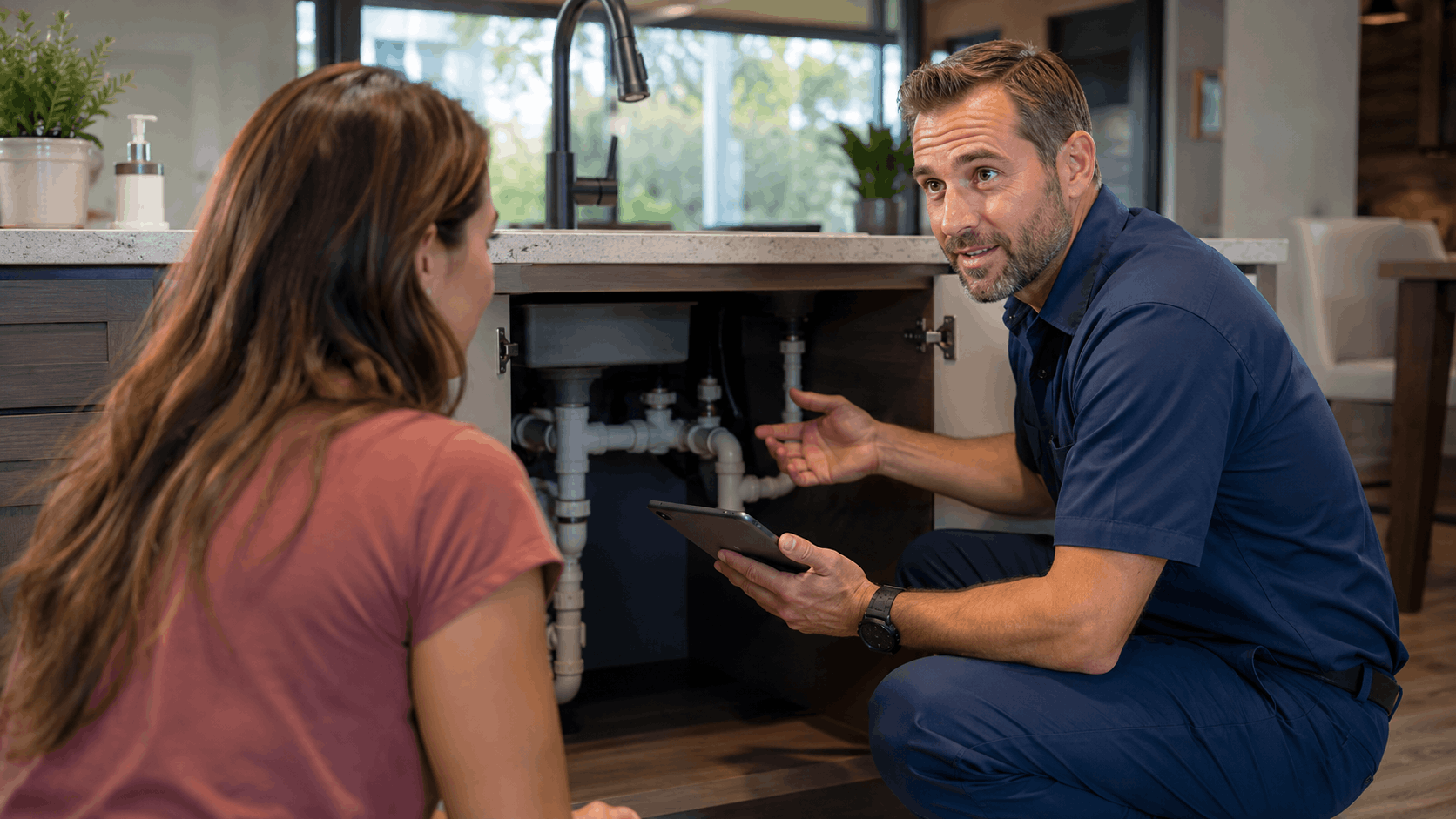
Our team treats prep as part of the job, not an afterthought. Before the inspection, we walk clients through what the inspector will look at and confirm the site is ready. That means clear access, working tests, and paperwork in hand.
We also review our own work against the checklist first. If we spot something the inspector would flag, we fix it before the visit rather than after. That is how first-time passes happen.
On most jobs across the valley, we meet the inspector on site. An inspector meeting lets us answer questions on the spot and explain material choices or layout decisions.
Whether the home is in Summerlin or Henderson, the goal is the same: no surprises when the inspector arrives.
Common Reasons a Plumbing Inspection Fails
A failed inspection is frustrating, but the causes are usually predictable. After hundreds of visits around the valley, we see the same handful of issues over and over. Knowing them helps homeowners and DIYers avoid the pain.
These are the most frequent reasons a plumbing inspection fails:
- Wrong drain slope or missing pipe supports
- Missing, undersized, or improper venting
- Water heater code issues like missing straps or bad T&P routing
- Leaks that show up during the pressure test
- Missing cleanouts or blocked access
Improper Pipe Support and Slope
Drain slope is a common fail because it is easy to get wrong. Drains generally need about a quarter inch of fall per foot so waste flows out cleanly. Too little slope and waste sits, too much and water races ahead of solids.
Pipe support is the partner problem. Without enough hangers at the right spacing, pipes sag over time and lose their slope. That turns a passing job into a future backup.
We see this most on DIY drain work where someone eyeballed the run instead of measuring. A level and proper hangers fix it, but only if they go in before the walls close.
On any job that touches drainage, correct slope and support are the first things we verify. A code violation here is avoidable with a few extra minutes of care.
Missing or Wrong Venting
Venting errors sink a lot of low-cost and DIY repairs. Every fixture needs a vent so air can enter the drain system, keeping traps from siphoning dry. Skip or misplace the vent and the inspector will catch it.
Sometimes people install an air admittance valve where a full vent is required, or use the wrong size. An air admittance valve is allowed in specific situations, but it is not a substitute everywhere. Local code sets the rules.
Bad venting shows up in daily life as gurgling drains and slow fixtures long before an inspection. When we get a call about those symptoms, venting is often the culprit.
Correcting venting after walls are closed is expensive, which is why it belongs in the rough-in stage. Getting it right early saves real money.
Water Heater Code Issues
Water heaters bring their own list of common failures. A missing water heater strap is a frequent one, since Clark County sits in a seismic zone and units must be secured against movement. Two straps, upper and lower, are the usual requirement.
The T&P valve is another. The temperature and pressure relief valve needs a discharge line routed correctly, usually down to within a few inches of the floor. Wrong routing or a capped line is an automatic fail and a safety hazard.
Expansion tanks come up too. Many closed systems need an expansion tank to handle pressure, and a missing or failed one draws a correction. This matters on both tank and tankless water heater installs.
Because these rules are specific, water heater swaps are one of the jobs we most often see fail when done without a pro. Our installs are built to pass the first time.
Leaks and Failed Pressure Tests
Any leak during testing means a failed inspection, full stop. The pressure test is pass or fail: the lines hold pressure or they do not. Even a slow drip at one fitting fails the whole system.
Leaks usually trace back to a loose joint, a bad solder, or an improperly seated fitting. On new PEX and copper work, a single missed connection is often the cause. Finding it means testing section by section.
Hidden leaks are the worst, since they can pass a quick look but fail under pressure. That is why we run our own pressure test before the inspector ever arrives. If our leak detection tools find a problem, we fix it first.
A clean pressure test is the clearest sign the repair was done right. It is the one part of the inspection that leaves no room for debate.
What Happens If Your Inspection Fails
A failed inspection is not the end of the world. It is a normal part of the process, and every issue on the list is fixable. The path from failure to sign-off is well worn and predictable.
The steps are simple: read the correction notice, make the fixes, book a re-inspection, and pass. Handled right, a failure adds days, not weeks.
Reading the Correction Notice
When a home fails, the inspector leaves a correction notice. This lists each item that did not meet code, usually tied to a specific code section. The notice tells you exactly what to fix.
Each code item on the list is a separate issue. One notice might flag a missing water heater strap, a venting problem, and a leak all at once. Reading them carefully avoids missing something on the re-check.
Some notices use shorthand or code numbers that are hard to decode without experience. That is where a local plumber helps translate the list into plain fixes.
We review the correction notice with our clients line by line. That way everyone knows what has to happen before the inspector returns.
Making the Required Fixes
Once the list is clear, the corrections get made. Simple items like adding a strap or a hanger take minutes. Bigger ones, like re-routing a vent, take more work and may reopen a wall.
Who does the repair matters for a clean re-check. A licensed plumber who understands the code fixes the flagged item and confirms nothing new was created in the process. Rushed fixes sometimes cause fresh problems.
We document each correction as we make it, matching the notice item for item. That record speeds the re-inspection and shows the inspector the work was addressed.
Getting every item right the first time avoids a second failure, which is where costs really add up.
Scheduling a Re-Inspection
After the fixes are done, a re-inspection gets booked the same way as the first visit. The request goes through the county portal, and the follow-up visit lands in the usual one to three day window.
Clark County charges a re-inspection fee in most cases. It is typically a modest amount, often in the range of $50 to $100, though it depends on the permit and job. That fee is one reason passing the first time saves money.
The follow-up visit only checks the flagged items, not the whole job again. That keeps it faster than the original inspection in most cases.
Our team handles the re-inspection scheduling so there is no lag between finishing the fixes and getting the inspector back out.
How to Avoid Repeat Failures
Passing the second time comes down to addressing every item completely. A repeat failure usually means one item on the list got missed or half-fixed. A careful review prevents that.
The single best way to pass inspection is to hire a licensed plumber who knows local code from the start. They build the repair to code, so the correction list is short or empty.
DIY jobs fail more often because homeowners do not have the code memorized. There is no shame in it, the code is dense and it changes. That is exactly why professionals exist.
When we take over a failed job, we treat the correction notice as the checklist and confirm each item before we call the inspector. That approach gets homes to a clean pass.
Need Help in Las Vegas?
Active Plumbing serves Las Vegas and all of Las Vegas Valley.
Costs and Timelines Homeowners Should Expect
Cost is the question we hear most, right after "how long will this take." Both depend on the type of repair, but there are reliable ranges for the Las Vegas area. Knowing them helps homeowners budget.
Here is a general look at permit fees, inspection costs, and timing for common jobs.
| Job Type | Typical Permit Fee | Timeline to Sign-Off |
|---|---|---|
| Water heater replacement | $50 to $150 | 2 to 5 days |
| Repipe | $150 to $400+ | 1 to 2 weeks |
| Sewer line replacement | $200 to $500+ | 1 to 2 weeks |
| Re-inspection fee | $50 to $100 | Adds a few days |
Typical Permit and Inspection Fees in Clark County
Permit fees in Clark County usually scale with the size and type of the job. A water heater permit fee often runs on the lower end, while a repipe or sewer permit sits higher. The inspection itself is typically bundled into the permit cost.
Clark County fees also include valuation-based charges on larger jobs, where the fee ties to the value of the work. Small repairs stay in the flat, low range. These numbers change over time, so confirming current rates matters.
The permit fee is separate from the labor and materials for the repair. It is the cost of the county's review and inspection, not the plumbing work.
We build permit fees into our quotes so clients see the full picture up front. No surprise line items at the end.
How Repair Type Affects Cost
Repair type is the biggest driver of overall cost. A water heater swap is a defined job with a known scope, so it prices predictably. Add the permit and inspection and the total stays manageable.
Repipe cost is higher because the job touches the whole home. More pipe, more labor, more fittings, and often a rough-in plus final inspection. The permit fee reflects that larger scope.
Sewer line work varies the most. A spot repair costs far less than a full sewer line replacement, and access matters a lot. A line under a driveway or mature landscaping costs more to reach.
We often run a sewer camera inspection first so the scope, and the price, are based on what is actually happening in the line.
Timeline From Repair to Final Sign-Off
A realistic timeline helps homeowners plan. For a water heater, day one is the install, and the final inspection often lands within two to five days once booked. Sign-off happens the day it passes.
A repipe runs longer. The rough-in gets inspected first, walls close after it passes, then the final inspection follows. From start to sign-off, a week or two is common depending on scheduling.
Sewer jobs depend on excavation and county scheduling. Once the line is in and backfilled, the inspection is quick, but getting there takes the longest stretch of the job.
Weather and county workload can shift any of these. Spring remodel season across the valley tends to add a day or two to scheduling.
Hidden Costs to Watch For
The most common hidden cost is the re-inspection fee after a failed visit. Fail twice and those fees stack, plus the labor to make each round of corrections. Passing the first time is the cheapest path.
Expedited scheduling is another. If a home sale or move-in date is looming, paying for a faster inspection window can add cost. Planning ahead usually avoids that need.
Correction expenses vary widely. A missing strap is cheap to add, but reopening a wall to fix venting is not. The size of the fix drives the cost.
We flag potential hidden costs during the quote so homeowners are not caught off guard later. Clear pricing beats a nasty surprise.

Local Factors That Affect Inspections in the Las Vegas Valley
Inspections are not the same everywhere in the valley. Neighborhood age, soil, water quality, and HOA rules all shape what an inspector sees and what repairs need. Local knowledge changes how a job goes.
Here is what we run into across different parts of the valley.
Older Homes Near Downtown and Historic Neighborhoods
Older neighborhoods near Downtown Las Vegas often hide aging plumbing. Galvanized pipe was common decades ago, and it corrodes from the inside, choking water flow and eventually leaking. Inspectors flag it when repairs expose it.
Cast iron drain lines are the other classic in these homes. Cast iron rusts and cracks over time, and a repair that ties into a failing cast iron line can fail inspection if the old pipe is too far gone.
In the John S. Park district and similar historic areas, we frequently recommend upgrading galvanized and cast iron sections during any repair. Patching new work onto failing old pipe rarely passes cleanly.
These upgrades cost more up front but prevent repeat failures and future leaks. In older homes, doing it once and doing it right is the smarter path.
Hard Water and Desert Climate Concerns
The valley has some of the hardest water in the country. Hard water from the Las Vegas Valley Water District leaves mineral scale inside pipes, fixtures, and water heaters. That scale shortens the life of new installs.
Scale buildup matters at inspection time because it can affect fixtures and heater performance. Many homeowners pair repairs with a water softener installation to protect the new work.
The desert climate adds heat stress. Outdoor lines and hose bibs bake in summer, and exposed pipe can degrade or fail. Inspectors look at outdoor connections and backflow devices closely for this reason.
We factor local water and climate into every repair recommendation. A repair built to handle valley conditions lasts longer than one that ignores them.
HOA and Newer Community Rules in Summerlin and Henderson
Planned communities add a layer on top of county rules. In Summerlin, Green Valley, and Inspirada, HOA approval may be needed for work that affects exterior appearance or shared systems. That is separate from the county permit.
An HOA might require notice for a water heater in an exterior closet or approval for trenching in a shared area. Skipping HOA approval can bring fines even if the county sign-off is clean.
We help clients in these communities figure out both tracks. County permit on one side, HOA notice on the other, so nothing gets missed.
Homes in newer Summerlin West developments tend to have current plumbing, so inspections focus on the new work rather than upgrades. The HOA step is the main extra there.
Slab Foundations and North Las Vegas Soil Conditions
Many valley homes sit on slab foundations, which changes how plumbing problems appear. A slab leak, where a supply line under the concrete fails, is common and tricky to inspect and repair.
North Las Vegas has soil that can shift, and that movement stresses buried sewer and drain lines. In areas like Aliante and Elkhorn, we watch for cracked or offset lines during camera inspections.
Soil movement can also affect slope on sewer lines over time. A line that passed years ago may have shifted, which shows up during a new repair inspection. Correcting it may mean re-grading the run.
For any slab or sewer job in North Las Vegas, we account for soil conditions in both the repair and the inspection prep. It is a local detail that outsiders miss.
Need Help in Las Vegas?
Active Plumbing serves Las Vegas and all of Las Vegas Valley.
How Active Plumbing Helps Homeowners Pass the First Time
The best inspection is the one that passes on the first try. That comes from doing the work to code and preparing for the visit, not from luck. Our team is built around getting homes to a clean sign-off.
Here is how we help homeowners across the valley:
- Pull permits and manage the paperwork end to end
- Perform code-compliant repairs from Summerlin to Henderson
- Meet the inspector on site and answer questions
- Turn corrections around fast when they come up
Pulling Permits and Handling Paperwork
We pull the permit so clients do not have to guess what is required. That means filing the right permit for the job, paying the fees, and keeping the number on file. Homeowners skip the confusing part.
Managing the paperwork also means tracking the permit status and scheduling inspections at the right stage. We know when a rough-in is needed versus a final only.
Because we file dozens of these, we know how the county wants things submitted. That cuts down on rejected requests and delays.
When the job is done, we confirm the permit is closed and the sign-off is recorded. The paper trail protects the homeowner for years.
Code-Compliant Repairs Across the Valley
Every repair we make is built to meet the adopted plumbing code. Correct materials, proper slope, right venting, and clean connections are the baseline, not the upgrade. Code compliant work is simply how we operate.
We do these repairs everywhere in the valley, from Las Vegas to Enterprise and Spring Valley. The code is the same, but local conditions vary, and we adjust for them.
Building to code from the start is what makes a first-time pass possible. There is no shortcut that beats doing the work right.
Whether it is a pipe and fixture repair or a full system, the standard does not change. Code compliance is the floor for every job.
Meeting the Inspector and Answering Questions
We show up for inspections. Having a plumber on site means questions get answered right then, not through a game of phone tag later. Inspection support like this speeds up the visit.
When an inspector has a question about a material choice or a layout, we explain the reasoning on the spot. That often resolves a concern that might otherwise become a correction.
Being present also lets us catch small issues before they are written up. Sometimes a quick adjustment during the visit keeps the job passing.
The inspector appreciates working with someone who knows the code and the home. It makes the whole process smoother for everyone.
Fast Turnaround on Corrections
When a correction does come up, speed matters. We turn corrections around fast so a small delay does not become a big one. That keeps home sales, move-ins, and repairs on schedule.
Because we already know the job, fixing a flagged item is quick. We are not learning the layout from scratch, so the correction and re-inspection happen without a long gap.
Fast service on corrections is where our local presence pays off. A crew based in the valley can get back out quickly, unlike a distant contractor.
Our goal is always the clean first pass, but when life happens, we make the fix and get the sign-off without dragging it out.
Final Thoughts
A Clark County plumbing inspection is the checkpoint that turns finished repairs into approved, documented work. It protects safety, keeps the home in line with code, and preserves value for a future sale.
The process is predictable: schedule the visit, pass the rough-in and final checks, and get the sign-off. Most failures come from a few avoidable issues like slope, venting, and water heater code items. Prep and code-compliant work handle the rest.
If you just finished repairs anywhere in the valley and need to pass inspection, our team is ready to help. Contact Active Plumbing to schedule a consultation, and let a local crew that knows Clark County code get your home to a clean sign-off the first time.
Frequently Asked Questions
- Do I need a permit for a simple plumbing repair in Clark County?
- Not always. A simple repair like swapping a faucet, fixing a trap, or replacing a toilet wax ring usually does not need a permit. Larger work does, including repipes, water heater swaps, sewer line jobs, and gas line changes. When a repair touches a permitted system, a permit and inspection are required. If you are unsure, our team confirms the requirement before any work starts.
- How soon can I get a plumbing inspection scheduled?
- In the Las Vegas area, most inspections book within one to three business days once the permit is active and fees are paid. Busy seasons, like spring remodel time across Summerlin and Henderson, can push the wait a bit longer. Requests go through the Clark County building portal. We handle the scheduling so it lands on the right day and stage of your job, whether that is a rough-in or a final.
- How much does a plumbing inspection cost in Clark County?
- The inspection is usually bundled into the permit fee rather than billed separately. Permit fees range from around $50 to $150 for a water heater and $150 to $400 or more for a repipe or sewer job. Larger projects may add valuation-based charges. A re-inspection after a failure typically costs $50 to $100. We include permit and inspection fees in our quotes so the full cost is clear up front.
- What happens if my plumbing inspection fails?
- The inspector leaves a correction notice listing each item that did not meet code. You or your plumber make the required fixes, then book a re-inspection through the county. The follow-up visit only checks the flagged items, so it goes quickly. A modest re-inspection fee usually applies. Failures are normal and fixable, and hiring a licensed plumber to handle the corrections is the fastest way to a clean pass.
- Can I do the repairs myself and still pass inspection?
- Clark County allows homeowner permits for work on a home you own and occupy, so DIY is possible in some cases. The catch is the work still has to meet the full plumbing code, and DIY jobs fail more often on slope, venting, and water heater rules. If you are not confident in the code, a licensed plumber saves time and re-inspection fees. We often get called in after a DIY job fails.
- How long is a plumbing permit valid?
- A Clark County plumbing permit generally stays valid for a set period, often around 180 days, as long as work and inspections keep progressing. Permits can expire if the job stalls with no inspections requested. Extensions are usually available if you apply before it lapses. Letting a permit expire can mean re-filing and paying again. We track permit validity on our jobs so nothing quietly expires before the final sign-off.
- Does a water heater replacement need an inspection?
- Yes, in most cases. A water heater replacement involves gas or electrical connections, venting, seismic strapping, and a T&P relief valve, all of which the code regulates. Clark County sits in a seismic zone, so proper strapping is required. A permit and inspection confirm the swap is safe and correct. Missing straps and wrong T&P routing are common failures on DIY installs, which is why professional installation matters here.
- Will an inspection affect selling my home?
- It can, in a good way or a bad way. Permitted work with a clean sign-off is a selling point, since buyers and lenders see the repairs were done right. Unpermitted or failed work is the problem. A buyer's inspector or the title company may flag it, which can delay or derail the home sale until it is corrected and approved. Handling permits and inspections properly protects the deal.
- Do HOA communities have extra inspection requirements?
- Often yes, on top of the county process. Planned communities like Summerlin, Green Valley, and Inspirada may require HOA approval for work affecting exterior appearance or shared systems. That is separate from the Clark County permit and inspection. Skipping HOA requirements can bring fines even with a clean county sign-off. We help clients in these communities handle both the county permit and the HOA notice so nothing gets missed.
- What should I have ready when the inspector arrives?
- Keep the work areas open and accessible, including walls, crawl spaces, attic hatches, and shutoff valves. Have the permit number and repair details ready, along with any equipment specs for a water heater. Make sure water and gas are on so tests can run, and secure any pets. If a rough-in already passed, keep that record handy. Good preparation is the difference between a smooth visit and a wasted trip.
A
Licensed plumbing professionals serving Las Vegas and Las Vegas Valley.
Licensed in Nevada · License #0047021
Last updated on
Why trust Active Plumbing?
Founded in 1991, Active Plumbing is a licensed and insured plumber serving Las Vegas and Las Vegas Valley. All content is reviewed by our licensed technicians.

Need Help in Las Vegas?
Active Plumbing serves Las Vegas and all of Las Vegas Valley.
Related Articles
How-To Guides
Clark County Plumbing Permit Requirements: Which Repairs Need One
A clear guide to Clark County plumbing permit requirements, covering which repairs need a permit, which do not, gray areas, and how the local process works.
How-To Guides
Clark County Water Heater Permit Requirements: What Inspectors Flag in Garage Installs
Clark County requires a permit for garage water heater installs. Learn the rules, the top inspector flags, and how to pass the first time in Las Vegas.
How-To Guides
Garage Water Heater Code in Clark County: 18-Inch Stands, Drain Pans, and Seismic Straps
Clark County garage water heaters need 18-inch stands, drain pans, and seismic straps. Learn the code rules, permit process, and how Active Plumbing keeps Las Vegas installs compliant.