Seasonal
Monsoon Season Sewer Backups in Las Vegas: Why August Floods Drains and What to Do First
Key Takeaways
- Monsoon rains from July to September dump water faster than the valley's hard desert soil and drainage system can absorb, driving August sewer backups.
- Rain overloads the shared public sewer and seeps into cracked laterals, forcing waste back up through the lowest drains in your home first.
- Early warning signs include gurgling toilets, several slow drains at once, sewage odors, and one fixture backing up when you use another.
- The first steps in a backup are to stop all water use, keep people and pets away from the contaminated water, cut power safely, and call for help.
- Older homes near downtown, low spots in Summerlin and Spring Valley, and slope areas in Henderson see the most repeat storm backups.
- A backwater valve, a pre-season line cleaning, proper yard grading, and root removal are the most effective ways to prevent backups.
- Sewage water is a health hazard, so cleanup needs proper gear or a restoration crew, plus fast drying to stop mold even in the desert.
- Many homeowners policies exclude sewer backups without a rider, so check coverage early and document everything for your insurance claim.
In This Article
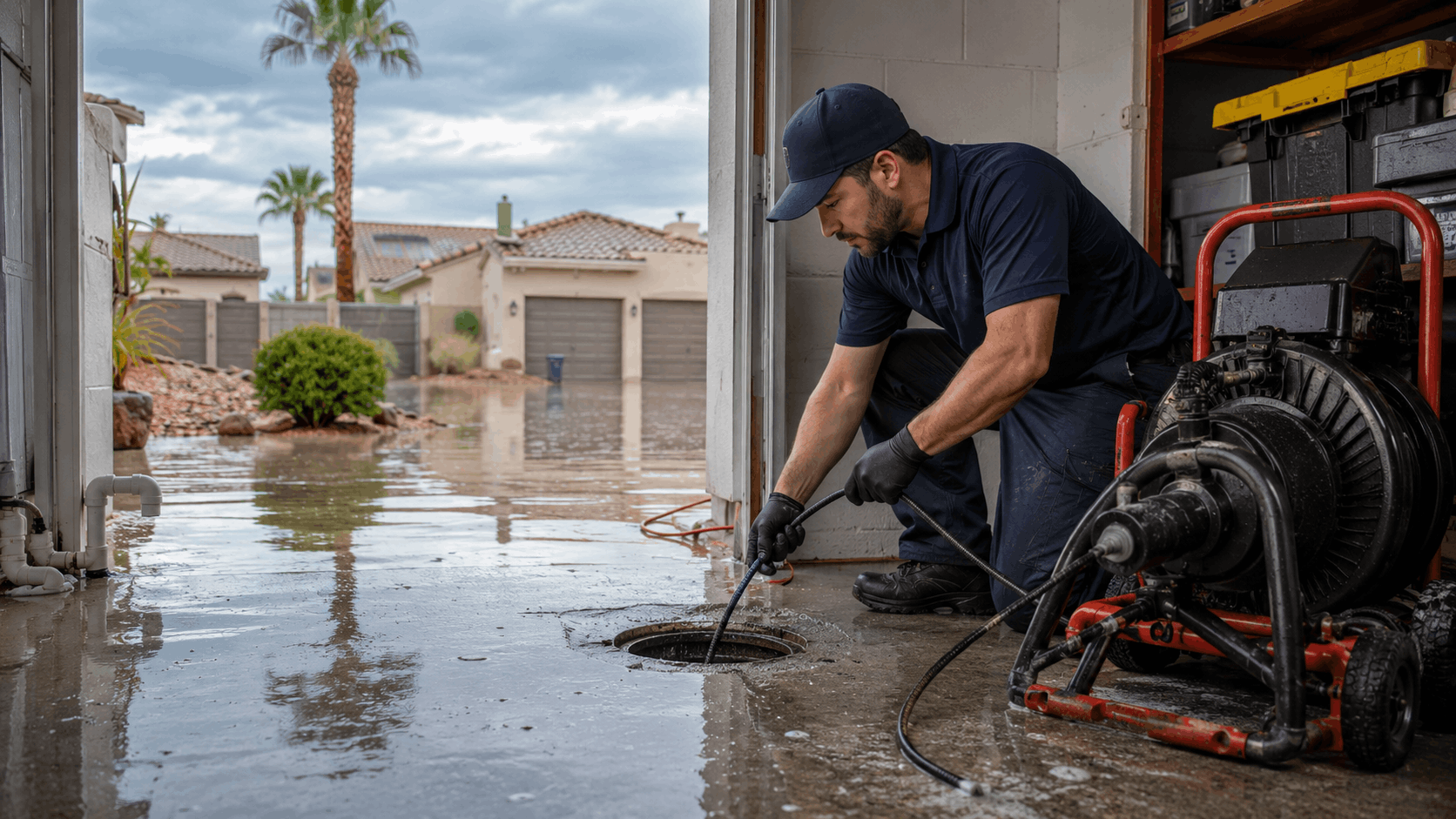
It was a Tuesday afternoon in August when a family off Town Center Drive in Summerlin heard a strange gurgle from their laundry room. Minutes later, dark water started bubbling up through the floor drain while a monsoon storm hammered the roof outside. By the time they called us, the water had spread across the tile and into the hallway carpet.
Scenes like this play out across the valley every summer. When the sky opens up in July, August, and September, our phones light up with homeowners describing water coming up where it should be going down. The rain outside and the mess inside are connected, and most people do not realize it until it happens to them.
Why August Storms Hit Las Vegas Drains So Hard
Most of the year, the desert stays bone dry. Then summer arrives and everything changes fast. During monsoon season, a single afternoon can dump more rain than the valley normally sees in months.
The problem is not just the amount of water. It is how fast it falls and how little the ground can handle. Here are the main forces working against your drains:
- Short, intense downpours that arrive with little warning
- Hard desert soil that pushes water into streets and drains
- Washes and channels that can fill faster than they empty
- Older sewer lines that were never built for this much flow
How the North American Monsoon Works Here
The North American monsoon is a seasonal shift in wind that pulls moisture up from Mexico and the Gulf of California. Between early July and late September, that moisture pushes into Southern Nevada and stacks up during the hot afternoons. When it collapses, you get the sudden summer rain that defines August in the valley.
These storms are not the slow, steady rain other regions see. They build in an hour and drop an inch or more in minutes over a small area. One neighborhood near Sahara Avenue can flood while a home five miles away stays completely dry.
That speed is what catches people off guard. A clear morning turns into a wall of water by three in the afternoon. The drainage system has almost no time to catch up, and neither do homeowners who are away at work when it hits.
Because the monsoon season repeats every year, the smart move is to prepare in June before the pattern sets in. We spend late spring inspecting lines for exactly this reason.
Desert Ground That Cannot Soak Up Water
In wetter climates, soil acts like a sponge and absorbs a good share of rainfall. Here, the desert soil does the opposite. Years of sun bake the ground into a hard crust that sheds water almost like pavement.
Add in all the concrete, asphalt, and rooftops across the valley, and there is very little open ground left to absorb anything. Rain that lands on a driveway in Spring Valley has nowhere to go but the gutter and the storm drain. This is how stormwater runoff builds so quickly during a monsoon burst.
All that fast-moving water carries mud, gravel, and debris along with it. Some of that grit finds its way into drainage systems and sewer lines, packing them tight. We pull out storm-packed mud and rock from residential lines every single summer.
The desert looks empty, but it moves water like a funnel. Understanding that is the first step to seeing why indoor backups follow outdoor storms.
Washes and Flood Channels Near Neighborhoods
The Las Vegas Valley relies on a network of washes and flood control channels to carry runoff away from homes. The Las Vegas Wash and Flamingo Wash are two of the biggest, moving stormwater across the valley toward Lake Mead. Detention basins hold water back so channels do not overflow all at once.
These systems work well most of the time, but a strong monsoon storm can push them to their limits. Areas near the eastside and parts of Henderson sit close to these channels and feel the pressure first. When a channel runs high, water backs up into the smaller drains that feed it.
The Regional Flood Control District has spent decades building this infrastructure, and it saves lives. You can read more about local flood safety through the National Weather Service Las Vegas office. Still, no channel system can absorb every drop from a record burst.
When the public system is full, the water has to go somewhere. Often that somewhere is the sanitary sewer, and that is where home backups begin.
Aging Sewer Lines That Struggle Under Pressure
Plenty of homes in the older parts of the valley sit on sewer mains that were installed decades ago. These aging pipes were sized for the neighborhoods of their time, not the growth and storm loads of today. When rain adds extra water to the system, the sewer main can reach capacity fast.
Clay and older concrete pipes crack and shift over the years. Small gaps let groundwater seep in, and roots find their way through the cracks. All of this shrinks the pipe's ability to carry waste during a storm surge.
We see this most in established areas near downtown and along Charleston Boulevard. The homes are solid, but the lines underneath them are tired. A storm that a newer neighborhood shrugs off can flood an older one.
Our drain and sewer services team knows these older systems well. Knowing the age of the pipe under your yard helps predict how it will handle the next big storm.
Get Your Quote
Tell us what's going on and we'll get back to you fast.
How a Monsoon Storm Turns Into a Sewer Backup
There is a clear chain of events between a downpour outside and sewage on your bathroom floor. Once you see how it links together, the whole problem makes more sense.
Here is the short version of how storm water ends up coming back up through your drains:
- Rain overloads the shared public sewer
- Storm water leaks into cracked lines underground
- The lowest drains in your home fill first
- Bad yard grading pushes even more water toward your pipes
When the Public Sewer System Fills Up
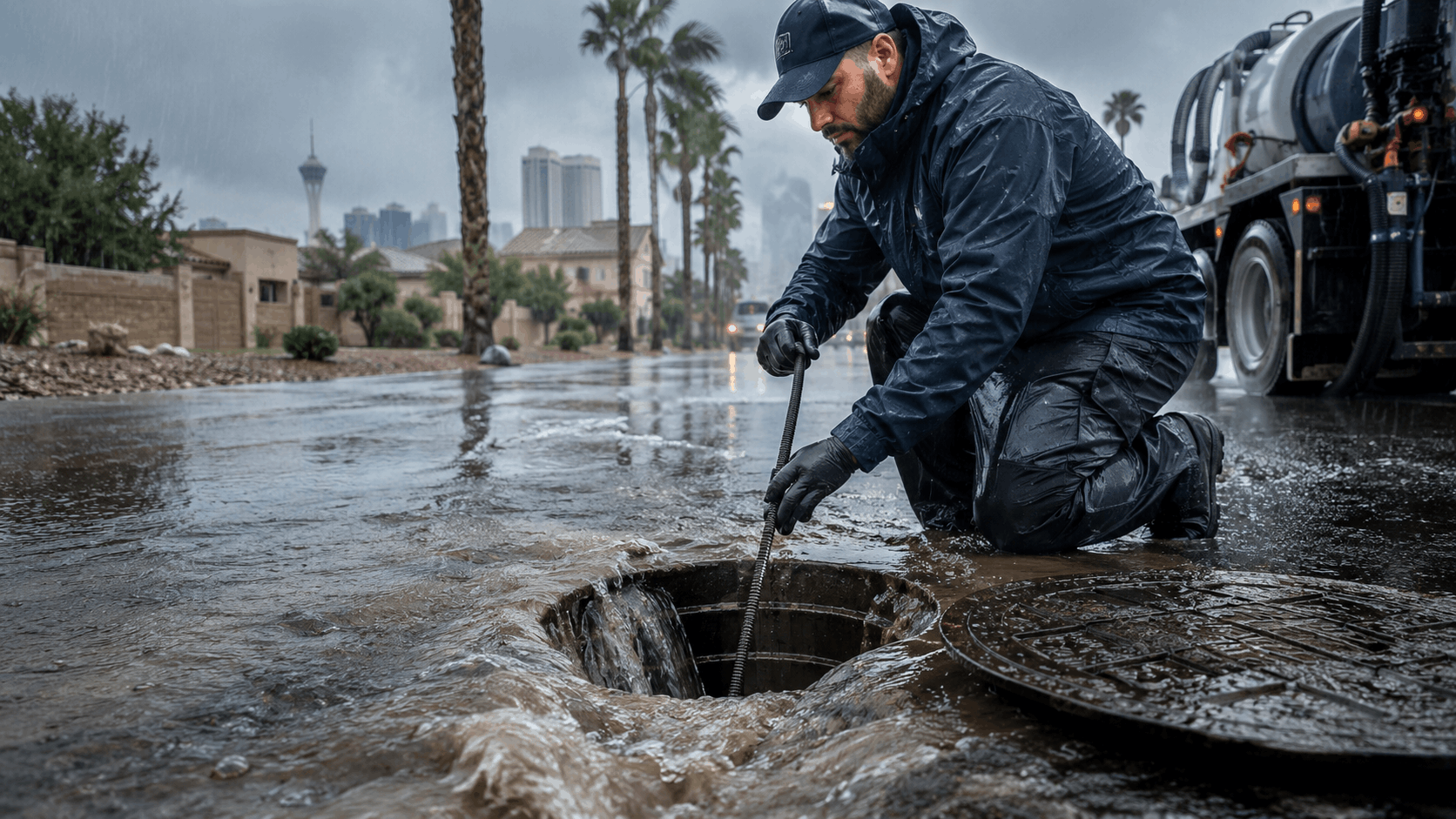
The sanitary sewer is built to carry waste water from homes, not rain. But during heavy storms, rainwater sneaks in through manhole covers, cracked mains, and old connections. Plumbers call this inflow and infiltration, and it can flood the system in minutes.
When the shared main serving a whole neighborhood fills up, waste has nowhere to flow. The pipe backs up under pressure, working its way toward the lowest open point. In many homes, that point is a floor drain or a ground-floor fixture.
This is why a backup during a storm is often not really your fault. The blockage may sit out in the public main, blocks away from your property. Your home just happens to be the release valve for a system that is over capacity.
The frustrating part is that you can do everything right inside your home and still see sewage come up. That is why prevention has to include the connection between your line and the street.
Cracked Lines That Let Storm Water In
Every home connects to the public main through a sewer lateral, the private line running from the house to the street. Over time, that lateral develops pipe cracks from ground shift, age, and tree roots. During a storm, groundwater pours in through those cracks.
Roots make it worse. They chase the moisture and nutrients inside a sewer line, then grow into thick masses that snag waste and slow flow. A line that drains fine in dry weather can choke the moment storm water adds volume.
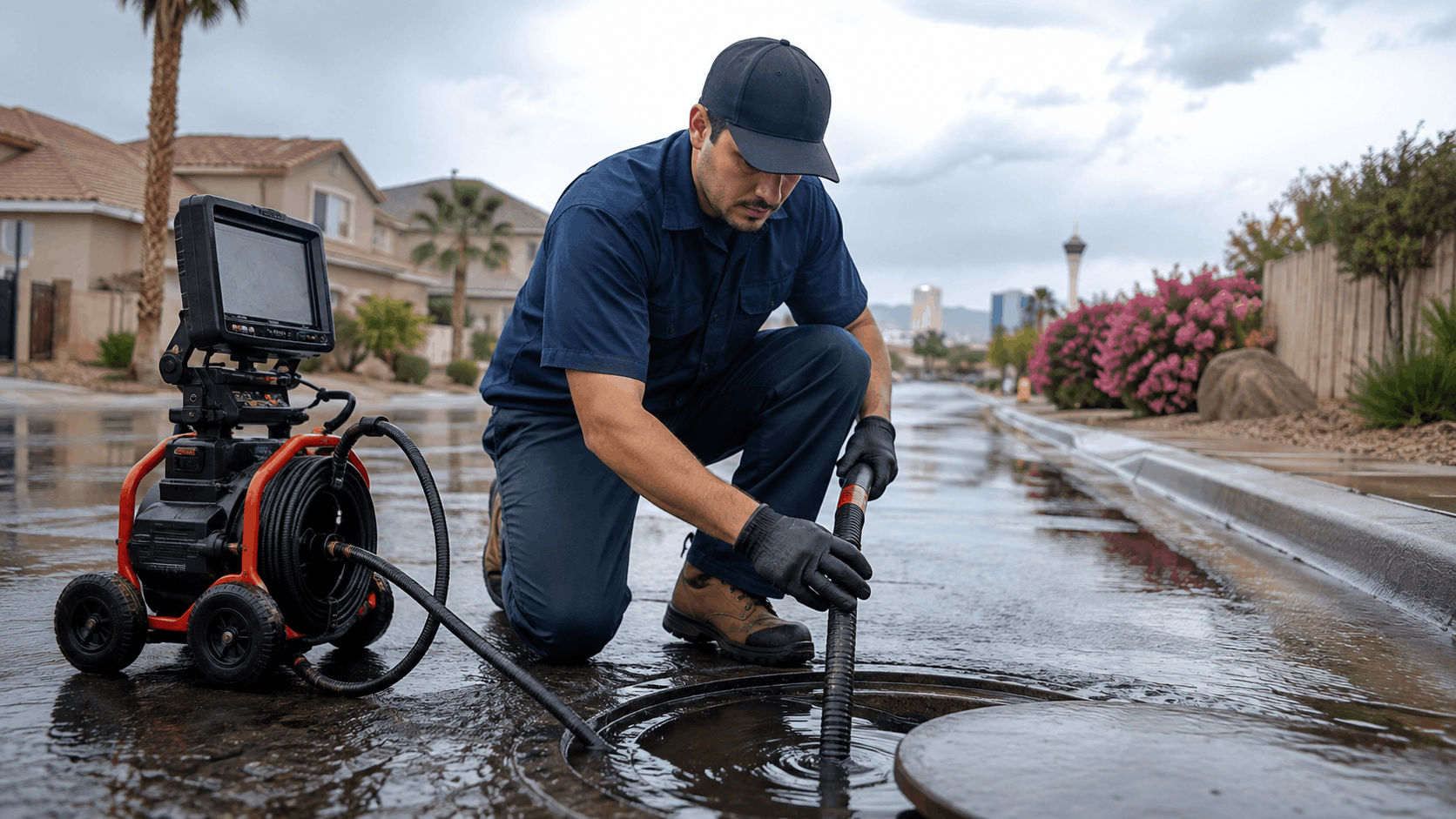
We find these problems with a camera every week, especially in yards with mature trees. The image shows the exact crack or root ball causing trouble. From there we know whether to clear it or repair the pipe.
A cracked lateral is a slow leak turning into a fast flood the day a monsoon hits. Catching it early is far cheaper than cleaning up after a backup.
Low-Lying Fixtures Get Hit First
Water follows gravity, and sewage under pressure looks for the lowest way out. That means your lowest fixture takes the first hit. Basement drains, ground-floor showers, and floor drains in laundry rooms and garages flood before anything upstairs.
Most valley homes do not have basements, so the usual first victims are floor drains and walk-in showers on the ground level. Homeowners often hear a gurgle there before they see water. By the time it reaches the surface, the line below is already full.
If you notice a single low drain acting strange during a storm, treat it as an early warning. That fixture is the canary for the whole system. Acting fast can be the difference between a small mess and a flooded room.
Knowing which drain sits lowest in your home helps you keep an eye on it when the rain starts. We point this out during routine service so families know where to look.
Yard Grading and Downspouts That Make It Worse
The land around your home should slope away from the foundation. When yard grading is off, rain pools against the house and soaks the ground right where your sewer lateral runs. That saturated soil feeds water straight into any cracks in the pipe.
Downspouts cause the same trouble when they dump water at the base of the wall. Instead of carrying roof runoff away, they concentrate it near the foundation and the drain lines below. A single storm can push hundreds of gallons into one small area.
We often see this on older homes where the original grading has settled over the years. A quick look after a rain tells the story, since puddles gather in the low spots. Fixing the slope and extending downspouts is cheap insurance.
These outdoor issues rarely get blamed for indoor backups, but they play a big part. Managing where roof and yard water goes takes real load off your sewer line.
Need Help in Las Vegas?
Active Plumbing serves Las Vegas and all of Las Vegas Valley.
Warning Signs a Backup Is Starting
A sewer backup rarely happens with no warning. The system usually gives off clues in the hours or days before raw sewage reaches the floor. Learning to read these backup warning signs buys you time to act.
Watch and listen for these early clues, especially when storms are in the forecast:
- Gurgling sounds from toilets and drains
- Several slow drains at the same time
- A sewage smell inside or in the yard
- One fixture backing up when you use another
Gurgling Toilets and Drains
That bubbling, gurgling noise from a toilet or drain is air trapped in the line. It means water is fighting to get past a partial blockage or a full pipe downstream. Healthy drains move quietly, so a gurgling toilet is worth taking seriously.
During a storm, this sound often shows up first in the lowest bathroom. You flush and hear a glug from the shower drain, or the toilet bowl bubbles on its own. Both point to a line that is losing its ability to breathe.
Do not ignore the drain noise just because everything still empties. The gurgle is stage one, and the backup is stage two. The gap between them can be short during heavy rain.
If you hear it, stop heavy water use and keep watching. That noise is your best free warning system.
Multiple Drains Slowing at Once
A single slow sink usually means a clog in that one fixture. But when several drains slow down together, the trouble sits deeper. Multiple slow drains at the same time often point to a main line clog rather than a local problem.
Think about which fixtures are acting up. If the kitchen sink, a bathroom tub, and a floor drain all drag at once, the shared line serving them is restricted. During monsoon season, storm water is often the reason.
This pattern matters because clearing one fixture will not fix a main line issue. Snaking a single sink does nothing if the blockage is out toward the street. That is when a camera earns its keep.
When you notice the whole house draining slow, call before it turns into a flood. Catching a main line problem early keeps the water where it belongs.
Sewage Smell in the House or Yard
A rotten, sulfur-like sewage smell is never normal. Indoors, it often means sewer gas is escaping past a dry trap or a backed-up line. Outdoors, a strong odor near a cleanout can mean waste is pooling below the surface.
During and after storms, that smell can grow stronger as the line fills. If you catch a whiff near a floor drain or in a low bathroom, the system is under stress. The smell tends to arrive before visible water.
Sewer gas is more than unpleasant. It can carry methane and other gases that are unhealthy to breathe in an enclosed space. Open windows and get fresh air moving if the odor is strong.
A persistent sewage smell paired with any storm activity is a clear reason to call for help. Trust your nose here.
Water Backing Up When You Use Another Fixture
One of the strongest signs of a blocked main is cross-fixture backup. You flush the toilet and the tub fills with dirty water, or you run the washer and the shower drain gurgles up. Water is being forced sideways because it cannot move forward.
This happens because all your drains share one main line to the street. When that main is blocked, waste from a high fixture backs up into a lower one. The toilet and tub relationship is the classic example.
If you see this, stop using water right away. Every flush or drain cycle adds more volume to a line that already cannot cope. Continuing will almost certainly push sewage onto the floor.
Cross-fixture backup means the blockage is downstream and needs professional clearing. This is the point to call our emergency plumbing team before the mess spreads.
What to Do First When a Drain Backs Up
The first few minutes of a backup decide how bad the damage gets. A calm, clear plan protects your family and limits the cleanup. Here are the sewer backup steps our team walks callers through while help is on the way.
Stop Using Water Right Away
The single most useful thing you can do is stop water use everywhere in the home. That means no flushing, no dishwasher, no laundry, and no running faucets. Every drop you send down adds to the backup and pushes more waste into the room.
Tell everyone in the house at once. Kids and guests may not realize a flush upstairs makes the mess downstairs worse. A quick shout to hold off on water can prevent a lot of damage.
If the backup is severe, locate your main water shutoff and turn it off. It is usually near the front of the house or at the meter by the street. Shutting it off removes any chance of accidental water use.
Getting the water flow stopped is step one for a reason. It freezes the situation so you can handle everything else safely.
Keep People and Pets Away From the Water
Backup water is not clean rainwater. It is a sewage hazard carrying bacteria, viruses, and other contamination that can make people and pets sick. Treat any water that comes up a drain as unsafe to touch.
Block off the flooded area so no one walks through it. Close doors, use towels as barriers, and keep pets in another room. Children are drawn to water, so watch them closely.
Do not try to wade in and save items unless it is truly safe to do so. If you must enter, wear rubber boots and gloves and wash thoroughly afterward. The Centers for Disease Control offers solid guidance on safe flood and sewage cleanup.
Keeping bodies out of the water protects health while you wait for a plumber. Belongings can be cleaned or replaced later.
Shut Off Power to Affected Rooms
Water and electricity are a dangerous mix. If backup water is near outlets, cords, or appliances, cut the power to those rooms to avoid shock. Electrical safety comes before saving carpet or furniture.
Use your breaker panel to shut off the circuits for the flooded area if you can reach it without standing in water. Never touch a breaker or outlet while your feet are wet. If the panel itself is in the flooded zone, stay out.
When you cannot safely reach the power, leave it alone and call a professional. Flooded outlets are not worth the risk of electrocution. Our team and the power company can handle it safely.
When in doubt, keep your distance and wait. No possession is worth a serious injury.
Call a Local Plumber and Document Everything
Once people are safe and water use is stopped, call for help. As an emergency plumber in Las Vegas, our team responds to backup calls across the valley during monsoon storms. We come prepared to find the blockage and get the line flowing.
While you wait, document everything with photos and short videos. Capture the water, the affected rooms, and any damaged belongings before cleanup starts. These records make a real difference for insurance documentation later.
Write down the time the backup started and what you noticed first. Note whether it was tied to a storm and which fixtures were involved. Details like these help both the plumber and your insurer.
You can reach us any time through our contact page. The faster we know, the faster we can stop the damage.
How Active Plumbing Finds and Clears the Problem
Not every backup has the same cause, so we do not guess. Our process moves from diagnosis to the right fix for your specific line. Here is how we track down the trouble and clear it:
- Camera inspection to see inside the pipe
- Hydro jetting for heavy storm blockages
- Cabling for smaller, simple clogs
- Locating the cleanout on older homes
Camera Inspection of the Sewer Line
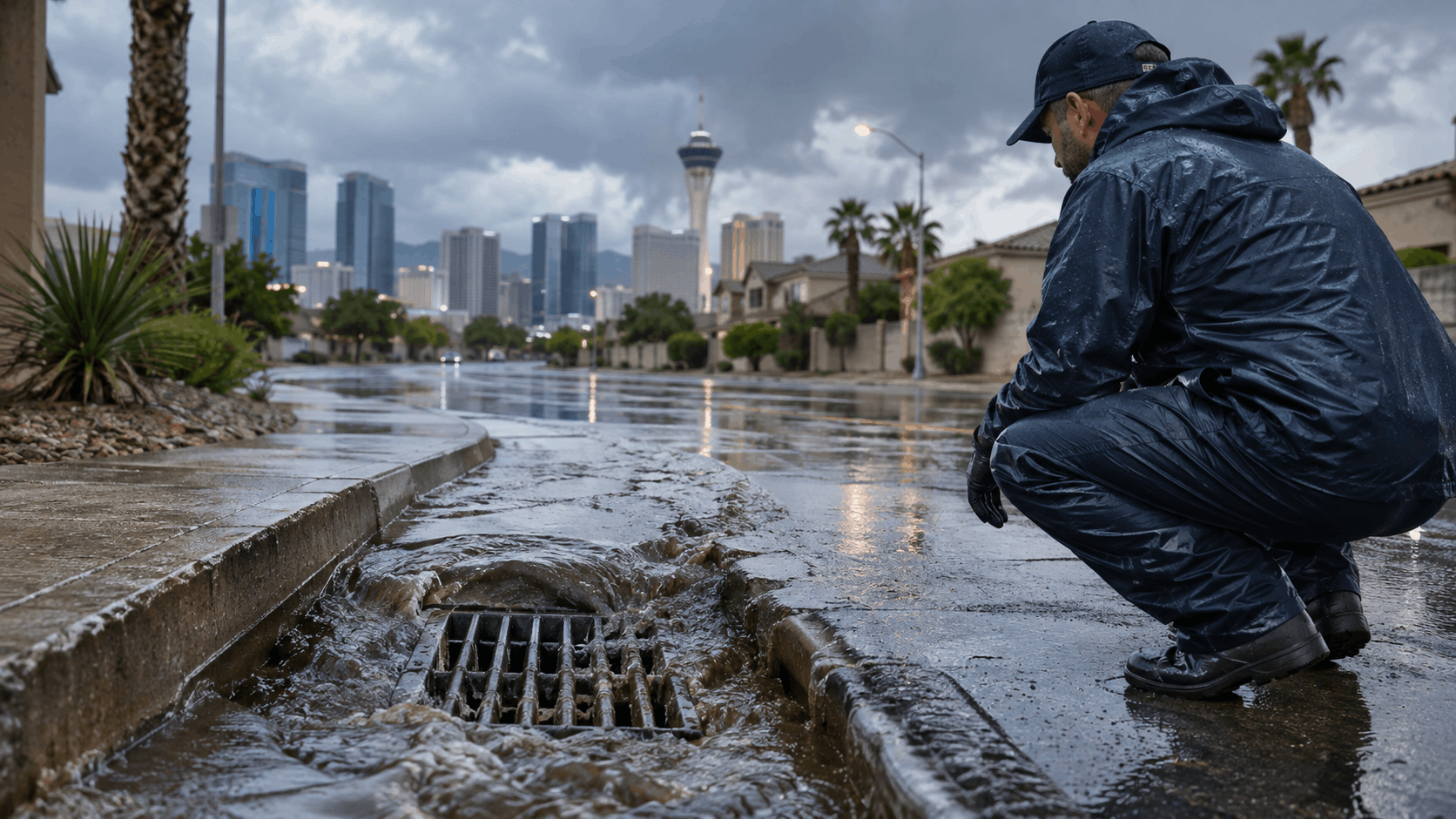
We start most backup calls with a sewer camera. A waterproof video camera on a flexible cable feeds into the line and shows exactly what is happening underground. There is no digging and no guesswork.
The line inspection reveals whether the trouble is a clog, a root mass, a crack, or a collapsed pipe. We can measure how far down the line the problem sits and mark the spot from the surface. That saves time and keeps repairs precise.
For storm backups, the camera often shows mud, gravel, or roots packed into the pipe. Seeing it live means we pick the right tool the first time. You can learn more about our sewer camera inspection service and what it finds.
A camera turns a mystery into a clear plan. That is why we lean on it before doing anything more invasive.
Hydro Jetting to Clear Heavy Blockages
When a storm packs a line with roots, grease, and mud, a snake alone will not cut it. Hydro jetting blasts the inside of the pipe with high-pressure water, scouring the walls clean. It clears a drain blockage that mechanical tools only poke through.
The pressure can reach several thousand PSI, enough to slice through root masses and flush out compacted grit. Unlike a snake, it cleans the full diameter of the pipe. That leaves the line closer to its original flow.
We use hydro jetting most on lines with recurring problems or heavy storm debris. It is a thorough reset for a struggling sewer line. See how our hydro jetting and rooter service handles the toughest clogs.
For post-storm cleaning, jetting often gives the longest-lasting result. It removes the buildup rather than just punching a hole through it.
Cabling and Snaking for Simple Clogs
Not every backup needs the heavy artillery. For a smaller obstruction, a drain snake or cabling machine is the right call. The cable feeds into the line and its cutting head breaks up or pulls back the clog.
Cabling works well for a single blocked fixture or a soft clog close to the house. It is fast, affordable, and gets many drains flowing again in one visit. We often use it when the camera shows a simple problem.
The trade-off is that snaking clears a path but does not scrub the pipe walls. For grease or roots, the clog can return sooner than it would after jetting. We recommend the method that fits your specific line.
Matching the tool to the problem keeps your cost fair and your fix lasting. We explain which route makes sense before we start.
Locating the Cleanout in Older Homes
A sewer cleanout is the access point that lets us service the line without going through your fixtures. Newer homes almost always have one. Older properties, including many near downtown and in the historic John S. Park area, sometimes do not.
When there is no cleanout, we locate the best access and often recommend adding one. A proper cleanout makes every future service faster and cleaner. It is a small investment that pays off in older homes with aging lines.
Finding a buried or hidden cleanout takes experience with how homes in these neighborhoods were built. We know where the older builders tended to place them. That local knowledge saves digging and time.
If your home is decades old and you have never seen a cleanout, ask us to find or install one. It changes how easily your line can be maintained.
Need Help in Las Vegas?
Active Plumbing serves Las Vegas and all of Las Vegas Valley.
Neighborhoods That See the Most Storm Backups
After years of storm calls, patterns emerge. Certain flood-prone areas across the valley call us again and again during monsoon season. Knowing your neighborhood's tendencies helps you prepare.
| Area | Main Risk | Common Issue |
|---|---|---|
| Downtown / Eastside | Aging sewer mains | Overloaded old lines |
| Summerlin / Spring Valley | Low graded spots | Runoff pooling |
| Henderson / Green Valley | Slope runoff | Fast-loading drains |
| Northwest / Southwest | Rapid new growth | Changed runoff paths |
Older Homes Near Downtown and the Eastside
The homes around Huntridge and along Charleston Boulevard have real character, but their sewer lines show their age. Many were laid with clay or old concrete pipe that has cracked and shifted over the decades. When heavy rain hits, these lines fill and back up fast.
Roots are a constant companion in downtown Las Vegas yards with mature trees. They invade the old joints and set the stage for a storm backup. We clear these lines every summer and know their weak points.
If you own an older home in these areas, a pre-season inspection is money well spent. Our Arts District emergency plumbing crew covers the historic core and knows these systems. Catching a weak line before August beats cleaning up after.
Age is not a dealbreaker, it just means the line needs attention. A little maintenance keeps a charming old home dry.
Low Spots in Summerlin and Spring Valley
Summerlin and Spring Valley are newer overall, but grading still creates low spots where runoff collects. Certain streets turn into shallow rivers within minutes of a hard storm. That water finds the nearest drains and loads them quickly.
Homes at the bottom of a graded slope feel it most. Water rolls downhill from higher lots and gathers where it has nowhere else to go. A blocked yard drain in these spots turns into a backup fast.
We respond across both communities and know the trouble streets. Residents can reach our Summerlin West emergency plumbers when storms roll through. For the west side, our Spring Valley West Sahara team is close by.
Knowing whether your lot sits in a low spot changes how you prepare. If it does, keeping your drains clear matters even more.
Henderson and Green Valley Slope Runoff
Henderson sits on higher ground in places, and that shape sends water rushing downhill during storms. Near Green Valley Parkway, runoff from higher slopes loads the local drains in a hurry. The volume can overwhelm a line that handles daily use just fine.
Neighborhoods below the slopes catch the runoff from everything above them. That concentrated flow is a recipe for storm backups when a main is already tight. We see repeat calls in these pockets every monsoon season.
Our team serves Henderson and the surrounding communities across the valley. From Whitney Ranch to Lake Las Vegas, we know how slope runoff behaves here. That knowledge speeds up every call.
If your home sits below a rise, watch your lowest drain when storms build. Slope runoff moves fast and gives little warning.
Newer Builds in the Northwest and Southwest
The valley keeps growing, and areas like Centennial Hills and Mountain's Edge have exploded with new homes. All that construction changed how water moves across the land. Ground that once absorbed some rain is now rooftops and streets.
New drainage systems help, but rapid growth can outpace them in a heavy storm. More paved surface means more stormwater runoff funneling into the same channels. Newer homes are not immune to backups just because the pipes are fresh.
We cover these growing communities, including the Mountain's Edge area in Enterprise. Newer lines can still clog with construction debris or storm grit. A quick camera check confirms the line is clear before storm season.
Living in a new build is no reason to skip prevention. The runoff patterns around you may still send trouble your way.

How to Protect Your Home Before the Next Storm
The best time to deal with a monsoon backup is before it happens. A few smart moves in the spring keep the water where it belongs all summer. Backup prevention mixes simple DIY steps with a couple of pro services.
Install a Backwater Valve
A backwater valve is a one-way gate installed in your sewer line. It lets waste flow out toward the street but slams shut if water tries to flow back in. During a storm surge, that check valve blocks sewage from entering your home.
This device is one of the best defenses against storm backups. Even if the public main overloads, the valve stops the flow at your property line. Homes that flooded before often stay dry after one is installed.
Installation involves cutting into the sewer line and setting the valve in an accessible spot. It needs occasional cleaning to keep working, which we can handle during routine visits. For homes in known flood-prone areas, it is worth every dollar.
Ask us whether a backwater valve fits your home and line layout. It is often the single most effective upgrade for repeat backup properties.
Schedule a Pre-Season Line Cleaning
Roots and buildup grow slowly all year, then a storm exposes the weakness. A pre-season camera check and line cleaning clears that trouble before it matters. We recommend booking preventive maintenance in late spring, before July.
During the visit, we run a camera to spot roots, cracks, or grease. If we find buildup, a cleaning or jetting resets the line to good flow. You head into monsoon season knowing your pipe is clear.
This one appointment prevents a huge share of the emergency calls we get. It costs a fraction of a flooded room and cleanup. Regular line cleaning is the cheapest insurance a homeowner can buy.
Think of it like a checkup for your sewer. A short visit in June saves a nightmare in August.
Fix Grading and Redirect Downspouts
Walk your yard after a rain and look for puddles against the house. Those spots show where yard grading is sending water toward your foundation instead of away. Sloping the soil away from the walls keeps water off your drain lines.
Downspouts deserve the same attention. A downspout extension carries roof water several feet from the house before it drops. That small change keeps hundreds of gallons away from your sewer lateral during a storm.
Both fixes are DIY-friendly for many homeowners. A few bags of soil and a couple of downspout extensions go a long way. For bigger grading problems, a landscaper can regrade the low areas.
Managing surface water takes real pressure off your pipes. It is one of the most overlooked steps in backup prevention.
Clear Roots From Yard and Sewer Lines
Mature trees make a yard beautiful, but their roots hunt for water inside your sewer line. Tree root intrusion is one of the most common causes of backups in older neighborhoods. Roots slip into tiny cracks, then swell into masses that snag waste.
Root removal by hydro jetting or cabling clears the current growth. In severe cases, a spot repair or pipe lining stops roots from returning. A camera shows how bad the intrusion is and what fix will last.
Be mindful of where you plant new trees relative to your sewer line. Fast-growing species near the lateral are asking for trouble. A little planning at planting time saves years of root problems.
If your yard has old, large trees, assume roots are working on your line. Regular clearing keeps them from causing a storm-season flood.
Cleanup and Recovery After a Backup
Stopping the water is only half the battle. What you do afterward decides how healthy and dry your home stays. Cleanup, drying, repairs, and insurance all matter once the flow is stopped.
Safe Cleanup of Contaminated Water
Sewage cleanup is not a normal mopping job. The water carries bacteria and pathogens that require care and the right gear. Wear rubber gloves, boots, and a mask, and keep others out of the area.
Small backups on hard floors can sometimes be handled at home with heavy sanitizing. Anything that soaks carpet, drywall, or a large area usually needs a restoration crew. They have the equipment to remove and disinfect contaminated materials safely.
Porous items that touched sewage often cannot be saved. Carpet padding, some drywall, and soaked wood may need to go. Sanitizing every hard surface with a proper disinfectant is a must.
When the mess is large or the water sat for hours, call in the pros. Our sewage backup cleanup team handles the dirty work safely. Health comes first here.
Drying Out to Prevent Mold
Desert heat dries surfaces fast, but water hides in walls, subfloors, and cabinets. That trapped moisture is where mold prevention starts. Even in dry Las Vegas air, indoor mold grows within a day or two if moisture lingers.
Get air moving with fans and open windows once the area is safe. Dehumidifiers pull moisture out of the room and speed the process. Pull up wet materials so hidden dampness can escape.
Pay attention to baseboards, under cabinets, and inside wall cavities. These spots stay wet long after the floor looks dry. A restoration crew uses moisture meters to confirm everything is truly dry.
Fast, thorough drying stops mold before it starts. Rushing this step is how a plumbing problem becomes a health problem.
Repairing Damaged Sewer Lines
If a camera reveals a cracked or collapsed pipe caused the backup, the line needs repair. Trenchless repair fixes many breaks without digging up the whole yard. A liner or a burst-and-replace method restores the pipe from the inside.
For a single break, a spot repair may be enough. We dig only where the damage sits and replace that section. This costs less and keeps your yard mostly intact.
The camera guides the whole decision. Seeing the exact damage tells us whether a spot fix or full sewer line repair makes sense. We explain the options and costs before any work begins.
Our sewer line repair and replacement service covers both approaches. Fixing the root cause means the backup should not return.
Working With Your Insurance Claim
A sewer backup can be costly, so a smooth insurance claim matters. Good records make all the difference. The photos, videos, and notes you took during the backup become your evidence.
We provide a clear damage report on what we found and fixed. That document, paired with our camera footage, supports your claim with the insurer. Adjusters respond better to detailed professional records.
Keep receipts for every service, cleanup cost, and replaced item. Contact your insurer quickly, since many policies have reporting deadlines. Ask specifically whether your policy covers sewer backups.
Many standard policies exclude backups unless you added a rider. Check your coverage before storm season so there are no surprises. We are glad to supply whatever documentation your claim needs.
Need Help in Las Vegas?
Active Plumbing serves Las Vegas and all of Las Vegas Valley.
Final Thoughts
Monsoon season turns a quiet desert afternoon into a flood risk in minutes. The rain outside overloads the shared sewer, sneaks into cracked lines, and pushes waste back up through the lowest drains. Older neighborhoods and low spots feel it worst, but no home is fully immune.
The good news is that most backups are preventable. A pre-season inspection, a backwater valve, clean lines, and smart grading keep the water where it belongs. And when a storm does catch you off guard, stopping water use and calling fast limits the damage.
Our team lives and works in this valley and has cleared storm backups on hundreds of homes. Whether you want a summer checkup or need help during an active storm, reach out through our contact page or call us any time. Let us help you stay dry through the next monsoon.
Frequently Asked Questions
Why do sewer backups happen more in August in Las Vegas?
August sits at the peak of monsoon season, when sudden downpours dump heavy rain in minutes. That water overloads the drainage system and the shared sewer main faster than either can handle. Rain sneaks into the sanitary sewer and pushes waste back toward the lowest open drains in homes. The combination of intense storms and hard desert ground that cannot absorb water makes late summer the busiest time for backups.
Is a sewer backup during a storm my responsibility or the city's?
It depends on where the blockage sits. The sewer lateral, the line from your house to the street, is your responsibility as the homeowner. The public main under the street belongs to the local sewer authority. If the backup comes from a clog or crack in your lateral, that is your repair. If the public main is overloaded, the utility handles it, though your home may still flood in the meantime.
What should I do the moment sewage comes up a drain?
Stop all water use in the home immediately, including toilets, sinks, and appliances. Tell everyone in the house so no one flushes or runs water. Keep people and pets away from the contaminated water, and cut power to the flooded room if you can do so safely. Then call a plumber and take photos of everything for your insurance before any cleanup begins.
How much does it cost to clear a storm-related backup?
Costs vary with the problem, but a basic drain snaking often runs a few hundred dollars. Hydro jetting for heavy roots or storm debris typically costs more, often in the mid hundreds to around a thousand depending on the line. A camera inspection may be bundled in or charged separately. Emergency after-hours calls during storms can add to the total. We give a clear estimate before starting any work.
Does a backwater valve really stop backups?
Yes, a backwater valve is one of the most effective defenses against storm backups. It is a one-way gate in your sewer line that lets waste flow out but slams shut when water tries to flow back in. Even when the public main overloads, the valve blocks sewage from entering your home. It is worth installing for homes in flood-prone areas or any home that has backed up before.
Is sewage backup water dangerous to touch?
Yes, backup water is a genuine health hazard. It carries bacteria, viruses, and parasites that can cause serious illness through contact or breathing the fumes. Never touch it with bare skin, and keep children and pets far away. If you must enter the area, wear rubber gloves and boots, then wash thoroughly afterward. For anything beyond a small spill, let a professional cleanup crew handle it safely.
Will my homeowners insurance cover a sewer backup?
Often not automatically. Many standard homeowners policies exclude sewer backups unless you added a specific backup rider or endorsement. Check your policy before storm season to confirm your coverage and limits. If you are not covered, adding a rider is usually inexpensive. When a backup does happen, document everything and report it quickly, since our detailed damage report and camera footage help support your claim.
How fast can Active Plumbing respond during a storm?
We treat active backups as emergencies and respond as quickly as possible across the valley. During monsoon storms our call volume rises, so we prioritize situations with sewage entering living space. We serve Las Vegas, Henderson, Summerlin, Spring Valley, North Las Vegas, Enterprise, and the surrounding communities. Calling early, at the first gurgle or slow drain, helps us reach you before a small problem becomes a flooded room.
Can I prevent backups if I live in an older home?
Absolutely. Older homes near downtown and the eastside benefit most from prevention. Schedule a pre-season camera inspection and line cleaning to clear roots and buildup from aging pipes. Consider adding a backwater valve and a proper cleanout if your home lacks one. Fix any grading that pools water near the foundation. These steps make a big difference for older properties with tired lines heading into storm season.
How often should I have my sewer line inspected?
For most homes, a camera inspection every one to two years works well. Older homes, properties with mature trees, or homes that have backed up before should be checked yearly. The best timing is late spring, before monsoon season begins in July. An inspection at that point catches roots and cracks while there is still time to fix them, keeping your line ready for summer storms.
Frequently Asked Questions
- Why do sewer backups happen more in August in Las Vegas?
- August sits at the peak of monsoon season, when sudden downpours dump heavy rain in minutes. That water overloads the drainage system and the shared sewer main faster than either can handle. Rain sneaks into the sanitary sewer and pushes waste back toward the lowest open drains in homes. The combination of intense storms and hard desert ground that cannot absorb water makes late summer the busiest time for backups.
- Is a sewer backup during a storm my responsibility or the city's?
- It depends on where the blockage sits. The sewer lateral, the line from your house to the street, is your responsibility as the homeowner. The public main under the street belongs to the local sewer authority. If the backup comes from a clog or crack in your lateral, that is your repair. If the public main is overloaded, the utility handles it, though your home may still flood in the meantime.
- What should I do the moment sewage comes up a drain?
- Stop all water use in the home immediately, including toilets, sinks, and appliances. Tell everyone in the house so no one flushes or runs water. Keep people and pets away from the contaminated water, and cut power to the flooded room if you can do so safely. Then call a plumber and take photos of everything for your insurance before any cleanup begins.
- How much does it cost to clear a storm-related backup?
- Costs vary with the problem, but a basic drain snaking often runs a few hundred dollars. Hydro jetting for heavy roots or storm debris typically costs more, often in the mid hundreds to around a thousand depending on the line. A camera inspection may be bundled in or charged separately. Emergency after-hours calls during storms can add to the total. We give a clear estimate before starting any work.
- Does a backwater valve really stop backups?
- Yes, a backwater valve is one of the most effective defenses against storm backups. It is a one-way gate in your sewer line that lets waste flow out but slams shut when water tries to flow back in. Even when the public main overloads, the valve blocks sewage from entering your home. It is worth installing for homes in flood-prone areas or any home that has backed up before.
- Is sewage backup water dangerous to touch?
- Yes, backup water is a genuine health hazard. It carries bacteria, viruses, and parasites that can cause serious illness through contact or breathing the fumes. Never touch it with bare skin, and keep children and pets far away. If you must enter the area, wear rubber gloves and boots, then wash thoroughly afterward. For anything beyond a small spill, let a professional cleanup crew handle it safely.
- Will my homeowners insurance cover a sewer backup?
- Often not automatically. Many standard homeowners policies exclude sewer backups unless you added a specific backup rider or endorsement. Check your policy before storm season to confirm your coverage and limits. If you are not covered, adding a rider is usually inexpensive. When a backup does happen, document everything and report it quickly, since our detailed damage report and camera footage help support your claim.
- How fast can Active Plumbing respond during a storm?
- We treat active backups as emergencies and respond as quickly as possible across the valley. During monsoon storms our call volume rises, so we prioritize situations with sewage entering living space. We serve Las Vegas, Henderson, Summerlin, Spring Valley, North Las Vegas, Enterprise, and the surrounding communities. Calling early, at the first gurgle or slow drain, helps us reach you before a small problem becomes a flooded room.
- Can I prevent backups if I live in an older home?
- Absolutely. Older homes near downtown and the eastside benefit most from prevention. Schedule a pre-season camera inspection and line cleaning to clear roots and buildup from aging pipes. Consider adding a backwater valve and a proper cleanout if your home lacks one. Fix any grading that pools water near the foundation. These steps make a big difference for older properties with tired lines heading into storm season.
- How often should I have my sewer line inspected?
- For most homes, a camera inspection every one to two years works well. Older homes, properties with mature trees, or homes that have backed up before should be checked yearly. The best timing is late spring, before monsoon season begins in July. An inspection at that point catches roots and cracks while there is still time to fix them, keeping your line ready for summer storms.
A
Licensed plumbing professionals serving Las Vegas and Las Vegas Valley.
Licensed in Nevada · License #0047021
Last updated on
Why trust Active Plumbing?
Founded in 1991, Active Plumbing is a licensed and insured plumber serving Las Vegas and Las Vegas Valley. All content is reviewed by our licensed technicians.

Need Help in Las Vegas?
Active Plumbing serves Las Vegas and all of Las Vegas Valley.
Related Articles
Safety & Prevention
Best Way to Prevent Sewer Backups in Las Vegas
Learn the best way to prevent sewer backups in Las Vegas, from spotting warning signs and building good drain habits to professional inspections and emergency steps.
Tips & Advice
Floor Drains in Las Vegas Garages and Laundry Rooms: Dry P-Traps and That Sewer Smell
That sewer smell in a Las Vegas garage or laundry room usually means a dry P-trap. Learn why it happens in the desert, how to fix it, and when to call a plumber.
How-To Guides
Sewer Backup in Las Vegas: Safety Steps to Take Right Now
A sewer backup in your Las Vegas home is a health hazard and can damage floors and belongings. Here are the safety steps to take in the first minutes - and when to call a professional for sewage backup cleanup.